Stanza · Audio guide
OlavinlinnaAudio guide
A place to remember. A story to take with you.
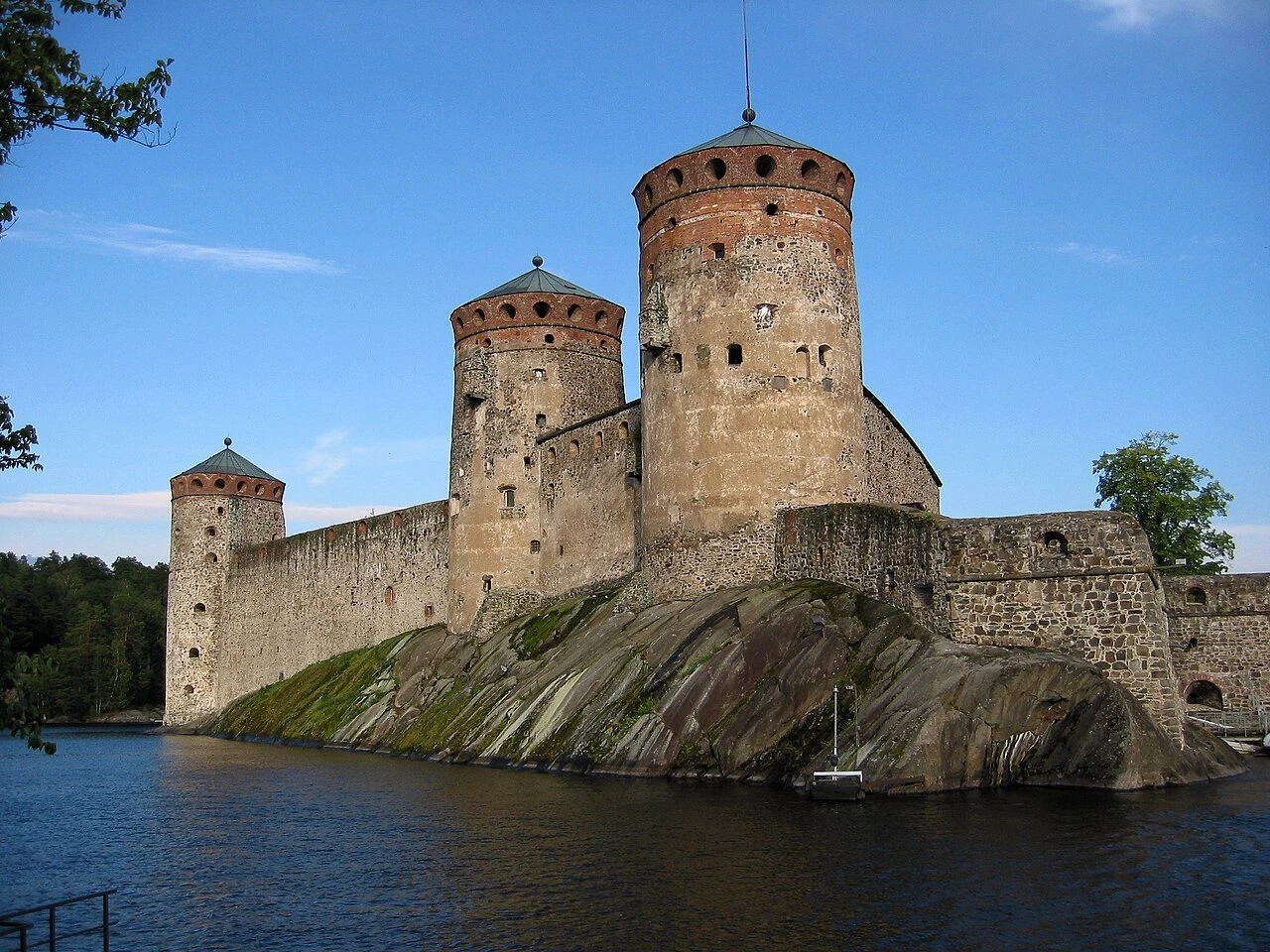
Olavinlinna is a 15th-century three-tower castle located on an island in the Kyrönsalmi strait. It is world-renowned as the primary venue for the annual Savonlinna Opera Festival.
Download Stanza, then search for “Olavinlinna”.
About the tour
One guide. Your kind of visit.
Olavinlinna is a 15th-century three-tower castle located on an island in the Kyrönsalmi strait. It is world-renowned as the primary venue for the annual Savonlinna Opera Festival.
Ready when you are.
- 01Get the free Stanza app.
iOS & Android
- 02Find your guide.
“Olavinlinna”
- 03Download before you go.
Works offline
Audio guide / 13 narrated stops
Inside the guide
Get to know a few of the stories before you go. Open a stop to read more.
01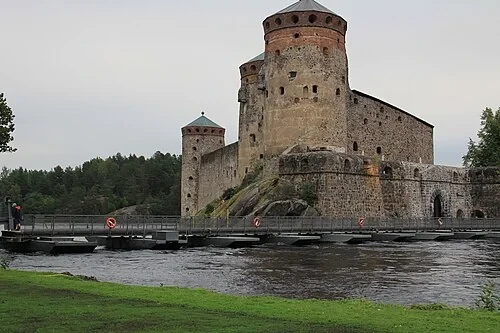 Pontoon Bridge ApproachThe Pontoon Bridge
Welcome to Olavinlinna, one of the most remarkable medieval fortifications in northern Europe. To reach this island fortress, you first cross a modern, floating pontoon bridge that spans the fast-flowing waters of the Kyrönsalmi strait. This narrow body of water has played a crucial role in the castle's survival for centuries. Because the water currents here are exceptionally strong, this stretch of the strait never freezes, even during the coldest Finnish winters. Historically, this presented a major obstacle for hostile forces, who were prevented from marching across the ice to launch a surprise winter attack on the fortress walls. Today, the pontoon bridge serves a dual purpose. While it provides safe pedestrian access for visitors, it is also designed to swing open at scheduled times, allowing modern water traffic and cargo vessels to pass safely along the deep-water shipping channel.
Photo: Htm · CC BY 4.0
02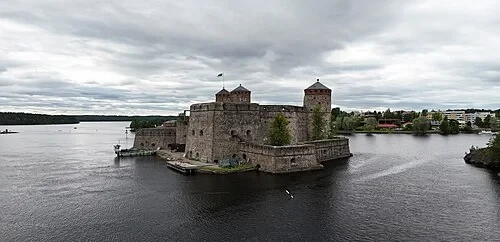 Pontoon Bridge ApproachThe Castle Island
Sitting on a small, rugged rocky islet, Olavinlinna holds the distinction of being the northernmost medieval stone fortress still standing in the world. When you examine the overall layout of the stronghold, you will notice its unusual footprint, which forms a truncated rhomboid. This shape was not chosen out of architectural whim; instead, the builders carefully mapped the layout to match the natural, jagged contours of the rocky island. By aligning the thick stone walls precisely with the edges of the solid bedrock, the designers maximized every inch of defensive ground and left no flat shore where enemies could easily land or assemble siege equipment. As a result, the outer defensive walls appear to grow directly out of the water, tracing the uneven fissures and sloping granite slopes of the natural island foundation below.
Teemu Mökkönen · CC BY 4.0
03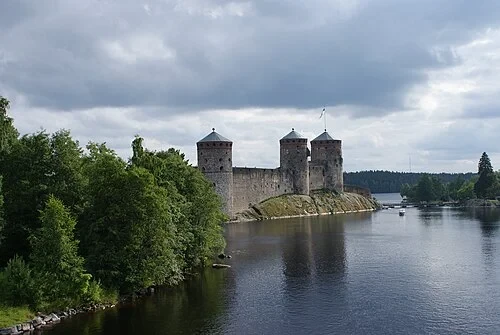 Main Gate and Outer WallsView from Lake Saimaa
In 1475, construction began on these imposing stone walls under the direction of Danish-born knight Erik Axelsson Tott. Acting on behalf of the Swedish crown, Tott chose this strategic location amidst the vast waters of Lake Saimaa to secure a highly contested eastern border. During this period, Sweden and the Grand Duchy of Moscow constantly vied for control of the surrounding Savonia region. The fortress was designed to serve as a powerful military shield, projecting Swedish power eastward and discouraging Russian incursions. Building such a massive fortification in this watery wilderness required immense coordination, as materials had to be transported across the lakes. The resulting stone walls successfully established a heavily armed presence that defined the border zone for generations, making the castle a focal point in the long-running territorial disputes of northern Europe.
Listen in the appJan Ainali · CC BY-SA 3.0
04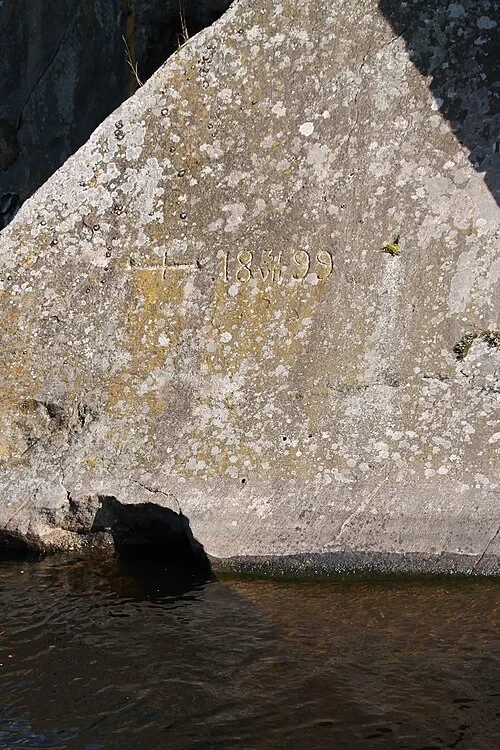 Main Gate and Outer WallsWater Level Inscription
Carved directly into the natural rock face at the water's edge is a simple inscription reading '18 VII 99.' This historical marker records an exceptionally high water level that occurred in Lake Saimaa on July 18, 1899. For centuries, the fluctuating water levels of the surrounding lake had a direct impact on life inside the fortress. During periods of extremely high water, the lower defensive walls and entryways could become flooded or difficult to access, while low water levels might expose the shallow rocky foundations, potentially making the island more vulnerable to approach by small boats. Today, this chiseled date serves as a permanent physical archive of the lake's natural history. The century-old numbers remain clearly visible just a few inches above the typical modern waterline, offering a quiet reminder of how the forces of nature constantly interacted with the castle's defenses.
Listen in the appZng · CC BY-SA 4.0
05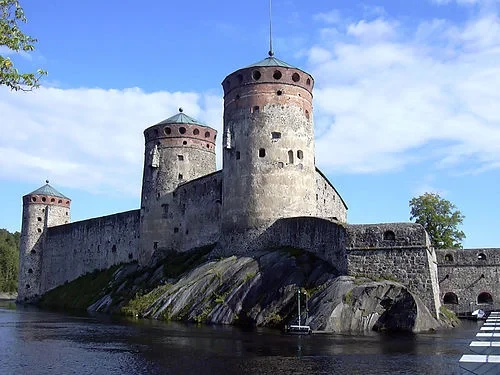 The Great Courtyard and Opera StageSavonlinna Opera Festival
Rising directly from the sloping bedrock, two massive circular towers dominate the castle’s skyline. Builders completed the main keep here in 1485, followed by the outer defensive walls in the late 1490s. Constructing such colossal stone structures on top of slick, glacially worn rock presented an immense physical challenge. To prevent the heavy walls from sliding off the sloping granite foundation, medieval builders had to carefully anchor the masonry directly to the uneven bedrock. Local laborers cut massive blocks of tough granite from nearby mainland deposits, loaded them onto wooden rafts, and floated them across the strong currents of the strait to the island. Through sheer physical effort, these heavy stones were hauled up the slick slopes and assembled into the thick, curved walls you see today, creating a fortress that became virtually integrated with the bedrock beneath it.
Listen in the appPhoto: Miraceti · CC BY-SA 3.0
06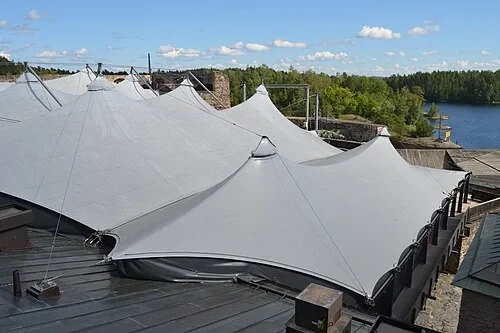 The Great Courtyard and Opera StageThe Opera Canopy
Covering the castle's main courtyard is a massive, modern white tension-canopy roof. This striking fabric structure is installed each summer to protect audiences attending the world-famous Savonlinna Opera Festival. First held in 1912, the festival has completely transformed this medieval military stronghold into a unique open-air venue, celebrated globally for its dramatic acoustics and historic atmosphere. Because the courtyard is open to the elements, the canopy ensures that performances can go on regardless of summer rain. However, the temporary roof is not a permanent fixture. Every autumn, after the final notes of the festival season have faded, workers carefully disassemble and pack away the giant canvas sheets. This seasonal removal prevents the massive weight of heavy winter snows from accumulating on the fabric and damaging both the modern canopy support system and the historic stone walls below.
Listen in the appAntti Leppänen · CC BY 4.0
07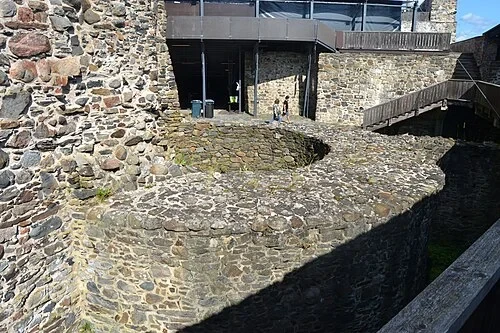 The Great Courtyard and Opera StageRuins of Saint Erik's Tower
Within the circular stone ruins of Saint Erik's Tower, the layered masonry holds a connection to the castle's most famous legend. This ruined structure was once one of the fortress's five original towers, but today it is best known as the setting for the tragic tale of the Maiden of Olavinlinna. According to local folklore, a young Finnish woman fell in love with a foreign soldier from the besieging enemy forces. She secretly opened the castle gates to meet her lover, but her actions accidentally betrayed the garrison. As punishment for her treason, she was sentenced to be walled up alive inside the stone ramparts of the fortress. Local tradition holds that a rowan tree eventually sprouted from the exact spot in the wall where she was interred, its white blossoms symbolizing her innocence and its red berries representing her spilled blood.
Listen in the appAntti Leppänen · CC BY 4.0
08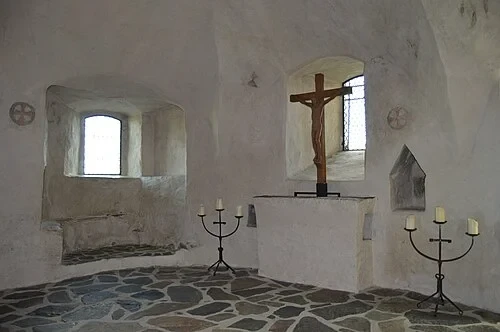 Saint Olav's ChapelThe Castle Chapel
Stepping into the castle chapel, you find an austere, whitewashed sanctuary. The room is characterized by its simple stone altar, a modest wooden crucifix, and uneven stone-flagged floors. This quiet space served the spiritual needs of the castle garrison, which historically housed around two hundred soldiers, servants, and officers during its peak operational years in the medieval period. For a garrison isolated on a rocky island, faith and religious services provided essential comfort and structure to daily military life. If you look closely at the white plaster walls, you can spot small, shallow alcoves carved directly into the stone. These niches were used by the resident priest and soldiers to hold candles, holy water, and various small liturgical objects during mass, keeping them secure within the thick, drafty walls of the fortress.
Listen in the appPhoto: Niera · CC BY-SA 4.0
09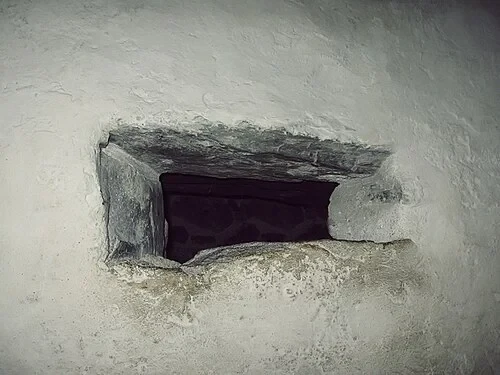 Saint Olav's ChapelThe Hagioscope
A narrow, stone-framed opening in the thick plaster wall offers a glimpse into medieval religious practices. Known as a hagioscope, or 'squint,' this rare architectural feature allowed individuals who were not permitted inside the main chapel to observe the religious services. Guards on active duty, prisoners, or those suffering from infectious illnesses could stand in the corridor outside and look through this small aperture to view the altar and participate in the mass from a distance. The opening is precisely angled through the massive stone barrier, ensuring a direct line of sight to where the priest performed the liturgy. This simple slot in the masonry illustrates how medieval architecture adapted to strict social and spiritual hierarchies, keeping individuals physically separated while still allowing them to fulfill their essential religious duties.
Listen in the appPhoto: Olga39256 · CC BY-SA 3.0
10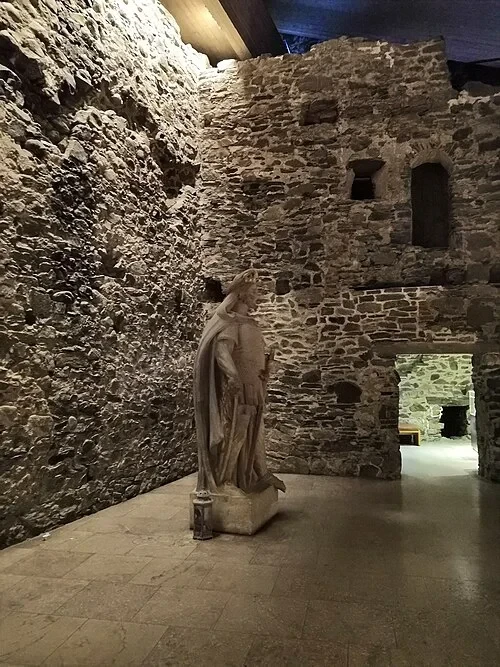 The Palace and King's HallStatue of Saint Olav
Standing against the rugged, unplastered medieval stone wall is a stone statue of Saint Olav, the Norwegian king and patron saint of the fortress. The castle was named Olavinlinna, meaning 'Olav's Castle,' in his honor when construction began in the fifteenth century. Sculpted by the renowned Finnish artist Ville Vallgren in 1912, this figure depicts the saint holding a battle axe. This weapon is a traditional attribute that represents Olav's dual role as both an earthly warrior king who fought to unite his homeland and a spiritual protector guarding the borders of the realm. The deliberate contrast between the smooth lines of the sculpture and the rough, unfinished texture of the surrounding stone wall highlights the statue's presence, serving as a reminder of the historical and spiritual figure who has watched over this island stronghold for centuries.
Listen in the appPhoto: Periegetes · CC BY-SA 4.0
Olavinlinna
Frequently asked questions
How much does the guide cost?
Free app download. Listed guide price: $3.99. Guide price shown in the app. Audio guide only. Venue admission is separate.
Can I listen without internet?
Yes. Download the guide’s audio, images, and maps in the app before your visit. Your downloaded content is then available offline.
Can I listen in my language?
Stanza supports 15 languages. Check the app for the languages available for this guide.
Do I need to follow a schedule?
No. This is a self-guided experience. Choose your stops, pause whenever you like, and return to a story at your own pace.
At your own pace
Explore Olavinlinna.
Download Stanza, then search for “Olavinlinna”.
Free app download · Guide price shown in the app