Languages
15Tikal Audio Guide
Tikal is an archaeological site in Flores, Guatemala. Explore it with Stanza's guided offline audio tour — narrated in 15 languages.
Quick Facts
35
Stops
15
Languages
100%
Offline
📍 Flores, Guatemala · 17.2221°N, -89.6236°E
About Tikal
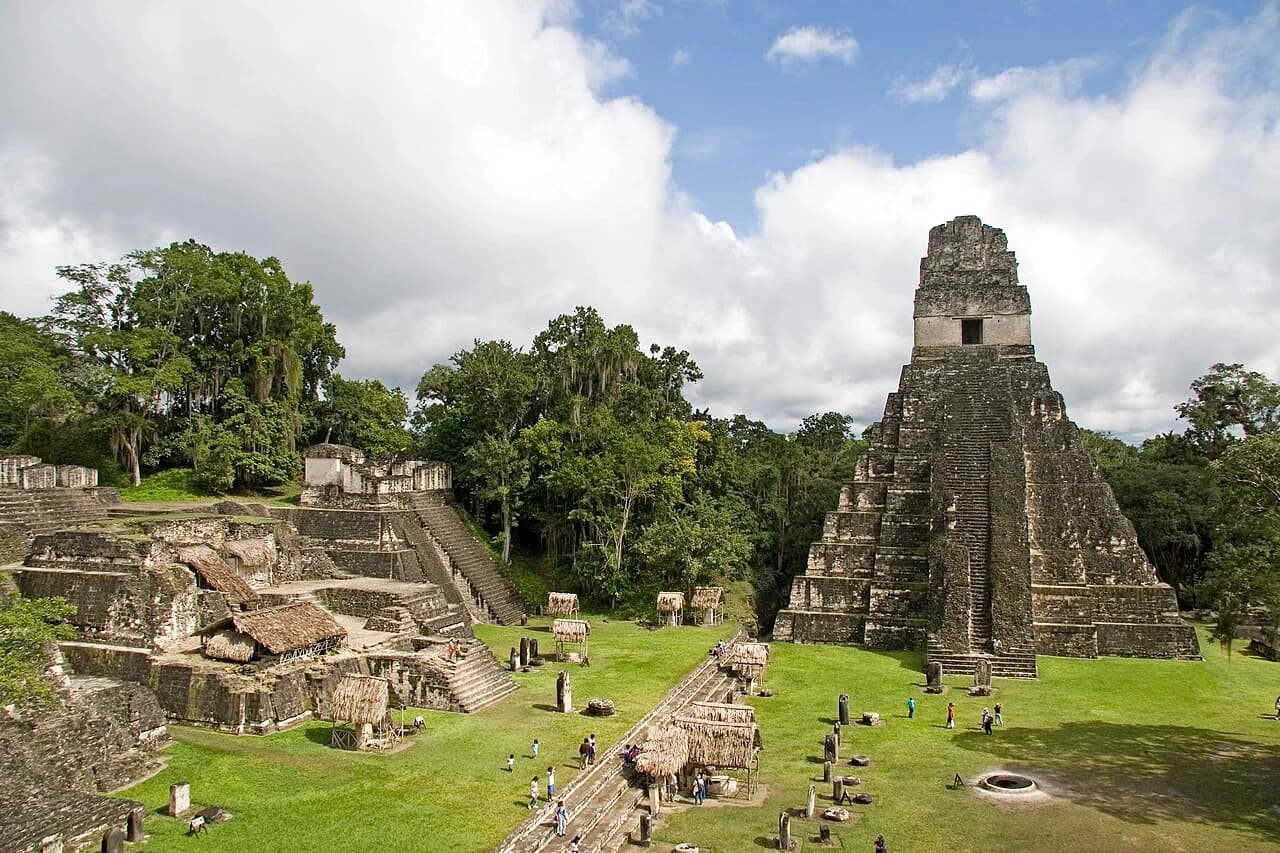
Tikal is an extensive archaeological site featuring the ruins of a major ancient Maya city. It served as a prominent center of the Maya civilization for centuries.
This self-guided audio tour features 35 narrated stops organized across 7 sections. As a archaeological site, Tikal offers a unique cultural experience in the heart of Flores, Guatemala.
The Stanza audio guide is available in 15 languages and works entirely offline — download the complete tour including audio narration, maps, and images before your visit. As you walk through Tikal, GPS-triggered narration plays automatically at each point of interest.
Last updated:
What you will hear
Tikal National Park
Welcome to one of the most significant archaeological sites of the Maya civilization, a UNESCO World Heritage site where ancient limestone towers rise above a 570-square-kilometer primary rainforest.
Tikal National Park
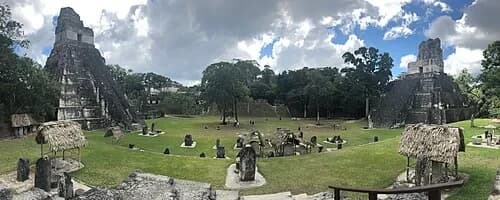
This central plaza served as the city's primary ceremonial and social hub for over a millennium. Looking across the space, you can witness the architectural dialogue between the two great pyramids. To the east stands Temple I, and directly opposite to the west is Temple II, creating a grand theater for royal power. In its heyday, the white limestone underfoot wasn't greyed by age; it was covered in smooth plaster and painted in a brilliant, blood-red cinnabar. Along the plaza's edge, a row of upright standing stones known as stelae function as a royal family album, with intricate carvings recording the lineage and deeds of the city's rulers. While today the soundscape is dominated by the calls of the surrounding rainforest, this area was once a deafening center of commerce, ritual, and political maneuvering. The plaza was meticulously maintained and likely swept daily by an army of workers to preserve the pristine appearance required for a sacred space of this magnitude.
Twin Pyramid Complex R
One of several 'Twin Pyramid' complexes unique to Tikal, built to celebrate the end of a 20-year k'atun cycle in the Maya calendar.
Complex R
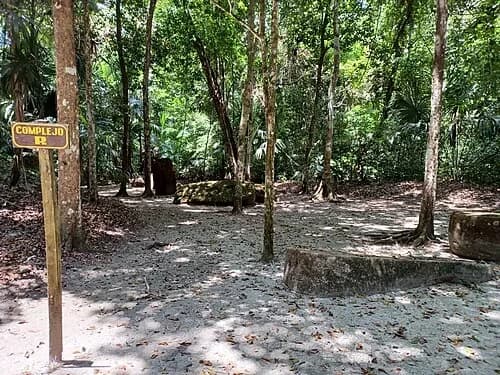
These complexes are specific to Tikal and were constructed to mark the end of a k'atun, a twenty-year period. Rulers commissioned these symmetrical spaces to demonstrate their divine ability to keep the cosmic clock running smoothly. A small wooden sign marks 'Complex R,' leading into a space designed with mathematical precision. The Maya believed in a balanced universe, and the mirror-image pyramids at either end of the plaza reflect this desire for cosmic harmony. Unlike the funerary pyramids in the Great Plaza, these structures served a purely calendrical and ritualistic purpose, ensuring the continuity of time itself. Walking through this area, you move through a space where the passage of time was literally etched into the landscape. This particular site is one of the best-preserved examples of this architectural tradition, showcasing how the city’s urban plan was deeply intertwined with an advanced understanding of astronomy and chronology. The path through the trees opens into a perfectly cleared square that reveals the twin structures standing in silent opposition.
The King and the Altar
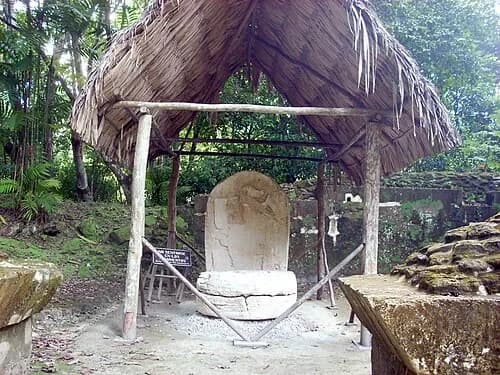
The relationship between these two stone monuments is central to Maya royal ritual. The vertical stela features a high-relief carving of King Yax Nuun Ahiin II, shown in his full ceremonial regalia and adorned with an elaborate feathered headdress. The flat, circular altar positioned directly in front of him served a more visceral purpose. Far from being a simple table, it was considered a portal to the supernatural realm. Carvings on the sides of such altars often depict bound captives or scenes of ritual sacrifice, acts meant to nourish the gods and maintain the cosmic order. The thatched roof above is a modern protective measure, installed by archaeologists to shield the porous limestone from the tropical rains. Over 1,200 years of exposure have already begun to soften the king’s features, turning sharp carvings into weathered shadows. These monuments were often 'activated' through bloodletting rituals, where a ruler's own blood was offered to bring the ancestor depicted in the stone to life. Lichen now clings to the deeper recesses of the king's ornate stone jewelry.
Twin Pyramid Complex P
This complex is another example of Tikal's sophisticated urban planning, featuring identical pyramids facing each other across a plaza.
Complex R
This specific complex is characterized by its perfect symmetry, featuring two identical pyramids facing each other across an open plaza. One sits to the east and the other to the west, an orientation that directly references the rising and setting of the sun. Unlike the great temple pyramids, these structures are flat-topped. They never supported permanent stone temples; instead, evidence suggests they were bases for temporary wooden structures used by priests during k'atun-ending ceremonies. Built around 790 AD, this complex dates to the final golden age of Tikal, just before the city began its mysterious decline. The labor required to haul and carve these massive limestone blocks speaks to the immense power the Maya kings still commanded during this period. The open space between the pyramids was designed to accommodate the crowds that gathered to witness the transition of time. By creating these mirrored stages, the rulers positioned themselves as earthly anchors for celestial movements. Today, the grass is neatly trimmed around the base of the structures, highlighting the precision of the ancient masonry.
The Great Plaza
The ceremonial heart of Tikal, this vast plaza is flanked by the city's most iconic temples and served as the center of public life for over a millennium.
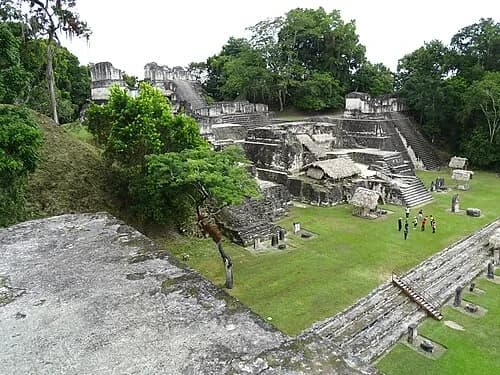
Great Plaza
This complex is one of the most studied areas in the Maya world due to its incredible architectural density. Archaeologists have discovered that the North Acropolis is built like an onion, utilizing a concept of layered history. For over 500 years, each successive generation of kings would build new, grander temples directly on top of the tombs of their ancestors. This process effectively buried older structures within the foundations of the new ones, creating a massive, multi-tiered platform of stacked history. The various visible staircases and platforms are the outer skin of a structure that hides dozens of earlier versions deep within its core. This was not a place for the living to reside; it was a sanctified necropolis designed to honor the royal lineage. The complexity of the levels represents the evolution of Tikal’s architectural style and the growing ambition of its kings. Excavations here have revealed rich tombs filled with jade and pottery offerings. Lichen-covered stones now mark where the different phases of construction meet, showing where one king’s monument ended and the next began.
Temple II (Temple of the Masks)
Standing opposite Temple I, this pyramid was dedicated to the wife of Jasaw Chan K'awiil I; its wide staircase and large stone masks define its facade.
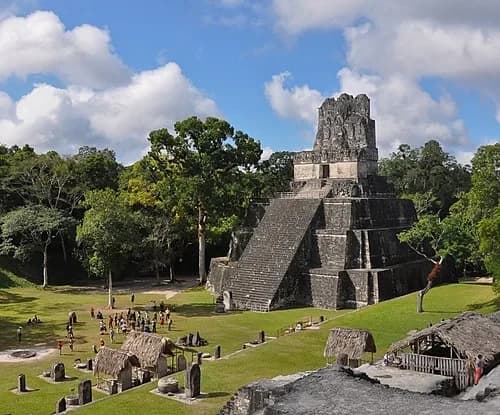
Tikal Temple II
Although it stands directly opposite the funerary monument of the king, Temple II holds its own mysteries. Unlike Temple I, no royal tomb has ever been found inside this structure. This has led many archaeologists to speculate that her actual burial site remains hidden somewhere nearby, yet to be discovered. Two massive stone masks flanking the central staircase represent mountain deities, symbolically transforming the pyramid into a sacred, living peak. The architecture here feels slightly more accessible than the intimidating verticality of its neighbor. The staircase leading up to the top is wider and less steep, which some researchers suggest indicates the temple was used for more frequent public rituals. From the platform at the top, the queen would have had a perfect view across the plaza to her husband’s temple. The preservation of the stone here allows us to see the precision of Maya masonry, with blocks fitted together so tightly that they have withstood over a millennium of tropical weather. It stands as a balanced counterpart to Temple I, completing the aesthetic symmetry of the Great Plaza.
The North Acropolis
One of the most studied architectural groups in the Maya world, this complex served as the royal necropolis, where Tikal's kings were buried for centuries.
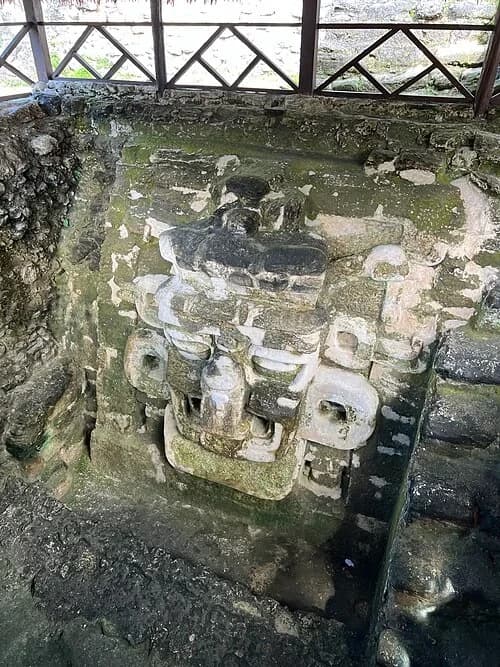
North Acropolis
This mask is a significant find because the majority of Tikal’s external stucco decorations have long since eroded. It features the classic hallmarks of Maya royal and divine imagery: bulging eyes, a stylized, downturned mouth, and large ear flares. These features identify the figure as either a deity or a highly deified ancestor. This mask is part of Temple 33, a structure that was once the most magnificent funerary monument in the North Acropolis. Its history is bittersweet for archaeologists; in the mid-20th century, parts of the outer temple were dismantled to allow researchers to study the earlier, more ancient buildings hidden underneath. This revealed the layered construction of the Acropolis but resulted in the loss of much of the final-phase architecture. Originally, this mask was one of many that adorned the staircases and terraces, turning the entire building into a living representation of a sacred mountain. In its original state, the limestone surface would have been smoothed with plaster and painted in vivid reds and blues. Today, the moss-covered stone features are shielded from the sun by a heavy palm-frond roof.
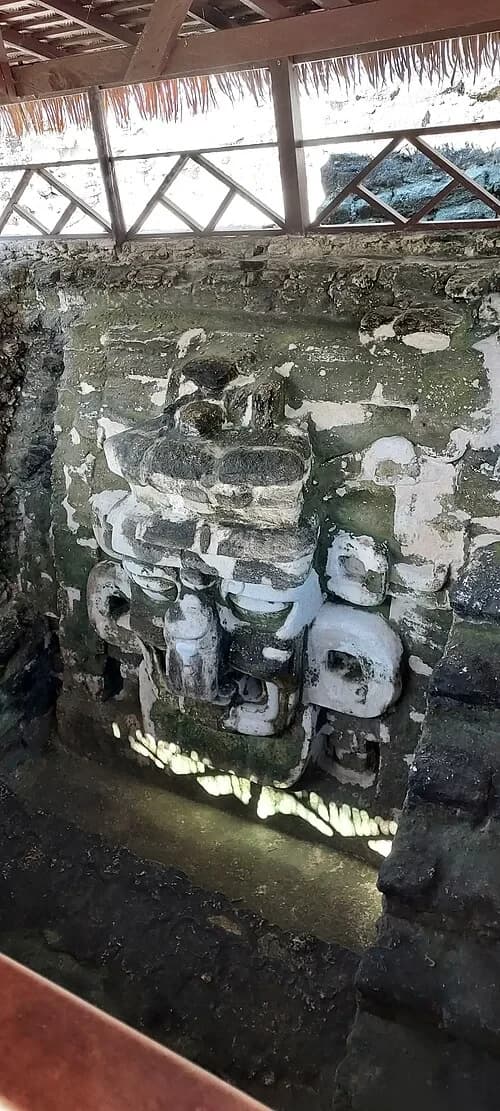
Stucco Deity Mask
The craftsmanship of these architectural masks differs from the carved stelae found nearby. Rather than being shaped from a single stone block, these features were constructed by piling limestone rubble and mortar into a rough shape, then smoothing it over with thick layers of lime plaster. This technique allowed for much larger and more expressive features than traditional stone carving. Symbolically, these masks served as 'active' elements of the building. By placing the face of a god or a sacred mountain on the facade, the Maya transformed the stone structure into a living entity. While the brilliant reds and blues that once covered this face have faded to the grey and white of the underlying stone, the sheer scale of the features still projects divine authority. The deep grooves around the eyes and the prominent nose were designed to catch the sunlight and create dramatic shadows, ensuring the face remained visible even from the far side of the plaza. Today, the moss clinging to the recessed areas provides a stark contrast to the smooth, worked surfaces. A low wooden rail keeps visitors at a respectful distance from the fragile plasterwork.
Central Acropolis
A sprawling labyrinth of palaces, courtyards, and residential chambers where Tikal's royal family lived and governed.
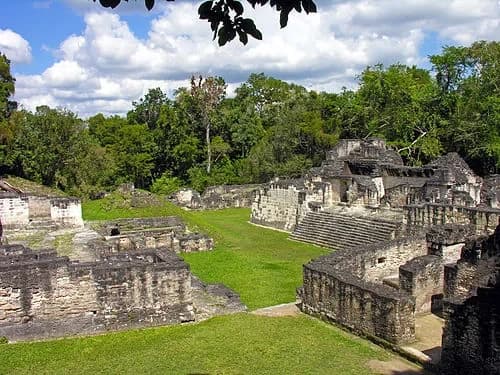
Central Acropolis Courtyard
The Central Acropolis is a record of the long-term occupation and growth of Tikal’s ruling dynasty. Because each new king frequently added his own rooms and private spaces, the complex developed an organic, intricate layout. Archaeologists excavating these courtyards found evidence of the lavish lifestyle once enjoyed by the residents. Thousands of pottery fragments from finely painted serving dishes were discovered, indicating that large-scale feasting was a regular occurrence here. These banquets were vital political tools; by hosting visitors, the king of Tikal could entertain visiting nobles and manage alliances with neighboring city-states. The presence of specialized kitchen areas and storage rooms further highlights the administrative complexity required to run a royal household of this size. As you walk through the various levels, notice how the rooms vary in size and ornamentation, likely reflecting the status of the individuals who lived there. The transition from public plaza to these private, enclosed courtyards marked the entrance into the inner sanctum of Maya power. Today, a large tree with sprawling roots provides shade for one corner of this ancient administrative center.
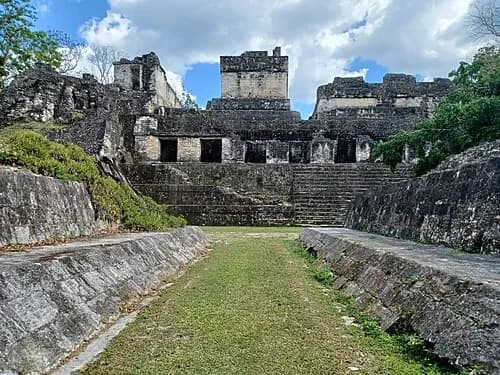
The Ritual Ball Court
The ball game was far more than a sport; it was a religious reenactment of the Maya creation myth. The game symbolized the eternal struggle between the Hero Twins and the lords of the underworld, with the heavy rubber ball representing celestial bodies. Using hands or feet was strictly forbidden, making the game incredibly physical, as the ball could weigh up to eight pounds. The slanted limestone walls on either side of the court were designed to allow the ball to bounce at high speeds, requiring intense skill from the players. In Tikal, the ball court is strategically located right next to the royal palace, providing a perfect vantage point for elite spectators to witness the action. While popular legends often emphasize the sacrifice of the losers, these games were frequently used to settle real-world political disputes between rival cities without resorting to full-scale war. The strategic placement of this court emphasizes its importance as both a civic spectacle and a sacred rite. The court floor is meticulously leveled for drainage, with small channels built into the base to handle the frequent tropical downpours.
Want to hear the rest?
Download the Stanza app to unlock all 35 stops and the complete guided audio tour.
Frequently Asked Questions
How long does the Tikal audio tour take?
The Tikal audio guide includes 35 narrated stops. Most visitors spend 45 minutes to 1.5 hours exploring the complete tour, though you can listen at your own pace and skip or revisit any stop.
Is the Tikal audio guide available in my language?
Stanza supports 15 languages: English, Spanish, French, German, Italian, Portuguese, Russian, Japanese, Chinese, Korean, Arabic, Hindi, Polish, Dutch, Hebrew. Check the guide in the app to confirm the languages currently available for this tour.
Can I use the audio guide offline at Tikal?
Yes! Download the complete Tikal tour — including all audio, maps, and images — before your visit. The Stanza app works completely offline, so you don't need WiFi or mobile data at the venue.
How much does the Tikal audio guide cost?
The Stanza app is free to download. The current listed price for the Tikal audio guide is $4.99; app-store region and currency may affect the final price.
How do I use the Stanza audio guide at Tikal?
Download the free Stanza app, search for "Tikal", and download the tour. When you arrive at the venue, the app uses GPS to detect your location and automatically plays the relevant narration as you move between points of interest — completely hands-free.
What makes the Stanza audio guide different from other Tikal tours?
Stanza offers GPS-triggered narration that plays automatically as you walk through Tikal — no need to manually select stops. The tour is available in 15 languages, works fully offline, and includes 35 expertly narrated stops with images and historical context.
What other audio guides are available near Tikal?
Stanza offers multiple audio guides in Flores, Guatemala and nearby areas. After downloading the app, browse the map to discover all available tours near Tikal. Each guide can be downloaded for offline use.