Languages
15Château de Chillon Audio Guide
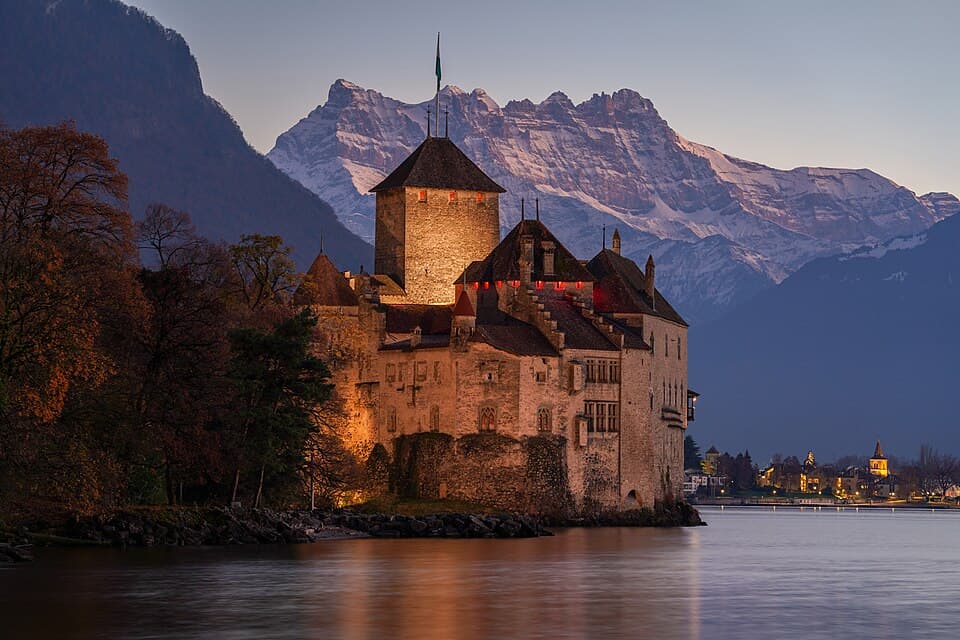
Château de Chillon is a landmark in Veytaux, Switzerland. Explore it with Stanza's GPS-triggered offline audio guide — available in 15 languages.
Quick Facts
29
Stops
15
Languages
100%
Offline
📍 Veytaux, Switzerland · 46.4142°N, 6.9275°E
About Château de Chillon
Chillon Castle is a historic water castle located on an island near Montreux, Switzerland. This medieval fortress also functions as a museum, showcasing its rich history and architecture.
Château de Chillon is also known as Chateau de Chillon, Castle of Chillon, Château de Chillon, Chillon, and 1 other names in various languages.
This self-guided audio tour features 29 narrated stops organized across 8 sections. As a castle, Château de Chillon offers a unique cultural experience in the heart of Veytaux, Switzerland.
The Stanza audio guide is available in 15 languages and works entirely offline — download the complete tour including audio narration, maps, and images before your visit. As you walk through Château de Chillon, GPS-triggered narration plays automatically at each point of interest.
Last updated:
What you will hear
The Gatehouse and Defensive Bridge
Approaching the castle's landward side to illustrate its 'dual face' architecture. Focus on the fortified bridge and the formidable gatehouse.
The Moat and Bridge
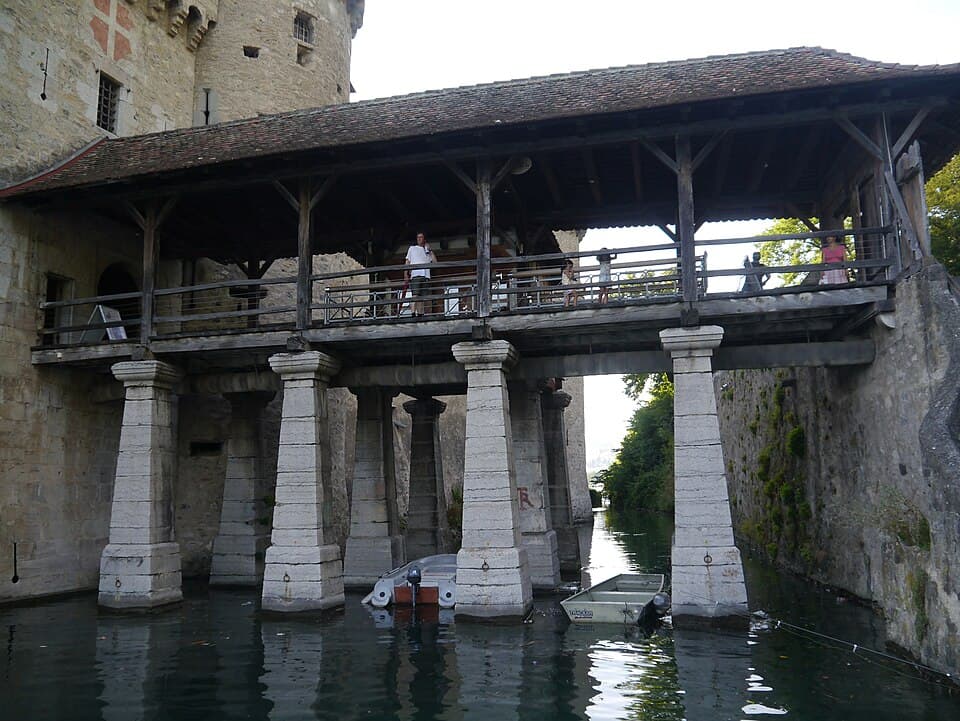
Transitioning from the mainland to the island requires crossing this sturdy wooden bridge. Historically, this was the only point of entry into the fortress, making it the most critical part of the castle’s security. The castle is separated from the shore by a natural moat—a deep trench of lake water that emphasizes its island status. In the medieval era, this gap would have been even more daunting, as the bridge could be secured or destroyed to halt an advancing enemy. Look down at the heavy stone pillars that support the wooden structure. These pillars are anchored directly into the lakebed, standing as silent witnesses to the thousands of people who have passed over them for centuries. Every merchant, soldier, diplomat, and prisoner had to cross this single path to enter the site. By controlling this bridge, the castle’s garrison could monitor everyone entering or leaving, ensuring that the Duke of Savoy’s secrets and wealth remained safe behind the gates. The sound of footsteps on these wooden planks has echoed here for generations, signaling the shift from the public road to the private, high-stakes world of the fortress.
The Fortified Gatehouse
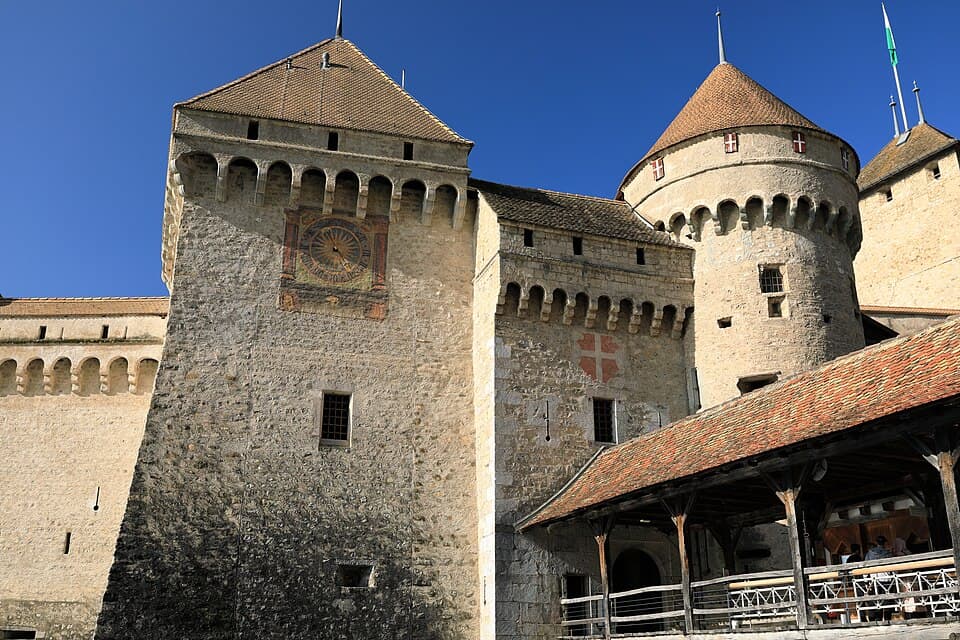
Notice the massive stone walls and the three distinctive semi-circular towers facing the land. This side of the castle was built with a single purpose: defense. Because the mountain pass is so narrow here, any army moving north or south would have to pass directly under the shadow of these walls. The curved shape of the towers was a strategic innovation, allowing defenders a wider field of vision and eliminating 'blind spots' where attackers might try to scale the masonry. Significant expansions were carried out in the 13th century under the direction of the master mason James of Saint George. He was a visionary architect whose work at Chillon was so impressive that he was later recruited by King Edward I of England to design his famous series of 'iron ring' castles in Wales. Here, his influence is seen in the sheer thickness of the walls and the integrated defensive systems that made the castle nearly impregnable from land-based assault. As you look at these rugged stone surfaces, imagine the pressure of medieval warfare and the sheer power required to maintain such a massive barrier against the outside world.
The First Courtyard
Entering the administrative heart of the castle. Includes the verified drinking fountain POI and an overview of the courtyard's function.
The Administrative Courtyard
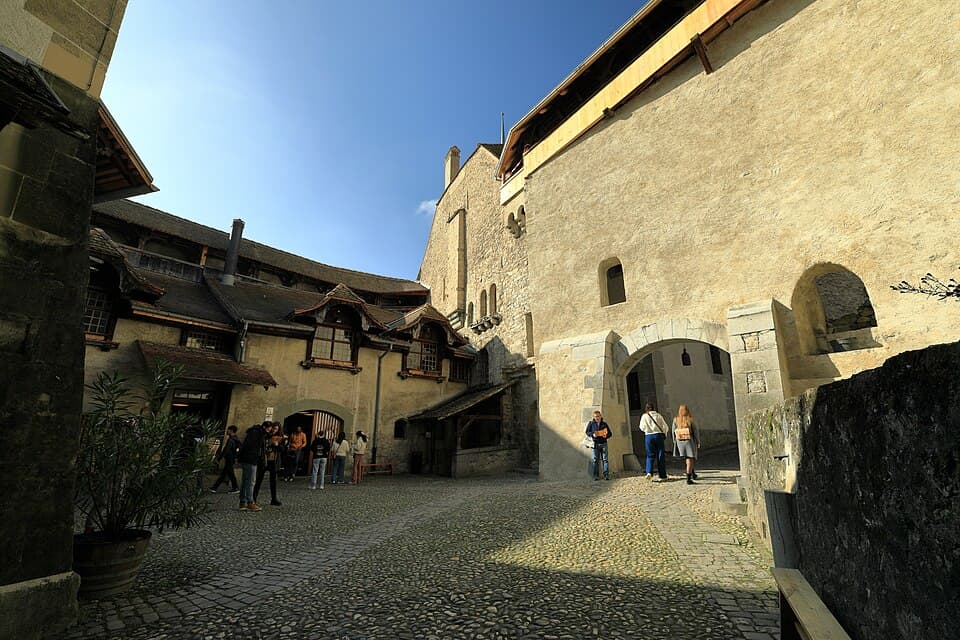
As you stand within this first courtyard, you are in the bustling center of the castle’s daily operations. Chillon is intelligently organized into three distinct courtyards, each serving a specific function: administration, residence, and defense. This particular area was the zone of administration, where the castellan—the official in charge of the castle—managed the affairs of the House of Savoy. The surrounding buildings once housed the kitchens, storerooms, and offices required to keep the fortress running smoothly. Notice the rough cobblestones beneath your feet and the sheer height of the stone walls that enclose this space. This architectural design creates a protected, self-contained atmosphere, shielding the inhabitants from the wind of the lake and the eyes of those on the mainland. This courtyard was a place of constant movement, where goods were delivered, orders were issued, and the business of the territory was transacted. The high walls also served a psychological purpose, reminding everyone who entered that they were now under the absolute authority of the lords of the castle. It is a space that perfectly balances the practical needs of a medieval office with the security requirements of a fortress.
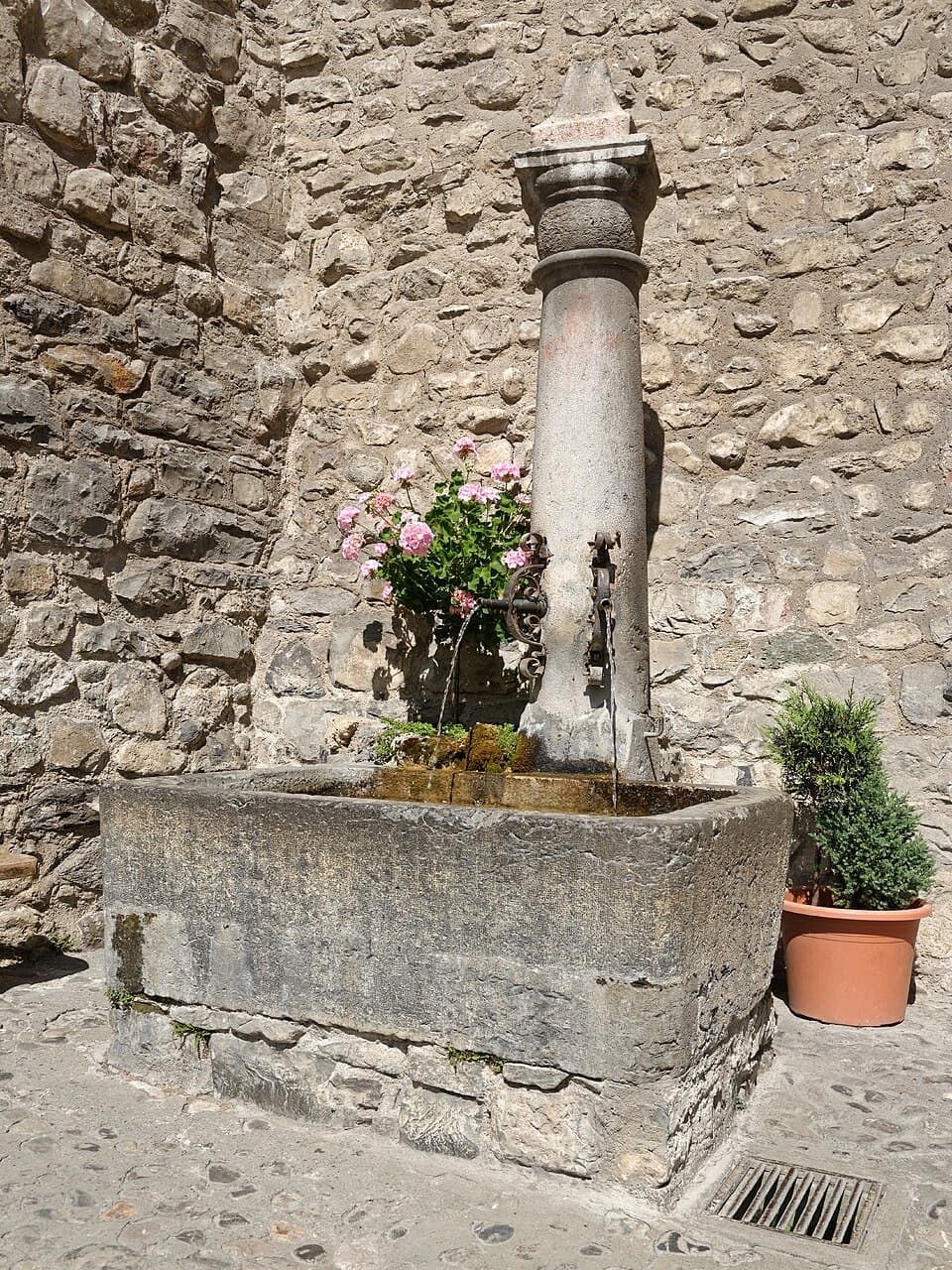
fountain
In the center of the first courtyard stands this stone drinking fountain, characterized by its single vertical column and wide, rectangular basin. While it may seem like a modest feature compared to the grand towers above, this fountain was essential for the survival of the castle's population. Chillon was not just a home for the nobility; it was a functioning community of up to 25 buildings, housing servants, guards, officials, and artisans who all relied on a consistent water source. This fountain humanizes the courtyard, marking it as the administrative heart of the complex. Imagine the constant activity here: guards quenching their thirst after a long watch, servants filling buckets for the kitchens, and officials pausing to exchange news. Maintaining a complex of this size required immense logistical effort, and the availability of fresh water was the most basic necessity. The weathered stone of the basin reminds us of the thousands of hands that have touched it over the centuries, grounding the castle's grand history in the practical, everyday needs of those who lived and worked within its thick stone walls.
The Prison of Bonivard
The site of Chillon's most famous story. Features the pillar of the prisoner Bonivard, Byron's graffito, and the verified Crucifixion POI.
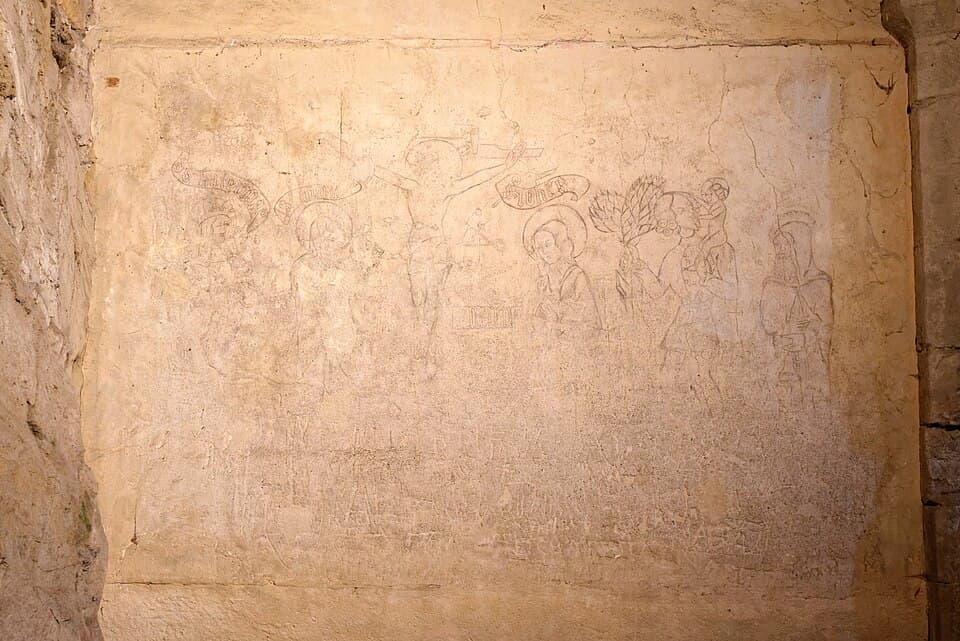
Crucifixion with saints
16th century
Amidst the rough stones of the dungeon, look for this faint 14th-century drawing depicting the Crucifixion of Christ accompanied by saints. It is a rare and delicate piece of artwork found in a place of such profound isolation. For the medieval prisoners held here, faith was often their only source of comfort and hope. Creating such an image was likely an act of devotion, a way to transform a cold prison wall into a private space for prayer and reflection. Details like this provide a deeply human connection to the people who were once confined in these depths. While the grand halls upstairs tell stories of counts and banquets, this drawing speaks of the solitary spiritual lives of the captives. The lines are worn and faded by time and the damp air of the lake, yet the figures remain visible, standing as a quiet testimony to the search for meaning in the face of suffering. It reminds us that even in the darkest corners of the fortress, the human need for connection—whether to the divine or to the world outside—remained unbroken. It is one of the most poignant and personal artifacts you will encounter during your visit.
Medieval Life and Arms
Exploring the castle's secondary halls and museum collections. Includes the verified armor exhibition POI.
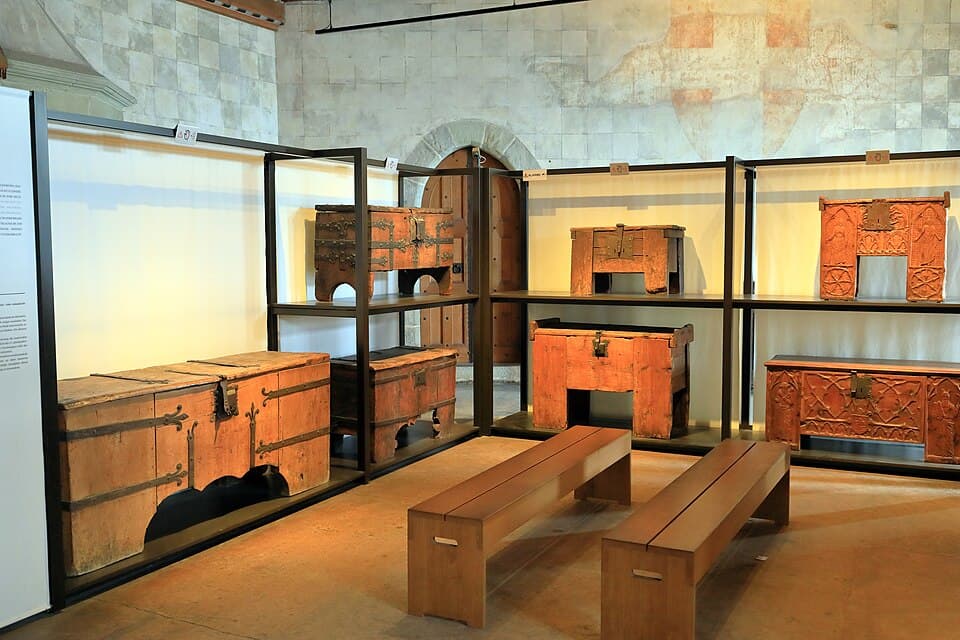
Medieval Storage Chests
At first glance, these heavy chests might look like simple furniture, but they represent a way of life that was profoundly different from our own. In the medieval era, the life of a ruler was nomadic. The Count of Savoy and his vast entourage did not stay in one place for long; instead, they moved in a continuous circuit between their various castles to maintain authority, collect taxes, and consume local resources. Because they were constantly on the move, their furniture had to be mobile. These chests served as closets, safes for valuables, and even benches or tables when the court reached its destination. Notice the intricate carvings and the heavy ironwork—these weren't just functional, they were status symbols that showcased the wealth of the House of Savoy even while in transit. When the Count moved, a massive caravan of pack animals and carts followed, carrying dozens of these chests filled with tapestries, silver, clothing, and documents. Once they arrived at Chillon, the rooms would be 'unpacked' and transformed from cold stone shells into a vibrant, comfortable palace in a matter of hours.
Camera Domini (The Duke's Bedroom)
The most intimate space in the castle. Highlight the rare 14th-century secular wall paintings and the princely furnishings.
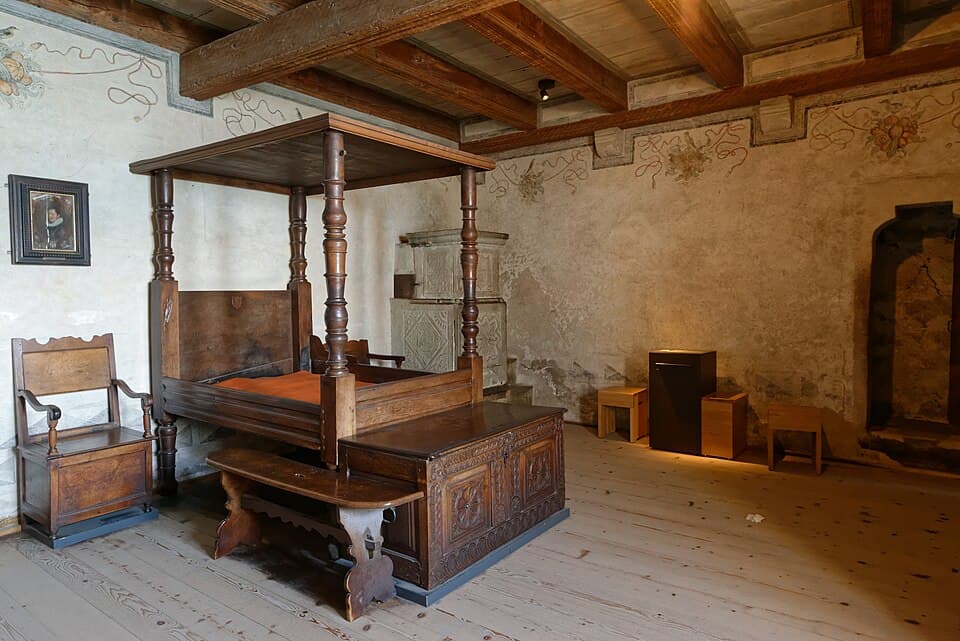
The Duke's Bedchamber
Step into the Camera Domini, the most intimate space within Chillon. In a castle teeming with guards, servants, and officials, privacy was a rare and precious luxury. This room was the personal sanctuary of the Duke, a place where the public face of leadership could be set aside. The centerpiece is the canopy bed, which was a technological marvel of its time. Beyond providing a soft place to sleep, the heavy curtains around the bed helped trap body heat and block out drafts, creating a micro-climate within the often-chilly stone room. In fact, this was one of the few rooms in the entire complex that could be effectively heated, making it a sought-after retreat during the cold Alpine winters. Observe the relative simplicity of the furnishings compared to the Great Halls. This space was designed for rest and quiet reflection. The thick walls and small windows helped to baffle the noise of the bustling courtyards outside, providing the ruler with the necessary seclusion to make important decisions or simply find a moment of peace away from the demands of the court.
The Chapel of Saint George
The castle's private place of worship. Focus on the restored 14th-century frescoes and the religious atmosphere.
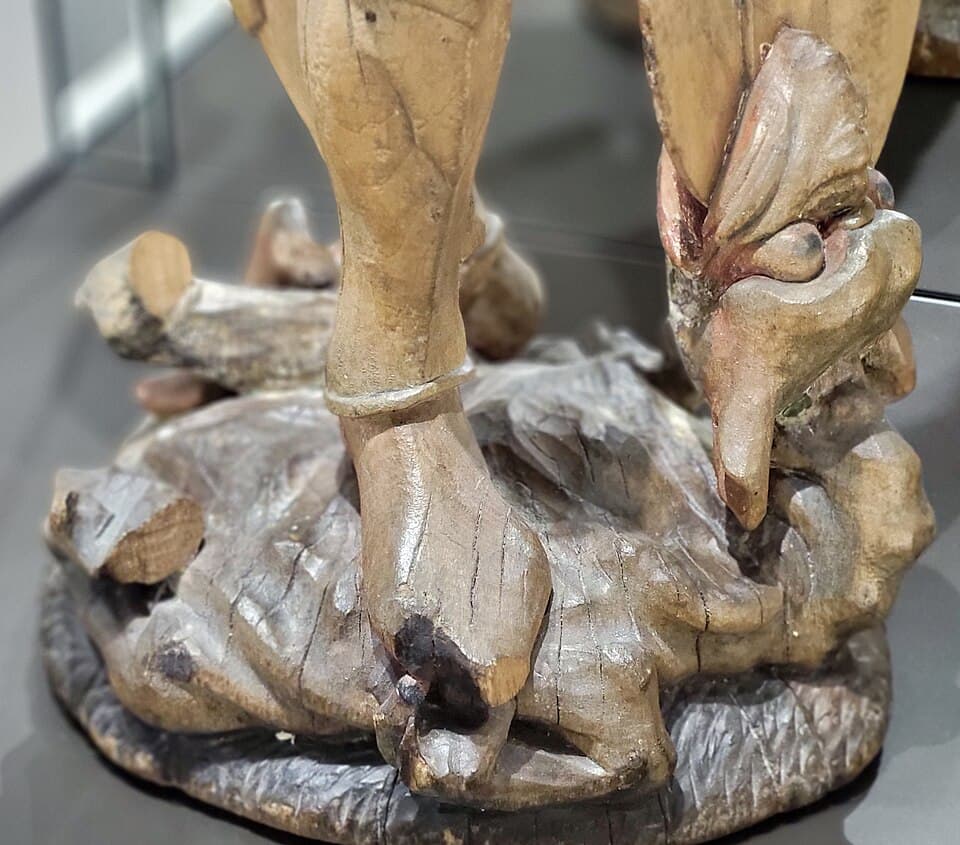
Saint George and the Dragon
This detailed wood carving captures the dramatic moment when Saint George slays the dragon. It is a classic piece of 15th-century craftsmanship, but its presence here is about much more than decoration. Saint George was the patron saint of knights, soldiers, and the House of Savoy itself. For a medieval warrior dynasty, George was the ultimate role model. He represented the ideal of the 'Christian Knight'—brave, virtuous, and capable of defeating the most terrifying of monsters through faith and skill. By adopting him as their protector, the Savoyards were making a clear statement about their own identity and their role as defenders of the faith. Observe the dynamic composition: the knight’s focused expression, the rearing horse, and the contorted body of the dragon. This image symbolized the triumph of good over evil and order over chaos—the very things the lords of Chillon claimed to provide for their lands. Having this figure within their private chapel served as a constant reminder of their divine mission and the high standards of chivalry they were expected to uphold.
The Wall Walk and Battlements
Experiencing the military function of the castle. Walk through the covered wooden galleries used by guards.
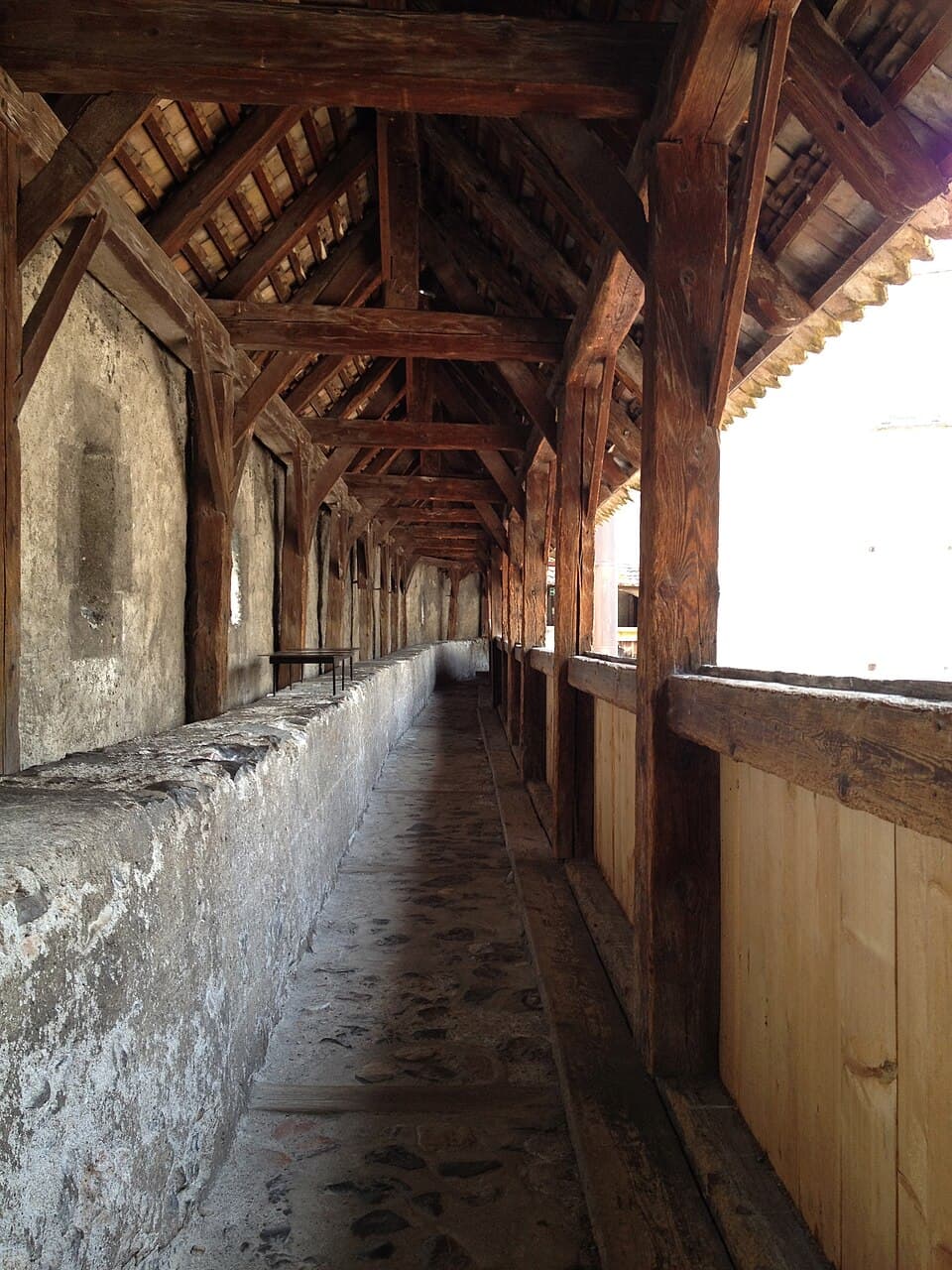
The Guard's Wall Walk
As you walk through these long, narrow wooden corridors, you are following in the footsteps of generations of sentries. These are the battlements, or the 'wall walk,' which allowed guards to move quickly and safely between the castle’s many defensive towers. Notice the sensory experience of this space: the slight creak of the heavy floorboards under your feet and the distinct scent of old, weathered wood and stone. During the Middle Ages, these galleries were patrolled 24 hours a day. Guards were constantly on the lookout, scanning the surface of Lake Geneva for approaching ships and watching the narrow road below for any signs of land-based threats. The wooden roof overhead was a vital feature, protecting the sentries and their equipment from the elements, ensuring that the watch could continue regardless of the heavy snow or rain common in the Alps. This continuous loop of defense made Chillon almost impossible to surprise, providing the lords inside with the security they needed to rule their territory with confidence. From here, the castle's dual purpose—as both a residence and a high-security watchpost—becomes truly clear.
A Romantic Legacy
A final reflective view from the heights or windows, looking out over Lake Geneva as inspired by the Romantic poets.
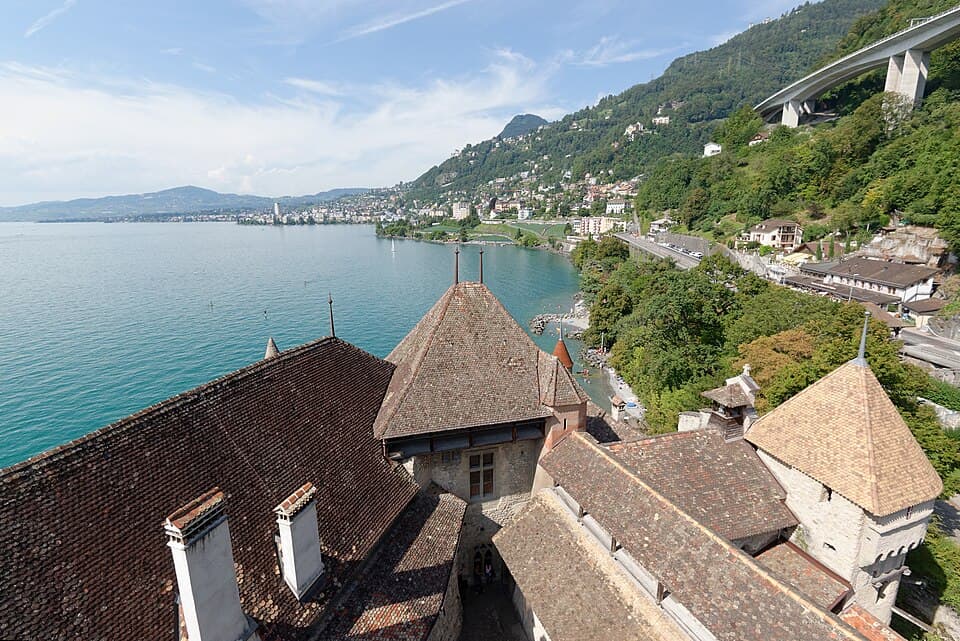
Panoramic Defense
As you look out from this high position, the panoramic view explains exactly why this castle was built here. Below you, the land narrows to a tiny strip between the mountains and the lake. This was the only viable road connecting northern Europe to Italy via the Great Saint Bernard Pass. In the Middle Ages, Chillon was the 'lock' on this road. No merchant, no pilgrim, and no army could pass through this narrow gap without the permission of the Lord of Chillon. By controlling this tiny piece of rock, the House of Savoy could command one of the most important trade routes in the world, collecting lucrative tolls and monitoring all traffic. Notice the modern highway bridge snaking along the mountainside in the distance. Even today, the modern infrastructure follows the same path dictated by the topography. Standing here, you are at the intersection of geography and power. The beauty of the turquoise water and the snow-capped peaks is breathtaking, but for the medieval counts, this view represented something even more valuable: absolute control over the movement of people and wealth through the heart of Europe.
Want to hear the rest?
Download the Stanza app to unlock all 29 stops and full GPS-guided navigation.
Frequently Asked Questions
How long does the Château de Chillon audio tour take?
The Château de Chillon audio guide includes 29 narrated stops. Most visitors spend 45 minutes to 1.5 hours exploring the complete tour, though you can listen at your own pace and skip or revisit any stop.
Is the Château de Chillon audio guide available in my language?
Stanza supports 15 languages: English, Spanish, French, German, Italian, Portuguese, Russian, Japanese, Chinese, Korean, Arabic, Hindi, Polish, Dutch, Hebrew. Check the guide in the app to confirm the languages currently available for this tour.
Can I use the audio guide offline at Château de Chillon?
Yes! Download the complete Château de Chillon tour — including all audio, maps, and images — before your visit. The Stanza app works completely offline, so you don't need WiFi or mobile data at the venue.
How much does the Château de Chillon audio guide cost?
The Stanza app is free to download. The current listed price for the Château de Chillon audio guide is $3.99; app-store region and currency may affect the final price.
How do I use the Stanza audio guide at Château de Chillon?
Download the free Stanza app, search for "Château de Chillon", and download the tour. When you arrive at the venue, the app uses GPS to detect your location and automatically plays the relevant narration as you move between points of interest — completely hands-free.
What makes the Stanza audio guide different from other Château de Chillon tours?
Stanza offers GPS-triggered narration that plays automatically as you walk through Château de Chillon — no need to manually select stops. The tour is available in 15 languages, works fully offline, and includes 29 expertly narrated stops with images and historical context.
What other audio guides are available near Château de Chillon?
Stanza offers multiple audio guides in Veytaux, Switzerland and nearby areas. After downloading the app, browse the map to discover all available tours near Château de Chillon. Each guide can be downloaded for offline use.