Languages
15Atomium Audio Guide
Atomium is a landmark in Brussels, Belgium. Explore it with Stanza's GPS-triggered offline audio guide — available in 15 languages.
Quick Facts
19
Stops
15
Languages
100%
Offline
📍 Brussels, Belgium · 50.8950°N, 4.3414°E
About Atomium
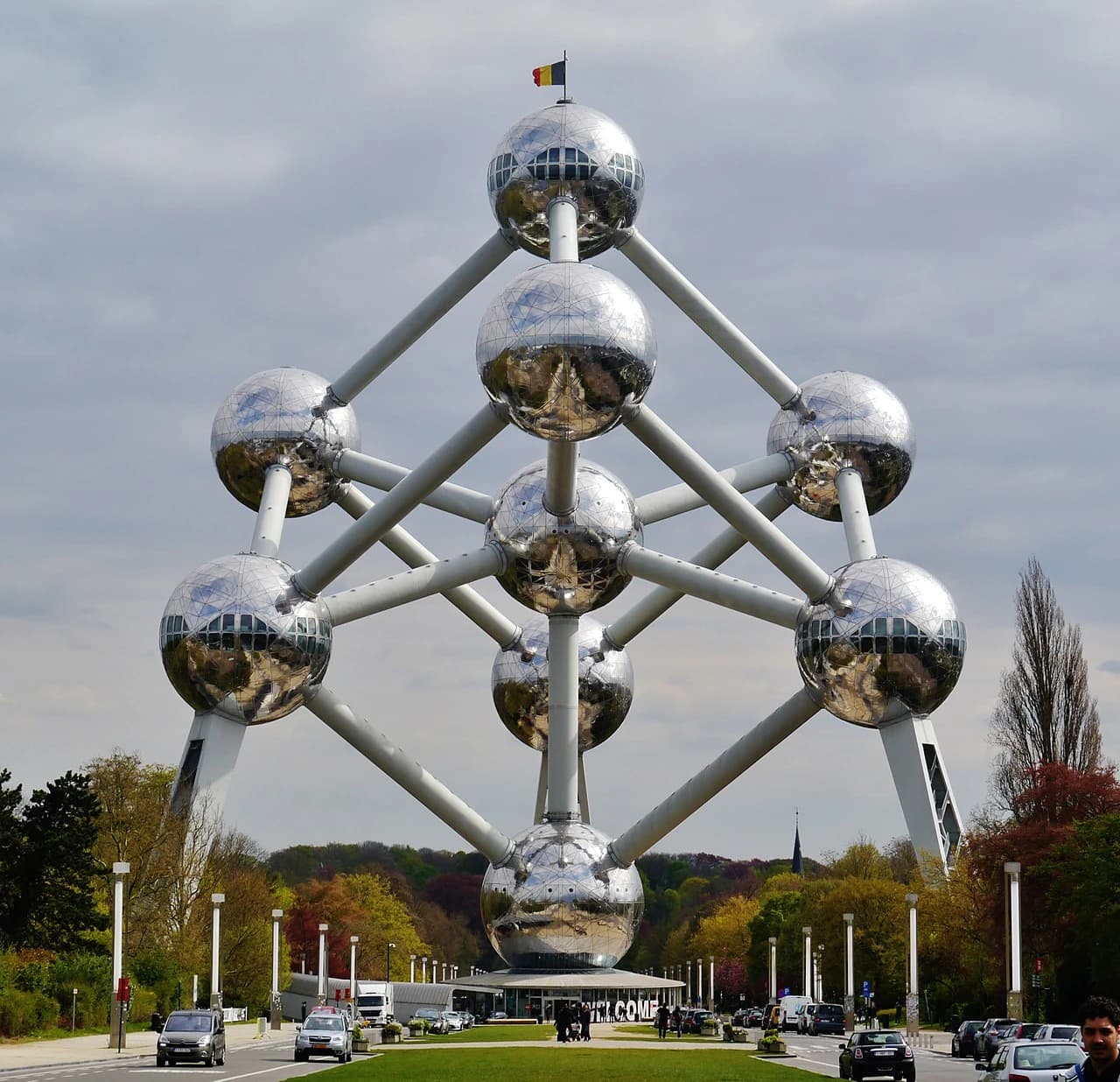
The Atomium is an iconic architectural landmark located in Brussels, Belgium. It was originally constructed as the centerpiece for the 1958 Brussels World's Fair, Expo 58.
This self-guided audio tour features 19 narrated stops organized across 6 sections, including The Base and Entrance Pavilion, Expo 58: The Permanent Collection, Ascent through the Tubes, The Art and Science Spheres, The Summit Panorama, Engineering Legacy and Osseghem Park. As a landmark, Atomium offers a unique cultural experience in the heart of Brussels, Belgium.
The Stanza audio guide is available in 15 languages and works entirely offline — download the complete tour including audio narration, maps, and images before your visit. As you walk through Atomium, GPS-triggered narration plays automatically at each point of interest.
Last updated:
What you will hear
The Base and Entrance Pavilion
Arrival at the modern glass pavilion and the surrounding sculptures at the foot of the monument.
The Support Structures
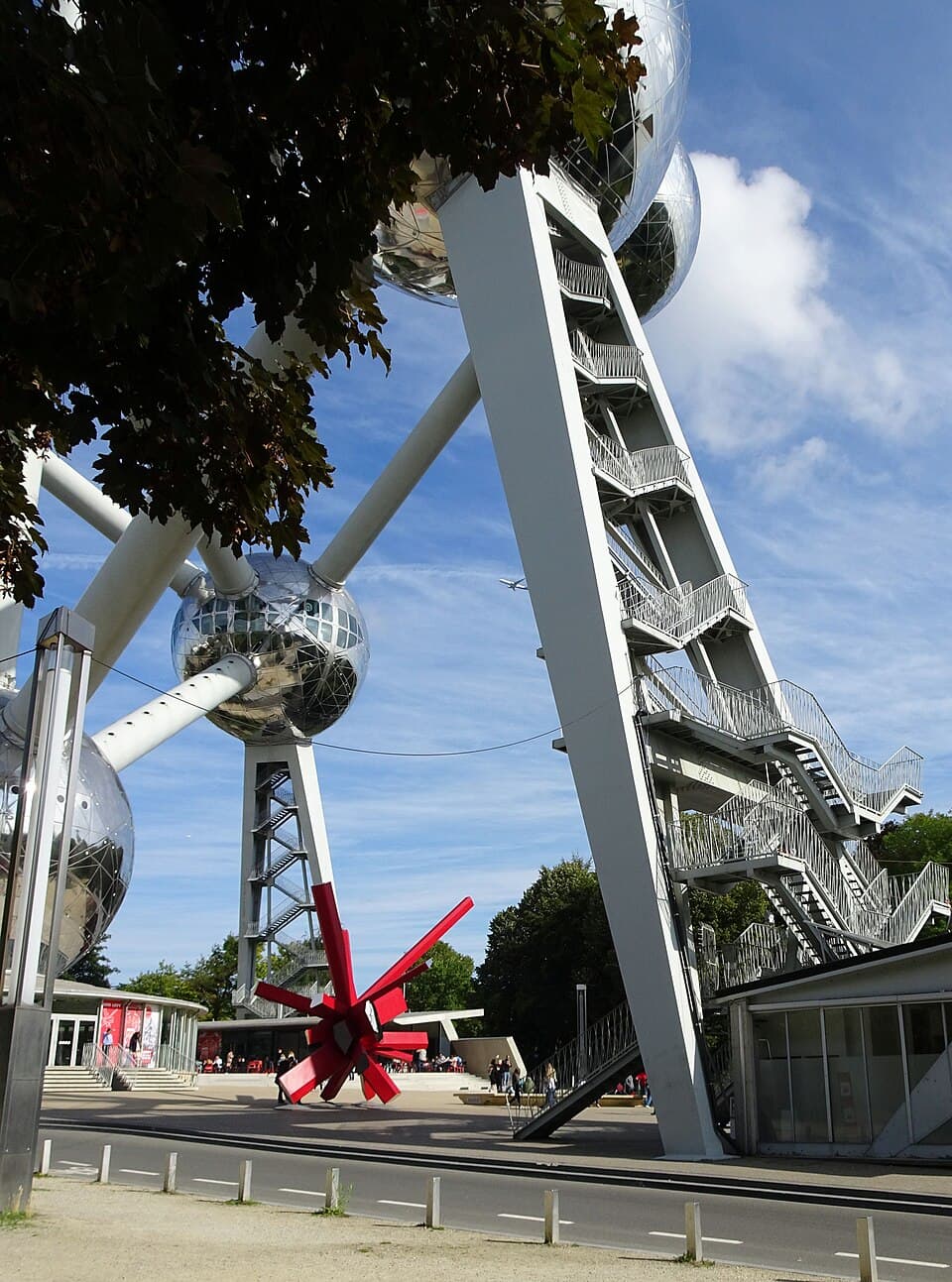
From this close-up perspective at ground level, the true scale of the Atomium becomes apparent. You can see the thick steel supports and the zig-zagging emergency stairs that cling to the exterior of the diagonal tubes. These elements highlight the transition from the familiar ground into the elevated, almost alien world of the 'iron crystal' above. An interesting fact about the structure’s layout is that of the nine spheres you see, only six are actually accessible to the public. The three spheres that form the outer 'mid-points' of the tilted cube are closed for safety and structural reasons. They lack the necessary internal support for heavy foot traffic and are used primarily for technical equipment or as part of the rigid structural frame. As you look up at the tubes, imagine the complexity of the interior spaces. This is not just a building; it is a giant machine. The external stairs serve as a reminder of the strict safety standards required for such a unique vertical space. From here, the journey begins as you move from the park level into the interior of the base sphere.
The Entrance Pavilion
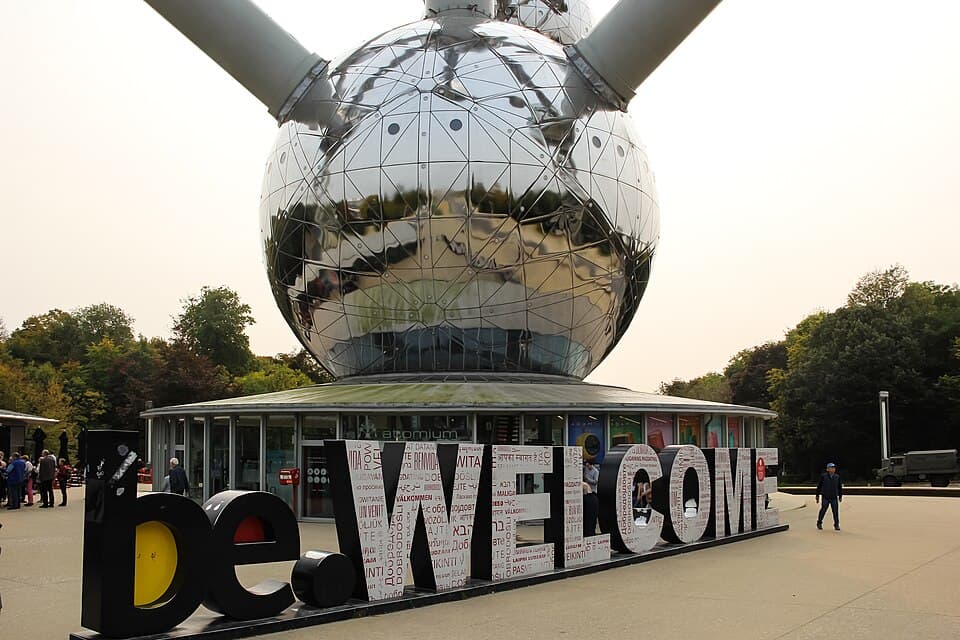
At the foot of the monument sits a modern glass entrance pavilion. This sleek addition was not part of the original 1958 design; instead, it was added during a massive renovation project that took place between 2004 and 2006. By the early 2000s, nearly fifty years of exposure to the elements had taken a toll on the Atomium. The original aluminum skin of the spheres had become corroded, dull, and stained, losing the brilliant shine it had during the World's Fair. The renovation was a massive undertaking, costing approximately 26 million euros. It wasn't just a cosmetic fix; it was a complete overhaul to ensure the building's survival for the next half-century. While the primary goal was to replace the exterior surfaces, the addition of the glass pavilion modernized the visitor experience, providing a contemporary gateway into the historical structure. This renovation saved the Atomium from potential demolition and restored its status as a gleaming beacon on the Brussels skyline. As you enter, notice how the transparency of the glass pavilion contrasts with the solid, reflective surfaces of the spheres rising above you.
Expo 58: The Permanent Collection
Exploring the history of the 1958 World's Fair inside the base sphere.
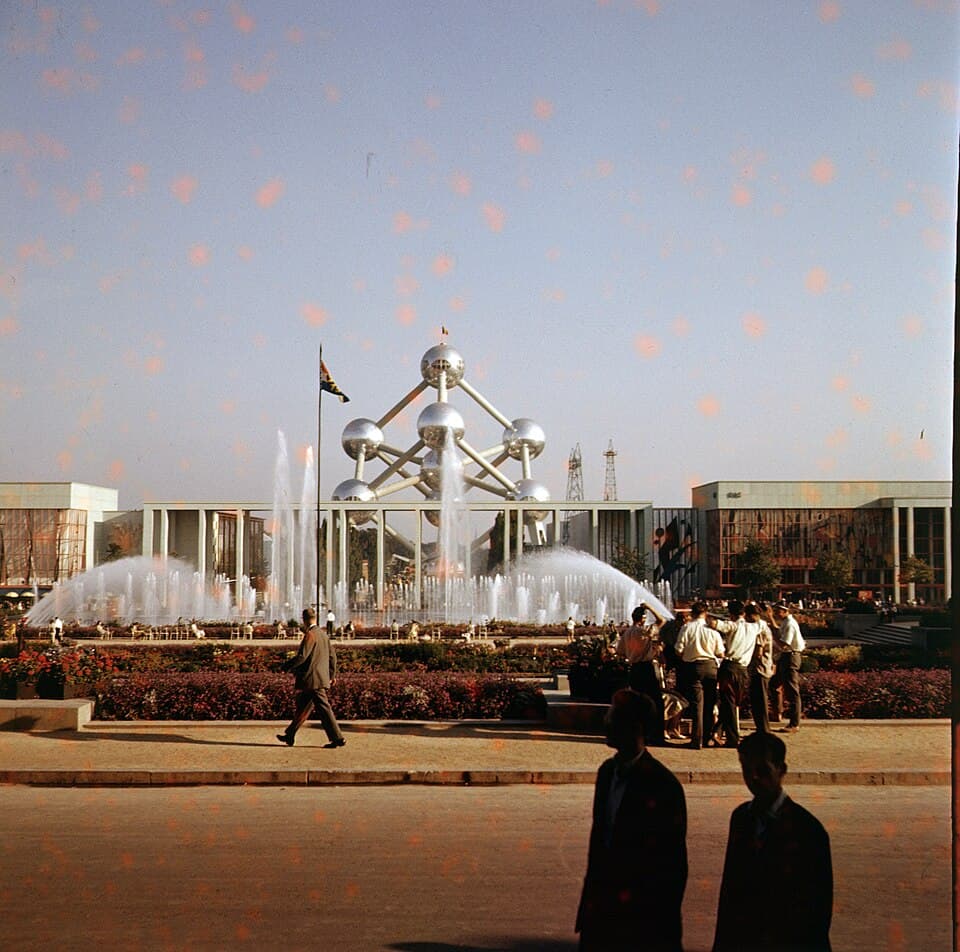
A World of Optimism
To truly understand the Atomium, you have to imagine it as it appeared during the 1958 World's Fair. This was the first major international exhibition held after the end of World War II, and it carried an enormous symbolic weight. For Belgium and the world, it was a moment to turn away from the horrors of the past and look toward a future defined by scientific discovery, technological innovation, and, most importantly, global peace. In 1958, the fairgrounds were a bustling city of futuristic pavilions, and the Atomium was the undisputed centerpiece. Interestingly, it was never intended to be a permanent part of the Brussels landscape. Like most World's Fair structures, it was supposed to be dismantled after the six-month event ended. However, its popularity was so overwhelming and it became such an instant icon for the city that the decision was made to let it stand. Over the decades, it evolved from a temporary exhibition hall into the beloved national symbol it is today, a permanent reminder of a time when the world looked at the atom not with fear, but with hope.
Ascent through the Tubes
The futuristic experience of traveling through the 3-meter wide connecting tubes via Europe's longest escalators.
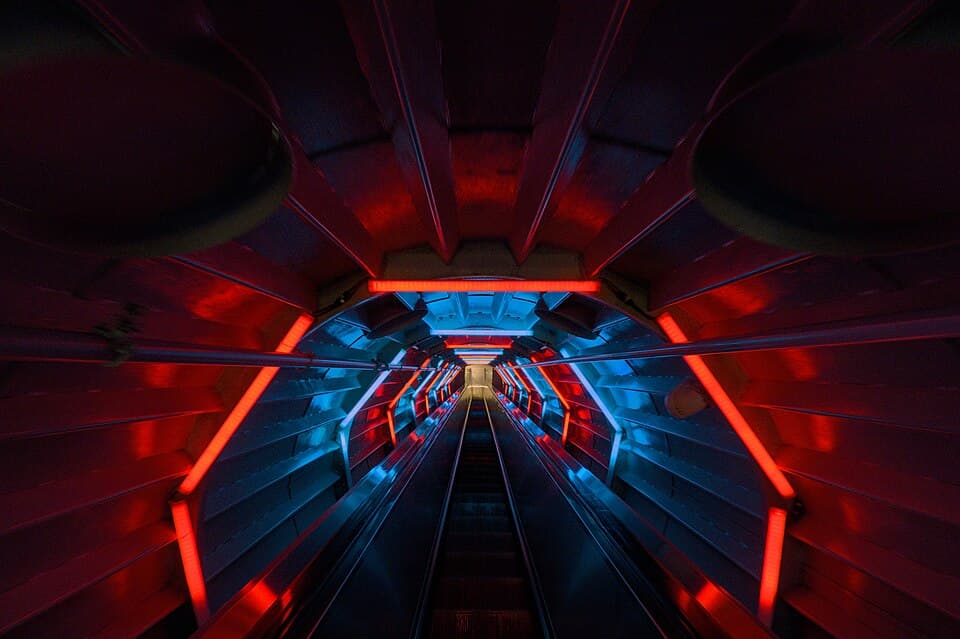
The Light Experience
Moving between the spheres of the Atomium is an experience unlike any other. You travel through connecting tubes that are three meters wide—just enough space for people to move comfortably while maintaining an intimate, enclosed feeling. During the major renovation in the early 2000s, these corridors were transformed into an immersive 'light experience.' Programmable LED light shows now line the walls of the tubes, using patterns and colors to enhance the feeling of motion. The goal of this lighting design is to emphasize the sensation of traveling inside a high-tech machine or through the microscopic bonds of a molecular structure. As you move along, the lights pulse and change, creating a sense of futuristic wonder that mirrors the original 1958 vision of atomic travel. It transforms a simple walk between rooms into a sensory journey. These effects help bridge the gap between the historical 1950s architecture and modern technology, making the transition between the spheres feel like a leap forward in time.
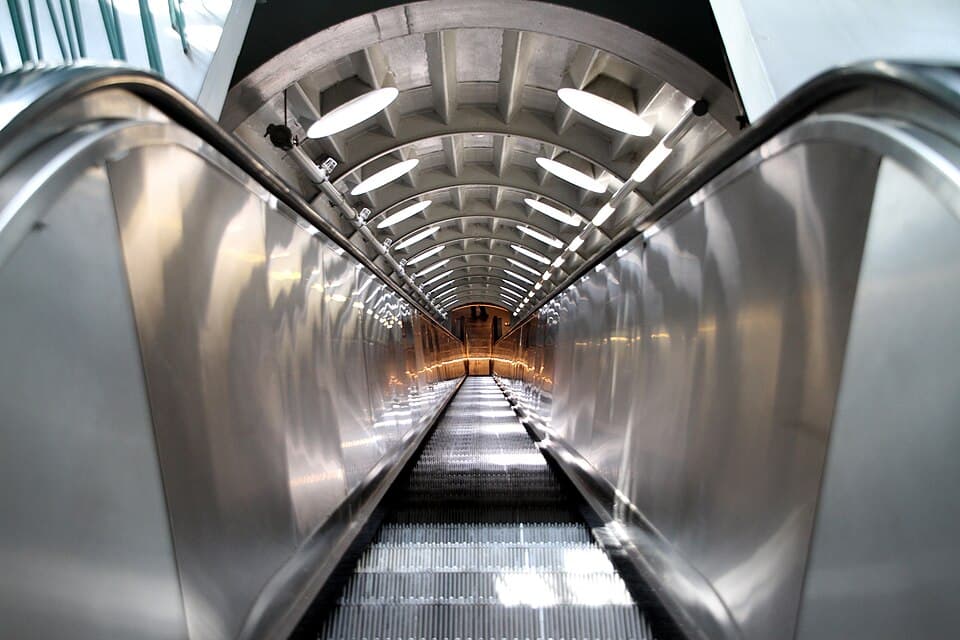
The Longest Escalator
One of the most exciting ways to travel through the Atomium’s diagonal tubes is by escalator. When these were first installed for the 1958 World's Fair, they were among the longest escalators in all of Europe. For many visitors at the time, this was their first encounter with such advanced technology, making the journey through the tubes as much of an attraction as the exhibitions themselves. The escalators were a key component of the 'futuristic' experience. Designers wanted visitors to feel like they were being whisked through the atomic structure with effortless, modern ease. Even today, standing on these long escalators as they climb through the narrow, lit tubes is a highlight of the visit. It provides a unique perspective on the engineering of the building, allowing you to see the internal structure of the tubes as you rise. The combination of the mechanical movement and the surrounding light shows creates a truly cinematic experience, capturing the mid-century dream of a high-tech, automated future.
The Art and Science Spheres
The mid-level spheres dedicated to permanent installations and the unique geometric framework of the structure.
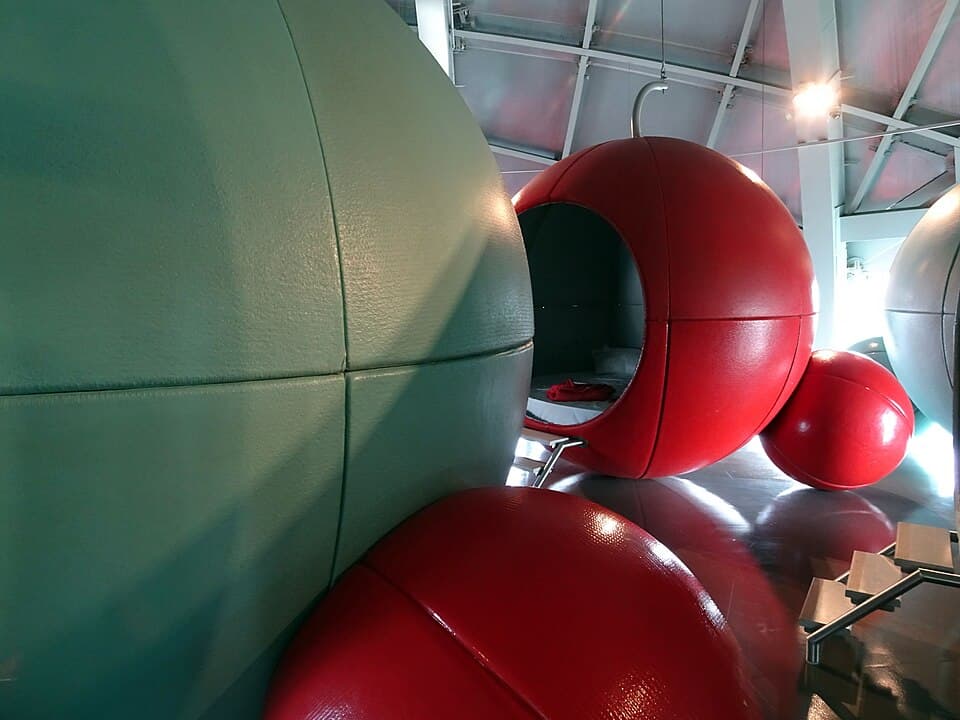
The Kids' Sphere
One of the spheres has a very special and playful purpose. Known as the 'Kinderbol,' or Kids' Sphere, this space is dedicated entirely to educational programs. Inside, you will see several unique, raindrop-shaped pods suspended within the spherical room. These aren't just for show; they are actually small sleeping quarters. School groups from all over Belgium and beyond can participate in overnight programs here. Children get the chance to sleep inside these futuristic pods, waking up in the heart of one of the world’s most famous landmarks. During their stay, they participate in workshops and lessons focused on architecture, urban life, and the history of the Atomium. The idea is to inspire the next generation of designers and thinkers by letting them experience this architectural wonder firsthand. It’s a wonderful example of how the Atomium continues to serve its original mission of education and progress, adapting its spaces to serve the community in creative and meaningful ways.
Spherical Navigation
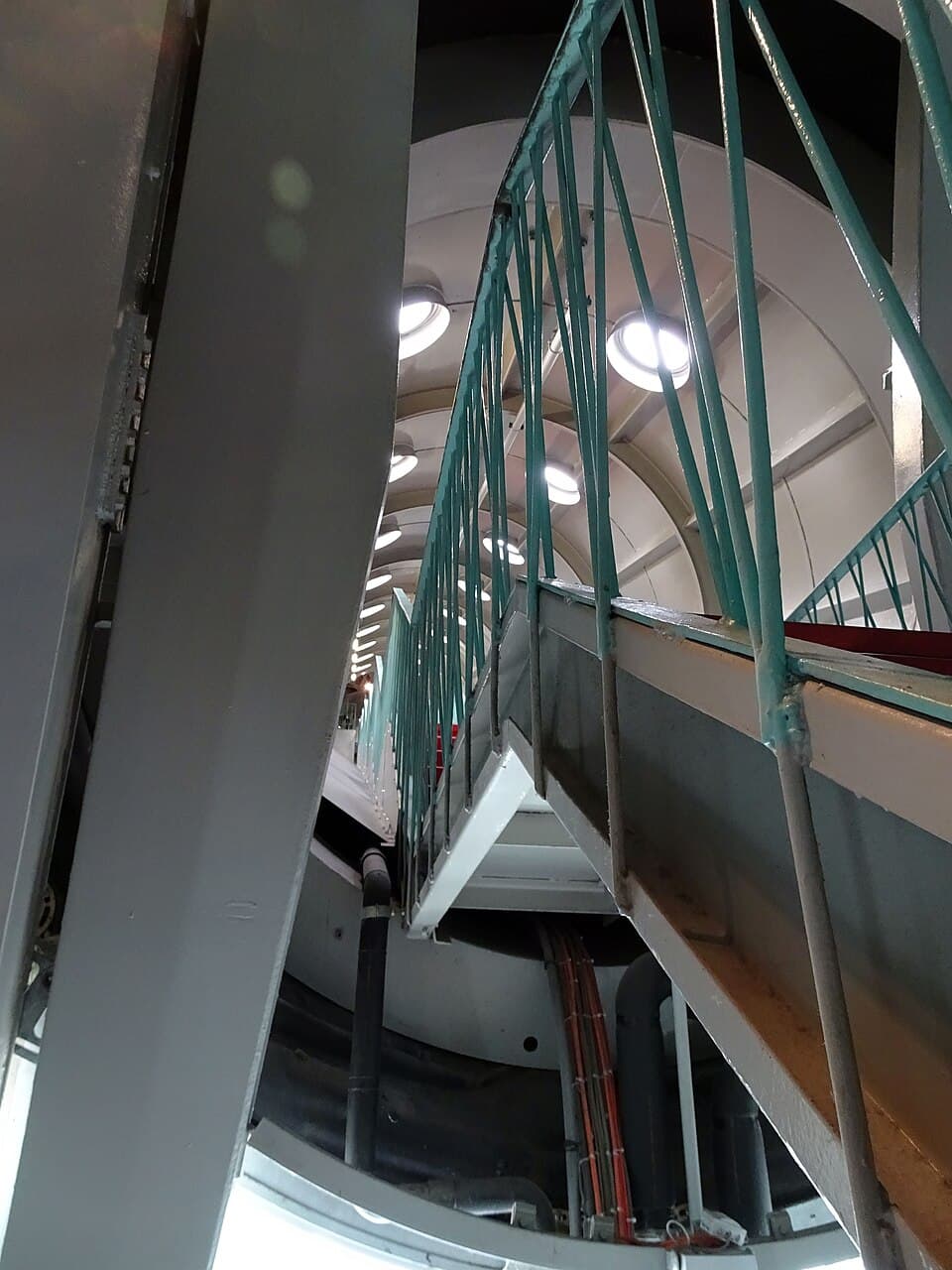
Navigating the interior of the Atomium is a constant exercise in creative space management. Because the building is based on a tilted cubic lattice rather than a traditional vertical frame, the designers had to be very clever about how people move between levels. As you explore, you will encounter a mix of high-speed lifts, long diagonal escalators, and narrow, winding metal stairs. Notice how the stairs and service pipes are often integrated into the same tight spaces. Because every inch of the spheres and tubes is valuable, there is very little wasted room. In some areas, you can see the complex network of conduits and structural supports that keep the 'molecule' functioning. This non-vertical layout means that a simple trip from one 'atom' to the next often involves a combination of different transport methods. It adds to the feeling of being inside a complex, multi-dimensional puzzle. Whether you are gliding up an escalator or carefully stepping down a metal staircase, the architecture constantly reminds you that you are moving through a space defined by scientific geometry rather than traditional building rules.
The Stainless Steel Skin
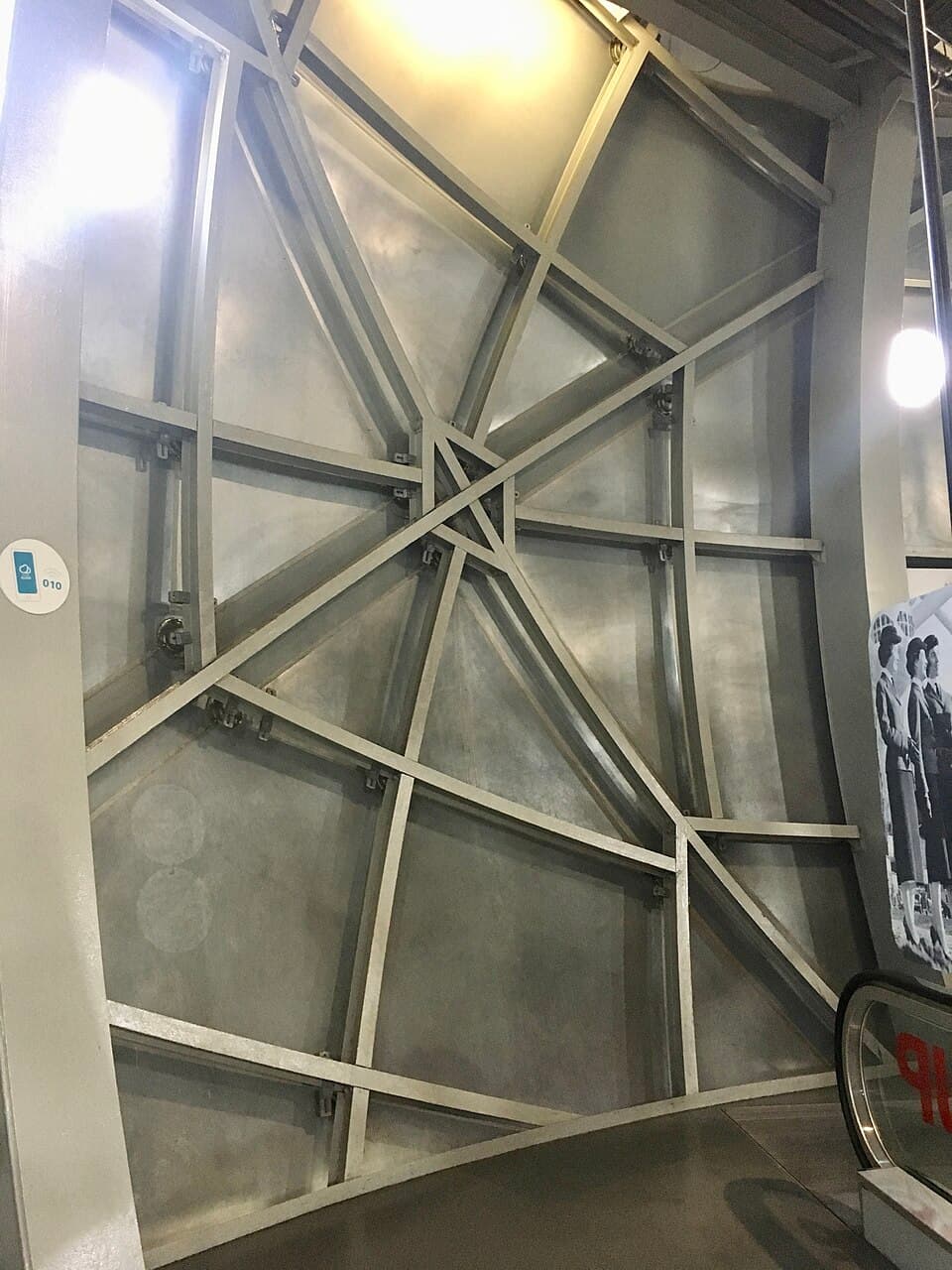
The brilliant, mirror-like finish you see on the Atomium today is the result of a significant material transformation. Each of the nine spheres is composed of forty-eight large triangular plates. Originally, these plates were made of aluminum. While aluminum was a very modern material in 1958, it proved difficult to maintain over the long term. Decades of rain and city pollution caused the aluminum to oxidize, turning the once-shiny monument into a dull, grey structure. During the 2004 renovation, the decision was made to replace the original skin entirely. The old aluminum was swapped out for high-grade, laser-cut stainless steel. This new material was chosen for its durability and its ability to remain shiny and rust-free for at least another fifty years with minimal maintenance. This change restored the Atomium to its original glory, allowing it to reflect the sky and the surrounding city with stunning clarity once again. When you look at the spheres from the outside, you are seeing forty-eight precision-engineered triangles working together to create a perfect, shimmering globe.
The Summit Panorama
The highest point of the Atomium, offering a 360-degree view of Brussels from 102 meters up.
The Brussels Panorama
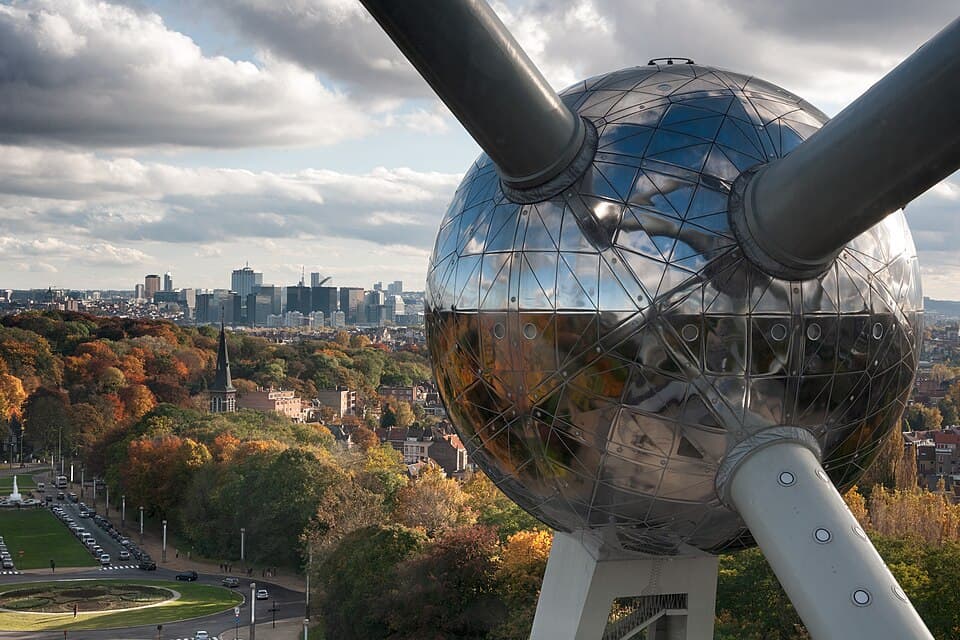
Standing in the summit sphere, one hundred and two meters above the ground, you have reached the 'payoff' moment of the tour. The panoramic windows offer a spectacular three-sixty-degree view of Brussels and the surrounding countryside. From this height, the city unfolds beneath you like a giant map. You can see the modern skyscrapers of the business district, the historic spires of the city center, and the vast green spaces of the nearby parks. On a clear day, the visibility is truly impressive, and it is often possible to see as far as the city of Antwerp, located about forty kilometers to the north. This sphere was designed to be the crowning jewel of the Atomium, a place where visitors could literally look down on the progress of the world. It provides a sense of perspective on both the building’s place in the landscape and Belgium’s place in the world. Take a moment to walk the full circle of the sphere, enjoying the transition from urban density to the rolling hills of the Belgian horizon.
Engineering Legacy and Osseghem Park
Concluding the tour with a look at the structural symmetry and the surrounding landscape.
The Night Light Show
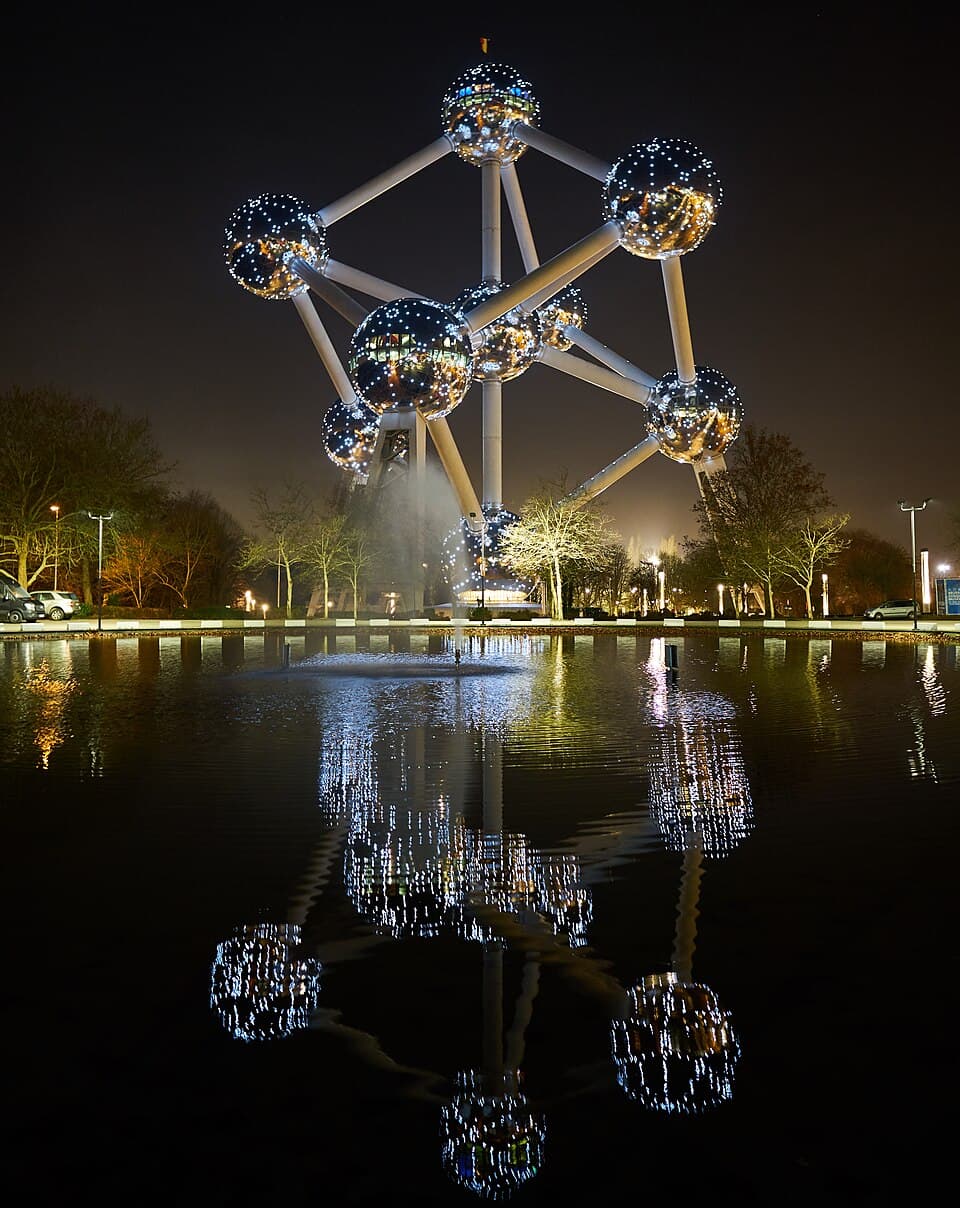
When the sun sets, the Atomium takes on a whole new life through its sophisticated night lighting system. The circular patterns of LED lights that dot the surface of each sphere are not just for decoration; they were carefully designed to mimic the movement of electrons as they whirl around an atomic nucleus. This dynamic light show brings the building's scientific metaphor to life in the dark, making the iron crystal appear as though it is humming with energy. During the major renovation in the mid-2000s, these lighting effects were modernized to be more vibrant and energy-efficient. As you watch the lights pulse and travel across the shiny surfaces, it is easy to feel as though you are witnessing a massive, high-tech machine at work. The reflection of these lights in the nearby water features adds to the spectacle, creating a shimmering mirror image of the molecular structure. This nightly display ensures that the Atomium remains a constant beacon on the Brussels skyline, a glowing reminder of the optimism that first gave birth to this structure over half a century ago.
Want to hear the rest?
Download the Stanza app to unlock all 19 stops and full GPS-guided navigation.
Frequently Asked Questions
How long does the Atomium audio tour take?
The Atomium audio guide includes 19 narrated stops. Most visitors spend 45 minutes to 1.5 hours exploring the complete tour, though you can listen at your own pace and skip or revisit any stop.
Is the Atomium audio guide available in my language?
Stanza supports 15 languages: English, Spanish, French, German, Italian, Portuguese, Russian, Japanese, Chinese, Korean, Arabic, Hindi, Polish, Dutch, Hebrew. Check the guide in the app to confirm the languages currently available for this tour.
Can I use the audio guide offline at Atomium?
Yes! Download the complete Atomium tour — including all audio, maps, and images — before your visit. The Stanza app works completely offline, so you don't need WiFi or mobile data at the venue.
How much does the Atomium audio guide cost?
The Stanza app is free to download. The current listed price for the Atomium audio guide is $3.99; app-store region and currency may affect the final price.
How do I use the Stanza audio guide at Atomium?
Download the free Stanza app, search for "Atomium", and download the tour. When you arrive at the venue, the app uses GPS to detect your location and automatically plays the relevant narration as you move between points of interest — completely hands-free.
What makes the Stanza audio guide different from other Atomium tours?
Stanza offers GPS-triggered narration that plays automatically as you walk through Atomium — no need to manually select stops. The tour is available in 15 languages, works fully offline, and includes 19 expertly narrated stops with images and historical context.
What other audio guides are available near Atomium?
Stanza offers multiple audio guides in Brussels, Belgium and nearby areas. After downloading the app, browse the map to discover all available tours near Atomium. Each guide can be downloaded for offline use.