Languages
15Angkor Wat Audio Guide
Angkor Wat is an archaeological site in Siem Reap, Cambodia. Explore it with Stanza's guided offline audio tour — narrated in 15 languages.
Quick Facts
13
Stops
15
Languages
100%
Offline
📍 Siem Reap, Cambodia · 13.4125°N, 103.8667°E
About Angkor Wat
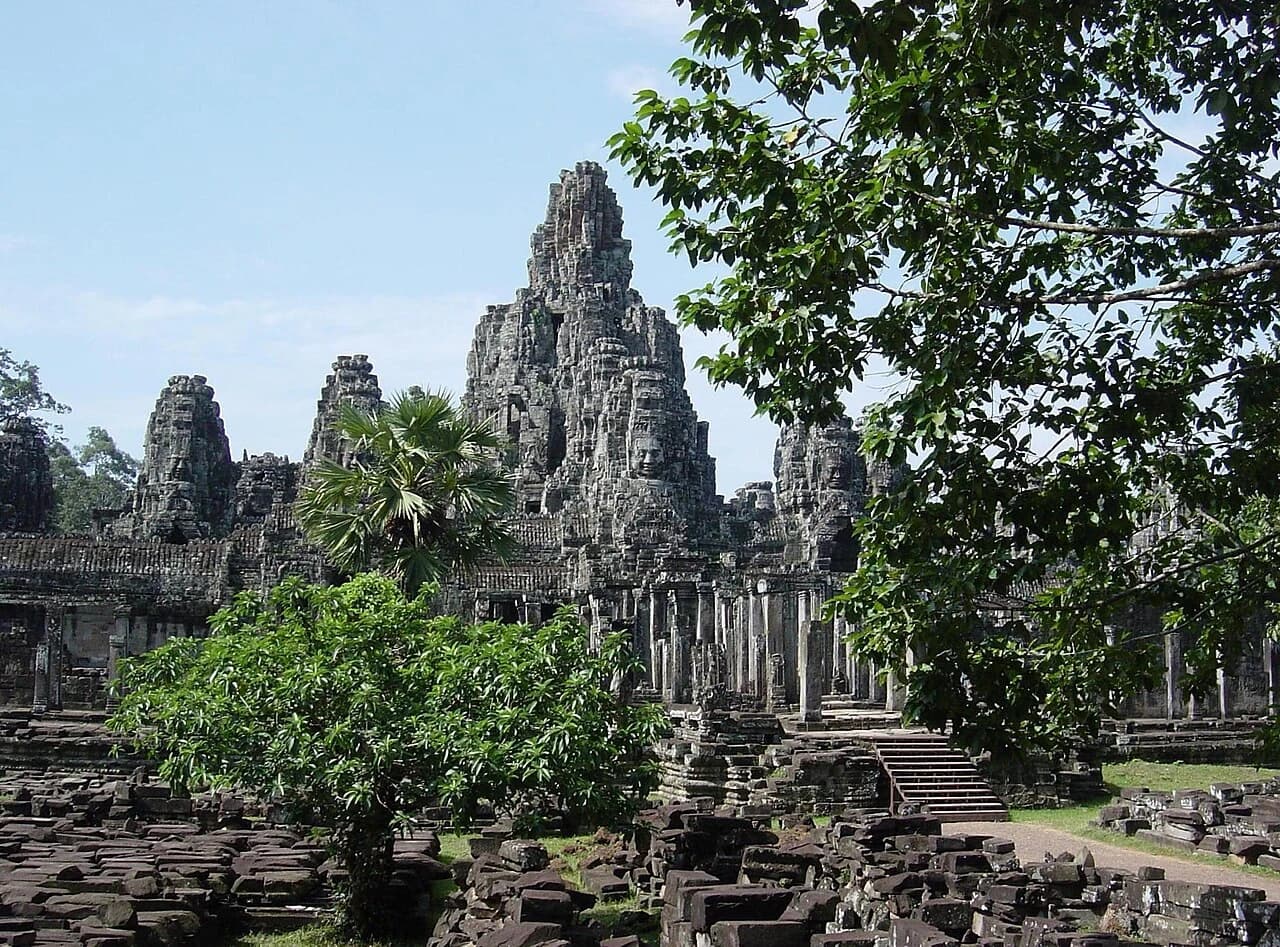
Angkor Wat is a vast Buddhist temple complex in Cambodia, originally constructed as a Hindu temple dedicated to the god Vishnu. It is the largest religious monument in the world and a prime example of Khmer architecture.
This self-guided audio tour features 13 narrated stops organized across 10 sections. As a temple, Angkor Wat offers a unique cultural experience in the heart of Siem Reap, Cambodia.
The Stanza audio guide is available in 15 languages and works entirely offline — download the complete tour including audio narration, maps, and images before your visit. As you walk through Angkor Wat, GPS-triggered narration plays automatically at each point of interest.
Last updated:
What you will hear
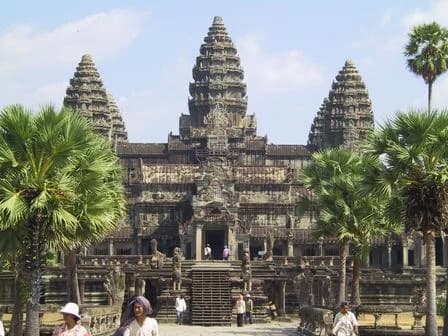
West Gate
The main ceremonial entrance to the temple complex, featuring impressive gopuras and the first glimpse of the sandstone artistry.
West Gate
Welcome to Angkor Wat, a breathtaking testament to human ambition and spiritual devotion. Built by King Suryavarman II in the early 12th century, this temple complex was designed as a miniature universe in stone. You are standing before the West Gate, known as a gopura. In Khmer architecture, this gateway serves a profound purpose: it is the threshold between the human world and the sacred domain of the gods. As you look at the massive sandstone blocks surrounding you, try to imagine the sheer logistics of this construction. It is estimated that nearly 5 million tons of stone were quarried, transported, and meticulously carved to create this entire complex. Every block was fitted together with such precision that many joints are nearly invisible to the naked eye. This gate is just the beginning of a journey intended to mirror the cosmic order, leading you deeper into a landscape where architecture and theology are inextricably linked.
Statue of Vishnu
Known locally as Ta Reach, this eight-armed statue of Vishnu stands in the right-hand tower of the West Gate, marking the temple's original Hindu dedication.
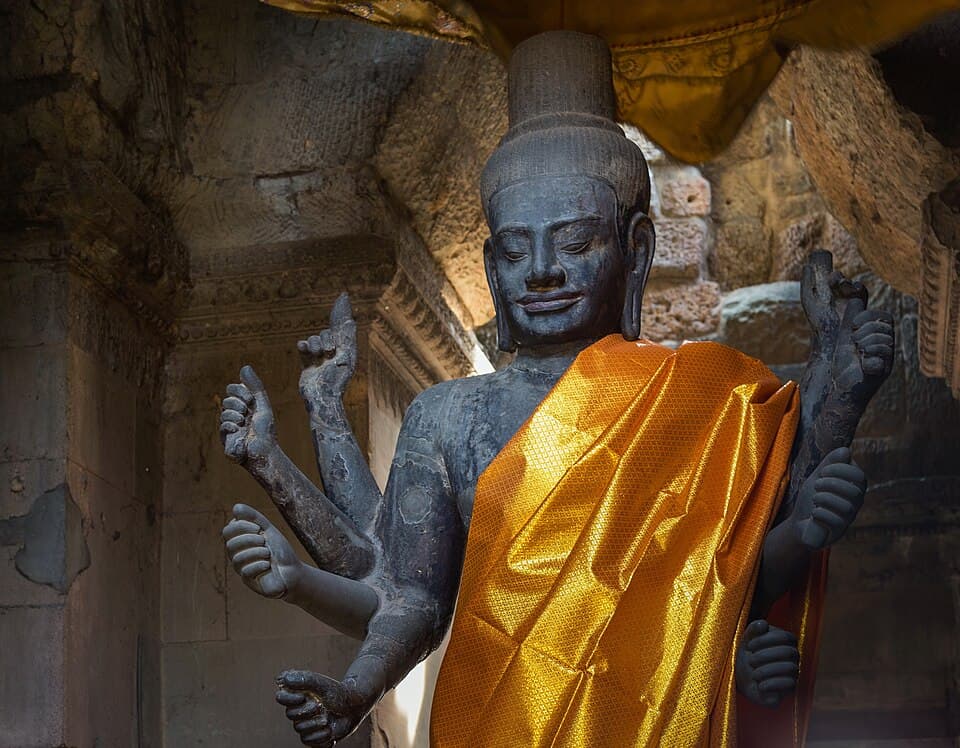
The Eight-Armed Vishnu
This powerful statue represents the deity Vishnu, the original master of this house. Although Angkor Wat is a bustling center for Buddhist worship today, it was originally conceived as a Hindu temple dedicated to Vishnu, the Preserver. This figure serves as a vital reminder of the site's complex religious history. Observe the eight arms radiating from the torso. In Hindu iconography, multiple limbs represent a god's extraordinary power and their ability to reach across the entire universe simultaneously. Each hand would have originally held a symbolic object, such as a conch shell or a discus, though time has claimed some of these details. While the religious identity of the temple shifted over the centuries, this statue remained a focal point of reverence. It stands as a bridge between eras, embodying the spiritual continuity of a site that has seen kingdoms rise and fall, yet remains a sanctuary of immense power.
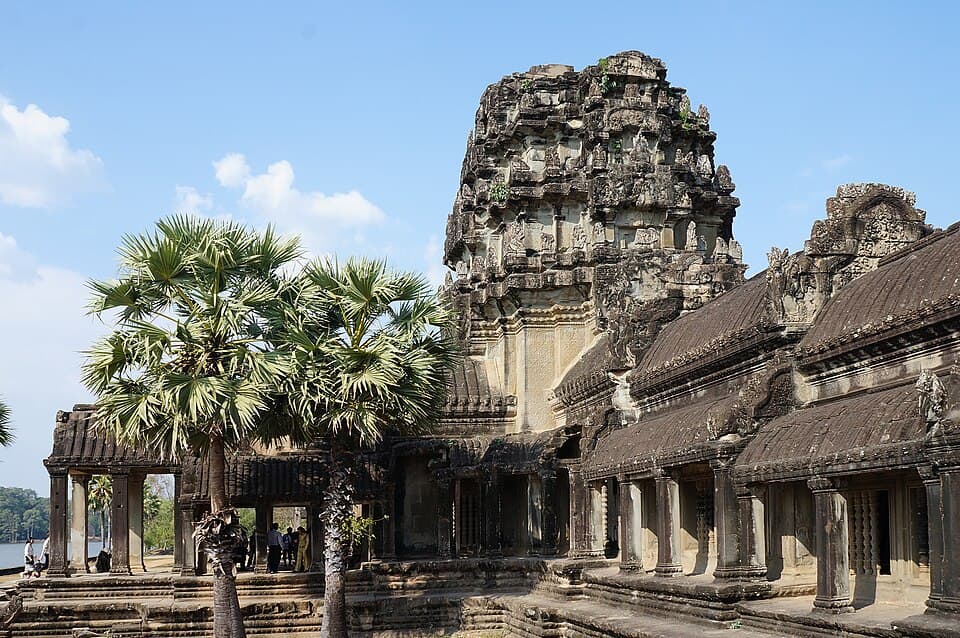
Southern Library
One of two outer libraries flanking the main causeway, these structures likely served as repositories for sacred manuscripts.
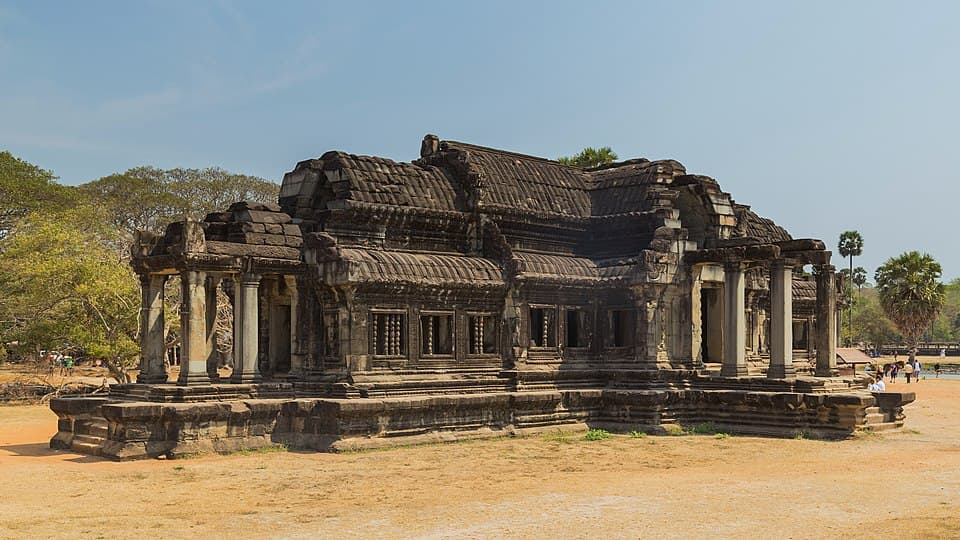
The Southern Library
Standing separately from the main galleries is one of the two freestanding structures known as 'libraries.' Despite the modern name, these weren't public reading rooms as we understand them today. Instead, they likely served as secure repositories for sacred palm-leaf manuscripts. Because organic materials like palm leaves were highly susceptible to the humid jungle climate, these stone structures provided a relatively stable environment for the temple's most holy texts. Notice the architectural sophistication here: the building follows a cruciform, or cross-shaped, plan and features a beautifully elegant, stepped roofline. This design not only added to the temple's grandeur but also helped with water runoff during the monsoon seasons. These buildings were essential to the life of the temple, housing the knowledge, rituals, and myths that sustained the Khmer empire's spiritual heart.
Northern Library
The northern counterpart to the southern library, positioned symmetrically along the grand causeway approach.
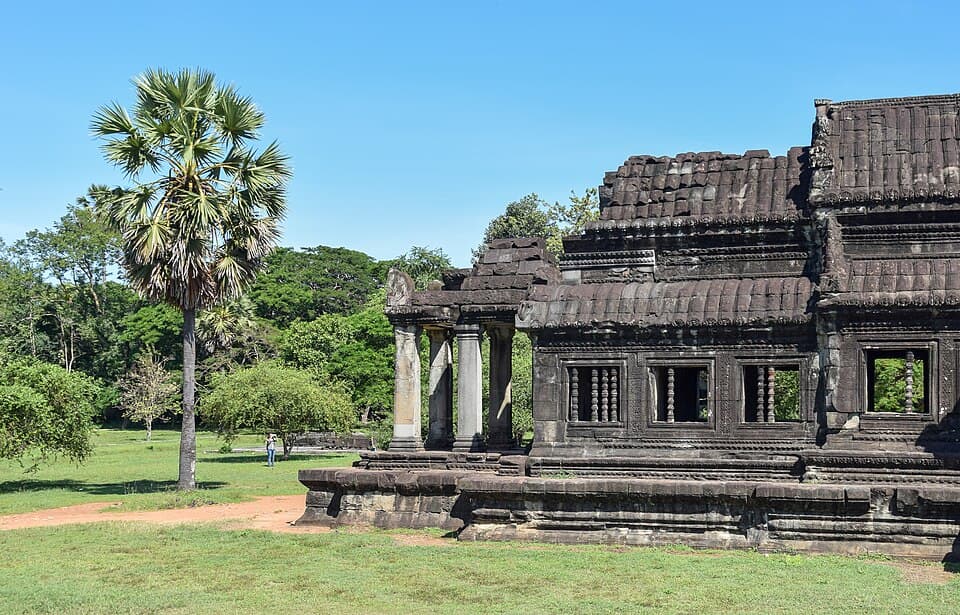
Northern Library
As you observe this building, you might notice it looks familiar. That is because it is the Northern Library, an exact mirror of the southern structure located on the opposite side of the main causeway. This level of precision highlights the Khmer architects' profound obsession with symmetry. For the builders of Angkor Wat, balance was not just an aesthetic choice; it was a deeply spiritual requirement. They believed that by creating a perfectly symmetrical layout, the temple would reflect the 'Dharma,' or the cosmic order and harmony of the universe. If the earthly temple perfectly imitated the heavenly realm, it would ensure prosperity and stability for the kingdom. Every walkway, tower, and library was placed with mathematical rigor to maintain this balance. This commitment to symmetry creates the sense of calm and inevitability that visitors feel as they move through the complex.
Terrace of Honor
The elevated sandstone causeway that leads visitors toward the main temple, offering the most famous panoramic views of the five towers.
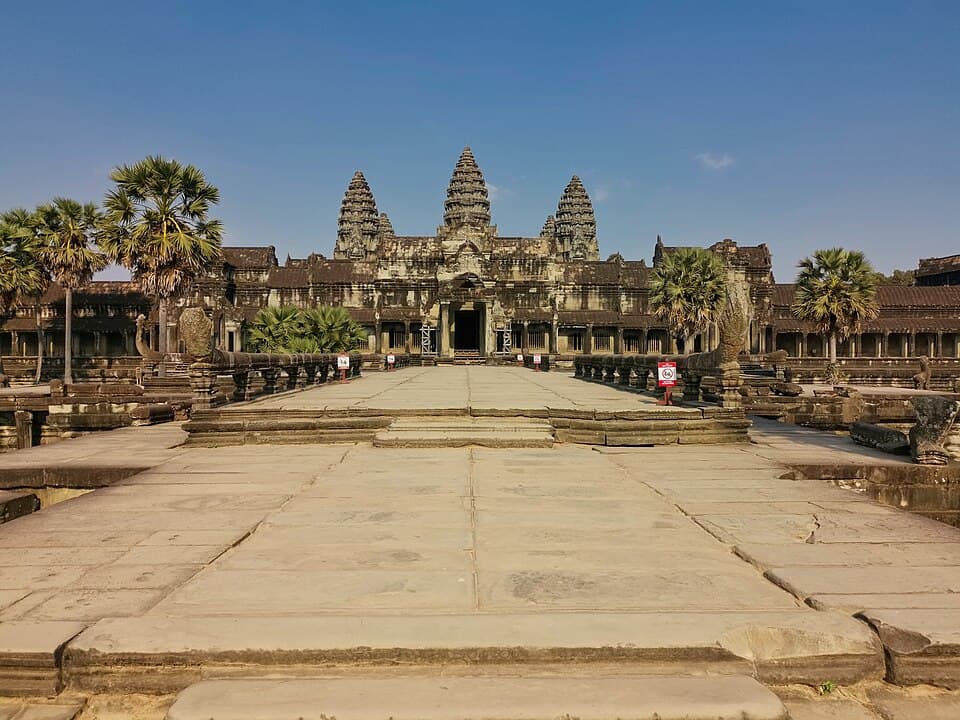
The Grand Causeway
You are now walking across the Grand Causeway, a 250-meter-long sandstone bridge that serves as the main approach to the inner sanctum. In Khmer cosmology, this path represents a 'rainbow bridge,' a symbolic transition connecting the mortal realm you just left with the celestial home of the gods ahead, represented by the five iconic towers. Along the sides of the walkway, you can see the remains of the balustrades. These were carved in the shape of the 'naga,' the multi-headed serpent-gods of the underworld and waters. The naga are more than just decoration; they are the protectors of the temple, standing guard over the entrance. Imagine the processions that have moved across these stones—kings, priests, and pilgrims—all making this same symbolic transition from the mundane to the divine. The sheer scale of the bridge emphasizes the importance of the destination that awaits at the end of the path.
North Gate
A significant secondary gateway providing access through the temple's second enclosure wall.
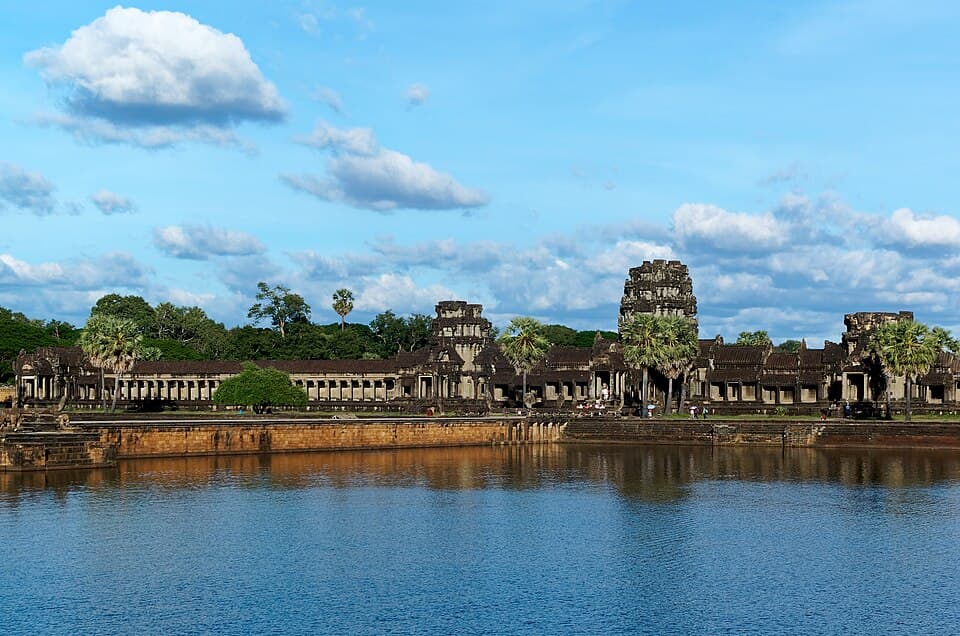
The Sacred Moat
Looking out across the water, it is easy to see the 190-meter-wide moat as a beautiful decorative feature or a defensive barrier. While it certainly served those roles, its primary function was a masterstroke of engineering. The temple of Angkor Wat sits on a foundation of sandy soil. In a region with dramatic shifts between extreme wet and dry seasons, the water table beneath the temple would naturally fluctuate, causing the ground to shift and the heavy stone structures to collapse. The weight of the water in this massive moat creates constant pressure that stabilizes the water table beneath the entire complex. This prevents the sandy foundations from expanding and contracting, ensuring that the millions of tons of stone above remain perfectly level. Even after nearly nine centuries, this ancient hydraulic system continues to protect the structural integrity of the world’s largest religious monument.
Library
The southern inner library, mirroring the northern inner library to maintain perfect temple symmetry.
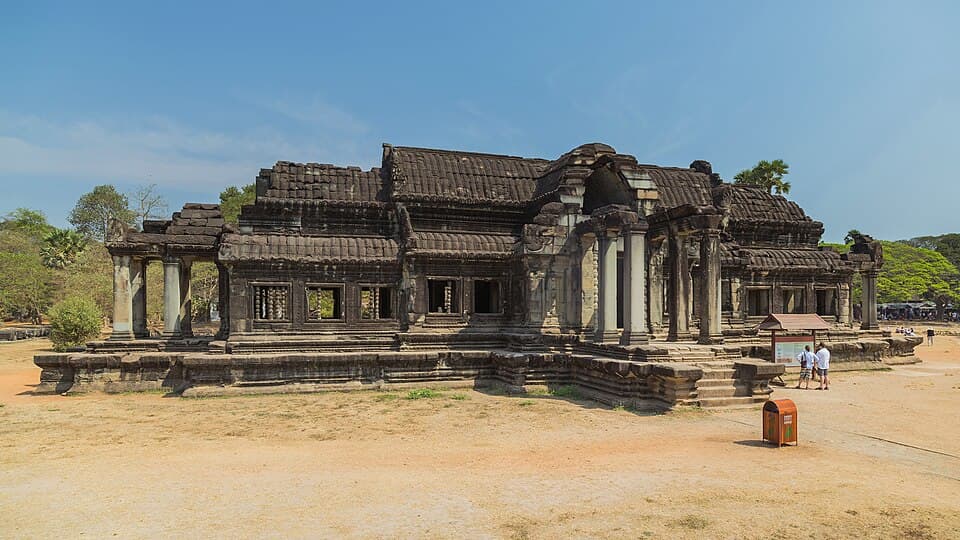
Library
Look up at the construction of the roof overhead. You may notice that the rooms and corridors are quite narrow. This is due to the specific construction technique used by Khmer builders: the corbelled arch. Unlike the true arches found in Roman architecture, which use a central keystone to distribute weight, the Khmer stacked layers of stone closer and closer together until they finally met at the top. While this method was incredibly stable and allowed for the construction of massive towers, it physically limited the span of any interior space. This is why you won't find wide, open halls inside Angkor Wat. Instead, the buildings are characterized by these intimate, sometimes dark galleries. This architectural constraint actually enhanced the spiritual experience, as worshippers moved through narrow, shadowed spaces toward the heart of the temple, creating a sense of mystery and personal devotion within the grand scale of the complex.
South Gate
The southern entrance to the inner enclosure, often decorated with intricate bas-reliefs of celestial dancers.
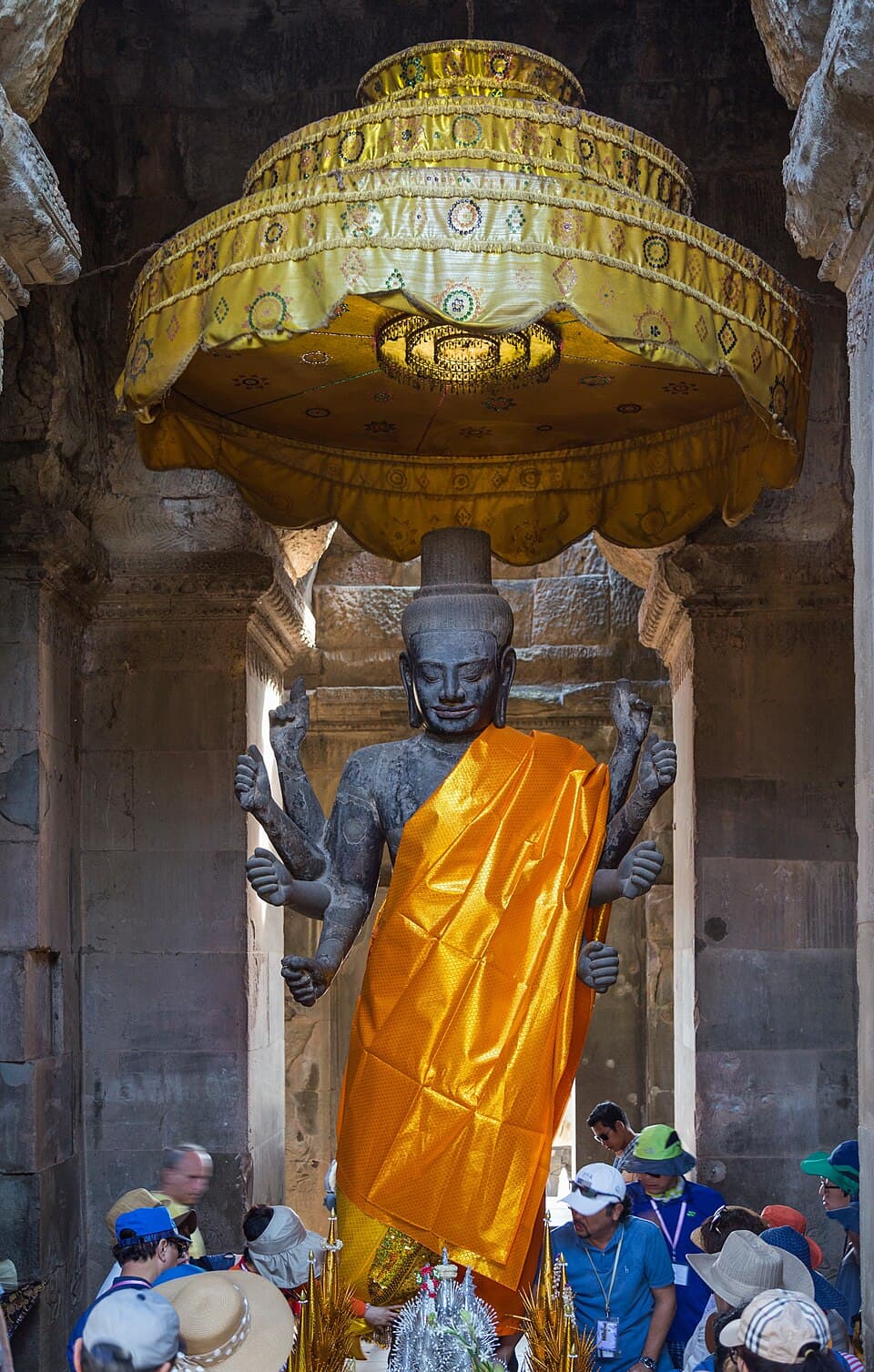
South Gate
This statue, which you see draped in vibrant yellow silk robes and surrounded by offerings of flowers and incense, is known locally as 'Ta Reach.' While it is a representation of the god Vishnu, for the people of Cambodia, it has taken on a unique life as the spiritual protector of Angkor Wat. The presence of these offerings and the care taken to dress the figure prove that Angkor Wat is far from a dead monument or a mere archaeological site. It remains a living, breathing place of worship and pilgrimage. Visitors from across the country and the world come here to pay their respects, seek blessings, and connect with their heritage. This statue serves as the bridge between the ancient Khmer Empire and modern Cambodian culture. It reminds us that while the kings who built these stones are long gone, the spiritual energy and cultural significance of the site continue to resonate with every person who leaves an offering at its feet.
Grande Inscription d'Angkor
A critical historical text carved into the stone, providing insights into the temple's later history and royal decrees.
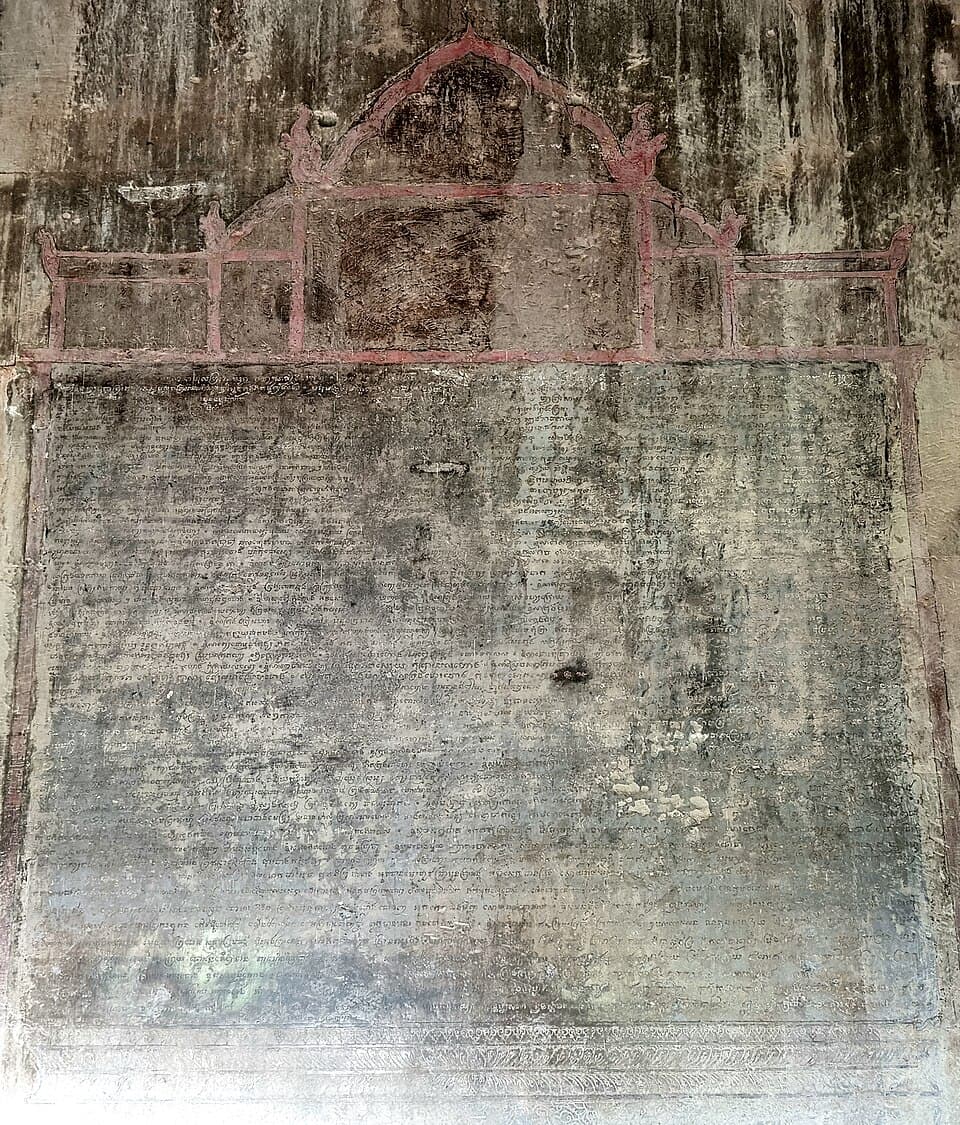
The Grand Inscription
These lines of text carved into the wall are more than just ancient graffiti; they are a vital historical document known as the Grand Inscription. Dating from the 16th century, this text was added long after the original construction of the temple. It provides historians with crucial clues about what happened to Angkor Wat after the fall of the empire's capital. The inscription documents a major restoration of the site and, perhaps more importantly, its official transition from a Hindu temple to a Theravada Buddhist monastery. This shift is why you see so many Buddhist statues and monks at the site today. Crucially, this text proves that Angkor Wat was never truly 'lost' or abandoned, as some early European explorers claimed. Instead, it remained a site of deep significance, cared for and adapted by successive generations who recognized its immense spiritual value and ensured its survival through the centuries.
East Gate
The quietest exit of the temple, this gate leads toward the forest and offers a peaceful alternative to the crowded main entrance.
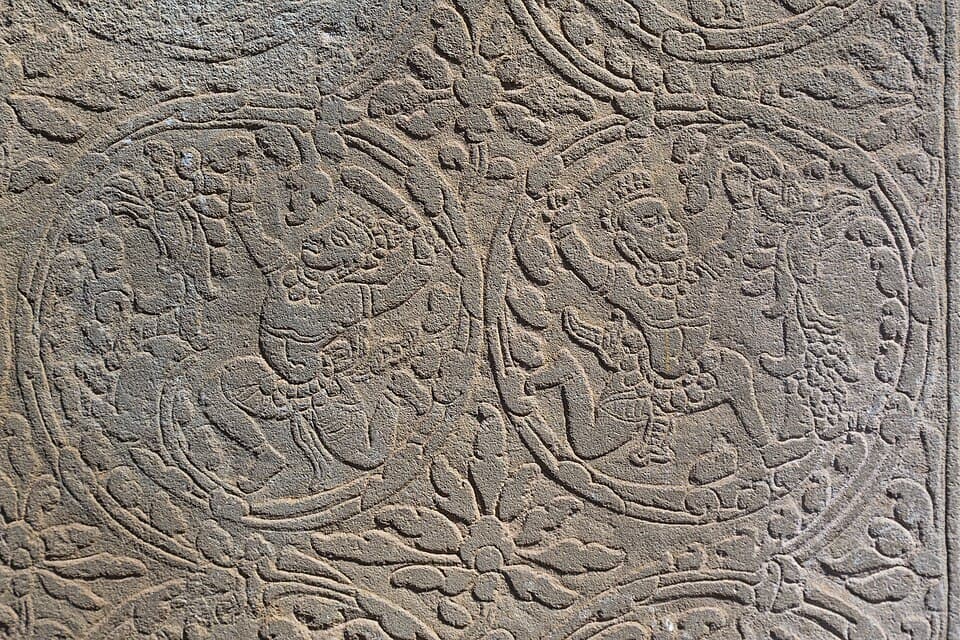
Celestial Medallion Carvings
Look at the energy and movement captured in these circular medallion carvings. They depict dynamic figures, often interpreted as celestial beings or divine dancers, known as Apsaras or Devatas, inhabiting the heavenly realm. These medallions are scattered throughout the temple, tucked into corners and along the bases of pillars, showing that no detail was too small for the Khmer artisans. The purpose of such exhaustive decoration was to reinforce the temple's identity as a microcosm of the universe. By carving these figures into every available surface, the architects ensured that every inch of the temple mirrored the paradise of the gods. As you walk through the galleries, these dancing figures create a sense of life and rhythm within the heavy stone walls. They serve as a constant reminder to visitors that they are not just in a building, but in a space designed to bridge the gap between earth and heaven, where every element celebrates the divine.
Want to hear the rest?
Download the Stanza app to unlock all 13 stops and the complete guided audio tour.
Frequently Asked Questions
How long does the Angkor Wat audio tour take?
The Angkor Wat audio guide includes 13 narrated stops. Most visitors spend 45 minutes to 1.5 hours exploring the complete tour, though you can listen at your own pace and skip or revisit any stop.
Is the Angkor Wat audio guide available in my language?
Stanza supports 15 languages: English, Spanish, French, German, Italian, Portuguese, Russian, Japanese, Chinese, Korean, Arabic, Hindi, Polish, Dutch, Hebrew. Check the guide in the app to confirm the languages currently available for this tour.
Can I use the audio guide offline at Angkor Wat?
Yes! Download the complete Angkor Wat tour — including all audio, maps, and images — before your visit. The Stanza app works completely offline, so you don't need WiFi or mobile data at the venue.
How much does the Angkor Wat audio guide cost?
The Stanza app is free to download. The current listed price for the Angkor Wat audio guide is $2.99; app-store region and currency may affect the final price.
How do I use the Stanza audio guide at Angkor Wat?
Download the free Stanza app, search for "Angkor Wat", and download the tour. When you arrive at the venue, the app uses GPS to detect your location and automatically plays the relevant narration as you move between points of interest — completely hands-free.
What makes the Stanza audio guide different from other Angkor Wat tours?
Stanza offers GPS-triggered narration that plays automatically as you walk through Angkor Wat — no need to manually select stops. The tour is available in 15 languages, works fully offline, and includes 13 expertly narrated stops with images and historical context.
What other audio guides are available near Angkor Wat?
Stanza offers multiple audio guides in Siem Reap, Cambodia and nearby areas. After downloading the app, browse the map to discover all available tours near Angkor Wat. Each guide can be downloaded for offline use.