Languages
15Angkor Thom Audio Guide
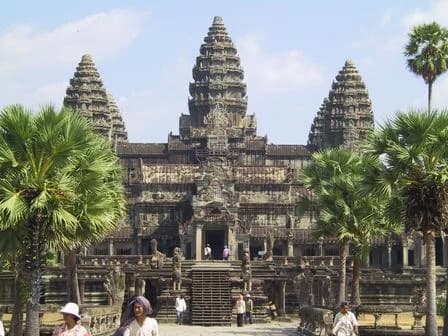
Angkor Thom is an archaeological site in Siem Reap, Cambodia. Explore it with Stanza's guided offline audio tour — narrated in 15 languages.
Quick Facts
25
Stops
15
Languages
100%
Offline
📍 Siem Reap, Cambodia · 13.4433°N, 103.8597°E
About Angkor Thom
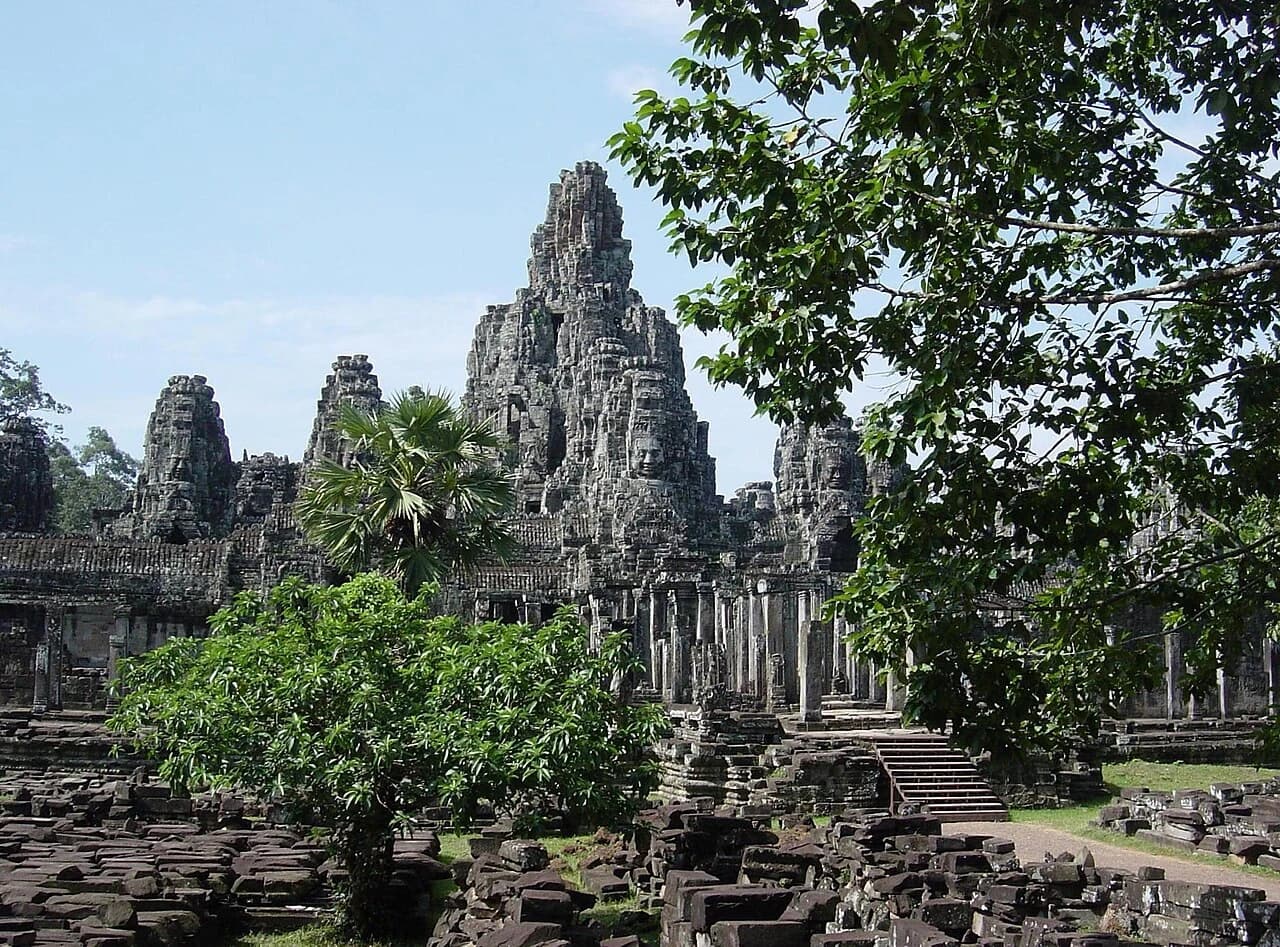
Angkor Thom is an expansive archaeological site in Cambodia, serving as the last capital city of the Khmer Empire. It encompasses several temples and ancient structures within its walls.
This self-guided audio tour features 25 narrated stops organized across 7 sections. As a archaeological site, Angkor Thom offers a unique cultural experience in the heart of Siem Reap, Cambodia.
The Stanza audio guide is available in 15 languages and works entirely offline — download the complete tour including audio narration, maps, and images before your visit. As you walk through Angkor Thom, GPS-triggered narration plays automatically at each point of interest.
Last updated:
What you will hear
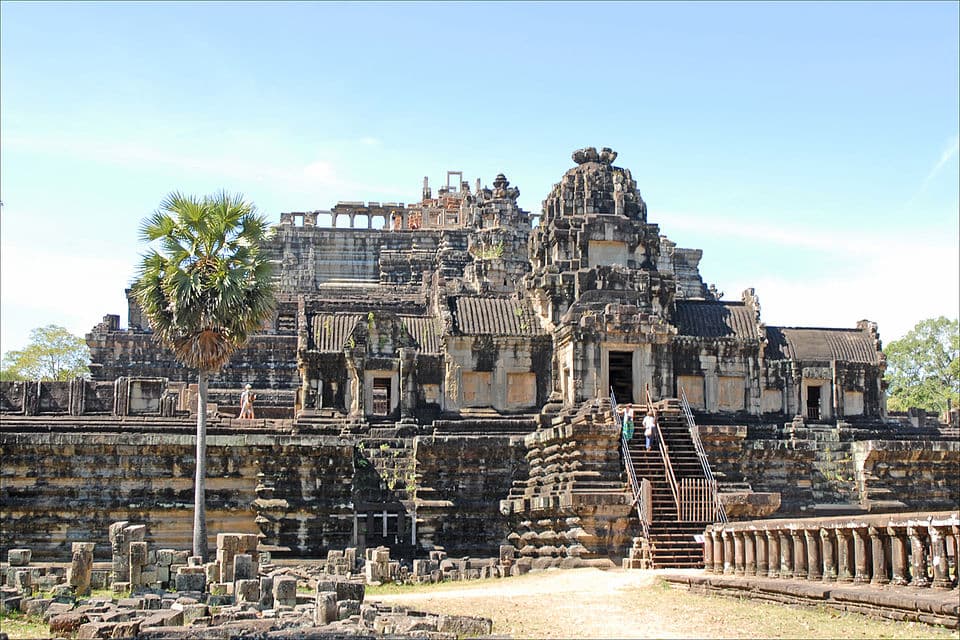
Baphuon temple
A massive 11th-century temple mountain representing Mount Meru, recently restored after one of the most complex archaeological projects in history.
Baphuon temple
Standing before you is the Baphuon, a monumental 'Temple Mountain' that dates back to the mid-11th century. This makes it significantly older than the surrounding walls of Angkor Thom. Like many great Khmer temples, it was built as a symbolic representation of Mount Meru, the sacred five-peaked mountain that stands at the center of the universe in Hindu and Buddhist mythology. Originally, this was a Hindu temple dedicated to the god Shiva, and it was once one of the most richly decorated sites in the entire city. In fact, an early Chinese traveler described it as a 'copper tower' of truly impressive proportions. However, in the late 15th century, the temple was converted into a Buddhist site. This transition is most famously seen on the back of the temple, where stones from the original structure were reused to create a massive, 70-meter-long reclining Buddha figure, though it remains difficult for the untrained eye to distinguish from the weathered ruins. The sheer size of the Baphuon is a testament to the power of the kings who ruled before the city of Angkor Thom was even conceived, laying the architectural groundwork for the massive capital that would eventually surround it. Its steep tiers were designed to humble any who approached, physically manifesting the distance between the human world and the heavens.
The Baphuon Causeway
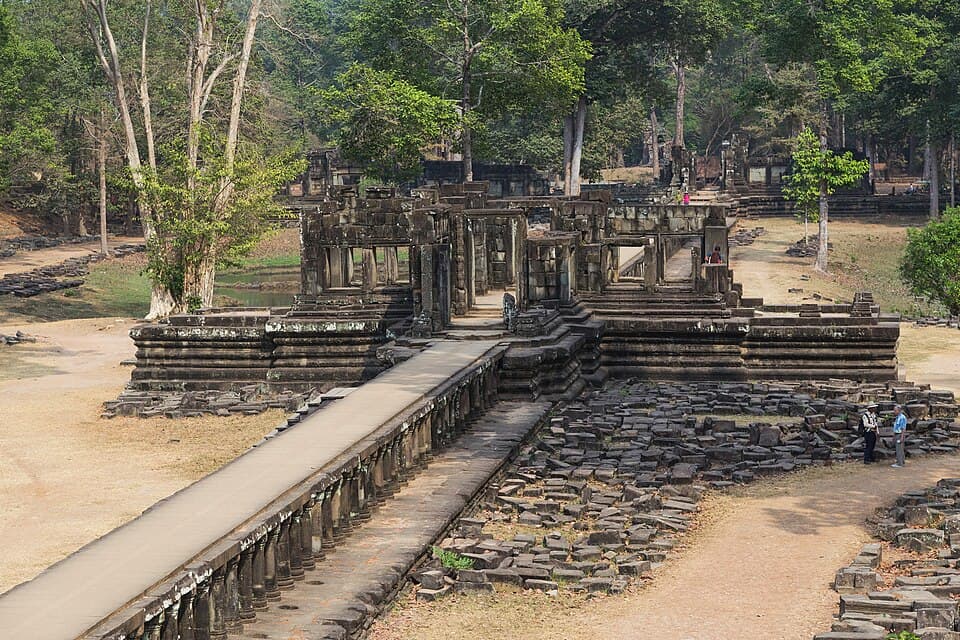
Stretching out before the Baphuon is a magnificent 200-meter-long elevated causeway. Supported by three rows of short sandstone pillars, this bridge was designed to raise the approaching worshipper above the ground, creating a formal, sacred transition into the temple proper. However, the story of this causeway and the temple it leads to is one of the most incredible tales of modern archaeology. In the 1960s, the Baphuon was in danger of collapse, so archaeologists took it apart piece by piece to reinforce the foundation, carefully numbering and cataloging over 300,000 sandstone blocks. Then, tragedy struck. During the Khmer Rouge era in the 1970s, the detailed records and plans for the reconstruction were destroyed. When work resumed in the 1990s, the site was dubbed the 'world's largest jigsaw puzzle.' For over a decade, experts had to painstakingly identify where each of those thousands of blocks belonged based on their shapes and carvings. What you see today is a triumph of international cooperation and scientific dedication. As you walk this path, imagine the monumental effort it took to reassemble this ancient bridge, ensuring that the legacy of the Khmer architects could be shared with the world once again. The causeway serves as a bridge not just between spaces, but between the ancient past and the present.
Preah Palilay
A charming, smaller temple north of the Royal Palace, known for its tall chimney-like tower and the way the forest has reclaimed its stones.
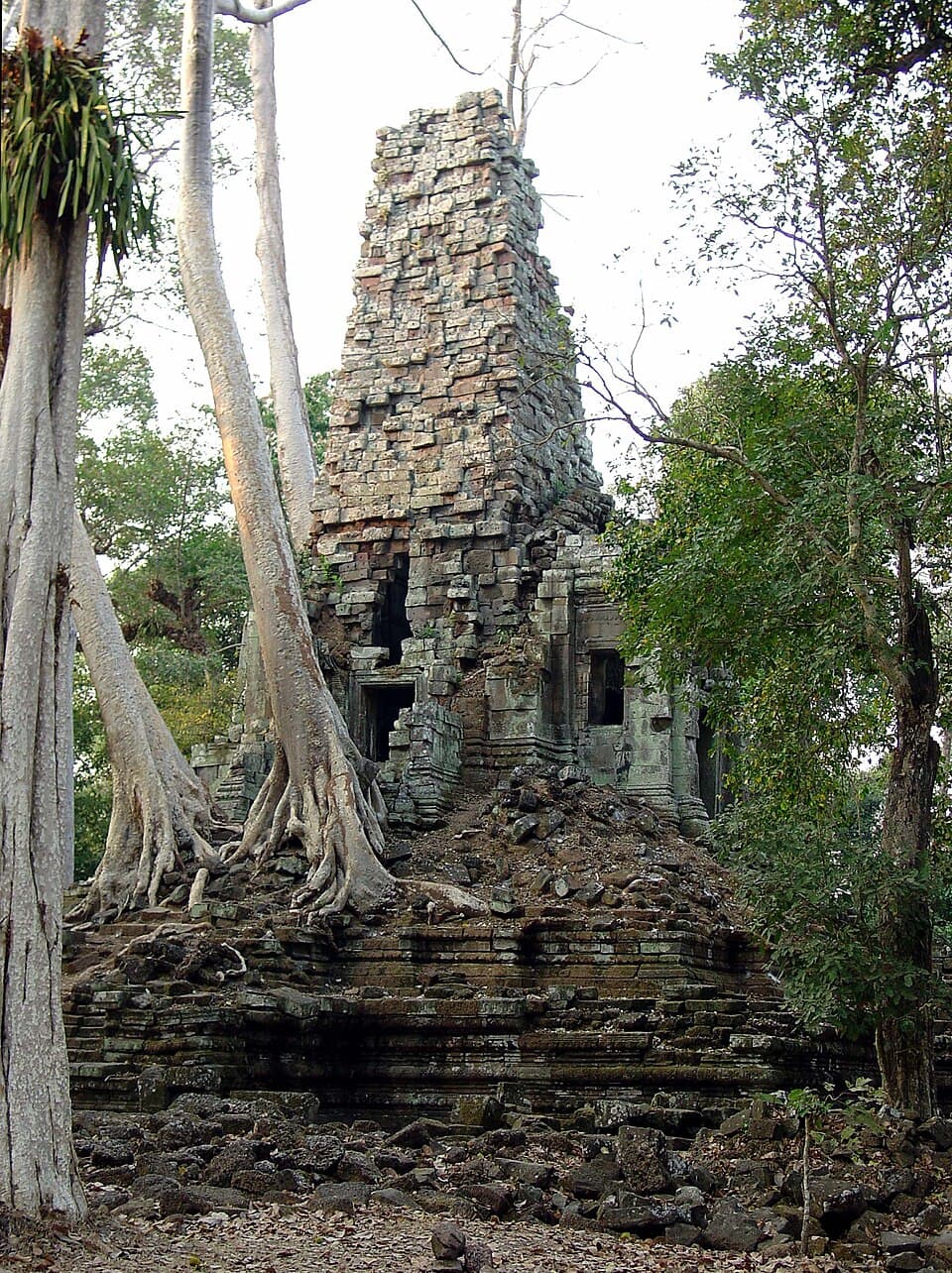
Nature Reclaiming the Stone
As you wander through these ruins, you'll see one of the most famous sights of Angkor: nature literally reclaiming the city. Look at the massive strangler fig and silk-cotton trees that have taken root directly on top of the stone walls and towers. Their thick, pale roots flow down the sides of the buildings like liquid stone, searching for the earth below. This creates a stunningly beautiful, romantic image of a 'lost city,' but it presents a constant challenge for the archaeologists and conservators who look after the site. This is a delicate balancing act. If the trees are removed entirely, the sudden change in weight and structure can cause the fragile ruins to collapse. However, if the trees are allowed to grow unchecked, their expanding roots act like slow-motion crowbars, prying the sandstone blocks apart and eventually toppling entire walls. In many cases, specialized teams use metal supports to prop up the ruins while carefully pruning the trees to keep them alive but controlled. These 'jungle temples' serve as a powerful visual metaphor for the impermanence of human achievement and the relentless, patient power of the natural world that eventually overtakes even the grandest of empires. It is a reminder that without constant care, even the most monumental stone cities will eventually return to the forest.
Elephant terrace
A 350-meter-long ceremonial platform used by King Jayavarman VII to review his returning armies, decorated with famous life-sized elephant carvings.
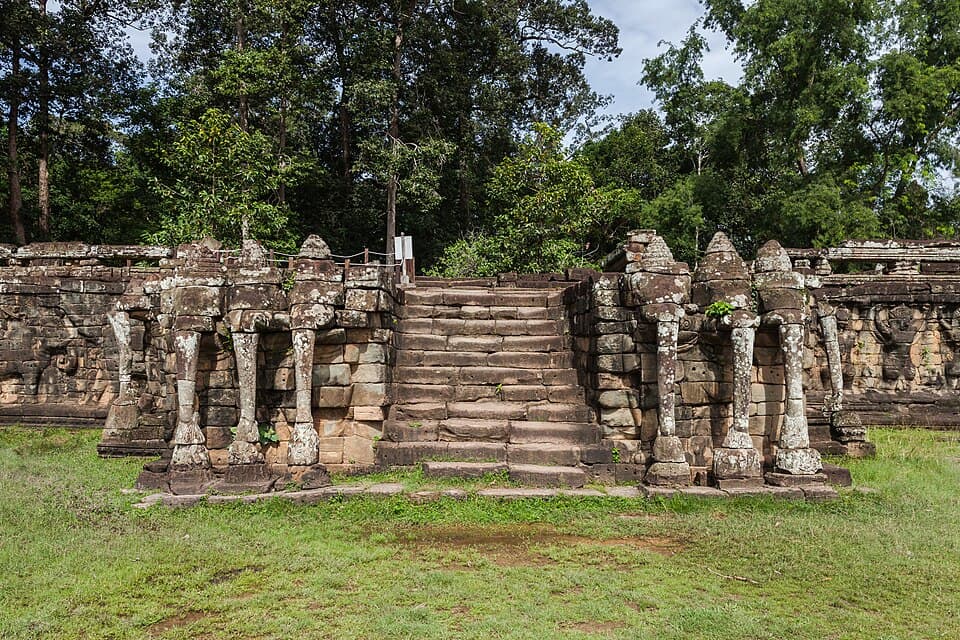
Elephant terrace
This massive terrace served as the grand stage for the Khmer kings. Imagine Jayavarman VII standing atop this 350-meter-long platform, looking out over his vast empire. It wasn't just a decoration; it was a functional reviewing stand where the royal court would witness spectacular military parades, athletic competitions, and the triumphant return of armies from the field. The architecture itself reflects the importance of the animals that made the empire's power possible. Notice the life-sized stone elephants that appear to support the structure. These figures serve as massive pillars, their long trunks reaching down to the very ground like columns. The terrace overlooks the Royal Square, and in its heyday, it would have been adorned with wooden pavilions and colorful banners, bustling with the activity of the court and the citizenry during great festivals. From this vantage point, the king asserted his divine authority over the kingdom, making this one of the most significant political spaces in the entire city.
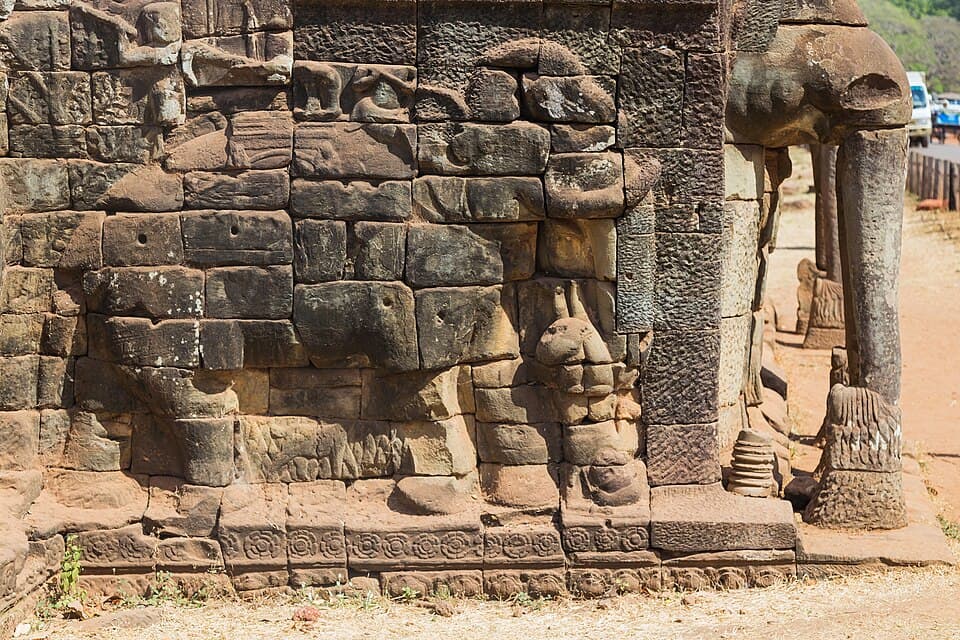
Carvings of the Royal Review
Look closely at the side walls of the terrace to find a rich tapestry of carvings that breathe life into the history of the Khmer Empire. These low-relief scenes are more than just art; they are a historical record of the deep connection between the Khmer people and the elephant. You can see detailed depictions of elephants navigating through thick jungle foliage, guided by their mahouts, or riders, who sit expertly behind their ears. Some panels capture the intensity of hunting expeditions, while others show these great beasts prepared for war. In the Khmer Empire, elephants were the ultimate status symbol and a crucial military asset, serving as the heavy tanks of the ancient world. Through these carvings, we can appreciate the immense skill required to capture the movement and texture of the animals' skin and the intricate details of their harnesses. These scenes provide us with a rare window into the rhythms of daily and courtly life nearly a millennium ago.
Wat Preah Vihear Bram Pi Lveng
A later Buddhist shrine located near the Royal Square, housing a significant Buddha statue that remains an active place of worship.
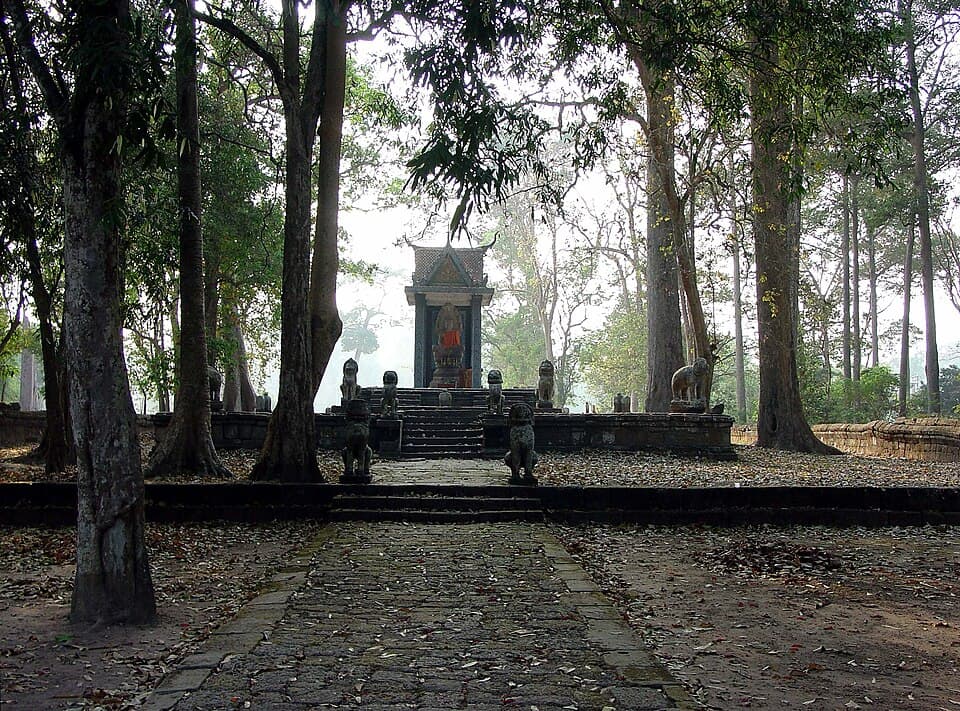
Wat Preah Vihear Bram Pi Lveng
Here, amidst the towering stone ruins of a bygone empire, you will find a poignant reminder that Angkor is not merely a museum, but a living sacred landscape. This site remains an active place of Buddhist worship, where local people and pilgrims come to pay their respects. Observe the seated figure of the Buddha resting peacefully beneath a modest, modern roof. While the grand sandstone structures around us have weathered centuries of rain and sun, the spiritual tradition here is renewed daily. You might see colorful offerings—incense sticks, fresh flowers, or bright fabrics—placed at the base of the ancient statues. The contrast is striking: the worn, gray stone path leading to vibrant, modern tokens of faith. This continuity illustrates the enduring spiritual power of this ground, showing how the local community continues to find meaning and solace in these ancient spaces, effectively bridging the legacy of the historic Angkorian kings with modern devotion.
Preah Pithu
A peaceful group of five temples located in a forested area, featuring some of the city's finest decorative carvings.
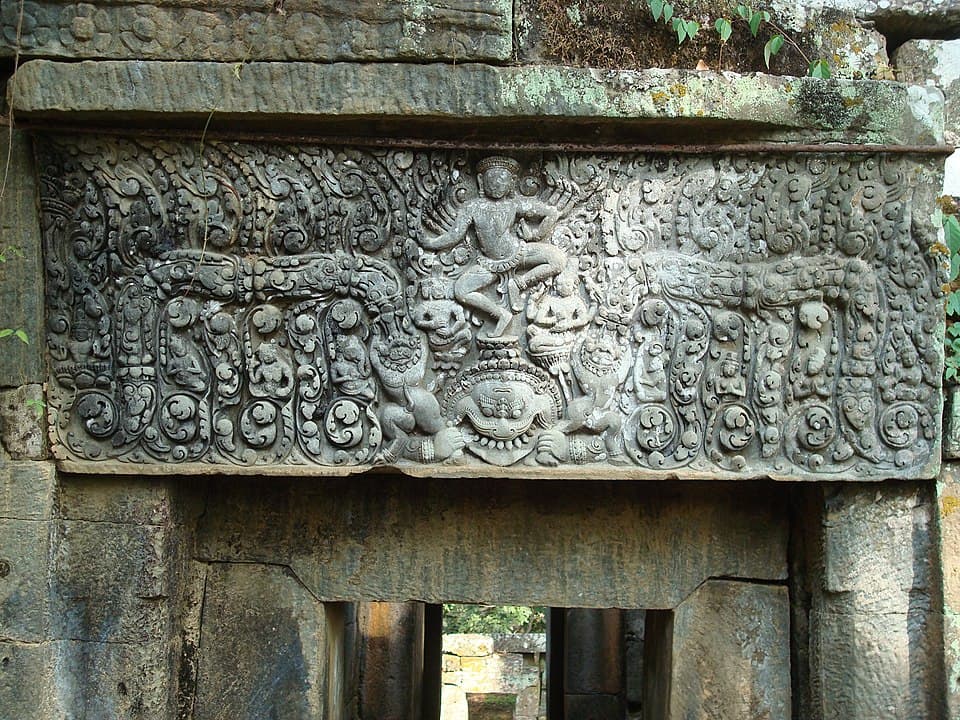
Decorative Lintels of Preah Pithu
Take a moment to look upward as you pass through the doorways of the Preah Pithu temples. The horizontal stone blocks above your head, called lintels, are home to some of the most exquisite and well-preserved decorative carvings in all of Angkor Thom. Even after centuries of exposure to the tropical climate, the fine details of the stone are remarkably sharp. You can see delicate dancing figures frozen in graceful poses, surrounded by lush, flowing floral patterns and geometric motifs. These carvings were not merely decorative; they often told stories from sacred texts or represented the divine beauty of the heavenly realms. The artistry here is a testament to the skill of the master carvers who could transform solid stone into something that appears as light and intricate as lace. These lintels serve as beautiful reminders of the incredible attention to detail that the Khmer artisans brought to even the smaller, more secluded corners of their capital city, rewarding the observant traveler.
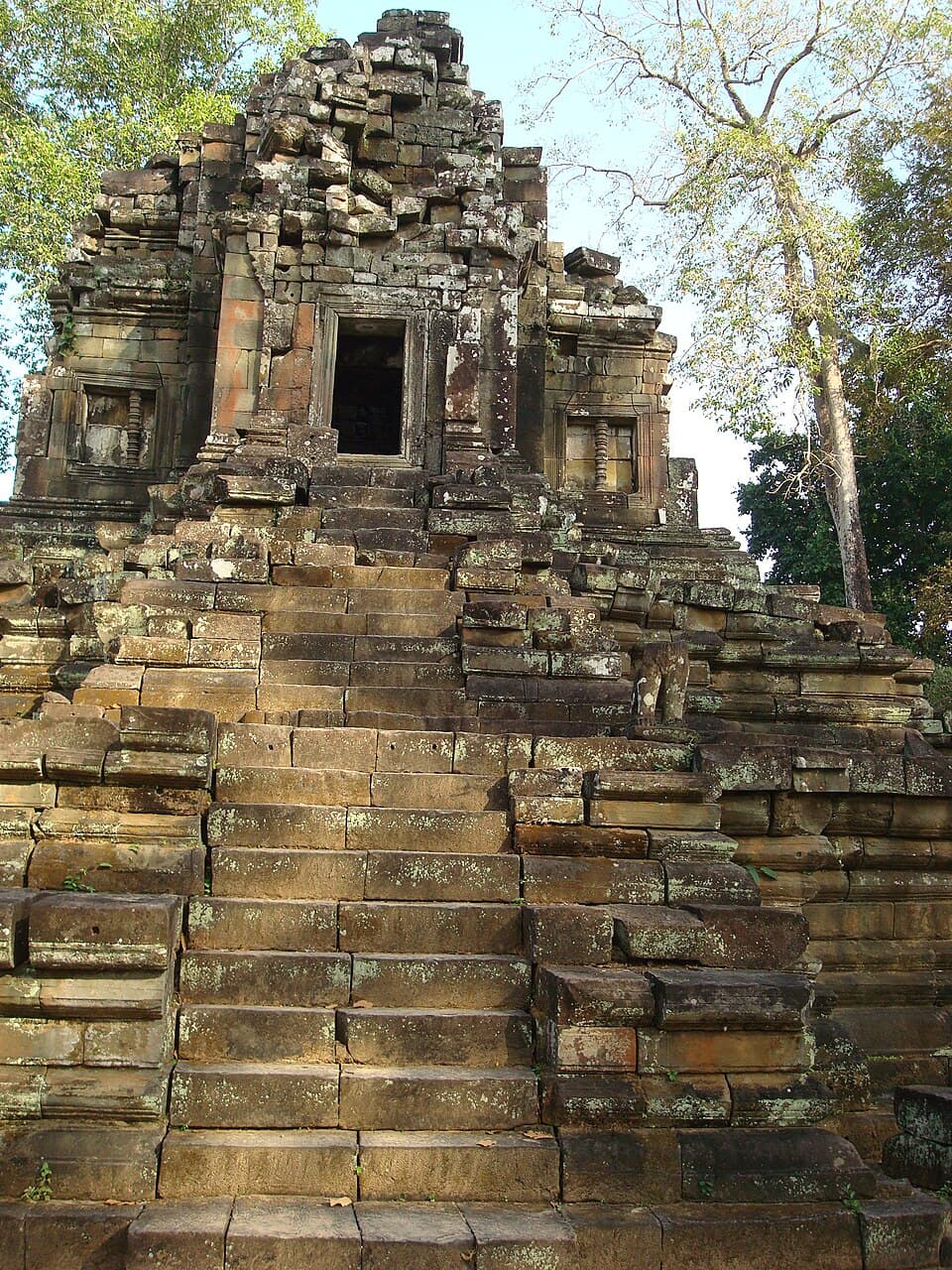
Preah Pithu
For a moment of quiet reflection, venture into the cluster of five temples known as Preah Pithu. Because it sits slightly off the main tourist circuit, this area often retains a serene, forested atmosphere that allows you to imagine the city as it might have looked before the modern era. As you explore these sanctuaries, you will notice the characteristic features of later Khmer architecture, such as the exceptionally steep sandstone steps leading up to high, commanding platforms. These elevated bases were intended to lift the sacred shrines closer to the heavens. While smaller than the massive mountain-temples elsewhere in the city, the Preah Pithu group offers an intimate look at the evolution of stone carving and temple design. Here, you can walk among the scattered stones and shaded courtyards at your own pace, feeling the cool air beneath the forest canopy and listening to the sounds of nature slowly reclaiming the space around these elegant, weathering monuments.
Angkor Thom Victory Gate
The grand gate at the end of the 'Victory Way' leading from the Royal Palace, used for the king's triumphant returns.
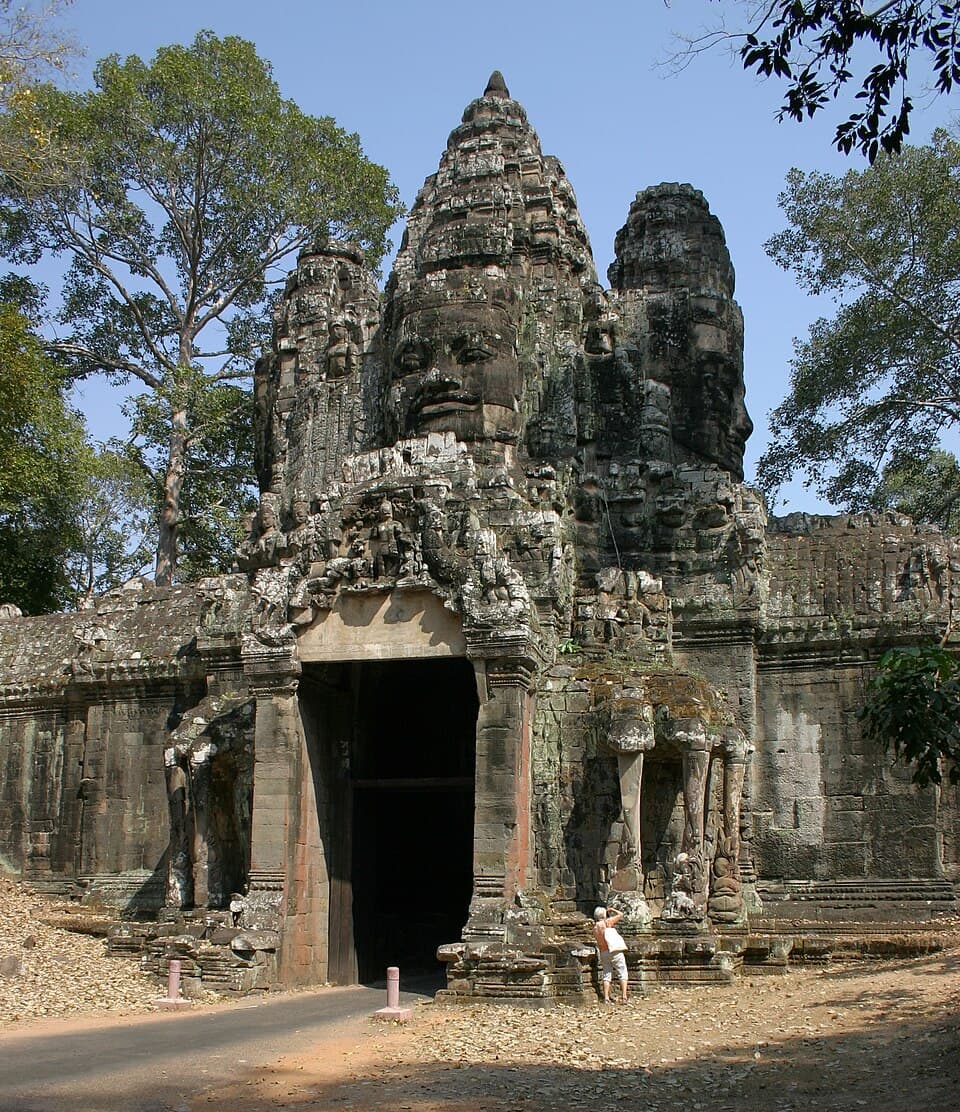
Victory Gate
This is the Victory Gate, standing at the end of a grand ceremonial road known as Victory Way. While it looks identical to the other gates of the city, its historical significance is unique. This specific portal was reserved for the King and his victorious generals as they returned to the Royal Palace following successful military campaigns. Imagine the spectacle of armored warriors, horses, and majestic elephants passing through this archway as the city celebrated its triumphs. If you look at the base of the gate, you can see the remains of three-headed stone elephants flanking the entrance. Their trunks reach down to gather lotus flowers, a symbol of purity and divine favor. The presence of these elephants emphasized the power of the monarch and his control over the natural world. Passing through this gate today, you are following in the literal footsteps of Khmer royalty, traversing a threshold that once echoed with the sounds of returning heroes and royal fanfares.
Angkor Thom North Gate
The northern exit of the city, leading towards the temples of Preah Khan and Neak Pean.
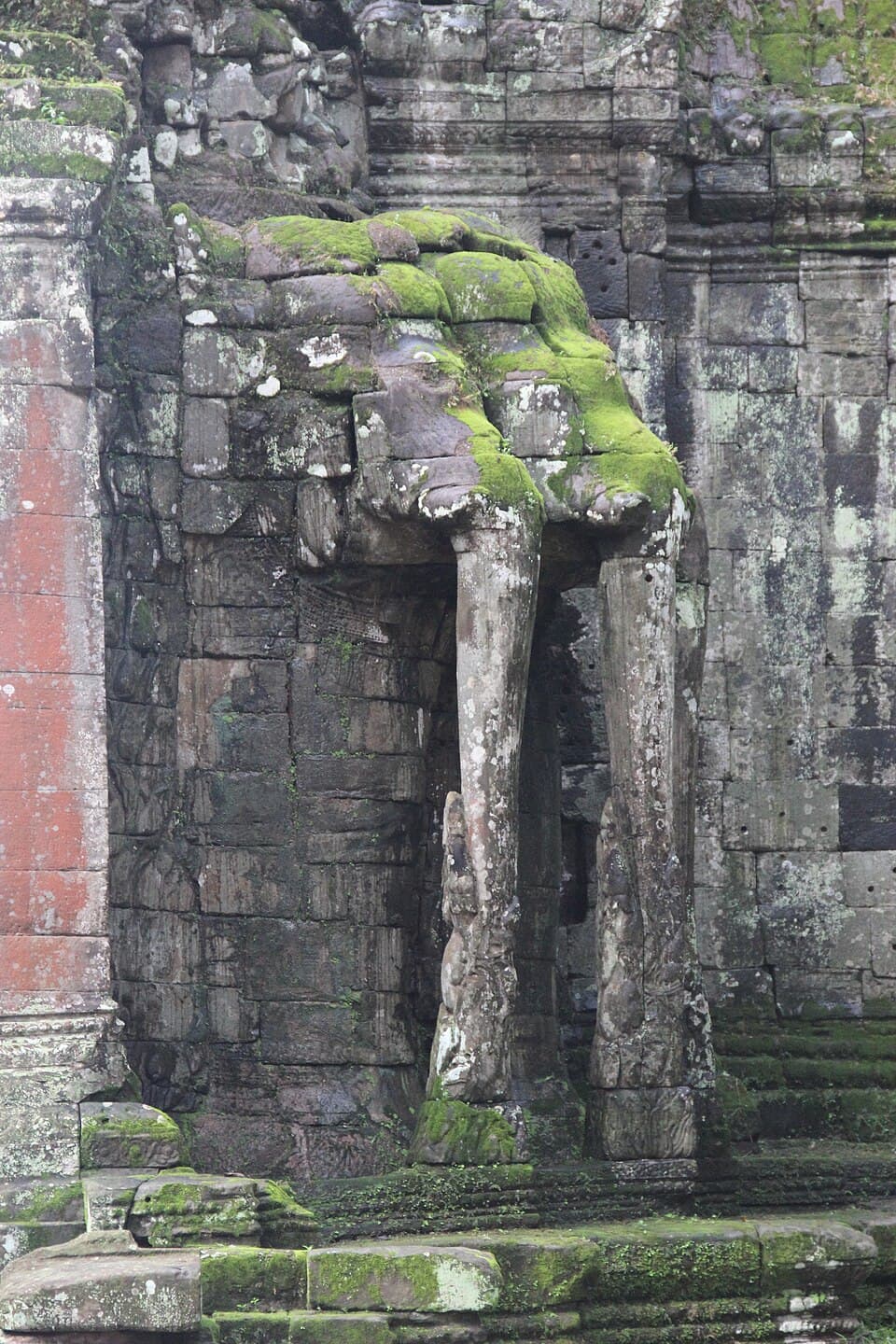
Angkor Thom North Gate
As our journey around the perimeter of Angkor Thom concludes, we find ourselves at the North Gate. Take a close look at the base of the gate tower, where monumental stone elephants are carved into the corners. Over the centuries, thick layers of green moss and orange lichen have settled into the crevices of the stone, softening the sharp lines of the elephants' features and giving them a textured, organic appearance. These weathered figures seem to emerge from the very walls of the city, standing as eternal guardians of the northern approach. They perfectly illustrate the delicate harmony between the man-made wonders of the Khmer Empire and the relentless power of nature. This interplay of stone and vegetation serves as a final, beautiful testament to the age of this great capital. As you pass through this gate, notice how the enigmatic faces above continue to gaze out toward the horizon, silent witnesses to the rise, fall, and enduring spirit of this remarkable civilization.
Want to hear the rest?
Download the Stanza app to unlock all 25 stops and the complete guided audio tour.
Frequently Asked Questions
How long does the Angkor Thom audio tour take?
The Angkor Thom audio guide includes 25 narrated stops. Most visitors spend 45 minutes to 1.5 hours exploring the complete tour, though you can listen at your own pace and skip or revisit any stop.
Is the Angkor Thom audio guide available in my language?
Stanza supports 15 languages: English, Spanish, French, German, Italian, Portuguese, Russian, Japanese, Chinese, Korean, Arabic, Hindi, Polish, Dutch, Hebrew. Check the guide in the app to confirm the languages currently available for this tour.
Can I use the audio guide offline at Angkor Thom?
Yes! Download the complete Angkor Thom tour — including all audio, maps, and images — before your visit. The Stanza app works completely offline, so you don't need WiFi or mobile data at the venue.
How much does the Angkor Thom audio guide cost?
The Stanza app is free to download. The current listed price for the Angkor Thom audio guide is $4.99; app-store region and currency may affect the final price.
How do I use the Stanza audio guide at Angkor Thom?
Download the free Stanza app, search for "Angkor Thom", and download the tour. When you arrive at the venue, the app uses GPS to detect your location and automatically plays the relevant narration as you move between points of interest — completely hands-free.
What makes the Stanza audio guide different from other Angkor Thom tours?
Stanza offers GPS-triggered narration that plays automatically as you walk through Angkor Thom — no need to manually select stops. The tour is available in 15 languages, works fully offline, and includes 25 expertly narrated stops with images and historical context.
What other audio guides are available near Angkor Thom?
Stanza offers multiple audio guides in Siem Reap, Cambodia and nearby areas. After downloading the app, browse the map to discover all available tours near Angkor Thom. Each guide can be downloaded for offline use.