Languages
15Tokyo Tower Audio Guide
Tokyo Tower is a landmark in Minato, Japan. Explore it with Stanza's GPS-triggered offline audio guide — available in 15 languages.
Quick Facts
22
Stops
15
Languages
100%
Offline
📍 Minato, Japan · 35.6586°N, 139.7456°E
About Tokyo Tower
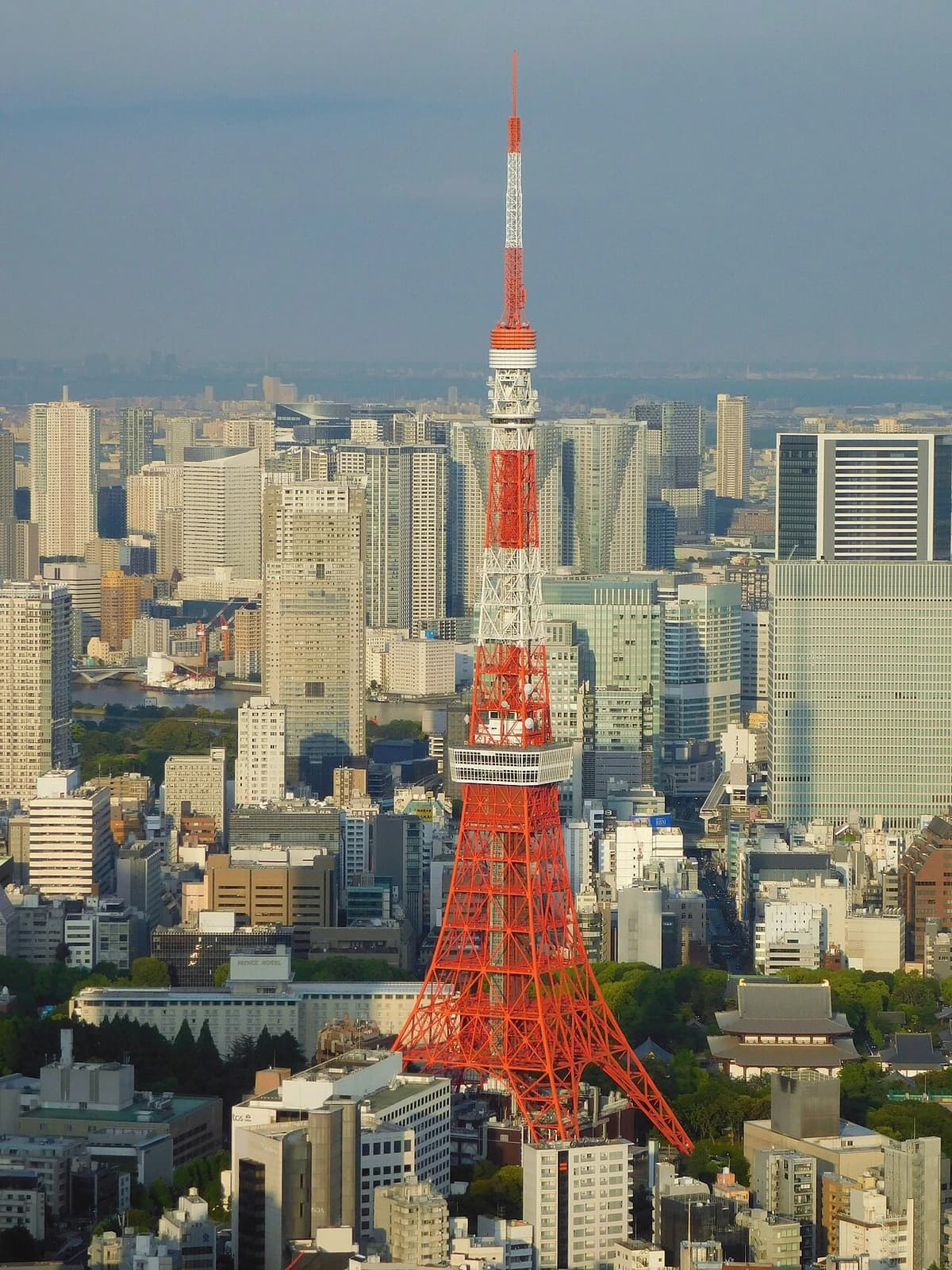
Tokyo Tower is a prominent communications and observation tower in Tokyo, Japan. Inspired by the Eiffel Tower, it is known for its distinctive red and white lattice structure and panoramic city views from its observation decks.
Tokyo Tower is also known as Tōkyō Tower, 日本電波塔, TOKYO TOWER, 東京タワー.
This self-guided audio tour features 22 narrated stops organized across 7 sections. As a tower, Tokyo Tower offers a unique cultural experience in the heart of Minato, Japan.
The Stanza audio guide is available in 15 languages and works entirely offline — download the complete tour including audio narration, maps, and images before your visit. As you walk through Tokyo Tower, GPS-triggered narration plays automatically at each point of interest.
Last updated:
What you will hear
The Gateway to Shiba
Establishes the grand scale of the tower and its immediate spiritual neighbor, Shinkoin temple. Includes the classic orange-and-white color scheme required for aviation safety.
The Steel Sentinel
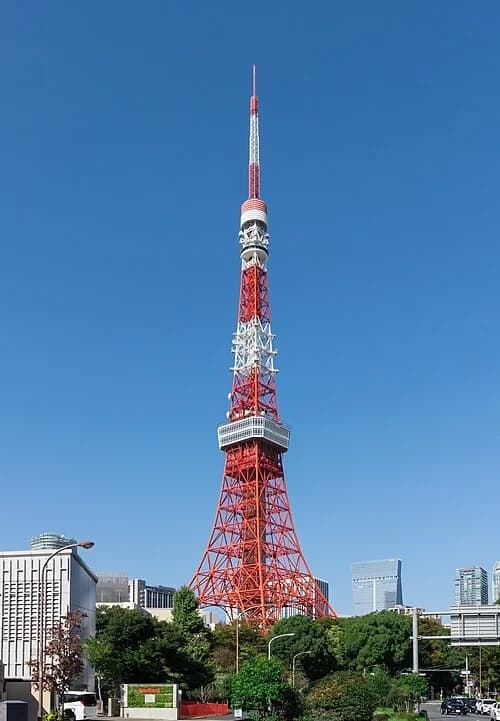
Welcome to Tokyo Tower, one of the most recognizable landmarks in the world. As you look up at this grand sentinel, you are seeing a masterpiece of 20th-century engineering designed by Tachū Naitō. Completed in December 1958, the tower stands at 332.9 meters, making it approximately nine meters taller than the Eiffel Tower in Paris, which served as its primary architectural inspiration. At the time of its opening, it was the tallest freestanding tower in the world. It was not built merely for aesthetics; its primary purpose was as a powerful broadcasting antenna for television and radio signals. Beyond its technical utility, it served as a monumental symbol of Japan�s remarkable economic recovery and technological advancement following the Second World War. As the country transitioned into a global leader in innovation, this tower stood at the heart of the capital, signifying a bright, modernized future. Even today, despite the rise of newer structures, it remains the spiritual and emotional center of the city, representing the enduring spirit of the Japanese people.
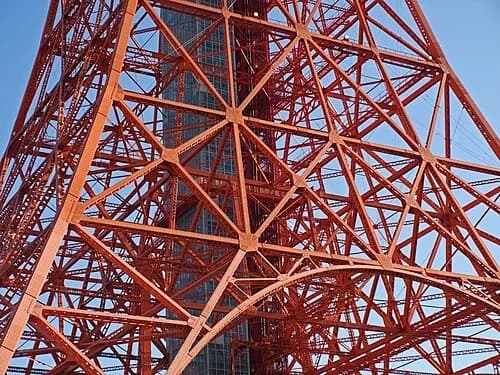
International Orange Lattice
As you get closer to the structure, you can appreciate the intricate lattice of beams that form its skeleton. You will immediately notice the signature color scheme: alternating bands of white and a very specific shade known as 'International Orange.' This is not a purely aesthetic choice; it is a strict requirement for aviation safety. To ensure the tower is clearly visible to aircraft navigating the dense airspace over Tokyo, the structure must be painted in these high-visibility colors. Maintaining this iconic look is a monumental task. Every five to seven years, the entire tower undergoes a complete repainting process. It takes a team of dedicated workers approximately a year to finish the job, using roughly 28,000 liters of paint. Imagine the effort required to scale these beams, brush in hand, to refresh the orange and white layers. This ongoing labor of love ensures that the tower remains a beacon for both citizens and visitors, gleaming brightly against the blue sky by day and illuminated by a complex lighting system when the sun goes down.
FootTown and the Iron Staircase
Explores the base building (FootTown) and the adventurous 660-step outdoor staircase climb. Mentions the transition from media center to modern esports park.
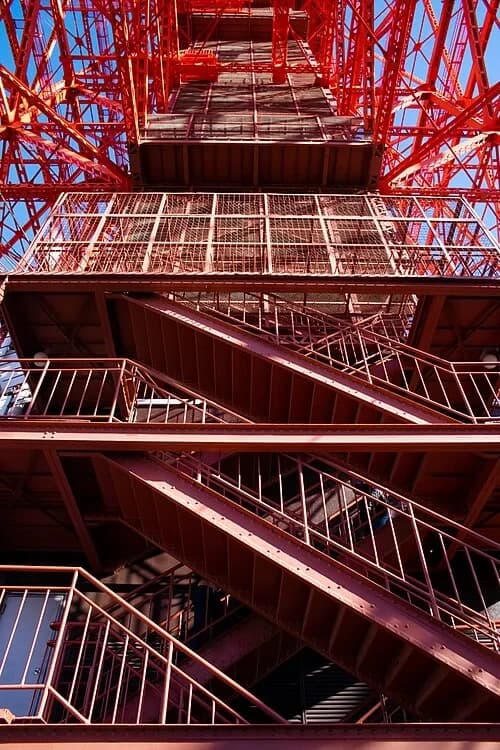
Six Hundred and Sixty Steps
If you choose to take the stairs, you enter the very heart of the tower�s industrial beauty. From this vantage point, you are surrounded by the intricate webbing of approximately 4,000 tons of steel. The sensory experience is quite different from the enclosed observation decks; you can feel the breeze, hear the city's distant hum, and see the massive rivets and beams converging in a complex geometric dance above your head. Looking through the lattice, the sense of open air is palpable. You are shielded only by a mesh fence and the thick orange-painted steel. This perspective highlights the sheer craftsmanship that went into the tower�s construction. Each beam was carefully placed to ensure the structure could withstand both heavy winds and the frequent seismic activity of the region. The industrial aesthetic�the patterns of the metal, the shadows cast by the sun, and the repetition of the stairs�creates a unique architectural rhythm. It is a moment to appreciate the raw materials and the engineering brilliance that allow such a massive structure to stand so elegantly. As you climb, the city's buildings begin to shrink, and the complexity of the tower's internal anatomy becomes your entire world.
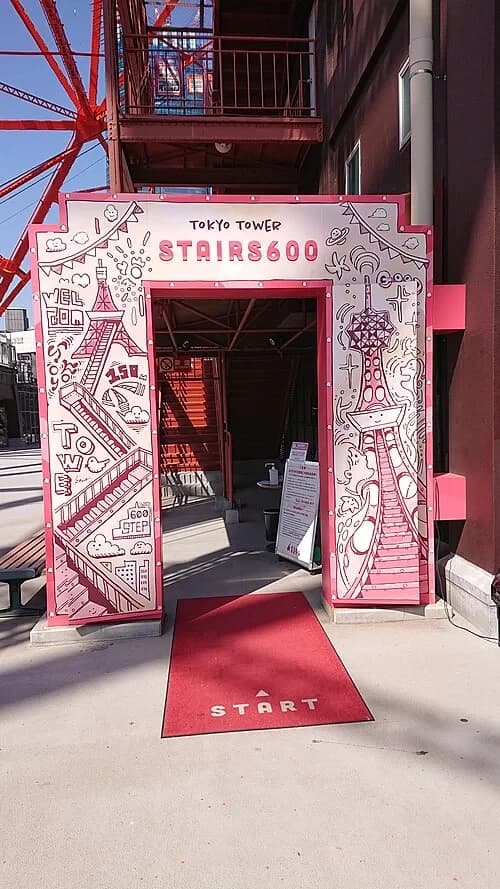
The Staircase Challenge
While most visitors choose the quick ascent of the elevators, there is a legendary alternative for the more adventurous: the outdoor staircase. On weekends and holidays, the 'Staircase Challenge' is open to those who wish to climb their way to the Main Deck. The journey consists of approximately 660 steps, winding through the open air within the tower's steel framework. Notice the playful, pink-themed mural at the entrance to the stairs. This cheerful artwork is designed to encourage and motivate climbers as they begin their journey upward. The climb provides a perspective that elevator passengers completely miss, allowing you to see the city slowly falling away beneath your feet as you exert yourself. It is a popular challenge for local families and fitness enthusiasts alike. Although it might look daunting, most people complete the climb in about 15 minutes. It is a rewarding way to truly 'feel' the height of the structure, providing a sense of accomplishment that makes the view from the top even more satisfying. As a bonus, those who reach the top by foot are often rewarded with a special commemorative certificate.
The Main Deck (150 Meters)
The first observation level, featuring panoramic city views and the heart-stopping 'Skywalk Windows.'
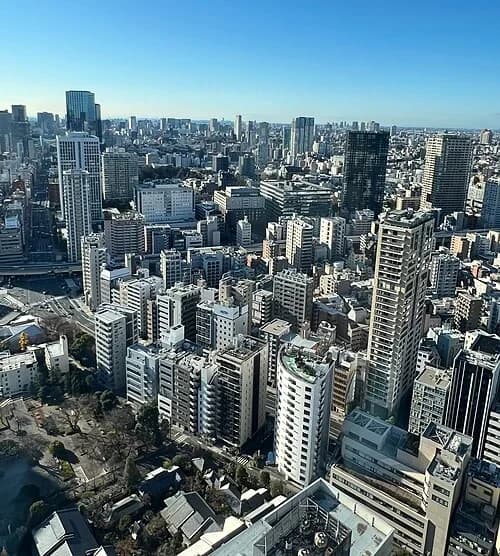
Tokyo Metropolitan Panorama
Stepping onto the Main Deck at 150 meters, you are greeted by one of the world's most dense urban landscapes. From here, Tokyo appears as a sprawling sea of gray and glass that stretches toward the horizon in every direction. The sheer scale of the city is difficult to comprehend from the ground, but from this height, you can see how the architecture flows like a river through the Kanto Plain. When Tokyo Tower was first completed in 1958, it was the tallest structure for miles, a solitary giant looking down on a much lower city. Today, the view has changed dramatically. The tower is now surrounded by a forest of skyscrapers, many of which were inspired by the very structure you are standing in. You can see modern residential towers, corporate headquarters, and bustling transit hubs all fighting for space in this hyper-dense metropolis. The panorama captures the restless energy of Tokyo, a city that never stops building and rebuilding itself. Even with the competition from newer observation decks, the view from this classic vantage point remains special, offering a central perspective on the heart of the Japanese capital.
Tower Daijingu Shrine
Visits the highest Shinto shrine in Tokyo's 23 wards, located right inside the observation deck.
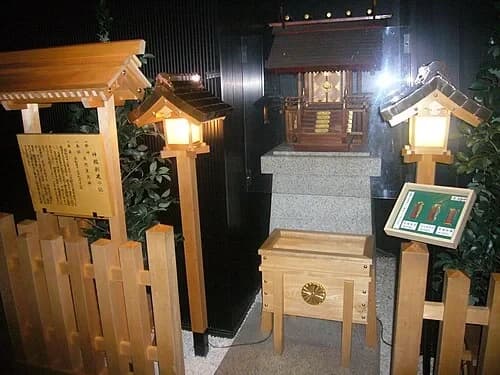
Praying for High Grades
The Tower Daijingu Shrine has a very specific reputation among local residents. It is a popular destination for students who are preparing for difficult entrance exams. In Japan, there is a playful but sincere belief in the power of 'high' things to bring 'high' results. Because this shrine is physically located at one of the highest points in the city, many believe that prayers offered here are more likely to result in 'high' grades. Take a look at the wooden prayer plaques, called 'Ema,' hanging nearby. These are often filled with the handwritten hopes and names of students seeking success. You might see drawings of the tower on them, alongside traditional symbols of good luck. This local tradition adds a layer of human connection to the tower, transforming it from a mere observation deck into a place of personal aspiration and hope. Whether or not you have an exam coming up, it is a charming story that reflects the Japanese love for wordplay and the enduring importance of academic achievement. The shrine serves as a reminder that the tower is not just a landmark for tourists, but an active part of the social and spiritual life of the people who live in its shadow.
The Top Deck (250 Meters)
The climax of the vertical journey, featuring futuristic mirrored interiors and the highest accessible viewpoint.
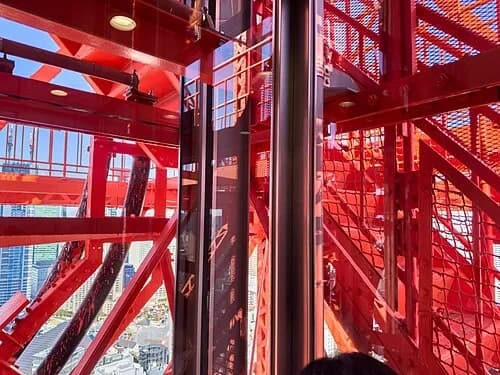
The Glass Ascent
The journey between levels is an experience in itself, thanks to the tower's glass-walled elevators. As you rise or descend, you are not enclosed in a dark shaft; instead, you are looking directly out into the tower�s internal architecture. The red and white steel beams blur past at high speed, giving you a dynamic sense of the structure�s scale and the engineering that holds it all together. When the tower first opened in 1958, these elevators were considered a major engineering feat, capable of moving thousands of people every hour. Today, they still offer a thrilling ride, providing a cinematic view of the city as it rapidly falls away beneath you. Through the glass, you can see the intricate webbing of the lattice work and the massive bolts that keep the beams in place. It is a brief but intense immersion into the tower's industrial soul. For many, the elevator ride is the first time they truly grasp the height of the structure, as the ground disappears and the sprawling horizon of the Kanto Plain opens up before them. The combination of motion, height, and the constant visual of the orange steel makes every trip between decks a memorable part of the visit.
The Diamond Veil
Highlights the tower's famous lighting schemes and the romantic 'Light-Down' midnight legend.
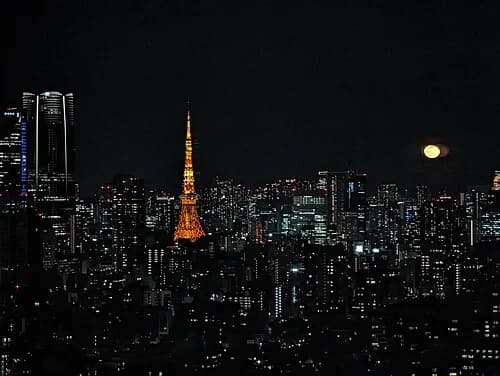
The Midnight Legend
As the clock strikes midnight in Tokyo, a quiet ritual takes place at the foot of the tower. This is the moment of the �Light-Down,� a time when the bright orange or white illumination is switched off for the night. Over the years, a romantic urban legend has taken root among the city's youth: it is said that if a couple watches the tower's lights turn off together, they will find eternal happiness and their love will last forever. This belief has transformed the area around the base into one of Tokyo's most popular and enduring date spots. On any given night, you might see pairs of people lingering in the nearby parks or on street corners, eyes fixed on the glowing lattice as the final seconds of the day tick away. When the lights finally fade, leaving only the aviation safety strobes blinking against the dark sky, it�s a moment of shared connection. While the exact origin of the legend is a bit of a mystery, its impact on Tokyo�s culture is undeniable. It adds a layer of soft, romantic folklore to a structure made of hard industrial steel. Whether or not you believe in the magic of the midnight light-down, there is no denying the peaceful atmosphere that settles over the area when the tower finally goes to sleep.
Sacred Shiba Neighborhood
Concludes the tour by visiting the historic temples and famous restaurants at the tower's feet.
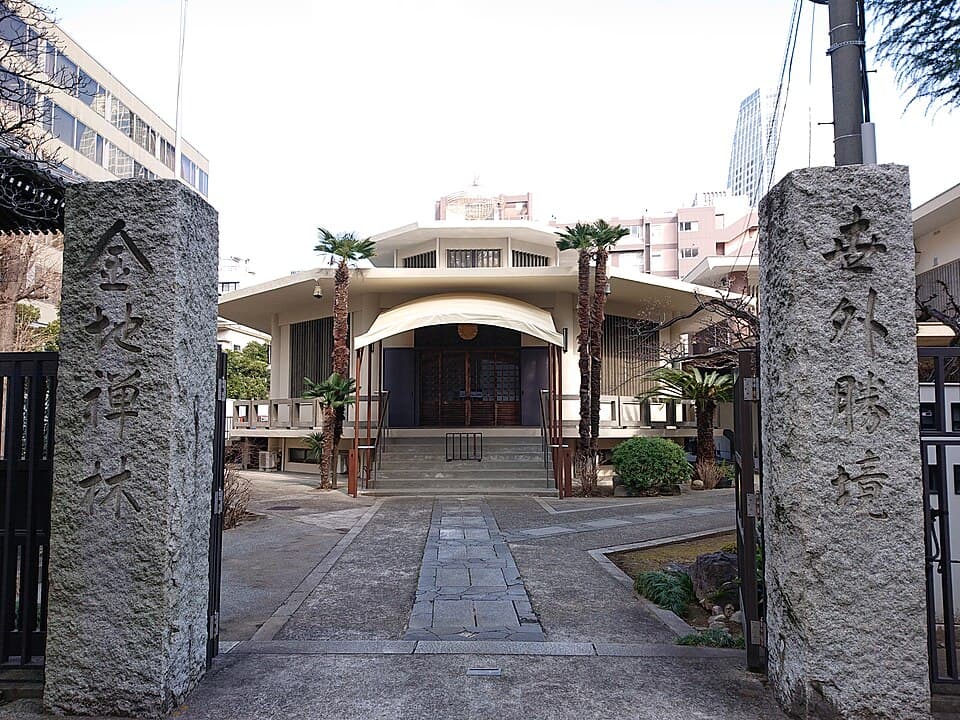
Konchi-in Temple Gate
While the tower attracts millions of visitors seeking views and excitement, a different kind of experience awaits at its neighbor, Konchi-in Temple. This quiet, dignified space is a sub-temple of the famous Nanzen-ji in Kyoto, one of the most important Zen temples in Japan. Its presence here provides a grounding sense of historical gravity and spiritual calm. The traditional architecture of the temple gates and halls stands in silent contrast to the industrial height of the tower just a few steps away. Visitors often find that the atmosphere shifts the moment they step toward the temple grounds; the frantic pace of the city seems to slow down. Historically, this area of Shiba was filled with such religious sites, and Konchi-in is one of the survivors that maintains the neighborhood's original character. It represents the 'Zen' side of Tokyo�a city that can be incredibly loud and fast, yet always reserves space for reflection and silence. Taking a moment to appreciate the weathered wood and the simple, elegant lines of the temple offers a broader perspective on the tower's location. It isn't just a tourist site; it's a modern monument planted in soil that has been considered sacred for centuries.
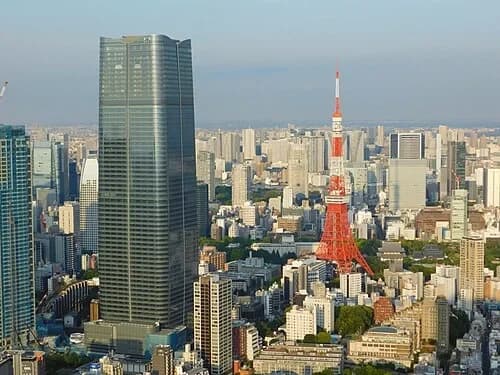
Tokyo�s Changing Skyline
As our tour comes to an end, take a final look at how Tokyo Tower sits within the ever-evolving city. You might notice the massive Azabudai Hills skyscraper towering nearby, a symbol of the city's latest architectural reach for the clouds. In a city like Tokyo, change is the only constant, and newer, taller, and more technologically advanced buildings are always on the horizon. Yet, despite being surpassed in height, Tokyo Tower remains the emotional heart of the metropolis. Since its opening in 1958, it has welcomed over 190 million visitors, becoming a cherished landmark for generations of residents and travelers alike. It is more than just a communications antenna or an observation deck; it is a symbol of Japan's post-war rebirth and its enduring spirit. While the SkyTree to the north may be taller, Tokyo Tower is the image that most people around the world instantly associate with the Japanese capital. Its orange and white silhouette is a comforting constant in a sea of gray glass. As you move on to your next adventure, remember that while the skyline around it will continue to shift and grow, the 'Steel Sentinel' will likely remain Tokyo's most recognized and beloved guardian for many years to come.
Want to hear the rest?
Download the Stanza app to unlock all 22 stops and full GPS-guided navigation.
Frequently Asked Questions
How long does the Tokyo Tower audio tour take?
The Tokyo Tower audio guide includes 22 narrated stops. Most visitors spend 45 minutes to 1.5 hours exploring the complete tour, though you can listen at your own pace and skip or revisit any stop.
Is the Tokyo Tower audio guide available in my language?
Stanza supports 15 languages: English, Spanish, French, German, Italian, Portuguese, Russian, Japanese, Chinese, Korean, Arabic, Hindi, Polish, Dutch, Hebrew. Check the guide in the app to confirm the languages currently available for this tour.
Can I use the audio guide offline at Tokyo Tower?
Yes! Download the complete Tokyo Tower tour — including all audio, maps, and images — before your visit. The Stanza app works completely offline, so you don't need WiFi or mobile data at the venue.
How much does the Tokyo Tower audio guide cost?
The Stanza app is free to download. The current listed price for the Tokyo Tower audio guide is $2.99; app-store region and currency may affect the final price.
How do I use the Stanza audio guide at Tokyo Tower?
Download the free Stanza app, search for "Tokyo Tower", and download the tour. When you arrive at the venue, the app uses GPS to detect your location and automatically plays the relevant narration as you move between points of interest — completely hands-free.
What makes the Stanza audio guide different from other Tokyo Tower tours?
Stanza offers GPS-triggered narration that plays automatically as you walk through Tokyo Tower — no need to manually select stops. The tour is available in 15 languages, works fully offline, and includes 22 expertly narrated stops with images and historical context.
What other audio guides are available near Tokyo Tower?
Stanza offers multiple audio guides in Minato, Japan and nearby areas. After downloading the app, browse the map to discover all available tours near Tokyo Tower. Each guide can be downloaded for offline use.