Languages
15Batu Caves Audio Guide
Batu Caves is a landmark in Selayang Municipal Council, Malaysia. Explore it with Stanza's GPS-triggered offline audio guide — available in 15 languages.
Quick Facts
21
Stops
15
Languages
100%
Offline
📍 Selayang Municipal Council, Malaysia · 3.2374°N, 101.6839°E
About Batu Caves
Batu Caves is a limestone hill featuring a series of caves and Hindu cave temples located in Gombak, Selangor, Malaysia. It serves as a significant Hindu pilgrimage site outside India and a major tourist attraction.
This self-guided audio tour features 21 narrated stops organized across 6 sections, including The Far Left: Hanuman and the Ramayana Cave, The Ascent: 272 Rainbow Steps, Cathedral Cave: The Main Temple Chamber, Upper Shrines and Natural Skylights, Cave Villa: Mythology and Art Gallery, Conclusion: Departure and City Views. As a temple, Batu Caves offers a unique cultural experience in the heart of Selayang Municipal Council, Malaysia.
The Stanza audio guide is available in 15 languages and works entirely offline — download the complete tour including audio narration, maps, and images before your visit. As you walk through Batu Caves, GPS-triggered narration plays automatically at each point of interest.
Last updated:
What you will hear
The Far Left: Hanuman and the Ramayana Cave
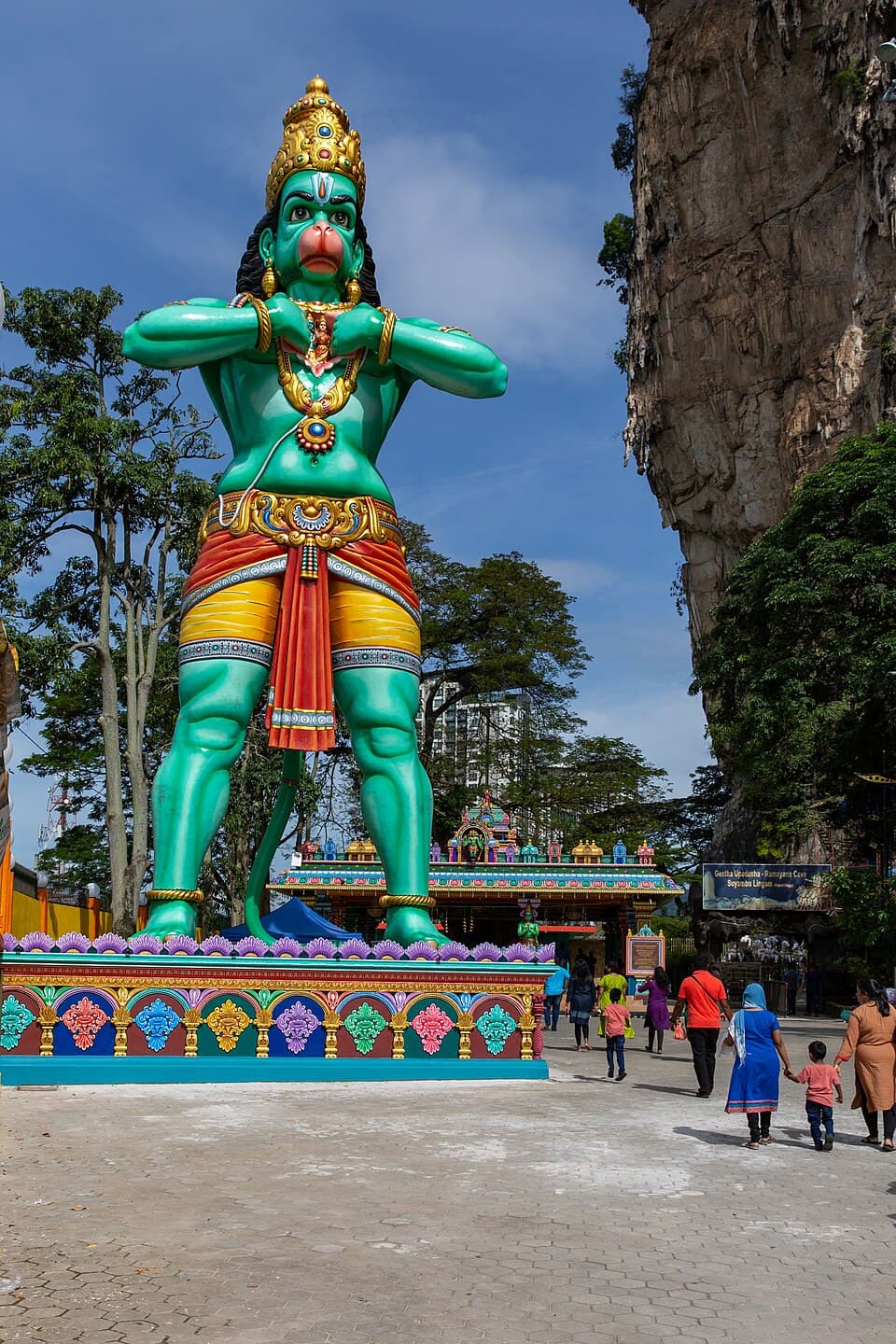
Start at the far left of the complex to see the 15-meter tall green Hanuman statue and the entrance to the Ramayana Cave, which tells the story of the epic through dioramas.
Hanuman the Guardian
Welcome to one of the most iconic spiritual sites in Southeast Asia. As we begin our journey at the Batu Caves, you are greeted by this striking 15-meter-tall green statue of Hanuman. In the Hindu epic, the Ramayana, Hanuman is revered as the loyal commander of the monkey army, a figure of immense strength, courage, and unwavering devotion. This colossal figure stands as a guardian at the far left of the complex entrance, marking the threshold to the Ramayana Cave. Notice the intricate details of his crown and jewelry, reflecting his status as a divine being. His presence here serves as a reminder of the power of faith and service, themes that echo throughout this sacred site. As you gaze up at his serene expression, you can begin to appreciate the scale of the spiritual and cultural narrative that unfolds across these ancient limestone cliffs. This is just the beginning of a complex filled with mythological wonders and natural beauty.
Heart of Devotion
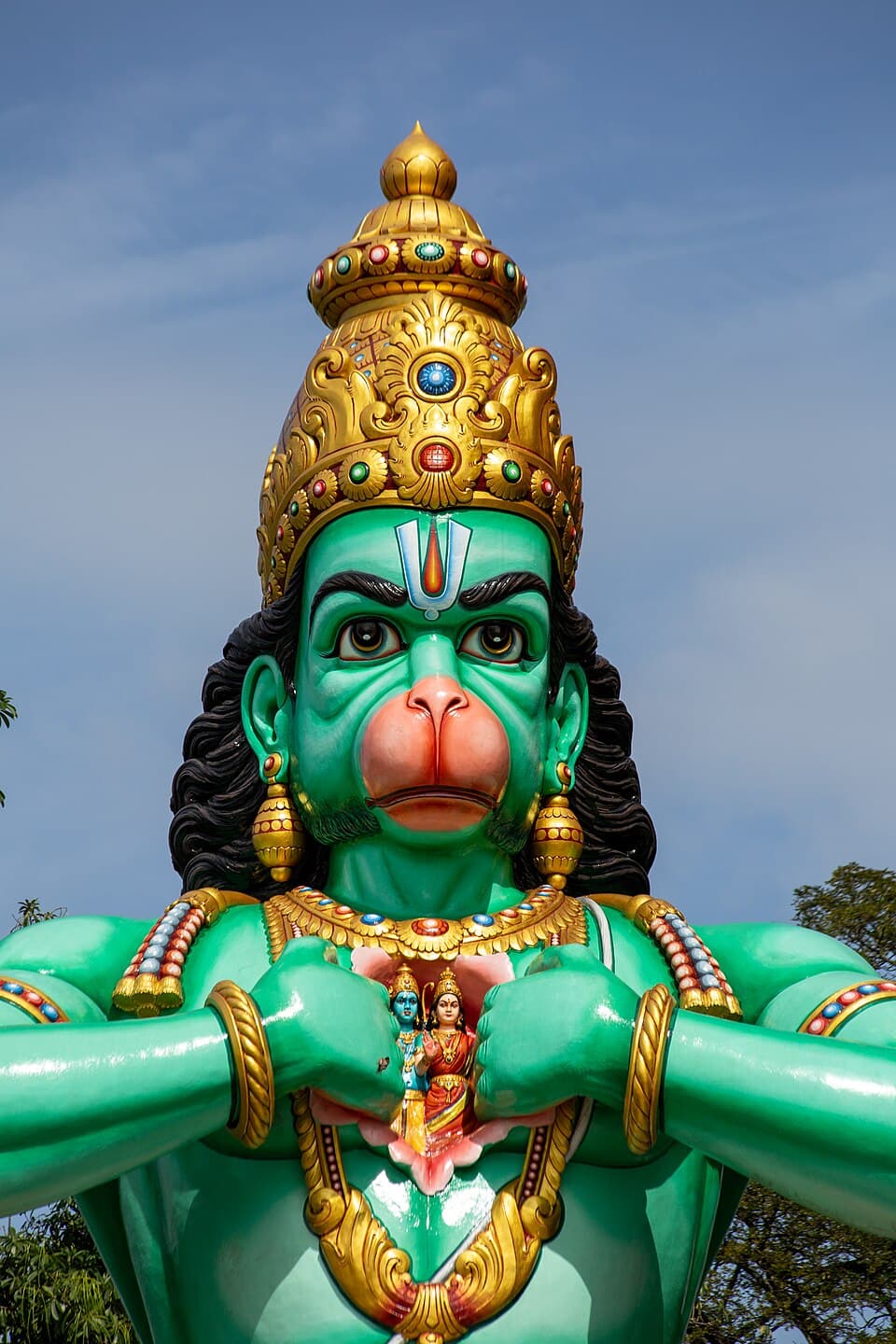
Moving closer to the figure of Hanuman, you’ll notice a powerful and poignant detail at the center of his chest. He is shown physically pulling back his skin to reveal two smaller figures nestled inside: Lord Rama and his consort, Sita. This striking visual representation stems from a famous Hindu legend that illustrates the depth of Hanuman’s loyalty. When asked why he didn’t wear a precious necklace given to him by Sita, Hanuman explained that he only valued what contained the divine couple. To prove his point, he tore open his chest, showing that Rama and Sita were literally part of his being. This act signifies the ultimate level of faith, where the devotee and the divine are inseparable. The vibrant colors of the figures inside contrast with Hanuman’s green skin, drawing your eye to the center of this spiritual metaphor. It is a moment of profound emotional vulnerability translated into art, reminding pilgrims that true devotion is an internal, heart-centered state that transcends material wealth or external appearances.
The Ascent: 272 Rainbow Steps
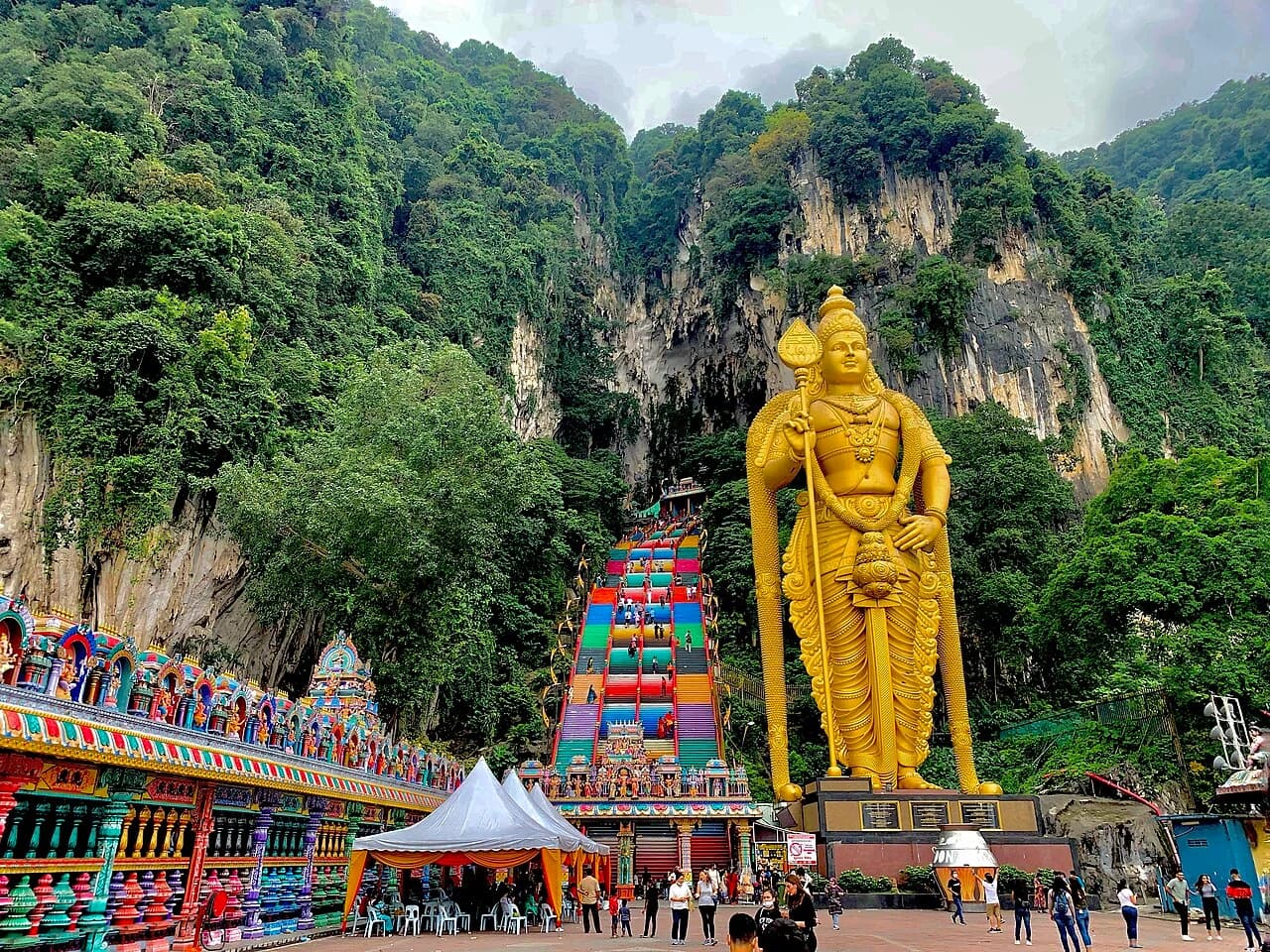
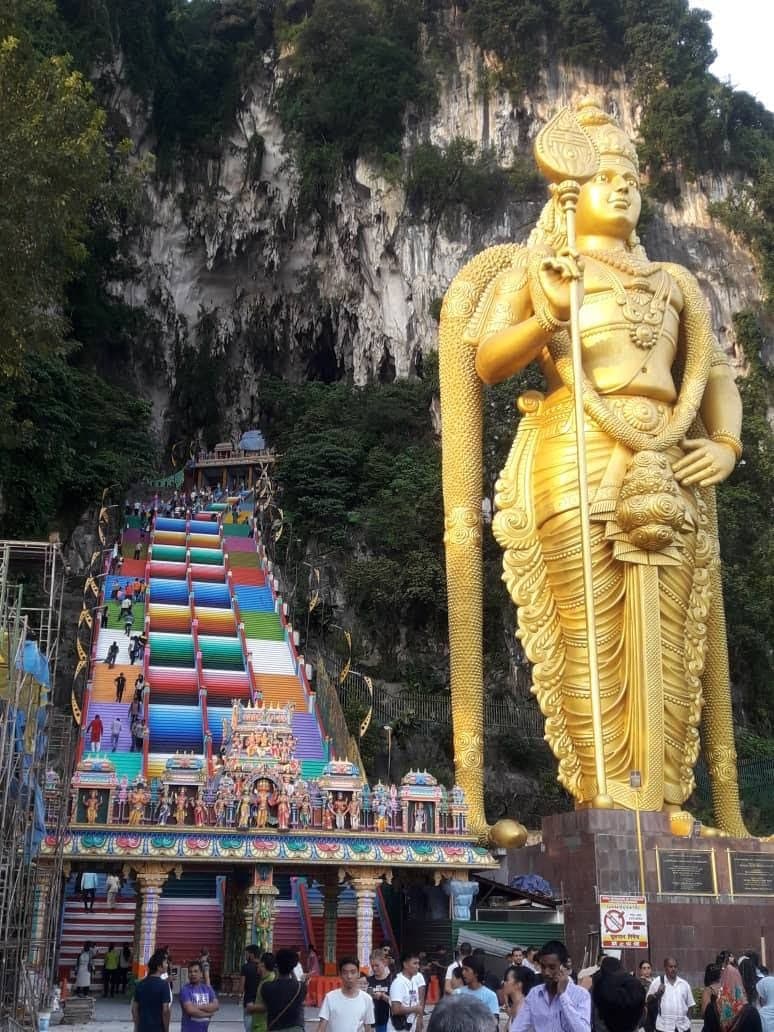
Climb the iconic 272 steps, repainted in vibrant colors in 2018, which serve as both a physical challenge and a symbolic journey for pilgrims.

The Final Step
At the very peak of the climb, take a moment to look down at the numbers painted on the last two steps: 271 and 272. Reaching this point is a significant physical achievement, especially in the tropical humidity. For many devotees, however, the climb is not just exercise; it is a symbolic act of penance and spiritual dedication. The effort required to overcome the steep incline represents the struggle to rise above worldly attachments and reach a higher state of consciousness. These concrete steps were installed in 1940, replacing the original wooden ones that were much more treacherous to navigate. Even with modern construction, the ascent remains a challenge that tests the resolve of every visitor. As you stand on step 272, you have transitioned from the bustling plaza below to the threshold of the sacred interior. The act of counting the steps is a tradition for many, providing a steady rhythm to the climb and a sense of progression. Looking back from here, the view of the valley offers a brief moment of reflection before you enter the quiet, cool sanctuary of the cavern itself.
Pathway to the Heavens
The ascent to the main caves is defined by these 272 steps, which underwent a dramatic transformation in 2018. They were repainted in this bright, multi-colored rainbow spectrum, a move that instantly turned the site into a global social media icon. While the bold colors provide an undeniably modern aesthetic that draws thousands of photographers, the choice was not purely for show. Each hue used in the stairs is traditionally associated with various Hindu deities and symbolic concepts found in Vedic scriptures. This vibrant palette reflects the joy and diversity of the spiritual path. As you prepare to climb, notice how the colors shift and blend, creating a rhythmic visual experience that mirrors the effort of the climb itself. The renovation caused some debate initially, but it has undoubtedly breathed new life into the complex, making the arduous journey upward feel like a celebratory progression toward the heavens. Whether you are here for a photo or a prayer, the "Rainbow Stairs" have become an inseparable part of the modern identity of Batu Caves, bridging the gap between centuries-old tradition and the digital age.
Cathedral Cave: The Main Temple Chamber
Enter the massive Cathedral Cave, the largest chamber in the complex, housing several Hindu shrines and serving as the heart of worship.
The Thaipusam Pilgrimage
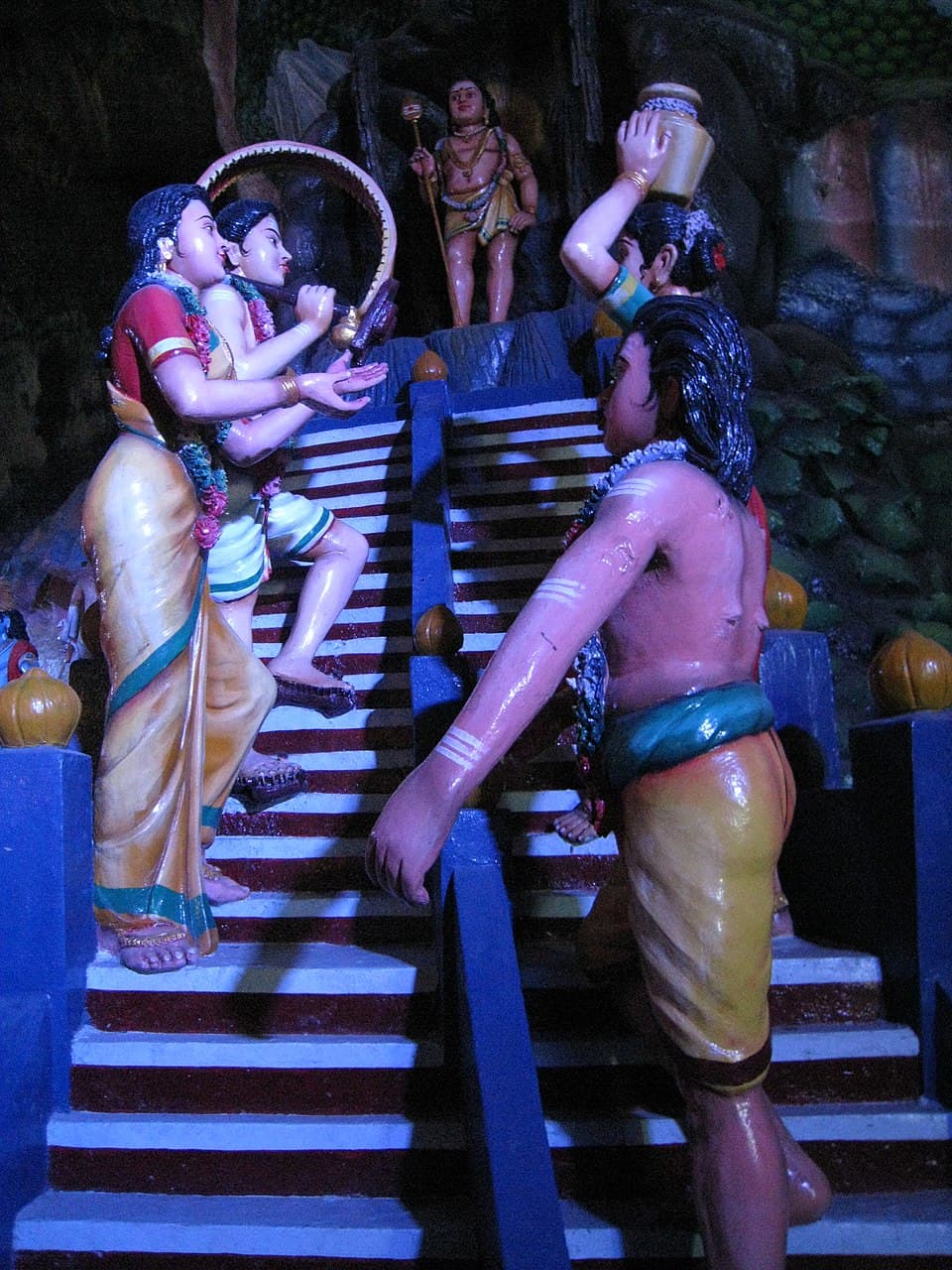
The colorful statues here depict scenes from Thaipusam, the most important festival held at this site. Every year, usually in late January or early February, hundreds of thousands of people gather for a massive pilgrimage. The focal point of the festival is the 'kavadi,' which translates to "burden." You can see devotees depicted carrying elaborate metal frames or large milk pots. Some kavadis are attached to the body using hooks and skewers that pierce the skin of the chest, back, or cheeks. While this may look painful to an observer, for the participants, it is a meditative act of deep faith. It is performed as a way to fulfill a vow or to thank Lord Murugan for a perceived blessing. The festival is a sensory explosion of drumming, chanting, and vibrant processions that wind their way up the 272 steps. These artistic representations allow visitors to understand the scale of this spiritual commitment year-round. It is a time of cleansing and renewal, where the individual’s physical endurance is seen as a testament to their spiritual strength and their relationship with the divine.
The Temple Tower
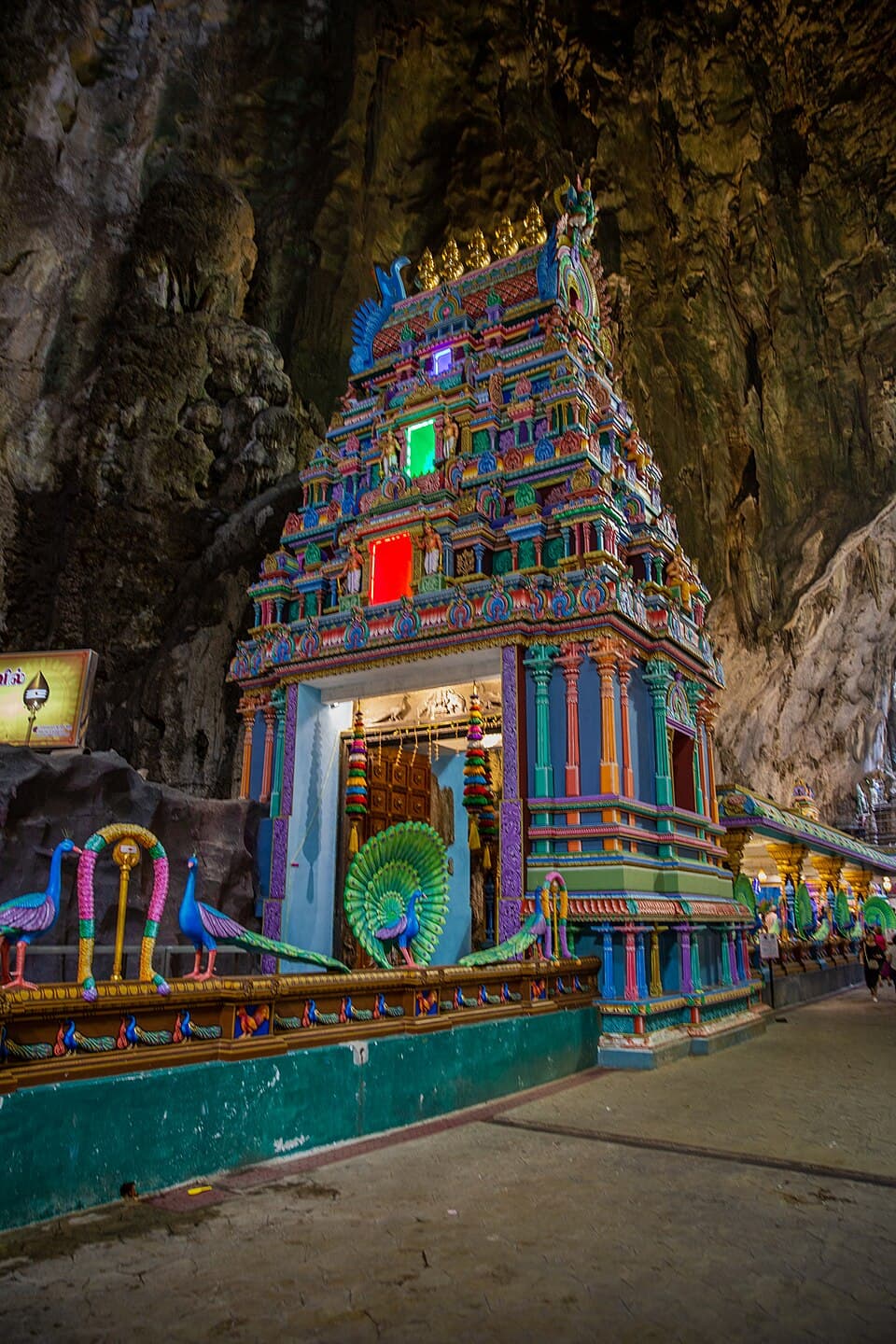
Inside the vastness of the cave, you will find the Sri Velayuthar Temple, marked by its elaborate 'gopuram' or temple tower. This structure is a quintessential feature of Dravidian architecture, a style originating from South India. Notice how it rises in several distinct tiers, each one heavily adorned with dozens of intricate, hand-painted statues. These figures represent various gods, goddesses, and mythical creatures from Hindu scripture, each captured in a specific pose or "mudra" that conveys a particular spiritual meaning. The use of bright, saturated colors is intended to draw the eye upward and evoke a sense of celestial grandeur. In traditional temple design, the gopuram serves as a threshold between the mundane world and the sacred space of the inner sanctum. Even here, deep within the limestone hill, the craftsmen have maintained this architectural tradition, creating a vertical landscape of divinity that mimics the soaring height of the cave walls themselves. Each statue tells a tiny piece of a larger story, inviting you to look closer and appreciate the immense detail and labor required to create such a dense tapestry of religious art.
Upper Shrines and Natural Skylights
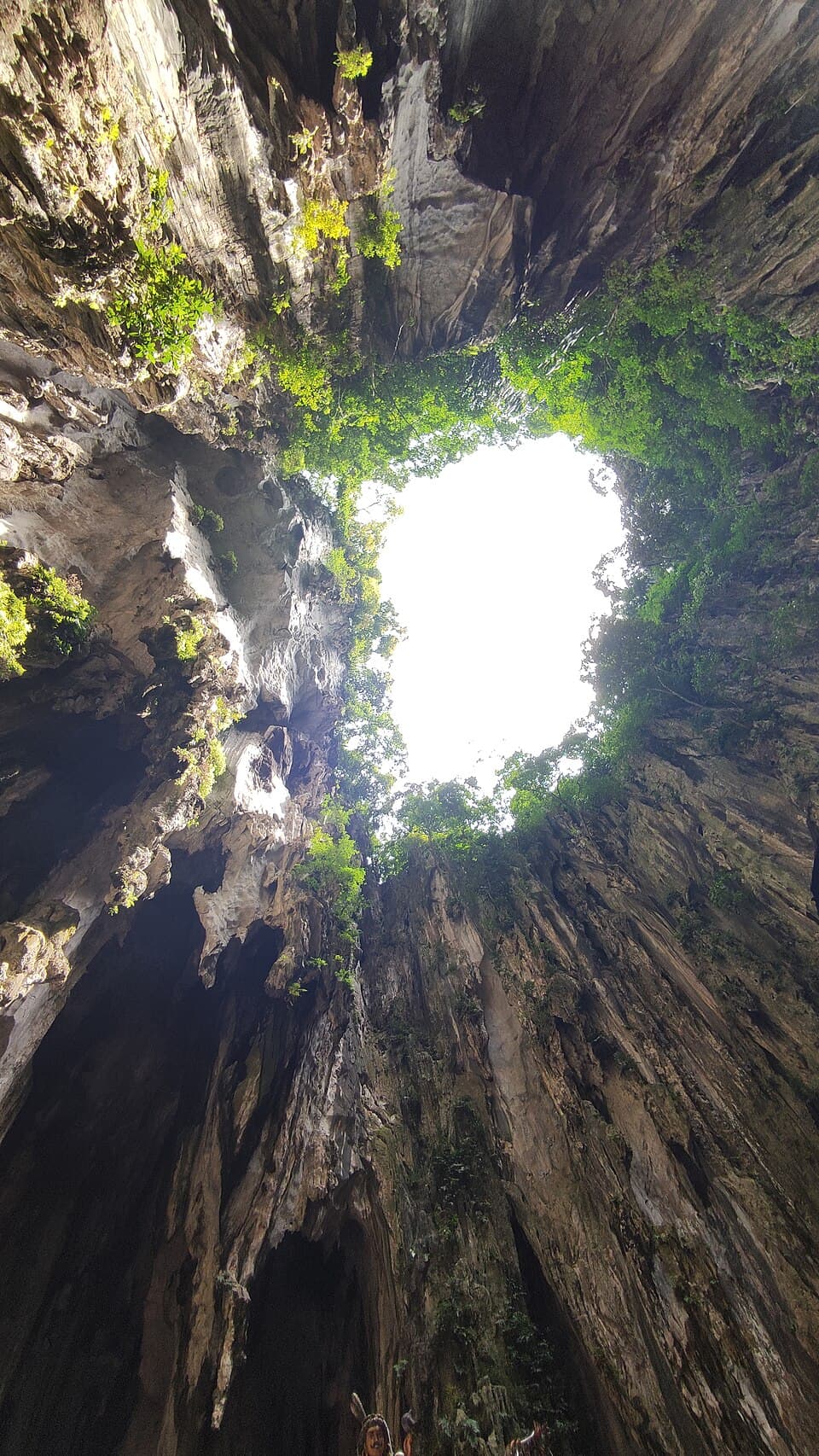
Explore the rear of the cave where the ceiling opens up to the sky, allowing sunlight to illuminate the moss-covered limestone and upper shrines.
Light of the Cave
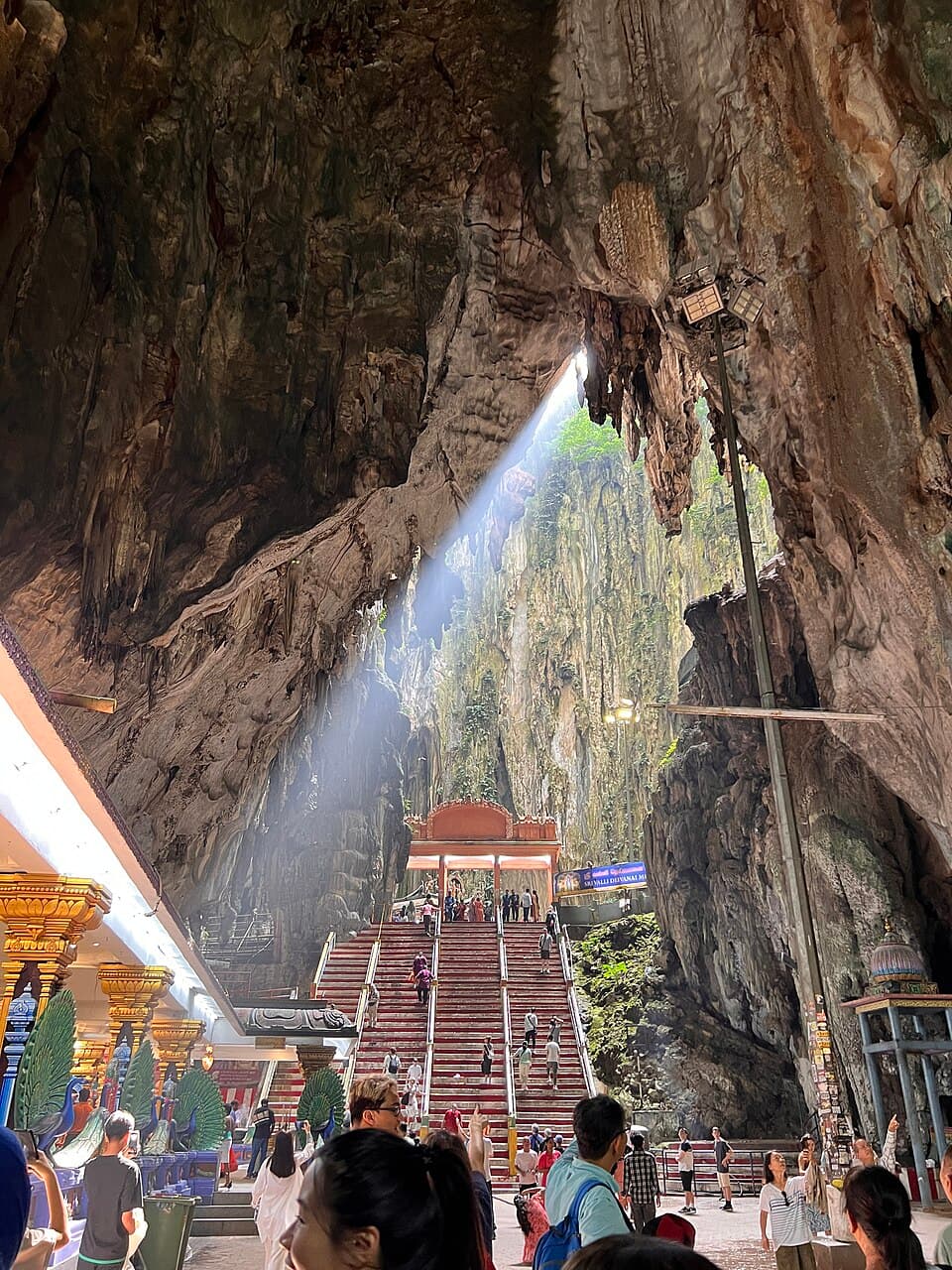
As you move toward the rear of the cave system, your attention will be drawn upward to a dramatic natural skylight. This opening allows a column of bright sun to pierce the darkness, illuminating the cave floor and supporting a surprisingly diverse ecosystem within. In fact, over 269 different species of plants have been recorded thriving here, nourished by the light and moisture that filter through the roof. There is also a famous local Malay legend associated with these caves, known as the story of Si Tanggang. The legend tells of an ungrateful son who became a wealthy ship captain but refused to acknowledge his poor mother. In her grief, she cursed him, and his ship and everyone on it were supposedly turned to stone. According to tradition, the caves are the petrified remains of that very vessel. Today, the sight of the trees and vines hanging from the edges of the opening provides a serene contrast to the rocky interior. This "cave within a cave" offers a moment of quiet connection with nature, serving as a reminder that life finds a way to flourish even in the most hidden and unlikely places.
The Cathedral Cave
You are now standing in the heart of the complex, known as the Cathedral Cave or Temple Cave. The name is perfectly suited to the space, as the ceiling rises to a staggering height of nearly 100 meters. The sheer volume of this chamber is enough to make anyone feel small, a sensation that is amplified by the way sound echoes off the ancient limestone surfaces. The natural acoustics here mean that even a low chant or a ringing bell can be heard clearly across the vast space, adding to the spiritual atmosphere. During the day, shafts of light filter down from openings high above, creating a dramatic interplay of shadow and brilliance that shifts with the passing hours. This ever-changing light highlights the rugged textures of the cave walls and the delicate features of the shrines built into the floor. This chamber serves as a grand natural sanctuary, where the architecture of the earth itself provides the most impressive backdrop for the religious activities taking place within. It is a place where the grandeur of nature and the intimacy of prayer find a perfect, harmonious balance.
Cave Villa: Mythology and Art Gallery
At the base of the hill, the Cave Villa offers a quieter experience with galleries of statues and paintings depicting Hindu mythology and Indian poetry.
The Royal Entrance
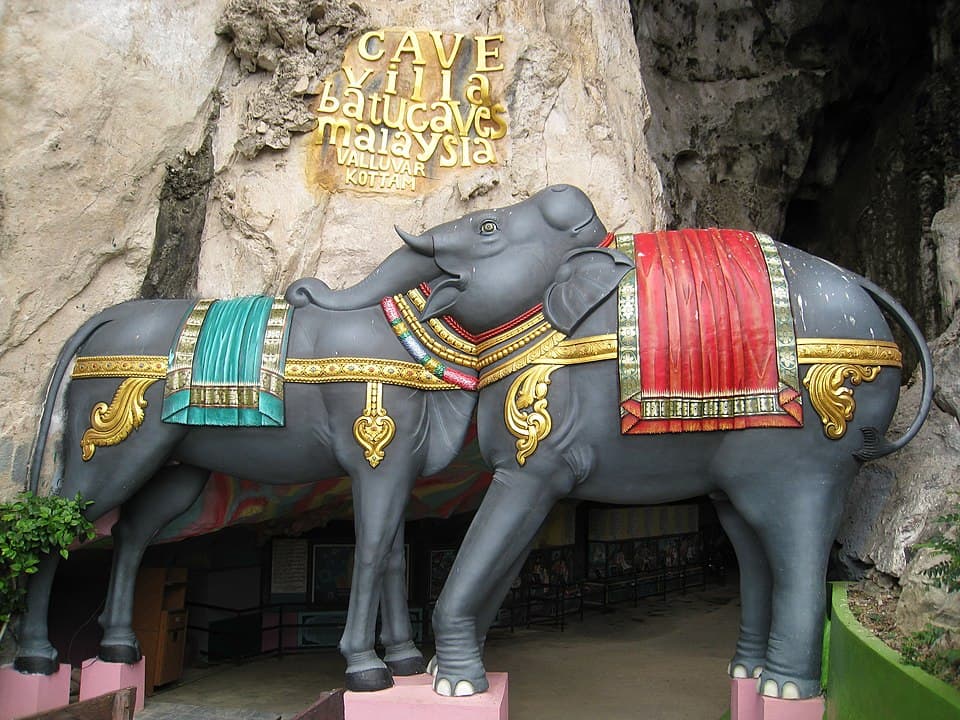
At the entrance to the Cave Villa, you are greeted by life-sized statues of elephants, animals that hold a place of profound significance in Hindu culture and tradition. These majestic figures are not merely decorative; they embody the virtues of wisdom, immense strength, and royal dignity. In ancient times, elephants were the preferred mounts of kings and deities, making them enduring symbols of power and auspiciousness. Furthermore, the elephant is inextricably linked to the deity Ganesha, the elephant-headed god who is widely revered as the remover of obstacles. In Hindu practice, Ganesha is often the first deity invoked at the beginning of any new venture, journey, or ceremony to ensure success and protection. By placing these statues at the threshold, the site honors this tradition of seeking divine guidance and strength before entering a sacred or educational space. The presence of these gentle giants, adorned in traditional ceremonial colors, serves as a reminder of the deep connection between the natural world and the spiritual beliefs that have flourished here for over a century. They stand as a welcoming and protective presence for all who come to learn about the heritage housed within.
Conclusion: Departure and City Views
As you exit the complex, take a final look at the skyline of Kuala Lumpur and head toward the Batu Caves Komuter station for your return journey.
The Gateway Home
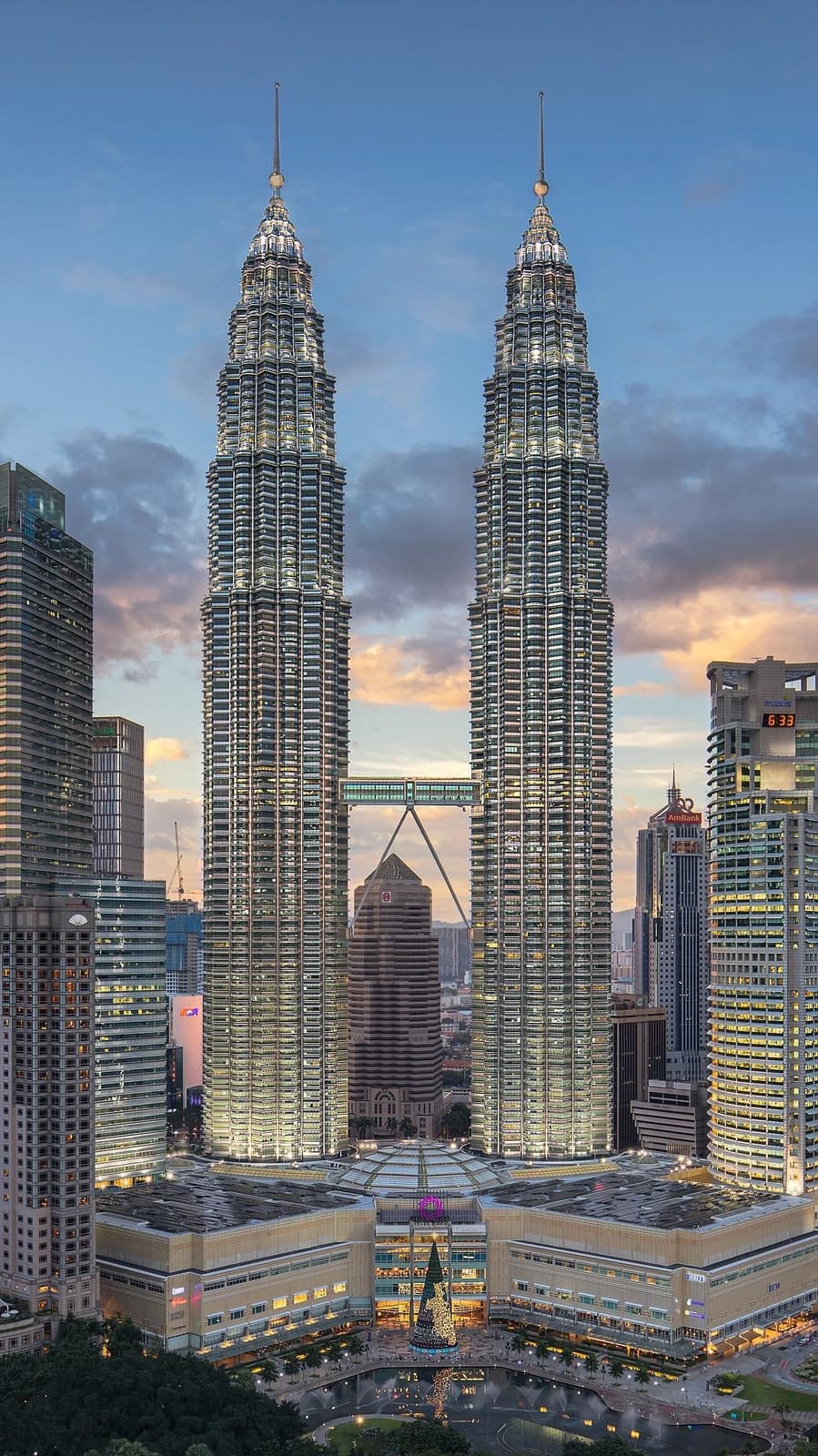
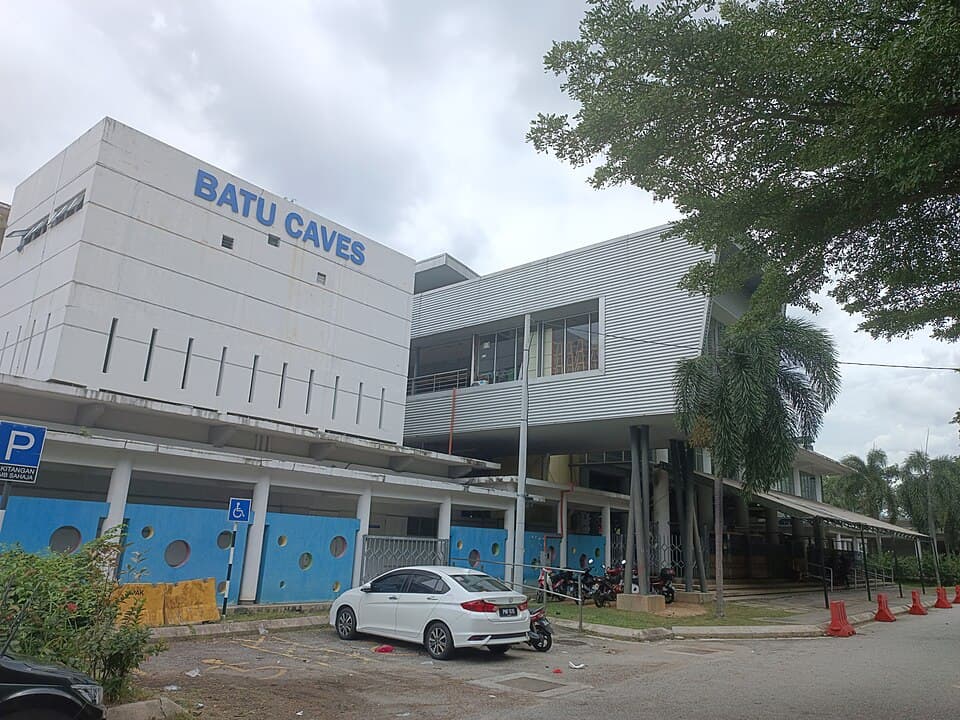
Looking toward the modern infrastructure surrounding the site, the Batu Caves KTM Komuter station is visible nearby. This railway connection played a pivotal role in the site's history, marking a major turning point in its transformation. For much of its early existence after the temple's founding in 1891, the caves were a relatively remote destination, accessible primarily by arduous paths and basic roads through the dense landscape. In those days, reaching the caves was a significant undertaking for the local community. The introduction of a dedicated railway line in the 20th century changed everything, bridging the gap between the growing city of Kuala Lumpur and this spiritual haven. This leap in accessibility allowed the site to evolve from a local jungle shrine into a global landmark. Today, the station serves as a vital gateway, bringing hundreds of thousands of pilgrims and tourists directly to the foot of the golden Murugan statue every year. It represents the successful integration of modern transportation with ancient tradition, ensuring that the spiritual and cultural legacy of the caves remains a living, accessible part of Malaysia's national identity for residents and international visitors alike.
Want to hear the rest?
Download the Stanza app to unlock all 21 stops and full GPS-guided navigation.
Frequently Asked Questions
How long does the Batu Caves audio tour take?
The Batu Caves audio guide includes 21 narrated stops. Most visitors spend 45 minutes to 1.5 hours exploring the complete tour, though you can listen at your own pace and skip or revisit any stop.
Is the Batu Caves audio guide available in my language?
Stanza supports 15 languages: English, Spanish, French, German, Italian, Portuguese, Russian, Japanese, Chinese, Korean, Arabic, Hindi, Polish, Dutch, Hebrew. Check the guide in the app to confirm the languages currently available for this tour.
Can I use the audio guide offline at Batu Caves?
Yes! Download the complete Batu Caves tour — including all audio, maps, and images — before your visit. The Stanza app works completely offline, so you don't need WiFi or mobile data at the venue.
How much does the Batu Caves audio guide cost?
The Stanza app is free to download. The current listed price for the Batu Caves audio guide is $2.99; app-store region and currency may affect the final price.
How do I use the Stanza audio guide at Batu Caves?
Download the free Stanza app, search for "Batu Caves", and download the tour. When you arrive at the venue, the app uses GPS to detect your location and automatically plays the relevant narration as you move between points of interest — completely hands-free.
What makes the Stanza audio guide different from other Batu Caves tours?
Stanza offers GPS-triggered narration that plays automatically as you walk through Batu Caves — no need to manually select stops. The tour is available in 15 languages, works fully offline, and includes 21 expertly narrated stops with images and historical context.
What other audio guides are available near Batu Caves?
Stanza offers multiple audio guides in Selayang Municipal Council, Malaysia and nearby areas. After downloading the app, browse the map to discover all available tours near Batu Caves. Each guide can be downloaded for offline use.