Stanza · Audio guide
Petronas Towers Audio Guide
A place to remember. A story to take with you.
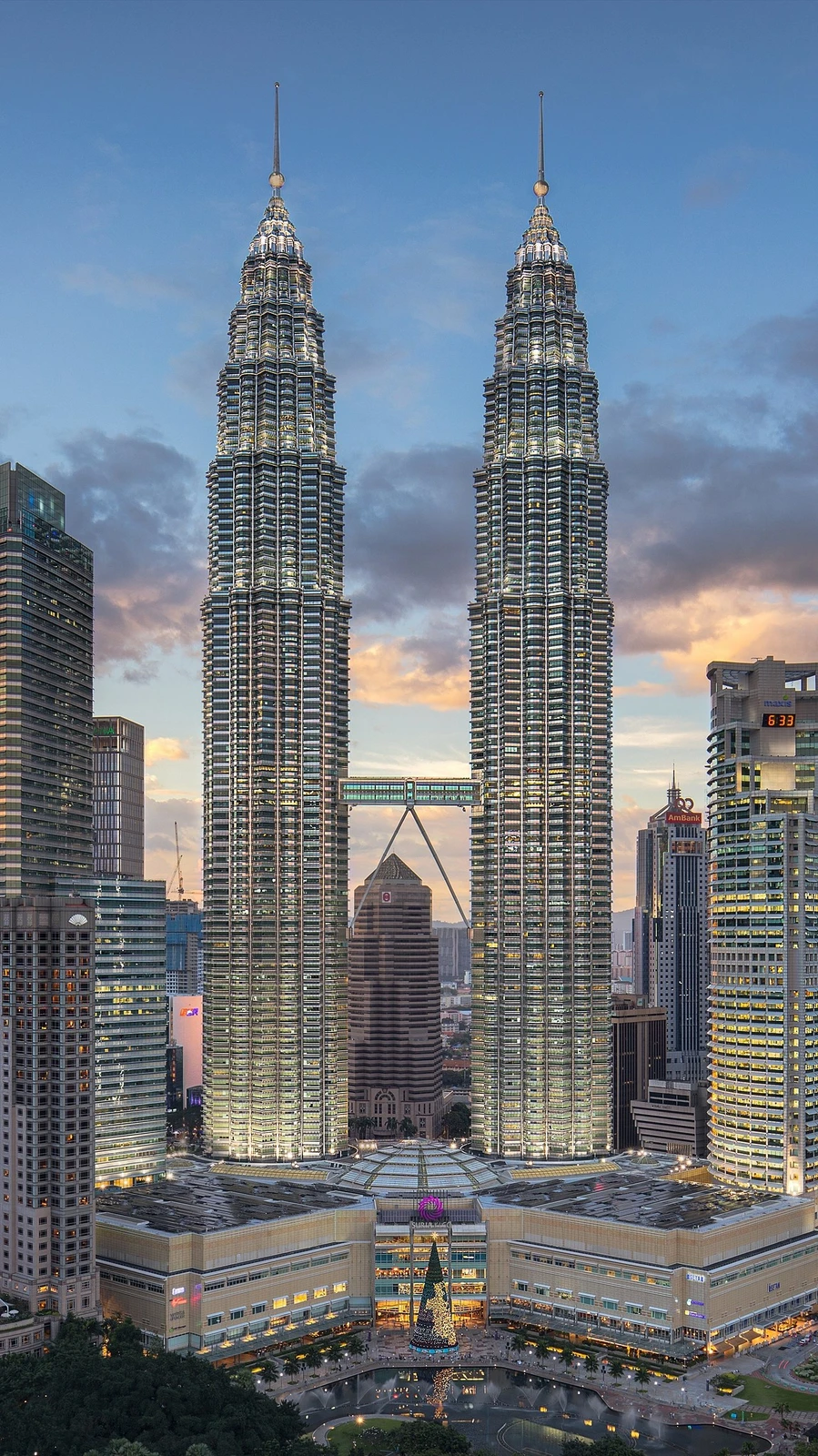
The Petronas Towers are iconic twin skyscrapers located in Kuala Lumpur, Malaysia. Once the tallest buildings in the world, they remain a prominent symbol of the city and a major tourist attraction.
Download Stanza, then search for “Petronas Towers”.
About the tour
One guide. Your kind of visit.
The Petronas Towers are iconic twin skyscrapers located in Kuala Lumpur, Malaysia. Once the tallest buildings in the world, they remain a prominent symbol of the city and a major tourist attraction.
Ready when you are.
- 01Get the free Stanza app.
iOS & Android
- 02Find your guide.
“Petronas Towers”
- 03Download before you go.
Works offline
Audio guide / 20 narrated stops
Inside the guide
Get to know a few of the stories before you go. Open a stop to read more.
01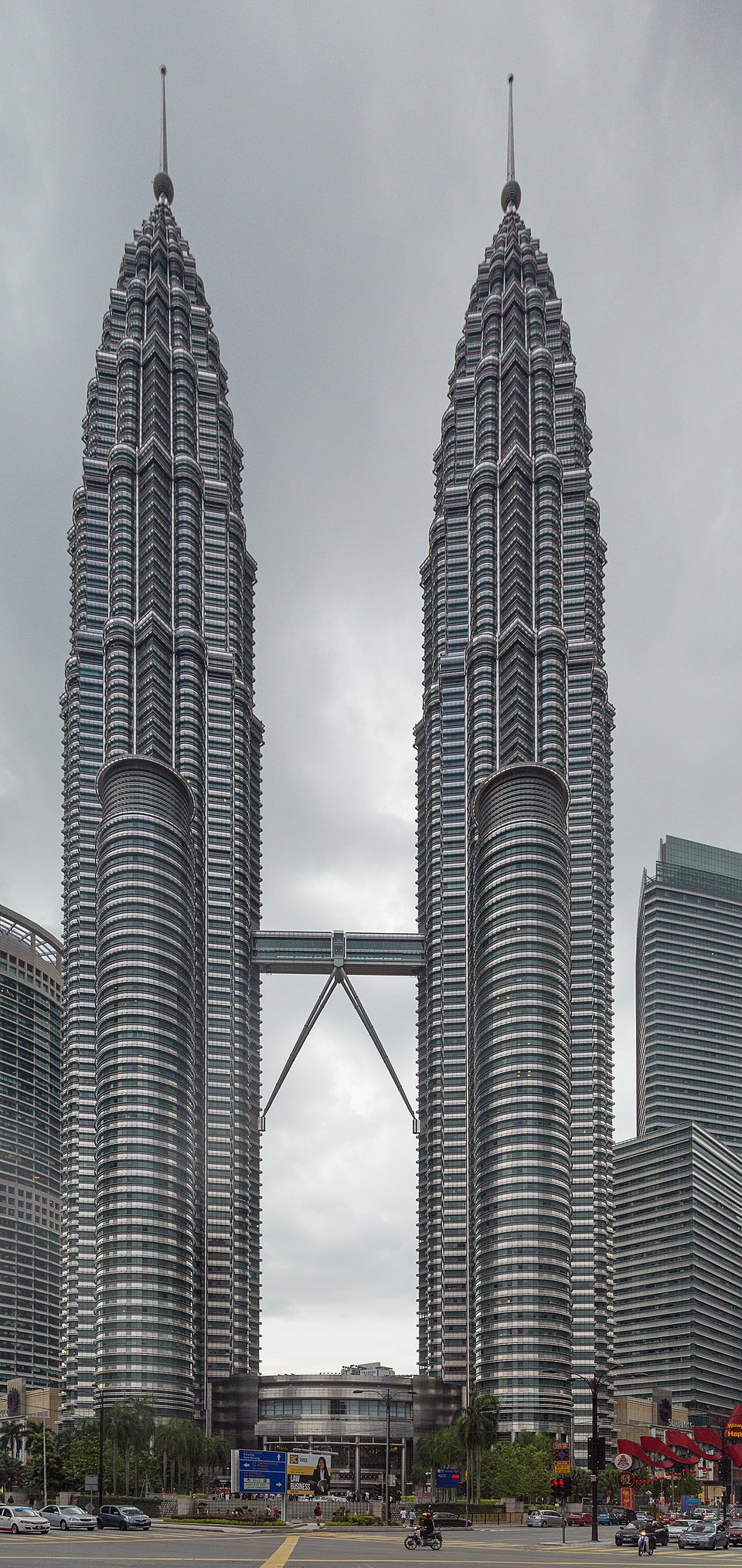 The Shimmering Twins
The World's Tallest Twins
Welcome to the Petronas Towers, a marvel of modern engineering and an enduring symbol of Malaysia’s global aspirations. Designed by the renowned Argentine-American architect César Pelli, these towers held the prestigious title of the tallest buildings in the world from 1998 until 2004. Standing at a total architectural height of 451.9 meters, they remain the tallest twin structures ever constructed, dominating the Kuala Lumpur skyline with their unique silhouette. Pelli’s vision was to create a landmark that was unmistakably Malaysian, blending high-tech construction with local cultural influences. The towers aren't just office spaces; they represent the country's "Vision 2020," a national goal to become a fully developed nation. As you look up at the sheer scale of these giants, imagine the ambition required to conceive such a massive project. They serve as the headquarters for Petronas, Malaysia's national petroleum company, but their significance transcends corporate identity, acting as a beacon of progress and pride for the entire Southeast Asian region. Their symmetrical design creates a sense of balance and strength, standing as a gateway to the modern city of Kuala Lumpur.
Jorge LГЎscar from Melbourne, Australia · CC BY 2.0
02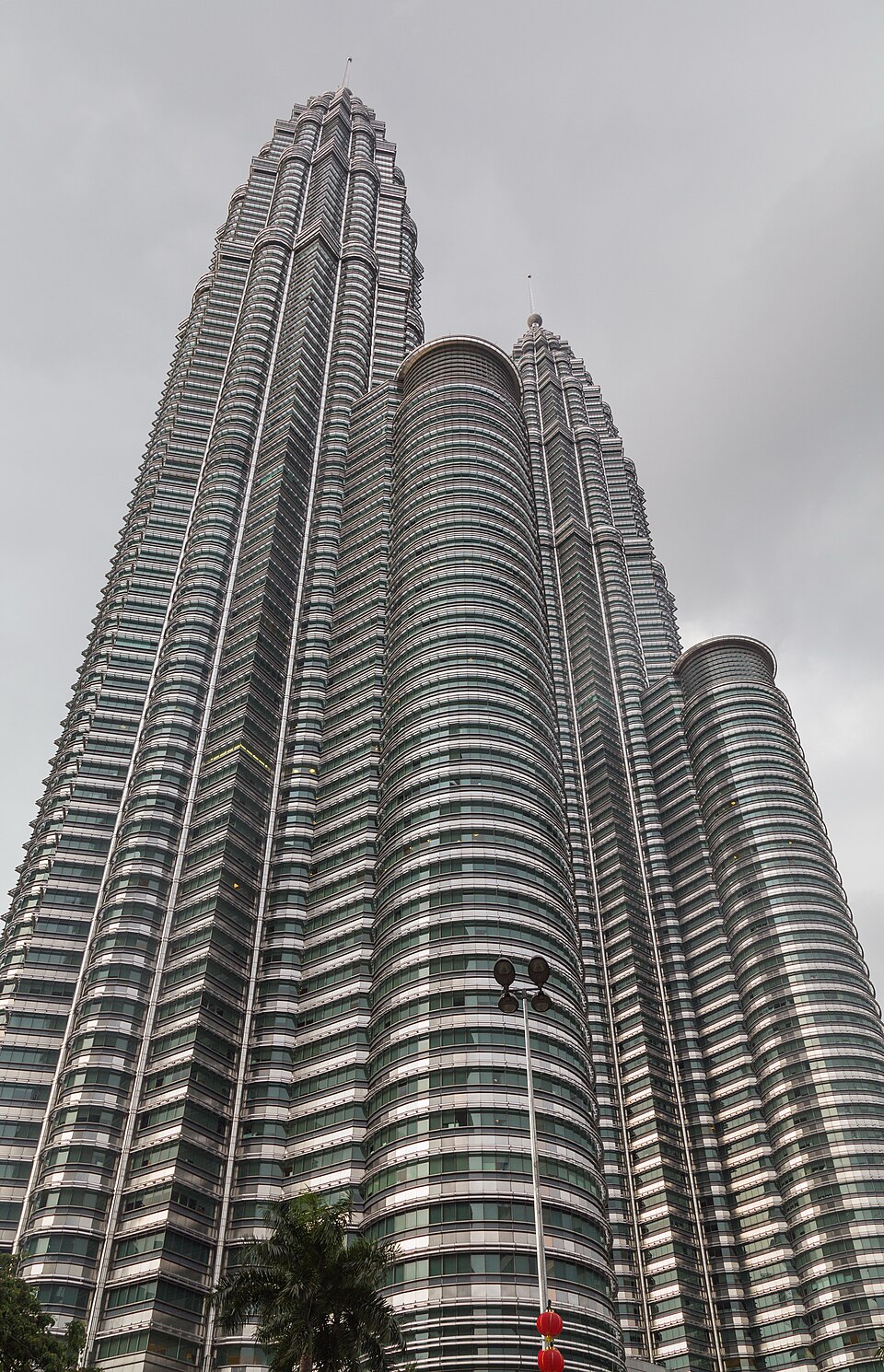 The Shimmering Twins
The Construction Timeline
Building these structures was a race against time. Construction began with excavation in 1993 and moved at a staggering pace, culminating in the official opening on August 31, 1999—which is Malaysia's Independence Day. The project was driven by a strict government deadline, as the towers were intended to symbolize the nation’s rapid economic progress and entrance onto the world stage. Completing two of the world's most complex buildings in just about six years required unprecedented coordination and round-the-clock labor. The site was once a horse racing track, but it quickly transformed into a vertical construction zone that captivated the city. Every floor added was a testament to the "Malaysia Boleh" or "Malaysia Can Do" spirit that defined the era. This accelerated timeline wasn't just about efficiency; it was a psychological milestone, showing that the nation could execute massive infrastructure projects on par with any developed country. The opening date was chosen specifically to coincide with Merdeka Day, tying the towers forever to the story of Malaysian sovereignty and its hopes for the new millennium.
Marcin Konsek · CC BY-SA 4.0
03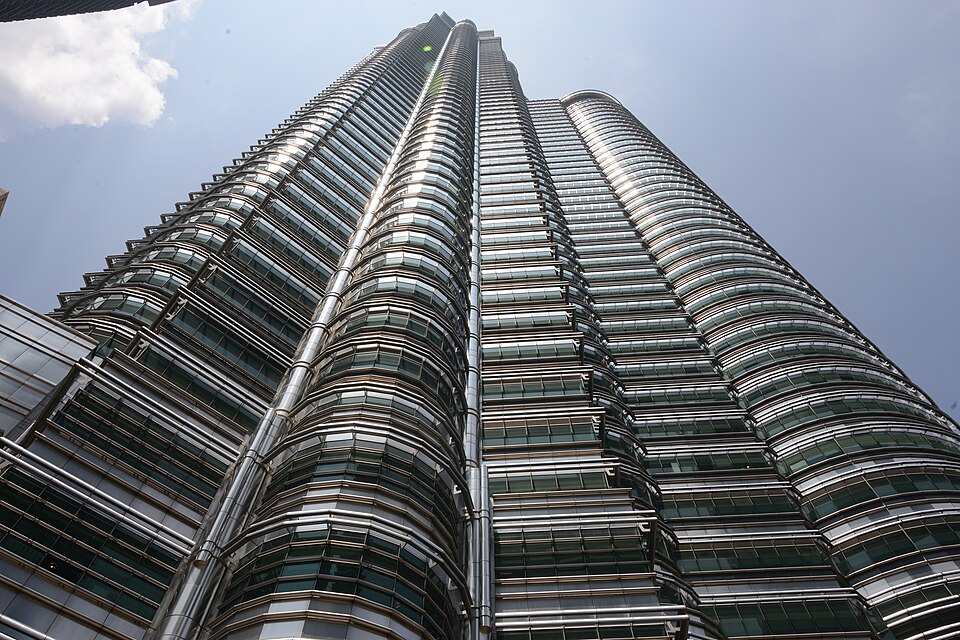 The Shimmering Twins
The Shimmering Facade
The signature glow of the Petronas Towers comes from its remarkable "skin." The facade is composed of approximately 33,000 stainless steel panels and 55,000 vision glass panels. These materials were carefully chosen by César Pelli to create a "shimmering" effect that changes throughout the day as the sun moves across the sky. This choice of material was deeply intentional; the metallic sheen is meant to resemble traditional Malaysian silverwork, such as the intricate patterns found in local jewelry and decorative arts. At night, the buildings are illuminated to emphasize this metallic glow, making them appear almost as if they are made of solid light. The glass panels are designed to filter the intense tropical sunlight while providing occupants with expansive views of the city. Beyond aesthetics, the stainless steel provides a durable surface capable of withstanding the heat and humidity of Kuala Lumpur. This fusion of industrial materials and cultural motifs is what gives the towers their unique character, bridging the gap between ancient craft traditions and futuristic architectural design, creating an iconic shimmer recognized globally.
Listen in the appJorge LГЎscar from Melbourne, Australia · CC BY 2.0
04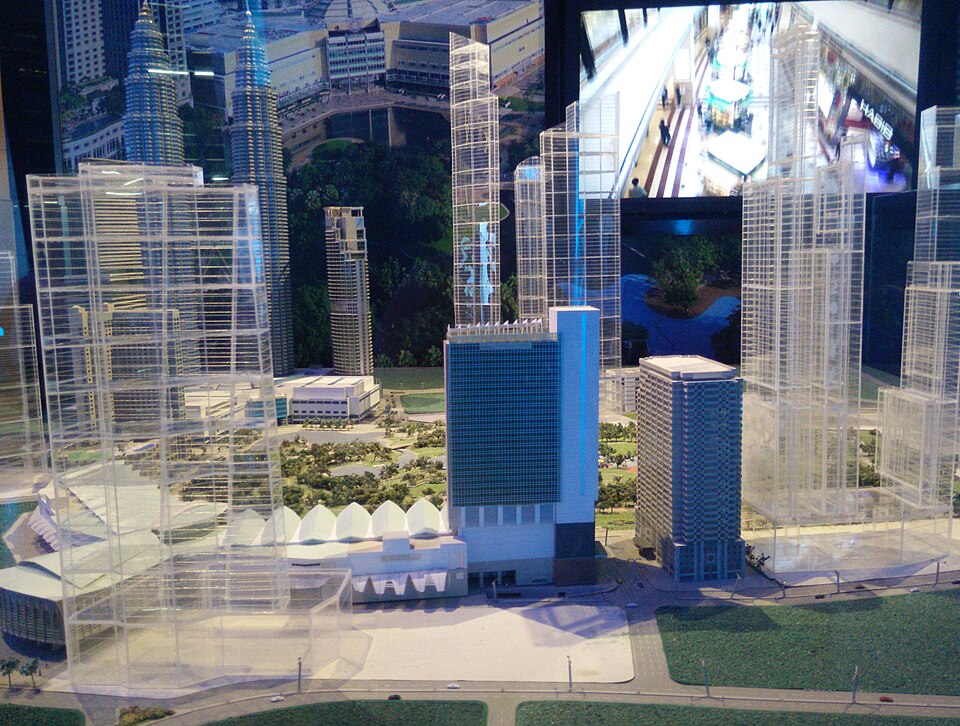 The Concourse Museum
The World's Deepest Foundations
Consider that some of the towers' most impressive engineering is completely hidden underground. The site was a challenge for engineers because it sits on a complex mixture of unstable limestone and soft rock. To ensure these massive structures wouldn't sink or tilt, engineers had to design the world's deepest foundations. They drove concrete piles deep into the earth—up to 114 meters—until they reached solid ground. On top of these piles, they poured a massive concrete raft, which serves as a stable platform for the towers to rest upon. This "mat" foundation is over four meters thick and was created during one of the largest continuous concrete pours in history. It took 54 hours of non-stop work to complete the base for just one tower. This subterranean anchor allows the buildings to stand securely despite the challenging tropical soil and the immense weight they carry. It’s a powerful reminder that the incredible height of a skyscraper is only possible because of the immense strength and stability buried deep beneath its feet.
Listen in the appPhoto: Frostpolar · CC BY-SA 4.0
05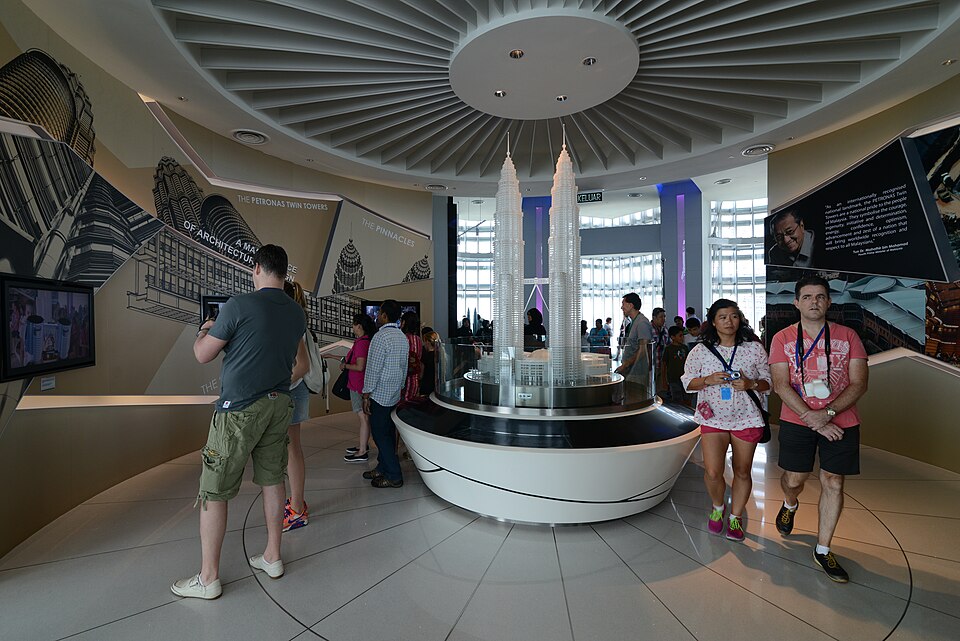 The Concourse Museum
The Great Construction Race
To maintain the grueling schedule we discussed earlier, the project was split between two international construction teams. A Japanese consortium was responsible for Tower 1, while a South Korean consortium, led by Samsung C&T, was tasked with building Tower 2. This created a literal race to the top. Although the South Korean team began their work nearly a month after the Japanese team, the competition drove them to work with incredible speed and precision. In the end, it was the South Korean team that won the race, completing Tower 2 first. This dual-team approach was more than just a motivational tactic; it served as an insurance policy. If one team encountered a major technical problem or delay, the other could continue, ensuring the entire project didn't grind to a halt. The competition also fostered innovation, as both teams shared best practices to overcome the unique challenges of building in a tropical climate. This international collaboration, fueled by a spirit of rivalry, was key to delivering the project on time for the 1999 opening, showcasing global expertise working toward a common Malaysian goal.
Listen in the appJorge LГЎscar from Melbourne, Australia · CC BY 2.0
06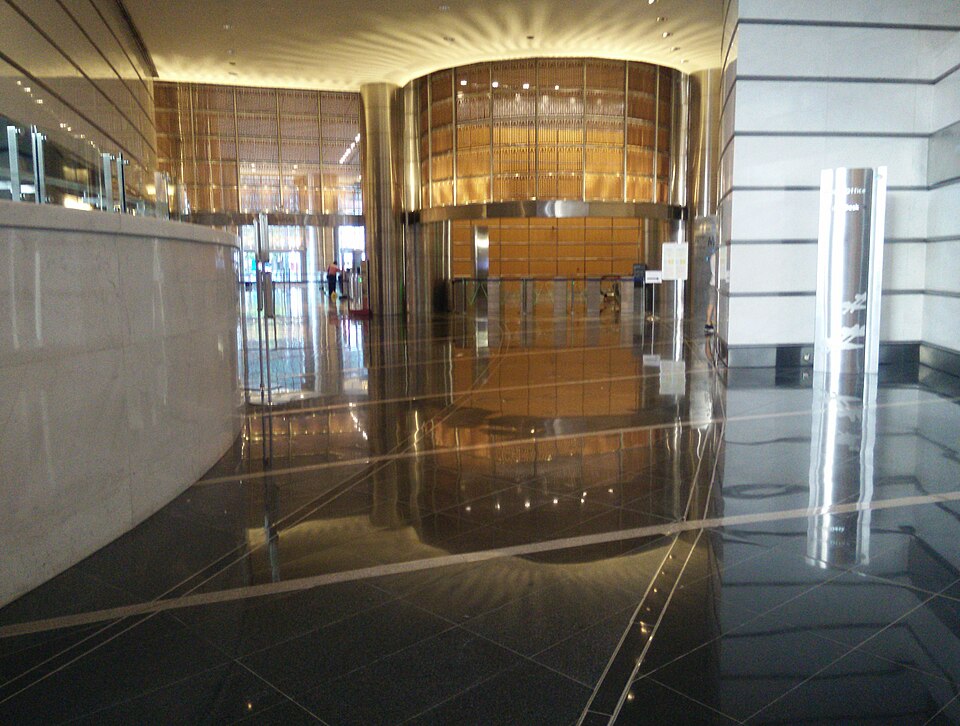 The Grand Lobby
Built of Concrete
If you’ve seen the steel skeletons of skyscrapers in New York or Chicago, you might be surprised to learn that these towers are built primarily of high-strength reinforced concrete. In the 1990s, steel was expensive to import to Malaysia, whereas the local concrete industry was robust. By choosing concrete, the developers could support the local economy and reduce costs. This decision had a significant engineering benefit as well: it made the buildings roughly twice as heavy as comparable steel structures. This immense mass is actually an advantage in a tall building because it acts as a natural dampener. It makes the towers much more rigid, effectively reducing the amount they sway during high winds or tropical storms. To achieve this, engineers developed a special high-strength concrete specifically for this project, pushing the boundaries of what the material could do at the time. The massive vertical columns you see on the exterior are filled with this concrete, providing the backbone that allows the twin towers to soar so high while remaining rock-solid and safe for the thousands of people who work inside every day.
Listen in the appPhoto: Frostpolar · CC BY-SA 4.0
07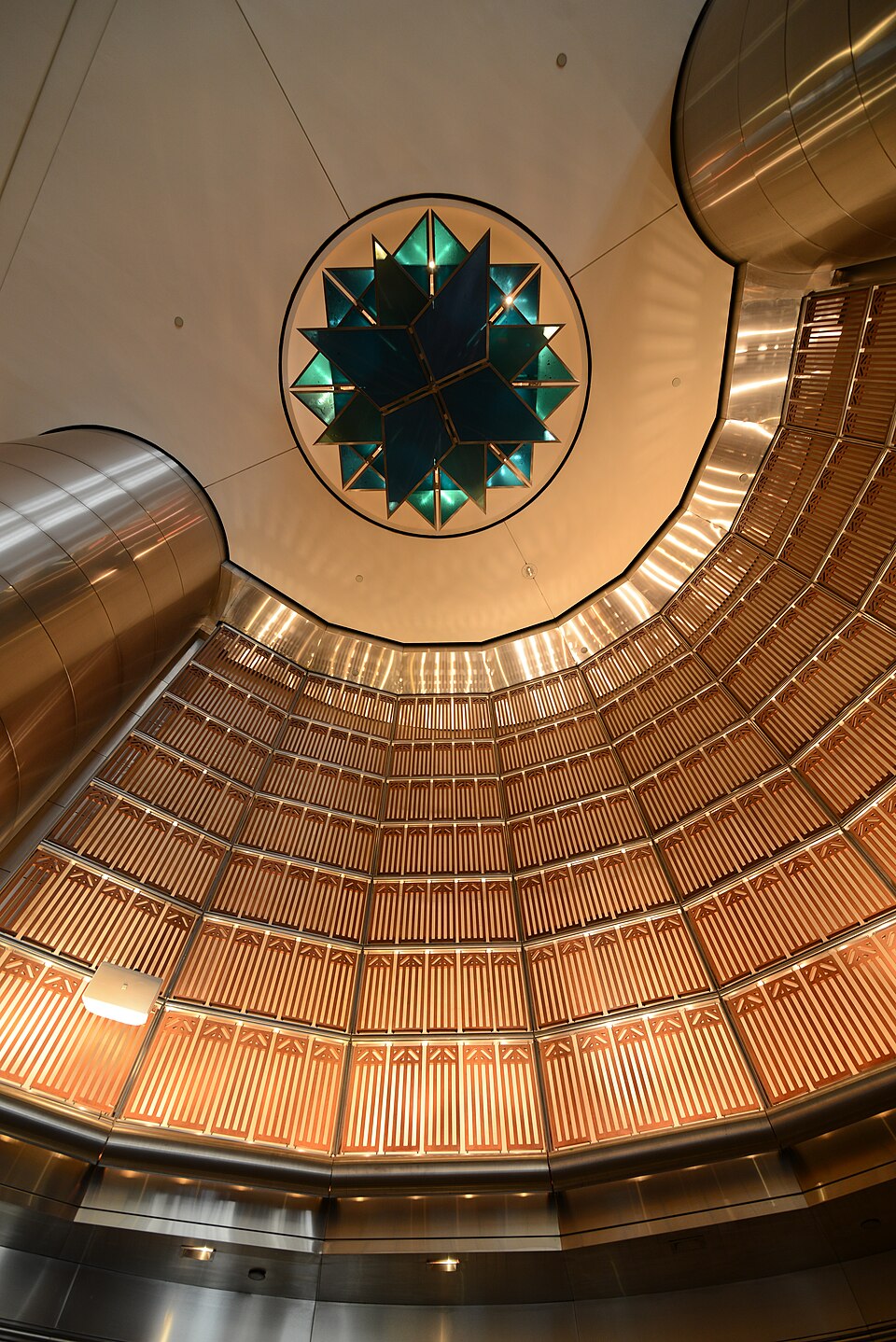 The Grand Lobby
The Rub el Hizb Geometry
Look up at the ceiling details here to see the geometric logic that defines the entire complex. The floor plan of the towers is based on a fundamental Islamic symbol known as the Rub el Hizb. This symbol consists of two overlapping squares that form an eight-pointed star. This choice was a way for architect César Pelli to ground the project in Malaysia's Muslim identity, providing a spiritual and cultural anchor for a very modern building. However, a simple star shape would have resulted in cramped, triangular office spaces that were difficult to use. To make the building more functional and increase floor area, Pelli added circular sectors between the points of the star. This modified geometry created the distinctive "scalloped" look of the towers' exterior. It is a perfect example of "form following function," where a traditional symbol is adapted to meet the needs of a 21st-century office building. The result is a structure that feels both ancient and futuristic, a sophisticated blend of mathematical precision and cultural heritage that echoes throughout the lobby, the office floors, and the spires above.
Listen in the appJorge LГЎscar from Melbourne, Australia · CC BY 2.0
08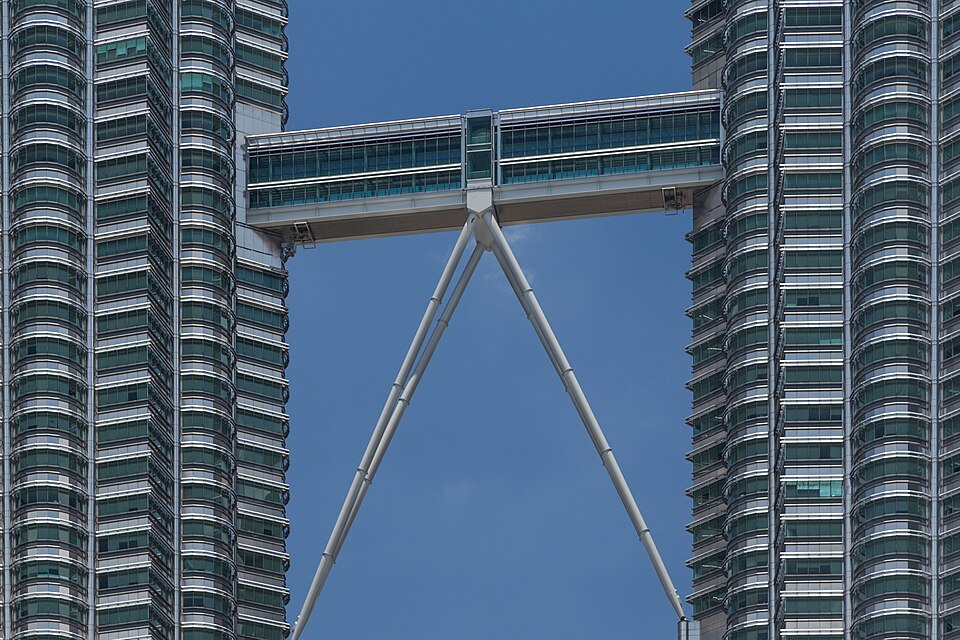 The Skybridge
 Support
The most recognizable feature of the towers is undoubtedly the Skybridge. This isn't just a walkway; it’s the highest two-story bridge in the world. If you look at the exterior of the bridge, you'll see massive V-shaped support legs that anchor it to the towers. These legs are attached much further down, at Level 29, providing a stable foundation for the bridge that spans the gap at the 41st and 42nd floors. Suspended 170 meters above the ground, the bridge serves several purposes. Practically, it acts as a shortcut between the towers, meaning employees don't have to go all the way down to the lobby to move from one building to the other. It also serves as a critical fire exit, allowing occupants to cross to the sister tower in case of an emergency in their own building. Structurally, the bridge helps distribute wind loads between the two towers. While it appears to be a solid link, its engineering is actually much more complex, designed to handle the constant, subtle movement of the towers as they react to the environment and the wind.
Listen in the appMarcin Konsek · CC BY-SA 4.0
09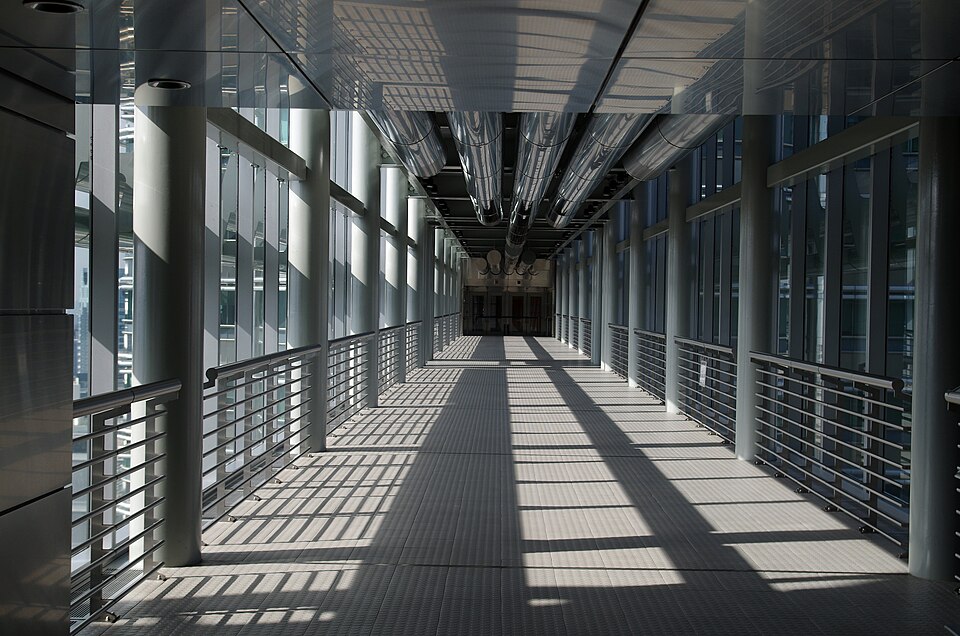 The Skybridge
Flexible Engineering
Now that you are inside the Skybridge, you are experiencing an engineering marvel that defies expectations. Most people assume the bridge is bolted firmly to both towers, but that would be a recipe for disaster. Because the towers are so tall, they are designed to sway independently in high winds. If the bridge were fixed, this movement would snap it apart or damage the building structures. Instead, the bridge "floats." It is attached to the towers using sophisticated expansion joints and bearings that allow it to slide in and out of the structures. This flexibility ensures that as the towers dance in the wind, the bridge stays safely in place without putting stress on the main buildings. It’s a bit like a drawer sliding in and out of a cabinet. This "slide and tilt" mechanism was one of the project's most difficult design challenges. So, as you look out at the city below, remember that the floor beneath your feet is part of a dynamic, moving system designed to safely withstand the massive forces of nature.
Listen in the appPhoto: Balou46 · CC BY-SA 4.0
10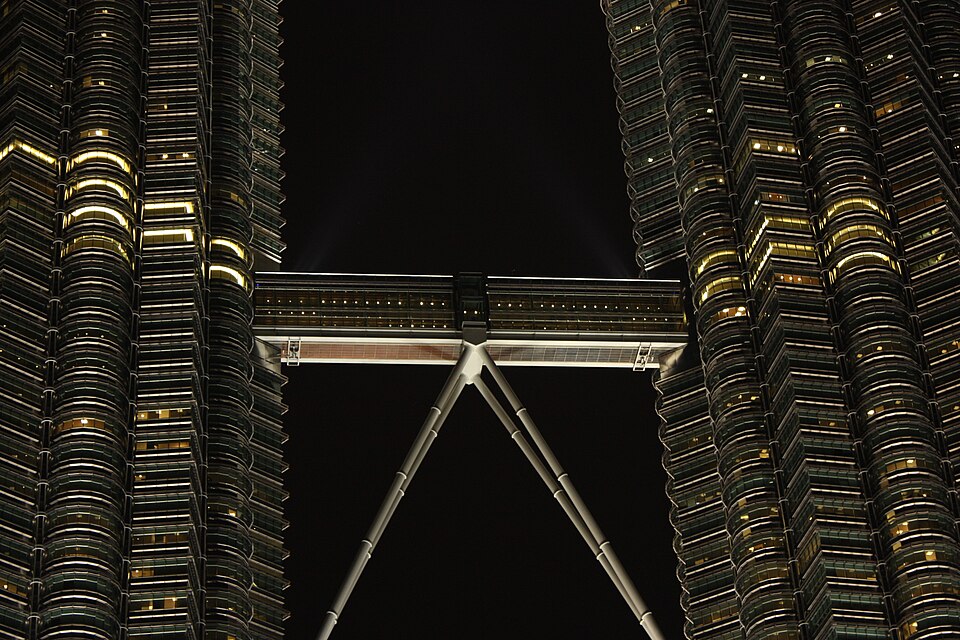 The Skybridge
The Spiderman Climb
These sheer glass and steel walls have proven irresistible to one man in particular: the famous French urban climber Alain Robert, known worldwide as "Spiderman." In September 2009, Robert finally achieved a goal that had eluded him for over a decade. He successfully scaled to the very top of Tower 2, using nothing but his bare hands and feet. This was no easy feat, as he had to navigate the smooth, shimmering panels we discussed earlier without any safety harnesses. It was also his third attempt at conquering the twins. His previous tries, in 1997 and 2007, were both cut short when police intercepted him at the 60th floor and arrested him. For his successful 2009 climb, he started in the early hours of the morning to avoid detection, reaching the pinnacle just as the sun was rising. While his actions were illegal and dangerous, his feat added a layer of human drama and daring to the building's history. It highlighted the sheer verticality of the design and cemented the towers' status as a global icon that inspires awe and, for some, the ultimate climbing challenge.
Listen in the appIrwan Shah Bin Abdullah / https://ehalal.io/muslim-friendly-travel-2024/Kuala_Lumpur · CC BY 3.0
- 11
The Twin Spires
The crowning spires are not just decoration; they were the key to the building's historic claim as the tallest in the world.
- 12
Level 86 Observation Deck
Standing at the highest public point in the towers, you are treated to a breathtaking 360-degree view of the Malaysian capital.
- 13
The Double-Decker Lift System
To move thousands of people daily, the towers employ a sophisticated system of double-decker elevators that double the carrying capacity.
- 14
The Suria KLCC Mall
At the base of these giants lies Suria KLCC, a premier shopping and cultural destination that anchors the complex to the city.
- 15
Petrosains Discovery Center
Within the mall, Petrosains offers a hands-on journey through the world of science and the story of Malaysia's energy industry.
- 16
The Grand Atrium
Step into the mall’s heart, where a massive glass dome and intricate steel patterns echo the soaring geometry of the towers above, creating a seamless blend of retail and architectural wonder.
- 17
Petronas Philharmonic Hall
Experience Malaysia’s first dedicated home for classical music, a world-class venue where European concert hall traditions meet exquisite local woodcraft to create a sanctuary of perfect acoustic clarity.
- 18
The Entrapment Heist
Relive the cinematic tension of the 1999 heist thriller 'Entrapment,' which brought global fame to the towers as Sean Connery and Catherine Zeta-Jones staged their daring escape across the Skybridge.
- 19
The KLCC Park
Wander through a 17-acre urban oasis designed by landscape legend Roberto Burle Marx, serving as a lush green lung for the city and the ultimate viewpoint for photographers.
- 20
The Lake Symphony
Conclude your journey at the Lake Symphony, where water and light dance in a spectacular tribute to Malaysia’s ambitious vision and its vibrant cultural soul.
Petronas Towers
Frequently asked questions
How much does the guide cost?
Free app download. Listed guide price: $1.99. Guide price shown in the app. Audio guide only. Venue admission is separate.
Can I listen without internet?
Yes. Download the guide’s audio, images, and maps in the app before your visit. Your downloaded content is then available offline.
Can I listen in my language?
This audio guide is available in 15 languages, including English.
Do I need to follow a schedule?
No. This is a self-guided experience. Choose your stops, pause whenever you like, and return to a story at your own pace.
At your own pace
Explore Petronas Towers.
Download Stanza, then search for “Petronas Towers”.
Free app download · Guide price shown in the app
Keep exploring
Audio guides — Malaysia
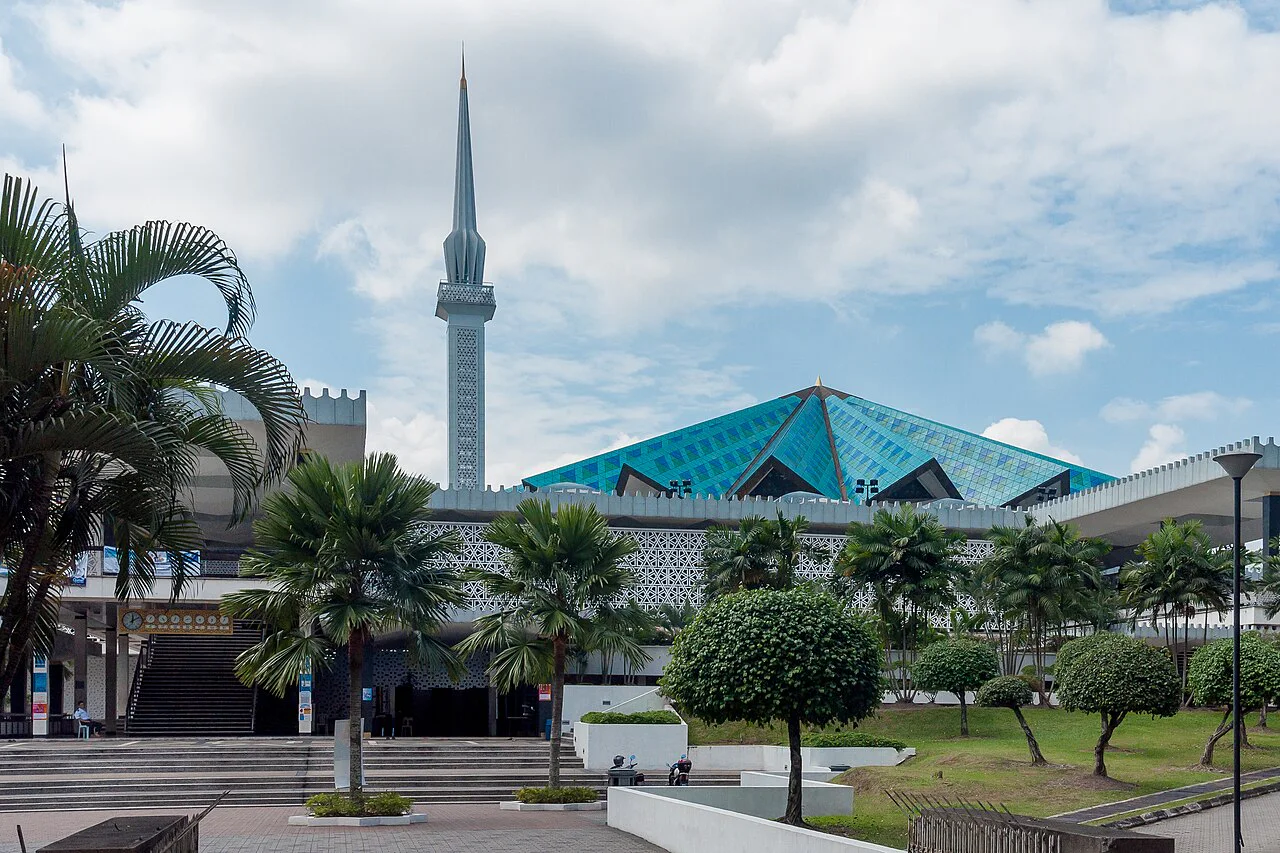
Kuala Lumpur · 3 km
National Mosque of Malaysia
Content & sources
CEphoto, Uwe Aranas · CC BY-SA 3.0
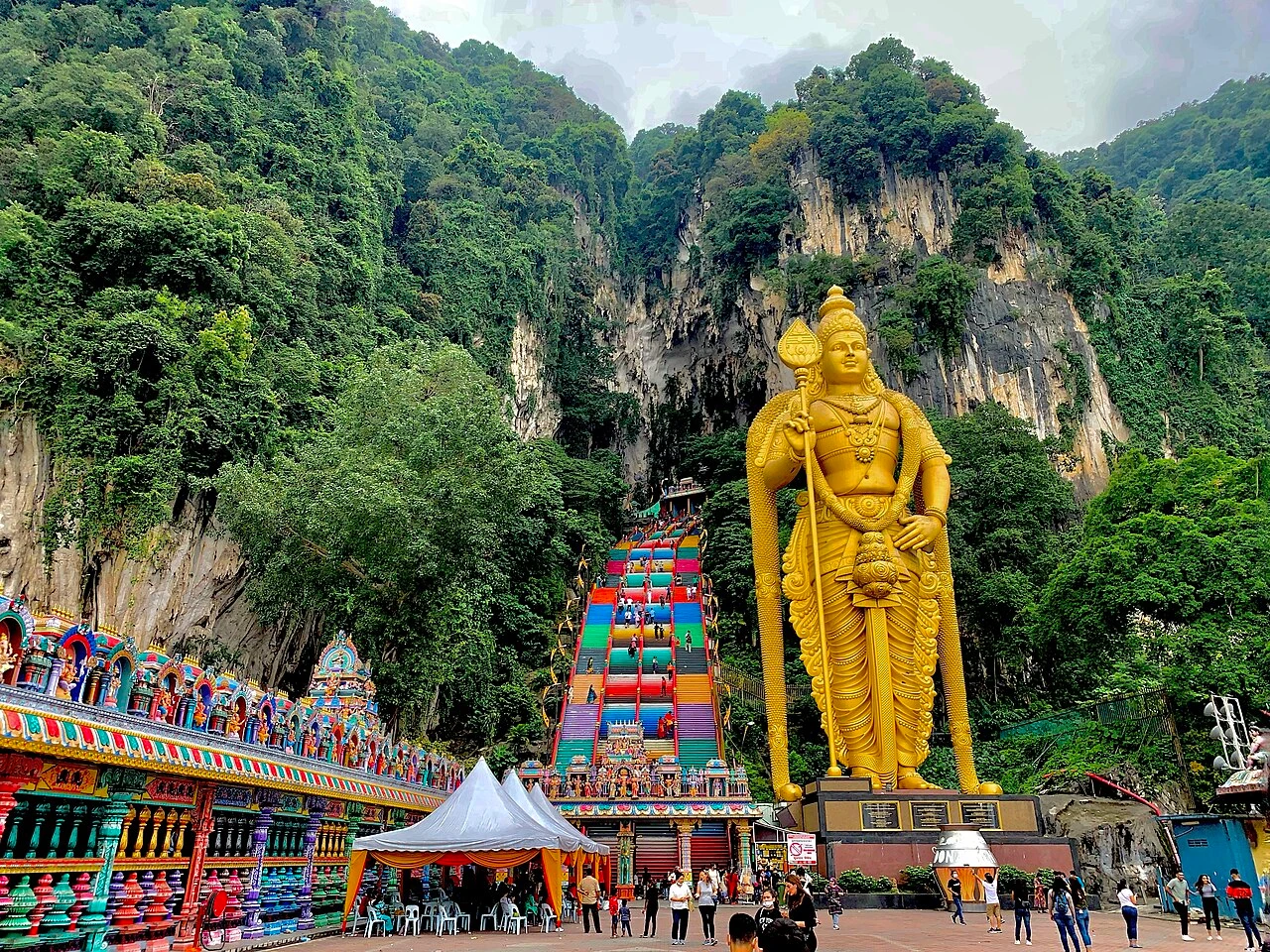
Kuala Lumpur · 9 km
Batu Caves
Content & sources
Photo: Chainwit. · CC BY-SA 4.0
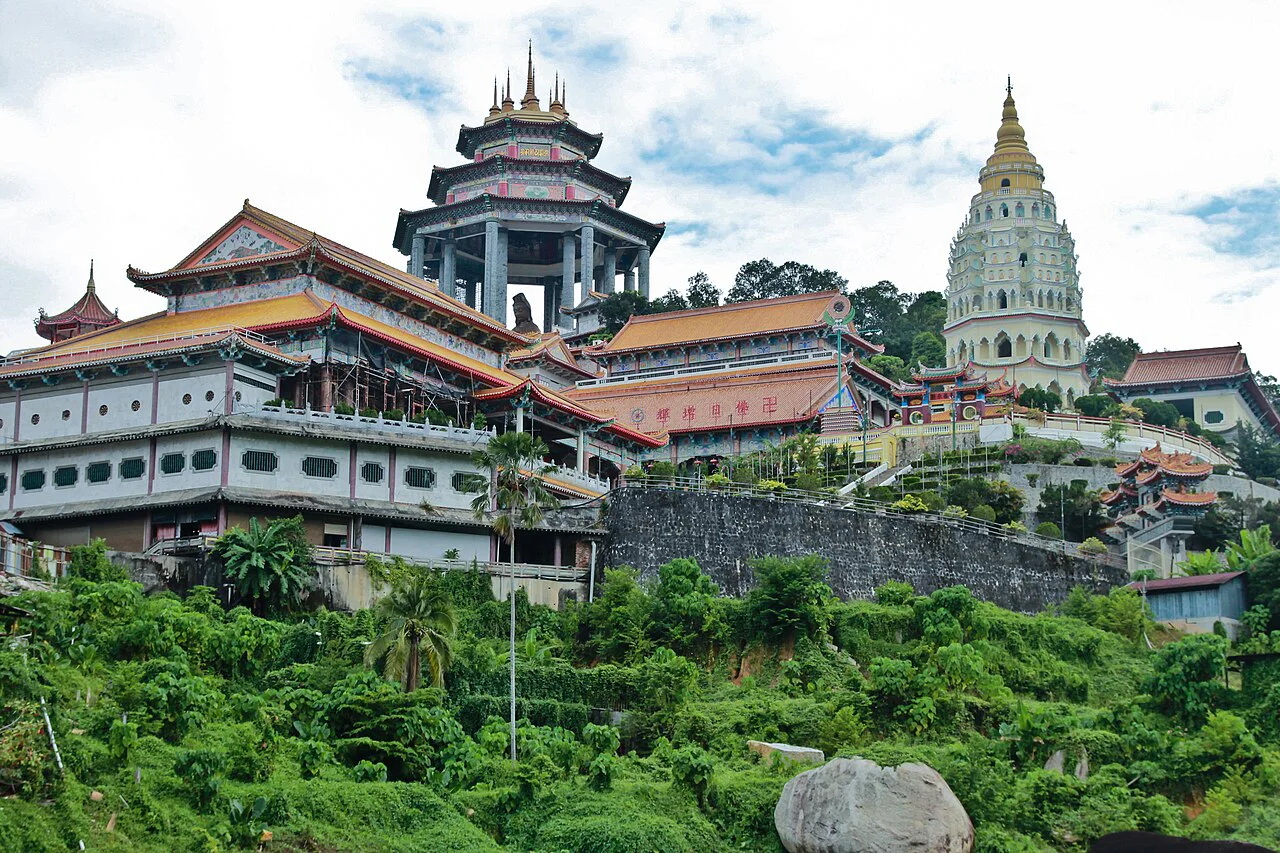
George Town
Kek Lok Si
Content & sources
Photo: Arne Müseler · CC BY-SA 3.0 de