Languages
15Shwedagon Pagoda Audio Guide
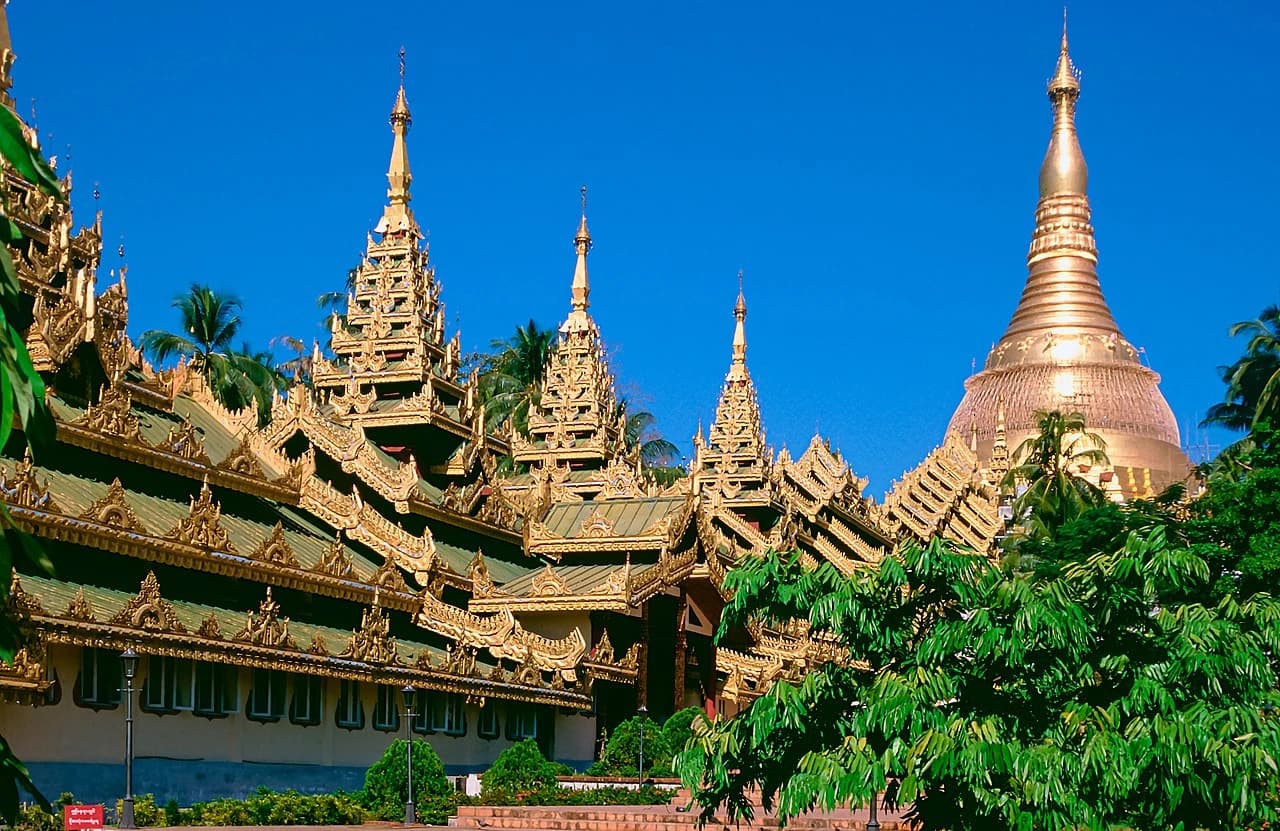
Shwedagon Pagoda is a landmark in Kyauktada District, Myanmar. Explore it with Stanza's GPS-triggered offline audio guide — available in 15 languages.
Quick Facts
37
Stops
15
Languages
100%
Offline
📍 Kyauktada District, Myanmar · 16.7983°N, 96.1494°E
About Shwedagon Pagoda
The Shwedagon Pagoda is a gilded Buddhist stupa located in Yangon, Myanmar. It is a sacred Buddhist temple complex and a prominent religious building in the country.
This self-guided audio tour features 37 narrated stops organized across 7 sections. As a temple, Shwedagon Pagoda offers a unique cultural experience in the heart of Kyauktada District, Myanmar.
The Stanza audio guide is available in 15 languages and works entirely offline — download the complete tour including audio narration, maps, and images before your visit. As you walk through Shwedagon Pagoda, GPS-triggered narration plays automatically at each point of interest.
Last updated:
What you will hear
The Great Stairway of Devotion
The physical ascent to the sacred platform. Images show the grand architecture and the interior of the covered walkway.
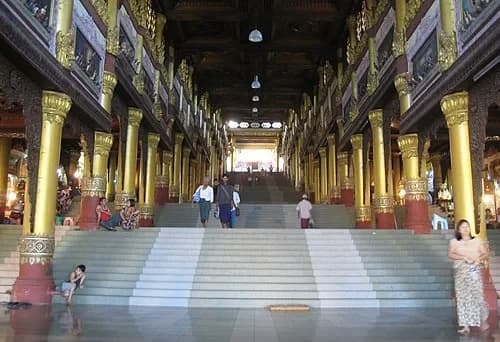
The Great Covered Walkway
The ascent to the main platform takes place within the 'Saungdan,' or covered walkway. This long, sloping structure protects pilgrims from the tropical sun and monsoon rains as they climb the hundreds of steps leading to the summit. As you make your way upward, you will pass rows of vendors lining both sides of the stairs. These stalls are a vital part of the temple economy, selling a variety of traditional offerings. You can find fragrant flowers, bundles of incense, and small packets of genuine gold leaf which visitors purchase to apply to the statues above as an act of merit. The air here is often filled with the scent of jasmine and the sound of bells, creating a sensory bridge between the city below and the sanctuary at the top. This climb is not merely a physical journey but a meditative one, allowing visitors to slow their pace and prepare their minds for the spiritual experience that awaits them at the main platform.
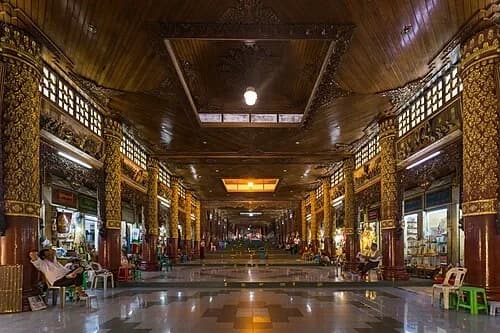
Walkway Architecture
The architecture of the covered walkway is a masterclass in traditional Burmese design. Massive teak pillars, often painted in deep reds and golds, support the heavy roof and create a rhythmic sense of depth as you ascend. If you look up, you will see the ceiling is adorned with intricate wood carvings and paintings that depict scenes from Buddhist lore and local history. These structures were specifically designed to provide shade and a cooling transition for visitors moving from the heat and noise of Yangon toward the quiet sanctuary of the main platform. The thick wooden beams and high ceilings allow for natural ventilation, keeping the air moving even on the hottest days. This architectural style, known for its durability and beauty, has been maintained through careful restoration over many decades. The transition through this space is intended to be transformative, with the cooling shadows and detailed artistry helping to calm the senses before you emerge into the brilliant light of the golden stupa.
The Golden Stupa (Maha Pagoda)
Focusing on the 99-meter main structure. Images highlight the gold plating and the massive scale of the central spire.
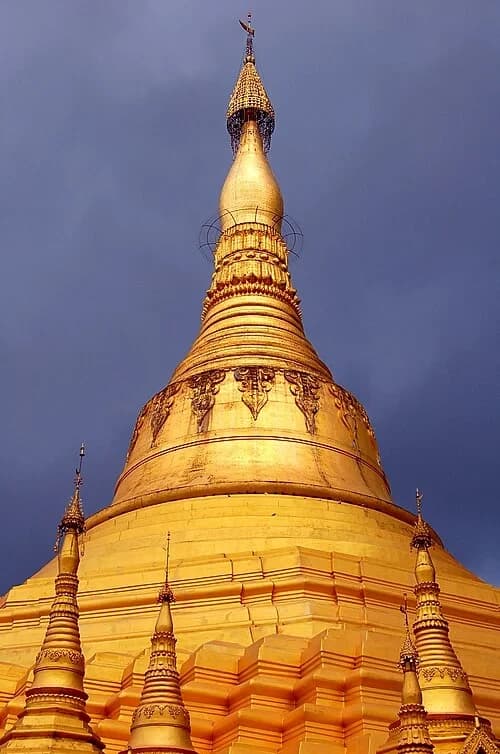
Plating and Devotion
The tradition of covering the stupa in gold is a practice of devotion that spans centuries. One of the most famous contributors was Queen Shin Saw Pu in the 15th century. Legend has it that she donated her own weight in gold to plate the stupa, a gesture that set a precedent for future monarchs and citizens alike. Today, this tradition continues in a more accessible way. Visitors can purchase small, fragile squares of gold leaf at the entrance stalls. These are carefully applied by hand to the various smaller shrines and Buddha images around the platform. For the main stupa itself, larger donations are used to manufacture the heavy gold plates that cover its surface. This collective effort means that the gold on the pagoda is literally a gift from the people. Over the years, the weight of the gold has increased significantly, with some estimates suggesting several tons of the precious metal now adorn the structure. It is a tangible representation of the wealth and spirit of the community poured into their most sacred landmark.
The Hti: The Diamond-Studded Crown
Detailing the pinnacle of the pagoda. These images show the 'umbrella' crown and the diamond bud at the absolute summit.
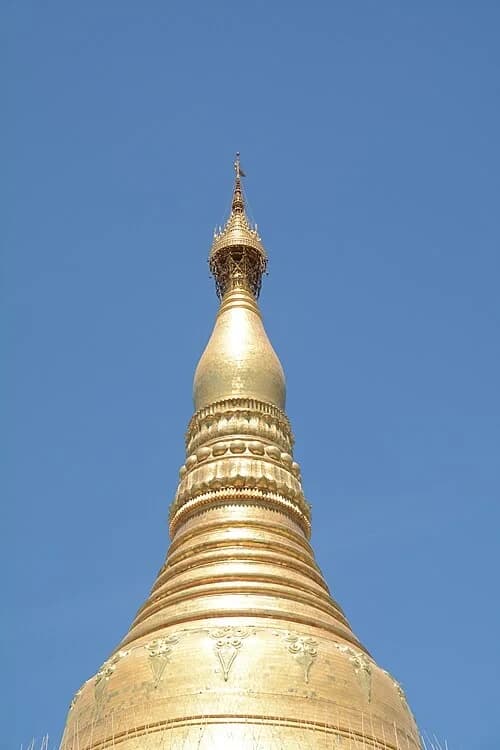
The 76-Carat Diamond Bud
Look toward the absolute summit to see the Seinbu, or diamond bud. This is the very tip of the spire, a small, sphere-like structure that rests atop the vane. While it appears tiny from the platform, it contains a single, massive 76-carat diamond. This diamond is positioned to catch the light in a specific way. As the sun begins to set over Yangon, the diamond bud often catches the final, horizontal rays of light, making it glow like a brilliant star long after the rest of the city has fallen into shadow. Because of its height, many visitors use binoculars provided on the platform to get a better view of its facets and the way it refracts the light. This bud represents the final stage of enlightenment in Buddhist thought, the point where all earthly ties are broken. The presence of such a significant gem at the highest point of the most sacred site in the country reflects the height of national and religious pride, shining as a literal beacon over the city.
The Eastern Shrine (Kakusandha Buddha)
The first of the four directional shrines, housing the staff relic of the first Buddha of this cycle.
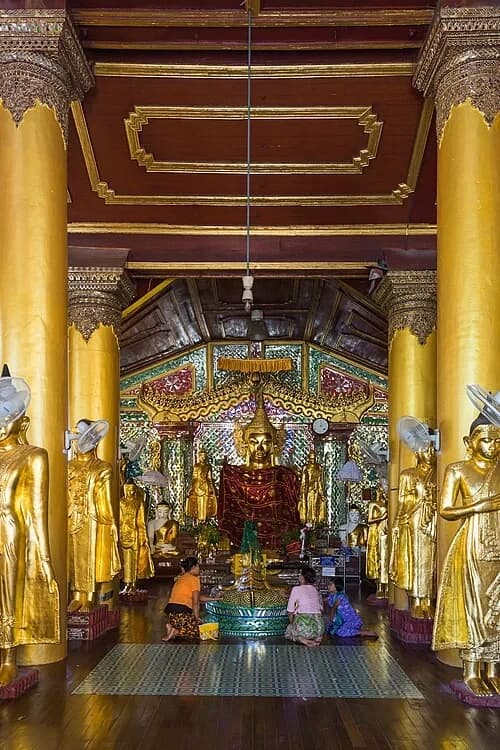
The Eastern Shrine
The platform is anchored by four main shrines, each located at one of the cardinal directions. The Eastern Shrine is dedicated to Kakusandha, who is recognized as the first Buddha to appear in the current world cycle. Each of the directional shrines at Shwedagon is believed to house a relic from a different Buddha, and this one is said to enshrine the sacred staff used by Kakusandha. As you approach, you will notice the ornate carvings and the golden glow that characterizes the entire complex. This shrine serves as a reminder of the long history of Buddhism, stretching back far before the time of the current Buddha, Gautama. Pilgrims often begin their journey around the platform here, paying respects to the first of the great teachers. The architecture follows a traditional multi-tiered roof pattern, known as a pyatthat, which signifies the spiritual importance of the deity housed within. It is a place of quiet reflection where the ancient past is brought into the present through continuous ritual and prayer.
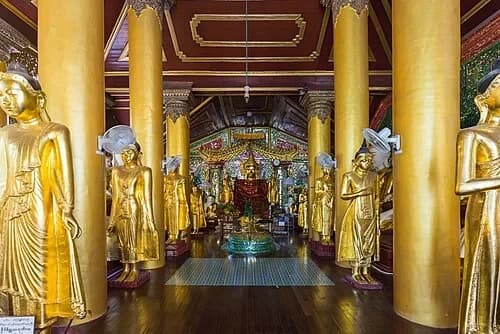
Shrine of the First Buddha
Moving inside the Kakusandha shrine, you enter a space defined by intricate mirror-mosaic work that covers nearly every surface of the walls. These thousands of tiny glass tiles reflect the light of flickering candles and electric lamps, creating a shimmering environment that feels separate from the open platform outside. At the center sits a large, serene golden Buddha image, representing the first Buddha of our current era. You will often see groups of people kneeling on the floor here, offering prayers or quietly meditating in the presence of the figure. The atmosphere is one of profound, quiet devotion, often punctuated only by the soft sound of a bell or the chanting of a nearby pilgrim. This shrine is believed to house the sacred staff of Kakusandha, making it a vital stop for those seeking to pay their respects to the long lineage of Buddhas that preceded the current age. The contrast between the detailed mosaic work and the smooth, golden surfaces of the statues creates a visually rich space that encourages a state of peaceful contemplation.
The Southern Shrine (Konagamana Buddha)
Housing the water filter relic of the second Buddha. This area highlights the scale of the devotional halls.
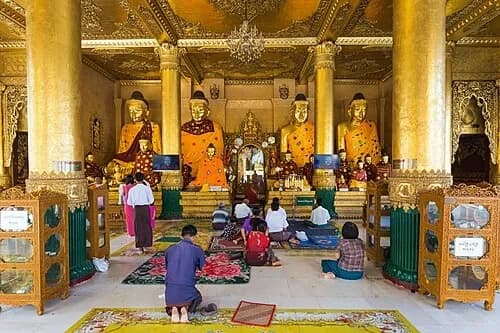
The Northern Shrine
The Northern Shrine holds a place of special importance at Shwedagon, as it is dedicated to Gautama, the current Buddha. While all parts of the pagoda are sacred, this shrine is often the focal point for many visitors because of its direct connection to the founder of the faith as we know it today. It is here that the most precious relics of the site are said to be kept: eight strands of hair given by the Buddha himself. Because of this, the shrine is a primary destination for those seeking the greatest spiritual merit. The architecture here is particularly grand, reflecting its high status within the complex. You will find many devotees making offerings of water and flowers, their movements part of a tradition that has continued for centuries. This corner of the platform often feels the most vibrant, with a constant flow of monks and laypeople coming to pay their respects. The sense of history is palpable, as this shrine marks the very reason why Singuttara Hill became a center of pilgrimage in the first place.
The Western Shrine (Kassapa Buddha)
Dedicated to the third Buddha, housing a piece of his robe. Focuses on the intricate glass mosaics and gilding.
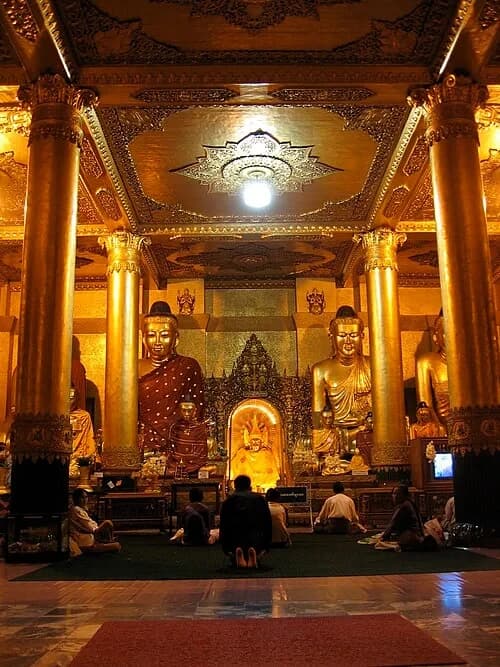
The Southern Shrine
The Southern Shrine houses a relic of Konagamana Buddha, specifically his water filter. As with the other directional shrines, it is built on a grand scale with a multi-tiered pyatthat roof that tapers elegantly toward the sky. The scale of the devotional hall is designed to accommodate large groups of worshippers, especially during major festivals when the platform is crowded with thousands of people. Inside, the Buddha image is depicted in a traditional seated posture, surrounded by smaller figures and ornate decorations. The pillars are often covered in red lacquer and gold leaf, a classic combination in Burmese temple architecture. This shrine provides a place for devotees to reflect on the life and teachings of the second Buddha of this era. The transition from the bright, open platform into the shaded, richly decorated interior of the shrine offers a moment of relief from the sun and a shift toward a more internal, prayerful state. It is a place where the grandeur of royal architecture meets the simplicity of individual faith, creating a powerful environment for spiritual practice.
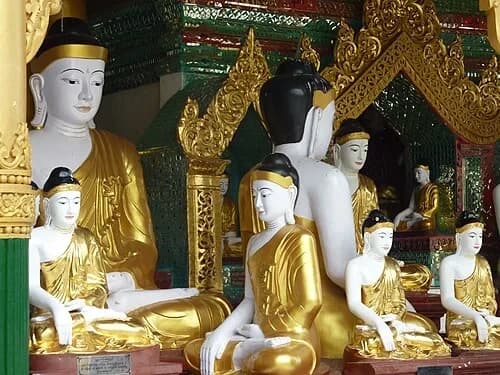
The Hall of Many Buddhas
Within this hall, the sheer repetition of Buddha images creates a dense and powerful atmosphere. Each of these figures represents an act of merit and devotion by an individual family from across Myanmar. While they may appear identical at first glance, the cumulative effect of hundreds of figures seated in neat rows is a hallmark of the Shwedagon’s devotional spaces. Notice the visual contrast between the stark white faces and the richly colored gold-leaf robes that drape over their shoulders. Families often save for years to commission and donate such an image, believing that the act of contributing to the pagoda brings spiritual blessings to their household. Unlike the grand, ancient images in the main shrines, these smaller statues create a more intimate connection between the common people and the sacred site. They are meticulously maintained, with the gold leaf often being refreshed by the donors during festival times. The hall serves as a quiet space for meditation, away from the more crowded planetary posts outside, allowing visitors to appreciate the scale of community participation that keeps this complex alive.
The Northern Shrine (Gautama Buddha)
The final shrine, housing eight hairs of the current Buddha. Features the most prominent white and gold Buddha images.
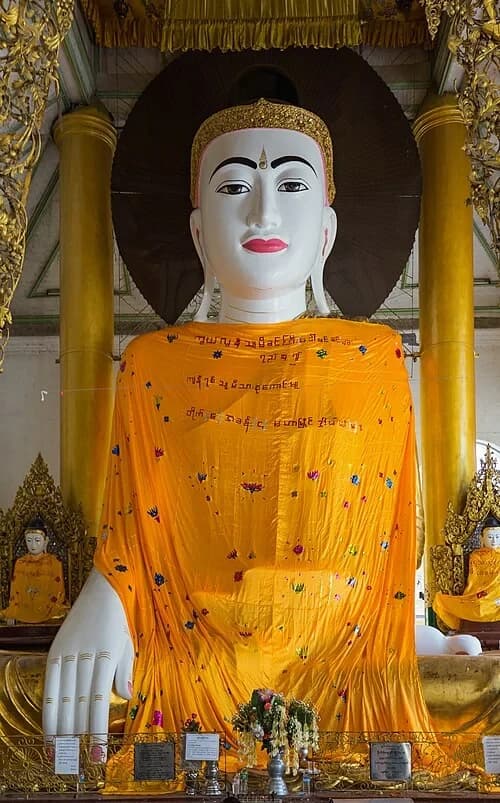
Seated Kassapa Buddha
The central figure of the Western Shrine is a masterwork of Burmese religious art, characterized by an incredibly serene facial expression and a classic posture. This Buddha is shown in the 'Bhumisparsha' mudra, or the 'Earth-Witness' gesture. You can see his right hand reaching down to touch the ground while the left rests in his lap. This commemorates the moment before enlightenment when the Buddha was challenged by an ego-demon; he touched the earth to ask the goddess of nature to witness his countless lifetimes of virtue. The craftsmanship of the face is particularly noteworthy, with downcast eyes and a subtle smile intended to inspire a sense of peace in the viewer. The large proportions of the image are designed to draw the eye upward, reinforcing the spiritual stature of the figure. While the body is encased in gold leaf, the intricate folds of the robes are still clearly visible, carved with a flowing quality that suggests movement even in a static image. Worshippers often kneel directly in front of this figure, leaving small offerings of water or jasmine flowers on the low platform at his feet.
Want to hear the rest?
Download the Stanza app to unlock all 37 stops and full GPS-guided navigation.
Frequently Asked Questions
How long does the Shwedagon Pagoda audio tour take?
The Shwedagon Pagoda audio guide includes 37 narrated stops. Most visitors spend 45 minutes to 1.5 hours exploring the complete tour, though you can listen at your own pace and skip or revisit any stop.
Is the Shwedagon Pagoda audio guide available in my language?
Stanza supports 15 languages: English, Spanish, French, German, Italian, Portuguese, Russian, Japanese, Chinese, Korean, Arabic, Hindi, Polish, Dutch, Hebrew. Check the guide in the app to confirm the languages currently available for this tour.
Can I use the audio guide offline at Shwedagon Pagoda?
Yes! Download the complete Shwedagon Pagoda tour — including all audio, maps, and images — before your visit. The Stanza app works completely offline, so you don't need WiFi or mobile data at the venue.
How much does the Shwedagon Pagoda audio guide cost?
The Stanza app is free to download. The current listed price for the Shwedagon Pagoda audio guide is $2.99; app-store region and currency may affect the final price.
How do I use the Stanza audio guide at Shwedagon Pagoda?
Download the free Stanza app, search for "Shwedagon Pagoda", and download the tour. When you arrive at the venue, the app uses GPS to detect your location and automatically plays the relevant narration as you move between points of interest — completely hands-free.
What makes the Stanza audio guide different from other Shwedagon Pagoda tours?
Stanza offers GPS-triggered narration that plays automatically as you walk through Shwedagon Pagoda — no need to manually select stops. The tour is available in 15 languages, works fully offline, and includes 37 expertly narrated stops with images and historical context.
What other audio guides are available near Shwedagon Pagoda?
Stanza offers multiple audio guides in Kyauktada District, Myanmar and nearby areas. After downloading the app, browse the map to discover all available tours near Shwedagon Pagoda. Each guide can be downloaded for offline use.