Languages
15Vesting Bourtange Audio Guide
Vesting Bourtange is a landmark in Bourtange, Netherlands. Explore it with Stanza's GPS-triggered offline audio guide — available in 15 languages.
Quick Facts
14
Stops
15
Languages
100%
Offline
📍 Bourtange, Netherlands · 53.0060°N, 7.1920°E
About Vesting Bourtange
Bourtange Fortress was constructed under the orders of William the Silent, completed in 1593. This historic star-shaped fortification now serves as a popular tourist attraction.
Vesting Bourtange is also known as Vesting Bourtange.
This self-guided audio tour features 14 narrated stops organized across 7 sections. As a fortress, Vesting Bourtange offers a unique cultural experience in the heart of Bourtange, Netherlands.
The Stanza audio guide is available in 15 languages and works entirely offline — download the complete tour including audio narration, maps, and images before your visit. As you walk through Vesting Bourtange, GPS-triggered narration plays automatically at each point of interest.
Last updated:
What you will hear
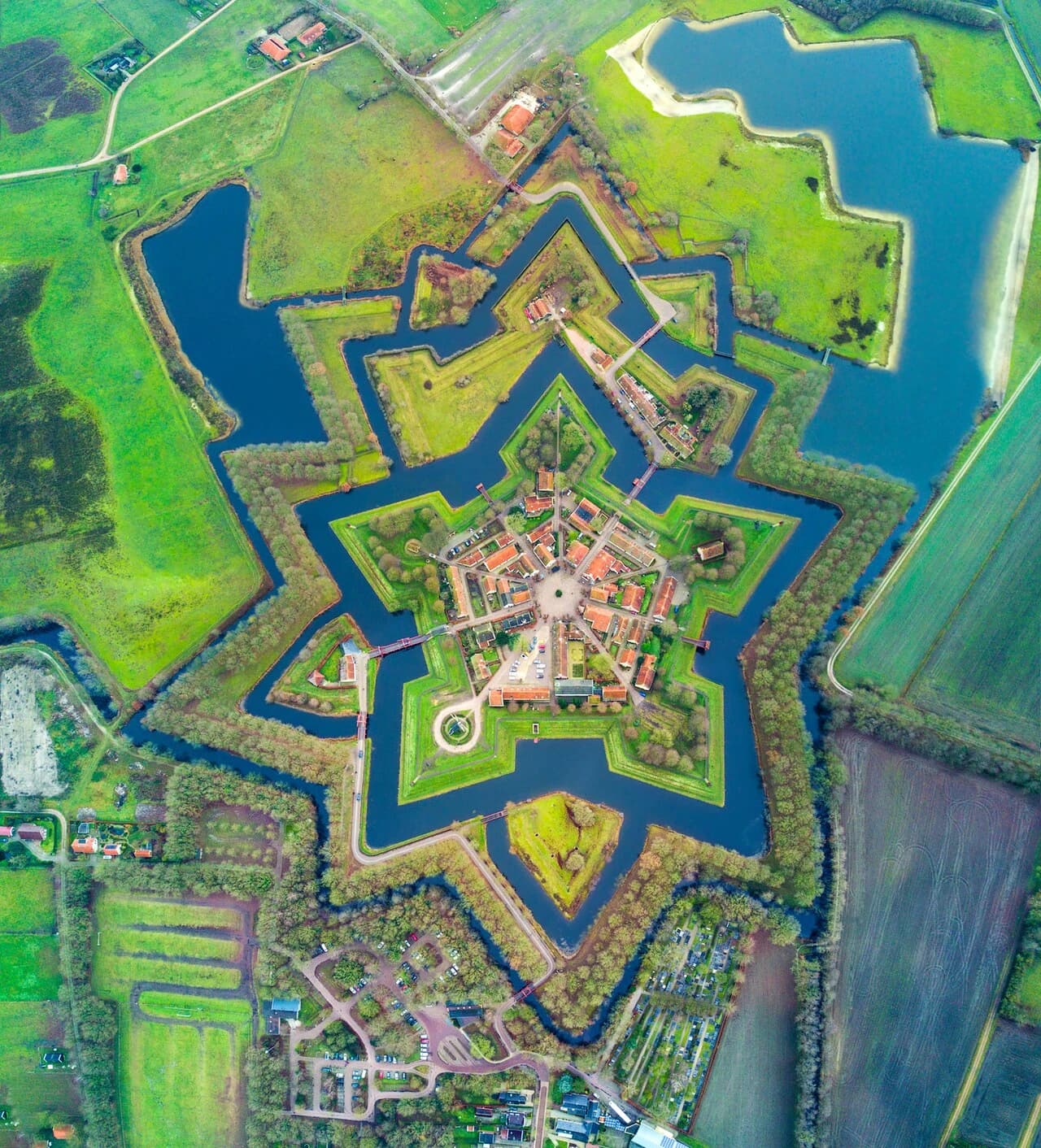
Arrival at the Star Fortress
Start with an aerial perspective to appreciate the perfect pentagonal geometry before crossing the historic drawbridge into the 18th century.
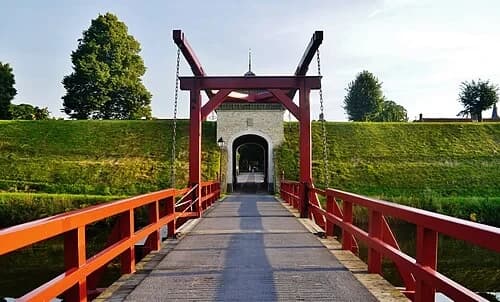
The Main Drawbridge
Walking across this heavy wooden drawbridge, you leave behind the marshy terrain and enter the inner sanctum of the fortress. This primary fortification was completed in 1593 under the direction of Willem Lodewijk van Nassau. In its military prime, this bridge acted as a vital filter between two worlds. Outside lay the 'no-man’s-land' of the Bourtange moor—a treacherous swamp that acted as a natural barrier. Inside, the environment was strictly controlled and designed to house a garrison of up to 700 soldiers. The gatehouse ahead served as the first point of contact and defense, where guards monitored every arrival and departure. The bright red paint on the bridge structure was a common feature for Dutch military and public buildings of the era. The mechanics of the drawbridge allowed the garrison to physically isolate the village from the world in a matter of minutes. Passing through the tunnel of the gatehouse, the transition from the wild landscape to the ordered, cobblestone streets of the fortress becomes complete, revealing the village layout within.
The Marktplein: Heart of the Garrison
The central pentagonal square where the daily life of 700 soldiers and their families unfolded beneath the historic linden trees.
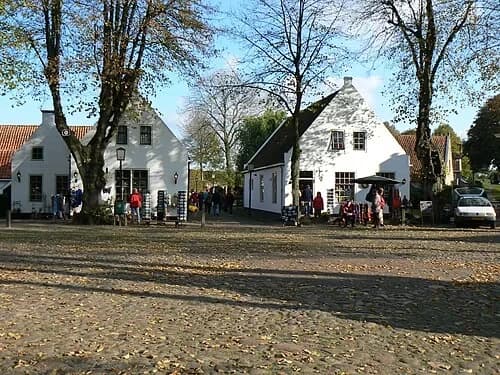
The Market Square
The Market Square is the heart of Bourtange, where the geometric logic of the fortress converges. Fourteen linden trees arranged in a circle mark the perimeter of the central area. During the fortress's active years, this square was a bustling center of activity where daily life was dictated by the rigid schedule of the military. Soldiers and their families lived in the surrounding houses, and the space was used for drills, market days, and public announcements. Every movement was signaled by drum beats or trumpet calls originating from this central point. While it once echoed with the sounds of marching boots and clattering carts, it is now the core of a quiet residential village. Today, a small community of approximately 770 residents still calls this historic site home. The cobblestones underfoot and the traditional architecture maintain the atmosphere of a 1742 garrison town. The square provides a clear view of the radiating streets that lead directly to the various defensive bastions positioned around the village edge.
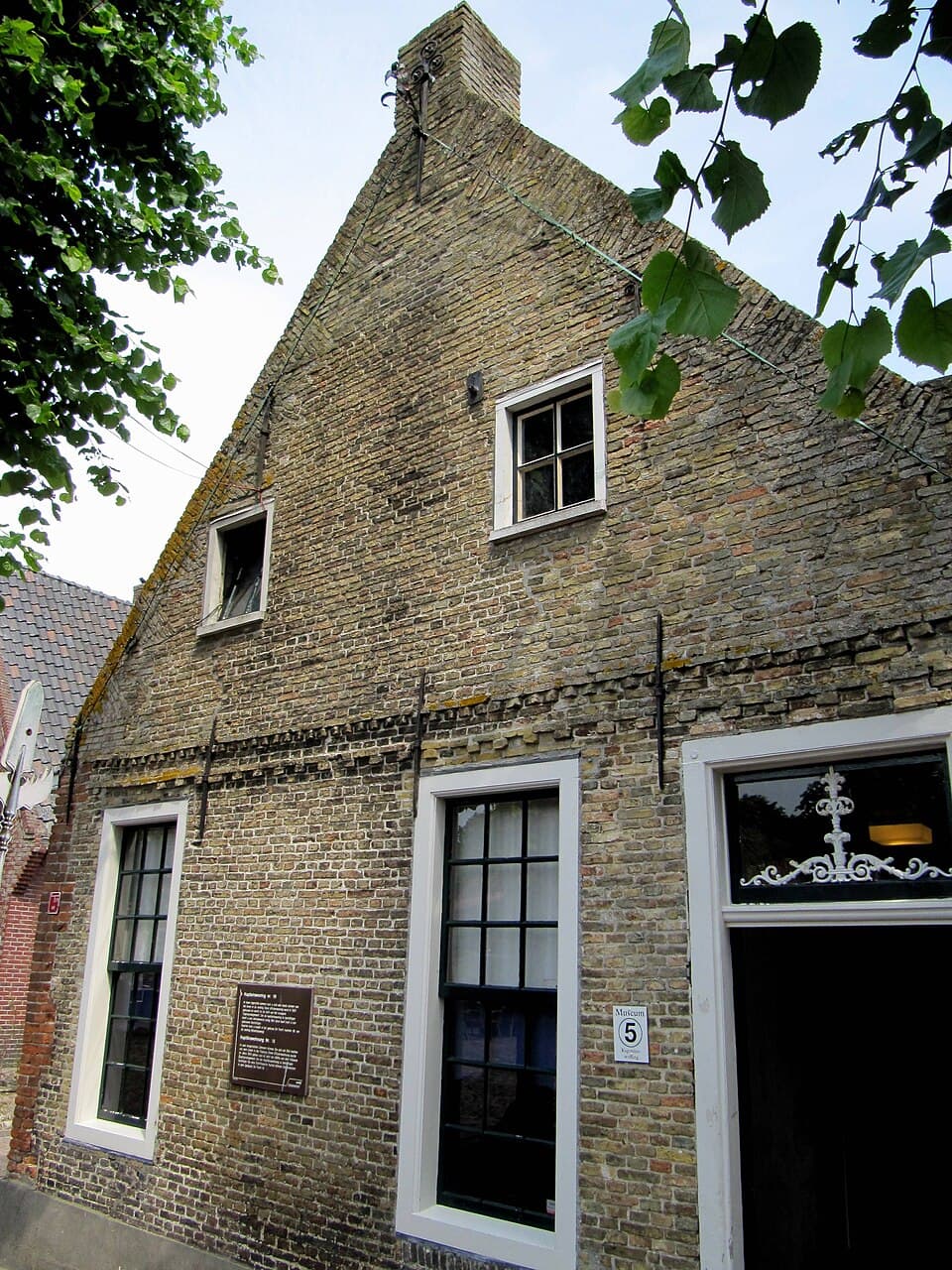
Soldiers' Quarters
The brickwork and architectural style of these buildings reflect the meticulous reconstruction efforts that saved the village from terminal decay. After Bourtange was decommissioned as a fortress in 1851, it slowly transformed into a regular farming village, and many of the original military structures fell into disrepair or were heavily modified. The restoration project that began in the 1960s reversed over a century of neglect, rebuilding the quarters to their 18th-century specifications. The steep, stepped gables and traditional window shutters are characteristic of Dutch architecture from that period. These weren't merely barracks for temporary housing; they were permanent homes for the soldiers and their families. Living within the fortress meant living on the front line of defense, where domestic life and military readiness were inextricably linked. The narrow streets and shared walls created a tight-knit community bound by the constraints of the ramparts. Small details in the masonry and the placement of the chimneys offer a glimpse into the humble but essential housing provided to the 18th-century garrison members.
The Wooden Horse and Military Discipline
A stark reminder of the harsh military discipline enforced within these walls during the fortress's active years.
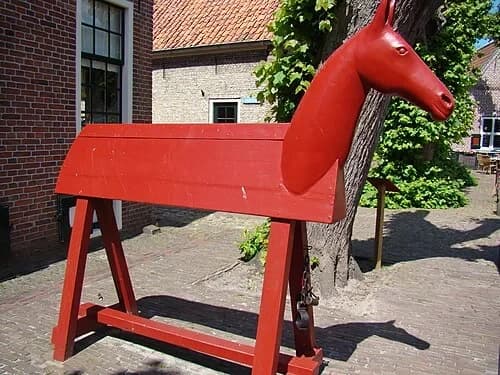
The Wooden Horse
Military life in the 17th and 18th centuries was governed by harsh rules, and the 'Wooden Horse' was a visible reminder of the consequences of disobedience. This device consists of a wooden frame with a sharp, triangular top edge. A soldier found guilty of a minor infraction—such as arriving late for duty, drunkenness, or failing to maintain equipment—would be forced to sit astride this ridge for hours. To increase the severity of the punishment, heavy weights were often tied to the offender's ankles, pulling them down against the sharp wood and causing significant physical pain. This was a form of public shaming intended to set an example for the rest of the garrison. Maintaining absolute order was considered essential in a high-stakes border fortress like Bourtange, where any lapse in discipline could compromise the safety of the entire community. Punishments took place in public areas to ensure every soldier understood the cost of a mistake. Such methods were standard practice in European armies of the time to ensure the garrison functioned as a single, obedient unit.
Faith and Diversity: Church and Synagogue
Explore the religious life of the fortress, from the Garrison Church to the rare preserved rural synagogue.
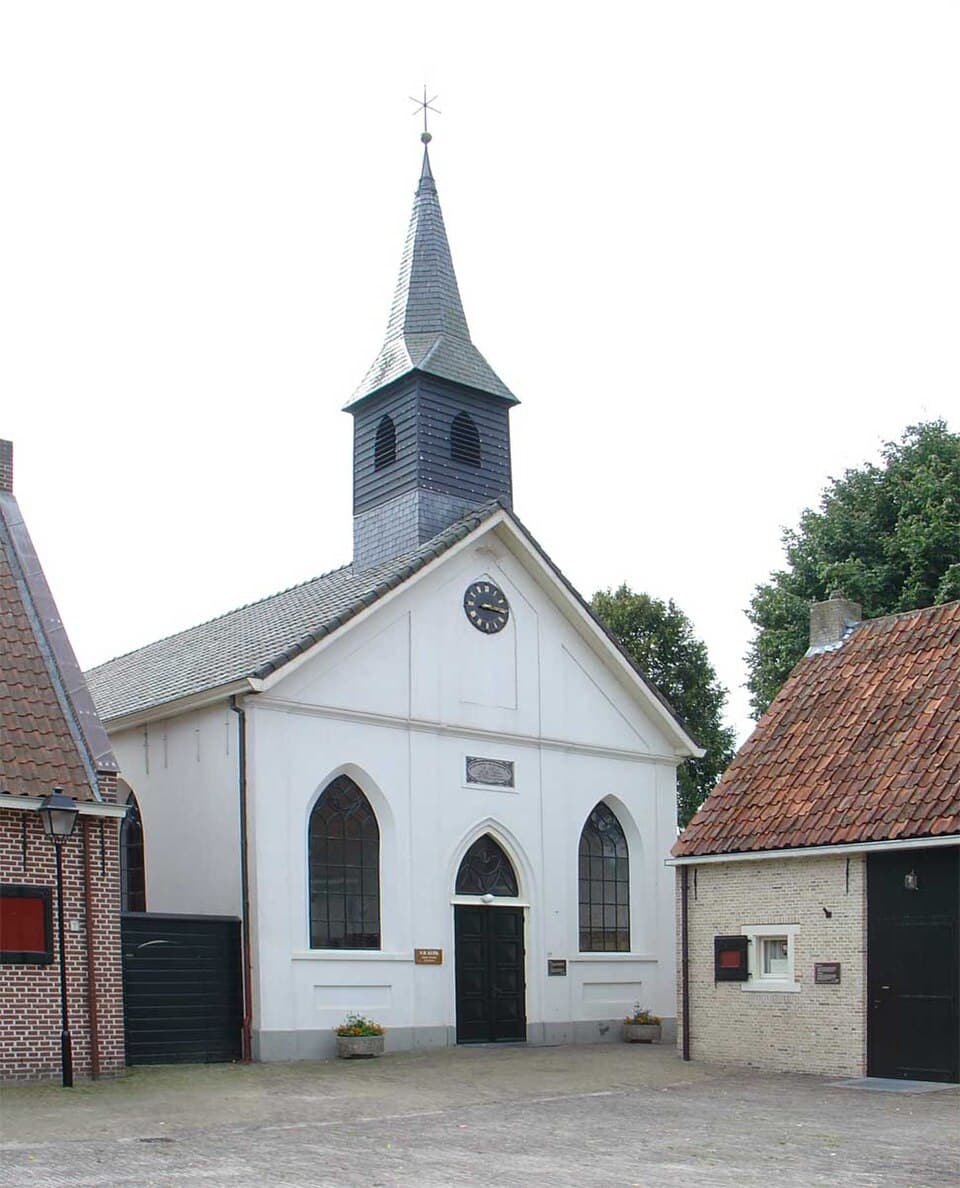
The Garrison Church
The Garrison Church stands as a clean, white-washed landmark within the village. Built to serve the spiritual needs of the Protestant soldiers and their families, it was an essential pillar of community life. During the long, damp winters in the Groningen marshes or the high-stress periods of a siege, the church provided a necessary sense of stability and moral support. The architecture is purposefully restrained, reflecting the Calvinist traditions of the time. Inside, the space was used for regular services, marriages, and baptisms for the military community. A clock on the tower served a functional military role by signaling the changing of the guard and the opening or closing of the fortress gates. The church was one of the few buildings to remain in continuous use after the fort was decommissioned, serving the local farmers long after the soldiers had departed. Its presence in the square underscores that Bourtange was a complete society, where religion and military duty were closely intertwined. The simple arched windows and dark roof tiles contrast sharply against the white exterior walls.
Survival Under Siege: The Mills
The fortress had to be self-sufficient; these mills provided the essential flour needed to survive long Spanish or Münster sieges.
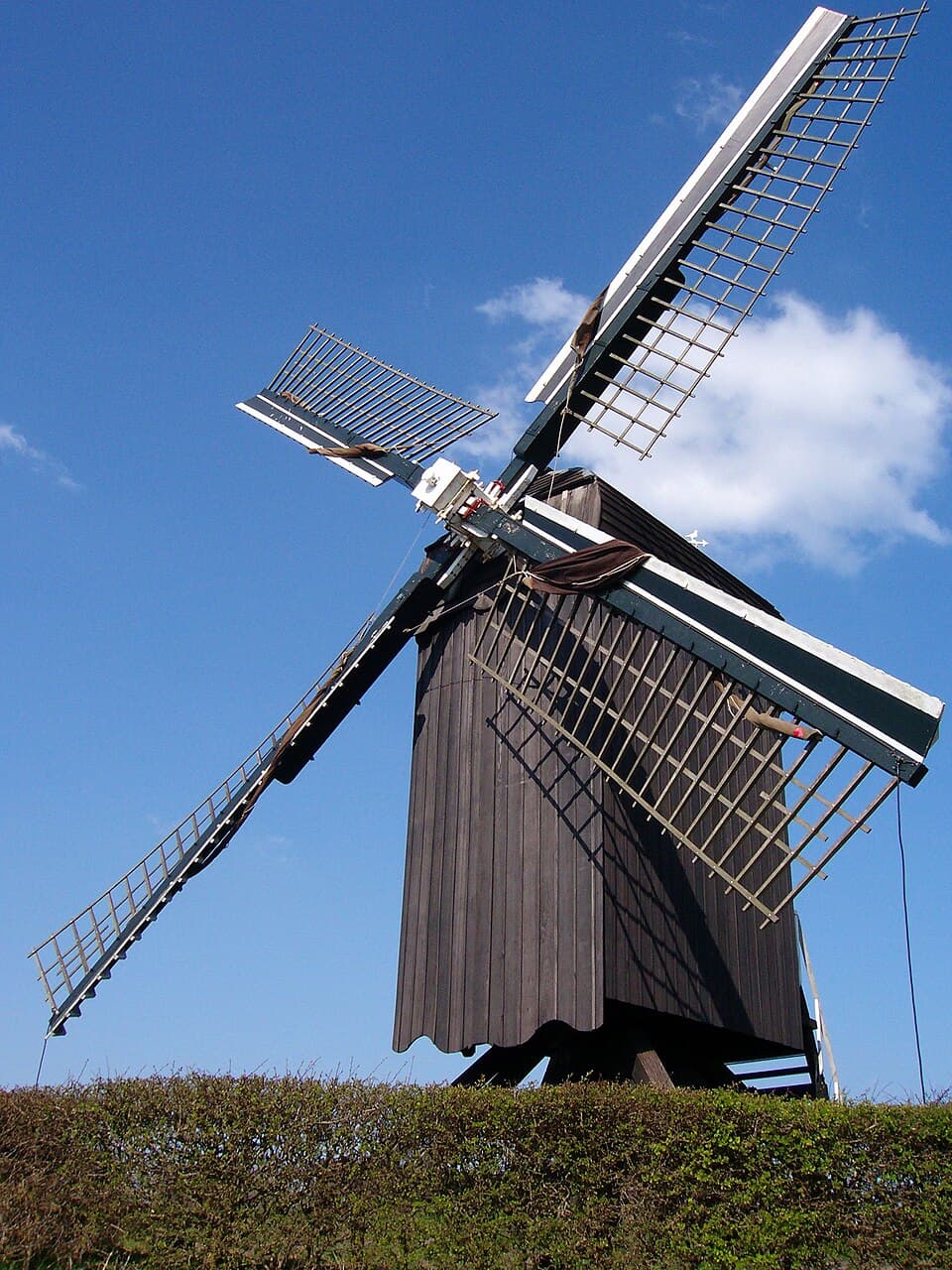
The Fortress Windmill
Standing high on the ramparts to catch the wind, this windmill was a vital component of the fortress's defense strategy. In the 16th and 17th centuries, a fortress had to be entirely self-sufficient to withstand a siege. If an enemy cut off the supply lines, the garrison needed to produce its own food. This mill allowed the defenders to grind grain into flour for bread right within the safety of the walls. Its importance was proven during the Spanish Siege of 1593. At that time, approximately 3,000 Spanish soldiers under the command of Francisco Verdugo attempted to starve out the Dutch defenders. Despite being outnumbered and surrounded, the garrison held firm because they had internal resources like this mill. This is a 'post mill,' a design where the entire body of the mill can be turned to face the wind. Its position on the elevated earthen walls gave it an unobstructed path for the breeze, while also allowing the millers to keep a watchful eye on the surrounding landscape for any approaching threats.
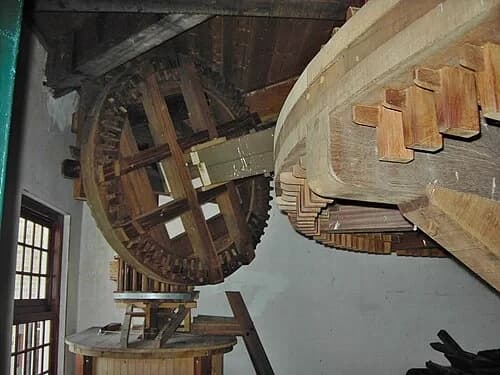
Mill Engineering
Inside the windmill, the scale of pre-industrial engineering is on full display. The massive wooden gears, shafts, and millstones represent the high-tech machinery of the 16th and 17th centuries. These components had to be incredibly durable to handle the immense torque generated by the wind hitting the sails outside. The 'post mill' design is particularly clever; the entire structure sits on a single, massive vertical oak post, which serves as a pivot point. This allowed the millers to rotate the whole building so the sails would always face directly into the wind, maximizing efficiency. Every part of the mechanism was crafted by skilled millwrights, using specific types of wood for different functions, such as harder woods for the gear teeth and resilient timbers for the main beams. This mechanical heart was vital for military readiness; a broken gear during a siege could mean the difference between having bread or facing starvation. Maintenance was a constant task, as the friction of moving parts required frequent adjustments to keep the stones grinding grain smoothly.
Bastion Defenses and Overlapping Fire
Walking the ramparts reveals the genius of the star-fort design, where every angle was covered by heavy artillery.
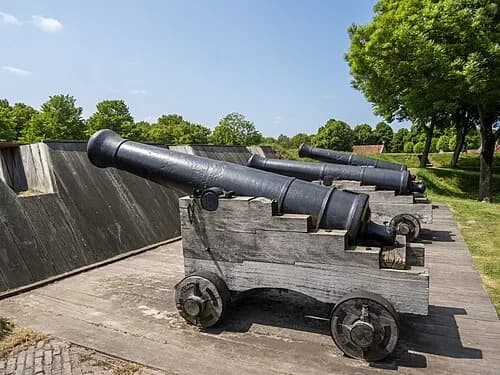
Artillery of the Bastions
These heavy iron cannons, resting on their sturdy wooden carriages, represent the primary defensive power of Vesting Bourtange. They are stationed on the 'bastions,' the five points of the star-shaped layout. This placement was a key element of the design perfected by military engineers like Pauwel Symonsz in the 1590s. The geometry ensured that there were no 'blind spots' where an enemy could hide. From these elevated positions, the artillery could sweep the surface of the water and the open ground beyond with overlapping fire. If an enemy tried to scale one wall, they would be hit by fire from the adjacent bastion. The cannons themselves were massive pieces of hardware that required a coordinated team of soldiers to load, aim, and fire. The wooden carriages were designed to absorb the immense recoil of the blast during combat. Looking out over the barrel of one of these guns illustrates exactly how clear lines of sight were maintained to prevent any undetected approach through the surrounding marshland. The gray metal of the barrels contrasts with the weathered wood of the supports.
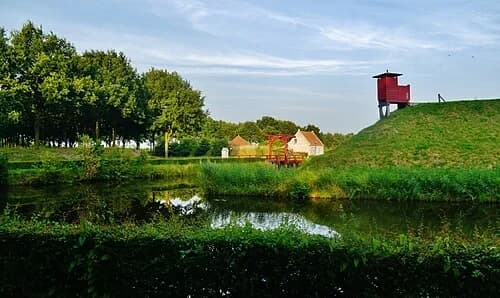
Water as a Weapon
Looking out over the still waters of the moats and the steep, grassy ramparts, it is clear that water was the fortress's most effective weapon. Bourtange was built in the middle of a vast peat bog, and Dutch engineers used this natural environment to their strategic advantage. During the siege of 1593, the Spanish army attempted to move heavy siege equipment toward the walls, but high groundwater levels meant their trenches quickly filled with water and their cannons sank into the mud. The Dutch defenders could control the water levels using a series of sluices and dams, effectively flooding the surrounding area to make it impassable for infantry. The steep angle of the earthen ramparts was also deliberate; while stone walls could be shattered by cannonballs, thick piles of earth and turf absorbed the impact of incoming fire. The combination of deep water and slippery, steep slopes made a direct assault almost impossible. This landscape wasn't just scenery—it was a carefully engineered trap that utilized the unique geography of the Groningen region to ensure military victory.
The Outer Defenses and Departure
As you exit through the northern gate, look back at the layers of moats and the outer 'redoubts' that kept invaders at bay.
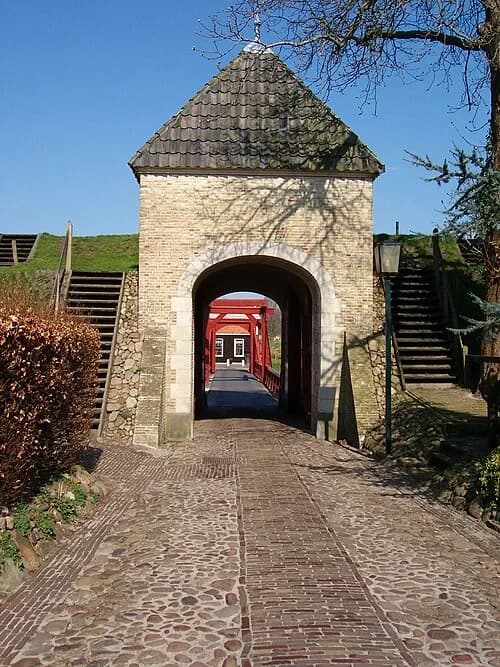
The Friesian Gate
The Friesian Gate is the northern entrance and exit of the fortress, characterized by its solid stone arch and cobblestone path. It represents the final layer of a sophisticated, multi-stage defensive system. Before a traveler could reach this gate, they had to navigate through outer defenses, including secondary islands known as ravelins and multiple bridges. Each stage was designed to slow down an intruder and expose them to fire from the ramparts. A set of stairs leads up from the gate directly to the top of the walls, allowing the garrison to quickly move troops and supplies to the ramparts in case of an alarm. The total area of the fortress grounds, including all the outer earthworks and water barriers, covers over 18 square kilometers of managed landscape. Every cobble, slope, and stone was placed with a military purpose in mind. Today, the gate serves as a quiet passage for visitors, but it remains a reminder of the controlled access that once defined life on the border. The heavy masonry of the arch provided a sheltered position for guards.
Want to hear the rest?
Download the Stanza app to unlock all 14 stops and full GPS-guided navigation.
Frequently Asked Questions
How long does the Vesting Bourtange audio tour take?
The Vesting Bourtange audio guide includes 14 narrated stops. Most visitors spend 45 minutes to 1.5 hours exploring the complete tour, though you can listen at your own pace and skip or revisit any stop.
Is the Vesting Bourtange audio guide available in my language?
Stanza supports 15 languages: English, Spanish, French, German, Italian, Portuguese, Russian, Japanese, Chinese, Korean, Arabic, Hindi, Polish, Dutch, Hebrew. Check the guide in the app to confirm the languages currently available for this tour.
Can I use the audio guide offline at Vesting Bourtange?
Yes! Download the complete Vesting Bourtange tour — including all audio, maps, and images — before your visit. The Stanza app works completely offline, so you don't need WiFi or mobile data at the venue.
How much does the Vesting Bourtange audio guide cost?
The Stanza app is free to download. The current listed price for the Vesting Bourtange audio guide is $0.99; app-store region and currency may affect the final price.
How do I use the Stanza audio guide at Vesting Bourtange?
Download the free Stanza app, search for "Vesting Bourtange", and download the tour. When you arrive at the venue, the app uses GPS to detect your location and automatically plays the relevant narration as you move between points of interest — completely hands-free.
What makes the Stanza audio guide different from other Vesting Bourtange tours?
Stanza offers GPS-triggered narration that plays automatically as you walk through Vesting Bourtange — no need to manually select stops. The tour is available in 15 languages, works fully offline, and includes 14 expertly narrated stops with images and historical context.
What other audio guides are available near Vesting Bourtange?
Stanza offers multiple audio guides in Bourtange, Netherlands and nearby areas. After downloading the app, browse the map to discover all available tours near Vesting Bourtange. Each guide can be downloaded for offline use.