Stanza · Audio guide
ErasmusbrugAudio guide
A place to remember. A story to take with you.
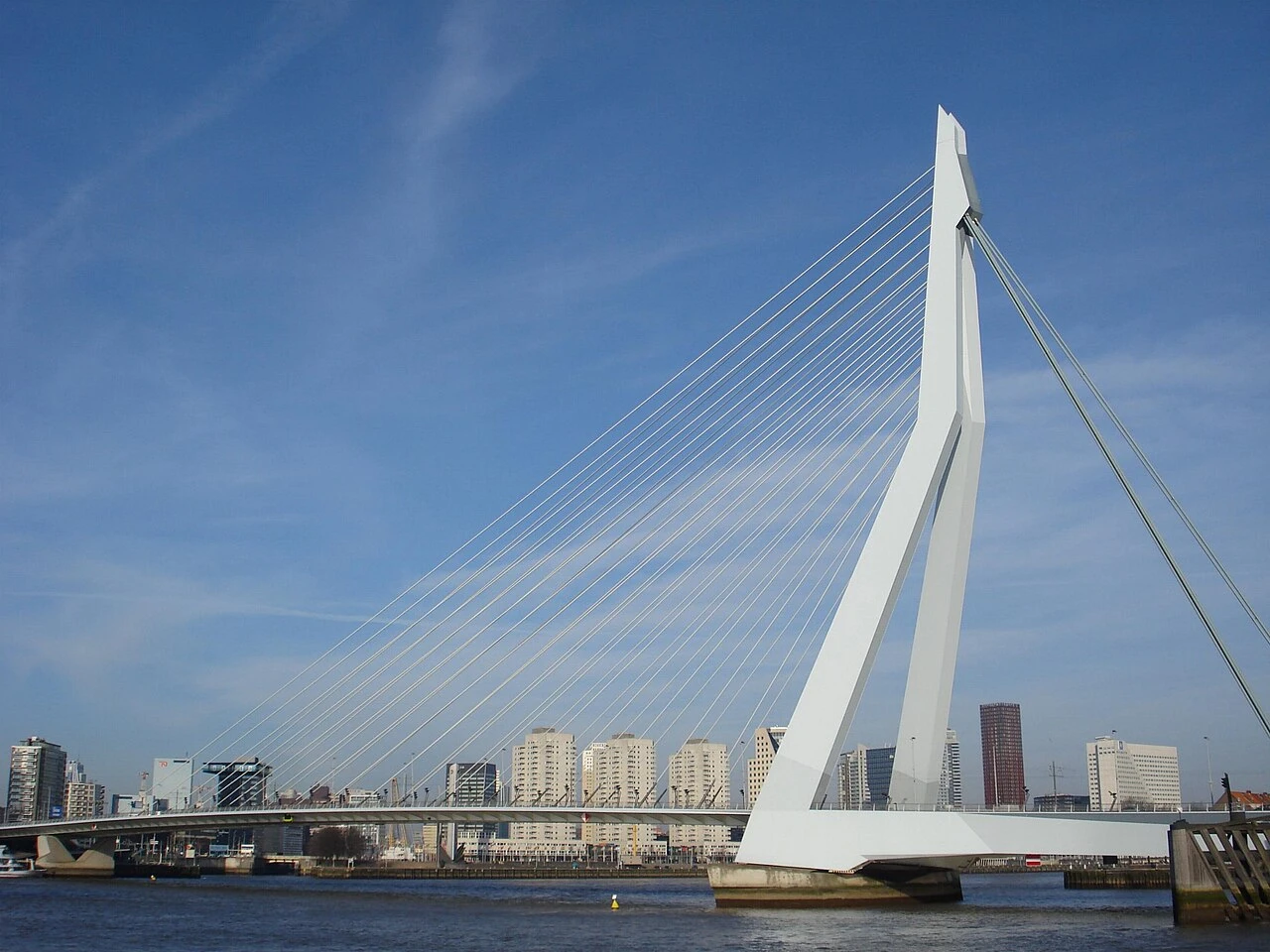
The Erasmusbrug is a striking cable-stayed bridge that spans the Nieuwe Maas river in Rotterdam, Netherlands. Known for its distinctive design, it is a prominent modern architectural landmark of the city.
Download Stanza, then search for “Erasmusbrug”.
About the tour
One guide. Your kind of visit.
The Erasmusbrug is a striking cable-stayed bridge that spans the Nieuwe Maas river in Rotterdam, Netherlands. Known for its distinctive design, it is a prominent modern architectural landmark of the city.
Ready when you are.
- 01Get the free Stanza app.
iOS & Android
- 02Find your guide.
“Erasmusbrug”
- 03Download before you go.
Works offline
Audio guide / 11 narrated stops
Inside the guide
Get to know a few of the stories before you go. Open a stop to read more.
01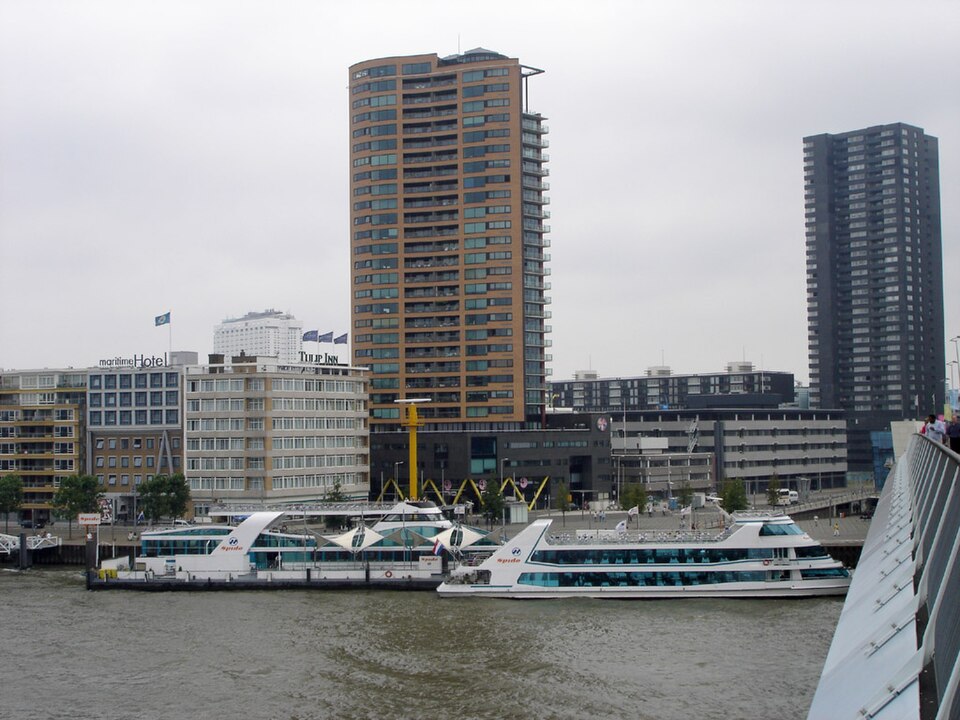 North Bank Approach (Willemsplein)The North Bank Approach
Welcome to one of the most vibrant corners of Rotterdam. Standing here at Willemsplein on the north bank of the Nieuwe Maas, you are positioned at the literal gateway to the Erasmusbrug. This area serves as a transition point between the historic city center and the working river. If you look around, you’ll likely see the bright colors of the Spido boat tours, which have been ferrying visitors through the harbor for decades. The constant churn of water and the hum of river traffic remind us that Rotterdam is, first and foremost, a maritime city. This harbor approach sets the stage for the bridge itself. Rather than just being a simple road crossing, the bridge was designed to be a vital link in a functioning port. From this vantage point, you can witness the diverse array of vessels—from massive container ships to sleek water taxis—that navigate this waterway daily. The energy of this location reflects the city’s post-war identity: industrious, forward-looking, and deeply connected to the water. As we begin our walk toward the structure, consider how this space connects the urban land to the fluid highway of the Maas.
No machine-readable author provided. Emvee~commonswiki assumed (based on copyright claims). · CC BY-SA 3.0
02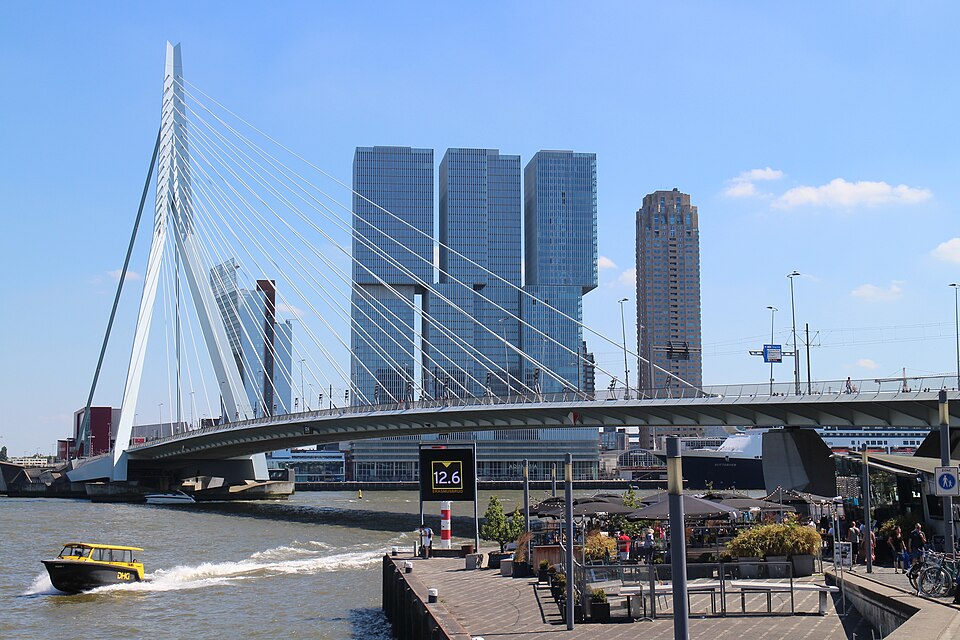 North Bank Approach (Willemsplein)The Iconic Swan Silhouette
Standing before this massive structure, it is easy to see why locals affectionately call it 'De Zwaan,' or The Swan. The bridge’s identity is defined by its striking 139-meter-tall asymmetrical pylon, which leans gracefully over the water, mimicking the neck of a bird in flight. This landmark was officially opened by Queen Beatrix on September 4, 1996, marking a turning point in the city's architectural history. It doesn't just cross the river; it makes a statement. The bridge spans a total length of 802 meters across the Nieuwe Maas, serving as a critical artery between the north and south of the city. While many bridges are symmetrical, the choice of a single, angled pylon on the south side creates a sense of dynamic tension. This design was intended to provide the city with a recognizable icon, similar to how the Eiffel Tower defines Paris or the Opera House defines Sydney. As you observe the silhouette, notice how the white-painted structure stands out against the often-grey Dutch sky, serving as a beacon that can be seen from kilometers away. It is more than a piece of infrastructure; it is the visual anchor of modern Rotterdam.
Photo: Suicasmo · CC BY-SA 4.0
03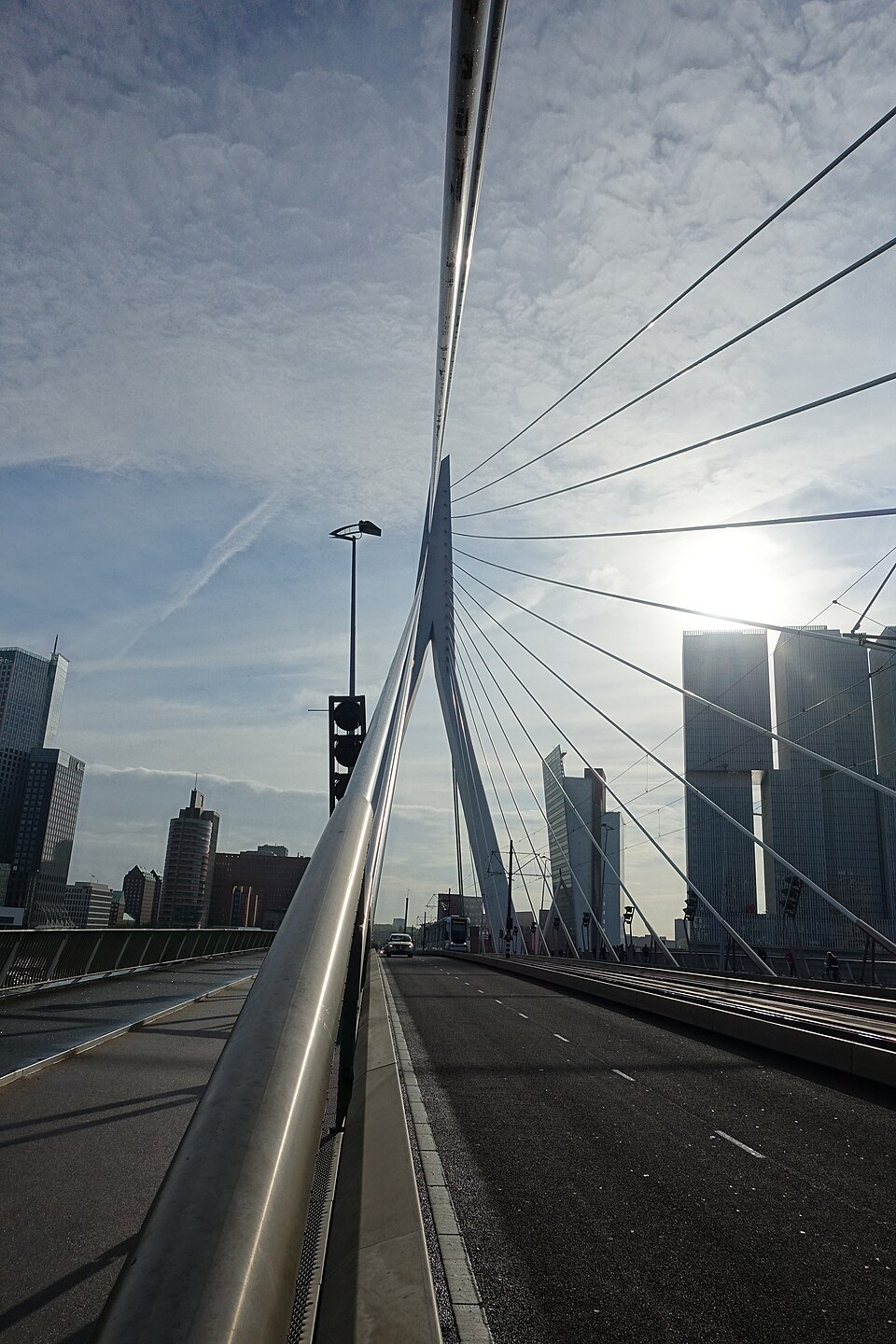 The Cable-Stayed SectionThe Swinging Bridge Incident
As you walk onto the deck, imagine the scene in late 1996, just months after the bridge’s grand opening. During a particularly heavy storm with strong winds and rain, the stay cables began to vibrate with terrifying intensity. The movement was so pronounced that the bridge earned the temporary, and unwanted, nickname of the 'Swinging Bridge.' Authorities had to close the crossing to traffic as engineers scrambled to understand why a brand-new masterpiece was behaving so erratically. What they discovered was a fascinating quirk of physics. It wasn't just the wind causing the trouble; it was the combination of wind and rain. Raindrops running down the cables actually changed their aerodynamic profile, allowing the wind to catch them and create a rhythmic, building oscillation. To fix this, engineers installed the large, cylindrical shock dampers you can see today near the base of the cables where they meet the road deck. These devices act much like the shock absorbers on a car, soaking up the kinetic energy and preventing the cables from vibrating. This solution ensured the bridge's stability, turning a potential disaster into a celebrated story of architectural resilience and problem-solving.
Listen in the appGuilhem Vellut from Annecy, France · CC BY 2.0
04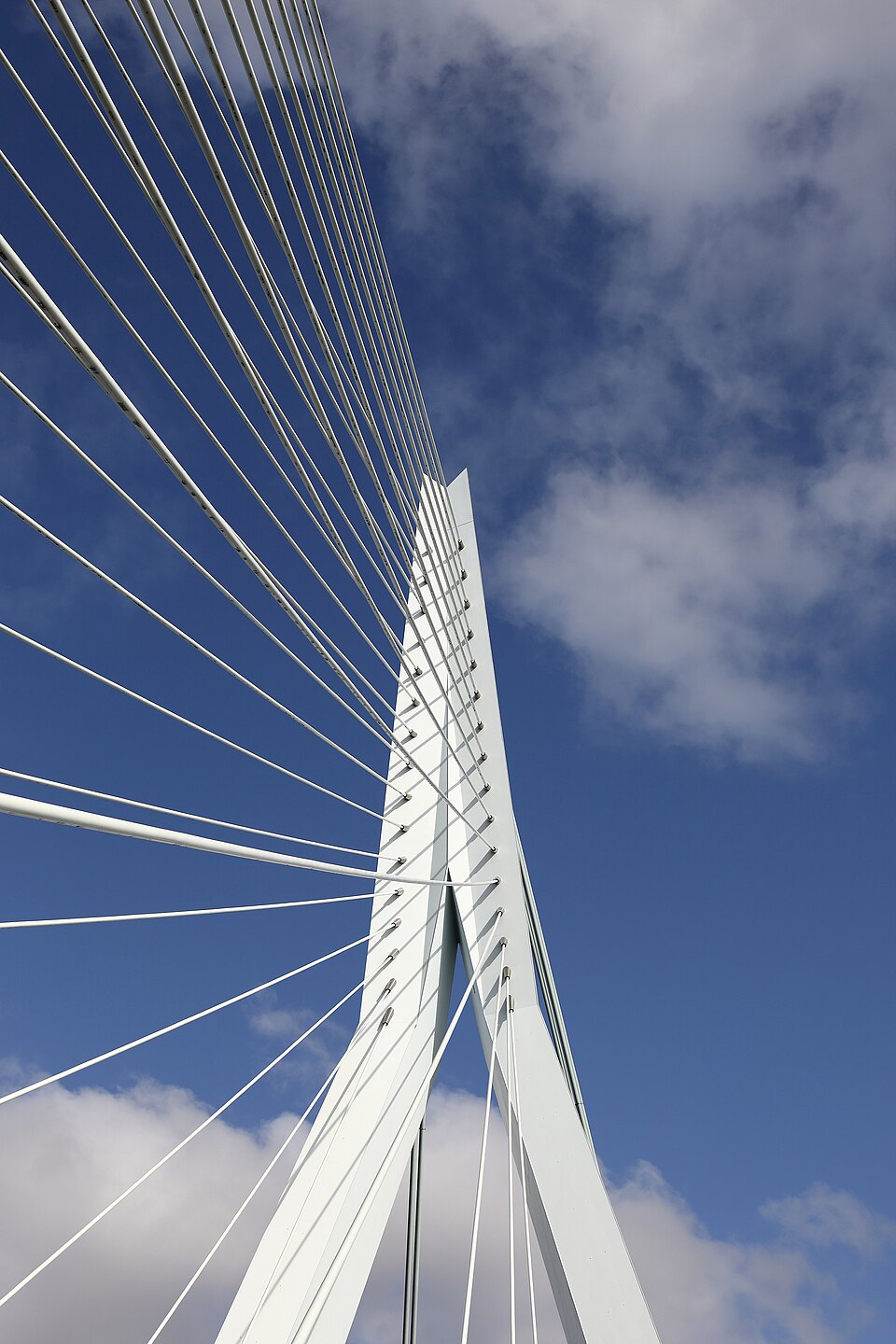 The Cable-Stayed SectionThe Pylon’s Secret Hue
If you look closely at the pylon and the structural elements, you might notice something surprising about the color. While it appears white from a distance or in bright sunlight, it is actually a very specific, light shade of blue. Architect Ben van Berkel chose this 'Baby Blue' hue with a very deliberate purpose in mind. He wanted the bridge to interact with the characteristic Dutch light, which is often filtered through moving clouds and moisture from the North Sea. A pure white bridge would often look flat or stark against the sky. By using this subtle blue, the structure becomes a mirror for its environment. Depending on the weather and the time of day, the bridge can appear a brilliant, crisp white, a soft grey, or even a deep silver. This 'secret' color allows the massive pylon to feel less like a heavy industrial object and more like a light, ethereal part of the atmosphere. Van Berkel’s vision was to create a 'monumental lightness,' where the sheer scale of the engineering is softened by the way it reflects the sky. As the clouds move above you, watch how the shadows and highlights on the pylon's surface shift, constantly changing your perception of its form.
Listen in the appPhoto: Martin Falbisoner · CC BY-SA 4.0
05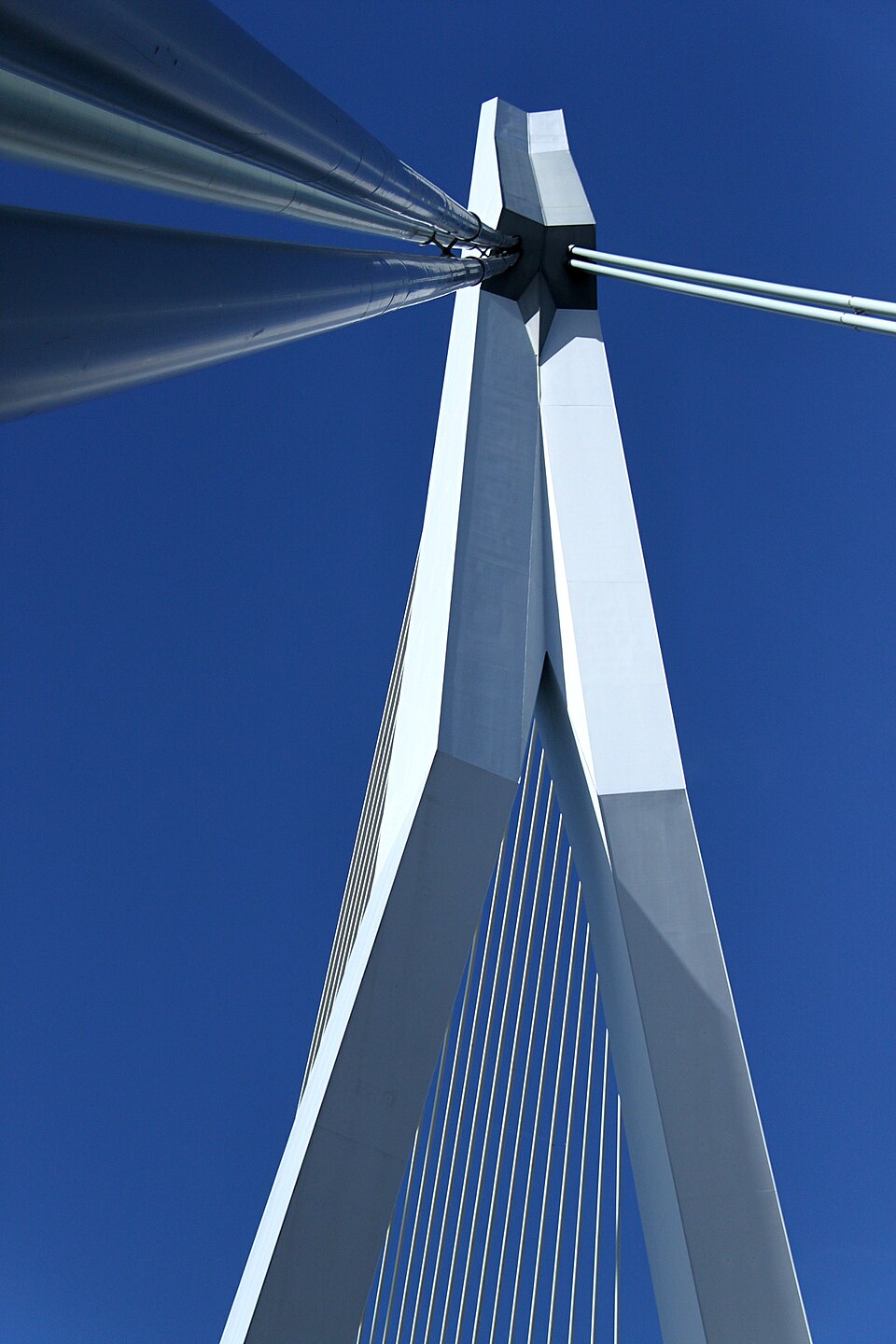 The Swan's Neck (The Pylon)A Masterpiece of Steel
The sheer scale of the Erasmusbrug is a testament to the ambition of Rotterdam's city planners. Building a structure of this complexity was no small feat; the project took seven years from the initial designs to the final bolt being tightened. The total cost reached approximately 165 million Euros, a figure far exceeding the budget for a standard, functional bridge. However, the city viewed this as an investment in its global image and urban future, rather than just a transportation project. The physical presence of the bridge is backed by staggering numbers. The entire structure has a total mass of roughly 6,800 tons, composed primarily of steel and concrete. To support the weight of the road deck while maintaining the elegant, thin profile seen from the side, the materials had to be of the highest grade. Every weld and every cable was designed to withstand the immense pressures of both the traffic above and the maritime environment below. Standing here, you are looking at one of the most expensive and technically challenging infrastructure projects in Dutch history. It represents a period where Rotterdam moved away from purely utilitarian reconstruction and toward high-concept, world-class architecture that would attract international attention and pride.
Listen in the appFrits De Jong · CC0
06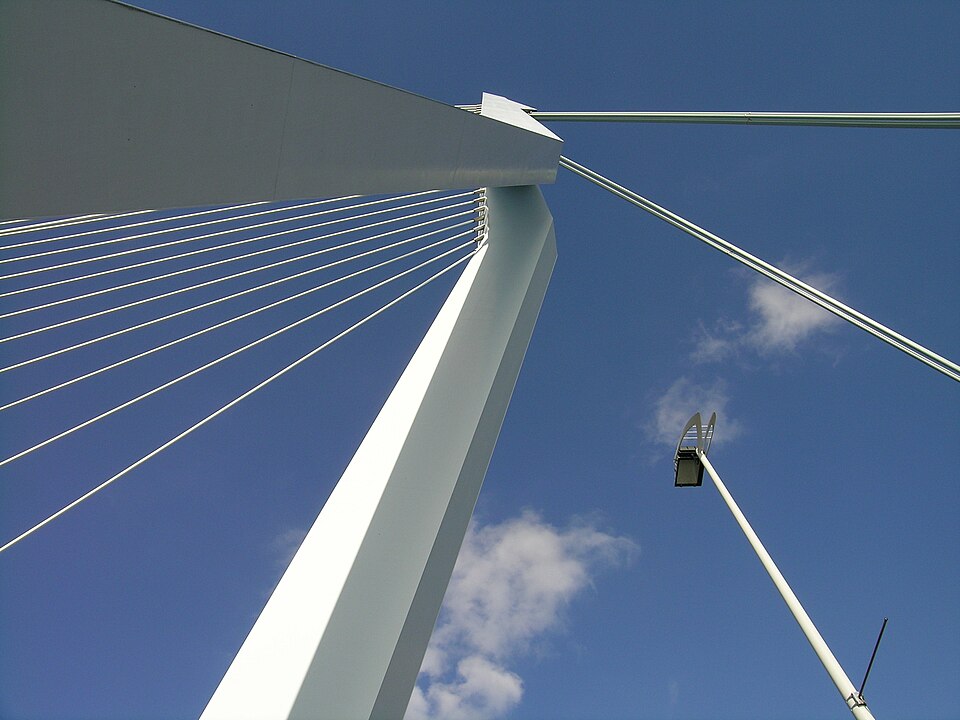 The Swan's Neck (The Pylon)The Stay Cable System
The engineering heart of the Erasmusbrug lies in its cable-stayed design. Notice how the pylon supports the road deck through a series of thick cables. There are 16 pairs of these front stay cables, which stretch from the high points of the pylon down to the edges of the bridge deck. This arrangement is what allows for the long, clear span over the river without the need for multiple supporting piers in the water, which would obstruct large ships. Beyond their structural necessity, these cables are the primary reason for the bridge's 'Swan' nickname. As they fan out from the pylon, they create a visual effect that looks remarkably like a wing. The geometric precision of the lines creates a sense of harp-like elegance, especially when viewed from a distance. These cables are constantly under immense tension, pulling back against the weight of the cars, trams, and cyclists crossing the Maas. The design creates a beautiful symmetry within an asymmetrical structure; while the pylon leans one way, the cables pull the other, resulting in a perfect, albeit invisible, balance of forces. This 'fan' arrangement is a hallmark of modern bridge engineering, combining efficiency with a striking, rhythmic aesthetic that changes as you move along the deck.
Listen in the appPhoto: Sindala · CC BY 4.0
07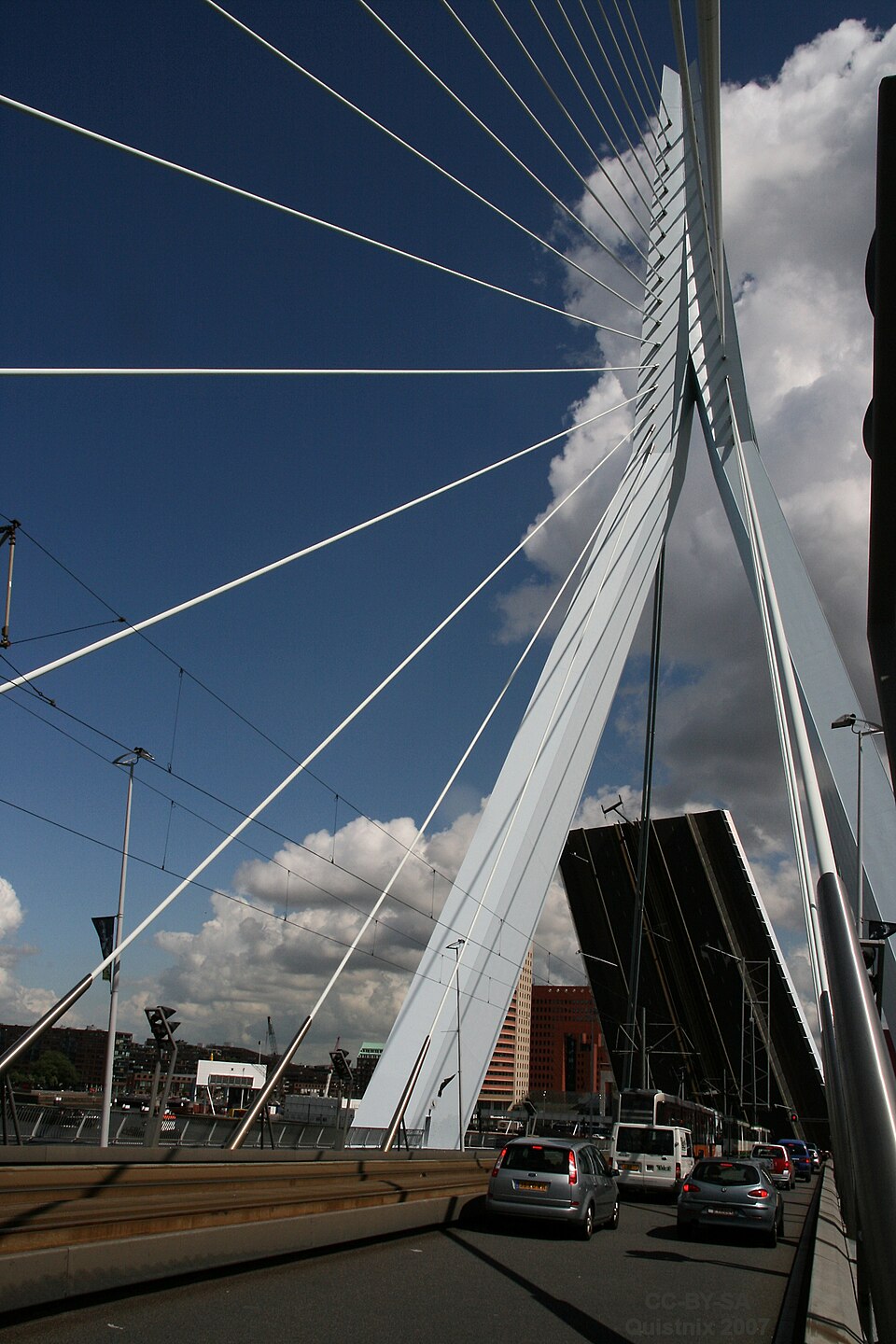 The Bascule Bridge MechanismThe Giant Bascule Joint
While the northern section of the bridge is fixed by cables, the southern end holds a different kind of engineering marvel. This part of the crossing is home to one of the largest and heaviest bascule bridges in Western Europe. A bascule bridge is essentially a drawbridge that uses a counterweight to swing upward. The moving section here is a staggering 89 meters long, a massive piece of roadway that can tilt nearly vertical to allow the world's largest ships to pass into the inner harbors. Looking at the joint where the bridge transitions, you can see the scale of the machinery required to lift such a weight. The precision needed to align an 89-meter-long steel span so perfectly that vehicles can drive over it at high speeds is immense. When the bridge opens, the process is a choreographed display of heavy industry. The road is cleared, the barriers descend, and the massive leaf begins its slow, steady climb toward the sky. It is a reminder that despite its elegant appearance, the Erasmusbrug is a workhorse, designed to accommodate the needs of a global port where the tallest masts and largest hulls must still find their way to the docks.
Listen in the appQuistnix at nl.wikipedia · CC BY-SA 2.5
08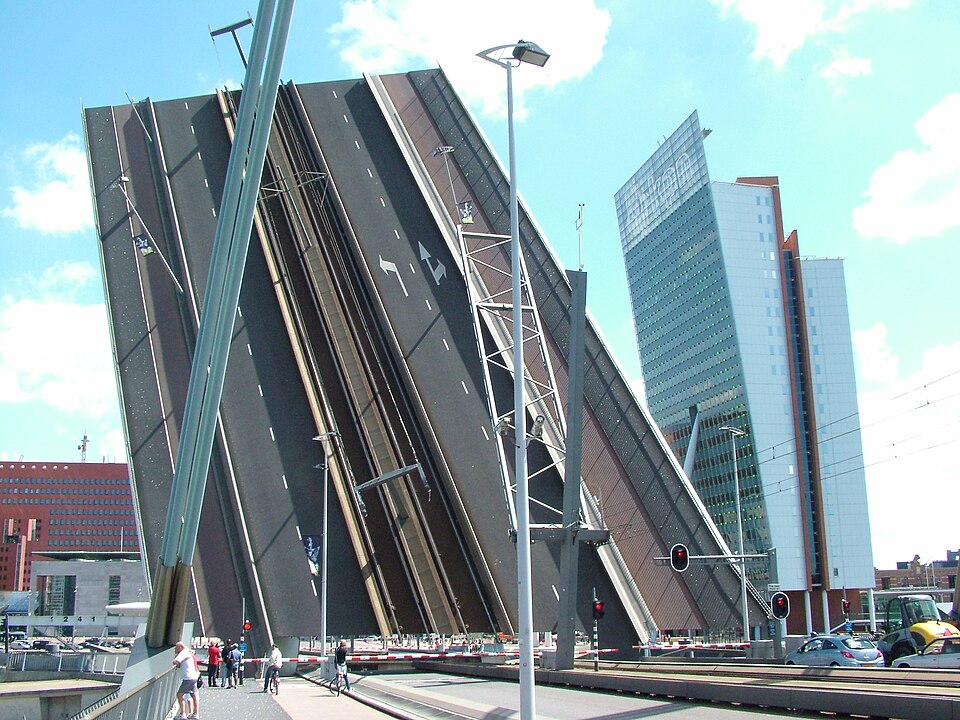 The Bascule Bridge MechanismEngineering the Open Span
The Erasmusbrug plays a critical role in the complex logistics of the Port of Rotterdam. Even when the bascule section is closed, the bridge provides a clearance of 12.5 meters above the water. This is high enough for many river barges and smaller vessels to pass through without interruption, minimizing the number of times the bridge must open and halt the city's traffic. However, for the massive ocean-going ships and specialized port vessels, an opening is required. Coordinating an opening is a major operation. It requires communication between bridge operators, harbor masters, and traffic controllers to ensure that the flow of the city doesn't grind to a halt. When the span does open, it prioritizes the deep-water access that makes Rotterdam such a vital economic hub. The engineering must be flawless; a failure to open could block the port, while a failure to close could paralyze the city’s transit system. This delicate balance between being a road for cars and a gate for ships is what makes the bridge a symbol of Rotterdam itself—a city that must constantly negotiate its existence between the land and the sea while maintaining its status as a functioning, modern metropolis.
Listen in the appPhoto: Ziko · CC BY-SA 3.0
09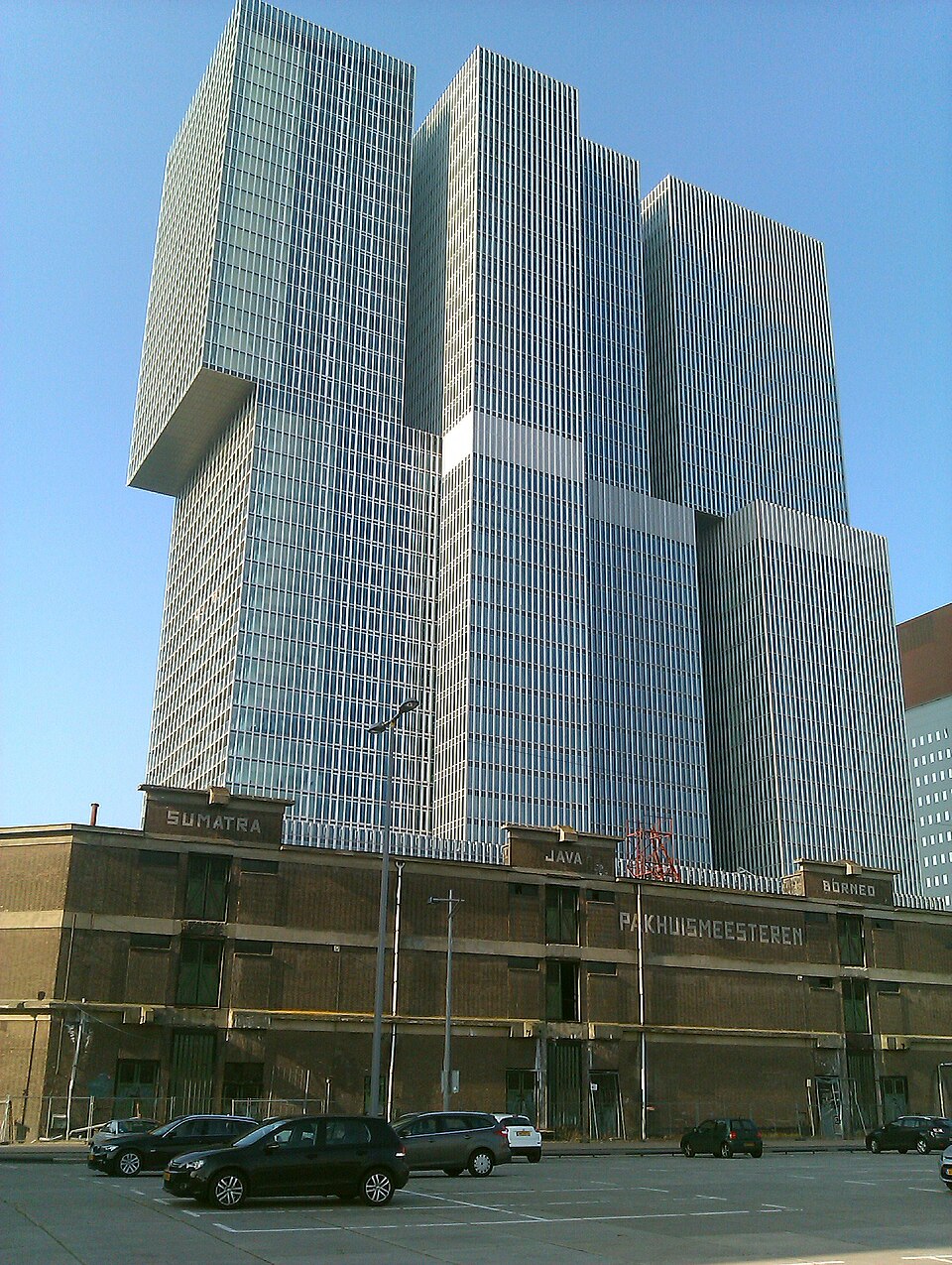 South Bank Arrival (Kop van Zuid)Architecture of the New Bank
As you look toward the south bank, you are witnessing the direct impact of the Erasmusbrug on the city's urban fabric. Before the bridge was built, the area known as the 'Kop van Zuid' was largely abandoned port land, filled with empty warehouses and rusting tracks. The bridge acted as a vital catalyst for urban renewal, literally and figuratively connecting the historic center to this forgotten territory. Today, this area boasts a prestigious skyline often referred to as 'Manhattan on the Maas.' Dominating this view is 'De Rotterdam,' the massive, multi-towered building designed by the world-renowned architect Rem Koolhaas. Its stacked, shifting blocks reflect the same spirit of bold experimentation found in the bridge itself. The construction of the Erasmusbrug made these massive developments commercially viable, turning the south bank into a hub for luxury living, offices, and culture. It transformed the river from a barrier into a centerpiece. This shift in the city's gravity toward the south has redefined Rotterdam’s identity, moving it away from its industrial past and toward a future as a global center for architecture and design. The bridge wasn't just built to carry cars; it was built to carry the city into a new era of prosperity.
Listen in the appPhoto: Hanhil · Public domain
10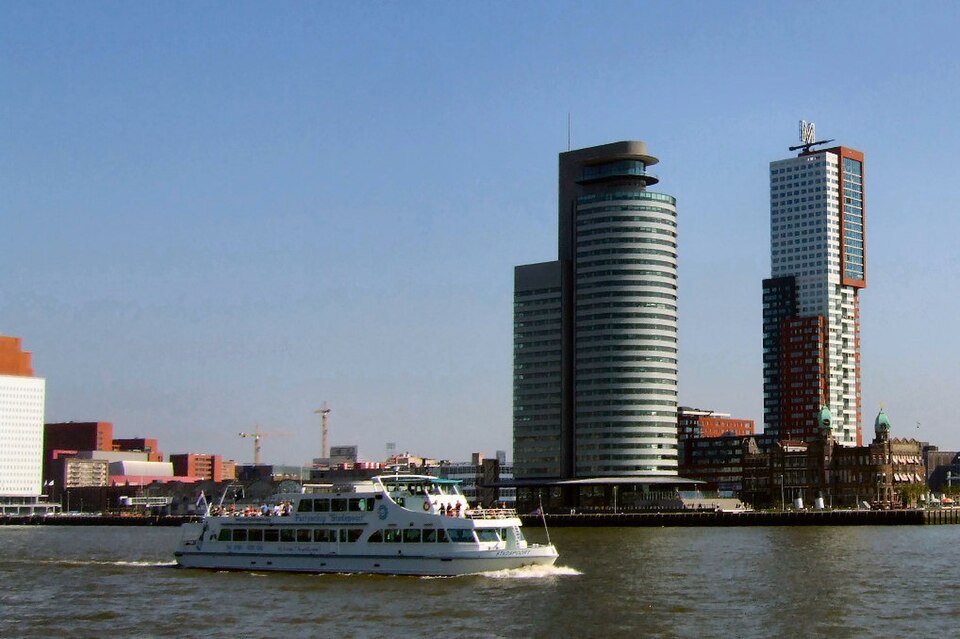 South Bank Arrival (Kop van Zuid)The Wilhelmina Pier View
Arriving on the south side of the bridge brings you to the historic Wilhelminapier. This location holds a deep emotional resonance for millions of people around the world. It was the primary departure point for the Holland America Line, the site from which generations of emigrants left Europe to seek a new life in the Americas. The old arrival and departure halls, some of which still stand, are silent witnesses to the dreams and fears of those who sailed away from these docks. There is a powerful contrast here between the old port history and the new growth. The bridge now serves as a physical link between that poignant past and the modern city center. Where steamships once dominated the view, you now see high-rise hotels and sleek glass towers. This area represents the cycle of life in Rotterdam: destruction, industry, emigration, and eventually, rebirth. By walking across the bridge to this pier, you are following in the footsteps of history, but in a city that has completely reinvented itself. The Wilhelminapier is no longer just a place of departure; it is a destination in its own right, anchored by the bridge that finally brought it back into the heart of the city.
Listen in the appPhoto: Hanhil · Public domain
Erasmusbrug
Frequently asked questions
How much does the guide cost?
Free app download. Listed guide price: $1.99. Guide price shown in the app. Audio guide only. Venue admission is separate.
Can I listen without internet?
Yes. Download the guide’s audio, images, and maps in the app before your visit. Your downloaded content is then available offline.
Can I listen in my language?
Stanza supports 15 languages. Check the app for the languages available for this guide.
Do I need to follow a schedule?
No. This is a self-guided experience. Choose your stops, pause whenever you like, and return to a story at your own pace.
At your own pace
Explore Erasmusbrug.
Download Stanza, then search for “Erasmusbrug”.
Free app download · Guide price shown in the app
Keep exploring
Nearby audio guides
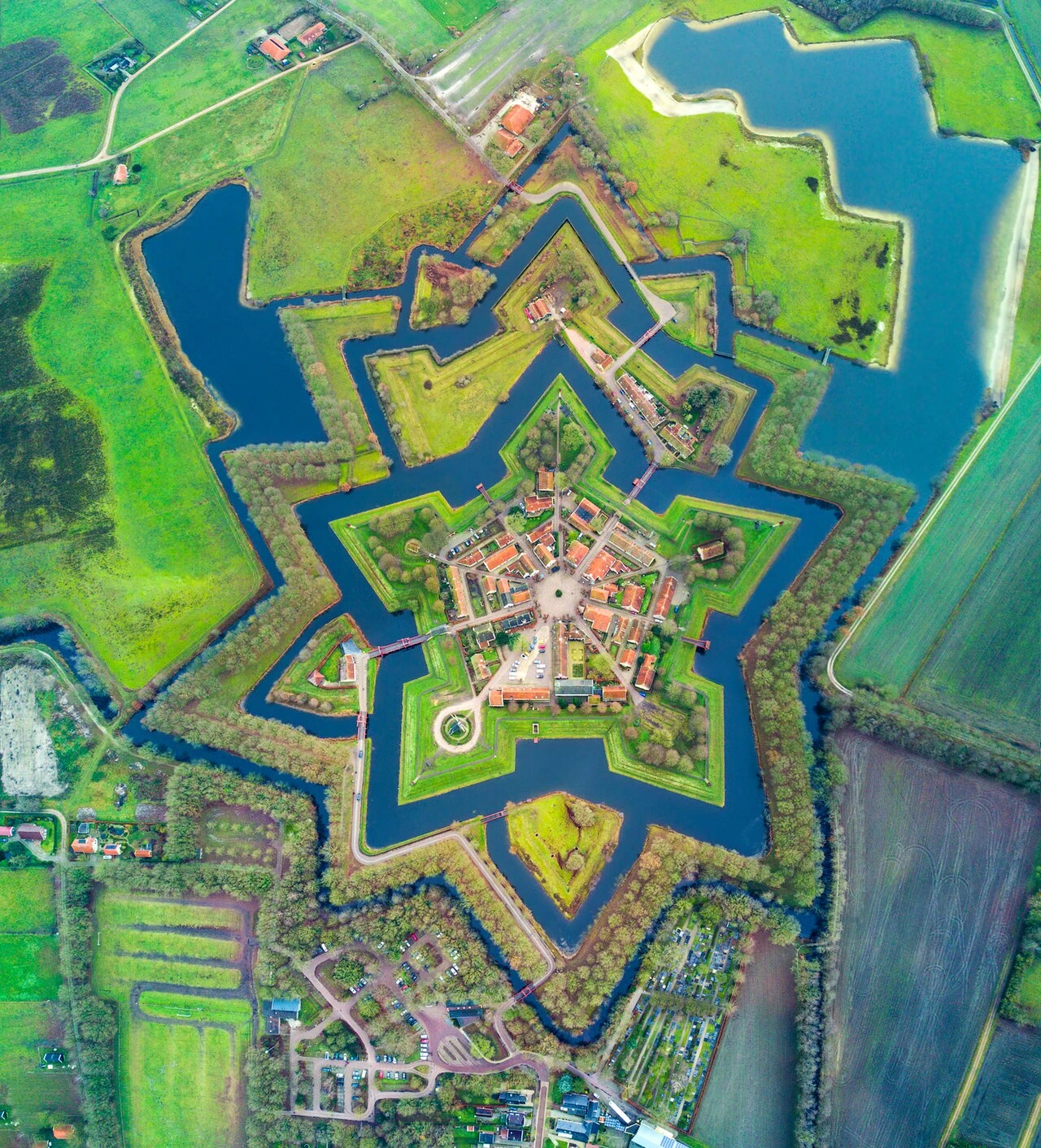
Bourtange
Vesting Bourtange
Content & sources
Photo: Dack9 · CC BY 4.0