Stanza · Audio guide
Van Gogh Museum Audio Guide
A place to remember. A story to take with you.
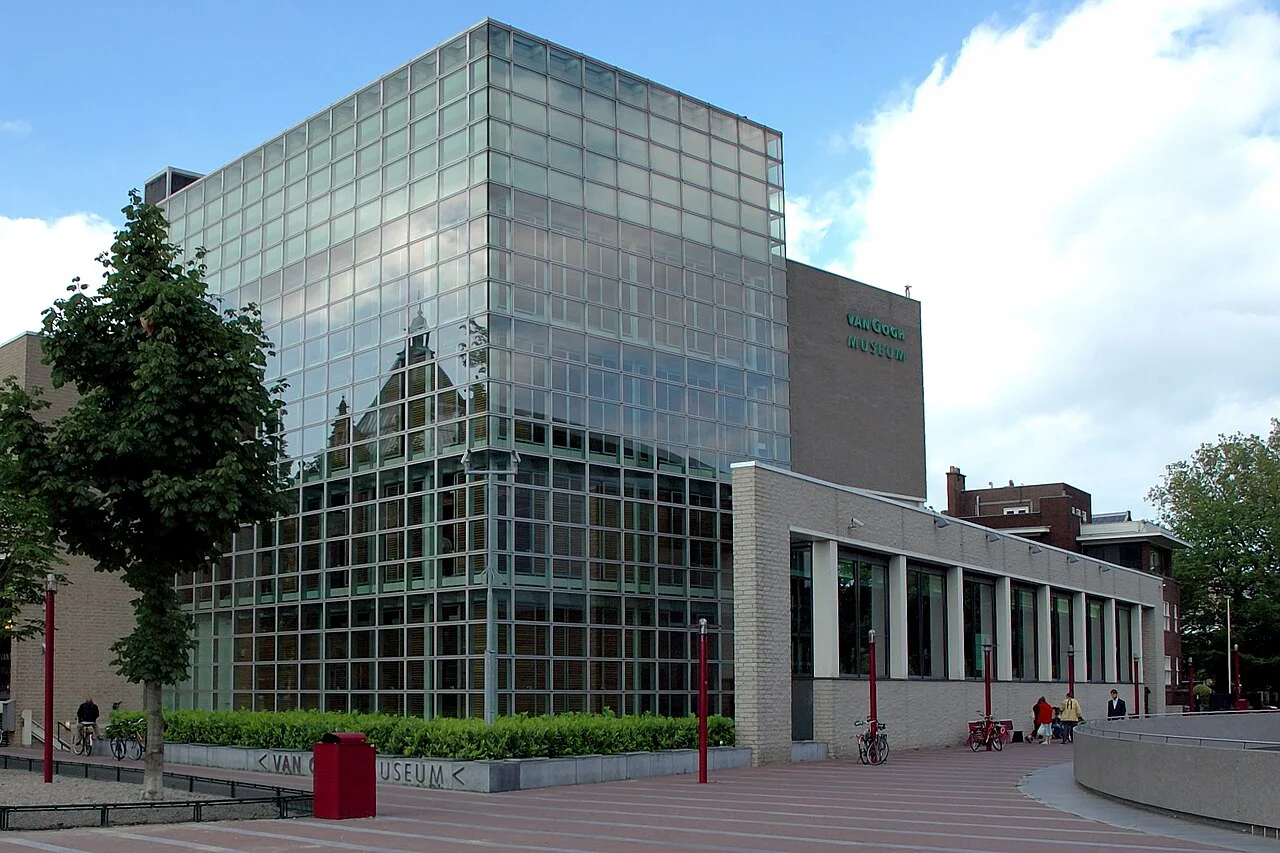
The Van Gogh Museum is a Dutch art museum dedicated to the works of Vincent van Gogh and his contemporaries. It is located in the Museum Square in Amsterdam South and opened on 2 June 1973.
Download Stanza, then search for “Van Gogh Museum”.
About the tour
One guide. Your kind of visit.
The Van Gogh Museum is a Dutch art museum dedicated to the works of Vincent van Gogh and his contemporaries. It is located in the Museum Square in Amsterdam South and opened on 2 June 1973.
The Van Gogh Museum guide tells the stories of 73 artworks, including The Potato Eaters (Vincent van Gogh), Sunflowers (Vincent van Gogh), Wheatfield with Crows (Vincent van Gogh), Almond Blossom (Vincent van Gogh), The Yellow House (Vincent van Gogh), Agostina Segatori Sitting in the Café du Tambourin (Vincent van Gogh), Skull of a Skeleton with Burning Cigarette (Vincent van Gogh), and Vincent van Gogh Painting Sunflowers (Paul Gauguin). 10 of the most famous are longer stories that move across the picture detail by detail, set to music. Every artwork is free to hear in the Stanza app until 1 January.
Ready when you are.
- 01Get the free Stanza app.
iOS & Android
- 02Find your guide.
“Van Gogh Museum”
- 03Download before you go.
Works offline
Audio guide / 73 artworks
Inside the guide
Get to know a few of the stories before you go. Open a stop to read more.
01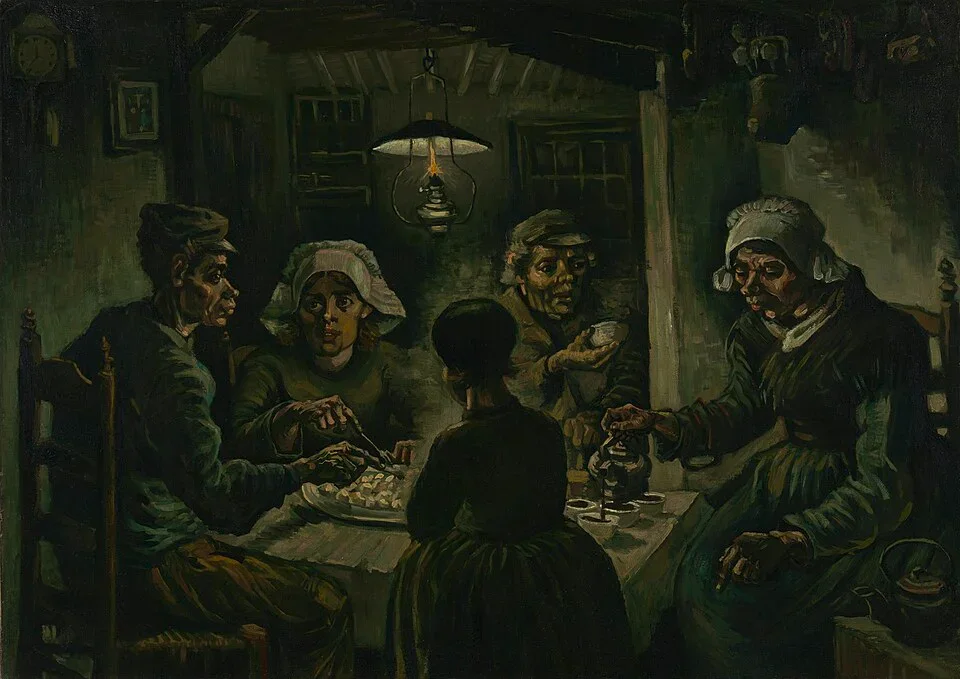
The Potato Eaters
Nobody here is smiling. It is dark, and the faces are rough. Heavy jaws, big noses, deep-set eyes. A family sits round a small table to eat. Vincent van Gogh made The Potato Eaters coarse on purpose. He believed that painting these people in their coarseness gave better results than making them sweet. Start with the light. One small lamp hangs over the table. It is the one real light in the room, and it glows over the faces and a dish of pale potatoes. Now the hands. Knotted, brown, bent around the fork and the dish. Van Gogh wanted you to imagine that these hands tilled the earth themselves, the same hands now reaching into the dish. So, he hoped, you would feel the food on that plate was honestly earned. To the left of the lamp, a woman stares out of the dark, eyes wide, her lips a little apart. He gave her a plain, rough face and did not sweeten it. A man holds a cup in his open palm, his mouth half open. At the right, a hand tips a pot over small cups. A thin dark stream, cup by cup. He said a peasant painting may smell of smoke and potato steam. That is healthy. It must not be perfumed. At the far right, the woman who pours has her head bowed and her eyes down. And in the middle, a figure with their back to you. You cannot see the face. You sit at their table, looking over a shoulder. He painted this in Nuenen in 1885, while living with his parents. Two years later he still called it the best thing he had done. He wanted it to show a life quite unlike ours. Go back to the lamp. Go back to the hands. Honest work, eaten in the dark.
Vincent van Gogh · Public domain
02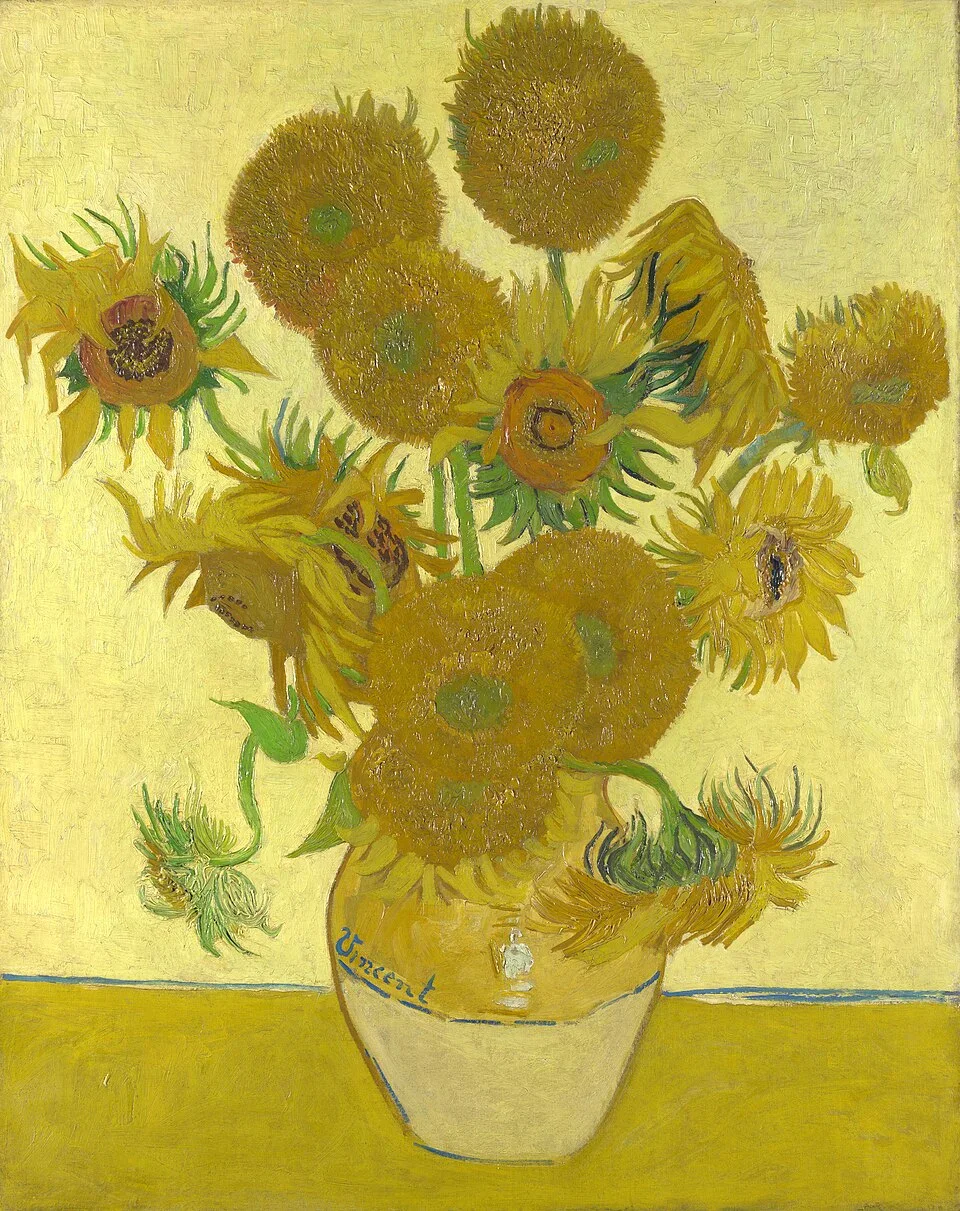
Sunflowers
So much yellow. Pure sunshine, you would think. Stay with it a little. Not every flower here is at its best. Sunflowers, painted by Vincent van Gogh. Up top, a flower in full round bloom. A shaggy head, packed tight, with a green patch glowing in it. Lower down, one with an orange heart and green leaves tucked beneath. Still strong. Still facing you. Now to the left. The petals hang down like tired hair, and dark seeds show where the face should be. This one is past its best. Down at the bottom, almost nothing is left. Green threads, a trace of brown, a stem that curls away. A flower withering away. On the right, the petals are ragged and the head bows over the vase. Every stage of a sunflower's life is in this one bunch, from full bloom to withering. In Arles, Vincent made sunflower pictures for the guest room where Paul Gauguin was supposed to stay. He wanted nothing but large sunflowers. Newly invented pigments helped open up new yellows for painters like him. Then, on the vase, blue letters. Vincent. Other painters had their flowers. The sunflower, in a way, was his. It grows richer the longer you stay. Bright, yes. But every flower is at a different hour.
Listen in the appVincent van Gogh · Public domain
03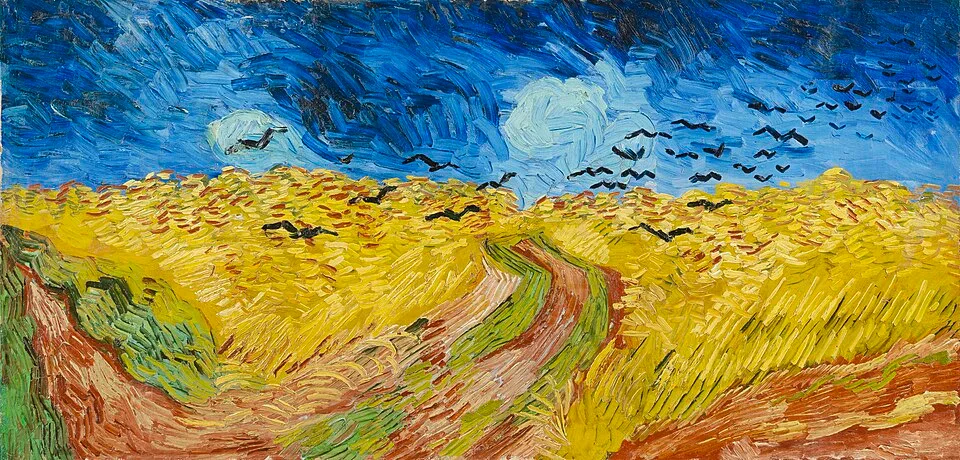
Wheatfield with Crows
Gold below. Blue above. And nothing calm in between. You can almost feel the wind pushing across it. Wheatfield with Crows, by Vincent van Gogh. Many people say it was his very last painting. Most likely it was not. But it was made in 1890, in the last weeks of his life. The sky first. The blue is thick and dark, dragged on in heavy, twisting strokes. Nothing up there sits still. Then the crows. Black marks flung across the blue, flapping through the sky. None of them seems sure where to go. One breaks away, alone against a pale patch of cloud. Now the path. Red earth, edged with green, ridge after ridge of paint. And where does it lead? Into the wheat. It just stops. A path that goes nowhere. That is what makes the field feel so alone. The wheat fills two thirds of the canvas, in short stabbing strokes of yellow and orange. Around the tenth of July, he wrote to his brother Theo and Jo, Theo's wife. He had painted huge wheatfields under troubled skies. He had made a point of showing sadness. And extreme loneliness. But he added something else. The countryside, to him, was healthy. Fortifying. And he wanted to bring these canvases to Paris soon. Nothing in his words reads like despair. Ten years before, he had called himself a bird in a cage. Sorrow and strength, in one field. Where do you think that path goes?
Listen in the appVincent van Gogh · Public domain
04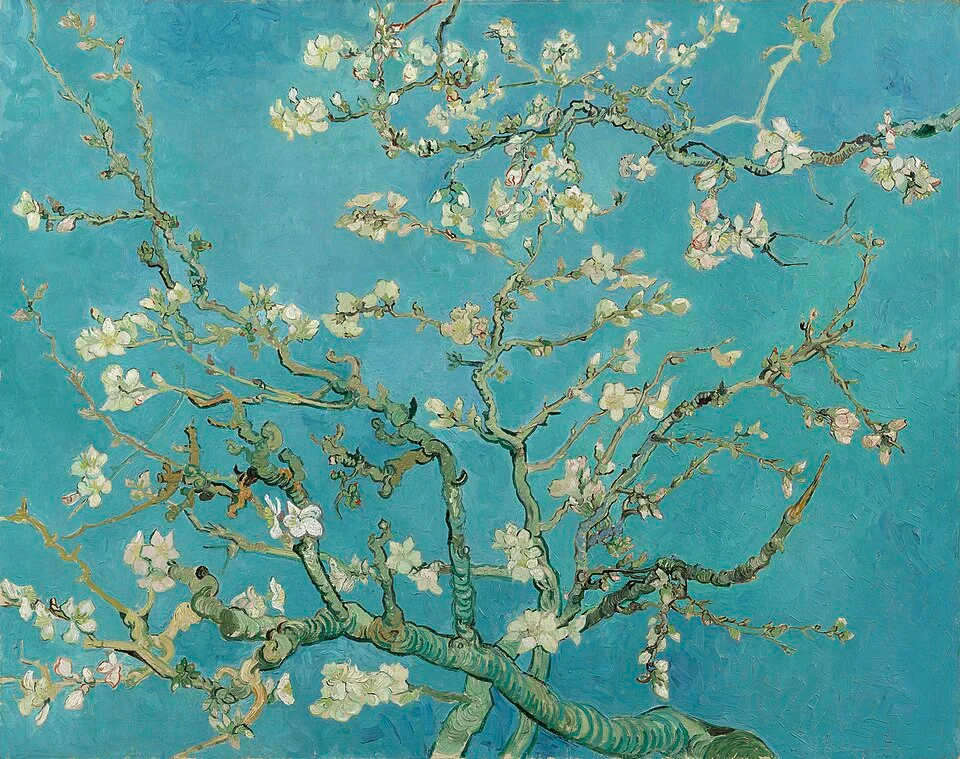
Almond Blossom
White blossom. Blue sky. Nothing else. No garden, no orchard, no path to walk down. Only branches, pushed right up against you. Vincent van Gogh painted it in 1890. Go close to the flowers. Small, broken dabs of white and pink, laid on side by side, so the whole thing seems to sparkle. Open flowers and tight buds on the same twig. Some have opened. Some are only starting. Trees in flower were special to him. To him they meant waking up, and hope. Now the branches. Many are edged with a thin dark line. He admired that in Japanese flower studies, which could show just a part of a plant in empty space. So here it floats. No ground, no horizon. The branches reach across the blue and seem to run off past the edges. Then the trunk, thick and twisting. Green strokes curl along it like rope. Knotted wood, and from it grow buds and blossoms. That is the secret. In January 1890 his brother Theo wrote that a son had been born, named Vincent. Vincent said he started a picture for the child right away. White almond branches against blue sky, to hang in their bedroom. It was a present, for a baby. Now find one blossom. Paint piled thick, white petals open wide. It looks like spring. It is a welcome, painted for someone who had just arrived.
Listen in the appVincent van Gogh · Public domain
05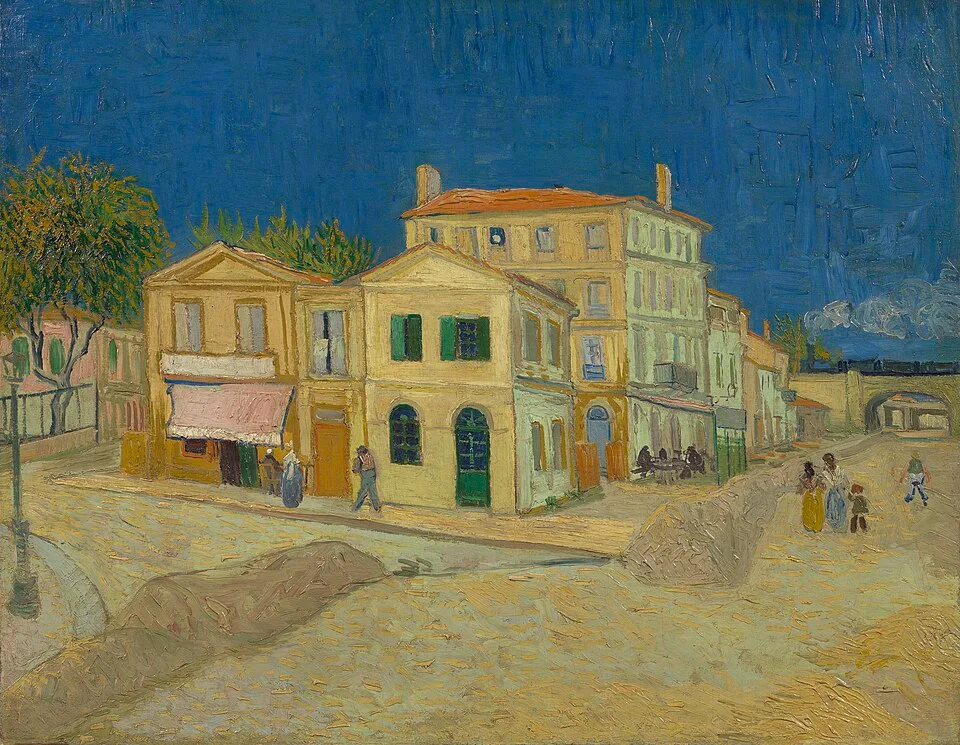
The Yellow House
A warm corner of a town. Nobody in a hurry. It looks like the easiest picture in the world. It was not. Vincent van Gogh painted it in 1888. The Yellow House. Start with the sky. Deep blue, dragged across the canvas in short, thick strokes. He told his brother what he wanted here. The house under a sulphur sun, under a pure cobalt sky. And the yellow answers it. Walls, road, all of it, in buttery paint. He admitted the subject was hard. That was exactly why he wanted it. Why this corner? He had rented rooms here that May. A workshop and a kitchen below, two small rooms above. Now the two windows upstairs. One has its shutters wide open. The one beside it is almost shut. The open one is the guest room. Paul Gauguin would stay there for nine weeks, from late October. The almost shut one is Van Gogh's own bedroom. Over on the left, the pink building. That was where he ate his dinner, every day. The widow who ran it was his landlady too. So this is no landmark. It is where he slept, ate and worked. Far to the right, a train crosses the bridge, trailing white smoke. A local line, running to Lunel. That raised ridge in the road is perhaps the ditch for the gas pipe. Soon that pipe would bring gaslight into his workshop. Tiny figures cross the road. A woman in blue walks beside a small child. Ordinary people, on an ordinary road. The house is gone. Bombs damaged it badly in 1944, and it was pulled down. Where it stood, the street looks almost the same. A plaque remembers it. But on this canvas, it still stands. Look at that open window again. It is still open.
Listen in the appVincent van Gogh · Public domain
06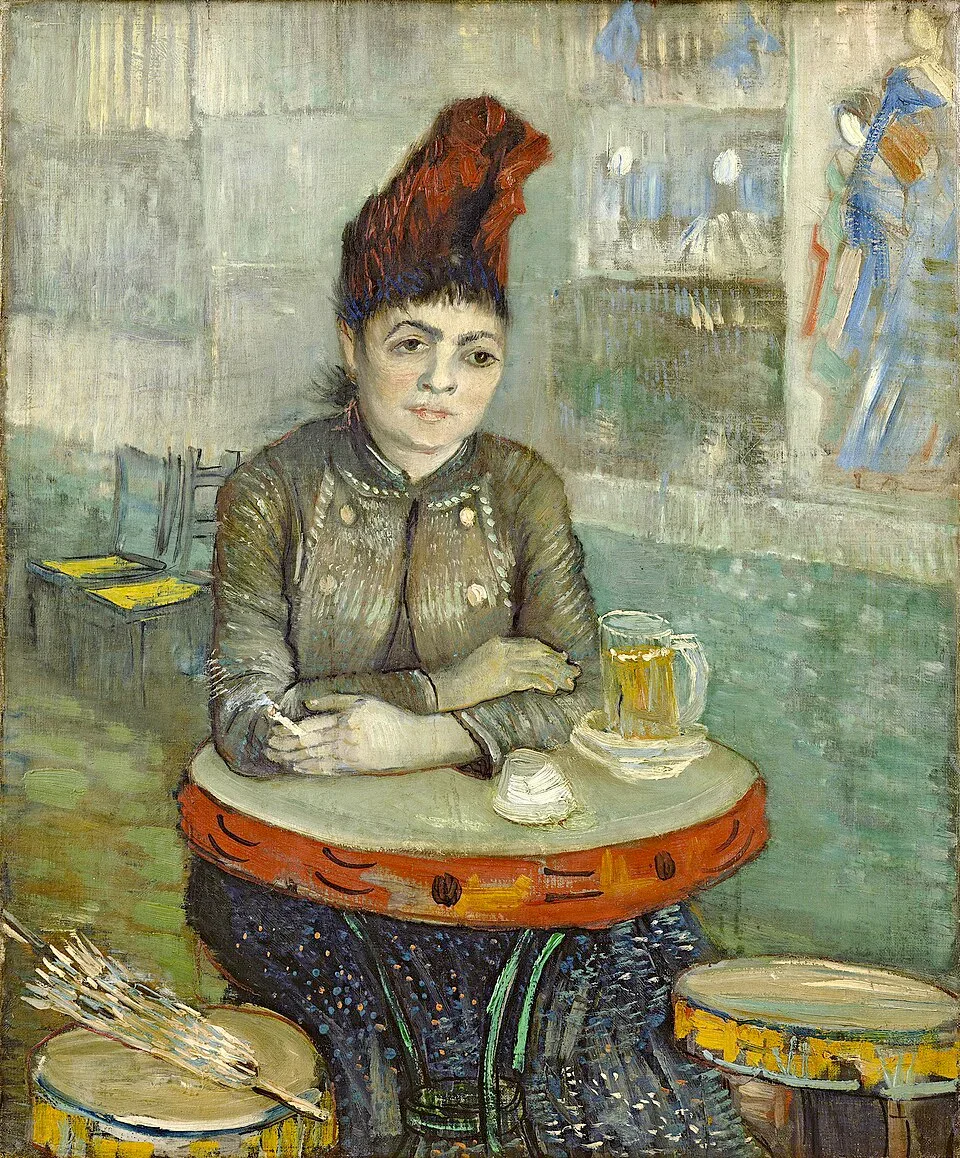
Agostina Segatori Sitting in the Café du Tambourin
She doesn’t smile. Arms folded on the table, she looks straight at you. Tired, maybe. Or simply at home. Agostina Segatori sat for Vincent van Gogh in 1887. Take the hat. A tall red crown, piled up in thick strokes. It is a fashionable hat. She is in her forties. Now her hands. One lies across her arm, and between the fingers of the other, a cigarette. Smoking, drinking, looking you in the eye. She is a thoroughly modern woman. Then the beer. Two saucers under the mug. This is her second glass. She is not a guest. The café is hers. She once posed for painters like Manet and Corot, and she saved that money to open it. Even the furniture plays along. The table and the stools were made in the shape of tambourines, to suit the cafe. Low in the corner, a closed parasol lies across a stool. Behind her, a Japanese print. Flat colour, no shadow. Van Gogh began showing his Japanese prints at the cafe in February 1887. He paid for his meals here with paintings. And he fell in love with her. She was twelve years older. It did not last. The cafe went bankrupt, and his paintings, it seems, were sold as waste canvas, in bundles, for a franc or less. And here she still sits. Arms folded, in her own room.
Listen in the appVincent van Gogh · Public domain
07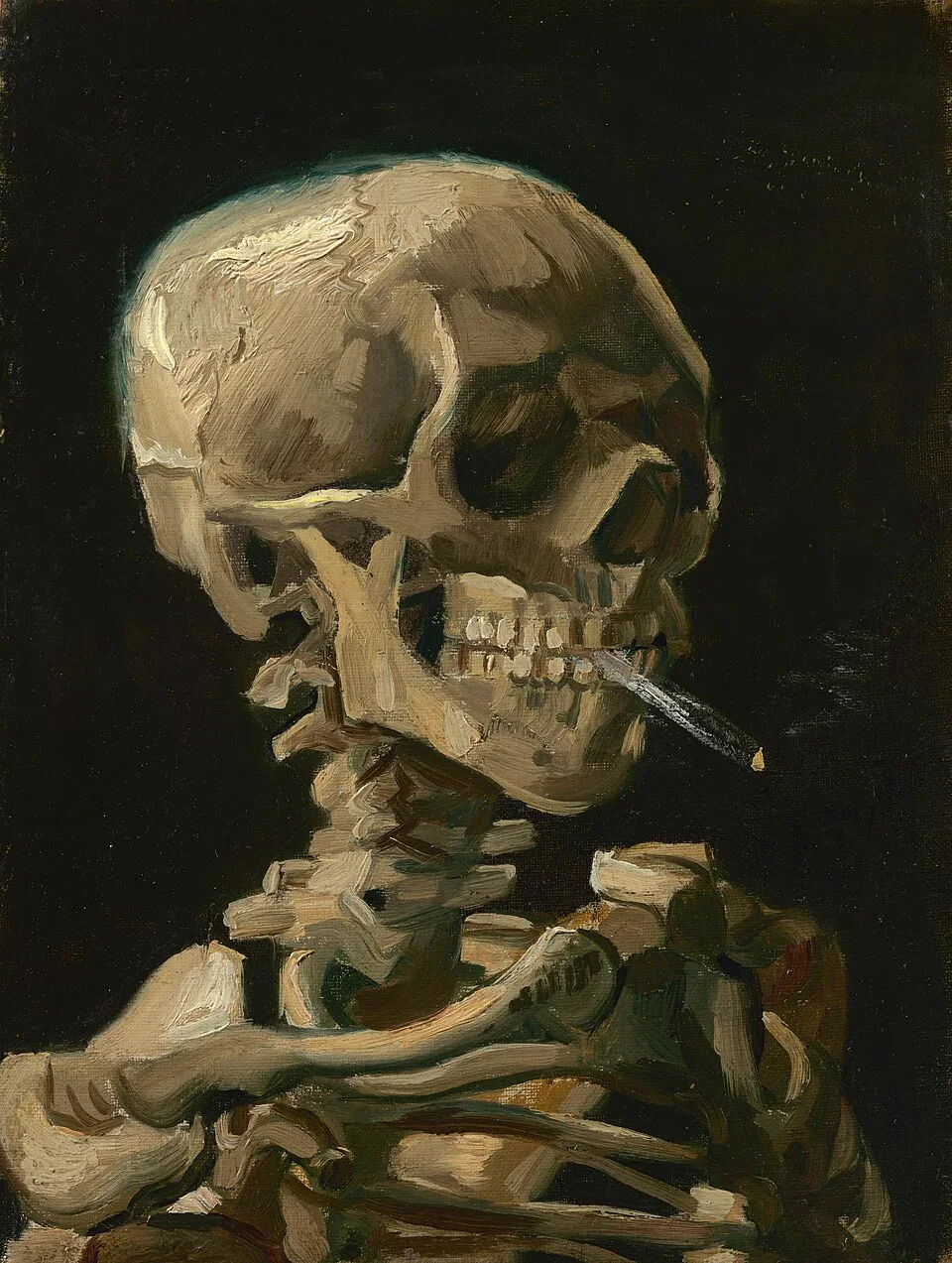
Skull of a Skeleton with Burning Cigarette
A skeleton, smoking. Van Gogh made this while taking classes at the Royal Academy in Antwerp in early 1886. At schools like that, students drew skeletons before they were allowed live models, to learn anatomy. Van Gogh later said the classes were boring and taught him nothing. So this was most likely his answer. A skeleton straight from the lesson, given a burning cigarette. It looks like a joke at the academy's expense. And it is not a warning against smoking, either. Van Gogh was a keen smoker himself and kept it up until his death in 1890. Still, there is a darker layer under the humor. A skull like this was an old reminder of death, and he painted it at a time when his own health was poor.
Listen in the appVincent van Gogh · Public domain
08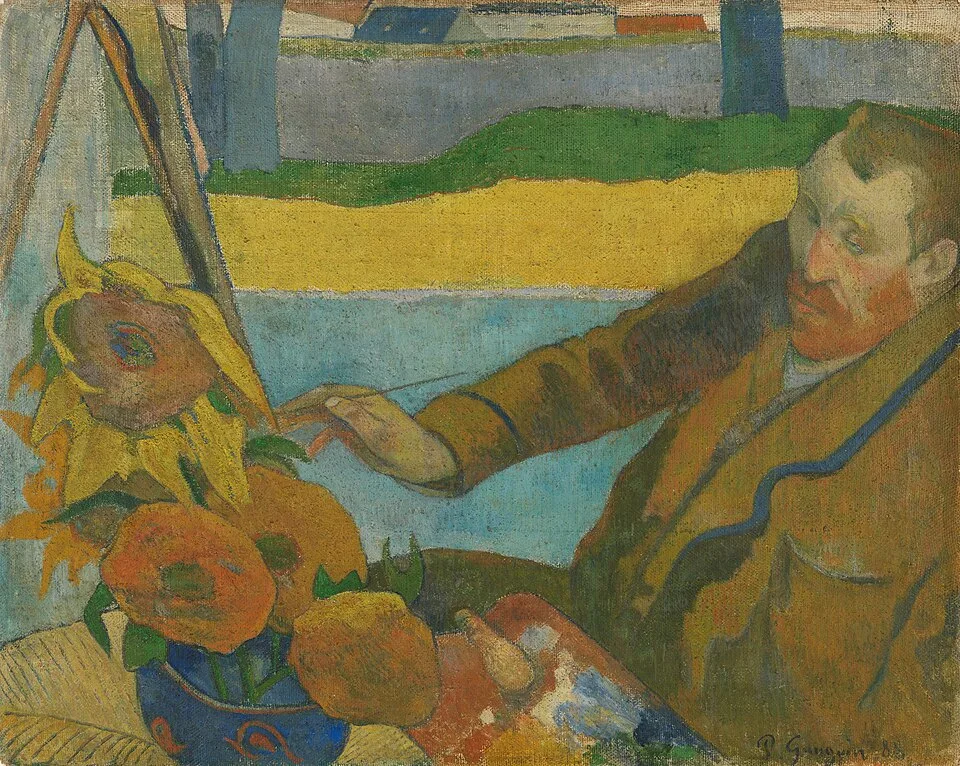
Vincent van Gogh Painting Sunflowers
Someone is painting flowers. It could not look calmer. A man leans back in his chair, brush in hand, his eyes almost shut. But look closer. Paul Gauguin painted his friend Vincent van Gogh in 1888. The flowers first. Heavy heads, drooping over a blue vase. Yet Gauguin finished this in December, and the scene belongs to summer. So much of it, perhaps, came from memory. Now the top flower. Its centre is rimmed in red, with blue and green inside. His arm stretches long across the picture. The hand at the end is soft, almost limp, the thumb resting flat on the brush. Then the face. We see it from above, sunk into the chair, the head sloping and the features flat. Gauguin admitted it was not a perfect likeness. But he felt he had caught who Vincent was inside. Vincent first saw something else. He said it was certainly him. But him gone mad. Later he softened. His face had lit up since, he said. That was him then, extremely tired, and charged with electricity. The two men were living together in Arles, and they were often at odds. Days after this went to Vincent's brother Theo, Vincent cut off his own ear. A calm scene, then? Ask the face. Tired, or mad? Vincent saw both.
Listen in the appPaul Gauguin · Public domain
09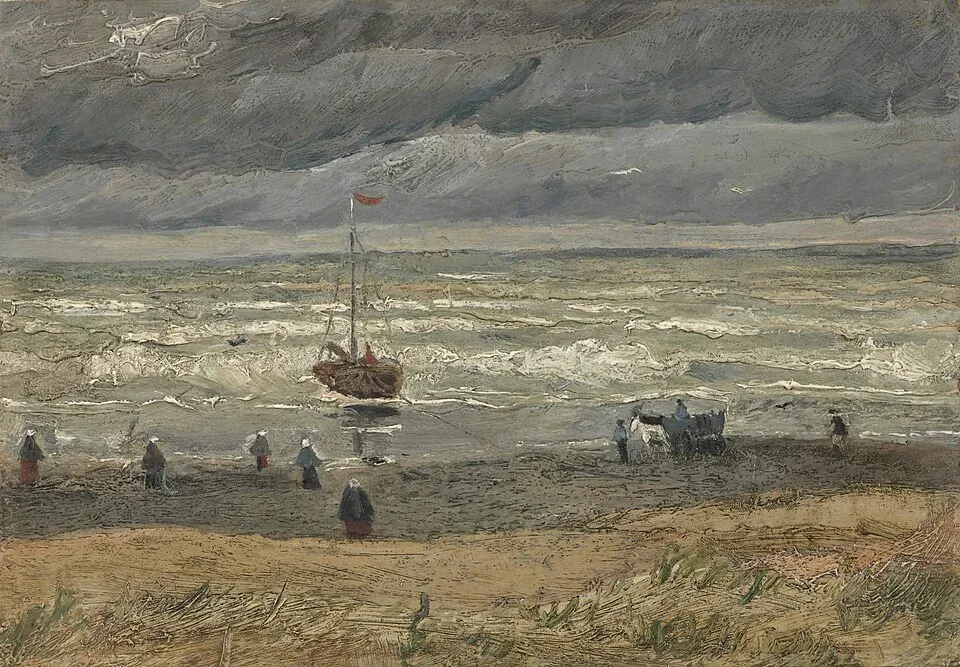
View of the Sea at Scheveningen
Grey. Almost all of it is grey. A heavy sky, a cold sea, and a thin strip of beach. You might think the painter watched from somewhere dry and safe. He did not. He stood out on that beach with his easel. First, the sky. The paint is piled thick and dragged across in long strokes, until the clouds look heavy enough to fall. Now the sea. Those white breakers were pressed out of the tube and left standing. Line after line of them, rolling in. They are not a picture of foam. They are almost foam. Out in the surf, a fishing boat waits. At the top of its mast, a small red flag. The only warm spot in that whole sky. On the right, a horse and a cart, and men beside it. They are about to haul that boat in on a rope. On the left, women in white bonnets stand on the wet sand, facing the water. Fishwives. Each one is only a few strokes. A dark cloak, a flash of white, sometimes a touch of red below. Yet you feel them holding still, watching the boat. Down in front, the dune grass is swept flat, all bending one way. That looks like wind. And wind had a hand in making this picture. Van Gogh had been painting for less than a year. He set up his easel right here, on this beach, in the storm. The wind whipped up the sand and nearly blew him off his feet. He painted fast anyway. Sand stuck to the wet paint. He scraped most of it off. Some stayed, and it is still in there. Then it was left behind in an attic in 1886, and sold with a job lot of rubbish in 1902. Stolen in 2002, it was found thirteen years later under a kitchen floor near Naples. This grey was not painted from somewhere safe. It is the storm, still in the paint.
Listen in the appVincent van Gogh · Public domain
10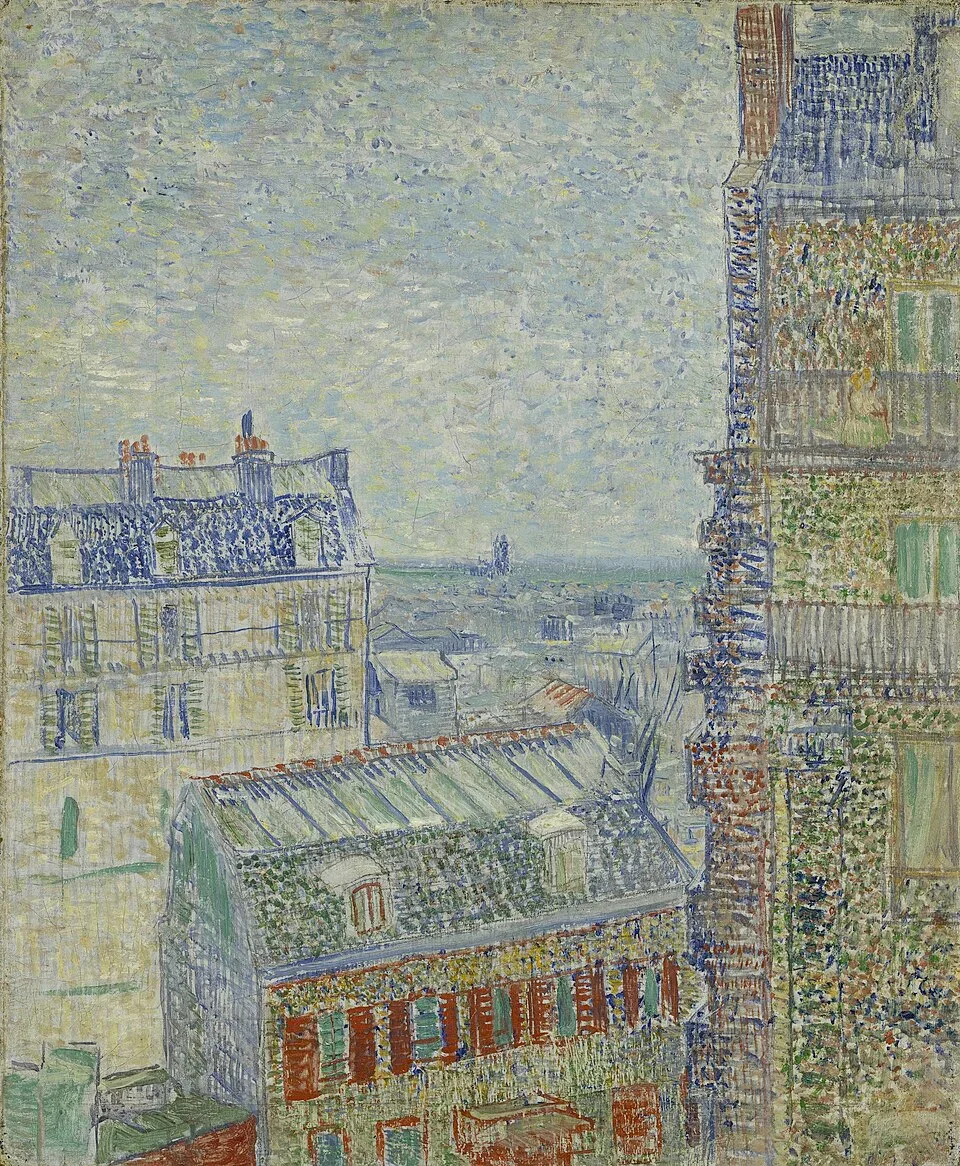
View from Theo’s apartment
Roofs, a pale sky, and a city far away. A quiet view with no one in it. Or so it seems. Vincent van Gogh painted this in 1887, from the window of his brother Theo's apartment. Now notice that wall on the right. It is huge, and it rises beside the view. His first try was a wide drawing, and that building on the right was all too large. So he scrapped it. He moved to the living room window. He turned the canvas upright. And the wall took up less room. See how it is made. Small dots of red, blue and green, set side by side. Now the gap opens. Down the middle, the city runs away to a small blue tower. Notre-Dame, far off. Big things close, the city tiny and distant. His earlier paintings were dark and somber. Here the roof is blue, spotted all over. Green shutters stand against it. Red shutters run below. Young painters around him had pushed him to use colour for its glow. Then, up on the top balcony, a tiny figure with yellow hair. It is a girl, added to give the painting some life. So the empty view is not empty. It is a problem he solved, with a new room, an upright canvas, and one small girl. No one in it? Find her again.
Listen in the appVincent van Gogh · Public domain
- 11
Japonaiserie
Vincent van Gogh · 1887
- 12
Tree Roots
Vincent van Gogh · 1890
- 13
Congregation Leaving the Reformed Church in Nuenen
Vincent van Gogh · 1880
- 14
Wheat Field with a Lark
Vincent van Gogh · 1887
- 15
Kingfisher by the Waterside
Vincent van Gogh · 1887
- 16
Crab on its Back
Vincent van Gogh · 1887
- 17
Pietà (after Delacroix), The
Vincent van Gogh · 1889
- 18
Avenue of Poplars in Autumn
Vincent van Gogh · 1884
- 19
Harvest at La Crau, with Montmajour in the Background
Vincent van Gogh · 1888
- 20
Wheatfield under Thunderclouds
Vincent van Gogh · 1890
- 21
A Pair of Shoes
Vincent van Gogh · 1886
- 22
Vase with Irises
Vincent van Gogh · 1890
- 23
Still Life with Bible
Vincent van Gogh · 1885
- 24
Vincent van Gogh
John Peter Russell · 1886
- 25
Butterflies
Vincent van Gogh · 1889–1890
- 26
Red Cabbages and Garlic
Vincent van Gogh · 1887
- 27
Portrait of Vincent van Gogh
Henri de Toulouse-Lautrec · 1887
- 28
Alone
Jozef Israëls · c. 1880–1881
- 29
Self-portrait with Portrait of Bernard
Paul Gauguin · 1888
- 30
The Sower
Vincent van Gogh · 1888
- 31
Old Vineyard with Peasant Woman
Vincent van Gogh · 1890
- 32
Paul Gauguin's Armchair
Vincent van Gogh · 1888
- 33
View of Pont-Aven, 1892
Émile Bernard · 1892
- 34
View of a Butcher's Shop
Vincent van Gogh · 1888
- 35
Boy sitting in the grass
Émile Bernard · 1886
- 36
Bernard's grandmother
Émile Bernard · 1887
- 37
The Old Cemetery Tower at Nuenen
Vincent van Gogh · 1885
- 38
Torso of Venus and a Landscape
Vincent van Gogh · 1887
- 39
Bridge in the rain, after Hiroshige
Vincent van Gogh · 1887
- 40
Wounded Amazon
Franz von Stuck · 1904
- 41
Woman Sitting in a Field: Brittany
Émile Bernard · 1890
- 42
Boulevard de Clichy
Vincent van Gogh · 1887
- 43
View of Arles with Irises in the Foreground
Vincent van Gogh · 1888
- 44
Giant Peacock Moth
Vincent van Gogh · 1889
- 45
Self-portrait
Vincent van Gogh · 1888
- 46
Baby Marcelle Roulin
Vincent van Gogh · 1888
- 47
The Raising of Lazarus
Vincent van Gogh · 1890
- 48
Head of a Prostitute
Vincent van Gogh · 1885
- 49
Portrait of Léonie Rose Charbuy-Davy
Vincent van Gogh · 1887
- 50
La Berceuse
Vincent van Gogh · 1888
- 51
Haymaking, Éragny
Camille Pissarro · 1887
- 52
House Among Trees: Pont-Aven
Émile Bernard · 1888
- 53
Self-Portrait whit hat
Émile Bernard · 1892
- 54
Two Breton women in a meadow
Émile Bernard · 1886
- 55
Selfportrait
Jan Toorop · 1883
- 56
Ears of Wheat
Vincent van Gogh · 1890
- 57
Landscape at Twilight
Vincent van Gogh · 1890
- 58
Montmartre: mills and vegetable gardens
Vincent van Gogh · 1887
- 59
Self-Portrait with Portrait of Gauguin
Émile Bernard · 1888
- 60
The Jetty of Boulogne-sur-Mer
Édouard Manet · 1868
- 61
The Blue Bird
Émile Bernard · 1889
- 62
Village Street: Saint-Briac
Émile Bernard · 1889
- 63
Fishing Boats on the Beach at Les Saintes-Maries-de-la-Mer
Vincent van Gogh · 1888
- 64
The Garden of Saint Paul
Vincent van Gogh · c. 1889
- 65
Café table with absinth
Vincent van Gogh · 1887
- 66
Peasant Woman Binding Sheaves (after Millet)
Vincent van Gogh · 1889
- 67
Caulking
Hendrik Willem Mesdag · c. 1874–1875
- 68
Farm in Brittany, by Paul Sérusier
Paul Sérusier · c. 1890
- 69
The grape harvest
Jules Bastien-Lepage · 1880
- 70
Self-Portrait with Grey Felt Hat
Vincent van Gogh · 1887
- 71
View Seen Through a Balcony
Gustave Caillebotte · 1880
- 72
Olive Grove
Vincent van Gogh · 1889
- 73
Les Cantilènes
Émile Bernard · 1892
Van Gogh Museum
Frequently asked questions
How much does the guide cost?
Free app download. Free until 1 January. Listed guide price: $2.99. Audio guide only. Venue admission is separate.
Can I listen without internet?
Yes. Download the guide’s audio, images, and maps in the app before your visit. Your downloaded content is then available offline.
Can I listen in my language?
In English for now. More languages soon.
Do I need to follow a schedule?
No. This is a self-guided experience. Choose your stops, pause whenever you like, and return to a story at your own pace.
Which artworks are in the Van Gogh Museum audio guide?
73 artworks, including The Potato Eaters (Vincent van Gogh), Sunflowers (Vincent van Gogh), Wheatfield with Crows (Vincent van Gogh), Almond Blossom (Vincent van Gogh), The Yellow House (Vincent van Gogh), Agostina Segatori Sitting in the Café du Tambourin (Vincent van Gogh), Skull of a Skeleton with Burning Cigarette (Vincent van Gogh), and Vincent van Gogh Painting Sunflowers (Paul Gauguin). The full list is on this page.
Is this the museum’s official audio guide?
No. Stanza is an independent audio guide app and is not affiliated with Van Gogh Museum. Museum admission is separate.
At your own pace
Explore Van Gogh Museum.
Download Stanza, then search for “Van Gogh Museum”.
Free app download · Guide price shown in the app
Keep exploring
Nearby audio guides
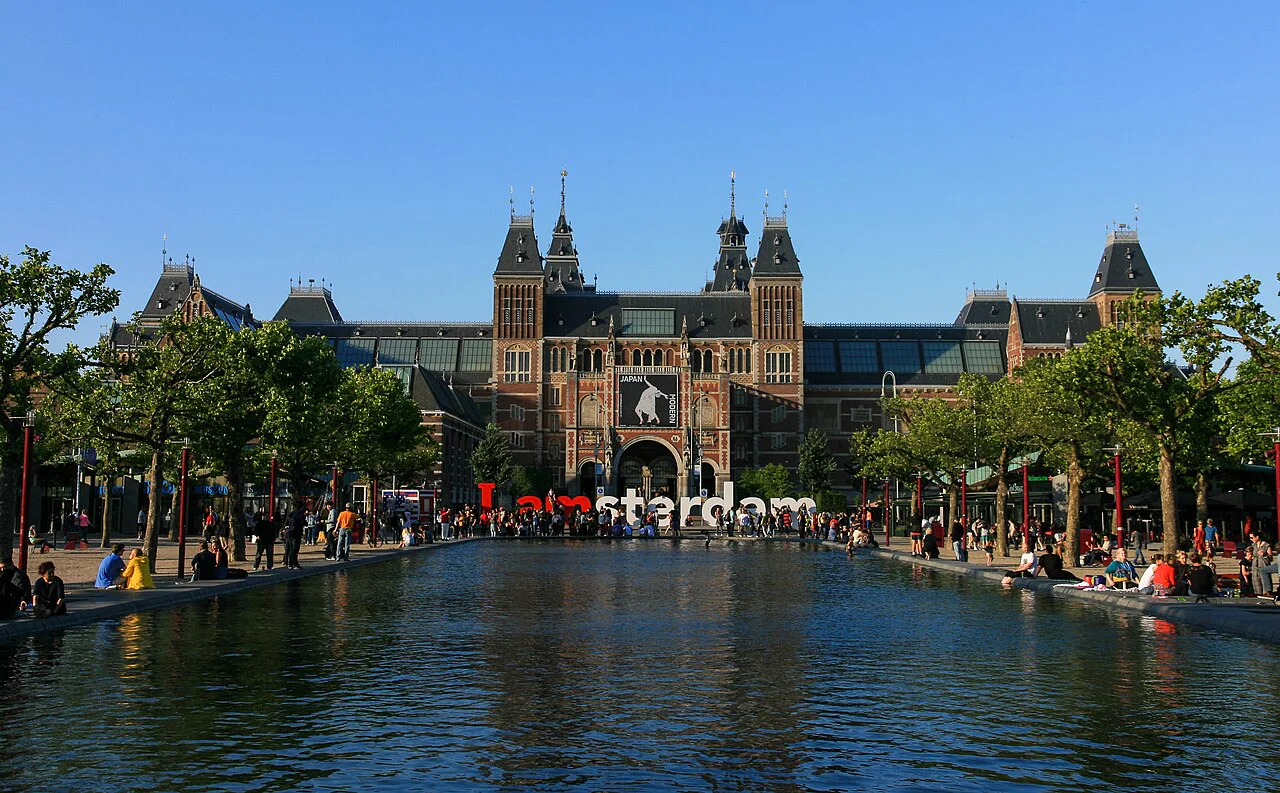
Amsterdam · 1 km
Rijksmuseum
Content & sources
Marco Almbauer · CC BY-SA 3.0
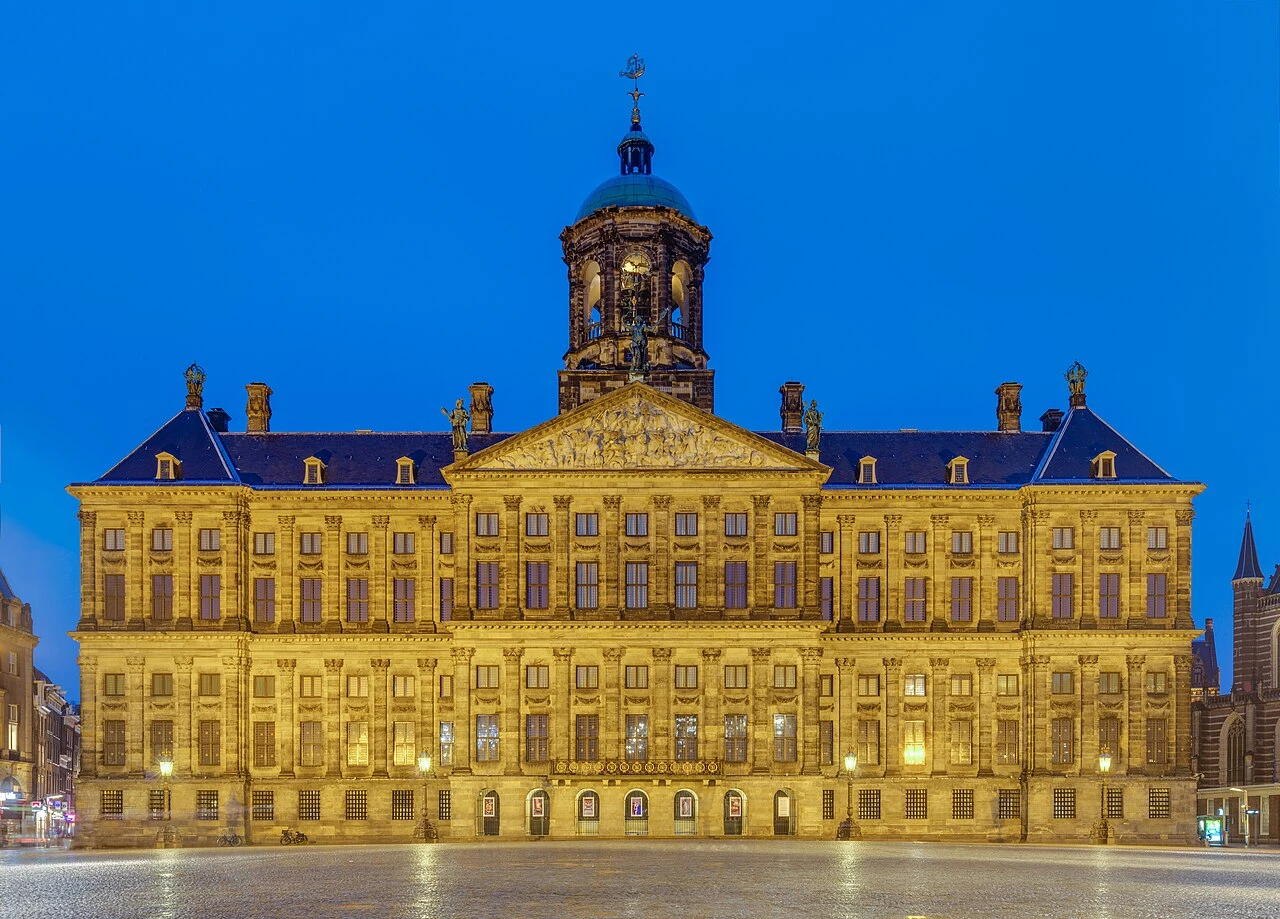
Amsterdam · 2 km
Paleis op de Dam
Content & sources
Diego Delso · CC BY-SA 4.0
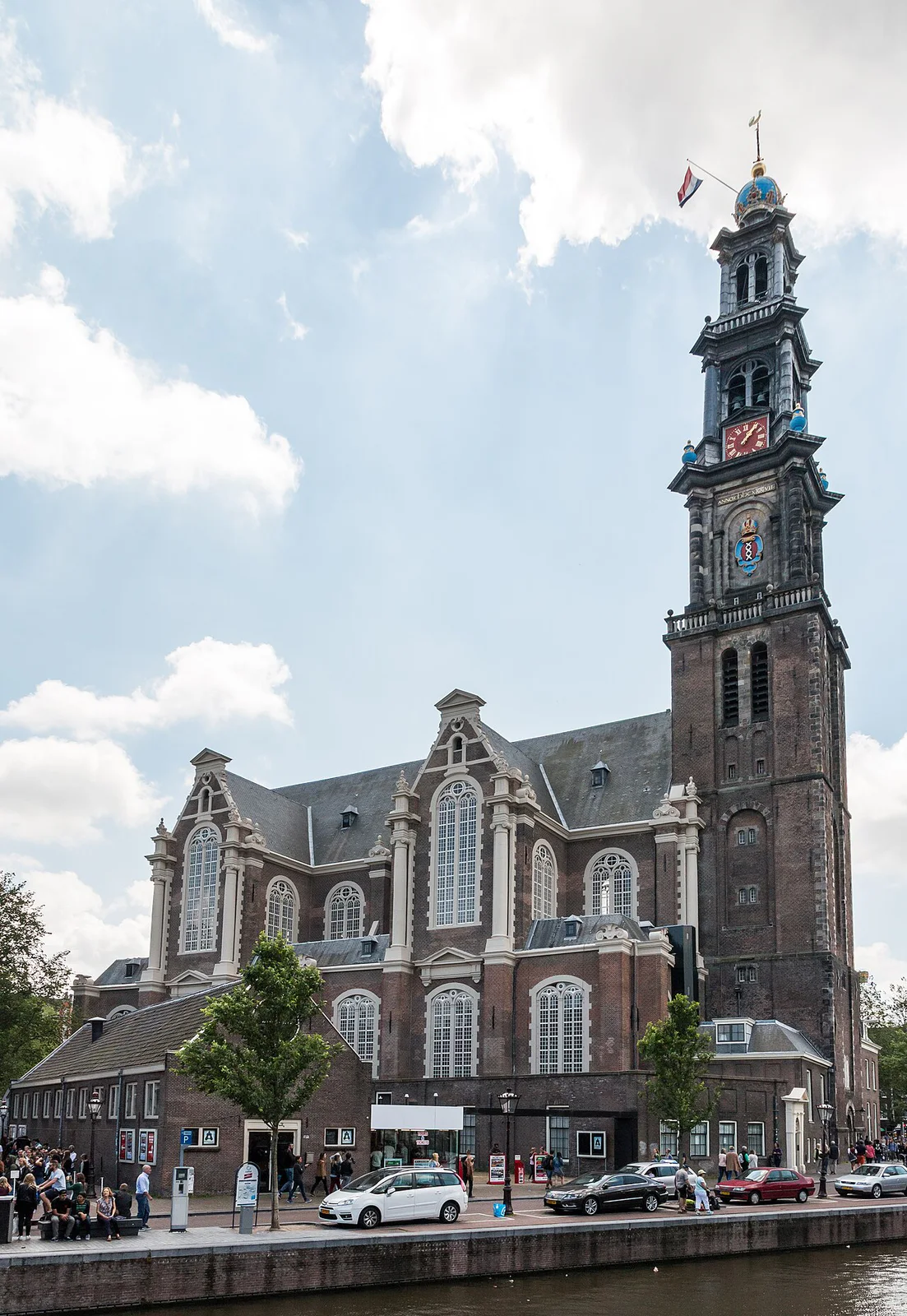
Amsterdam · 2 km
Westerkerk
Content & sources
Dietmar Rabich · CC BY-SA 4.0
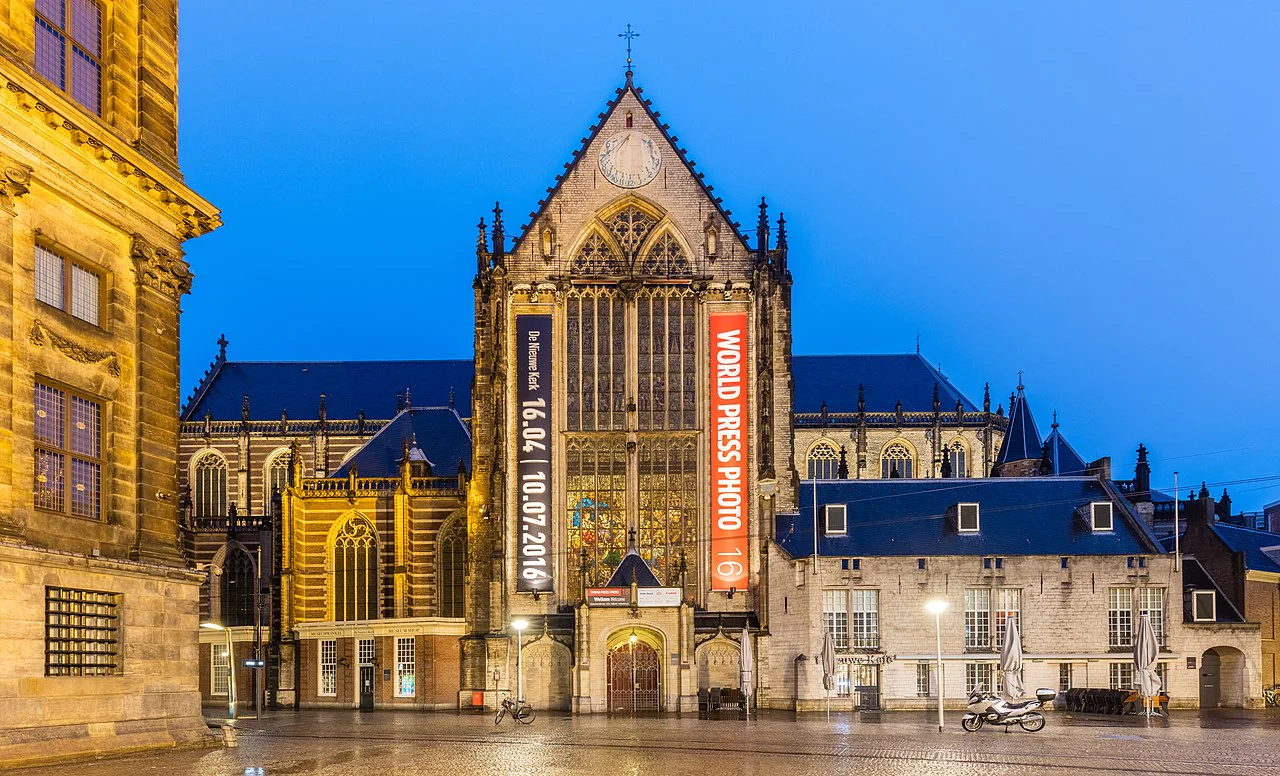
Amsterdam · 2 km
Nieuwe Kerk
Content & sources
Diego Delso · CC BY-SA 4.0
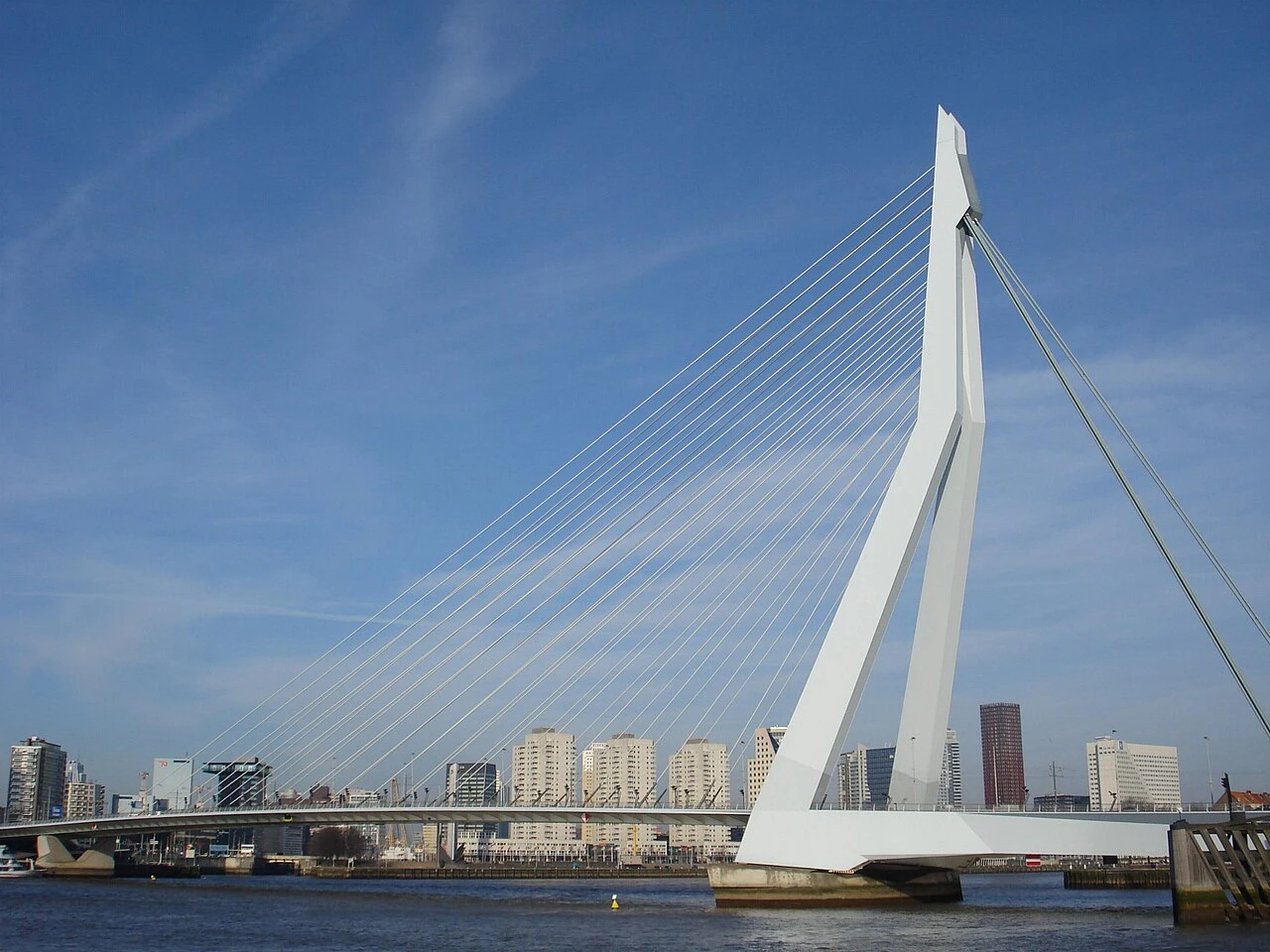
Rotterdam · 57 km
Erasmusbrug
Content & sources
F.Eveleens · CC BY 3.0
Art museums
More art museum audio guides
Amsterdam · 211 artworks
Rijksmuseum
Content & sources
Marco Almbauer · CC BY-SA 3.0
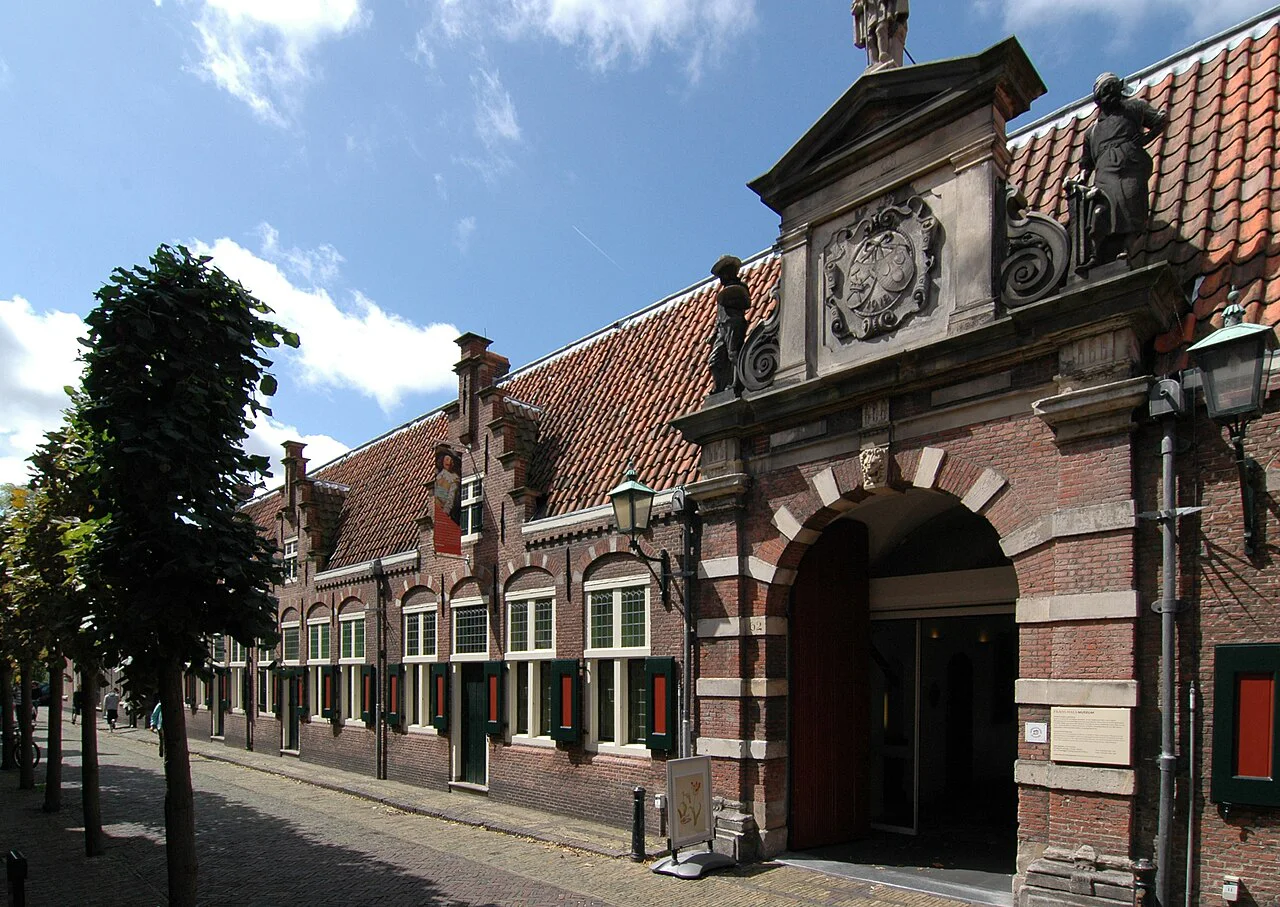
Haarlem · 45 artworks
Frans Hals Museum
Content & sources
Mcke · CC BY-SA 3.0
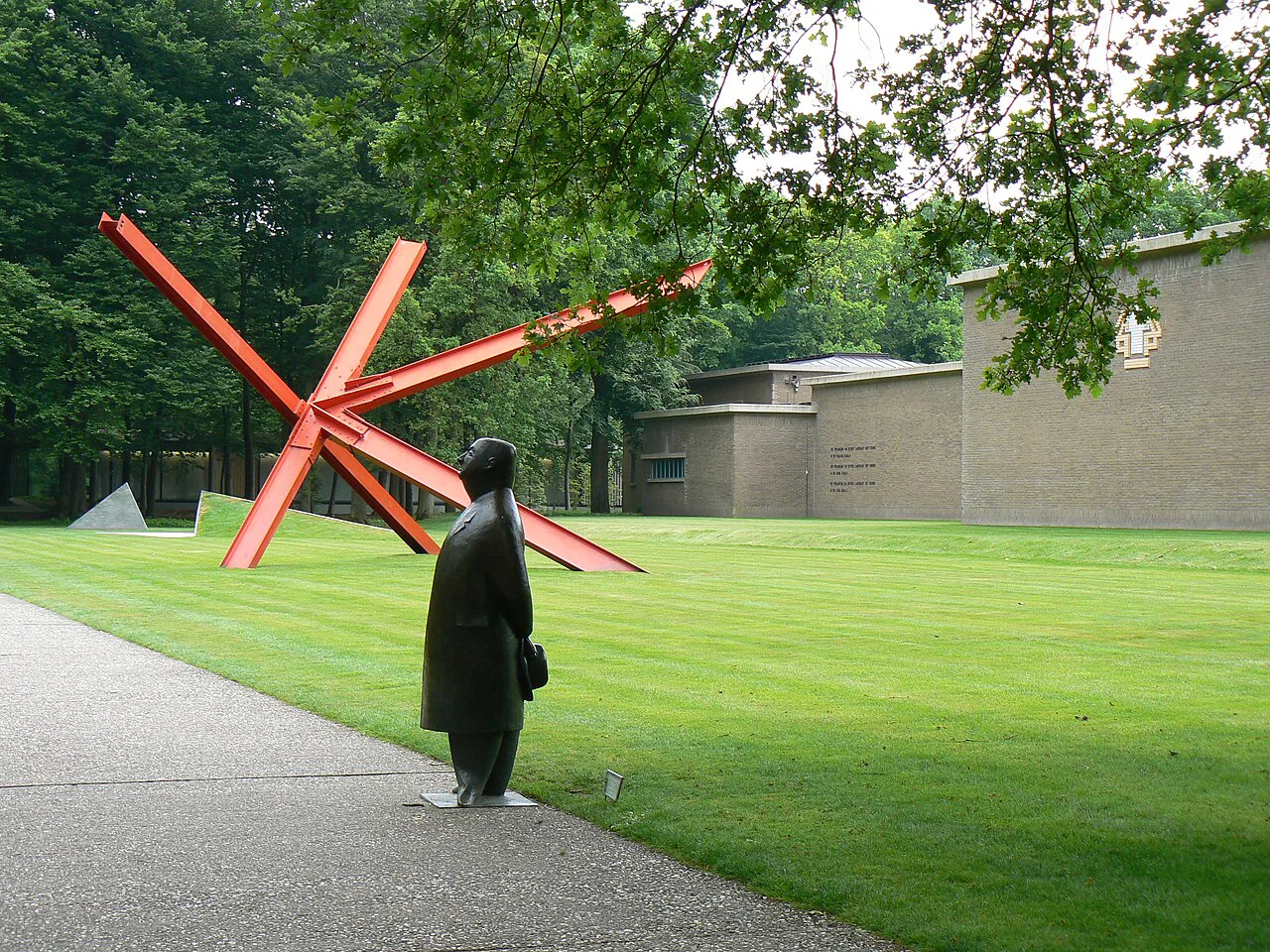
Otterlo · 60 artworks
Kröller-Müller Museum
Content & sources
Photo: Gerardus · Public domain
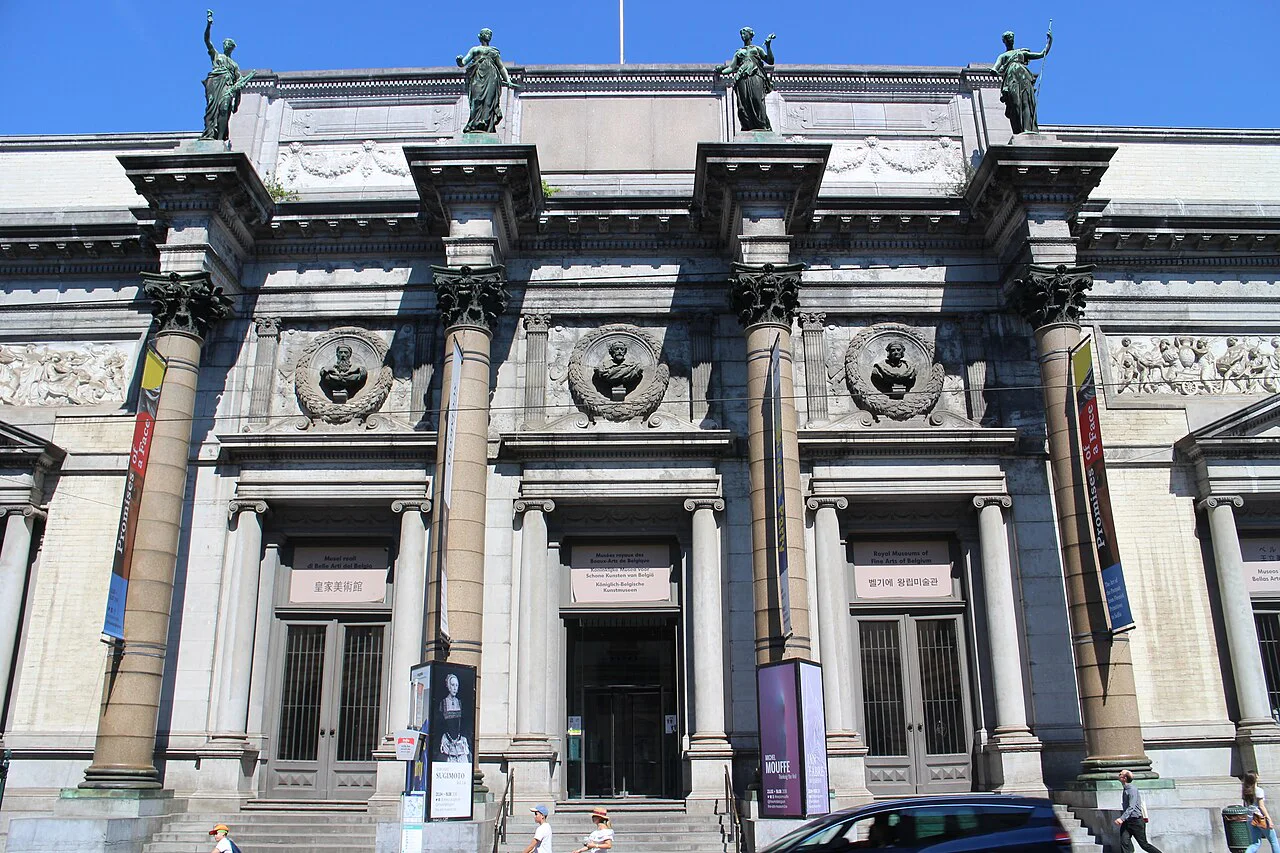
Brussels · 127 artworks
Royal Museums of Fine Arts of Belgium
Content & sources
Photo: Suicasmo · CC BY-SA 4.0
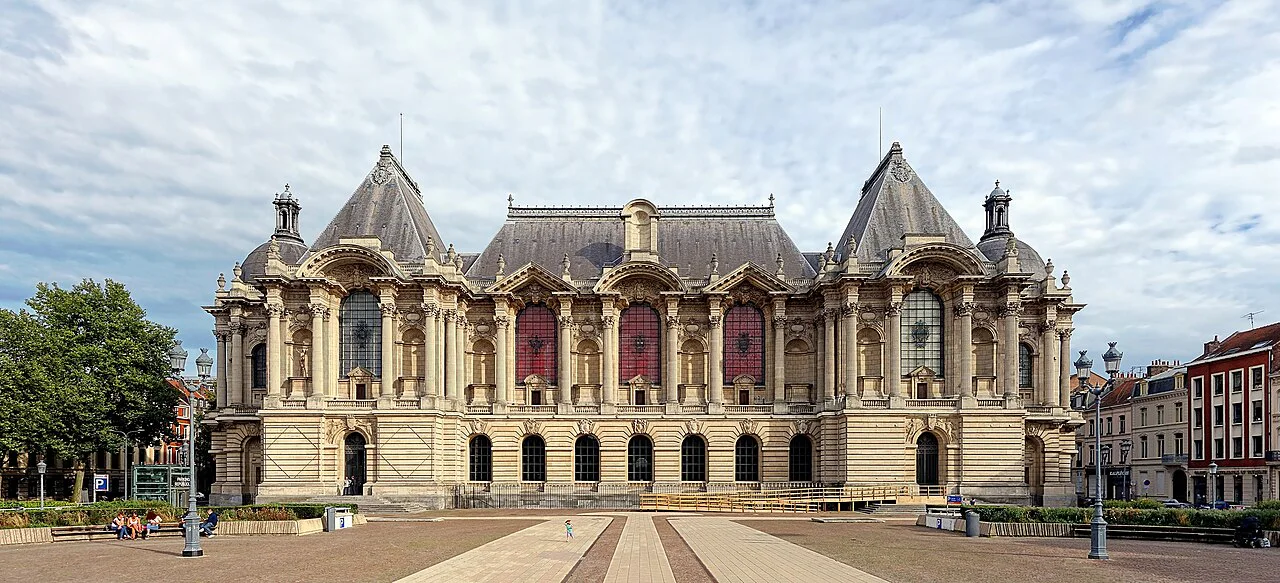
Lille · 96 artworks
Palais des Beaux-Arts de Lille
Content & sources
Photo: Velvet · CC BY-SA 3.0
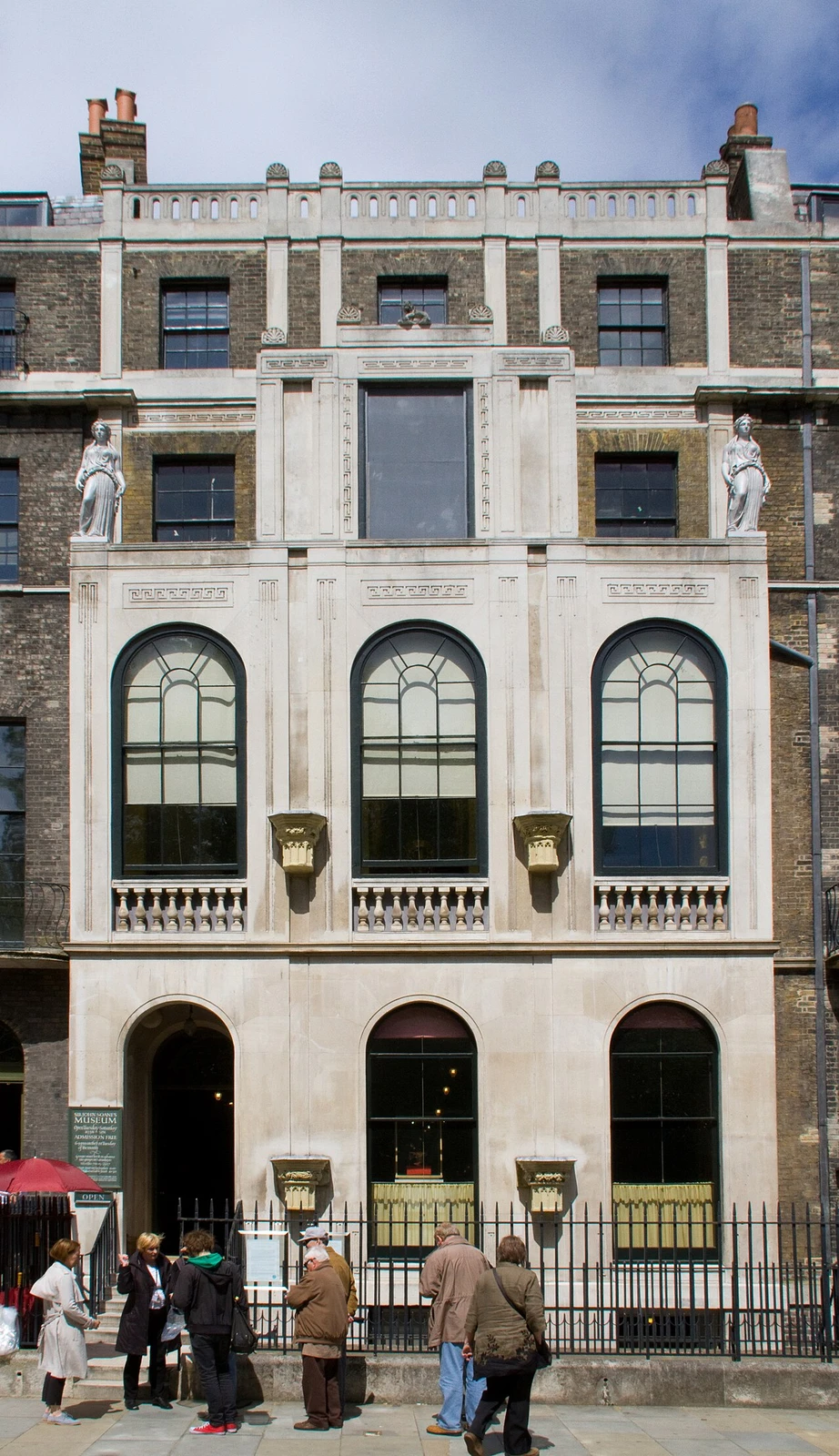
London · 8 artworks
Sir John Soane's Museum
Content & sources
Tony Hisgett from Birmingham, UK · CC BY 2.0