Stanza · Audio guide
Westerkerk Audio Guide
A place to remember. A story to take with you.
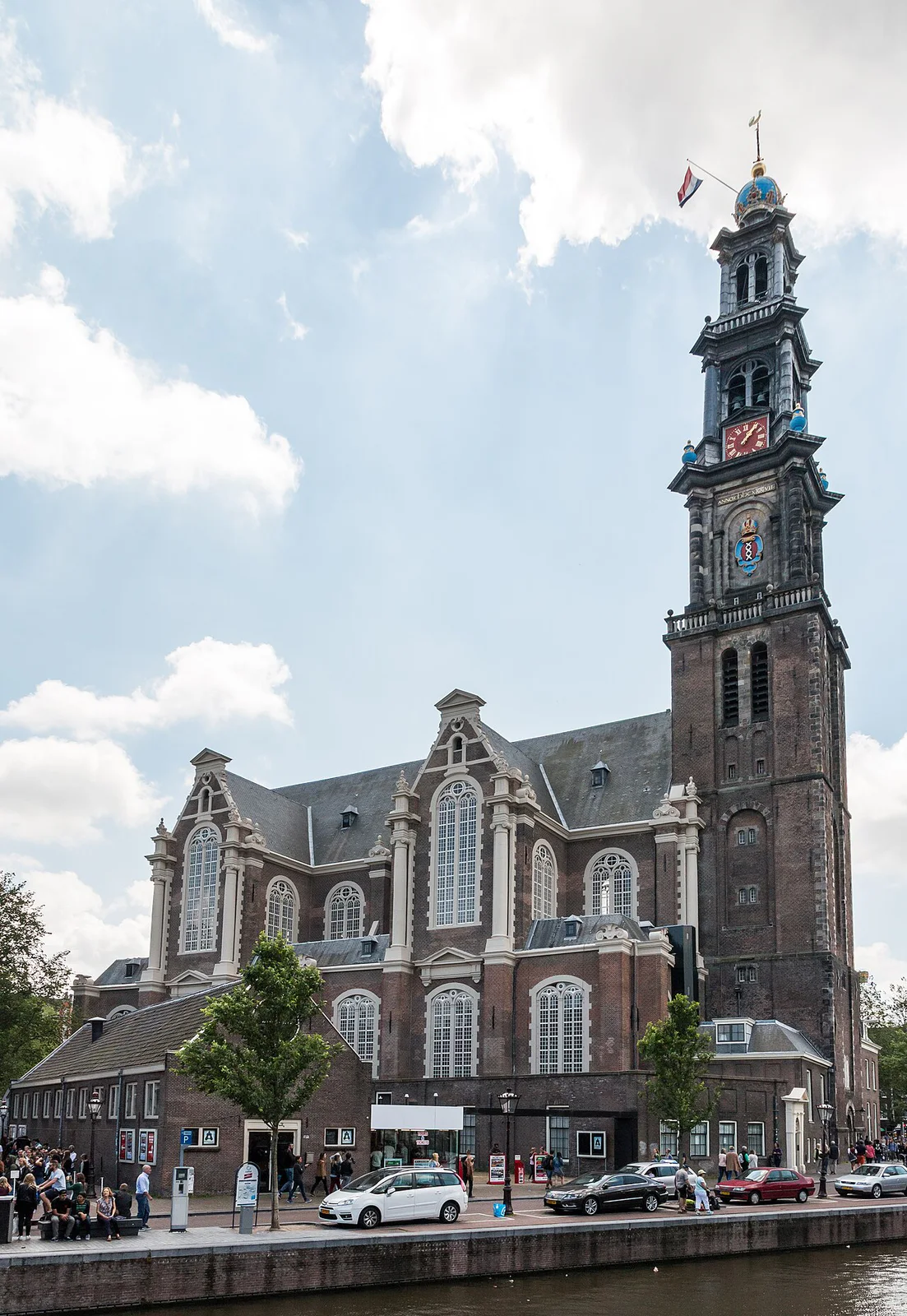
The Westerkerk is a Reformed church within Dutch Protestant Calvinism in central Amsterdam. It is located in the Grachtengordel neighborhood between the Prinsengracht and Keizersgracht.
Download Stanza, then search for “Westerkerk”.
About the tour
One guide. Your kind of visit.
The Westerkerk is a Reformed church within Dutch Protestant Calvinism in central Amsterdam. It is located in the Grachtengordel neighborhood between the Prinsengracht and Keizersgracht.
Ready when you are.
- 01Get the free Stanza app.
iOS & Android
- 02Find your guide.
“Westerkerk”
- 03Download before you go.
Works offline
Audio guide / 11 narrated stops
Inside the guide
Get to know a few of the stories before you go. Open a stop to read more.
01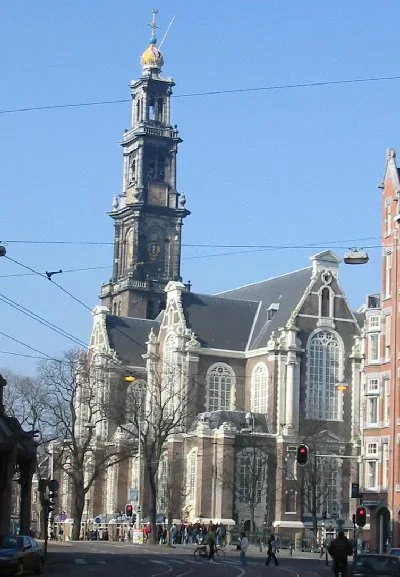 Westermarkt and the Westertoren Spire
The Westerkerk from Westermarkt
Welcome to the Westerkerk, the Western Church of Amsterdam. When this city turned Calvinist in the Reformation, it inherited its old churches from the Catholic past. The Westerkerk was different: one of the first churches built from the ground up for Protestant worship. Work began in 1620, at the height of the Dutch Golden Age. The architect was Hendrick de Keyser, the man who shaped so much of Amsterdam. He died in 1621, before the walls were far along, and his son Pieter took over and carried the work to completion. On the eighth of June, 1631, the church was inaugurated. It remains the largest church in the Netherlands ever built for Protestants, and the Protestant Church still holds services here. The tower, the interior and the people buried beneath the floor all have their stories, and this tour follows them.
Ellywa at Dutch Wikipedia · Public domain
02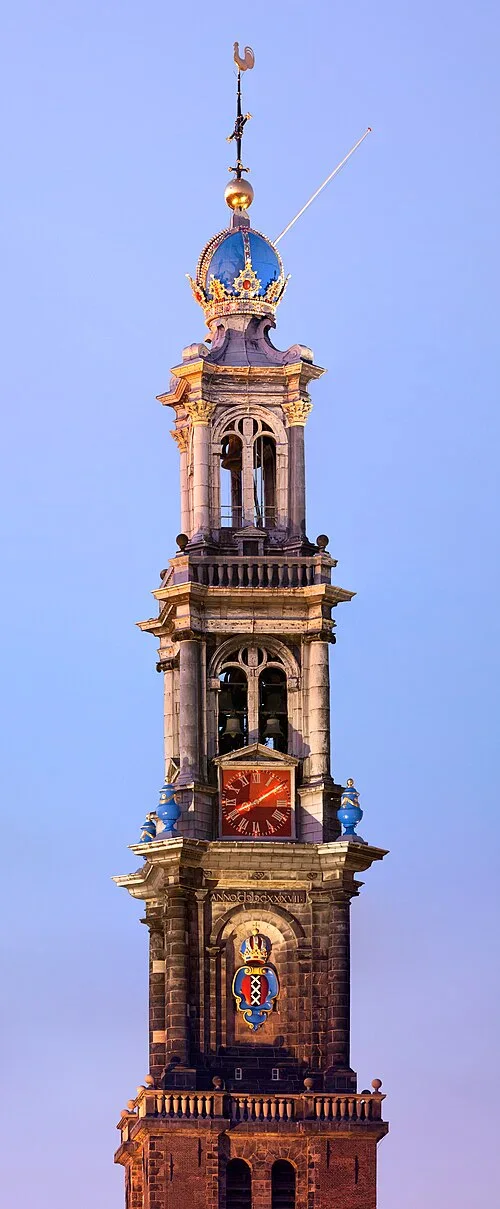 Westermarkt and the Westertoren Spire
The Westertoren and the Imperial Crown
The Westertoren rises eighty-seven metres, the highest church tower in Amsterdam. Its brick shaft stands at the west end of the nave, built as one piece with the church. Above the belfry the tower narrows through three timber stages, sheathed in lead, shrinking as they climb. At the very top sits the crown: the Imperial Crown of Austria of Emperor Maximilian I, painted its original blue again in 2006. The upper stage with the crown dates from 1637, a few years after the church itself opened. Who designed that spire is a genuine puzzle. Hendrick de Keyser drew an octagonal spire for the tower, but his design was never built. The architect Jacob van Campen has been suggested for the one that stands, though that remains a suggestion. On the sandstone section, the clock face looks out over the rooftops, with the coat of arms of Amsterdam set beside the year.
Photo: Massimo Catarinella · CC BY 3.0
03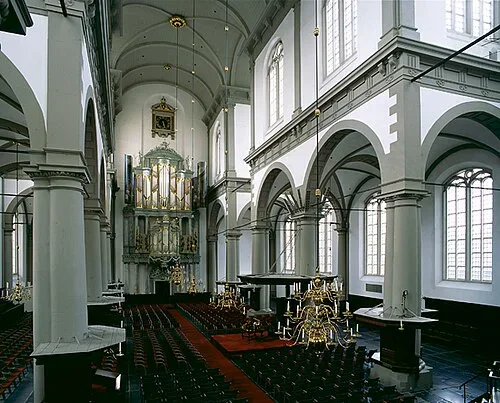 The Central Protestant Nave
The Protestant Nave
Inside, the Westerkerk is a hall of white stone and tall windows. The building runs fifty-eight metres long and twenty-nine wide. A high nave is flanked by two lower aisles, the classic basilica shape. But look at the plan rather than the walls. Two transepts of exactly equal dimensions cross the rectangle, so the floor plan forms two Greek crosses joined together, what architects call a patriarchal cross. That shape was no accident. Churches like this were devised for Reformed worship, where the whole congregation gathers around the preached Word rather than around an altar. Everyone needs to hear, and everyone needs to see the pulpit. So the space pulls inward, towards the centre, instead of drawing the eye down a long axis to the east. The building dates you heard at the entrance, the sixteen-twenties and thirties, were an experimental moment for church design in Holland.
Listen in the appPhoto: PMRMaeyaert · CC BY-SA 4.0
04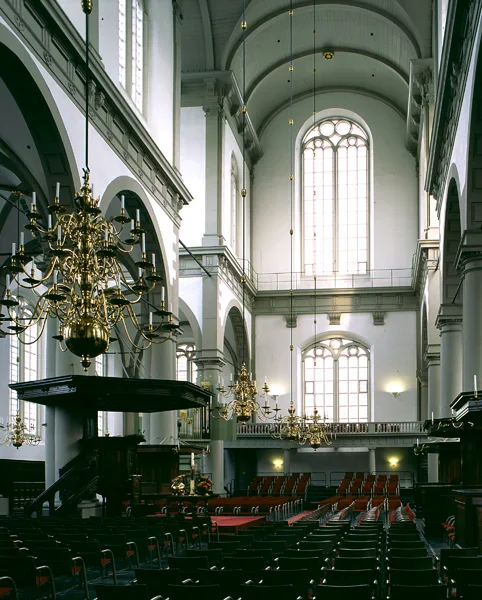 The Central Pulpit and Royal Wedding Venue
The Pulpit and Living Worship
In a Calvinist church the pulpit is the heart, and here it stands tall in white and dark wood, raised so the preacher could be seen and heard across the whole floor. The pews still face it, as they have since the church opened. What matters most about this place, though, is that it never became a museum. The Westerkerk is still a working Reformed church, in use by the Protestant Church in the Netherlands. Music holds a large place in that life. Works by Johann Sebastian Bach are performed at the Sunday services almost every week. From April to the end of October there are free lunchtime concerts too, on Fridays or Saturdays at one o'clock, with a voluntary donation asked on the way out. In August the church fills with music nearly every day for a week, for a festival called Not a Day without Bach.
Listen in the appPhoto: PMRMaeyaert · CC BY-SA 4.0
05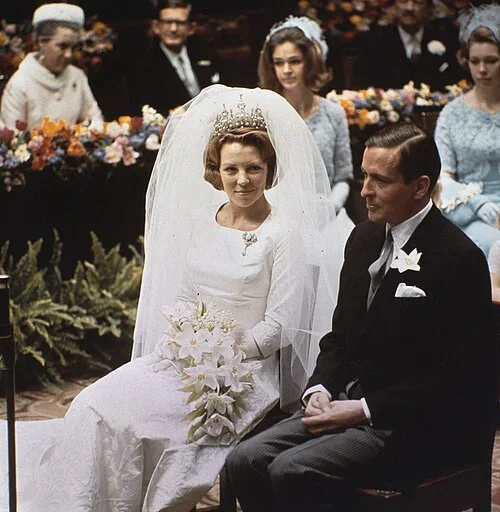 The Central Pulpit and Royal Wedding Venue
The Royal Wedding of 1966
Royal weddings in the Netherlands are usually held at the Nieuwe Kerk on Dam Square. In 1966 that church happened to be under renovation, so the royal household looked elsewhere. On the tenth of March, 1966, Princess Beatrix married Claus von Amsberg here, in the Westerkerk. A seventeenth-century pulpit church, built for Calvinist preaching, suddenly served as the stage for a modern state occasion. The bride in white sat before the pulpit among the flowers, with the guests of the kingdom gathered around her. It is a curious turn of history: a church commissioned by a city that had broken with princes, later hosting the heir to the Dutch throne at her wedding.
Listen in the appAnefo · CC0
06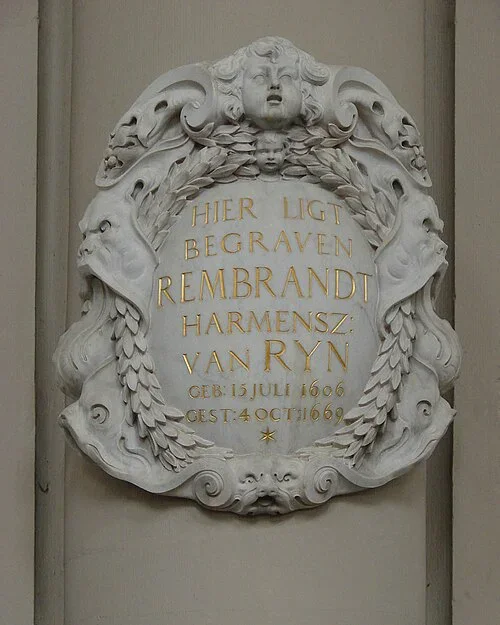 Rembrandt's Memorial Marker
Rembrandt van Rijn was buried in this church on the eighth of October, 1669. He was buried as a poor man, in a numbered church grave, and over time the number of that grave was lost. The exact spot is unknown. Being buried as a poor man had a hard consequence. After twenty years, his remains were taken away and destroyed, as was then customary with the remains of the poor. So the marker on the north wall is a memorial, not a tombstone. It was placed there in the early twentieth century, more than two centuries after his death, modelled on a figure in the Night Watch. His family lies here too: his partner Hendrickje Stoffels, and his son Titus, who died before him. Every year on the fifteenth of July, Rembrandt's birthday, the church remembers him with a lunchtime concert of music from his lifetime, and flowers are hung on the memorial.
Listen in the appPRW Hollier · CC BY-SA 3.0
07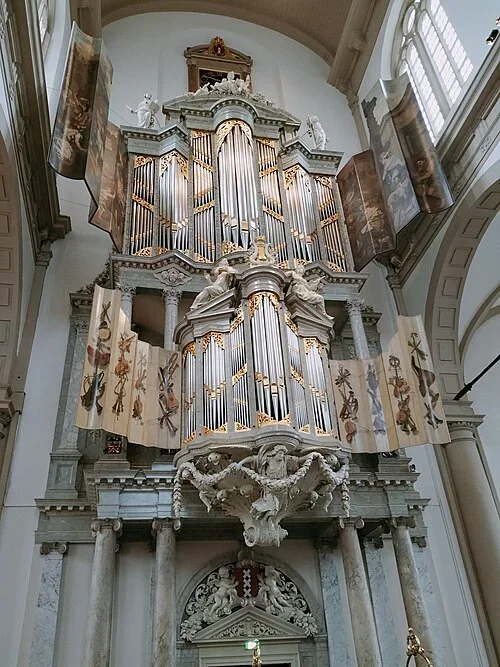 The Duyschot Main Organ
When the Westerkerk opened in 1631 there was no organ at all. Calvinist belief of the time held instrumental music in church to be profane, and it took years of deliberation before an organ was allowed. In 1681 the church commissioned a new one from the organ builder Roelof Barentszn Duyschot. Duyschot died before the work was done, and his son finished it in 1686. Time then treated the instrument roughly. A rebuild in the nineteenth century re-used many of the old pipes and wind chests. In 1939 the keyboard was given electric action and a swell work was added, nearly doubling the organ in size, so much that it no longer fitted its own case. That was not what this organ was meant to be, in sound or in action. Later restoration work returned the case and its painting to the colours of 1686, most of it in imitation marble.
Listen in the appPhoto: Vanbasten 23 · CC BY-SA 3.0
08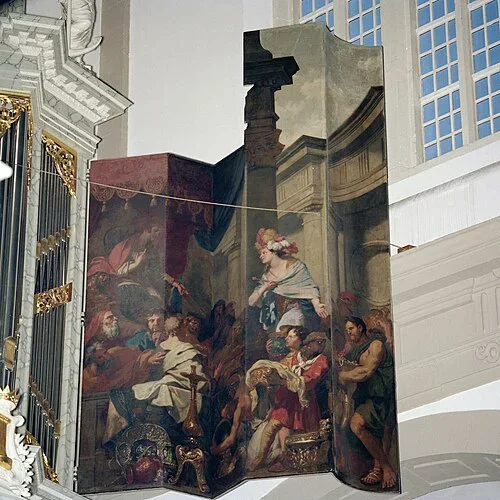 The Duyschot Main Organ
De Lairesse's Painted Shutters
The organ case opens like a cabinet, and its inside shutters carry full paintings. Gerard de Lairesse painted them in 1686. On the right panel, the Queen of Sheba presents her gifts to King Solomon. On the left, King David dances and plays before the Ark of the Covenant. Both stories come from the books of Kings in the Old Testament, fitting scenes for a church that had once refused music altogether. The smaller choir organ has shutters too, in grey grisaille, showing the four evangelists with their symbols. De Lairesse was born in Liège in 1640 and moved to Amsterdam in 1664. In the second half of the seventeenth century he was one of the most popular painters in the Netherlands. The outer sides of the great shutters were not so lucky: the church wanted to sell them in the nineteenth century, and those paintings were lost.
Listen in the appGerard Dukker / Paul van Galen · CC BY-SA 4.0
09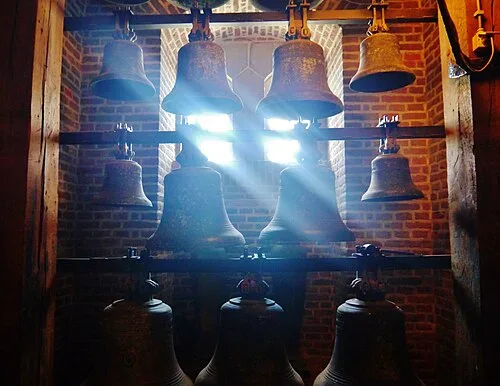 The Tower Carillon and Bells
The Carillon and the Bourdon Bell
High above the clock faces hang the bells, and this chamber holds the heaviest of them. The hour-strike bell, the Bourdon, weighs about seven and a half thousand kilograms, the largest bell in Amsterdam. Assuerus Koster cast it in 1636, and its inscription reads Verbum Domini Manet in Eternum, the Word of the Lord endures forever. Around it stands a carillon of fifty-one bells. The largest fourteen were cast by François Hemony in 1658, bells prized to this day. A playing drum, made by Jurriaen Spraeckel of Zutphen in 1659, still drives the chimes, turning out a short tune every quarter of the hour. This is the only carillon in the city that chimes the entire twenty-four hours, and it does so at the request of the residents of the Jordaan, the neighbouring district. Weekly on Tuesday at noon the city carillonneur plays a full recital here.
Listen in the appPhoto: Zairon · CC BY-SA 4.0
10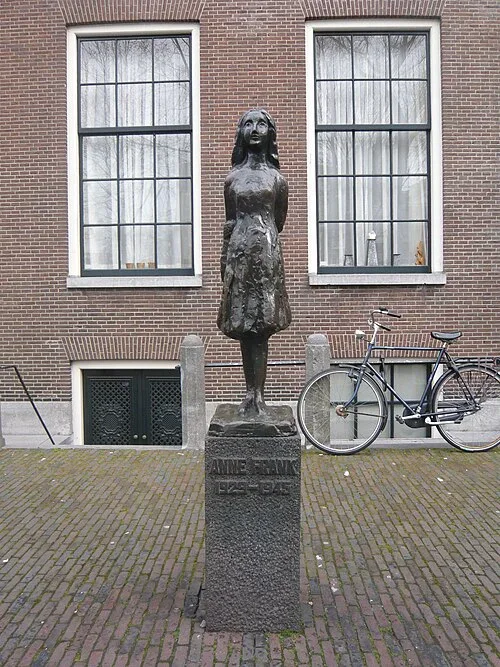 The Anne Frank Statue and Legacy
Anne Frank and the Westertoren
On the Westermarkt, just outside the church, stands a bronze statue of a young girl: Anne Frank. Behind the houses on the Prinsengracht, a short distance from this square, she hid with her family and others in the concealed rooms of the Achterhuis, for two years during the Second World War. The Westertoren stood close by, and it entered her diary again and again. From the attic she could see the clock face of the tower. She described the chiming of the carillon as a source of comfort, a sound of the ordinary city continuing above her hidden life. The bells you heard about kept ringing through those years, marking the hours for the neighbourhood, and for one family that could not leave its rooms.
Listen in the appF. Ferro Permission= GFDL, cc-by-sa-2.5 · CC BY-SA 3.0
- 11
The Tower from the Achterhuis
The tower as Anne Frank saw it, rising behind the canal houses.
Westerkerk
Frequently asked questions
How much does the guide cost?
Free app download. Listed guide price: $0.99. Guide price shown in the app. Audio guide only. Venue admission is separate.
Can I listen without internet?
Yes. Download the guide’s audio, images, and maps in the app before your visit. Your downloaded content is then available offline.
Can I listen in my language?
This audio guide is available in 15 languages, including English.
Do I need to follow a schedule?
No. This is a self-guided experience. Choose your stops, pause whenever you like, and return to a story at your own pace.
At your own pace
Explore Westerkerk.
Download Stanza, then search for “Westerkerk”.
Free app download · Guide price shown in the app
Keep exploring
Nearby audio guides
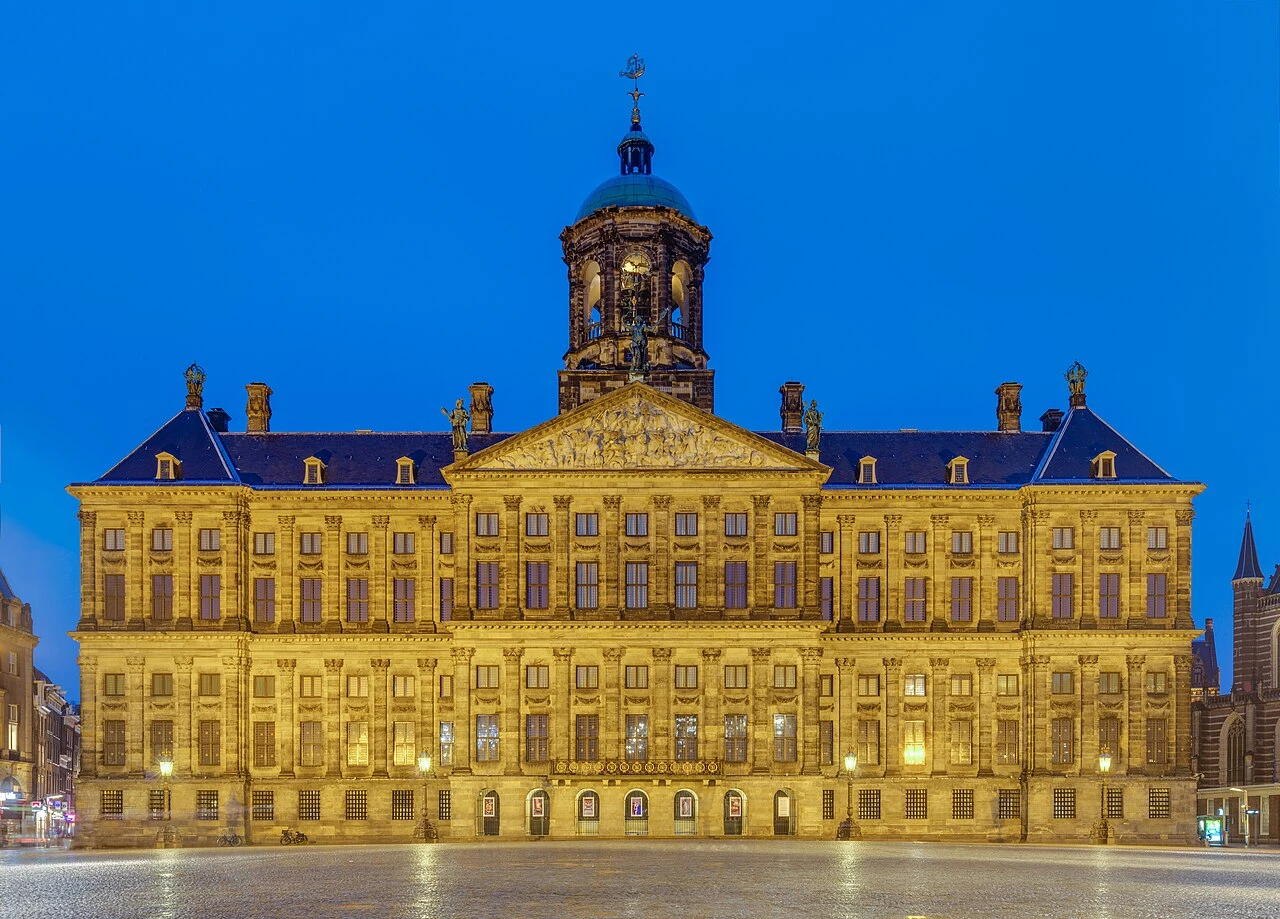
Amsterdam · 1 km
Paleis op de Dam
Content & sources
Diego Delso · CC BY-SA 4.0
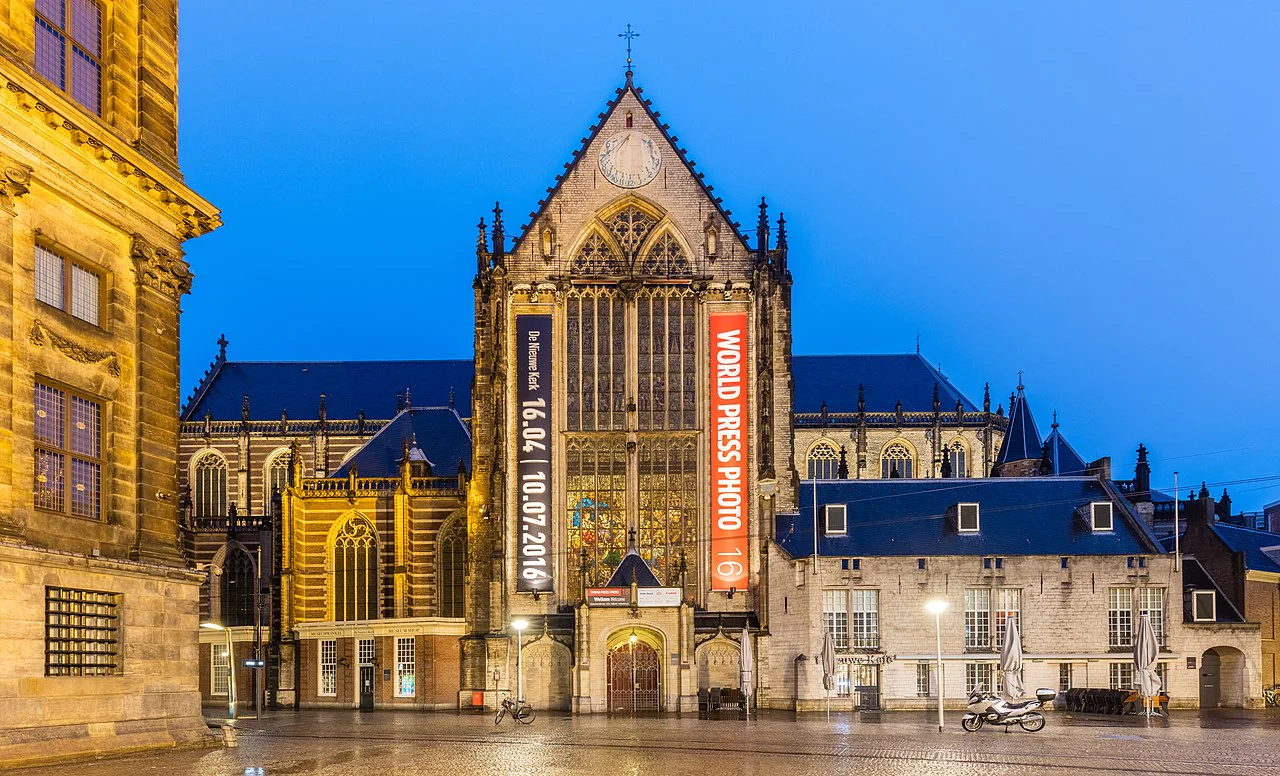
Amsterdam · 1 km
Nieuwe Kerk
Content & sources
Diego Delso · CC BY-SA 4.0
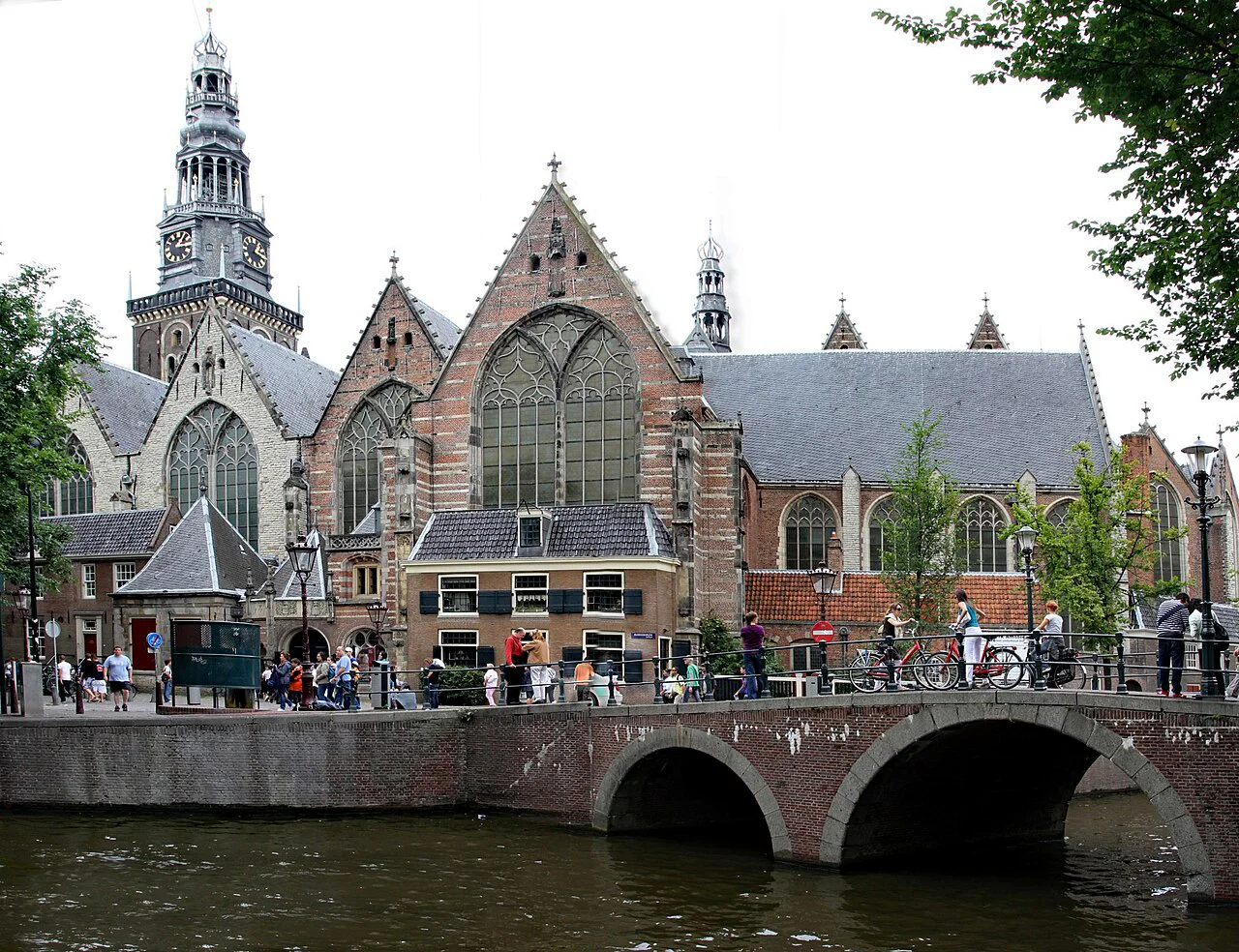
Amsterdam · 1 km
Oude Kerk
Content & sources
Gerd Eichmann · CC BY-SA 4.0
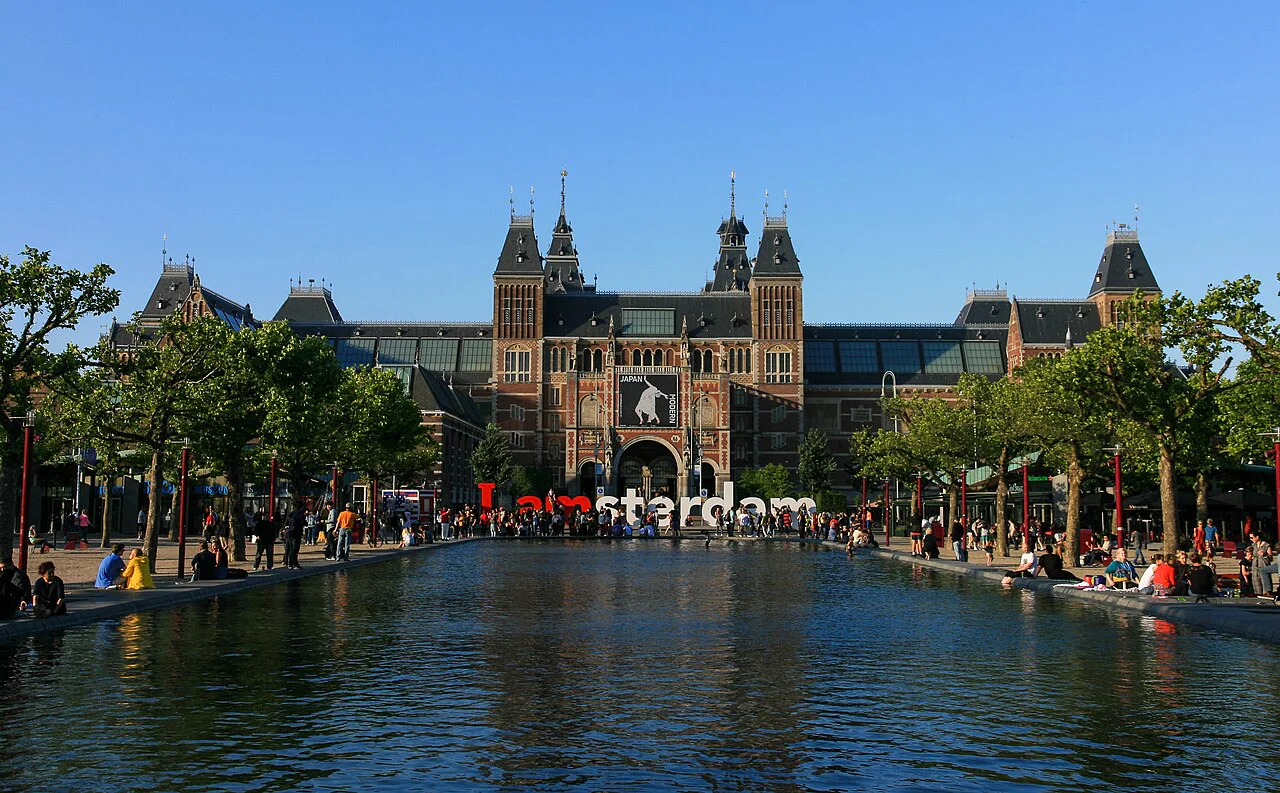
Amsterdam · 2 km
Rijksmuseum
Content & sources
Marco Almbauer · CC BY-SA 3.0