Stanza · Audio guide
Nieuwe Kerk Audio Guide
A place to remember. A story to take with you.
The Nieuwe Kerk is a 15th-century church located on Dam Square in Amsterdam. Originally a Catholic church, it became a Dutch Reformed church in 1578.
Download Stanza, then search for “Nieuwe Kerk”.
About the tour
One guide. Your kind of visit.
The Nieuwe Kerk is a 15th-century church located on Dam Square in Amsterdam. Originally a Catholic church, it became a Dutch Reformed church in 1578.
Ready when you are.
- 01Get the free Stanza app.
iOS & Android
- 02Find your guide.
“Nieuwe Kerk”
- 03Download before you go.
Works offline
Audio guide / 13 narrated stops
Inside the guide
Get to know a few of the stories before you go. Open a stop to read more.
01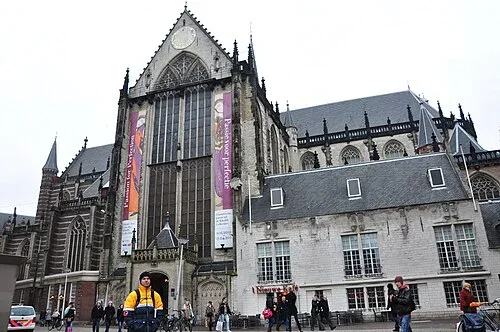 Exterior Facade and Unfinished Tower Base
The West Front and the Tower That Never Rose
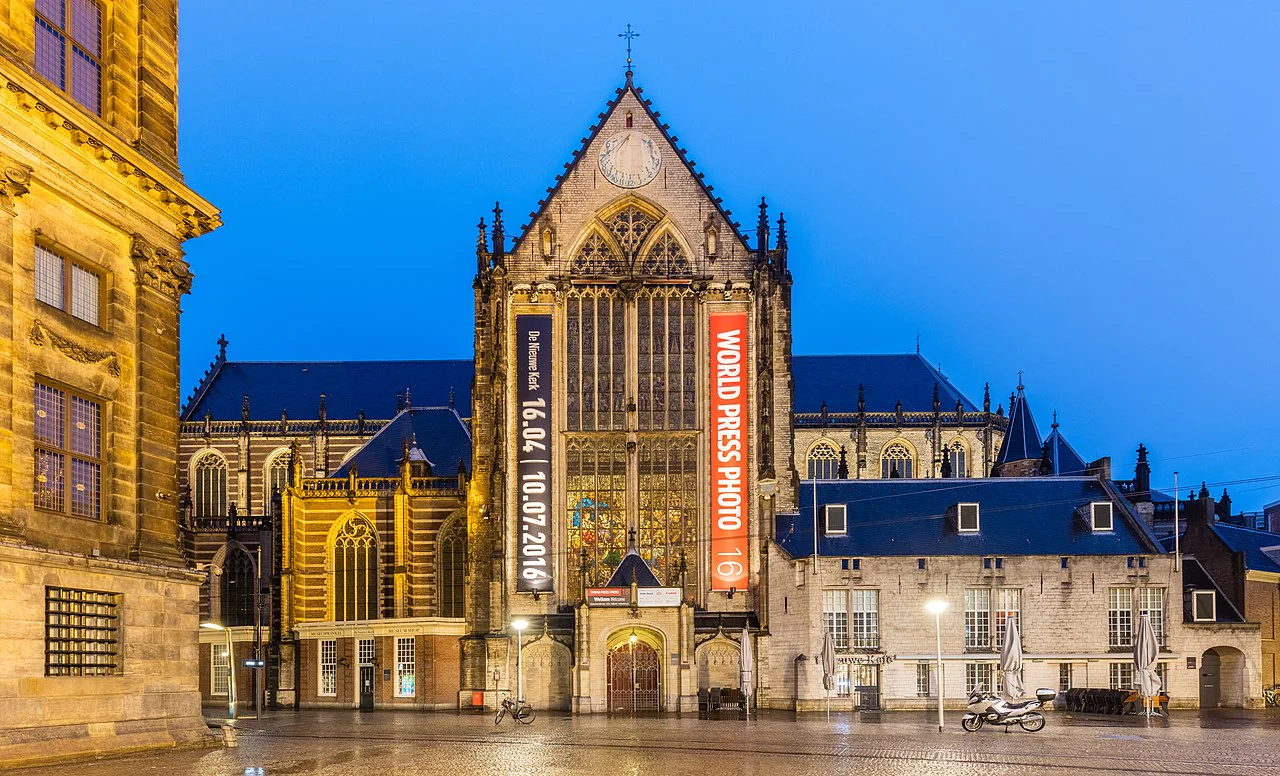
Welcome to the Nieuwe Kerk, Amsterdam's second parish church, on Dam Square beside the Royal Palace. The west front tells a strange story, because the great tower this church was meant to have never rose above its base. The city tried twice. In 1565 the foundations were laid, but a changing religious and political climate stopped the work. A second attempt began in 1646, with a design for a tower meant to rise higher than Utrecht's Dom Tower. Two maquettes of that plan survive in the Amsterdam Museum. Who made them is unknown, though some name the architect Jacob van Campen. By 1647 the last pile had been hammered into the ground. There were six thousand three hundred and sixty-three of them. The builders also followed an old ritual, burying a foundation offering worth two hundred guilders in gold to bless the work. Then, in 1653, the magistrates called a halt. The new Town Hall next door was swallowing more than eight million guilders, and the tower lost the contest for money. The unfinished stump stood until 1783, when it was largely demolished. What survives is the low base built into the west facade. A sundial marks the west side of the church. The tall banners on the facade advertise the exhibitions now hosted in a building that no longer holds regular services.
Jorge Láscar from Australia · CC BY 2.0
02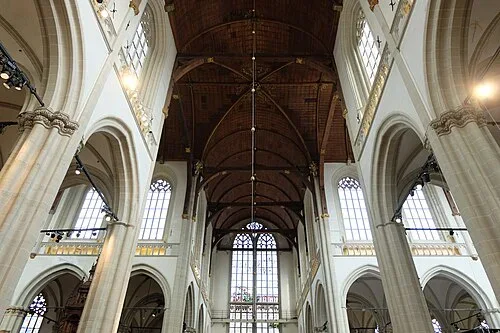 Gothic Nave and Royal Investiture Hall
The Gothic Nave
It began with overcrowding. Amsterdam grew so explosively in the late fourteenth century that its first parish church, the Oude Kerk, could no longer hold its congregation. On 15 November 1408 the bishop of Utrecht, Frederik van Blankenheim, gave permission for a second parish church. The ground came as a gift from a nobleman called Willem Eggert, who donated land beside his own house and financed the whole building. Construction was already well advanced by then, since work had started around 1380. On 25 November 1409 the church was consecrated, dedicated to Our Lady and later to Saint Catherine. Eggert was buried here in 1417, in a chapel built for him. The tall Gothic arches and the stone vault overhead have carried that parish story ever since. Regular services have long since stopped, but organ recitals still sound under this vault.
Julien Chatelain from Paris, France · CC BY-SA 2.0
03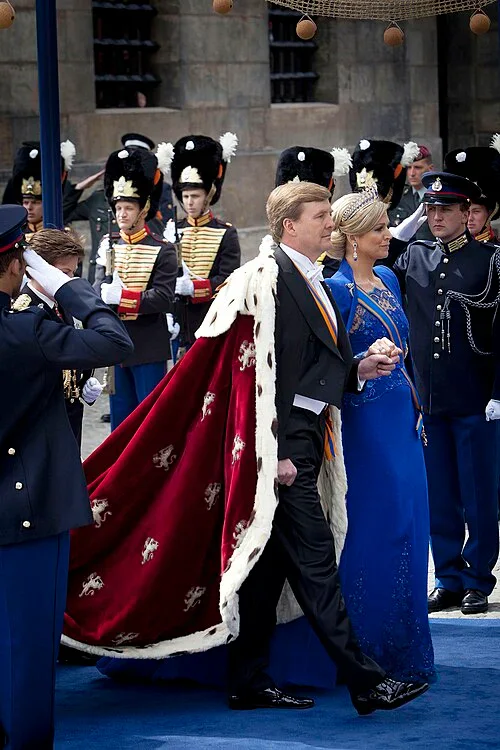 Gothic Nave and Royal Investiture Hall
The Inauguration of King Willem-Alexander
Dutch monarchs are not crowned here. They swear an oath. Since Sovereign Prince Willem took the constitutional oath in this church on 30 March 1814, it has been the national stage for inaugurations, an oath on the constitution rather than a religious coronation. Willem II swore here in 1840, and after him the queens Wilhelmina, Juliana and Beatrix each took the same oath. In 2013 the turn came to Willem-Alexander. He wore a mantle trimmed with ermine, and Queen Máxima stood beside him in royal blue, with soldiers in black plumed helmets saluting along the route. The ceremony that made him king took place inside this church.
Listen in the appGerben van Es/Ministerie van Defensie · CC BY-SA 4.0
04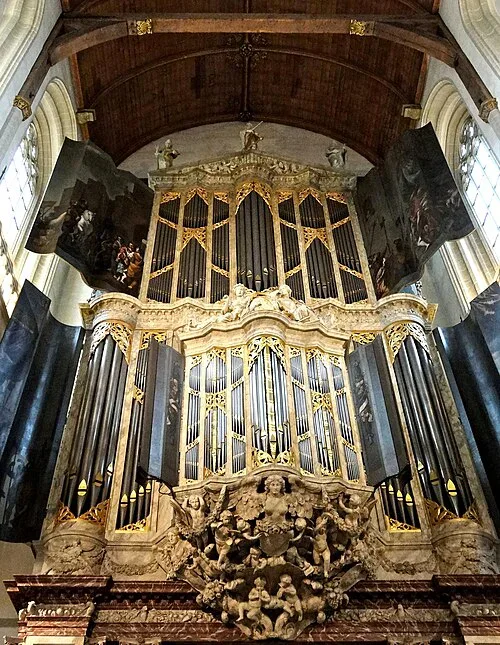 The Great Organ by Jacob van Campen
The Great Organ of Jacob van Campen
The great organ owes its case to Jacob van Campen, who designed it in 1655. He was the Classicist architect then at work on the Town Hall next door, the grand building that is now the Royal Palace. Painted shutters flank the towering gilded pipes, and sculpture swarms up the case. The whole ensemble belongs to the embellishment that followed the great fire of 1645.
Listen in the appGouwenaar · CC0
05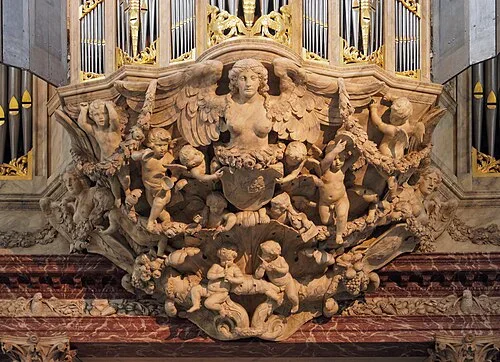 The Great Organ by Jacob van Campen
The Organ's Sculpted Base
The organ rests on a base crowded with carved angels, garlands and fruit, a sculpture in its own right. The organ had a famous moment of its own on 2 February 2002. Prince Willem-Alexander and Máxima had married in a civil ceremony elsewhere. The church blessing brought them here. As the couple entered the nave, the great shutters of the organ were swung open, like an embrace, and the images went around the world. Civil marriages, by the way, were performed in this church until 1949.
Listen in the appPhoto: C messier · CC BY-SA 4.0
06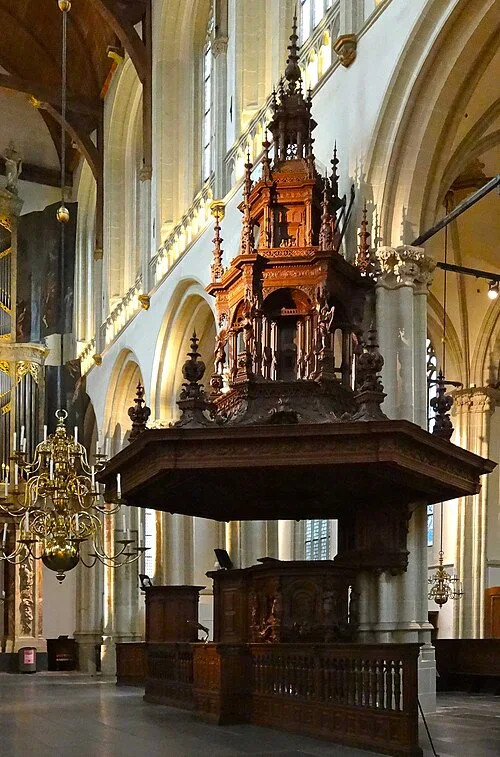 Carved Masterpiece Pulpit by Albert Vinckenbrinck
The Pulpit of Albert Vinckenbrinck
On 11 January 1645 a fire destroyed the roof and nearly everything inside the church. The brass chandeliers could be pulled unharmed from the ruins. The city rebuilt in Gothic style, though the Gothic age was already over, and the wooden vaults were replaced with stone. The church reopened on 10 May 1648, handsomer than before. This pulpit is a fruit of that rebirth. Albert Vinckenbrinck began carving it in 1649. He worked for some fifteen years, and the result carries biblical reliefs below and a massive sounding board above.
Listen in the appPhoto: Gouwenaar · CC0
07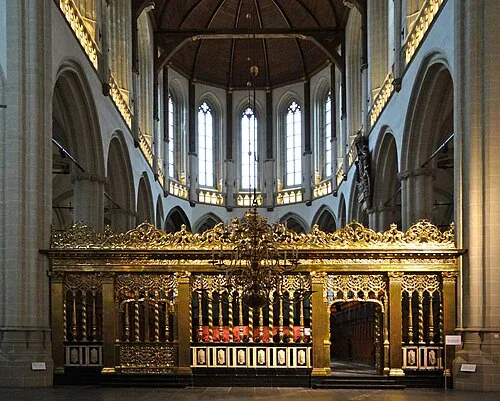 Brass Choir Screen by Johannes Lutma
The Brass Choir Screen by Johannes Lutma
The Alteration of 1578 changed everything. Amsterdam turned Protestant, the Catholic church became Dutch Reformed, and much of the rich Catholic interior was destroyed. What gleams here now is a furnishing of the new Reformed era. The Amsterdam goldsmith Johannes Lutma cast this choir screen in brass around 1650. It divides the public nave from the high choir, and it marks the threshold to what lies beyond, the part of the church where the naval heroes of the Golden Age are honoured.
Listen in the appPhoto: Gouwenaar · CC0
08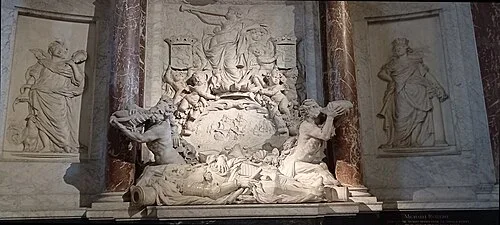 The High Choir and Tomb of Admiral Michiel de Ruyter
The Tomb of Admiral Michiel de Ruyter
Rombout Verhulst designed this grand marble tomb in 1681 for Admiral Michiel de Ruyter, the most famous sea commander of the Dutch Golden Age. He had died five years earlier, in 1676. The spot is the point of the whole story, because this is exactly where the Catholic high altar stood before the Alteration. A parish's holiest place became a monument to a national hero. Marble figures and battle reliefs celebrate the admiral. The choir beyond the brass screen had become a hall of naval honour, and this tomb is its centre.
Listen in the appUser:ZeWXeilaQ&Q · CC BY-SA 4.0
09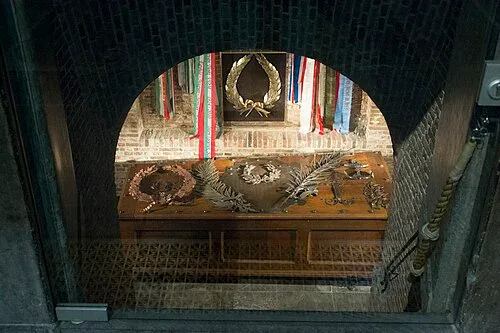 The High Choir and Tomb of Admiral Michiel de Ruyter
The Burial Vault of De Ruyter
Beneath the monument lies the grave itself. Through the grate a vault is visible, its brick walls hung with memorial wreaths and honours, and the admiral's coffin resting within. And the admiral has company. The church is the burial place of other Dutch naval heroes as well, among them Commodore Jan van Galen and Lieutenant Commander Jan van Speyk. The choir is not one tomb but a pantheon of the Dutch navy.
Listen in the appPhoto: Dosseman · CC BY-SA 4.0
10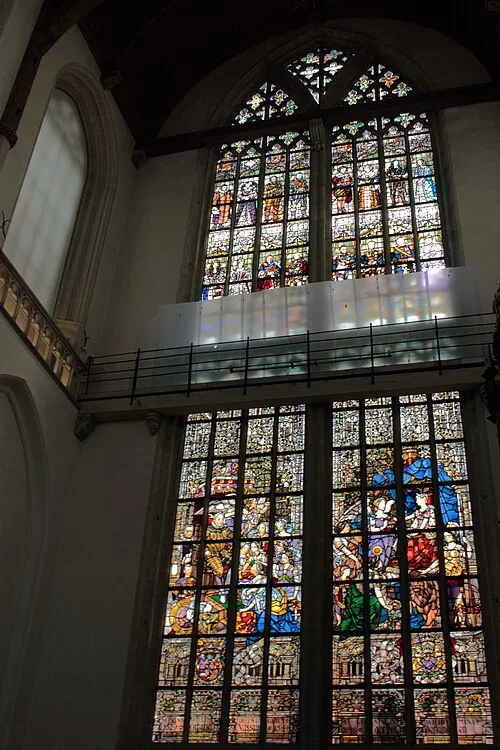 Royal Commemorative Stained Glass Windows
The Coronation Window
The stained glass carries its own royal story. The Coronation Window of 1898, made by Otto Mengelberg, fills the south transept and is the oldest of the church's commemorative windows. It opened a tradition of memorial glazing that kept growing. Jubilee windows for Queen Wilhelmina followed near the north transept, and a Liberation window went into the south side aisle. Each window marks a moment in the life of the nation and its monarchy. The tradition did not end with the old century. The newest of these windows hangs in the north side aisle, made for a later queen.
Listen in the appPhoto: Léna · CC BY 3.0
- 11
A Garden of Glass
Marc Mulders' blazing 2005 jubilee window, proof the royal glass tradition is still alive.
- 12
The Memorial Stone of Anton de Kom
The floor of ten thousand graves, and the newest memorial stone set into it.
- 13
Vondel and the Literary Pantheon
The Catholic poet buried in a Reformed church, and the literary pantheon that keeps growing around him.
Nieuwe Kerk
Frequently asked questions
How much does the guide cost?
Free app download. Listed guide price: $0.99. Guide price shown in the app. Audio guide only. Venue admission is separate.
Can I listen without internet?
Yes. Download the guide’s audio, images, and maps in the app before your visit. Your downloaded content is then available offline.
Can I listen in my language?
This audio guide is available in 15 languages, including English.
Do I need to follow a schedule?
No. This is a self-guided experience. Choose your stops, pause whenever you like, and return to a story at your own pace.
At your own pace
Explore Nieuwe Kerk.
Download Stanza, then search for “Nieuwe Kerk”.
Free app download · Guide price shown in the app
Keep exploring
Nearby audio guides
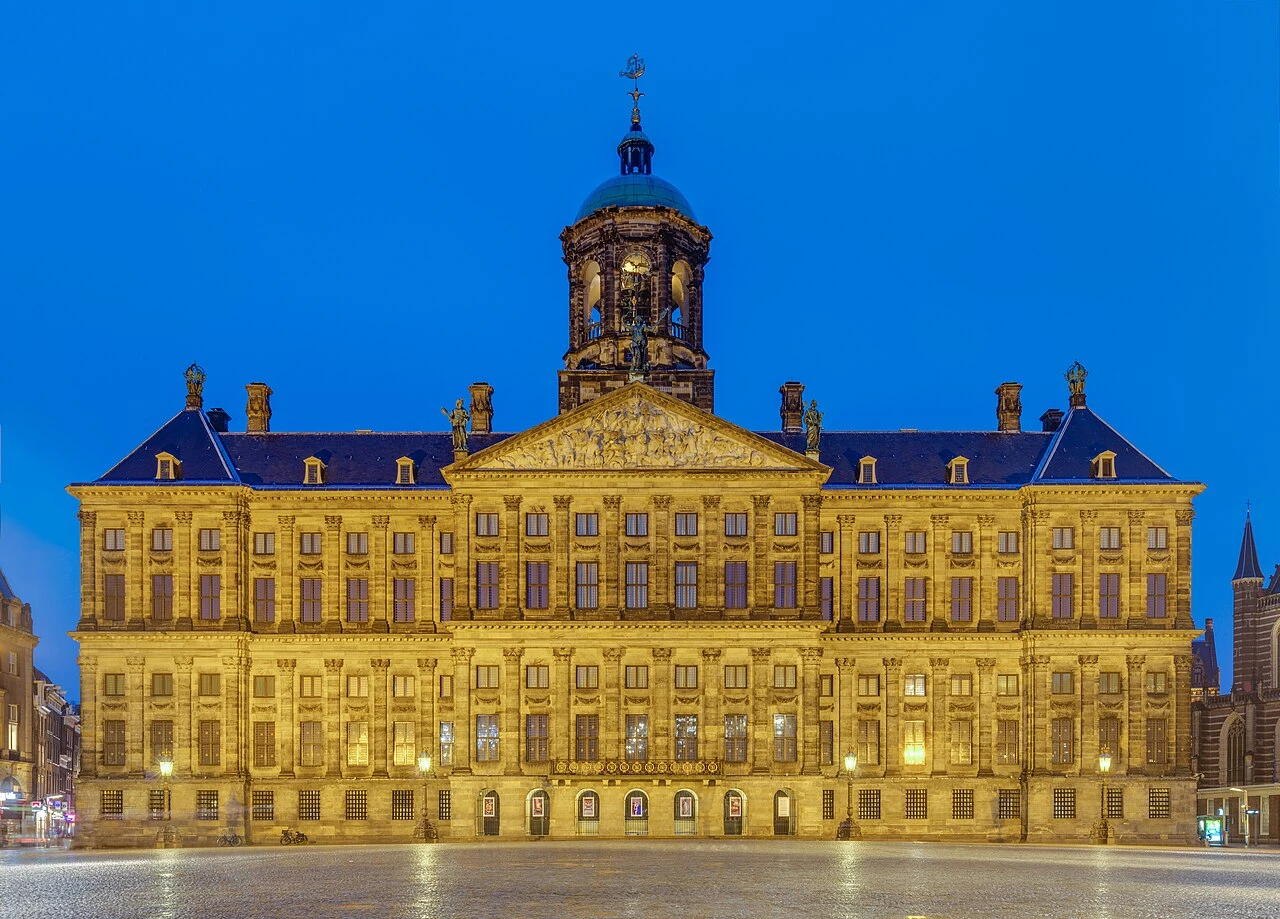
Amsterdam · 1 km
Paleis op de Dam
Content & sources
Diego Delso · CC BY-SA 4.0
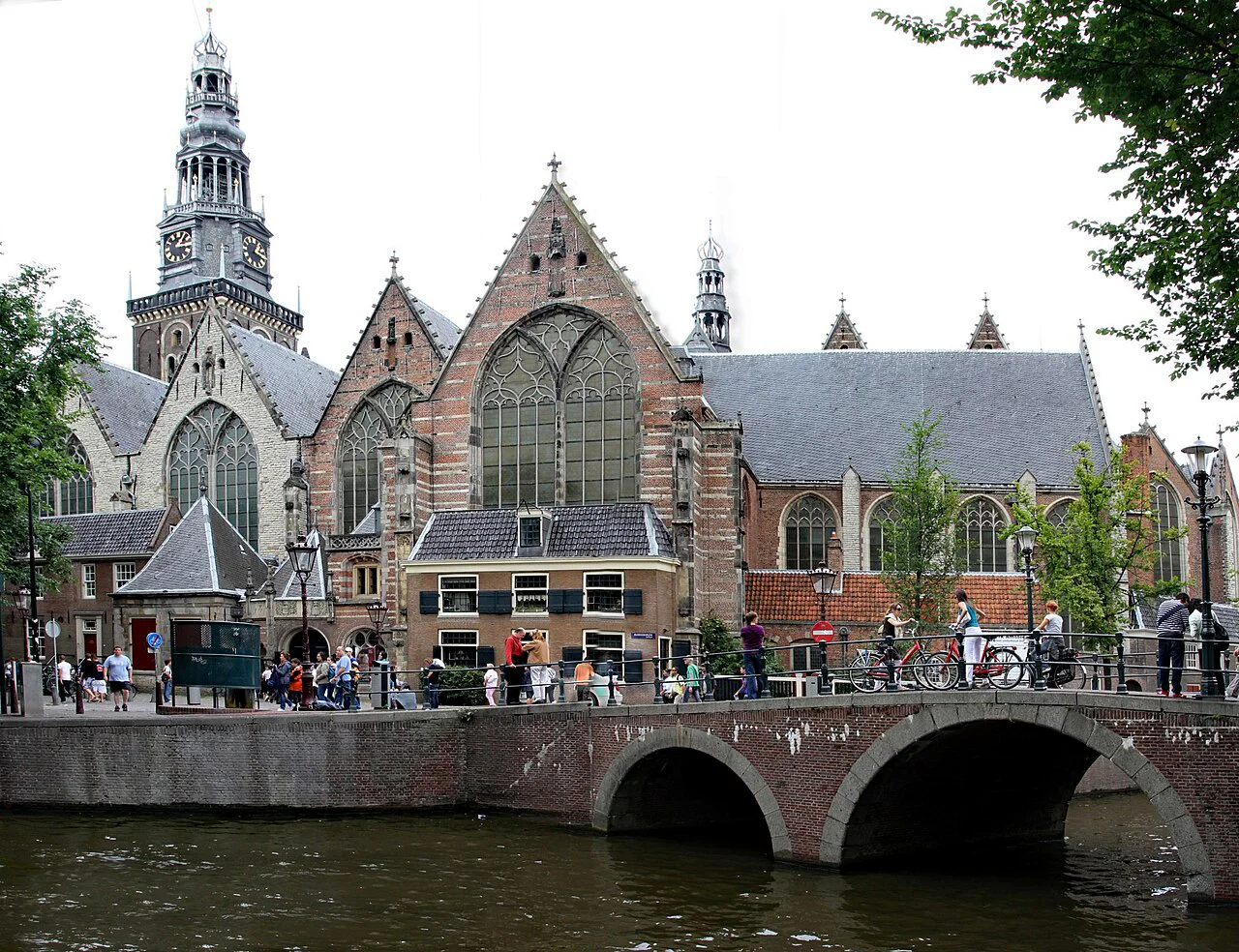
Amsterdam · 1 km
Oude Kerk
Content & sources
Gerd Eichmann · CC BY-SA 4.0
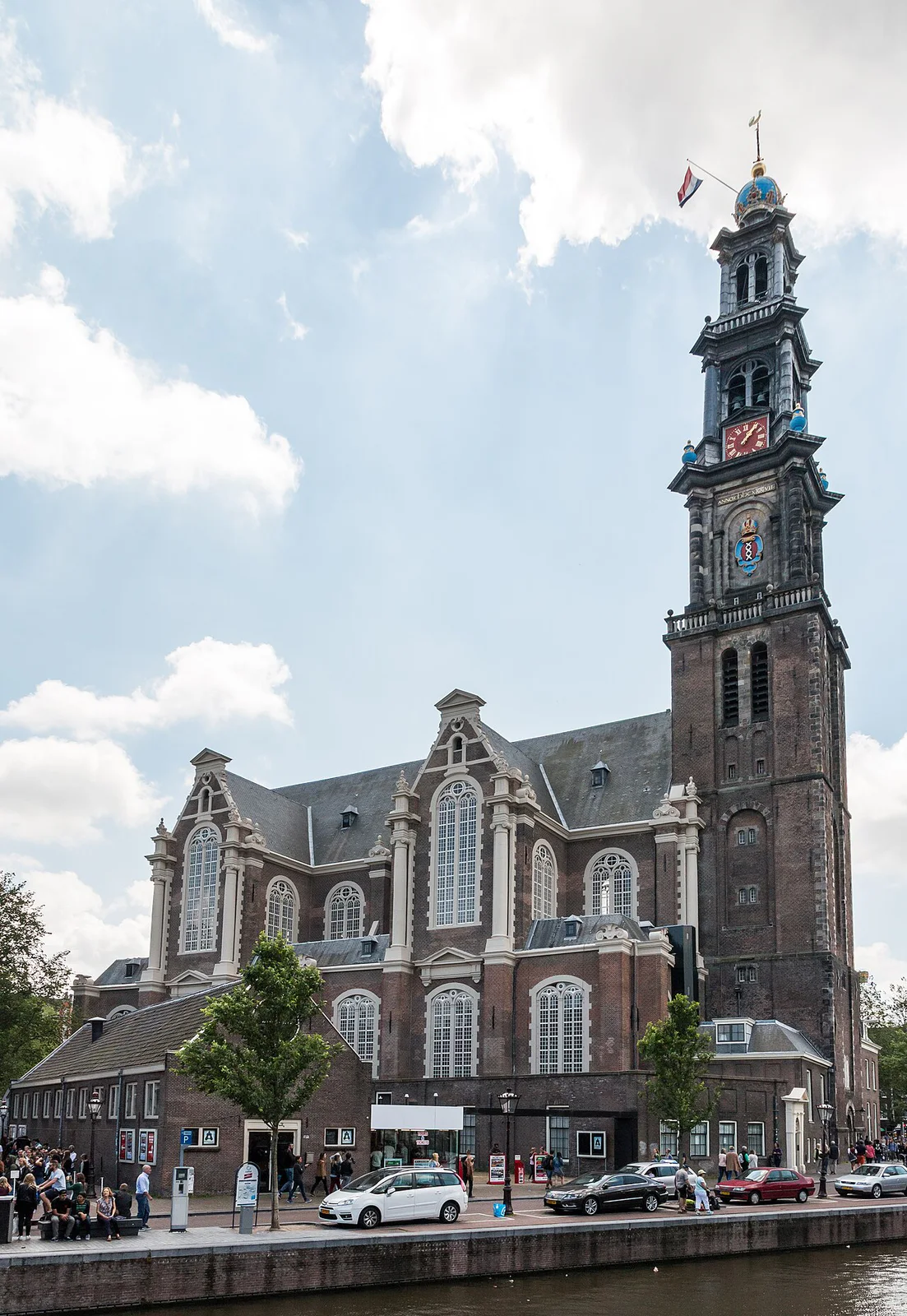
Amsterdam · 1 km
Westerkerk
Content & sources
Dietmar Rabich · CC BY-SA 4.0
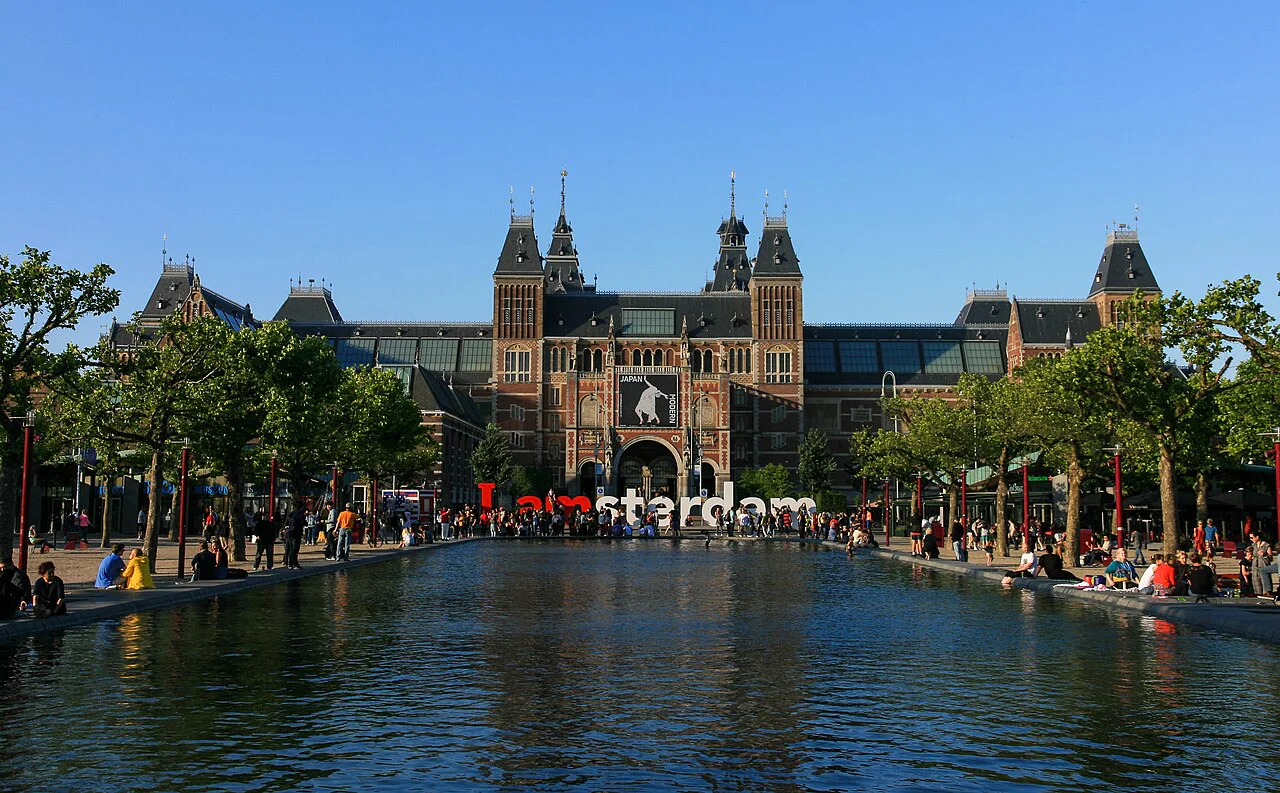
Amsterdam · 2 km
Rijksmuseum
Content & sources
Marco Almbauer · CC BY-SA 3.0