Stanza · Audio guide
Oude Kerk Audio Guide
A place to remember. A story to take with you.
The Oude Kerk is a Reformed church in Amsterdam and the oldest building in the city. Founded around 1213, it now functions as both a church and a venue for contemporary art exhibitions.
Download Stanza, then search for “Oude Kerk”.
About the tour
One guide. Your kind of visit.
The Oude Kerk is a Reformed church in Amsterdam and the oldest building in the city. Founded around 1213, it now functions as both a church and a venue for contemporary art exhibitions.
Ready when you are.
- 01Get the free Stanza app.
iOS & Android
- 02Find your guide.
“Oude Kerk”
- 03Download before you go.
Works offline
Audio guide / 14 narrated stops
Inside the guide
Get to know a few of the stories before you go. Open a stop to read more.
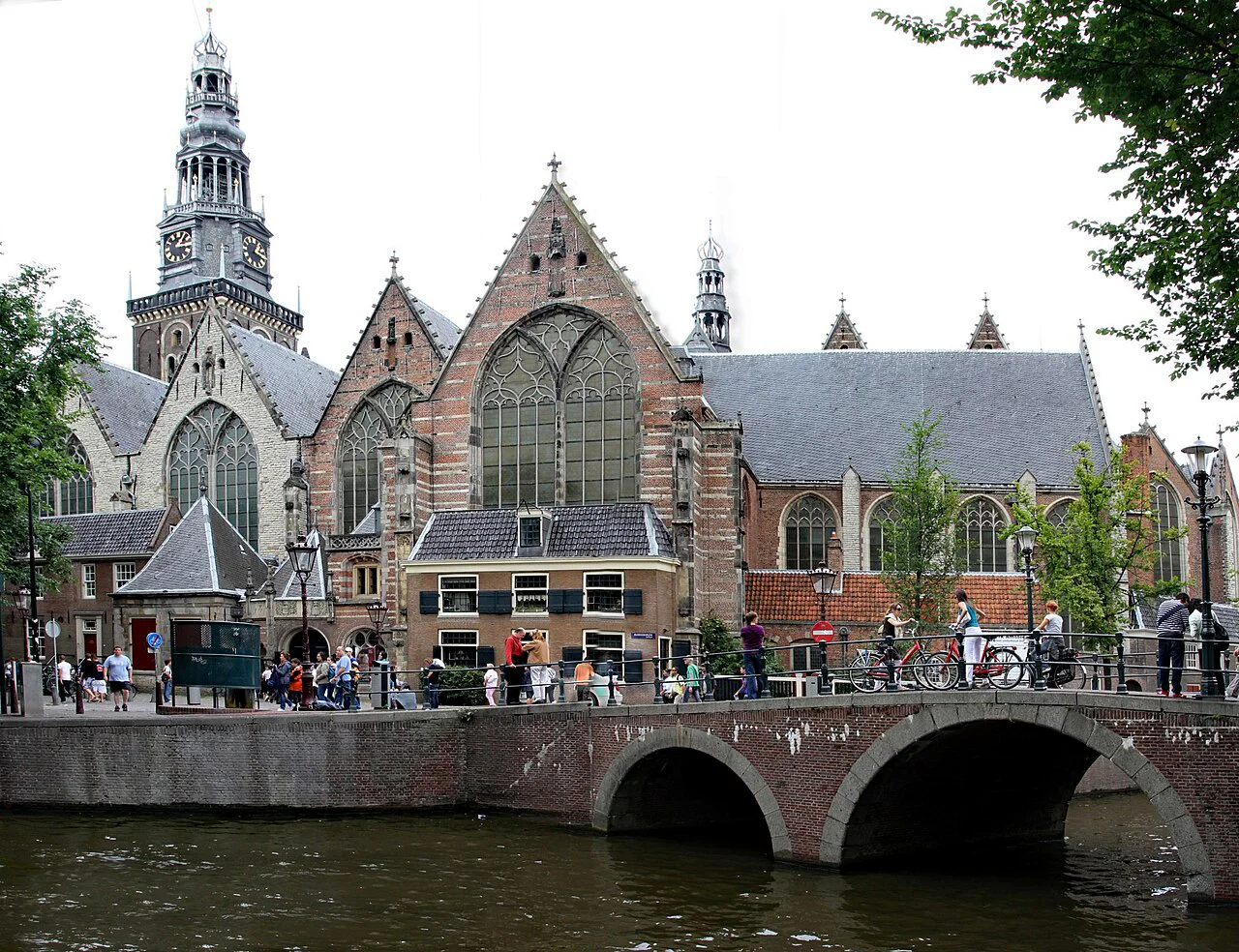
01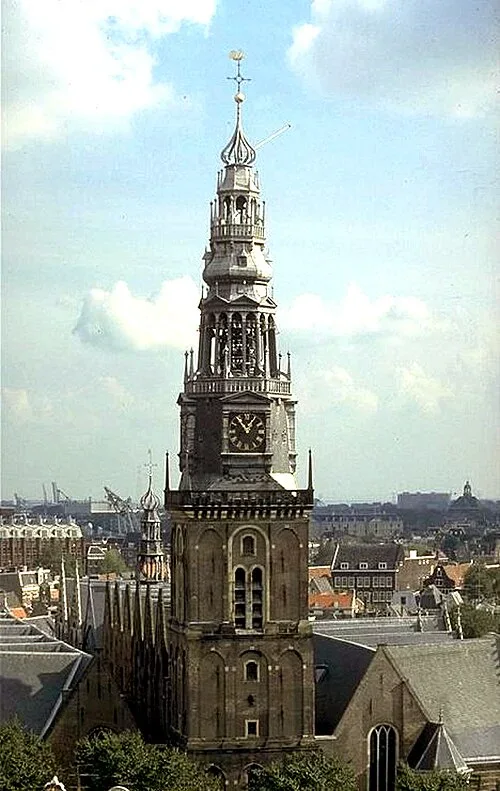 Oudekerksplein and the Historic Tower
The Tower of the Oude Kerk
The oldest building in Amsterdam rises seventy metres over the old centre, crowned with a slender spire against the sky. Welcome to the Oude Kerk, a church that has been rebuilt and rethought for the better part of eight centuries. It began as a wooden chapel around 1213, when Amsterdam was still a small settlement on marshy ground. The stone church that replaced it was consecrated in 1306 by the bishop of Utrecht, dedicated to Saint Nicolas. Nicolas was the patron of sailors, a natural choice for a town living off the water. Growth never really stopped. Aisles were lengthened, transepts were added, and the cross-shaped plan was completed around 1460, though great fires twice interrupted the work in the fifteenth century. In the 1560s the stone tower was substantially raised, and the graceful spire on top is attributed to the architect Joost Bilhamer. This tour follows one building through all those layers of change, from medieval parish church to the present day.
bureau Monumenten & Archeologie (bMA) · Attribution
02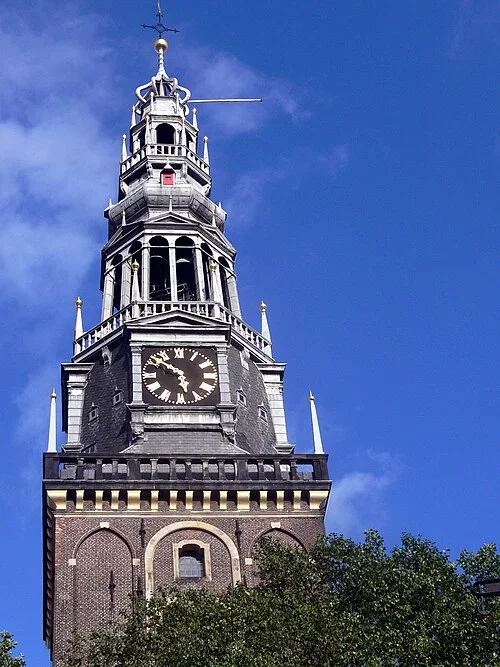 Oudekerksplein and the Historic Tower
The 1619 Turret Clock
High on the tower, a clock has told the city's time since 1619. The turret clock was made by Wouter Geurtsz, its dark face and gilded hands still keeping watch over the rooftops. For centuries the tower was the city's voice as much as its timepiece. Its bells rang the hours and carried sound across the streets. Among them hung a small angelus bell from the Catholic centuries, rung for prayer. That bell disappeared in the iconoclastic storm of 1566. In September 2006, as the church marked seven hundred years of use, a replica of the little bell was hung in the turret atop the church roof. The old call to prayer sounds again over the old centre. And the tower has never stopped making music. The organs inside carry it on.
Wolfgang Sauber · CC BY-SA 3.0
03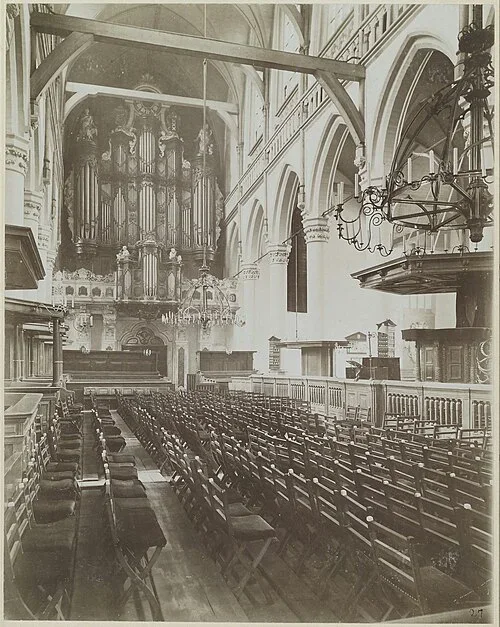 The Great Nave and Medieval Timber Vault
Inside the Great Nave
Inside, the nave stretches far enough to hold far more than a congregation. After the Reformation this church worked for the whole city. From 1584 merchants were allowed to hold their exchange here, trading among the pillars. That lasted until a proper stock exchange opened on the Rokin in 1611. The church also kept the city's marriage registry, where couples came to have their unions recorded. And it served as the city archives. The most important documents were locked in a chest covered with iron plates and painted with the city's coat of arms, kept safe in the iron chapel. A building that had once held altars now held ledgers, contracts and the paperwork of a mercantile city.
Listen in the appUnknown author · CC BY-SA 4.0
04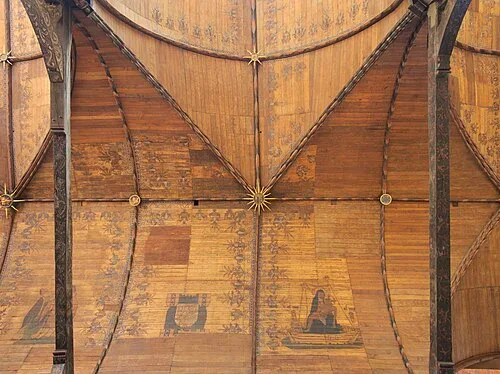 The Great Nave and Medieval Timber Vault
The Medieval Oak Vault
The great vault over the nave is built entirely of wood, the largest medieval wooden vault in Europe. Its planks are Estonian oak, dating to 1390. The choice was engineering rather than taste. The church stands on an artificial mound, the most solid ground in this marshy province, and heavy stone vaulting risked the foundations. Light timber covered the great hall without straining the ground beneath. The wood also gives the church its celebrated acoustics, which musicians still prize. Painted decoration covers the planks, patterns and figures worked onto the oak centuries ago. The ground kept causing worry all the same. In 1951 the church was closed over fears of collapse, and a restoration followed that lasted twenty-four years.
Listen in the appPhoto: C messier · CC BY-SA 4.0
05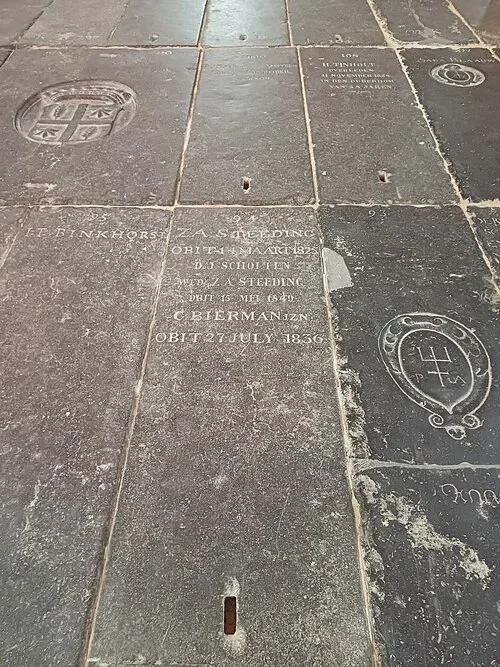 The Gravestone Floor and Saskia's Resting Place
The Gravestone Floor
Every stone on the floor is a gravestone. The church was built on a cemetery, and Amsterdammers went on being buried inside its walls until 1865. About two thousand five hundred carved slabs pave the building. Beneath them rest an estimated sixty thousand citizens. The stones carry names, dates of death and coats of arms, carved deep enough to survive centuries of footsteps. Merchants and regents lie here beside ordinary townsfolk. Reading the floor is like walking through the city's own register, cut into stone.
Listen in the appPhoto: Quahadi · CC BY-SA 4.0
06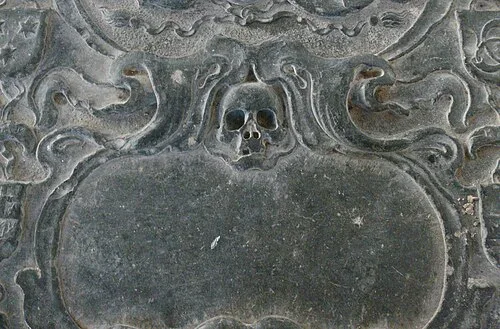 The Gravestone Floor and Saskia's Resting Place
Memento Mori on the Floor
Among the floor's carvings are death's-heads, the memento mori images that reminded every passerby of death. Amsterdammers once walked over them on their way to worship. The most personal story on the floor belongs to Saskia van Uylenburgh, Rembrandt's wife, buried here in 1642. Rembrandt was a frequent visitor to the church, and all his children were christened here. In the Holy Sepulchre, a small shrine marks her resting place. Every year on 9 March, at twenty minutes to nine in the morning, the early sun briefly lights her tomb. In leap years the moment comes a day earlier. Each time, an early-spring breakfast is held to greet the light.
Listen in the appPhoto: Remi Mathis · CC BY-SA 3.0
07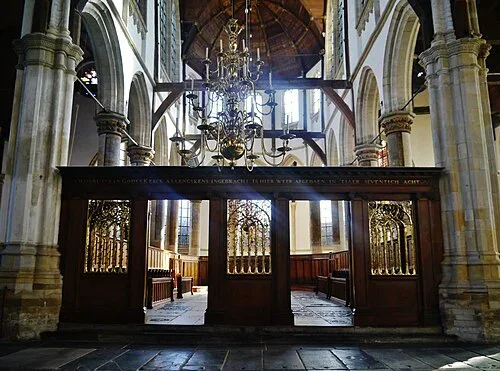 The High Choir and Medieval Misericords
The 1681 Oak Choir Screen
A carved oak screen closes the choir off from the nave, and its inscription tells of the day this church changed hands. In 1578, after William the Silent's forces defeated the Spanish in the Dutch Revolt, the Catholic parish church was taken over by the Calvinists. Until then the building had served the whole town. Churchgoers socialised here, vendors sold their goods, and the poor sheltered inside. The Calvinists tolerated none of that, and the homeless were expelled. In 1681 this oak screen was installed to close the choir. Above it runs the text: ' The prolonged misuse of God's church was here undone again in the year seventy-eight.' The carved words point back to the Reformation of 1578, when the old worship was undone.
Listen in the appPhoto: Zairon · CC BY-SA 4.0
08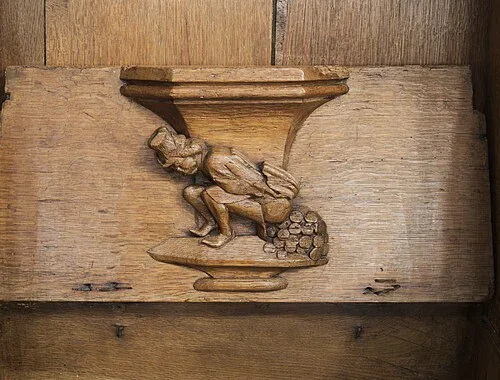 The High Choir and Medieval Misericords
A Misericord in the Choir Stalls
Under the folding seats of the choir stalls hide twelve misericords, carved leaning posts that gave standing clergy discreet support during long services. One shows a comic figure bent double at his work, carved with evident relish. Medieval woodcarvers often filled these hidden spots with everyday scenes and jokes, out of the preacher's sight. It is a human touch in a church that later turned sternly Reformed.
Listen in the appPhoto: C messier · CC BY-SA 4.0
09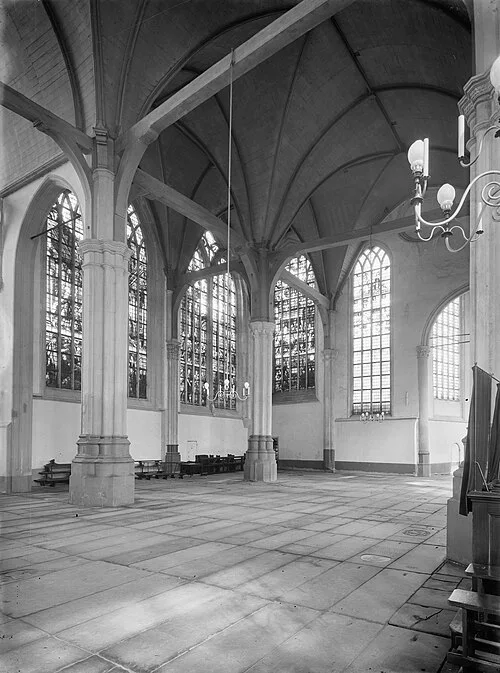 The Lady Chapel and Renaissance Stained Glass
The Lady Chapel
The last great building campaign here ended with this chapel. Between 1550 and 1555 the Lady Chapel rose behind the choir, and the church reached essentially its present size. For most of its life this was a Catholic church, and the chapel carries the city's most cherished devotion. The story goes that in 1345 a dying man received communion, and the Host, thrown into a fire, refused to burn. It was proclaimed a miracle and kept in a chest at the Oude Kerk. During the Reformation the Host disappeared. To this day Catholics come to the church in mid-March to celebrate the Miracle of Amsterdam.
Listen in the appJohannes Petrus Albertus Antonietti · CC BY-SA 4.0
10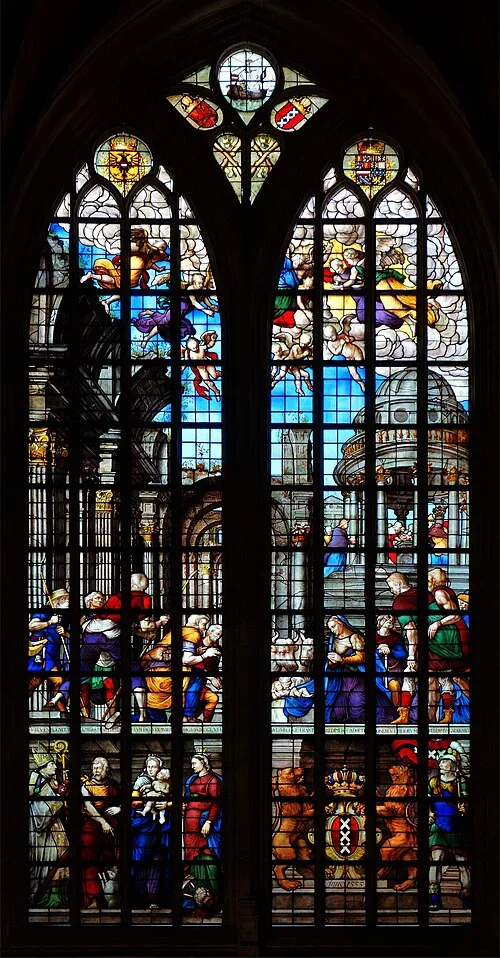 The Lady Chapel and Renaissance Stained Glass
Renaissance Stained Glass of the Lady Chapel
In August 1566 the wave of iconoclasm that swept the Low Countries began here. A mob destroyed most of the church's art and fittings, among them an altarpiece with a central panel by Jan van Scorel and side panels by Maarten van Heemskerck. Only the paintings on the ceiling were spared, because they hung out of reach. After the Reformation the remaining images were removed, along with thirty-nine altars. The Lady Chapel's windows survived, possibly because the chapel lay in a quiet, out-of-the-way corner. They belong to the glazing scheme of 1555. Dirck Crabeth designed the east window, showing the deathbed of Mary, and Lambert van Noort designed the windows on the north side, made by the glass painter Digman Meynaert. Figures in jewel-bright glass and lead, five centuries old and still in place.
Listen in the appPhoto: Velvet · CC BY-SA 3.0
- 11
Memorial to Cornelis Janszoon de Haen
A gilded Baroque memorial to a naval officer, with a painted sea at its foot.
- 12
Memorial to Jacob van Heemskerck
The church as pantheon of the Golden Age, from Admiral van Heemskerck to the Night Watch's captain.
- 13
The Vater-Müller Organ
The Vater-Müller organ, judged 'perfect' in 1724 and later given more force.
- 14
Sweelinck and the Organ's Legacy
Sweelinck's forty years at the organ, and a church that keeps reinventing itself.
Oude Kerk
Frequently asked questions
How much does the guide cost?
Free app download. Listed guide price: $0.99. Guide price shown in the app. Audio guide only. Venue admission is separate.
Can I listen without internet?
Yes. Download the guide’s audio, images, and maps in the app before your visit. Your downloaded content is then available offline.
Can I listen in my language?
This audio guide is available in 15 languages, including English.
Do I need to follow a schedule?
No. This is a self-guided experience. Choose your stops, pause whenever you like, and return to a story at your own pace.
At your own pace
Explore Oude Kerk.
Download Stanza, then search for “Oude Kerk”.
Free app download · Guide price shown in the app
Keep exploring
Nearby audio guides
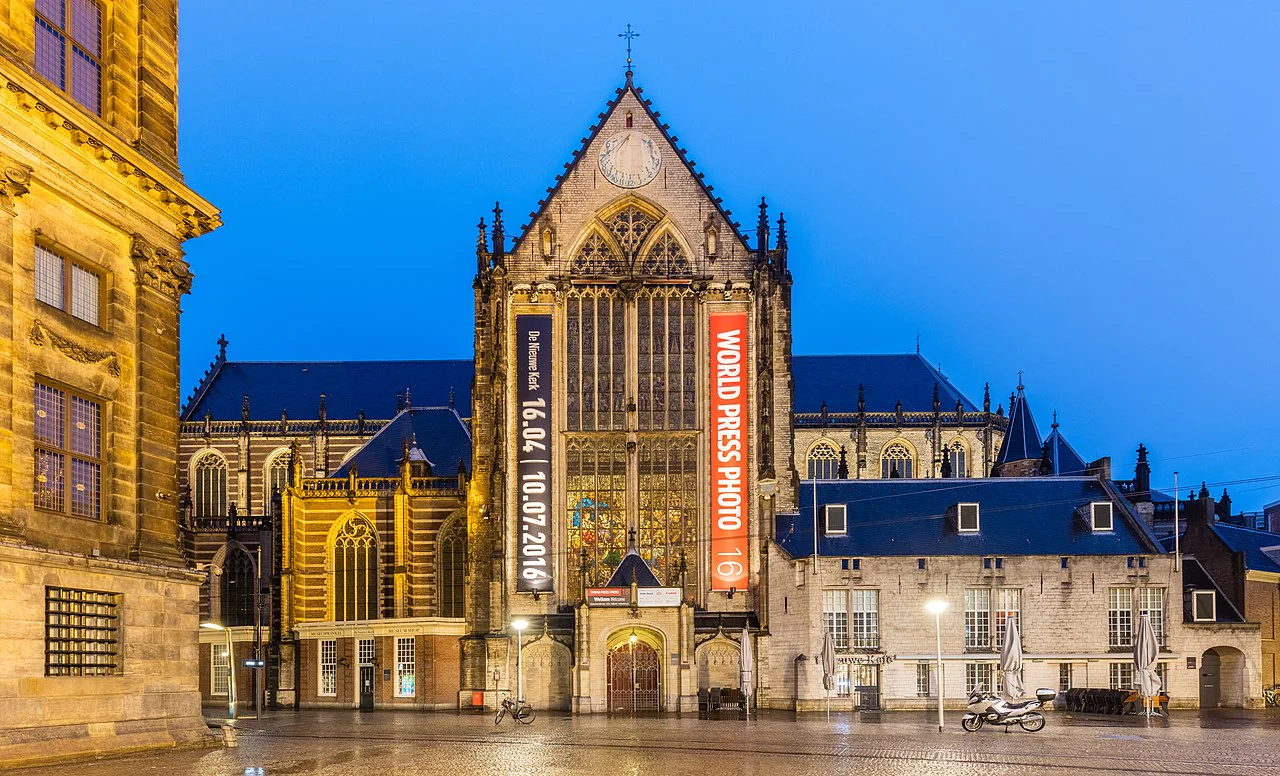
Amsterdam · 1 km
Nieuwe Kerk
Content & sources
Diego Delso · CC BY-SA 4.0
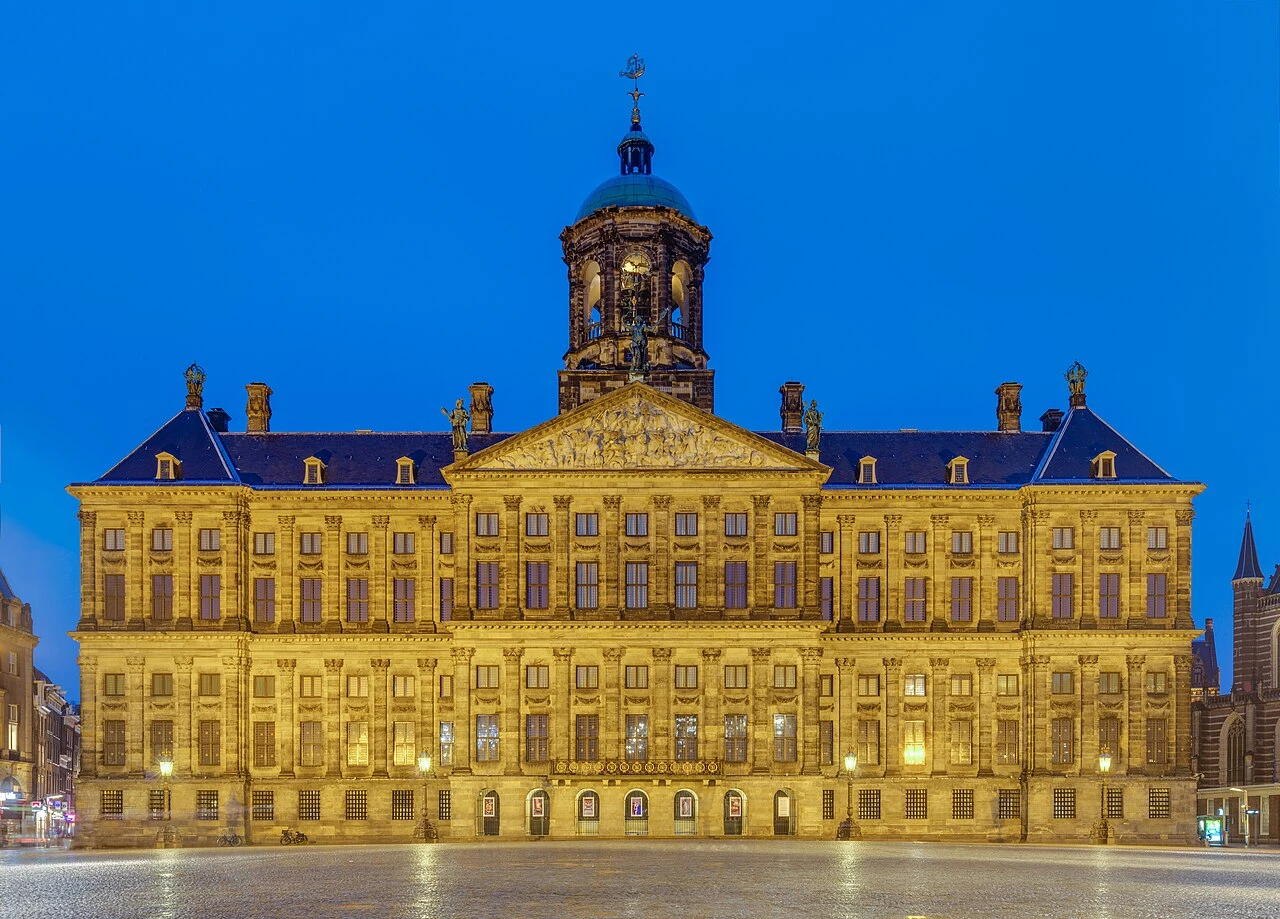
Amsterdam · 1 km
Paleis op de Dam
Content & sources
Diego Delso · CC BY-SA 4.0
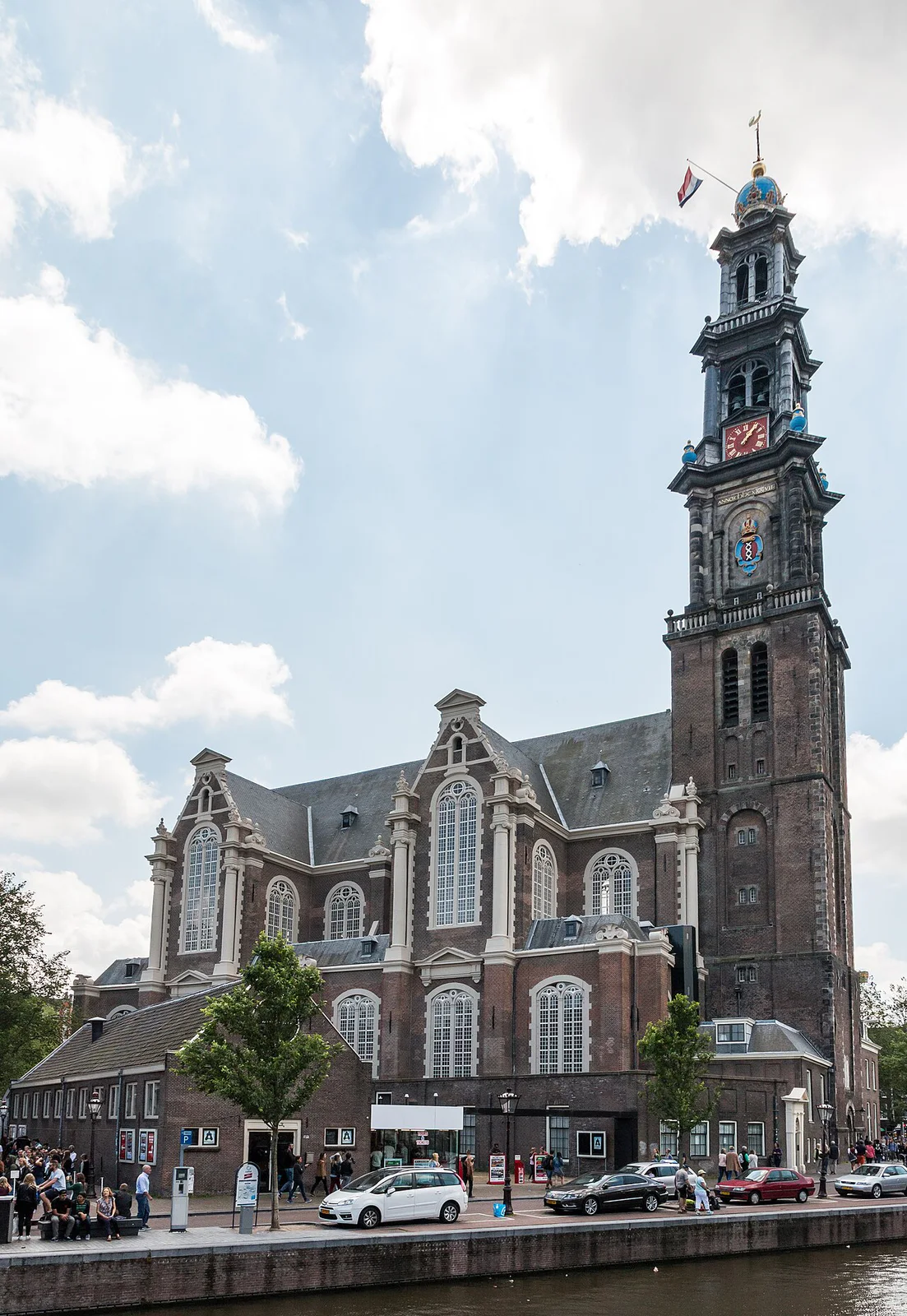
Amsterdam · 1 km
Westerkerk
Content & sources
Dietmar Rabich · CC BY-SA 4.0
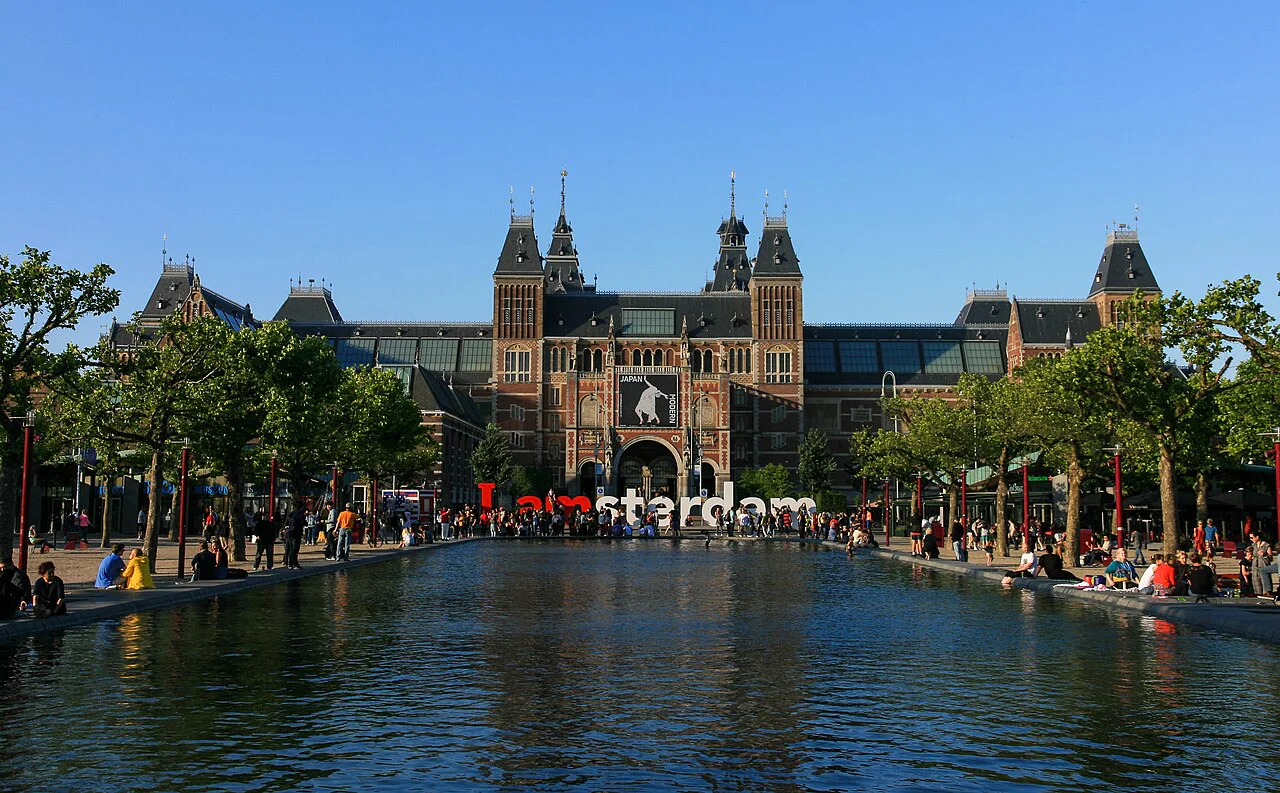
Amsterdam · 2 km
Rijksmuseum
Content & sources
Marco Almbauer · CC BY-SA 3.0