Stanza · Audio guide
Royal Museums of Fine Arts of Belgium Audio Guide
A place to remember. A story to take with you.
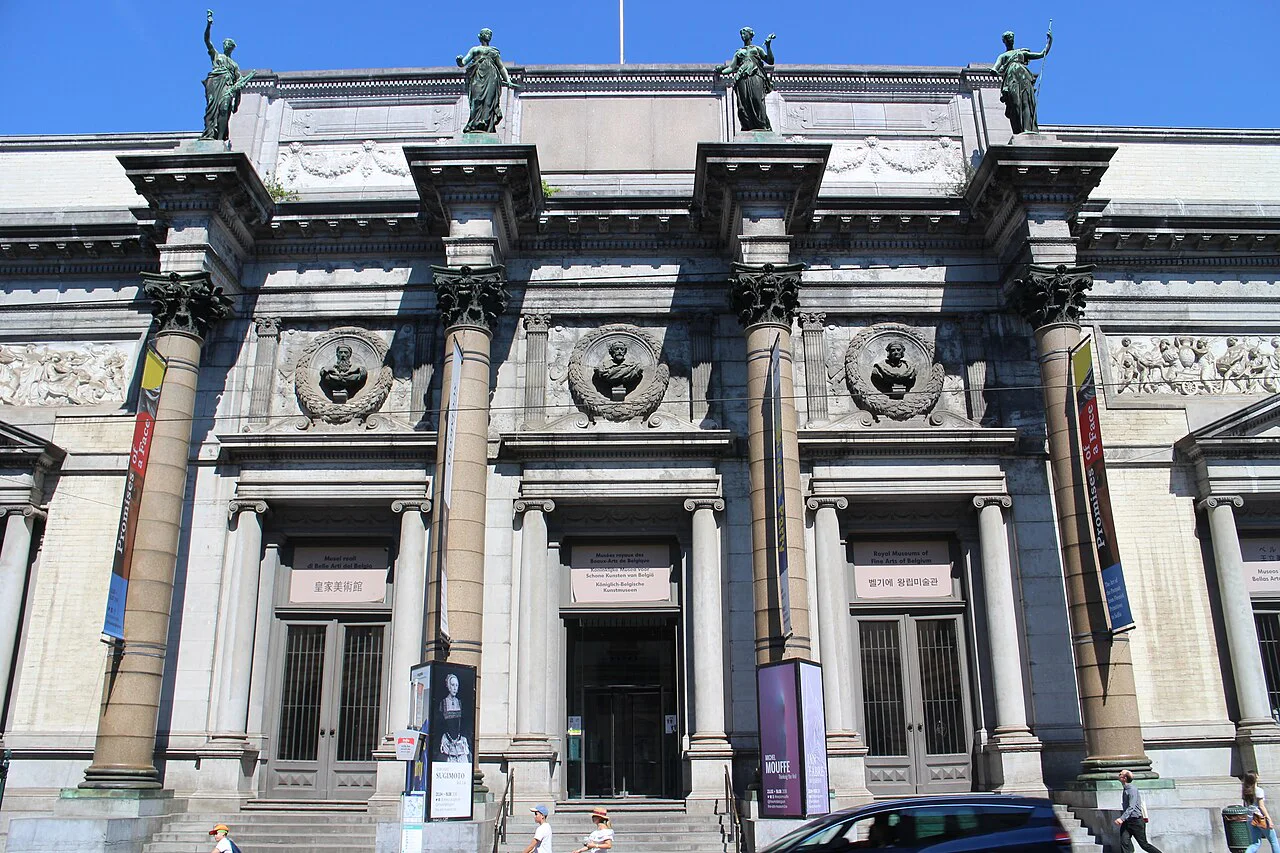
The Royal Museums of Fine Arts of Belgium are a group of art museums located in Brussels. They consist of six distinct museums that are part of the Belgian Federal Science Policy Office institutions.
Download Stanza, then search for “Royal Museums of Fine Arts of Belgium”.
About the tour
One guide. Your kind of visit.
The Royal Museums of Fine Arts of Belgium are a group of art museums located in Brussels. They consist of six distinct museums that are part of the Belgian Federal Science Policy Office institutions.
The Royal Museums of Fine Arts of Belgium guide tells the stories of 127 artworks, including The Death of Marat (Jacques-Louis David), Landscape with the Fall of Icarus (After Pieter Brueghel the Elder), Mars Being Disarmed by Venus (Jacques-Louis David), The People's Census at Bethlehem (Pieter Bruegel the Elder), The Fall of the Rebel Angels (Pieter Bruegel the Elder), Winter Landscape with a Bird Trap (Pieter Bruegel the Elder), Aix Annunciation (Barthélemy d'Eyck), and Crucifixion with a Donor (Hieronymus Bosch). 6 of the most famous are longer stories that move across the picture detail by detail, set to music. Every artwork is free to hear in the Stanza app until 1 January.
Ready when you are.
- 01Get the free Stanza app.
iOS & Android
- 02Find your guide.
“Royal Museums of Fine Arts of Belgium”
- 03Download before you go.
Works offline
Audio guide / 127 artworks
Inside the guide
Get to know a few of the stories before you go. Open a stop to read more.
01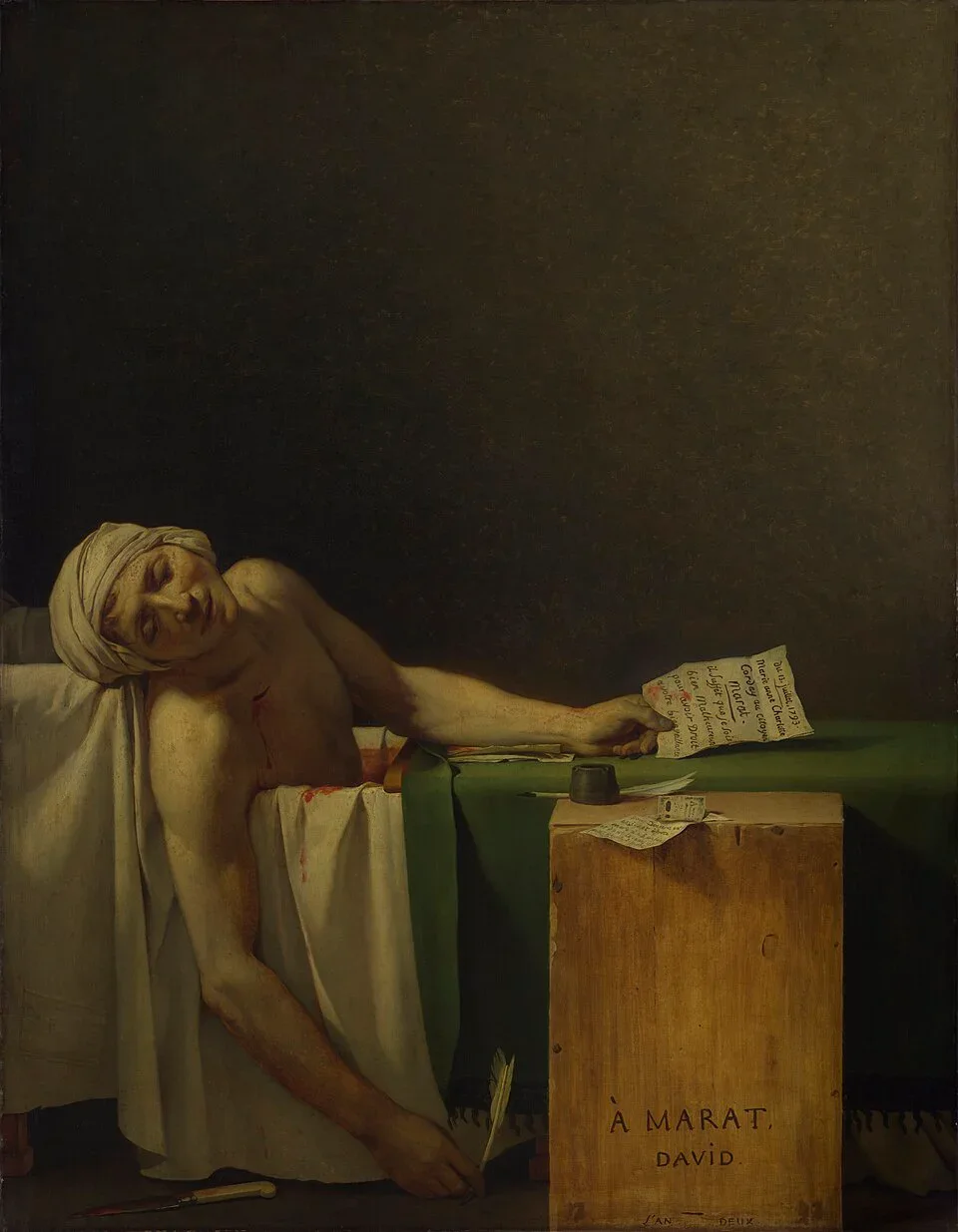
The Death of Marat
He looks asleep. Head tipped to one side, a soft glow on his face, nothing moving in the room. It feels almost holy. It is not sleep. This is The Death of Marat, painted by Jacques-Louis David, who was his friend. A white cloth wound round his head. Eyes closed. The mouth soft, almost at ease. David paints him much like a Christian martyr, his face and body wrapped in a soft glow. And the wound? Small. A narrow cut under the collarbone, one thin line of blood running down. That is all the violence you get. An arm slides toward the floor, the fingers still around a quill. The long hanging arm recalls Michelangelo's Pietà. On the floor, the knife. A pale handle, the blade stained red. Charlotte Corday, who stabbed him, is nowhere in the picture. Now the paper in his other hand, blotted with red. Neat handwriting, asking for kindness. Those are not her words. David wrote them himself, in his own hand. Her real note asked for protection. Perhaps this one shows how she reached him, through his goodness. Beside him an inkwell, a pen, more paper. Marat spent long hours in his bath, and he often worked there. And on the box in front, in plain letters, To Marat. David. Year Two. Not a signature in a corner. A dedication. David stood with Marat in politics. Above them all, only dark wall. Nothing else to look at but him. A killing, made to look holy. He is not sleeping. He is being made a martyr.
Listen in the appJacques-Louis David · Public domain
02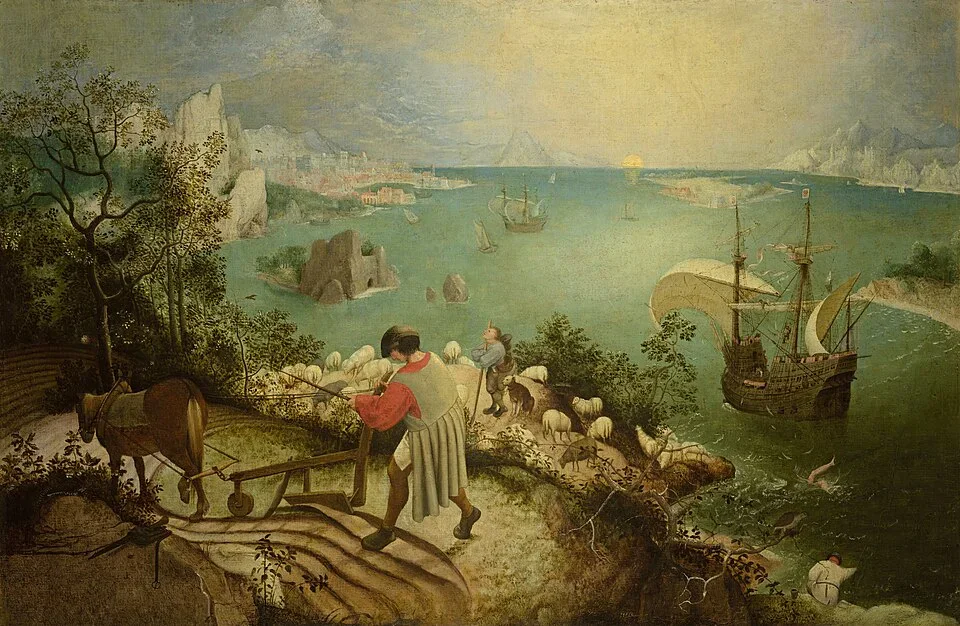
Landscape with the Fall of Icarus
Something terrible is happening in this picture, and it is easy to miss. Where did your eye go first? To the ship? The glowing sea? It is a quiet, golden evening. A man ploughs his field. A copyist painted this after Pieter Bruegel the Elder, and the composition is his. The ploughman is the biggest figure here. Red sleeves, bent head, one hand on the plough. In Flanders there was a saying. And the farmer ploughed on. It was for people who never notice another's suffering. Now the shepherd. Head thrown back, he stares at the sky, with his sheep and his dog beside him. Whatever he sees up there, it is not the water below. A tall ship glides by, sails full of wind. And just beneath it, in the green water, two legs. A splash around them. Those legs belong to Icarus, who flew on wings of feathers and wax. He flew too close to the sun, the wax melted, and he fell. Look how far away the sun is. Half sunk on the horizon. He never came near it. And in the corner, a fisherman in white, bent over his line. No one reaches out. Perhaps the point is that the world carries on, and the fall goes unseen. The sun glows. The sea shimmers. Icarus drowns. And the farmer ploughed on. Did you see him the first time?
Listen in the appAfter Pieter Brueghel the Elder · Public domain
03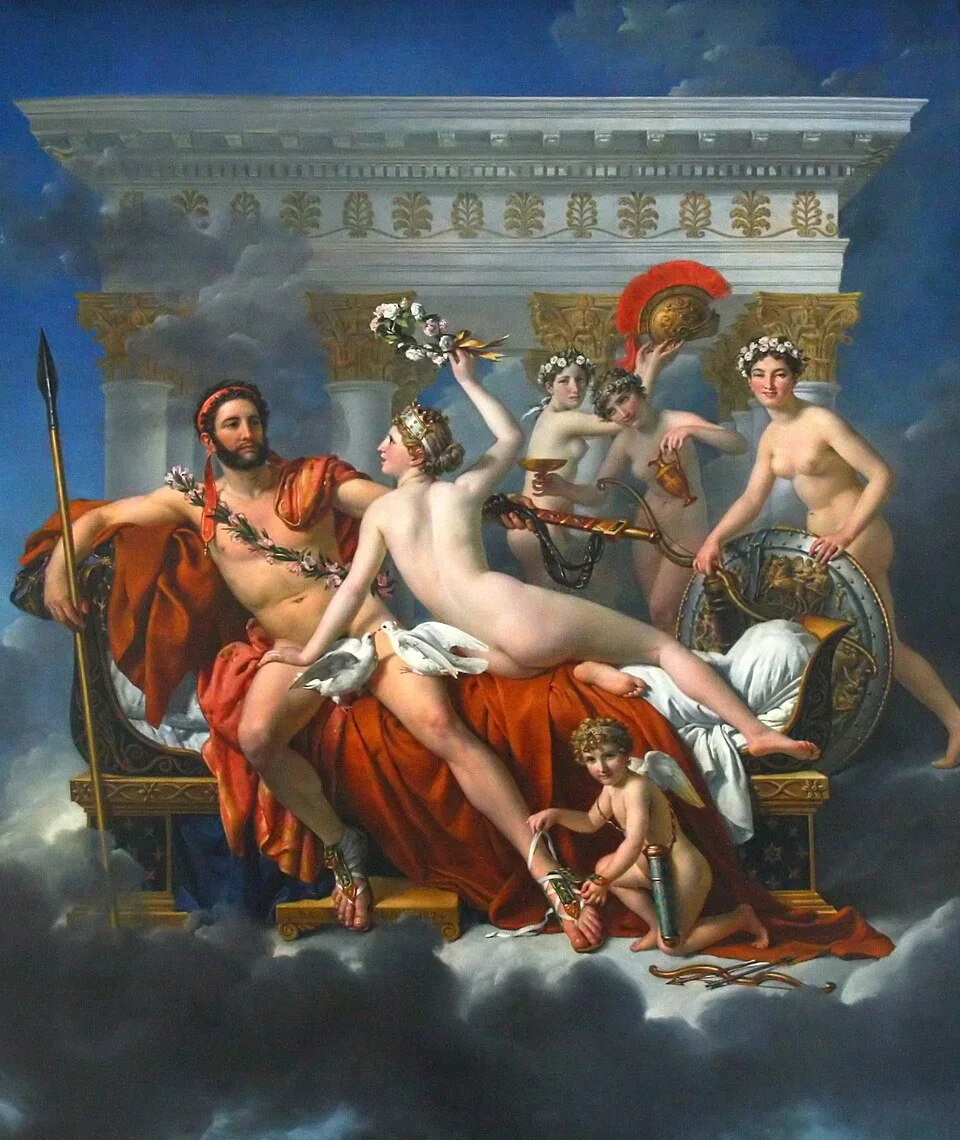
Mars Being Disarmed by Venus
The god of war lies back on his couch, half undressed, while a goddess leans in over him. Love seems to have won already. Now watch how nobody finishes anything. Jacques-Louis David called this scene Mars Being Disarmed by Venus. First, his face. Bearded, a red band round his dark hair, and calm. Perhaps he is melting, perhaps not. Above him, Venus holds up a crown of roses. A crown like that means giving in to pleasure. And she hesitates. It stays in the air, not on his head. Down below, Cupid unties the war god's sandal. Beside Cupid's bow lie two kinds of arrow. One makes you fall in love. The other makes you turn away. Neither has been fired. Cupid looks straight out at you. Behind the couple, the three Graces. They should be Venus's graceful helpers. Here they hardly seem to know what to do. One holds out a cup of wine. Mars has no hand free to take it. Beside her, another lifts the war god's helmet, red plume and all, high in the air. No one can say where she means to put it. On the right, a third Grace rolls his shield along like a child's hoop. She smiles at you. David was in exile in Brussels, an old man in his seventies, when he began this. He sensed the end of his life, and wanted one last grand statement. Venus was a real actress, Marie Lesueur. Mars was a man with a season ticket to the theatre. A god with a real face. And all of it floats on clouds, before a marble temple in the sky. So who wins? Love is closing in. But nobody has finished the job. The roses are still in her hand.
Listen in the appJacques-Louis David · Public domain
04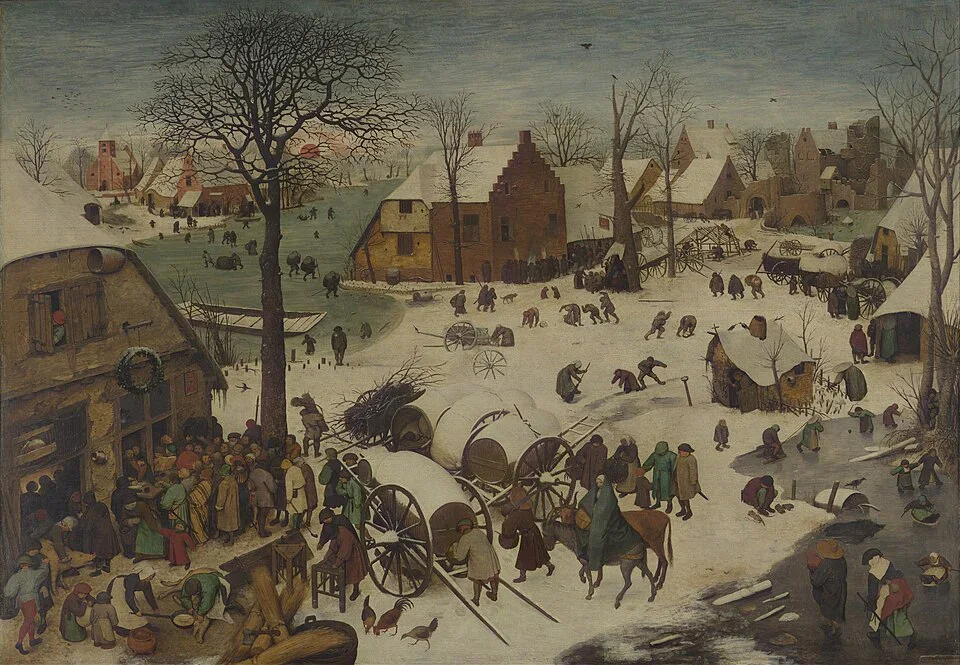
The People's Census at Bethlehem
A winter evening, and nobody has time to stop. It feels like a village you know. Snow, bare trees, and a whole place going about its business. Pieter Bruegel the Elder painted it, and he called it The People's Census at Bethlehem. Bethlehem. Yes. That Bethlehem. A Flemish village, in the snow, at sundown. Start on the ice. Children sit in little sledges and push themselves along with sticks. A man crouches on the bank, doing up his skates. Ordinary life, going on. Now go left. A crowd presses against an inn, and at a window a clerk bends over a table, writing. They are waiting to be counted, and taxed. Above them hangs a small sign with a Habsburg eagle. Not a Roman one. At the door, a pig is being killed, and a woman holds a pan under it. A pig, in Bethlehem. That could never have happened in the Bethlehem of the Bible. He is not painting a far-off land. He sets the old story in his own time. Now find them. A woman on a donkey, wrapped in a long green cloak, a horned animal at her side. Ahead of her walks a man with a carpenter's saw on his shoulder. Joseph, and Mary. No halo. No light. Nobody turns, nobody bows. They pick their way between the carts like anyone else who came to be counted. Here is why they came. A decree had gone out, and everyone had to go to his own town. At the very middle of the picture, a cartwheel stands alone in the snow. Perhaps it is the wheel of fortune. On the right, a small snowy hut, and a man in its doorway. In his hand, a clapper, a warning to keep away from leprosy. So even here, someone is kept at a distance. The sun is low and red. The thin bare trees stand against the sky like signposts. Much of this village is busy queuing, hauling and sliding. Nobody sees who has just arrived.
Listen in the appPieter Brueghel the Elder · Public domain
05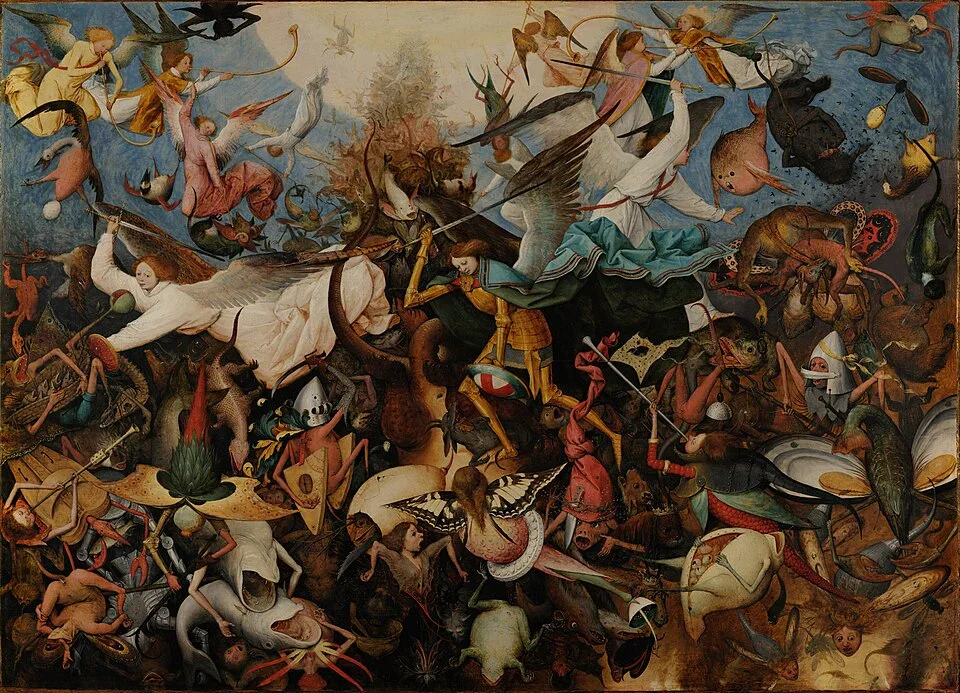
The Fall of the Rebel Angels
Crowds of bodies, tumbling, twisting, with nowhere for the eye to rest. Chaos. But the battle is not what it seems. Pieter Bruegel the Elder painted The Fall of the Rebel Angels in 1562. Start high, where a ring of light breaks open. The rebels pour out of it and are thrown down, like a wave breaking. Now the upper corner. Two angels blow long golden trumpets. They play as if the outcome were already settled. Here, a white-robed angel with red hair. The sword is raised, but the face is quiet. Almost curious. The good angels do not look much threatened. Their white glows against the dark brown below. His blade is lifted, yet he looks calmly down at the dragon under his feet. The Book of Revelation tells of this war. So where is the violence? It is in the fall. Endless. Down and down. And what falls? A human head with butterfly wings, on a swollen body. Mussel shells are fixed onto a giant shrimp. And a pale fish with arms falls with its jaws wide open. Nothing here is made from nothing. Fish, shells, armour, instruments. The devils are built from our own world, put together wrong. They fall away from that calm blue sky. Does it still look like chaos?
Listen in the appPieter Brueghel the Elder · Public domain
06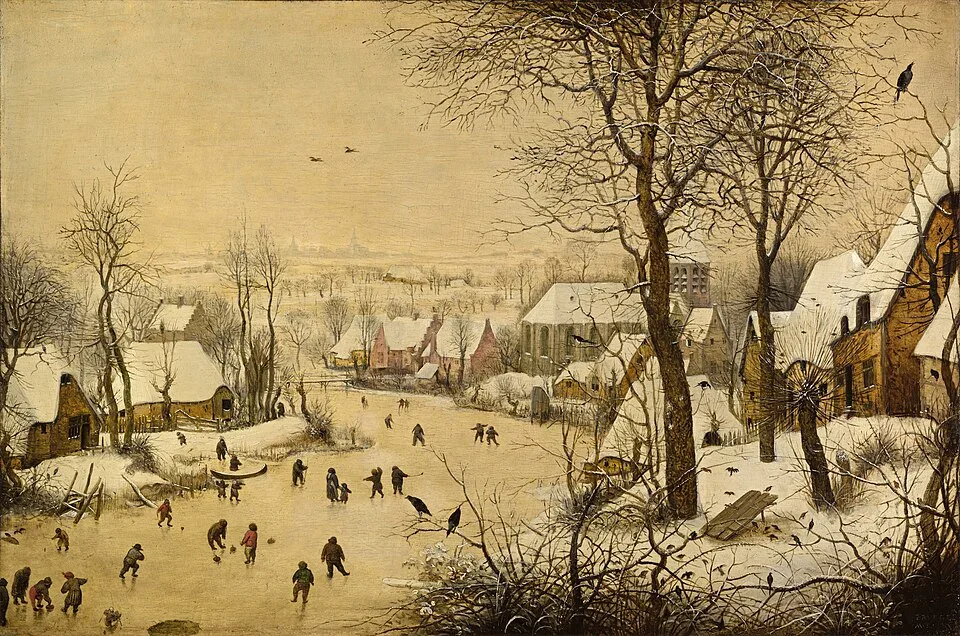
Winter Landscape with a Bird Trap
It looks like the happiest winter afternoon. Smooth ice, a snowy village, people out playing. Nothing here is wrong. Or so it seems. Bruegel painted Winter Landscape with a Bird Trap in 1565. It may carry the memory of the very hard winter of 1564 and 1565. Start with the ice. Skaters glide across it, bundled up against the cold. Others stoop low over the ice, playing a game of curling. And down at the bottom, a dark hole in the ice, right there among the games. In Bruegel's day, skating scenes were used to show how uncertain life is. Fun, on something slippery. Now leave the ice and go to the right bank. No people here. Only birds, crowding around food scattered on the snow. Above them, an old door is tilted up on a stick. Soon the door will fall. And Bruegel added this trap late. It is not in his first drawing. He painted it over the snow. Now the crows. Two big black birds on a branch, right in front of the skaters. Being so near the front, they are at least as large as the people on the ice. Traditionally a bird is a symbol of the soul. And a bird trap, the devil's bait for careless souls. So the skaters, perhaps, are the birds. Carefree, and just as vulnerable. Far off, a church stands among the snowy roofs, calm and quiet. The same village, the same cold afternoon. And a door, held up by one stick, waiting.
Listen in the appPieter Brueghel the Elder · Public domain
07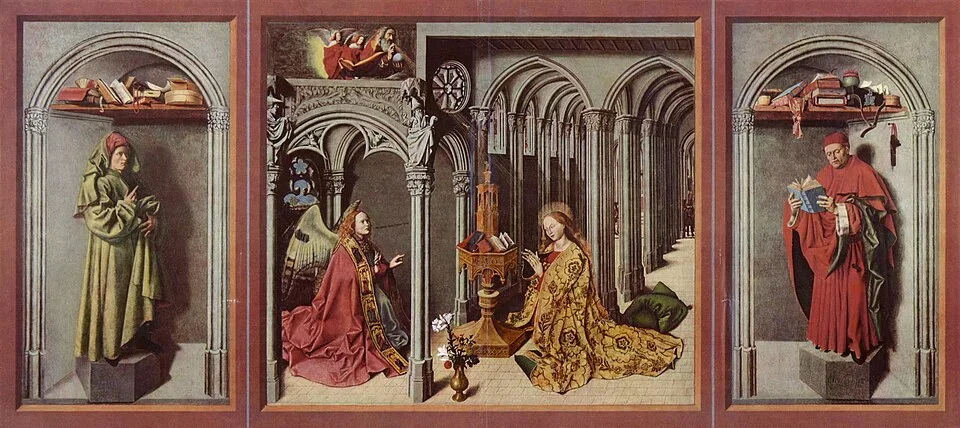
Aix Annunciation
Before you stands a prophet, alone in a niche, reading a book. Above him a shelf holds more books, and a bag for carrying them. This panel has not always lived here. Around 1444 it was the right wing of an altarpiece made for the cathedral of Saint-Sauveur in Aix-en-Provence, in the south of France. A cloth merchant named Pierre Corpici paid for it, leaving a hundred florins in his will. The painter is thought to be Barthélemy d'Eyck. When the wings opened, this prophet faced the center panel, where the angel Gabriel kneels before Mary and a tiny child drifts down a beam of light toward her. The prophets had foretold all of it. Most days the altarpiece stayed shut, showing Mary Magdalene and Christ instead. Then the panels were separated. The center is still in Aix, two pieces of the left wing went to Rotterdam and Amsterdam, and this wing alone ended up in Brussels.
Listen in the appPainting by Barthélemy d'Eyck, taken from The Yorck Project (2002) 10.000 Meisterwerke der Malerei (DVD-ROM), distributed by DIRECTMEDIA Publishing GmbH. ISBN: 3936122202. · Public domain
08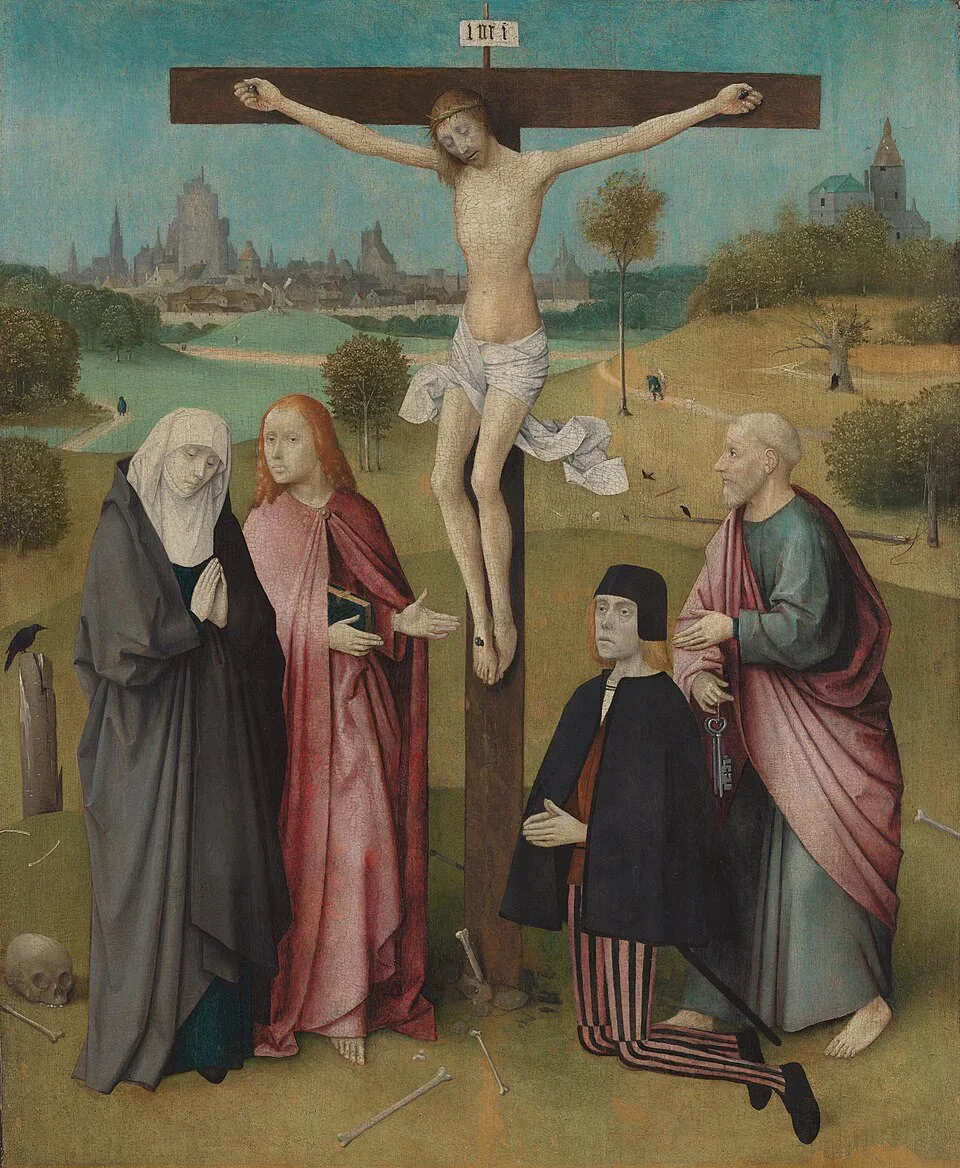
Crucifixion with a Donor
Someone once painted over the kneeling man in this picture. After the painting was finished, his figure was covered, probably with a Mary Magdalene painted on top of him. Then a restoration, finished in 1967, revealed what had happened. He kneels at the foot of the cross, hands pressed together, and we do not know his name. Only his first name survives, Peter, because of the saint standing beside him. Saint Peter holds the keys to the kingdom of heaven, and with his other hand he presents this man to Saint John. John turns toward Mary, and Mary prays to her son on the cross. Each figure passes the request along the line, until it reaches Christ, whose sacrifice makes the prayer possible. The painter is thought to be Hieronymus Bosch, a name we connect with demons and nightmares. Here he leaves his strange creatures out. He builds a calm chain of intercession instead, and sets it at the edge of a city that looks very like his own hometown.
Listen in the appHieronymus Bosch · Public domain
09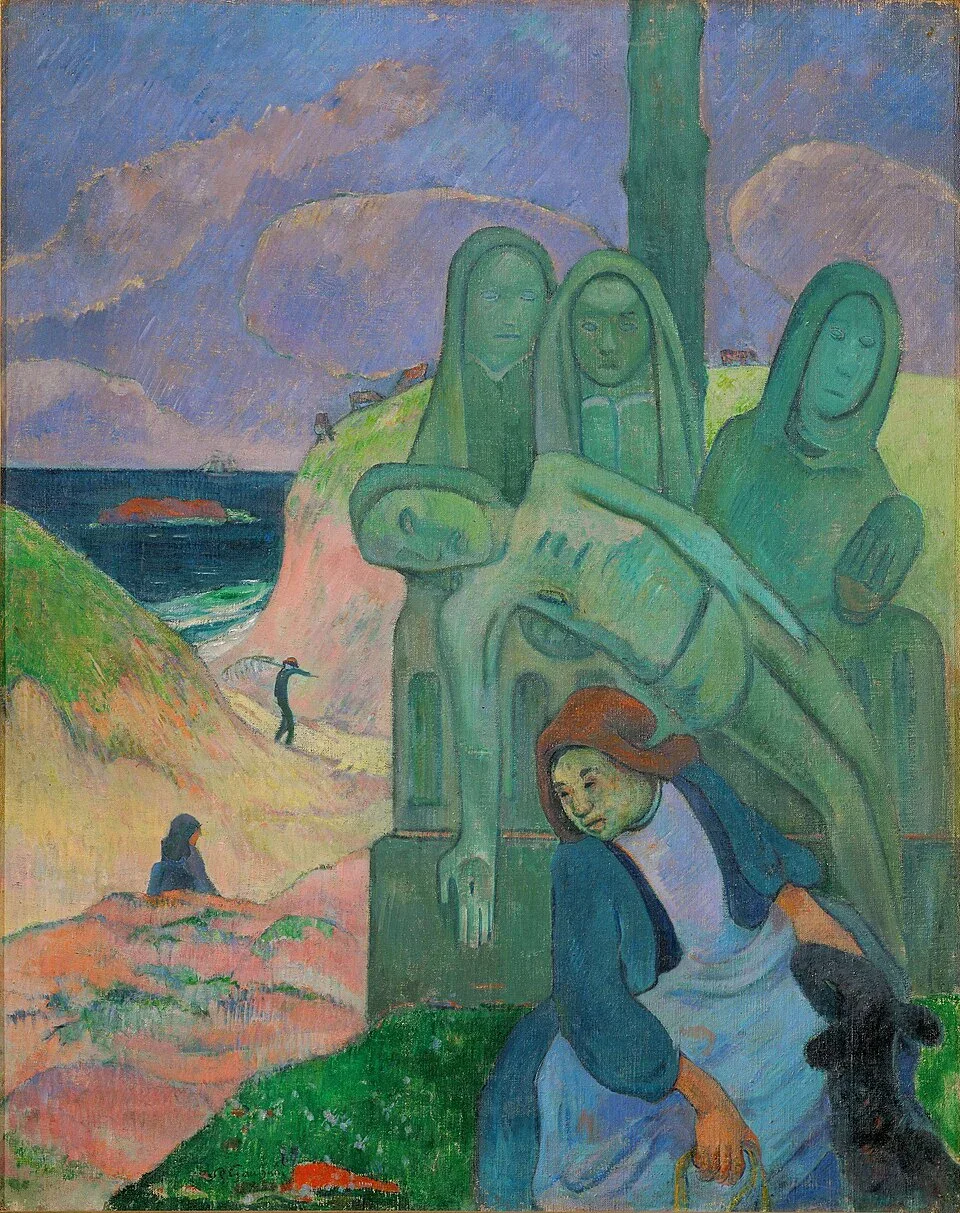
The Green Christ
A dead Christ, green from head to foot, held up by the three Marys, their faces somber. His right arm hangs down, the palm open. Below, yellow dunes give way to a dark green sea. And in front, a Breton woman sits with a basket in her hand, tired, as if about to get up. It looks like a real corner of the Breton coast. It is not. In November 1889, living in Pont-Aven, Gauguin built this calvary out of pieces from different villages. Mary holding her dead son comes from the calvary beside the church at Nizon. The cross is copied from one at Névez, miles from the coast. The figure of Christ follows another at Briec, also inland. Then he set the whole thing down on the dunes at Le Pouldu, above the Atlantic. He was not after realism. He wanted to convey human suffering through shape and color that no one would meet in life. The green carries the suffering.
Listen in the appPaul Gauguin · Public domain
10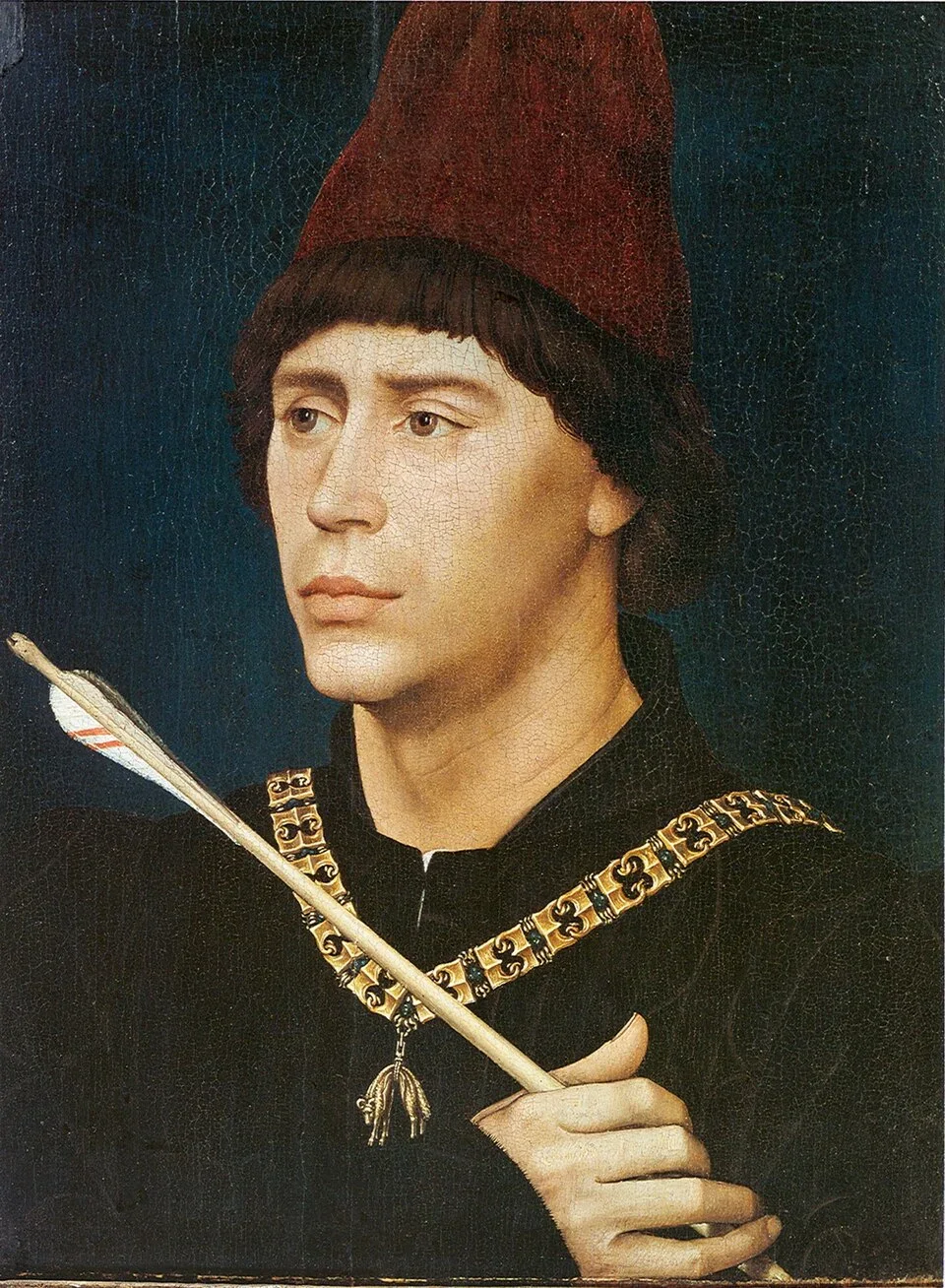
Portrait of Antoine, 'Grand Bâtard' of Burgundy
Here is a man holding an arrow diagonally across his chest, and no one knows why. Rogier van der Weyden painted him around 1460, late in the painter's own life. He softened the man's features a little, as he tended to do for the dukes of Burgundy. The gold collar tells us who he is. It is the badge of the Order of the Golden Fleece, which the sitter's father, Philip the Good, founded. Antoine was an illegitimate son, admitted to the order in 1456, when only twenty-nine others held it. Even the chain's links carry his father's emblem, sparks struck from flints. So the collar is his father's mark on him, a personal bond in gold. The arrow crossing it is the puzzle. Perhaps it stands for his knighthood, or for court duties such as judging tournaments. Perhaps it marks 1463, when he won the annual shooting contest in Bruges and became king of the archers' guild. No proof of that exists.
Listen in the appRogier van der Weyden · Public domain
- 11
Pietà
Rogier van der Weyden · c. 1441
- 12
Apollo Flaying Marsyas
Jusepe de Ribera · 1637
- 13
An Old Woman Dozing
Nicolaes Maes · 1656
- 14
The King Drinks
Jacob Jordaens · 1640
- 15
Nude against the light
Pierre Bonnard · 1908
- 16
The Sphinx, or, The Caresses
Fernand Khnopff · 1896
- 17
Episode of the September Days 1830, on the Grand Place of Brussels
Gustaaf Wappers · 1835
- 18
Augustus Listening to the Reading of the Aeneid
Jean-Auguste-Dominique Ingres · 1812
- 19
Adoration of the Magi
Pieter Bruegel the Elder · c. 1555–1563
- 20
Portrait of Barbara van Vlaendenbergh
Hans Memling · 1470–1472
- 21
Archduke Leopold Wilhelm of Austria in his Gallery
David Teniers the Younger · 1651
- 22
View of Brussels
Jan Baptist Bonnecroy · 1664–1665
- 23
Camille Lemonnier in the studio of the artist
Alfred Stevens · 19th century
- 24
Lamentation of Christ
Petrus Christus · 1455–1460
- 25
Justice of Emperor Otto III: Beheading of the Innocent Count and Ordeal by Fire
Dieric Bouts · 1470
- 26
The Martyrdom of St Sebastian
Hans Memling · c. 1475
- 27
The Seine at La Grande Jatte
Georges Seurat · 1888
- 28
Sforza Triptych
Workshop of Rogier van der Weyden · 1452
- 29
Boccaccio reading from the Decameron to Queen Johanna of Naples
Gustaaf Wappers · 1849
- 30
The Prodigal Son
Master of Paulus and Barnabas, Jan Sanders van Hemessen · 1536
- 31
The painter Jacques-Louis David
François-Joseph Navez · 1817
- 32
Portrait of a Commander in the Spanish Army
Michaelina Wautier · 1646
- 33
Portrait of a family in a landscape - three temporarily united fragments
Salomon de Bray, Frans Hals · 1624
- 34
Portrait of Marguerite Khnopff
Fernand Khnopff · 1887
- 35
Nature
Auguste Seysses, Alphonse Mucha · 1899–1900
- 36
Satyr and the peasant
Jacob Jordaens · 1620–1621
- 37
The Nativity - The Adoration of the Christ Child
Follower of Hieronymus Bosch / Formerly attributed to Hieronymus Bosch / Attributed to Gielis Panhedel · 1550
- 38
The Temptation of St Anthony
Workshop of Hieronymus Bosch · c. 1525
- 39
Portrait of Jean Froimont. Verso: Saint Lawrence
Rogier van der Weyden · 1448
- 40
Adam
Hubert van Eyck, Jan van Eyck · 1432
- 41
Froimont Diptych
Workshop of Rogier van der Weyden · 1464
- 42
The Return from a Pilgrimage to Saint Anthony
Pieter Aertsen · c. 1550
- 43
At Dawn
Charles Hermans · 1875
- 44
The Whirling Ear
Alexander Calder · 1958
- 45
The procession of the schools in 1878
Jan Verhas · 1880
- 46
An abandoned town
Fernand Khnopff · 1904
- 47
Jeanne la Folle
Louis Gallait · c. 1856
- 48
The gleaners
Charles de Groux · 1856
- 49
Cinder clearance
Evert Larock · 1900
- 50
Public Gardens
Édouard Vuillard · 1894
- 51
The hiercheuse
Constantin Meunier · 1887
- 52
Un soir de grève
Eugène Laermans · 1893
- 53
The last judgment
various · 1413
- 54
Madonna of Montefiore
Carlo Crivelli · c. 1471
- 55
Montefiore dell'Aso Polyptych
Carlo Crivelli · c. 1471
- 56
Saint Francis of Assisi
Carlo Crivelli · c. 1471
- 57
The Road to Calvary
Peter Paul Rubens · 1634–1637
- 58
Pendant portraits of the mayor of Bruges Willem Moreel and his wife Barbara van Vlaendenbergh, originally parts of a triptych
Hans Memling · c. 1482
- 59
The Last Judgment
Pieter Huys · 1554
- 60
The Annunciation
Master of Flémalle, Robert Campin · 1420
- 61
Portrait of Nicolas van Bambeeck in a Picture Frame
Rembrandt · 1641
- 62
Joris van Zelle
Bernard van Orley · 1519
- 63
Christ in the House of Martha and Mary
Joachim Beuckelaer · 1565
- 64
Drawing lesson in the workshop
Henri Fantin-Latour · 1879
- 65
The Martyrdom of St Livinus
Peter Paul Rubens · 1633
- 66
Les Lavandières
Adrien de Witte · 1880
- 67
Spleen et Idéal
Carlos Schwabe · 1907
- 68
Triptych of the Mine
Constantin Meunier · 1902
- 69
Caritas
Jan van Delen · 1673
- 70
Two Young Girls or The Beautiful Rosine
Antoine Wiertz · 1847
- 71
Portrait of the Sculptor François Duquesnoy
Anthony van Dyck · 1622–1629
- 72
Allegory of Fertility
Frans Snyders, Jacob Jordaens · c. 1623
- 73
The kitchen maid
Pieter Aertsen · 1559
- 74
Ophelia Charles Samuel 1897
Charles Samuel · 1897
- 75
Memories
Fernand Khnopff · 1889
- 76
Jupiter and Callisto
Circle of Bernard van Orley · 16th century
- 77
King Charles I of England, on his way to the scaffold
Gustaaf Wappers · 1870
- 78
The Conversion of Saul
Abraham van Diepenbeeck · 17th century
- 79
Adoration of the Magi
Gerard David · c. 1500
- 80
Fragment with group of men
Rogier van der Weyden · c. 1460
- 81
Lot and his daughters
Jan Matsys · 1565
- 82
Still-Life with Flower Bouquet and Plums
Rachel Ruysch · 1704
- 83
Four Studies of a Head of a Moor
Peter Paul Rubens, Anthony van Dyck · 1640
- 84
An Oriental Harbour
Bonaventura Peeters the Elder · 1650–1652
- 85
Virgin and Child
Quinten Metsys · c. 1495
- 86
Flemish Feast
David Teniers the Younger · 1652
- 87
The Rhetoricians
Jan Steen · 1665–1668
- 88
Kitchen interior with a servant girl holding a plate with poultry and a table with an abundance of game, fish, fruit and vegetables
Frans Snyders · 1634
- 89
The prophet Jeremiah
Barthélemy d'Eyck · 1443–1445
- 90
The Fall of Icarus (sketch for the Torre de la Parada
Peter Paul Rubens · 1636
- 91
Cupid on a dolphin
Peter Paul Rubens · 1636
- 92
Emmaus Disciples
Abraham Bloemaert · 1622
- 93
Virtue of Patience
Bernard van Orley · 1521
- 94
St Anne Altarpiece
Quinten Metsys · 1507–1509
- 95
Portrait of Hubert Goltzius
Antonis Mor · 1574
- 96
Portrait de George Gougenot de Croissy
Jean-Baptiste Greuze · c. 1758
- 97
Portrait of Porzia Imperiale and Her Daughter
Anthony van Dyck · c. 1628
- 98
The Ferryboat
Salomon van Ruysdael · 1647
- 99
Madonna and Child
Jean Hey · c. 1490
- 100
The Water-Mill
Meindert Hobbema · 1663–1668
- 101
Seated Drinkers
Adriaen Brouwer · 1635
- 102
A View of Dordrecht
Jan van Goyen · 1644–1653
- 103
The Courtyard of the Market Gardener
Johannes Siberechts · 1664
- 104
Mushrooms, a wicker basket, a melon, a root of celery and four dead thrushes
Jan Fyt · 1651
- 105
Landscape with St John the Baptist Preaching
Joachim Patinir · 1517
- 106
Saint Sebastian aided by the angels
Giulio Cesare Procaccini · 1610–1612
- 107
A Donor Presented to the Virgin
Guercino · 1616
- 108
Still-Life with a Bearded Man Crock and a Nautilus Shell Cup
Maerten Boelema de Stomme · 1642–1644
- 109
Still-Life with Garland of Flowers and Golden Tazza
Jan Brueghel the Elder · 1618
- 110
Still-Life with Fruit, Flowers, Glasses and Lobster
Jan Davidsz. de Heem · 1660s
- 111
Portrait of Helena Fourment
Jan Boeckhorst, Peter Paul Rubens · c. 1630
- 112
Ships in a Storm off the Norwegian Coast
Ludolf Bakhuizen · 1690s
- 113
Prudence
Pieter Bruegel the Elder · 1559
- 114
Virgin and Child with Saints Anne and Joachim
Joos van Cleve · 1520
- 115
Doge Alvise IV Mocenigo Appears to the People in St Mark's Basilica in 1763
Francesco Guardi · 1775–1777
- 116
The Young Draughtsman
Pieter Codde · c. 1630
- 117
Battle of Carnival and Lent
Pieter Brueghel the Younger · 16th century
- 118
Triptych of the Micault Family
Jan Cornelisz Vermeyen · 1549
- 119
Apollo Chasing Daphne
Carlo Maratta · 1681
- 120
Justice of Emperor Otto III: The Trial by Fire
Dieric Bouts · c. 1460
- 121
Justice of Emperor Otto III: The Beheading of the Innocent
Dieric Bouts · c. 1460
- 122
Triptych of the Entombment
Maarten van Heemskerck · 1559–1560
- 123
Musical instruments
Evaristo Baschenis · 17th century
- 124
The Army of Louis XIV in front of Tournai in 1667 (Brussels)
Adam Frans van der Meulen · 1684
- 125
Heliodorus driven from the Temple
Bertholet Flémal · 1658–1662
- 126
Campo Vaccino in Rome
Johannes Lingelbach · 1653
- 127
Hecube blinds Polymestor
Giuseppe Maria Crespi · 18th century
Royal Museums of Fine Arts of Belgium
Frequently asked questions
How much does the guide cost?
Free app download. Free until 1 January. Listed guide price: $1.99. Audio guide only. Venue admission is separate.
Can I listen without internet?
Yes. Download the guide’s audio, images, and maps in the app before your visit. Your downloaded content is then available offline.
Can I listen in my language?
In English for now. More languages soon.
Do I need to follow a schedule?
No. This is a self-guided experience. Choose your stops, pause whenever you like, and return to a story at your own pace.
Which artworks are in the Royal Museums of Fine Arts of Belgium audio guide?
127 artworks, including The Death of Marat (Jacques-Louis David), Landscape with the Fall of Icarus (After Pieter Brueghel the Elder), Mars Being Disarmed by Venus (Jacques-Louis David), The People's Census at Bethlehem (Pieter Bruegel the Elder), The Fall of the Rebel Angels (Pieter Bruegel the Elder), Winter Landscape with a Bird Trap (Pieter Bruegel the Elder), Aix Annunciation (Barthélemy d'Eyck), and Crucifixion with a Donor (Hieronymus Bosch). The full list is on this page.
Is this the museum’s official audio guide?
No. Stanza is an independent audio guide app and is not affiliated with Royal Museums of Fine Arts of Belgium. Museum admission is separate.
At your own pace
Explore Royal Museums of Fine Arts of Belgium.
Download Stanza, then search for “Royal Museums of Fine Arts of Belgium”.
Free app download · Guide price shown in the app
Keep exploring
Nearby audio guides
Brussels · 1 km
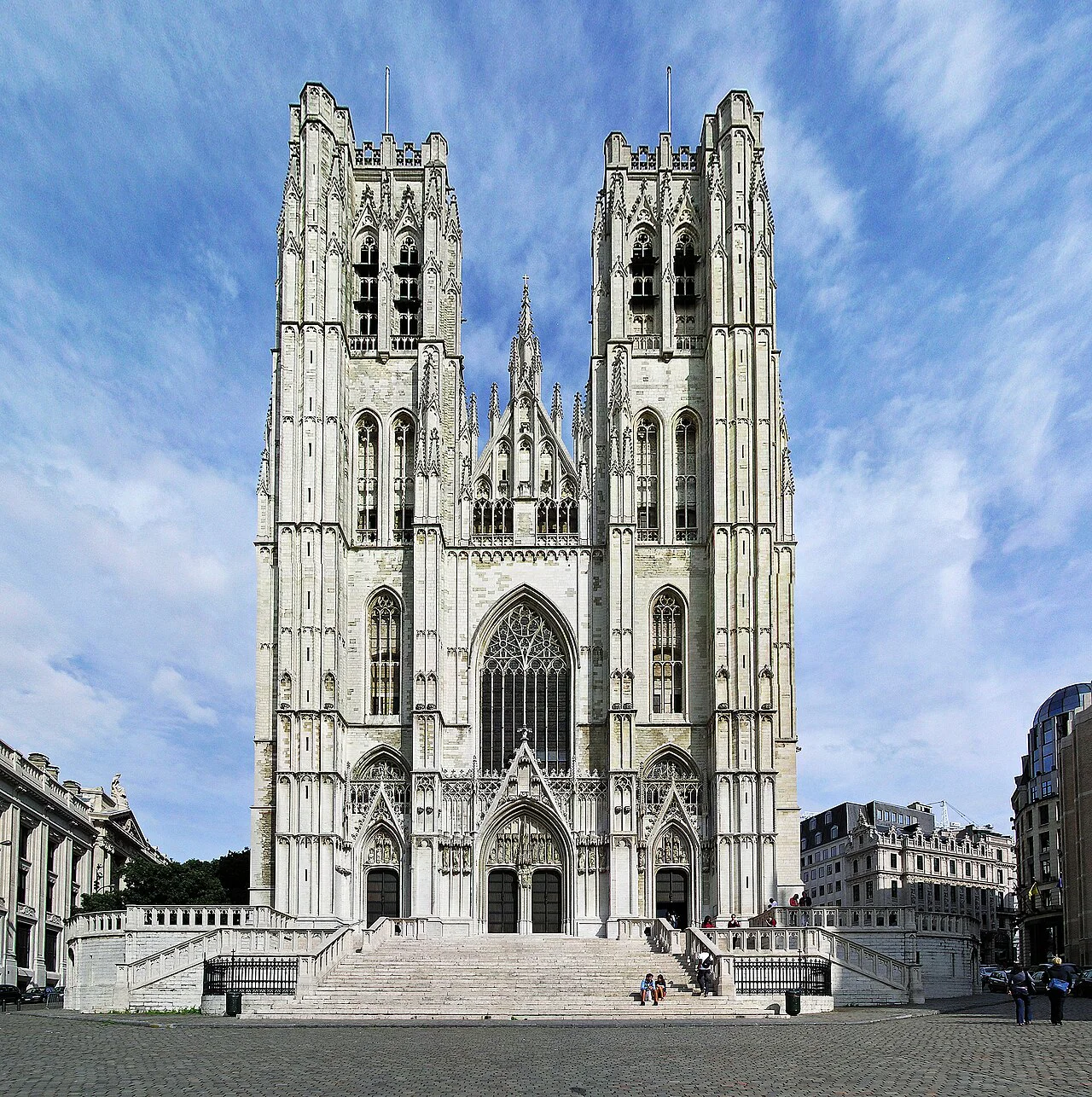
Kathedraal van Sint-Michiel en Sint-Goedele
Content & sources
Photo: Donaldytong · CC BY-SA 3.0
Koekelberg · 4 km
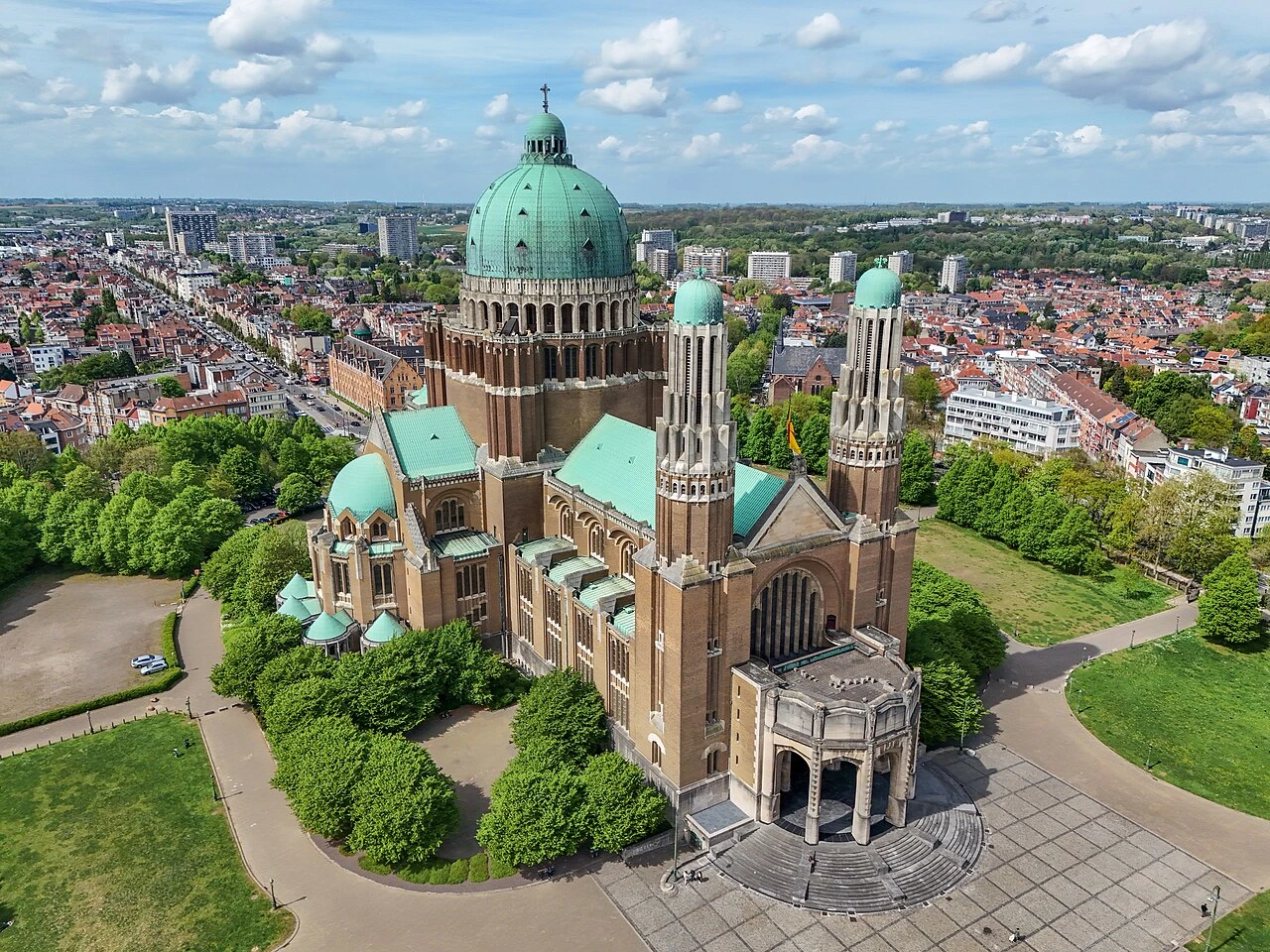
Basilica of the Sacred Heart, Brussels
Content & sources
Photo: Giles Laurent · CC BY-SA 4.0
Brussels · 6 km
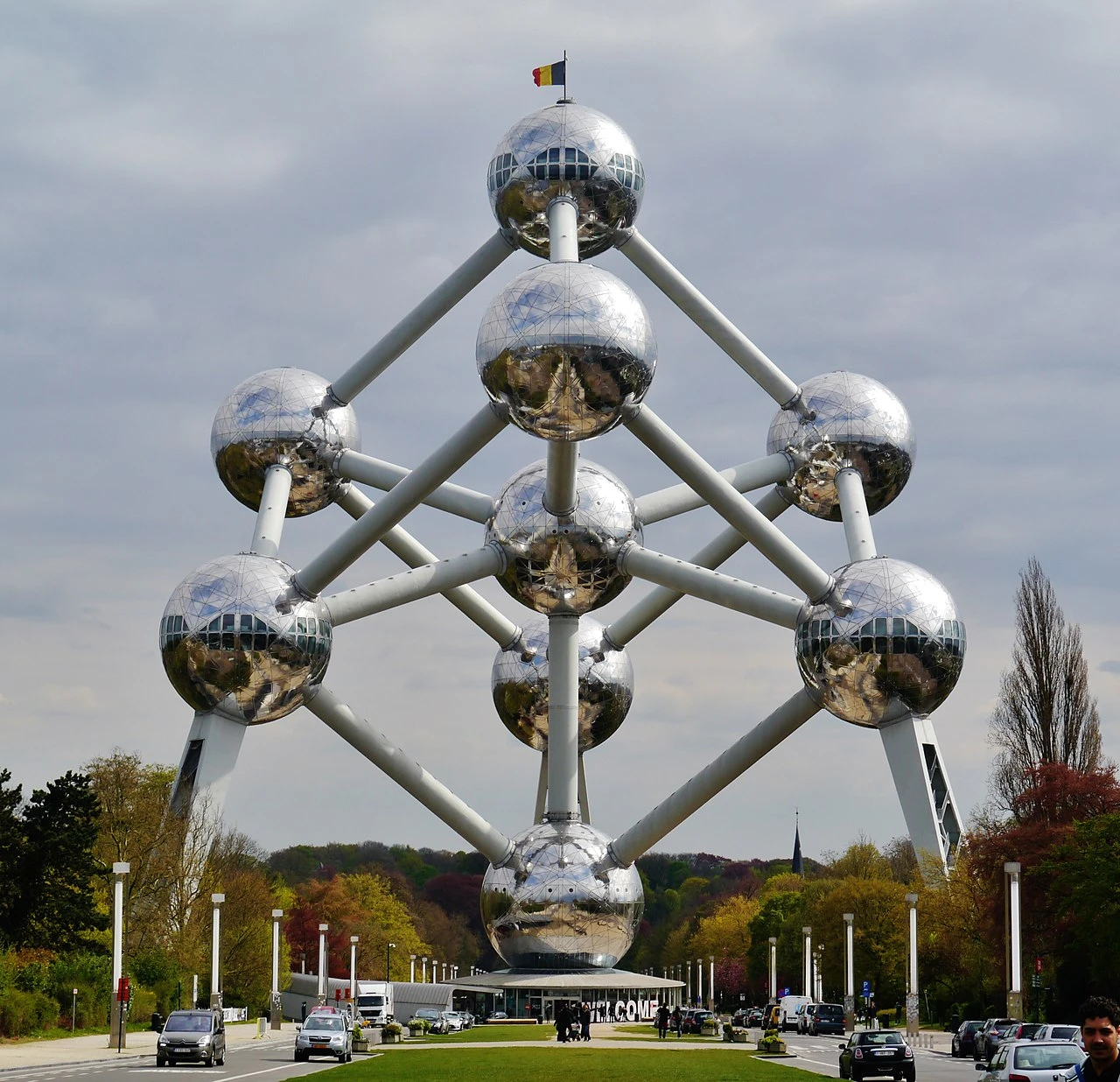
Atomium
Content & sources
Photo: Zairon · CC BY-SA 4.0
Mechelen · 22 km
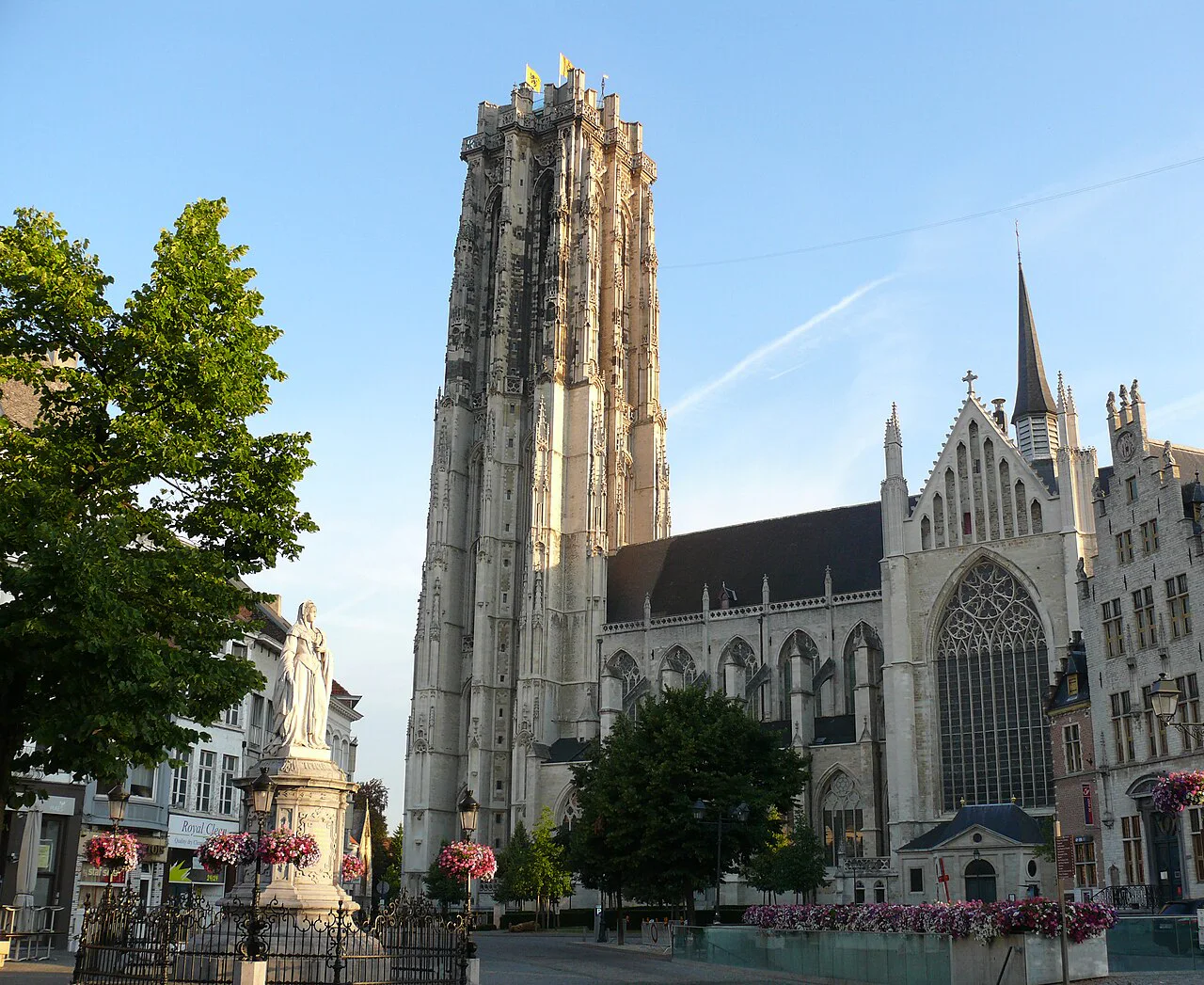
Sint-Romboutskathedraal
Content & sources
Photo: Ad Meskens · CC BY-SA 3.0
Art museums
More art museum audio guides
Lille · 96 artworks
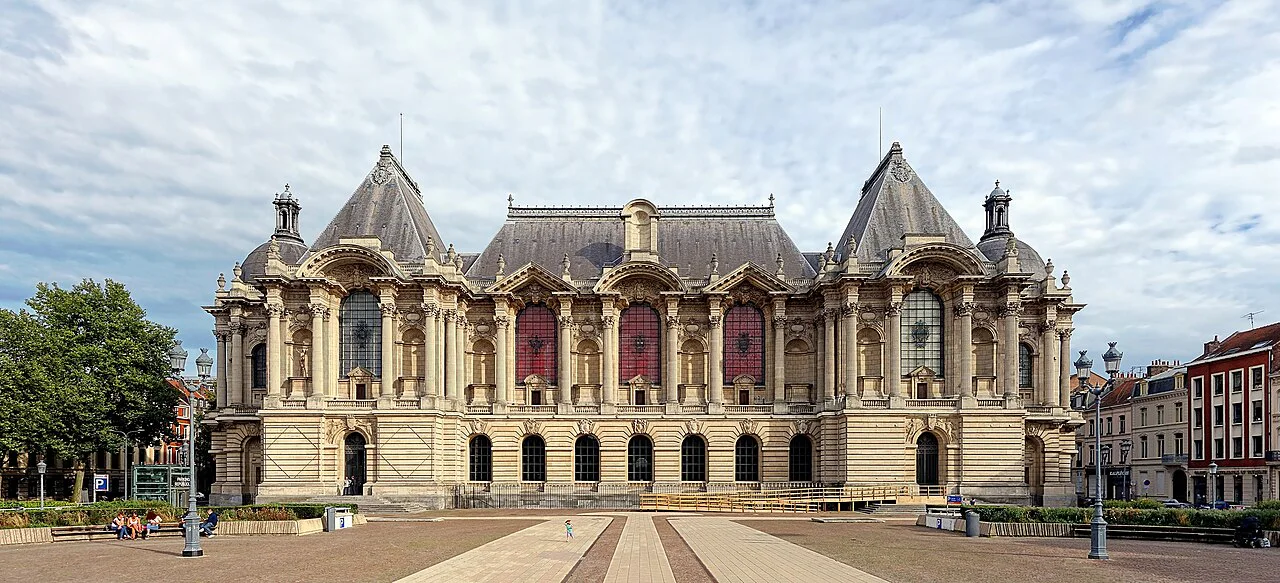
Palais des Beaux-Arts de Lille
Content & sources
Photo: Velvet · CC BY-SA 3.0
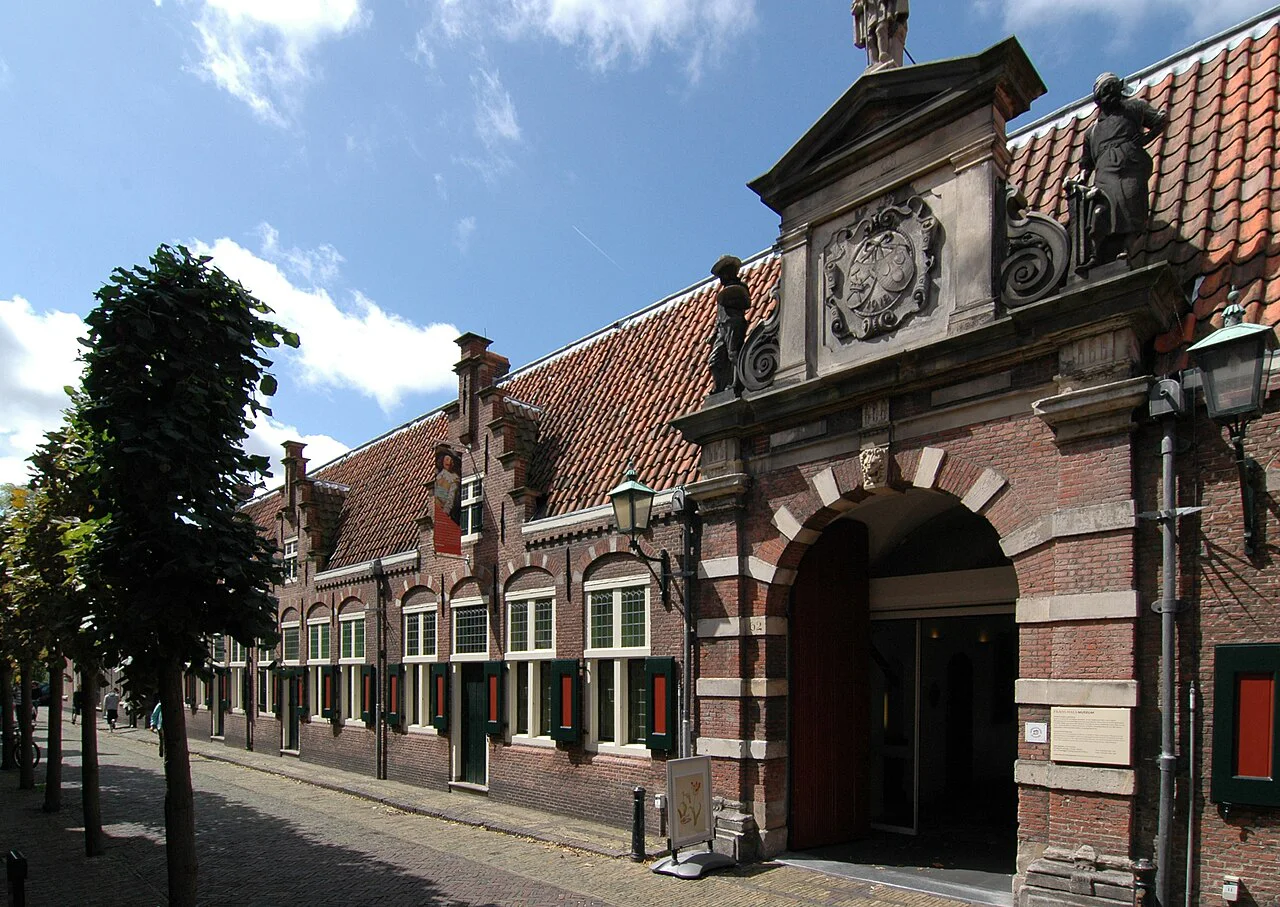
Haarlem · 45 artworks
Frans Hals Museum
Content & sources
Mcke · CC BY-SA 3.0
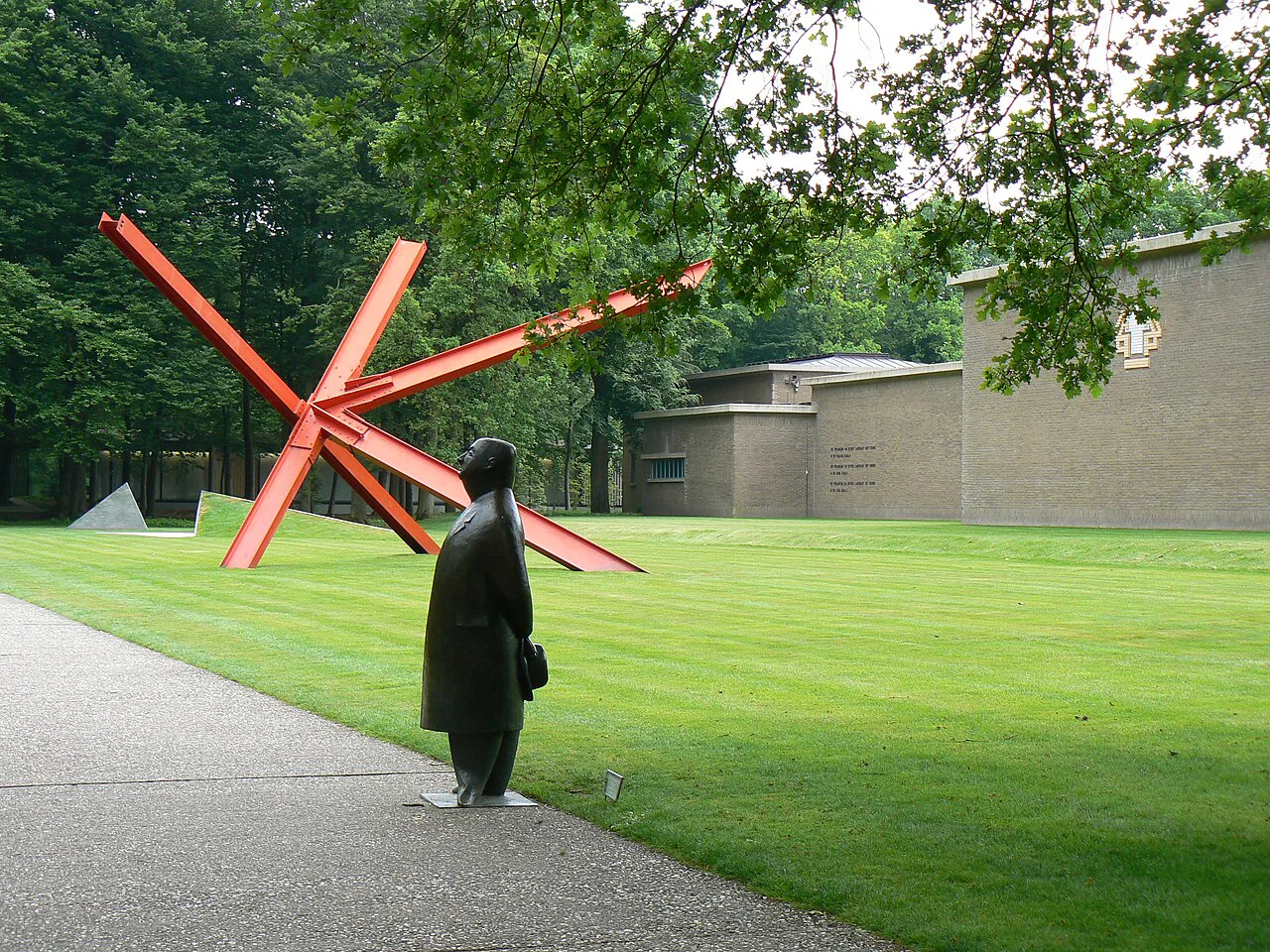
Otterlo · 60 artworks
Kröller-Müller Museum
Content & sources
Photo: Gerardus · Public domain
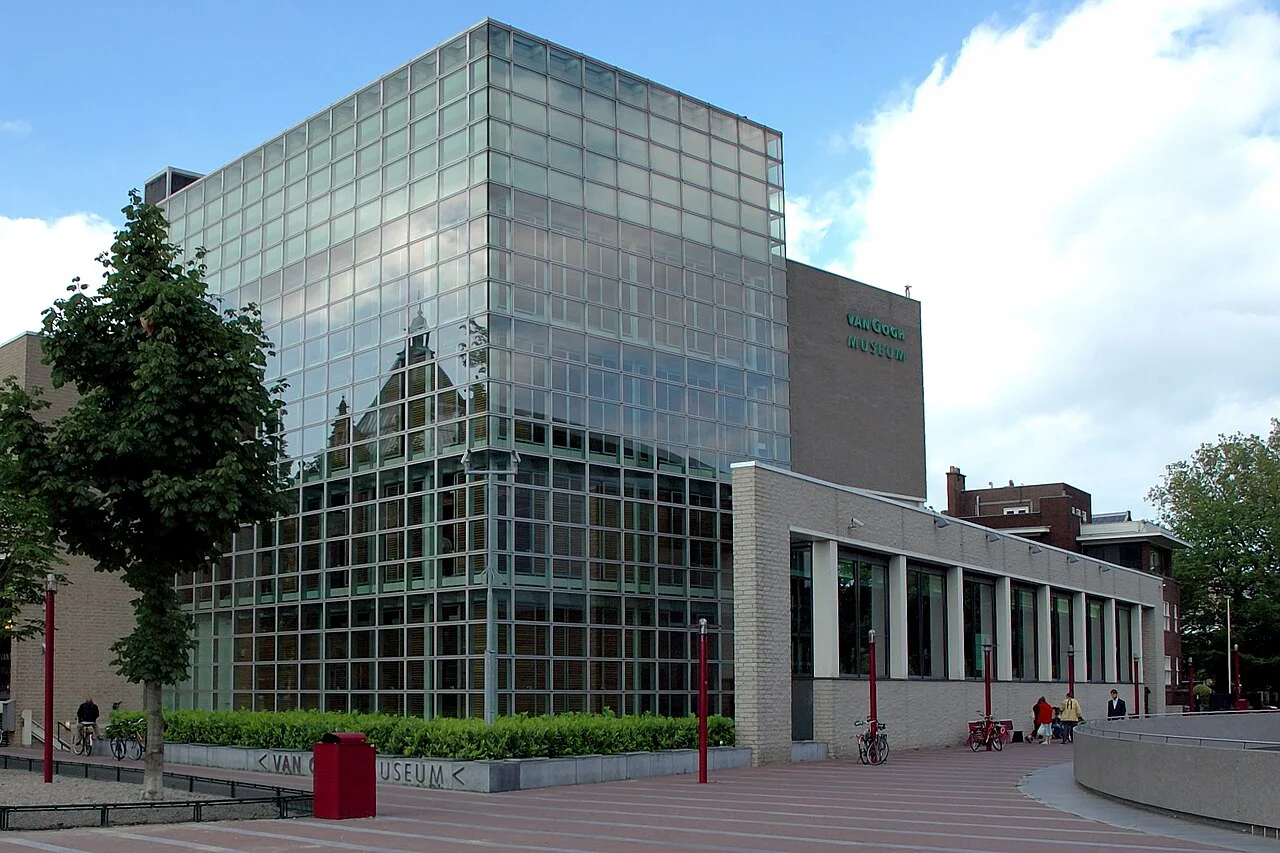
Amsterdam · 73 artworks
Van Gogh Museum
Content & sources
Warrox · CC BY 2.5
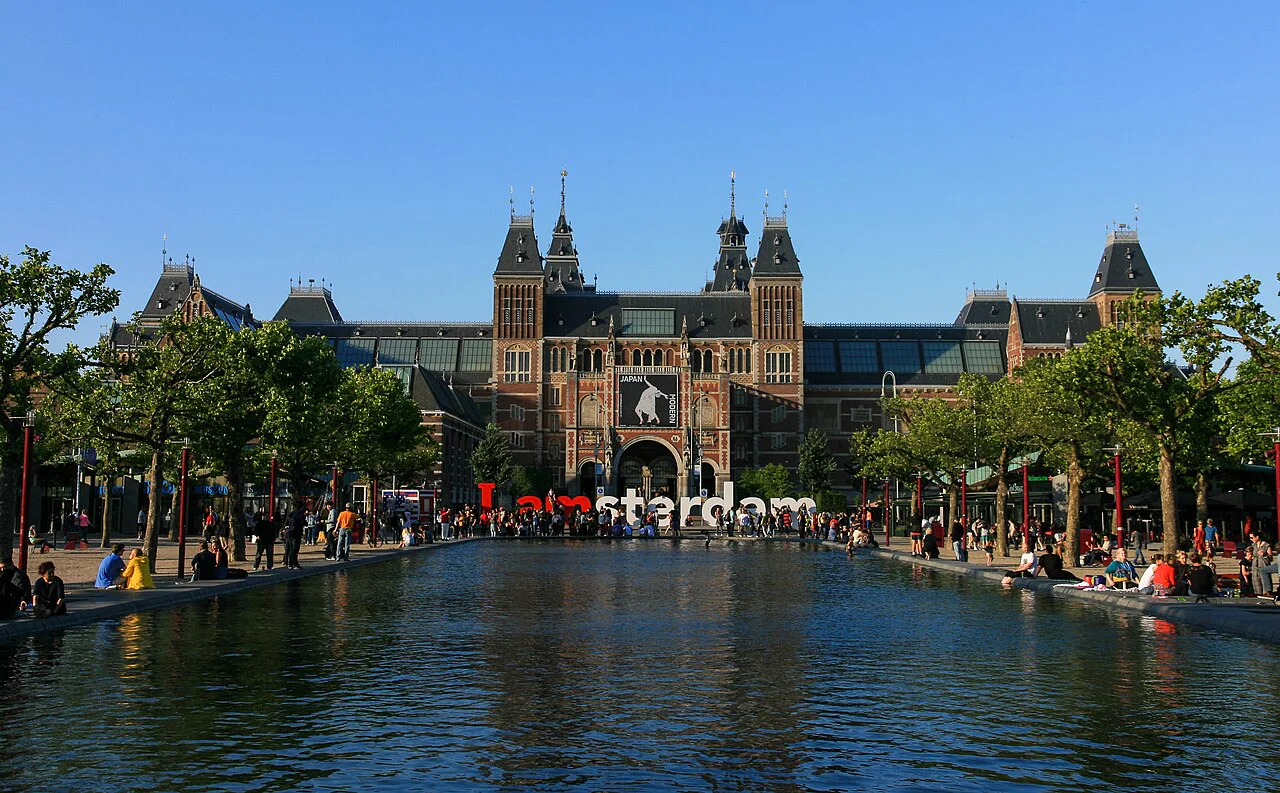
Amsterdam · 211 artworks
Rijksmuseum
Content & sources
Marco Almbauer · CC BY-SA 3.0
Paris · 24 artworks
Musée Jacquemart-André
Content & sources
Christophe Recoura · CC BY-SA 3.0