Stanza · Audio guide
Khu đền tháp Mỹ SơnAudio guide
A place to remember. A story to take with you.
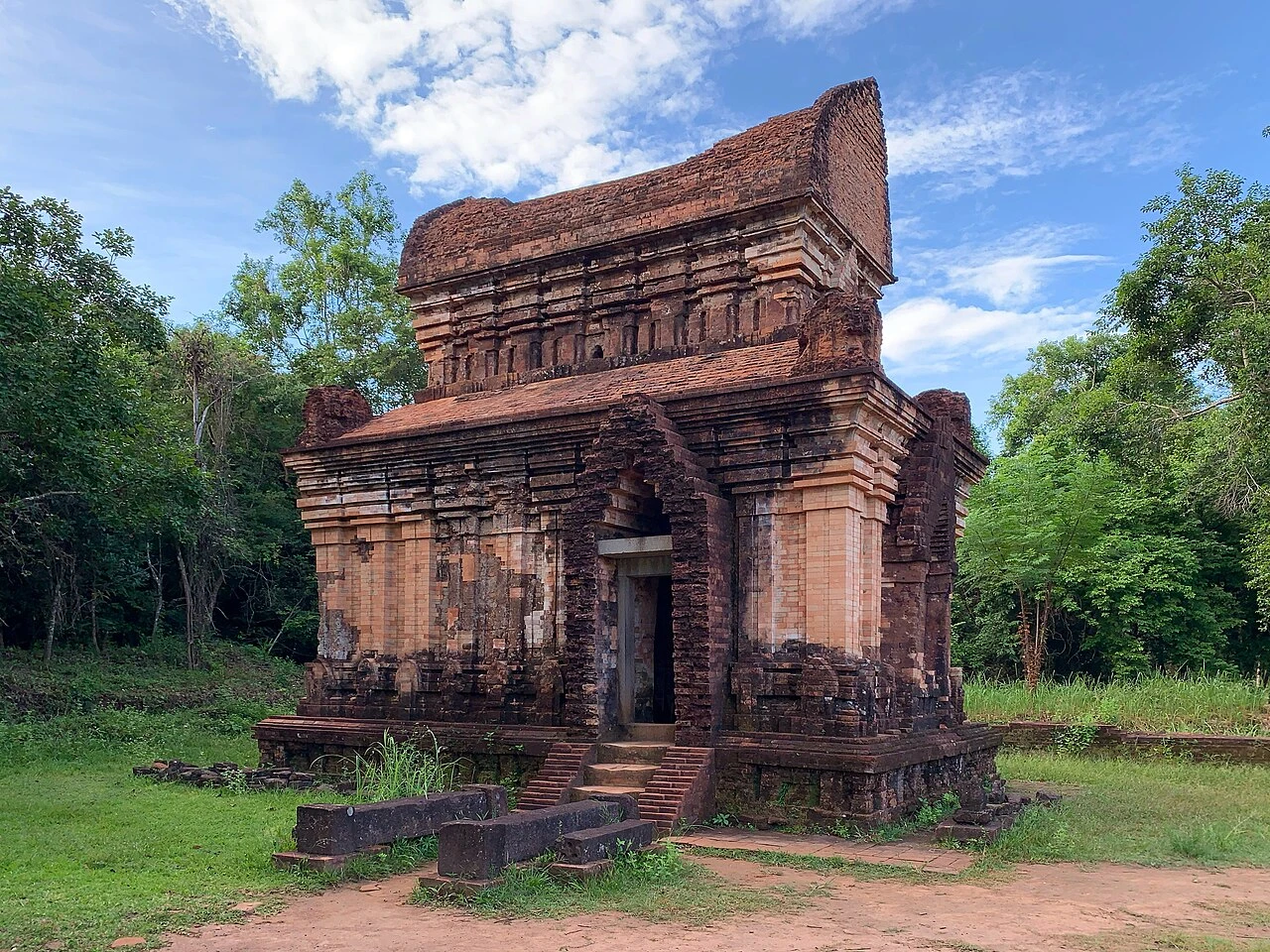
Mỹ Sơn is a cluster of abandoned and partially ruined Hindu temples constructed by the Champa kings between the 4th and 14th centuries. It is a designated UNESCO World Heritage site showcasing significant…
Download Stanza, then search for “Khu đền tháp Mỹ Sơn”.
About the tour
One guide. Your kind of visit.
Mỹ Sơn is a cluster of abandoned and partially ruined Hindu temples constructed by the Champa kings between the 4th and 14th centuries. It is a designated UNESCO World Heritage site showcasing significant religious architecture.
Ready when you are.
- 01Get the free Stanza app.
iOS & Android
- 02Find your guide.
“Khu đền tháp Mỹ Sơn”
- 03Download before you go.
Works offline
Audio guide / 31 narrated stops
Inside the guide
Get to know a few of the stories before you go. Open a stop to read more.
01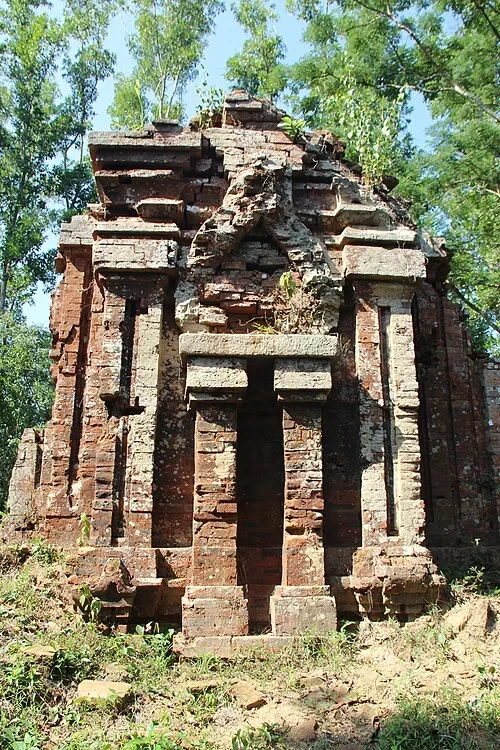 Group K Gateway TemplesGroup K
Group K functioned as the monumental entry gate to the entire sacred valley. Before passing into the inner sanctuary complex, Cham worshippers and kings would halt at this very portal to undergo rituals of purification. Looking closely at the standing walls, you can see the signature brickwork of the Champa civilization. The reddish bricks are stacked incredibly tight without any visible mortar. Instead of cement, Cham builders joined them using a liquid organic resin glaze and then fired the entire structure together. The exact process of how they achieved such flawless, durable joins without warping the clay remains a puzzle to modern construction engineers and archaeologists alike. This gateway marks the transition from the secular world to the realm of the Hindu gods, initiating a journey through the valley's spiritual heart.
Gary Todd · CC0
02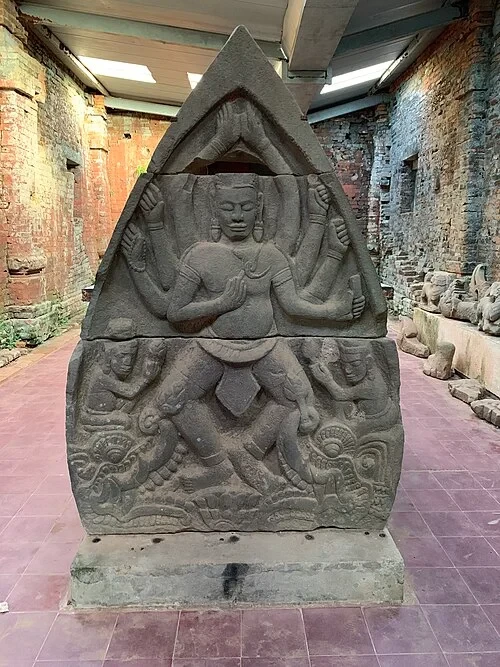 Group H Sanctuary RuinsGroup H
Sandstone panels like this one, known as tympanums, sat above temple doorways to greet worshippers. This carving features a multi-armed Shiva performing the Tandava, his cosmic dance of destruction and creation. In Shaiva Hinduism, Shiva's energetic dance is not a malevolent act; instead, it systematically destroys a weary, decaying universe to clear the path for spiritual rebirth and new life. His numerous arms fan out symmetrically to form a circular pattern resembling a solar halo. Below his dancing feet, look for the small carved figures of musicians. They play traditional instruments to maintain the steady cosmic rhythm of the universe. This carving captures the Cham artistic preference for portraying dynamic, multi-limbed deities with serene, composed facial expressions.
Photo: Chainwit. · CC BY 4.0
03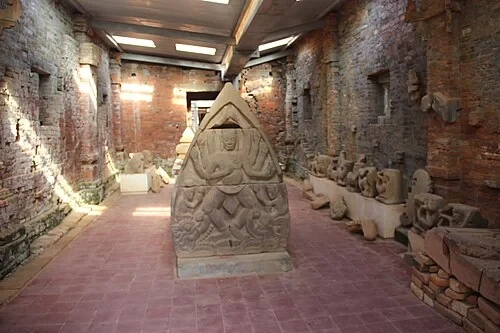 Group H Sanctuary RuinsThe Gallery of Stone Gods
The ancient brick walls of Group D's assembly hall now serve a protective purpose as an open-air museum. Lined up along the red tiled floor and against the brickwork are rows of weathered sandstone statues, pedestals, and steles. In the center stands the striking carved tympanum of the dancing Shiva. These stone artifacts were gathered from across the valley floor and rescued from the crumbling ruins of surrounding temples. By consolidating them within this sheltered space, archaeological teams have managed to protect these irreplaceable objects from further deterioration caused by tropical monsoons, as well as the constant threat of looting. Walking through this gallery allows you to examine the varied carving styles and regional influences that shaped Cham religious art over several centuries.
Listen in the appGary Todd · CC0
04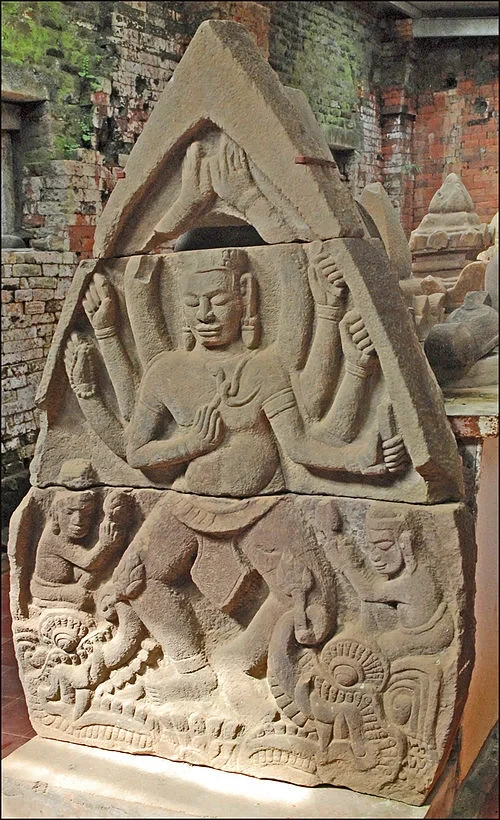 Group H Sanctuary RuinsCarving of the Multi-Armed Lord
The remarkable carving quality of this dancing Shiva tympanum shows a striking artistic contrast. While Shiva's many arms perform a wild, energetic cosmic action, his legs bend with fluid grace, and his facial features remain completely serene and detached. This combination of dynamic physical movement and internal meditative peace is a hallmark of Cham sculpture. Unlike the massive brick temples, which were built and carved directly on-site, decorative sandstone elements like this tympanum, along with lintels and doorframes, were carved by artisans off-site in dedicated workshops. Once completed, these heavy stone blocks were transported to the site and integrated into the red brick facades, demonstrating a sophisticated system of pre-fabricated construction and a seamless synthesis of different materials.
Listen in the appdalbera from Paris, France · CC BY 2.0
05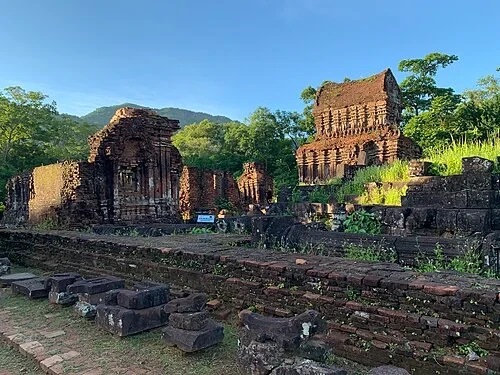 Groups B, C, and D Sanctuary ComplexMy Son Groups B, C and D
Looking across the clearing of Groups B, C, and D reveals the dense sacred core of Mỹ Sơn. A distinct visual contrast exists between the tall, relatively intact brick treasury tower with its curved, boat-like roof and the flat, low-lying foundations of the surrounding destroyed shrines. This cluster of structures was the main spiritual power center of the entire valley. Here, Champa kings would sponsor building campaigns, dedicate sacred monuments, and perform elaborate rituals to legitimize their divine right to rule. The concentration of structures in this small area shows how successive generations of kings continued to add to and embellish this central sanctuary, making it a focal point of state power and religious devotion for centuries.
Listen in the appPhoto: Chainwit. · CC BY 4.0
06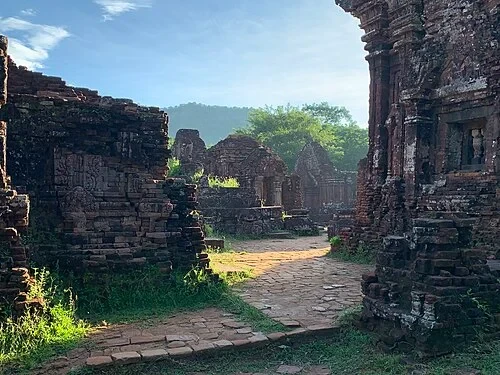 Groups B, C, and D Sanctuary ComplexThe Royal Ritual Pathway
Walking along the brick-paved path running between the towering temple walls of Group B reveals the tight, almost seamless layout of the ancient layout. This processional route was once restricted to the king, high priests, and sacred temple dancers during major astronomical festivals and state ceremonies. The narrowness of the pathway was deliberate, focusing the minds of the participants as they approached the inner sanctuaries. The bricks underfoot have been stabilized, but their placement mirrors the original layout designed by Cham architects over a thousand years ago. Moving along this path helps you experience the spatial transition from the open valley to the intimate, shadow-filled spaces where sacred rites were performed to honor the royal ancestors and the gods.
Listen in the appPhoto: Chainwit. · CC BY 4.0
07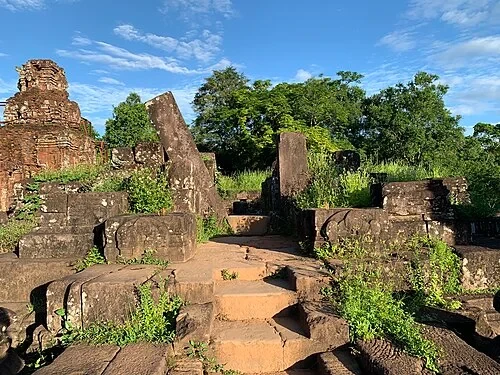 Temple B1My Son B1
Heavy stone block steps and pillars remain scattered in the courtyard of Temple B1, offering clues about Cham construction techniques. Looking closely at the block bases reveals small, worn decorative reliefs depicting floral patterns and animal motifs. These heavy stone elements served as the bedrock foundations for lighter brick walls and wooden superstructures that have long since vanished due to decay and conflict. The combination of durable stone bases with lighter upper materials shows the multi-layered architectural style typical of the region. While the wooden roofs and elaborate carvings have dissolved over time, these massive foundation stones remain firmly in place, mapping out the original dimensions of the complex and showing how Cham builders anchored their sacred structures to the earth.
Listen in the appPhoto: Chainwit. · CC BY 4.0
08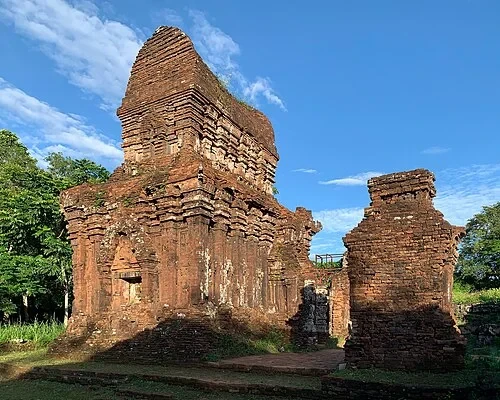 Temple B5 TreasuryMy Son B5
The beautifully preserved B5 tower is immediately recognizable by its concave, saddle-shaped roof that mimics the hull of a boat. This structure served as a treasury or repository, used to store sacred Sanskrit manuscripts, ceremonial gold and silver vessels, and precious offerings dedicated to the deities of the valley. The distinctive roof design is not merely decorative; it directly reflects the maritime identity of the Champa people. As master sailors, navigators, and merchants, the Cham dominated the critical maritime trade routes across the South China Sea for centuries. Incorporating boat motifs into their religious architecture connected their everyday reliance on the sea with their spiritual devotion, ensuring that their prosperity on the water was blessed by the gods inside.
Listen in the appPhoto: Chainwit. · CC BY 4.0
09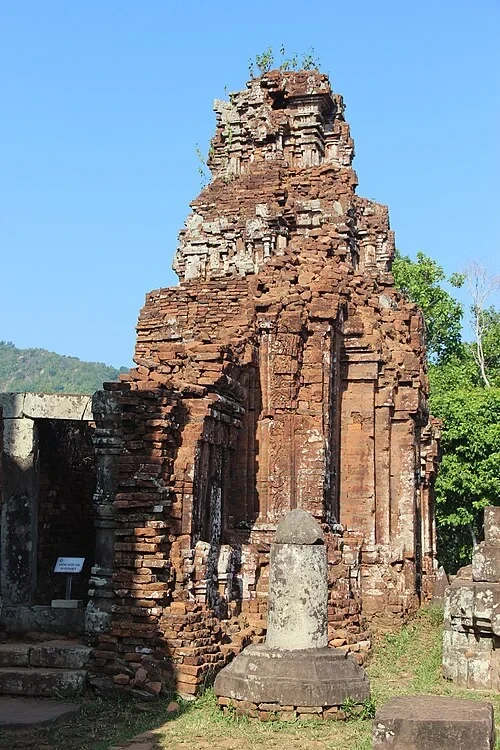 Temple B4 Auxiliary TowerMy Son B4
A weathered sandstone linga stands on its pedestal directly in front of the ruined brick walls of Temple B4. In Hindu iconography, the linga represents the formless, infinite, and creative nature of the god Shiva. Positioning this symbol outdoors rather than deep inside the sanctuary allowed the natural elements to wash over the sacred stone. This setup mirrored the ancient rituals performed by Cham priests, who poured offerings of milk, honey, and holy river water over the linga. The liquids would cascade down the stone and flow out through a channel, symbolizing the distribution of divine blessings across the soil of the kingdom, ensuring agricultural abundance and political stability for the ruling dynasty.
Listen in the appGary Todd · CC0
10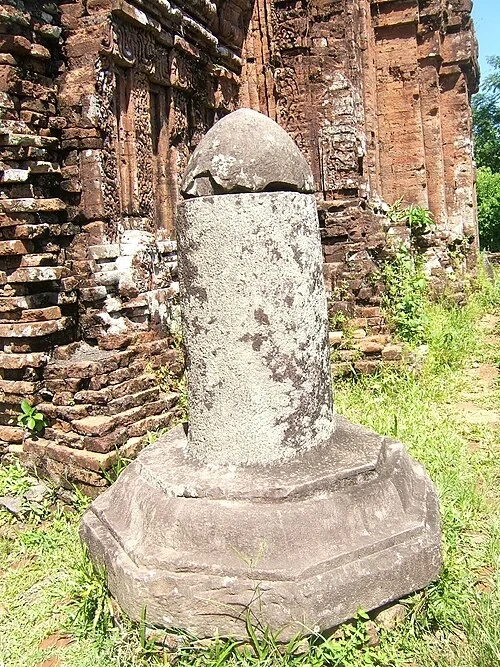 Temple B4 Auxiliary TowerThe Pillar of Shiva
The physical details of this sandstone linga show a rounded dome and a weathered, rough texture from centuries of exposure. A classical Hindu linga is divided into three distinct vertical sections, though some of these layers are often hidden within the support pedestal. The square bottom section represents Brahma the Creator, the octagonal middle section represents Vishnu the Preserver, and the cylindrical top section represents Shiva the Destroyer. This tripartite design symbolizes the unity of the three supreme Hindu deities within a single sacred pillar. The top portion, which remains fully visible, received the ritual libations during ceremonies, acting as the main point of spiritual contact where worshippers directed their prayers and offerings to the cosmic forces of the universe.
Listen in the appKhương Việt Hà · Public domain
Khu đền tháp Mỹ Sơn
Frequently asked questions
How much does the guide cost?
Free app download. Listed guide price: $3.99. Guide price shown in the app. Audio guide only. Venue admission is separate.
Can I listen without internet?
Yes. Download the guide’s audio, images, and maps in the app before your visit. Your downloaded content is then available offline.
Can I listen in my language?
Stanza supports 15 languages. Check the app for the languages available for this guide.
Do I need to follow a schedule?
No. This is a self-guided experience. Choose your stops, pause whenever you like, and return to a story at your own pace.
At your own pace
Explore Khu đền tháp Mỹ Sơn.
Download Stanza, then search for “Khu đền tháp Mỹ Sơn”.
Free app download · Guide price shown in the app