Languages
15CN Tower Audio Guide
CN Tower is a landmark in Toronto, Canada. Explore it with Stanza's GPS-triggered offline audio guide — available in 15 languages.
Quick Facts
25
Stops
15
Languages
100%
Offline
📍 Toronto, Canada · 43.6428°N, -79.3871°E
About CN Tower
The CN Tower is a prominent communications and observation tower located in Toronto, Canada. It features multiple observation decks, including a glass floor, offering panoramic views of the city and Lake Ontario.
CN Tower is also known as Tour CN, Canadian National Tower, Canada's National Tower.
This self-guided audio tour features 25 narrated stops organized across 8 sections. As a tower, CN Tower offers a unique cultural experience in the heart of Toronto, Canada.
The Stanza audio guide is available in 15 languages and works entirely offline — download the complete tour including audio narration, maps, and images before your visit. As you walk through CN Tower, GPS-triggered narration plays automatically at each point of interest.
Last updated:
What you will hear
Arrival at the Concrete Giant
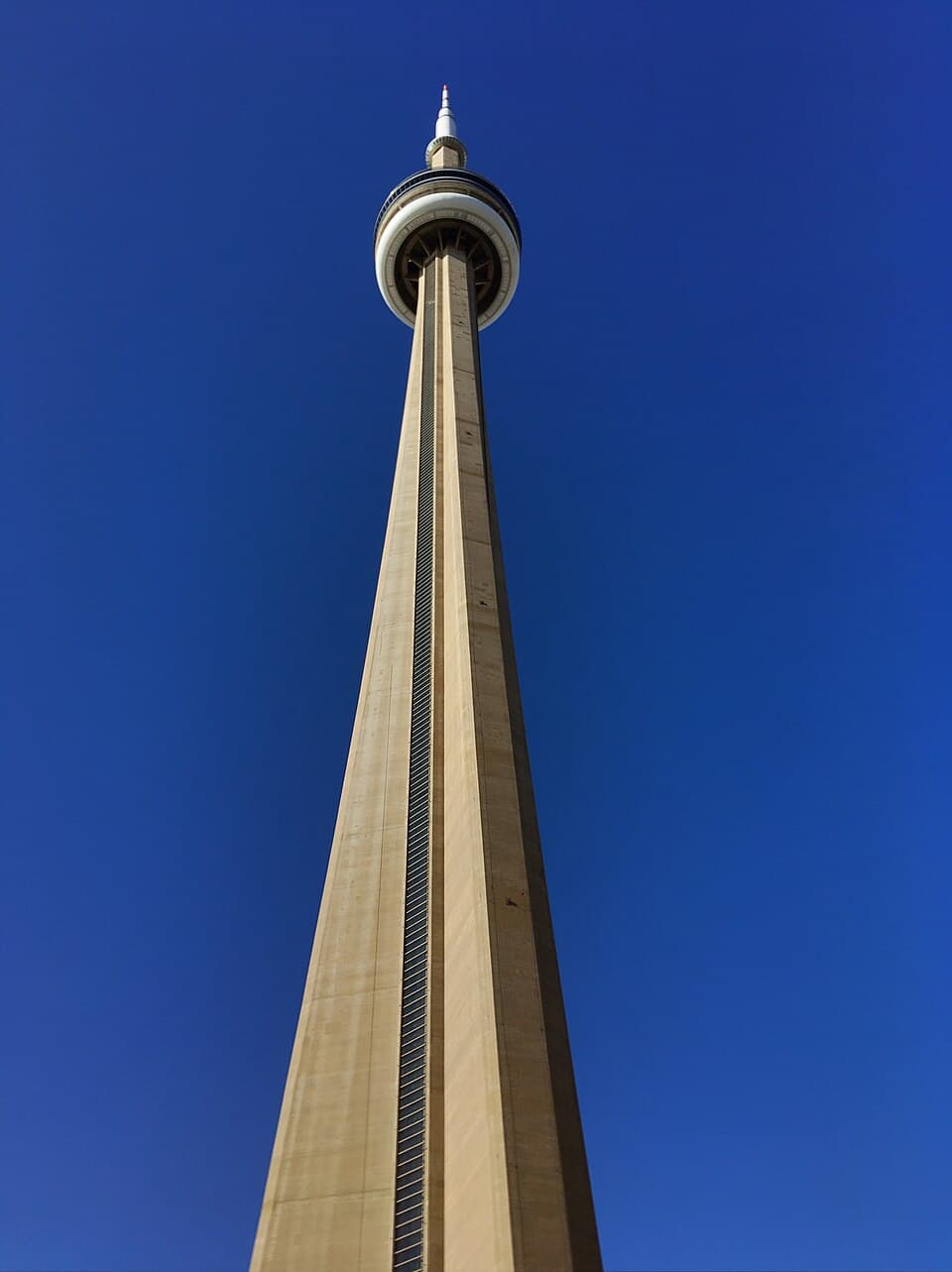
Establishes the scale and identity of the tower at the main entrance. Includes the iconic full-height view and the entrance pavilion.
The Tower's Immense Height
Welcome to one of the most recognizable structures in the world. Standing before you is a marvel of human ingenuity that reaches an incredible architectural height of 553.3 meters, or roughly 1,815.3 feet. When it was completed in the mid-1970s, it wasn't just another tall building; it was a statement of ambition. For 32 years, from 1975 until 2007, this tower held the prestigious title of the world’s tallest free-standing structure. Even today, in an era of global super-skyscrapers, it remains the tallest structure in the Western Hemisphere. As you look up toward the sky, try to wrap your mind around that scale. It is nearly twice as tall as the Eiffel Tower and over three times the height of the Washington Monument. This vertical needle was designed to withstand the harsh Canadian elements while serving as a functional communications hub. It has become much more than a utility, however; it is a symbol of Toronto and a testament to what can be achieved when engineers and architects push the boundaries of what is possible. Throughout this tour, we will explore the history, the staggering numbers, and the unique experiences hidden within this concrete giant.
Engineering a Modern Wonder
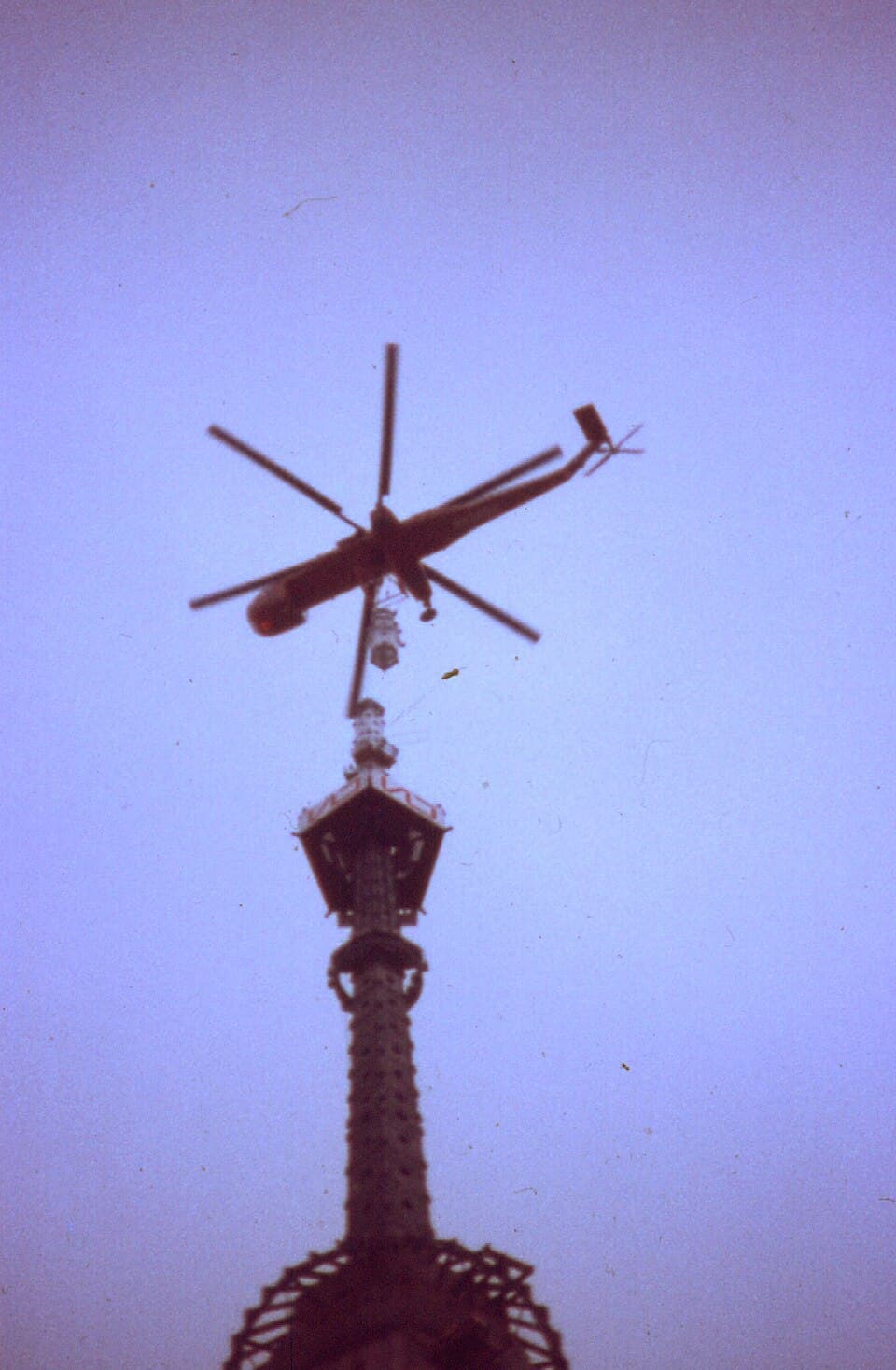
Covers the historical construction phase and the 'Olga' skycrane story mentioned in the research.
Olga the Skycrane
In this vintage photograph, you can see a Sikorsky S-64 Skycrane helicopter in action. Affectionately nicknamed 'Olga' by the construction crew, this powerful aircraft was essential for the final phase of construction. While most of the tower was built from the ground up, the 102-meter steel antenna at the very top required a different approach. Using a traditional crane at that altitude would have been dangerous and incredibly slow. Instead, Olga was brought in to lift the antenna in 36 separate sections, each weighing several tons. Precision was paramount; pilots had to hover with extreme accuracy as ground crews bolted each section into place hundreds of meters in the air. What engineers initially estimated would take six months to complete using conventional methods was finished by Olga in just over three weeks. This aerial dance became a local sensation, with residents watching from the streets as the helicopter repeatedly ascended and descended with pieces of the tower’s crown. The successful installation of the antenna was the literal 'cherry on top' that brought the tower to its record-breaking final height, transforming it from a concrete pillar into a functioning broadcast beacon.
The Lookout: Main Observation Level
The first interior destination for visitors. Shows the renovated interior and the primary viewing experience.
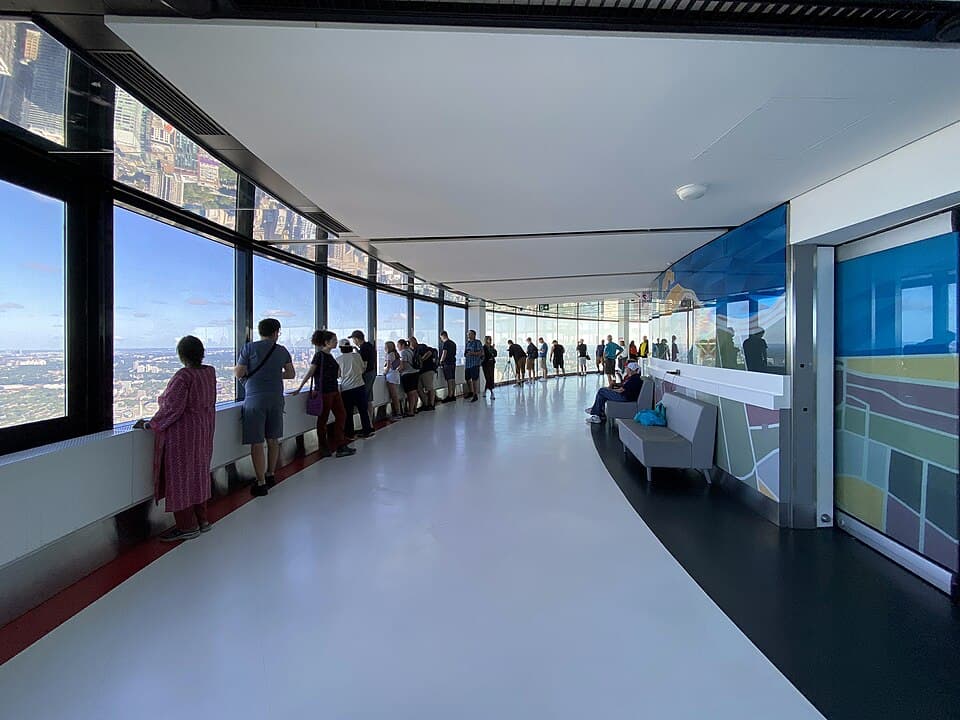
The Lookout Level
Welcome to the main observation area, known as the Lookout Level. This space has undergone significant renovations to provide a more immersive experience for visitors. The most striking feature here is the floor-to-ceiling glass windows. These massive panes allow you to stand right at the edge of the pod and look out over the city without any visual obstructions. From this vantage point, you have a 360-degree view that captures the lake to the south and the sprawling urban landscape in every other direction. To reach this specific level on foot, you would have to climb 1,776 steps, making this the longest metal staircase on Earth. Standing at this height, you are hundreds of meters above the street level, providing a perspective on Toronto that is impossible to get anywhere else. You can see the grid of the city, the patterns of the traffic, and the vastness of Lake Ontario stretching toward the horizon. The interior of the level is designed to be spacious and modern, with informative displays that help you identify the landmarks you see below. Whether it's the bright lights of the city at night or the clear blue horizons of a sunny afternoon, this level provides the quintessential tower experience.
The Financial District from Above
Consolidates the most famous panoramic views looking north and east towards Toronto's skyscraper core.
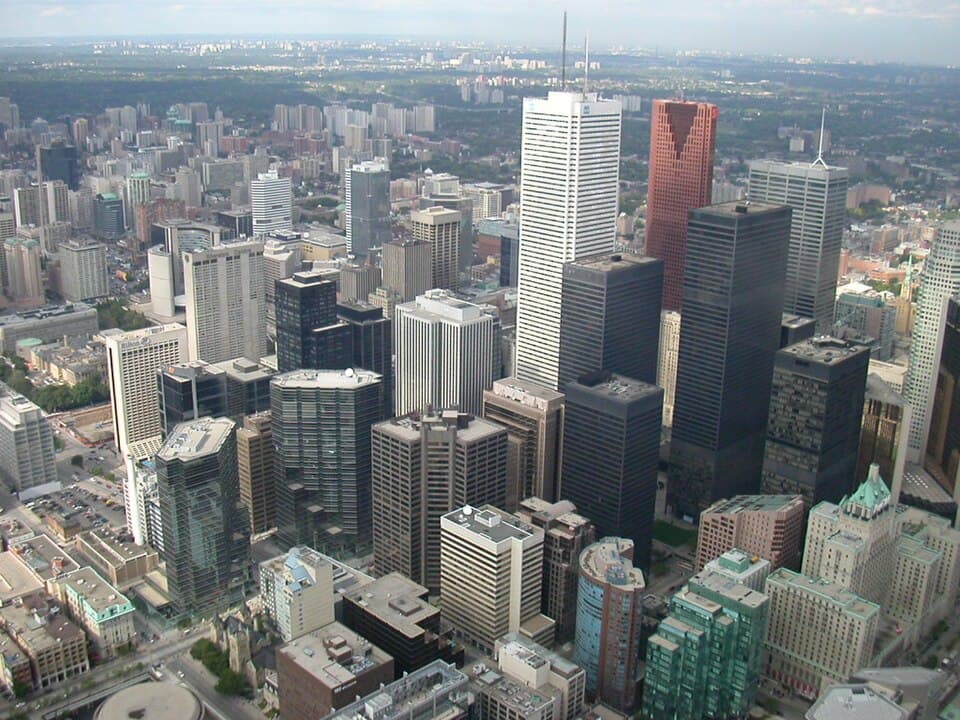
The 'Why' of the Tower
Looking north toward the dense cluster of skyscrapers in downtown Toronto, you can see the very problem this tower was built to solve. Back in the 1960s, Toronto was experiencing a massive building boom. As new, taller skyscrapers began to dominate the skyline, they started to block the line-of-sight signals required for clear radio and television broadcasts. The taller the buildings became, the worse the reception grew for people living in the surrounding region. The solution was to build a structure so tall that no skyscraper could ever interfere with its signals. The tower was designed to soar far above any existing or planned building, providing a clear path for airwaves to travel. Even today, despite the rise of the internet and satellite technology, the tower remains a crucial communications hub. It houses dozens of transmitters that provide radio, television, and microwave signals for millions of people across Southern Ontario and even into the United States. Its height ensures that it can broadcast over a vast area, making it one of the most important pieces of infrastructure in the country. What began as a practical solution to a technical problem ended up giving the city its most iconic landmark.
Railway Roots and Roundhouse Park
Explains the 'CN' (Canadian National) legacy by looking down at the historic railway lands.
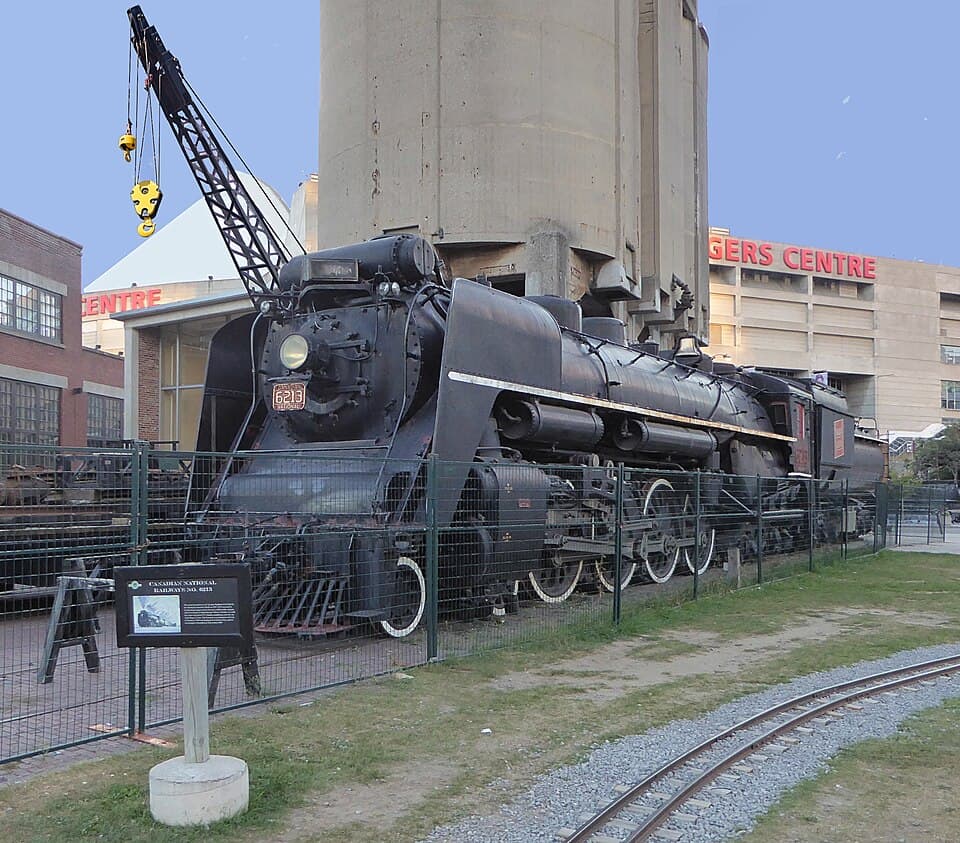
Steam and Steel
In the park area below, you might notice a vintage steam locomotive resting on a set of tracks. This artifact serves as a grounded contrast to the soaring, futuristic concrete needle above you. It is a piece of living history that connects the site to its origins as a railway yard. This locomotive represents the age of steam and steel—the era that built the economic foundation of Canada and provided the wealth necessary to undertake a massive project like the tower. While the tower looks toward the future with its sleek lines and advanced communications technology, the locomotive reminds us of the heavy industry and manual labor that once defined this waterfront. It is a testament to how much technology has changed in a relatively short period. Less than a century after these powerful engines were the height of transit technology, humans were building structures that reached into the clouds and using helicopters to assemble antennas. The presence of the locomotive in the shadow of the tower creates a unique historical timeline, showing the progression from the industrial age to the information age. It is a quiet, heavy reminder of the heritage of the Canadian National Railway and its enduring impact on the landscape of Toronto.
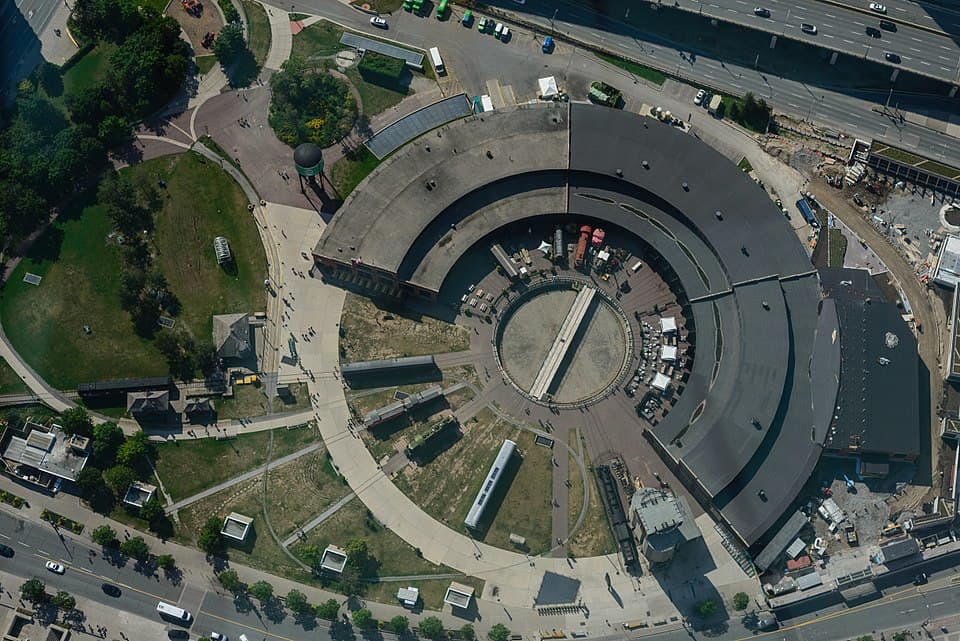
The Railway Legacy
If you look down at the circular structure nearby, you'll see the John Street Roundhouse. This building, and the land the tower stands on, are steeped in railway history. In fact, the 'CN' in the tower's name stands for 'Canadian National,' the massive railway company that originally owned this land and funded the tower’s construction. Before it was a tourist destination, this area was a vast industrial switching yard where trains were serviced and sorted. The Roundhouse itself was a critical facility where locomotives were rotated and moved into stalls for repairs. In the mid-20th century, as Toronto’s downtown began to modernize, these industrial yards became prime real estate for redevelopment. The railway company decided to use a portion of this land to build a massive communications tower, partly to solve the signal issues we discussed earlier and partly as a grand monument to their own corporate success. While the trains are mostly gone from this immediate area, the roundhouse has been preserved as a park and museum, serving as a reminder of the industrial era that paved the way for the futuristic tower. The tower’s presence here is a bridge between Canada’s railway past and its high-tech future.
The Glass Floor Thrill
A 'must-see' experience. Highlights the famous floor that can support the weight of 35 moose.
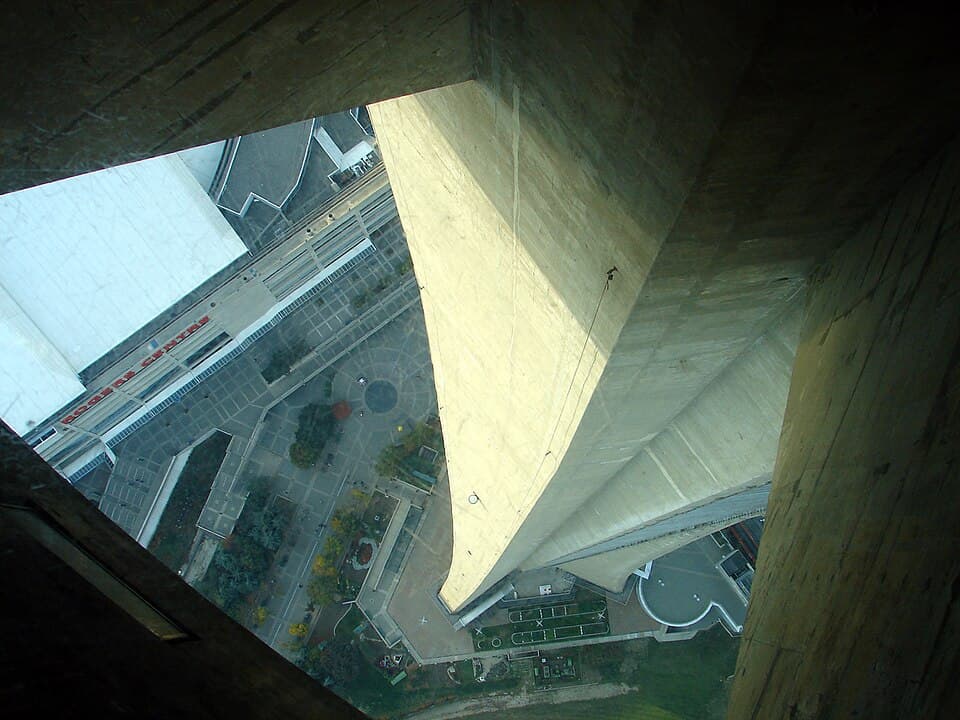
Vertigo from Above
Standing at this vantage point, you get a unique appreciation for the tower's muscular design. As you peer downward, notice the long, tapering lines of the concrete legs as they plunge 342 meters toward the city streets. From this height, the cars and people below are reduced to mere specks, emphasizing the immense verticality of the structure. You might notice a subtle sensation—a slight vibration or even a gentle swaying. This isn't your imagination; it's a testament to the tower's engineering. Like any extremely tall structure, the CN Tower is designed to be flexible. It can withstand powerful winds by swaying slightly, which prevents the concrete from cracking under pressure. At this level, the tower can move several inches, a perfectly normal and safe feature that ensures its longevity against the elements. It is a sensory experience that combines the visual drama of a sheer drop with the physical reality of living in a structure that interacts with the sky. This movement is a reminder of the dynamic forces that engineers had to account for when building one of the world's tallest free-standing structures.
A Beacon in the Night
Explains the LED lighting system used to commemorate global and local events.
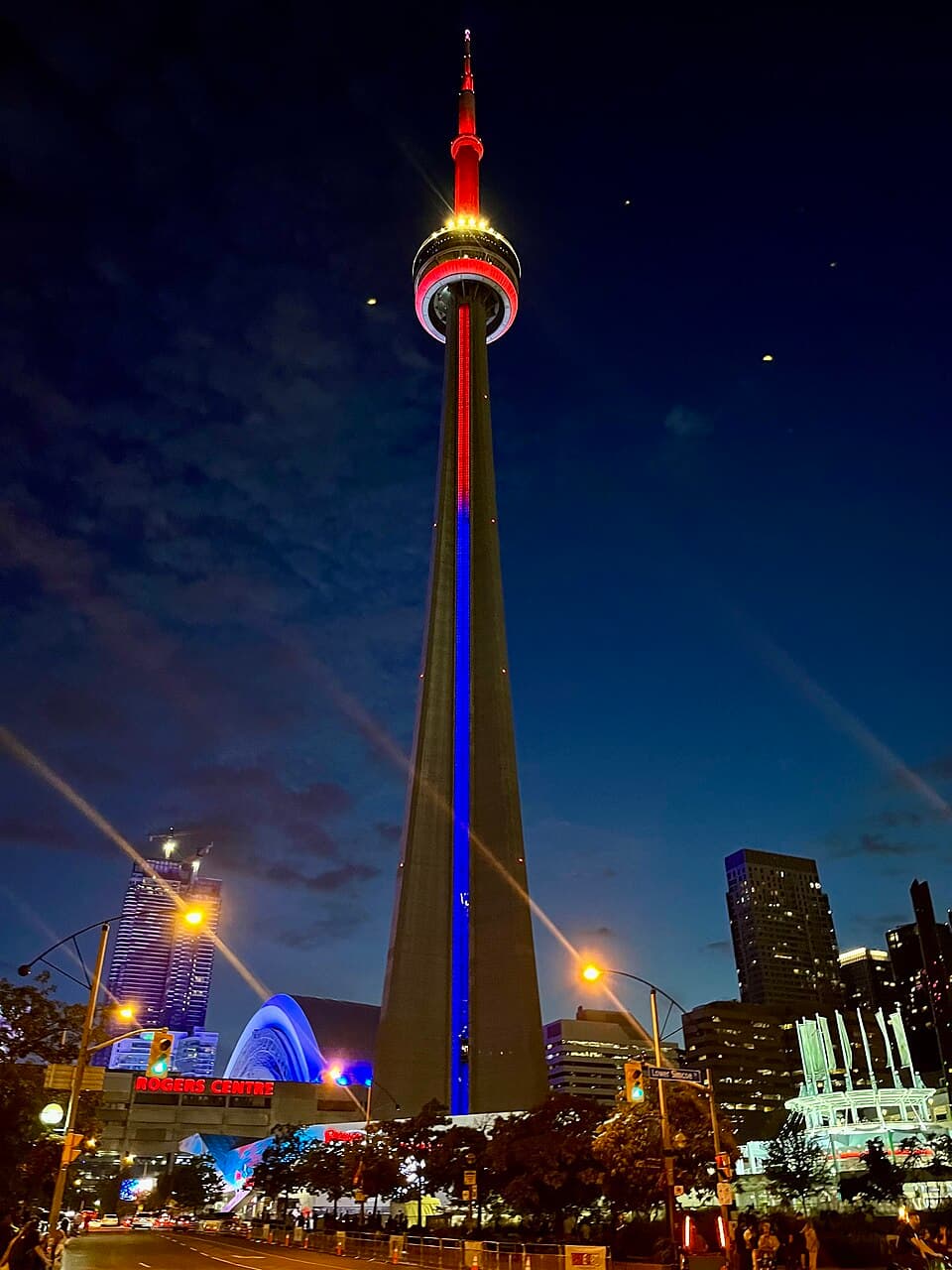
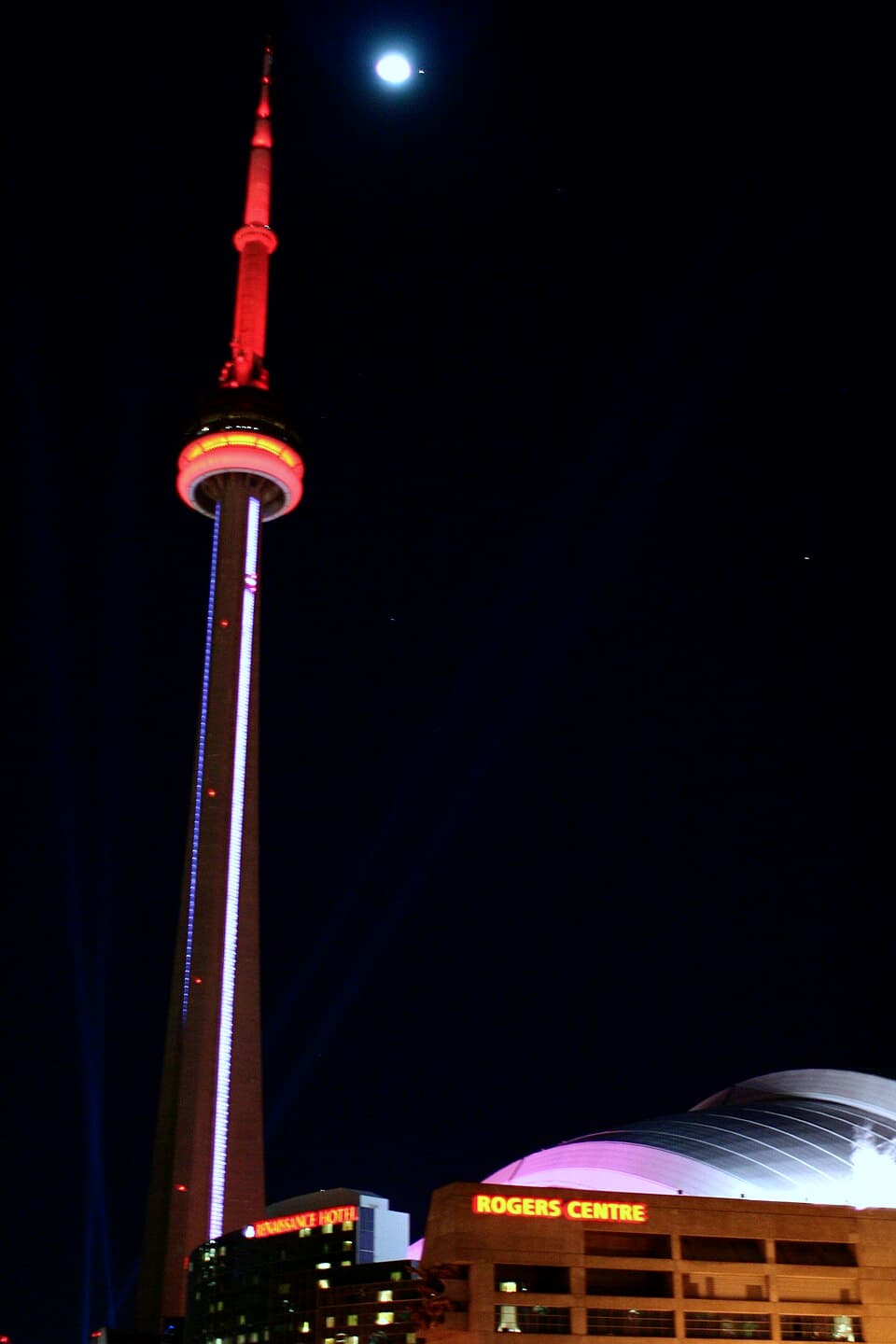
A Beacon of Light
While the tower is a marvel of concrete and steel by day, it becomes a dynamic canvas of light once the sun sets. The structure is equipped with an advanced LED lighting system that can produce millions of different colors and patterns. This is not just for decoration; the lights serve as a visual language for Toronto. The tower is illuminated in specific colors to celebrate national holidays, commemorate global events, or show support for local sports teams during major championships. For example, you might see it glowing in vibrant blue and white for the Blue Jays, or in somber tones during times of international remembrance. This tradition has turned the CN Tower into a focal point for the city’s collective mood and milestones. Residents often look to the tower's nightly display to see what the city is celebrating or honoring. The energy-efficient LEDs were installed to replace older, less versatile lighting, ensuring that the tower remains a bright and sustainable symbol on the skyline for years to come. Every night at the top of the hour, a short light show further animates the tower, delighting onlookers across the city.
The Great Stunt Jumps
Beyond its role as a tourist attraction and broadcast hub, the tower has occasionally served as a stage for incredible feats of daring. In the late 1970s and early 1980s, stuntman Dar Robinson cemented his name in the tower's history with two legendary jumps. In 1979, he leapt from the tower using a parachute for a feature film, a stunt that captured the public's imagination. He returned in 1980 for a documentary, this time performing a 'wire decelerator' jump. In this second feat, he fell hundreds of feet toward the ground, stopped only by a high-tech braking cable just before impact. These stunts were groundbreaking at the time and required immense technical precision and courage. While unauthorized jumps are strictly forbidden and dangerous, Robinson's professionally managed stunts helped define the tower as a place where the boundaries of human achievement could be pushed. His legacy remains a part of the tower’s lore, reminding us of the era when this structure was the ultimate proving ground for the world's most fearless performers. These events proved the tower was not just a static building, but a dynamic participant in the city's history of spectacle.
Departure and Skyline Legacy
Provides closure by looking back at the tower from the waterfront, reflecting on its 32-year record as the world's tallest.
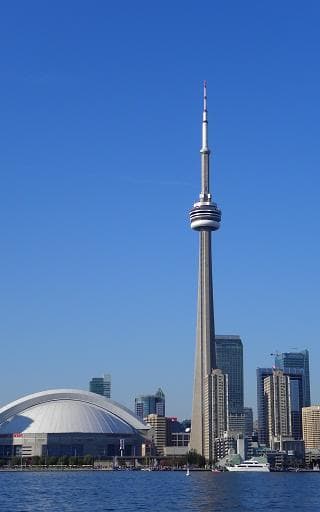
The Skyline Legacy
From this final perspective across the water, the CN Tower stands as the undisputed anchor of the Toronto skyline. When it was first conceived, Toronto was a much smaller, quieter provincial city. The completion of this massive structure served as a bold statement of intent, signaling Canada's industrial and architectural ambitions to the rest of the world. It effectively transformed the city's identity from a regional port into a sophisticated global metropolis. While it was originally built for the practical purpose of improving telecommunications, it has surpassed its functional roots to become the defining symbol of the city. For many, seeing the silhouette of the tower is synonymous with being home. It is a landmark that has witnessed decades of growth, change, and cultural shifts, yet it remains the constant, towering presence in every photograph and memory of the city. As you look back at the tower one last time, consider how this single feat of engineering has become the enduring icon of Toronto’s spirit and its connection to the wider world. It stands as a monument to human ingenuity and the collective ambition of a city that continues to reach for the stars.
Want to hear the rest?
Download the Stanza app to unlock all 25 stops and full GPS-guided navigation.
Frequently Asked Questions
How long does the CN Tower audio tour take?
The CN Tower audio guide includes 25 narrated stops. Most visitors spend 45 minutes to 1.5 hours exploring the complete tour, though you can listen at your own pace and skip or revisit any stop.
Is the CN Tower audio guide available in my language?
Stanza supports 15 languages: English, Spanish, French, German, Italian, Portuguese, Russian, Japanese, Chinese, Korean, Arabic, Hindi, Polish, Dutch, Hebrew. Check the guide in the app to confirm the languages currently available for this tour.
Can I use the audio guide offline at CN Tower?
Yes! Download the complete CN Tower tour — including all audio, maps, and images — before your visit. The Stanza app works completely offline, so you don't need WiFi or mobile data at the venue.
How much does the CN Tower audio guide cost?
The Stanza app is free to download. The current listed price for the CN Tower audio guide is $2.99; app-store region and currency may affect the final price.
How do I use the Stanza audio guide at CN Tower?
Download the free Stanza app, search for "CN Tower", and download the tour. When you arrive at the venue, the app uses GPS to detect your location and automatically plays the relevant narration as you move between points of interest — completely hands-free.
What makes the Stanza audio guide different from other CN Tower tours?
Stanza offers GPS-triggered narration that plays automatically as you walk through CN Tower — no need to manually select stops. The tour is available in 15 languages, works fully offline, and includes 25 expertly narrated stops with images and historical context.
What other audio guides are available near CN Tower?
Stanza offers multiple audio guides in Toronto, Canada and nearby areas. After downloading the app, browse the map to discover all available tours near CN Tower. Each guide can be downloaded for offline use.