Stanza · Audio guide
Blarney Castle Audio Guide
A place to remember. A story to take with you.
Blarney Castle is a medieval stronghold located in Blarney, County Cork, Ireland. It is famous for the Blarney Stone, which visitors kiss to gain the 'gift of the gab'.
Download Stanza, then search for “Blarney Castle”.
About the tour
One guide. Your kind of visit.
Blarney Castle is a medieval stronghold located in Blarney, County Cork, Ireland. It is famous for the Blarney Stone, which visitors kiss to gain the 'gift of the gab'.
Ready when you are.
- 01Get the free Stanza app.
iOS & Android
- 02Find your guide.
“Blarney Castle”
- 03Download before you go.
Works offline
Audio guide / 22 narrated stops
Inside the guide
Get to know a few of the stories before you go. Open a stop to read more.
01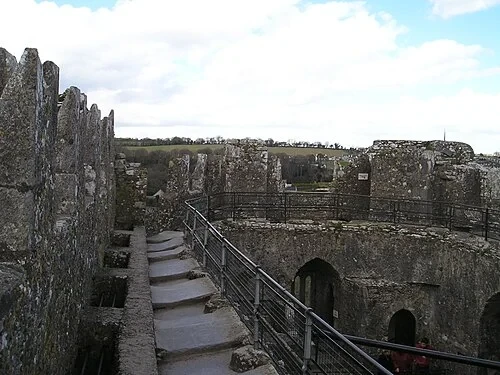 The Parkland Approach
The Battlements
Welcome to Blarney Castle. Before we walk up to the keep, picture the very top of the tower, approximately 90 feet above the ground. This was the primary defensive position used by the MacCarthy lords during the 15th century. These narrow stone walkways, though now protected by modern iron railings for your safety, were once the domain of vigilant sentries and archers. As you walk along the perimeter, notice the distinct gaps in the stone walls known as crenellations. These 'stone teeth' were a masterpiece of medieval military engineering, providing a strategic advantage that allowed the castle to remain a formidable stronghold for centuries. These battlements were designed specifically to give archers a safe place to fire at advancing enemies. The solid sections of stone, called merlons, provided total cover, while the open gaps, or crenels, gave soldiers the necessary window to launch their counterattacks. From this height, the tactical importance of Blarney Castle becomes immediately clear. The 360-degree vantage point allowed the lords to monitor every approach to their lands, making a surprise assault nearly impossible. As you traverse these walkways, imagine the experience of a medieval guard watching over the emerald landscape, with the wind whipping through these very gaps in the masonry.
User Thesteve on en.wikipedia · CC BY-SA 4.0
02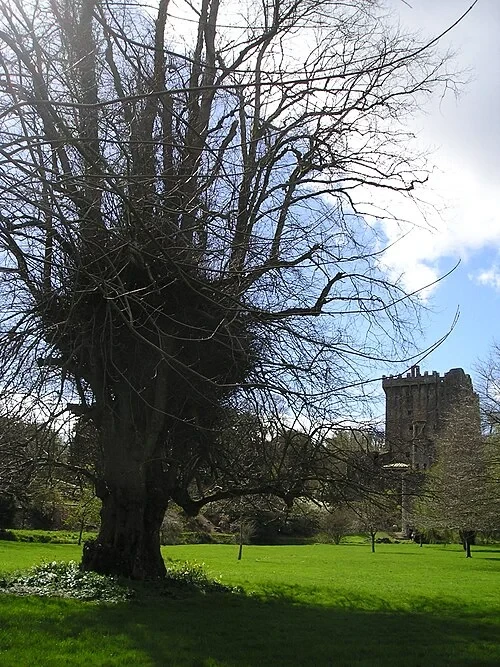 The Parkland Approach
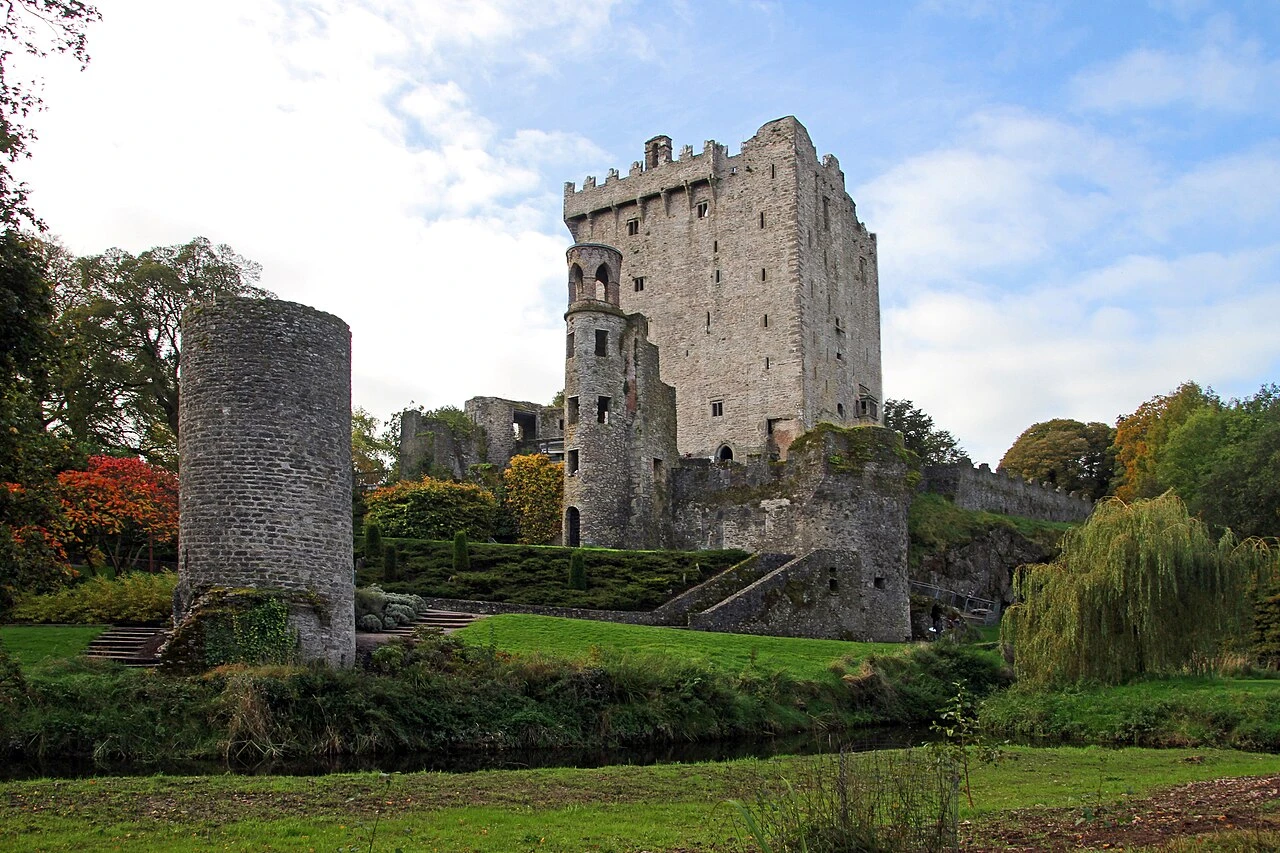
As you approach the massive keep, you are looking at a structure with a long and layered history. This impressive tower house was completed in 1446 by Cormac Láidir MacCarthy, one of the most powerful chieftains in Munster. However, it is actually the third structure to occupy this strategic site. It followed a 12th-century timber house and a 13th-century stone fort, proving that this limestone outcrop has been a prized location for defenders for nearly a thousand years. The keep you see today is the centerpiece of a vast 60-acre estate. It was designed not just for military defense, but also as a grand residence that reflected the wealth and status of the MacCarthy family. As you walk across the parkland toward the fortress, notice how it dominates the surrounding landscape. The transition from the soft, rolling greenery of the estate to the sheer, hard verticality of the castle walls is intentional, meant to inspire awe in both friends and foes alike. This estate has evolved from a defensive garrison into a world-famous park, yet the 15th-century tower remains the anchor of the entire landscape, standing as a silent witness to over five centuries of Irish history.
User Thesteve on en.wikipedia · CC BY-SA 4.0
03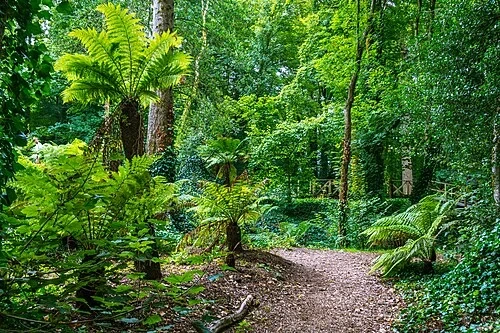 The Poison Garden and Exotic Ferns
The Exotic Fern Glade
The grounds of the castle offer more than just military history; they are home to a remarkable botanical collection. Here in the Fern Glade, you are standing in a unique microclimate. The deep limestone cliffs and dense canopy of ancient trees create a sheltered, humid environment that stays significantly warmer than the surrounding Irish countryside. This has allowed the estate to cultivate a vast collection of exotic ferns, some with prehistoric origins, creating a lush, primeval atmosphere that feels worlds away from the stone battlements above. While this glade is a place of peaceful, verdant beauty, it serves as a stark contrast to the nearby Poison Garden. In that specialized area, the botanical collection takes a more sinister turn. Behind protective iron cages, the estate houses some of the world's most lethal plant species, including wolfsbane and mandrake. The duality of these two gardens—the soft, ancient ferns here and the deadly species nearby—reflects the complex relationship humans have had with nature throughout history. As you explore this damp, green corridor, notice the variety of textures and feathered fronds that make this glade feel like a hidden, prehistoric world tucked away at the base of the fortress.
Listen in the appMarathon · CC BY-SA 2.0
04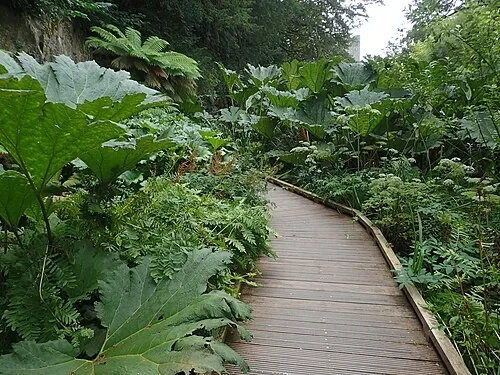 The Poison Garden and Exotic Ferns
The Jungle Boardwalk
Stepping onto this wooden boardwalk, you might feel as though you have been transported to another continent. You are surrounded by the massive, prehistoric-looking leaves of Gunnera manicata, a plant often nicknamed 'Giant Rhubarb' due to its scale and appearance. These plants thrive in the damp, boggy conditions found here, with their textured leaves growing several feet wide, creating a dense, emerald canopy that traps moisture and heat. The experience of walking through this lush environment is more like traversing a tropical rainforest than the typical Irish countryside. The humidity and the scent of damp earth and greenery create a sensory experience that is entirely unique to this part of the estate. This area highlights the diversity of the castle's 60-acre grounds, where a few steps can take you from the stark, gray stone of medieval warfare into a vibrant, living jungle. As you follow the path, listen to the rustle of the enormous leaves in the breeze and appreciate the expert gardening required to maintain such a delicate, 'otherworldly' habitat in the middle of County Cork.
Listen in the appMarathon · CC BY-SA 2.0
05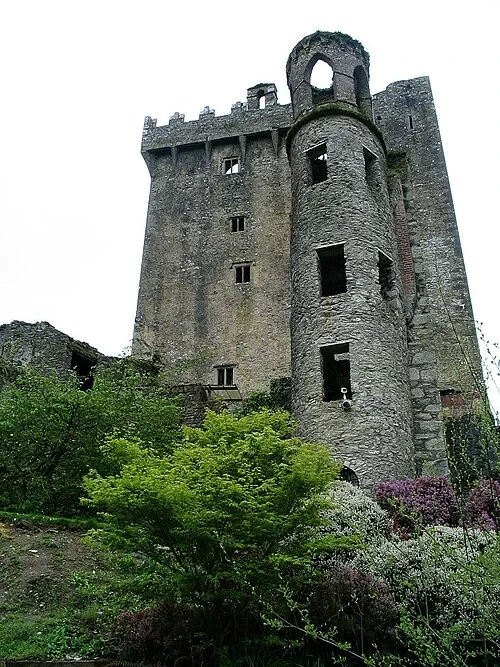 The Fortress Exterior
The Medieval Keep
From this vantage point, the sheer physical scale of the Blarney keep is undeniable. This massive tower rises to a height of 27 meters, or nearly 90 feet, and its walls are several feet thick at the base to provide the stability and defense required of a 15th-century stronghold. It was designed to be nearly impregnable, using the natural elevation of its limestone base to gain an even greater advantage over any approaching army. Notice the contrasting architectural elements of the structure. While much of the keep is a traditional rectangular tower house, you can see a prominent rounded corner tower. This keep was a statement of absolute authority, built during an era when the MacCarthy dynasty was among the most influential in Ireland. Even today, the weathered stone and massive silhouette convey a sense of permanence and formidable power.
Listen in the apppsyberartist · CC BY 2.0
06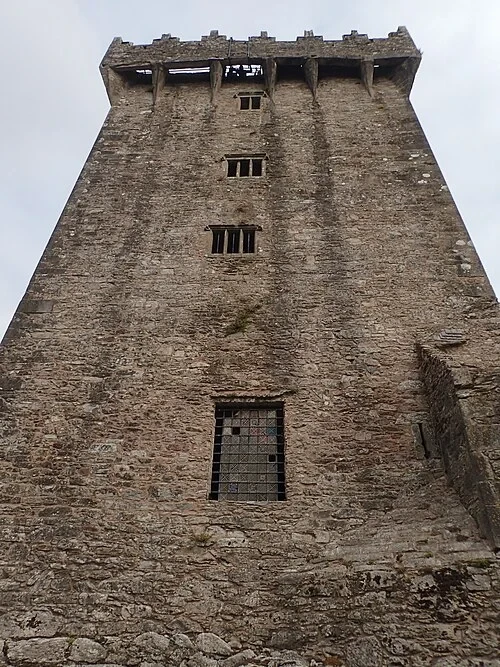 The Fortress Exterior
The Tower Walls
The massive limestone walls before you have survived over 570 years of both warfare and the relentless Irish weather. While they appear indestructible, they were famously breached during the Siege of 1646. This conflict was a part of the Irish Confederate Wars, a tumultuous period when the castle became a target for Parliamentarian forces. The siege was led by Lord Broghill, whose army utilized modern heavy artillery to do what earlier attackers could not. Broghill’s forces positioned cannons on the surrounding high ground and fired upon these very walls until they finally gave way. This breach marked a turning point in the castle's history, leading to its capture and the eventual decline of the MacCarthy family's absolute control over the region. As you look at the masonry, consider the resilience of the stone. Despite the damage from the 17th-century cannons and the centuries of rain that have followed, the structure remains remarkably intact. These walls are not just structural supports; they are a physical record of the sieges, shifts in power, and the enduring strength of medieval Irish architecture.
Listen in the appMarathon · CC BY-SA 2.0
07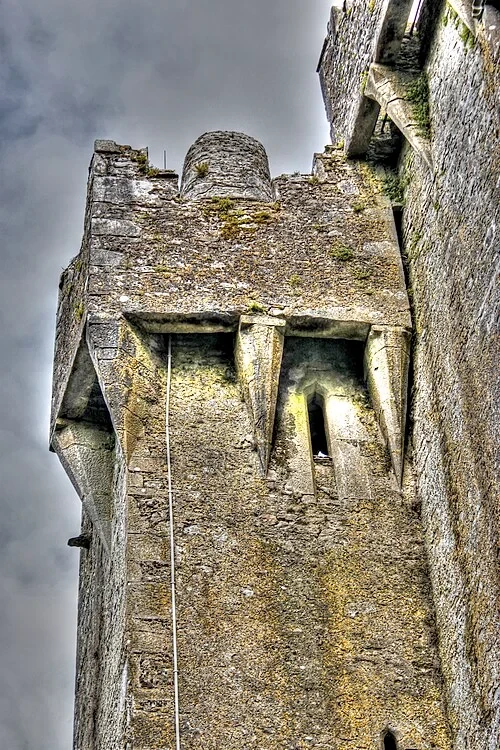 The Fortress Exterior
The Watchtower Defenses
High above the main walls of the keep, you will see a series of projecting stone structures known as machicolations. These were a standard, yet terrifying, feature of medieval defensive architecture. While they look like decorative corbels today, their original purpose was purely tactical. These structures allowed defenders to stand safely behind the high parapet while accessing openings in the floor that hung directly over the castle's base. Through these gaps, defenders could rain down heavy stones, fire arrows, or drop boiling liquids—like oil or water—directly onto attackers who were attempting to scale the walls or batter the doors. This effectively removed the 'dead zone' at the foot of the tower where attackers would normally be hidden from the view of guards on the roof. By using the machicolations, the MacCarthy lords could ensure that no part of their fortress was left vulnerable during a siege. It is a grim reminder that every architectural detail of this grand tower was carefully calculated for military survival, turning the very height of the castle into a lethal weapon against anyone daring to trespass.
Listen in the apppsyberartist · CC BY 2.0
08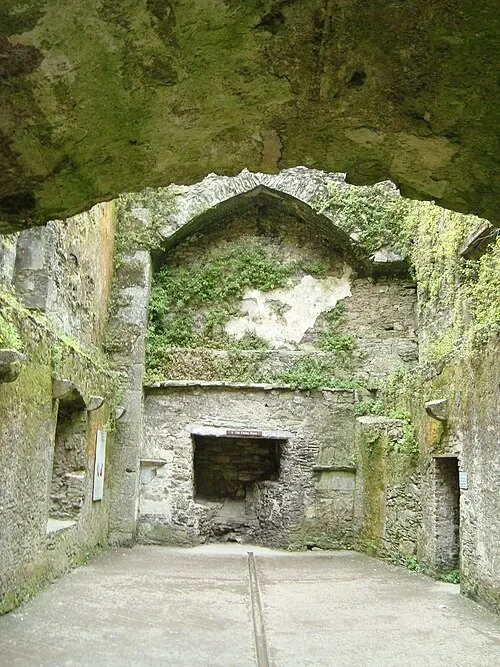 The Great Hall and Interior Chambers
The Great Hall
Step into what remains of the Great Hall, the room that once served as the social and political heart of the castle. In its prime, this space was far from the silent, roofless ruin you see now. This was the stage where the MacCarthy dynasty hosted lavish feasts for important guests, held court to settle legal disputes, and gathered their clan for grand celebrations. Imagine the floor covered in fresh rushes, the smell of roasting meat from the hearths, and the sound of harps playing as the lords of Munster displayed their wealth and influence. Now, the heavy tapestries that once covered these walls have been replaced by creeping ivy and patches of soft green moss. While the roof is long gone, the sheer scale of the hall still conveys the grandeur of its original purpose. The large window frames once held glass or shutters that looked out over the estate, providing light for the intense political negotiations and joyous feasts that occurred within. Standing here, you can almost feel the echoes of centuries of conversation and music, a poignant reminder of how time eventually transforms even the most powerful human strongholds into part of the natural landscape.
Listen in the appElena Tatiana Chis · CC BY-SA 4.0
09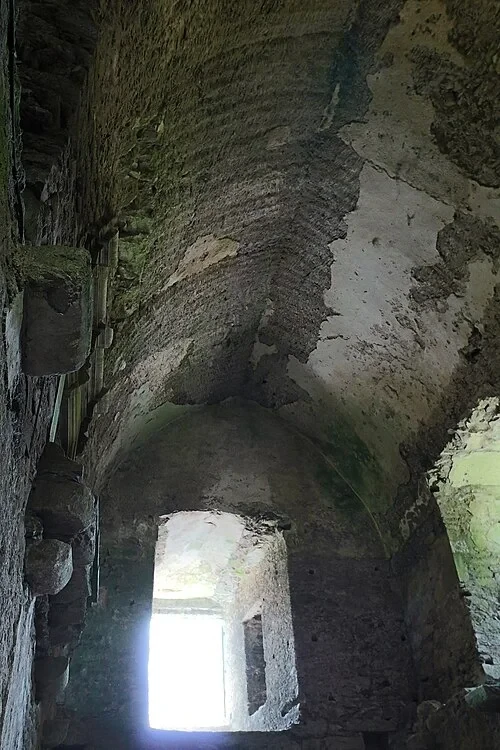 The Great Hall and Interior Chambers
The Vaulted Chamber
Notice the stone vaulted ceiling in this chamber. This architectural feature was a marvel of medieval engineering, essential for supporting the immense weight of the rooms and battlements above. Before the use of modern structural materials, masons relied on the physics of the arch to distribute weight outward and downward into the thick exterior walls. This solid vaulting is the reason these lower levels have remained intact for centuries, even after the timber roofs and upper wooden structures of the castle were lost to time. While your eyes are drawn upward, also take note of the narrow windows set deep into the masonry. These were designed with a clear defensive purpose. On the inside, the window opening is wide, allowing a defender plenty of room to move and aim. However, as the window passes through the several-foot-thick wall, it tapers into a very narrow slit on the exterior. This made it nearly impossible for an enemy outside to land an arrow inside, while also preventing anyone from climbing through the window to gain entry. Every inch of this vaulted chamber was built to balance the needs of structural stability with the constant reality of medieval warfare.
Listen in the appRobert Linsdell from St. Andrews, Canada · CC BY 2.0
10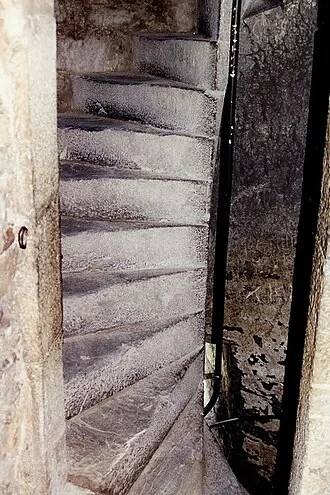 The Spiral Ascent
The Lower Spiral Staircase
As you prepare to climb toward the summit, you are entering one of the most strategically designed parts of the keep. There are over 100 narrow stone steps ahead of you, and they follow a very specific pattern: they spiral clockwise as you go up. This was not a random choice by the stonemasons; it was a clever military tactic used in nearly all medieval castle towers. Because most people were right-handed, a defender coming down the stairs would have his right sword arm free to swing in the wider part of the spiral. Conversely, an attacker coming up the stairs would have his right arm blocked by the central stone pillar, severely limiting his ability to fight back. In the cramped, dark quarters of the staircase, this simple geometric design could decide the outcome of a battle. As you take your first steps, keep this 'defender’s advantage' in mind. The climb is a physical challenge, but it also provides a unique insight into the cold, tactical logic used to protect every corner of this 15th-century fortress.
Listen in the appJoseph Mischyshyn · CC BY-SA 2.0
- 11
The Upper Spiral Staircase
Feel the cool, damp stone and notice the deep grooves worn into these steps by millions of visitors who have climbed toward the summit over the centuries.
- 12
The Blarney Stone
Reach the climax of your journey at the legendary Stone of Eloquence, where a brave ritual is said to grant the lifelong gift of persuasive speech.
- 13
Looking Up At The Stone
Peer through the gaps of the machicolations to see the mechanics of the Blarney Stone and discover how an English Queen’s frustration gave birth to a legendary term.
- 14
The High View
From the castle’s summit, survey a breathtaking 60-acre panorama and ponder the legend that this stone was once part of the sacred Lia Fáil.
- 15
The Wishing Steps
Descend into the mystical Rock Close to discover the Wishing Steps, where a simple ritual of closing your eyes and walking might just make your dreams come true.
- 16
The Witch's Stone
Look closely at this large limestone rock to see the profile of a face, home to the legend of the Blarney Witch who is imprisoned here by day.
- 17
The Ancient Dolmen
This impressive stone formation, known as a dolmen, invites you to explore the ancient Druidic connections and pagan myths that have long haunted these grounds.
- 18
Witch’s Yew Tree
Behold the gnarled and ancient Witch's Yew, a 600-year-old tree whose twisting branches grow directly from the rock, symbolizing the cycle of life and death.
- 19
The Wizard's Tree
This living sculpture showcases an intricate network of roots and moss, blending into the landscape to create the magical, 'otherworldly' atmosphere cultivated by the MacCarthy family.
- 20
Blarney House
Witness the architectural shift from medieval fortress to Victorian elegance at Blarney House, a Scottish Baronial mansion built in 1874 as a grand family residence.
- 21
The Victorian Gardens
Wander through the meticulously manicured Victorian gardens, where vibrant dahlia beds offer a colorful contrast to the stark limestone walls of the ancient keep.
- 22
The Stable Yard
Conclude your journey at the historic Stable Yard, where Victorian outbuildings once housed the estate's horses and carriages, marking 800 years of history.
Blarney Castle
Frequently asked questions
How much does the guide cost?
Free app download. Listed guide price: $1.99. Guide price shown in the app. Audio guide only. Venue admission is separate.
Can I listen without internet?
Yes. Download the guide’s audio, images, and maps in the app before your visit. Your downloaded content is then available offline.
Can I listen in my language?
This audio guide is available in 15 languages, including English.
Do I need to follow a schedule?
No. This is a self-guided experience. Choose your stops, pause whenever you like, and return to a story at your own pace.
At your own pace
Explore Blarney Castle.
Download Stanza, then search for “Blarney Castle”.
Free app download · Guide price shown in the app
Keep exploring
Audio guides — Ireland
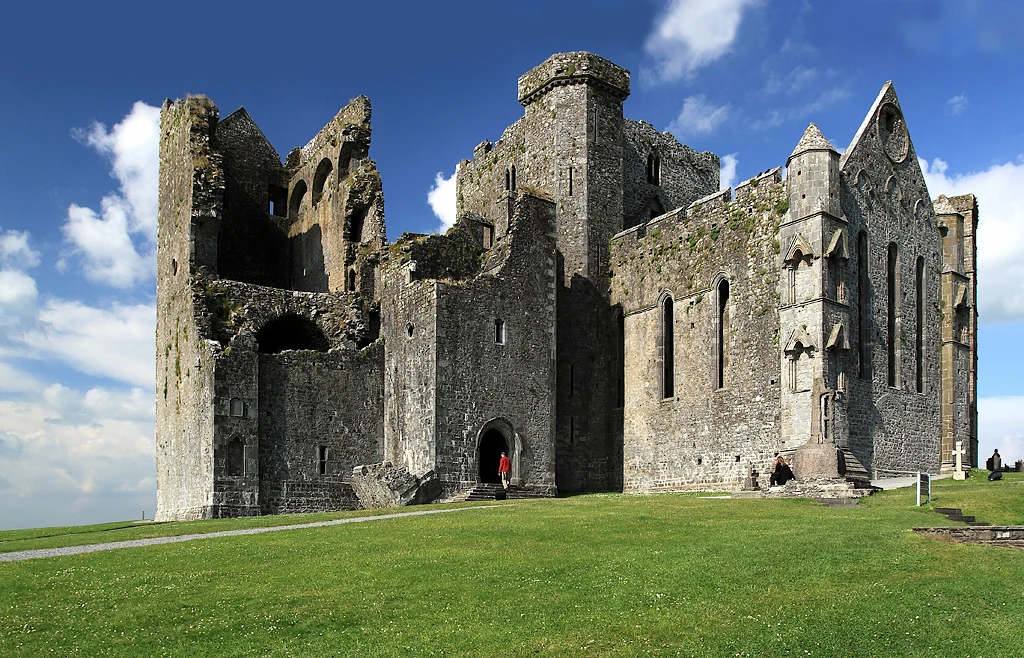
County Tipperary · 80 km
Rock of Cashel
Content & sources
Mike Searle · CC BY-SA 2.0
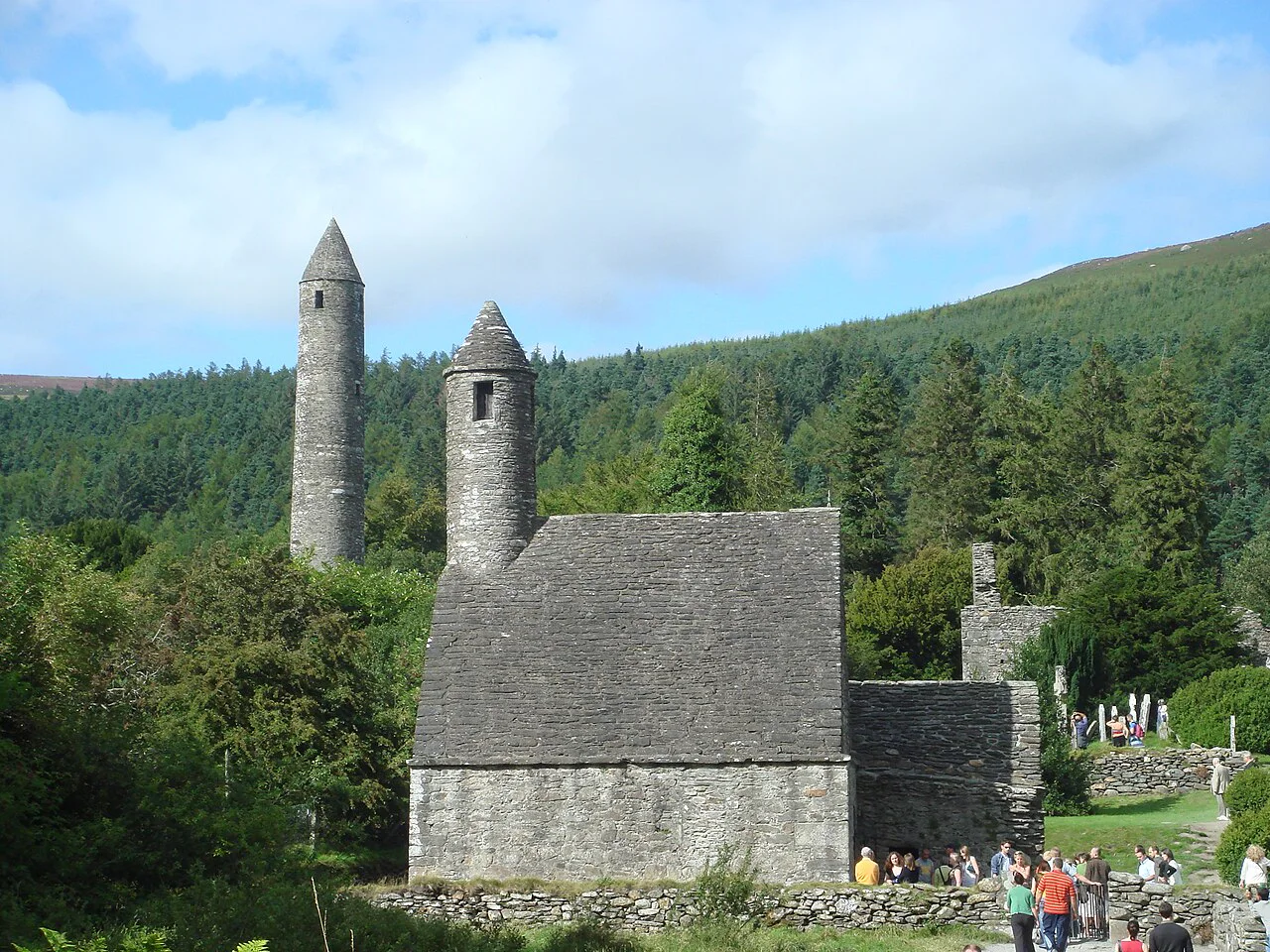
County Wicklow
Glendalough
Content & sources
Schcambo at English Wikipedia · CC BY 3.0
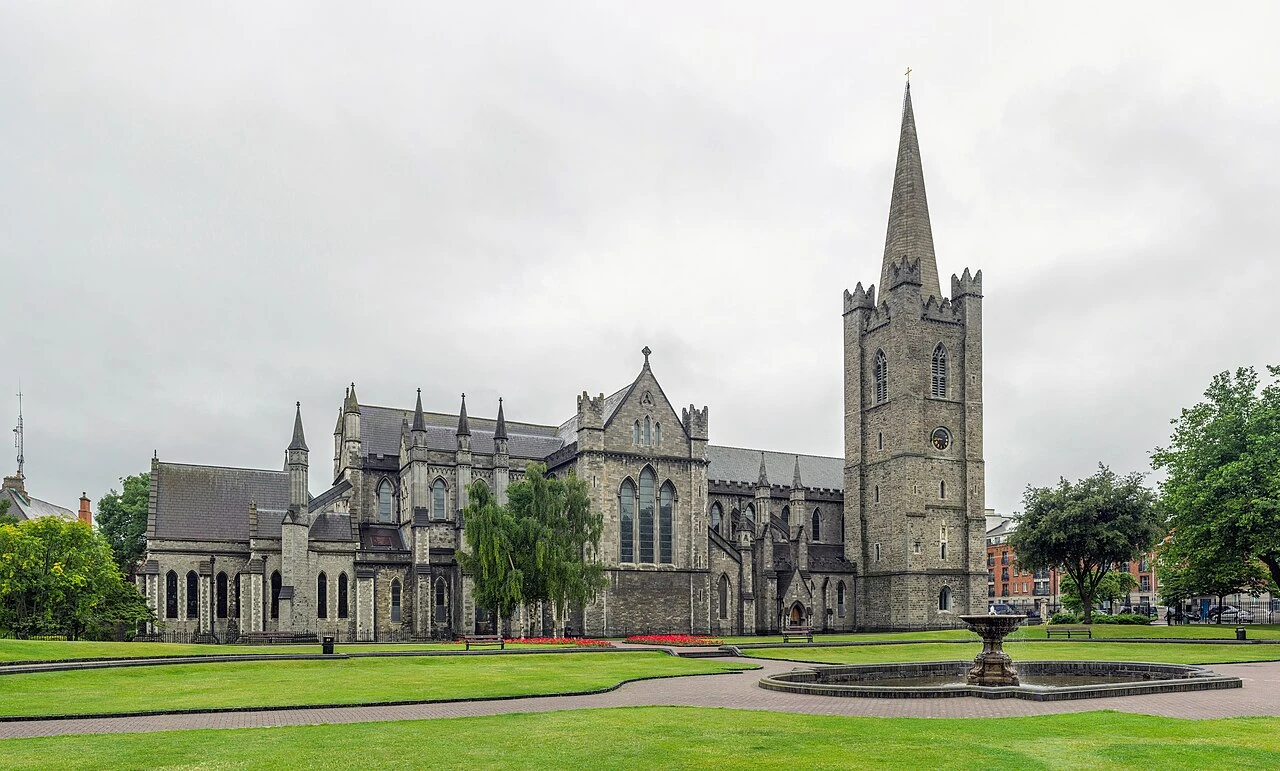
Dublin
St. Patrick's Cathedral
Content & sources
Photo: Diliff · CC BY-SA 3.0
Dublin
Dublin Castle
Content & sources
Photo: FoekeNoppert · Public domain