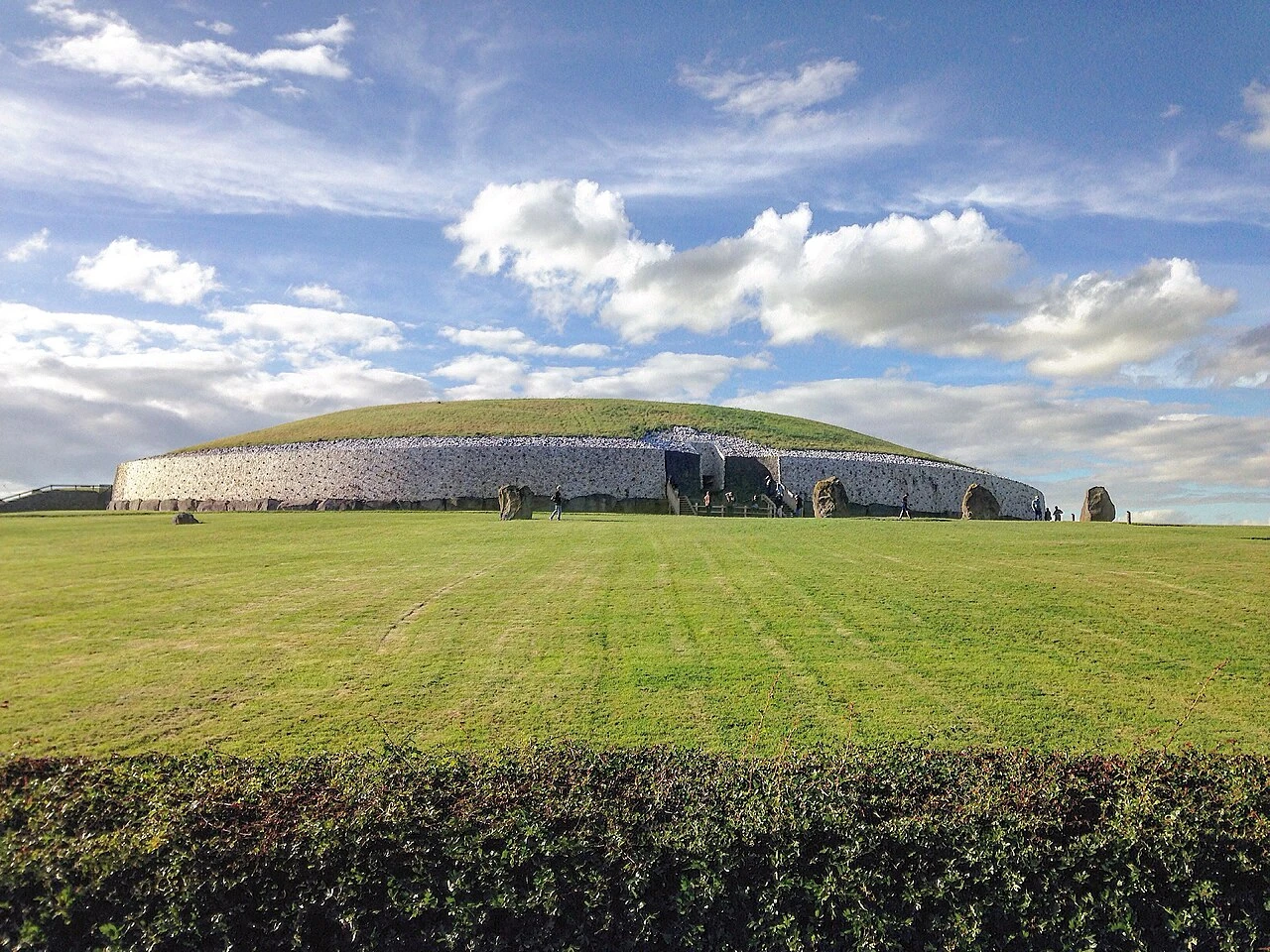
Stanza · Audio guide
NewgrangeAudio guide
A place to remember. A story to take with you.
Newgrange is a Neolithic monument and Irish passage tomb located in County Meath, Ireland. Dating back to approximately 3200 BC, it is a significant archaeological site and popular tourist attraction.
Download Stanza, then search for “Newgrange”.
About the tour
One guide. Your kind of visit.
Newgrange is a Neolithic monument and Irish passage tomb located in County Meath, Ireland. Dating back to approximately 3200 BC, it is a significant archaeological site and popular tourist attraction.
Ready when you are.
- 01Get the free Stanza app.
iOS & Android
- 02Find your guide.
“Newgrange”
- 03Download before you go.
Works offline
Audio guide / 25 narrated stops
Inside the guide
Get to know a few of the stories before you go. Open a stop to read more.
01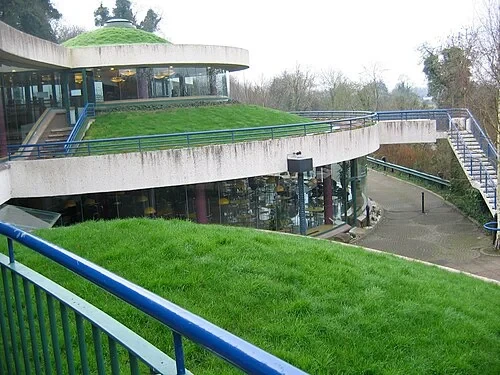 Brú na Bóinne Visitor CentreThe Gateway to Antiquity
This visitor center serves as the mandatory threshold for your journey five millennia into the past. Here, you begin an exploration of a sacred landscape shaped by the people of the Boyne Valley around 3100 BC. Newgrange is not an isolated monument but part of a wider prehistoric complex that includes the Great Mounds of Knowth and Dowth. This site was recognized by UNESCO for its outstanding universal value, representing a sophisticated agricultural society with a profound understanding of astronomy and ritual architecture. As you explore this center, you find the context necessary to understand the lives of those who built these massive structures without the aid of metal tools or the wheel. The journey ahead involves moving from modern interpretations into the physical reality of the Neolithic world, a space where the boundaries between life and death were marked in stone and light. This landscape remains one of the most important archaeological regions in Europe, offering a direct link to the beliefs of our prehistoric ancestors.
Mark McElroy · CC BY 2.0
02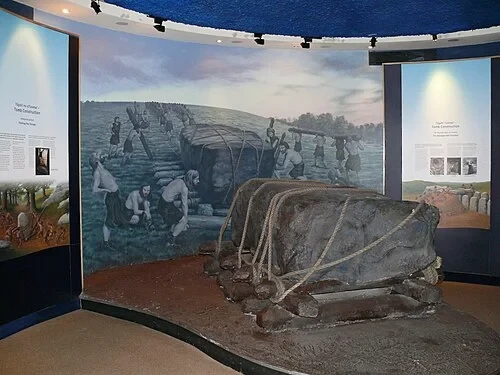 Brú na Bóinne Visitor CentreThe Neolithic Builders
The display here reconstructs the sheer human energy required to move the materials for the great mound. Without wheels or beasts of burden, the Neolithic people utilized log rollers, ropes, and brute force to haul stones weighing several tonnes from distant locations. The construction around 3100 BC signifies more than just physical labor; it points to a complex, settled agricultural society capable of feeding and organizing hundreds of workers over a generation. Engineering challenges were met with innovative solutions, such as using timber sleds to navigate the uneven terrain of the Boyne Valley. This effort was not just about building a burial place but about creating a permanent fixture in the landscape that would endure for thousands of years. The organization required to manage food supplies, tool production, and the logistical transport of materials suggests a hierarchical and deeply connected community. By looking at these figures, you can appreciate the scale of ambition that drove these ancient builders. Their success is evidenced by the fact that the monument still stands largely intact today, over five thousand years after the last stone was placed.
Photo: Aligatorek · CC BY-SA 3.0
03 Brú na Bóinne Visitor CentreThe Great Model
While the interior passage is often the focus of attention, this model helps you appreciate the true scale of the entire structure. The mound itself is a massive engineering feat, consisting of approximately 200,000 tonnes of earth and stone. It spans eighty-five meters in diameter, creating a footprint that occupies more than an acre of the Irish landscape. In height, it reaches twelve meters, a significant elevation for a prehistoric structure. Understanding these dimensions is key to realizing that Newgrange was much more than a simple tomb. It functioned as a focal point for a large community, likely serving as a site for rituals, gatherings, and seasonal observations. The sheer volume of material used implies that the entire community was involved in its creation and maintenance over many decades. From this perspective, you can see how the mound dominates its surroundings, designed to be visible from afar as a marker of the people’s connection to the land and their ancestors. The complexity of the internal passages and the external layout, all represented here, highlights a level of architectural planning that rivals later ancient civilizations.
Listen in the appUnknown
04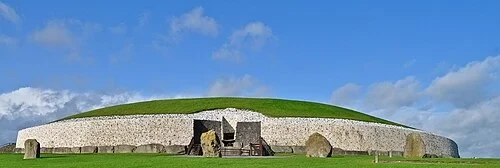 The Sacred Landscape of the BoyneThe Great Mound
The first full view of the mound reveals a structure that seems to bridge the gap between a natural hill and a deliberate architectural achievement. The brilliant white facade, set against the vibrant green of the surrounding grass, was designed to be seen from a great distance. This structure is composed of roughly 200,000 tonnes of material, a weight that has pressed down upon the earth for over five thousand years. The sheer mass of the mound ensures its permanence, making it an unmovable fixture of the Boyne Valley. Historically, this site has been a place of burial and ritual, but its physical presence also served as a statement of power and territory for the Neolithic inhabitants. The circular shape is consistent with other passage tombs in Ireland, but the scale here is exceptional. You are looking at a monument that was already ancient when the first stones of Stonehenge were being placed. Its longevity is a result of careful stone placement and a deep understanding of structural stability. Even today, the monument retains its imposing character, dominating the ridge overlooking the River Boyne.
Listen in the appyoung shanahan · CC BY 2.0
05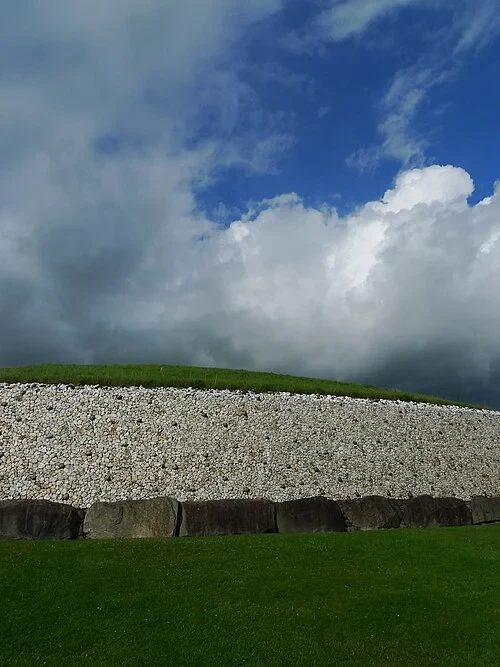 The Sacred Landscape of the BoyneThe White Wall
The unique facade you see here is made primarily of white quartz, a material that gives Newgrange its distinctive, almost glowing appearance. These stones were not found locally; the builders transported them from the Wicklow Mountains, located over seventy kilometers to the south. In addition to the quartz, dark granite boulders were integrated into the design, brought from Dundalk Bay to the north. Moving these materials 5,000 years ago was a feat of prehistoric logistics that likely involved transport by water along the Irish coast and up the River Boyne. Once at the site, the stones were hauled up the ridge to their final positions. The effort required to source and move specific colors and textures of stone from such distances suggests that the materials themselves held significant ritual or symbolic meaning. The choice of white quartz ensures that the monument catches the light, making it a radiant landmark in the valley. This intentional selection of contrasting materials creates a texture that is both rough and reflective, a demonstration of the aesthetic sensibilities of the Neolithic builders who planned this facade with great care.
Listen in the appChad K · CC BY 2.0
06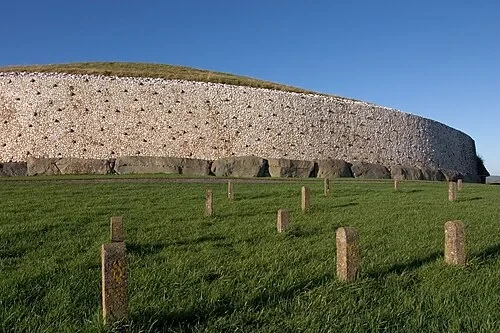 The Great Mound and Quartz FaçadeThe Reconstruction Story
During the major excavations of the 1960s, Professor Michael J. O'Kelly discovered a collapsed layer of white quartz and granite at the foot of the mound. He concluded that these stones had originally formed a vertical wall and proceeded to reconstruct it as you see it today. However, this interpretation is not without controversy among archaeologists. Some believe the stones might have originally formed a flat pavement or a sloping revetment rather than a steep, vertical facade. Despite the ongoing debate, the reconstruction provides a vivid sense of how the monument might have stood in its prime. Several smaller marker stones indicate where ancient features once stood, such as wooden posts or secondary stone structures. This site is a layer of history where modern archaeological theories meet ancient physical remains. The reconstruction helps visualize the monumental impact Newgrange would have had on the Neolithic landscape, even if the exact angles and height of the original wall continue to be analyzed by contemporary researchers who study the scattered stones in the grass.
Listen in the appJimmy Harris · CC BY 2.0
07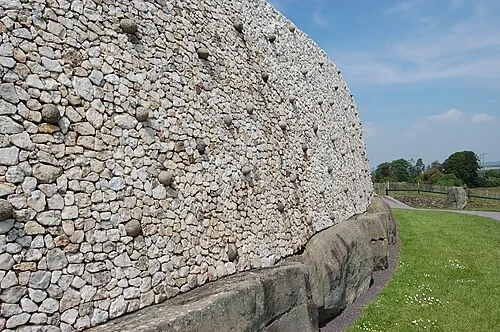 The Great Mound and Quartz FaçadeQuartz and Granite
As you look closely at the masonry of the outer wall, you can see how the dark, rounded granite boulders are set into the sea of sparking white quartz. This is not a random arrangement but a deliberate decorative choice by the Neolithic builders. These two types of stone offer a sharp contrast in both color and texture. The quartz reflects the sun, while the granite absorbs it, creating a play of light and shadow across the surface of the mound. For the people of 3100 BC, this duality likely carried symbolic weight, perhaps representing the balance between day and night or life and the underworld. The granite stones were sourced from the coast near Dundalk and are naturally smoothed, while the quartz was quarried and brought from the mountains. By integrating these contrasting elements, the builders created a facade that changes its appearance based on the time of day and the angle of the sun. This focus on light is a recurring theme throughout the monument, culminating in the interior chamber's alignment. The wall serves as a grand introduction to a site where stone and solar cycles are inextricably linked.
Listen in the appfhwrdh · CC BY 2.0
08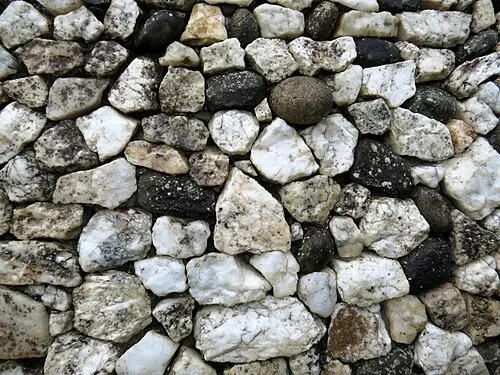 The Great Mound and Quartz FaçadeMaterials of the Earth
The integrity of this massive wall relies entirely on the skill of the original stonemasons. No mortar or binding agent was used to hold these stones in place; it is a true dry-stone construction. The granite boulders you see are notably rounded, a shape likely achieved through thousands of years of river or glacial action before they were collected by the builders. Their smooth, egg-like appearance contrasts with the jagged, crystalline edges of the white quartz. The builders selected these specific boulders for their aesthetic value and their ability to fit snugly within the quartz matrix. Because no mortar was used, the structure allows for a small degree of movement and natural drainage, which has helped it survive the damp Irish climate for over five millennia. Each stone was hand-selected and placed with a specific purpose, contributing to the overall stability of the mound's facade. This ancient masonry technique demonstrates a sophisticated understanding of physical forces and material properties. The result is a surface that feels organic yet highly controlled, a permanent shell protecting the sacred spaces within the earth.
Listen in the appMalcolm Manners · CC BY 2.0
09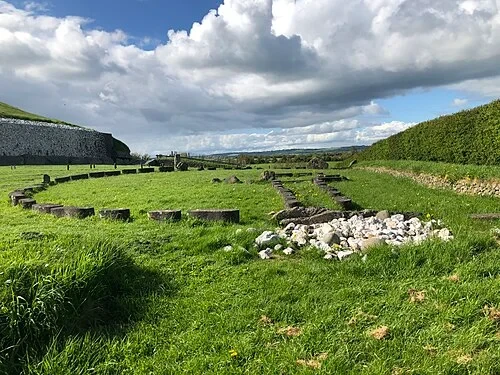 The Great Stone CircleThe Sacred Forecourt
Newgrange did not stand alone in the landscape. The low stone ruins visible in the grass here represent Site Z, a satellite monument that once stood near the main mound. This area was part of a sprawling ritual complex that stretched across the Boyne Valley, often referred to by archaeologists as a 'city of the dead.' These satellite sites suggest that the landscape was used for a variety of different ceremonies and burials, perhaps for different families or social classes within the Neolithic community. The presence of Site Z indicates that Newgrange was the primary focus of a much larger, interconnected sacred space. Over thousands of years, agricultural activity and natural erosion took their toll on these smaller structures, leaving only these footings as a record of their existence. Excavations have revealed that these smaller mounds shared similar construction techniques and motifs with the larger passage tombs. Today, they help us understand that the builders viewed the entire valley as a unified ritual zone. The preservation of these footings allows us to map the extent of this ancient complex and appreciate the complexity of Neolithic social and religious life.
Listen in the appRachel Miles · CC BY-SA 2.0
10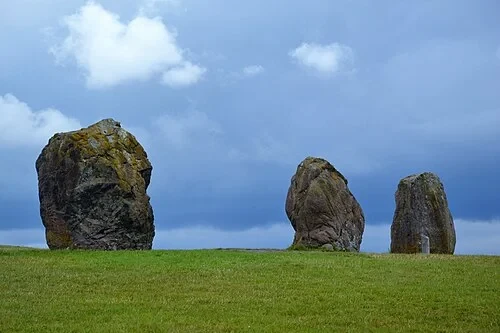 The Great Stone CircleThe Great Stone Circle
Surrounding the great mound are the remnants of a massive stone circle. While these standing stones seem integral to the site, they are actually a much later addition, likely dating to the Bronze Age, about a thousand years after the main tomb was sealed. Of the original circle, which may have contained up to thirty-eight stones, only twelve remain in their original positions. The presence of this circle proves that Newgrange remained a site of immense spiritual and social importance for millennia, long after its original builders had passed away. These monoliths would have created a formidable outer boundary, further defining the sacred space of the mound. The gap between the construction of the mound and the addition of the circle shows the enduring legacy of the site. Even as burial practices changed and new cultures arrived in the Boyne Valley, they continued to respect and enhance this ancient landmark. Some of these stones are over two meters tall, standing as silent witnesses to the continued veneration of the landscape. They provide a physical timeline of the site’s use, stretching from the Neolithic into the dawn of the metal ages.
Listen in the appPhoto: Knocko · CC BY-SA 4.0
Newgrange
Frequently asked questions
How much does the guide cost?
Free app download. Listed guide price: $1.99. Guide price shown in the app. Audio guide only. Venue admission is separate.
Can I listen without internet?
Yes. Download the guide’s audio, images, and maps in the app before your visit. Your downloaded content is then available offline.
Can I listen in my language?
Stanza supports 15 languages. Check the app for the languages available for this guide.
Do I need to follow a schedule?
No. This is a self-guided experience. Choose your stops, pause whenever you like, and return to a story at your own pace.
At your own pace
Explore Newgrange.
Download Stanza, then search for “Newgrange”.
Free app download · Guide price shown in the app
Keep exploring
Nearby audio guides
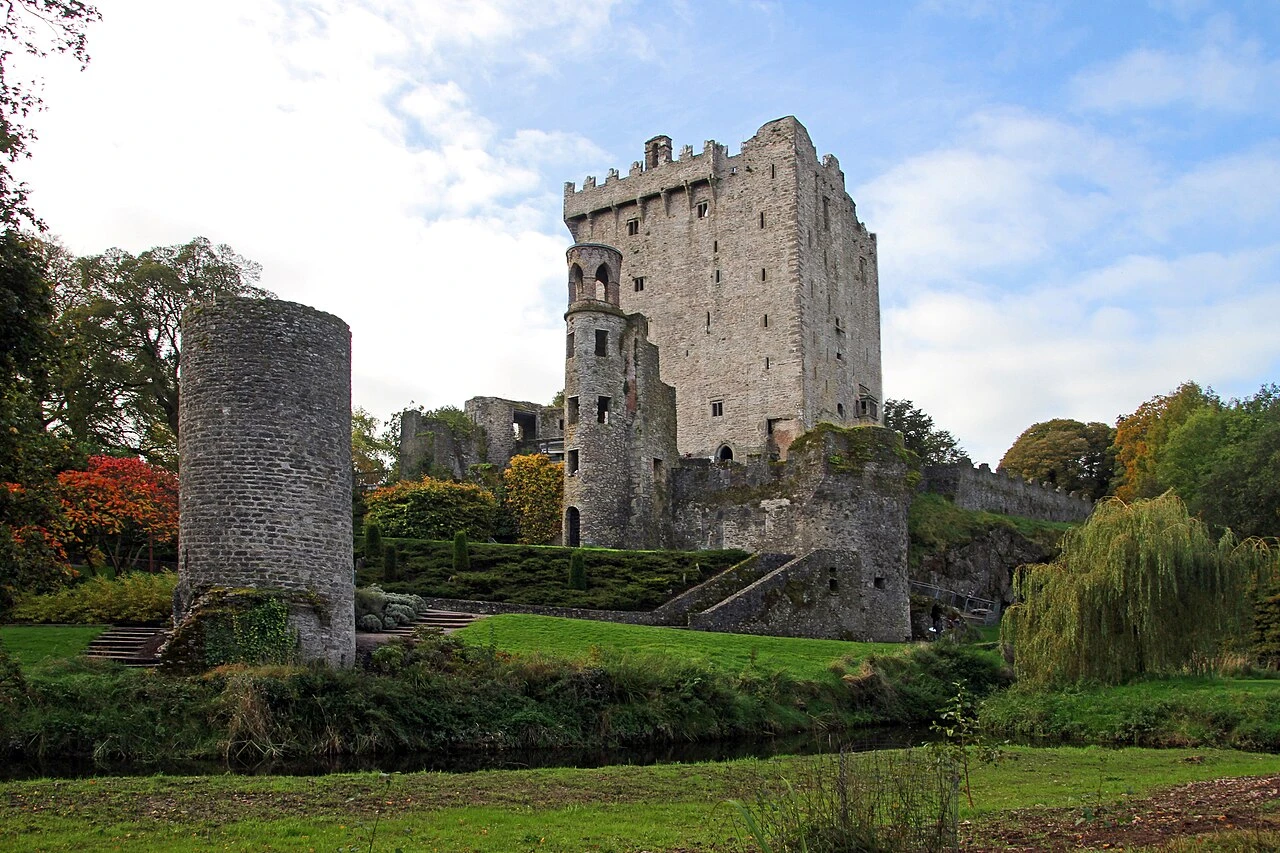
Cork
Blarney Castle
Content & sources
Photo: Gerd Eichmann · CC BY-SA 4.0
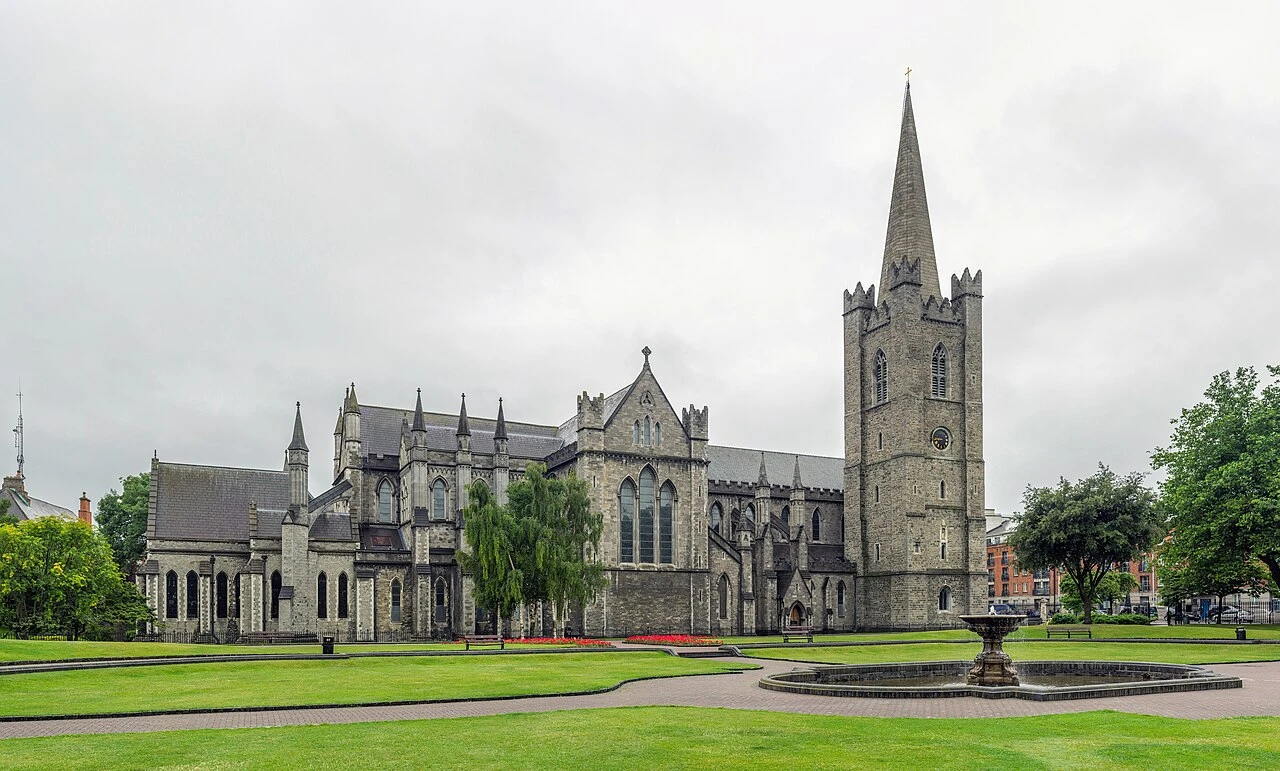
Dublin
St. Patrick's Cathedral
Content & sources
Photo: Diliff · CC BY-SA 3.0