Languages
15Masada Audio Guide
Masada is an archaeological site in Tamar Regional Council, Israel. Explore it with Stanza's guided offline audio tour — narrated in 15 languages.
Quick Facts
30
Stops
15
Languages
100%
Offline
📍 Tamar Regional Council, Israel · 31.3156°N, 35.3539°E
About Masada
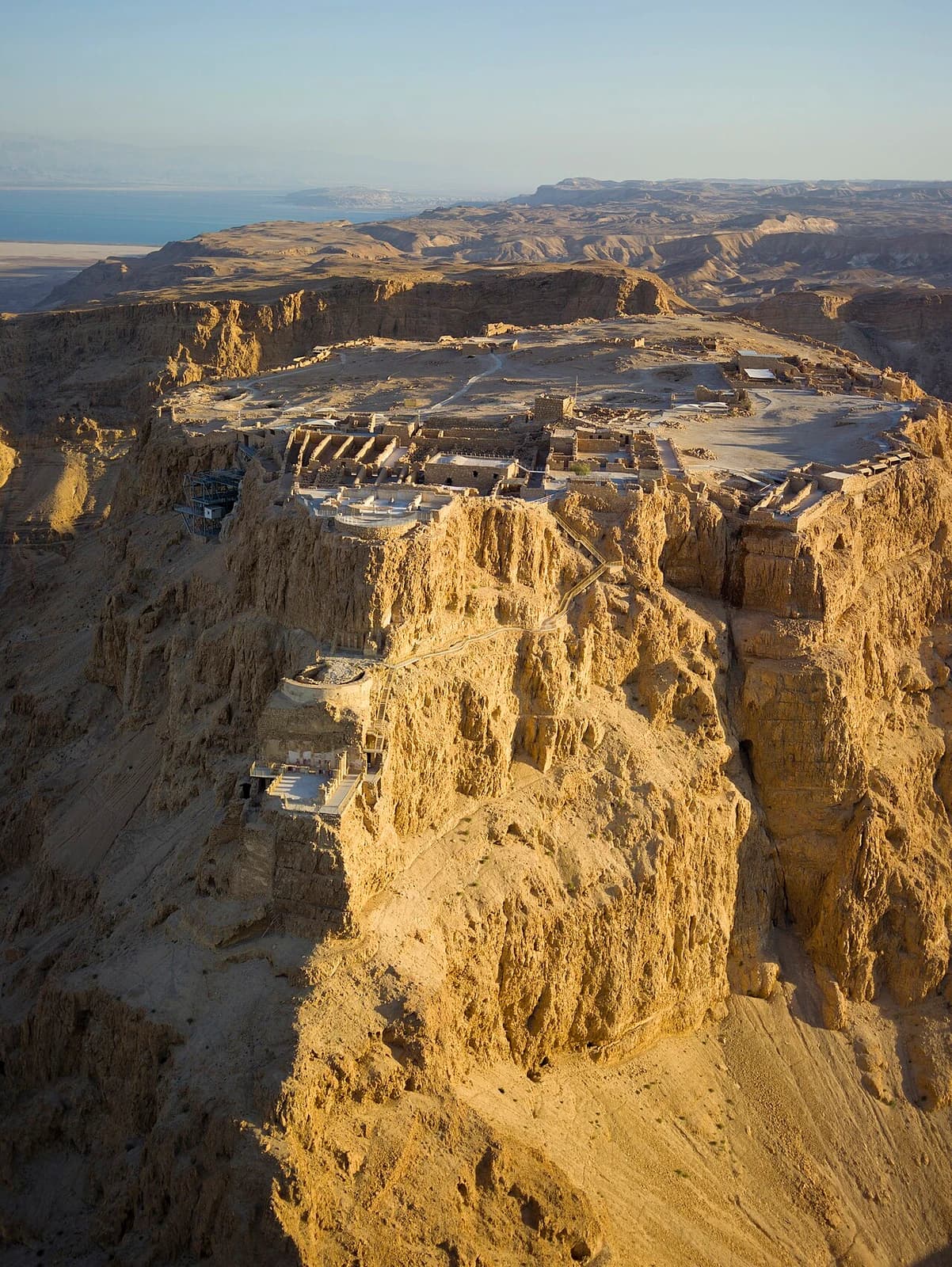
Masada is an ancient fortress and archaeological site situated on an isolated rock plateau overlooking the Dead Sea in the Judean Desert. It is a UNESCO World Heritage Site known for its historical significance during the First Jewish–Roman War.
This self-guided audio tour features 30 narrated stops organized across 6 sections, including Commandant's Headquarters, The Storerooms, The Thermal Baths, Masada Synagogue, The Western Palace, Columbarium Tower. As a archaeological site, Masada offers a unique cultural experience in the heart of Tamar Regional Council, Israel.
The Stanza audio guide is available in 15 languages and works entirely offline — download the complete tour including audio narration, maps, and images before your visit. As you walk through Masada, GPS-triggered narration plays automatically at each point of interest.
Last updated:
What you will hear
Commandant's Headquarters
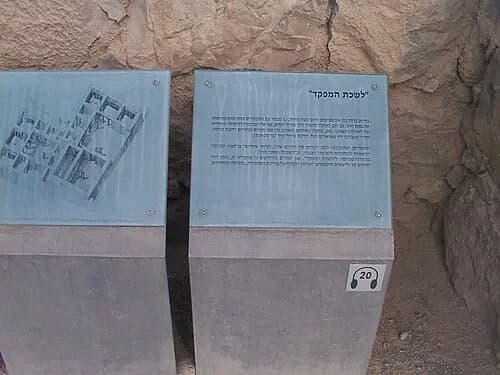
Located at the entrance to the northern complex, this building served as the administrative hub for the fortress commander.
The Commandant's Headquarters
The layout of this structure reveals its importance as a command center. Located at a strategic bottleneck between the northern palace and the massive storerooms, the Commandant’s Headquarters was the nerve center where the movement of supplies was meticulously monitored and controlled. In a place where resources meant the difference between life and death, the administration of food and water was a high-stakes task. This building likely housed the officials responsible for recording everything that entered or left the storage areas. However, the history of this site is one of adaptation. During the Jewish Revolt against Rome, this administrative area underwent a significant transformation. The rebels, or Zealots, who took over the fortress, repurposed these formal rooms into dwelling spaces for families. By adding crude partitions and simple hearths, they turned a royal office into a communal home. This shift from a structured royal retreat to a crowded, desperate stronghold is visible in the physical changes made to the masonry, reflecting the changing fortunes of those who lived and died on this mountain.
The Storerooms
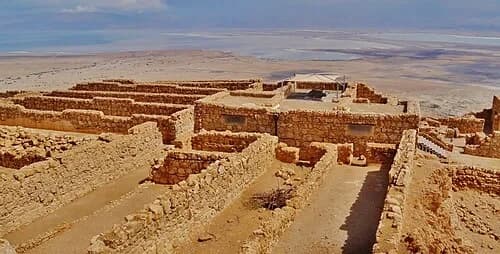
A massive complex of long, narrow rooms designed to hold enough food and weapons to sustain the fortress during a prolonged siege.
Storerooms
The storeroom complex consists of a series of long, narrow rooms that were once roofed and packed with massive ceramic jars. These containers held the essentials of life: oil, wine, legumes, and grain. The historian Josephus famously claimed that the food stored here stayed fresh for decades because the dry, stable air of the desert prevented spoilage. This vast capacity for storage was the key to Masada's reputation as an impenetrable refuge. There is a powerful story connected to these walls from the final moments of the Roman siege. According to historical accounts, as the defenders realized their defeat was imminent, they decided to set fire to all their storerooms. However, they deliberately left one room unburnt. This was intended as a final, defiant message to the Roman conquerors: it proved that the defenders had not been starved into submission. They wanted the Romans to know they died by their own choice, with full stomachs and their dignity intact. Standing in these silent, empty corridors today, you can almost feel the weight of that final, desperate decision to burn the very resources that had kept them alive for so long.
The Thermal Baths
A marvel of Roman engineering in the desert, featuring a sophisticated underfloor heating system and ornate wall decorations.
Wall Heating Pipes
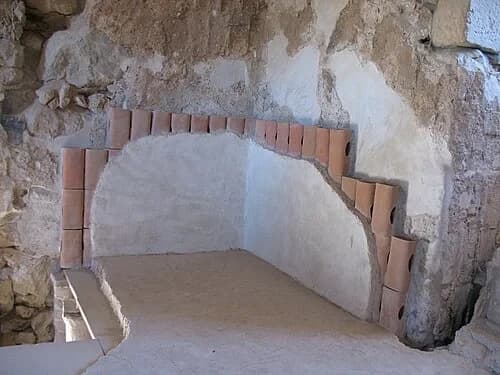
Look closely at the vertical clay pipes, known as tubuli, that are embedded directly into the wall's structure. These pipes were a critical part of the bathhouse's advanced heating technology. They weren't designed to carry water, but rather to serve as conduits for hot air. By connecting the space beneath the floor to these wall pipes, the ancient engineers allowed the furnace's heat to rise up through the walls as well as under the feet. This effectively turned the entire room into a 360-degree radiator. Not only did this keep the air temperature high, but it also ensured that the walls themselves were warm to the touch. This was practical as well as luxurious; warm walls prevented the hot steam from the baths from condensing into cold drips that would fall on the bathers. This level of environmental control is a remarkable example of Roman ingenuity. It shows a deep understanding of thermodynamics and architectural design, adapted here to provide the ultimate comfort in a desert fortress.
The Private Cold Bath
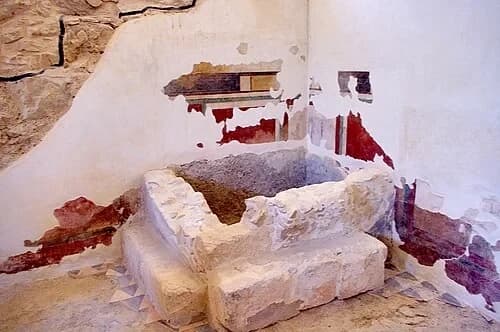
In the corner, you can see a small, stepped stone basin. This was the 'frigidarium,' the cold-water pool. After spending time in the heat of the caldarium and the warmth of the tepidarium, bathers would conclude their visit with a quick, bracing plunge into this cold water. This was thought to close the pores and invigorate the body, serving as the final step in the traditional Roman bathing process. Notice the greyish, rough texture of the basin's interior. This is a specialized waterproof plaster. To ensure it wouldn't leak, the ancient builders mixed the plaster with finely crushed pottery. This technique created a durable, water-resistant seal that has remained intact for centuries. The small size of the basin suggests it was meant for a quick dip rather than a long swim. It is another example of how every element of Roman lifestyle, from social ritual to specific engineering techniques, was meticulously recreated here on the summit of Masada, far from the urban centers of the empire.
Thermal Baths
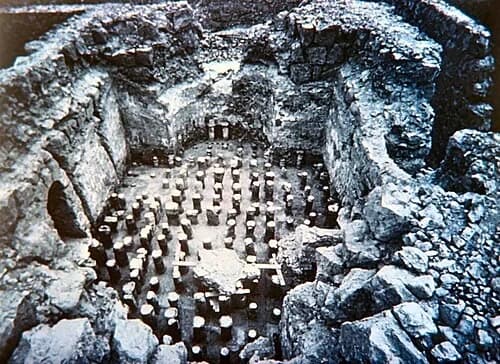
One of the most surprising features of Masada is the presence of a fully functional Roman-style bathhouse, located over 400 meters above the Dead Sea. To create this, Herod’s engineers utilized a hypocaust system. Notice the ‘forest’ of small brick pillars, known as suspensurae, covering the floor. Originally, these pillars supported a second floor, creating a hollow space beneath. Hot air from an outside furnace was pumped into this gap, heating the floor from below and creating a sauna-like effect in the room above. This was the height of luxury, providing a place for relaxation and social interaction for the king and his guests. Maintaining such a facility in a desert required immense effort and engineering. It wasn't just about the heat; it required thousands of gallons of water, which had to be harvested from rare rainfall and stored in deep cisterns. The bathhouse stands as a symbol of Herod's determination to bring the comforts of Rome to the most inhospitable corners of his kingdom, demonstrating his power over the elements themselves.
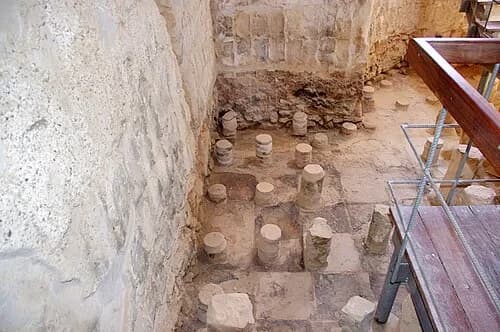
Bathhouse Floor Supports
Direct your attention to the varied shapes of the small pillars on the ground. These are the foundations of the hypocaust heating system. Some are round, while others are square, but all served the same purpose: supporting the weight of a heavy floor while allowing hot air to circulate freely beneath it. The floor they once carried would likely have been adorned with beautiful mosaics or polished marble tiles, creating a space of immense beauty and comfort. The mere existence of a heated bath here is a testament to the extraordinary engineering challenges Herod’s builders overcame. Beyond the heating system itself, think about the logistics of water. Every drop used in these baths had to be brought up the mountain. This was achieved through a sophisticated network of aqueducts that diverted flash-flood water from nearby wadis into massive cisterns carved directly into the mountain’s rock. This system allowed Herod to enjoy a steaming bath while looking out over one of the driest landscapes on Earth, a feat that would have seemed miraculous to his contemporaries.
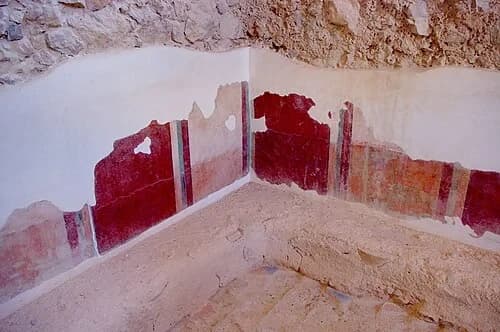
The Tepidarium Frescoes
As you examine the walls here, notice the deep red and dark panels. We are in the 'tepidarium,' or the warm room of the bathhouse. Roman bathing was a strictly choreographed social ritual. Bathers would typically progress from a cold room to this warm room to acclimate their bodies before entering the intense heat of the 'caldarium' or hot room. The vibrant, warm colors on these walls were chosen to enhance the atmosphere of luxury and relaxation. For Herod and his elite guests, this wasn't just about hygiene; it was a sensory experience. The decoration was designed to impress and soothe, providing a stark contrast to the harsh, bright landscape outside. These paintings followed the artistic trends of the time, likely executed by craftsmen familiar with the styles popular in the heart of the Roman Empire. The fact that such vivid colors have survived for two millennia is a testament to the quality of the materials used and the protective environment of the Judean Desert, which has acted as a natural preservative for these ancient artworks.
Masada Synagogue
One of the oldest synagogues in the world, used by the Jewish rebels who occupied Masada during the Great Revolt against Rome.
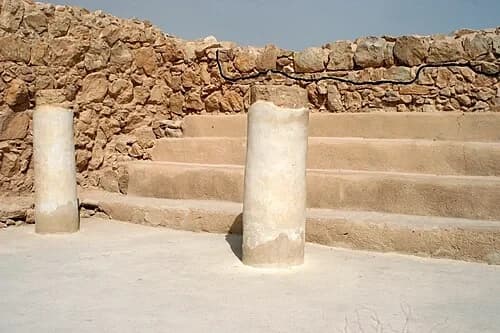
The Genizah Discovery
Near the back of the synagogue, a discovery was made that connects us directly to the spiritual lives of those who held this mountain. Archaeologists found a 'Genizah,' a sacred storage pit where worn or damaged religious texts are placed out of respect. Beneath the floor, they uncovered fragments of biblical scrolls, including portions of the Book of Ezekiel. One of the most striking finds was the passage detailing the vision of the 'Dry Bones'—a prophetic message of a nation being brought back to life from the ashes. For the Jewish rebels, surrounded by the overwhelming might of the Roman Empire, this text likely served as a profound source of courage. It spoke of endurance and eventual restoration, even when the situation seemed hopeless. The fact that they chose to hide these scrolls beneath the place where they prayed indicates just how much they valued their sacred heritage. Today, these fragments are considered among the most important archaeological finds on the plateau, providing a tangible link to the faith that sustained the community until their final moments.
The Western Palace
The largest building on Masada, this palace served as a royal residence and administrative center, featuring beautiful mosaic floors.
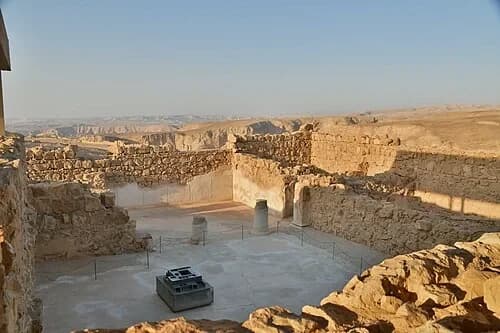
Western Palace
Covering over 4,000 square meters, the Western Palace is the largest building on the Masada plateau. While the Northern Palace served as King Herod’s private, cliff-hanging retreat, this structure was the official administrative center of the fortress. Imagine this massive complex in its prime: the central courtyard would have been bustling with officials, guards, and servants tending to the logistics of a royal desert outpost. It contained reception halls, workshops, and storerooms, all designed to facilitate the smooth operation of Herod's government. However, the palace’s function changed drastically during the Jewish Revolt. When the rebels took over Masada, multiple families moved into these grand halls. They partitioned the large, open rooms with crude stone walls to create smaller living quarters, turning a symbol of royal power into a crowded, communal dwelling. As you explore the layout, you can still see evidence of these modifications. This transition perfectly illustrates the site’s shift from a luxurious royal residence to a desperate and crowded stronghold for those resisting Roman rule.
Columbarium Tower
A specialized tower with hundreds of small niches used for raising pigeons for food and ritual sacrifice.
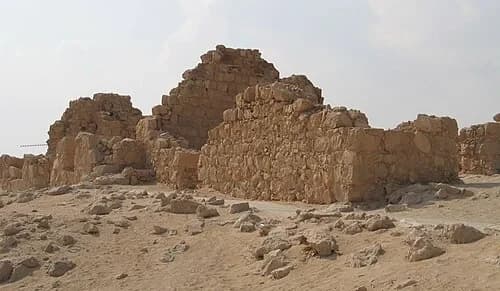
Columbarium Tower
The hundreds of small, square niches carved into the walls of this tower indicate its unique purpose: it was a 'Columbarium,' or a house for pigeons. In an isolated desert fortress, self-sufficiency was a matter of survival. Pigeons were an ideal resource because they were easy to raise and provided two essential things. First, they were a reliable source of fresh protein in a place where larger livestock was difficult to maintain. Second, their droppings were highly valued as fertilizer. This was the only way the inhabitants could sustain the small agricultural plots and gardens found on the plateau, which supplemented their diet of dried grains and legumes. The existence of the Columbarium shows the foresight of Herod’s planners and the resourcefulness of the later Jewish rebels. It tells a story of everyday life continuing under the most extreme circumstances. Even while surrounded by a hostile army, the defenders of Masada managed a complex system of animal husbandry to ensure they had the nutrients needed to keep fighting.
Want to hear the rest?
Download the Stanza app to unlock all 30 stops and the complete guided audio tour.
Frequently Asked Questions
How long does the Masada audio tour take?
The Masada audio guide includes 30 narrated stops. Most visitors spend 45 minutes to 1.5 hours exploring the complete tour, though you can listen at your own pace and skip or revisit any stop.
Is the Masada audio guide available in my language?
Stanza supports 15 languages: English, Spanish, French, German, Italian, Portuguese, Russian, Japanese, Chinese, Korean, Arabic, Hindi, Polish, Dutch, Hebrew. Check the guide in the app to confirm the languages currently available for this tour.
Can I use the audio guide offline at Masada?
Yes! Download the complete Masada tour — including all audio, maps, and images — before your visit. The Stanza app works completely offline, so you don't need WiFi or mobile data at the venue.
How much does the Masada audio guide cost?
The Stanza app is free to download. The current listed price for the Masada audio guide is $4.99; app-store region and currency may affect the final price.
How do I use the Stanza audio guide at Masada?
Download the free Stanza app, search for "Masada", and download the tour. When you arrive at the venue, the app uses GPS to detect your location and automatically plays the relevant narration as you move between points of interest — completely hands-free.
What makes the Stanza audio guide different from other Masada tours?
Stanza offers GPS-triggered narration that plays automatically as you walk through Masada — no need to manually select stops. The tour is available in 15 languages, works fully offline, and includes 30 expertly narrated stops with images and historical context.
What other audio guides are available near Masada?
Stanza offers multiple audio guides in Tamar Regional Council, Israel and nearby areas. After downloading the app, browse the map to discover all available tours near Masada. Each guide can be downloaded for offline use.