Stanza · Audio guide
Guaita TowerAudio guide
A place to remember. A story to take with you.
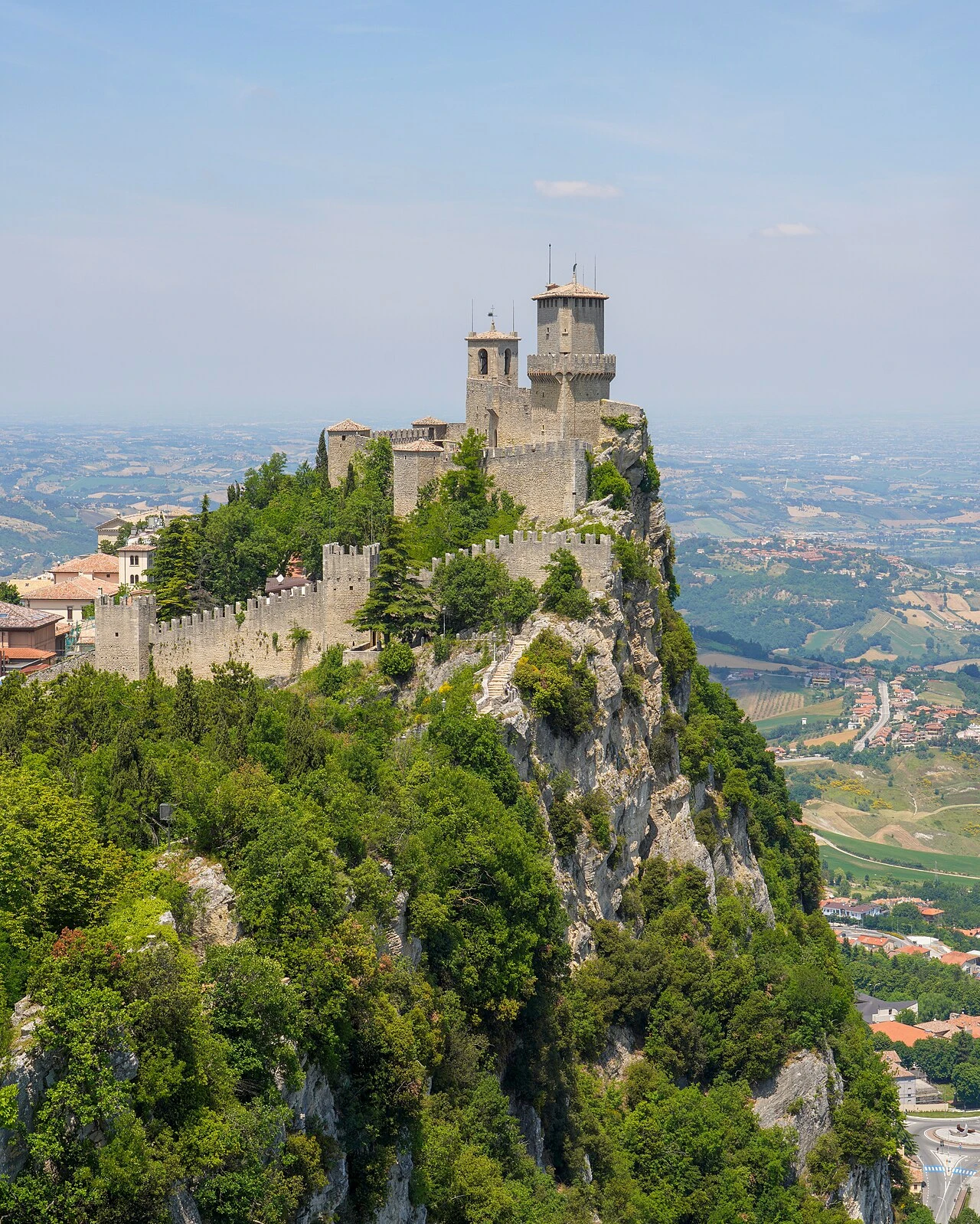
Guaita is the first and oldest of the Three Towers of San Marino, situated on a mountain peak near the city of San Marino. This historic defensive tower is a prominent landmark on Monte Titano.
Download Stanza, then search for “Guaita Tower”.
About the tour
One guide. Your kind of visit.
Guaita is the first and oldest of the Three Towers of San Marino, situated on a mountain peak near the city of San Marino. This historic defensive tower is a prominent landmark on Monte Titano.
Ready when you are.
- 01Get the free Stanza app.
iOS & Android
- 02Find your guide.
“Guaita Tower”
- 03Download before you go.
Works offline
Audio guide / 15 narrated stops
Inside the guide
Get to know a few of the stories before you go. Open a stop to read more.
01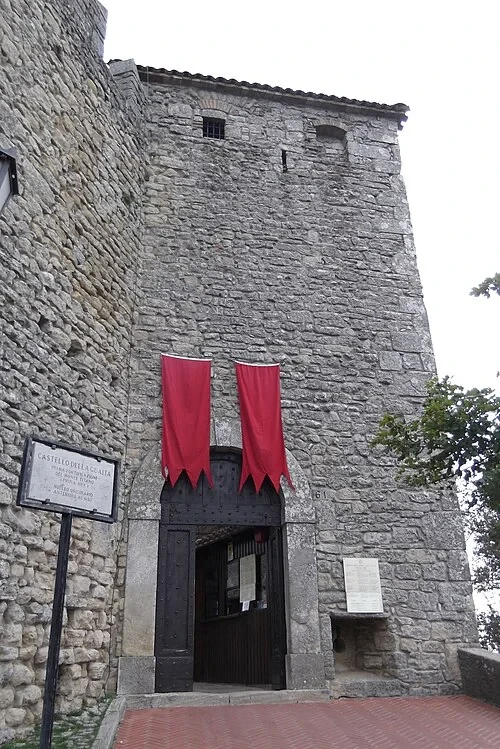 The Bertesca Gate and Main EntranceThe Main Entrance
Welcome to Guaita, the oldest and largest of San Marino's iconic three towers. Built in the 11th century, this mountain stronghold sits atop the highest peak of Monte Titano, serving as the physical centerpiece of the world’s oldest republic. The name "Guaita" comes from a local dialect meaning "to stand guard," a fitting title for a fortress that has never been captured. As you approach the entrance, the red and white flags of the Republic set the tone for this mountain stronghold. The stone pathway leading to the main gate was designed to be both intimidating and functional, forcing visitors to slow their pace as they enter the heart of the fortification. For centuries, this structure has provided the primary defense for the citizens below. The rugged masonry and sheer verticality of the site served a clear purpose: to deter any potential invaders. The textured blocks of the entrance walls reflect a legacy of protection that spans over a millennium, with the original stonework still visible in the lower foundations.
karel291 · CC BY 3.0
02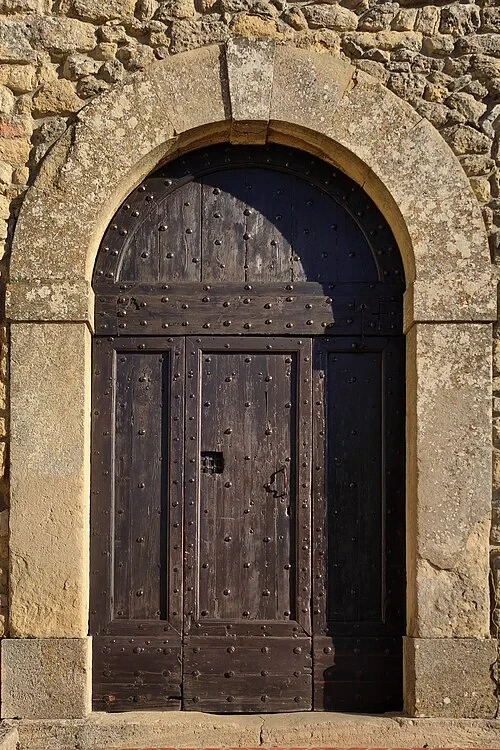 The Bertesca Gate and Main EntranceThe Bertesca Gate
This formidable entrance, protected by a heavy wooden door, showcases the ingenious defensive architecture used to secure the fortress. Above the archway is a stone protrusion known as a "bertesca," a type of projecting fortification added to the gate in 1481. Its design served a very practical purpose during a siege. From openings in the floor of the bertesca, defenders could target anyone attempting to breach the door below with projectiles. This overhanging defense ensured that there was no "dead zone" at the foot of the wall where attackers could hide from the garrison. The gate itself is a study in strength, built from heavy timber and reinforced with metal studs to withstand physical battering and prolonged assault. The combination of the timber door and the stone overwatch made this entrance one of the most secure points in the entire complex. The masonry here reflects the late 15th-century reinforcements that modernized the tower’s defenses. The bertesca remains one of the best-preserved examples of this specific military architectural style in the region today.
Photo: Terragio67 · CC BY-SA 4.0
03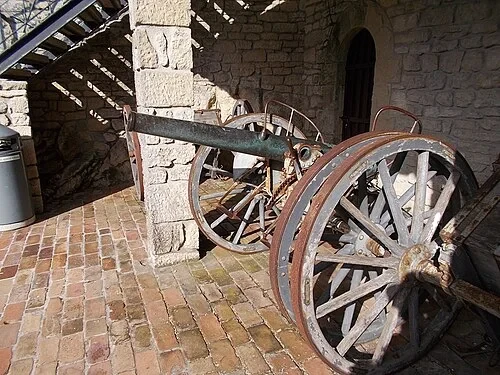 The Outer Courtyard and ArtilleryCourtyard Artillery
Tucked beneath the shadows of these stone arches, this artillery piece represents the evolution of the tower from a medieval stronghold to a modern military site. This weapon, with its massive wooden wheels and metal barrel, marks a significant shift in the way San Marino defended its sovereignty. While the walls of Guaita were originally built to stop archers and ladders, the introduction of gunpowder necessitated more advanced weaponry within the courtyard. These cannons were positioned to provide defensive fire against any force attempting to climb the mountain. The wooden wheels were designed for mobility, allowing the crew to reposition the heavy barrel as needed to face different threats from the valley below. The robust construction of the carriage was built to absorb the massive recoil of a fired shot. This specific piece illustrates the transition from the era of swords to the age of black powder warfare. The integration of such heavy weaponry into the medieval layout shows how the Republic continuously adapted its defenses to keep pace with changing military technology.
Listen in the appPhoto: Szeder László · CC BY-SA 4.0
04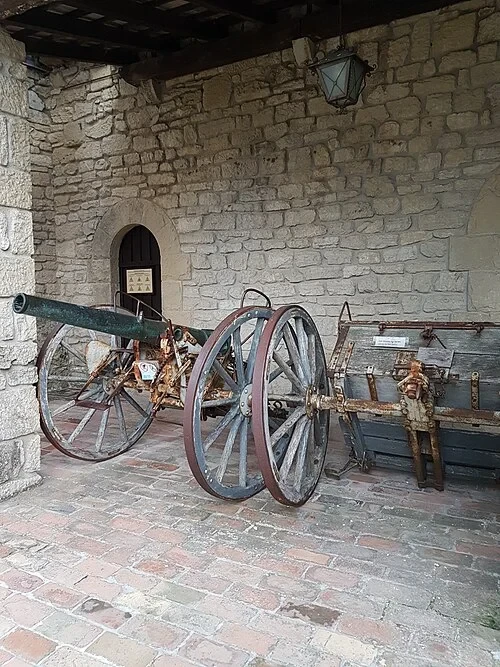 The Outer Courtyard and ArtilleryGifts from the Kings
The cannons visible in this courtyard have a royal history, arriving as historic gifts from the monarchs of Italy. These mortars and 75mm cannons were presented to San Marino by Italian Kings Victor Emmanuel II and Victor Emmanuel III. Far from being mere museum pieces, they remain an active part of the Republic’s modern traditions. On ceremonial holidays and important national festivals, these historic weapons are still fired by the Guard of the Rock, the uniformed military unit responsible for the security of the fortress. The thundering boom of the cannons echoing across Monte Titano serves as a reminder of the long-standing diplomatic ties between San Marino and its larger neighbor. The maintenance of these guns reflects the meticulous care given to the nation’s historic heritage. While they were once tools for tactical defense, they now fulfill a more symbolic role, marking the passage of time and the continuity of the state. You can still see the markings on the barrels that denote their official origins.
Listen in the appPhoto: Bultro · CC BY-SA 4.0
05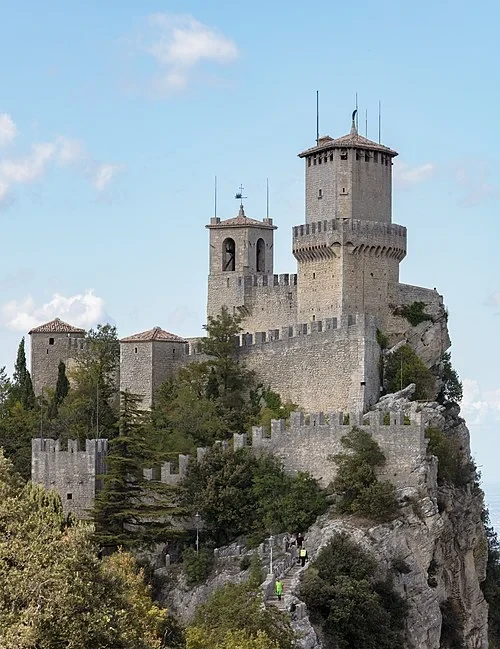 The Defensive Walls and BattlementsThe Cliffside Fortress
The fortress appears to grow directly out of the mountain itself, utilizing the natural limestone cliffs of Monte Titano as its most effective defense. This integration between man-made walls and the natural rock face made Guaita nearly impossible to conquer. By building directly onto the sheer precipice, the architects ensured the mountain did half the work of the defenders. While the foundational base of the fortress dates back to the 11th century, much of the visible wall sections and the swallow-tail crenelations were reinforced during the late 1400s. These later additions were designed to strengthen the site against more sophisticated siege tactics. The builders used local stone, which allows the structure to blend into the landscape, making it difficult to distinguish the walls from the cliff from a distance. The sheer drop-off on the outer side provided a natural barrier that no army could easily scale. Looking at the junction where the masonry meets the limestone, you can see how the walls were notched into the living rock to create an immovable foundation.
Listen in the appDiego Delso · CC BY-SA 4.0
06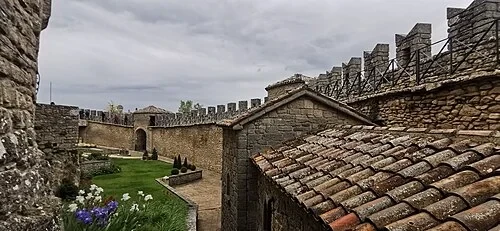 The Defensive Walls and BattlementsThe Double Walls
From this vantage point, the complexity of the fortress layout becomes clear. You can see the layered defensive system between the outer defensive wall, topped with distinctive swallow-tail battlements, and the inner sanctuary of the courtyard. Between these two sets of walls lie the service buildings, identifiable by their tiled rooftops, which once housed the garrison and provided storage for supplies. This double-wall system was a core element of medieval military architecture. If an enemy managed to breach the first gate, they would find themselves trapped in a secondary defensive zone between the two walls, vulnerable to fire from the defenders stationed on the higher inner ramparts. The swallow-tail battlements, or Ghibelline merlons, were not just decorative; their notches allowed archers to fire while remaining shielded by the stone. This architecture forced any invader to fight multiple battles just to reach the heart of the tower. The arrangement of the buildings within these walls was meticulously planned to maximize the efficiency of the troops stationed here during a long siege.
Listen in the appPhoto: Mateus2019 · CC BY-SA 3.0
07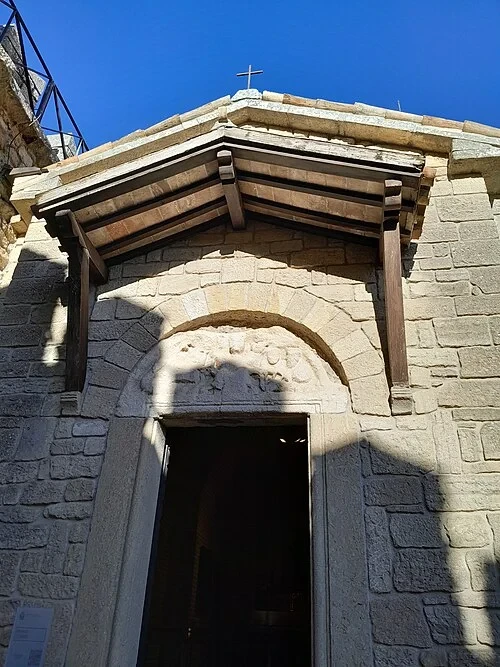 The Chapel of Saint BarbaraChapel of Saint Barbara
Even in a place of war, space was made for faith in this small, simple stone chapel dedicated to the patron saint of artillerymen. This modest building is the Chapel of Saint Barbara. Its simple stone exterior, topped with a small cross and fronted by a sturdy wooden porch, reflects the daily life of the soldiers who once lived within these walls. Saint Barbara is traditionally revered as the protector of those who work with explosives and artillery, making her the choice for a fortress garrisoned by gunners. The presence of the chapel highlights the deep connection between religious devotion and military service in San Marino’s history. Before going into battle or manning the cannons, soldiers would stop here to seek protection and strength. The architectural style matches the ruggedness of the rest of the fortress, prioritizing durability over ornate decoration. The wooden porch provided a small sheltered space for reflection amid the daily activities of the courtyard. The chapel remains a quiet corner of the fortress, largely unchanged by the centuries.
Listen in the appPhoto: August Dominus · CC0
08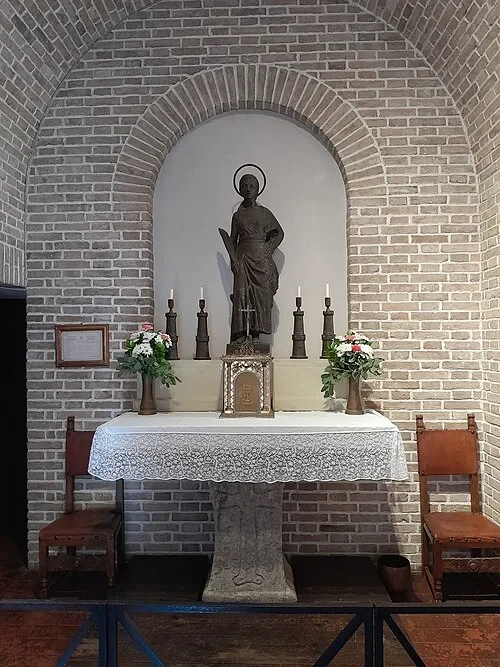 The Chapel of Saint BarbaraThe Artillery Altar
Inside the chapel, the military theme continues with unique details that honor the protector of the soldiers who defended these heights. Behind the lace-covered altar stands a bronze statue of Saint Barbara, depicted with her traditional symbols of faith and resilience. However, the most striking features of this interior are the candle holders. If you look closely, you will see they are designed to resemble small cannons or upright shell casings. This is a direct nod to Saint Barbara's role as the patron of artillerymen. For centuries, the men who manned the cannons in the courtyard outside would gather here, surrounded by these symbols of their trade. The contrast between the delicate lace of the altar and the heavy, weapon-inspired metalwork encapsulates the life of the garrison. The room is intimate and dimly lit, providing a somber atmosphere that contrasts with the bright, open spaces of the fortress battlements. This altar served as the spiritual heart of the tower, where the tools of war were symbolically placed under divine protection as part of the daily practicalities of a mountain stronghold.
Listen in the appPhoto: August Dominus · CC0
09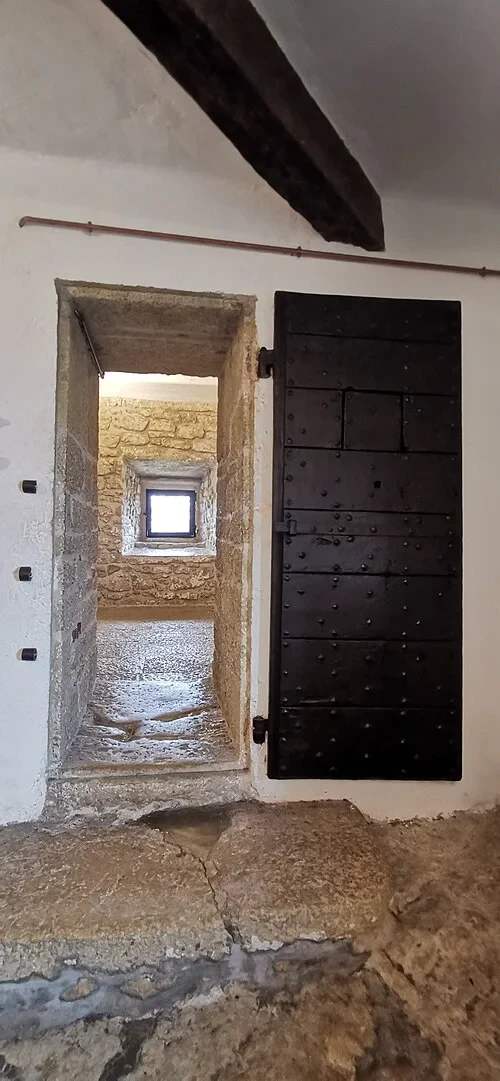 The Prison of GuaitaThe Guaita Prison
The fortress wasn't just a defensive outpost; it also functioned as the Republic’s primary jail for minor offenses. This prison was used exclusively for individuals serving short sentences of less than six months. The conditions within these stone walls were undoubtedly harsh. Entry was through a heavy, metal-studded door designed to be impenetrable, and the only connection to the outside world was a single, narrow window. This small opening provided just enough light to see by and allowed a sliver of the cold mountain air to circulate through the cell. The thick stone walls ensured the rooms remained damp and chilly throughout the year. While the sentences were short, the isolation within these cramped quarters was meant to be a significant deterrent. Living within these walls, prisoners would have heard the sounds of the garrison and the firing of the cannons, a constant reminder of the state’s authority just beyond their reach. The original hardware on the doors and the wear on the stone floors offer a tangible connection to the individuals held here.
Listen in the appPhoto: Mateus2019 · CC BY-SA 3.0
10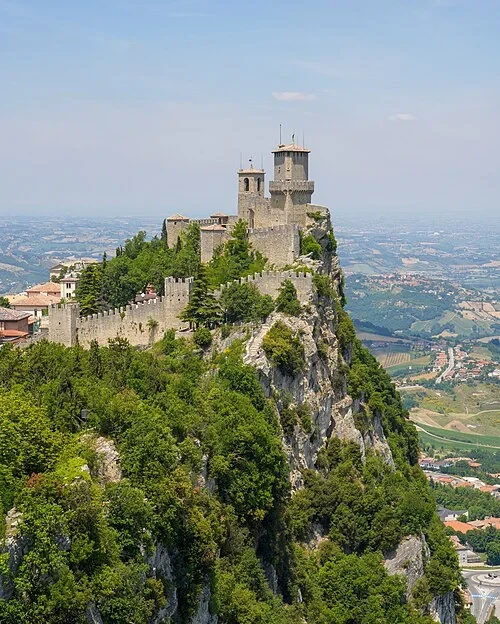 The Mastio (The Central Keep)The First Tower
From this distant perspective, the fortress walls can be seen snaking along the very edge of the limestone precipice, seemingly defying gravity. This striking silhouette is the most recognizable representation of San Marino’s enduring independence. It is featured prominently on the national flag and the state’s coat of arms, where the three towers are topped with ostrich feathers. Guaita’s position on this northernmost peak of Monte Titano provided an unobstructed view of the surrounding plains, allowing sentries to spot approaching threats from miles away. The tower’s longevity—surviving since the 11th century—is a source of immense pride for the citizens of the world’s oldest republic. It represents a history of self-governance that has remained unbroken despite the rise and fall of surrounding empires. The sheer scale of the rock face below the walls explains why this site was never taken by force. Looking at how the masonry follows the jagged contours of the mountain, one can appreciate the labor required to build such a massive structure in such an inhospitable location.
Listen in the appPhoto: Commonists · CC BY-SA 4.0
Guaita Tower
Frequently asked questions
How much does the guide cost?
Free app download. Listed guide price: $0.99. Guide price shown in the app. Audio guide only. Venue admission is separate.
Can I listen without internet?
Yes. Download the guide’s audio, images, and maps in the app before your visit. Your downloaded content is then available offline.
Can I listen in my language?
Stanza supports 15 languages. Check the app for the languages available for this guide.
Do I need to follow a schedule?
No. This is a self-guided experience. Choose your stops, pause whenever you like, and return to a story at your own pace.
At your own pace
Explore Guaita Tower.
Download Stanza, then search for “Guaita Tower”.
Free app download · Guide price shown in the app