Stanza · Audio guide
Dambulla cave templeAudio guide
A place to remember. A story to take with you.
Dambulla Cave Temple is a UNESCO World Heritage Site featuring a complex of five caves containing ancient statues and paintings depicting the life of Buddha. It is the largest and best-preserved cave temple…
Download Stanza, then search for “Dambulla cave temple”.
About the tour
One guide. Your kind of visit.
Dambulla Cave Temple is a UNESCO World Heritage Site featuring a complex of five caves containing ancient statues and paintings depicting the life of Buddha. It is the largest and best-preserved cave temple complex in Sri Lanka.
Ready when you are.
- 01Get the free Stanza app.
iOS & Android
- 02Find your guide.
“Dambulla cave temple”
- 03Download before you go.
Works offline
Audio guide / 14 narrated stops
Inside the guide
Get to know a few of the stories before you go. Open a stop to read more.
01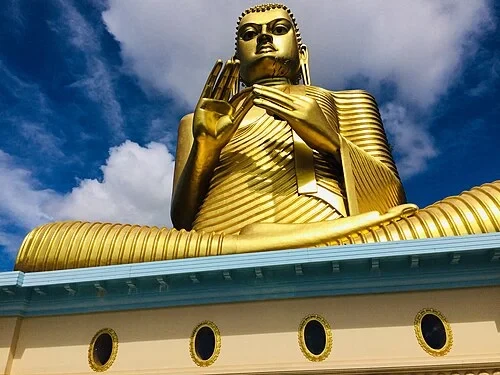 The Ascent of Dambulla RockThe Golden Temple Buddha
Welcome to the Dambulla Cave Temple. At the base of the massive hill, a modern, multi-story structure stands in stark visual contrast to the ancient landscape above. Built around the year 2000, this building serves as the contemporary entrance to the sacred complex. Seated atop the structure is a colossal golden Buddha statue, depicting the deity in the wheel-turning mudra, or hand gesture of teaching. The bright golden figure stands out vividly against the open sky and the surrounding green forests. This modern gateway prepares you for the climb ahead. The ancient cave temples, carved directly into the granite cliff face, lie approximately 160 meters higher up the steep rock dome. A path from this lower plaza leads visitors away from the contemporary architecture and up into a spiritual sanctuary with more than two thousand years of history.
Photo: Wishmithak · CC BY-SA 4.0
02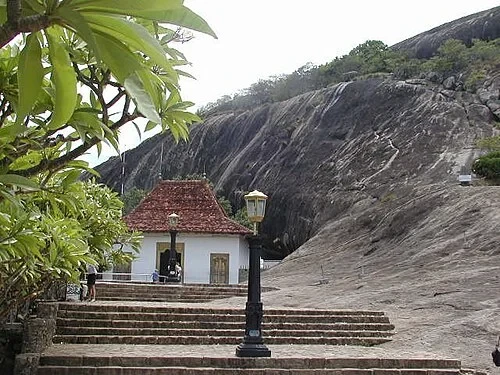 The Ascent of Dambulla RockThe Stone Steps of Dambulla Rock
Climbing the sloping dome of Dambulla Rock involves ascending hundreds of stone steps cut directly into the dark granite. This steep path has served as an active pilgrimage route for more than two millennia. Long before the steps were fully paved, ancient seekers made this same journey up the wind-swept stone surface. The history of this sacred site is closely tied to King Valagamba of Anuradhapura. In the first century BCE, South Indian invaders forced the king to flee his capital. He found refuge in these natural, secluded mountain caves, living in hiding among the monks for fifteen years. After successfully reclaiming his throne, the king transformed his former wild shelters into ornate rock temples as an act of gratitude. Many of the steps you tread today follow the original pathways established by those early builders.
Photo: Nataraja~commonswiki · Public domain
03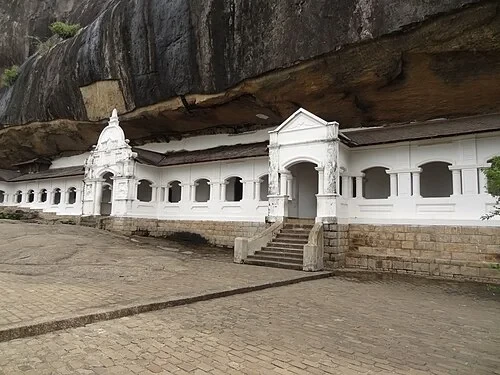 The Temple Terrace and ColonnadesThe White Arched Colonnade
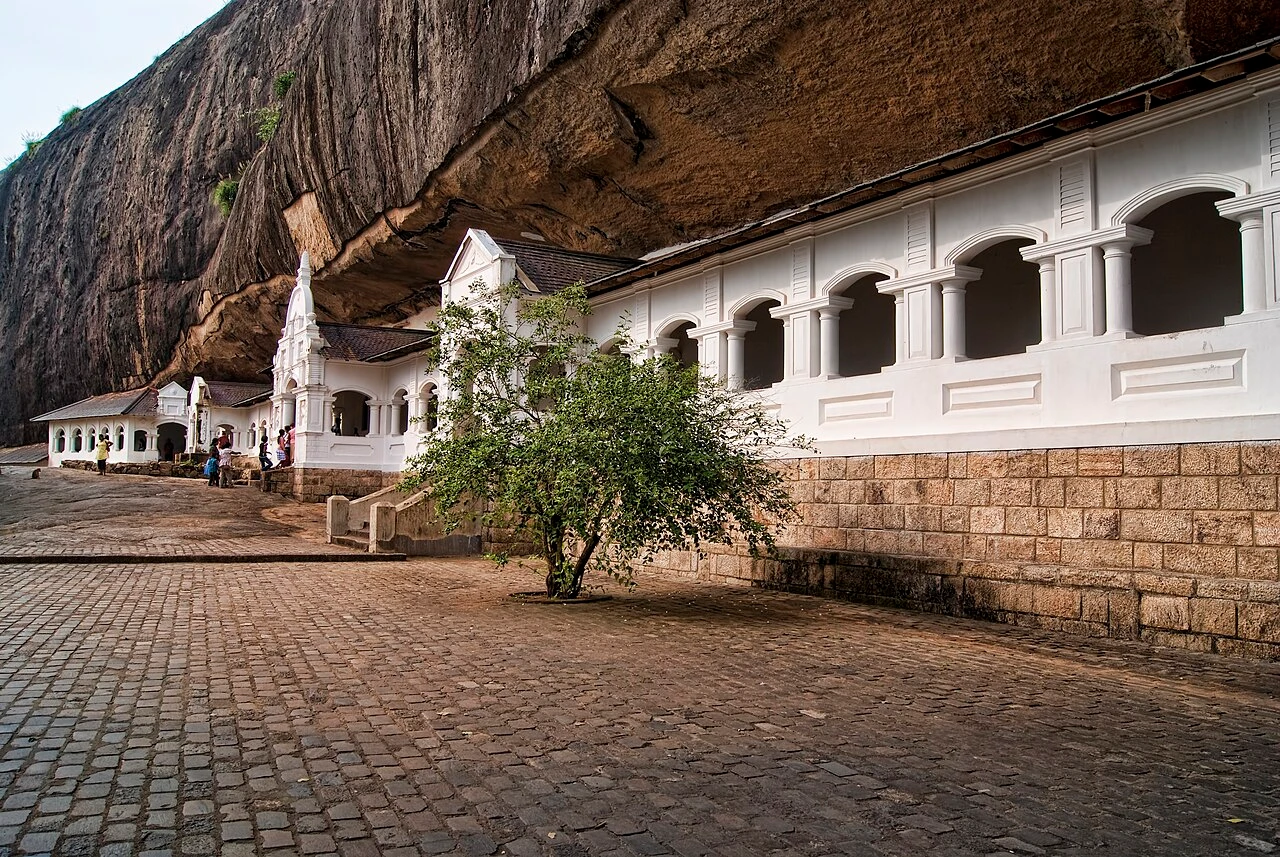
A long, whitewashed colonnade features prominent arched entryways and gabled roofs, standing out against the dark, weathered surface of the massive cliff. This architectural feature was constructed in 1938 to protect the invaluable ancient art inside the cave temples from wind and rain. The white facade is built directly beneath a sheer, black rock face that curves outward overhead. This natural granite overhang acts as a drip-ledge, channeling heavy tropical monsoon rains away from the temple entrances below. Before the construction of these protective brick corridors, the cave openings were more exposed to the elements. Today, the clean lines of the colonial-era arches create a striking visual boundary between the raw, wild mountain exterior and the sacred, dimly lit sanctuary spaces hidden within the rock.
Listen in the appPhoto: Cherubino · CC BY-SA 3.0
04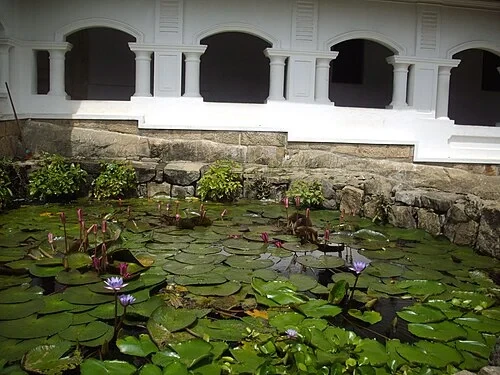 The Temple Terrace and ColonnadesThe Temple Lily Pond
Near the cave entrances, a quiet, stone-lined pool is filled with pink and purple water lilies floating on flat green leaves. Water lilies, closely associated with the sacred lotus, hold profound symbolic meaning in Buddhist thought. These plants grow from the dark mud at the bottom of the pond to bloom as pure, unblemished flowers on the water's surface, representing the path to spiritual awakening and enlightenment. Local vendors sell these fresh, wet blossoms to pilgrims along the path up the mountain. Devotees carry the delicate flowers into the dim, quiet cave shrines, placing them reverently on the stone altars before the statues of the Buddha. The fragrance of these silent floral offerings fills the ancient temple chambers, leaving a subtle scent that lingers in the cool air inside the rock.
Listen in the appRudolph.A.furtado · CC0
05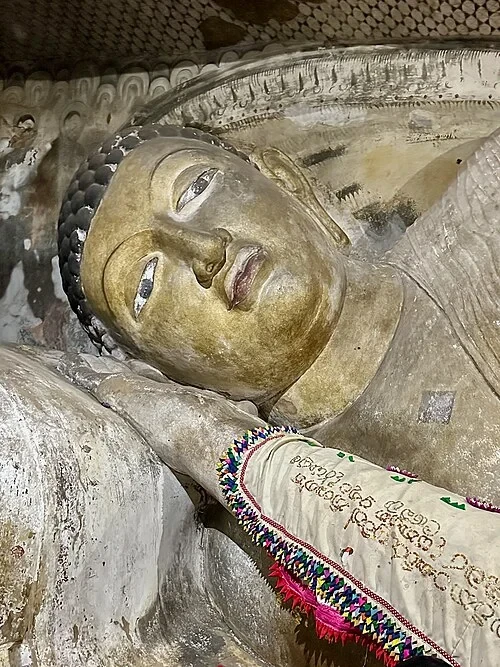 Devaraja Lena (Cave of the Divine King)The Reclining Buddha's Face
Entering Cave One, known as the Devaraja Lena or Cave of the Divine King, brings you face-to-face with a monumental reclining Buddha. Measuring fourteen meters in length, this massive statue was carved directly from a single, continuous piece of the living rock. The face of the figure displays a profoundly serene expression, characterized by heavily lidded eyes that convey a state of deep, meditative peace. Red pigment highlights the lips, contrasting with the golden tones of the face. Over centuries of active devotional use, generations of temple artisans have carefully retouched these painted details to preserve their clarity and color. This continuous maintenance reflects the cave's role as a living temple rather than a static historical museum. The massive head rests on a decorated pillow, looking out over the quiet, narrow cave chamber.
Listen in the appJosep Renalias Lohen11 · CC BY 4.0
06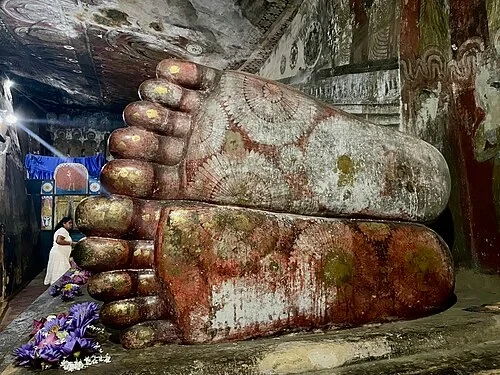 Devaraja Lena (Cave of the Divine King)The Painted Soles of the Buddha
At the far end of the fourteen-meter reclining Buddha statue, the flat soles of the feet are decorated with intricate, reddish-gold wheel and lotus designs. In Buddhist tradition, these patterns represent the auspicious physical markings of an enlightened being who has attained supreme spiritual wisdom. The wheels, or dharmachakras, symbolize the turning of the wheel of law and the spreading of Buddhist teachings across the world. A low altar table runs along the base of the statue in front of the feet. This table is typically piled high with colorful, freshly cut water lilies and jasmine blossoms placed there by visiting pilgrims. The bright reds, yellows, and golds of the painted feet remain vivid, kept clean and preserved by the temple's caretakers through the centuries.
Listen in the appJosep Renalias Lohen11 · CC BY 4.0
07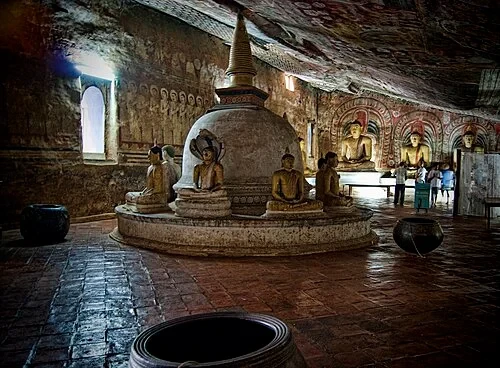 Maharaja Lena (Cave of the Great Kings)The Sacred Stupa of Maharaja Lena
Cave Two, the Maharaja Lena, or Cave of the Great Kings, is the largest shrine in the Dambulla complex, extending fifty-two meters in length and twenty-three meters deep. Near the center of this cavernous space stands a whitewashed stupa, a dome-shaped monument surrounded by seated Buddha figures. The cave is famous for a unique natural phenomenon that is central to local lore. Water continuously drips from a narrow crack in the high, sloping rock ceiling. Even during severe droughts, this spring does not stop flowing. The water is collected in a metal vessel placed in a small depression in the floor. According to belief, this water possesses healing properties and is strictly reserved for sacred temple rituals, never to be consumed or wasted. The sound of the slow, steady dripping echoes softly through the vast room.
Listen in the appPhilip Nalangan · CC BY 4.0
08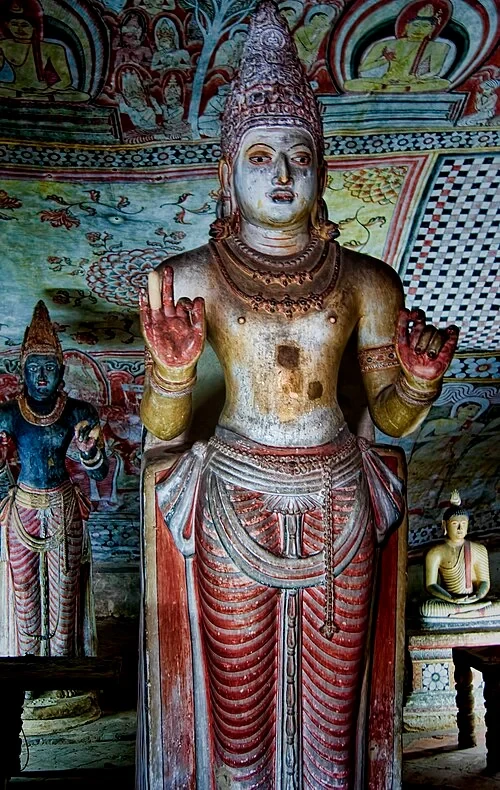 Maharaja Lena (Cave of the Great Kings)Statue of King Valagamba
Standing against a richly decorated wall painting is a life-sized, painted wooden statue representing King Valagamba. He wears a high, ornate royal crown and a traditional dhoti patterned with intricate red and gold designs. His right hand is raised in the abhaya mudra, a hand gesture representing reassurance and fearlessness. This figure commemorates the original royal patron of the sanctuary. During his fifteen years of exile in the first century BCE, the king found shelter in these very caves. Upon reclaiming his throne, he chose to convert his former refuge into a formal monastic center, laying the foundation for centuries of continuous worship. The statue stands as a historical portrait of the king who elevated Dambulla from a simple group of natural shelters to a major center of Buddhist scholarship and devotion.
Listen in the appPhilip Nalangan · CC BY 4.0
09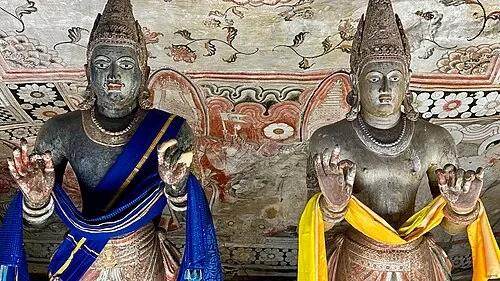 Maharaja Lena (Cave of the Great Kings)Deities of Saman and Vishnu
Statues representing the deities Saman and Vishnu stand inside the cave, draped in colorful fabric sashes. These figures illustrate the unique religious syncretism that developed in Sri Lanka over many centuries. In this blended tradition, Hindu gods were integrated into Buddhist temple spaces, serving as protective guardians of the primary Buddhist shrines. The statues exhibit calm, regal expressions and elegant posture, with their hands held in upright, symbolic gestures. Vishnu is often depicted in blue tones, while Saman is traditionally associated with the protection of the island. Their presence alongside the central Buddha figures shows how worshippers saw no contradiction in honoring both traditions, seeking the protection of these powerful deities within the sacred Buddhist space.
Listen in the appJosep Renalias Lohen11 · CC BY 4.0
10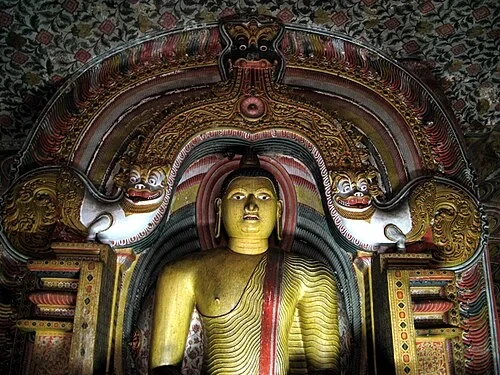 Maha Alut Vihara (Great New Monastery)The Dragon Arch
An elaborate archway known as a Makara Torana frames a seated Buddha statue, acting as a defensive spiritual gateway. At the top of this ornate arch is the stylized figure of the Makara, a mythical creature from ancient folklore. This creature is a composite of several different animals, featuring the trunk of an elephant, the powerful jaws of a crocodile, and the spreading tail of a peacock. Painted in bright pigments of gold, red, and black, the arch is covered in dense, swirling patterns that represent energy and protection. The fierce expression of the Makara at the peak is intended to ward off negative influences from the sacred figure seated beneath it. This decorative element is a classic feature of local temple architecture, displaying the skilled artistry of the cave's historic decorators.
Listen in the appMichael Gunther · CC BY-SA 4.0
Dambulla cave temple
Frequently asked questions
How much does the guide cost?
Free app download. Listed guide price: $3.99. Guide price shown in the app. Audio guide only. Venue admission is separate.
Can I listen without internet?
Yes. Download the guide’s audio, images, and maps in the app before your visit. Your downloaded content is then available offline.
Can I listen in my language?
Stanza supports 15 languages. Check the app for the languages available for this guide.
Do I need to follow a schedule?
No. This is a self-guided experience. Choose your stops, pause whenever you like, and return to a story at your own pace.
At your own pace
Explore Dambulla cave temple.
Download Stanza, then search for “Dambulla cave temple”.
Free app download · Guide price shown in the app
Keep exploring
Nearby audio guides
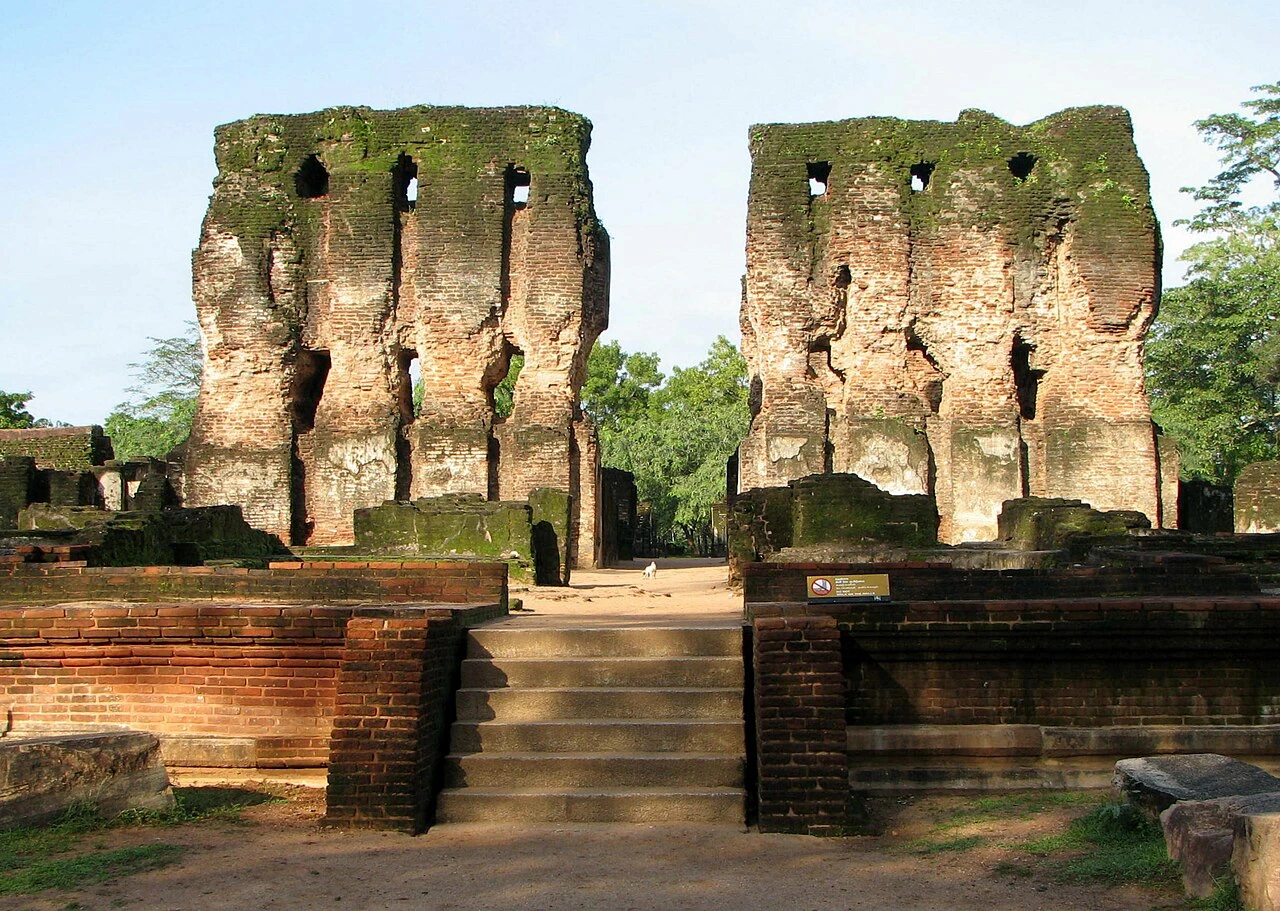
Polonnaruwa
Polonnaruwa
Content & sources
Bernard Gagnon · CC BY-SA 3.0
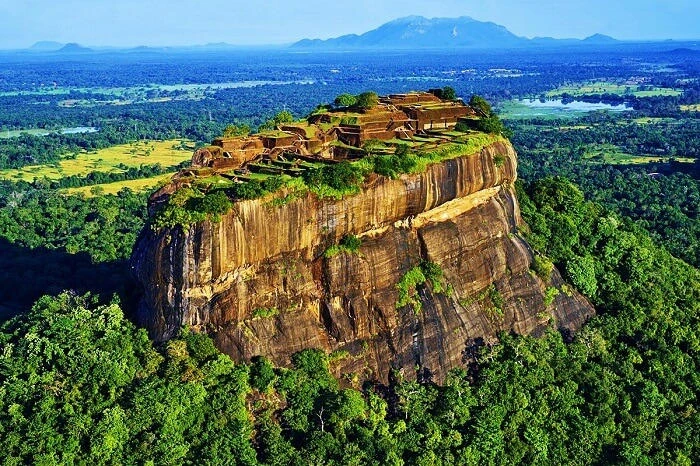
Sigiriya Rock Fortress
Content & sources
Photo: Binuka poojan · CC BY-SA 4.0