Languages
15Sigiriya Rock Fortress Audio Guide
Sigiriya Rock Fortress is a landmark in an iconic location, Sri Lanka. Explore it with Stanza's GPS-triggered offline audio guide — available in 15 languages.
Quick Facts
18
Stops
15
Languages
100%
Offline
About Sigiriya Rock Fortress
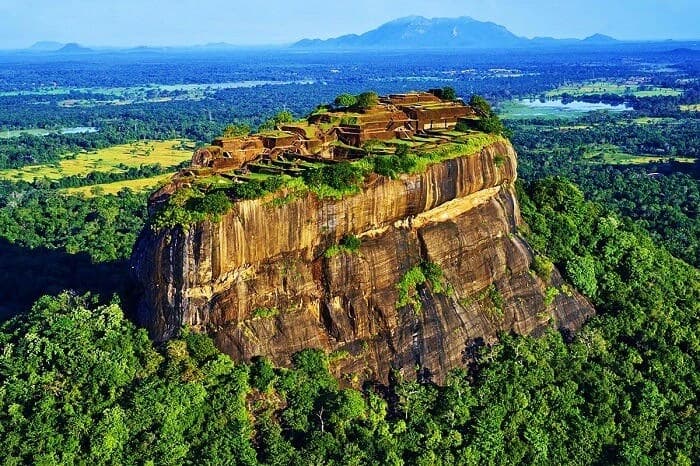
Sigiriya is an ancient rock fortress and former human settlement located near Dambulla, Sri Lanka. This prominent tourist attraction is renowned for its historical and archaeological significance.
Sigiriya Rock Fortress is also known as Lion Rock, Sigiri, Sigiri, Ceylon.
This self-guided audio tour features 18 narrated stops organized across 8 sections. As a fortress, Sigiriya Rock Fortress offers a unique cultural experience, Sri Lanka.
The Stanza audio guide is available in 15 languages and works entirely offline — download the complete tour including audio narration, maps, and images before your visit. As you walk through Sigiriya Rock Fortress, GPS-triggered narration plays automatically at each point of interest.
Last updated:
What you will hear
The Royal Water Gardens
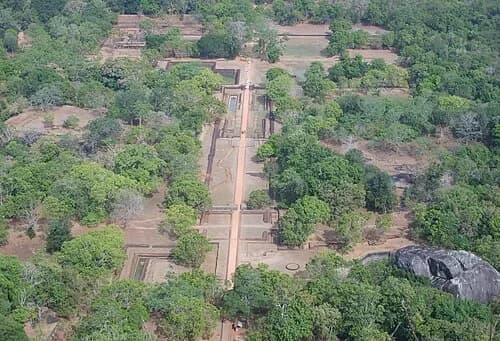
Covers the 'Must-See' Water Gardens, focusing on ancient hydraulic engineering and symmetry. Includes the Octagonal Pond and aerial views of the layout.
The Symmetrical Water Gardens
Looking down across the landscape, the precision of the ancient designers is striking. These symmetrical water gardens are among the oldest surviving landscaped parks in the world. They follow a 'charbagh' style, where the area is meticulously divided into quadrants by paths and water channels. This created a highly organized, royal pleasure park right at the foot of the jagged rock face. The engineering behind these features was incredibly advanced for the 5th century. Builders used a sophisticated network of gravity-fed underground clay pipes to move water throughout the gardens. This system maintained the water levels in the ponds and even powered fountains without the need for pumps. The layout reflects a desire for total control over the environment, contrasting the wild, unpredictable jungle with the rigid geometry of the king's private grounds. Walking through this area, you see how the natural elements were tamed to serve the king’s aesthetic vision. Large ponds, small islands, and narrow streams work together to provide cooling and visual beauty, proving that Sigiriya was as much a luxurious palace as it was a fortified stronghold.
The Boulder Gardens and Monastic Shelters
Explores the natural landscape used for defense and the site's monastic origins. Features the Cobra Hood Cave and rock-cut cells.
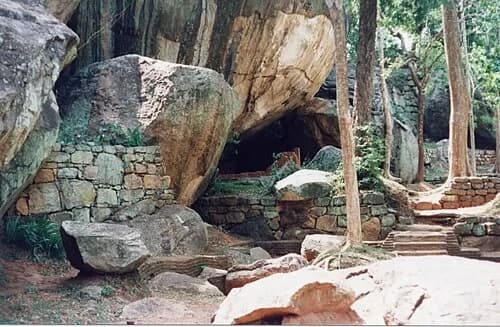
The Monastic Shelters
The Boulder Gardens offer a sharp contrast to the rigid symmetry of the water gardens you saw earlier. Here, the architects chose to work with the existing natural landscape rather than flatten it. These massive boulders were used for both defense and habitation. Tucked beneath and between the rocks are monastic shelters—simple cells where monks resided both before and after King Kashyapa's brief 18-year reign. These rock-cut dwellings were modest, reflecting a life of asceticism. You can see where the granite has been notched and flattened to support wooden beams or brick walls that once enclosed these spaces. While the king lived in luxury at the summit, these shelters remained part of a persistent monastic community. Strategically, this area was also a defensive maze. The irregular placement of the boulders created narrow, easily defended passages. If an invader managed to cross the moats and gardens, they would find themselves trapped in this labyrinth of stone. This area highlights the dual nature of Sigiriya: a site of deep religious significance and a fortress built out of the paranoid needs of a usurper king.
The Gallery of the Sigiriya Maidens
Covers the 'Must-See' frescoes. Focuses on the unique secular art style and the vibrant colors that have survived 1,500 years.
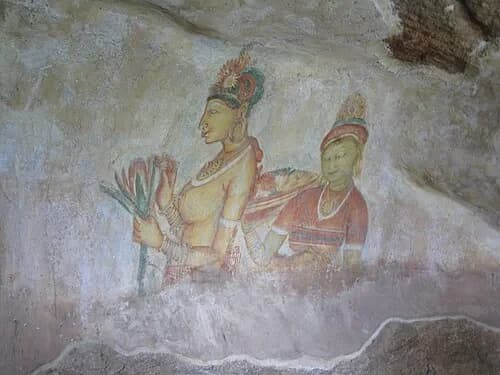
The Sigiriya Maidens
Within a sheltered gallery on the side of the rock are the famous Sigiriya Maidens. Painted during the 5th century, these frescoes are among the most significant works of ancient art in Asia. They depict figures known as Apsaras, or celestial nymphs, who appear to be floating through the sky. While ancient accounts suggest that there were once as many as 500 of these paintings covering a large section of the rock face, only 22 survive today. Unlike most ancient Sri Lankan art, which is predominantly Buddhist in theme, these frescoes are notably secular or mythological in nature. They provide a rare look at the courtly aesthetics and ideals of beauty from the era of King Kashyapa. The women are shown with elaborate hairstyles, jewelry, and fine clothing, often holding flowers or trays of fruit. Their presence on the rock face transformed the fortress into a 'cloud palace,' reinforcing the king’s image as a divine ruler inhabiting a heavenly realm. The survival of these delicate paintings is remarkable, given their exposure to the elements for over 1,500 years.
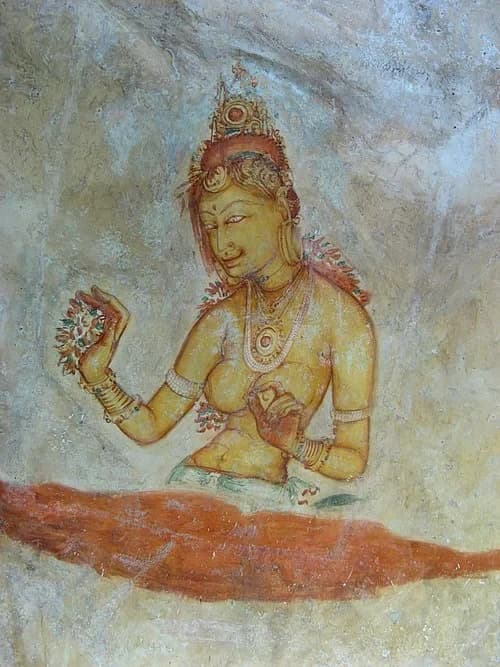
Celestial Nymphs
Examining the frescoes closely reveals the incredible artistic technique used by 5th-century painters. The vibrant colors—deep reds, yellows, and greens—were derived from natural earth pigments and plant dyes. Notice the detail in the maidens' jewelry, the delicate way they hold flowers, and the intricate patterns of their headpieces. One of the most distinctive features is the 'cloud' effect at their waists. By showing the lower half of their bodies obscured by stylized clouds, the artists conveyed that these are not earthly women, but celestial beings floating high in the sky. This artistic choice helped turn the granite rock of Sigiriya into a metaphor for a mountain in the heavens. The natural hollow in the rock face has acted as a protective shelter, shielding the pigments from direct sun and heavy rain for over fifteen centuries. The fluidity of the lines and the expressive faces suggest a high level of artistic sophistication in the royal court. These paintings offer a window into a vanished world of courtly elegance, preserved almost by accident in the middle of a military stronghold.
The Mirror Wall and Ancient Graffiti
Focuses on the polished masonry wall and the 1,500 poems scribbled by ancient visitors. Connects the art to historical tourism.
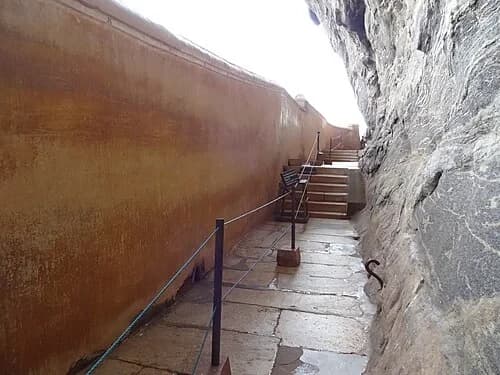
The Mirror Wall Poetry
The Mirror Wall is more than just a structural feature; it is a historical document. Between the 8th and 10th centuries, Sigiriya became a destination for ancient travelers who were as captivated by the site as modern visitors are. These early 'tourists' scratched over 1,500 poems and messages into the polished plaster of the wall. These inscriptions are invaluable to linguists as they track the development of the Sinhalese language and script over several centuries. The verses range from beautiful tributes to the painted maidens above to more personal reflections. One particularly memorable entry was written in the 9th century by a visitor named Budal. In a humorous display of self-awareness, Budal wrote that he wouldn't bother writing a poem himself because everyone else had already written so many. These graffitied verses show that even hundreds of years after Kashyapa’s death, Sigiriya remained a place of awe and wonder. Reading the translations today allows us to connect directly with the thoughts and feelings of people who stood on this very path over a millennium ago.
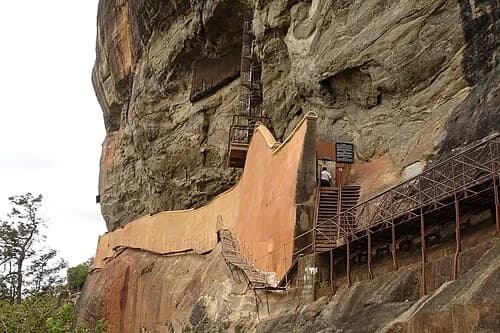
The Gallery Path
The approach to the higher levels of the fortress takes you along the Gallery Path, home to the famous Mirror Wall. This impressive structure is made of brick masonry and was originally coated in a plaster so highly polished that it acted like a mirror. Legend says it was kept so shiny that the King could see his own reflection as he walked by. Even today, though the luster has faded with time, the surface remains remarkably smooth to the touch. This wall serves a dual purpose: it protected the path from the sheer drop on one side and provided a surface for the 'Mirror Wall Poetry' you will see shortly. To reach the frescoes located nearly 100 meters above the ground, visitors now use a modern spiral staircase, a necessary addition to protect the ancient site while allowing access. The construction of a path like this on a near-vertical rock face is a marvel of ancient engineering, showing the lengths to which Kashyapa’s builders went to ensure the King could move safely and comfortably between the different levels of his sky-palace.
The Lion's Paw Terrace
The signature 'Lion Rock' entrance. Highlights the massive stone paws and the psychological impact of walking through a lion's mouth.
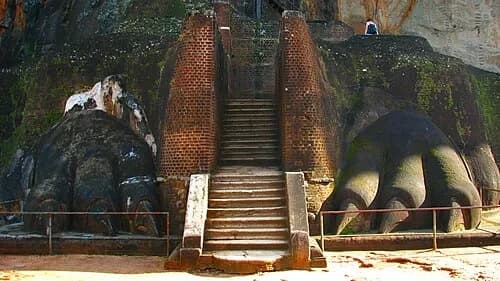
The Lion Gate
Arriving at this wide plateau, you find the entrance to the final, steepest ascent. This is the Lion Gate, the feature that gave the site its name: Sigiriya, or 'Lion Rock.' In its prime, a colossal statue of a lion, made of brick and plaster, sat here, guarding the way to the palace. Today, only two massive stone paws remain, but they are enough to suggest the staggering scale of the original work. Visitors would have climbed a staircase that led directly through the open mouth of the lion to reach the summit. This was the ultimate psychological threshold. Emerging from the beast’s mouth to begin the final climb would have been an awe-inspiring experience for any ancient visitor. The lion was a powerful symbol in Sri Lankan culture, representing royalty, strength, and the king's personal identity. By making his subjects pass through the lion, Kashyapa was reinforcing his claim to supreme authority. Although the upper body of the lion has long since crumbled away, these intricately carved paws, with their sharp claws and massive scale, stand as a reminder of the sheer ambition that drove the creation of this fortress.
The Summit Palace and Royal Throne
The climax of the tour at the 180-meter summit. Shows the foundations of the king's residence and the carved stone throne.
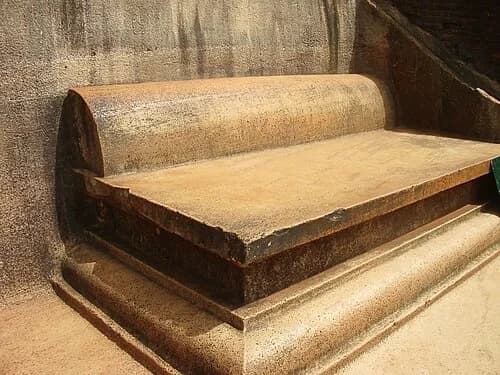
The Royal Throne
At the highest point of the summit palace sits the Royal Throne. Unlike the ornate furniture of many modern palaces, this throne was carved directly into the living granite of the rock itself. It is a massive, solid seat that has survived centuries of exposure to monsoon rains and tropical winds. From this spot, King Kashyapa could sit and look out over his entire realm, monitoring the progress of his gardens and the movements of his people below. The stone is remarkably smooth, worn down by both the original craftsmanship and the passage of time. This was the ultimate seat of power in 5th-century Sri Lanka. Sitting here, the king would have been the highest person in his kingdom, physically and symbolically separated from the world of his subjects. The simplicity of the throne reflects the rugged nature of the fortress summit. It wasn't about gold or jewels; it was about the permanence and the commanding view of the land. As you look at the weathered edges of the stone, you can easily imagine the king seated here, presiding over his court in this high-altitude refuge.
The Sky Pools and Hydraulic Feats
Highlights the engineering of the large rock-cut pools on the summit, reflecting the sky and the king's power over water.
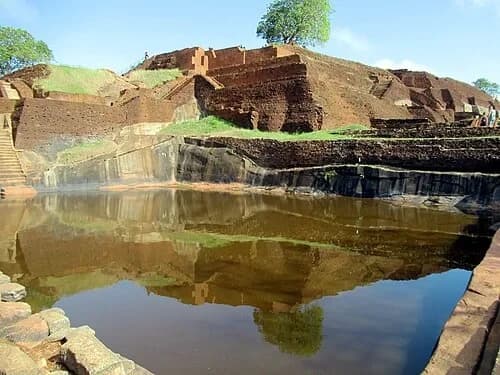
The Sky Pool
One of the most impressive feats of engineering at the summit is this large water tank, which was meticulously cut into the solid granite rock. Measuring approximately 21 meters by 11 meters, it served as the primary reservoir for the royal palace. The method by which it was filled remains a subject of fascination for historians and engineers. It is likely that the tank relied on a sophisticated combination of rainwater harvesting and an ingenious system of wind-powered lifts or pumps that transported water up the sheer cliffs. Beyond its practical use for bathing and irrigation, the pool held a profound symbolic value. On clear days, the still surface would have acted as a perfect mirror, capturing the sky and the clouds above. This visual effect was intended to represent King Kashyapa's perceived status as a god-king, existing between the earthly and celestial realms. Even today, the dark, still water invites reflection on the sheer ambition required to create a mountain-top oasis over fifteen centuries ago. The surrounding steps and terraces once supported wooden structures that would have offered shade and luxury overlooking the water.
The King's Final View
Conclusion of the tour. Offers a 360-degree view of the jungle and a reflective look back at the rock from a distance.
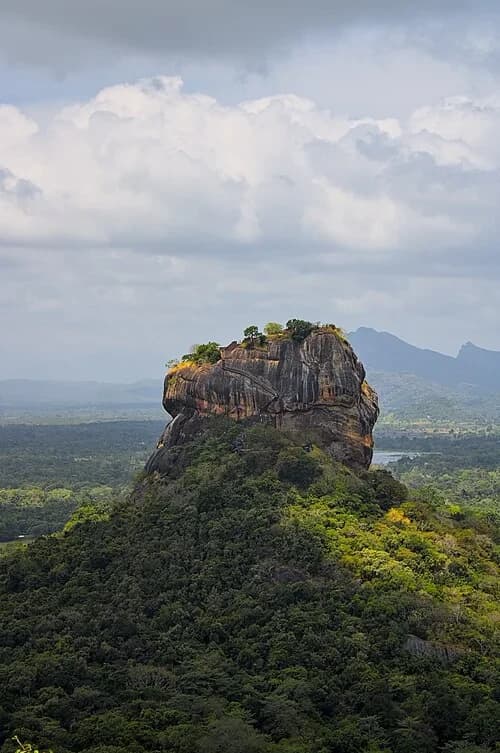
The Final Stand
In 495 CE, the fear that had shaped this fortress finally became a reality when Moggallana returned from exile with a powerful army. Rather than wait within the safety of the rock, King Kashyapa descended to the plains below to face his brother in open combat. The battle took a disastrous turn when the King’s war elephant encountered a marshy area and changed course to find firmer ground. This sudden maneuver was misinterpreted by his soldiers as a signal of retreat. Thinking their leader was fleeing the field, the royal troops panicked and abandoned the King. Left alone and facing certain capture at the hands of his brother, Kashyapa chose a final act of defiance. He drew his dagger and committed suicide by cutting his own throat. With his death, the eighteen-year era of Sigiriya as a royal capital came to an abrupt end. Moggallana subsequently moved the capital back to Anuradhapura and returned the rock to the Buddhist monks who had inhabited it previously. Looking back at the massive granite column, it remains as a monument to a tragic, ambitious, and ultimately short-lived reign that redefined the landscape of ancient Sri Lanka.
Want to hear the rest?
Download the Stanza app to unlock all 18 stops and full GPS-guided navigation.
Frequently Asked Questions
How long does the Sigiriya Rock Fortress audio tour take?
The Sigiriya Rock Fortress audio guide includes 18 narrated stops. Most visitors spend 45 minutes to 1.5 hours exploring the complete tour, though you can listen at your own pace and skip or revisit any stop.
Is the Sigiriya Rock Fortress audio guide available in my language?
Stanza supports 15 languages: English, Spanish, French, German, Italian, Portuguese, Russian, Japanese, Chinese, Korean, Arabic, Hindi, Polish, Dutch, Hebrew. Check the guide in the app to confirm the languages currently available for this tour.
Can I use the audio guide offline at Sigiriya Rock Fortress?
Yes! Download the complete Sigiriya Rock Fortress tour — including all audio, maps, and images — before your visit. The Stanza app works completely offline, so you don't need WiFi or mobile data at the venue.
How much does the Sigiriya Rock Fortress audio guide cost?
The Stanza app is free to download. The current listed price for the Sigiriya Rock Fortress audio guide is $2.99; app-store region and currency may affect the final price.
How do I use the Stanza audio guide at Sigiriya Rock Fortress?
Download the free Stanza app, search for "Sigiriya Rock Fortress", and download the tour. When you arrive at the venue, the app uses GPS to detect your location and automatically plays the relevant narration as you move between points of interest — completely hands-free.
What makes the Stanza audio guide different from other Sigiriya Rock Fortress tours?
Stanza offers GPS-triggered narration that plays automatically as you walk through Sigiriya Rock Fortress — no need to manually select stops. The tour is available in 15 languages, works fully offline, and includes 18 expertly narrated stops with images and historical context.