Languages
15Biltmore Estate Audio Guide
Biltmore Estate is a landmark in an iconic location, United States. Explore it with Stanza's GPS-triggered offline audio guide — available in 15 languages.
Quick Facts
41
Stops
15
Languages
100%
Offline
About Biltmore Estate
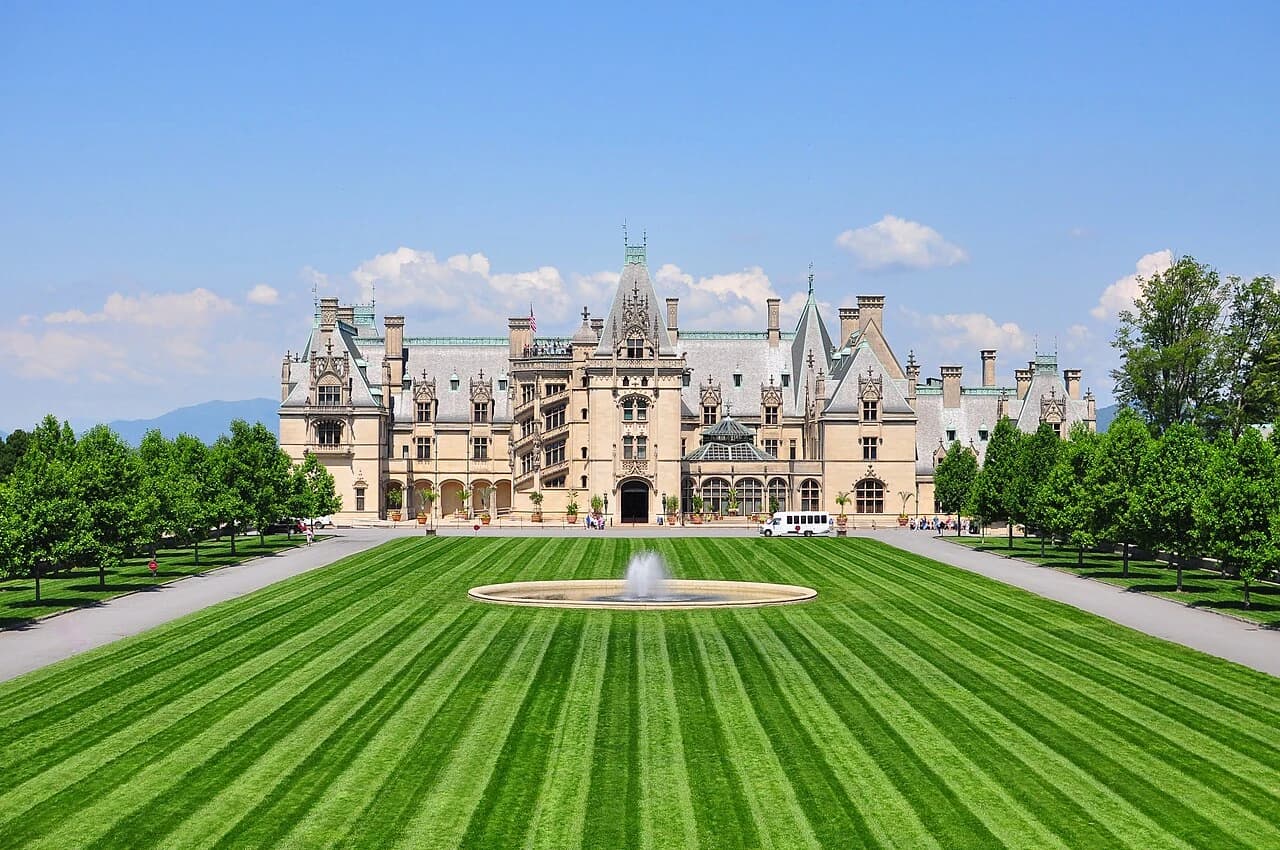
Biltmore Estate is a historic house museum and tourist attraction located in Asheville, North Carolina, United States.
This self-guided audio tour features 41 narrated stops organized across 7 sections. As a manor, Biltmore Estate offers a unique cultural experience, United States.
The Stanza audio guide is available in 15 languages and works entirely offline — download the complete tour including audio narration, maps, and images before your visit. As you walk through Biltmore Estate, GPS-triggered narration plays automatically at each point of interest.
Last updated:
What you will hear
The Library
Showcases Vanderbilt's intellectual passion and the room's baroque ceiling painting. Includes verified artwork.
The Chariot of Aurora
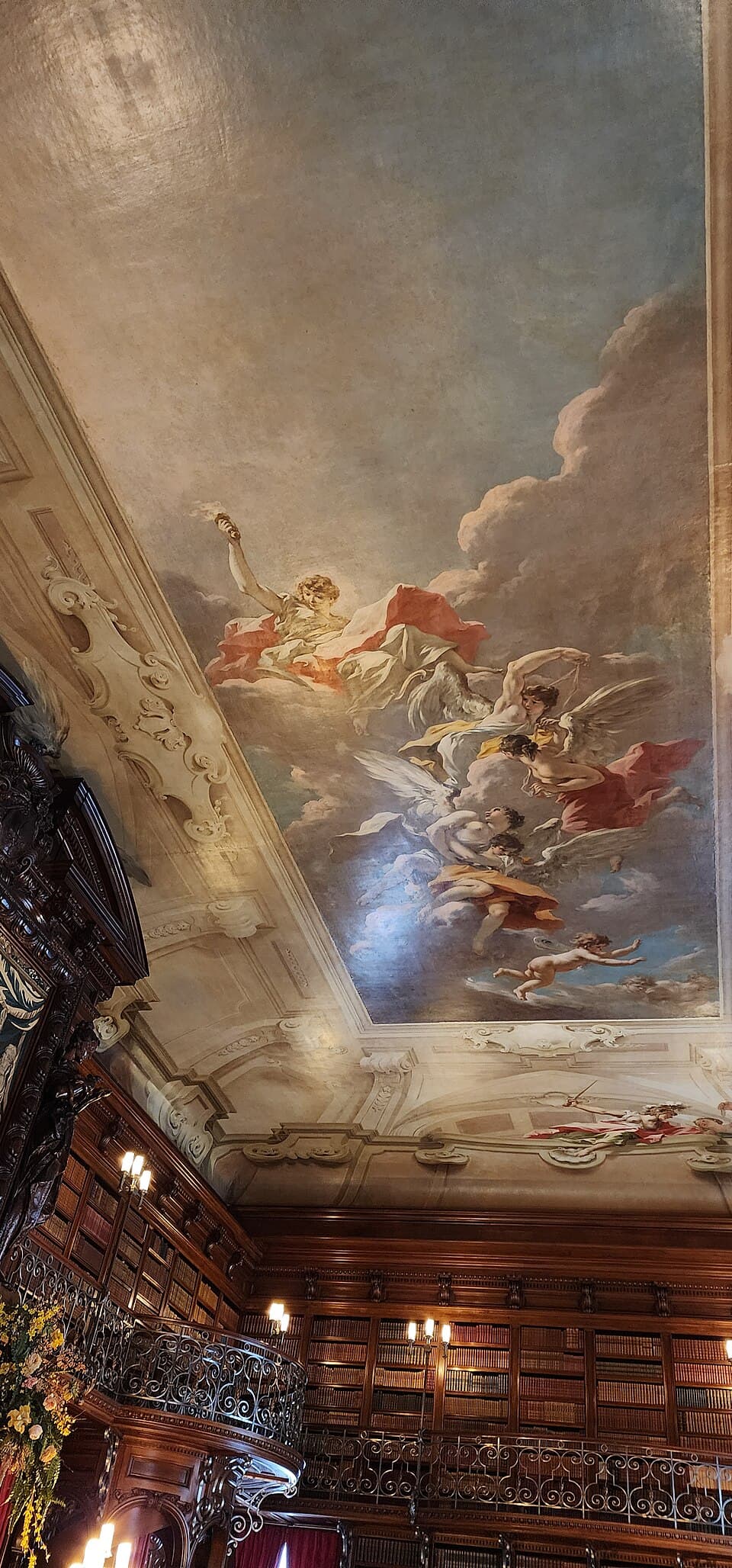
The ceiling of the Library is dominated by a breathtaking painting titled 'The Chariot of Aurora.' This artwork has a fascinating history that predates Biltmore itself. It was originally created by the artist Giovanni Antonio Pellegrini for the Pisani Palace in Venice, Italy, in the early 18th century. When George Vanderbilt saw it, he knew it would be the perfect crowning element for his library. To get it to North Carolina, the massive canvas had to be carefully removed from its original location and divided into thirteen separate sections for transport across the Atlantic. Once it arrived at the estate, the sections were meticulously reassembled and installed on the ceiling. The painting depicts Aurora, the goddess of the dawn, as she soars across the sky in her chariot, signaling the start of a new day. The bright, ethereal colors and dynamic composition provide a striking contrast to the dark, heavy walnut paneling of the walls below. Having a genuine Venetian masterpiece on the ceiling was the ultimate expression of Vanderbilt’s sophisticated, international taste. It transformed the Library from a simple study into a world-class gallery space. As you look up, consider the incredible effort required to move such a delicate and historical work of art from a palace in Italy to a mountain home in America, ensuring its preservation for future generations.
The Library Ladder
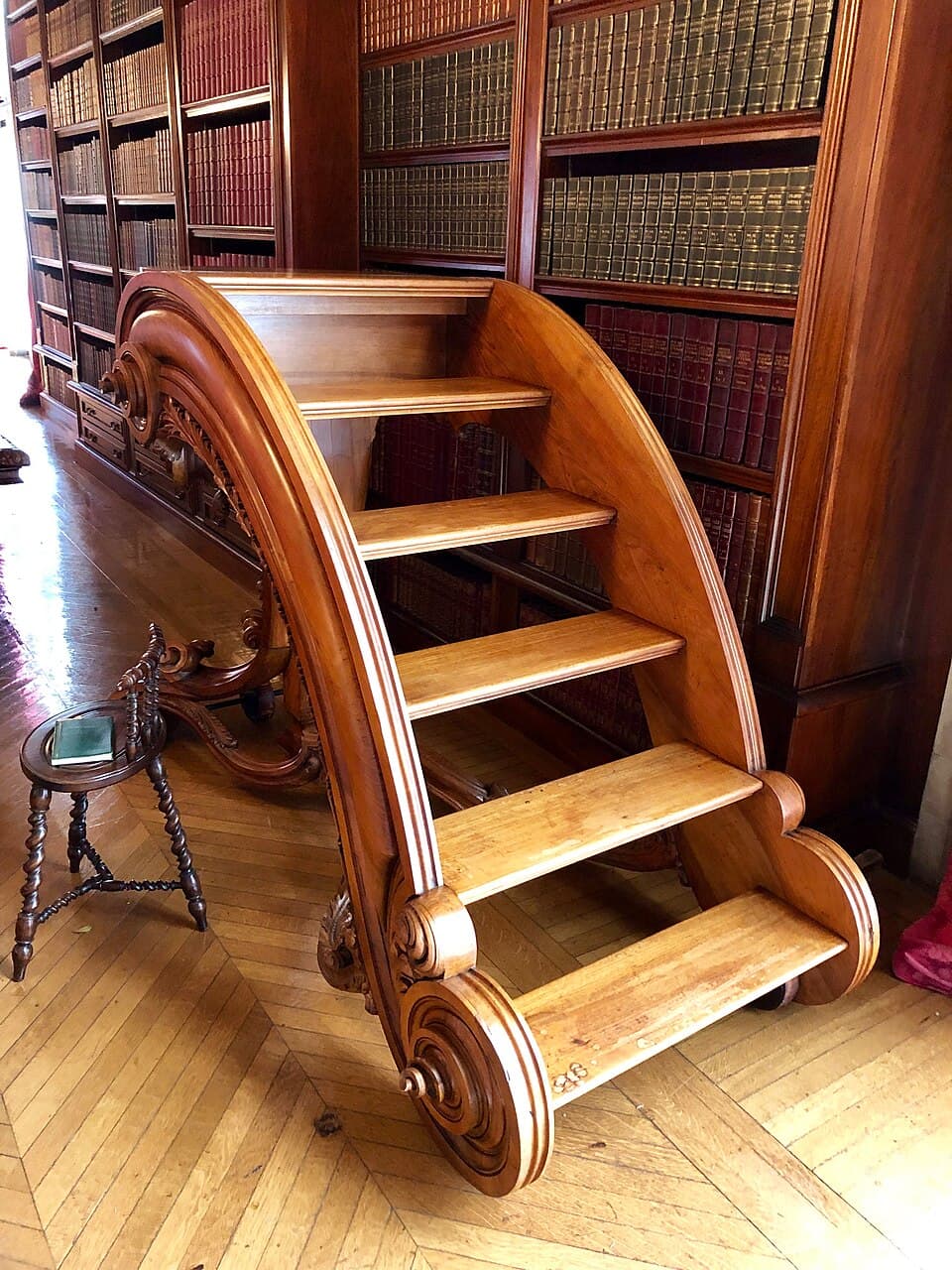
In a room with shelves stretching high toward the ceiling, a practical solution for reaching books was essential. The rolling walnut ladder you see in the Library is a beautiful example of form meeting function. Crafted from the same rich wood as the room's paneling, the ladder allowed George Vanderbilt and his guests to easily access the upper galleries of his ten-thousand-volume collection. It serves as a reminder that this room was not just a showroom for rare books; it was a working study used daily by a man who was a dedicated reader and researcher. The ladder moves along a track, reflecting the attention to detail that went into every aspect of the house's interior design. Even a utilitarian object like a ladder was expected to be a piece of fine furniture, matching the aesthetic of the room perfectly. It highlights the verticality of the Library, drawing the eye upward to the second-tier balcony and the 'Chariot of Aurora' ceiling painting. Vanderbilt’s passion for learning meant that he was often seen exploring these shelves, searching for a specific text in one of the eight languages he studied. The ladder represents the accessible nature of knowledge within the home, standing ready to help the curious reach the highest shelf in search of a new story or a piece of history.
The Tapestry Gallery and Family Portraits
Features 16th-century tapestries and the major portrait commissions by John Singer Sargent.
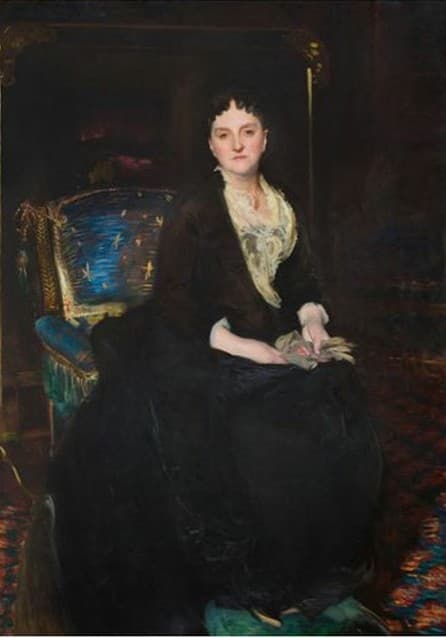
Maria Louisa Vanderbilt
The portrait before you depicts Maria Louisa Vanderbilt, George’s mother, and serves as a powerful reminder of the family legacy that made this estate possible. The Vanderbilt fortune was primarily built on the massive success of shipping and railroad empires established by George’s grandfather, Cornelius 'The Commodore' Vanderbilt. By the time George began work on Biltmore, the family was at the pinnacle of American social and economic life. This portrait reflects the dignity and high status of the matriarch of one of the wealthiest families in the world. George was the youngest of eight children, and the resources provided by his inheritance allowed him to pursue projects of unprecedented scale. While Biltmore is often seen as a monument to individual ambition, it is also a monument to Gilded Age success and the industrial growth of the United States. The wealth represented by the woman in this painting provided more than just a home; it funded the thousands of workers, the specialized artisans, and the massive land acquisitions required to transform this region of North Carolina. Her presence in the gallery anchors the house to the broader story of the Vanderbilt dynasty and their transformative influence on American history.
The Grand Staircase
Focuses on the engineering marvel of the cantilevered staircase and its massive chandelier.
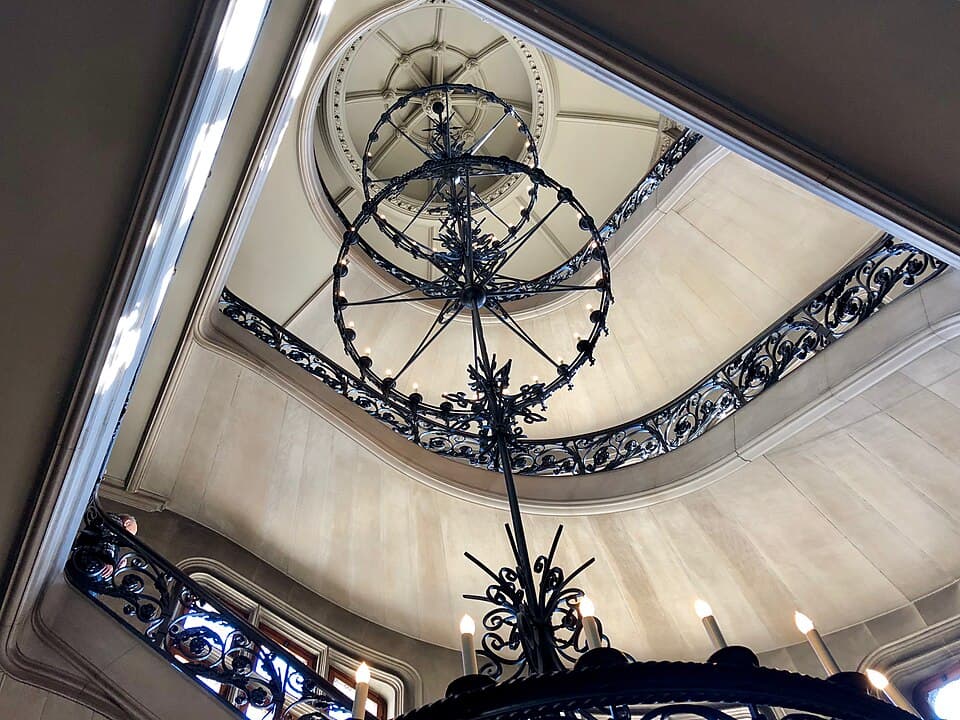
The Wrought Iron Chandelier
Suspended in the center of the Grand Staircase is a massive wrought-iron chandelier that represents the cutting-edge technology of the 1890s. This impressive fixture holds seventy-two light bulbs and is supported by a single, heavy iron bolt that extends through the ceiling. When Biltmore was completed in 1895, the house was fully electric from the very beginning. This was a true rarity for the time, as many homes—even those of the very wealthy—were still relying on gas lighting or were only beginning to experiment with electricity. George Vanderbilt was an early adopter of the latest innovations, and the inclusion of such a large electric chandelier was a bold statement of modernity. The wrought-iron design complements the medieval and Renaissance themes found throughout the house, yet the bulbs themselves were symbols of a new era. Imagine the scene in the late evening, when the glow of seventy-two bulbs would illuminate the entire stone spiral of the staircase, casting long shadows and highlighting the intricate carvings on the walls. It served as a brilliant centerpiece that connected the architectural past with the technological future Vanderbilt was helping to usher in.
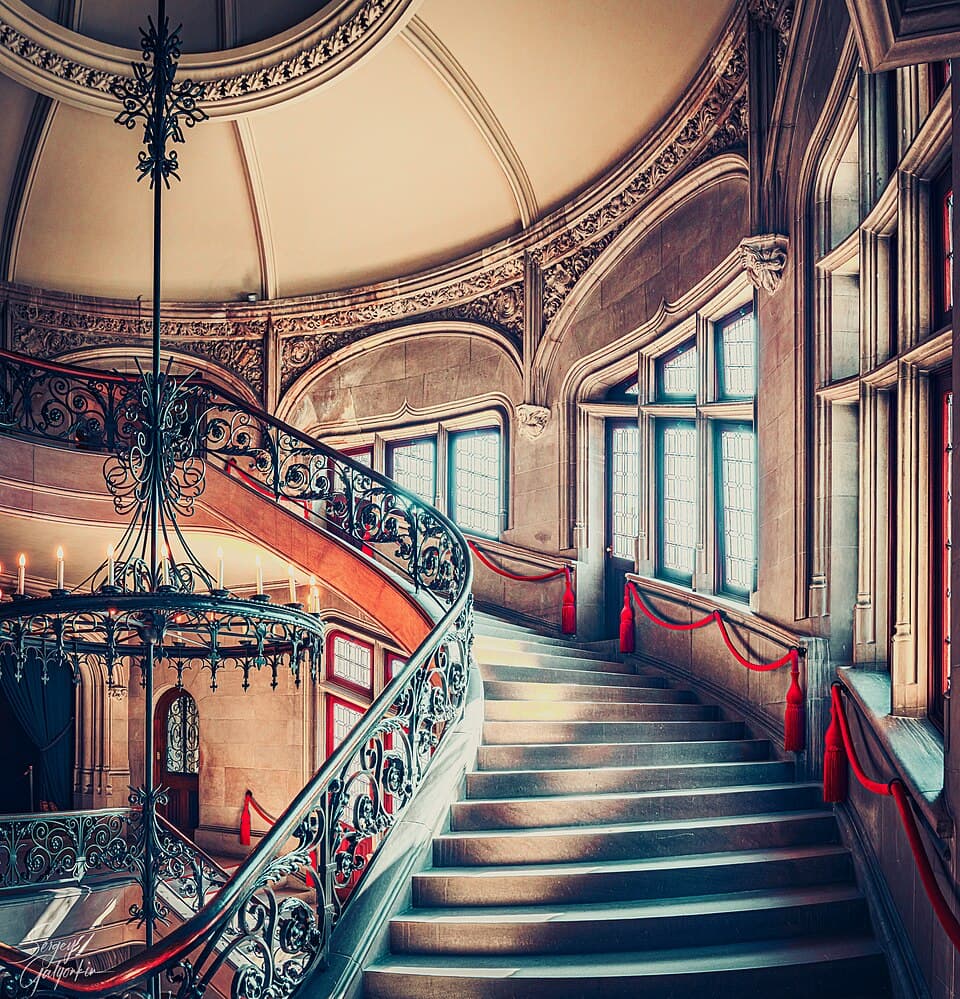
The Grand Staircase
Stepping inside the Grand Staircase tower, you are met with a breathtaking view of 107 stone steps spiraling upward. What makes this staircase truly remarkable is that it is cantilevered. This means that each individual step is not supported by a central column or traditional under-support. Instead, each step is expertly carved so that it is held in place by the weight of the stone step resting directly above it, combined with the precision of how the stones are anchored into the wall. This is a feat of precision engineering where gravity and the immense weight of the stone itself provide the stability. As you look up, the steps create a perfect geometric spiral that feels remarkably light despite the tons of material used in its construction. The central space remains open, allowing you to see all the way from the ground floor to the very top. This design was not just about beauty; it was a demonstration of the highest level of masonry skill available at the end of the 19th century. The sheer scale and the technical difficulty of the cantilevered construction make this one of the most significant architectural achievements within the walls of Biltmore.
Vanderbilt Bedrooms and Guest Suites
Explores the private lives of George and Edith Vanderbilt and the luxury provided to Gilded Age guests.
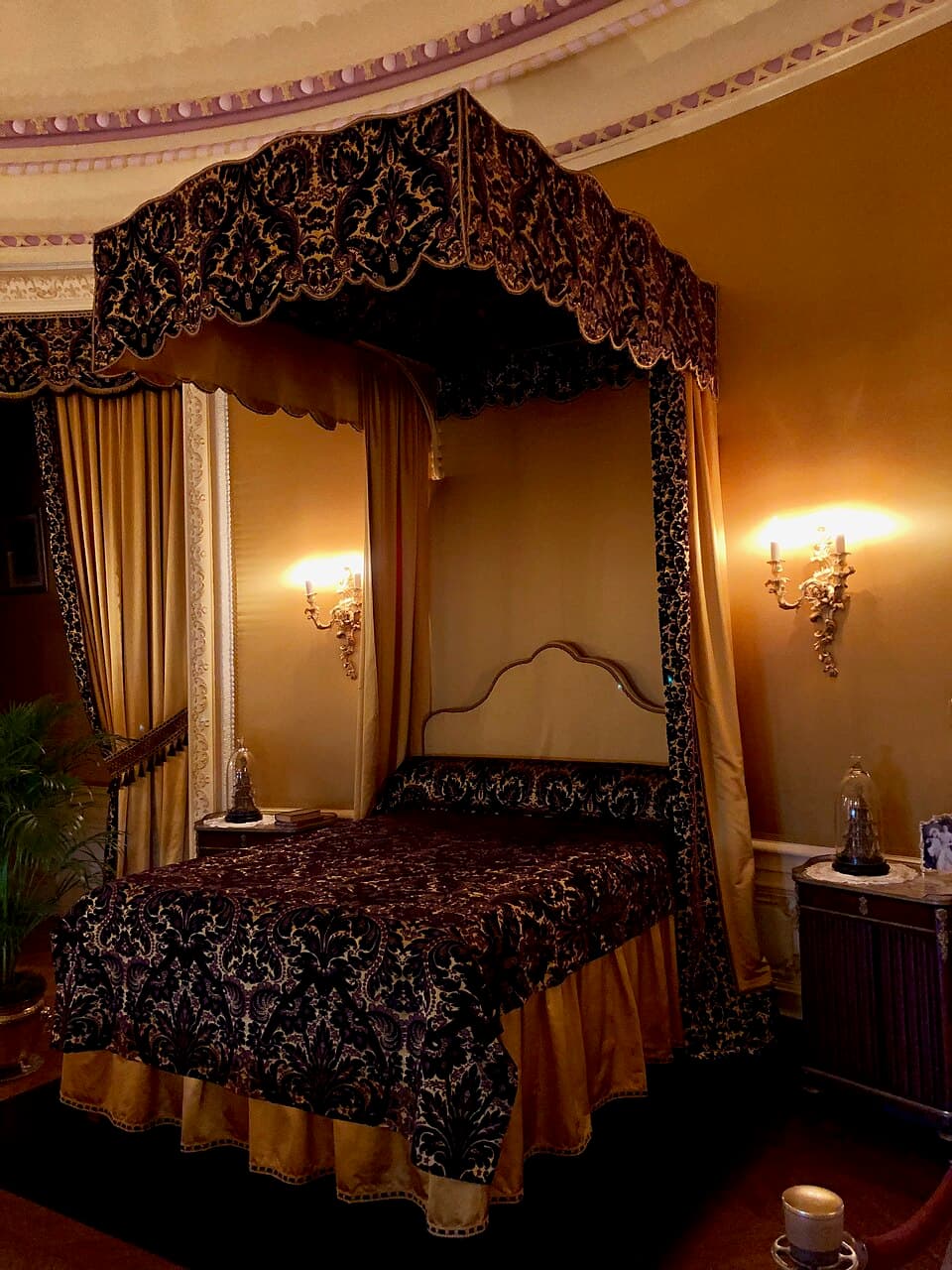
Edith Vanderbilt's Bedroom
This stunning oval-shaped room served as the private bedroom of Edith Stuyvesant Dresser Vanderbilt, who married George in 1898. Designed in the ornate Louis XV style, the room features soft colors and delicate decorative flourishes that provide a distinctly feminine contrast to George's more somber quarters. The choice of the Louis XV style, known for its curves and elegance, was a popular mark of sophistication among the elite of the Gilded Age. As the lady of the house, Edith required a space that could function as her private sanctuary within the massive, often busy estate. This room was where she would start her day, manage the complex social calendar of Biltmore, and find a moment of peace. The oval shape is a unique architectural detail, creating a sense of flow and intimacy that is rare in such a large mansion. Even though she joined the estate several years after its initial completion, this room quickly became the center of her domestic life. It reflects her status and her role as the gracious hostess of Biltmore, blending the high fashion of European royalty with the practical needs of a modern American woman managing a large household staff and frequent visitors.
Basement Innovations and Service Hub
Highlights the Gilded Age technology that made the house run, from the pool to the massive kitchens.
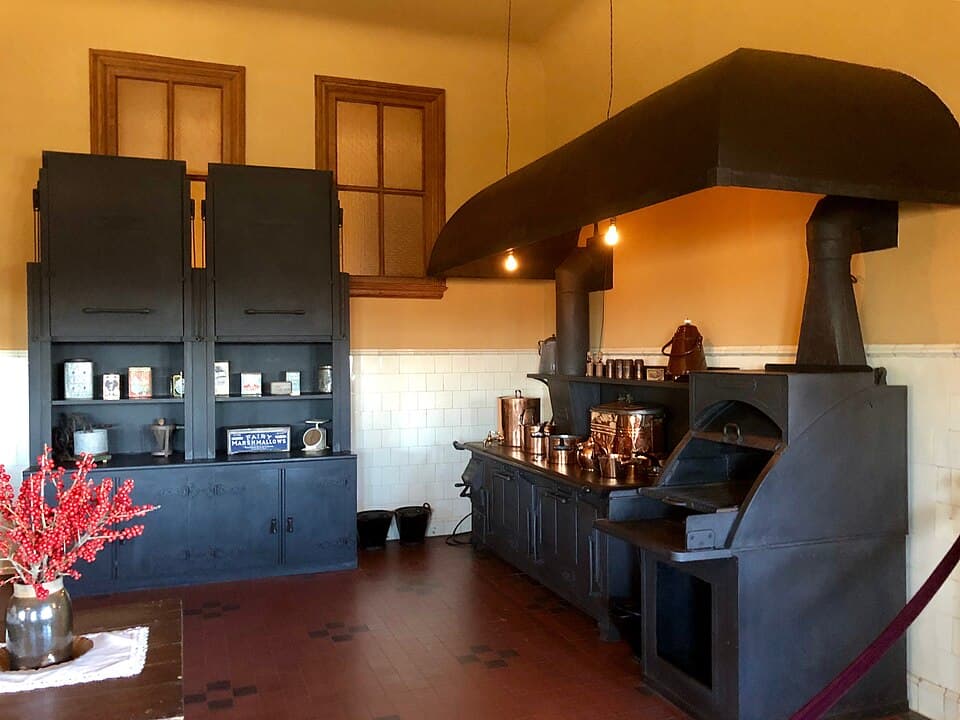
The Main Kitchen
The Main Kitchen was the engine room of Biltmore’s social life. Feeding dozens of elite guests and a staff of over one hundred required a level of organization and industrial capacity that was unprecedented for a private home. As you look around this space, notice the massive cast-iron ranges and the extensive collection of copper cookware. This hub was designed to produce multi-course French-style banquets and daily meals with clockwork precision. The kitchen was strategically located to allow food to be transported quickly to the dining areas while keeping the heat and smells of cooking away from the main living quarters. Multiple chefs and kitchen maids worked here under the direction of a head chef, often using fresh ingredients sourced directly from the estate’s own farms, dairies, and gardens. The sheer scale of the equipment, from the enormous roasting ovens to the specialized pastry stations, reflects the immense logistical challenge of running Biltmore. It was a place of constant activity, where the culinary standards of the finest New York and Paris restaurants were maintained daily in the heart of the North Carolina mountains.
South Terrace and Architect's Legacy
The transition to the outdoors, offering views of Olmsted's landscape and portraits of the estate's creators.
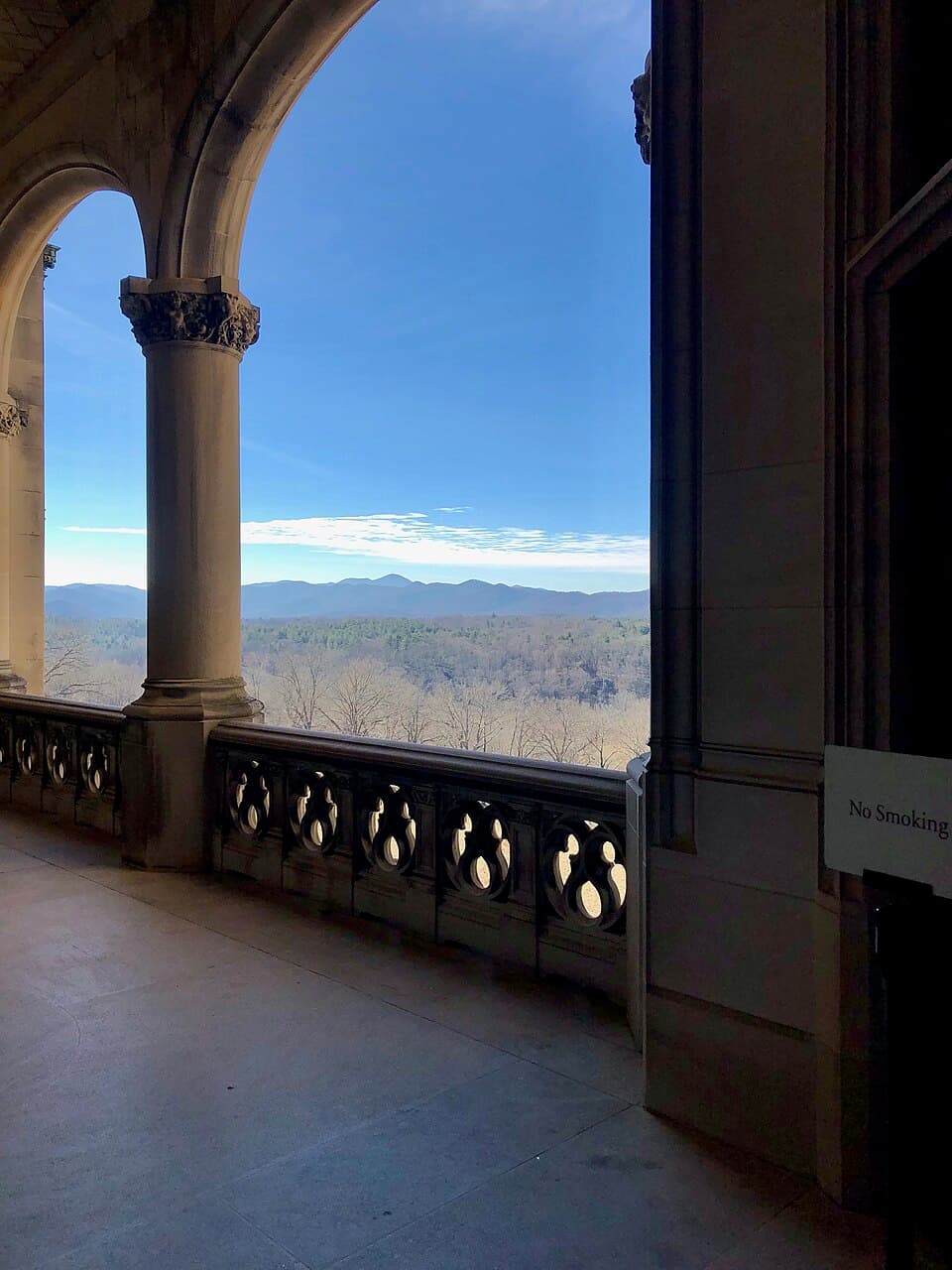
The Loggia
This covered open-air gallery, known as the Loggia, acts as a perfect bridge between the architectural formality of the house and the rugged beauty of the North Carolina wilderness. The heavy stone arches provide a rhythmic frame for the distant peaks, drawing the eye toward the horizon. For George Vanderbilt, this view was the primary reason for choosing this specific location for his home. He was captivated by the changing light on the Blue Ridge Mountains and spent countless hours here, often in quiet contemplation. The Loggia was designed to be used as an outdoor living room where guests could enjoy the fresh mountain air without leaving the comforts of the mansion. It captures the essence of the French Renaissance style—blending the fortress-like strength of European architecture with a deep appreciation for the surrounding natural world. On a clear day, the layers of blue-tinted ridges seem to stretch on forever, a reminder of the vast estate that originally surrounded this central sanctuary.
Formal Gardens and Conservatory
Explores Olmsted's managed landscape and the exotic botanical collection in the glass conservatory.
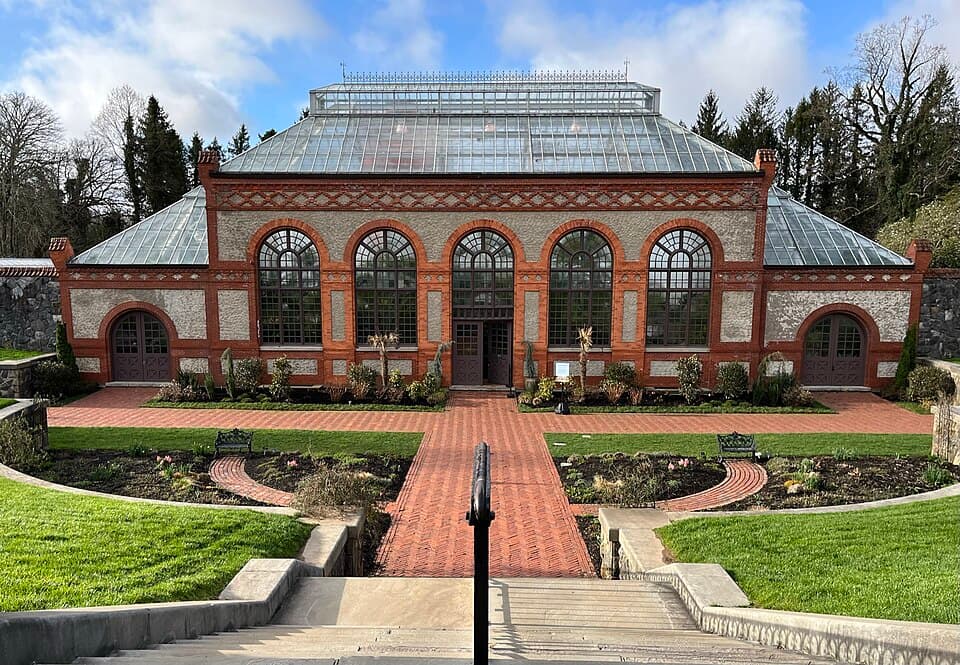
The Conservatory
Standing at the edge of the Walled Garden is the Conservatory, a masterpiece of glass and masonry designed by Richard Morris Hunt. In the 1890s, a structure like this was a symbol of immense wealth and scientific curiosity. It served a vital dual purpose for the Biltmore estate. First, it functioned as a sophisticated greenhouse, allowing gardeners to grow exotic species from around the world that would otherwise never survive the North Carolina winters. Second, it was the estate's primary floral factory. George Vanderbilt insisted that fresh flowers be displayed throughout the house daily, and the Conservatory ensured a year-round supply of orchids, lilies, and tropical foliage regardless of the weather outside. The architecture itself is designed to maximize sunlight, with its high glass peaks and intricate supporting framework. It represents the Gilded Age fascination with the natural world and the desire to master it through engineering, providing a permanent tropical sanctuary nestled in the heart of the Appalachian Mountains.
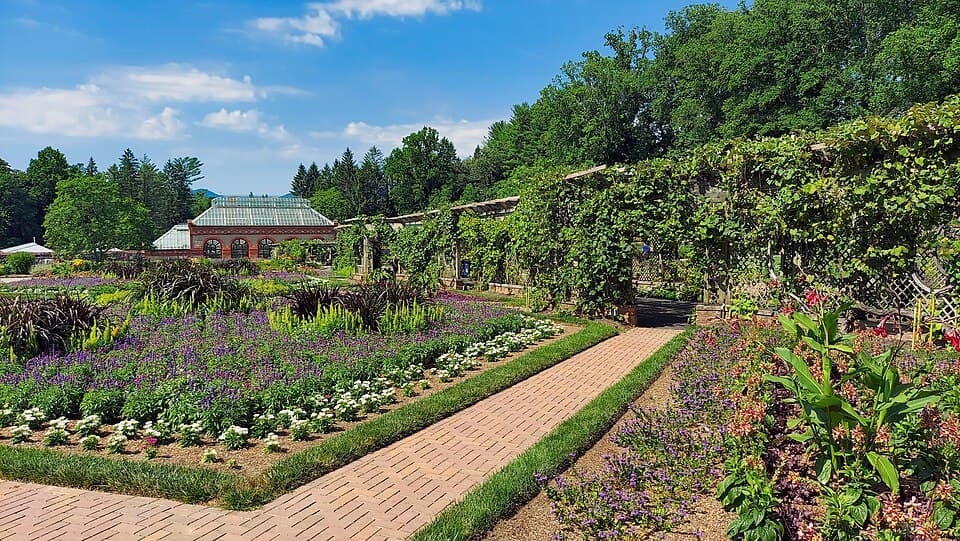
The Walled Garden
As you move into the Walled Garden, the rigid lines of the house facade give way to the soft, living textures of the landscape. This four-acre space is designed in a traditional formal style, enclosed by brick walls that create a protected microclimate for delicate plants. Throughout the year, the garden undergoes a series of dramatic transformations. In the spring, tens of thousands of tulips create a carpet of color, followed by the lush, fragrant blooms of a classic rose garden in the summer. By autumn, the space is redefined by the rich hues of thousands of chrysanthemums. This constant rotation requires a dedicated team of horticulturists who maintain the high standards established during the Vanderbilt era. The patterns are meticulously laid out to be viewed from the higher terraces, offering a bird's-eye view of the geometric precision. It is a place designed for slow walks and quiet observation, where the architectural grandeur of the estate meets the meticulous artistry of nature.
Want to hear the rest?
Download the Stanza app to unlock all 41 stops and full GPS-guided navigation.
Frequently Asked Questions
How long does the Biltmore Estate audio tour take?
The Biltmore Estate audio guide includes 41 narrated stops. Most visitors spend 45 minutes to 1.5 hours exploring the complete tour, though you can listen at your own pace and skip or revisit any stop.
Is the Biltmore Estate audio guide available in my language?
Stanza supports 15 languages: English, Spanish, French, German, Italian, Portuguese, Russian, Japanese, Chinese, Korean, Arabic, Hindi, Polish, Dutch, Hebrew. Check the guide in the app to confirm the languages currently available for this tour.
Can I use the audio guide offline at Biltmore Estate?
Yes! Download the complete Biltmore Estate tour — including all audio, maps, and images — before your visit. The Stanza app works completely offline, so you don't need WiFi or mobile data at the venue.
How much does the Biltmore Estate audio guide cost?
The Stanza app is free to download. The current listed price for the Biltmore Estate audio guide is $2.99; app-store region and currency may affect the final price.
How do I use the Stanza audio guide at Biltmore Estate?
Download the free Stanza app, search for "Biltmore Estate", and download the tour. When you arrive at the venue, the app uses GPS to detect your location and automatically plays the relevant narration as you move between points of interest — completely hands-free.
What makes the Stanza audio guide different from other Biltmore Estate tours?
Stanza offers GPS-triggered narration that plays automatically as you walk through Biltmore Estate — no need to manually select stops. The tour is available in 15 languages, works fully offline, and includes 41 expertly narrated stops with images and historical context.