Languages
15Chhatrapati Shivaji Maharaj Terminus Audio Guide
Chhatrapati Shivaji Maharaj Terminus is a landmark in an iconic location, India. Explore it with Stanza's GPS-triggered offline audio guide — available in 15 languages.
Quick Facts
14
Stops
15
Languages
100%
Offline
About Chhatrapati Shivaji Maharaj Terminus
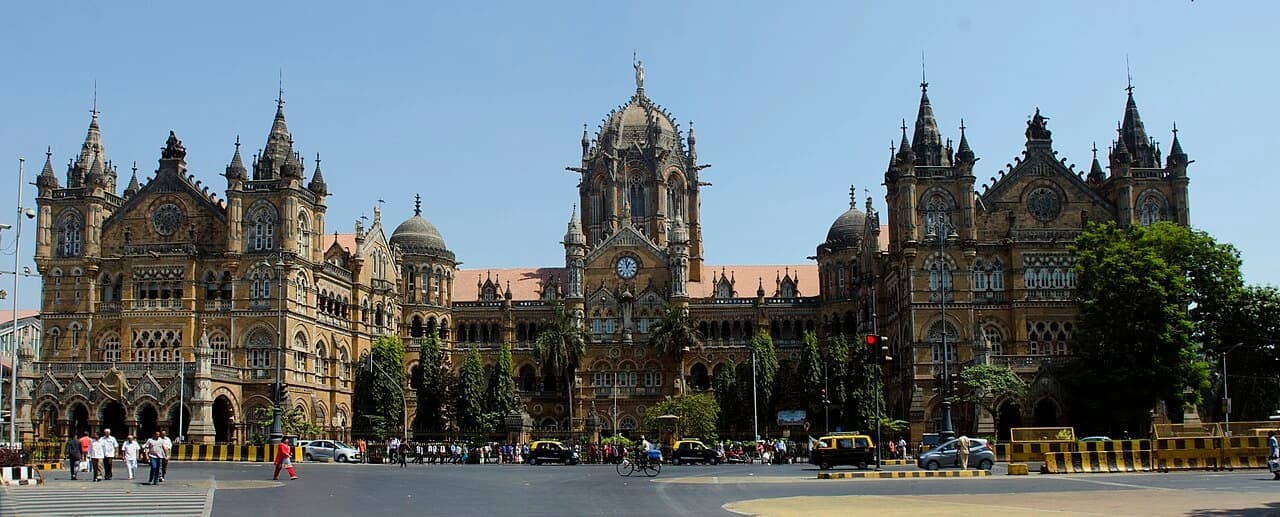
A historic railway station and UNESCO World Heritage Site in Mumbai, India. It serves as a major transportation hub.
Chhatrapati Shivaji Maharaj Terminus is also known as Mumbai CSMT, Victoria Terminus, Bombay VT, Chhatrapati Shivaji Terminus railway station, and 4 other names in various languages.
This self-guided audio tour features 14 narrated stops organized across 6 sections, including The Lion and Tiger Gates, The Central Dome and Statue of Progress, The Star Chamber, The Grand Staircase and Atrium, Stone Sentinels and Grotesques, A Legacy in Stone. As a railway station, Chhatrapati Shivaji Maharaj Terminus offers a unique cultural experience, India.
The Stanza audio guide is available in 15 languages and works entirely offline — download the complete tour including audio narration, maps, and images before your visit. As you walk through Chhatrapati Shivaji Maharaj Terminus, GPS-triggered narration plays automatically at each point of interest.
Last updated:
What you will hear
The Lion and Tiger Gates
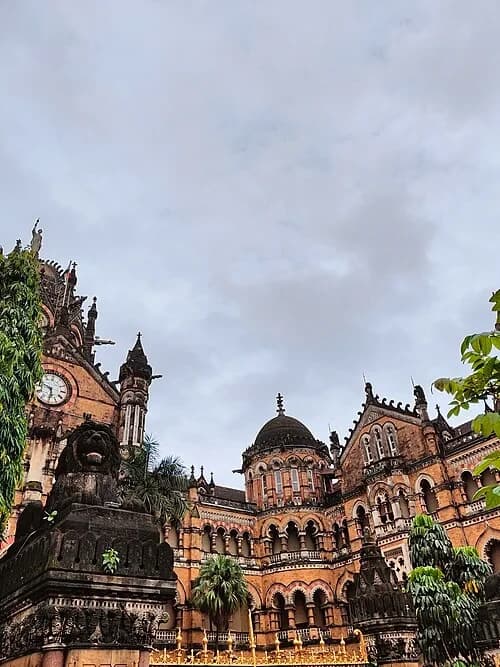
Focuses on the main entrance and the symbolic stone animals that guard it. The primary image clearly shows the stone lion against the backdrop of the clock tower.
The Lion and the Tiger
Guarding the main gates of the station are two distinct animal figures carved from stone. On one side, a lion stands as the traditional symbol of the British Empire, while on the other, a tiger represents India. These figures were chosen to illustrate the complex relationship between the colonial administration and the Indian public during the late 1800s. They flank the grand entrance, acting as silent sentinels for the thousands of people who pass through these gates every hour. Look up past these guardians toward the clock tower that rises directly above the central entrance. This tower functions as the station's heartbeat, its height making it a landmark visible from several blocks away. The placement of these animals follows a long tradition in Gothic architecture of using heraldic beasts to denote authority and protection. Here, however, the choice of the tiger adds a specific local context to the European design. The weathered texture of the stone shows the passage of time, yet the figures remain sharp and imposing. They remind us that this station was built as a meeting point between two different cultures and a gateway to a vast, interconnected rail network.
The Central Dome and Statue of Progress
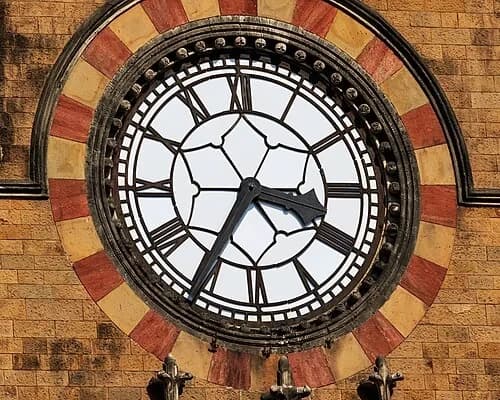
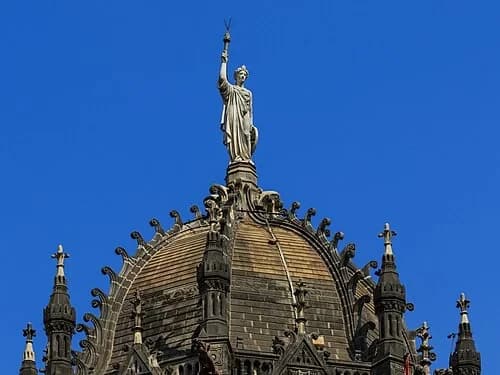
This area highlights the architectural climax of the building's exterior. I've paired the Statue of Progress with a detailed shot of the clock to discuss the engineering and the 'missing' Queen Victoria statue.
The Master Clock
The massive exterior clock face is more than just a decorative feature; it was a revolutionary tool for Victorian Mumbai. In an era when personal watches were rare, this clock set the pace for the entire city, ensuring that commuters, merchants, and officials were all synchronized with the railway's strict schedule. It served as a constant reminder of the industrial age's obsession with punctuality and efficiency. Surrounding the clock, you can see distinct patterns of red and yellow sandstone. This color scheme was nicknamed 'blood and custard' and was a popular aesthetic choice for the public architecture of the British Raj. The stones were carefully selected for their durability and their ability to be carved into the intricate shapes you see in the moldings and window frames. The clock mechanism was state-of-the-art when installed, and its prominent position meant that even those on the busy street below could check the time at a glance. Even today, as millions of people check their digital devices, this mechanical master clock remains a reliable reference point, continuing a tradition of timekeeping that has lasted over 130 years.
The Statue of Progress
High above the city streets, perched at the very pinnacle of the central dome, is a female figure known as the Statue of Progress. While many visitors assume this represents Queen Victoria, she is actually a personification of the concept of advancement. She holds a torch aloft in her right hand, a classic symbol of enlightenment and the march of the industrial age. The dome she sits upon was a major engineering feat of its time. It utilizes a unique ribbing system that allowed the structure to be built without internal support during construction, a method that surprised many contemporary engineers. Below this statue, in a decorative canopy just under the clock, a marble statue of Queen Victoria once sat. However, following India's independence, that royal figure was removed, leaving the allegorical Progress to reign alone over the station’s skyline. The dome itself is constructed from stone segments that lock together to support the massive weight of the statue. It remains one of the most recognizable silhouettes in Mumbai, a crowning achievement that perfectly balances heavy masonry with graceful, vertical lines.
The Star Chamber
The historic booking office is famous for its interior craftsmanship. I've included shots of the vaulted ceiling and the ticket counters to illustrate the blend of function and beauty.
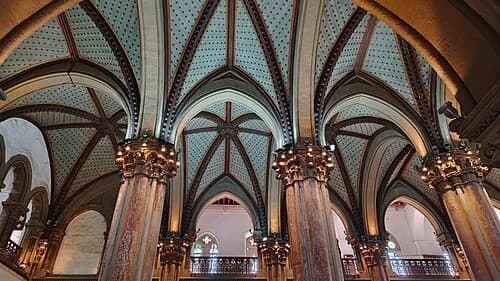
The Star Chamber Ceiling
Inside the historic suburban booking office, commonly referred to as the Star Chamber, the utilitarian task of buying a train ticket takes place in a remarkably ornate setting. Look up to see the vaulted ceiling, which is painted a vibrant turquoise and decorated with hundreds of small gold stars. This design was intended to elevate the station's functional spaces, making them feel as grand as a civic palace or a house of worship. The materials used throughout this room were incredibly expensive, including polished Italian marble and local Indian blue stone. These fine materials were used for the columns and floors, creating a cool, luxurious environment that countered the heat and noise of the city outside. This high level of craftsmanship was meant to signify the prestige of the railway company and the importance of the work being done within these walls. The Star Chamber represents a time when public transport was celebrated through architecture, turning a mundane daily commute into an experience filled with visual beauty. The turquoise hue has been carefully preserved over the decades to maintain the room's unique character.
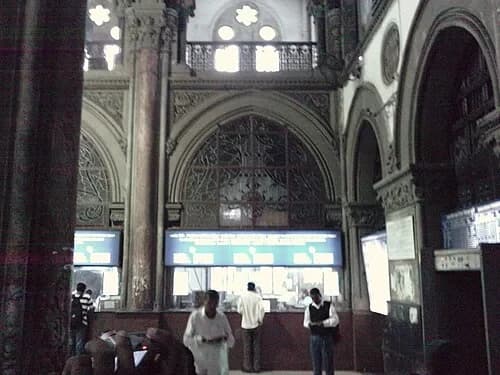
Windows to the World
Above the busy ticket counters, notice the rows of stained glass windows and the deeply carved woodwork. These artistic features were functional as well as decorative; the stained glass filtered the intense Mumbai sunlight, providing a soft, diffused glow for the clerks working at the desks below. The woodwork, often featuring floral and geometric patterns, added a sense of warmth and permanence to the transaction areas. Today, these historical counters stand in stark contrast to the modern digital screens and the sheer volume of people moving through the hall. This station is one of the busiest on the planet, serving millions of passengers daily across 18 different platforms. It handles everything from long-distance express trains crossing the subcontinent to the high-frequency local trains that are the lifeline of the city. Despite the modern pressure of so many travelers, the historical beauty of the booking hall remains intact. The preservation of these delicate glass and wood elements provides a tangible link to the station's origins as a grand cathedral of commerce, where every detail was designed to impress the traveler.
The Grand Staircase and Atrium
Moving deeper into the heritage wing, this stop explores the octagonal dome from inside. The images show the structural ribs and the wrought iron work of the staircase.
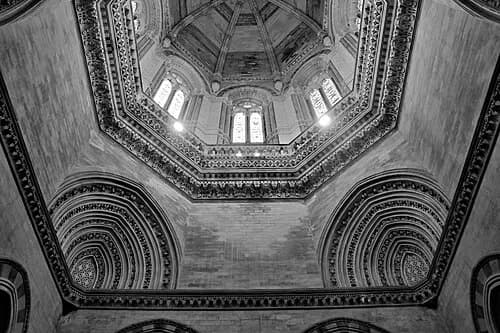
Inside the Great Dome
Looking straight up from the center of the atrium, you can see the interior of the octagonal dome. This space is a masterclass in masonry engineering. The dome is held together by eight massive stone ribs that curve upward to meet at a central point. These ribs lock against one another, distributing the enormous weight of the stone dome downward into the thick walls of the station. This self-supporting design eliminated the need for permanent internal pillars, creating a vast, open space in the central hall. Between the ribs, you can see intricate stone friezes and decorative carvings that catch the light coming through the clerestory windows. These windows encircle the base of the dome, allowing natural light to flood the interior and highlight the verticality of the architecture. This design draws the eye upward, emphasizing the height and grandeur of the station. The interplay of light and shadow on the carved stone surfaces changes throughout the day, giving the atrium a dynamic quality. It remains a quiet spot of architectural reflection amidst the constant flow of people below, showcasing the structural brilliance of Frederick William Stevens' work.
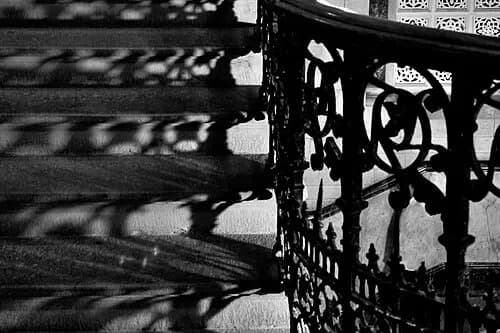
The Grand Iron Staircase
The main administrative staircase is defined by its elaborate wrought-iron railings. During the late 19th century, iron was considered the quintessential 'modern' material, and architects like Stevens used it to show off technological progress. The balustrades feature repeating geometric and floral patterns that create a complex screen of metalwork. As sunlight filters into the stairwell, these railings cast long, intricate shadows across the stone steps, an effect carefully considered by the designers. These stairs were built to be incredibly durable, as they were the primary route for railway officials and clerks moving between the various administrative offices on the upper floors. The use of iron allowed for much thinner, more delicate designs than stone or wood would have permitted, adding a sense of lightness to the otherwise heavy masonry building. The curves and flourishes of the ironwork are typical of the Victorian style, yet they also incorporate subtle Indian influences in their rhythmic patterns. Even after more than a century of use, the ironwork remains sturdy and sharp, a silent observer of the generations of railway staff who have ascended these stairs.
Stone Sentinels and Grotesques
Dedicated to the intricate Victorian Gothic details carved by local students. I've chosen a gargoyle and an animal carving to show the 'Indo' influence on the 'Gothic' style.
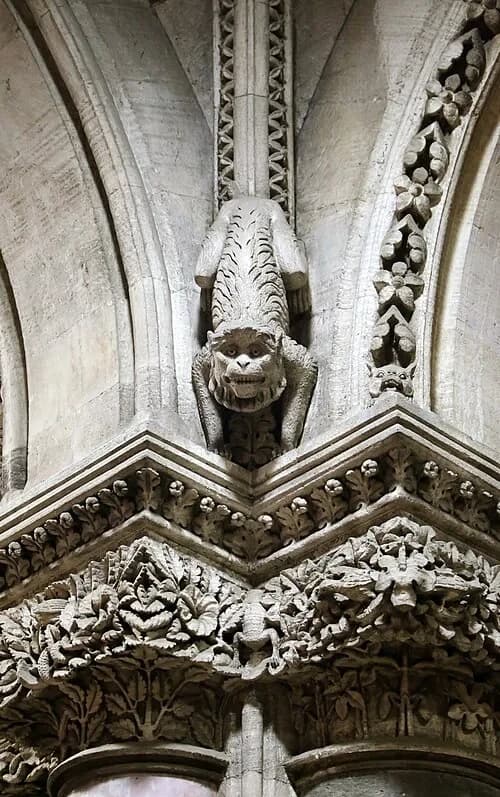
The Monkey in the Masonry
If you look closely at the floral patterns and leaf-shaped moldings on the columns and arches, you will discover hidden animal figures. One notable example is the carving of a monkey, tucked into the foliage of a column capital. These specific details are what make the building 'Indo-Saracenic.' While the overall structure is British in origin, the decorative work was largely executed by local Indian craftsmen and students from the nearby Sir Jamsetjee Jeejebhoy School of Art. These artists infused the European design with the flora and fauna of the Indian subcontinent, replacing traditional English oaks or ivy with tropical plants and local animals. This collaboration allowed Indian artisans to showcase their traditional stone-carving skills within a colonial project, resulting in a building that feels uniquely grounded in its local environment. The monkey figure is a small but significant detail, showing a playful and naturalistic touch that contrasts with the formal proportions of the station. It serves as a reminder that this landmark was a collaborative effort, built by local hands and featuring the natural world of India as its inspiration.
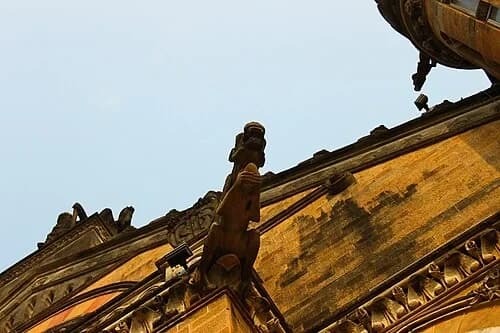
Gothic Stone Sentinels
Projecting from the exterior walls and rooflines are numerous gargoyles and grotesques. In traditional Gothic architecture, gargoyles were used as water spouts to direct rain away from the building's foundations, while grotesques were purely decorative carvings intended to ward off evil or simply provide visual interest. Here, they reflect the Victorian fascination with the whimsical and the macabre. You can see various creatures and human faces emerging from the stone, some with exaggerated expressions or strange features. These carvings provide a sense of personality to the massive structure, inviting you to look closer at the details of the facade. The stone itself shows a weathered texture, a result of enduring over 130 years of Mumbai's intense heat and heavy monsoon rains. This natural aging has softened some of the finer lines but added a layer of historical character to the building. These stone sentinels are a reminder of the craftsmanship involved in the construction, where every corner of the building, no matter how high or obscure, was given artistic attention. They continue to keep watch over the city, enduring the same elements as the millions of residents below.
A Legacy in Stone
The tour concludes by looking across the street at the Municipal Building, designed by the same architect, to reflect on the Victorian architectural legacy of Mumbai.
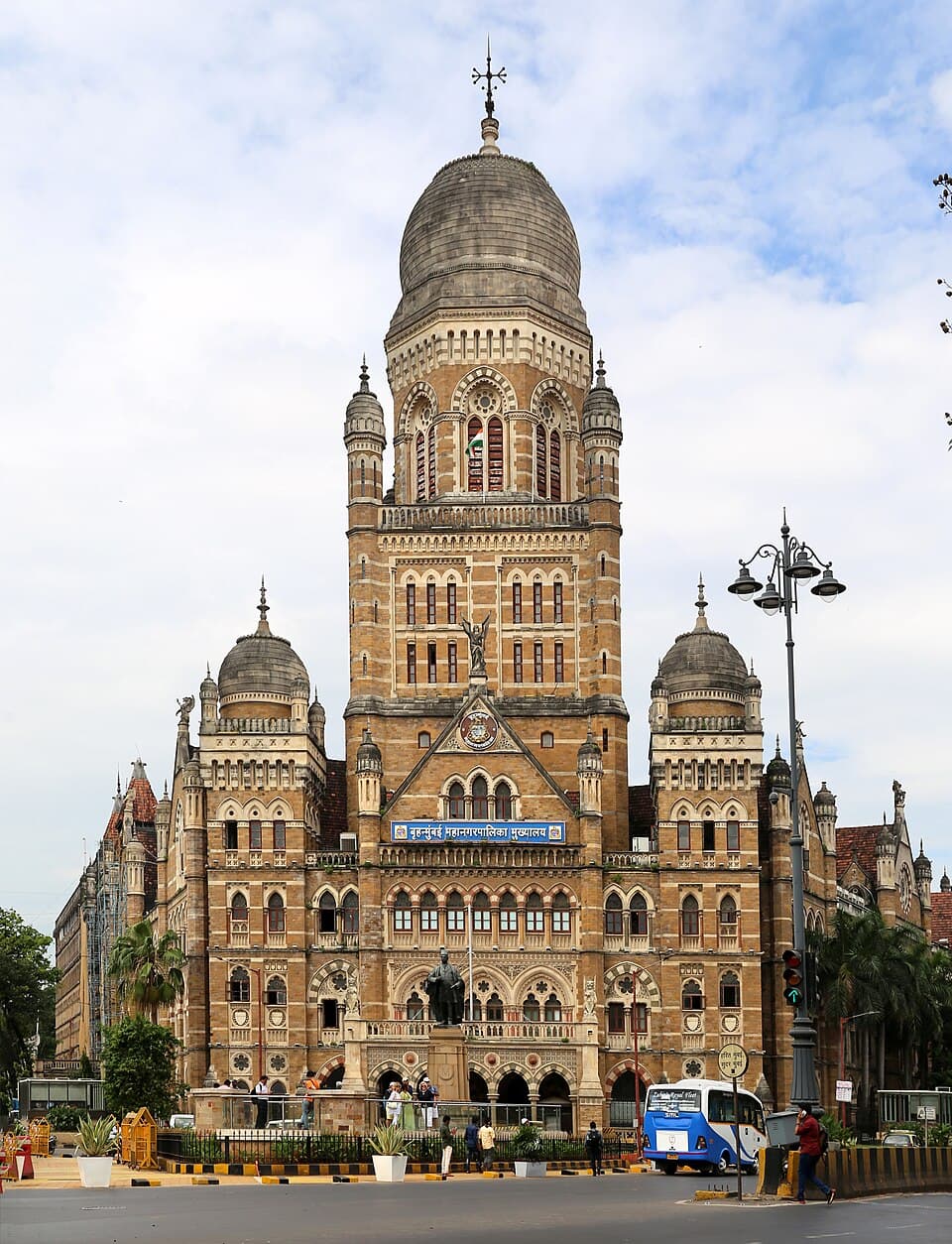
A Shared Architectural Legacy
To understand the full architectural impact of the terminus, look across the street at the massive Municipal Corporation Building. It was also designed by Frederick William Stevens and completed just a few years after the station. Together, these two buildings create a matched pair of heritage landmarks that define the identity of the 'Fort' district. Both structures utilize the same combination of Gothic arches, domes, and local Indian decorative motifs, creating a unified architectural landscape. This pairing was intentional, designed to represent the two pillars of the colonial city: the administrative power of the municipality and the commercial power of the railway. As you look at them together, you can see how they stand as permanent witnesses to Mumbai's evolution. The city grew from a cluster of seven islands into a massive, global metropolis, with this intersection serving as its primary gateway. The station and its neighbor have survived monsoons, wars, and the transition to independence, yet they continue to fulfill their original functions. They remain the most significant landmarks of a bygone era, now integrated into the vibrant, modern life of one of the world's most populous cities.
Want to hear the rest?
Download the Stanza app to unlock all 14 stops and full GPS-guided navigation.
Frequently Asked Questions
How long does the Chhatrapati Shivaji Maharaj Terminus audio tour take?
The Chhatrapati Shivaji Maharaj Terminus audio guide includes 14 narrated stops. Most visitors spend 45 minutes to 1.5 hours exploring the complete tour, though you can listen at your own pace and skip or revisit any stop.
Is the Chhatrapati Shivaji Maharaj Terminus audio guide available in my language?
Stanza supports 15 languages: English, Spanish, French, German, Italian, Portuguese, Russian, Japanese, Chinese, Korean, Arabic, Hindi, Polish, Dutch, Hebrew. Check the guide in the app to confirm the languages currently available for this tour.
Can I use the audio guide offline at Chhatrapati Shivaji Maharaj Terminus?
Yes! Download the complete Chhatrapati Shivaji Maharaj Terminus tour — including all audio, maps, and images — before your visit. The Stanza app works completely offline, so you don't need WiFi or mobile data at the venue.
How much does the Chhatrapati Shivaji Maharaj Terminus audio guide cost?
The Stanza app is free to download. The current listed price for the Chhatrapati Shivaji Maharaj Terminus audio guide is $1.99; app-store region and currency may affect the final price.
How do I use the Stanza audio guide at Chhatrapati Shivaji Maharaj Terminus?
Download the free Stanza app, search for "Chhatrapati Shivaji Maharaj Terminus", and download the tour. When you arrive at the venue, the app uses GPS to detect your location and automatically plays the relevant narration as you move between points of interest — completely hands-free.
What makes the Stanza audio guide different from other Chhatrapati Shivaji Maharaj Terminus tours?
Stanza offers GPS-triggered narration that plays automatically as you walk through Chhatrapati Shivaji Maharaj Terminus — no need to manually select stops. The tour is available in 15 languages, works fully offline, and includes 14 expertly narrated stops with images and historical context.