Languages
15Cristo Redentor Audio Guide
Cristo Redentor is a landmark in an iconic location, Brazil. Explore it with Stanza's GPS-triggered offline audio guide — available in 15 languages.
Quick Facts
35
Stops
15
Languages
100%
Offline
About Cristo Redentor
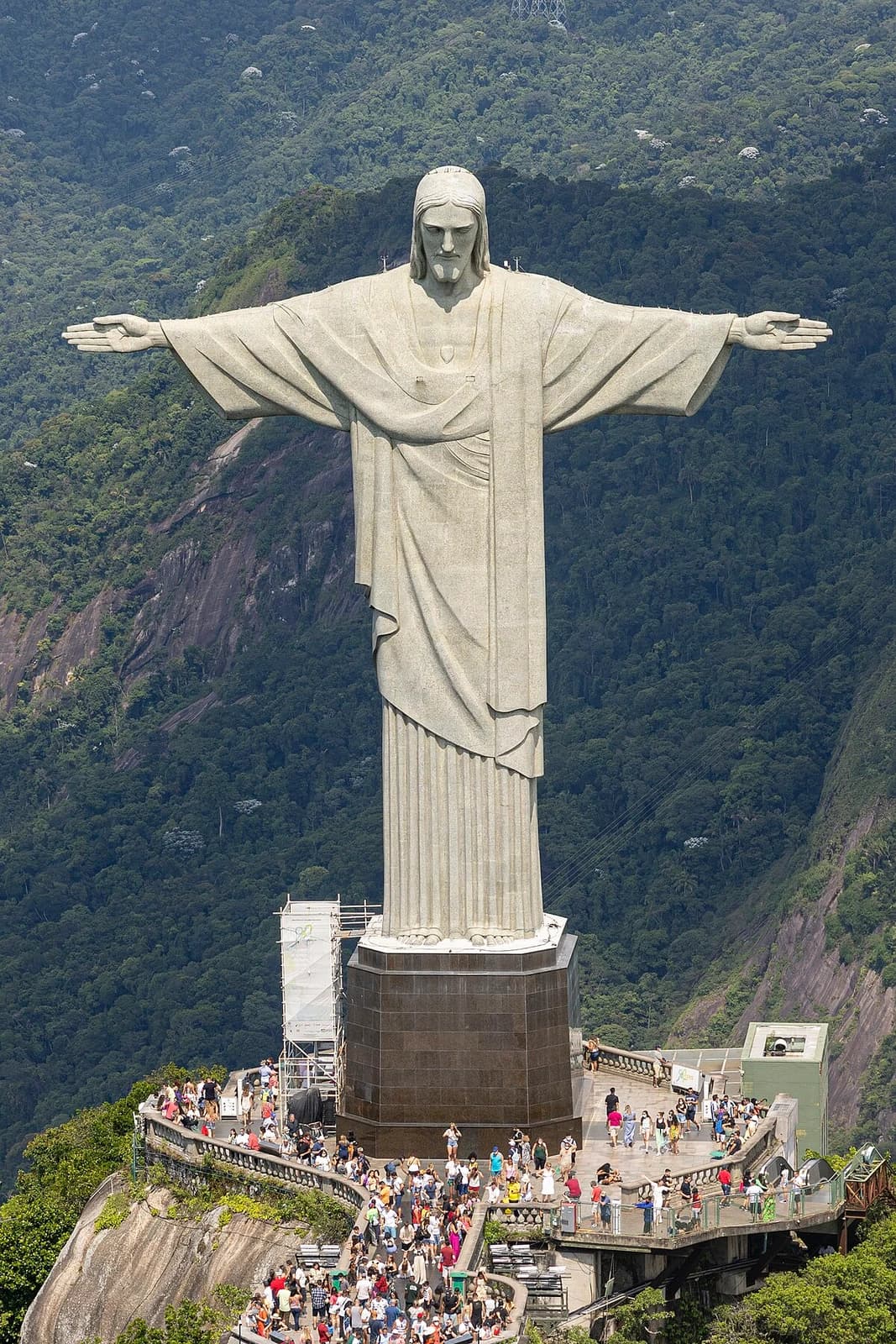
A colossal Art Deco statue of Jesus Christ atop Corcovado Mountain, overlooking Rio de Janeiro, Brazil.
This self-guided audio tour features 35 narrated stops organized across 7 sections. As a statue, Cristo Redentor offers a unique cultural experience, Brazil.
The Stanza audio guide is available in 15 languages and works entirely offline — download the complete tour including audio narration, maps, and images before your visit. As you walk through Cristo Redentor, GPS-triggered narration plays automatically at each point of interest.
Last updated:
What you will hear
The Monumental Presence
The first encounter at the base of the statue, focusing on its scale as the world's largest Art Deco monument.
The Monumental Frontal View
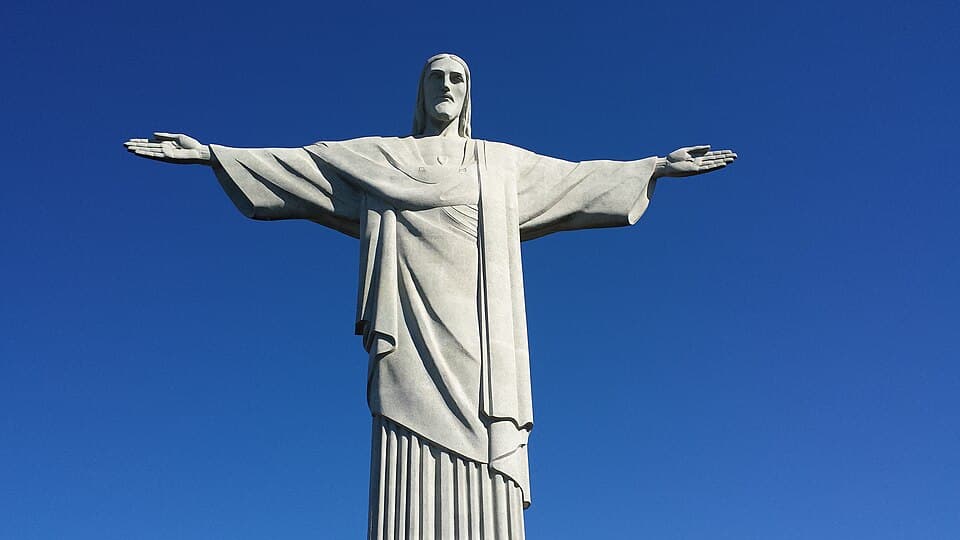
Standing here at the base, you are looking up at the largest Art Deco monument in the world. It is a feat of engineering that is as heavy as it is symbolic. To put the scale into perspective, the figure of Christ stands 30 meters tall on top of an 8-meter pedestal, reaching a total height of 38 meters. The span of those outstretched arms is 28 meters across the sky. The clean, bold lines you see are classic Art Deco, but the silhouette almost looked very different. The original proposal depicted Christ holding a globe in one hand and a cross in the other. Eventually, that idea was set aside in favor of the 'Open Arms' design. The creators felt that a simple, welcoming embrace better captured the spirit of peace and hospitality they wanted to project over Rio de Janeiro. By choosing this pose, the monument moved beyond being just a religious figure; it became a universal symbol of a city with its arms wide open to the world. The pedestal itself houses a small chapel dedicated to Our Lady of Aparecida.
The Summit Platform
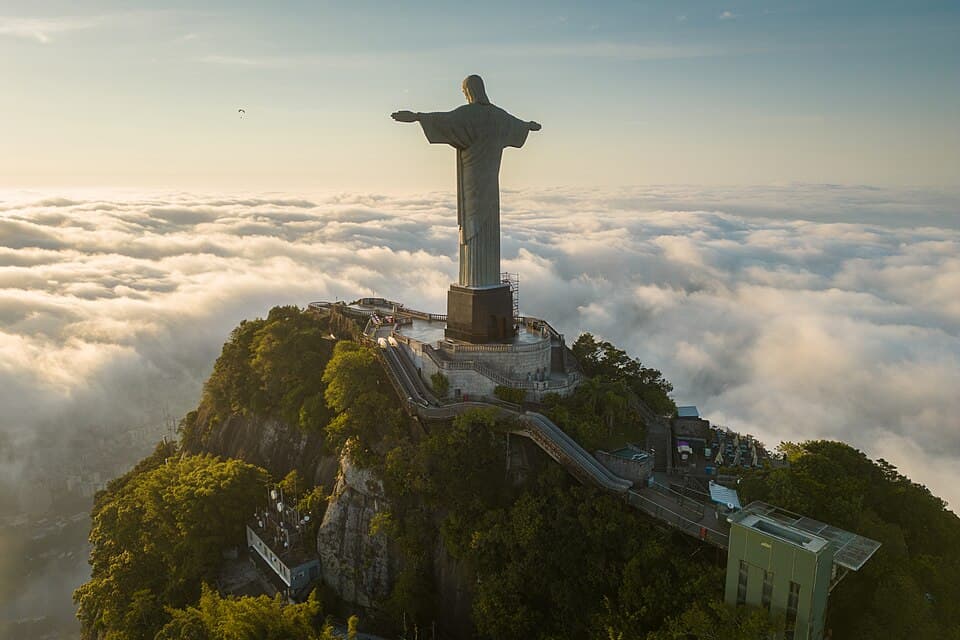
Standing here at the summit of Corcovado Mountain, you are positioned at the heart of Rio’s identity. This platform serves as the final stage of a journey that offers a vantage point where the scale of the statue becomes undeniable. The monument seems to command the entire landscape from this height. For decades, reaching this point required a climb up more than 200 steps. However, a major renovation in 2003 introduced a system of escalators and elevators. This change was transformative, ensuring that the breathtaking views and the monumental presence of the statue became accessible to everyone, regardless of physical ability. The geography here is unique. Because the peak is so narrow and steep, the statue acts as a sentinel, keeping a watchful eye over the sprawl of the city and the Atlantic Ocean. On some days, you might even find yourself standing above a sea of clouds, feeling detached from the urban bustle below. The platform provides a clear view of the Maracanã Stadium to the north.
The Arrival: Reaching the Summit
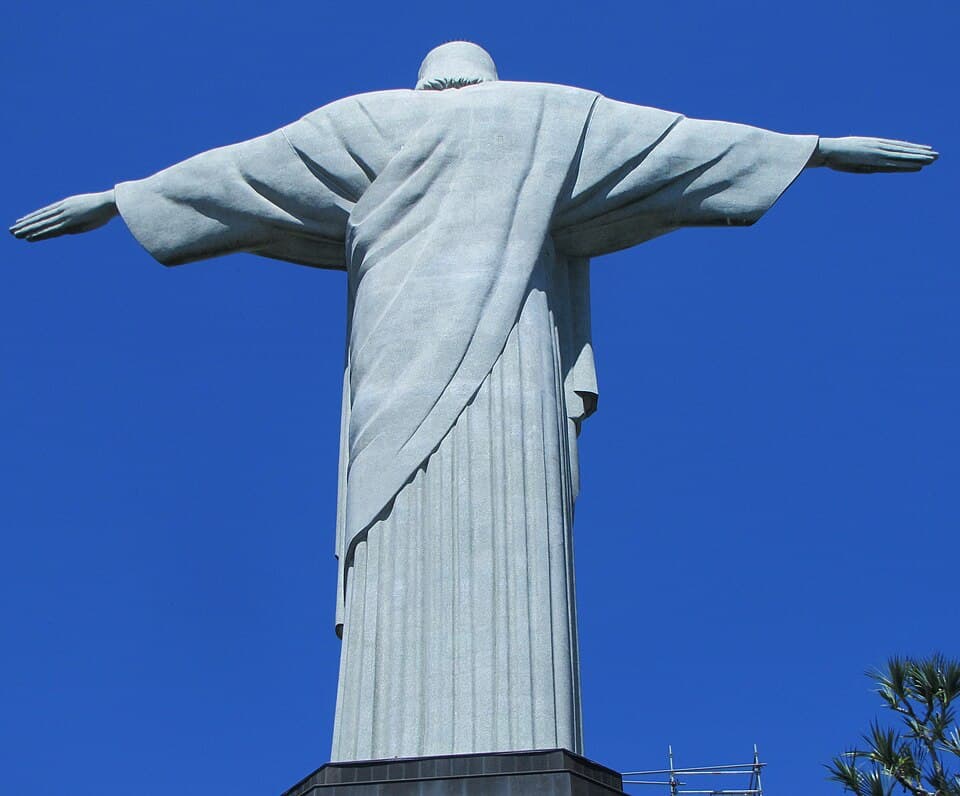
Upon reaching the final station, visitors used to climb 220 steps to reach the feet of Christ. Since 2003, modern elevators and escalators have made the summit accessible to all. As you emerge at the back of the statue, you are immediately struck by the sheer scale of the Art Deco design. This style was chosen to give the monument a modern, stylized look that felt eternal rather than overly ornate. From here, you see the massive shoulders that support the 28-meter arm span.
An Art Deco Giant
The architectural precision of the figure is best appreciated from this perspective. It stands as the largest Art Deco-style sculpture in the world, a movement characterized by its embrace of modern, geometric forms. The designers chose clean, stylized lines to give the statue an 'eternal' and monumental quality. Rather than attempting a hyper-realistic depiction of fabric, the robes are defined by deep vertical ridges. This classic Art Deco motif serves a functional visual purpose: it draws the viewer's eye upward, emphasizing the statue’s spiritual presence against the Rio sky. The sharp angles of the shoulders and the flat planes of the chest are hallmarks of this 1920s aesthetic, designed to look as modern today as they did a century ago.
Art Deco Details: Face, Heart, and Hands
A close-up look at the craftsmanship, the soapstone tiles, and the specific symbolic details like the Sacred Heart.
The Detailed Robe
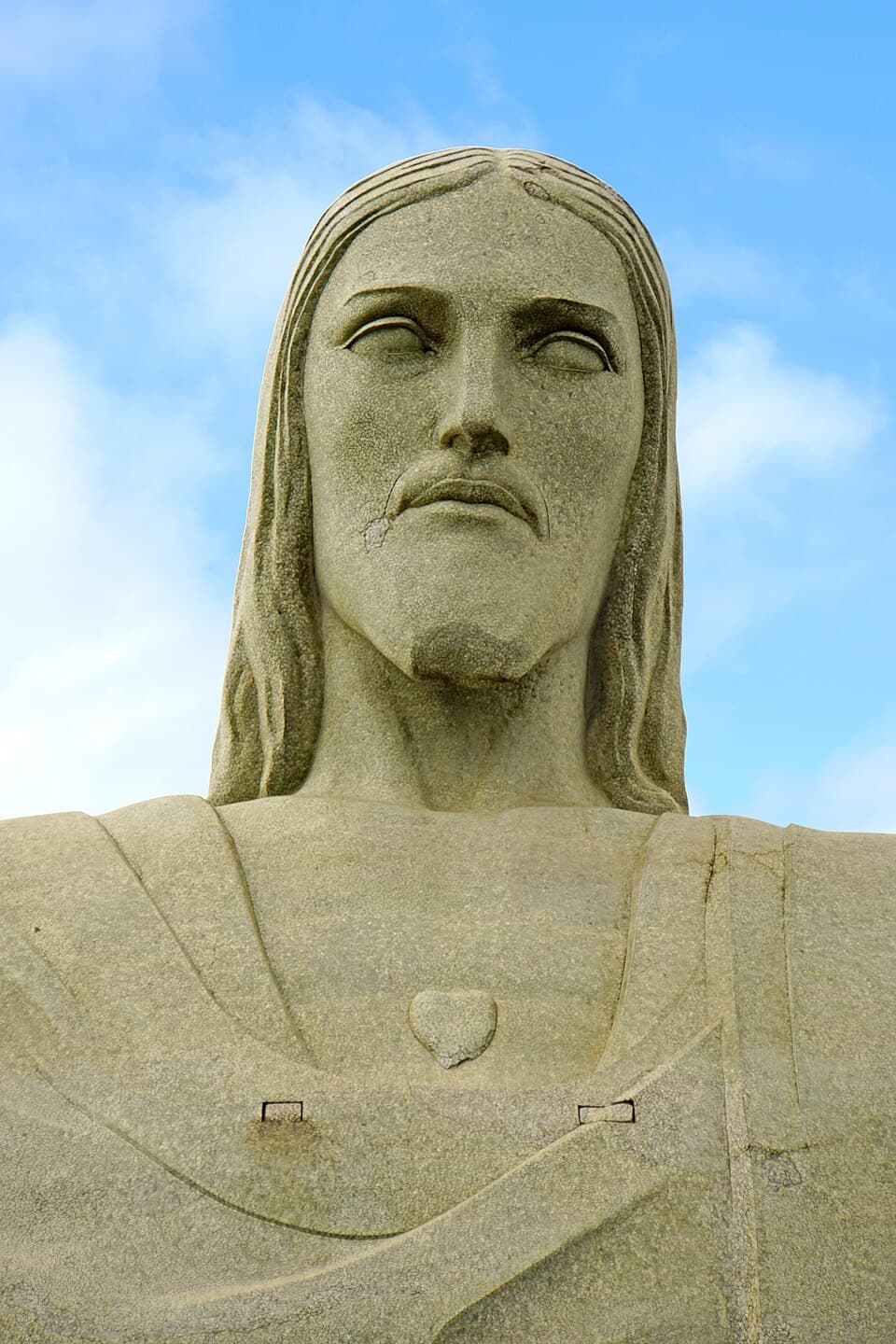
Standing this close, the sheer scale of Christ the Redeemer takes on a different character. The entire surface is a mosaic of millions of small, triangular soapstone tiles. These were chosen for their soft, greenish-gray hue and their durability against the harsh Atlantic winds and rain. If you look toward the chest, you'll notice the subtle protrusion of the Sacred Heart. The serene expression was carefully crafted to look peaceful from every angle, ensuring the monument felt approachable despite its size. You can see the individual seams where the different sections of the robe meet.
The Sentinel's View: Rio Panoramas
Focuses on the world-famous views from the lookout platforms, explaining why the statue faces the city.
The Jockey Club and Lagoon
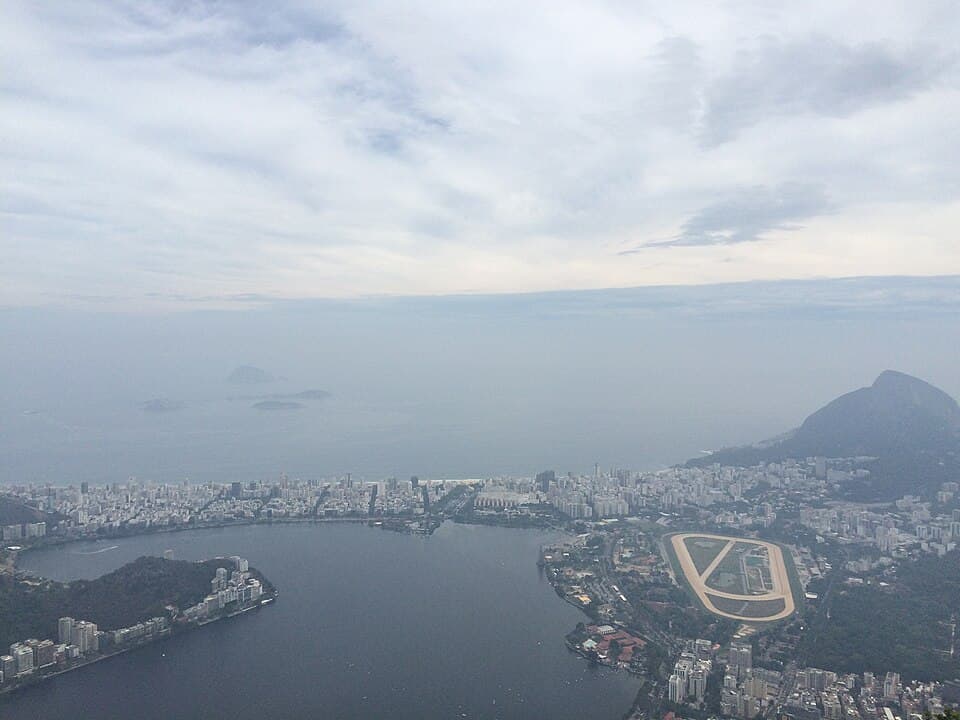
Looking down from this height, you get a clear view of how Rio de Janeiro was carved out of an impossible landscape. The large, mirror-like body of water below is the Rodrigo de Freitas Lagoon. Often called 'The Heart of Rio,' this brackish lagoon is framed by a popular cycling path and is a central hub for the city’s rowing clubs. Directly adjacent to the water, you can spot the distinctive green oval of the Hipódromo da Gávea, home to the Brazilian Jockey Club. Opened in the 1920s, its grandstands and manicured track represent a slice of Rio’s historic social life, looking almost like a miniature model from this perspective. This specific view captures the essence of Rio’s geography. Unlike many coastal cities that spread across flat plains, Rio is a vertical puzzle. The city is forced to tuck itself into the narrow strips of land between the massive granite peaks of the Tijuca Forest and the Atlantic Ocean. Notice how the urban architecture follows the curves of the lagoon and the base of the mountains. The small island in the center of the lagoon is Piraquê Island.
The Open Embrace: An Art Deco Icon
Stepping around to the front, you face the largest Art Deco sculpture in the world. Completed in 1931 after nine years of work, the statue stands 30 meters tall (38 including the base). Engineer Heitor da Silva Costa's original design actually featured Christ holding a globe and a cross, but it was simplified into this 'Open Embrace'—a symbol of peace and a welcoming gesture to the city. The structural integrity was ensured by Albert Caquot, using reinforced concrete, a cutting-edge material for the time.
Building the Icon
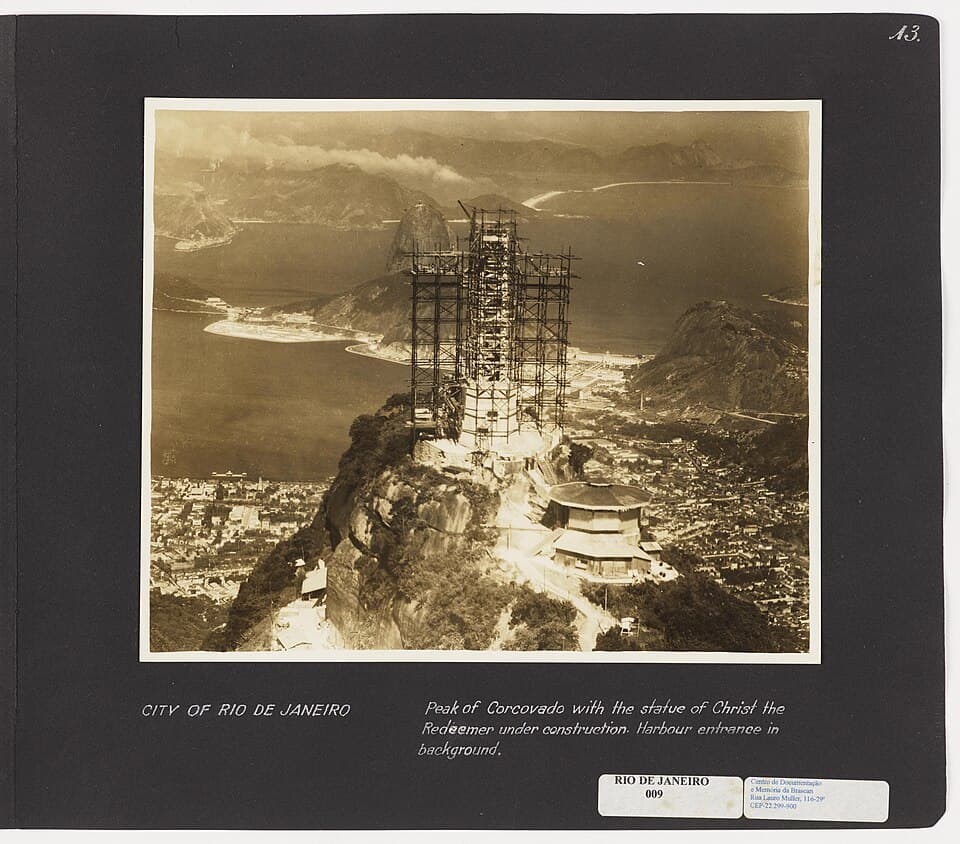
This historical photograph offers a rare glimpse into the effort required to build the monument between 1922 and 1931. Perched 700 meters above Rio de Janeiro on Mount Corcovado, the image captures the statue encased in a complex web of timber pole scaffolding. At this stage, you can see the central pillar and the cross-shaped arm supports beginning to take form against the backdrop of the Guanabara Bay. Building such a massive figure at this altitude relied on revolutionary techniques. The structural integrity was the work of French engineer Albert Caquot. Caquot made the pioneering decision to use reinforced concrete for the internal skeleton instead of a metal frame. This 'skeleton' provided the necessary strength to withstand high winds and harsh weather, while remaining flexible enough for the statue's streamlined form. The timber scaffolding had to be constantly repaired as mountain winds threatened to tear it away from the concrete core.
History and Construction
Explores the 9-year construction period (1922-1931) and the key figures behind the monument.
Vintage Perspective
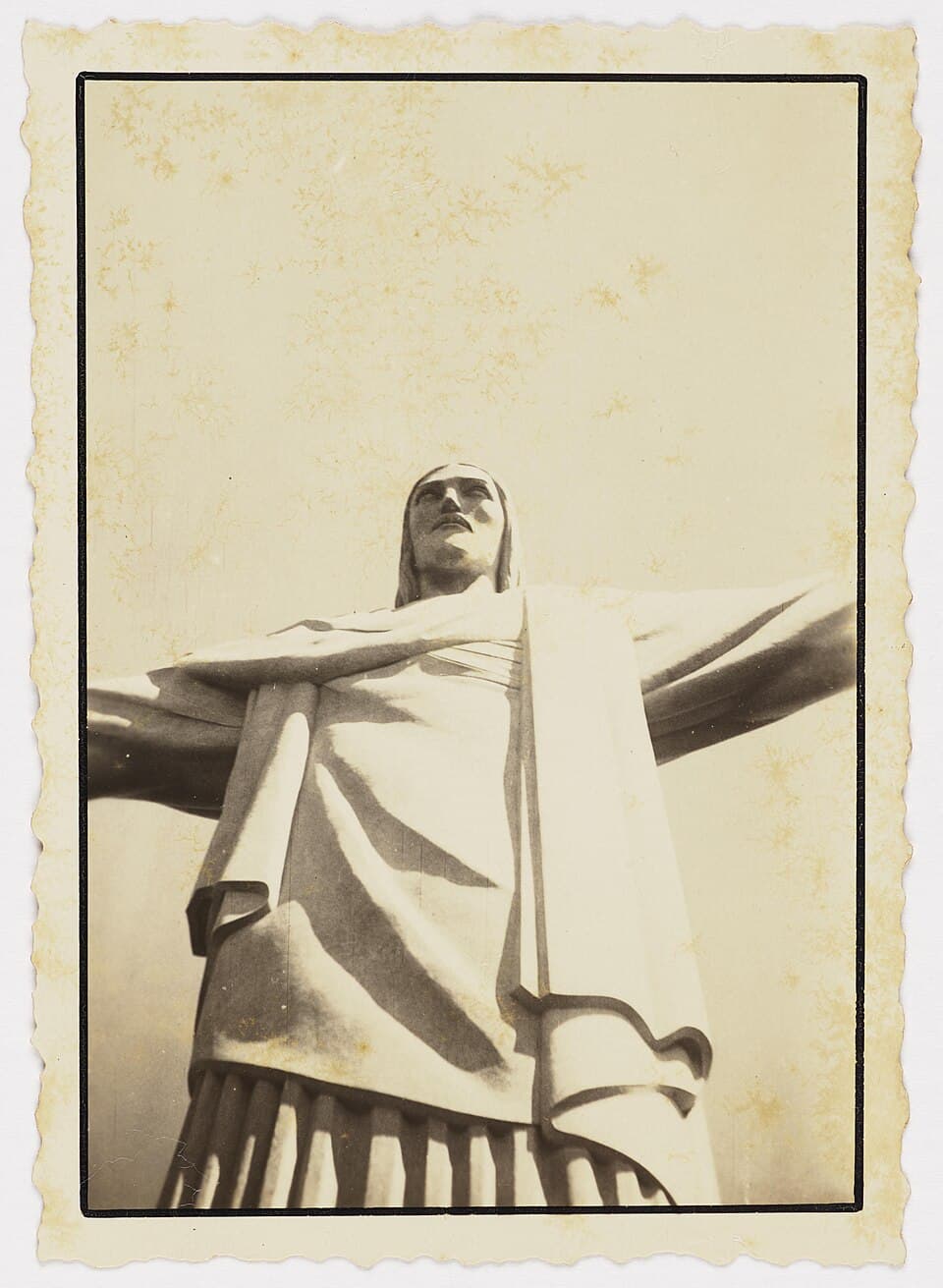
This vintage black-and-white photograph offers a glimpse into the monument’s debut in October 1931. Looking at the statue’s torso and head in this archival state, you can almost feel the anticipation of the crowds gathered below. The opening ceremony was designed to be a feat of modern technology that would link Brazil to the world. The plan was incredibly ambitious for the era: Guglielmo Marconi, the Nobel Prize-winning pioneer of radio, was tasked with lighting the statue from Rome. He intended to transmit a shortwave signal from a station in Italy, which would travel approximately 9,200 kilometers across the Atlantic to trigger the floodlights here in Rio. It was a bold attempt to showcase how radio technology could bridge vast distances. However, technology in the 1930s was still very much at the mercy of the elements. On that historic night, poor weather conditions and atmospheric interference meant the signal from Rome couldn't quite make the journey. To ensure the ceremony wasn't left in the dark, local technicians standing by on the mountain had to step in and manually activate the lights. The original 1931 floodlights were much warmer in tone than the LEDs used today.
The Living Symbol: Light and Legacy
Concludes the tour by discussing the 1931 inauguration and the modern tradition of illuminating the statue for global events.
The Golden Reflection
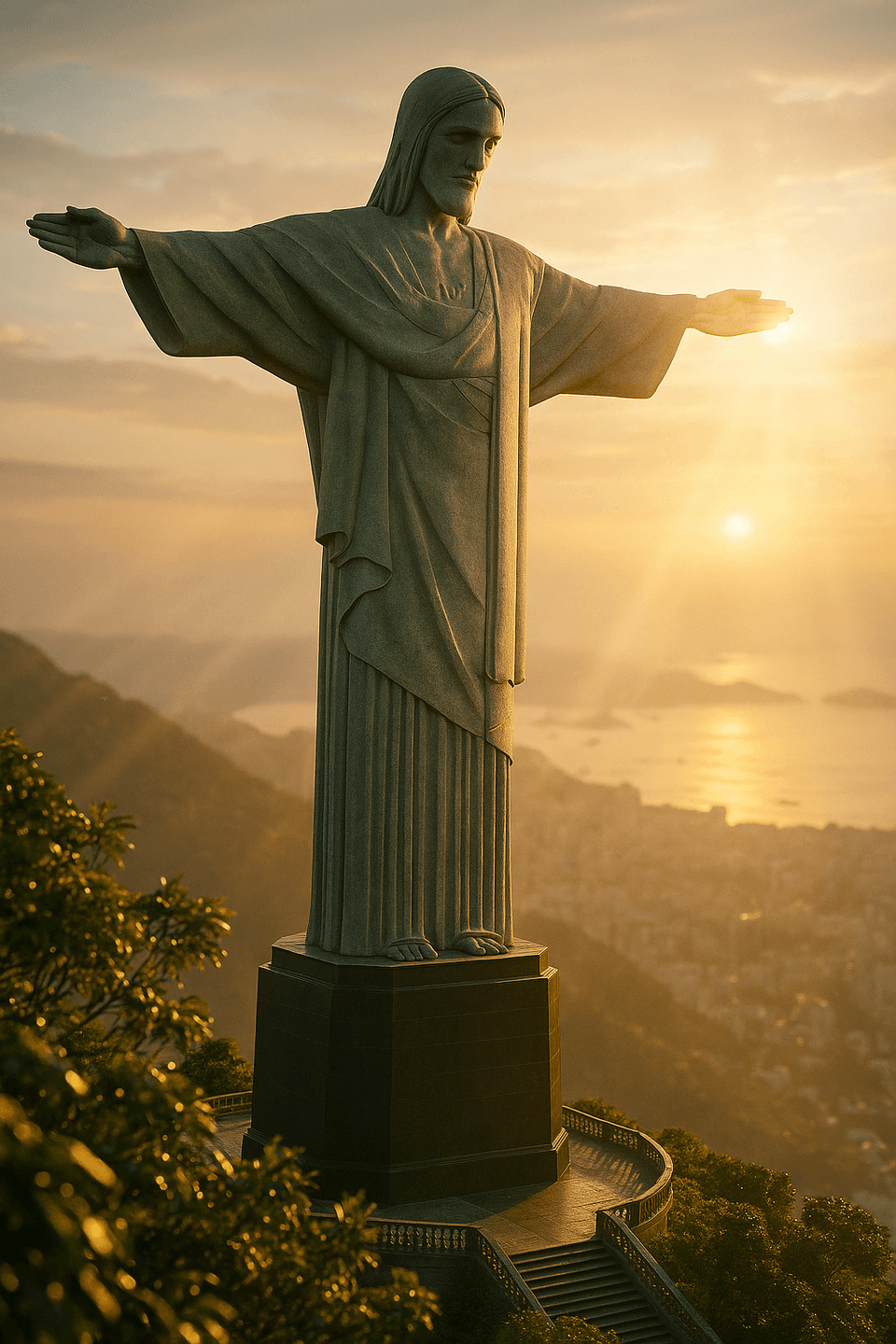
As the day draws to a close, you’re witnessing what many consider the most moving moment at Corcovado. When the sun begins to set, the soapstone tiles catch the fading light, turning the figure from a pale grey to a warm, glowing gold. While we’ve explored the immense engineering effort required to build this, the true power of the monument is found in its silhouette. From this height, looking out over the city as the lights of Rio begin to twinkle below, the outstretched arms take on their deepest meaning. It’s a gesture of universal embrace. This legacy continues today through the tradition of illumination. The statue acts as a canvas for the city's shared experiences. You can see the first streetlights flickering on in Copacabana and Ipanema.
A New Wonder
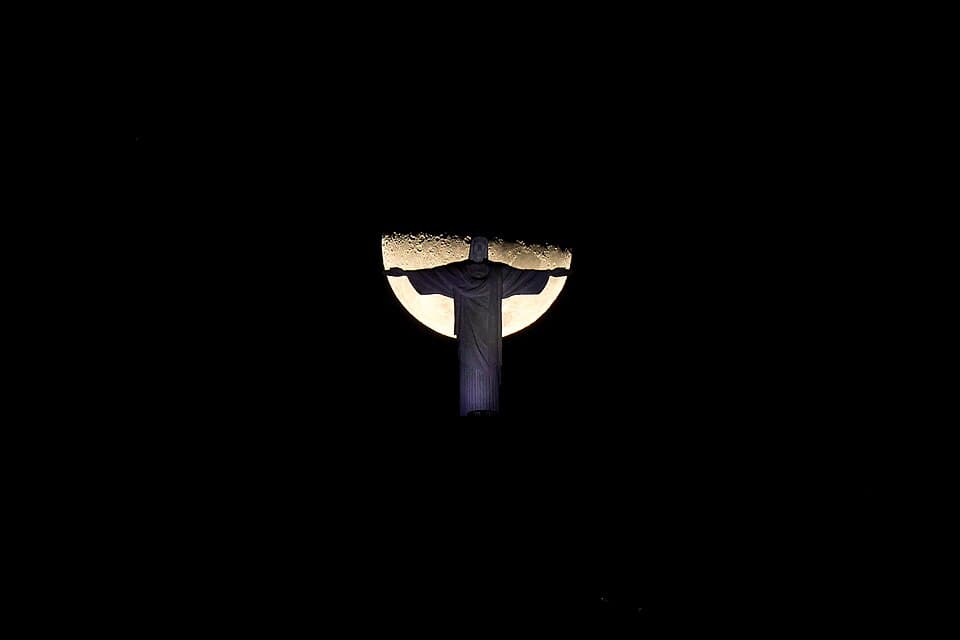
As we reach the final stop of our journey, we reflect on the moment it all began: October 12, 1931. On that day, the statue was officially inaugurated, instantly becoming the face of Rio. But its story didn't stop there. In 2007, millions of people around the globe voted to name Christ the Redeemer one of the New Seven Wonders of the World, cementing its status as a truly universal landmark. Today, the statue carries a symbolic weight that transcends religion. It is a global icon of peace, welcoming two million visitors who make the pilgrimage here every year. One of the most striking ways the monument communicates with the world is through light. Whether it is silhouetted against a bright full moon or illuminated in vibrant colors to mark international events and social causes, the statue acts as a beacon for the city and the world beyond. It is a living symbol that changes with the times while remaining a steady presence on the horizon. As you look out from Corcovado, you are part of a modern tradition that connects Rio to the rest of the planet. The 2007 plaque is located near the base of the pedestal.
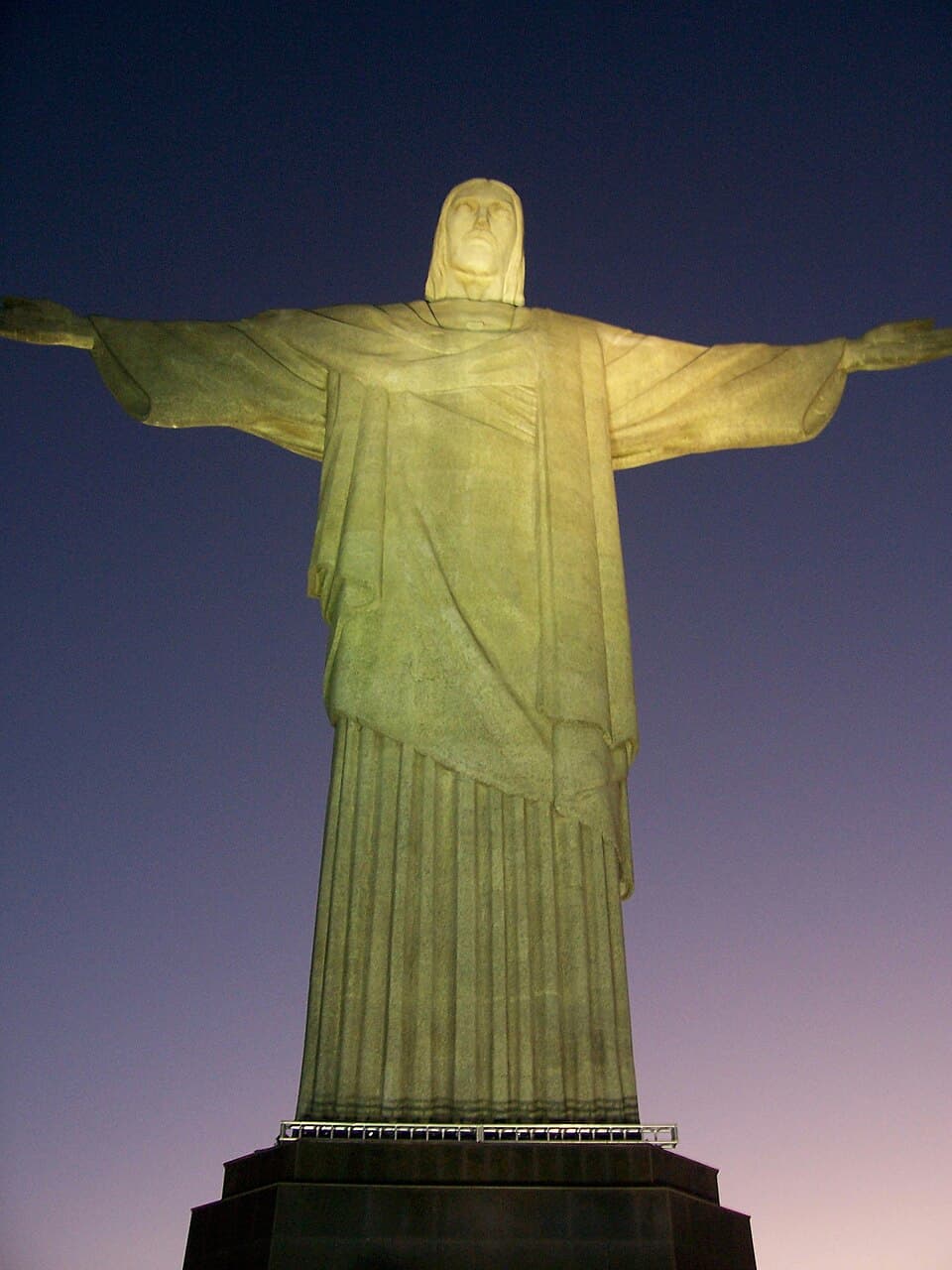
The Illuminated Beacon
When the sun sets over Rio, the soapstone surface of Christ the Redeemer takes on a dynamic new life. This tradition of illumination dates back to the very beginning, establishing the statue as a beacon of light for the entire city. Today, the technology has evolved far beyond simple floodlights. A sophisticated LED system allows the monument to be draped in any color imaginable. You might see it glowing in the green and yellow of the Brazilian flag to celebrate a victory, or bathed in pink or blue to support international health awareness campaigns. During global crises or major summits, it has even been used for video projections, displaying the flags of many nations as a sign of unity. This transformation is a key part of the statue’s living legacy. It has moved beyond its role as a religious icon to become a symbol that reacts to the world's shared experiences in real-time. The lights are usually switched on just as the sun disappears behind the mountains of the Tijuca range.
Want to hear the rest?
Download the Stanza app to unlock all 35 stops and full GPS-guided navigation.
Frequently Asked Questions
How long does the Cristo Redentor audio tour take?
The Cristo Redentor audio guide includes 35 narrated stops. Most visitors spend 45 minutes to 1.5 hours exploring the complete tour, though you can listen at your own pace and skip or revisit any stop.
Is the Cristo Redentor audio guide available in my language?
Stanza supports 15 languages: English, Spanish, French, German, Italian, Portuguese, Russian, Japanese, Chinese, Korean, Arabic, Hindi, Polish, Dutch, Hebrew. Check the guide in the app to confirm the languages currently available for this tour.
Can I use the audio guide offline at Cristo Redentor?
Yes! Download the complete Cristo Redentor tour — including all audio, maps, and images — before your visit. The Stanza app works completely offline, so you don't need WiFi or mobile data at the venue.
How much does the Cristo Redentor audio guide cost?
The Stanza app is free to download. The current listed price for the Cristo Redentor audio guide is $3.99; app-store region and currency may affect the final price.
How do I use the Stanza audio guide at Cristo Redentor?
Download the free Stanza app, search for "Cristo Redentor", and download the tour. When you arrive at the venue, the app uses GPS to detect your location and automatically plays the relevant narration as you move between points of interest — completely hands-free.
What makes the Stanza audio guide different from other Cristo Redentor tours?
Stanza offers GPS-triggered narration that plays automatically as you walk through Cristo Redentor — no need to manually select stops. The tour is available in 15 languages, works fully offline, and includes 35 expertly narrated stops with images and historical context.