Languages
15Colosseo Audio Guide
Colosseo is an archaeological site in an iconic location, Italy. Explore it with Stanza's guided offline audio tour — narrated in 15 languages.
Quick Facts
29
Stops
15
Languages
100%
Offline
About Colosseo
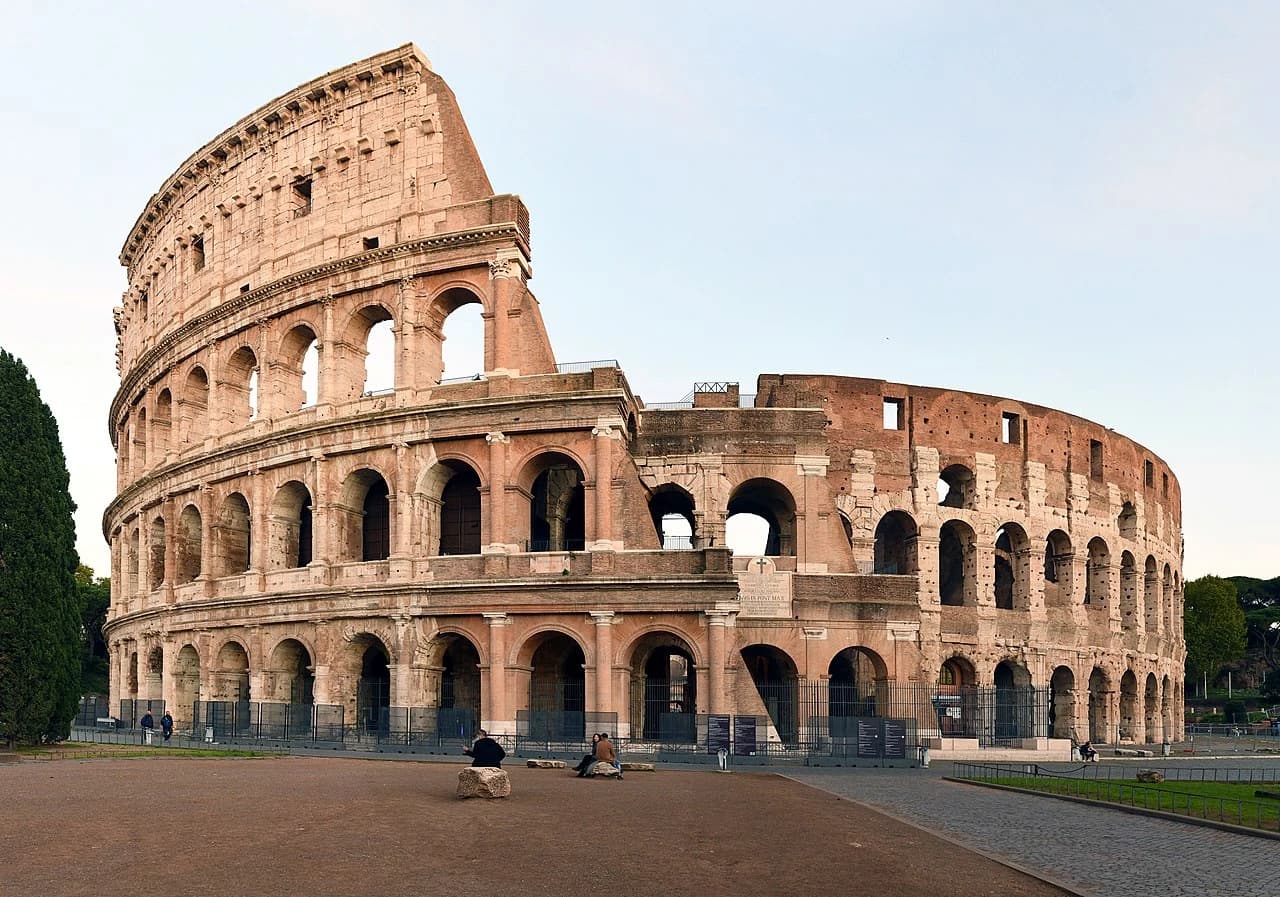
The Colosseum is a colossal ancient Roman amphitheatre located in the heart of Rome, Italy. It is an iconic landmark, known for its historical gladiatorial contests and public spectacles.
This self-guided audio tour features 29 narrated stops organized across 8 sections. As a ancient ruins, Colosseo offers a unique cultural experience, Italy.
The Stanza audio guide is available in 15 languages and works entirely offline — download the complete tour including audio narration, maps, and images before your visit. As you walk through Colosseo, GPS-triggered narration plays automatically at each point of interest.
Last updated:
What you will hear
Arrival at the Flavian Amphitheatre
The tour begins at the visual gateway between the Arch of Constantine and the Colosseum to establish the scale and the site's original name. Includes the Arch of Constantine POI and the legacy of the Colossus of Nero.
The Ancient Entrance
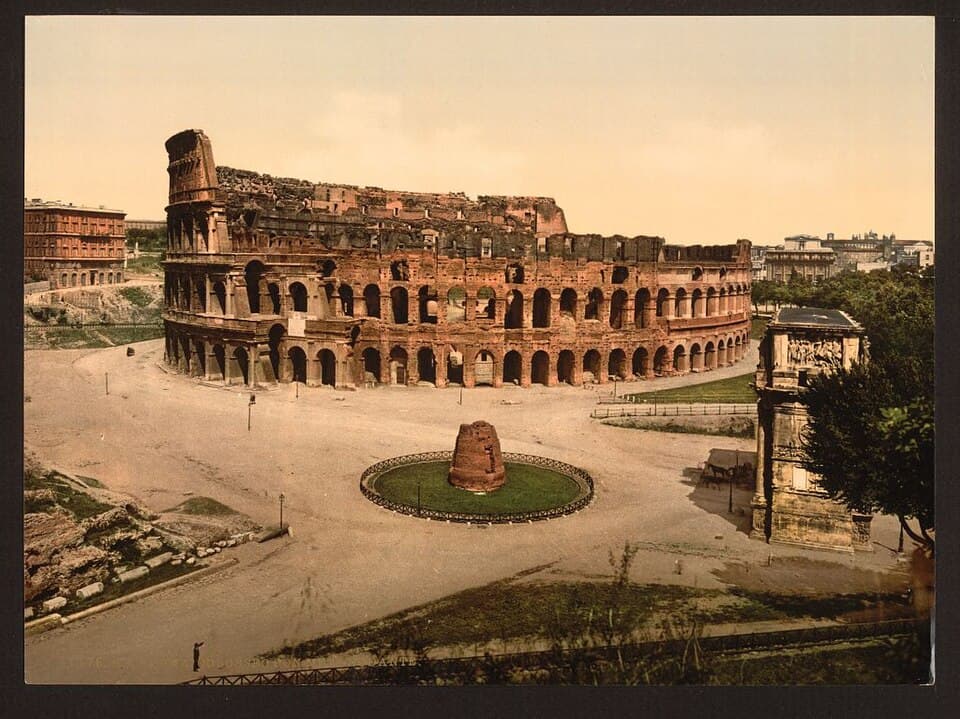
In this vintage perspective of the valley, we can see how the landscape once looked before modern excavations cleared the area. One of the most important landmarks to notice in the foreground is the conical base of what was once the Meta Sudans. This was a grand, monumental fountain that stood near the Arch of Constantine and the main entrance to the amphitheater. Built in the late first century AD, the fountain was roughly cylindrical with a conical top, from which water would 'sweat' or flow down the sides—hence the name 'Meta Sudans,' or the 'sweating turning post.' Beyond being a decorative feature of the imperial valley, the fountain served a very practical purpose. Tradition holds that gladiators would use the water from the Meta Sudans to wash themselves of blood, sweat, and sand after their brutal combat in the arena. Its location at a major crossroads in the city also made it a vital landmark for the thousands of spectators who flocked to the games. Although only the core of the base remained for many years, as seen in older photographs, the structure was ultimately demolished in the 1930s. Seeing it in this view helps you imagine the valley not as a quiet park, but as a bustling, vibrant urban space filled with the sound of running water and the crowds of ancient Rome.
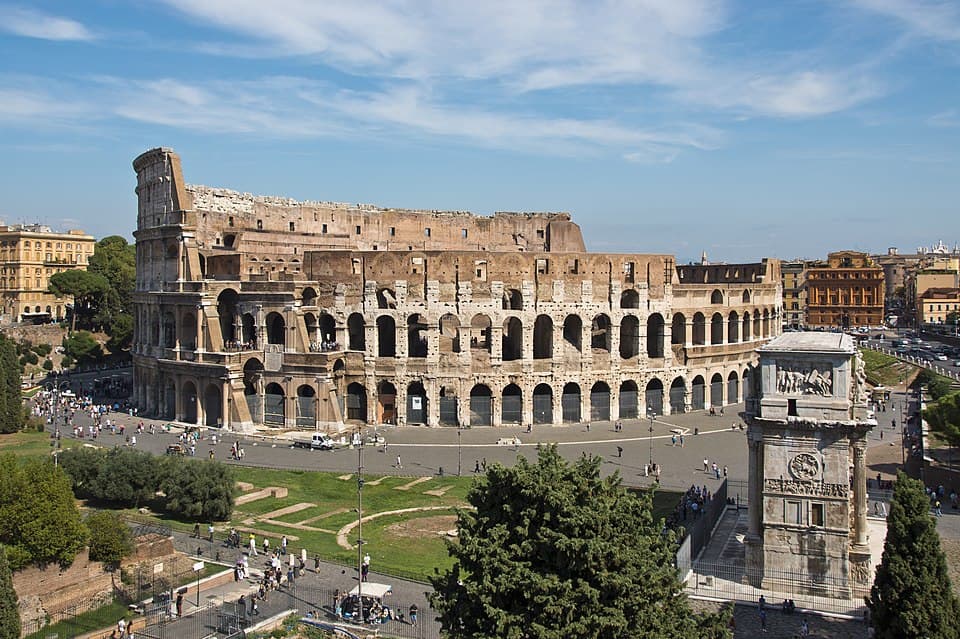
The Flavian Amphitheatre
While almost everyone knows this structure as the Colosseum, its official name in antiquity was the Flavian Amphitheatre. It remains the largest ancient amphitheater ever built, a staggering achievement of engineering that could accommodate tens of thousands of people. Construction began under the Emperor Vespasian between 70 and 72 AD. It was a monumental undertaking that required nearly a decade of constant labor, eventually reaching completion in 80 AD under his son, Titus. The timing of its construction was deeply political. The Flavian dynasty had just come to power following the chaotic and destructive reign of Nero. To win back the favor of the Roman public, the Flavians decided to build a massive public arena on land that Nero had previously confiscated for his own private luxury. This was a clear message: the land was being returned to the people for their own enjoyment and entertainment. The scale of the building reflects the magnitude of that political gesture. At nearly 190 meters long and 155 meters wide, it was more than just a place for games; it was a physical manifestation of a new era of Roman stability and imperial generosity. Even in its ruined state today, the skeleton of the building speaks to the ambition of the architects who envisioned a structure that would outlast the empire itself.
The Exterior Facade and Entrance Arches
Focuses on the architectural genius of the exterior, the superposed orders of columns, and the sophisticated spectator management system.
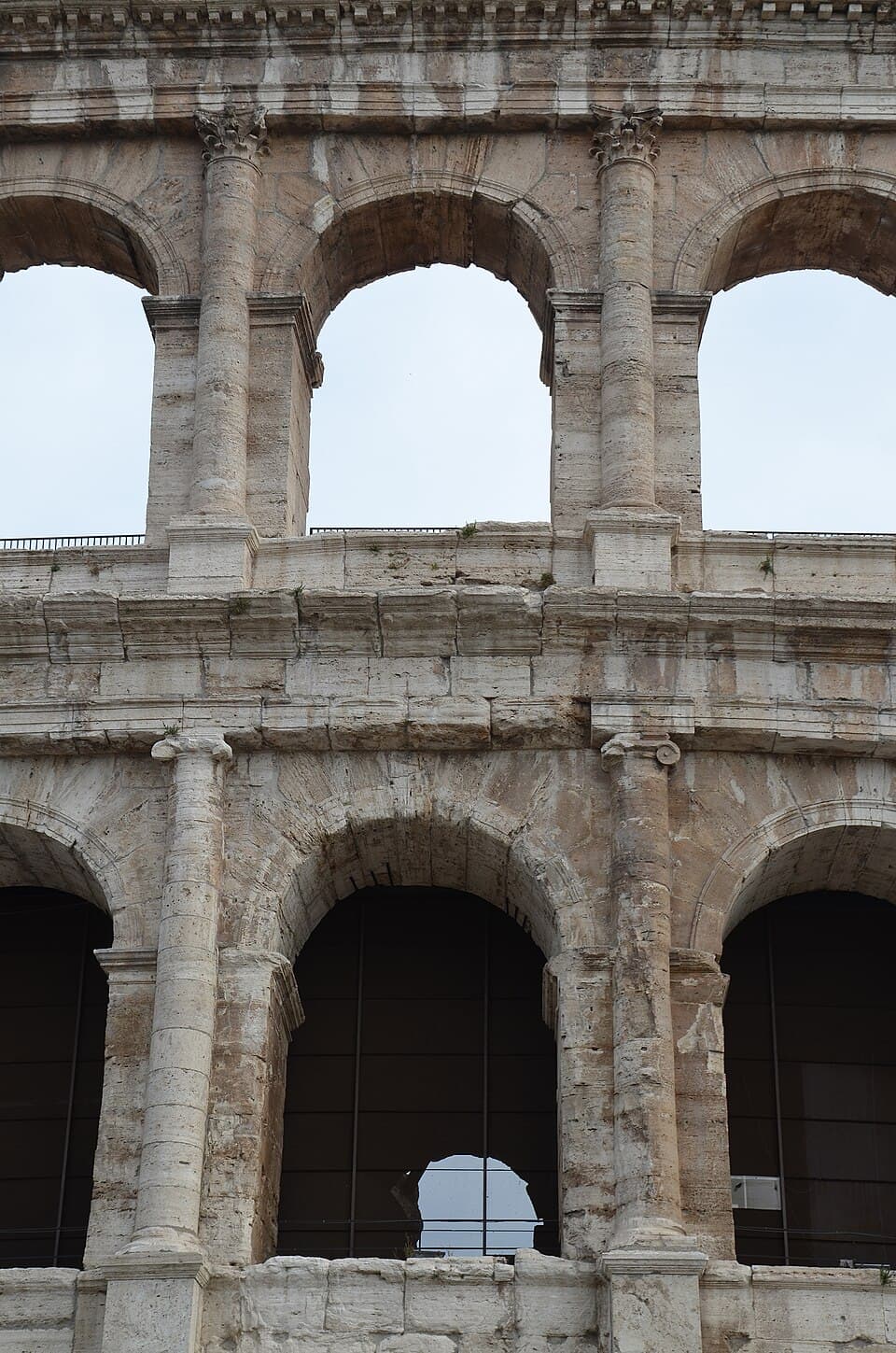
Travertine and Iron
The durability of the Colosseum is largely due to the specific materials used in its construction. The outer walls and main piers are built from travertine, a locally sourced limestone that was hauled from quarries about twenty miles away. It is estimated that over 100,000 cubic meters of this stone were used to create the exterior shell. However, the most fascinating part of the engineering is what you cannot see: how these stones are held together. Unlike modern buildings, the massive travertine blocks were not joined with mortar or cement. Instead, the Romans used a system of iron clamps. These clamps were essentially metal staples that were set into grooves between the stones and then secured with molten lead. In total, an estimated 300 tons of iron were used to create what was effectively an internal skeleton for the stone walls. This allowed the building to remain flexible during minor earthquakes while maintaining its structural integrity under the weight of tens of thousands of people. Over the centuries, much of the finer decorative stone was stripped away, but the core travertine remains, showcasing the raw strength of Roman masonry. As you look at the gaps between the blocks today, you are seeing the spots where those vital internal connections were made, hidden away for nearly two thousand years within the heart of the stone.
The Hypogeum: The Underground Machine
Explores the complex subterranean network added by Emperor Domitian, functioning as the 'backstage' of the games.
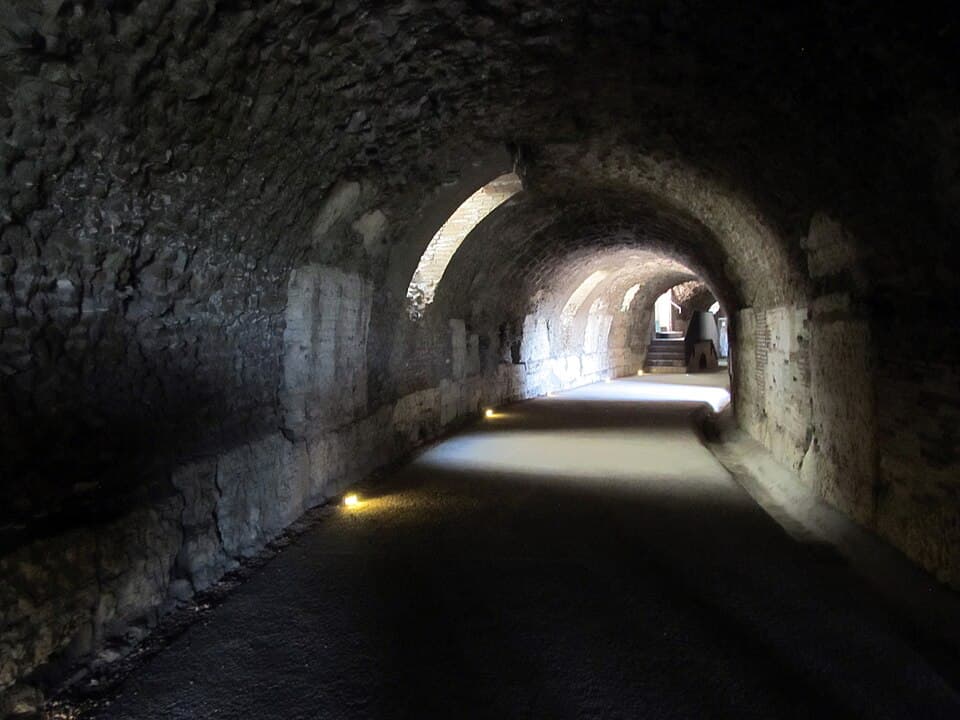
The Shadows of the Game
To truly understand the experience of the Colosseum, you have to imagine yourself within these dark, stone tunnels. While the spectators sat in the bright sun above, the world beneath the arena was one of shadow and intense pressure. These corridors were the final staging ground for gladiators before they stepped out onto the sand. The atmosphere here would have been overwhelming: the sharp smell of wild animals kept in nearby cages, the constant clanking of metal weapons and armor, and the heavy tension of men who knew they were about to fight for their lives. The tunnels were designed for efficiency, allowing different groups—fighters, animal handlers, and stagehands—to move through the building without crossing paths. Ventilation was poor, and the light came only from flickering oil lamps or small shafts in the ceiling. For a gladiator, the walk through these halls toward the light of the arena was a transition from the mundane reality of the barracks to the life-or-death spectacle of the games. Even today, these stone passageways retain a somber, heavy feeling. They remind us that for every cheering fan in the stands, there was a man or animal in these shadows facing an uncertain fate. This 'underworld' was the engine that powered the entertainment above, a hidden city of grit and steel that remains one of the most evocative parts of the entire ruin.
Munera and Venationes: Gladiators and Hunts
Thematic stop dedicated to the people and animals who fought here, using artifacts found on-site.
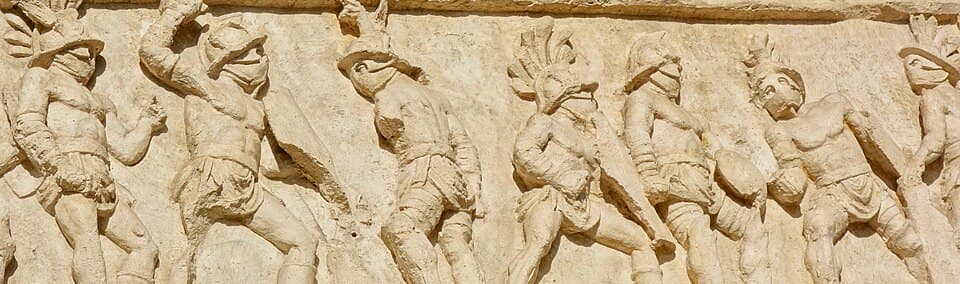
Gladiatorial Combat
This stone relief offers a rare, contemporary look at the men who made this building famous: the gladiators. In this carving, you can see the different classes of fighters, each with their own specialized equipment and fighting styles. Notice the heavy helmets, the large rectangular shields, and the protective padding on their arms and legs. These weren't just random brawlers; they were highly trained professionals who lived and breathed combat in specialized schools nearby. While Hollywood often depicts every fight as ending in a gruesome death, the reality was more nuanced. Putting on a gladiator show was incredibly expensive, and skilled fighters were valuable assets. Because of this, many matches were refereed, and death was not always the intended outcome. If a fighter performed bravely but was defeated, the crowd and the emperor might grant him 'missio,' or mercy, allowing him to live and fight another day. These men were the celebrities of their era, often gaining massive fan followings and even earning their freedom if they survived long enough. However, the life was undeniably brutal. The 'Munera,' or games, were a test of courage, skill, and endurance under the gaze of thousands. This relief captures the discipline and the heavy burden of their profession, reminding us that behind the myth of the gladiator was a human being caught in the machinery of Roman public spectacle.
The Cavea: Social Hierarchy and the Velarium
Explains how the seating tiers reflected Roman class structure and the engineering of the retractable awning.
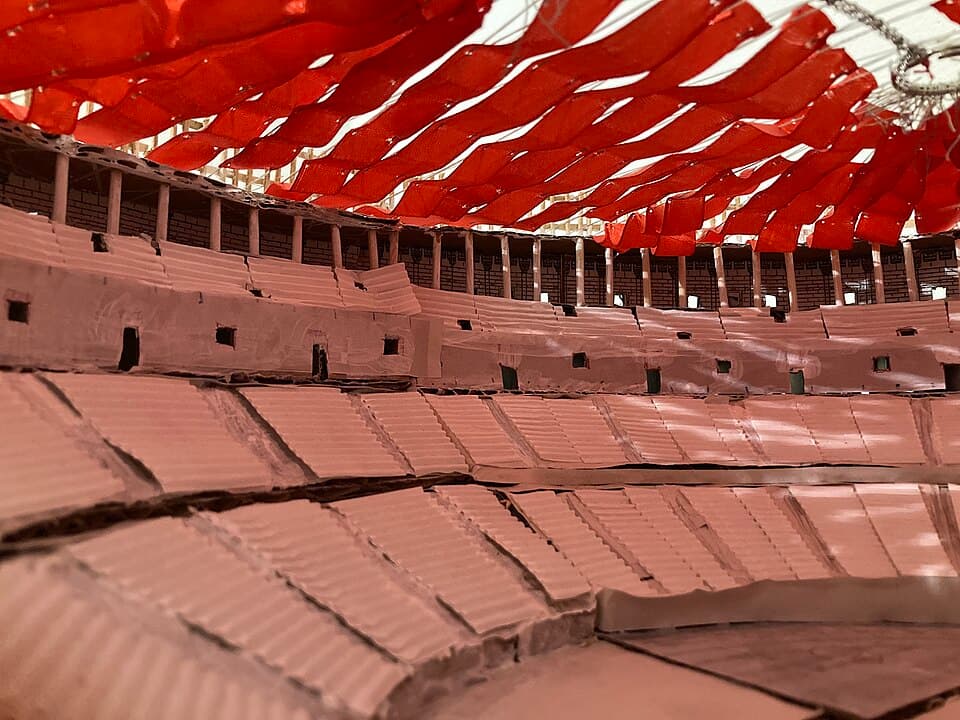
The Great Awning
Even with its massive stone walls, the Roman sun could be punishing. To keep the crowd comfortable, the Colosseum was equipped with an engineering marvel called the "Velarium." This was a gargantuan, retractable canvas awning that could be extended over the seating tiers to provide shade. This model helps illustrate how the system worked. Along the very top of the outer wall, you can still see the stone corbels that once supported 240 wooden masts. These masts held a complex web of ropes and pulleys used to unfurl the heavy fabric. Because the operation required such immense precision and strength, the Roman government didn't trust it to ordinary laborers. Instead, a specialized detachment of sailors from the imperial fleet was brought to Rome specifically to operate the Velarium. These men, used to handling sails and rigging on the high seas, would work in unison to adjust the awning based on the sun's position and the wind. It was a sophisticated climate control system that ensured the spectacle could continue even during the hottest days of summer.
Upper Tiers and the Colosseum Museum
Moving to the second level to view preserved architectural elements and artifacts from the Flavian dynasty.
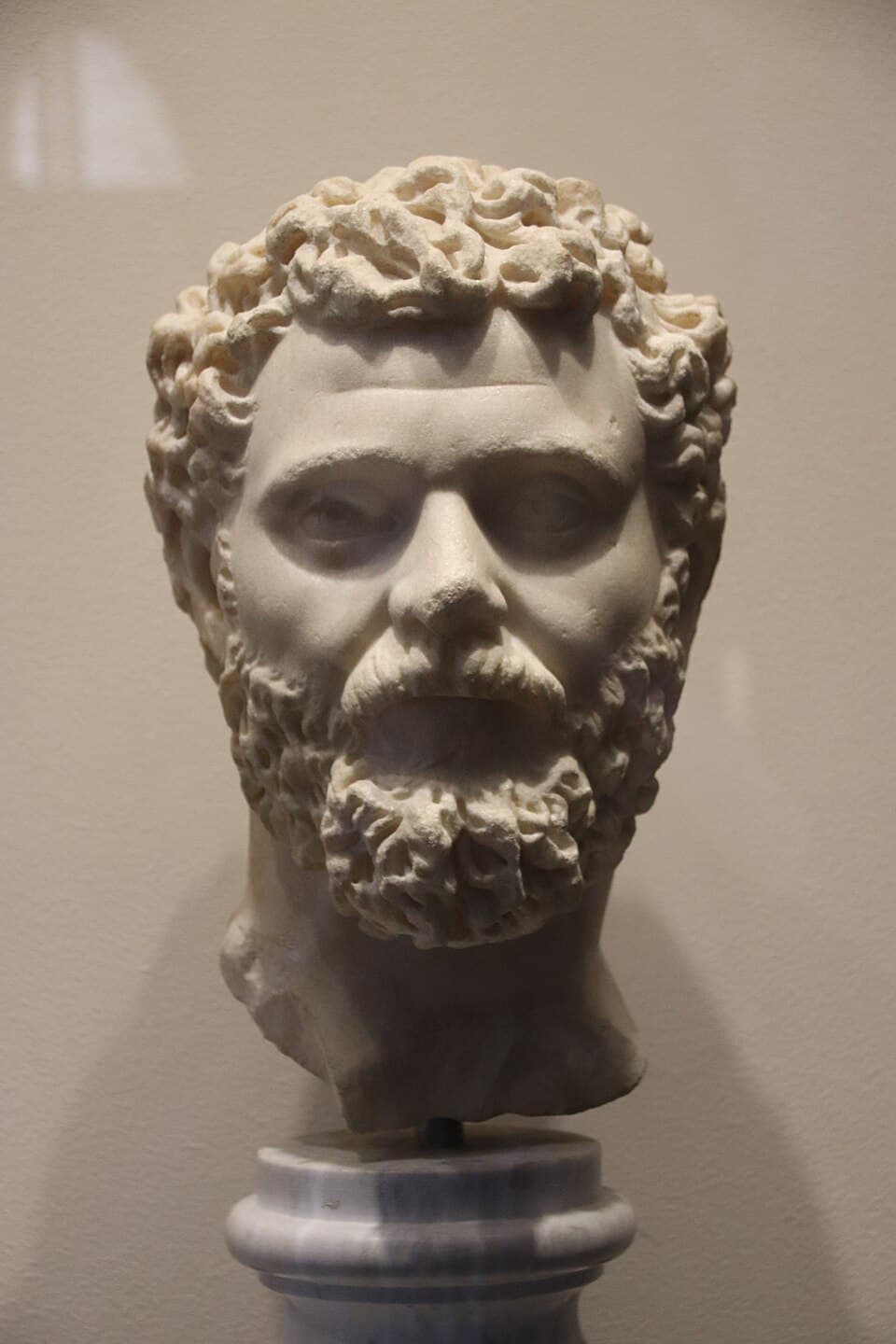
Imperial Legacy
This head depicts the Emperor Septimius Severus, who ruled over a century after the Colosseum was first completed. His image here serves as a reminder that the amphitheatre was not a static monument, but a living, breathing part of the city for over four hundred years. Throughout its long history, the Colosseum suffered from fires, lightning strikes, and earthquakes, requiring constant repairs and updates from a long line of emperors. Rulers like Severus knew that providing "bread and circuses" was essential for maintaining public favor, so they invested heavily in the arena’s upkeep. They repaired the seating, updated the stage machinery in the hypogeum, and added new decorative elements. For centuries, the building remained the undisputed heartbeat of Roman social life. Even as the empire's borders shifted and its politics changed, the roar of the crowd in this arena remained a constant. This figure represents the continuity of that legacy, showing how the Colosseum was maintained as a vital stage for imperial power well into the later stages of Roman history.
Martyrdom and Later Sacred History
Explores the Colosseum's post-Roman life as a site of Christian pilgrimage and the myth of the martyrs.
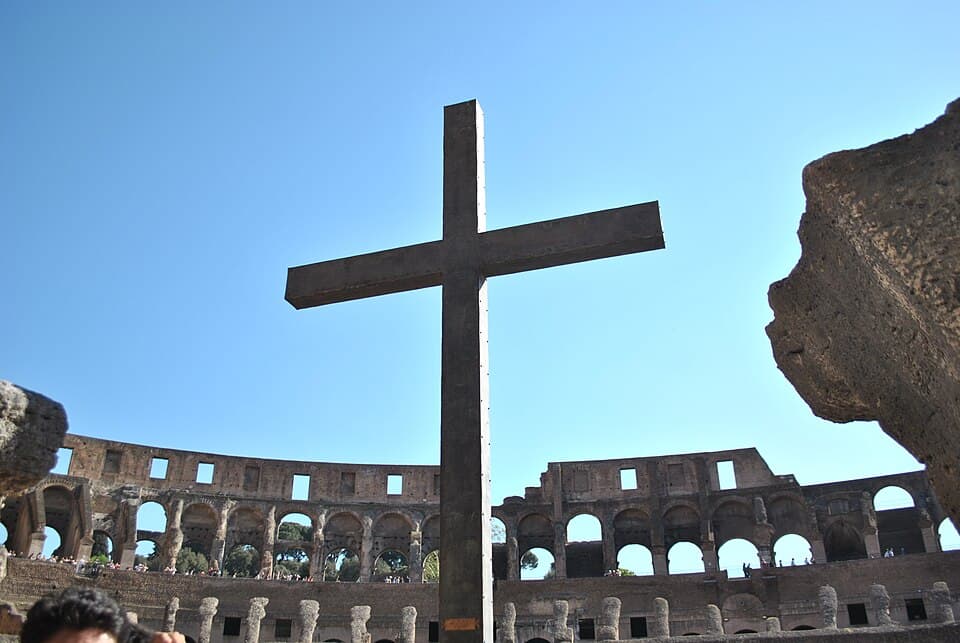
The Christian Cross
Standing in the center of what was once the arena, the large cross you see today represents a dramatic shift in the building's identity. For centuries, this space was synonymous with pagan spectacles and the death of thousands. However, by the 18th century, the Catholic Church sought to protect the ruin from further decay by declaring it a holy site. In 1750, Pope Benedict XIV officially dedicated the Colosseum to the memory of Christian martyrs who were believed to have been killed here during the Roman persecutions. While modern historians debate the exact number of Christians who actually died within these walls, the symbolic connection became deeply rooted. This dedication saved the structure from being used as a quarry for building materials. Today, the cross remains a focal point of religious tradition. Every year, the Pope leads the "Stations of the Cross" procession here on Good Friday, a somber and reflective event that draws thousands of pilgrims. It is a powerful reminder of how the meaning of a place can evolve from a symbol of worldly power to one of faith.
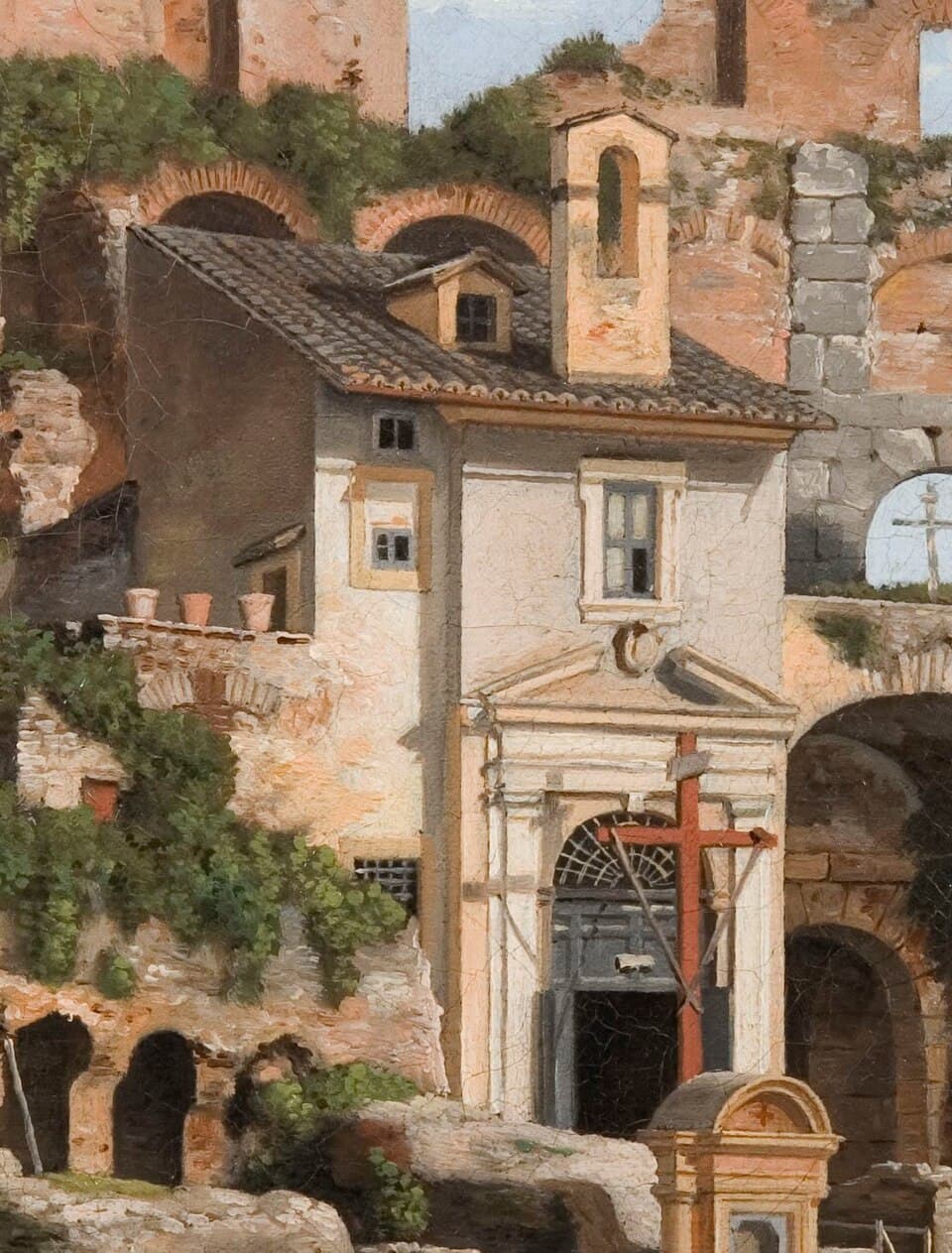
A Chapel in the Ruins
Nestled within the massive arches of the Colosseum is the small chapel of Santa Maria della Pietà. Its presence is a clue to a fascinating but often overlooked chapter of the building's history. After the fall of the Roman Empire, the Colosseum didn't immediately become an empty ruin. During the Middle Ages and the Renaissance, it was repurposed in surprising ways. The vast vaulted corridors were turned into workshops, storage spaces, and even small homes for the local population. At various times, the structure housed a hospital, a small cemetery, and fortified family estates. The interior arena was even used for local markets and fairs. This chapel, which has been in use since at least the 15th century, served the community of people who lived and worked within the amphitheatre’s shell. For these residents, the Colosseum wasn't an ancient monument; it was a practical, if oversized, part of their daily landscape. This humble chapel stands as a testament to the building's remarkable adaptability and its long life as a functional part of Rome’s urban fabric.
Panoramic Views and the Gladiator School
Conclusion of the tour, looking out from the upper tiers toward the Ludus Magnus and the Roman Forum.
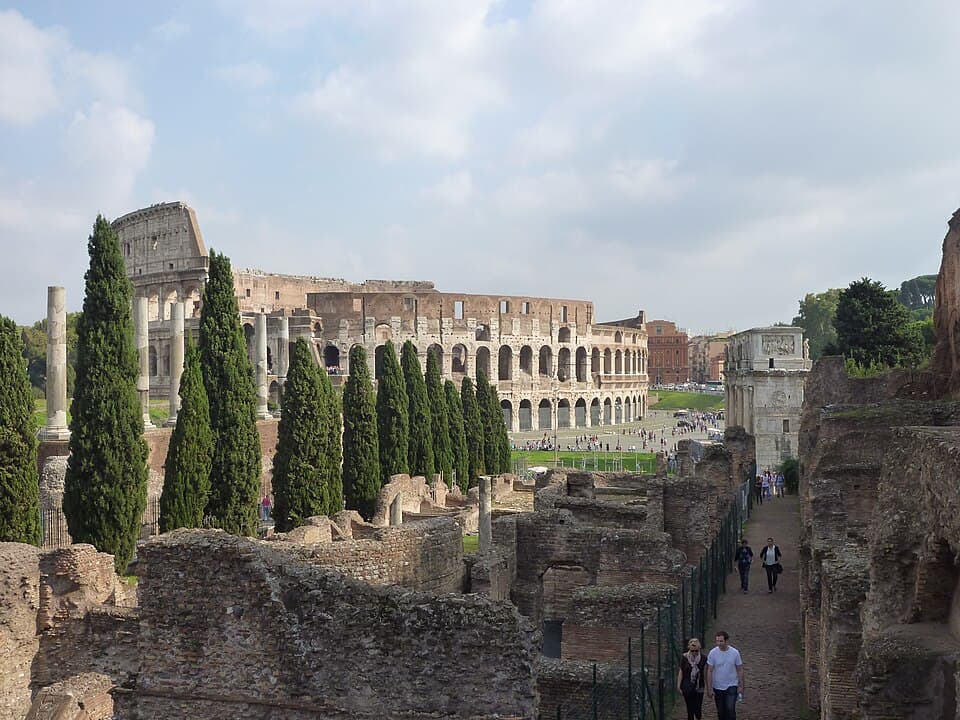
The View to the Forum
From this vantage point looking toward the Roman Forum, the strategic location of the Colosseum becomes clear. This site was chosen for its deep symbolic meaning. Before the amphitheatre was built, this valley was occupied by the "Domus Aurea," or Golden House—the extravagant private palace of the Emperor Nero. At the center of his grounds sat a massive, man-made ornamental lake. When Nero died and the Flavian dynasty took power, they made a powerful political statement by draining that lake and building a public amphitheatre in its place. By constructing the Colosseum here, the Emperor Vespasian was effectively returning to the Roman people the land that Nero had seized for his own personal pleasure. It was a brilliant piece of propaganda, positioning the new emperors as champions of the public good. The transition from a private lake to a massive public arena for the masses mirrored the shifting political landscape of Rome, moving away from the excesses of a tyrant and toward a new era of civic engagement and imperial generosity.
Want to hear the rest?
Download the Stanza app to unlock all 29 stops and the complete guided audio tour.
Frequently Asked Questions
How long does the Colosseo audio tour take?
The Colosseo audio guide includes 29 narrated stops. Most visitors spend 45 minutes to 1.5 hours exploring the complete tour, though you can listen at your own pace and skip or revisit any stop.
Is the Colosseo audio guide available in my language?
Stanza supports 15 languages: English, Spanish, French, German, Italian, Portuguese, Russian, Japanese, Chinese, Korean, Arabic, Hindi, Polish, Dutch, Hebrew. Check the guide in the app to confirm the languages currently available for this tour.
Can I use the audio guide offline at Colosseo?
Yes! Download the complete Colosseo tour — including all audio, maps, and images — before your visit. The Stanza app works completely offline, so you don't need WiFi or mobile data at the venue.
How much does the Colosseo audio guide cost?
The Stanza app is free to download. The current listed price for the Colosseo audio guide is $3.99; app-store region and currency may affect the final price.
How do I use the Stanza audio guide at Colosseo?
Download the free Stanza app, search for "Colosseo", and download the tour. When you arrive at the venue, the app uses GPS to detect your location and automatically plays the relevant narration as you move between points of interest — completely hands-free.
What makes the Stanza audio guide different from other Colosseo tours?
Stanza offers GPS-triggered narration that plays automatically as you walk through Colosseo — no need to manually select stops. The tour is available in 15 languages, works fully offline, and includes 29 expertly narrated stops with images and historical context.