Languages
15Alhambra Audio Guide
Alhambra is an archaeological site in an iconic location, Spain. Explore it with Stanza's guided offline audio tour — narrated in 15 languages.
Quick Facts
61
Stops
15
Languages
100%
Offline
About Alhambra
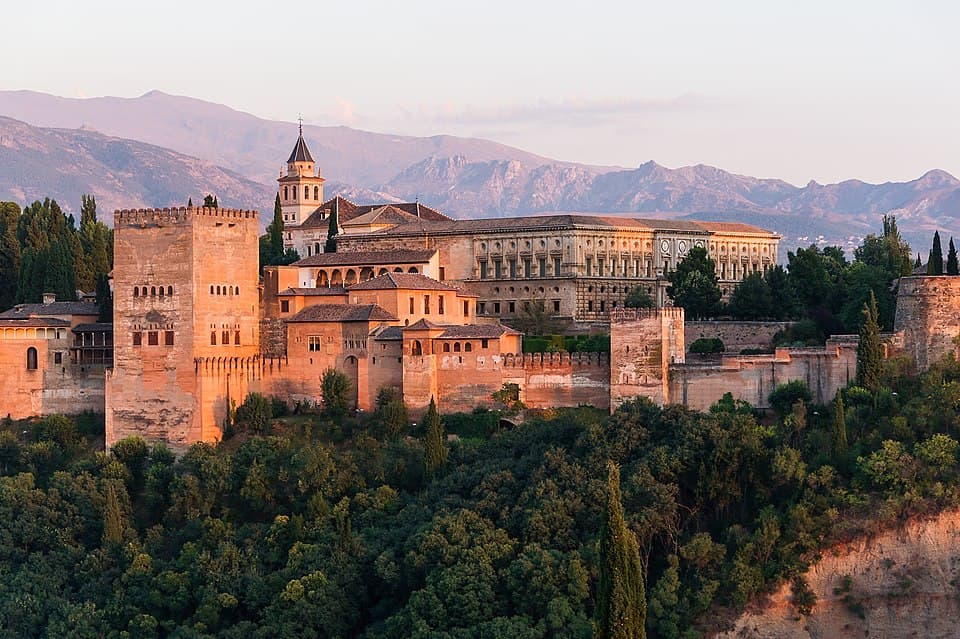
The Alhambra is a palace and fortress complex located in Granada, Andalusia, Spain.
This self-guided audio tour features 61 narrated stops organized across 7 sections. As a palace, Alhambra offers a unique cultural experience, Spain.
The Stanza audio guide is available in 15 languages and works entirely offline — download the complete tour including audio narration, maps, and images before your visit. As you walk through Alhambra, GPS-triggered narration plays automatically at each point of interest.
Last updated:
What you will hear
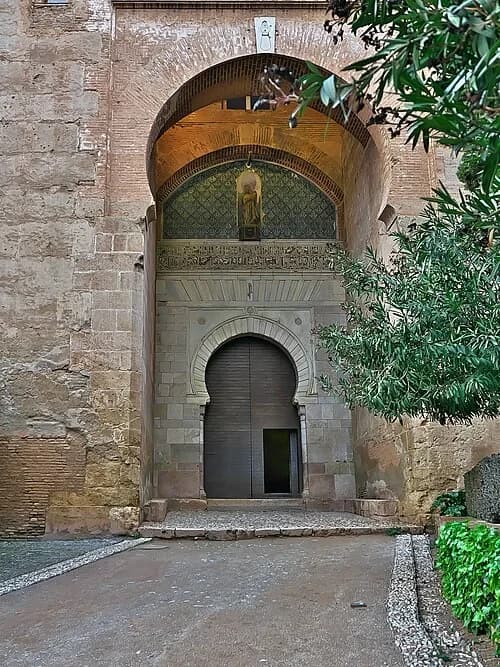
Gate of Justice
The primary historical entrance to the fortress, featuring the symbolic hand and key carved into its arches.
Gate of Justice
The Gate of Justice stands as the primary symbolic entrance to the Alhambra, completed in 1348 during the reign of Yusuf I. Look for the carved hand on the keystone of the outer arch and the corresponding key on the inner arch. Local legend maintained that the fortress was impregnable, claiming it would only fall if the hand ever reached down to grasp the key. Beyond its symbolism, the gate was a formidable military obstacle. It features a classic 'bent' entrance layout, forcing any potential invaders to make several sharp turns within a narrow, dark passage. This design effectively trapped attackers, leaving them exposed to defenders firing from overhead slots. The massive horseshoe arch and the use of large, rugged stone blocks emphasize its role as a defensive bastion. Despite its intimidating exterior, the gate also functioned as a place of administration and justice, where the sultan or his officials would hear legal disputes. It remains one of the most imposing examples of Nasrid military architecture, designed to balance raw defensive power with the high-status aesthetics of the royal court.
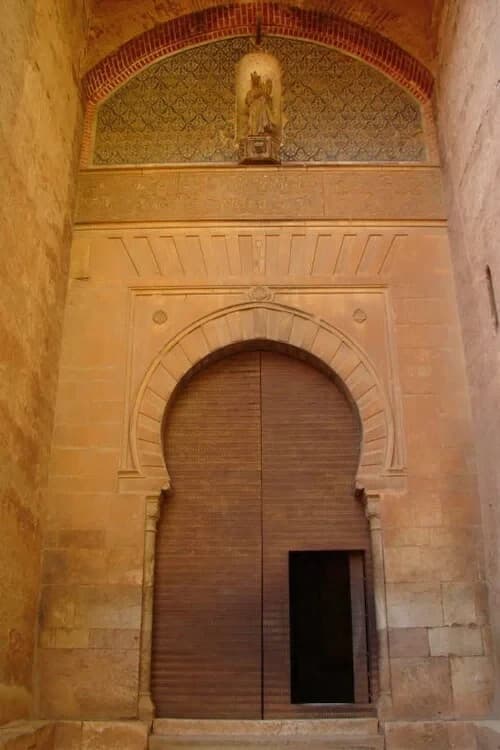
Interior of Justice Gate
Moving into the interior of the Gate of Justice, the atmosphere shifts from military functionality toward the decorative elegance of the palace precinct. Above the inner arch, a niche holds a statue of the Virgin Mary, an addition made after the Christian conquest in 1492 to mark the change in sovereignty. This figure stands in sharp contrast to the surrounding Islamic architecture, which traditionally avoids figurative representation. Here, the rough-hewn stone of the exterior walls begins to give way to more refined craftsmanship. You can see the early glimpses of the intricate tilework and delicate plaster that define the interior of the Alhambra. The transition reflects the dual nature of the site: a fortress on the outside and a sanctuary within. While the path remains narrow and defensible, the increasing level of detail in the masonry suggests you are entering a space reserved for the elite of the Nasrid court. The play of light and shadow within these thick walls was carefully considered by the architects to create a sense of mystery and progression as one approached the heart of the complex.
Fountain of Charles V
A Renaissance masterpiece located at the foot of the Gate of Justice, celebrating imperial power through water.
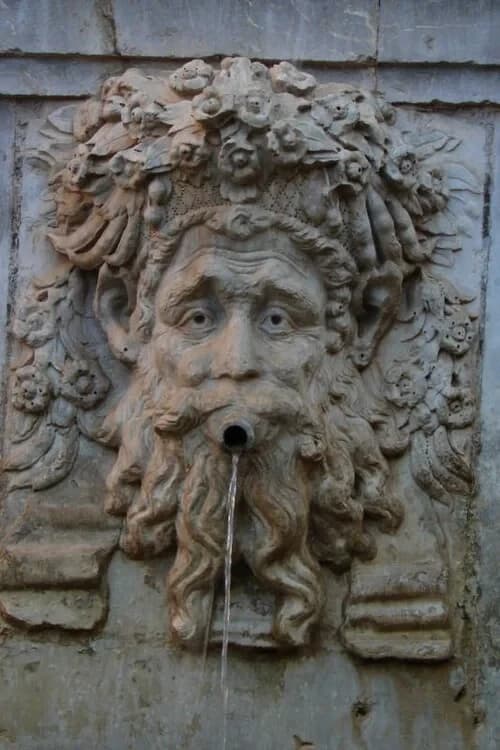
River Deity Mask
Examine the expressive stone carving of one of the river deities on the Fountain of Charles V. The figure is depicted with weathered features and deep-set eyes, surrounded by a crown of pomegranate flowers and leaves—a direct reference to the name and symbol of Granada. This type of realistic, figurative sculpture was a hallmark of the Renaissance period and stands in direct contrast to the geometric patterns and calligraphic script found throughout the Nasrid Palaces. The artist used deep undercutting techniques to create strong shadows, ensuring the face remained visible even when partially obscured by flowing water. This mask reflects the 16th-century desire to humanize the landscape, personifying the natural forces of the region. While Islamic art in the Alhambra focused on the infinite nature of God through repeating patterns, these Renaissance carvings aimed to tell stories and glorify the earthly power of the monarch. The contrast highlights the layer of Christian history superimposed onto the medieval Moorish fortress, as the new rulers sought to rewrite the visual identity of the Sabika Hill using the artistic language of Rome and Italy.
Wine Gate
One of the oldest structures in the Alhambra, serving as an internal gate separating the military zone from the civilian medina.
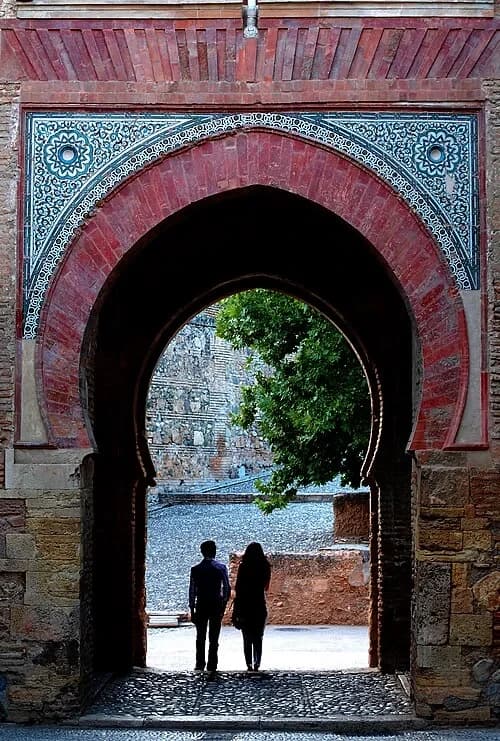
Wine Gate
The Wine Gate is one of the most decorated gateways in the entire complex. Its unusual name originates from a 16th-century tradition where residents of the Alhambra were permitted to buy wine here without paying certain taxes. Architecturally, it is a masterpiece of the Nasrid period, featuring a classic horseshoe arch framed by vibrant blue and gold tilework, known as alicatado. These geometric mosaics were created by fitting together small, individually cut pieces of glazed ceramic. The gate served an important functional role in the city's layout, acting as a boundary between the strictly military Alcazaba and the civilian medina. Beyond this point, craftsmen, servants, and court officials lived in a densely packed neighborhood of homes and shops. The intricate plasterwork above the arch contains inscriptions of poetry and praise, contrasting with the more utilitarian gateways found on the outer perimeter. It acted as a social filter, controlling access to the more private and prestigious areas of the fortress. Even after the city changed hands in 1492, the gate remained a focal point of daily life, eventually becoming a favorite subject for 19th-century European travelers and painters who were captivated by its well-preserved Moorish details.
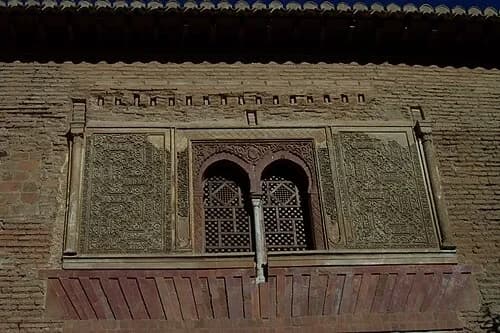
Nasrid Window Detail
As you look at this window detail, you are viewing what historians call 'talking architecture.' The walls of the Nasrid Palaces are not merely decorated; they are inscribed with a vast library of Arabic script. This intricate stucco work, made from a mixture of gypsum and marble dust, contains verses of poetry, historical records, and constant repetitions of praise to God. Almost every available surface is covered in this delicate 'lace-work' of stone. The script often wraps around window frames and arches, integrating the written word into the very fabric of the building. To the original inhabitants, these were not just patterns, but meaningful texts that reinforced the spiritual and political authority of the Sultan. The craftsmanship required to carve or mold these tiny, repeating letters is extraordinary. Often, the text is woven together with vegetal motifs, known as ataurique, representing a lush, eternal garden. This tradition ensured that the palace walls would perpetually proclaim the values of the court, even when the rooms were empty. The play of light through the window would have highlighted the varying depths of the carving, making the words appear to shift and breathe throughout the day.
Watchtower (Torre de la Vela)
The most iconic tower of the Alhambra, offering 360-degree views of Granada and the Sierra Nevada.
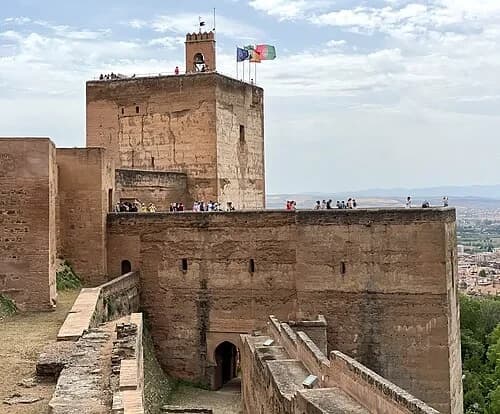
Watchtower
Known as the Torre de la Vela, this iconic watchtower is perhaps the most famous silhouette in Granada. It served as the strategic nerve center of the Alhambra, offering an incredible 360-degree view that covers the entire city, the fertile valley known as the Vega, and the snow-capped peaks of the Sierra Nevada. High at the top, you can see several flags and a large bell. After the 1492 conquest, this bell took on a critical civilian role; its ringing signaled the specific times for farmers in the valley to open their irrigation channels. This ensured a fair distribution of water among the rural community below, a tradition that persisted for centuries. Historically, the tower was also the location where the banners of the Catholic Monarchs were first raised, marking the end of the Reconquista. The structure itself is a massive, square block of masonry designed to withstand the heaviest assaults. Its height and prominent position made it the primary signal point for the region's defense network. Today, climbing to the top remains a highlight for visitors, providing the same panoramic perspective that once allowed the sultans and governors to monitor every movement in their kingdom.
Palace of Charles V
A massive Renaissance palace commissioned by the Holy Roman Emperor, representing the Christian era of the Alhambra.
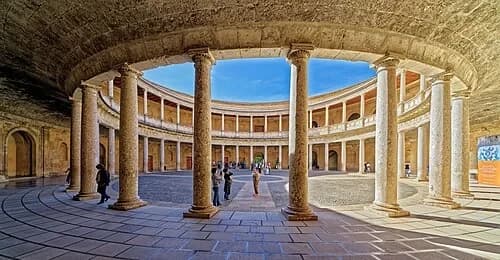
Imperial Circular Courtyard
Step inside the Palace of Charles V to find one of the most unique architectural features in Europe: a perfectly circular courtyard contained within a square building. This design, measuring 30 meters in diameter, was a radical departure for Spanish architecture at the time. It features two distinct tiers of columns: the lower level uses the sturdy Doric style, while the upper level transitions to the more elegant Ionic order. This stacked arrangement follows the classical principles of ancient Rome, intended to convey a sense of harmony and intellectual order. The courtyard was designed to host grand imperial spectacles, such as tournaments and perhaps even bullfights, allowing guests to watch from the galleries above. Despite its grandeur, the palace remained incomplete and roofless for hundreds of years, with the courtyard open to the elements. The acoustics of the space are remarkable, and it is now frequently used for international music and dance festivals. The contrast between the circular interior and the square exterior is a sophisticated play on geometry, reflecting the Renaissance fascination with perfect forms and the glorification of the emperor’s divine right to rule over a unified world.
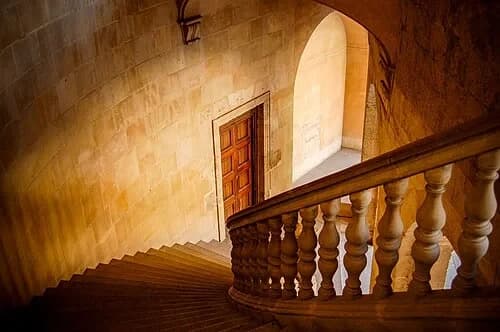
The Imperial Staircase
The Imperial Staircase within the Palace of Charles V is a masterclass in monumental Renaissance architecture. Its dramatic scale was designed to impress anyone ascending from the public courtyard to the private imperial apartments on the upper floor. Wide, shallow steps and heavy stone balustrades create a sense of slow, dignified progression. This architectural approach emphasizes the formal hierarchy of the imperial court, where every movement was a choreographed display of power. When you compare this space to the nearby Nasrid structures, the difference in scale is profound. The Moorish palaces were designed for intimacy and a sense of 'human' proportions, often using narrow, winding stairs hidden within thick walls. In contrast, this staircase is open and grand, intended to be seen and to see from. The play of light from the high windows highlights the smooth masonry and the precise geometry of the vaulting. While the palace was never fully occupied by the emperor as intended, this staircase remains as a testament to the ambitious vision of his architects, who sought to transform the Alhambra into a headquarters for a global empire. It serves as a physical bridge between the public spectacles of the courtyard and the private world of the monarch.
Museum of the Alhambra
Located on the ground floor of the Palace of Charles V, housing the best collection of Nasrid art in the world.
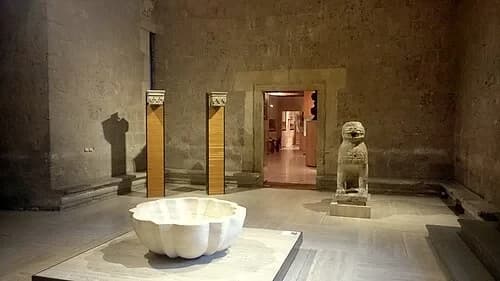
Nasrid Artifacts Room
Within these galleries, you will find a collection of original artifacts that once graced the courtyards of the Nasrid Palaces. Among the most notable pieces are weathered stone lions and intricately carved marble basins. These objects were not merely decorative; they were functional elements of the Alhambra's sophisticated hydraulic and aesthetic systems. For example, the basins often served as the central points of small fountains, where the sound of trickling water provided a cooling effect in the heat. Over many centuries, as the palaces fell into periods of neglect, many of these precious items were salvaged from the ruins to be preserved here in the Palace of Charles V. Seeing them up close allows you to appreciate the fine craftsmanship that is often difficult to see in their original architectural settings. Each piece tells a story of survival, having been recovered from the dust of history to represent the vanished splendor of the sultan’s private world. Look for the fine drainage holes in the basins which allowed for constant water circulation.
Mexuar
The oldest part of the Nasrid Palaces, used for the administration of justice and state affairs.
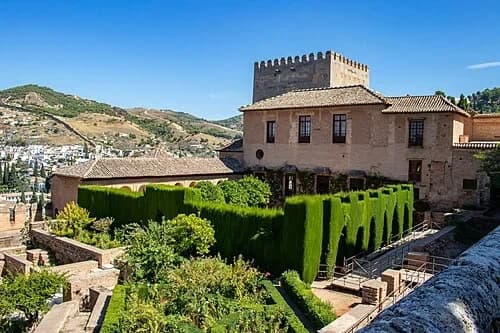
Mexuar Hall
Transitioning into the Nasrid Palaces, you enter the Mexuar, the oldest surviving section of the royal complex. This hall served as the primary administrative heart of the kingdom, a bustling center where the business of the state was conducted. Here, the Sultan would meet with his viziers—his high-ranking ministers—to discuss governance, law, and diplomacy. It was also a space for public justice; the Sultan would often sit here to listen directly to the petitions and grievances of his subjects, a tradition of accessibility that was central to his role as a ruler. The architecture reflects this official function, designed to handle a flow of people while maintaining a sense of regal authority. As you walk through, consider that these walls have witnessed centuries of political maneuvering and legal decisions that shaped the fate of the Nasrid dynasty. The atmosphere here was far more public and professional than the intimate garden courtyards found deeper within the palace grounds. It represents the starting point of a journey from the outer world of government to the inner sanctum of the royal family.
Want to hear the rest?
Download the Stanza app to unlock all 61 stops and the complete guided audio tour.
Frequently Asked Questions
How long does the Alhambra audio tour take?
The Alhambra audio guide includes 61 narrated stops. Most visitors spend 45 minutes to 1.5 hours exploring the complete tour, though you can listen at your own pace and skip or revisit any stop.
Is the Alhambra audio guide available in my language?
Stanza supports 15 languages: English, Spanish, French, German, Italian, Portuguese, Russian, Japanese, Chinese, Korean, Arabic, Hindi, Polish, Dutch, Hebrew. Check the guide in the app to confirm the languages currently available for this tour.
Can I use the audio guide offline at Alhambra?
Yes! Download the complete Alhambra tour — including all audio, maps, and images — before your visit. The Stanza app works completely offline, so you don't need WiFi or mobile data at the venue.
How much does the Alhambra audio guide cost?
The Stanza app is free to download. The current listed price for the Alhambra audio guide is $4.99; app-store region and currency may affect the final price.
How do I use the Stanza audio guide at Alhambra?
Download the free Stanza app, search for "Alhambra", and download the tour. When you arrive at the venue, the app uses GPS to detect your location and automatically plays the relevant narration as you move between points of interest — completely hands-free.
What makes the Stanza audio guide different from other Alhambra tours?
Stanza offers GPS-triggered narration that plays automatically as you walk through Alhambra — no need to manually select stops. The tour is available in 15 languages, works fully offline, and includes 61 expertly narrated stops with images and historical context.