Languages
15Ortaköy Camii Audio Guide
Ortaköy Camii is a landmark in Beşiktaş, Turkey. Explore it with Stanza's GPS-triggered offline audio guide — available in 15 languages.
Quick Facts
12
Stops
15
Languages
100%
Offline
📍 Beşiktaş, Turkey · 41.0473°N, 29.0268°E
About Ortaköy Camii
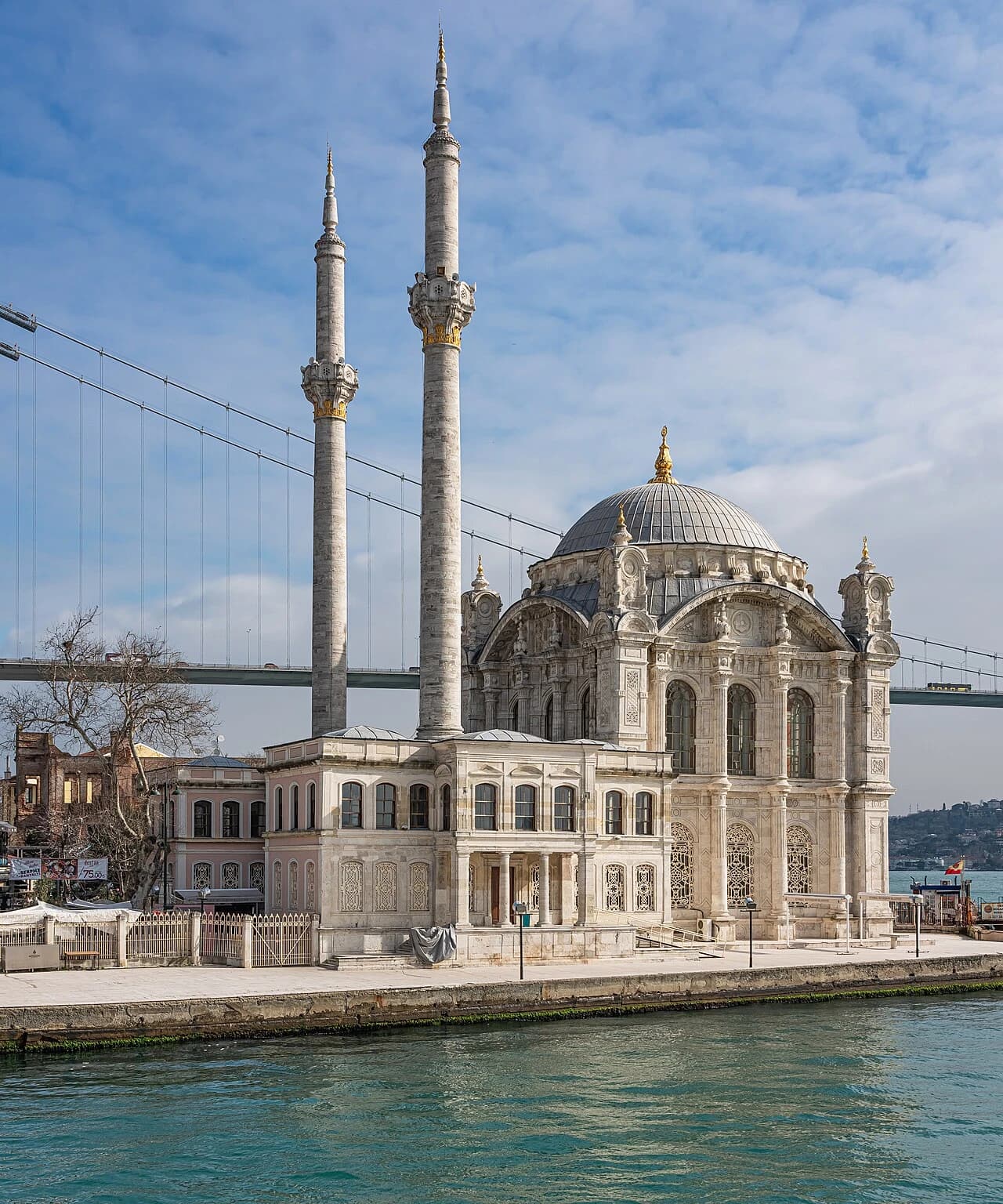
The Ortaköy Mosque is a beautiful neo-Baroque style mosque situated on the European shore of the Bosphorus in Istanbul, Turkey. It was built between 1853 and 1856 by order of Sultan Abdülmecid I.
Ortaköy Camii is also known as Ortaköy Camii.
This self-guided audio tour features 12 narrated stops organized across 8 sections. As a mosque, Ortaköy Camii offers a unique cultural experience in the heart of Beşiktaş, Turkey.
The Stanza audio guide is available in 15 languages and works entirely offline — download the complete tour including audio narration, maps, and images before your visit. As you walk through Ortaköy Camii, GPS-triggered narration plays automatically at each point of interest.
Last updated:
What you will hear
Ortaköy Pier Square
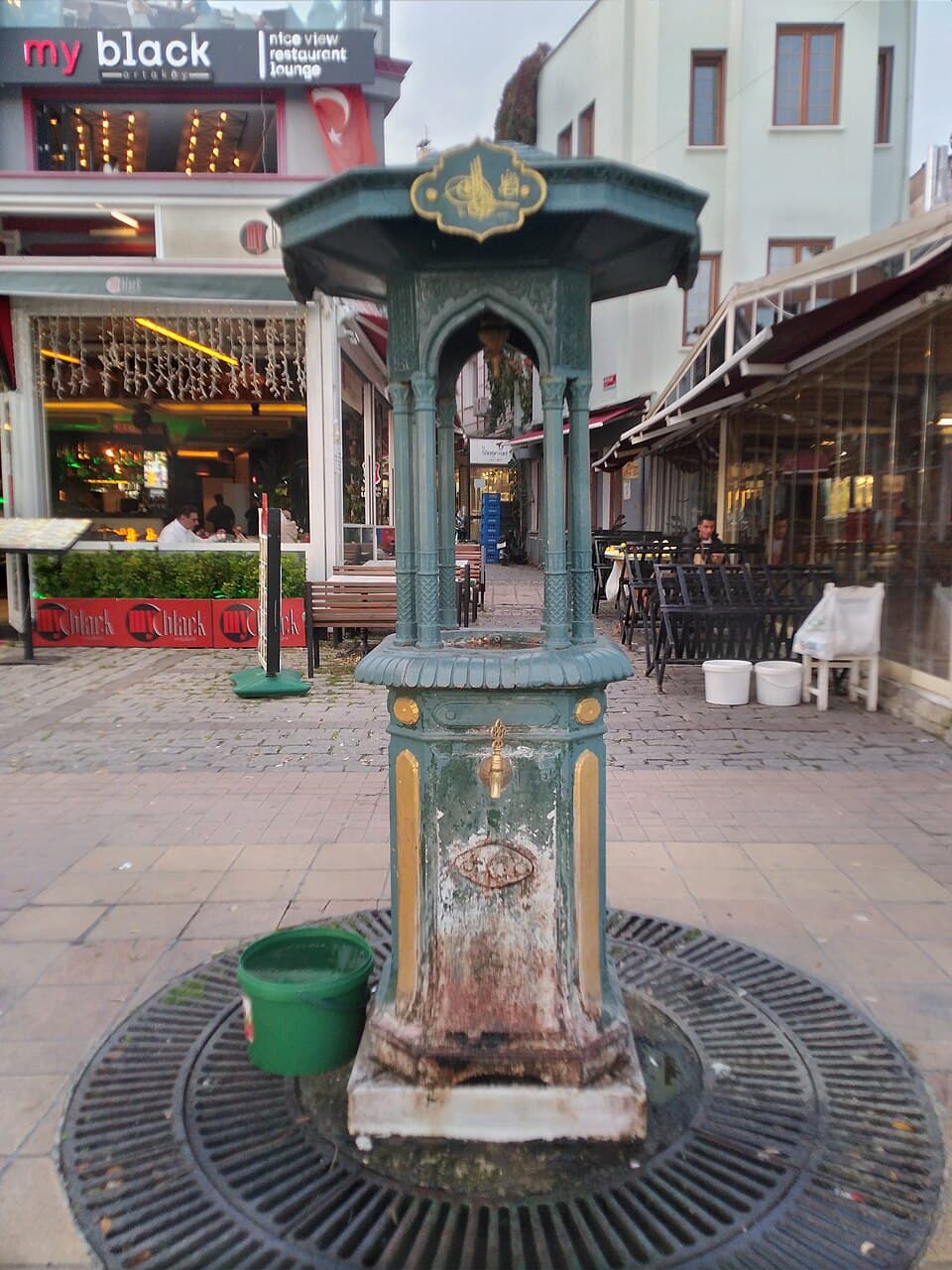
Start in the vibrant square to establish the mosque's setting and view the historic fountains that served the community for centuries.
Hamidiye Fountain
A short distance away, you will find a smaller but equally distinctive structure known as the Hamidiye Fountain. While the larger pier fountain is characterized by its white marble, this one stands out due to its decorative green ironwork and more compact design. This fountain is associated with Sultan Abdulhamid II, whose personal calligraphic seal, known as a 'tughra,' is visible in a prominent gold finish on the facade. The tughra served as the official signature of the Sultan, signifying royal patronage and authority. This specific fountain highlights how the square has served as a social hub for centuries. In the late 19th and early 20th centuries, squares like this were the primary meeting places for residents of Istanbul’s diverse neighborhoods. While the architecture of the mosque reflects the grand imperial ambitions of the state, these fountains reflect the daily reality of the people. People would gather here to exchange news, wait for the ferry, or simply enjoy the breeze from the Bosphorus. The Hamidiye Fountain, with its delicate metal accents, represents the later stages of Ottoman design, where iron and more industrial materials began to be integrated into traditional charitable structures, marking the transition into the modern era.
The Imperial Apartments (Hünkar Kasrı)
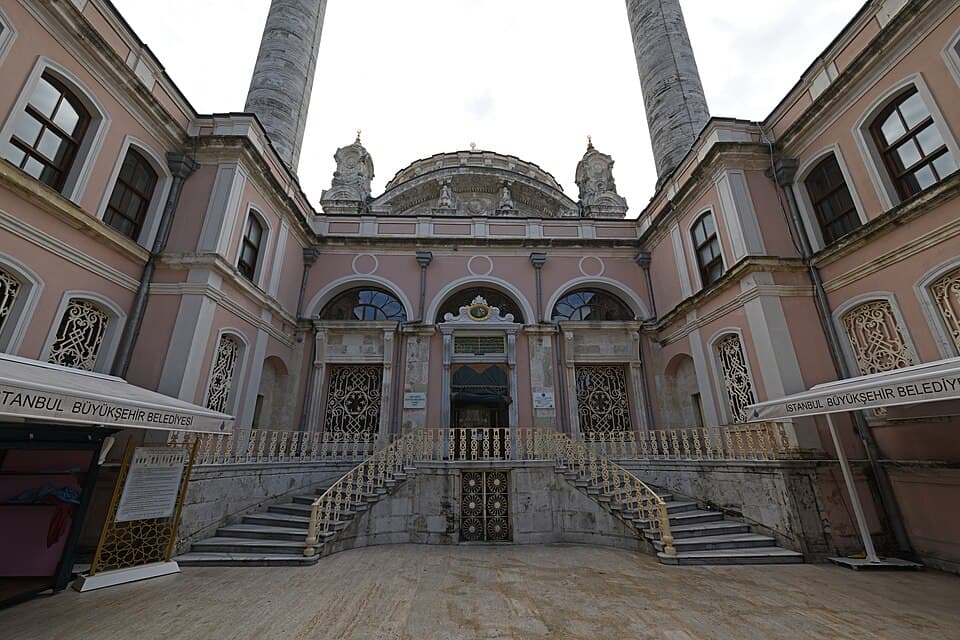
Examine the U-shaped front wing, which served as the Sultan's private residence, showcasing the Balyan family's palace-inspired Neo-Baroque style.
The Imperial Apartments
Looking toward the front of the mosque from the courtyard, you can see a two-story, U-shaped wing that wraps around the main prayer hall. This section is known as the Hünkar Kasrı, or the Imperial Apartments. It is a feature that distinguishes this building from typical neighborhood mosques, as it was designed to accommodate the Sultan and his entourage. During the 19th century, the Sultan would often travel by barge from his palaces along the Bosphorus to attend Friday prayers here. This wing served as a private residence where the Sultan could rest, prepare for the service, or conduct brief meetings before and after the prayers. By including these luxurious quarters, the architects emphasized the building's dual purpose: it was a sacred place of worship, but also a royal palace. The large windows and elevated position of these apartments offered the Sultan privacy while still keeping him connected to the religious life of his subjects. The presence of the Hünkar Kasrı effectively turned the mosque into an extension of the imperial court, blending the boundaries between the Sultan's political authority and his role as the Caliph. Notice how the architectural style of this wing matches the main structure, ensuring that the entire complex felt like a unified, regal monument on the waterfront.
The Main Entrance and Royal Tughra
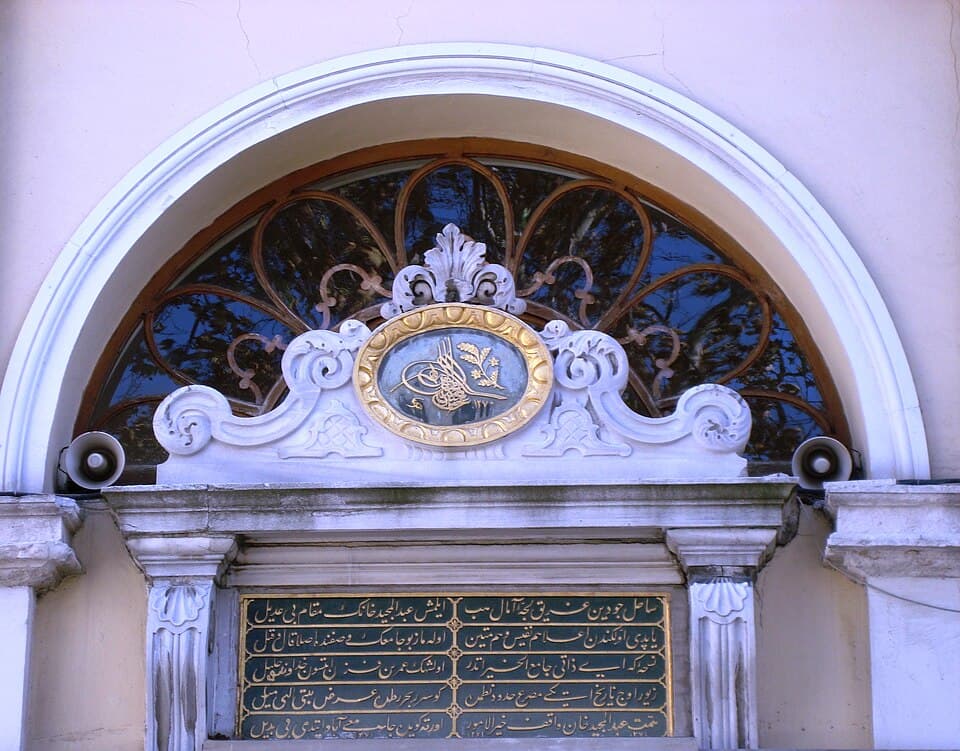
Before entering, notice the exquisite stone carvings and the calligraphic signature of Sultan Abdülmecid I above the portal.
The Royal Tughra
Just above the main entrance to the mosque, notice the intricate calligraphic signature. This is the 'tughra' of Sultan Abdülmecid I, the monarch who commissioned this magnificent building. A tughra is more than just a name; it is a highly stylized emblem that combines the Sultan's name, his father's name, and the title 'always victorious' into a complex, interlocking design. These seals were used on official documents, coins, and, most prominently, on the monumental buildings the Sultans left behind as their legacy. Sultan Abdülmecid I was not merely a patron of the arts; he was a talented calligrapher in his own right. In fact, he personally executed several of the large calligraphic panels that you will see inside the mosque. It was quite rare for a Sultan to contribute his own handiwork to the decoration of a religious building, and it speaks to his personal devotion and artistic skill. By placing his tughra above the door, the Sultan signaled his protection of the mosque and his connection to the divine. The flowing, rhythmic lines of the calligraphy mirror the Neo-Baroque curves of the building's architecture, creating a harmony between the written word and the stone structure it adorns.
The Prayer Hall and Bosphorus Light
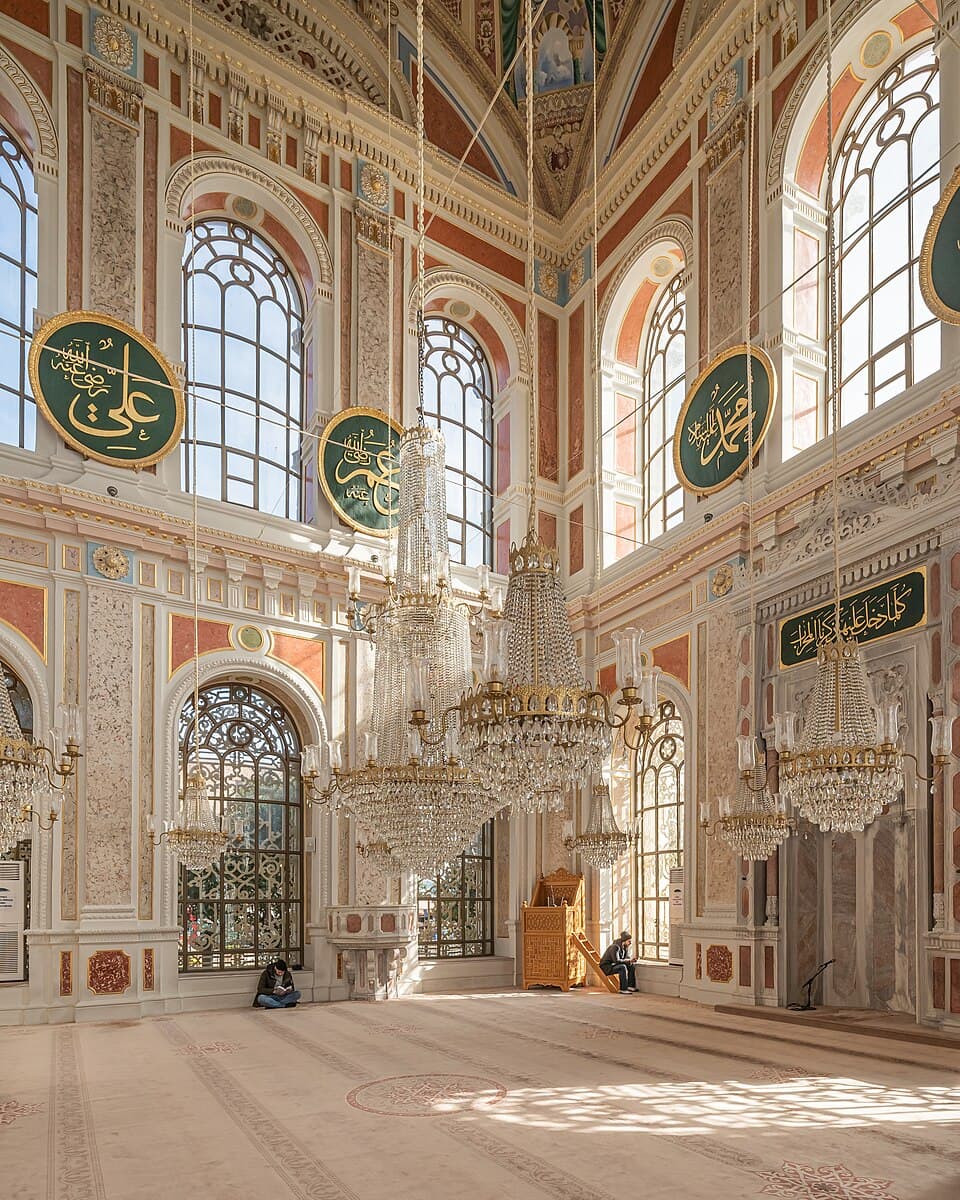
Step inside to experience the mosque's most famous feature: the massive windows designed to capture the shimmering reflections of the Bosphorus.
The Luminous Interior
Upon entering the prayer hall, the first thing you are likely to notice is the extraordinary quality of light. Unlike the classical Ottoman mosques of the 16th century, such as those designed by Mimar Sinan, which often featured thick walls and smaller, high-placed windows that created a somber, grounded atmosphere, the Ortaköy Mosque is strikingly bright. The architects, the Balyans, designed the interior with exceptionally tall and wide windows that occupy much of the wall space. These windows were specifically placed to capture the light reflecting off the surface of the Bosphorus. On a sunny day, the moving water outside creates a shimmering effect on the interior walls, making the entire hall feel as though it is floating on the waves. This airy, light-filled environment was a hallmark of the 19th-century 'Bosphorus Rococo' and Neo-Baroque styles. It reflects a shift in religious architecture toward a sense of openness and ethereal beauty. The interior decoration, featuring pastel tones and delicate moldings, further enhances this feeling of weightlessness. This design choice ensured that the mosque remained intimately connected to its maritime setting, allowing the natural beauty of the strait to become part of the spiritual experience for those praying inside.
The Trompe-l'œil Dome
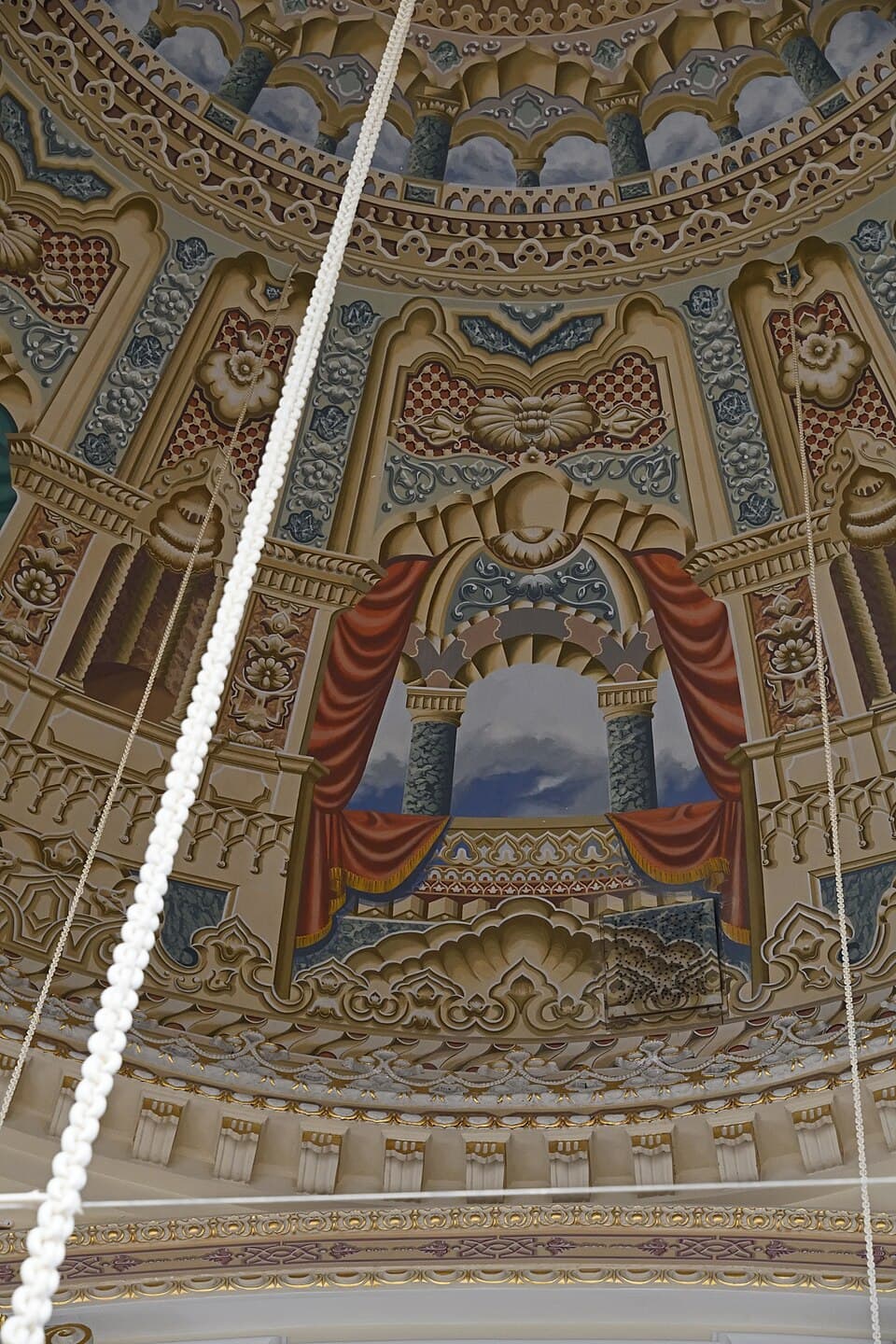
Look up to see the unique pink-hued dome, decorated with frescoes that create an illusion of architectural depth.
The Trompe-l'œil Dome
Gaze upward into the central dome of the mosque to see one of its most charming features. The dome is bathed in a unique, soft pinkish hue, decorated with intricate frescoes that use a technique known as 'Trompe-l'œil,' which is French for 'deceive the eye.' These paintings are designed to create an illusion of three-dimensional architectural depth, making the flat or slightly curved surface appear to have recessed panels and protruding moldings. This European artistic influence is a key component of the mosque's Neo-Baroque identity. While the dome looks delicate, its history is one of resilience. The original dome was constructed using traditional brick, but like many buildings in Istanbul, it suffered from the city's seismic activity. During a major restoration in the 1960s, it was discovered that the structure was becoming unstable. To ensure the mosque would survive for future generations, the original brick dome was replaced with a more durable reinforced concrete shell. Despite this change in material, the interior was meticulously repainted to preserve the original 19th-century aesthetic. This blend of modern engineering and historic artistry allows the dome to maintain its graceful appearance while providing the structural integrity needed to withstand the test of time.
The Mihrab and Minbar
The qibla wall features a marble mihrab and a pulpit (minbar) that are masterpieces of 19th-century Ottoman stone carving.
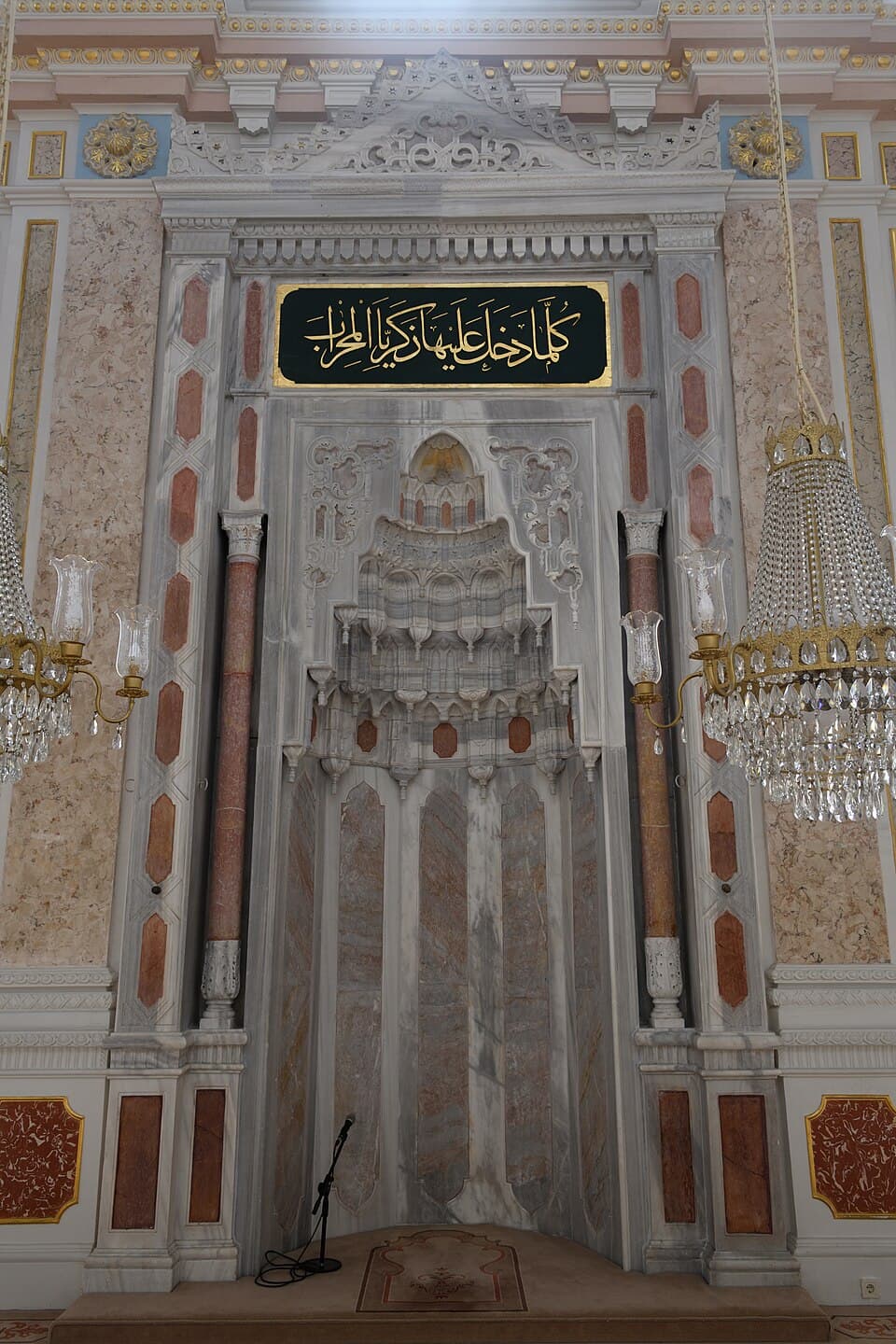
The Marble Mihrab
The mihrab is the most important focal point of any mosque interior, as it marks the direction of Mecca, toward which all worshippers turn during prayer. Here in the Ortaköy Mosque, the mihrab is a beautiful example of 19th-century marble craftsmanship. True to the Balyan family's signature style, it is not merely a simple niche but a luxurious decorative element that incorporates several types of precious stone. As you look at the mihrab, you can see the use of colorful stones like porphyry and a specific type of red-veined marble known as 'somaki.' These materials were highly prized and often associated with imperial projects, reflecting the wealth and prestige of the Sultan who commissioned the building. The design of the mihrab mirrors the Neo-Baroque themes found elsewhere in the hall, with elegant curves and detailed carvings that catch the light from the large windows nearby. The use of varied textures and colors in the stone creates a sense of depth and richness that was intended to inspire awe and focus the mind on the divine. It stands as a testament to the skill of the artisans who could transform cold, hard stone into a graceful and spiritually significant masterpiece.
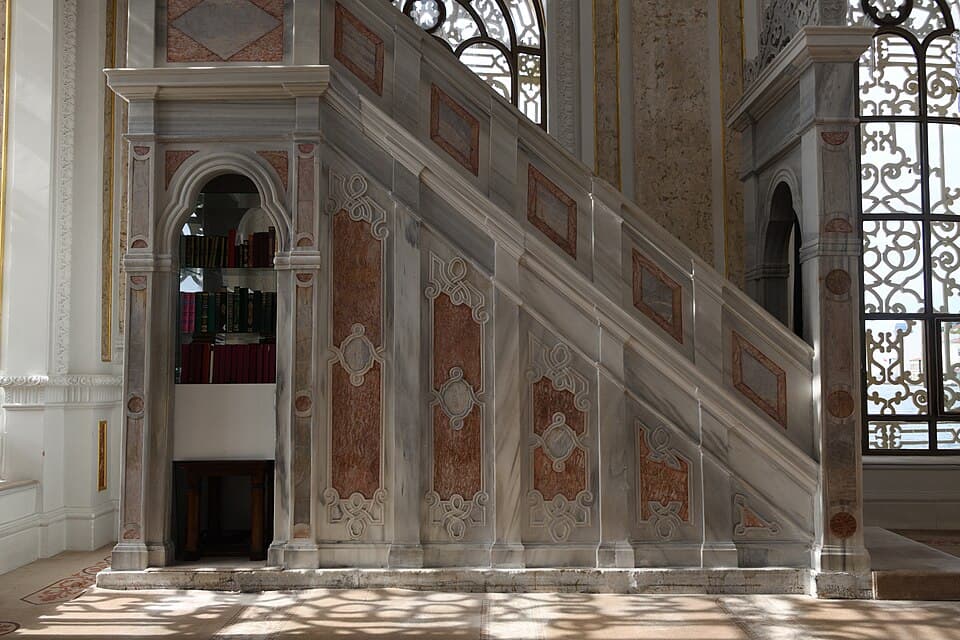
The Stone Minbar
To the right of the mihrab stands the minbar, the ceremonial pulpit where the imam stands to deliver the 'khutbah,' or sermon, during Friday prayers. In keeping with the elegant aesthetic of the Ortaköy Mosque, this minbar is crafted from pristine white marble. Its design is a perfect match for the Neo-Baroque style that defines the rest of the prayer hall, featuring intricate stone carvings that flow along its sides and up the staircase. The carving work on the marble is exceptionally fine, showcasing the 19th-century preference for floral patterns and fluid, ornamental shapes. This white marble provides a clean, bright contrast to the more colorful stones used in the mihrab, yet it maintains the overall sense of unity within the space. When the imam ascends these steps, he is positioned high enough to be seen and heard by the entire congregation, a tradition that dates back to the early days of Islam but is rendered here with a uniquely Ottoman, European-influenced flair. The minbar's slender silhouette and refined decoration contribute to the mosque's reputation as one of the most graceful interiors in the city, where every functional element is treated with the care of a piece of fine sculpture.
The Slender Minarets
Observe the verticality of the two stone minarets, which were rebuilt in a simpler masonry style after an earthquake in 1894.
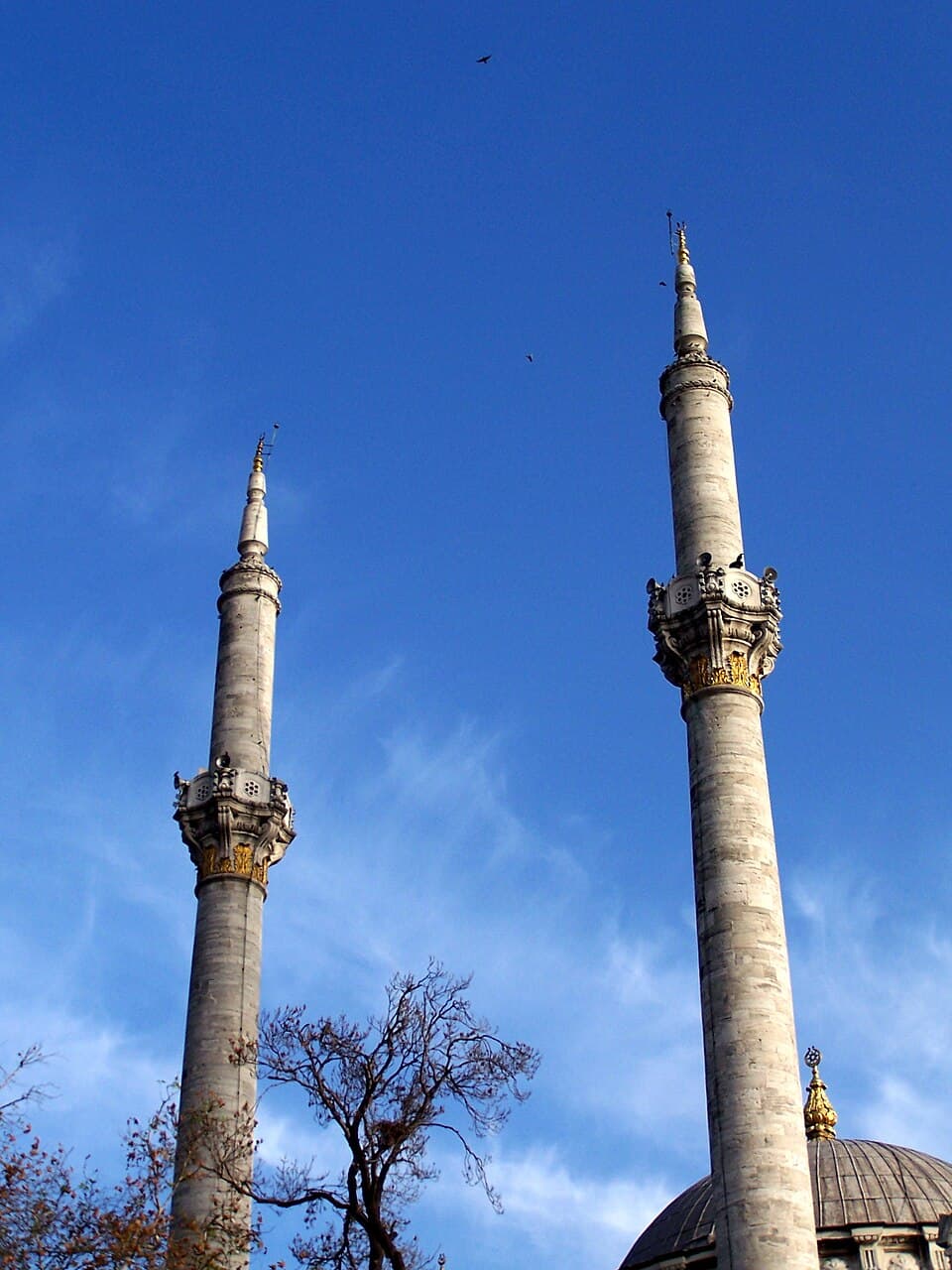
The Slender Minarets
One of the most striking visual features of this mosque is the extreme verticality of its two minarets. They are remarkably slender, appearing almost like delicate needles stretching toward the sky. However, the minarets you see today are not the ones originally built in the 1850s. The original towers featured fluted shafts—grooved patterns that ran vertically along the masonry—matching the Neo-Baroque detail of the mosque's body. Tragedy struck in 1894 when a powerful earthquake hit Istanbul, causing significant damage across the city and toppling the mosque's original minarets. For several years, the mosque remained without its soaring towers until a major restoration was undertaken in 1909. During this time, the minarets were rebuilt in the form you see now. The newer versions opted for smooth, simpler masonry rather than the original fluted design, yet they retained that signature slender profile that defines the mosque's silhouette. This change represents a slightly more restrained architectural approach from the early 20th century. Standing tall against the often-windy Bosphorus, these minarets serve as a reminder of both the mosque's fragility in the face of nature and the city's commitment to preserving its architectural heritage.
The Bosphorus Waterfront
Conclude your visit at the water's edge, where the 19th-century mosque stands in dramatic contrast with the modern 15th July Martyrs Bridge.
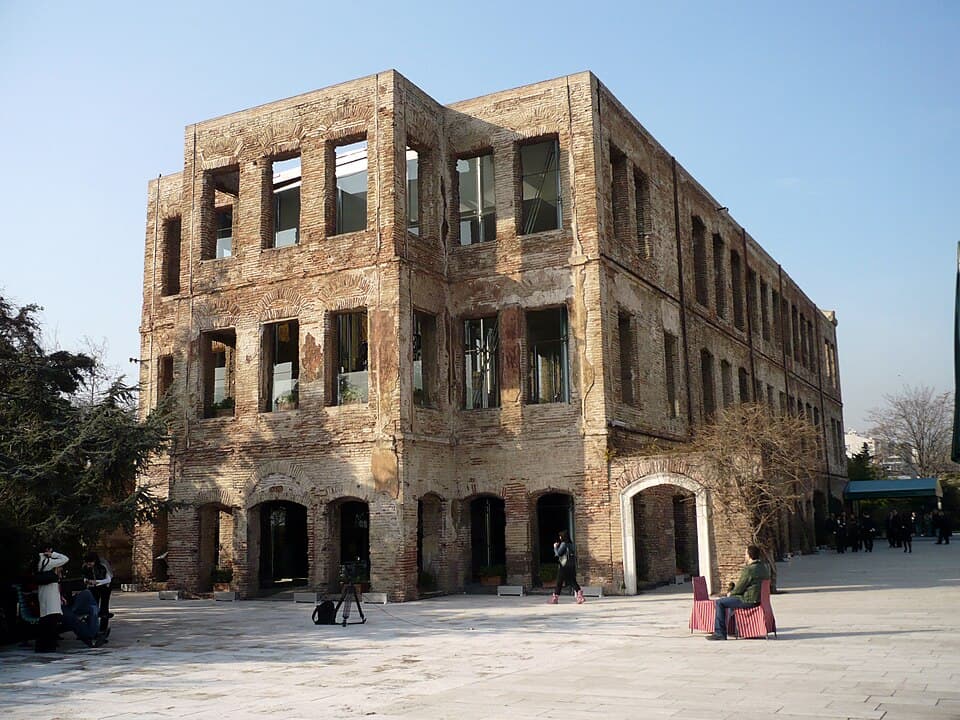
Esma Sultan Mansion
Just a short walk from the mosque stands a hauntingly beautiful brick structure known as the Esma Sultan Mansion. This was a 'Yalı,' a grand waterfront mansion built for Ottoman royalty. Like the mosque, it was designed by the Balyan family in the late 19th century for Esma Sultan, the daughter of Sultan Abdulaziz. It was once a place of incredible luxury, featuring lush gardens and direct access to the Bosphorus. However, the building's history took a dark turn in the early 20th century. After being used for various purposes, including a school and a warehouse, it was devastated by a massive fire in 1922 that left only its thick exterior brick walls standing. For decades, it remained a roofless ruin, a silent witness to the changing fortunes of the city. In the late 1990s, a creative restoration project breathed new life into the site. Rather than trying to rebuild the mansion as it once was, architects inserted a modern glass-and-steel shell inside the original brick walls. This allows the building to function as a contemporary cultural and event venue while preserving the weathered beauty of the historic ruins. It is a perfect example of adaptive reuse, showing how Istanbul honors its scars while finding new ways to remain vibrant and relevant.
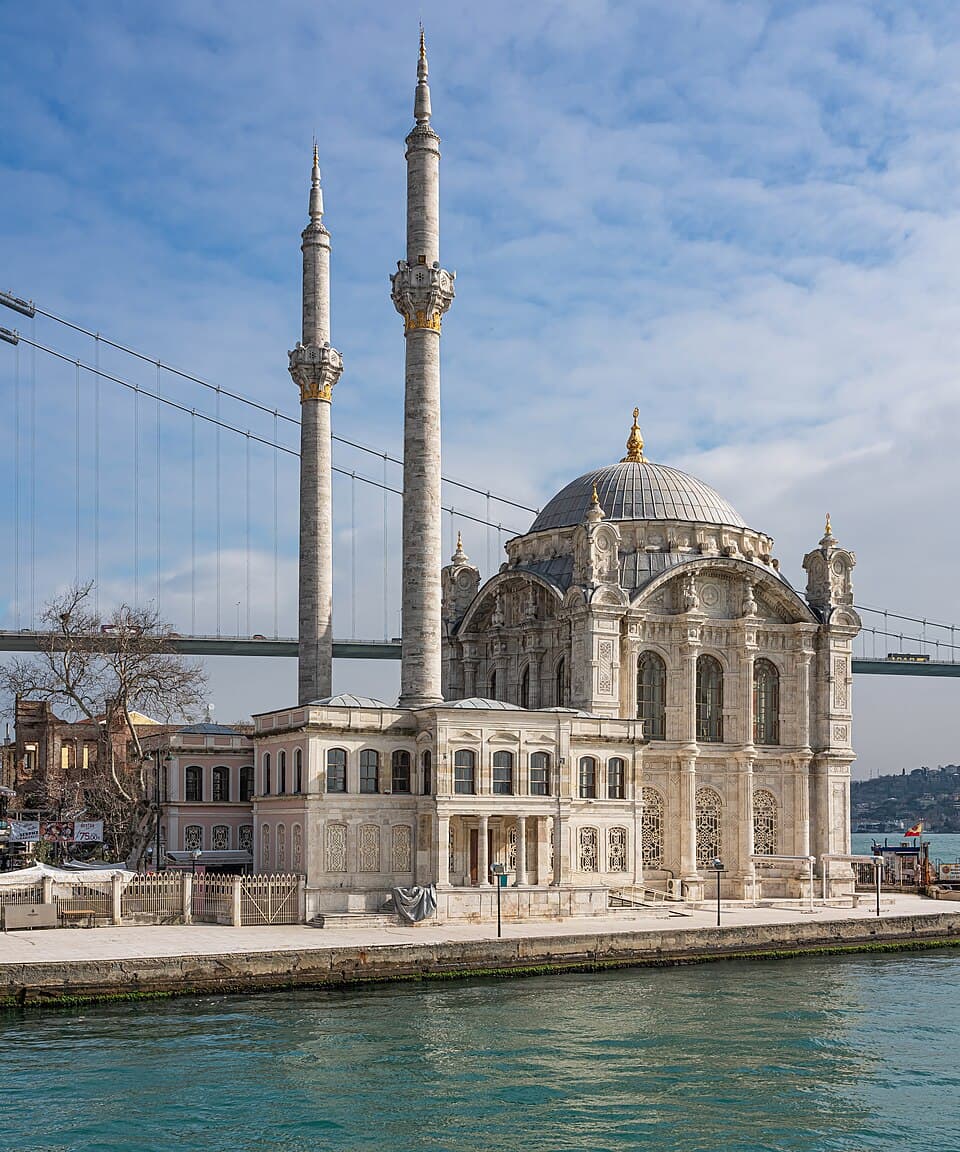
The Mosque and the Bridge
This particular view offers one of the most famous photographic compositions in the world. Here, the ornate, 19th-century Ortaköy Mosque stands in the foreground, while the massive, modern 15th July Martyrs Bridge towers directly behind it. This juxtaposition is not just a visual treat; it is a powerful metaphor for the city of Istanbul itself. In a single glance, you can see the intersection of the Ottoman past and the Republican present, as well as the literal bridge between the continents of Europe and Asia. The bridge, which was completed in 1973 as the first permanent link across the Bosphorus, represents the modern engineering and rapid growth of 20th-century Turkey. By contrast, the mosque represents the final, sophisticated artistic flourish of the Ottoman Empire. Seeing them together highlights how Istanbul manages to be both an ancient historical treasure and a thriving, modern metropolis. The bridge's steel cables and the mosque's stone minarets create a striking contrast in materials and purpose, yet they have become inseparable in the public imagination. This spot encapsulates the spirit of the Bosphorus—a place where history is not tucked away in a museum but is lived every day in the shadow of modern progress.
Want to hear the rest?
Download the Stanza app to unlock all 12 stops and full GPS-guided navigation.
Frequently Asked Questions
How long does the Ortaköy Camii audio tour take?
The Ortaköy Camii audio guide includes 12 narrated stops. Most visitors spend 45 minutes to 1.5 hours exploring the complete tour, though you can listen at your own pace and skip or revisit any stop.
Is the Ortaköy Camii audio guide available in my language?
Stanza supports 15 languages: English, Spanish, French, German, Italian, Portuguese, Russian, Japanese, Chinese, Korean, Arabic, Hindi, Polish, Dutch, Hebrew. Check the guide in the app to confirm the languages currently available for this tour.
Can I use the audio guide offline at Ortaköy Camii?
Yes! Download the complete Ortaköy Camii tour — including all audio, maps, and images — before your visit. The Stanza app works completely offline, so you don't need WiFi or mobile data at the venue.
How much does the Ortaköy Camii audio guide cost?
The Stanza app is free to download. The current listed price for the Ortaköy Camii audio guide is $0.99; app-store region and currency may affect the final price.
How do I use the Stanza audio guide at Ortaköy Camii?
Download the free Stanza app, search for "Ortaköy Camii", and download the tour. When you arrive at the venue, the app uses GPS to detect your location and automatically plays the relevant narration as you move between points of interest — completely hands-free.
What makes the Stanza audio guide different from other Ortaköy Camii tours?
Stanza offers GPS-triggered narration that plays automatically as you walk through Ortaköy Camii — no need to manually select stops. The tour is available in 15 languages, works fully offline, and includes 12 expertly narrated stops with images and historical context.
What other audio guides are available near Ortaköy Camii?
Stanza offers multiple audio guides in Beşiktaş, Turkey and nearby areas. After downloading the app, browse the map to discover all available tours near Ortaköy Camii. Each guide can be downloaded for offline use.