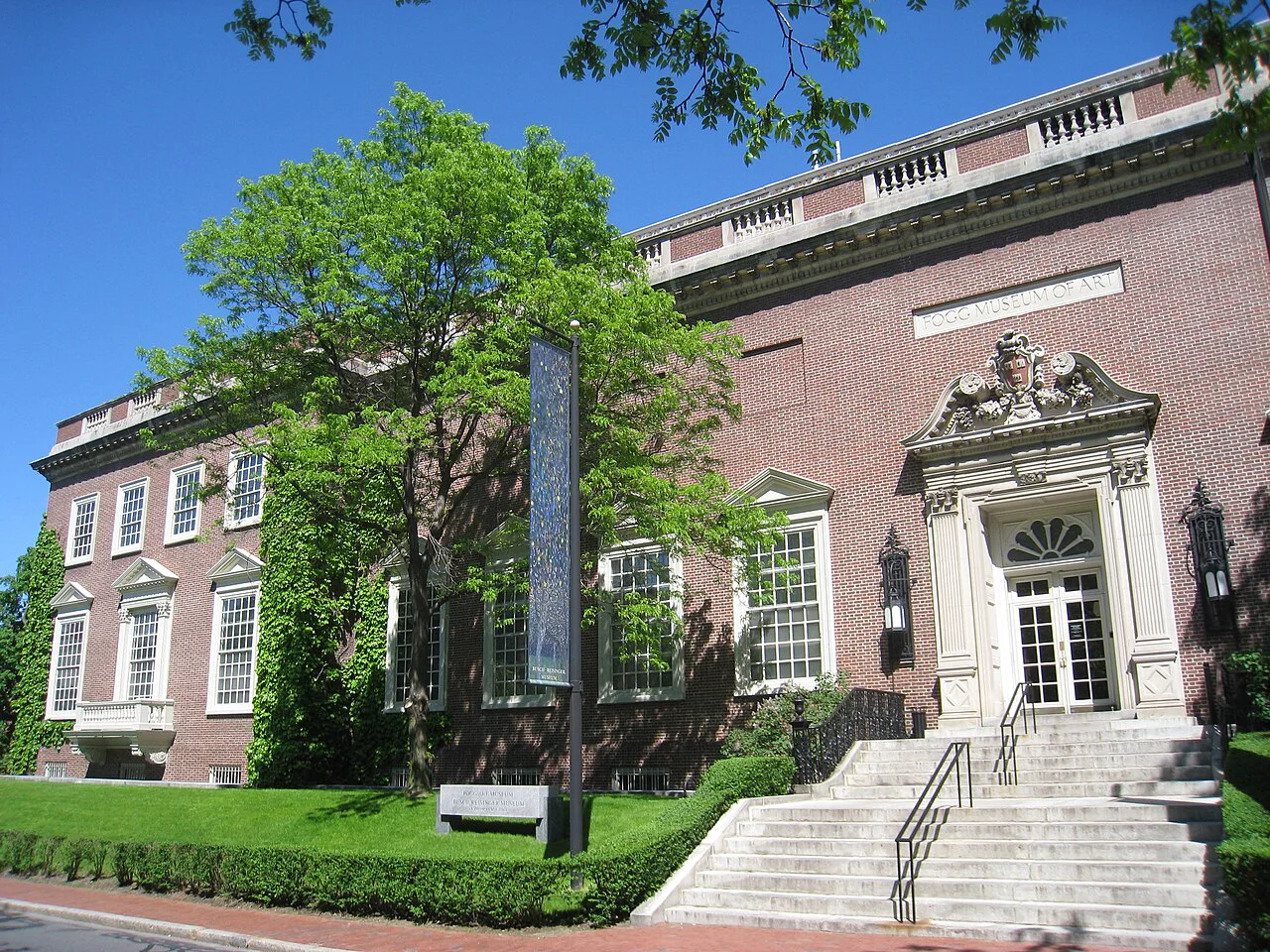
Stanza · Audio guide
Harvard Art Museums Audio Guide
A place to remember. A story to take with you.
The Harvard Art Museums are part of Harvard University and comprise three museums and four research centers. These institutions were integrated into a single entity in 1983.
Download Stanza, then search for “Harvard Art Museums”.
About the tour
One guide. Your kind of visit.
The Harvard Art Museums are part of Harvard University and comprise three museums and four research centers. These institutions were integrated into a single entity in 1983.
The Harvard Art Museums guide tells the stories of 58 artworks, including Odalisque à l'esclave (Jean-Auguste-Dominique Ingres), Raphael and the Fornarina (Jean-Auguste-Dominique Ingres), Pear Tree (Gustav Klimt), Mystic Crucifixion (Sandro Botticelli), Shahnameh of Shah Tahmasp (Unknown Artist), Adam and Eve (Albrecht Durer), A Sea-Spell (Dante Gabriel Rossetti), and Woman Bathing (After Jan van Eyck). Every artwork is free to hear in the Stanza app until 1 January.
Ready when you are.
- 01Get the free Stanza app.
iOS & Android
- 02Find your guide.
“Harvard Art Museums”
- 03Download before you go.
Works offline
Audio guide / 58 artworks
Inside the guide
Get to know a few of the stories before you go. Open a stop to read more.
01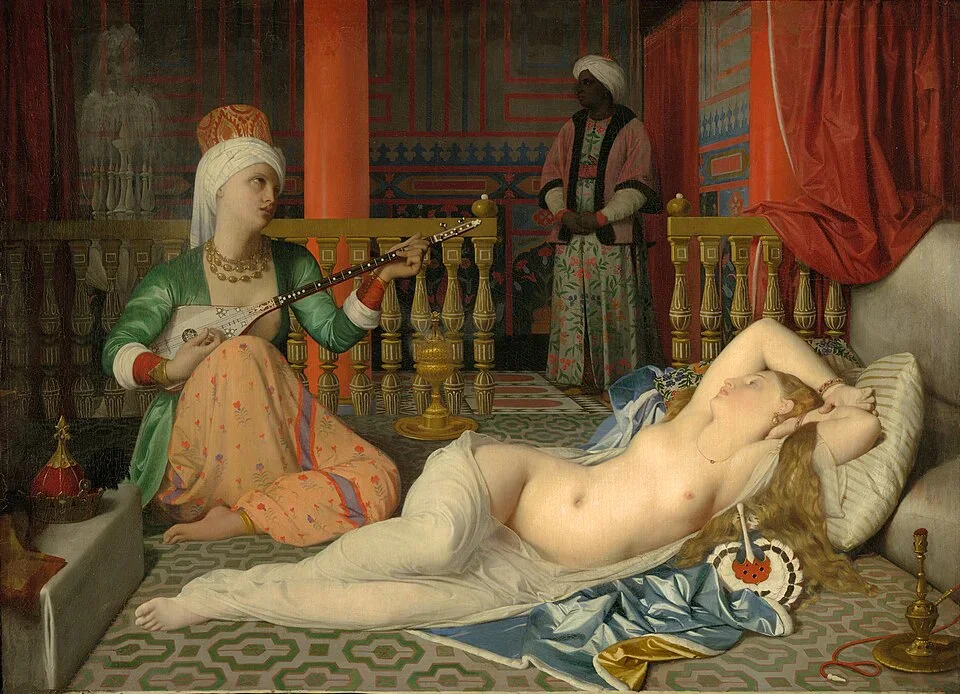
Odalisque à l'esclave
A woman is lying in the harem room. The servant is playing a stringed instrument in the room. The black eunuch is beyond the railing, outside the space where she lies. On a white stand at the left are the sultan's red cap and robes. He is not in the picture, but his clothes suggest a man visiting from just outside the frame. The fountain and the instrument let you imagine falling water and music. The incense burner and water pipe bring scent to mind. Ingres put the room together in Rome, where he was director of the French Academy, though he never went to the Near East. The woman came from a life drawing made years earlier. The musician was a studio model. Details like the instrument came from engravings. He also worked from the letters of an English diplomat's wife who had lived in Turkey, and from collections of prints of the East. His students painted the less important parts from his sketches. They did the architecture, mosaics, rugs, furniture and instruments. Once the figures were finished, he alone brought everything together with thin layers of color. When it reached Paris in 1840, it was praised in the owner's home. In 1845 it was shown publicly and widely admired. His friend Charles Marcotte had asked for it in 1821, and close to twenty years passed before it arrived.
Listen in the appJean-Auguste-Dominique Ingres · Public domain
02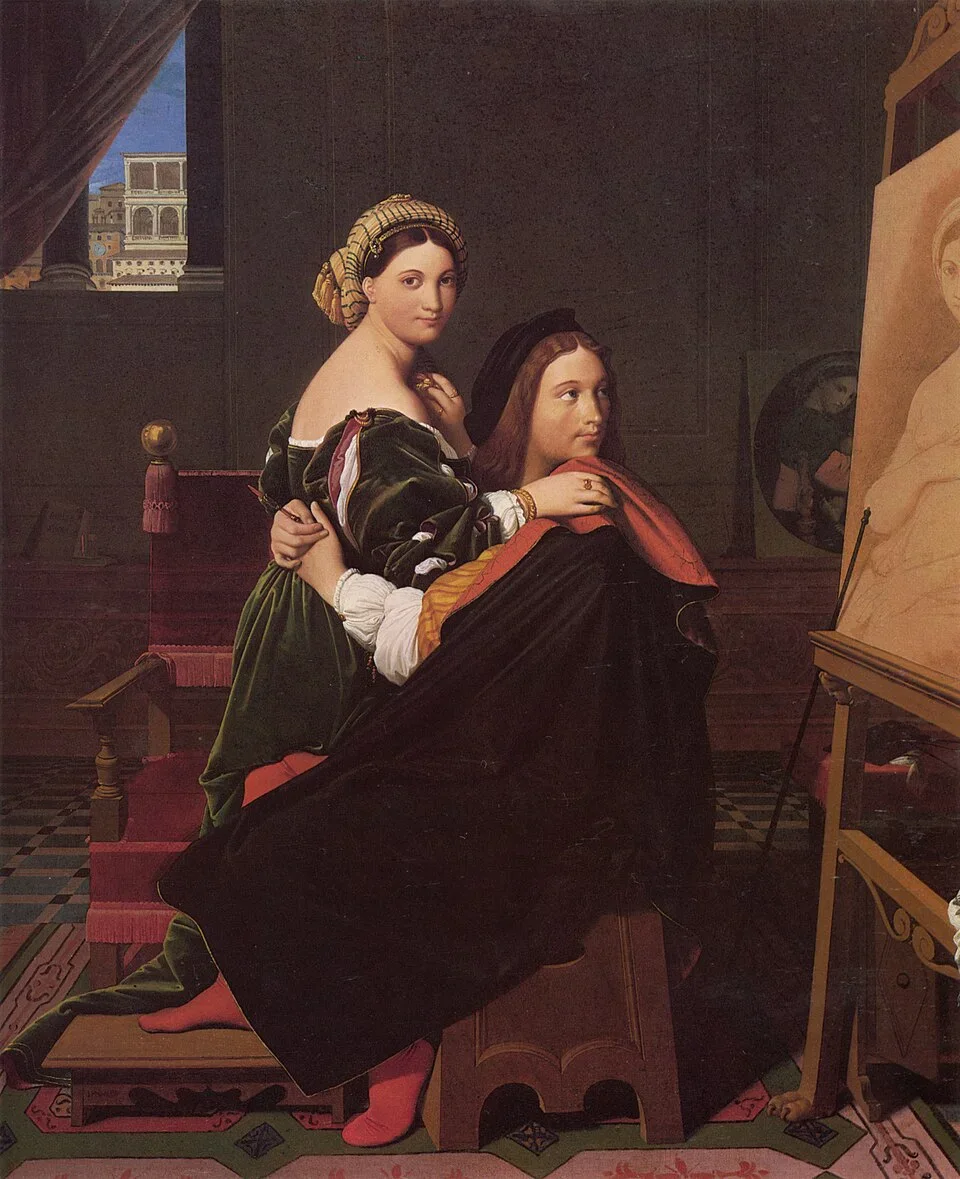
Raphael and the Fornarina
Ingres drew on three paintings by Raphael for this scene. He took the face from a self portrait in the Uffizi, and the woman from Raphael's own portrait of her. Behind them he set the Madonna of the Chair. He had studied Raphael's life in biographies, and first saw a copy of that Madonna in his teacher's studio. After he won the Prix de Rome he went to Italy, and sent this picture back to be shown in Paris. A Swiss banker and collector commissioned it. It reached the Salon in 1814, at a time when pictures about famous artists' lives were in fashion. Raphael sits in his studio with the woman on his knee. Her arm rests on his shoulder, and she meets your eye. He has his arms around her, but his face is turned away, toward her portrait on the easel. There are two of her in the room, then. One is alive in his arms. The other is held in paint. In the Madonna behind them, the child has been left out on purpose, so the Virgin looks more like the woman in his arms.
Listen in the appJean-Auguste-Dominique Ingres · Public domain
03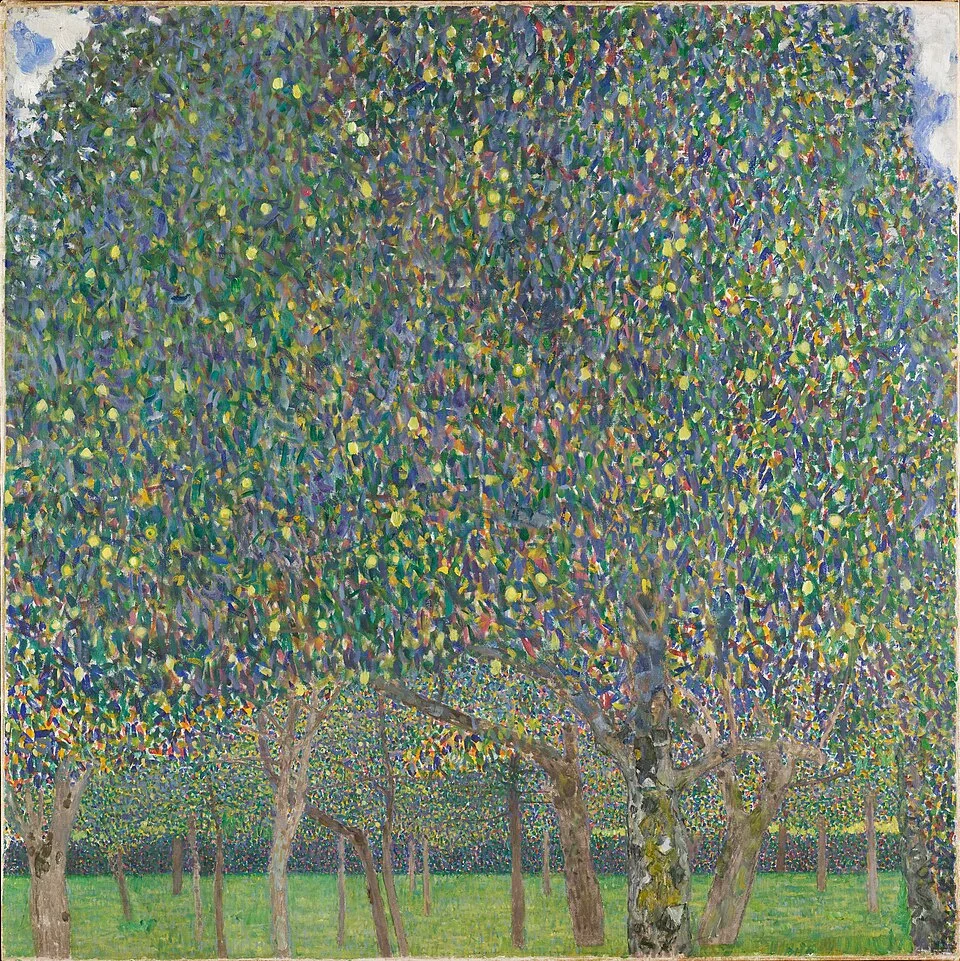
Pear Tree
The paint lies thicker down the left side of this pear tree than it does across the middle or the right. In 1903 Klimt gave the painting to Emilie Flöge, his muse and lover. But he went on working on it, probably for the rest of his life, filling in the bare patches. That denser left side is probably what the later years left behind. He finished it in Vienna that year, in time for his own retrospective. Each dab of paint is a single leaf, a blossom, or a piece of fruit. The branches run together into a dense canopy, and the sky shows only in the two upper corners. The color lies flat and flickers, like a mosaic. That year at the Vienna Secession he had seen paintings by Monet, Seurat and Cézanne. This was among the first landscapes he made in that new way. The canvas is square, unusual for a landscape. It seems to come from the square viewfinder he used to choose his subjects around Lake Attersee.
Listen in the appGustav Klimt · Public domain
04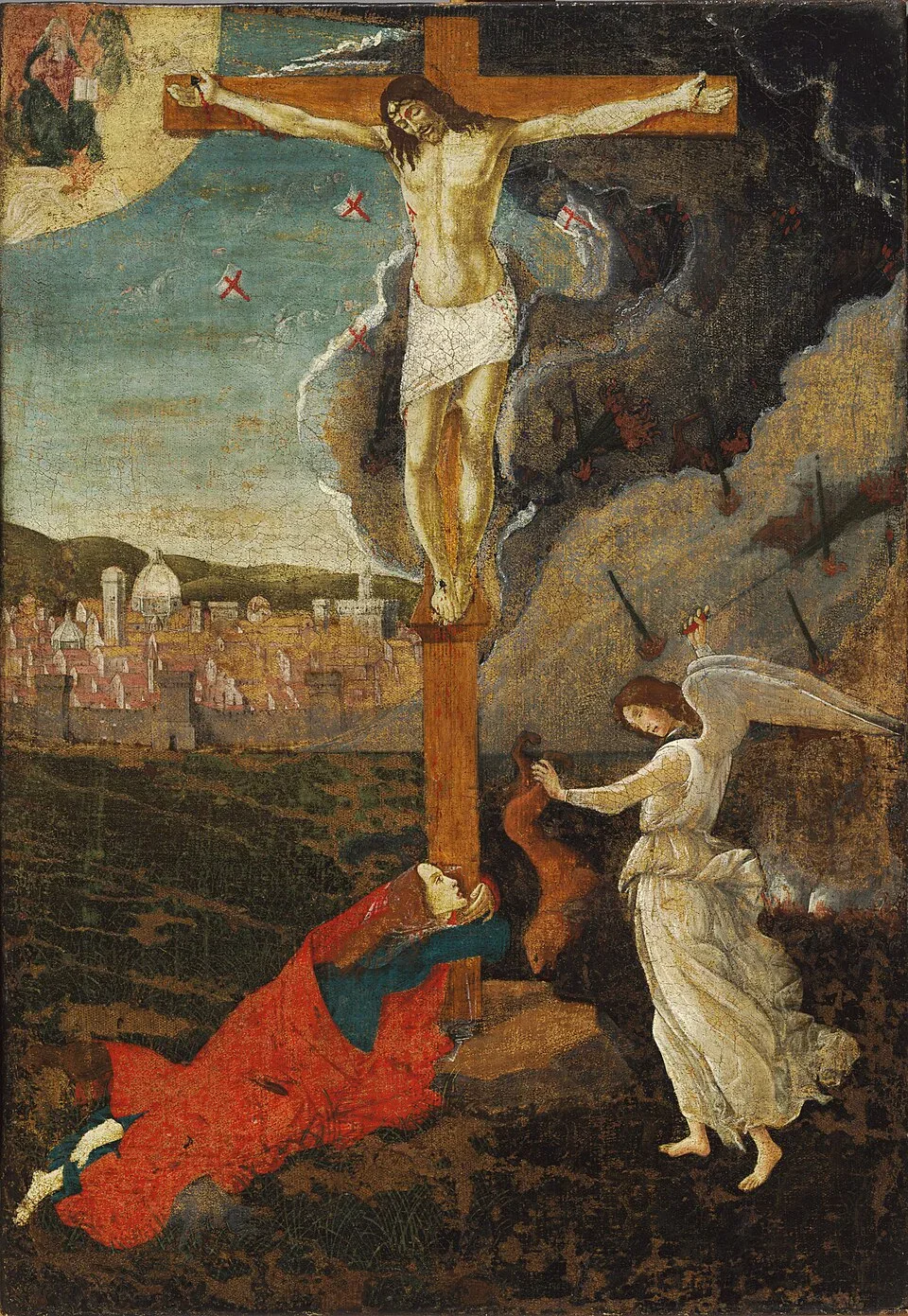
Mystic Crucifixion
At the foot of the cross, a woman clings to its trunk in an almost wild embrace. She is Mary Magdalene, and she is repenting. But she also seems to stand for Florence. The friar Girolamo Savonarola had spent years warning the city to change its ways. He attacked its luxury and the Medici who ruled it. Botticelli had been one of the Medici's artists, and Savonarola helped drive them from the city. Here he turns all that turmoil into a scene at the cross. Beyond the cross, the city lies in bright light under a clear sky. Its cathedral dome and the Palazzo Vecchio can be picked out. But danger closes in here. Black clouds behind the cross are full of devils hurling flames and weapons down. An angel in white raises his sword over a young lion, probably the small lion that is Florence's own emblem, ready to strike. High in a corner, God the Father sends out angels to drive the devils away. Their shields carry a red cross, the sign of Florence's people. Savonarola was already burned at the stake before this was painted. A creature slips out from under her red robe, and we can no longer tell whether it is a fox or a wolf.
Listen in the appSandro Botticelli · Public domain
05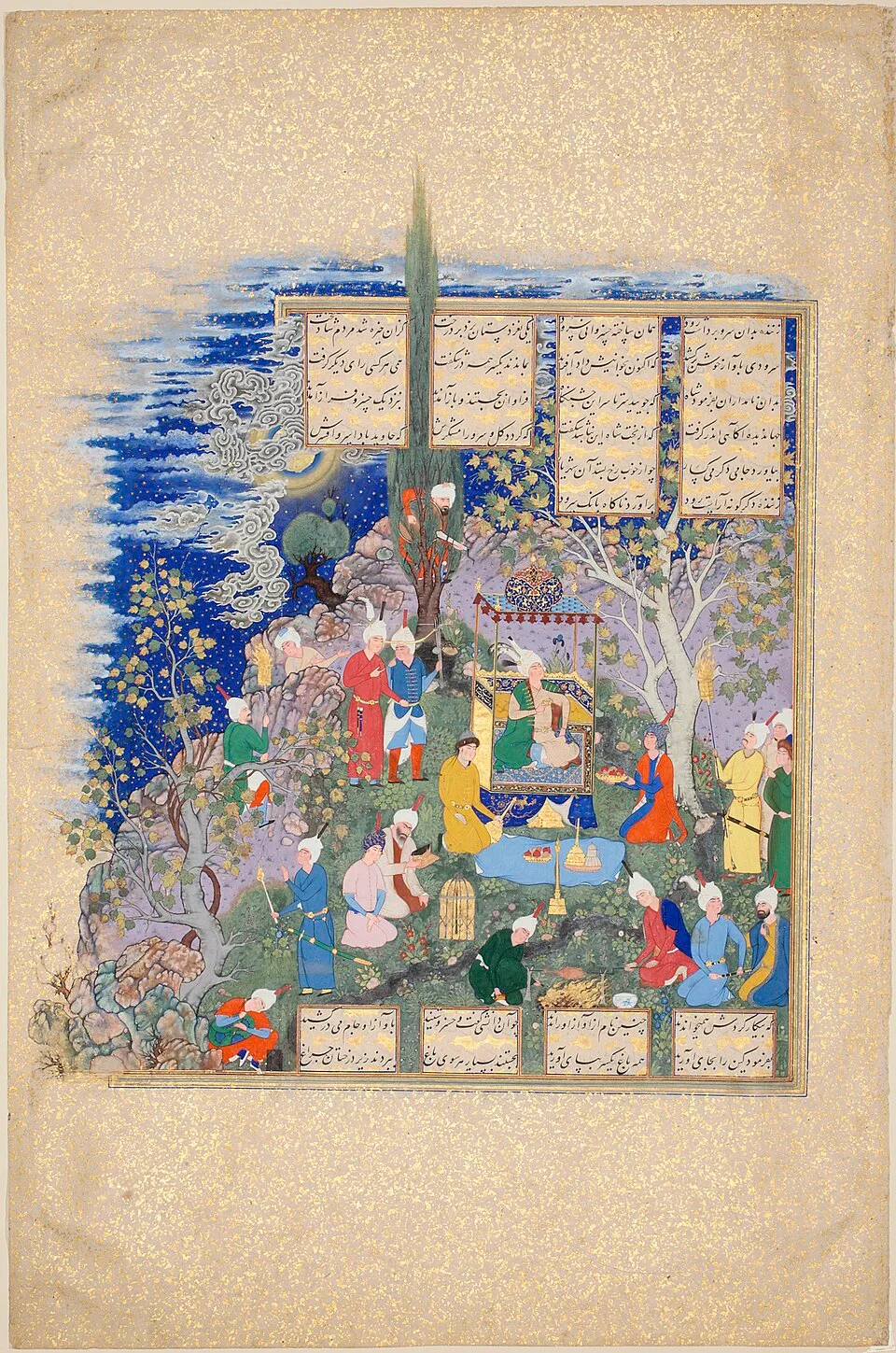
Shahnameh of Shah Tahmasp
No single painter made this book. Its two hundred and fifty eight miniatures came from the royal workshop at Tabriz, where Shah Ismail gathered painters trained in different ways. From Herat came a careful, refined style. The painters of Tabriz were bolder and more imaginative. On the same pages the two styles fed into each other, and a new way of painting grew out of it. Ismail had only recently taken Tabriz. The Shahnameh is the national epic of Greater Iran, part myth and part history, and its king is strong and must be obeyed. Ordering so lavish a book was his way of claiming that strength. One page shows Rostam killing the White Div, a demon, on his journey to rescue King Kay Kāvus. Colorful foliage surrounds the two figures, against a black emptiness standing for the demon's cave in the hostile region of Mazandaran. Another page, probably intended for this book, shows Rostam asleep while his horse Rakhsh fights off a lion. It was never finished or bound in. Its vigorous Tabriz manner may not have pleased Tahmasp, who inherited the throne from Ismail. The book was given to the Ottoman sultan Selim the Second in 1568, and stayed in Istanbul for centuries. In the 1970s the book was taken apart, and its paintings sold one by one to escape taxes, scattered among collections worldwide.
Listen in the appKhalili Collections · CC BY-SA 3.0 igo
06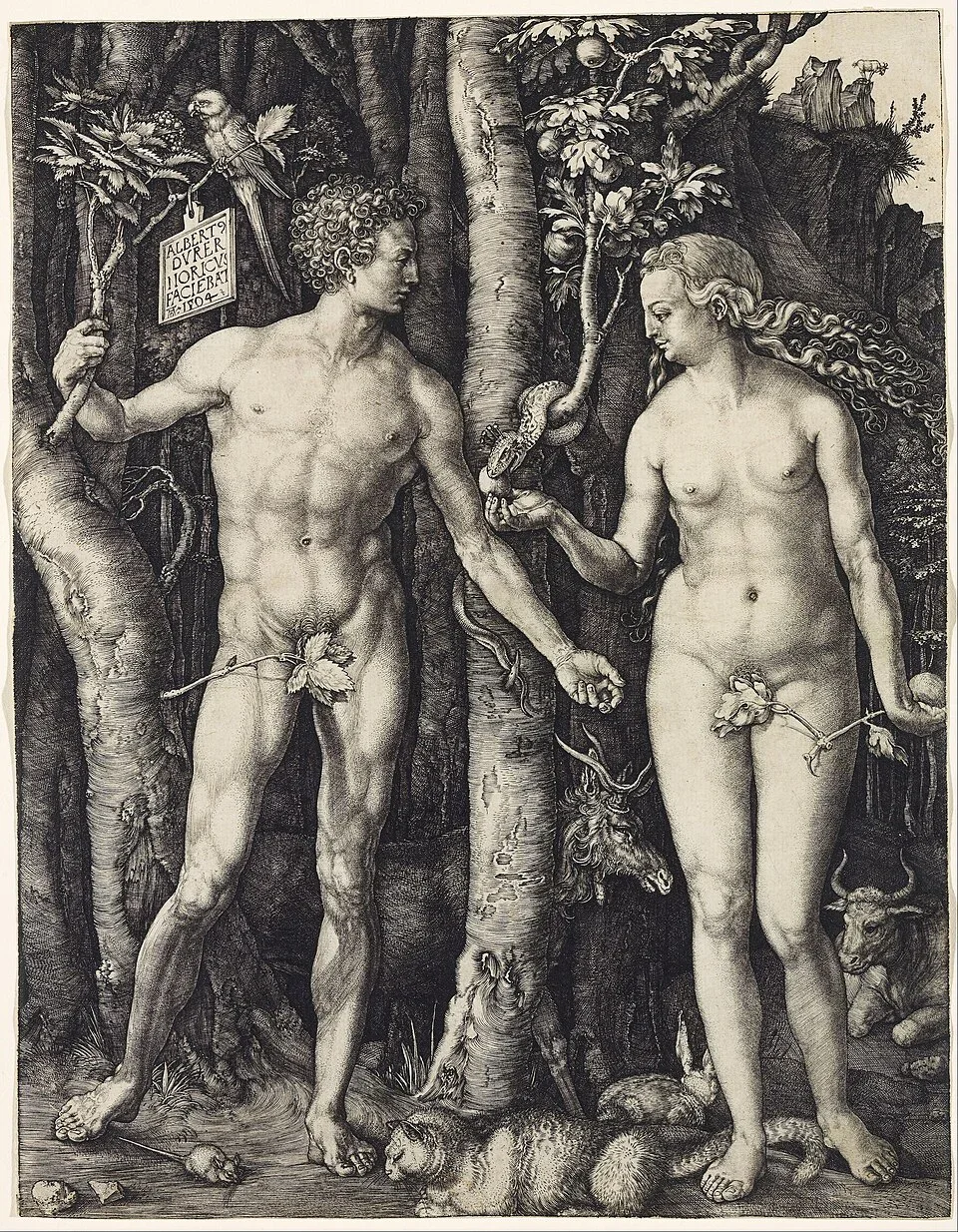
Adam and Eve
The serpent holds out the fruit. Eve takes it, and Adam accepts it from her, his gesture right at the center. In another moment they will bite, and everything changes. Already he points at Eve's nakedness, the body that will soon fill her with shame. Their glances cross. Adam looks at Eve. Her eyes are lowered, and her gaze runs through the serpent's eye, closing a triangle between the man, the woman and the serpent. The garden is a dark northern forest, thick with animals. An elk, a rabbit, a cat and an ox stand for the four temperaments, still in balance in this instant. The cat and mouse point to trouble ahead, and this balance is about to break. A parrot shines out of the trees. It means Mary, the new Eve, who will undo the harm of this moment. Dürer spent four years working out ideal human proportions. He shaped these figures on ancient statues, Adam on the Apollo Belvedere and Eve on Venus. He was after the beauty of a world untouched by the Fall. On a small label in the tree, he set his name in Latin. It is the longest inscription in any of his engravings. With it he set himself among the heirs of the great artists of the ancient world.
Listen in the appAlbrecht Dürer · Public domain
07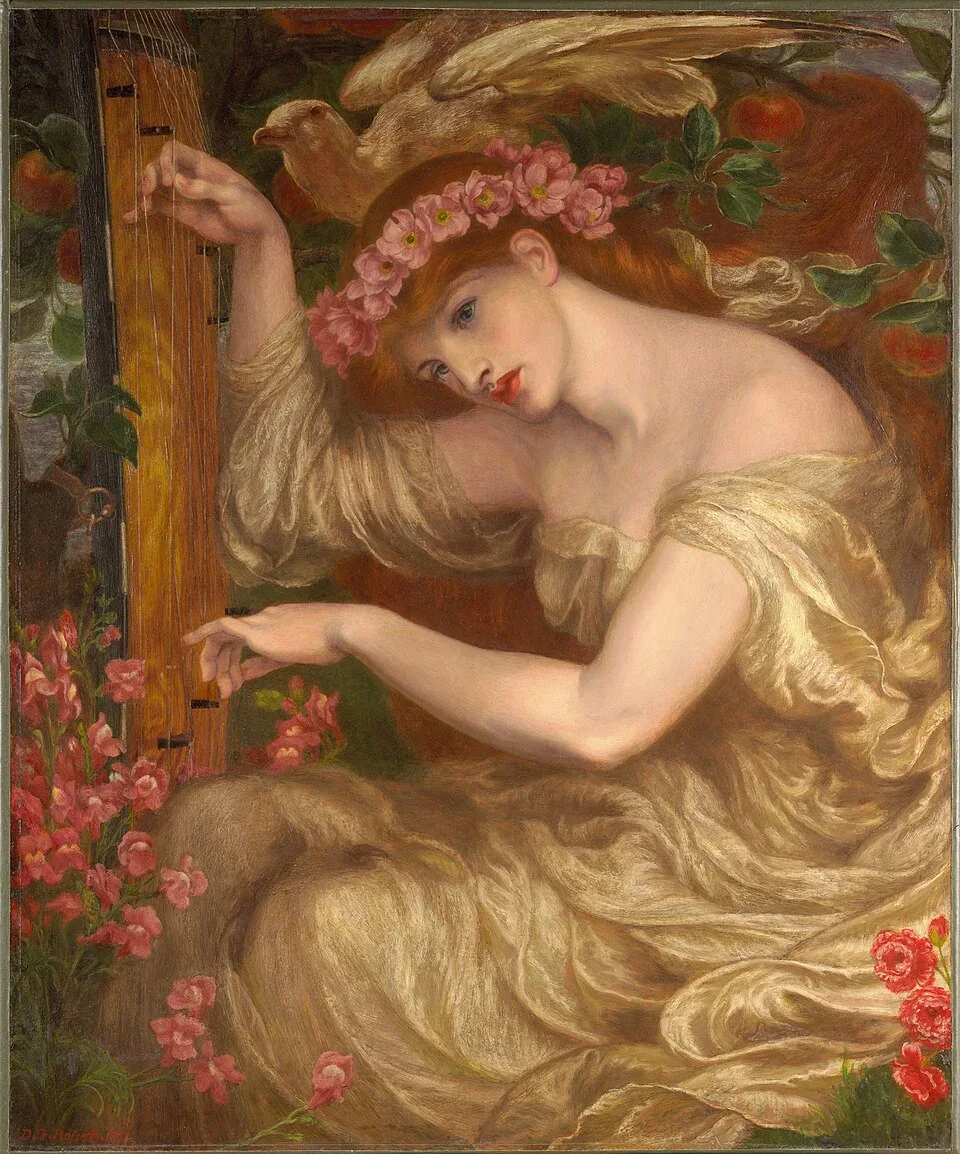
A Sea-Spell
Nobody has settled what this siren is playing. It has been called a harp, or something close to a psaltery. Others call it a Japanese koto, thirteen strings and unusually short. She plays, lost in thought, with apples and apple blossoms around her. Rossetti wrote a sonnet years before he painted this, and called the music magic. His brother said the song would be fatal to a sailor who fell under its spell. A stuffed bird had to be found and set in place for him by a naturalist whose name we never learn. That held the work up. The bird is a seagull. His brother wrote that her music summons a sea bird to listen, and this is the one that answered.
Listen in the appDante Gabriel Rossetti · Public domain
08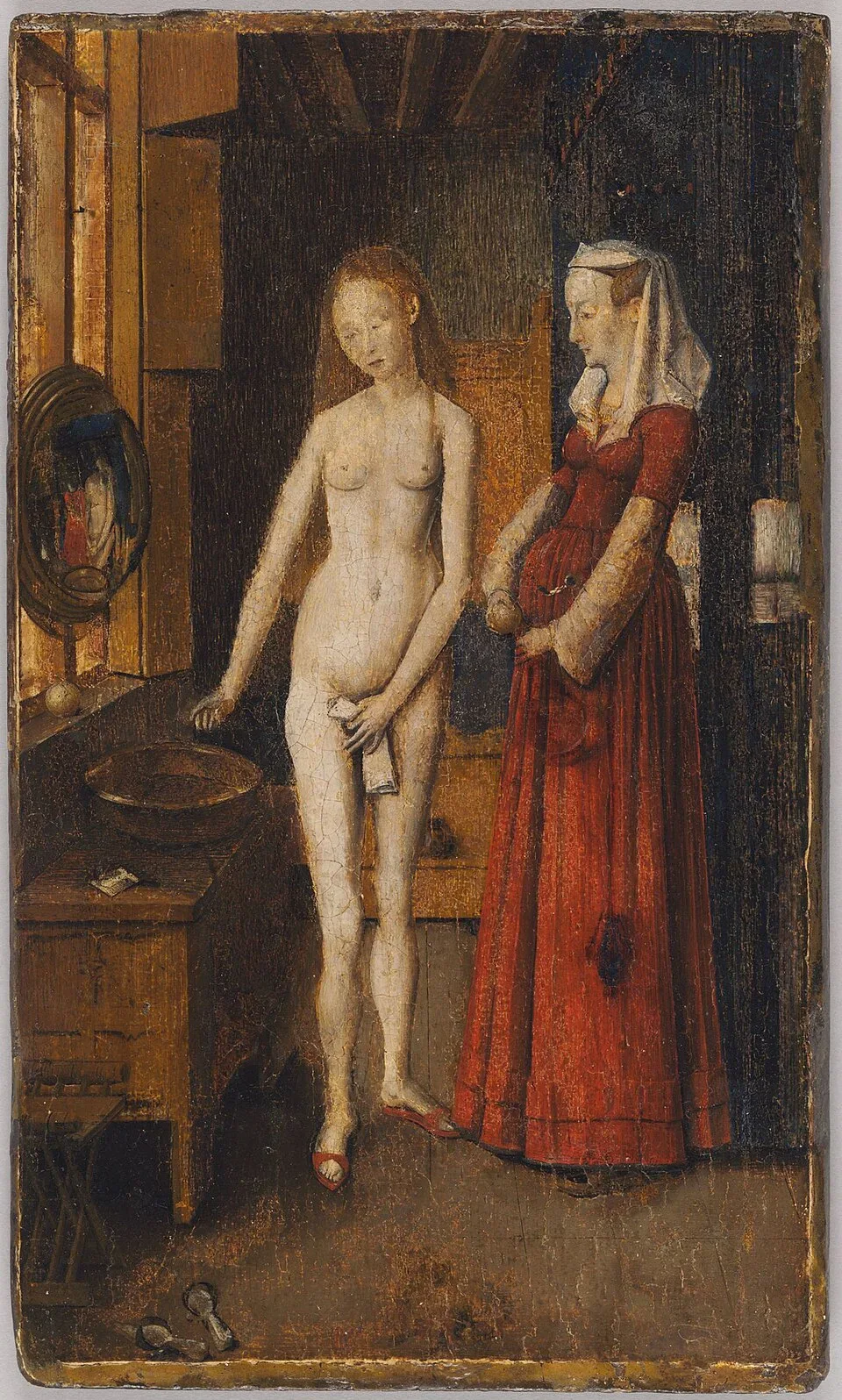
Woman Bathing
A woman washes herself in a bedchamber. She holds a washcloth in her left hand and reaches right toward a basin on a side table. A maid in a red gown is beside her. Above the basin a convex mirror hangs in the shuttered window and reflects both figures. A small dog at her feet is hard to make out. That mirror is tilted toward you, and in it is her naked body. The pattens lie discarded on the floor in the lower left corner. Together they may point to one particular viewer. Here the mirror stood for purity and the dog for faithfulness. This panel may be the partner to a portrait in London, and the two may have been made for a betrothal. That London panel was perhaps meant for the house of Giovanna Cenami's father, where she would see it between her engagement and her wedding. This half may have gone to her future husband, a pledge of what he was promised. Jan van Eyck painted the original, probably between the 1420s and the early 1430s, unusually daring for its time. This panel is a copy, made about 1500 by an unknown hand. The original is lost. For centuries its image survived in a 1628 painting of a collector's gallery, until this worn copy came to light around 1969.
Listen in the appAfter Jan van Eyck · Public domain
09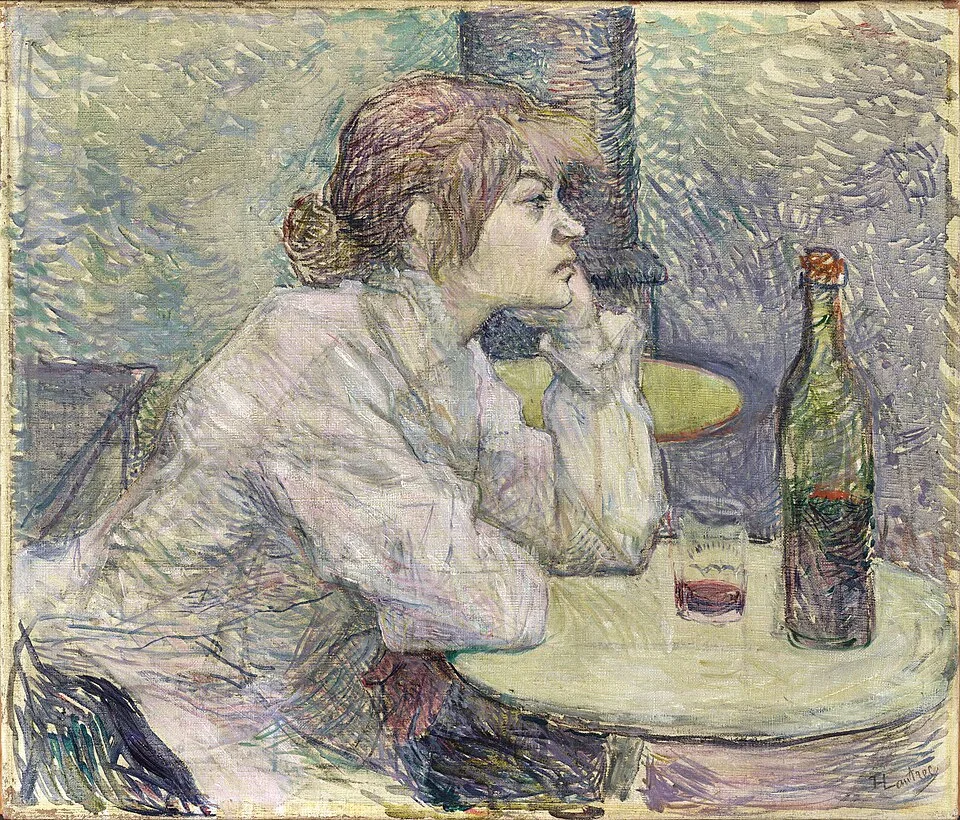
The Hangover (Suzanne Valadon)
Why is she here, alone with her drink? She is in a club, and she is drunk. In Montmartre at the time, a woman drinking on her own was a familiar and troubling sight. But this woman is Suzanne Valadon, and she was an artist herself. At fifteen she was a trapeze artist in the circus, until a fall injured her back and she began to pose for other painters. She had drawn all her life, and now she set out to make a career of it. Lautrec, her lover, was the first person to buy her work, and the first to encourage her as an artist. She became the first woman painter admitted to the Société Nationale des Beaux-Arts. The name Suzanne was his idea. She was born Marie.
Listen in the appHenri de Toulouse-Lautrec · Public domain
10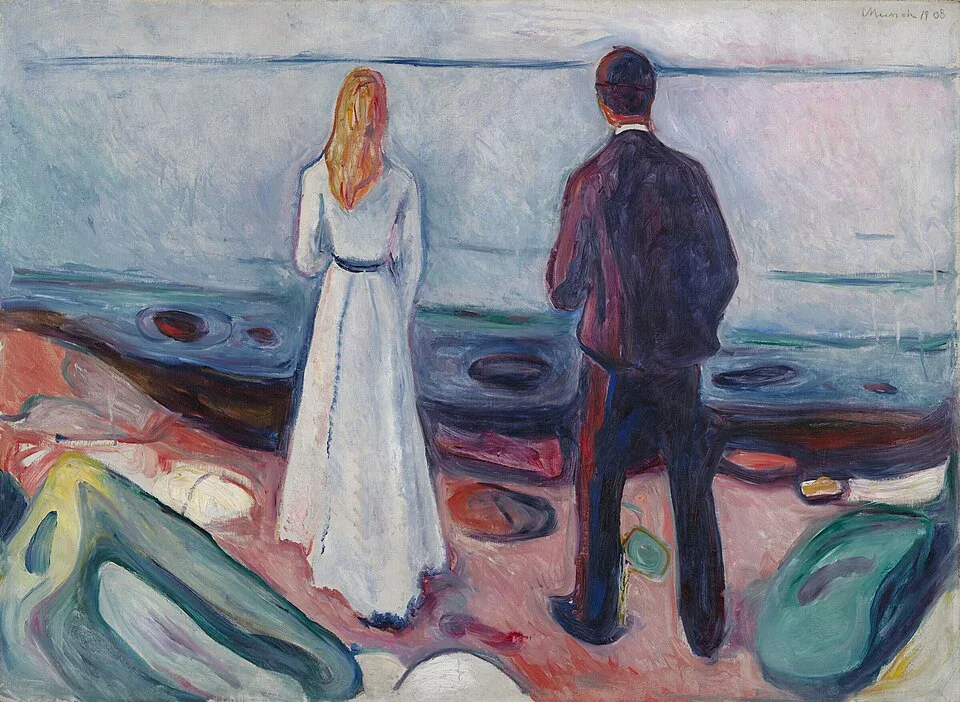
Two Human Beings. The Lonely Ones (1906-08)
The man never quite reaches her. In his dark suit he seems to step toward her, but he stops in the middle of the step. That unfinished step is why the whole scene holds so still. She stands with her back to us, dressed in white, with long blonde hair, looking out to sea. They are the only upright shapes in the picture. The beach, the sea and the sky run in low curves instead. The water takes up almost everything behind them, its horizon near the top edge. There is no sign of life anywhere. That emptiness goes back to a summer on the Norwegian coast, in 1891. Munch was at Åsgårdstrand, and he watched a young friend fall into an unhappy love affair. The woman was married, and ten years older than him. It brought back his own memory of a love he could not have, with his cousin Carl's wife. He said that after that, he had given up all hope of being able to love. He kept returning to these two figures for nearly forty years, in paintings and prints. Exactly when he painted this version is still not known.
Listen in the appEdvard Munch · Public domain
- 11
Summer Scene
Frédéric Bazille · 1869
- 12
Singer with a Glove
Edgar Degas · 1878
- 13
Self-portrait, dedicated to Paul Gauguin
Vincent van Gogh · 1888
- 14
The Miracle of the Holy Fire
William Holman Hunt · 1892–1899
- 15
Jeanne-Antoinette Poisson, Marquise de Pompadour
François Boucher · 1750
- 16
Christ Driving the Money Changers from the Temple
El Greco · 1595–1600
- 17
Self-Portrait in Tuxedo
Max Beckmann · 1927
- 18
Napoléon-François-Charles-Joseph Bonaparte
Thomas Lawrence · 1819
- 19
portrait of Mirza Abu'l Hassan Khan
Thomas Lawrence · 1810
- 20
Hercules Strangling the Nemean Lion
Peter Paul Rubens · 1639
- 21
The Blessed Damozel
Dante Gabriel Rossetti · 1875–1878
- 22
The Golden Age
Jean-Auguste-Dominique Ingres · 1862
- 23
Rembrandt's Daughter
J. M. W. Turner · 1827
- 24
The Gare Saint-Lazare: Arrival of a Train
Claude Monet · 1877
- 25
Skating
Édouard Manet · 1877
- 26
John Adams (1735-1826)
John Singleton Copley · 1783
- 27
Saint Eustace
Albrecht Durer · c. 1501
- 28
Sacra Conversazione with donors
Giovanni Battista Cima da Conegliano · 1515
- 29
Joseph and Potiphar's Wife
Paolo Domenico Finoglia · 1640
- 30
The Four Horsemen, from The Apocalypse
Albrecht Durer · 1497–1498
- 31
The Young Man and Death
Gustave Moreau · 1856–1865
- 32
Saint Sebastian and the Angel
Gustave Moreau · c. 1876
- 33
Nocturne in Grey and Gold: Chelsea Snow
James McNeill Whistler · 1876
- 34
Emmanuel Joseph Sieyès (1748-1836)
Jacques-Louis David · 1817
- 35
The Large Horse
Albrecht Durer · 1505
- 36
Christ on the Cross, the Virgin, Saint John the Evangelist, and Cardinal Torquemada
Fra Angelico · 1450
- 37
Nomadic Encampment, probably a folio from a manuscript of Layla va Majnun by Jami
Mir Sayyid Ali · c. 1540
- 38
La Donna della Finestra
Dante Gabriel Rossetti · 1870–1879
- 39
The Small Horse
Albrecht Durer · 1505
- 40
In the Sierras
Albert Bierstadt · 1868
- 41
The Infant Bacchus Entrusted to the Nymphs of Nysa The Death of Echo and Narcissus
Nicolas Poussin · 1657
- 42
The Chimera
Gustave Moreau · 1867
- 43
The Holy Family with the Infant Saint John the Baptist and Saint Elizabeth
Nicolas Poussin · 1650
- 44
The Case of Sergeant Delaney
Bellows, George, 1882-1925, artist · 1921
- 45
My Lady Greensleeves
Dante Gabriel Rossetti · 1863
- 46
Il Ramoscello
Dante Gabriel Rossetti · 1865
- 47
Misfortunes of Silenus by Piero di Cosimo
Piero di Cosimo · c. 1505–1510
- 48
Wounded Amazon
Franz von Stuck · c. 1904–1905
- 49
An Idyll: A Mother and a Halberdier in a Wooded Landscape
Titian · 1507–1508
- 50
The Martyrdom of St John
Albrecht Durer · 1496
- 51
Saint John kneeling before Christ and the twenty-four elders
Albrecht Durer · 1497–1498
- 52
Four angels holding back the winds, and the marking of the elect
Albrecht Durer · 1497–1498
- 53
The Opening of the seventh seal and the eagle crying 'Woe'
Albrecht Durer · 1497–1498
- 54
The Adoration of the Magi
Cosimo Tura · 1474
- 55
Piazza San Marco, Venice
Giovanni Antonio Canal · c. 1730
- 56
The Rest on The Flight into Egypt
Cornelius van Poelenburgh · c. 1640
- 57
Waterfall in a Northern Mountainous Landscape
Jacob van Ruisdael · 1665
- 58
The Gallant
Jan Steen · c. 1665
Harvard Art Museums
Frequently asked questions
How much does the guide cost?
Free app download. Free until 1 January. Listed guide price: $0.99. Audio guide only. Venue admission is separate.
Can I listen without internet?
Yes. Download the guide’s audio, images, and maps in the app before your visit. Your downloaded content is then available offline.
Can I listen in my language?
In English for now. More languages soon.
Do I need to follow a schedule?
No. This is a self-guided experience. Choose your stops, pause whenever you like, and return to a story at your own pace.
Which artworks are in the Harvard Art Museums audio guide?
58 artworks, including Odalisque à l'esclave (Jean-Auguste-Dominique Ingres), Raphael and the Fornarina (Jean-Auguste-Dominique Ingres), Pear Tree (Gustav Klimt), Mystic Crucifixion (Sandro Botticelli), Shahnameh of Shah Tahmasp (Unknown Artist), Adam and Eve (Albrecht Durer), A Sea-Spell (Dante Gabriel Rossetti), and Woman Bathing (After Jan van Eyck). The full list is on this page.
Is this the museum’s official audio guide?
No. Stanza is an independent audio guide app and is not affiliated with Harvard Art Museums. Museum admission is separate.
At your own pace
Explore Harvard Art Museums.
Download Stanza, then search for “Harvard Art Museums”.
Free app download · Guide price shown in the app
Keep exploring
Audio guides — United States
Boston · 4 km
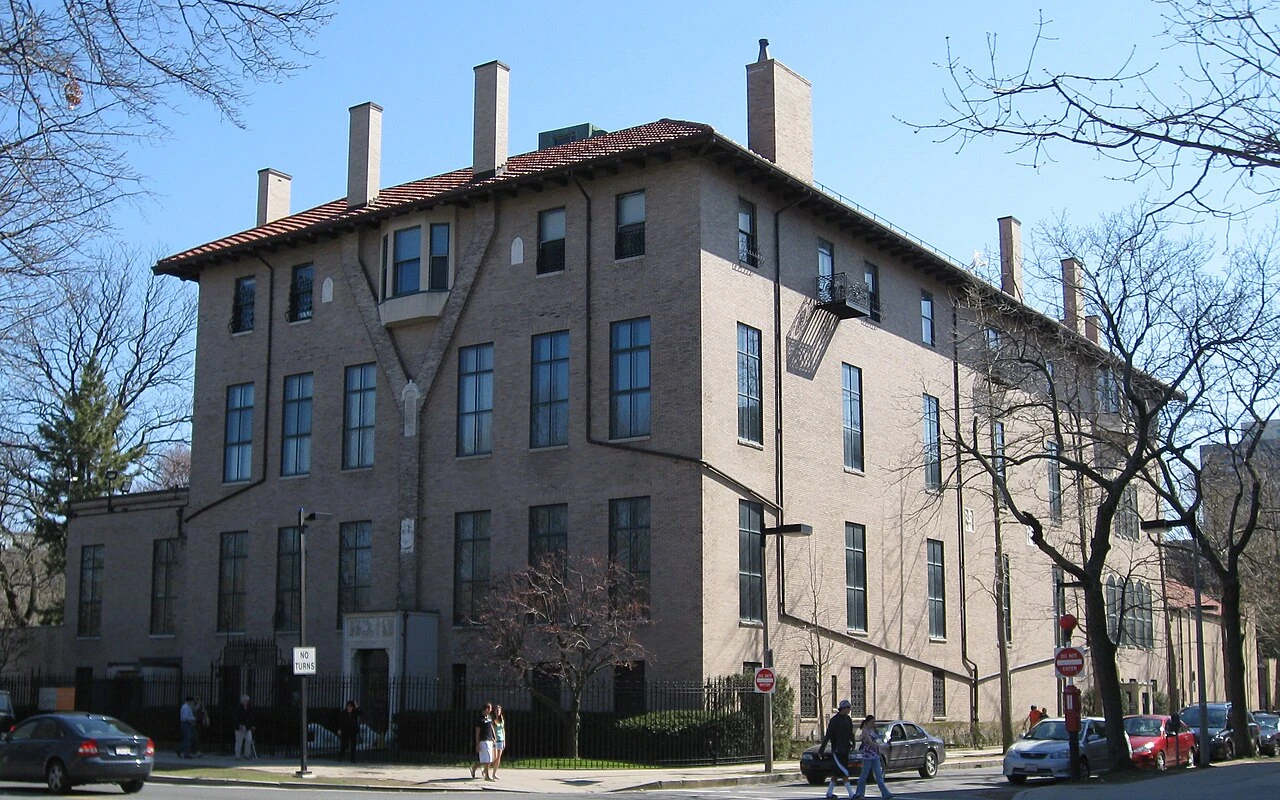
Isabella Stewart Gardner Museum
Content & sources
Biruitorul · Public domain
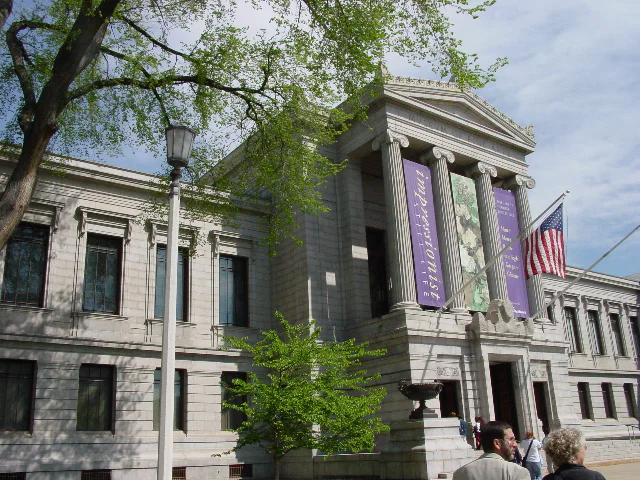
Boston · 4 km
Museum of Fine Arts, Boston
Content & sources
Martin~jawiki at Japanese Wikipedia · CC BY-SA 3.0
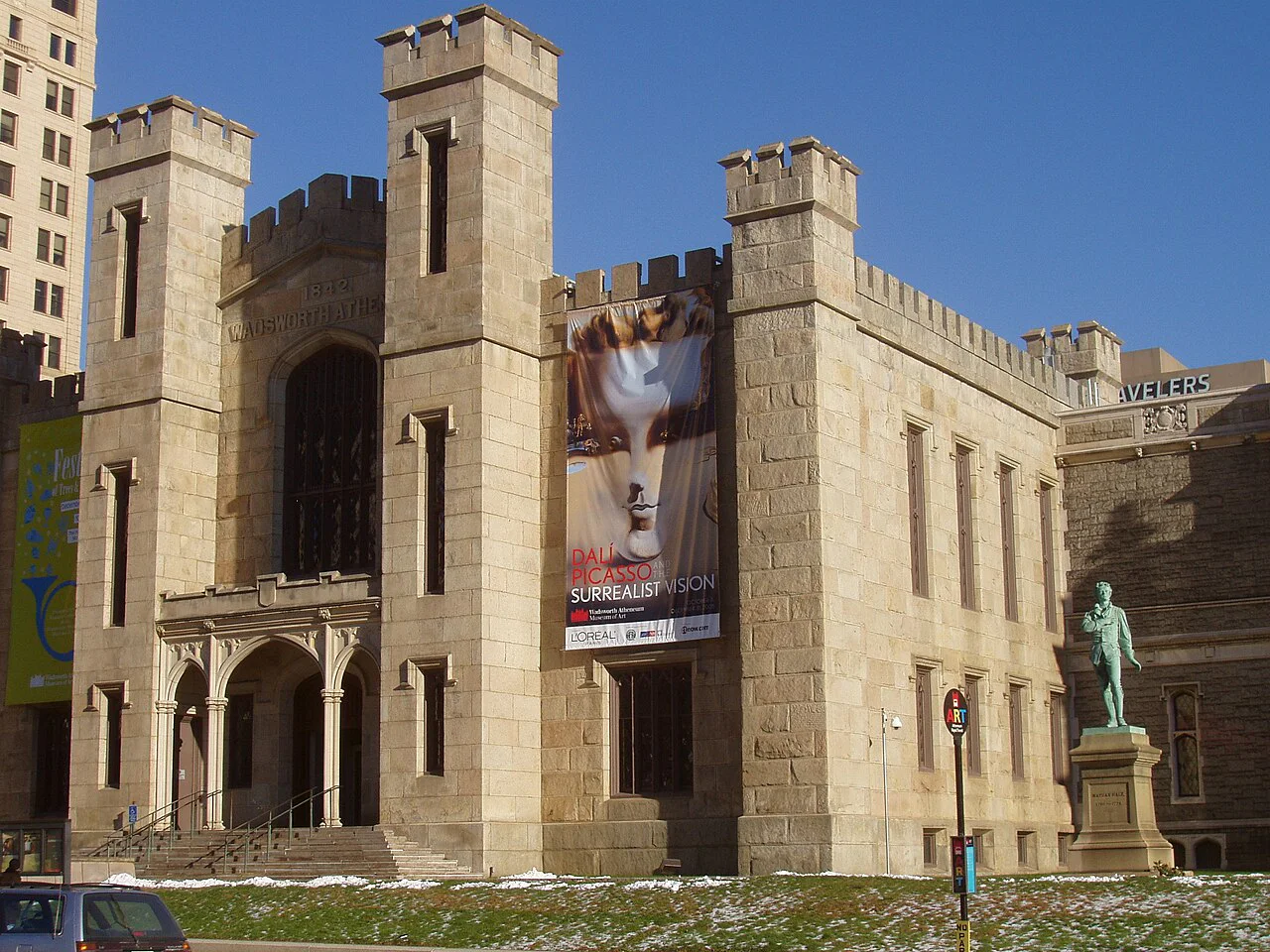
Hartford · 145 km
Wadsworth Atheneum
Content & sources
Daderot at English Wikipedia · CC BY-SA 3.0
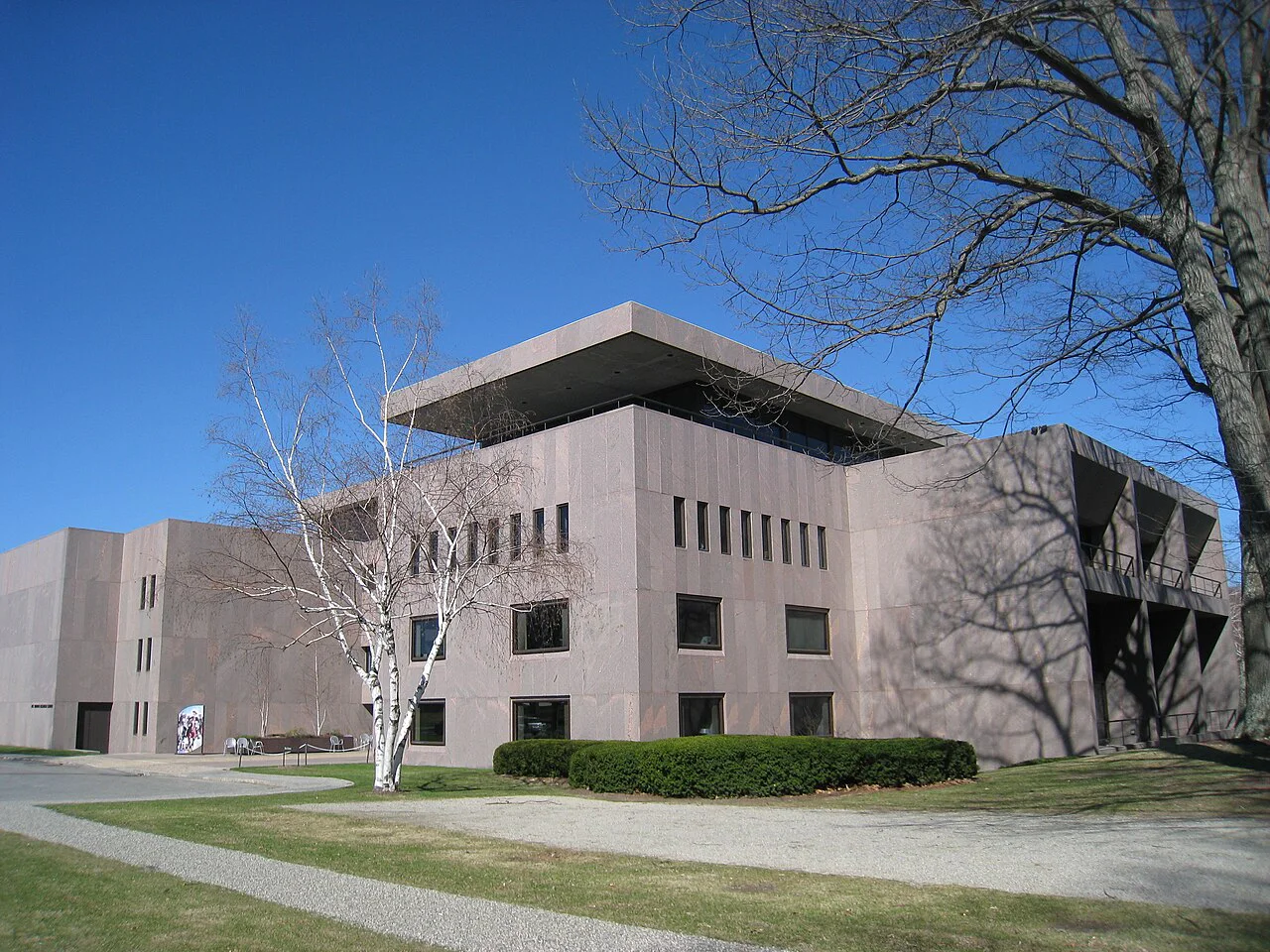
Williamstown
Clark Art Institute
Content & sources
Photo: Daderot · Public domain
Art museums
More art museum audio guides
Boston · 21 artworks
Isabella Stewart Gardner Museum
Content & sources
Biruitorul · Public domain
Boston · 151 artworks
Museum of Fine Arts, Boston
Content & sources
Martin~jawiki at Japanese Wikipedia · CC BY-SA 3.0
Hartford · 32 artworks
Wadsworth Atheneum
Content & sources
Daderot at English Wikipedia · CC BY-SA 3.0
Williamstown · 39 artworks
Clark Art Institute
Content & sources
Photo: Daderot · Public domain
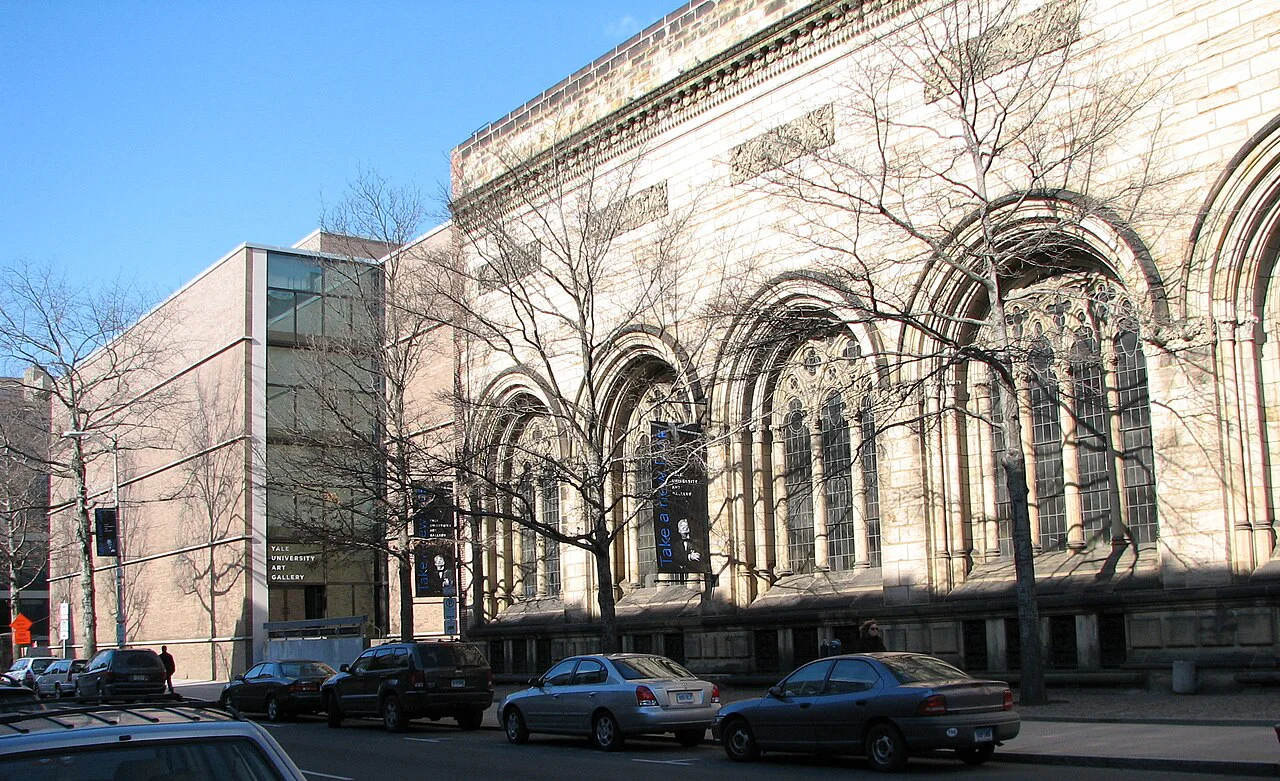
New Haven · 48 artworks
Yale University Art Gallery
Content & sources
Photo: Ragesoss · Public domain
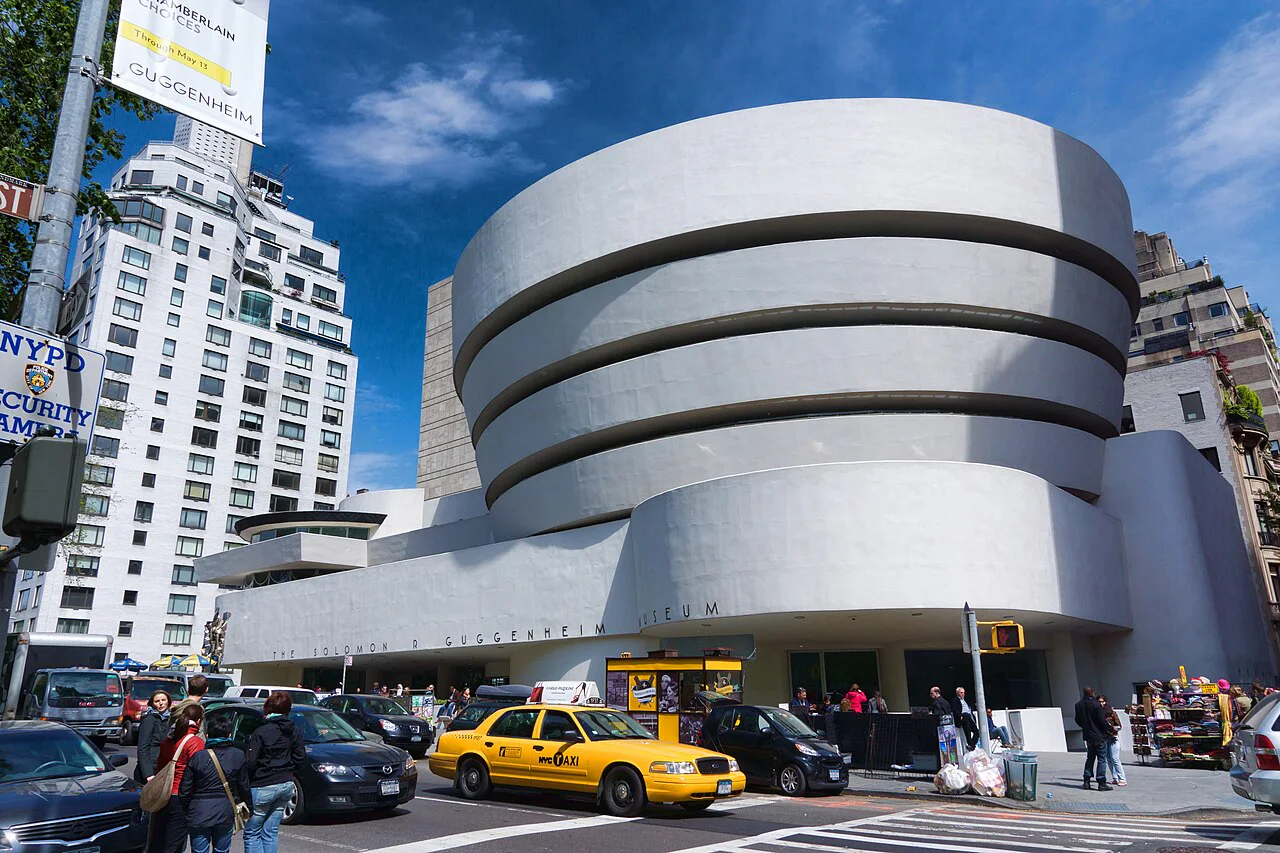
New York City · 33 artworks
Solomon R. Guggenheim Museum
Content & sources
Photo: Jean-Christophe BENOIST · CC BY 3.0