Stanza · Audioprzewodnik
Castelvecchio Museum Audioprzewodnik
Miejsce do zapamiętania. Historia, którą zabierzesz ze sobą.
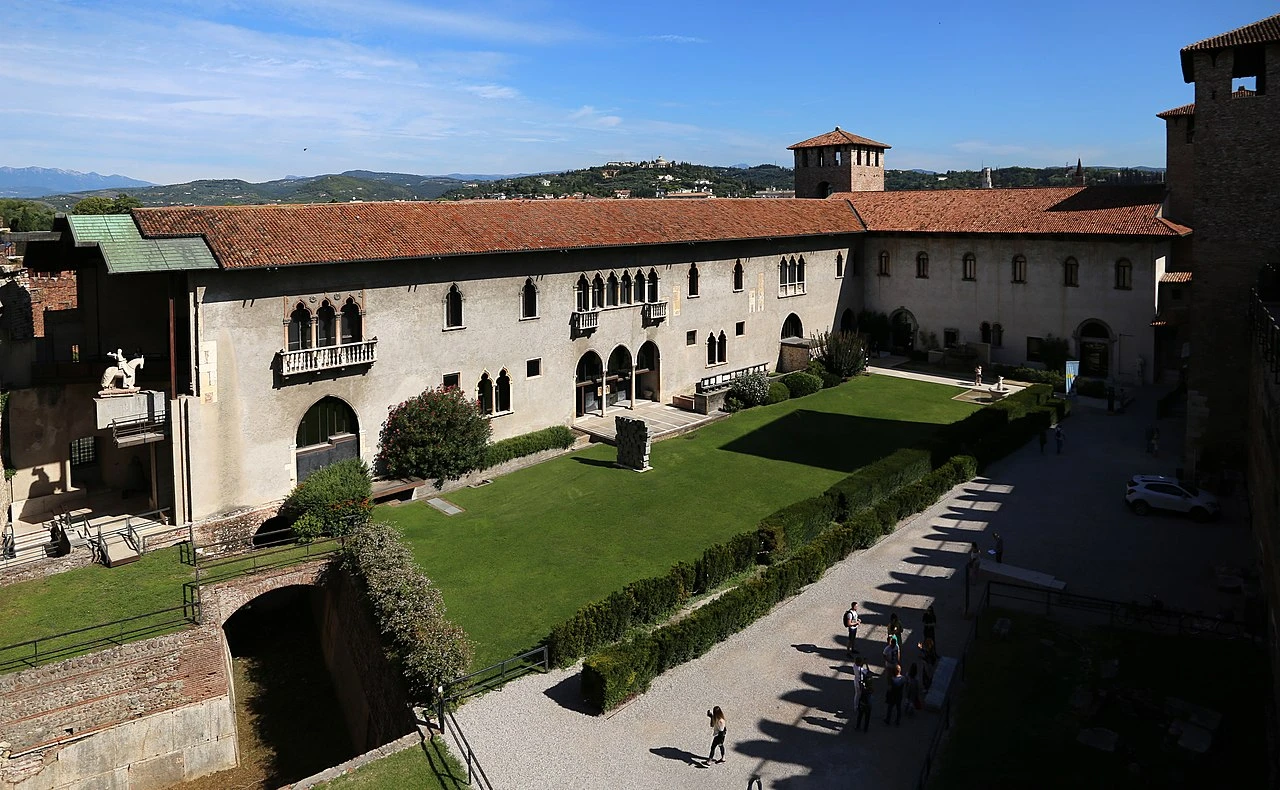
Castelvecchio Museum is an art and historic house museum located within the Castelvecchio complex in Verona, Italy. It houses a collection of sculpture, statues, paintings, ancient weapons, and ceramics.
Na razie po angielsku. Wkrótce więcej języków.
Pobierz Stanza, a następnie wyszukaj “Castelvecchio Museum”.
O wycieczce
Jeden przewodnik. Twoja wizyta.
Castelvecchio Museum is an art and historic house museum located within the Castelvecchio complex in Verona, Italy. It houses a collection of sculpture, statues, paintings, ancient weapons, and ceramics.
Gdy tylko zechcesz.
- 01Pobierz Stanza bezpłatnie.
iOS & Android
- 02Znajdź swój przewodnik.
“Castelvecchio Museum”
- 03Pobierz go przed wizytą.
Offline
Audioprzewodnik / 65 dzieł
W środku przewodnika
Poznaj kilka historii przed wizytą. Otwórz przystanek, aby przeczytać więcej.
01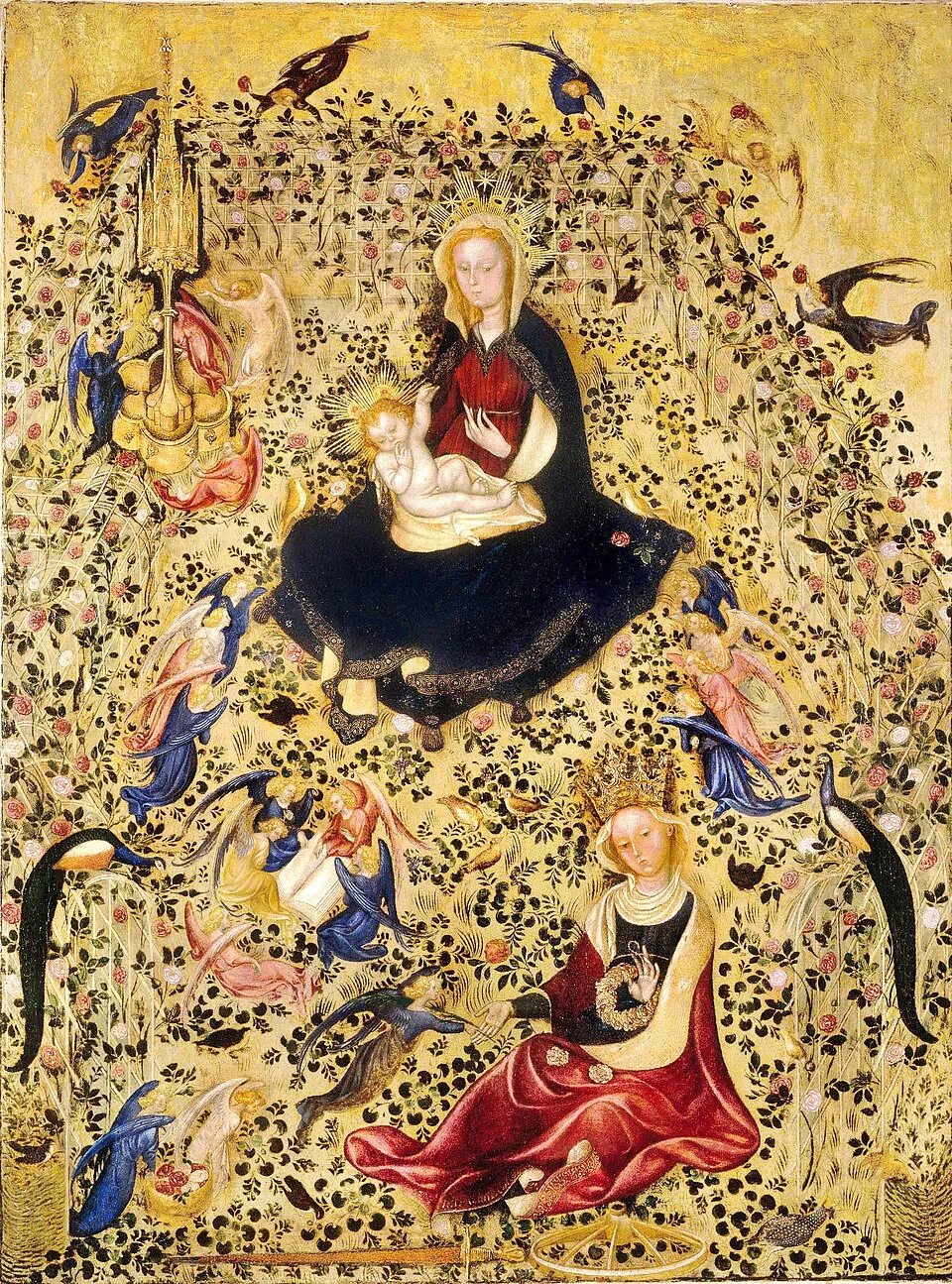
Madonna of the Rose Garden
The three main faces in this garden are sad. That is the puzzle. A Christ Child puts a finger in his mouth, angels gather rose petals, read, and play by a fountain, two peacocks walk the grass. The enclosed garden itself is an old symbol of Mary's virginity. Either Stefano da Verona or Michelino da Besozzo painted this, and which of the two is still debated. But the sadness has a reason. Mary sits on the ground, and that is the pose she is shown in when she mourns her dead Son. The red roses point to his martyrdom. The dark colours look ahead to the Passion. So this gentle garden already carries the death to come. Against it stands one promise. Early Christians believed peacock flesh never rotted, and the two peacocks here stand for Christ's immortality.
Słuchaj w aplikacjiAttributed to Michelino da Besozzo (more probably) or to Stefano da Verona (old attribution) · Public domain
02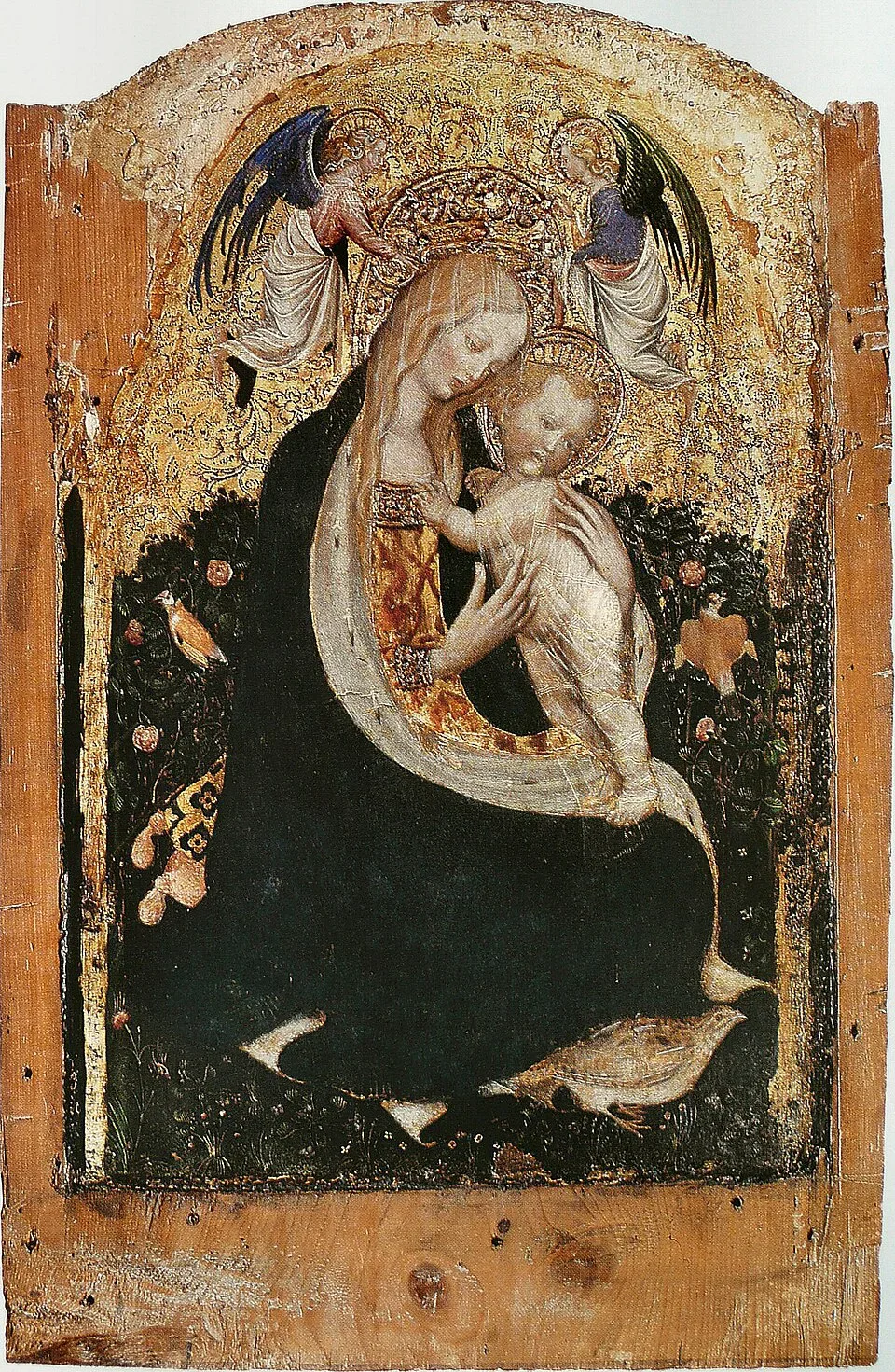
Madonna of the Quail
A young painter sits in another man's workshop, learning his trade. Around 1420, that is where Pisanello was, working as the assistant of Gentile da Fabriano. This panel is among the first we can safely call his. Look at what he fills the garden with. Mary sits with the child, two angels flying above to crown them both. But the roses around them are not a vague backdrop. He paints the plants species by species, and the birds too, each one studied on its own. In front, at the bottom, a quail steps into the picture, close enough that it gave the whole painting its name. Behind it all, gold. That gold is what the garden is for, a heaven you can see.
Słuchaj w aplikacjiPisanello · Public domain
03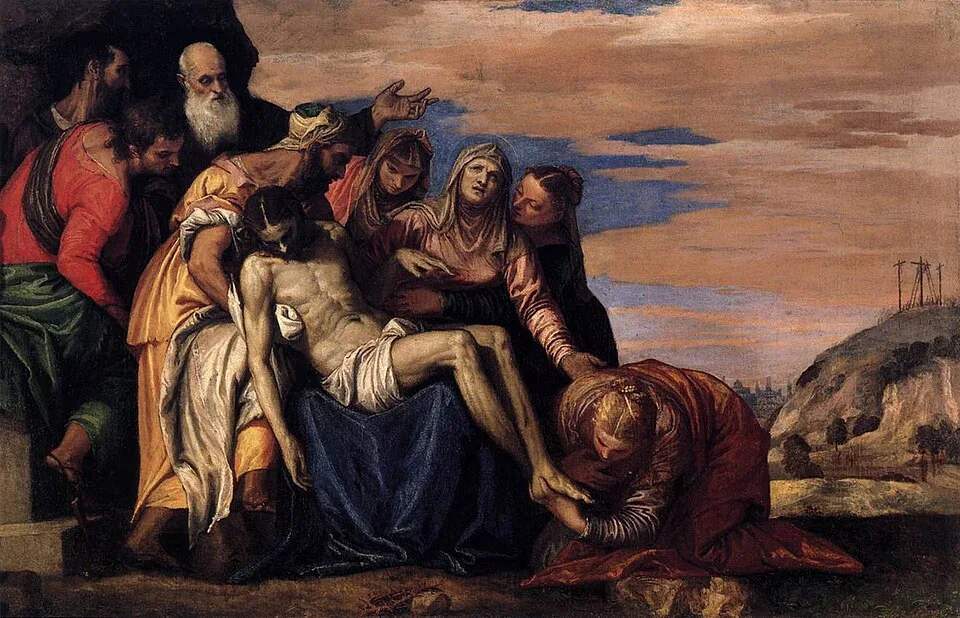
Lament over the Dead Christ
A dead Christ is held up by one man, and mourners press close around him. But the man holding the body is not the one who usually holds it. Usually that role belongs to Joseph of Arimathea. Here it is Nicodemus instead, the younger man with the dark beard and the turban. Notice his hands. They are covered, so that he never touches the body directly. And Joseph is here too, further back, an old man with white hair and a white beard, shown in careful profile. His face may well be a portrait, perhaps the monk who paid for the picture. Hieronymite monks commissioned it for their church of Santa Maria delle Grazie, and the painter, Paolo Caliari, later known as Veronese, was still young. A nineteenth century copy of this painting now hangs in the church of San Massimo all'Adige in Venice.
Słuchaj w aplikacjiPaolo Veronese · Public domain
04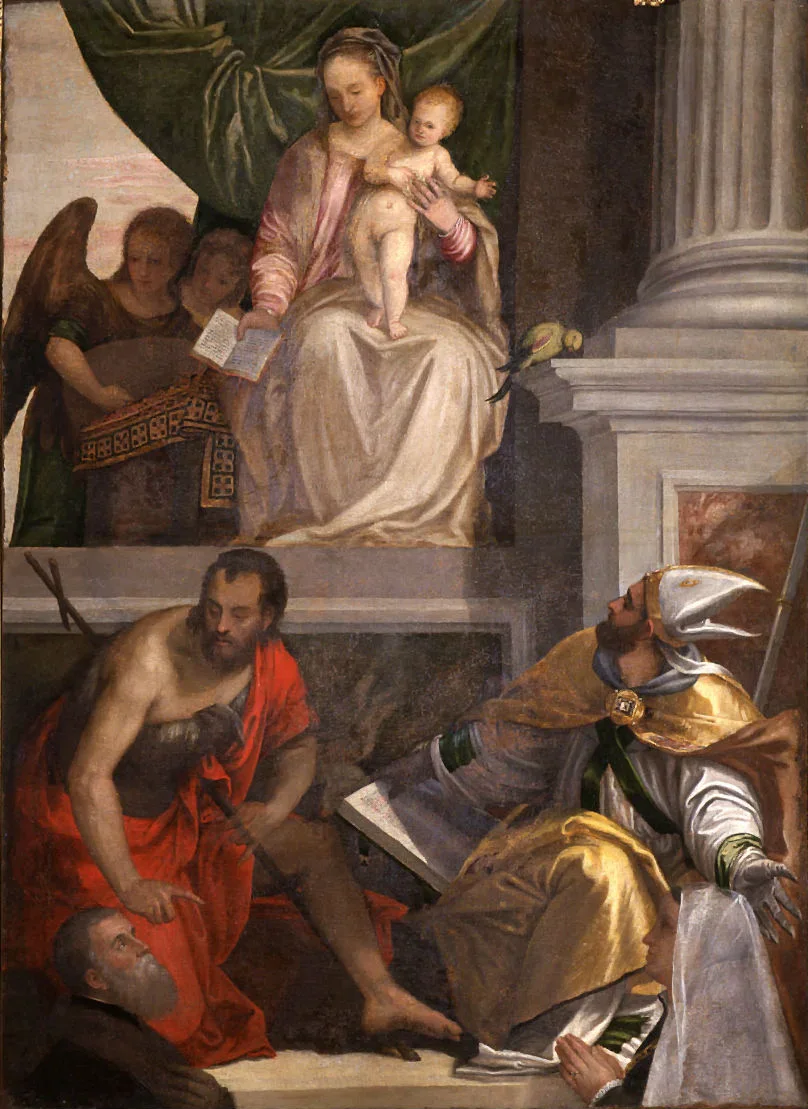
Madonna Enthroned with Child, St John the Baptist, St Louis of Toulouse and Donors
A man and a woman kneel at the bottom of this painting, one in each corner, praying. They are members of the Bevilacqua Lazise family. Above them stand two saints, John the Baptist and a bishop, and above them, at the very top, Mary holds the child on her arm. The whole picture climbs in a pyramid, from the praying couple, up through the saints, to Mary at the point, with angels waiting in the shadow behind her curtains. The woman was Lucrezia Malaspina. She ordered this painting for the funerary chapel of the church of San Fermo Maggiore in Verona, where her husband had been buried. So the two of them kneel here forever, praying beside the saints. The painter was still young. Paolo Veronese finished this in 1548, and this early work made his name.
Słuchaj w aplikacjiPaolo Veronese · Public domain
05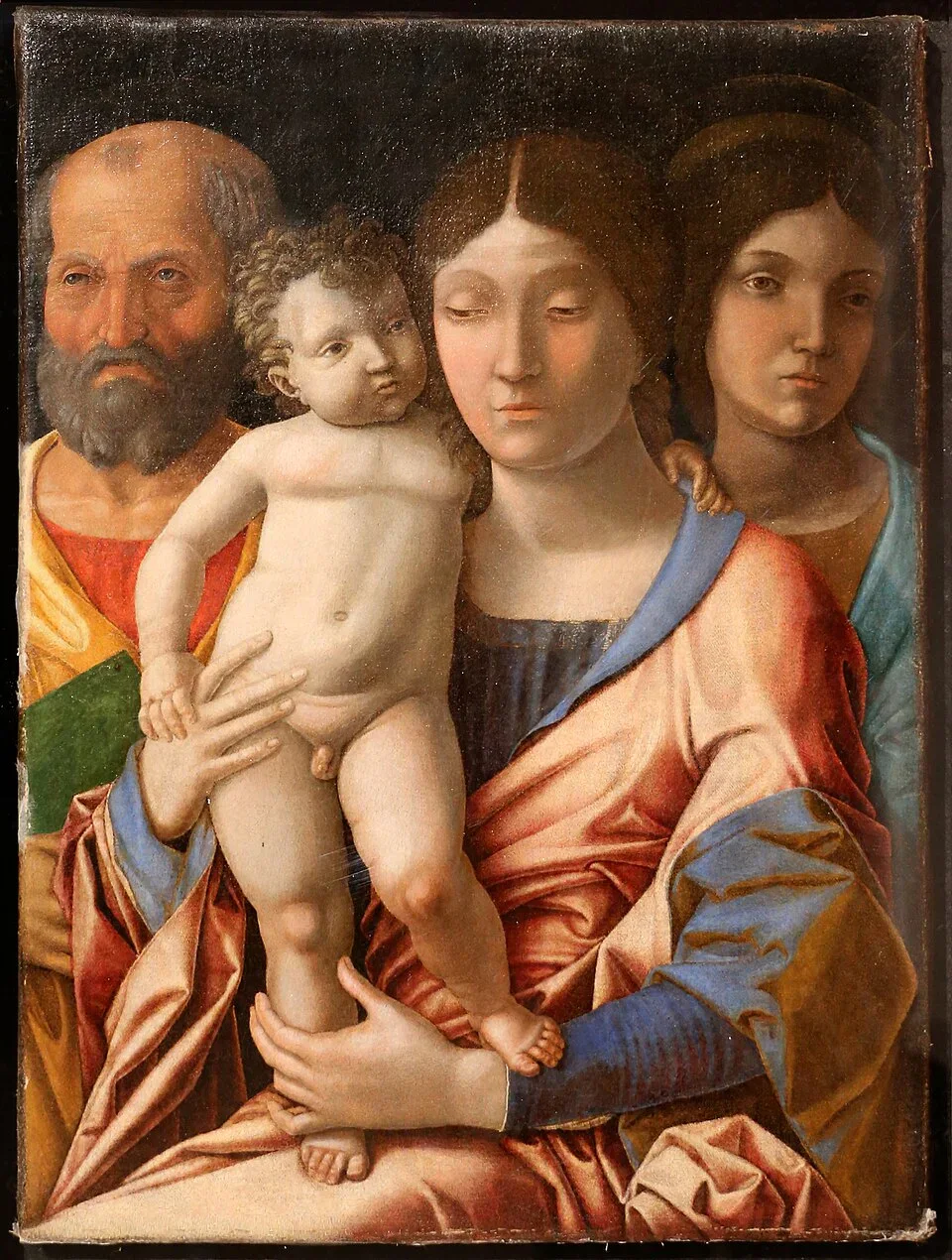
The Holy Family and Mary Magdalene
On the evening of the nineteenth of November 2015, this painting disappeared from the museum, along with sixteen other works. Half a year later it turned up near Odessa in Ukraine, about to be sold on. It came home before the end of 2016. Now look at it again. Mary holds the child, and the two of them do not look at each other. They are tied together by an embrace instead. Behind them stand Joseph on the left and a woman saint on the right. The child's body looks almost carved, which has made people think of a classical statue of the young Dionysus. And there is a puzzle under the surface. The paint has worn and been repainted, so no one can be sure Mantegna's brush made it. But the silverpoint drawing underneath, the fine lines laid down first, is certainly by his hand. The woman on the right still has no name. Perhaps she is Mary Magdalene.
Słuchaj w aplikacjiPhoto: Sailko · Public domain
06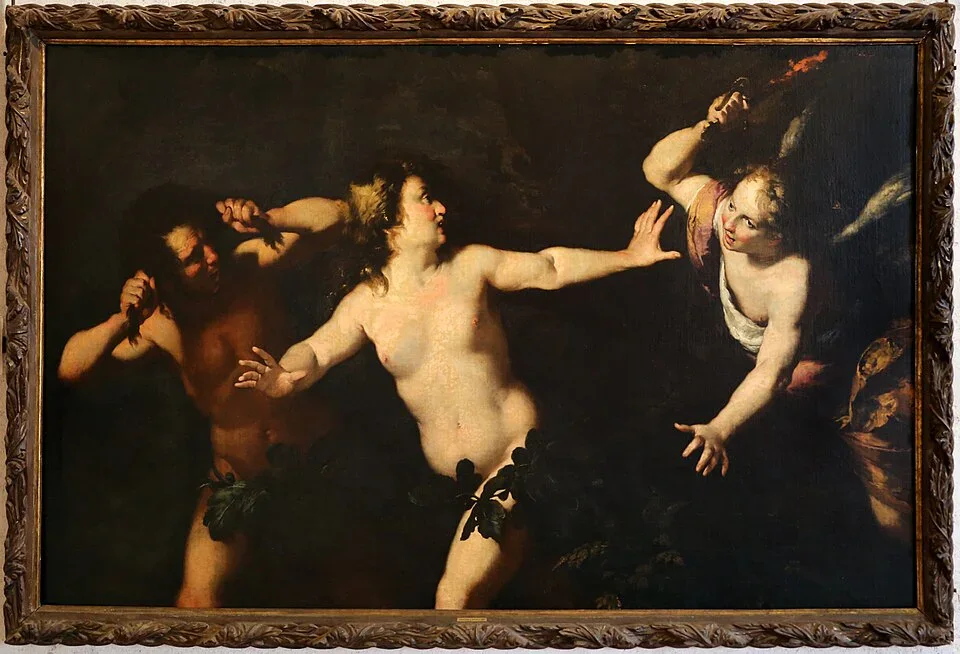
Bernardo Strozzi, Expulsion from Eden, 01
The man who painted this had been a monk. Bernardo Strozzi joined the Capuchin order in Genoa as a young man. Around 1608 he left, to care for his widowed mother, and went on painting. The order called that illegal, and in 1625 he was briefly locked up for it. Now see what he painted. Adam and Eve are driven out of the garden of Eden, the moment told in the Book of Genesis. Their bodies are nearly life size, spread across a wide canvas. In 1630 Strozzi fled Genoa for Venice, and this painting probably comes from his years there. He never went home.
Słuchaj w aplikacjiPhoto: Sailko · CC BY-SA 4.0
07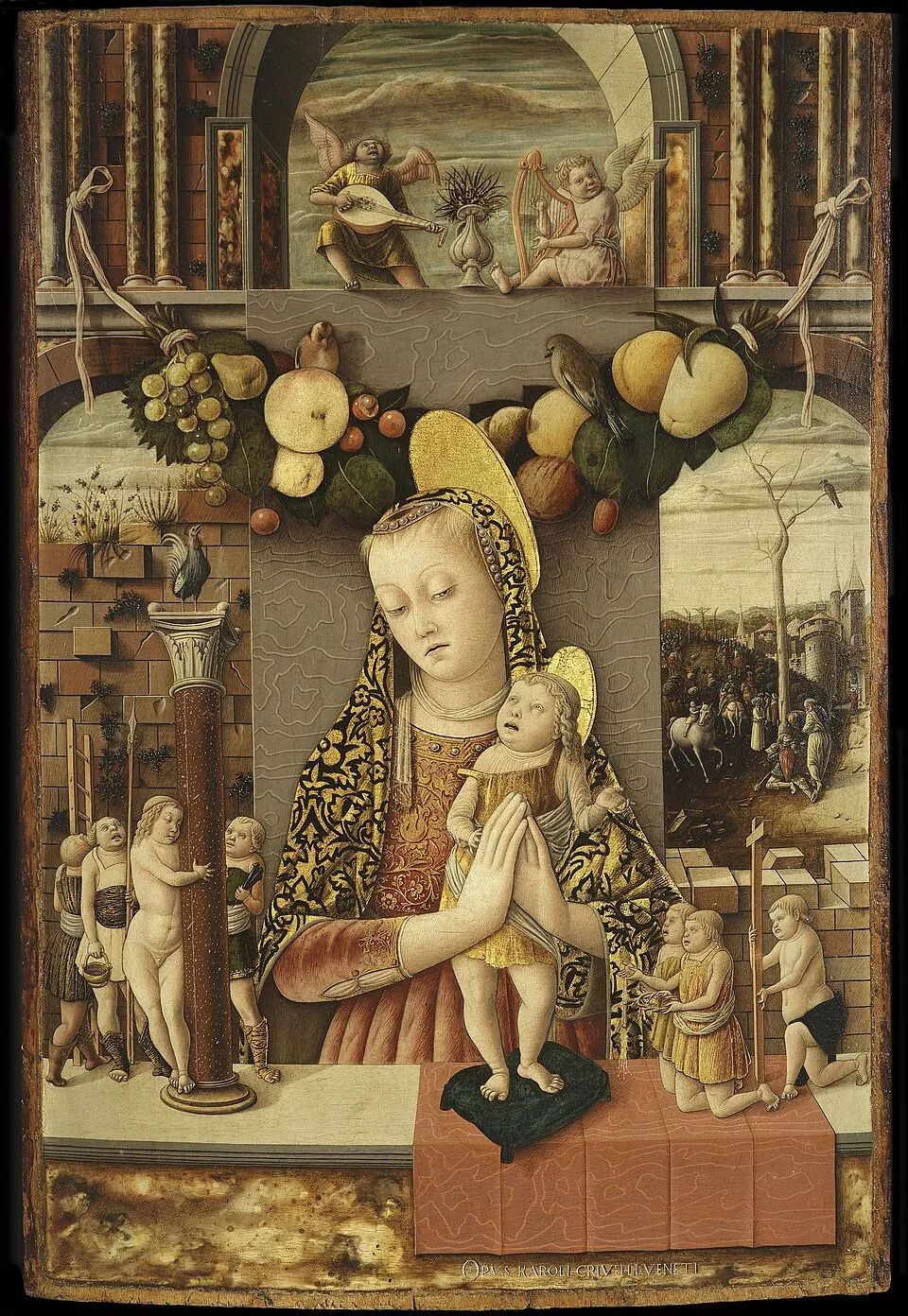
Madonna della Passione
Two little birds sit on the garland of fruit above the Virgin's head. They are goldfinches, and a medieval legend gave them their red faces. A goldfinch pulled a thorn from Christ's crown, and a drop of blood left the red mark the bird still carries. That small story is the key to this picture. Along the marble ledge, children hold the tools of the Passion. The cross, the crown of thorns, the whip, the spear, the sponge, the ladder, the nails. One child hugs the column of the flagellation, and on top of it stands the cockerel that crowed when Peter denied him. Through the arch on the right, Golgotha rises beside the walls of Jerusalem, with crosses against the open sky. So the child standing on the ledge is already at the end of his own story. Carlo Crivelli signed the work there on the ledge, and this panel, painted about 1460, is one of the earliest of his works that survives.
Słuchaj w aplikacjiCarlo Crivelli · Public domain
08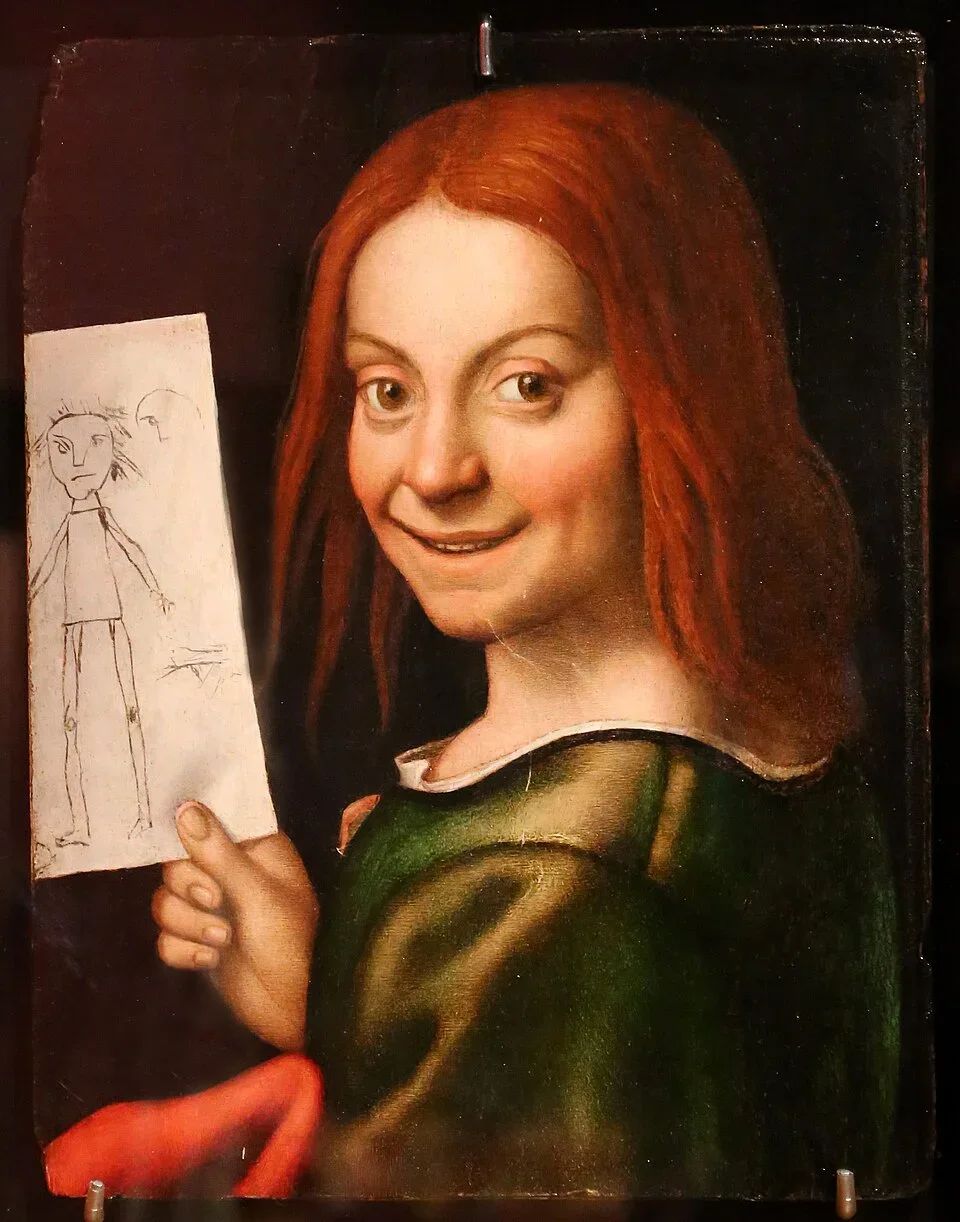
Red-headed Youth Holding a Drawing
A boy is laughing at you. Teeth showing, red hair parted down the middle. In formal portraits of the early sixteenth century, children did not grin like this. In his right hand he holds up a sheet of paper. On it, a little figure with a big head and thin, sticklike limbs. It may be the oldest drawing by a child that has come down to us in European art. And there is more on the same sheet. A careful study of an eye in profile, drawn by a trained hand. So the boy seems to have grabbed a used sheet from a painter's workshop and drawn his figure on the empty part. Giovanni Francesco Caroto probably knew the child well. It may be his son Bernardino, or his nephew Giovan Pietro. The laugh had a strange afterlife, too. In 1965 the British children's doctor Harry Angelman stood in front of this painting and thought of patients who laughed just like this boy and moved in jerky, puppetlike ways. He wrote up their cases, and the condition took his name.
Słuchaj w aplikacjiGiovanni Francesco Caroto · CC BY 3.0
09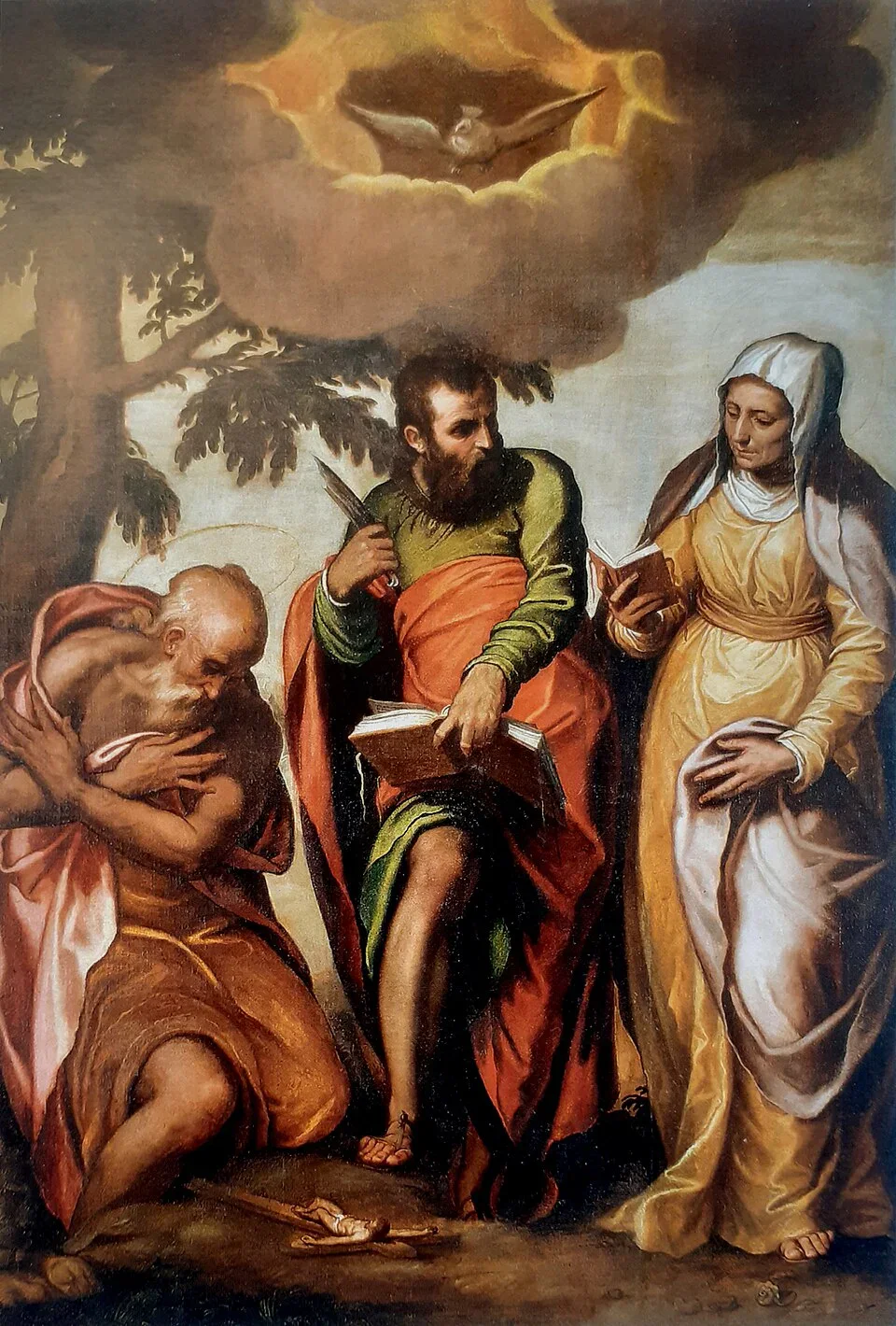
Saints Bartholomew, Jerome and Clare
Three saints fill this picture, and the woman on the right is deep in a book. For a long time people took her for Saint Anne. She is Clare, and this painting once stood in her own church in Verona, on the left altar of Santa Chiara. In the middle, Bartholomew turns to look at her. He holds the book and the knife of his martyrdom. On the left, Jerome is about to kneel before a crucifix set on the ground. Paolo Farinati painted this between 1565 and 1570, with plain figures in a barely sketched landscape, as the church of that time wanted. When Napoleon's men stripped the city's churches, the painting joined Verona's civic collections in 1812. It has since been repaired twice, in 1857 and again in 1980.
Słuchaj w aplikacjiPaolo Farinati · CC BY-SA 4.0
10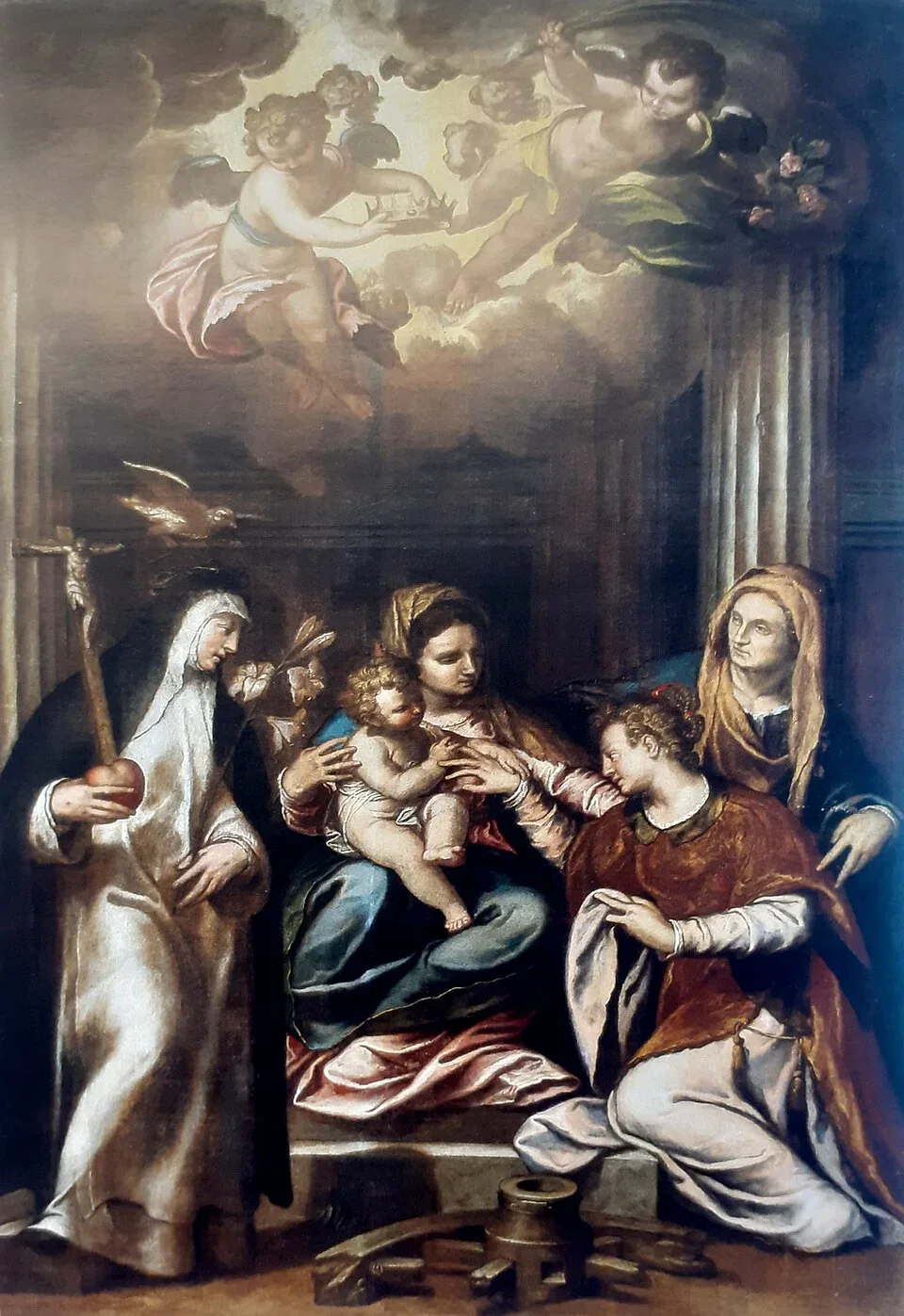
Mystic Marriage of Saint Catherine (Farinati)
A face looks out from the right side of this altar, and it is not quite a saint's. It belongs to Saint Anne. But the painter gave her the features of Caterina Cavalli, the noblewoman who paid for the picture. She commissioned it in 1601 for the high altar of a Veronese church called Saint Catherine of Siena, and that name shapes everything you see. The saint on the right, taking a ring from the child on Mary's lap, is Catherine of Alexandria. The wheel at her feet is the wheel of her martyrdom. And the woman watching from the left, dressed in the habit of the Dominicans and bearing the stigmata, is Catherine of Siena, the saint the church was named for. Two Catherines, and the donor herself among them. Caterina Cavalli was buried in that church, beside her husband. The church has since been abandoned.
Słuchaj w aplikacjiPaolo Farinati · CC BY-SA 4.0
- 11
Christ Shown to the People
Paolo Farinati · 1562
- 12
Madonna and Child
Paolo Farinati · 1579
- 13
Paolo Farinati, Christ as the Man of Sorrows, 1581
Paolo Farinati · 1581
- 14
Portrait of Paolo Cartolari
Paolo Farinati · 1582
- 15
Moses Defending the Daughters of Jethro
Paolo Farinati · 1583
- 16
Saints Thaddeus and Francis of Paola
Paolo Farinati · 1590–1600
- 17
Madonna and Child in Glory and Saints
Paolo Farinati · 1592
- 18
Madonna and Child in Glory, with Saint Francis of Assisi, Saint Anthony of Padua and a Franciscan Saint
Paolo Farinati · 1599–1600
- 19
Saint Jerome Penitent in the Desert
Paolo Farinati · 1578
- 20
Paolo Morando, Predella of the Passion Polyptych
Paolo Morando · 1517
- 21
Paolo Morando - Archangel Michael and Saint Paul
Paolo Morando · c. 1515
- 22
Sacra famiglia con una santa
Felice Riccio
- 23
San Silvestro battezza l'imperatore Costantino
Felice Riccio
- 24
Madonna col Bambino e santi
Felice Riccio
- 25
Annunciazione con i santi Domenico, Francesco d'Assisi e Chiara
Felice Riccio
- 26
Orazione di Cristo nell'orto di Getsemani
Felice Riccio
- 27
Man of sorrows
Filippo Lippi · 1432–1437
- 28
Madonna of the Oak
Girolamo dai Libri · 1533
- 29
Francesco Morone, Washing of the Feet, c. 1500, from San Bernardino, Verona
Francesco Morone
- 30
Francesco Morone, Trinity Altarpiece, c. 1500-25, from the church of Santa Maria della Vittoria Nuova in Verona, 01
Francesco Morone
- 31
Nicola Giolfino - Madonna in Glory with the Child, Saint Matthew, Saint Jerome, and the Patron
Niccolò Giolfino
- 32
Nicola Giolfino - Madonna with the Child and Saints John the Baptist, Jerome, Francis, Placid, Maurus, and Simplicius
Niccolò Giolfino · c. 1550–1555
- 33
Nicola Giolfino, Stories of Saint Barbara, c. 1500-50, from the Monga Collection, Verona, 01
Niccolò Giolfino · 1524–1533
- 34
Nicola Giolfino, Allegory of Geometry, from San Nicolò in Verona, c. 1500-50
Niccolò Giolfino · c. 1500–1550
- 35
Paolo Morando known as Il Cavazzola, Passion Polyptych, 1517, 01
Paolo Morando · 1517
- 36
Paolo Morando known as Il Cavazzola, Saint Francis Giving the Rule to the Poor Clares, c. 1500-20, from the Bernasconi Collection, Verona (cropped)
Paolo Morando · c. 1500–1520
- 37
Paolo Morando known as Il Cavazzola, Altarpiece of the Virtues, from San Bernardino in Verona, 01
Paolo Morando
- 38
Paolo Morando known as Il Cavazzola, Madonna of the Goldfinch
Paolo Morando
- 39
Domenico Morone, Saints Catherine, Leonard, Gothard and Dominic, from San Nicola al Paladon, VR
Domenico Morone
- 40
Liberale da Verona, Triumph of Chastity and Love, from the Pompei collection, VR 01
Liberale da Verona
- 41
Liberale da Verona, Adoration of the Magi and Saint Peter, from the Bernasconi collection, VR 01
Liberale da Verona · 1516–1520
- 42
Liberale da Verona, Miniscalchi Altarpiece, with the Sacrifice of Isaac between two donors
Liberale da Verona
- 43
Liberale da Verona - Saint Jerome between Saint Paul and Saint Francis of Assisi
Liberale da Verona
- 44
Liberale da Verona, Nativity with Saint Jerome, from San Fermo in VR 01
Liberale da Verona
- 45
Liberale da Verona, Deposition, from San Tommaso Cantuariense, VR 01
Liberale da Verona
- 46
Madonna dell'ombrello by Girolamo dai Libri, Museo Castelvecchio
Girolamo dai Libri · 1530
- 47
Adoration of the Magi
Paolo Farinati · 1580s
- 48
Paolo Farinati, Allegorical Portrait of Matilda of Canossa, ca. 1590-1600, from the Monge collection, VR
Paolo Farinati · 1590–1600
- 49
Jacopo Tintoretto Nursing Madonna
Jacopo Tintoretto
- 50
Baptism of Christ
Girolamo dai Libri · 1600
- 51
Girolamo dai Libri, Nativity with Saints, known as the Rabbit Crib, from Santa Maria in Organo 01
Girolamo dai Libri · 1500
- 52
Madonna and Child and Saints Roche and Sebastian
Girolamo dai Libri · c. 1510–1516
- 53
Domenico Morone, Saints Jerome, James and Lawrence, 1502, from Santa Maria degli Angeli in VR
Domenico Morone · c. 1502
- 54
Francesco Morone, Madonna and Child and Saints, from a house near Ponte Navi in Verona, 01
Francesco Morone · 1515
- 55
Paolo Morando known as Il Cavazzola, Incredulity of Saint Thomas, from Santa Chiara in Verona, 01
Paolo Morando · c. 1520
- 56
Adorazione dei Magi
Domenico Riccio · 1550
- 57
Madonna in trono col Bambino e le sante Orsola e Scolastica
Domenico Riccio · 1566
- 58
Statue of Cangrande della Scala
Giovanni di Rigino · 1340
- 59
Deposition of the Tears
Giovanni Francesco Caroto · 16th century
- 60
Domenico Morone, Saint Roch, from San Clemente in Verona, 01
Domenico Morone
- 61
Francesco Morone, Moscardo Madonna, from the Bernasconi Collection, Verona
Francesco Morone · c. 1510
- 62
Saint Catherine of Alexandria with Donor
Francesco Morone
- 63
Nicola Giolfino, Madonna of the Jasmines, c. 1500-50, from San Francesco di Paola, Verona
Niccolò Giolfino · 1500–1550
- 64
Achilles on Skyros (Nicola Giolfino)
Niccolò Giolfino
- 65
Domenico Morone, Madonna and Child, from the Bernasconi collection, VR
Domenico Morone · 1510
Castelvecchio Museum
Często zadawane pytania
Ile kosztuje przewodnik?
Bezpłatna aplikacja. Za darmo do 1 stycznia. Podana cena przewodnika: $0.99. Tylko audioprzewodnik. Wstęp do obiektu jest osobno.
Czy mogę słuchać bez internetu?
Tak. Pobierz nagrania, zdjęcia i mapy w aplikacji przed wizytą. Pobrane treści są dostępne offline.
Czy mogę słuchać w swoim języku?
Na razie po angielsku. Wkrótce więcej języków.
Czy muszę przestrzegać harmonogramu?
Nie. Zwiedzasz samodzielnie. Wybieraj przystanki, rób przerwy i wracaj do historii we własnym tempie.
We własnym tempie
Odkryj: Castelvecchio Museum.
Pobierz Stanza, a następnie wyszukaj “Castelvecchio Museum”.
Bezpłatna aplikacja · Cena przewodnika w aplikacji
Odkrywaj dalej
Audioprzewodniki w pobliżu
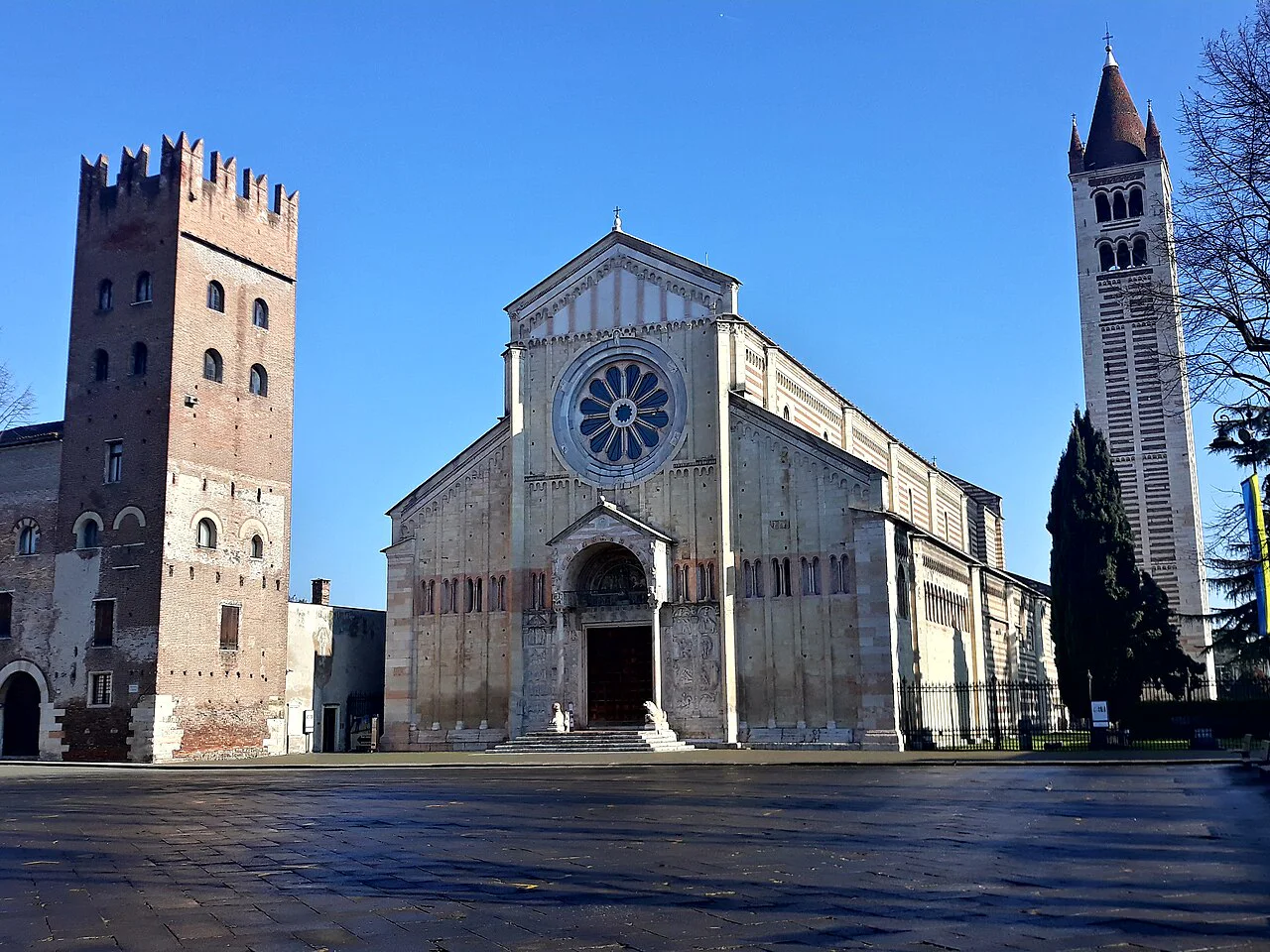
Verona · 1 km
Bazylika świętego Zenona w Weronie
Treść i źródła
Photo: Adert · CC BY-SA 4.0
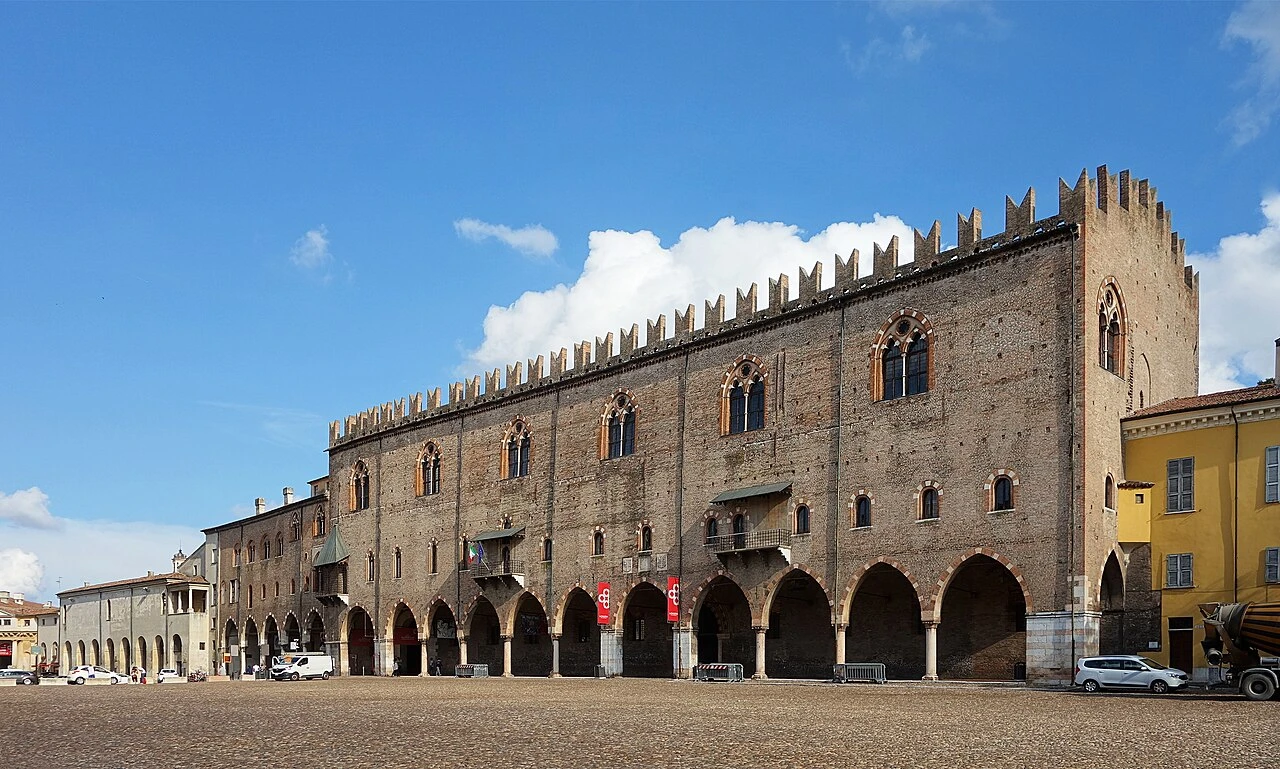
Mantua · 34 km
Pałac Książęcy w Mantui
Treść i źródła
Photo: Velvet · CC BY-SA 4.0
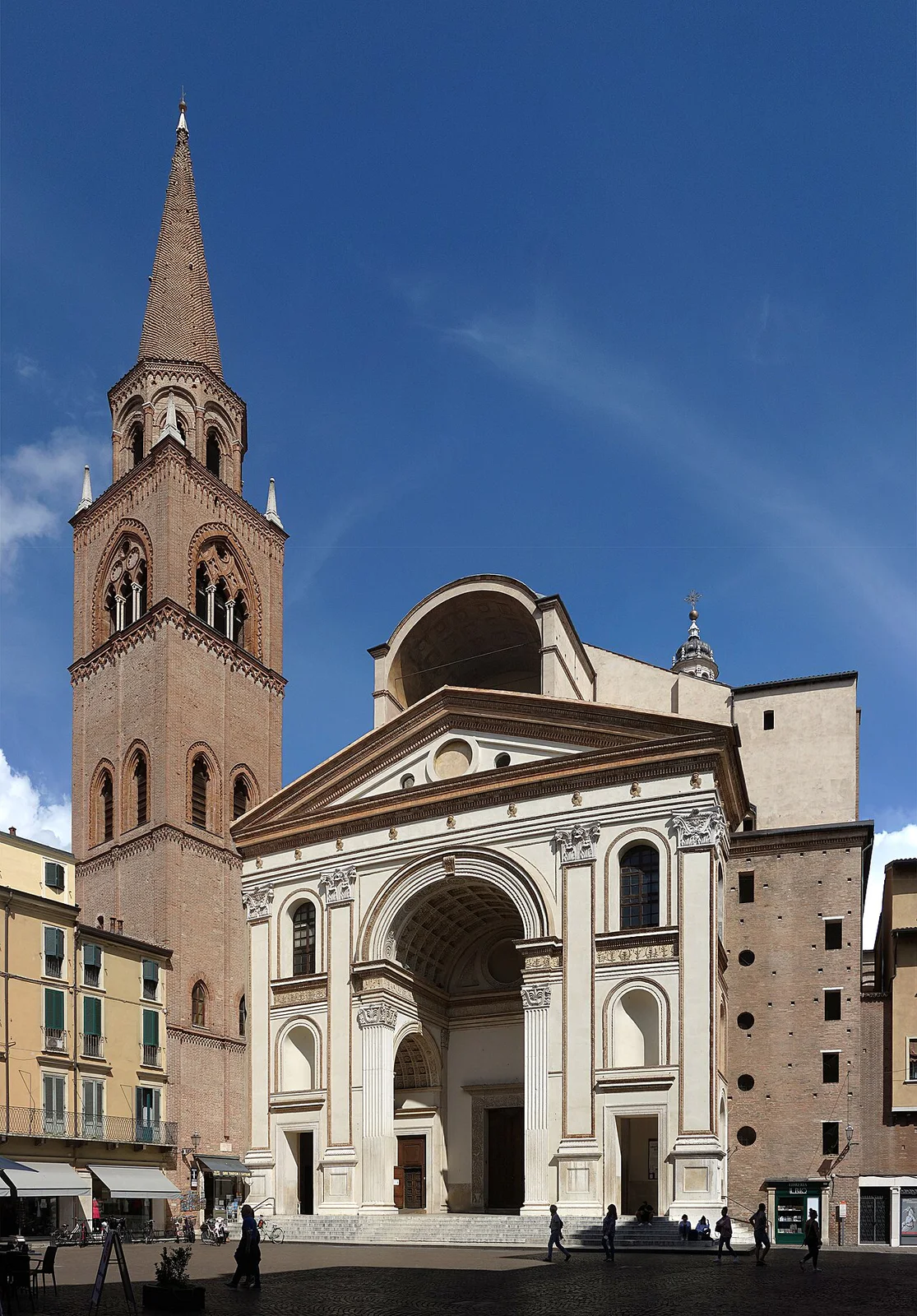
Mantua · 35 km
Bazylika świętego Andrzeja w Mantui
Treść i źródła
Photo: Velvet · CC BY-SA 4.0
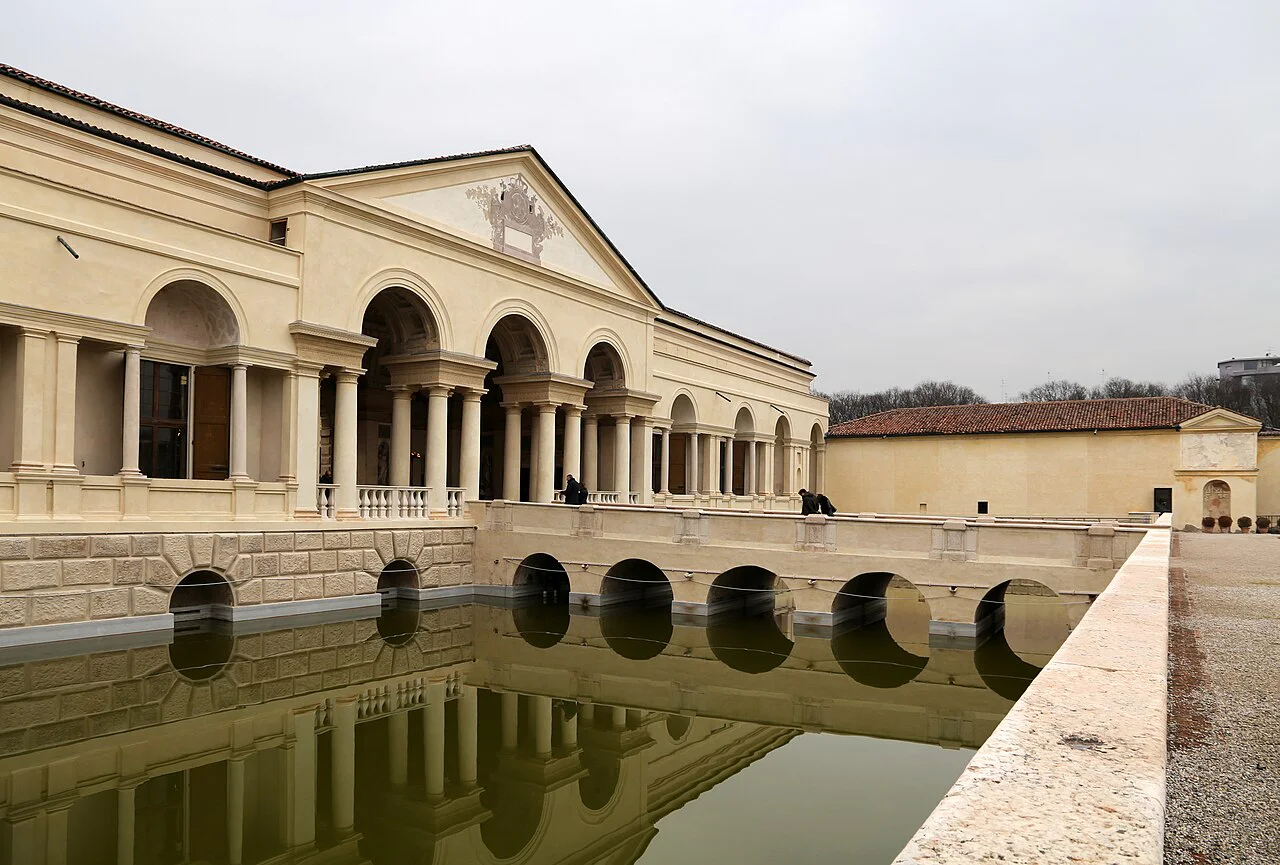
Mantua · 36 km
Palazzo Te
Treść i źródła
Photo: Sailko · CC BY 3.0