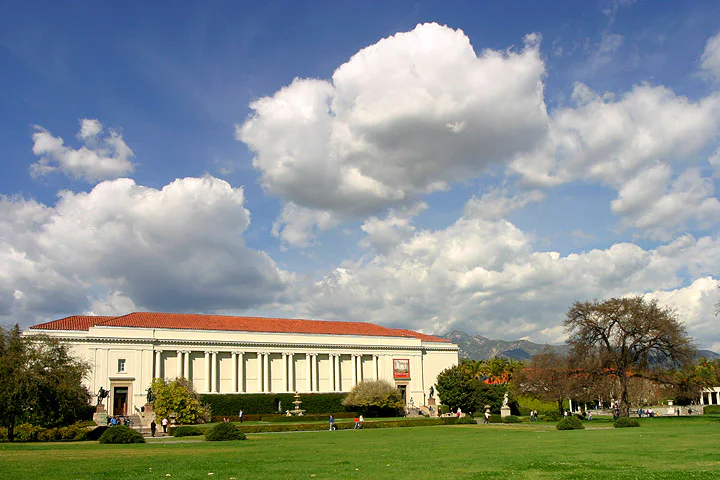
Stanza · Audioguia
Huntington Library Audioguia
Um lugar para recordar. Uma história para levar consigo.
The Huntington is a collections-based educational and research institution located in San Marino, California. It houses an extensive art collection and approximately 120 acres of specialized botanical gardens.
Por enquanto em inglês. Mais idiomas em breve.
Descarregue o Stanza e procure “Huntington Library”.
Sobre o passeio
Um guia. A sua forma de visitar.
The Huntington is a collections-based educational and research institution located in San Marino, California. It houses an extensive art collection and approximately 120 acres of specialized botanical gardens.
Quando estiver pronto.
- 01Descarregue o Stanza gratuitamente.
iOS & Android
- 02Encontre o seu guia.
“Huntington Library”
- 03Descarregue-o antes da visita.
Offline
Audioguia / 12 obras
Dentro do audioguia
Descubra algumas histórias antes da visita. Abra uma paragem para ler mais.
01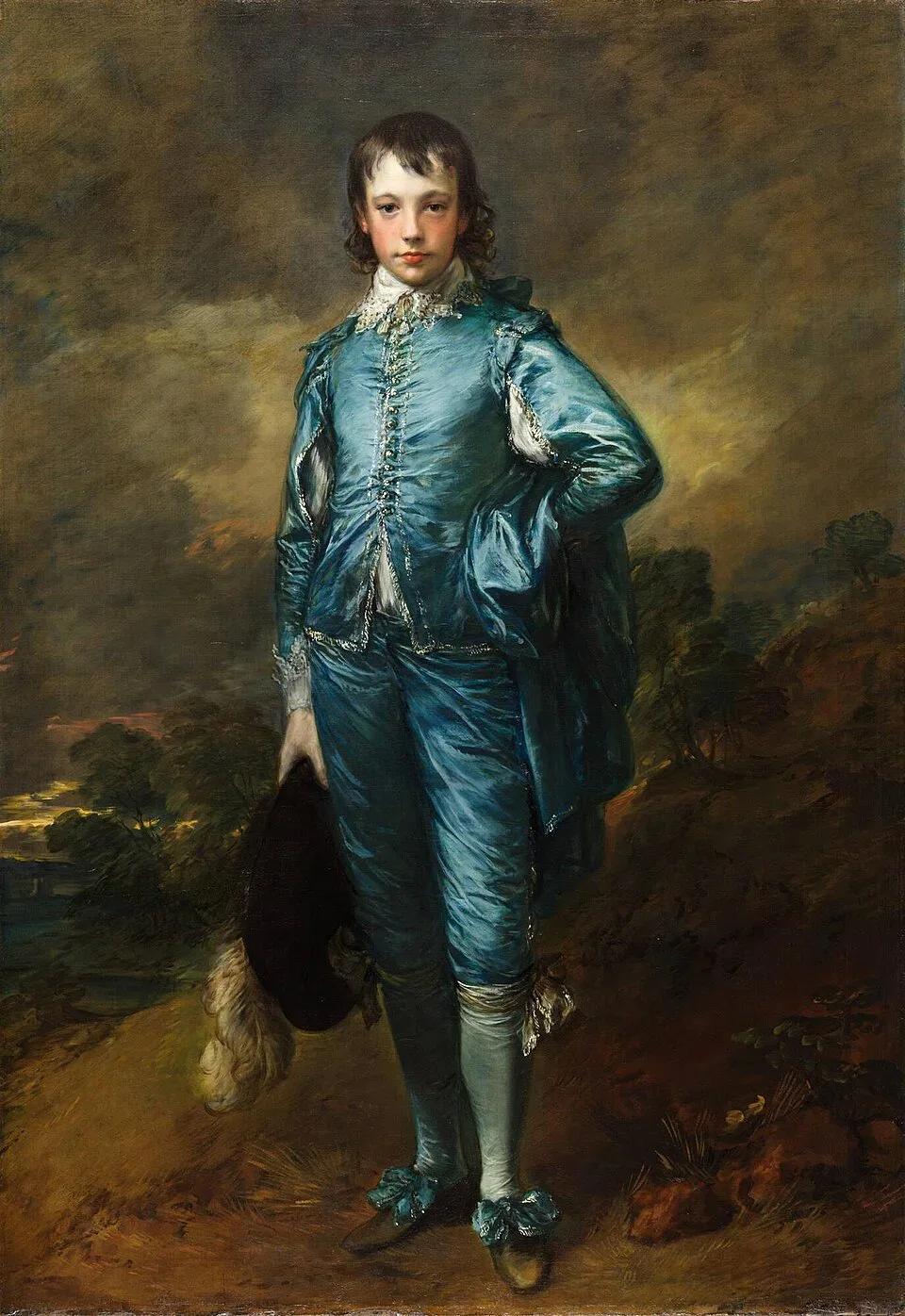
The Blue Boy
He looks straight at you, quiet and still. And all around him, the colour is anything but calm. A whole figure in blue, on a hillside under a stormy sky. The Blue Boy, by Thomas Gainsborough, painted about 1770. It is a portrait, and a costume study too. Start with the face. Pale skin, pink cheeks, a mouth held still. And no one is sure who he is. Now the collar. White lace, a loose tie, a ruffle at the throat. Clothes like these belong to the seventeenth century. The suit is satin. Light slides over it in long pale streaks, and silver trim runs down the buttons and along the slashed sleeves. The clothes were a tribute to the painter Anthony van Dyck, a look back to an earlier age. One arm bends sharply at his hip, and the cape hangs down behind it. In the other hand, a black hat, with a pale feather trailing toward the ground. Down at his feet, blue bows on his shoes. The blue goes all the way to the ground. Above him, storm clouds in gold and brown. Warm colours, behind all that cool blue. A famous tale says Gainsborough painted this to defy Sir Joshua Reynolds, who said the lit parts of a picture must be warm. It is a myth. The painting was finished eight years before Reynolds said it. But the tale was too good to give up. It made the painting famous far from home. A boy in borrowed clothes. A tale bigger than the painting. Look again. He is still looking straight at you.
Ouvir no appThomas Gainsborough · Public domain
02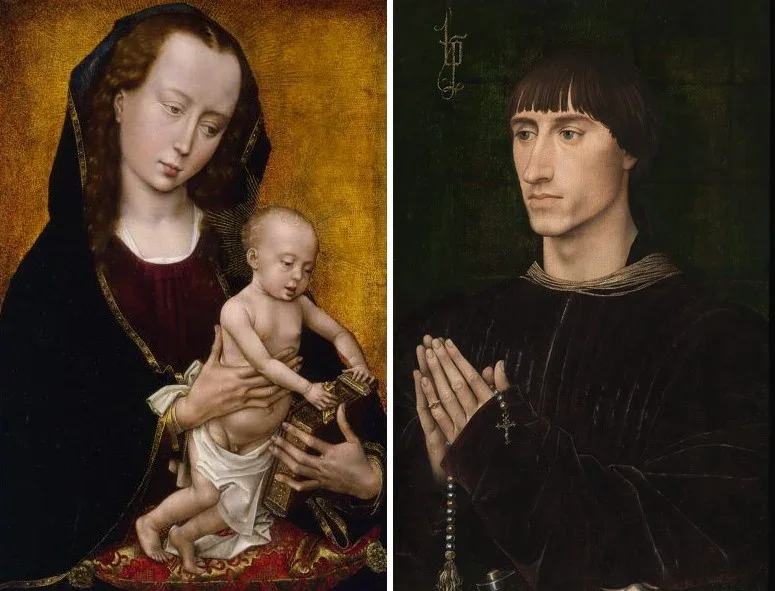
Diptych of Philip de Croÿ with The Virgin and Child
A Virgin on gold, with a baby standing unsteadily on a cushion. He is not posing. He fidgets with the clasps of a prayer book, restless as any toddler. And notice where his other hand is going, stretched out almost past the edge of the panel, reaching for something that is not here. Because this panel is only half of a small pair. Opposite it once stood a young nobleman, Philip de Croÿ, hands folded in prayer. The two were probably made as wings of a diptych, and at some point they were taken apart. His portrait now hangs in Antwerp, and his Virgin is here. Rogier van der Weyden painted the pair about 1460. He set her against shining gold so she would seem like a vision appearing before the man. The child's reach crosses the seam between the panels toward de Croÿ, and perhaps beyond him to whoever prayed in front of them. That reach now arrives at you. Even the book may have been chosen with him in mind. De Croÿ owned a famous library, and the richly embroidered prayer book was probably painted to flatter him.
Ouvir no appRogier van der Weyden · CC BY-SA 4.0
03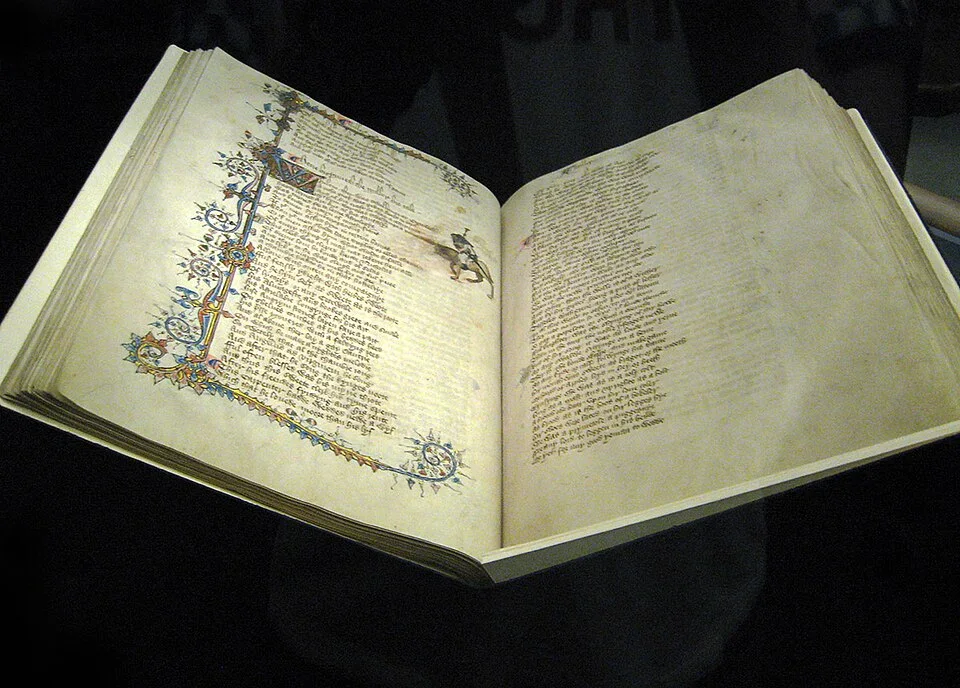
Ellesmere Chaucer
Someone sat down with quill and parchment and copied out the whole of the Canterbury Tales by hand. Two hundred and forty leaves of it. This is one of the very first copies that survives, written just after Chaucer died in 1400. It may even have been begun while he was still alive. The final line asks Christ to have mercy on the poet's soul, so the book was finished after his death. One single hand probably wrote every page, and that hand may belong to Adam Pinkhurst, a man who worked for Chaucer himself. If so, the copyist knew the poet's own intentions for the Tales. Though not everyone agrees. The book also gives faces. Many of the storytellers get their own picture, a knight, a miller, the Wife of Bath, and Chaucer himself, riding a horse. Who paid for so costly a book, no one knows.
Ouvir no appKen Eckert · CC BY-SA 4.0
04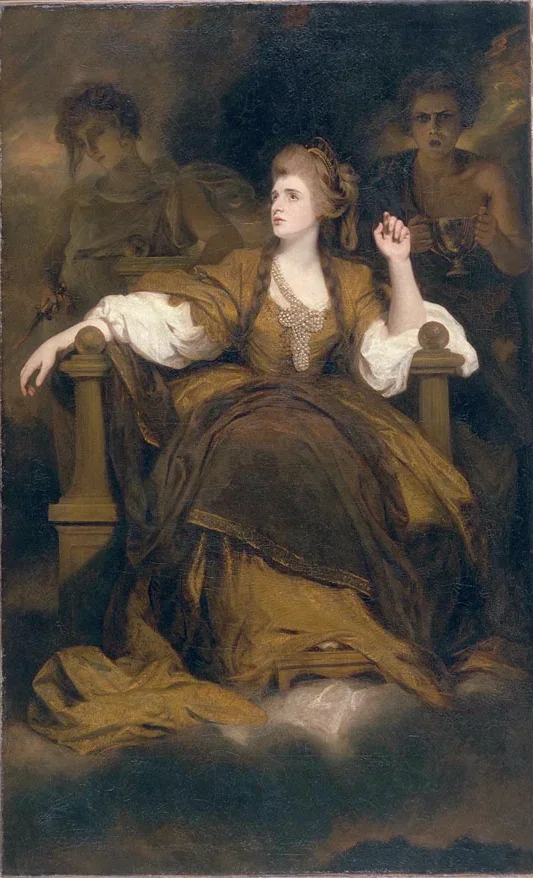
Sarah Siddons as the Tragic Muse
By one account, an actress hurried into the painter's studio, late and a little flustered. She dropped into a chair and asked Joshua Reynolds what pose he wanted from her. He told her to stay exactly as she was. What you see is what came of that moment. Sarah Siddons sits on a throne carried by clouds, a diadem on her head, pearls at her neck. Her head tilts to show her well known profile, one hand lifts as if a speech is about to begin. In the shadows behind her stand Pity and Terror, figures from tragedy. Terror holds a poisoned cup, Pity a dagger. Reynolds has turned a portrait into the muse of tragedy herself. Siddons liked to say the pose was her own idea.
Ouvir no appJoshua Reynolds · Public domain
05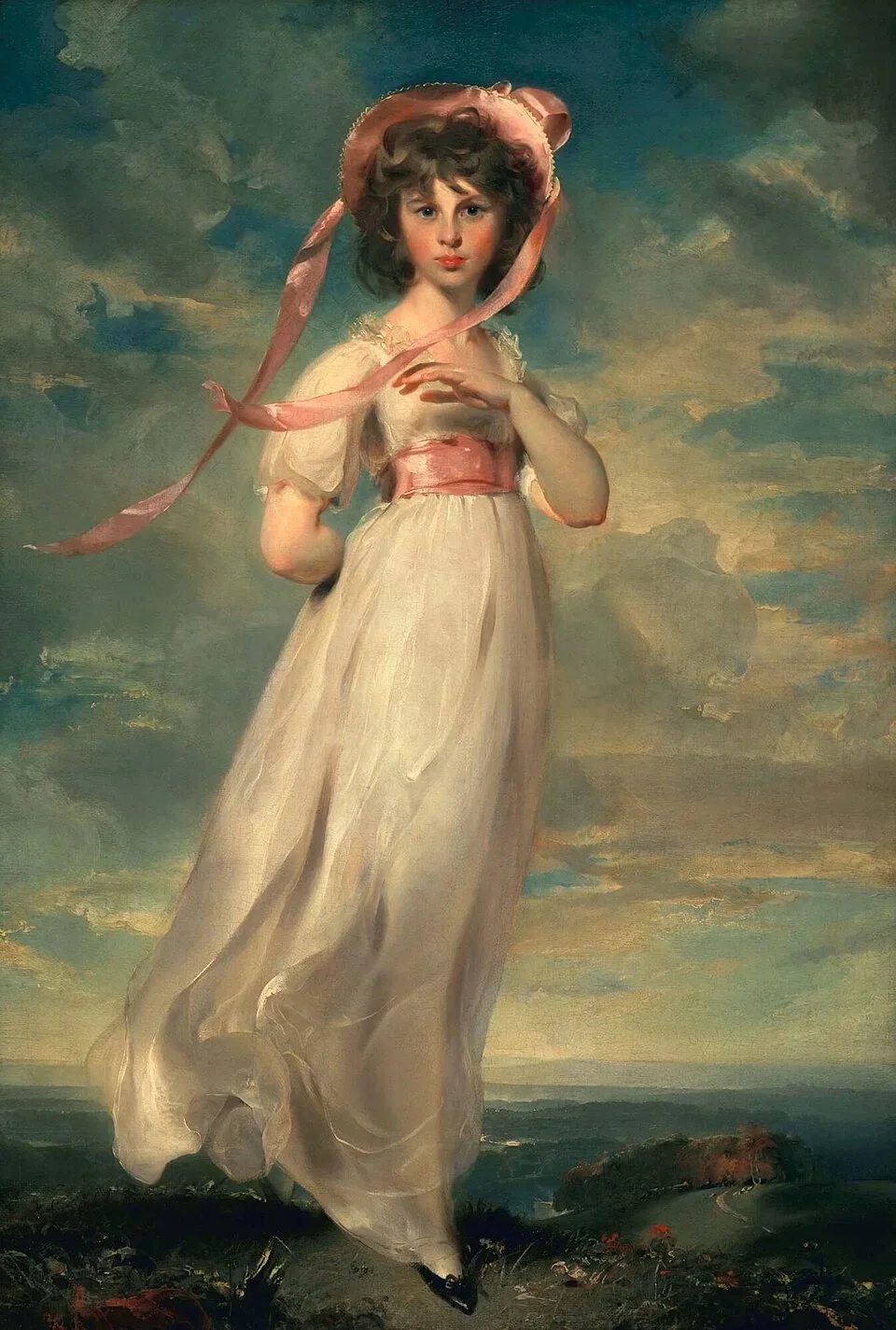
Pinkie
Here is a girl of about eleven, standing on a hilltop, looking straight out at you. Her family called her Pinkie. She was born in Jamaica, and at nine she was sent to school in England. Her grandmother stayed behind, and in 1793 she wrote asking for the child's picture, at full length, by one of the best painters, in an easy careless attitude. She could not have the girl herself, so she ordered her in paint. Sarah probably began sitting for Thomas Lawrence at his studio on Old Bond Street in 1794. One year later, in April 1795, she died in Greenwich, twelve years old. The Royal Academy exhibition opened the day after her burial, and this picture hung in it. So the first crowds to see her were seeing a girl who had just been buried. And that steady look she gives you is the one her grandmother never got to see in person.
Ouvir no appThomas Lawrence · Public domain
06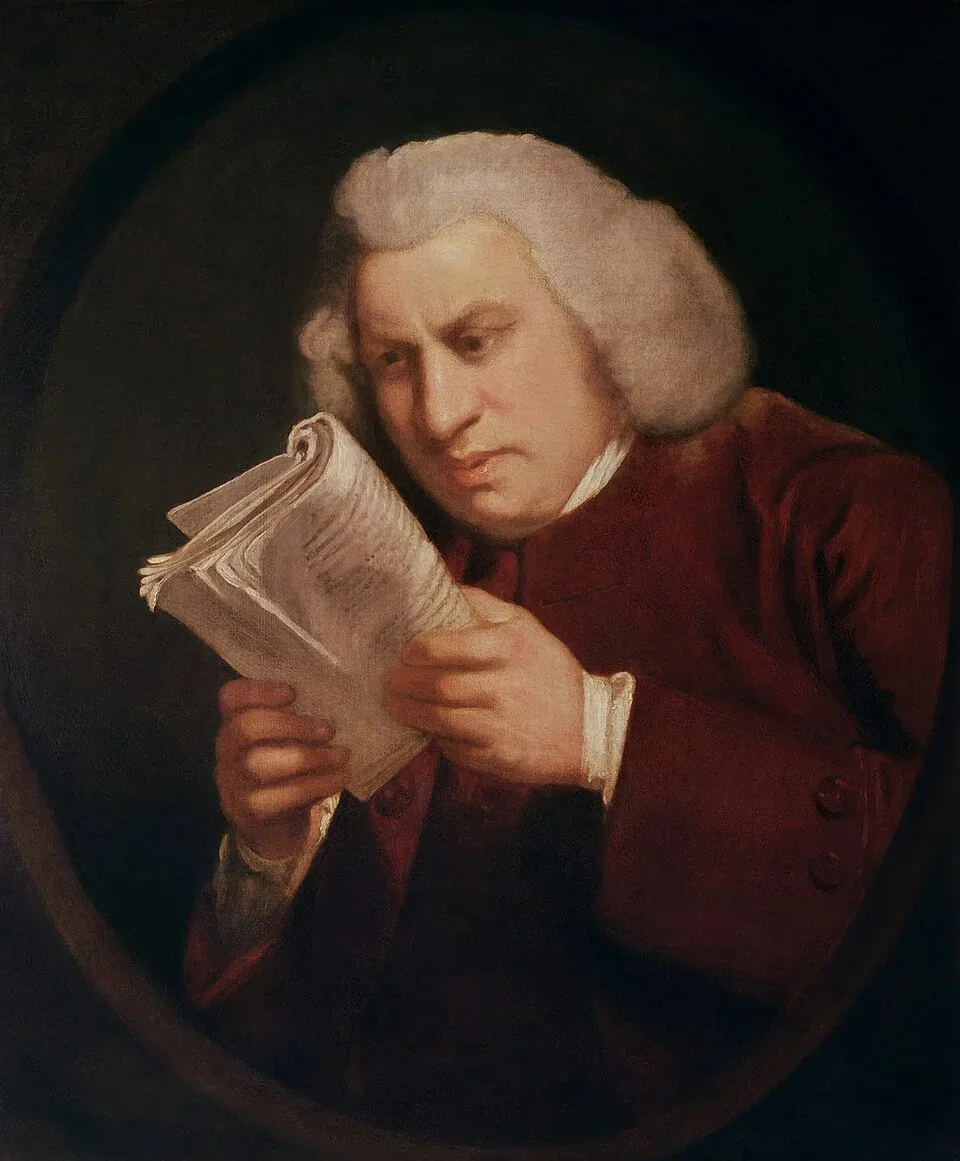
Portrait of Samuel Johnson
A man holds a book so close to his face that he has to squint to read it. The pages are bent back to front, and the light falls on his face and his hands. This is Samuel Johnson, the man who wrote the first full dictionary of English, and this is what reading looked like for him. An infection had damaged his left eye, and he was used to holding text right up to his face. His close friend Joshua Reynolds painted him this way, about 1775, weakness and all. Johnson was not pleased. He said he would not be remembered by later ages for his faults alone. Someone pointed out that Reynolds had painted himself with a hand cupped to his ear, because he was deaf. Let him paint himself deaf if he likes, Johnson replied, but he would not be Blinking Sam. Whether Reynolds meant the whole thing as a joke on his friend, nobody can say.
Ouvir no appJoshua Reynolds · Public domain
07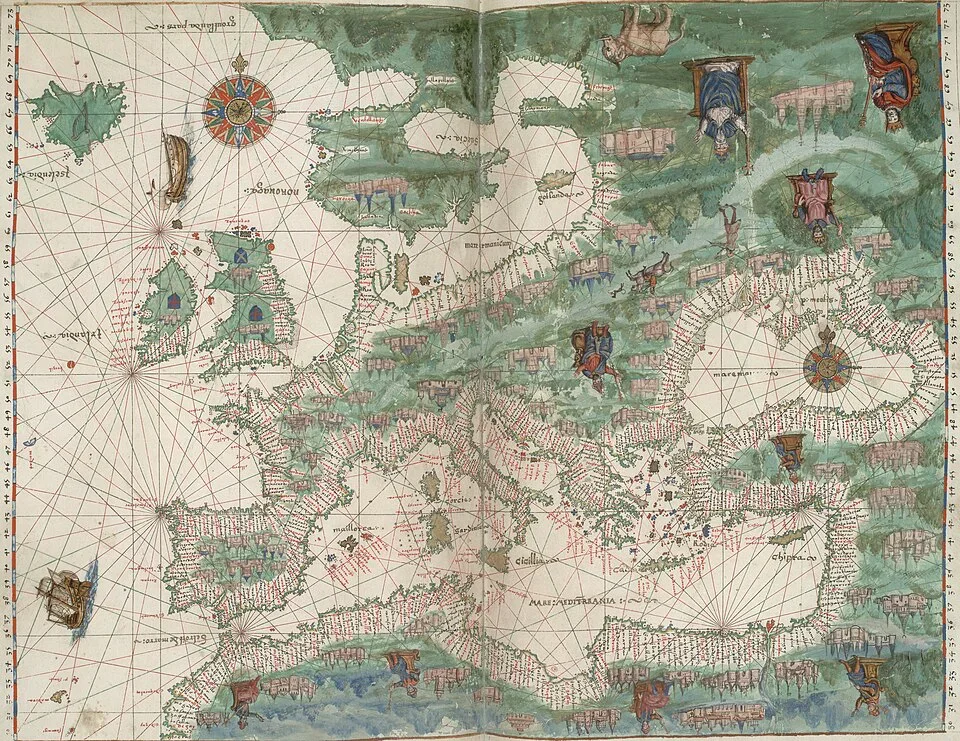
Vallard atlas
Get your bearings before you trust these charts, because they will turn you around. In this atlas, south sits at the top of the page and north at the bottom, the opposite of the way we draw the world today. It was made in Dieppe, in the north of France, in 1547, and nobody knows who drew it. The name on the first page, Nicolas Vallard, was probably just its first owner. The hand behind the maps was likely Portuguese, or copied from Portuguese charts. Inside are sixty-eight pages, a calendar, and fifteen double-page sea charts, with pictures of the indigenous peoples of the New World. And one joke hides in the work. Francis the First, its possible patron, sails around the Cape of Good Hope aboard a whale.
Ouvir no appAnonymousUnknown author Portuguese cartographer · Public domain
08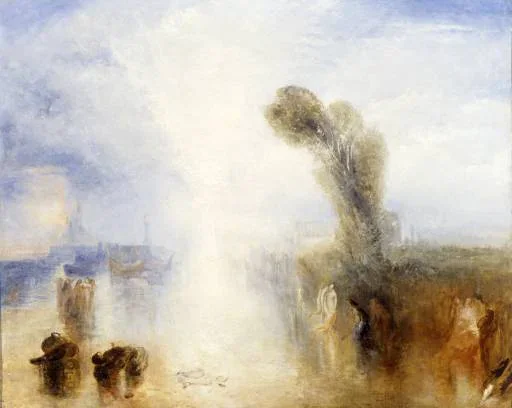
Neapolitan Fisher Girls Surprised Bathing by Moonlight
Women are bathing in the bay, and the moon is out. It looks like a quiet night swim at Naples. But the mountain in the distance is glowing, and that glow is Vesuvius erupting. The bathers are caught by surprise. Turner had visited Naples in 1819 and kept his sketches for twenty years before painting this in 1840. By then he was testing what light could do, and here it comes from three places at once. Cold moonlight breaks through the clouds. The volcano glows a hot red in the distance. And on the shore at the right, a fire burns, warm and close, while the mountain burns far away. The women are caught between the two. The mountain has other plans.
Ouvir no appJ. M. W. Turner · Public domain
09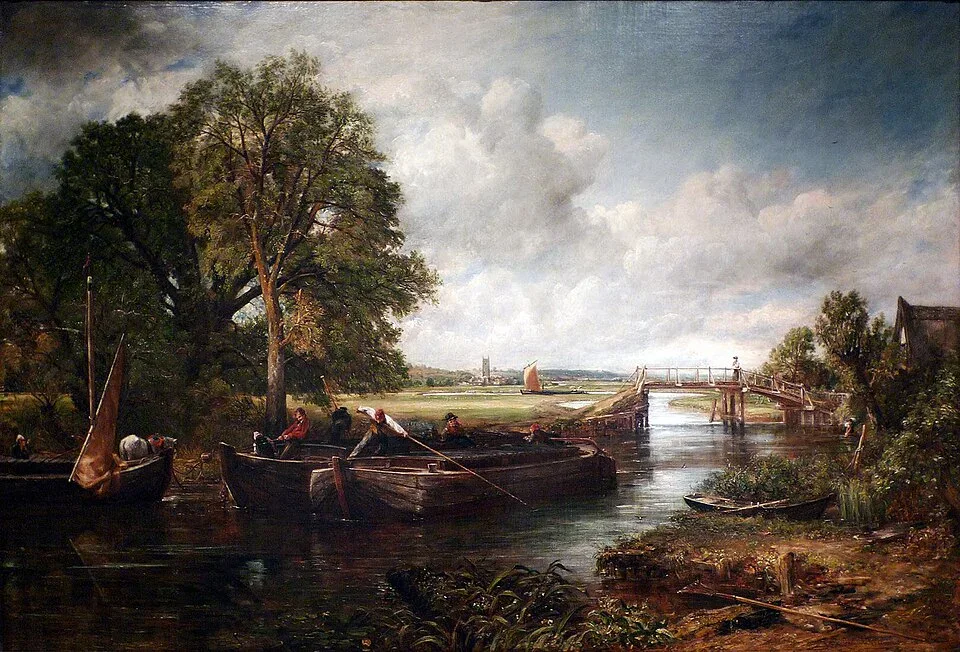
View on the Stour near Dedham
In 1824, a calm stretch of English river caused a stir in Paris. Constable hung this picture at the Salon in the Louvre, beside his Hay Wain, and the French loved what they saw. Over his life he sold more paintings in France than in his own country, where success came slowly and money came hard. He painted what he knew. He grew up in this valley, on the border of Suffolk and Essex, and he returned to the River Stour near Dedham again and again. The water fills most of the front of the picture, slipping under a wooden footbridge where a woman stands with her child. Two heavy barges work the current, one man pushing his pole, an older man steering, another leaning on the far rail with a pipe. Swallows skim low over the surface. And in the near corner, lying on the ground, there is an eel spear, a simple tool for catching eels.
Ouvir no appJohn Constable · Public domain
10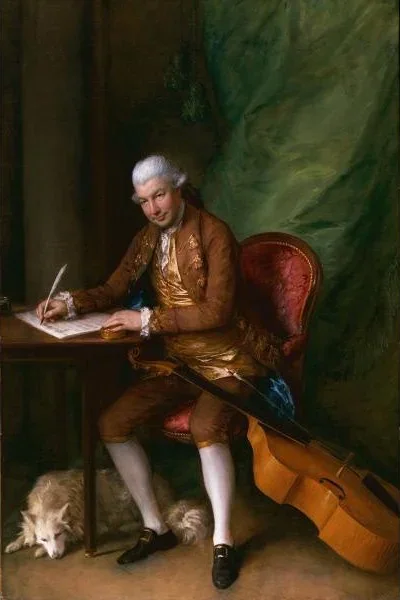
Carl Friedrich Abel
Notice the pen on the desk. It rests on the first bar of a new piece of music, as if the notes are about to come. This is Carl Friedrich Abel, a German composer who made his name in London playing the viola da gamba. Thomas Gainsborough caught him at the moment a piece is born. The viola leans against his thigh, as if he has just set it down to write. The two men were friends, and Gainsborough painted him twice. He even learned to play the viola da gamba himself. So this is one musician painting another. Around Abel, shades of emerald, scarlet and sapphire speak of his wealth and his standing. In the second portrait, from about 1777, the music is starting.
Ouvir no appThomas Gainsborough · Public domain
- 11
Breakfast in Bed
Mary Cassatt · 1897
- 12
Diptych of Philip de Croy - Virgin and Child
Rogier van der Weyden · c. 1460
Huntington Library
Perguntas frequentes
Quanto custa o audioguia?
App gratuita. Grátis até 1 de janeiro. Preço indicado do guia: $0.99. Apenas audioguia. A entrada no local é separada.
Posso ouvir sem internet?
Sim. Descarregue áudio, imagens e mapas na app antes da visita. O conteúdo descarregado fica disponível offline.
Posso ouvir no meu idioma?
Por enquanto em inglês. Mais idiomas em breve.
Tenho de seguir um horário?
Não. A visita é autónoma. Escolha as paragens, faça pausas e volte às histórias ao seu ritmo.
Ao seu ritmo
Explorar Huntington Library.
Descarregue o Stanza e procure “Huntington Library”.
App gratuita · Preço do guia na app
Continue a explorar
Audioguias — Estados Unidos
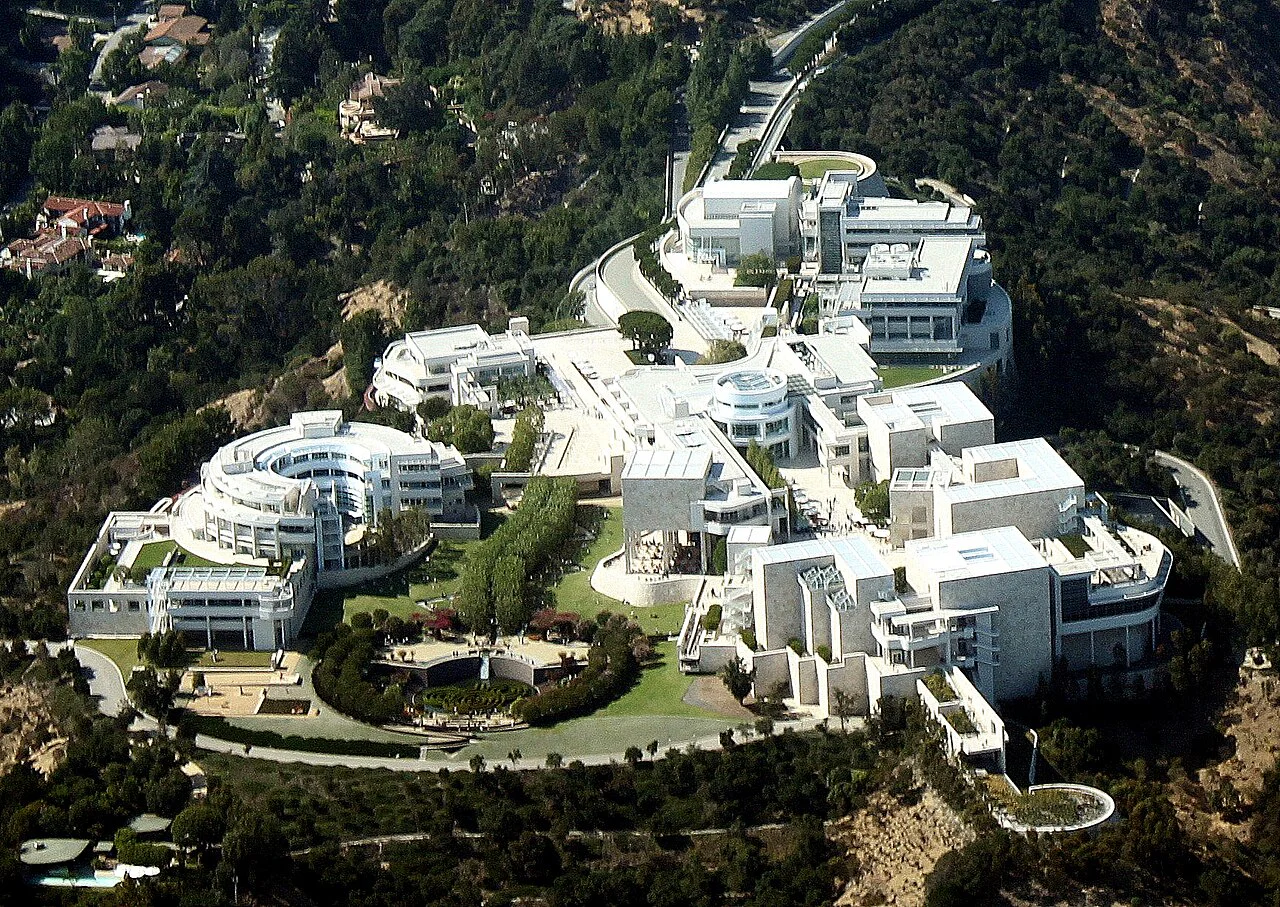
Los Angeles · 34 km
J. Paul Getty Museum
Conteúdo e fontes
Jelson25 · Public domain
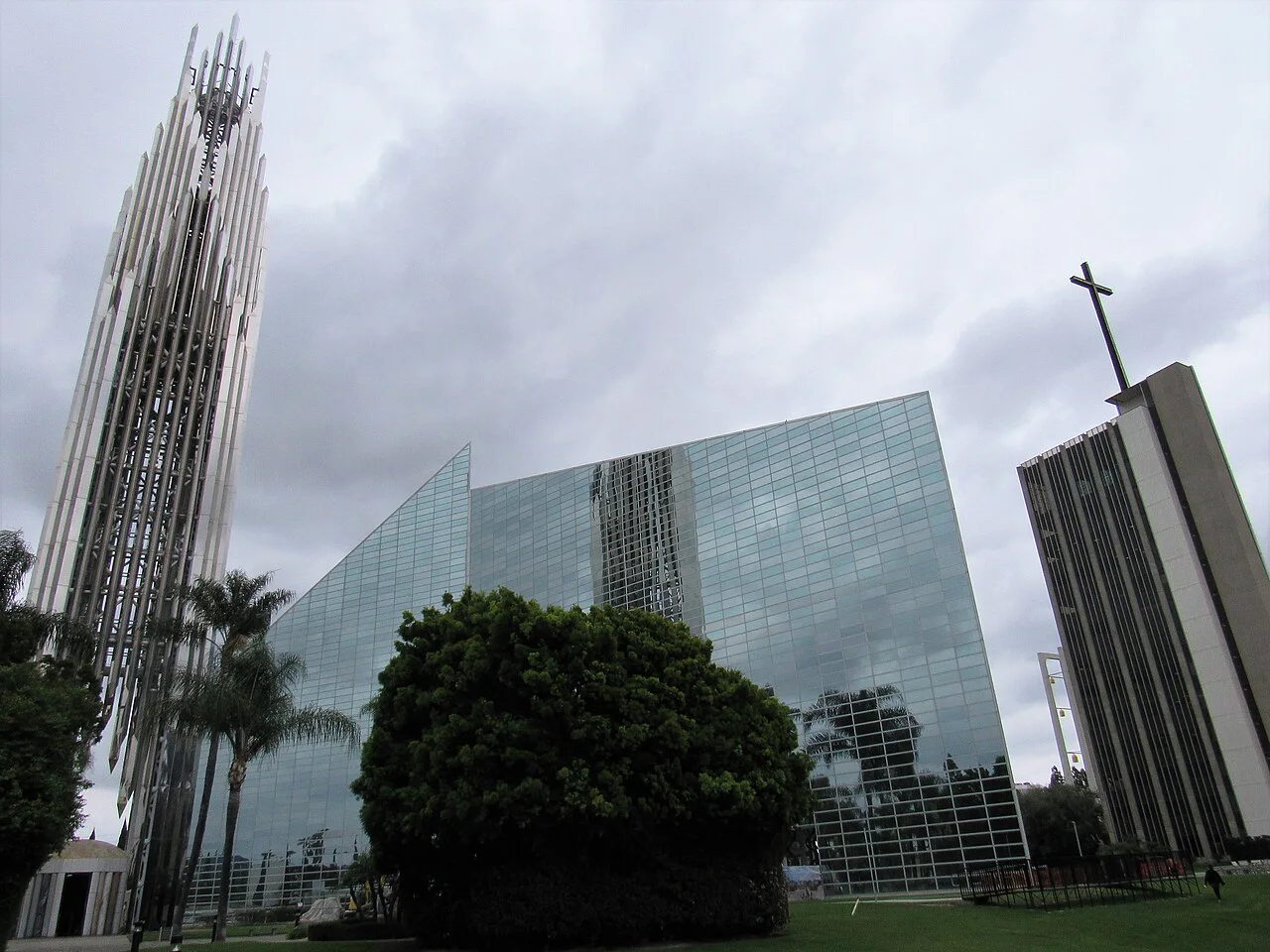
Garden Grove · 43 km
Catedral de Cristo
Conteúdo e fontes
Photo: Farragutful · CC BY-SA 4.0
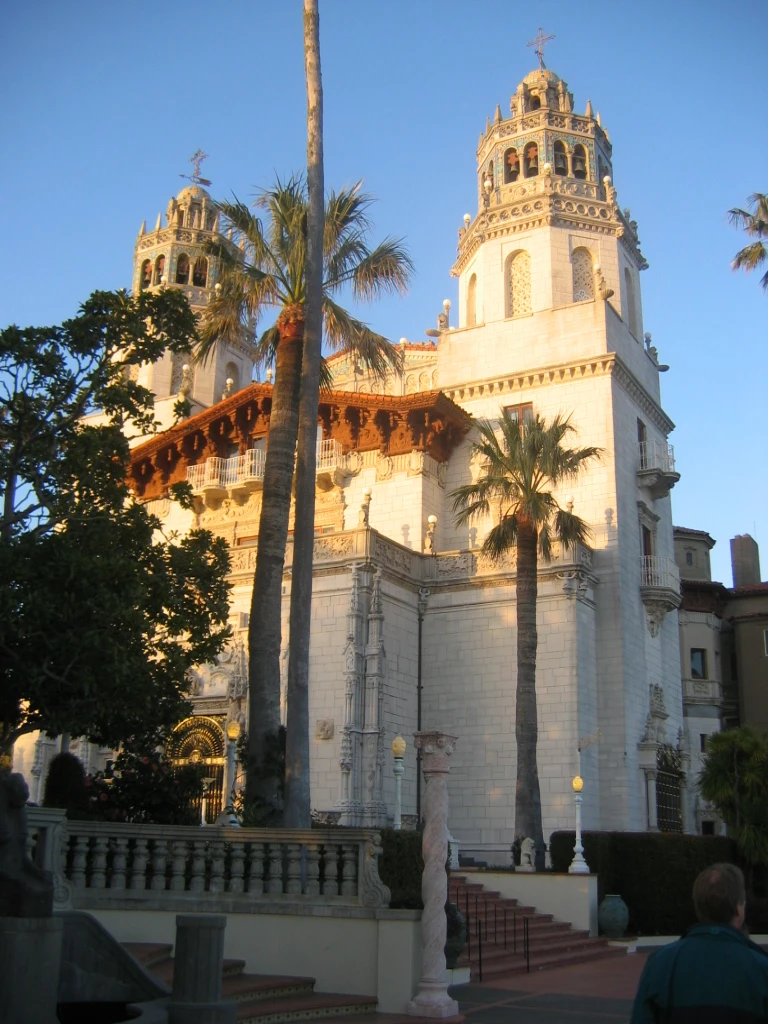
San Simeon
Hearst Castle
Conteúdo e fontes
No machine-readable author provided. Urban~commonswiki assumed (based on copyright claims). · CC BY-SA 3.0

Boulder City
Barragem Hoover
Conteúdo e fontes
Western Area Power · CC BY 2.0