Stanza · Аудиогид
Kröller-Müller Museum Аудиогид
Место, которое запомнится. История, которая останется с вами.
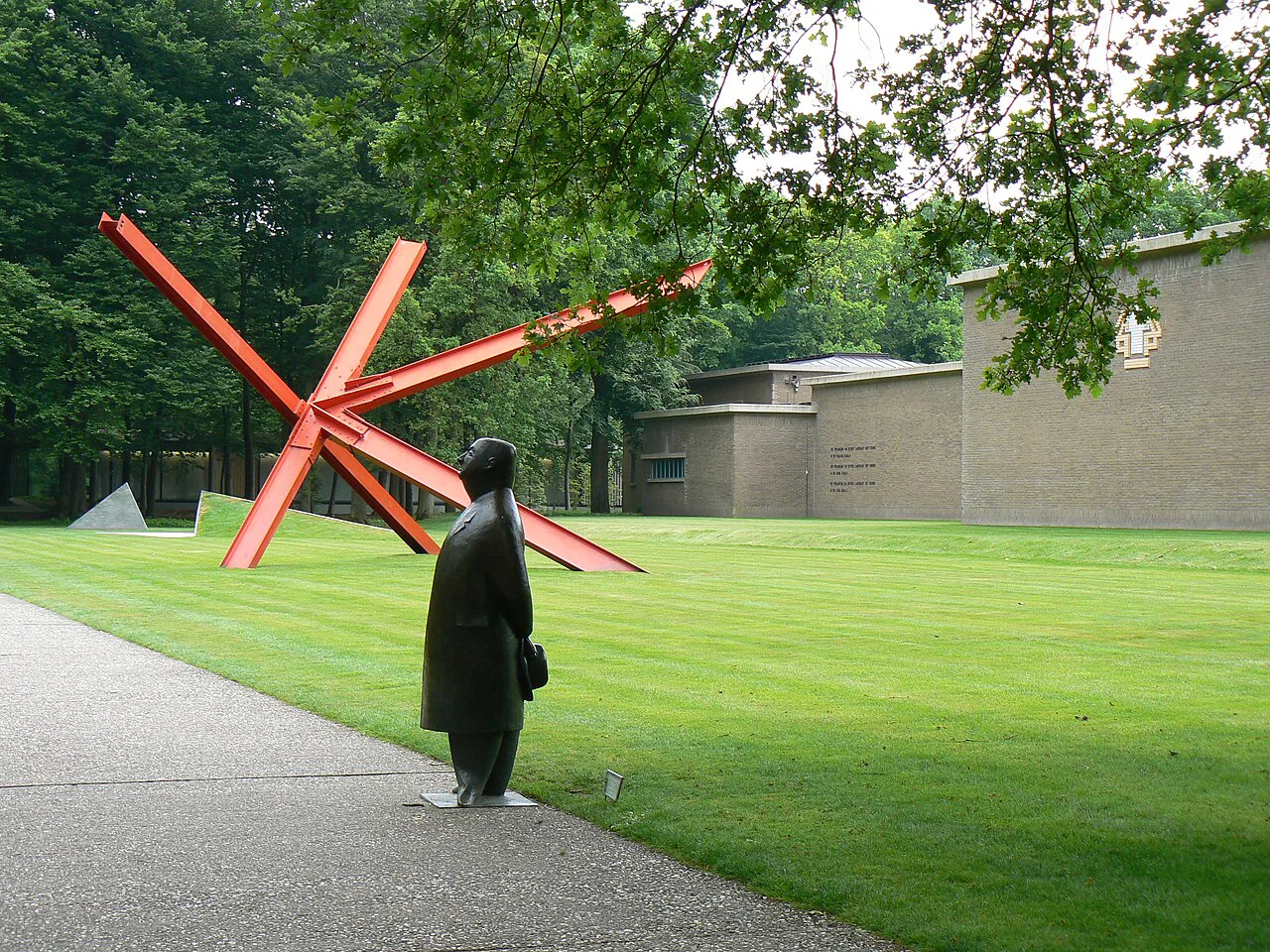
The Kröller-Müller Museum is a national art museum and sculpture garden located in the Hoge Veluwe National Park. It holds the second-largest collection of paintings by Vincent van Gogh.
Пока на английском. Скоро и на других языках.
Скачайте Stanza и найдите “Kröller-Müller Museum”.
О туре
Один гид. Ваш способ исследовать.
The Kröller-Müller Museum is a national art museum and sculpture garden located in the Hoge Veluwe National Park. It holds the second-largest collection of paintings by Vincent van Gogh.
Когда вам удобно.
- 01Скачайте Stanza бесплатно.
iOS & Android
- 02Найдите свой гид.
“Kröller-Müller Museum”
- 03Загрузите его до визита.
Офлайн
Аудиогид / 60 произведений
Внутри аудиогида
Познакомьтесь с историями до визита. Откройте остановку, чтобы прочитать подробнее.
01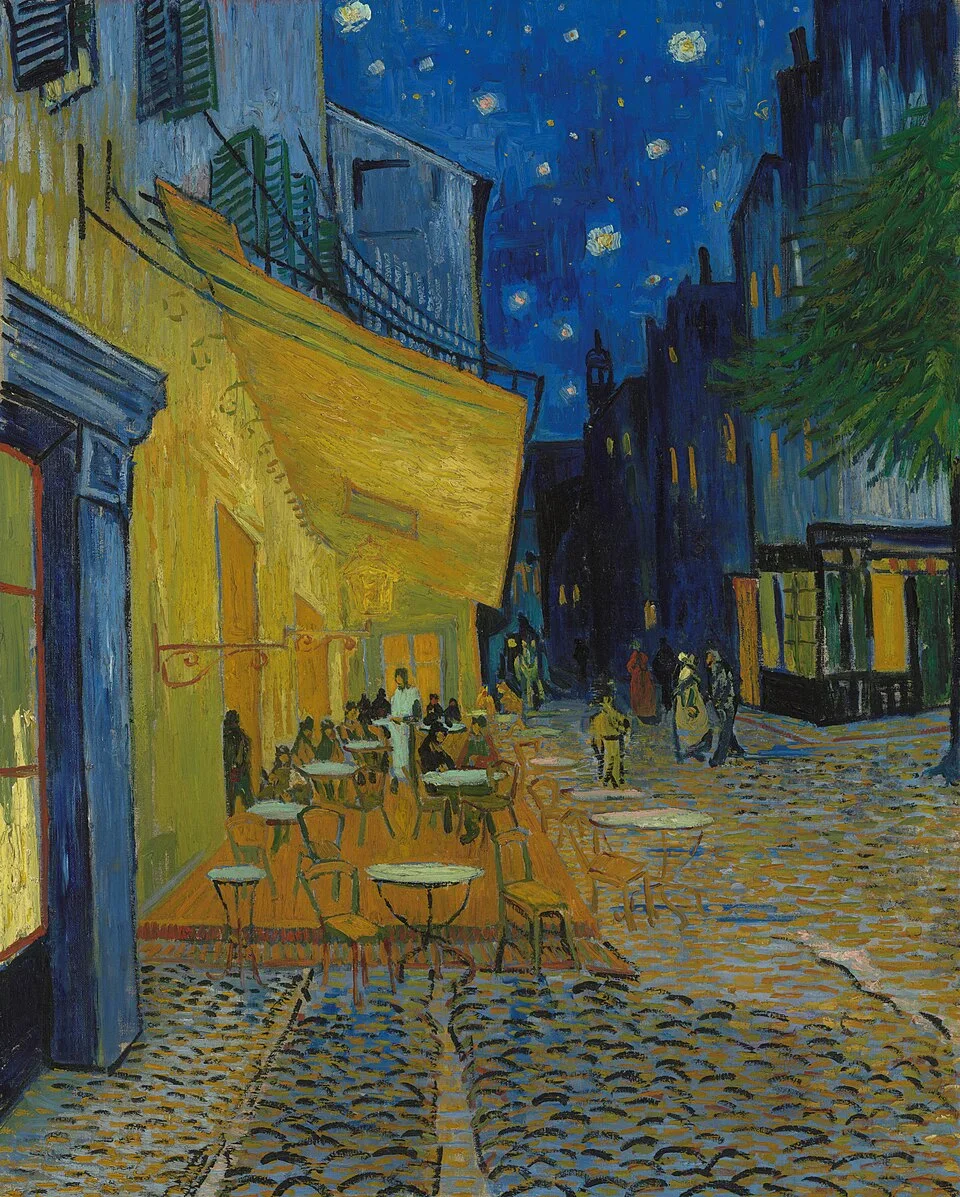
Café Terrace at Night
It looks like the warmest night you have ever seen, doesn't it? Yellow light spills over the street as if someone poured it. Above it, a sky so blue it almost hums. But the man who painted this had a different word for it. A night without black. This is Vincent van Gogh's Café Terrace at Night. Start with the lantern. A huge yellow one, hanging on the café wall. It lights the terrace, the front of the building, even the pavement. Van Gogh wanted to get away from the usual black night, so poor and pale. Even one candle, he knew, gives the richest yellows and oranges. Now go down to the people. A waiter in white stands among the tables. The drinkers around him are small, dark, and soft. Little figures. Nobody has a face you could name. Maybe they are there less as people than as part of the evening. Now the cobblestones. Look how far the light travels. It runs out into the street, and the stones take on a violet and pink tinge. Not grey, and not black. Leave the light. Walk off to the right, into the side street. The houses go deep blue and violet. A red dress, a pale gown, a few strollers in the street. And one green tree. He painted this on the spot, at night. He admitted he might take a blue for a green in the dark. But he enormously enjoyed painting at night. Last, look up at the stars. He was careful to paint the sky as it really looked. The bigger stars are bursts of pale light. So here is a street that seems to glow, and a dark that is not empty. It is blue. It is violet. It is green. Look at the darkest corner again. How much blue can you find in it?
Слушать в приложенииVincent van Gogh · Public domain
02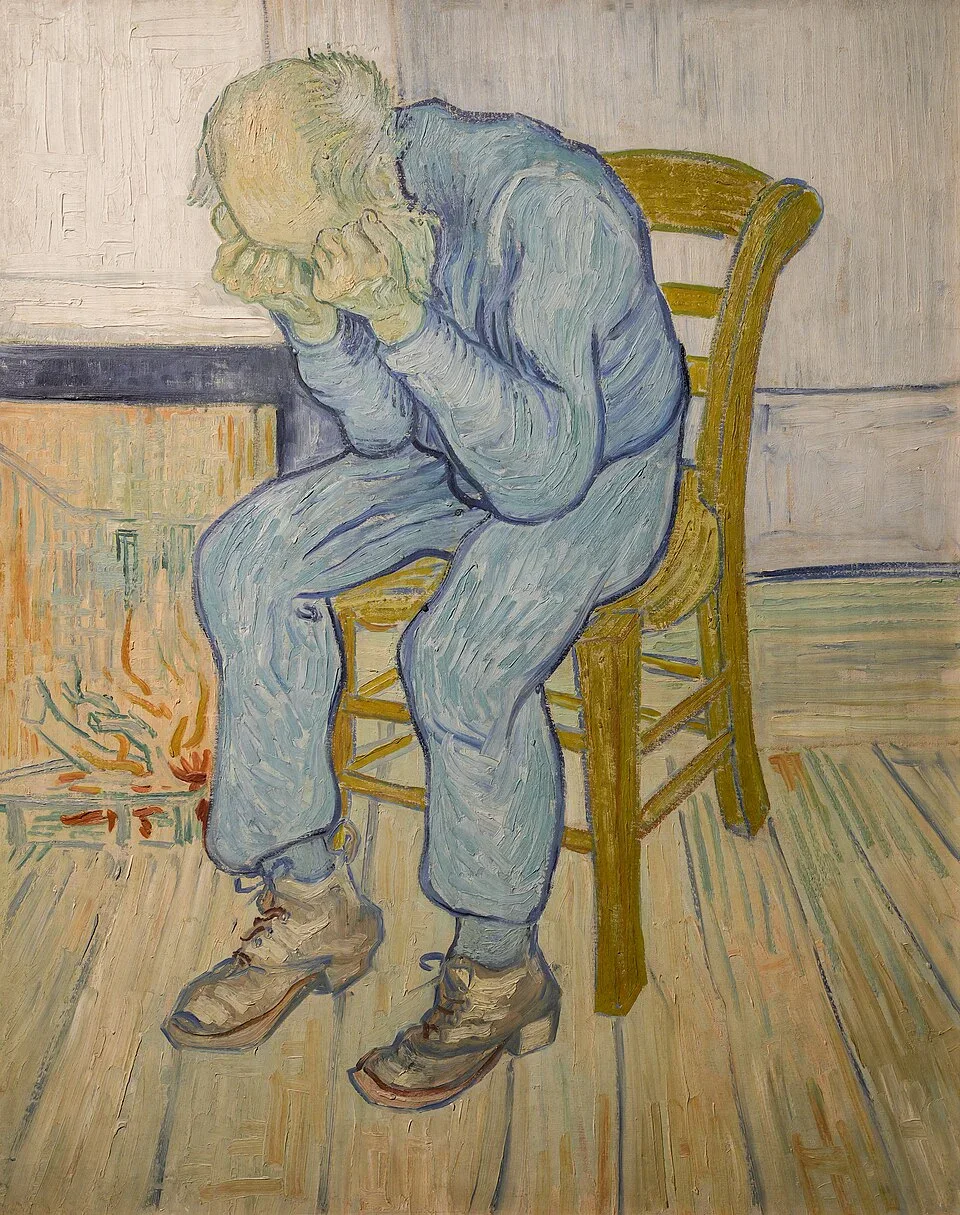
At Eternity's Gate
You know this posture. A man folded in on himself, face buried in his fists. It looks like despair. Nothing but despair. Vincent van Gogh gave it a different name. At Eternity's Gate. Start with the hands. Pressed hard against his eyes. The head is bald, the few hairs pale and wild. Perhaps he does not know anyone is watching. Van Gogh found that moving. An old man, sitting quietly in the corner of his hearth. Now the blue. One curve runs from his neck to his knees. Elbows on his legs, back rounded, the brushstrokes swirling over the cloth. Van Gogh thought an old working man in a patched suit was a fine sight. To the left, the hearth. A few thin flames, orange and red, low and small. He sits beside them, head bowed. Then the boots. Laced, worn-looking, standing on bare boards. He is not a stranger. In 1882 Van Gogh drew a war veteran in this pose, a pensioner at an almshouse in The Hague. Eight years later, in May 1890, in the asylum at Saint-Rémy, he painted the scene again. Van Gogh once wrote that an old man like this holds something precious, something noble. Something not meant for the worms. Even the poorest woodcutter or miner, he wrote, can have moments that give him a sense of an eternal home. So look at him again. Perhaps not only despair. A man at the gate.
Слушать в приложенииPhoto: GoldenArtists · CC BY-SA 4.0
03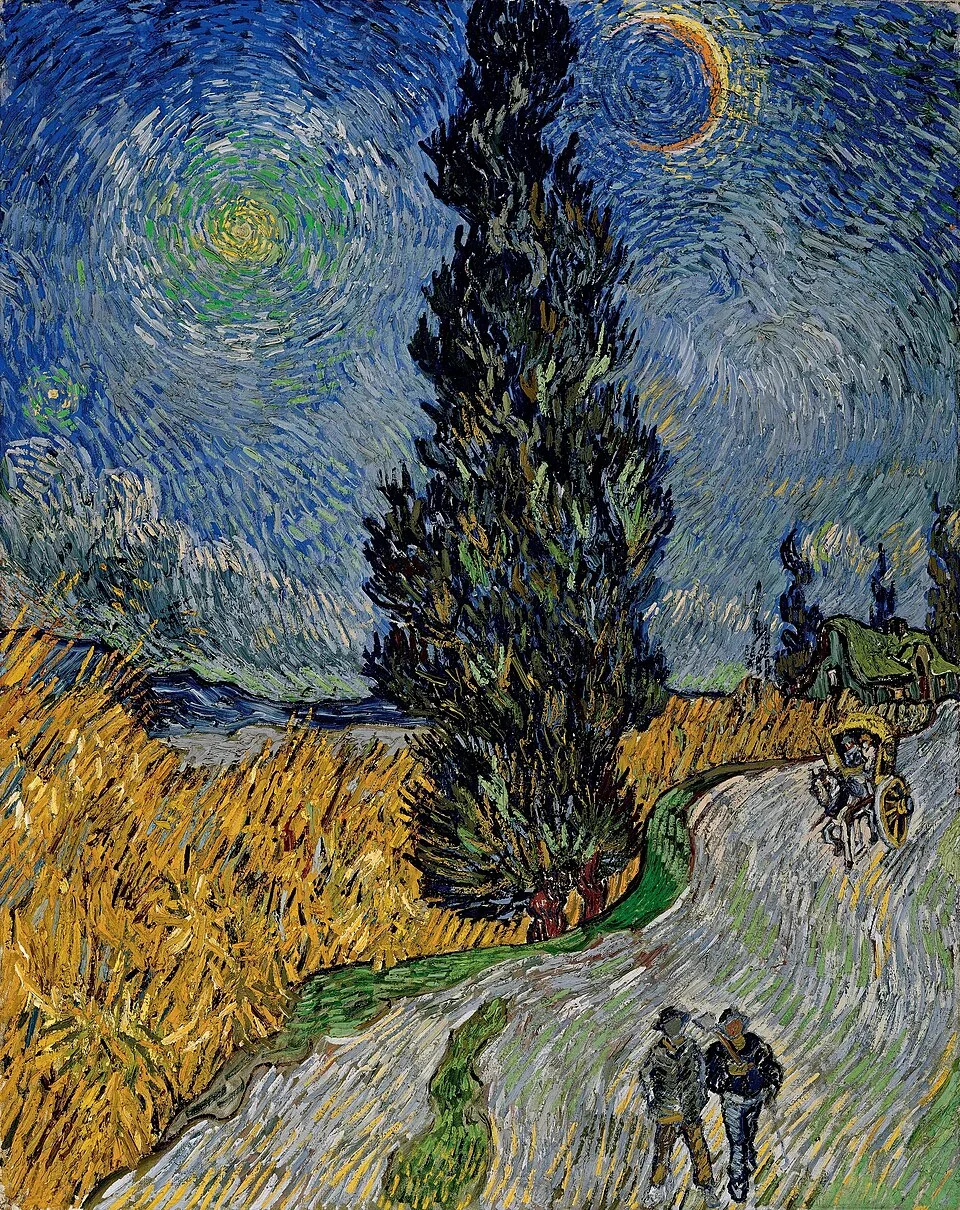
Road with Cypress and Star
A huge tree fills the middle of this canvas, rising until it runs off the top, and it cuts the picture in two. To its left, an evening star, so faint it is easy to miss. To its right, a thin new moon. Van Gogh painted this in the middle of May 1890, in his last days at the asylum at Saint-Rémy. He had written to his brother Theo that cypresses were always on his mind, shaped like an Egyptian obelisk. Here the tree stands between a light that is fading and a light just beginning, and it is hard not to see a man thinking about an ending and a new start. Below, two travelers walk the road under both skies. It was the last painting he made there. Then he left Saint-Rémy.
Слушать в приложенииVincent van Gogh · Public domain
04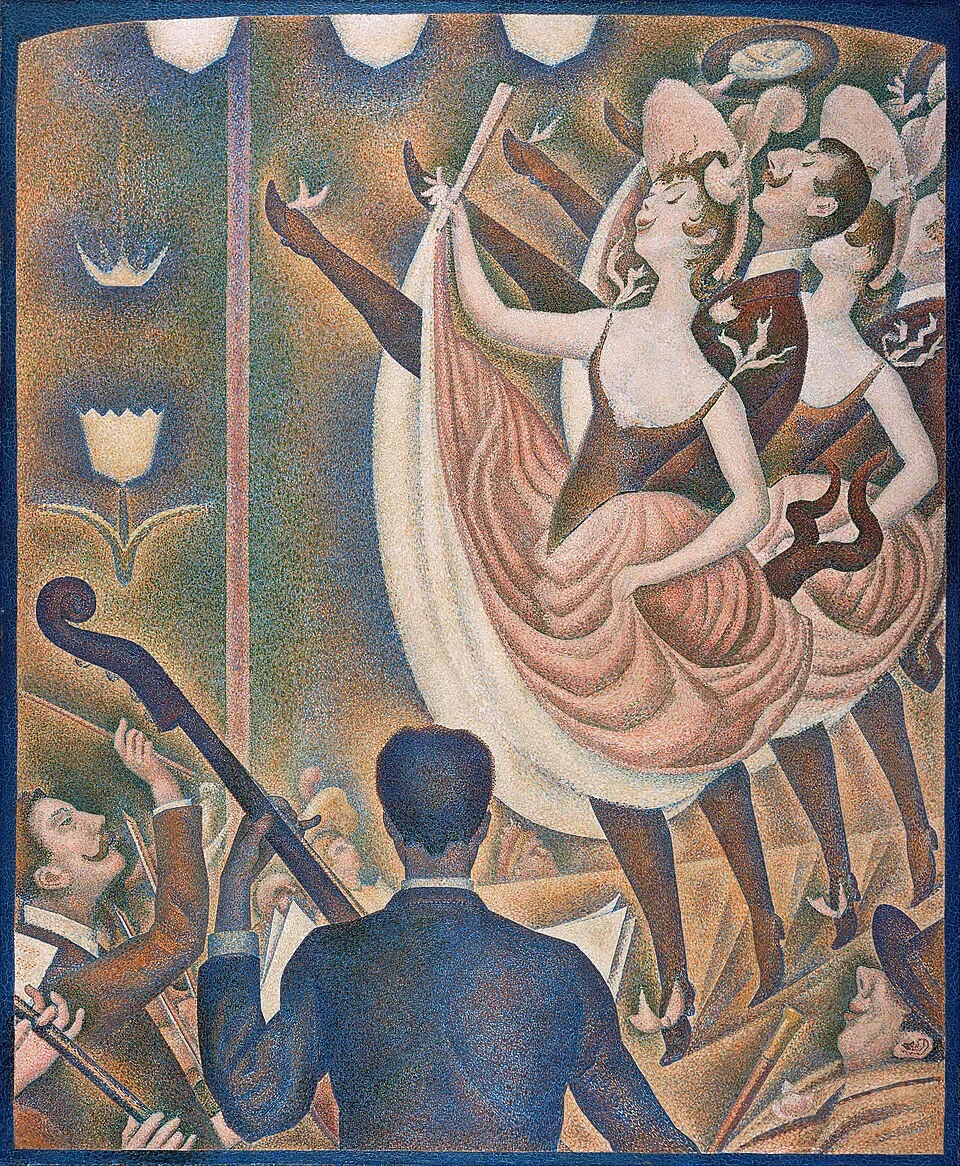
Le Chahut
It looks like pure noise. Legs flung up, skirts flying, a whole room alive with music. But it is far more ordered than it looks. Seurat named it Le Chahut. The word means uproar, and it was another name for the can-can. Start with her face. Eyes closed. A small smile. Chin lifted high. The man beside her has the same closed eyes and the same lifted chin. Two faces, one expression. They are lined up flat, like a repeating pattern. Now the legs. Three shoes, kicked high, at almost the same angle. That is the secret of the picture. Seurat believed a line can carry a feeling. Lines that rise and spread mean joy. So he sent so many of them upward. Even the cloth rises. The white petticoat sweeps up beside her, and the pink skirt is gathered in her hand. Up close, that skirt is thousands of tiny dabs. Pink beside orange, orange beside green. Before a dot touched the canvas, he had prepared eighteen mixtures of colour. Step back, and your eye blends them. The colour begins to hum. Above, the lamps hang in a row. Below them, a crown and a tulip, their edges pointing up. Even the decoration points skyward. Then a man in the lower right corner, under his hat. His nose lifts, and his look slides sideways. He is a familiar type in pictures of the can-can. The watcher. And right in front of you, a musician with his back turned. Broad shoulders, almost level. A calm shape in a picture that leaps. It is dated 1889, and Seurat knew this world. He had lived in Montmartre since 1886. So is it a wild night? Or joy, built line by line? Look at the legs again. Hear the uproar. Then see how carefully it was made.
Слушать в приложенииGeorges Seurat · Public domain
05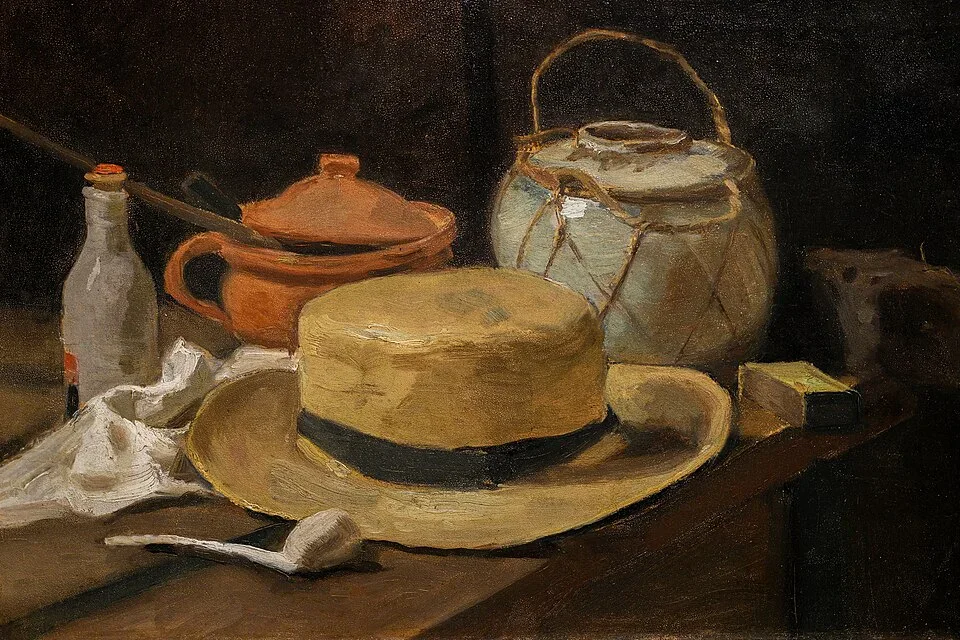
Still Life with Straw Hat
A yellow straw hat and a pipe make up this picture, and it began as a lesson. In November 1884 Van Gogh was teaching friends from Eindhoven, a town near his home in Nuenen, how to paint ordinary objects in oil. Showing them how got him carried away, and he began making still lifes of his own, bottles and bowls and pots, one after another. Exactly when this one was painted is not certain, but it belongs to those months. In a letter he admitted that paintings like it would be hard to sell. Then he went on painting them anyway, all winter long.
Слушать в приложенииPhoto: GoldenArtists · Public domain
06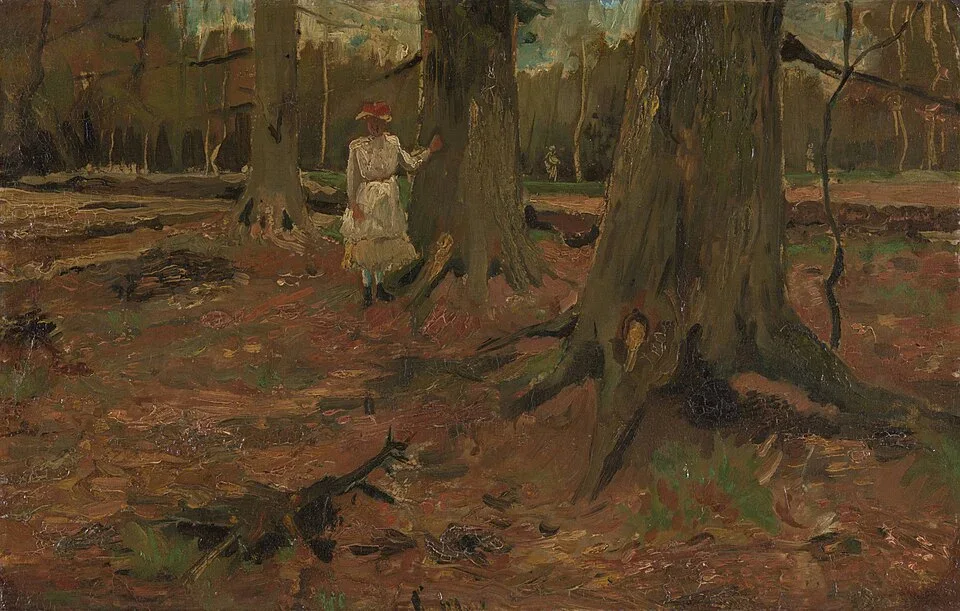
Girl in a Wood
Can a painting smell? That is what Vincent van Gogh set out to prove here. A small girl in white leans against one of the big beech trunks, and under the trees the ground is covered with dry sticks and fallen leaves. He painted it in August 1882, in The Hague, in woods around the city that were already quite autumnal. The hard part, he wrote to his brother Theo, was keeping the picture clear, putting air between the trunks that stand at different distances. So that you can breathe in it and walk around in it. So that the wood has a fragrance. He made the picture brighter, so it would sell. And he drew a sketch of it right there in the letter. He wanted you to smell it.
Слушать в приложенииVincent van Gogh · Public domain
07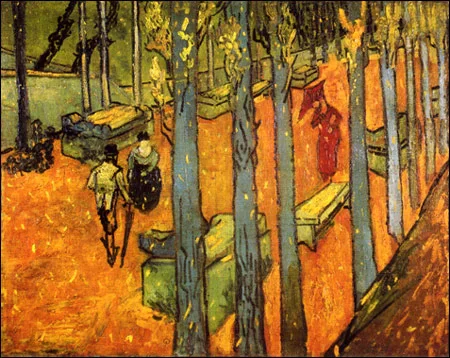
Falling Autumn Leaves
The canvas itself belonged to Gauguin. In late 1888 he had just come to Arles to live and work with Van Gogh, and this is one of the first things Van Gogh made after he arrived. He painted it on Gauguin's jute, and his brushstrokes turned the rough cloth into something like a tapestry. Bad weather kept Van Gogh indoors, so the ancient burial ground of the Alyscamps was painted in the studio, from a spot above the lane. That high view looks like the one in a painting of Gauguin's. And looking at a landscape through the trunks of trees was something the painter Émile Bernard had done before. Three painters' ideas in one picture, and Van Gogh was open about it. He told Bernard it was like pooling thoughts, each man making something his own that still fits the others. He wrote to his sister about the colors instead. Blue trunks against the yellow path of fallen leaves. Pairs like that, he said, make each other shine, and complete each other like a man and a woman. The people strolling down the lane, though, are nobody he saw. Even the figures are his own invention.
Слушать в приложенииVincent van Gogh · Public domain
08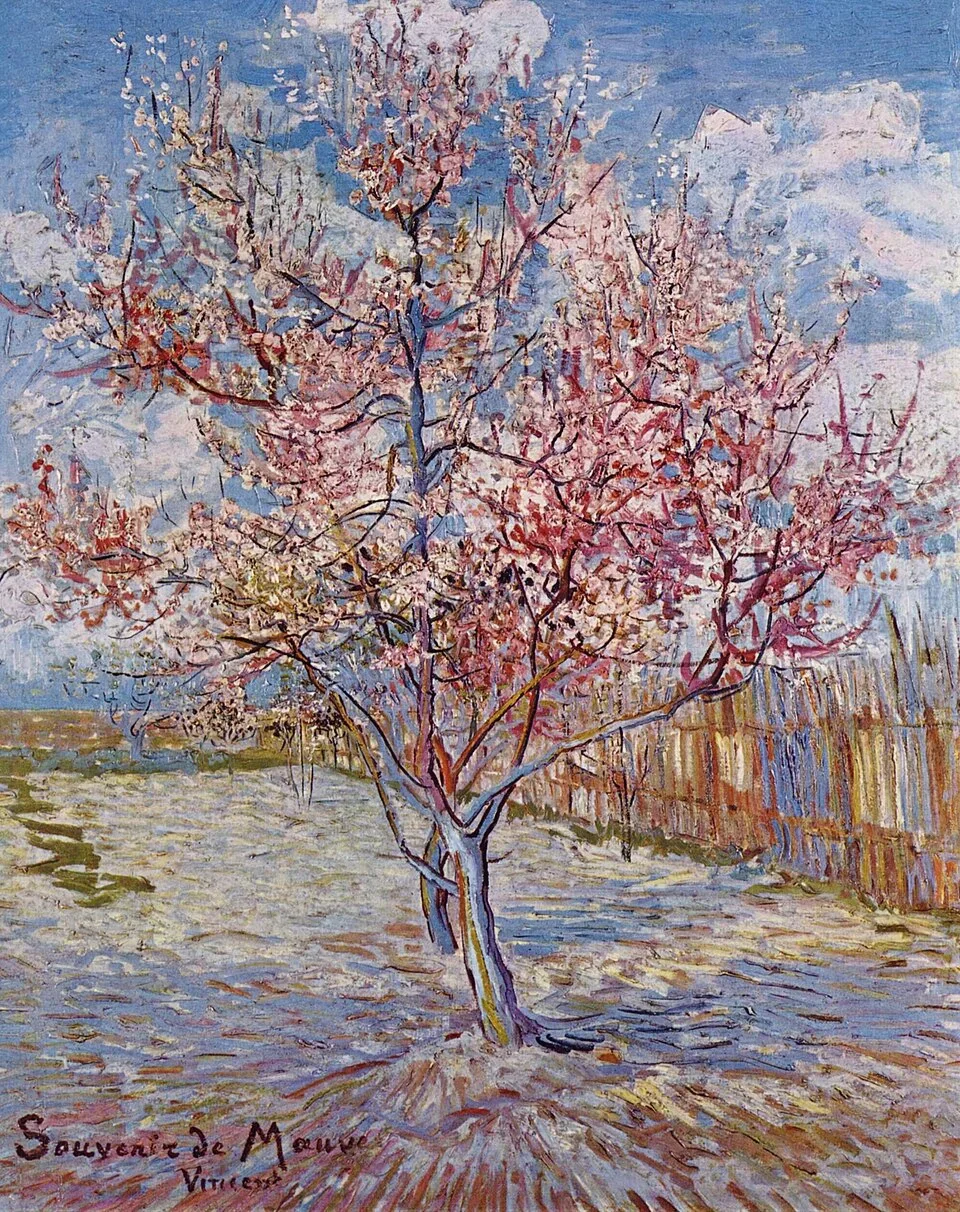
Flowering Orchards
In February 1888, Vincent van Gogh arrived in Arles, in the south of France, in the middle of a snowstorm. He had come down from Paris chasing bright sunlight. Within two weeks the weather turned, and the fruit trees in every orchard burst into flower. For him, blossom meant awakening and hope, and he set on the subject with real joy. In about a month he painted fourteen flowering orchards, nearly one a day. The mistral wind nearly beat him. It blew so hard that he drove pegs into the ground and fastened his easel to them, and even then he kept working, because the orchards were too beautiful to him to pass up. Around the twenty-first of April he wrote to his brother Theo that the orchards had almost finished blossoming, and he would have to seek something new.
Слушать в приложенииVincent van Gogh · Public domain
09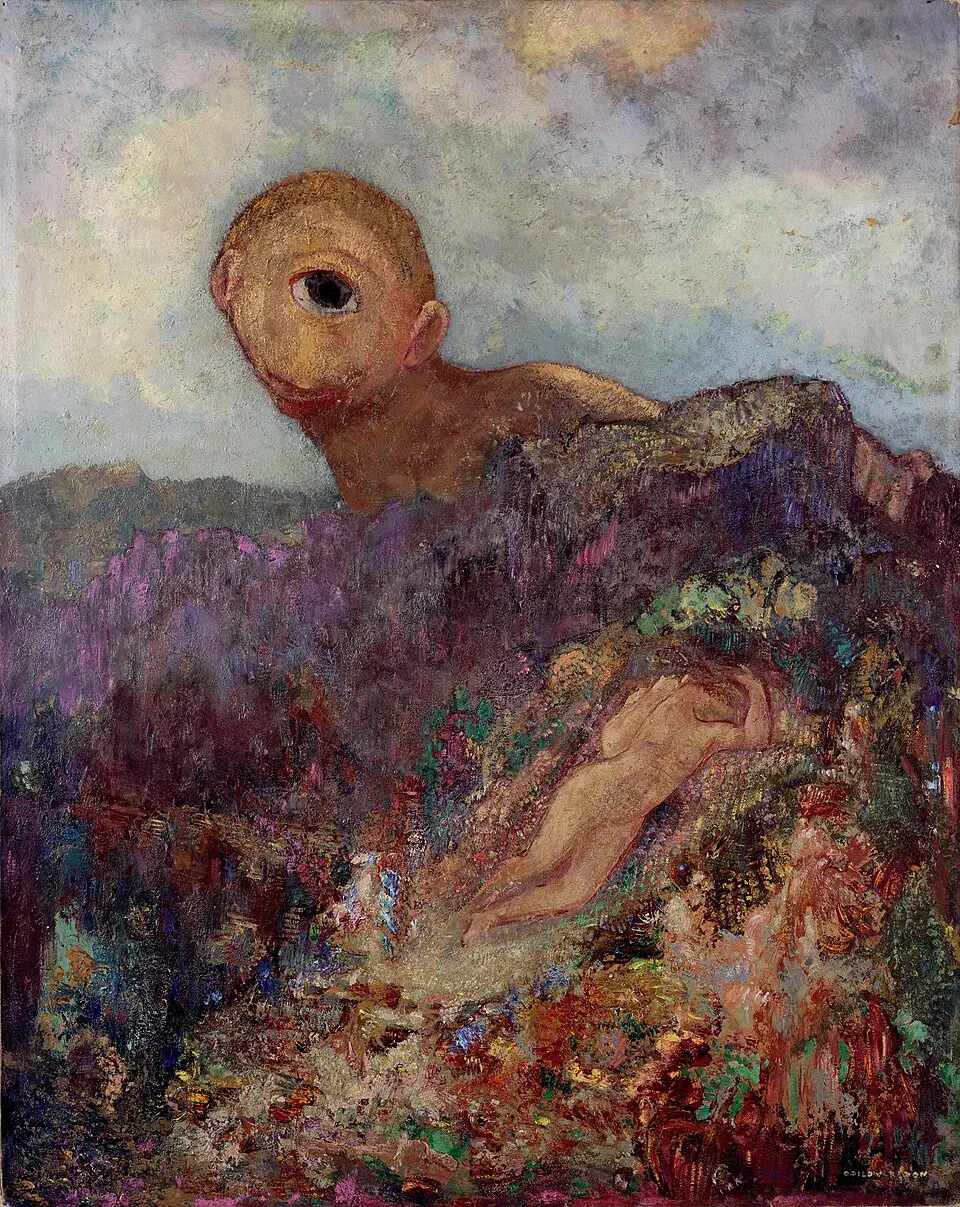
The Cyclops
Over the ridge of the mountain, a single enormous eye is watching. It belongs to Polyphemus, the cyclops of the old stories. In those stories he is a monster who hunts and devours what he catches. Here he has turned into something else entirely. He is hiding behind the rocks, too shy to face the nymph Galatea, who lies asleep on the slope below, her body melting into the flowers. He loves her, and he watches over her gently, staying out of sight so she need not trouble herself with him. Odilon Redon liked to paint the creatures that filled his own head, and this is his dream version of a Greek myth. But the old story keeps its sting. Galatea loves someone else, a river god named Acis. The giant's love is not returned, and he goes on watching all the same.
Слушать в приложенииOdilon Redon · Public domain
10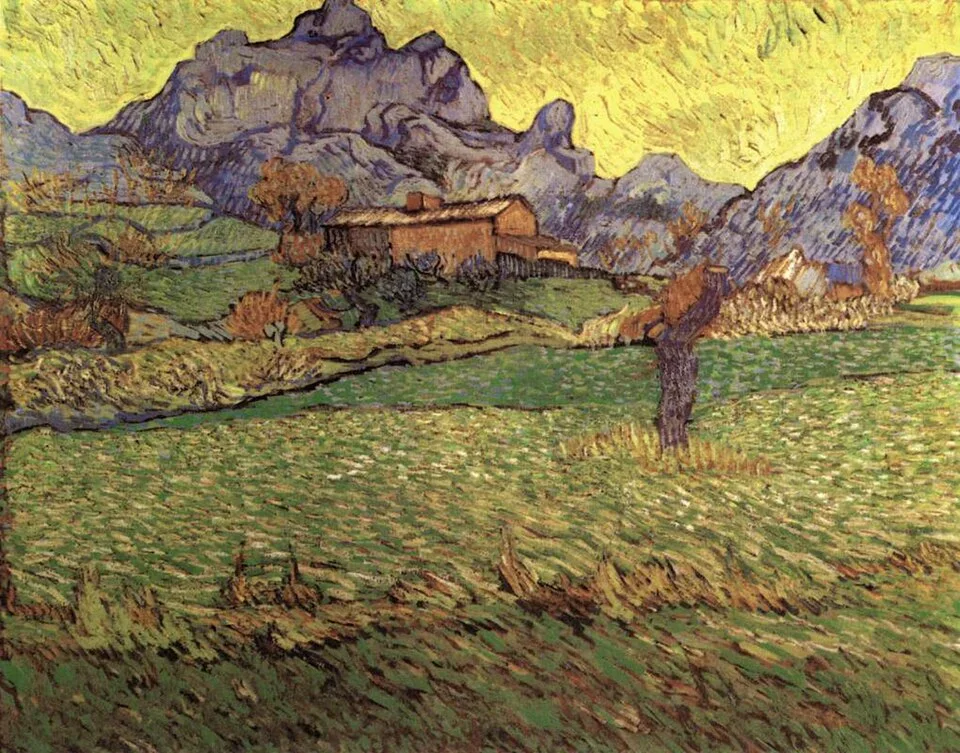
A Meadow in the Mountains: Le Mas de Saint-Paul
A meadow, then mountains behind it, lilac, under a yellowish sky. The wheat is young. It looks like wild open country, far from anywhere. It was not far from anywhere. Vincent van Gogh painted this in December 1889, while he was a patient at the asylum of Saint Paul near Saint Rémy, in Provence. He had come there himself, in May of that year, for treatment. At first he was kept inside the grounds. What he painted was what he saw from his room and the small cell next to it, which he used as a studio. Fields of wheat, garden plants, the countryside just beyond the walls. When he sent this canvas to his brother Theo, on the third of January 1890, he called it something much plainer. The Fields.
Слушать в приложенииVincent van Gogh · Public domain
- 11
Cart with Red and White Ox
Vincent van Gogh · 1884
- 12
A Lane in the Public Garden at Arles
Vincent van Gogh · 1888
- 13
Avenue of Poplars at Sunset
Vincent van Gogh · 1884
- 14
Boy Cutting Grass with a Sickle
Vincent van Gogh · 1881
- 15
Composition 10 in Black and White
Piet Mondrian · 1915
- 16
Single form (Eikon)
Barbara Hepworth · 1937
- 17
The Sower
Vincent van Gogh · 1888
- 18
Jardin d'émail
Jean Dubuffet · 1968–1974
- 19
Woman on Her Deathbed
Vincent van Gogh · 1883
- 20
Squares with two circles
Barbara Hepworth · 1963
- 21
View to Saintes-Maries-de-la-Mer
Vincent van Gogh · 1888
- 22
Blossoming chestnut trees
Vincent van Gogh · 1890
- 23
Contra-compositie X
Theo van Doesburg · 1924
- 24
Dancers
Theo van Doesburg · 1916
- 25
The Card Players
Fernand Léger · 1917
- 26
Compositie I
Theo van Doesburg · 1916
- 27
Composition in line, second state
Piet Mondrian · 1916
- 28
Stained-Glass Composition IV
Theo van Doesburg · 1917
- 29
Composition XVIII in Three Parts
Theo van Doesburg · 1920
- 30
La Berceuse
Vincent van Gogh · 1889
- 31
Still life with a plate of onions
Vincent van Gogh · 1889
- 32
The Good Samaritan
Vincent van Gogh · 1890
- 33
Flowering meadow with trees and dandelions
Vincent van Gogh · 1890
- 34
The green vineyard
Vincent van Gogh · 1888
- 35
Landscape with wheat sheaves and rising moon
Vincent van Gogh · 1889
- 36
The Three Brides
Jan Toorop · 1893
- 37
The Bride
Jan Thorn Prikker · 1892
- 38
Pegasus and the Hydra
Odilon Redon · c. 1907
- 39
The Thames Near London Sun
Willem Witsen · c. 1895
- 40
Replacement Piece
Ger van Elk · c. 2011
- 41
L'Arlésienne
Vincent van Gogh · 1890
- 42
Karen
Jan Veth · 1892
- 43
Stained-Glass Composition III
Theo van Doesburg · 1917
- 44
The Clown
Pierre-Auguste Renoir · 1868
- 45
Stained-glass Composition Female Head
Theo van Doesburg · 1917
- 46
Flowering orchard, surrounded by cypress
Vincent van Gogh · 1888
- 47
Moses
Theo van Doesburg · 1906
- 48
Olive Grove
Vincent van Gogh · 1889
- 49
Monument Christiaan de Wet
Joseph Mendes da Costa · 1915–1921
- 50
Portrait of Paul-Eugène Milliet, Second Lieutenant of the Zouaves
Vincent van Gogh · 1888
- 51
Sunday at Port-en-Bessin
Georges Seurat · 1888
- 52
Weaver at the Loom
Vincent van Gogh · 1884
- 53
Composition No. 11
Piet Mondrian · 1913
- 54
Landscape with a train
Paul Joseph Constantin Gabriël · 1887
- 55
Still Life with Plaster Statuette, a Rose and Two Novels
Vincent van Gogh · 1887
- 56
La grande Pénélope
Émile-Antoine Bourdelle · 1905–1912
- 57
Sculpture flottante
Márta Pán · 1961
- 58
Building of the Tower of Babel
Hendrick van Cleve III · c. 1550
- 59
Aldo van Eyck Pavilion
Unknown Artist · 1965
- 60
Breakfast
Paul Signac · 1886–1887
Kröller-Müller Museum
Часто задаваемые вопросы
Сколько стоит аудиогид?
Бесплатное приложение. Бесплатно до 1 января. Указанная цена гида: $1.99. Только аудиогид. Входной билет приобретается отдельно.
Можно слушать без интернета?
Да. Загрузите аудио, изображения и карты в приложении до визита. Загруженные материалы доступны офлайн.
Есть ли мой язык?
Пока на английском. Скоро и на других языках.
Нужно соблюдать расписание?
Нет. Это самостоятельная прогулка. Выбирайте остановки, делайте паузы и возвращайтесь к историям в своём темпе.
В своём темпе
Знакомьтесь: Kröller-Müller Museum.
Скачайте Stanza и найдите “Kröller-Müller Museum”.
Бесплатное приложение · Цена гида указана в приложении
Продолжайте открывать новое
Аудиогиды поблизости
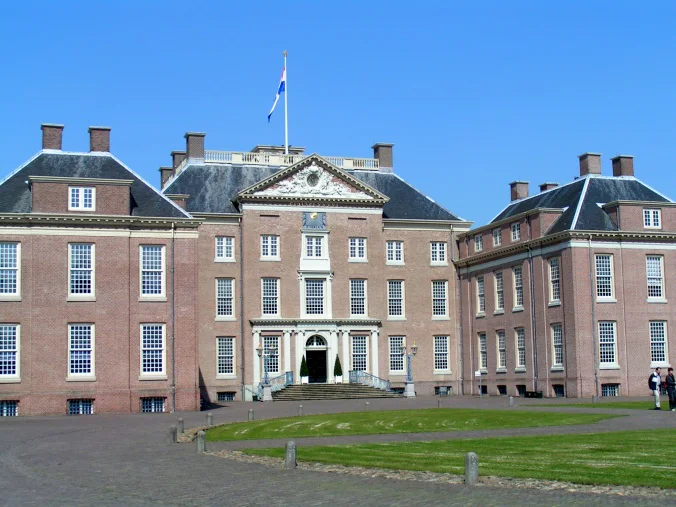
Apeldoorn · 18 км
Хет-Лоо
Материалы и источники
Photo: Rnt20 · CC BY-SA 3.0
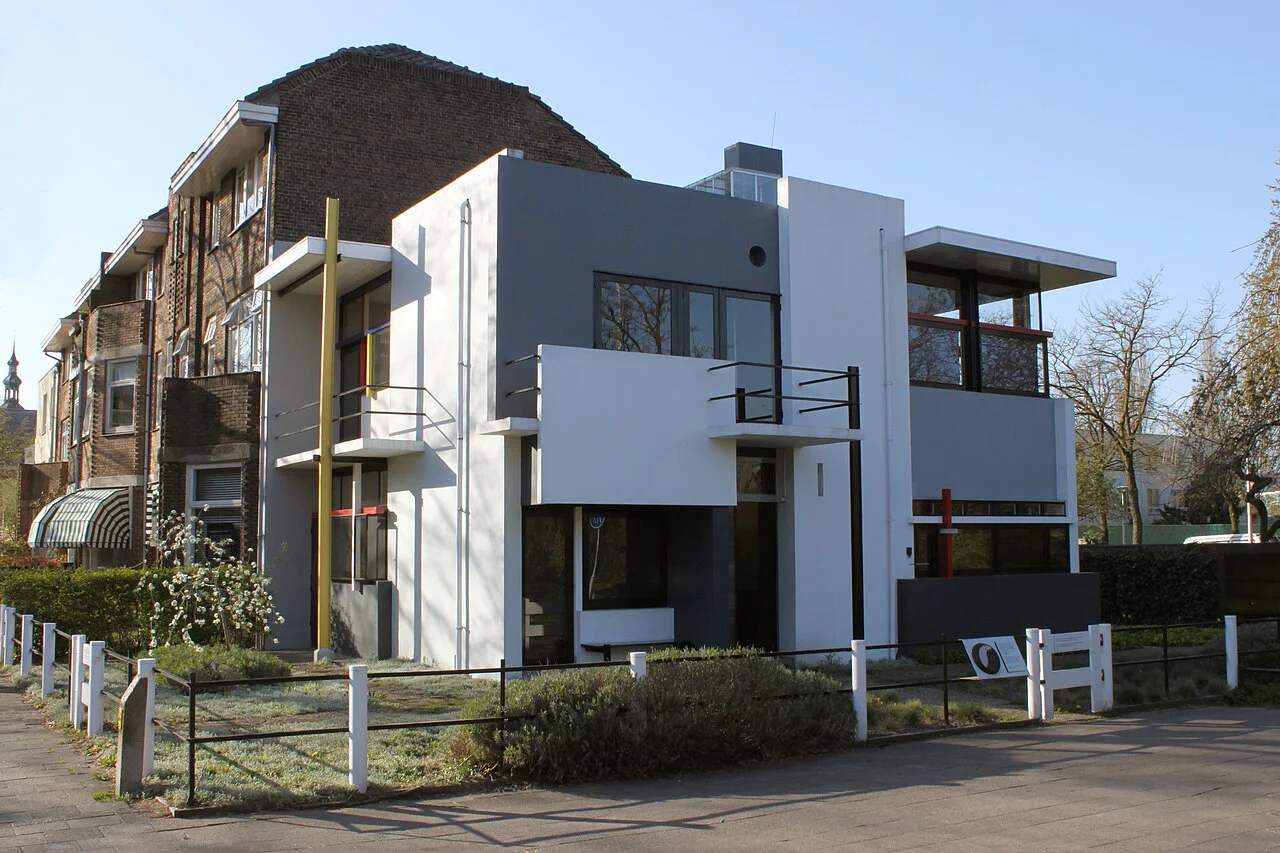
Utrecht · 46 км
Дом Шрёдера
Материалы и источники
User:Husky · CC BY 3.0
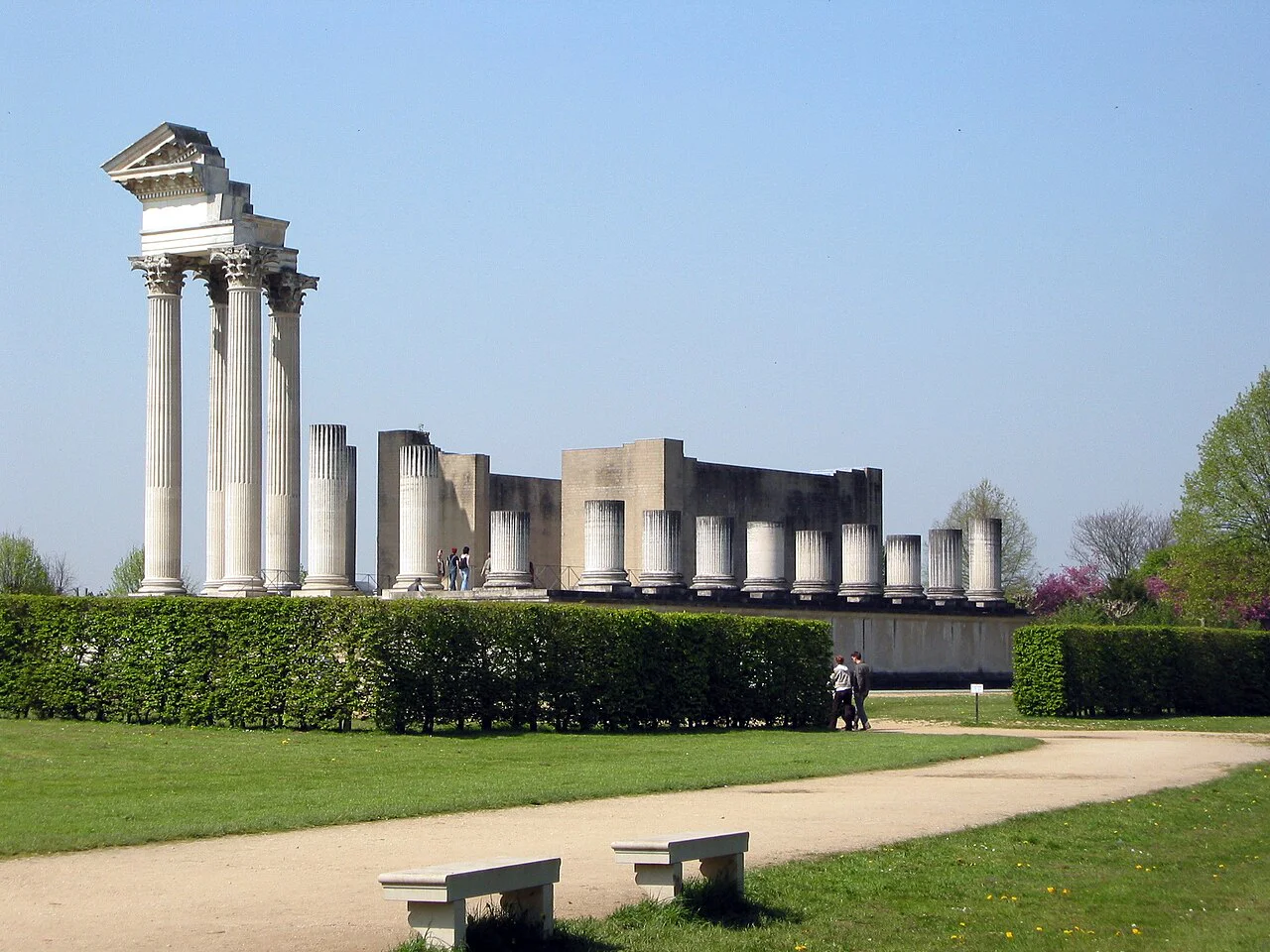
Ксантен · 65 км
Колония Ульпия Траяна
Материалы и источники
Photo: Magnus Manske · CC BY-SA 3.0
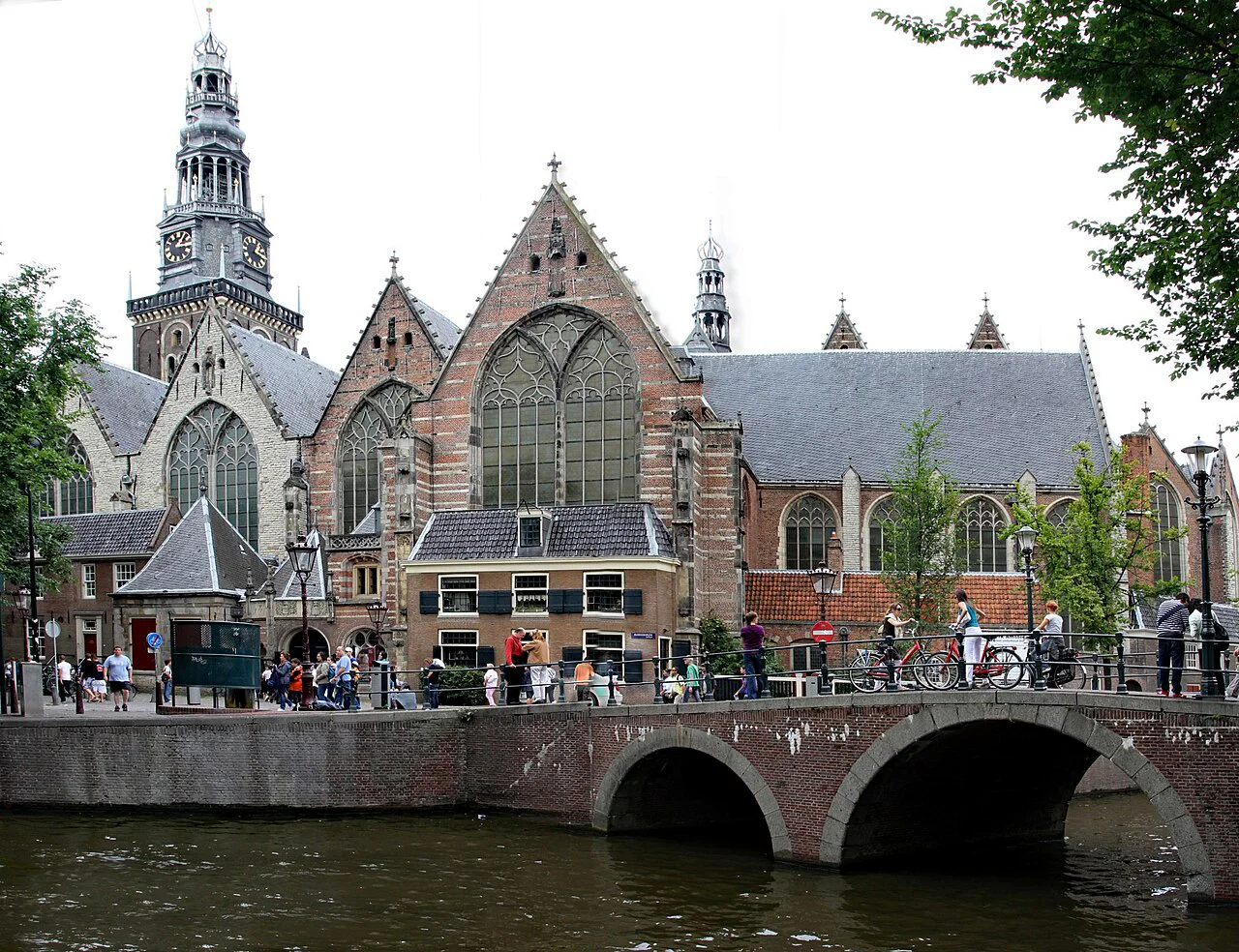
Амстердам · 70 км
Аудекерк
Материалы и источники
Gerd Eichmann · CC BY-SA 4.0
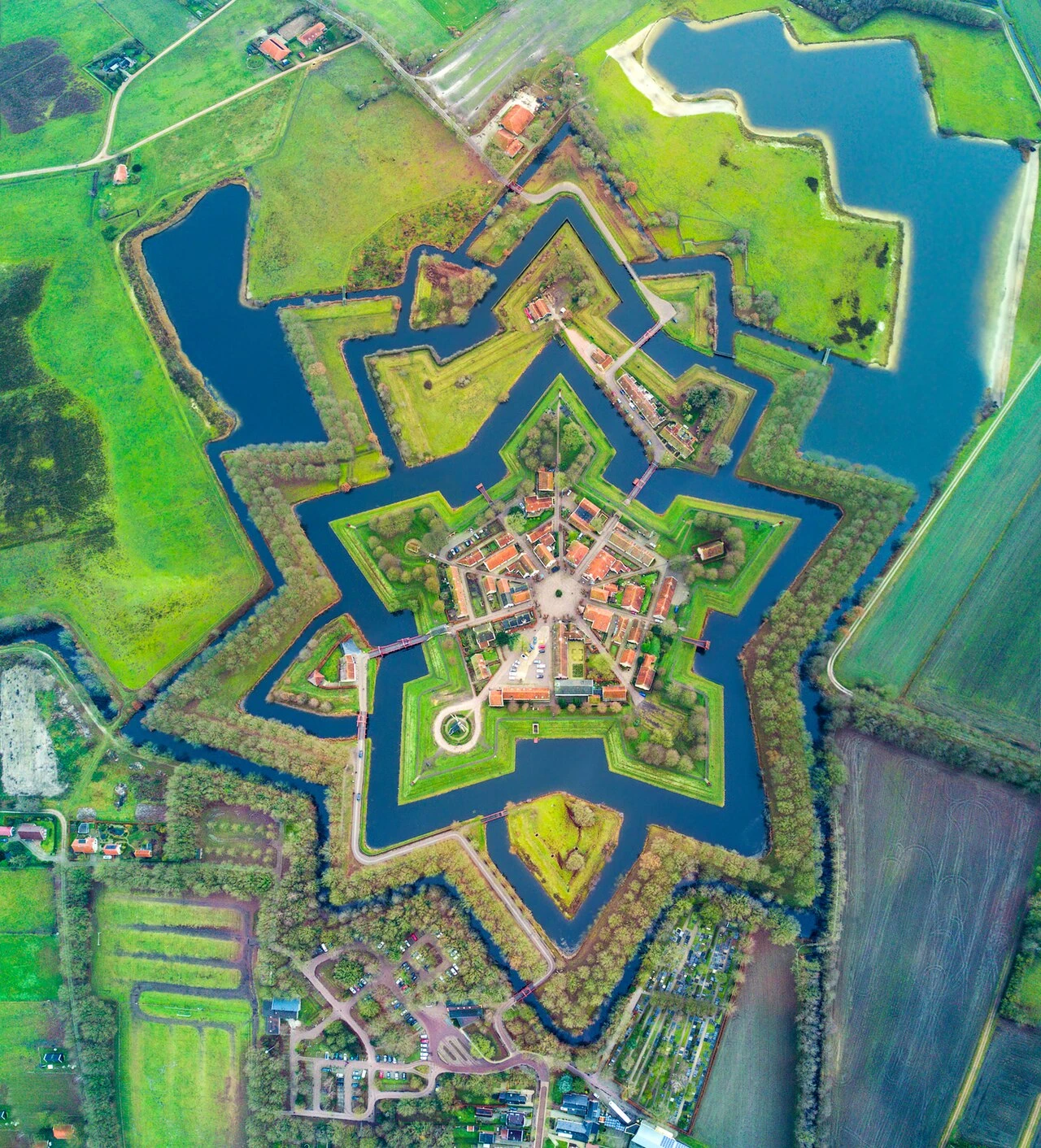
Bourtange · 137 км
Крепость Бауртанге
Материалы и источники
Photo: Dack9 · CC BY 4.0