Travel tips/Mystras, Greece
Mystras: upper or lower entrance? Plan a visit that suits your legs
Two entrances change where you begin, but your return journey matters just as much. Choose a manageable part of this Byzantine hillside town.
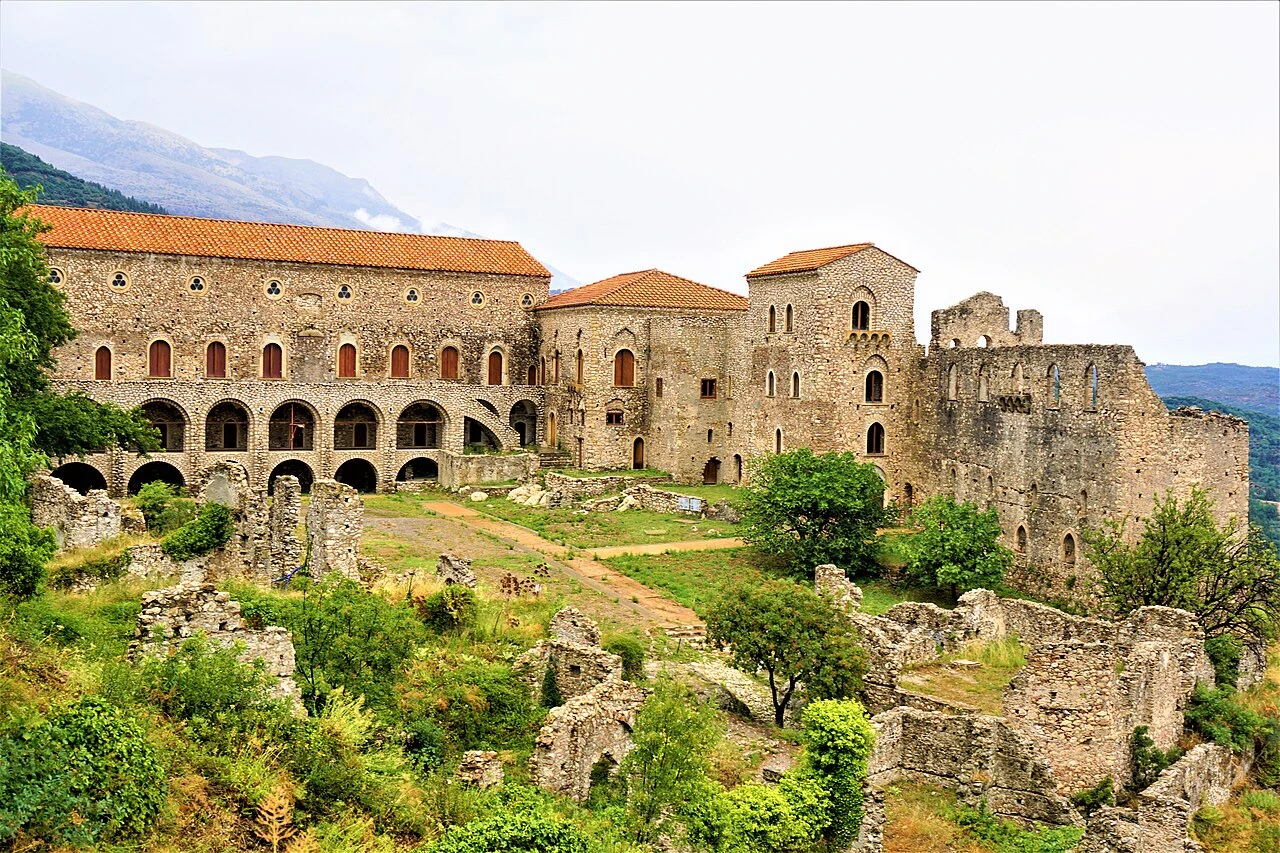
At Mystras, deciding where to park is part of deciding what to see. Churches, palace and fortress occupy different levels of a medieval town near Sparta. Its UNESCO listing recognises an entire urban landscape, not a single summit. You can make a rewarding visit without climbing to every monument.
Choose the part of Mystras you want to understand
From the lower gate, the main visitor road leads towards the Metropolis of Agios Dimitrios and the museum. The Brontochion churches are another lower-town interest. The upper gate enters the upper town, whose focus is the Palace of the Despots and nearby Agia Sophia. The citadel stands higher still, reached by an uphill paved route. These are starting points, not level circuits.
Our suggestion for a shorter visit is to choose one area and two or three main stops. For churches, begin below and decide on any further climb after the Metropolis. For secular Byzantine life, start above with the palace. Keep the citadel as a separate decision rather than treating it as the admission price for enjoying Mystras.
Solve the return journey before descending
A car left at the upper entrance stays there when you walk downhill. Returning on foot means regaining height. A car left below gives the reverse pattern: climbing first and descending later. Downhill walking can also be demanding on knees; choose the direction that suits your group, not simply the highest starting point.
A one-way visit only works with a confirmed collection arrangement. Agree the exact exit, pickup time, price and a fallback with your driver before entering; do not rely on finding a waiting taxi. If you want to move your own car between gates and enter again, ask the ticket office whether your ticket permits this that day before leaving the site. We could not verify a published re-entry rule or a shuttle between entrances.
Without a car, the lower gate is the practical question
Hellenic Heritage describes a KTEL bus from Sparta ending near the lower-gate car park, followed by a five-minute walk to the entrance. That is the authority’s access estimate, not a verified timetable. The KTEL pages checked did not establish current Mystras departures or return services. Ask KTEL Laconia on +30 27310 26441 for your date, boarding point, exact stop and last return before committing to a bus-based day.
The same heritage page estimates a 20-minute walk from Neos Mystras village. Add that approach to the walking inside the site, and allow for the return. A booking to “Mystras” should specify village, lower archaeological entrance or upper entrance; they are not interchangeable destinations.
The palace is open again: check its own hours
Advice that the palace is indefinitely closed is out of date. The Ministry of Culture announced its reopening in May 2026, with exhibitions and an exterior accessibility lift. It also reported restoration of the main paved connection between lower and upper town. These improvements do not establish a step-free route around the whole hillside. For mobility needs, ask the site on +30 27310 83377 about the approach from your chosen gate, gradients, steps, lift operation and accessible toilets.
On the official listing checked on 18 October 2026, full admission is €20 for the archaeological site and museum. The palace opens at 11:00 on Tuesdays. The site lists 08:00–18:00 for 16–31 October and 08:30–15:30 for 1 November–31 March, with last admission 20 minutes before closing. Recheck your date, holidays and individual building access; arriving just before last entry leaves little time for a hillside visit.
Give the buildings time to tell different stories
The hill explains the city: defensive height above, civic and religious life spreading below. UNESCO highlights the combination of fortifications, homes, monasteries and palaces, and the importance of late Byzantine painting. Instead of collecting church names, pause at one exterior, then look inside where access allows. Compare the scale of a church with that of the palace: worship and government needed different kinds of space.
For extra context, Stanza’s independent Mystras guide has a public preview and narrated stops covering the castle, palace and Agia Sophia. Sample it before choosing; download in the app before travelling if you want offline listening. Use the stops that fit your route and pause while walking difficult sections. Stanza audio, venue admission and transport are separate purchases; a stop listed in a guide does not guarantee current access.
A few more questions before you go
Can I see Mystras without climbing to the castle?
Yes. A visit focused on the lower-town churches and museum, or on the upper-town palace, can stand on its own. Both still require checking the walking conditions; neither should be assumed step-free.
How much time should I leave?
As an editorial planning allowance, reserve a half-day for a broad visit, including rests and your return arrangements. A smaller selection can take less. This is not a measured walking time or a promise that every building will be open.
Sources & further reading
Visitor information checked .
Checked 18 October 2026 against Hellenic Heritage, the Ministry of Culture, UNESCO, KTEL Laconia and Stanza’s public guide. Confirm open paths, palace access, ticket re-entry and transport for your date; no entrance-to-entrance shuttle or taxi availability was verified.
- Hellenic Heritage: Mystras visitor information
- Ministry of Culture: Mystras gates and monuments
- Ministry of Culture: palace reopening, 22 May 2026
- UNESCO: Archaeological Site of Mystras
- KTEL Laconia: transport operator
- Stanza: public Mystras audio-guide preview
Questions or a correction? Let us know. Our content standards (English).