Languages
15Αρχαιολογικός Χώρος Μυστρά Audio Guide
Αρχαιολογικός Χώρος Μυστρά is an archaeological site in Municipal Unit of Mystras, Greece. Explore it with Stanza's guided offline audio tour — narrated in 15 languages.
Quick Facts
45
Stops
15
Languages
100%
Offline
📍 Municipal Unit of Mystras, Greece · 37.0740°N, 22.3673°E
About Αρχαιολογικός Χώρος Μυστρά
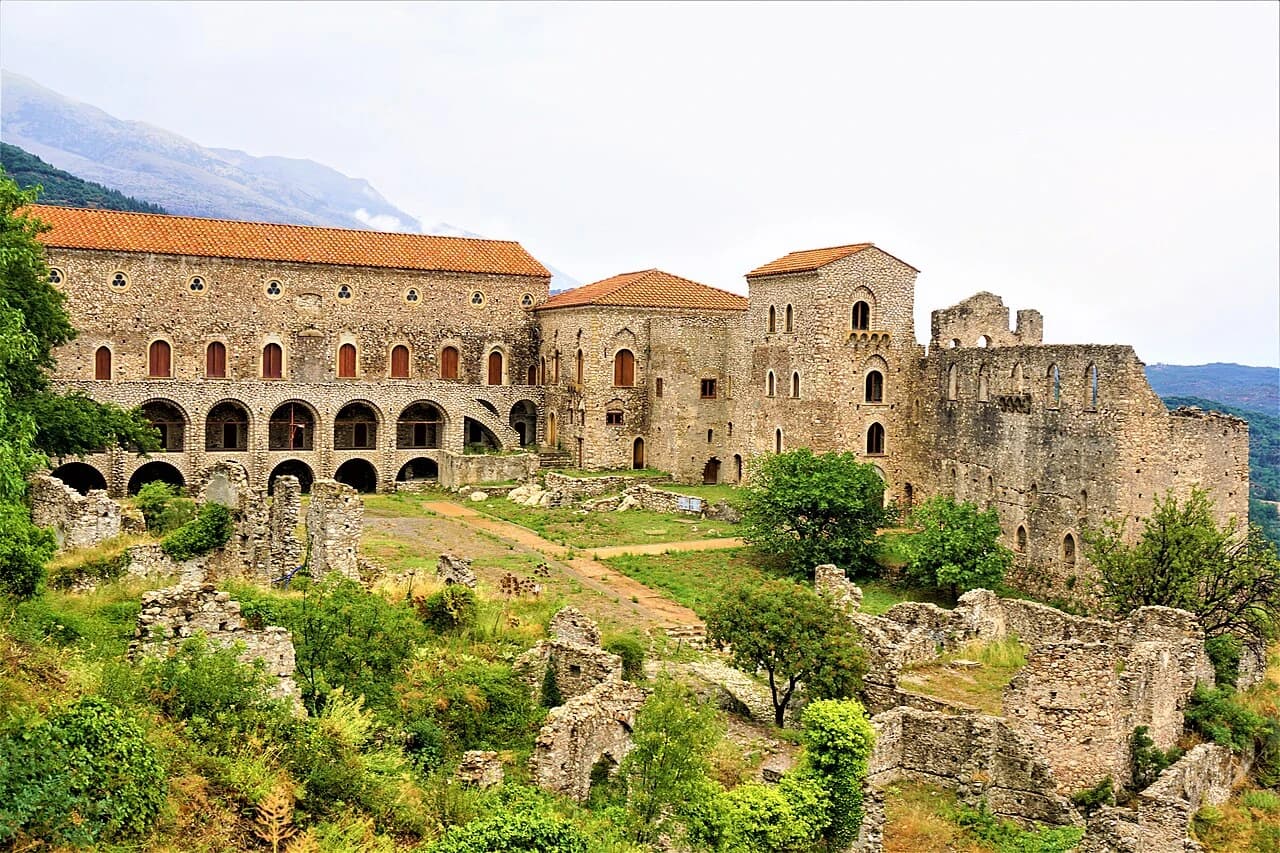
Mystras is a fortified Byzantine city and UNESCO World Heritage site located on the slopes of Mount Taygetos. It is renowned for its well-preserved medieval ruins, including palaces, churches, and defensive walls.
This self-guided audio tour features 45 narrated stops organized across 8 sections. As a archaeological site, Αρχαιολογικός Χώρος Μυστρά offers a unique cultural experience in the heart of Municipal Unit of Mystras, Greece.
The Stanza audio guide is available in 15 languages and works entirely offline — download the complete tour including audio narration, maps, and images before your visit. As you walk through Αρχαιολογικός Χώρος Μυστρά, GPS-triggered narration plays automatically at each point of interest.
Last updated:
What you will hear
Mystras Castle
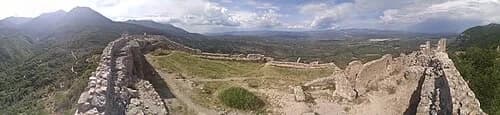
Perched at the very summit, this Frankish-built fortress offers a panoramic view of the Eurotas valley and the 'dead city' below.
The Eurotas Valley View
Standing at an elevation of 621 meters, the reason this location was chosen for a capital becomes obvious. The panoramic view covers the fertile Eurotas Valley and the site of ancient Sparta. In the medieval period, this height provided an unmatched strategic advantage, allowing defenders to monitor all movement in the valley long before an enemy reached the gates. This geography also dictated the city's rigid social hierarchy. The vertical layout was a physical manifestation of power. At the very peak sat the castle, occupied by the military governor or Despot. Just below was the Upper City, home to the aristocracy and administrative buildings. Farther down the slope, the Lower City housed the commoners, merchants, and laborers. This vertical city meant that one's status was measured by how high they lived on the mountain. The climb you take today is the same path that divided the elite from the masses. The rugged terrain offered protection, but it also ensured that the ruling class remained physically and socially above those they governed in the valley far below.
Church of Agia Sofia
The palatine church of the Despots, known for its elegant proportions and its role as a burial place for the city's royalty.
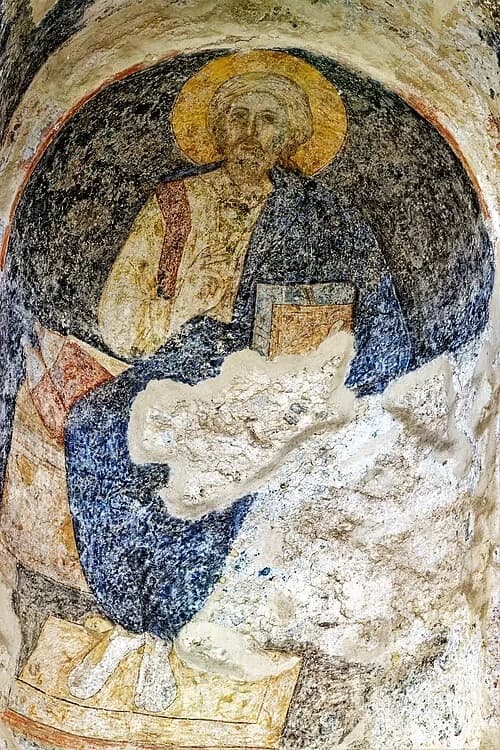
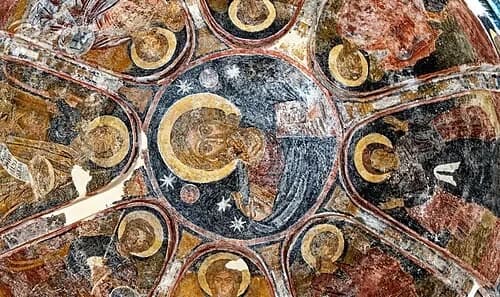
The Pantocrator
The central dome features the fresco of Christ Pantocrator, or Ruler of All, a standard element in Byzantine iconography. However, the art here in Mystras represents a pivotal moment in Eastern Orthodox painting. If you look closely at the facial features, you can see a move away from the rigid, stylized, and often stern depictions of earlier centuries. During the 14th century, artists began to embrace a more humanized approach. The eyes are more expressive, the modeling of the skin is softer, and there is a newfound sense of emotional depth. This transition is characteristic of the late Byzantine period, where the divine was rendered with more recognizable human warmth. The figure is framed by circular borders, traditional for the highest point of a church, representing Christ looking down from heaven upon the world. Even in its weathered state, the intensity of the gaze remains clear. This stylistic evolution in Mystras was occurring simultaneously with the early Italian Renaissance, showing that the East was also exploring new ways to depict the human form and spirit within a religious framework. It marks the final creative peak of a thousand-year-old tradition.
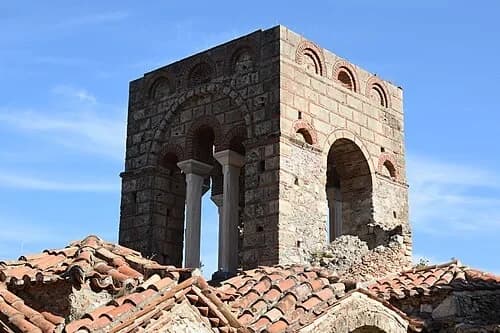
The Palace Throne Room
The scale of the 15th-century wing of the palace reflects the final efforts to assert imperial dignity in the Despotate. On the upper floor of this building lay the Great Hall, or throne room. For its time, this was a massive space, measuring roughly 36 meters long and 10 meters wide. In fact, it was the largest vaulted hall in the Byzantine world outside of the capital city, Constantinople. This room served as the stage for the most important ceremonies of the state: the reception of foreign ambassadors, the administration of high justice, and the grand banquets of the Despot. Large windows on both sides once allowed light to flood the interior and provided the ruler with a commanding view of his city and the valley beyond. The sheer size of this room was intended to overawe visitors and reinforce the idea that, although the empire was fading, its traditions and authority remained intact. The high ceilings and wide floor space would have been decorated with tapestries and ornate furnishings, creating a setting of significant medieval splendor. It stands as a silent witness to the final political ambitions of the Palaeologus dynasty.
Monemvasia Gate
The internal gate that separated the Upper City from the Lower City, named for the direction of the road it once faced.
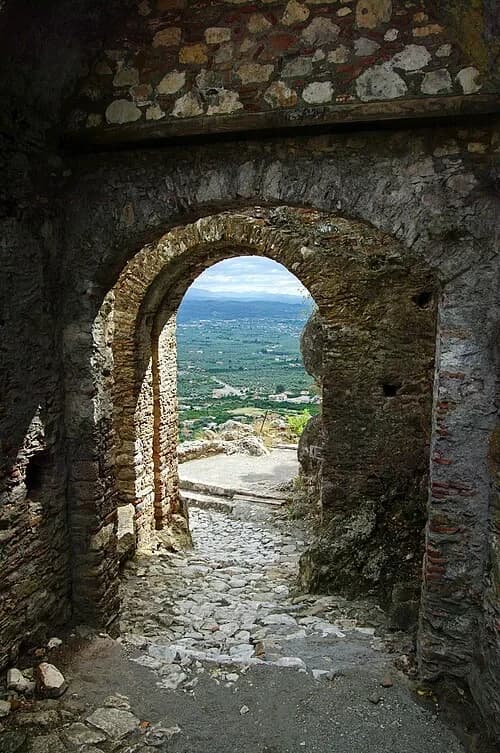
Monemvasia Gate
This gate, known as the Monemvasia Gate, acted as a vital internal fortification within the city. Its purpose was to separate the Upper City from the Lower City. In the medieval social order of Mystras, the Upper City was the exclusive domain of the aristocracy, the high-ranking clergy, and the Despot’s administration. It was a zone of power and luxury. In contrast, the Lower City was where the majority of the population lived—the merchants, artisans, and commoners who kept the city’s economy moving. The gate functioned as a security checkpoint, allowing the ruling elite to control movement and restrict access to the palace and administrative quarters. In times of siege or civil unrest, the gate could be locked, turning the Upper City into a secondary fortress. The name itself reflects the city's strong ties to Monemvasia, another major Byzantine stronghold on the coast. Passing through this archway meant crossing a social and political threshold. Today, it remains a tangible reminder of the deep divisions that structured Byzantine society, even as they faced the common threat of external conquest in their final decades.
Brontochion Monastery
The most important monastic center of Mystras, which once held significant land and privileges granted by the emperors.
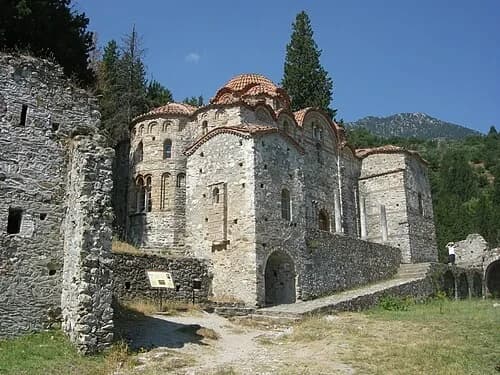
Brontochion Monastery
Built around 1310, the Church of the Hodigitria was the centerpiece of the Brontochion Monastery, once the richest and most influential religious institution in the city. The church is famous for introducing what historians call the Mystras-type architecture. This innovative design combines two different church plans into a single building. The ground floor is laid out as a traditional three-aisled basilica, while the upper level, or gallery, follows a five-domed cross-in-square plan. This hybrid structure was likely developed to accommodate different types of liturgical services or to separate the general congregation from the elite who occupied the galleries. Five domes rise from the roof, creating a complex and visually striking silhouette that became a standard for the larger churches in the city. The monastery enjoyed special imperial privileges, which allowed its abbots to commission such experimental and grand architecture. Its wealth was derived from vast landholdings and imperial donations, making it a powerful player in the politics of the Despotate. Standing here, you can see how the church dominates the middle slopes, serving as a spiritual anchor between the palaces above and the marketplaces below.
Church of the Hodigitria
Also known as the 'Aphentiko', this church features a unique architectural blend of a basilica and a cross-in-square design.
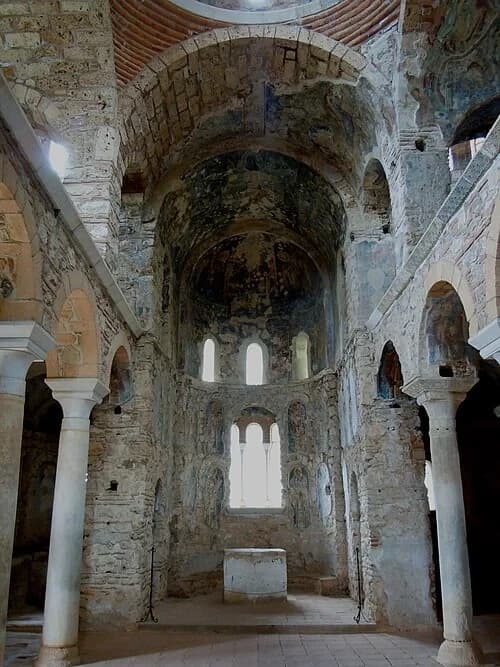
Sacred Proportions
The interior of the church was carefully designed to manage light and guide the attention of the faithful toward the sanctuary. Notice the tall stone columns that support the upper galleries and the central domes. Many of these columns are spolia—recycled materials taken from much older buildings in the region, including ancient Sparta. By incorporating these ancient elements, the Byzantine builders literally built their present upon the foundations of the classical past. The architecture funnels the gaze toward the east, where the sanctuary and the altar are located. During a service, light from the dome's windows and the oil lamps would have glinted off the polished stone and the gold-backed frescoes, creating a shimmering, otherworldly environment. This use of light was symbolic, representing the presence of the divine within the physical church. The proportions of the space were calculated to feel intimate yet grand, reinforcing the sacred nature of the rituals taking place. Every architectural element worked together to create a unified spiritual atmosphere. It was in spaces like this that the complex liturgical traditions of the Orthodox Church were enacted with full imperial ceremony for centuries.
Church of the Holy Theodore
The older church of the Brontochion Monastery, distinguished by its massive octagonal dome.
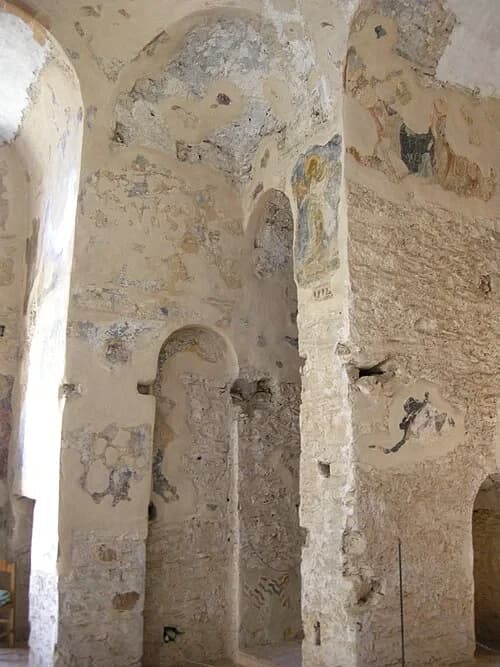
Military Saints
The lower tiers of the church walls are often reserved for figures of military saints, shown here in full battle gear. What makes these frescoes particularly interesting is the depiction of the armor, which reflects the actual equipment used by soldiers in the 13th century. You can see details like chainmail, metal breastplates, and specific styles of shields and swords that would have been familiar to the people of Mystras. This choice was not accidental; it reflected the persistent defensive mindset of a city that was frequently under the threat of siege from Latin Crusaders, Slavic tribes, or Ottoman forces. These saints were viewed as the supernatural protectors of the city, serving as divine soldiers standing guard within the sanctuary. Their presence provided a direct connection between the spiritual world and the harsh reality of life in a fortified mountain stronghold. The stiff, upright poses and the firm grip on their weapons suggest a state of perpetual readiness. By placing these figures at eye level, the artists ensured that the congregation was constantly reminded of the need for both physical and spiritual vigilance in the face of constant external conflict.
Metropolis of Mystras
Dedicated to Saint Demetrios, this was the city's cathedral and the site of the coronation of Constantine XI, the last Byzantine Emperor.
Life of the Virgin Frescoes
The cycle of frescoes depicting the life of the Virgin Mary provides a remarkable example of narrative storytelling in the 14th century. While the religious figures are the primary focus, take a moment to look at the backgrounds of these scenes. The artists included delicate, stylized renderings of buildings, towers, and city walls that give us a glimpse into how Byzantines envisioned their own urban environments. These architectural elements are often painted with vibrant colors and complex perspectives that weren't meant to be strictly realistic but rather to evoke the grandeur of a holy city. In many of the scenes, the Virgin is shown within these ornate settings, emphasizing her role as a protected and sacred figure. The use of slender columns, tiled roofs, and draped balconies in the frescoes likely mirrors some of the real-world architecture of the palaces and noble houses that once stood nearby. This attention to detail in the 'stage setting' of the frescoes was a hallmark of the Palaeologan Renaissance, where painters began to explore the relationship between figures and the space they inhabited, moving away from the flat, gold backgrounds of earlier periods.
Archaeological Museum of Mystras
Housed within the cathedral courtyard buildings, this museum displays artifacts ranging from Byzantine jewelry to rare silk textiles.
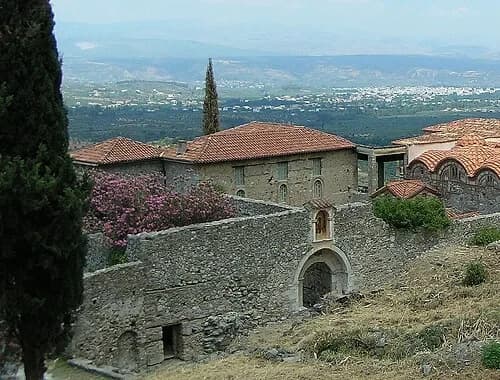
Archaeological Museum of Mystras
The Archaeological Museum of Mystras is situated within the complex of the Cathedral of Saint Demetrios, utilizing the old stone buildings of the courtyard. While much of the city outside consists of weathered ruins, the museum provides a vital look at the portable culture of the people who lived here. The collection includes a wide range of objects recovered during excavations, from simple household ceramics and iron tools to delicate jewelry and fragments of expensive imported glass. These artifacts help fill in the gaps of our understanding of daily life, showing that the residents of Mystras had access to trade networks that stretched across the Mediterranean. You will also find more elaborate items here, such as carved marble slabs, religious icons, and remnants of the luxurious textiles that defined the city’s elite. By bringing these pieces together, the museum illustrates the transition of Mystras from a military outpost to a major center of learning and art. It serves as an essential bridge between the grand architectural scale of the palaces and the personal, human experiences of the thousands of people who once called this hillside home.
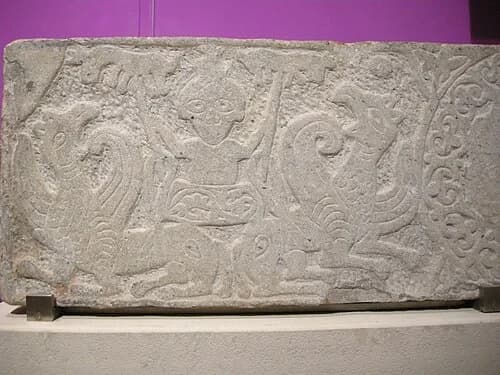
Alexander's Ascension
One of the more surprising figures found in the carvings of Mystras is Alexander the Great, seen here in a scene known as his 'ascension.' In this relief, he is typically depicted being carried into the sky by two griffins. While Alexander was an ancient pagan conqueror, he held a special place in the Byzantine imagination as a heroic ancestor and a prototype for the perfect ruler. This story of his flight to the heavens was used by the Byzantine court to symbolize the divine right of the Emperor and the celestial source of his power. It suggests that, like Alexander, the ruling Despots of Mystras were chosen by a higher authority to govern and protect their people. The inclusion of such a scene in a Christian city shows how the Byzantines seamlessly integrated classical history and folklore into their own religious framework. The carving style here is quite flat and stylized, typical of the decorative stone slabs that adorned the floors or walls of major buildings. By invoking Alexander, the rulers of the city connected their dynasty to a long lineage of world-changing leaders, bridging the gap between their Greek heritage and their Christian mission.
Want to hear the rest?
Download the Stanza app to unlock all 45 stops and the complete guided audio tour.
Frequently Asked Questions
How long does the Αρχαιολογικός Χώρος Μυστρά audio tour take?
The Αρχαιολογικός Χώρος Μυστρά audio guide includes 45 narrated stops. Most visitors spend 45 minutes to 1.5 hours exploring the complete tour, though you can listen at your own pace and skip or revisit any stop.
Is the Αρχαιολογικός Χώρος Μυστρά audio guide available in my language?
Stanza supports 15 languages: English, Spanish, French, German, Italian, Portuguese, Russian, Japanese, Chinese, Korean, Arabic, Hindi, Polish, Dutch, Hebrew. Check the guide in the app to confirm the languages currently available for this tour.
Can I use the audio guide offline at Αρχαιολογικός Χώρος Μυστρά?
Yes! Download the complete Αρχαιολογικός Χώρος Μυστρά tour — including all audio, maps, and images — before your visit. The Stanza app works completely offline, so you don't need WiFi or mobile data at the venue.
How much does the Αρχαιολογικός Χώρος Μυστρά audio guide cost?
The Stanza app is free to download. Free and paid audio guides are available; current prices are shown in the app.
How do I use the Stanza audio guide at Αρχαιολογικός Χώρος Μυστρά?
Download the free Stanza app, search for "Αρχαιολογικός Χώρος Μυστρά", and download the tour. When you arrive at the venue, the app uses GPS to detect your location and automatically plays the relevant narration as you move between points of interest — completely hands-free.
What makes the Stanza audio guide different from other Αρχαιολογικός Χώρος Μυστρά tours?
Stanza offers GPS-triggered narration that plays automatically as you walk through Αρχαιολογικός Χώρος Μυστρά — no need to manually select stops. The tour is available in 15 languages, works fully offline, and includes 45 expertly narrated stops with images and historical context.
What other audio guides are available near Αρχαιολογικός Χώρος Μυστρά?
Stanza offers multiple audio guides in Municipal Unit of Mystras, Greece and nearby areas. After downloading the app, browse the map to discover all available tours near Αρχαιολογικός Χώρος Μυστρά. Each guide can be downloaded for offline use.