Stanza · Audio guide
Methoni CastleAudio guide
A place to remember. A story to take with you.
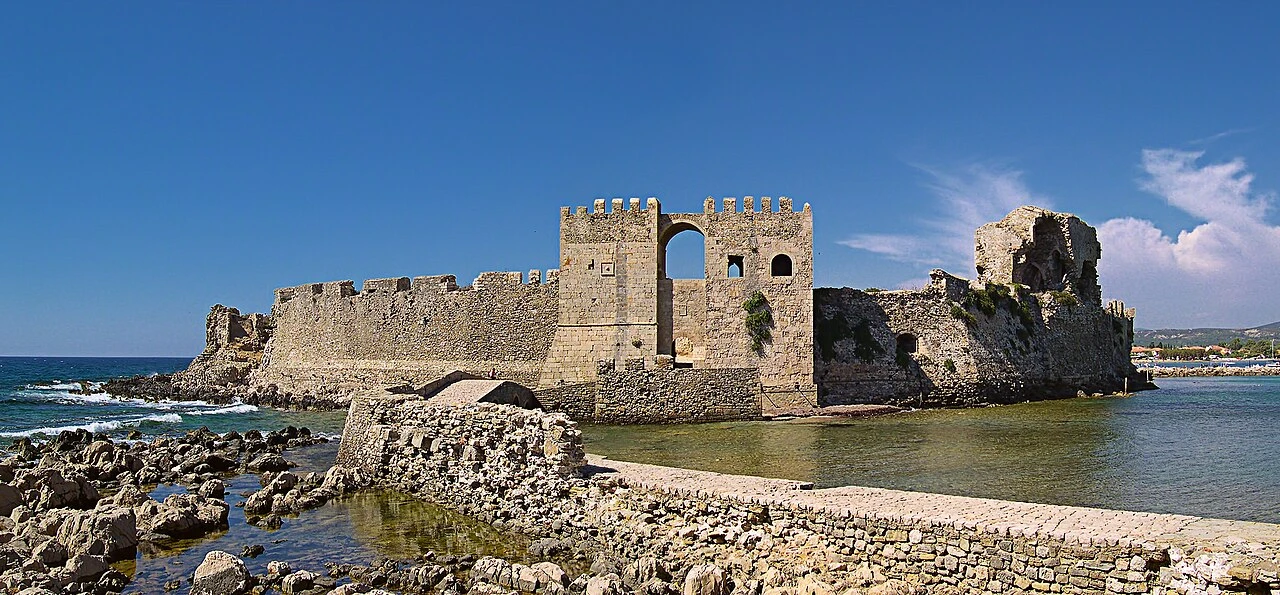
Methoni Castle is a prominent medieval fortification located in Messenia, overlooking the Ionian Sea. It served as a strategic defensive stronghold for the Republic of Venice during the Middle Ages.
Download Stanza, then search for “Methoni Castle”.
About the tour
One guide. Your kind of visit.
Methoni Castle is a prominent medieval fortification located in Messenia, overlooking the Ionian Sea. It served as a strategic defensive stronghold for the Republic of Venice during the Middle Ages.
Ready when you are.
- 01Get the free Stanza app.
iOS & Android
- 02Find your guide.
“Methoni Castle”
- 03Download before you go.
Works offline
Audio guide / 23 narrated stops
Inside the guide
Get to know a few of the stories before you go. Open a stop to read more.
01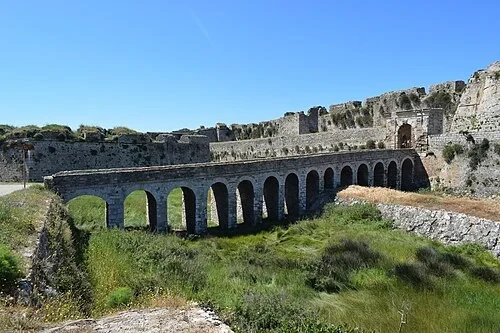 The 14-Arched Bridge and Main GateThe 14-Arched Bridge
Welcome to one of the most significant historical sites in the Peloponnese. Your journey begins here, crossing the 14-arched stone bridge that spans a deep dry moat. This impressive structure was constructed in 1828 by the French expeditionary force under the command of General Maison, following the liberation of the fortress. Before this stone bridge was built, a wooden drawbridge was the only way to traverse this chasm, which was carved out to separate the castle from the mainland for defensive purposes. As you walk across, imagine the strategic importance of this bottleneck. For over 600 years, this site served as a vital maritime link between Venice and the Holy Land. The massive stone walls rising before you have weathered countless sieges, changing hands between Byzantine, Venetian, and Ottoman powers. This bridge is not just a path; it is a transition point from the modern world into a sprawling complex of ruins that whisper of medieval trade, naval warfare, and imperial ambition. Prepare to explore a stronghold that for centuries was known as one of the 'Eyes of the Republic' of Venice.
Jean Housen · CC BY-SA 4.0
02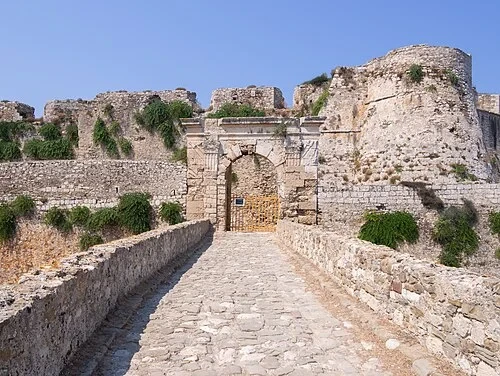 The 14-Arched Bridge and Main GateThe Main Venetian Gate
The main gate serves as a formidable entrance into the heart of the fortress. While the facade you see today reflects later repairs and modifications, the original Venetian foundation was established in 1209. This Renaissance-style portal was designed with a specific military purpose: to be a nearly impenetrable barrier against infantry charges and early cannon fire. Notice the heavy, precise stonework. The thickness of these walls was calculated to absorb the shock of bombardment. In its prime, this entrance would have been heavily guarded, likely featuring massive wooden doors reinforced with iron. This gate was the primary security checkpoint for the thousands of traders, soldiers, and pilgrims who passed through Methoni. Beyond this archway, the transition from the organized defenses of the entrance to the sprawling habitable areas of the castle begins. The architecture here demonstrates the transition from medieval defensive styles to the more robust fortifications required in the age of gunpowder. It stands as a physical reminder of the strategic value the Republic of Venice placed on this location, ensuring that only those with permission could enter their most important naval outpost in the south.
Photo: C messier · CC BY-SA 4.0
03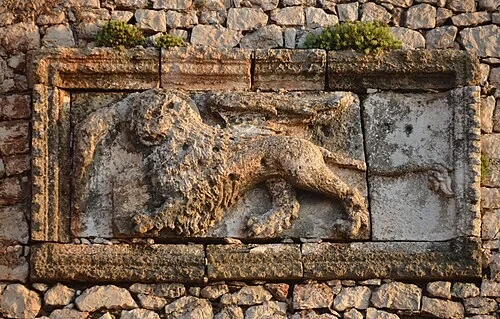 The Venetian EmblemsLion of Saint Mark
Embedded in the stone walls, this relief carving of a winged lion is the unmistakable signature of the Republic of Venice. These carvings were placed on the gates and walls of every Venetian colony, acting as permanent markers of ownership and authority. For sailors approaching from the sea or travelers crossing the bridge, the sight of the lion was an immediate signal that they were under the protection—and the law—of Venice. If you look closely at the weathered features, you can still identify the book held between the lion's paws. In Venetian heraldry, an open book often represented a time of peace or the city’s sovereign status. Despite centuries of exposure to the salty sea air and the elements, the lion remains a powerful visual link to the medieval maritime empire that dominated these waters. It was more than decoration; it was a piece of propaganda meant to inspire confidence in friends and strike fear into rivals. This specific carving oversees the main entrance, watching over everyone who crosses the threshold into the stronghold. It represents a time when Methoni was a crucial stop on the 'Great Sea Route,' connecting the lagoons of Venice to the riches of the East.
Listen in the appPhoto: Dnalor 01 · CC BY-SA 3.0 at
04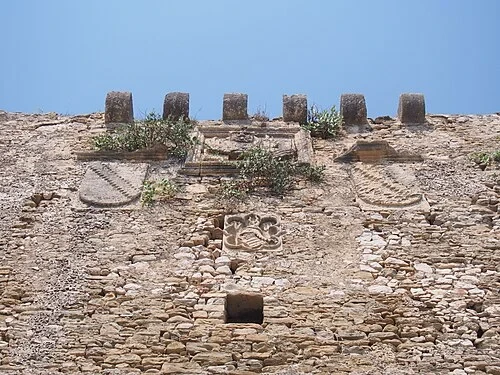 The Venetian EmblemsCoats of Arms
Notice the collection of stone shields scattered across the walls of the entrance. These are the coats of arms belonging to the various Venetian 'Provveditori,' or governors, who were appointed to oversee the defense and administration of the castle. In the Venetian system, these officials were rotated through their tours of duty, typically serving for a few years before returning to Venice or moving to another post. By commissioning these heraldic markers, each governor ensured his family’s name and service were immortalized in the very fabric of the fortress. These shields serve as a chronological record of the castle's history under Venetian rule. Some are intricately carved with family symbols, such as geometric patterns or stylized animals, while others have been worn smooth by centuries of wind and rain. They highlight the personal side of the fortress's history—the individual leaders tasked with maintaining this vital maritime station against the constant threat of Ottoman expansion. As you look at these shields, imagine the weight of responsibility these men carried, managing a garrison in a remote but critical Mediterranean outpost thousands of miles away from the Rialto.
Listen in the appPhoto: C messier · CC BY-SA 4.0
05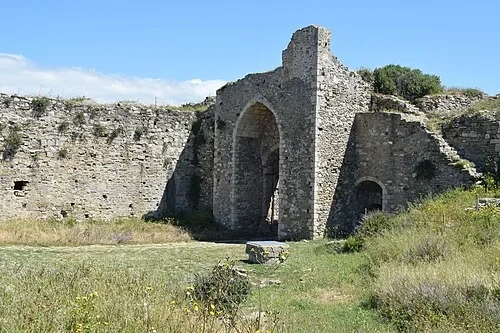 The Inner City and Central RoadThe Inner Passage
Moving deeper into the fortification, you encounter this narrow passage framed by a distinctive pointed Gothic arch. This architectural feature serves a dual purpose, combining aesthetic style with brutal military efficiency. Strategically, this passage was designed to be a bottleneck. If an enemy managed to break through the main gate, they would find themselves funneled into this tight, enclosed space. This slowed their momentum and made them easy targets for defenders positioned on the parapets above, who could rain down projectiles or boiling oil through 'murder holes' in the ceiling. Observe the contrast in the masonry here: the arch itself is constructed of precisely cut, smooth-faced stones, while the surrounding walls consist of rougher, hand-hewn blocks. This transition marks the boundary between the purely defensive outer works and the more habitable inner sections of the castle. For the medieval traveler, passing through this arch meant they were finally within the 'safe' interior of the town. Today, it stands as one of the best-preserved architectural details of the Venetian era, showcasing the sophisticated urban planning that went into creating an impregnable maritime city on this narrow peninsula.
Listen in the appJean Housen · CC BY-SA 4.0
06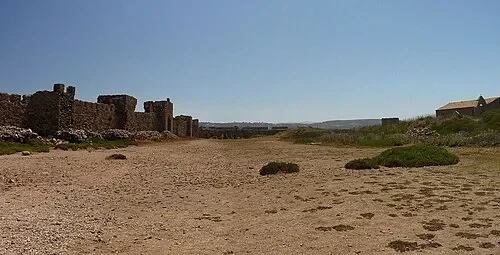 The Inner City and Central RoadThe Path of the Pilgrims
As you step into the open interior of the castle, the sheer scale of the complex becomes apparent. The fortress stretches approximately 700 meters from the land gate to the sea, occupying an elongated, elliptical peninsula. While it may look like an empty field today, this area was once a densely populated town. During the Middle Ages, Methoni was a primary port of call for pilgrims journeying from Western Europe to the Holy Land. Thousands of travelers would stay within these walls, resting and stocking up on supplies before the final legs of their long maritime journey. The town featured narrow streets, multi-story houses, markets, and workshops, all protected by the massive walls you see surrounding the perimeter. Because of its importance as a safe harbor, it was a cosmopolitan hub where languages and cultures from across the Mediterranean mingled. Standing here now, it takes a leap of imagination to replace the tall grass and wildflowers with the noise and activity of a thriving medieval port. The wide-open spaces are the result of centuries of warfare and abandonment, yet the layout of the land still follows the natural contours of the rocky peninsula that made this spot so defensible.
Listen in the appRonny Siegel · CC BY 3.0
07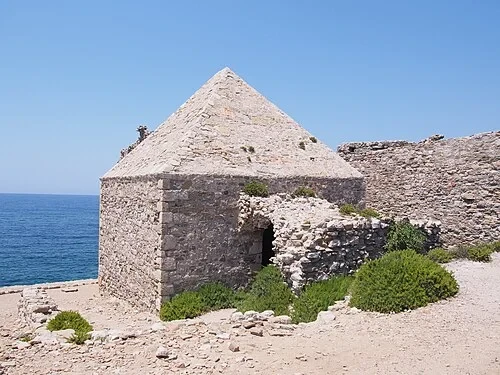 The Gunpowder MagazineThe Gunpowder Magazine
Near the fortification walls stands a small, remarkably well-preserved building easily identified by its distinctive pyramidal stone roof. This was the castle’s gunpowder magazine, a critical component of its defensive infrastructure during the age of artillery. Gunpowder was both essential and extremely dangerous, so the magazine was built with thick, solid masonry to protect its volatile contents from enemy fire and accidental sparks. The choice of a stone roof instead of wood was a deliberate fireproofing measure. Its location—tucked close to the defensive batteries but slightly isolated from the main living quarters—was also strategic. It allowed the garrison to quickly resupply the cannons during a siege while minimizing the risk to the rest of the town if an explosion occurred. Inside, the space would have been kept as dry and cool as possible to prevent the powder from degrading. This modest structure is a testament to the logistical challenges of medieval and early modern warfare. Every detail of its design, from the lack of windows to the specific roof shape, was calculated to ensure that when the fortress needed to defend itself, its most powerful weapon would be ready and safe.
Listen in the appPhoto: C messier · CC BY-SA 4.0
08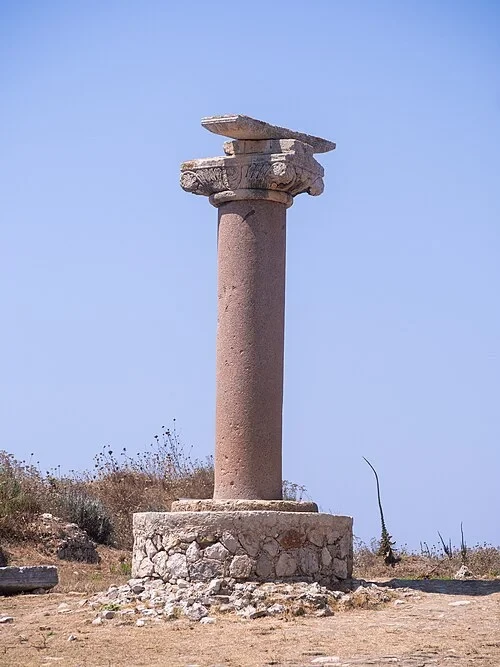 The Morosini ColumnThe Morosini Column
Standing alone in the center of the castle grounds is a massive, monolithic pillar made of red granite. It is commonly referred to as the Morosini Column, named after the famous Venetian Admiral Francesco Morosini, who recaptured the castle from the Ottomans in 1686. However, archaeological evidence suggests the column is much older, likely predating Morosini’s arrival. It originally featured an ornate Corinthian-style capital, which you can still see at the top, and would have been crowned by a large stone Winged Lion of Saint Mark. One of the great mysteries of the castle is how such a heavy, single piece of granite was transported here. It is believed that the pillar may have been repurposed from an ancient Roman site, a common practice in medieval construction. The column served as a focal point for the town, a symbol of Venetian authority and maritime power visible from far across the peninsula. Over time, the lion was lost or destroyed, leaving the pillar as a stark, solitary monument. It has survived numerous earthquakes and sieges that leveled much of the surrounding city, remaining one of the most enigmatic landmarks within the castle walls.
Listen in the appPhoto: C messier · CC BY-SA 4.0
09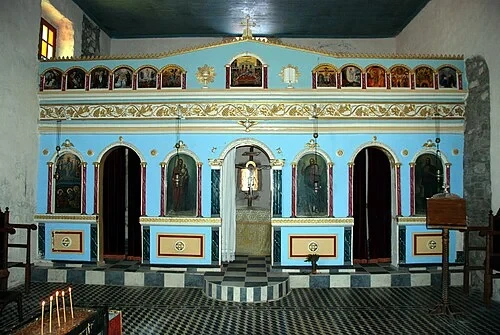 The Church of Saint SophiaChurch of Saint Sophia Interior
Stepping inside the small Church of Saint Sophia, you encounter a space that feels worlds away from the military fortifications outside. The central feature is the ornate iconostasis—the screen of icons that separates the sanctuary from the main body of the church. Decorated in striking blue and gold, it houses several icons depicting saints and biblical scenes, characteristic of the Greek Orthodox tradition. This church has been a spiritual anchor for the local population through centuries of shifting political rule. While the castle changed hands between Venetians and Ottomans, the religious life of the Greek community persisted, often adapting to the changing circumstances. During some periods, churches like this were the only places where local traditions and the Greek language could be preserved. The interior reflects a blend of styles and repairs made over generations, with its checkered floor and simple vaulted ceiling. It serves as a reminder that the castle was not just a military garrison, but a living community where families gathered for baptisms, weddings, and communal worship. The quiet, candlelit atmosphere inside provides a moment of reflection on the human lives that once filled this sprawling stone stronghold.
Listen in the appPhoto: Dnalor 01 · CC BY-SA 3.0 at
10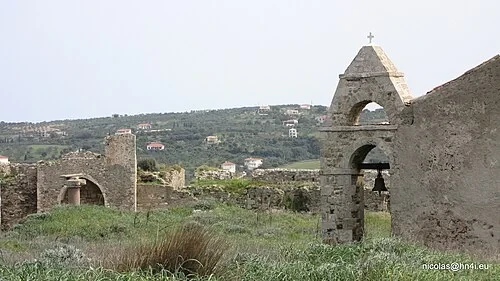 The Church of Saint SophiaThe Church Ruins
From the outside, the Church of Saint Sophia presents a simple but sturdy stone silhouette against the backdrop of the castle walls. The small, arched bell tower topped with a cross is one of the few religious vertical elements still standing in the complex. This building represents the deep Byzantine roots of the settlement, which predated the arrival of the Venetians in the 13th century. Throughout its history, Methoni has been a place where different faiths converged and sometimes collided. Within a few hundred meters of this spot, Byzantine churches, Venetian Catholic chapels, and Ottoman mosques once stood side-by-side, reflecting the diverse origins of the castle’s inhabitants. The masonry of the church shows signs of multiple phases of construction and repair, using stones likely salvaged from older structures in the area. This practice of 'spolia' is common throughout the fortress, where each new occupant built upon the ruins of the last. The church remains a symbol of continuity, outlasting the massive military barracks and palaces that once surrounded it. Its modest scale today belies its historical importance as the heart of the local Orthodox community during the long centuries of foreign occupation.
Listen in the appPhoto: Nicolas Hadjidimitriou · CC BY-SA 4.0
Methoni Castle
Frequently asked questions
How much does the guide cost?
Free app download. Listed guide price: $3.99. Guide price shown in the app. Audio guide only. Venue admission is separate.
Can I listen without internet?
Yes. Download the guide’s audio, images, and maps in the app before your visit. Your downloaded content is then available offline.
Can I listen in my language?
Stanza supports 15 languages. Check the app for the languages available for this guide.
Do I need to follow a schedule?
No. This is a self-guided experience. Choose your stops, pause whenever you like, and return to a story at your own pace.
At your own pace
Explore Methoni Castle.
Download Stanza, then search for “Methoni Castle”.
Free app download · Guide price shown in the app
Keep exploring
Nearby audio guides
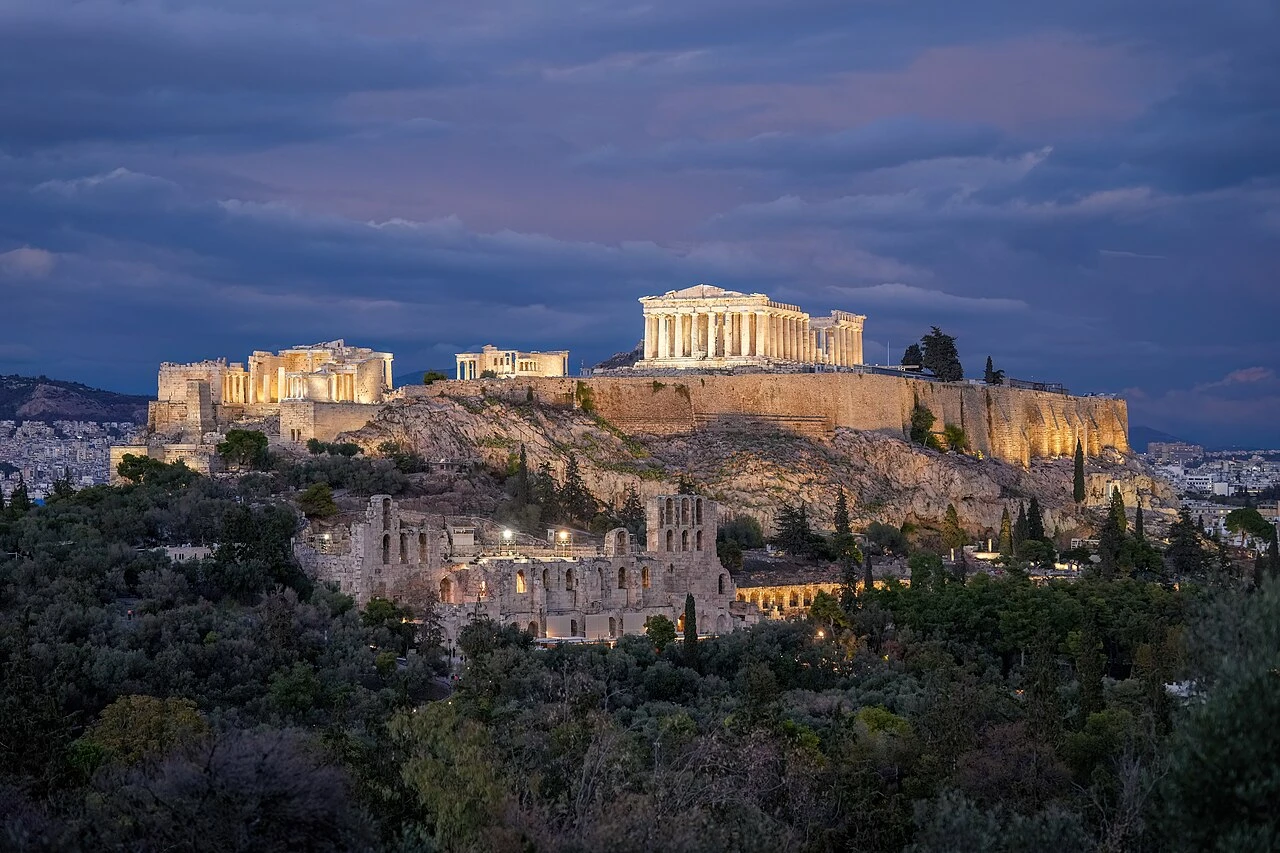
Athens
Acropolis of Athens
Content & sources
Photo: Giles Laurent · CC BY-SA 4.0
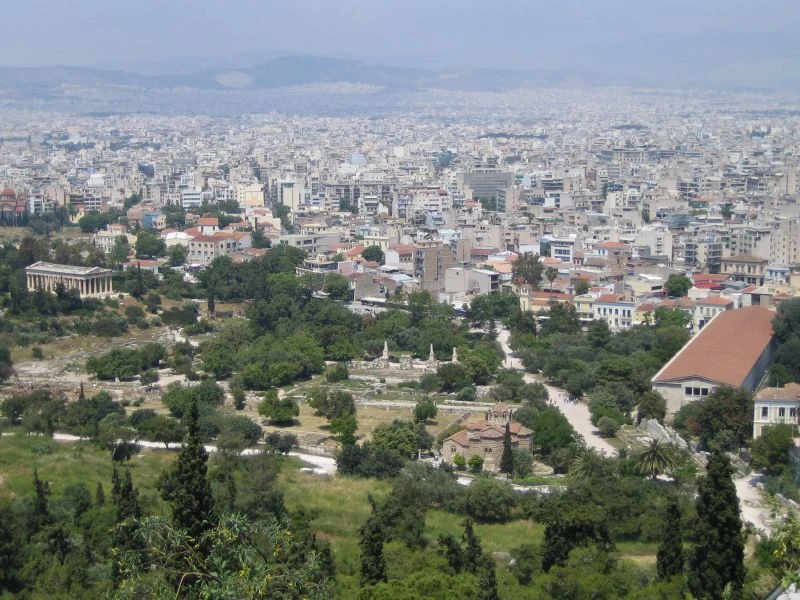
Athens
Ancient Agora of Athens
Content & sources
https://www.flickr.com/people/jonezes/ · CC BY-SA 2.0
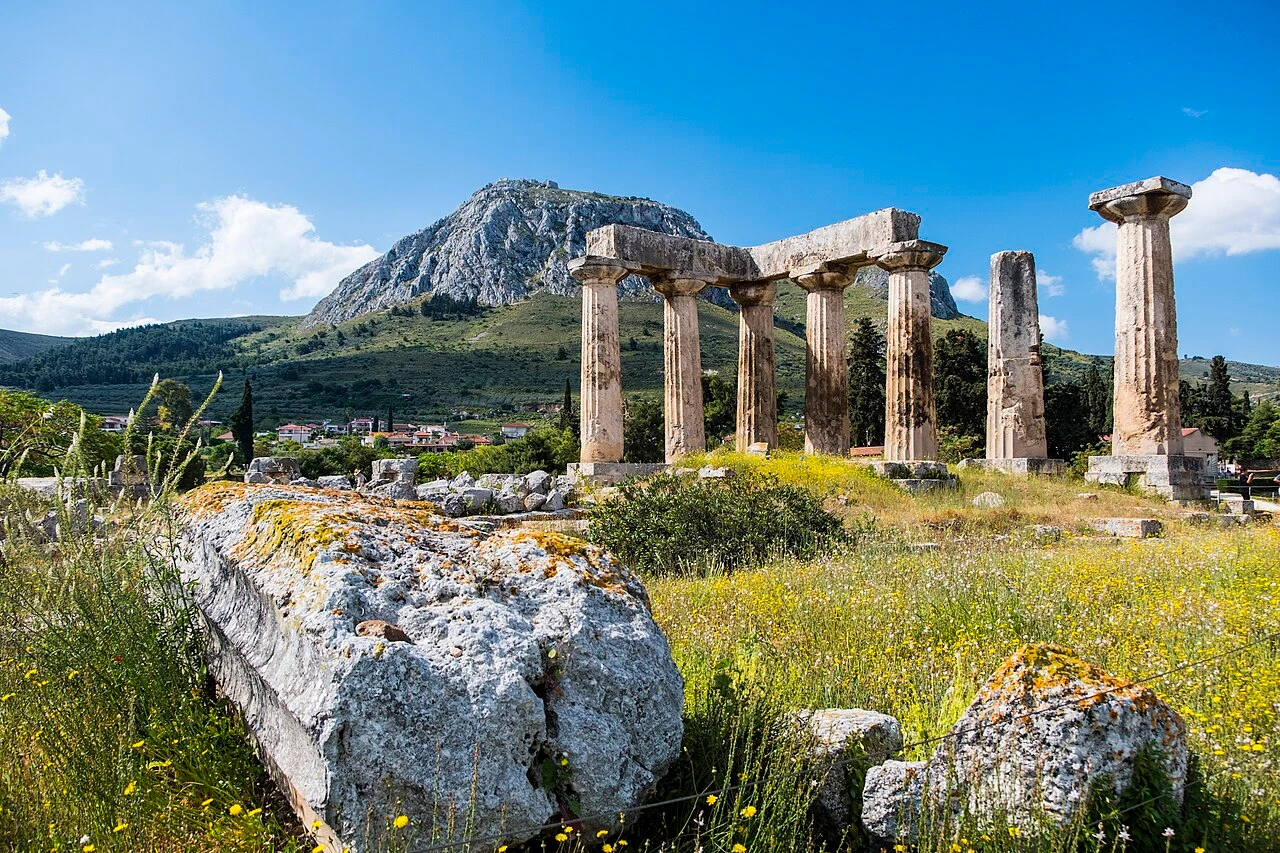
Corinth
Ancient Corinth
Content & sources
Davide Mauro · CC BY-SA 4.0
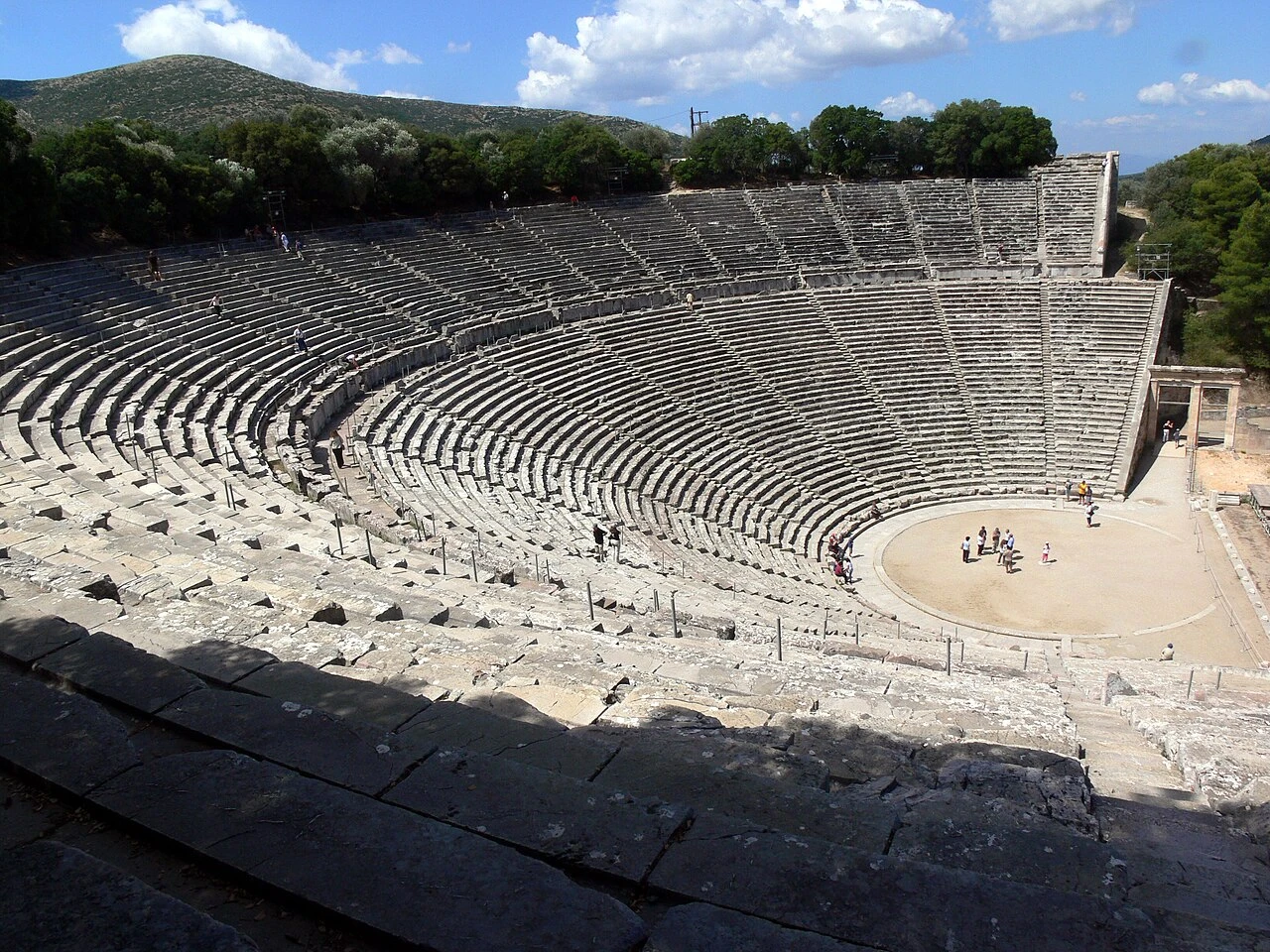
Epidaurus
Ancient Epidaurus
Content & sources
Photo: Fingalo · CC BY-SA 2.0 de