Languages
15Αρχαία Μεσσήνη Audio Guide
Αρχαία Μεσσήνη is an archaeological site in Mavromati, Greece. Explore it with Stanza's guided offline audio tour — narrated in 15 languages.
Quick Facts
36
Stops
15
Languages
100%
Offline
📍 Mavromati, Greece · 37.1750°N, 21.9200°E
About Αρχαία Μεσσήνη
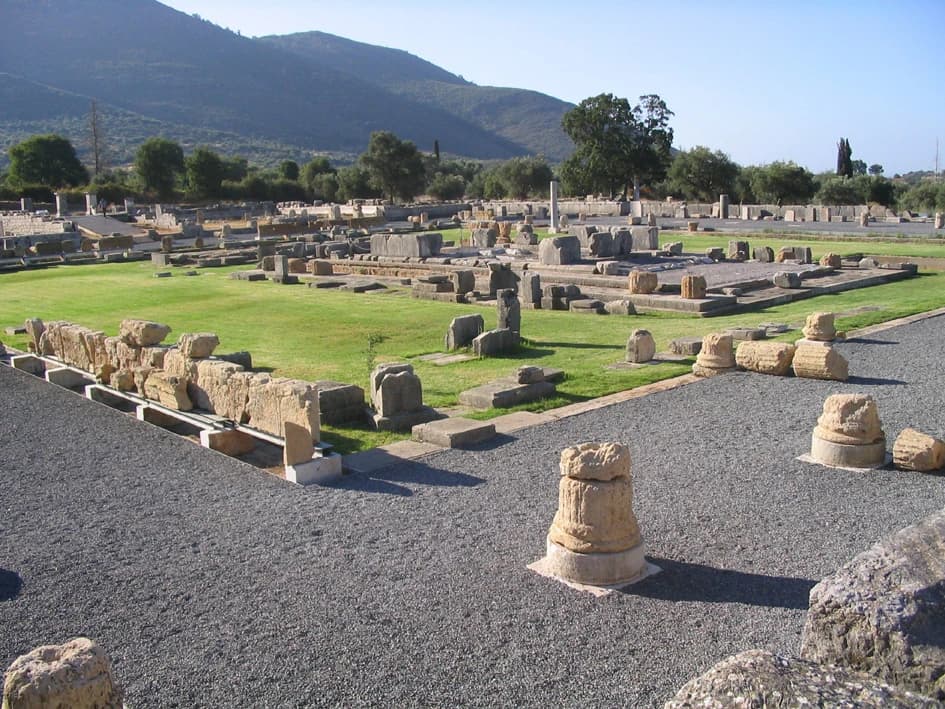
Messene is a significant ancient Greek city in the Peloponnese that features extensive ruins, including a well-preserved theater and fortification walls. It serves as an expansive excavation site showcasing the urban layout and public architecture of the classical and Hellenistic periods.
This self-guided audio tour features 36 narrated stops organized across 10 sections. As a archaeological site, Αρχαία Μεσσήνη offers a unique cultural experience in the heart of Mavromati, Greece.
The Stanza audio guide is available in 15 languages and works entirely offline — download the complete tour including audio narration, maps, and images before your visit. As you walk through Αρχαία Μεσσήνη, GPS-triggered narration plays automatically at each point of interest.
Last updated:
What you will hear
Ancient Theatre of Messene
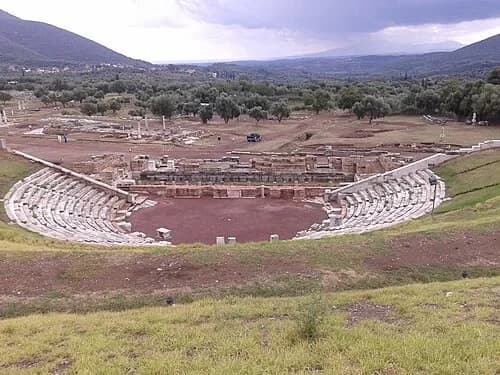
One of the largest theaters of antiquity, used not only for drama but also for massive political assemblies of the Messenian state.
Theatre of Messene
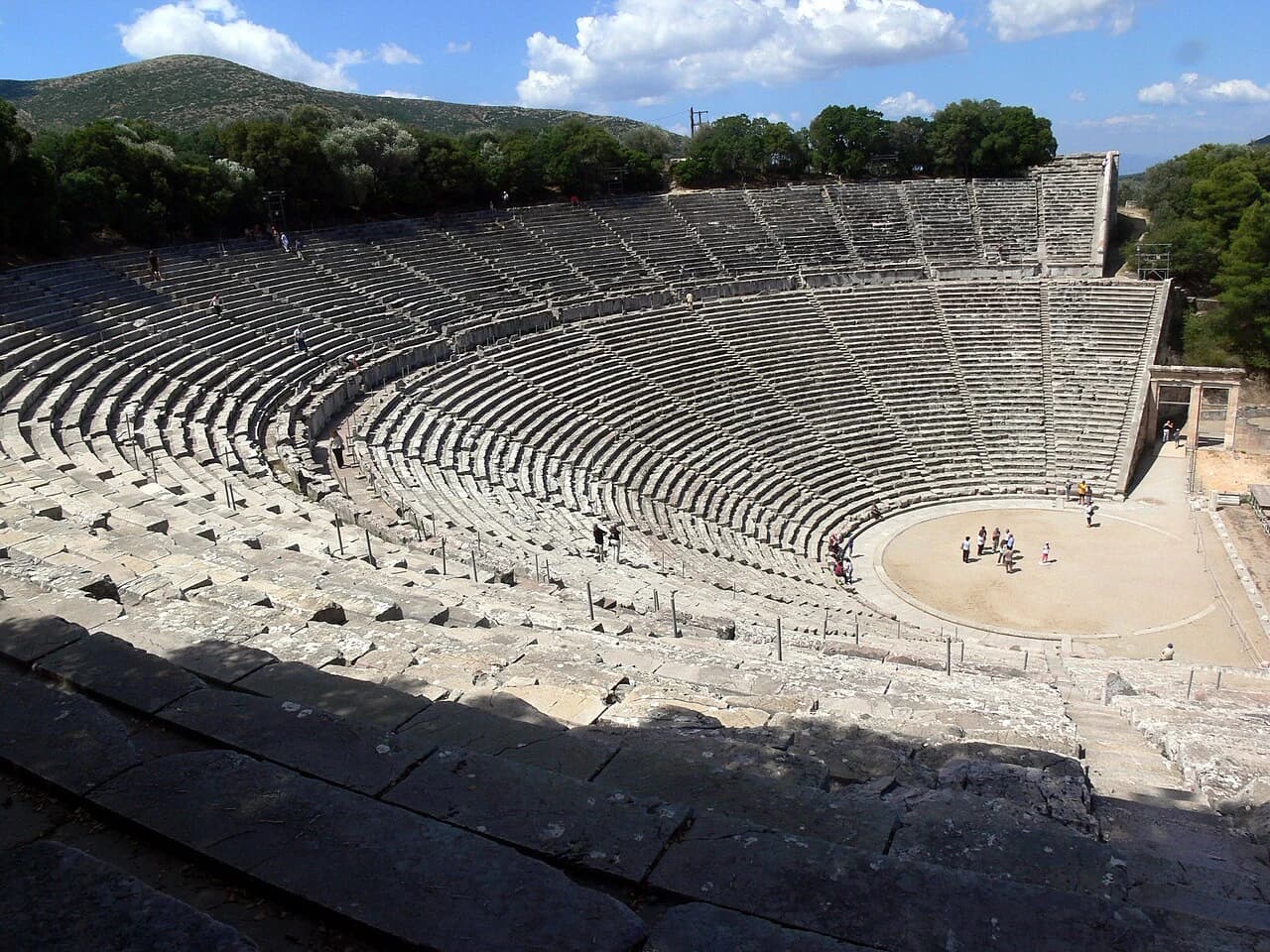
Welcome to the Theatre of Messene, an architectural marvel that ranks among the largest in the ancient world. While its semicircular rows of stone seats suggest a venue solely for drama and music, this space functioned primarily as the city's political heartbeat. After centuries under Spartan rule, the citizens of Messene reclaimed their identity, and this theater became the ultimate symbol of their hard-won freedom. Here, the entire adult population could gather to debate laws and make collective decisions. The orchestra area, once the stage for both theatrical performances and intense political discourse, could accommodate a crowd of 10,000 people. Notice the remaining stone tiers climbing the hillside; each one represents a citizen's right to participate in the democratic process. Walking among the ruins, you can appreciate the scale required for a city-state determined to never lose its independence again. The structure was engineered to amplify the speaker's voice, ensuring that even those in the highest rows could hear the arguments that shaped their future.
Arsinoe Fountain
The city's main water supply, named after the mother of Asclepius, featuring a massive 40-meter-long cistern.
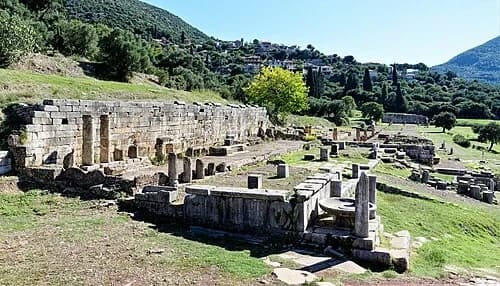
Arsinoe Fountain
The Arsinoe Fountain was more than a utility; it was the social and engineering heart of the city. Named after the mother of the healing god Asclepius, the fountain represented the vital importance of water to the community. Its centerpiece is a massive forty-meter-long cistern that collected cool water piped in from the Klepsydra spring. Citizens gathered here every morning, and while they filled their jars, they exchanged news under the shade of long colonnades that once stood over the structure. Look closely at the retaining wall. It is built from large, perfectly fitted stone blocks that have held firm without mortar for more than two millennia. This precision demonstrates the high level of Hellenistic engineering available to the city. The fountain was designed to be both functional and beautiful, acting as a grand backdrop to daily life in the lower city. Even today, the scale of the basin suggests the sheer volume of people who relied on this single source for their survival and hygiene. It stands as a reminder of how ancient urban centers revolved around the shared management of natural resources.
Stoa of the Meat Market
A specialized wing of the Agora where food was traded, distinguished by its unique decorative reliefs.
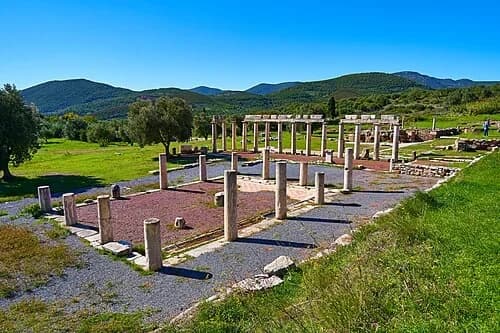
Stoa of the Meat Market
This wing of the Agora served as a busy hub for more than just basic provisions. While the nearby meat market handled daily food needs, this stoa was the city’s commercial and financial center. Archaeological evidence suggests that money-changers set up their tables here, and merchants sold luxury goods like imported silks and exotic spices. The rows of column drums you see today once supported a grand roof that sheltered these high-stakes transactions. Every morning, the open spaces between the permanent structures were filled with temporary wooden stalls, turning the area into a dense maze of goods and traders. It was likely the busiest spot in town, where a citizen could find everything from high-grade local olives to fine jewelry. The atmosphere would have been electric, filled with the noise of different languages and the clinking of coins from across the Mediterranean. This part of the city highlights Messene's role as a regional economic powerhouse. The foundations of the shops and the arrangement of the colonnade suggest a highly organized system of trade that connected this inland city to the wider ancient world.
Temple of Messene
A temple dedicated to the personified city-goddess, Messene, emphasizing the city's independent identity.
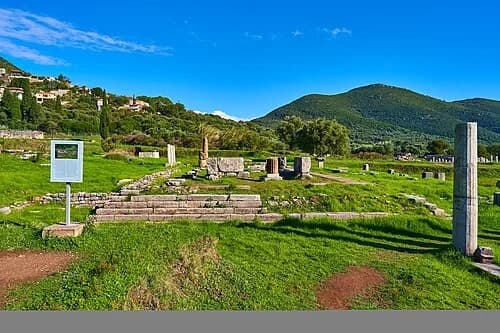
Temple of Messene
The Temple of Messene held a unique place in the hearts of the city's residents. It was dedicated to the mythical queen who served as the personified goddess of their city-state. For a people who had been enslaved by the Spartans for centuries, worshipping their own namesake deity was a powerful act of political and cultural identity. This temple served as the spiritual anchor of their freedom. As you look at the ruins, notice the massive limestone blocks that form the foundation. These were cut and laid with a sense of permanence, reflecting the city’s vow to remain free. A lone column drum still stands as a silent reminder of the structure's former height and grandeur. Unlike other temples dedicated to the pan-Hellenic gods like Zeus or Apollo, this sanctuary was purely about the local pride and history of the Messenian people. It was a site of pilgrimage for those who wanted to honor their ancestors and celebrate their distinct heritage. The heavy masonry of the platform shows the sheer effort invested in honoring the goddess who represented their collective spirit. It stands as one of the most significant monuments to the city's resilience and its determination to define its own destiny.
Asklepieion of Messene
The religious and artistic center of the city, functioning as both a sanctuary for healing and a gallery of Messenian sculpture.
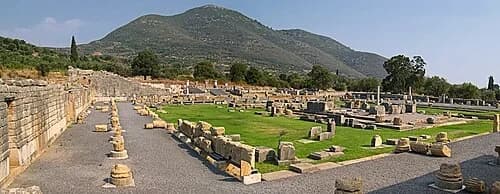
Asklepieion of Messene
The Asklepieion was the most important religious and social complex in the city. While it was dedicated to Asclepius, the god of healing, it functioned as much more than just a hospital. The perfectly rectangular courtyard you see was once a vibrant museum of art, filled with over one hundred bronze statues of the city's heroes, poets, and benefactors. This was the place where Messenians came not only to seek cures for their ailments but also to celebrate their history and national identity. The stoas surrounding the courtyard provided shaded areas for patients and visitors to rest and socialize. Being healed here was a ritualized experience that involved a combination of medical care and spiritual devotion. The grandeur of the architecture, from the fluted columns to the refined masonry, reflects the wealth and prestige the sanctuary enjoyed. Walking through this space, one would have been surrounded by the physical reminders of the city’s greatness while seeking personal health. Today, the orderly layout of the foundations and the remaining column bases allow us to visualize the scale of this spiritual center. It stands as a prime example of the ancient Greek belief that the health of the individual was deeply connected to the strength of the city-state.
Odeion and Ekklesiasterion
A small, roofed theater used for musical performances and meetings of the city council.
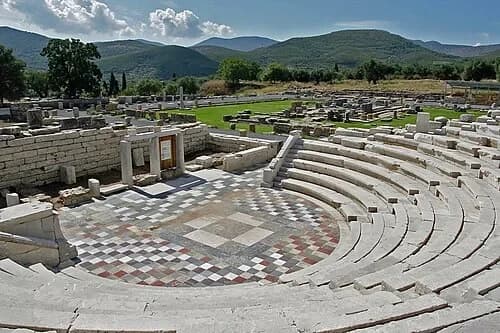
Odeion of Messene
This small, semi-circular structure is the Ekklesiasterion, often referred to as the Odeion. While the massive theater nearby served the general population, this more intimate venue was reserved for elite city council meetings and specialized performances. One of its most striking features is the multi-colored marble floor in the center, composed of red, white, and blue-gray stone. This decorative element was a Roman addition that served as a visual testament to the city’s continued prosperity during the later imperial period. Originally, this entire space was covered by a roof, creating a perfectly acoustic environment for heated political debates or refined musical recitals. The intimacy of the seating allowed for direct eye contact and clear communication among the city's decision-makers. Standing here, it’s possible to appreciate the dual nature of the space as a site for both the governance of the city and the high-level cultural events that defined its social hierarchy. The vibrant floor remains one of the best-preserved examples of Roman luxury in Messene, illustrating the town's enduring importance as a regional center.
Roman Baths (Balaneio)
A well-preserved Roman bath complex showing the sophisticated hypocaust heating system used for hot baths.
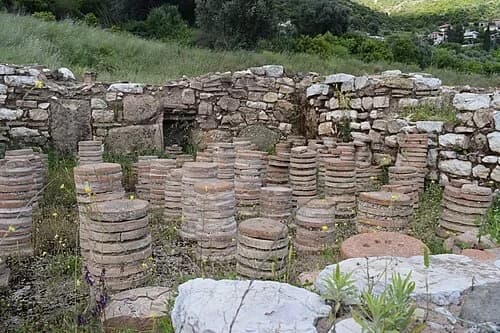
The Ancient Heating System
Short stacks of circular red bricks known as pilae are visible here, marking the remnants of a hypocaust system. This was the ingenious Roman method of central heating. These pillars supported a floor that was suspended several feet above the ground. A furnace located outside the room would pump hot air into the void between the pillars, effectively heating the stone floor from below. This allowed bathers to walk comfortably barefoot on the marble surfaces even during the colder winter months. The brickwork has survived remarkably well, showing the structural integrity required to support the heavy layers of stone and concrete that once rested on top. This technology represented the height of Roman engineering, transforming a simple room into a climate-controlled environment for public comfort. The uniform height of the pillars ensured that the hot air circulated evenly throughout the space, preventing cold spots. It is a fascinating example of how ancient architects prioritized physical luxury and environmental control through advanced, fire-based systems.
Roman Villa of Messene
A grand private residence featuring an audience hall, reflecting the city's prosperity under Roman rule.
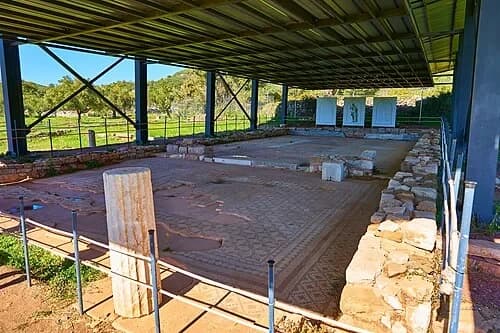
Roman Villa of Messene
This site was once the grand residence of one of Messene’s wealthiest Roman citizens. The most significant feature is the large Audience Hall, which retains its original mosaic floor. In Roman society, this was the most public part of the home, where the owner would receive clients, discuss business, and demonstrate his social standing through architectural splendor. A modern protective roof installed over the area is crucial for preserving the intricate geometric patterns of the mosaics, which would otherwise fade from exposure to intense sunlight and rain. These complex designs were incredibly expensive to commission and served as a clear indicator of the owner's vast fortune and refined taste. The layout of the villa reflects a typical Roman urban home, where private life was centered around a highly decorated reception space. Exploring the foundations, one can appreciate the scale of domestic luxury that existed in Messene during its Roman zenith, where personal success was reflected in the very floors upon which guests walked. The hall stood as a bridge between the private family world and the public political sphere.
Grave Monument K3
A striking Corinthian-style monument topped with a bronze finial, marking a significant burial within the gymnasium complex.
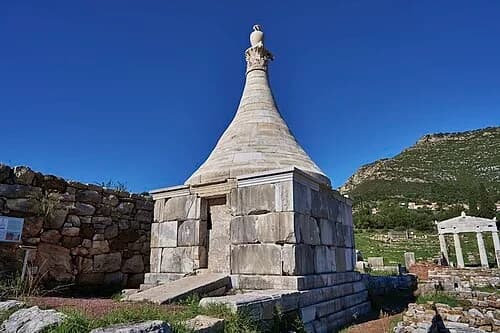
Grave Monument K3
The unique and striking silhouette of this tomb features a solid square base topped with a tall, conical roof. Designated as K3, this monument was the final resting place of a highly honored citizen, most likely an individual who held a significant role in the administration of the neighboring Gymnasium. At the very peak of the roof sits a finial that resembles bronze, adding a final touch of distinction to the structure. This specific style of tomb was intentionally designed to stand out from the surrounding flat architectural landscape, serving as a permanent landmark within the city’s urban fabric. Its proximity to the educational and athletic heart of Messene ensured that the memory of the deceased remained visible to the youth who trained here daily. The monument exemplifies the high regard in which the city held its administrators and benefactors, immortalizing their status in stone. Its unusual shape remains a point of interest, just as it was meant to be for the ancient residents who passed it every morning on their way to the stadium.
Stadium of Messene
One of the most impressive and best-preserved ancient stadiums in the world, still surrounded by its original stone seating.
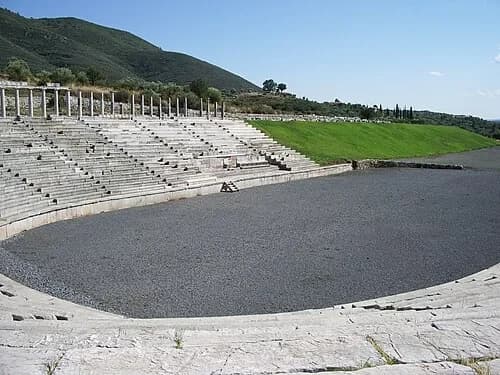
Stadium of Messene
The stadium here is one of the most impressively preserved athletic venues in the Mediterranean. Unlike many other ancient sites where the seating was dismantled and reused as building material for later fortifications, the stone tiers at Messene remain largely in their original positions. This U-shaped structure could accommodate thousands of spectators. As you look at the tiers, you can see a clear social division in the seating arrangements. The lower sections, crafted from precisely cut stone, were reserved for the citizens of Messene. In contrast, the grassy slopes above served as standing room for visitors, travelers, or the city’s poorer residents. At the far northern end, athletes would make their entrance to participate in foot races and combat sports. The sheer scale of the arena highlights the central role that physical excellence played in Greek life. Standing here today, the stadium feels remarkably complete, from the track area to the top of the embankment, offering a clear sense of the atmosphere during a major festival or competition. The stone seats even feature armrests at the ends of the rows, adding a touch of comfort for the city's prominent attendees.
Want to hear the rest?
Download the Stanza app to unlock all 36 stops and the complete guided audio tour.
Frequently Asked Questions
How long does the Αρχαία Μεσσήνη audio tour take?
The Αρχαία Μεσσήνη audio guide includes 36 narrated stops. Most visitors spend 45 minutes to 1.5 hours exploring the complete tour, though you can listen at your own pace and skip or revisit any stop.
Is the Αρχαία Μεσσήνη audio guide available in my language?
Stanza supports 15 languages: English, Spanish, French, German, Italian, Portuguese, Russian, Japanese, Chinese, Korean, Arabic, Hindi, Polish, Dutch, Hebrew. Check the guide in the app to confirm the languages currently available for this tour.
Can I use the audio guide offline at Αρχαία Μεσσήνη?
Yes! Download the complete Αρχαία Μεσσήνη tour — including all audio, maps, and images — before your visit. The Stanza app works completely offline, so you don't need WiFi or mobile data at the venue.
How much does the Αρχαία Μεσσήνη audio guide cost?
The Stanza app is free to download. Free and paid audio guides are available; current prices are shown in the app.
How do I use the Stanza audio guide at Αρχαία Μεσσήνη?
Download the free Stanza app, search for "Αρχαία Μεσσήνη", and download the tour. When you arrive at the venue, the app uses GPS to detect your location and automatically plays the relevant narration as you move between points of interest — completely hands-free.
What makes the Stanza audio guide different from other Αρχαία Μεσσήνη tours?
Stanza offers GPS-triggered narration that plays automatically as you walk through Αρχαία Μεσσήνη — no need to manually select stops. The tour is available in 15 languages, works fully offline, and includes 36 expertly narrated stops with images and historical context.
What other audio guides are available near Αρχαία Μεσσήνη?
Stanza offers multiple audio guides in Mavromati, Greece and nearby areas. After downloading the app, browse the map to discover all available tours near Αρχαία Μεσσήνη. Each guide can be downloaded for offline use.