 Stanza / Audio guide
Content & sources
Stanza · Audio guide
Αρχαιολογικός Χώρος Ολυμπίας Audio Guide
A place to remember. A story to take with you.
Olympia is an ancient Greek archaeological site on the Peloponnese peninsula, renowned as the historic sanctuary where the ancient Olympic Games were held. It serves as a major site of historical and cultural…
Download Stanza, then search for “Αρχαιολογικός Χώρος Ολυμπίας”.
About the tour
One guide. Your kind of visit.
Olympia is an ancient Greek archaeological site on the Peloponnese peninsula, renowned as the historic sanctuary where the ancient Olympic Games were held. It serves as a major site of historical and cultural significance with well-preserved ruins of ancient athletic and religious structures.
Ready when you are.
- 01Get the free Stanza app.
iOS & Android
- 02Find your guide.
“Αρχαιολογικός Χώρος Ολυμπίας”
- 03Download before you go.
Works offline
Audio guide / 35 narrated stops
Inside the guide
Get to know a few of the stories before you go. Open a stop to read more.
01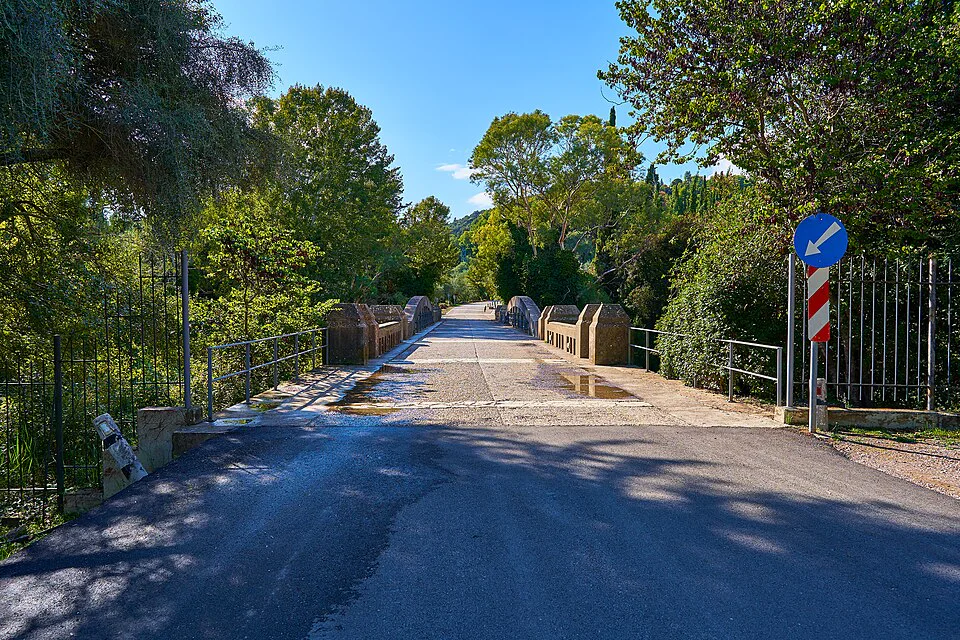 Kladeos Bridge
The Kladeos Bridge: Arrival at the Sanctuary of Zeus
The Kladeos is a quiet tributary of the Alpheios, and it borders the sanctuary of Olympia on the west. The bridge over it leads to the sanctuary's main gate. Olympia was the great sanctuary of Zeus, and the Olympic Games were held here every four years, beginning in the 8th century BC. They continued until the 4th century AD, drawing visitors from every corner of the Greek world. Gatherings like this one helped shape a shared Greek identity. The sacred precinct was called the Altis, from an Elean word meaning the grove. It was wooded ground, full of olive and plane trees, at the foot of Mount Kronos, between the Kladeos and the larger Alpheios. One thing worth knowing: this Olympia is nowhere near Mount Olympus in northern Greece, the mythical home of the gods. Worship here went back a long way, with burnt offerings dated to the 10th century BC, though scholars still debate when the cult of Zeus began. No buildings survive from that earliest time.
Photo: George E. Koronaios · CC BY-SA 4.0
02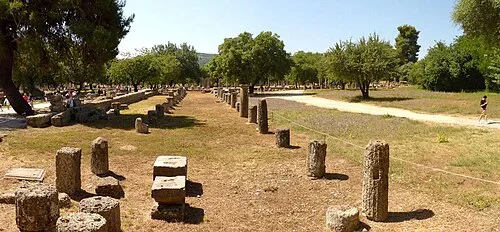 Gymnasion of Olympia
The Gymnasion: Training for the Track
The Olympic Games grew so famous that the sanctuary had to keep building for them. In the 2nd century BC, this huge training ground went up, an open field ringed by porticoes. Javelin throwers practised in the open, while runners had a portico roofed along its whole length, so they could train whatever the weather. It came late in a building boom: bath houses around 300 BC, then the Palaestra in the 3rd century, then this. What makes Olympia striking is how the athletic grounds sit right beside the sacred temples.
Listen in the appRonny Siegel · CC BY 3.0
03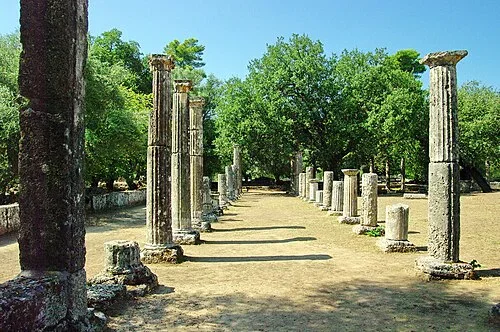 Palaestra of Olympia
The Palaestra: School of the Combat Sports
A square courtyard ringed by columns was the fighting school of Olympia. Built in the 3rd century BC, the Palaestra trained the athletes of the combat sports: wrestling, boxing and pankration. Many of those columns still rise around the open space, with dusty ground where the drilling once happened. A fighter preparing for the Olympic festival would have spent his days here, working with trainers in the shade of the colonnade. The building gave the rougher events of the games a school of their own.
Listen in the appBgabel · CC BY-SA 3.0
04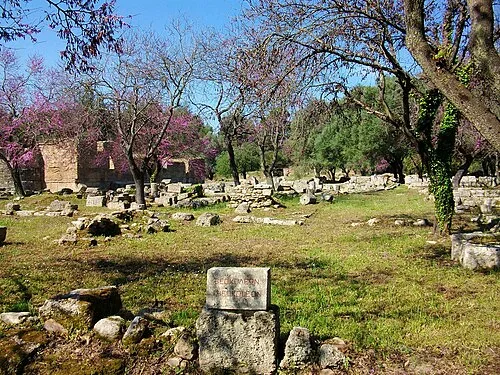 Theokoleon
The Theokoleon: Home of the Priests
The games came and went every four years, but the sanctuary of Zeus needed looking after all year round. The Theokoleon was the residence and headquarters of the Theokoloi, the priests in charge of the sanctuary's rituals. They lived among the temples, keeping the worship going between festivals. Most visitors' attention went to the athletes and the monuments. This quiet corner of the site belonged to the resident staff who held the place together.
Listen in the appPhoto: Joanbanjo · CC BY-SA 3.0
05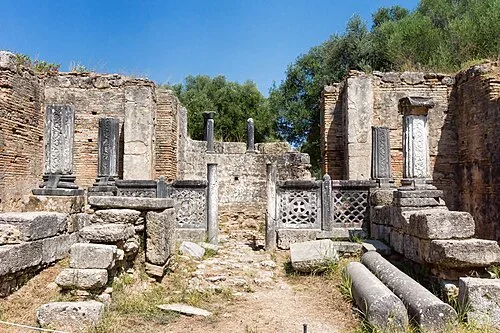 Workshop of Phidias
The Workshop of Phidias
The studio where the colossal statue of Zeus took shape stood right beside the Temple of Zeus. The sculptor Pheidias built the statue of ivory plates and gold panels fixed over a wooden framework, a technique the Greeks called chryselephantine. The traveller Pausanias, who visited Olympia in the second century AD, wrote down where the statue was made. Excavators dug the spot between 1954 and 1958 and found a sculptor's tools, clay molds and pieces of pottery, exactly where Pausanias said the work had been done. The statue itself is long gone, but the debris of the workshop settles the place beyond question.
Listen in the appPhoto: Jean-Christophe BENOIST · CC BY 3.0
06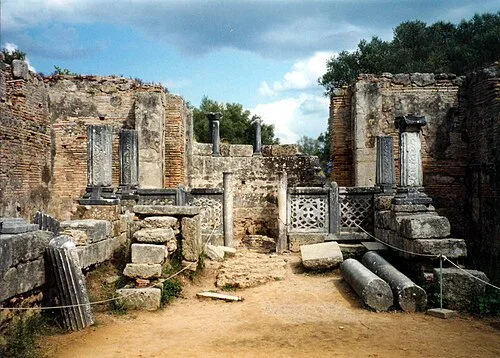 Workshop of Phidias
From Workshop to Christian Basilica
The last ancient Olympiad was held in 393 AD. After that, the Christian emperor Theodosius I banned the games. The workshop of Pheidias was turned into a Christian basilica, and a Christian community lived on among the ruins. Hard times had come earlier, too. Invading tribes in 267 AD led to the centre of the site being fortified with material robbed from its own monuments. Some evidence hints that small games, perhaps in Christian guise, continued in secret until plague and earthquakes struck in the 6th century. Repeated floods are thought to have finally emptied the settlement in the early 7th century.
Listen in the appAlun Salt · CC BY-SA 2.0
07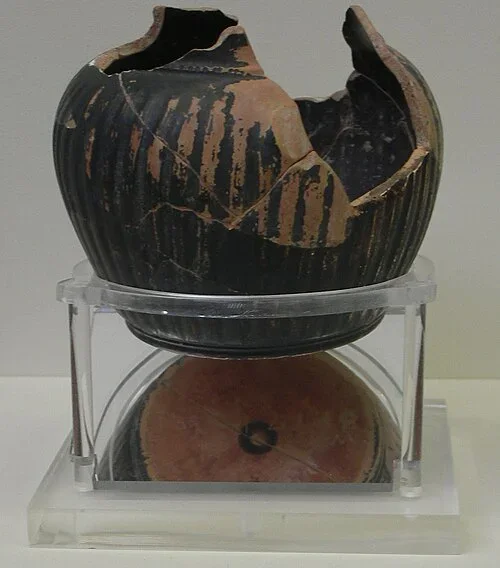 Workshop of Phidias
The Cup of Phidias
Among the finds from the workshop of Pheidias is a cup: a plain drinking vessel in black glaze, cracked and reassembled for display. Tradition links it to the master sculptor himself, as if it sat near his bench while he worked. That link is hard to prove. The excavations brought up hundreds of objects from the studio, and this humble pot stands in for all of them.
Listen in the appMuriel Pécastaing-Boissière pour Cédric Boissière · CC BY-SA 3.0
08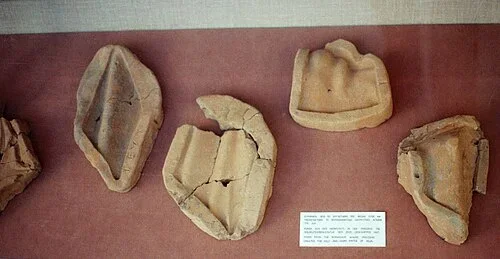 Workshop of Phidias
Pheidias After the Zeus
These molds and fragments come from the workshop of a famous sculptor, and the man who used it came to a bad end. Pheidias was charged with embezzling gold that had been meant for the Athena Parthenos, his great statue of Athena. The writer Plutarch says he was thrown into prison and died there. Another tradition, preserved by a commentator quoting the historian Philochorus, says the Eleans, the people who ran the games, put him to death once the statue at Olympia was finished. Either way, the clay in these cases is what his workshop left behind.
Listen in the appPhoto: Zde · CC BY-SA 4.0
09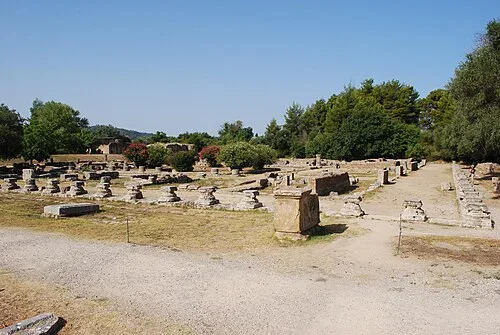 Leonidaion
The Leonidaion: Grand Guesthouse of the Sanctuary
The largest building at Olympia was never a temple. It was a guesthouse, put up around 330 BC, and it took its name from the man who paid for it and designed it, the architect Leonidas of Naxos. Its outer walls formed a rough square about eighty metres on each side, ringed by columns with an open garden court inside. It was built to lodge the visitors who came for the games, and it was still in use some six hundred years later. Then, in the late third century AD, an earthquake brought it down, and its wreckage went into the wall built to protect the site from the Herules. Its foundations were dug out between 1952 and 1966.
Listen in the appJean Housen · CC BY 3.0
10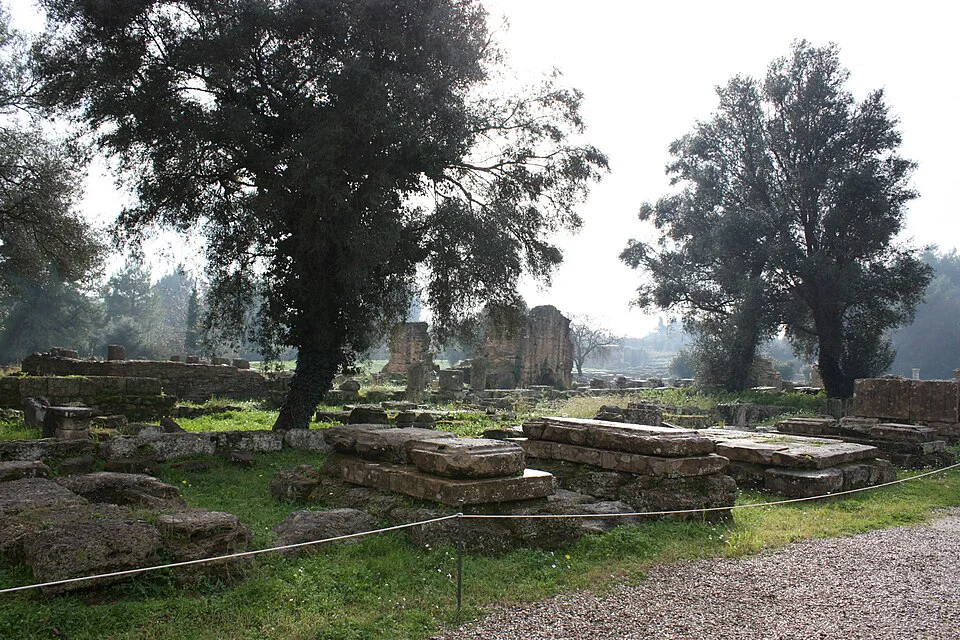 South Baths of Olympia
The South Baths
A festival crowd needs more than temples and tracks. By about 300 BC, Olympia had bath houses, built for athletes and visitors to wash off dust and heat. The South Baths stood next to the Leonidaion, the great guesthouse, and offered hot and cold bathing for well-off travellers. In the Roman period, new baths replaced the older Greek ones around 100 AD. Even a sacred precinct made room for a good soak.
Listen in the appWknight94 talk · CC BY-SA 3.0
- 11
The Bouleuterion: Oath, Judges and the Sacred Truce
Where athletes and judges swore their oath, and where the famous Olympic truce had its limits.
- 12
The South Stoa
The long shaded portico on the sanctuary's southern edge, where festival crowds rested and talked.
- 13
The Villa of Nero
The residence thrown up for the emperor Nero, and the most scandalous result in Olympic history.
- 14
The Echo Stoa
A hundred-metre portico whose echo became legend.
- 15
The Crypt: Doorway to the Arena
The vaulted tunnel through which athletes and judges entered the arena, and the Games formally began.
- 16
The Olympic Stadium
The running track of the ancient Games, from a bare field to a festival of a thousand years.
- 17
The Ancient Starting Line
A grooved stone block that held a sprinter's toes at the start of an Olympic race.
- 18
The Zanes: Pedestals Paid for by Cheaters' Fines
Bronze statues of Zeus, funded by the fines of athletes caught cheating.
- 19
The Treasuries: City-State Pride on the Kronos Slope
Little temple-like storehouses where rival Greek cities displayed their wealth to the whole Greek world.
- 20
The Nymphaeon of Herodes Atticus
Herodes Atticus's monumental fountain, built to give a growing sanctuary fresh water.
- 21
The Metroon: Temple of the Mother of the Gods
A small temple of the Mother of the Gods, later turned to the worship of Rome's emperors.
- 22
The Temple of Zeus: Fallen Giant
The great temple of Zeus, and the collapse that scattered its columns where they lie today.
- 23
The Statue of Zeus: A Lost Wonder Reimagined
The lost gold-and-ivory Zeus counted among the Seven Wonders, seen through a nineteenth-century reconstruction.
- 24
Base of the Nike of Paionios
The marble pedestal that carried the flying Nike, raised for a victory over Sparta.
- 25
The Pelopion: Tomb of Pelops and the Founding Legend
The rigged chariot race behind Olympia's founding legend, and the ancient shrine to the hero who won it.
- 26
The Temple of Hera
The sanctuary's oldest great temple, built around 600 BC, whose mismatched columns record centuries of rebuilding.
- 27
The Altar of Hera: Where the Flame Is Still Lit
How the modern Games were revived in the 1890s, and why the Olympic flame is still lit from this altar.
- 28
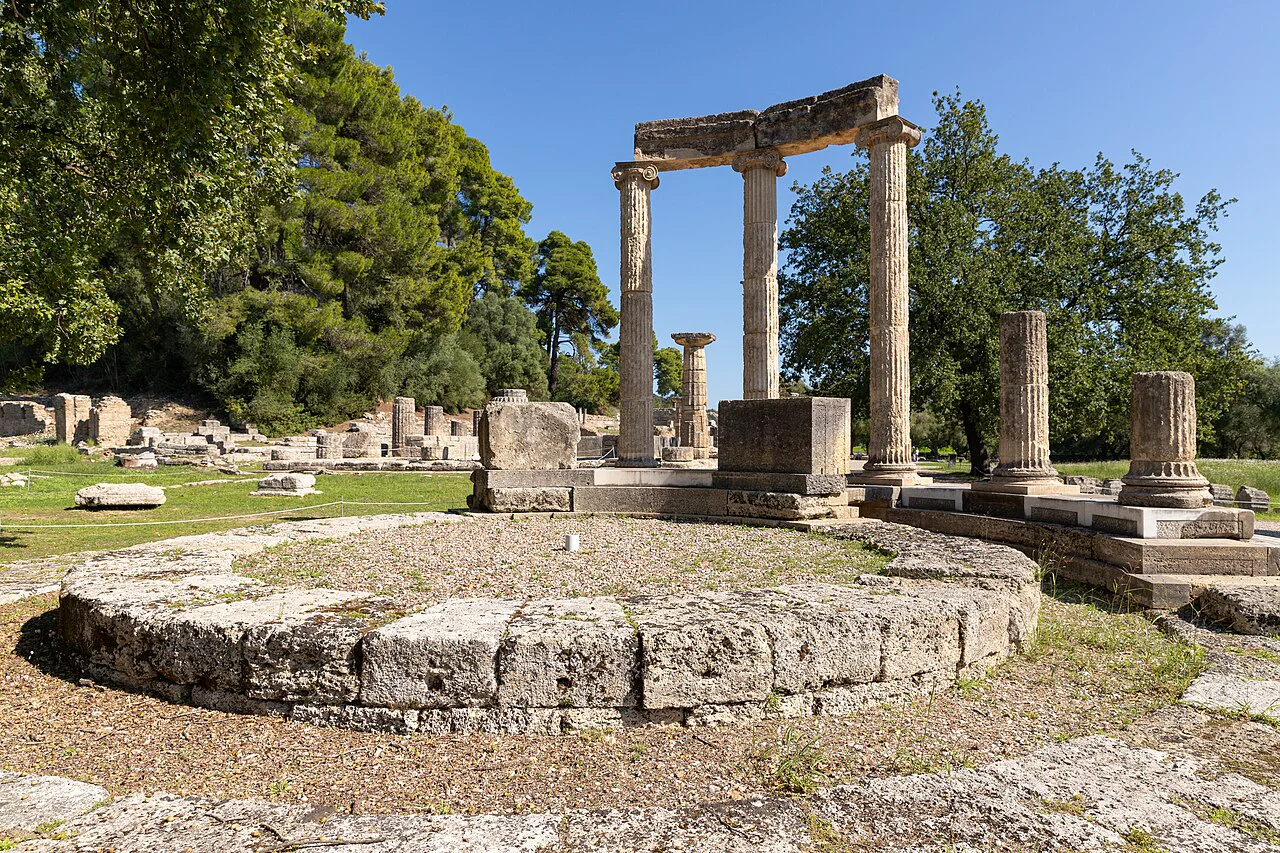
The Philippeion: Macedonian Royal Monument
The circular monument Philip II of Macedon planted inside a Greek sanctuary to display his dynasty's power.
- 29
The Prytaneion: Banquet of the Victors
Where the eternal hearth of Hestia burned and Olympic victors were honoured with a grand banquet.
- 30
The Archaeological Museum of Olympia
How French and German excavations dug the buried sanctuary out of the earth and filled this museum.
- 31
The Pediments of the Temple of Zeus
The shattered marble sculptures from the Temple of Zeus, reassembled in the museum after centuries in pieces.
- 32
Hermes with the Infant Dionysus
The celebrated marble Hermes carrying the infant Dionysus, prized as Praxitelean and debated as original or copy.
- 33
The Nike of Paionios in the Museum
A goddess of victory carved in mid-descent, drapery streaming, balanced on one foot above the gallery floor.
- 34
Votive Terracotta Figurine
A rare painted terracotta of Zeus carrying off the youth Ganymede, still bright with its ancient colour.
- 35
The Helmet Dedicated to Zeus
A battered bronze helmet linked by tradition to Miltiades and Marathon, offered up to Zeus as a trophy of war.
Αρχαιολογικός Χώρος Ολυμπίας
Frequently asked questions
How much does the guide cost?
Free app download. Listed guide price: $3.99. Guide price shown in the app. Audio guide only. Venue admission is separate.
Can I listen without internet?
Yes. Download the guide’s audio, images, and maps in the app before your visit. Your downloaded content is then available offline.
Can I listen in my language?
This audio guide is available in 15 languages, including English.
Do I need to follow a schedule?
No. This is a self-guided experience. Choose your stops, pause whenever you like, and return to a story at your own pace.
At your own pace
Explore Αρχαιολογικός Χώρος Ολυμπίας.
Download Stanza, then search for “Αρχαιολογικός Χώρος Ολυμπίας”.
Free app download · Guide price shown in the app
Keep exploring
Nearby audio guides
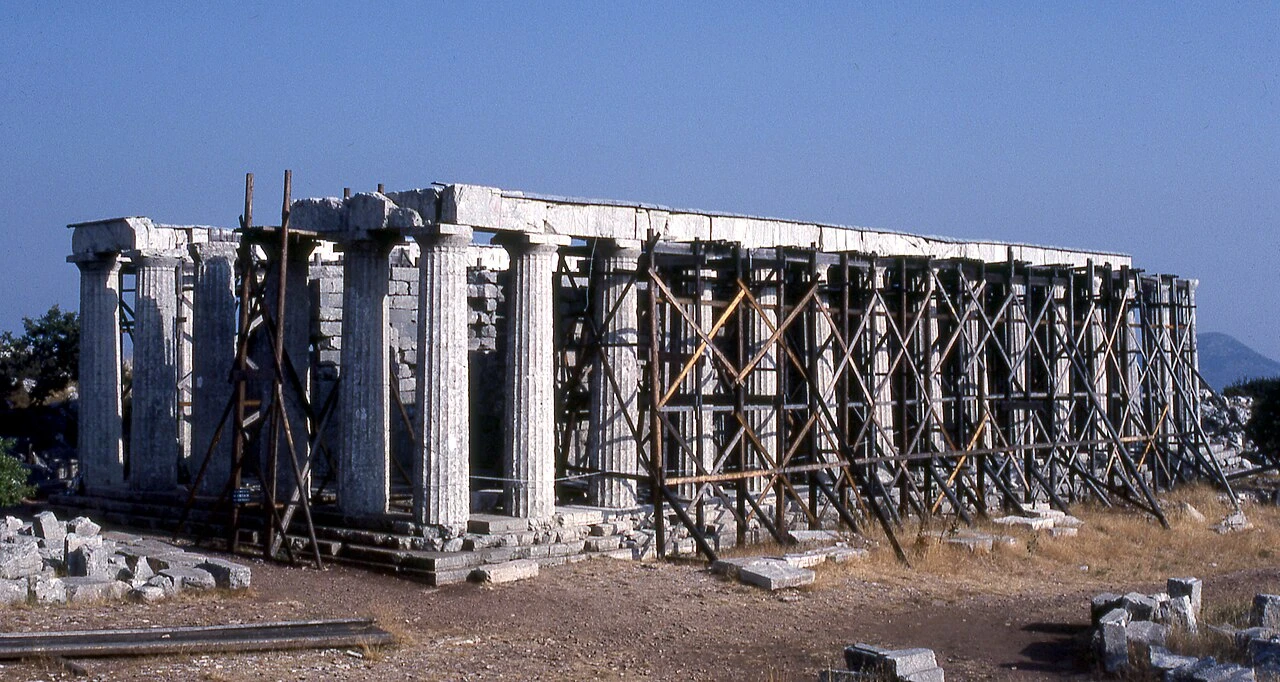
Bassae · 33 km
Temple of Apollo Epicurius at Bassae
Content & sources
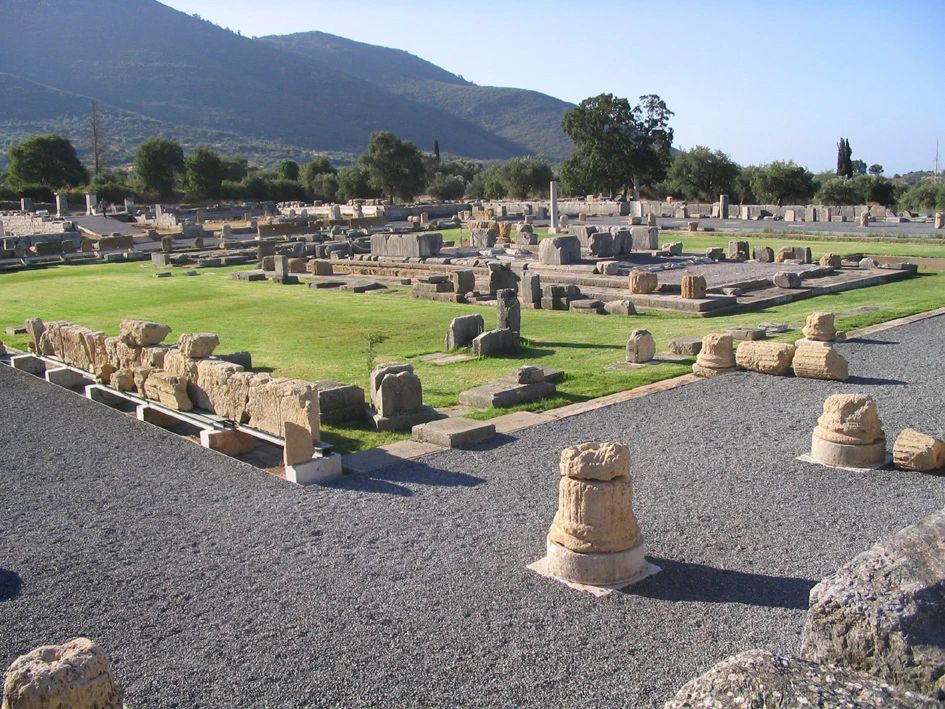
Mavromati · 58 km
Ancient Messene
Content & sources
Photo: Rossignol Benoît · CC BY 3.0
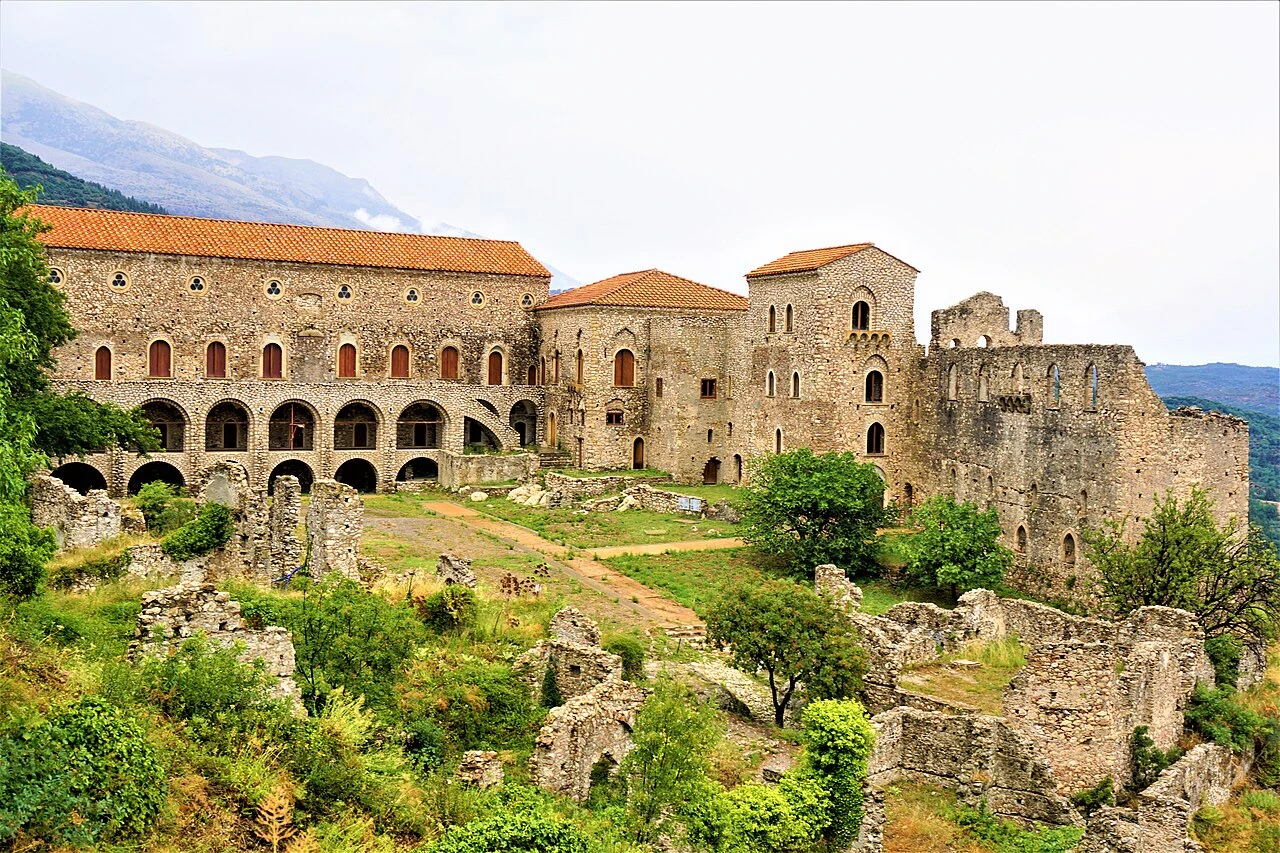
Municipal Unit of Mystras · 90 km
Archaeological Site of Mystras
Content & sources
Photo: Joyofmuseums · CC BY-SA 4.0
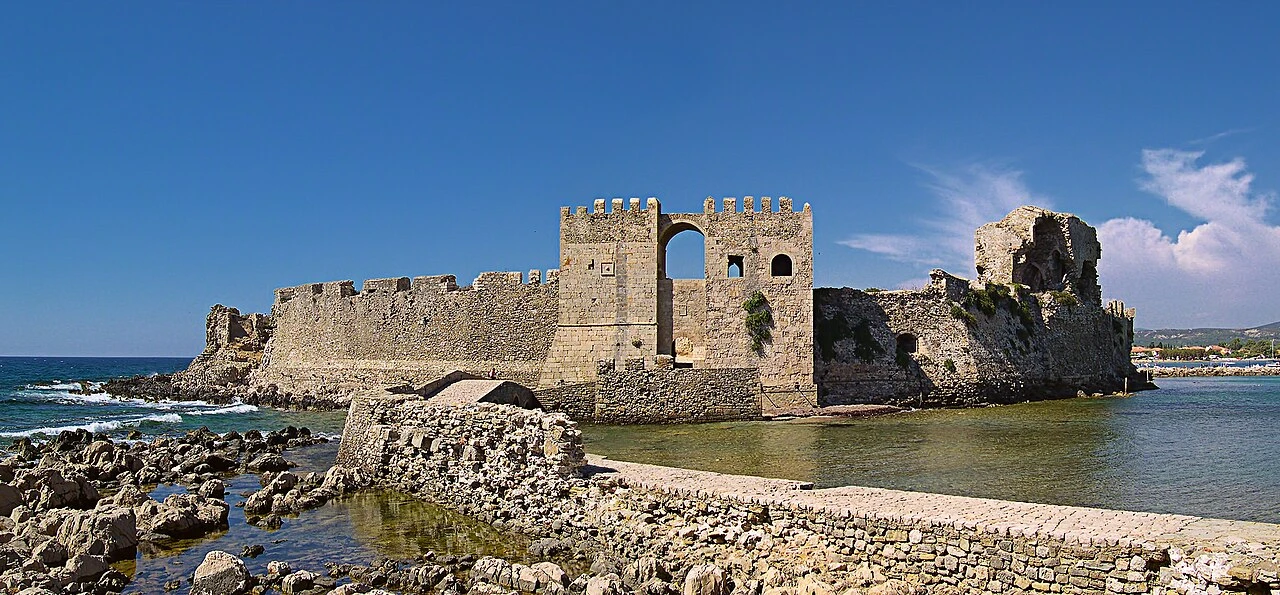
Methoni · 92 km
Methoni Castle
Content & sources
Ioannis Houvardas · CC BY-SA 3.0