Stanza · Audio guide
Teatro ColónAudio guide
A place to remember. A story to take with you.
An internationally renowned opera house located in Buenos Aires, Argentina. It is considered one of the top five opera houses in the world due to its acoustics and architectural grandeur.
Download Stanza, then search for “Teatro Colón”.
About the tour
One guide. Your kind of visit.
An internationally renowned opera house located in Buenos Aires, Argentina. It is considered one of the top five opera houses in the world due to its acoustics and architectural grandeur.
Ready when you are.
- 01Get the free Stanza app.
iOS & Android
- 02Find your guide.
“Teatro Colón”
- 03Download before you go.
Works offline
Audio guide / 26 narrated stops
Inside the guide
Get to know a few of the stories before you go. Open a stop to read more.
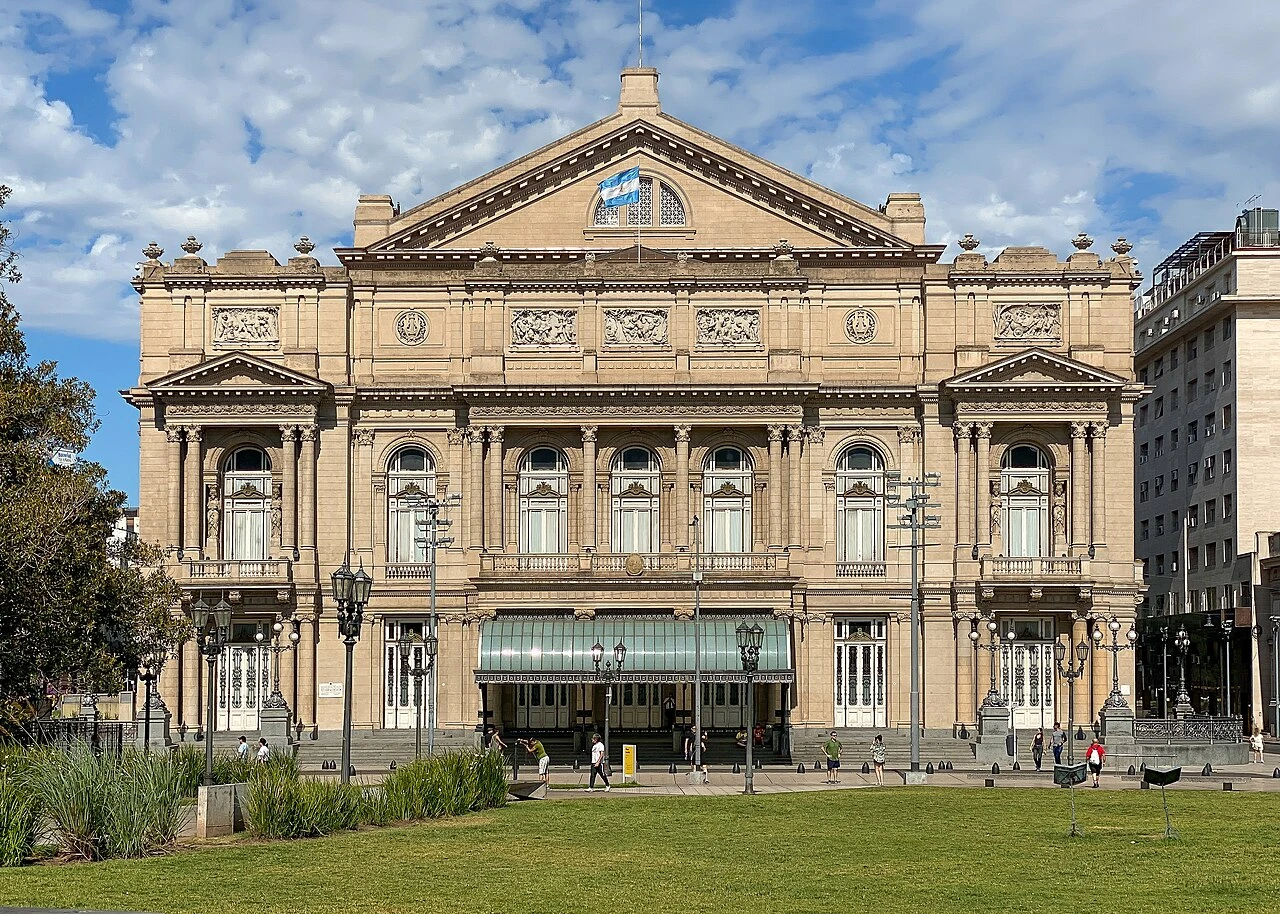
01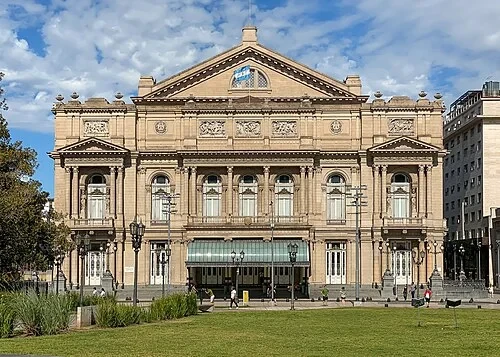 The Grand Facade and Plaza LavalleThe Eclectic Facade
Rising twenty-eight meters above the streets of Buenos Aires, the exterior of the Teatro Colón presents a massive, imposing presence. This architectural feat began in 1888, though the building we see today required two decades of labor and the expertise of three successive architects: Francesco Tamburini, Vittorio Meano, and Julio Dormal. The resulting "eclectic" style is a deliberate blending of traditions, specifically marrying the orderly elegance of the Italian Renaissance with the ornate, dramatic flourishes of the French Baroque. This mixture was intended to place the theater on equal footing with the grand opera houses of Europe. Despite the long construction period and the tragic deaths of its first two architects, the final structure emerged as a cohesive unit. The facade features varied textures, classical columns, and intricate pediments that hint at the opulence waiting inside. As a cornerstone of the city's cultural district, the theater's sheer scale is a physical manifestation of Argentina's late nineteenth-century ambitions. Every window and carved relief contributes to a design that was meant to be both timeless and worldly, providing a grand public face for one of the world's most significant lyric stages.
Photo: EEJCC · CC0
02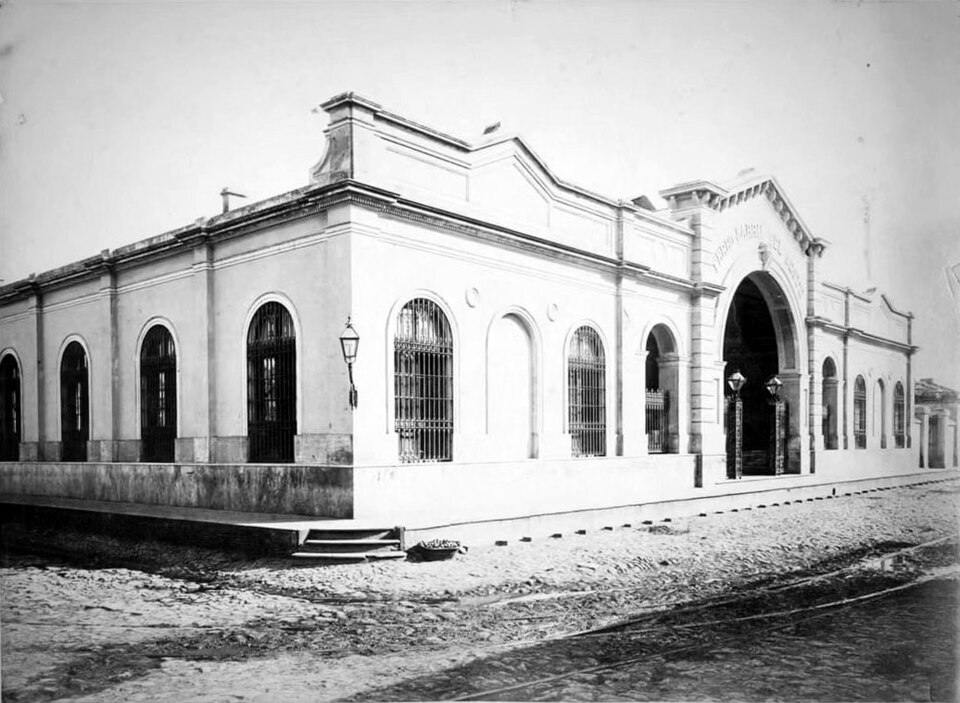 The Grand Facade and Plaza LavalleThe Old Railway Station
It is hard to imagine that this temple of high art stands on the ground once occupied by the industrial 'Del Parque' station. As the original terminal for the Western Railway, it was a place of smoke, steam, and steel—the engine room of a developing nation. The decision to replace a functional railway hub with an opera house was a powerful statement of intent at the turn of the century. It signaled Argentina’s transition from a frontier economy to a global cultural player, fueled by immense agricultural wealth. While the old station represented the physical connection of the country's interior, the theater was built to represent its intellectual and social connection to Europe. The choice of this specific location in the heart of the city underscored the elite's desire to replace utility with luxury. Today, the soot of the nineteenth-century locomotives is replaced by yellow-veined marble and gold leaf. This shift reflects a period of unprecedented prosperity and a national aspiration to create a sophisticated world capital. The industrial foundations remain buried beneath the theater's current footprint, serving as a silent reminder of the city's rapid evolution from a colonial outpost to a world-class center.
Unknown author · Public domain
03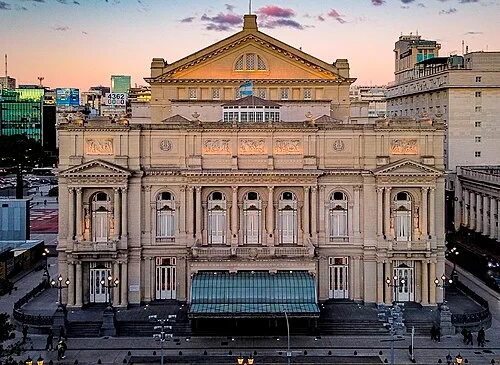 The Grand Facade and Plaza LavalleA Monumental Achievement
The curtains finally rose on this stage on May 25, 1908, a date chosen to coincide with the anniversary of the May Revolution. The opening production was Giuseppe Verdi’s 'Aida', setting a high bar for the world-class performances that would follow. Over the subsequent decades, the building became a central pillar of Argentine identity, eventually being designated as a National Historic Monument in 1991. However, a century of use took its toll on the intricate structure. Between 2006 and 2010, the theater underwent one of the most comprehensive restorations in its history. This four-year project was meticulously timed to prepare the building for the Argentine Bicentennial celebrations. Experts worked to stabilize the foundation, clean decades of grime from the ornate facades, and update the technical infrastructure without compromising the world-famous acoustics. The restoration ensured that the theater could continue to host the most demanding operatic and ballet productions of the twenty-first century while preserving its original early-twentieth-century splendor. Today, the building stands as a polished jewel of Buenos Aires, maintaining the same standards of excellence that defined its premiere over a century ago.
Listen in the appOriginal photo by ProtoplasmaKid · CC BY-SA 4.0
04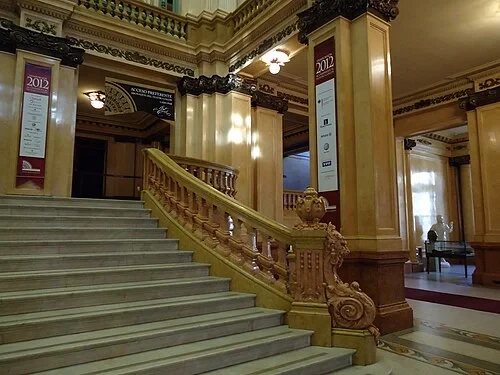 The Main Foyer and Grand StaircaseThe Grand Marble Foyer
Moving from the bustling streets of Buenos Aires into the Grand Foyer is a deliberate sensory transition. The architects designed this space to function as a secular temple of art, using scale and material to distance visitors from the everyday world outside. Large columns and a sweeping staircase are crafted from Carrara marble imported from Italy, known for its bright appearance and subtle grey veining. The sheer volume of stone used here was meant to impress, conveying a sense of permanence and immense value. The acoustics of the foyer are crisp, designed so that the chatter of arriving guests is softened by the high ceilings and hard surfaces. This architectural choice serves to elevate the experience of attending a performance, making the act of entering the theater feel like a significant event in itself. Every detail, from the polished floors to the rhythmic placement of the pillars, was carefully calculated to suggest a European level of refinement. By stripping away the urban noise of the surrounding metropolis, the foyer prepares the audience for the immersive musical and theatrical experiences awaiting them in the main auditorium.
Listen in the appPhoto: Pablomolo · CC BY-SA 3.0
05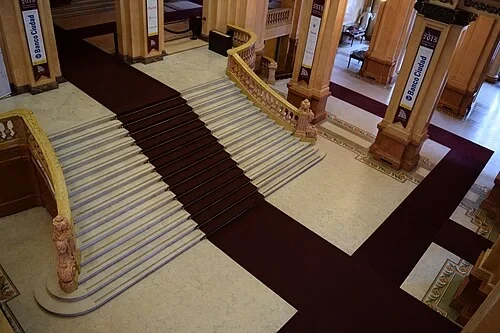 The Main Foyer and Grand StaircaseThe Ceremonial Stairs
From this elevated perspective, the layout of the Grand Foyer reveals its true purpose as a stage for the city's social elite. During intermissions, this area became the site of the 'promenade', a highly choreographed ritual where the wealthy and influential would stroll to see and be seen. The grand staircase provided the perfect vantage point for observation, allowing those on the upper levels to watch the social dynamics of the crowd below. From this height, the floor itself becomes a work of art. Notice the complex patterns of the mosaics, which are composed of thousands of small tiles creating geometric and floral designs. These patterns are difficult to fully appreciate from the ground level but become clear and rhythmic when viewed from above. The staircase’s wide, sweeping curves were specifically engineered to accommodate the large, formal dresses favored by nineteenth-century guests, ensuring that their movement through the space was as graceful as possible. This area was not just a means of moving between levels; it was an integral part of the evening's performance, where the audience members themselves were the primary actors in a display of status and style.
Listen in the appPhoto: Mauricio V. Genta · CC BY-SA 4.0
06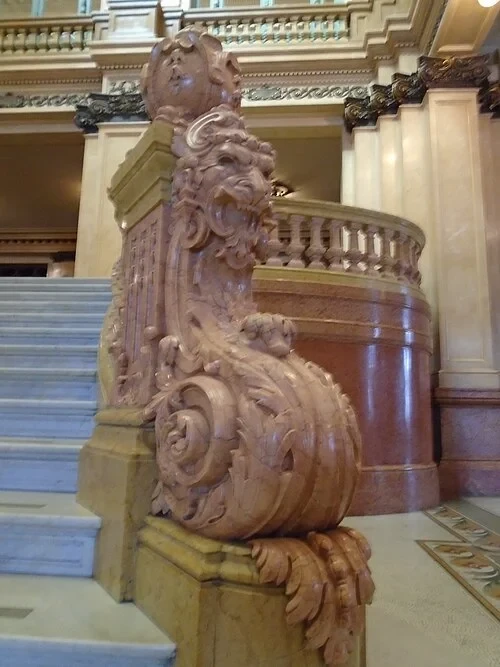 The Main Foyer and Grand StaircaseHand-Carved Marble Lions
The details of the staircase banisters offer a closer look at the extreme levels of artistry involved in the theater's construction. Carved directly into the yellow-veined marble are various ornamental motifs, most notably the fierce lion heads and elegant scrolls that cap the stone pillars. These features were not mass-produced; they were individual products of labor-intensive hand-carving performed by skilled artisans, many of whom were brought specifically from Europe for the project. The use of yellow marble provides a warm contrast to the white Carrara used elsewhere in the foyer, adding a layer of visual depth to the space. When you consider that such carvings repeat throughout the entire theater, the twenty-year construction timeline begins to make sense. Each lion's mane and every curved scroll had to be chiseled with precision to maintain the building's neoclassical rigor. These features demonstrate that the architects and patrons were unwilling to cut corners, preferring a slow, meticulous process to ensure every inch of the building met the highest standards of luxury. The tactile nature of the stone invites a closer inspection, revealing the subtle tool marks that connect the visitor to the craftsmen of the early twentieth century.
Listen in the appPhoto: Eugenio Hansen, OFS · CC BY-SA 4.0
07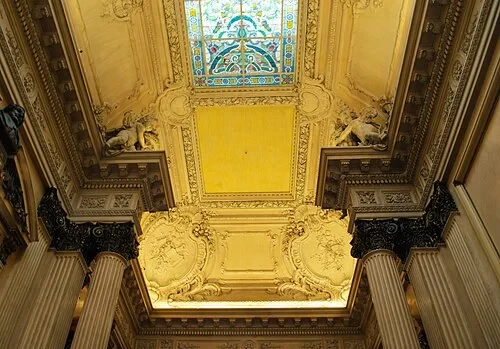 The Gallery of BustsThe Hall of Tributes
The Hall of Tributes functions as a transition zone, bridging the massive, open foyer with the more intimate and focused areas of the theater. Looking upward, the ceiling is a study in decorative plasterwork, with deep recesses, floral garlands, and geometric borders that create a sense of textured luxury. At the center of this display is a brilliantly colored stained-glass window that allows filtered light to descend into the hall, shifting in color as the sun moves across the sky. This gallery is dedicated to the legacy of the arts, housing various memorials and busts of legendary composers who have defined the theater’s repertoire over the past century. Unlike the Grand Foyer, which was designed for broad social spectacle, this space is narrower and more contemplative. The decoration here is dense and focused, surrounding visitors with symbols of musical achievement. The plaster details are so finely rendered that they often mimic the appearance of more expensive carved stone, a common technique used to achieve maximum opulence. This hall serves to remind everyone who passes through it of the creative giants upon whose shoulders the current performances stand, reinforcing the theater's role as a custodian of global musical heritage.
Listen in the appPhoto: Vestidofloreado · CC BY-SA 4.0
08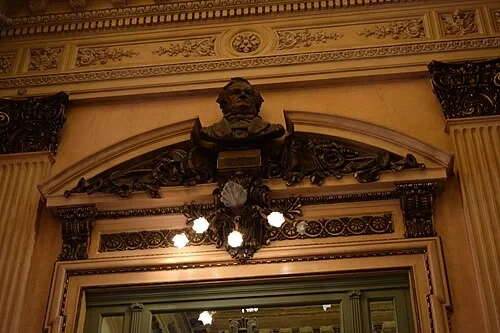 The Gallery of BustsBust of Richard Wagner
Among the various tributes lining the halls, the bust of Richard Wagner occupies a prominent position. For much of its history, the Teatro Colón’s repertoire was heavily weighted toward the grand operatic traditions of Germany and Italy. Wagner, with his complex orchestrations and revolutionary approach to music drama, was a cornerstone of the theater's early seasons. This bronze figure serves as a physical reminder of the high artistic standards expected from the performers who grace this stage. For the musicians and singers walking these corridors, the sight of such figures is intended to inspire a sense of reverence and focus. For the patrons, it confirms the theater's alignment with the great cultural centers of Europe. The bust is rendered with a serious, contemplative expression, capturing the intense intellectualism associated with Wagner's work. It is placed at eye level, allowing visitors to engage with the features of the man who redefined the possibilities of musical theater. The inclusion of these busts was a deliberate curatorial choice during the building's construction, ensuring that the architecture itself reflected the specific musical canon that would be performed within its walls.
Listen in the appPhoto: Mauricio V. Genta · CC BY-SA 4.0
09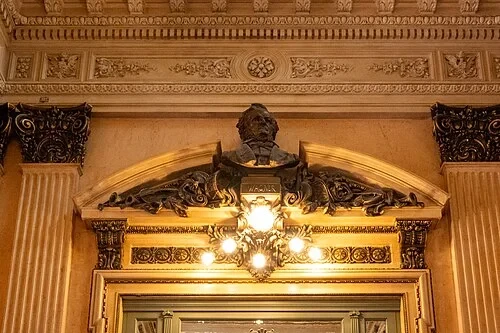 The Gallery of BustsLighting the Masters
The lighting in the galleries is as much a part of the decoration as the sculptures themselves. Each composer's bust is framed by specialized lighting fixtures that feature intricate bronze work and soft globe bulbs. These fixtures were designed to cast a warm, even light across the features of the statues, ensuring that the masters of music are never in shadow. The bronze elements of the lamps often repeat the motifs found in the surrounding plasterwork, such as acanthus leaves or classical scrolls, creating a unified visual language throughout the hall. While the theater has a reputation for overwhelming grandeur, these smaller details provide a more intimate experience. The glow of the lamps creates pockets of light that encourage visitors to stop and reflect on individual figures rather than just rushing toward the auditorium. These fixtures also reflect the era in which the theater was completed, when electricity was still a relatively new feature of public life. By integrating modern lighting with classical sculpture and bronze work, the architects created a space that felt both historically grounded and technologically advanced for its time.
Listen in the appPhoto: ProtoplasmaKid · CC BY-SA 4.0
10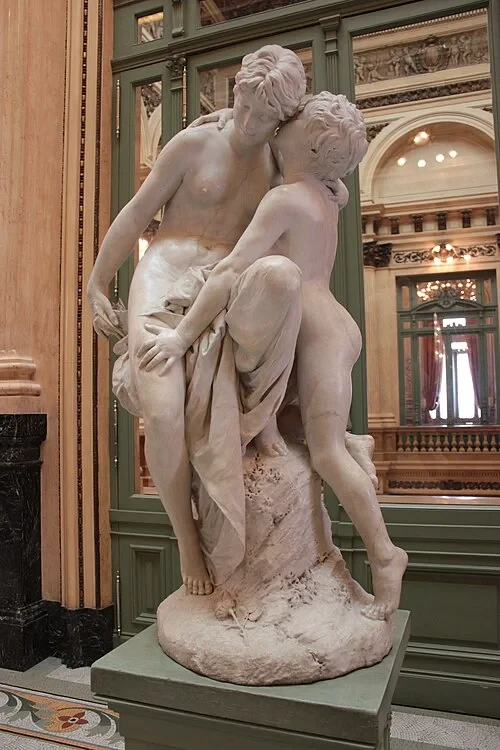 The Sculpture 'El Secreto'El Secreto
The sculpture known as 'El Secreto' is one of the most celebrated artworks within the theater’s collection. It was created by the prominent German sculptor Gustav Eberlein, an artist whose work was highly sought after by Argentine collectors and public institutions at the turn of the century. This piece is a masterclass in the neoclassical style, which sought to emulate the idealized forms and technical perfection of ancient Greek and Roman art. One of the most striking aspects of the work is the lifelike texture of the figures. Eberlein managed to carve the stone in a way that suggests the softness of skin and the delicate folds of draped fabric, making the hard material appear almost fluid. This level of technical skill was essential for an institution that wished to be seen as a world-class center of the arts. Such sculptures were carefully selected to reinforce the theater's European aesthetic, aligning Buenos Aires with the artistic movements of Berlin, Paris, and Rome. The piece stands as a focal point in the promenade area, inviting guests to examine the precision of its composition during intervals between performances.
Listen in the appPhoto: Macruzbar · CC BY-SA 4.0
Teatro Colón
Frequently asked questions
How much does the guide cost?
Free app download. Listed guide price: $1.99. Guide price shown in the app. Audio guide only. Venue admission is separate.
Can I listen without internet?
Yes. Download the guide’s audio, images, and maps in the app before your visit. Your downloaded content is then available offline.
Can I listen in my language?
Stanza supports 15 languages. Check the app for the languages available for this guide.
Do I need to follow a schedule?
No. This is a self-guided experience. Choose your stops, pause whenever you like, and return to a story at your own pace.
At your own pace
Explore Teatro Colón.
Download Stanza, then search for “Teatro Colón”.
Free app download · Guide price shown in the app