Stanza · Audio guide
Křivoklát Castle Audio Guide
A place to remember. A story to take with you.
Křivoklát Castle is a castle located in Křivoklát in the Central Bohemian Region of the Czech Republic. It is protected as a national cultural monument.
Download Stanza, then search for “Křivoklát Castle”.
About the tour
One guide. Your kind of visit.
Křivoklát Castle is a castle located in Křivoklát in the Central Bohemian Region of the Czech Republic. It is protected as a national cultural monument.
Ready when you are.
- 01Get the free Stanza app.
iOS & Android
- 02Find your guide.
“Křivoklát Castle”
- 03Download before you go.
Works offline
Audio guide / 16 narrated stops
Inside the guide
Get to know a few of the stories before you go. Open a stop to read more.
01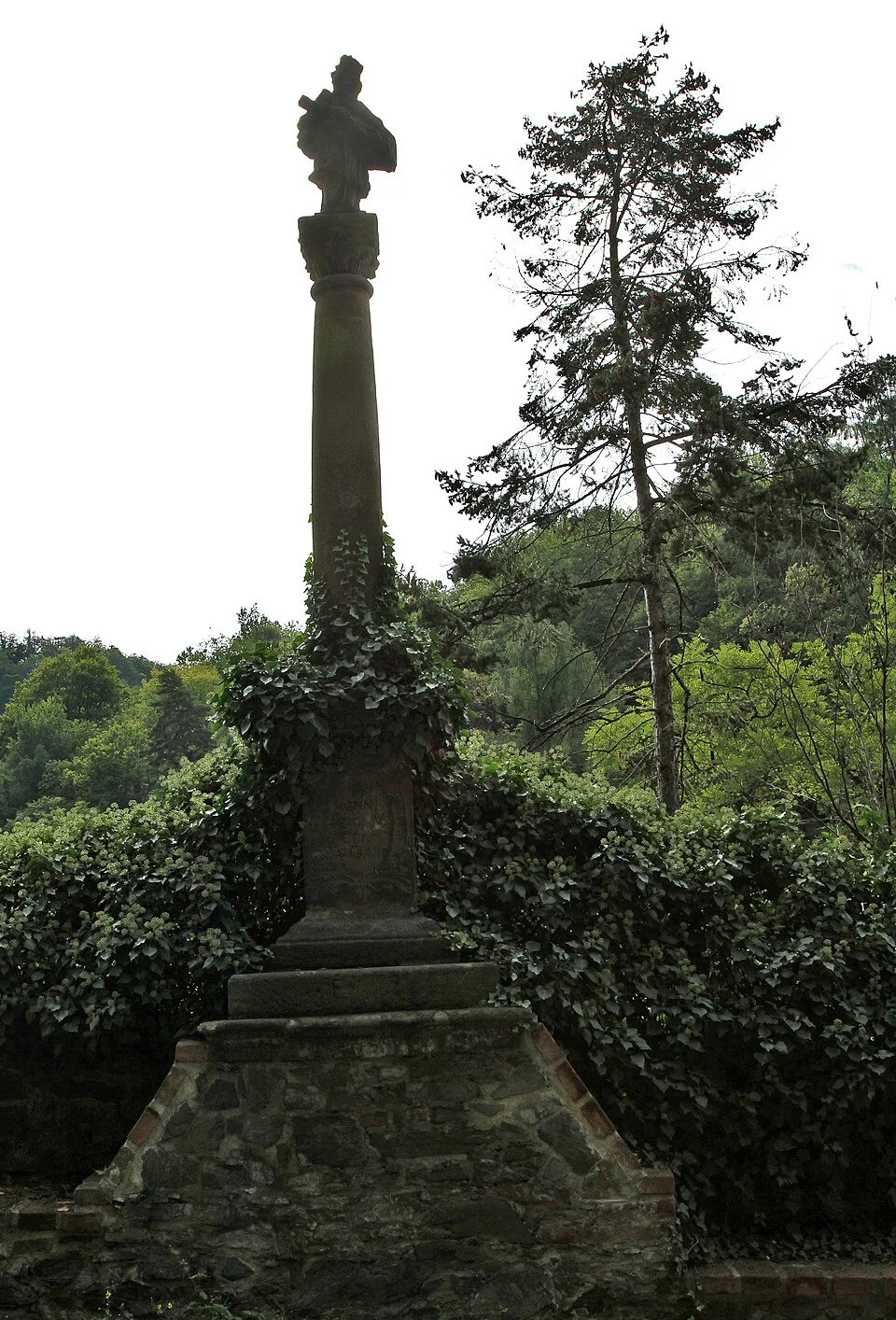 The Castle Approach and Saint John of Nepomuk
Saint John of Nepomuk Column on the Approach
Welcome to Křivoklát, a royal castle deep in the woods of central Bohemia. This tour follows its story from the approach road up into the castle itself. The walk to the gate is lined with stone pedestals, eight of them, put up between 1731 and 1733. On top once stood folk-baroque statues of saints: John of Nepomuk, Anthony, John the Evangelist, Florian, the Virgin Mary and Joseph, and a cross as well. John of Nepomuk was the beloved saint of Bohemia, a natural guardian for the path to a fortress. The originals were removed for safekeeping and now rest in a depot. One figure still stands on site, a restored copy of Saint Wenceslaus. So the last stretch before the medieval walls became a quiet avenue of saints.
Ondřej Kořínek · CC BY-SA 3.0
02 The Castle Approach and Saint John of Nepomuk
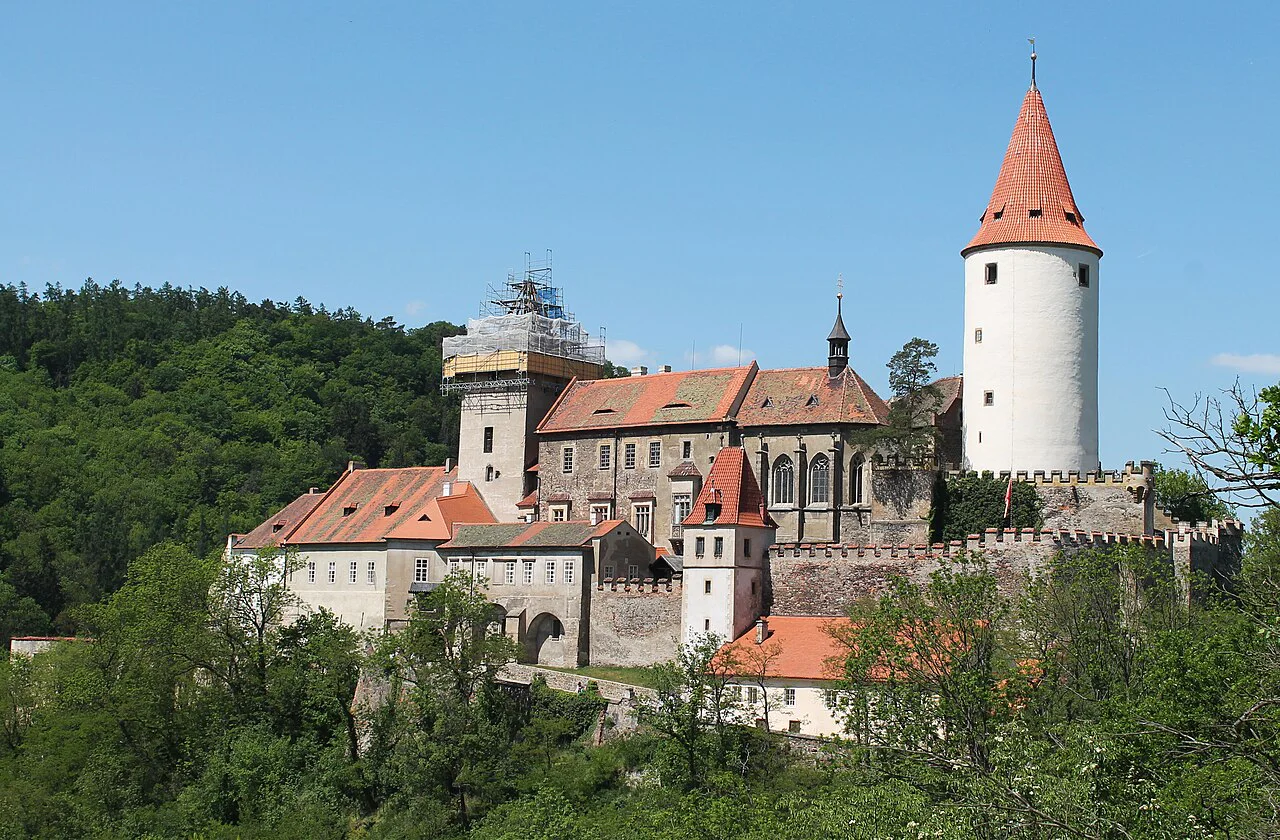
Křivoklát Castle from Afar: A Royal Castle in the Forest
Křivoklát is one of the oldest and most important castles of the Bohemian princes and kings. It rises on a rocky promontory above the Rakovnický potok, a stream that curls around the steep slopes on three sides. Easy access remains only from the east, which is where the approach comes in. The builders needed no distant quarries: the greywacke and clay slate of the promontory itself became the castle's walls. The earliest mention comes from Cosmas's chronicle, for the years 1110 to 1113. It tells how Duke Vladislav the First held his cousin, Otto of Olomouc, prisoner here. The stone castle visible today took shape around 1230. Since 1989 the castle has been protected as a national cultural monument. It now works as a museum, and its walls have served as a film location too.
Photo: Petr1888 · CC BY-SA 4.0
03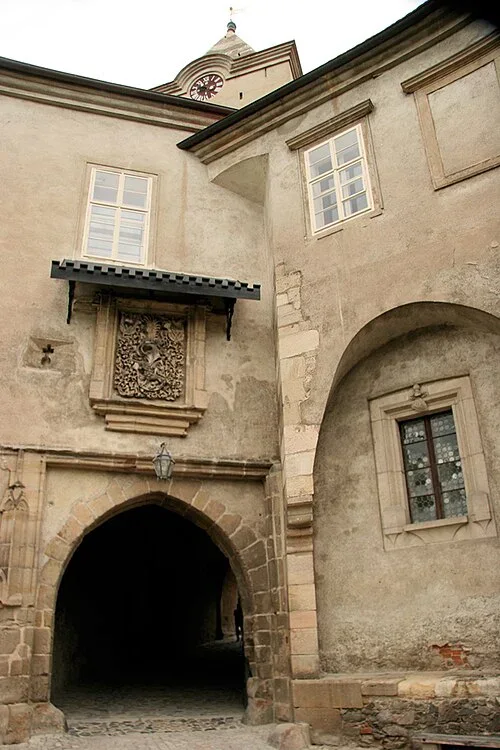 The Main Gate and Prochoditá Tower
The Main Gate
The main gate is the castle's front door, built both to impress and to defend. Above the arch sits a carved stone emblem, worked with the kind of care usually reserved for palace facades. Through it lies the lower castle, a vast outer bailey completely enclosed by buildings on every side. At the lower corners, two late-Gothic bastions flank the whole enclosure. The way onward climbs through the courtyards toward the royal rooms.
Listen in the appElena Pleskevich from Moscow, Russia · CC BY-SA 2.0
04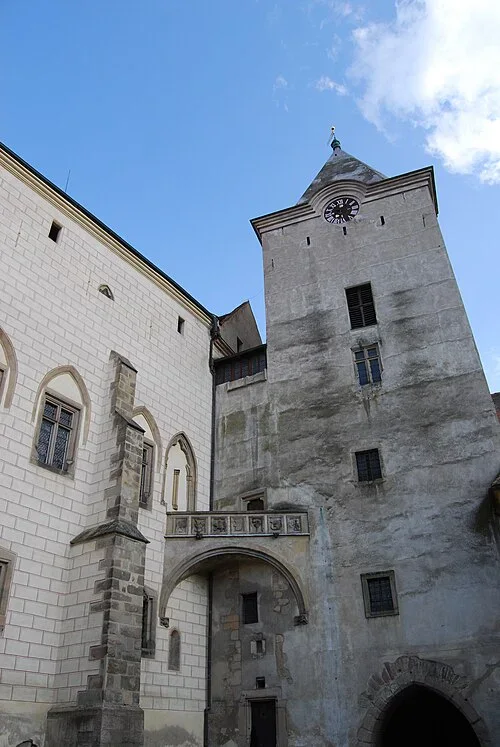 The Lower Courtyard
The Prochoditá Tower
The Prochoditá Tower carries the castle's old clock. Its mechanism dates to 1817. Its pendulum runs 380 centimetres, almost four metres of swinging weight keeping the hours. The tower itself was raised under King Wenceslaus the Fourth, with a new gate set into the middle of the southern wall. It also holds a quieter story. From 1319 the future Emperor Charles the Fourth lived here, confined by his own father, King John of Luxembourg. This was honourable princely custody rather than a dungeon stay, a prince kept under his father's watch. On 4 April 1323 the boy was taken away to France.
Listen in the appPhoto: Richenza · CC BY-SA 3.0
05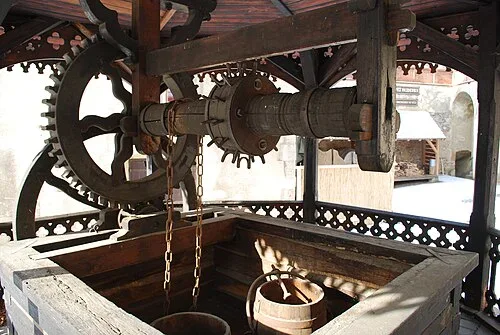 The Lower Courtyard
The Castle Well
The well in this courtyard reaches 42 metres down into the rock. That is exactly as deep as the castle's Great Tower is high. Every drop of water for the household and the garrison had to be hauled up that distance. The wooden mechanism beside the well shows how: heavy cog wheels and a windlass, turning to wind the chain and lift the buckets. Royal halls and chapels get the glory, but this is the machinery that kept a castle on a dry rocky spur supplied.
Listen in the appPhoto: Svíčková · CC BY 3.0
06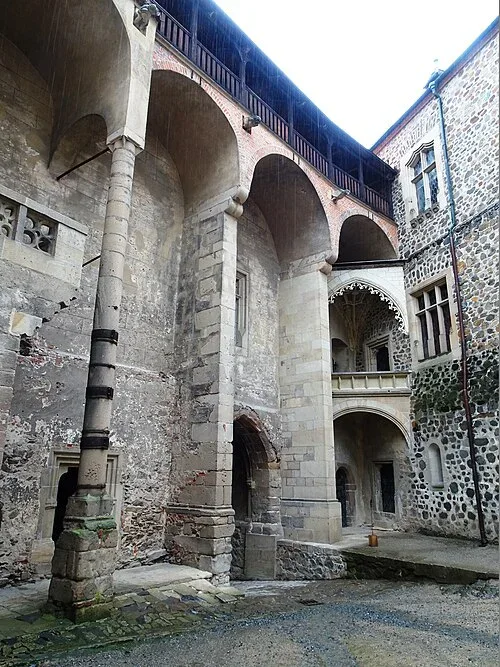 The Upper Courtyard
In 1471 the newly elected King Vladislaus the Second bought the castle back and began its late-Gothic rebuilding. Křivoklát was the only royal castle he held in Bohemia, so he gave it his full attention. Two masters directed the work: Benedikt Rejt and Hans Spiess. Under them the living quarters became a residence counted among the finest in Central Europe. The defences were modernised too, with a whole set of up-to-date features for active defence. The triangular heart of the castle, three wings around this courtyard, still keeps that layout in its main lines.
Listen in the appPhoto: Palickap · CC BY-SA 4.0
07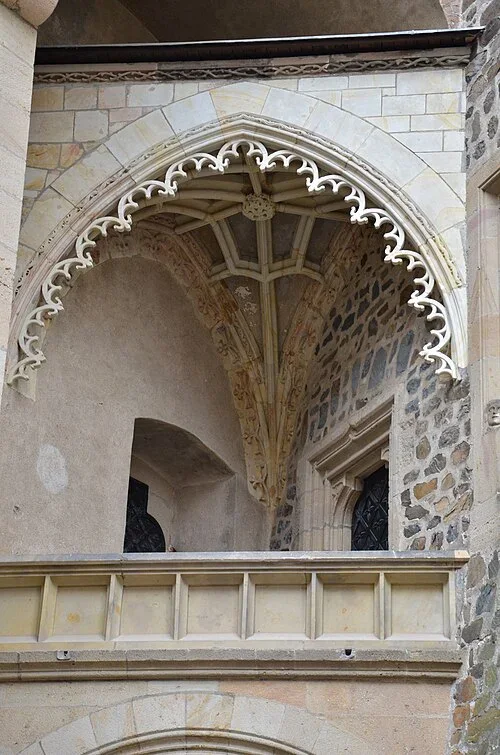 The Upper Courtyard
The Balcony with the 'Venetian Lace'
Between the Royal Hall and the library runs a stone balcony, and its ornament is worth a long look. The arch is an ogee curve, sweeping up to a point and curling over at the tip. Czech guides call this tracery Venetian lace, late-Gothic stonework as delicate as fabric. Inside the arch sits a small vaulted niche, its ribs fanning out from a carved boss. This is the Jagiellonian rebuilding at arm's length: the same masters who organised the whole courtyard left room for detail like this.
Listen in the appJosef Hák · CC BY-SA 4.0
08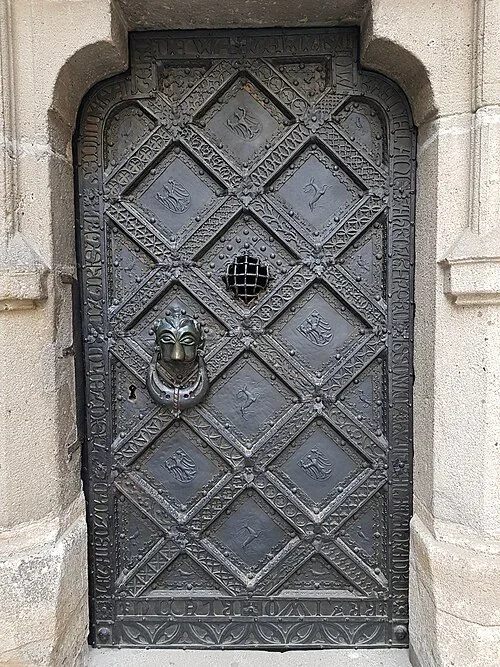 The Silver Treasury
The Door of the Silver Treasury
These scorched oak doors once sealed the Silver Treasury, the strong-room beneath the Royal Hall. They were made in 1490, oak panels nearly two metres tall, faced with richly worked iron. Around the edge runs the original inscription in old Czech, naming them made in the time of Hrozek of Prossowicz, captain of Křivoklát. The iron door knocker is older still, from around 1250. In August 1826 fire broke out in the steward's apartment and practically destroyed the whole castle. These doors were damaged in that blaze. The Fürstenbergs, who then owned the castle, had a faithful copy set into the entrance afterwards. The charred originals were kept, and hang on the wall inside.
Listen in the appVáclav Štorek · CC BY-SA 4.0
09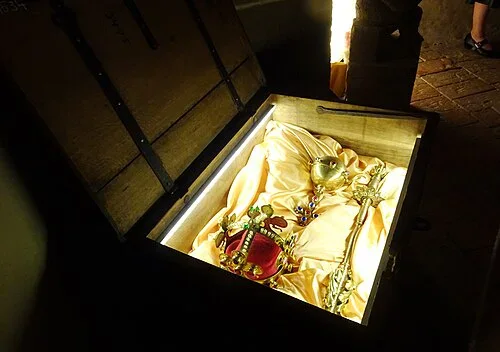 The Silver Treasury
 and the Coronation Jewels
Beneath the Royal Hall, in the west wing, lies a thick-walled vault that once guarded the most precious things the kings of Bohemia owned. During the Hussite Wars, King Sigismund of Luxembourg had the coronation jewels brought here for safekeeping. A kingdom's crown, hidden away in a castle strong-room deep in the forests. The real jewels are long gone; the regalia laid out in the chest are replicas, standing in for that wartime refuge. The room's working life carried on long after the wars. The garrison stored its weapons here, and game from hunts in the surrounding forests was kept here too. Two models of the castle show how it looked in the thirteenth century, and again after the great late-Gothic rebuilding. The display cases hold finds from the Manský dům, a house in the castle's north-west corner that burned during the Hussite Wars and was never rebuilt.
Listen in the appPhoto: Palickap · CC BY-SA 4.0
10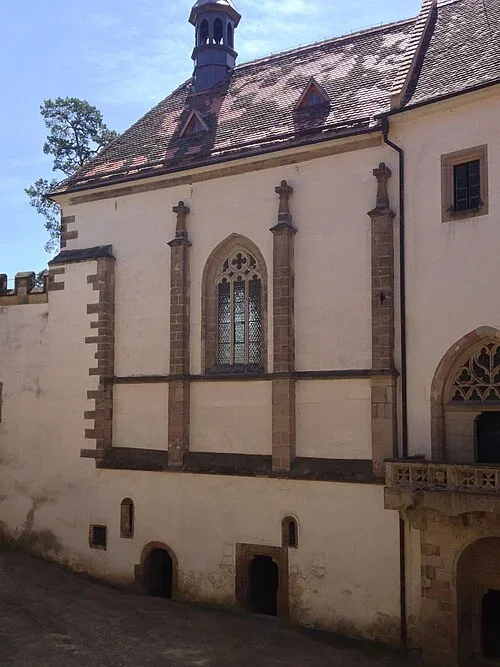 Chapel of the Coronation of the Virgin Mary
 — Exterior
Of the three wings around the upper courtyard, the south one ends in something a castle rarely has: its own church. The Chapel of the Coronation of the Virgin Mary lies in the south wing of the palace block. The dedication suits the place, a crowned Virgin honoured at a castle of kings. From outside, the chapel hardly stands apart; it reads as one more range of the palace. Stone buttresses brace its walls, and between them opens a tall Gothic window with delicate tracery. Small arched openings dot the base of the wall. It counts among the most complete and best-preserved late Gothic sacred spaces in the Czech lands. The next stop goes inside.
Listen in the appPhoto: Tobiastaticek · CC BY-SA 3.0
- 11
Inside the Chapel: the Wing Altar
A rare painted wing altar from the 1490s, and the stone seat reserved for the king.
- 12
The Royal Hall and the Shattered Shield
A vault with no pillars, and the shattered Austrian arms that fell at a prisoner's feet.
- 13
The Fürstenberg Library
How the Fürstenbergs rescued a crumbling castle, and the books they left behind.
- 14
The Great Tower (Bergfrit)
Forty-two metres of tower, with walls up to ten metres thick on the exposed side.
- 15
The State Prison and Torture Chamber
Sixteen years for a bishop, watched day and night by twenty guards from Germany.
- 16
The Huderka Tower: the Alchemist's Prison
The English alchemist who promised the emperor gold and eternal life, and ended in this tower.
Křivoklát Castle
Frequently asked questions
How much does the guide cost?
Free app download. Listed guide price: $0.99. Guide price shown in the app. Audio guide only. Venue admission is separate.
Can I listen without internet?
Yes. Download the guide’s audio, images, and maps in the app before your visit. Your downloaded content is then available offline.
Can I listen in my language?
This audio guide is available in 15 languages, including English.
Do I need to follow a schedule?
No. This is a self-guided experience. Choose your stops, pause whenever you like, and return to a story at your own pace.
At your own pace
Explore Křivoklát Castle.
Download Stanza, then search for “Křivoklát Castle”.
Free app download · Guide price shown in the app
Keep exploring
Nearby audio guides
Karlštejn · 25 km
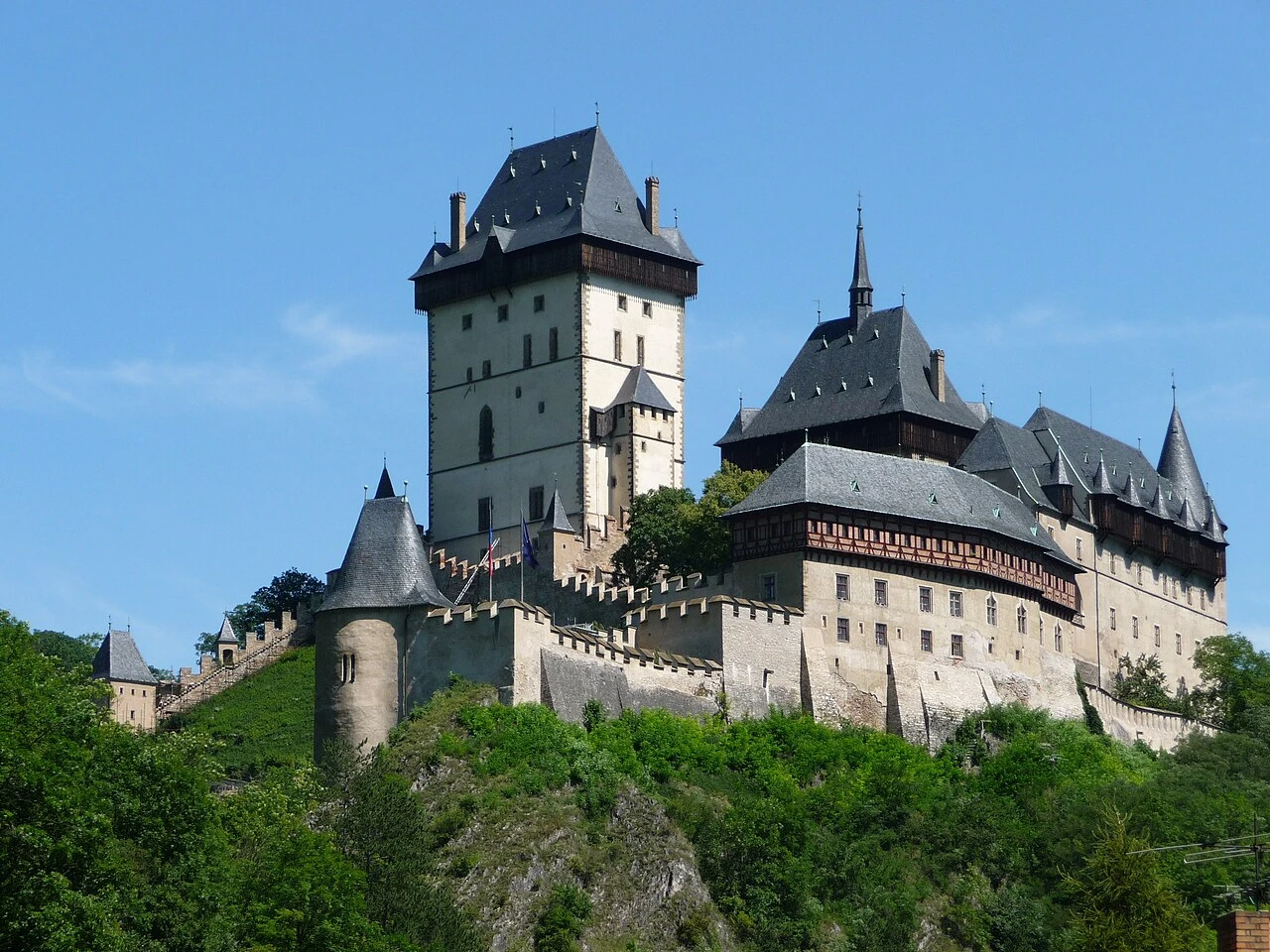
Karlštejn Castle
Content & sources
Jürgen Regel, Marian… · CC BY 3.0
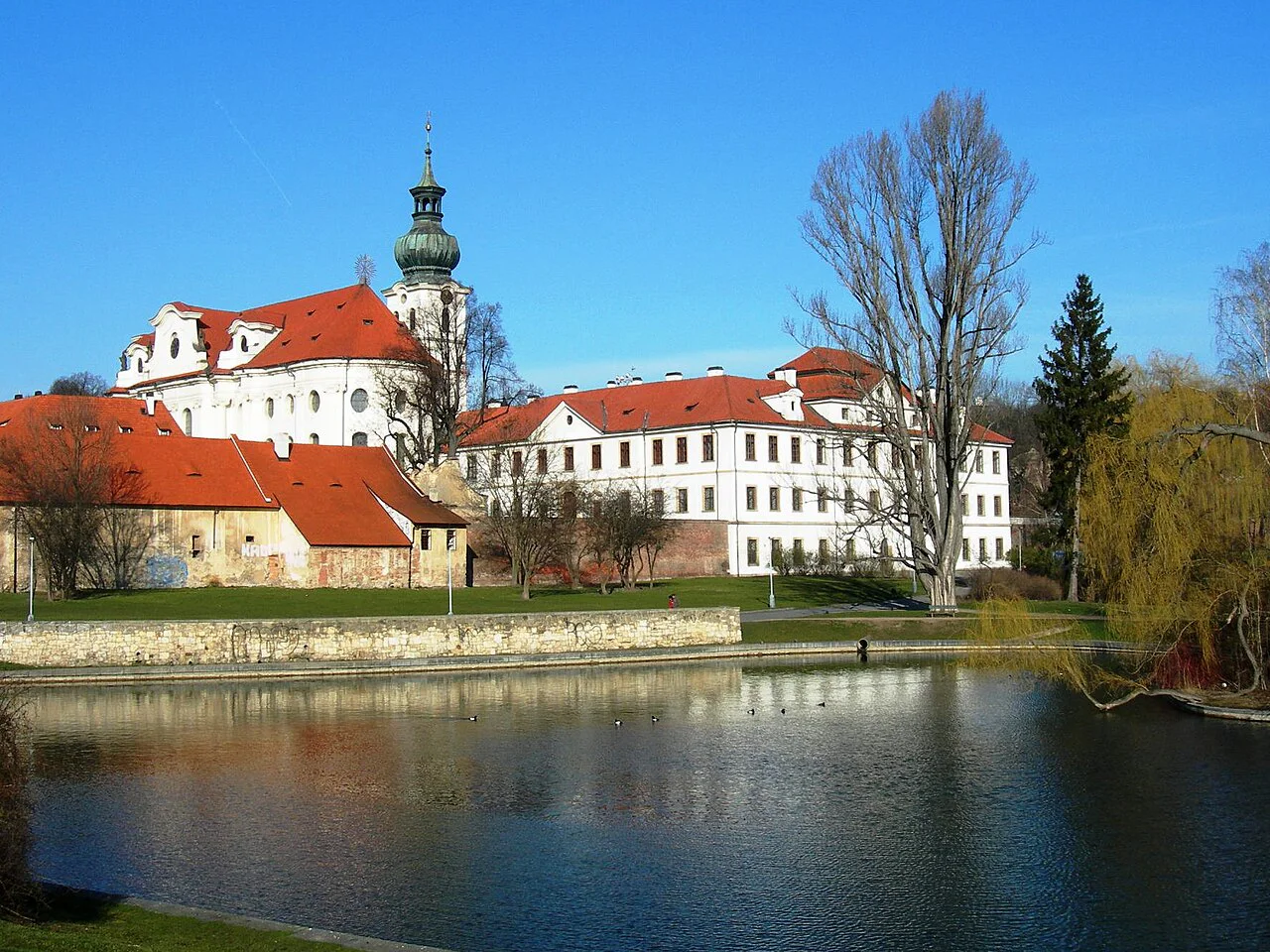
Prague · 35 km
Břevnov Monastery
Content & sources
No machine-readable author provided. Sokoljan assumed (based on copyright claims). · CC BY-SA 3.0
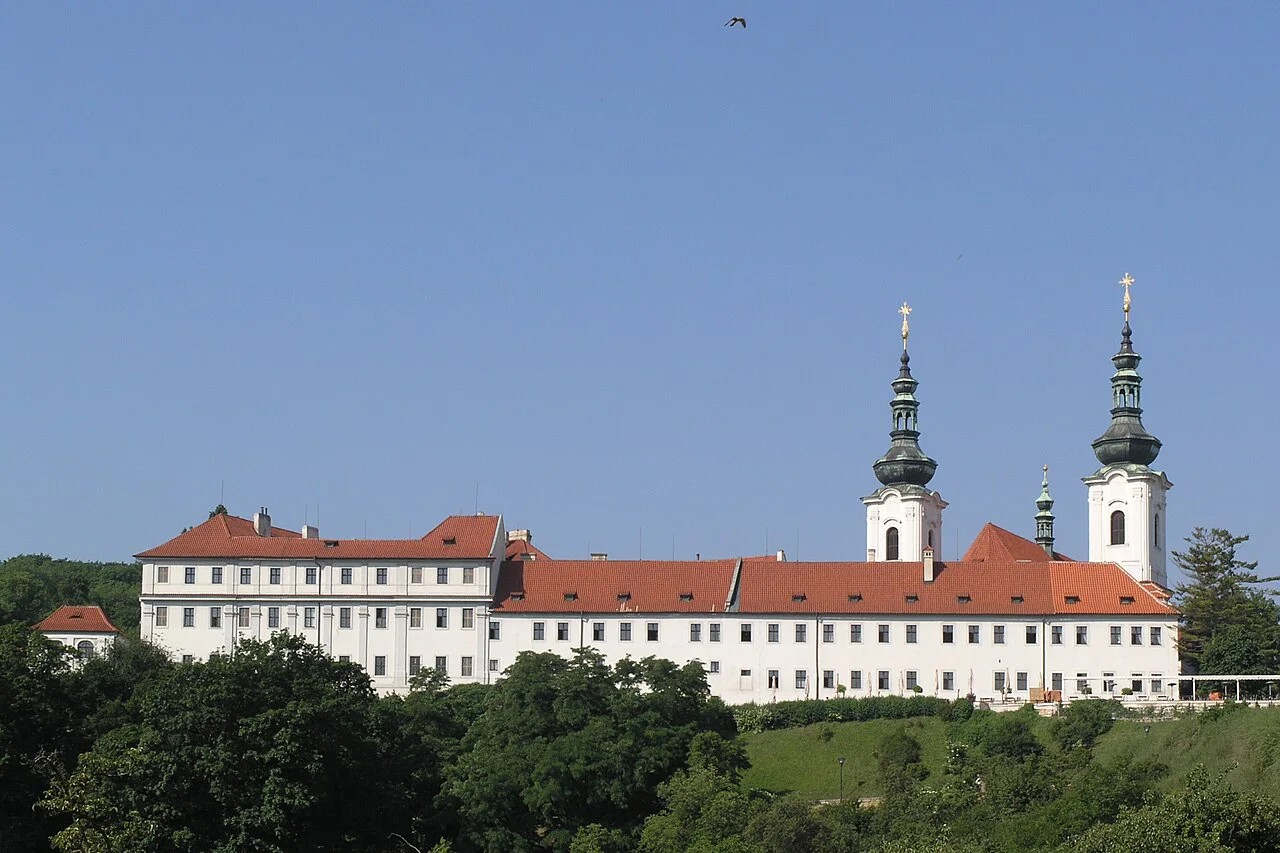
Prague · 37 km
Strahov Monastery
Content & sources
Matěj Baťha · CC BY-SA 2.0
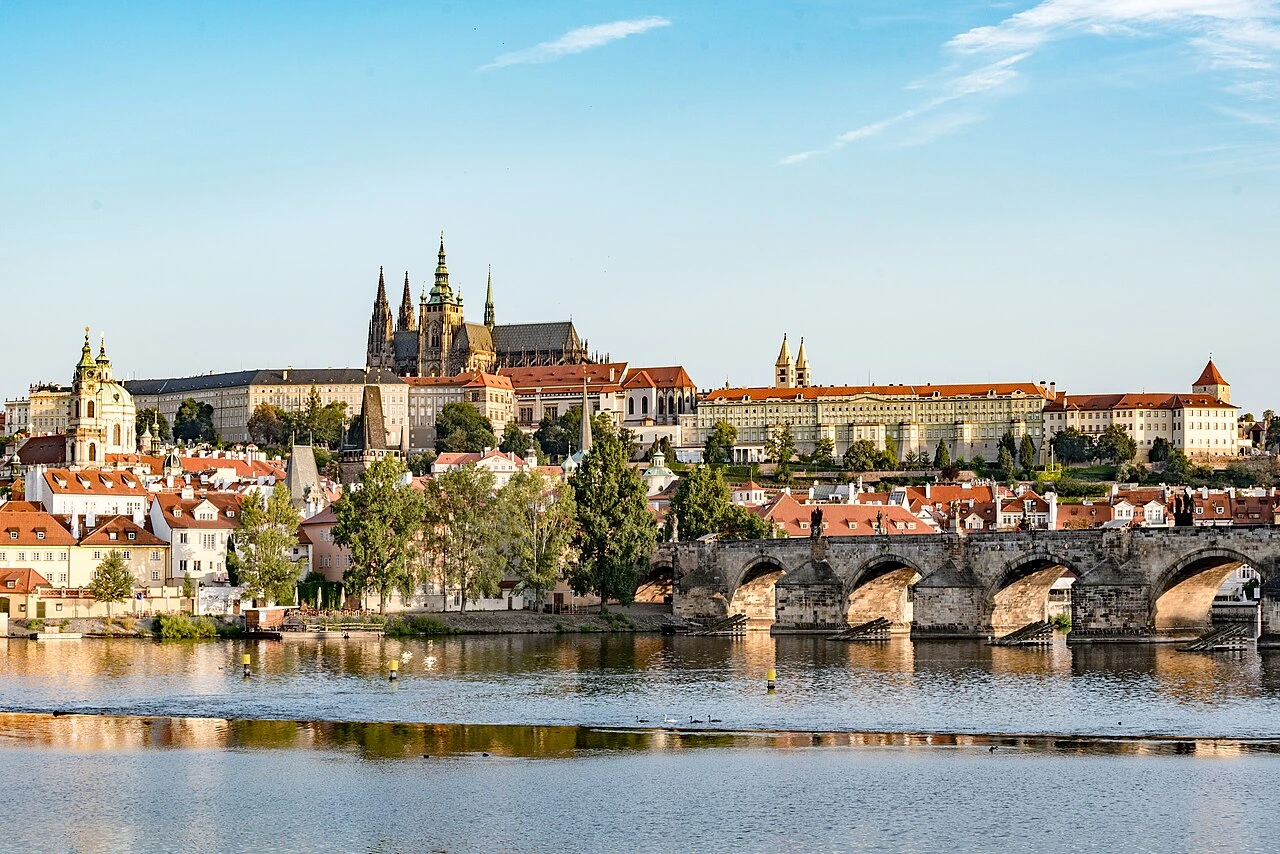
Prague · 38 km
Prague Castle
Content & sources
Photo: Tilman2007 · CC BY-SA 4.0