Languages
15Charles Bridge Audio Guide
Charles Bridge is a landmark in Prague, Czechia. Explore it with Stanza's GPS-triggered offline audio guide — available in 15 languages.
Quick Facts
17
Stops
15
Languages
100%
Offline
📍 Prague, Czechia · 50.0864°N, 14.4119°E
About Charles Bridge
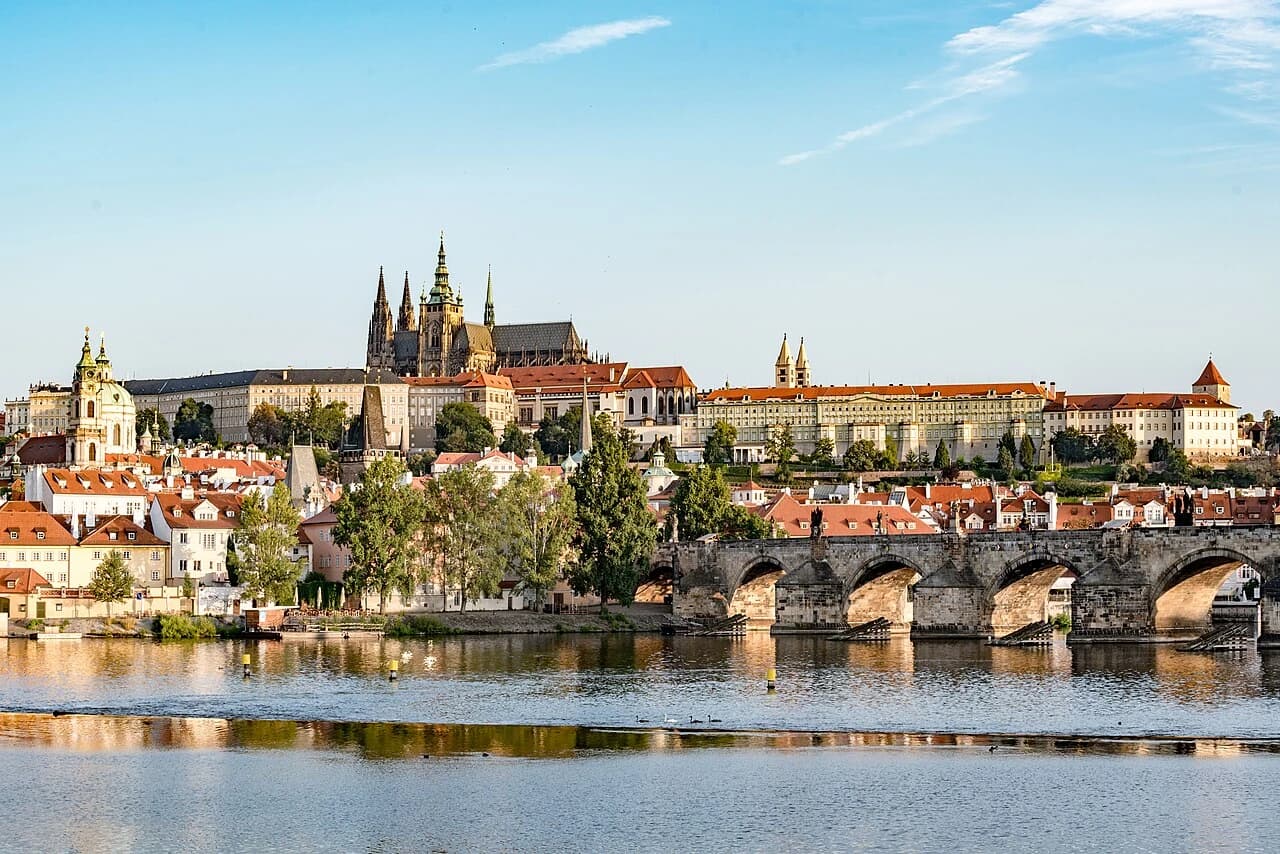
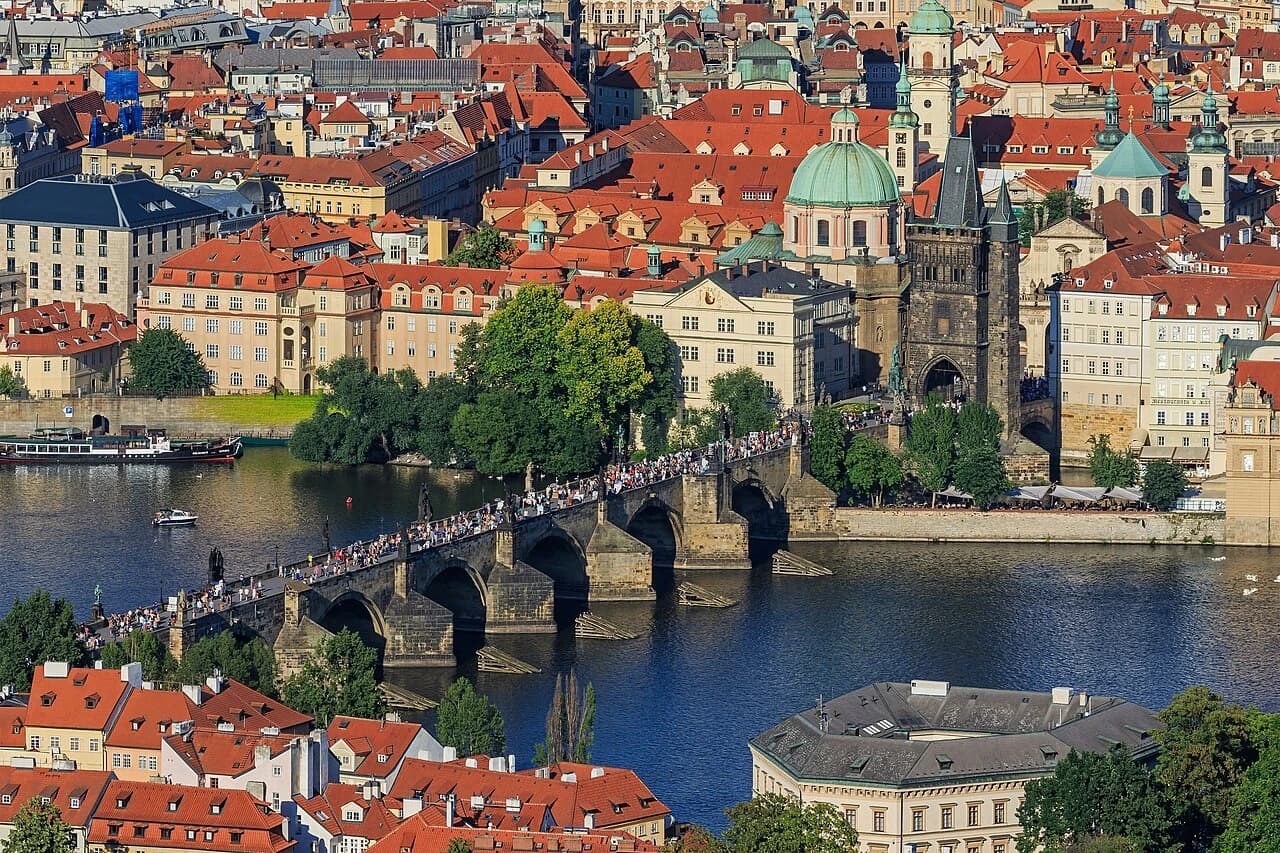
The Charles Bridge is a historic medieval stone arch bridge spanning the Vltava river in Prague, Czech Republic. It connects the Old Town with Lesser Town and is renowned for its continuous alley of 30 Baroque statues of saints.
Charles Bridge is also known as Karlův most.
This self-guided audio tour features 17 narrated stops organized across 9 sections. As a landmark, Charles Bridge offers a unique cultural experience in the heart of Prague, Czechia.
The Stanza audio guide is available in 15 languages and works entirely offline — download the complete tour including audio narration, maps, and images before your visit. As you walk through Charles Bridge, GPS-triggered narration plays automatically at each point of interest.
Last updated:
What you will hear
Old Town Bridge Tower: A Gothic Masterpiece
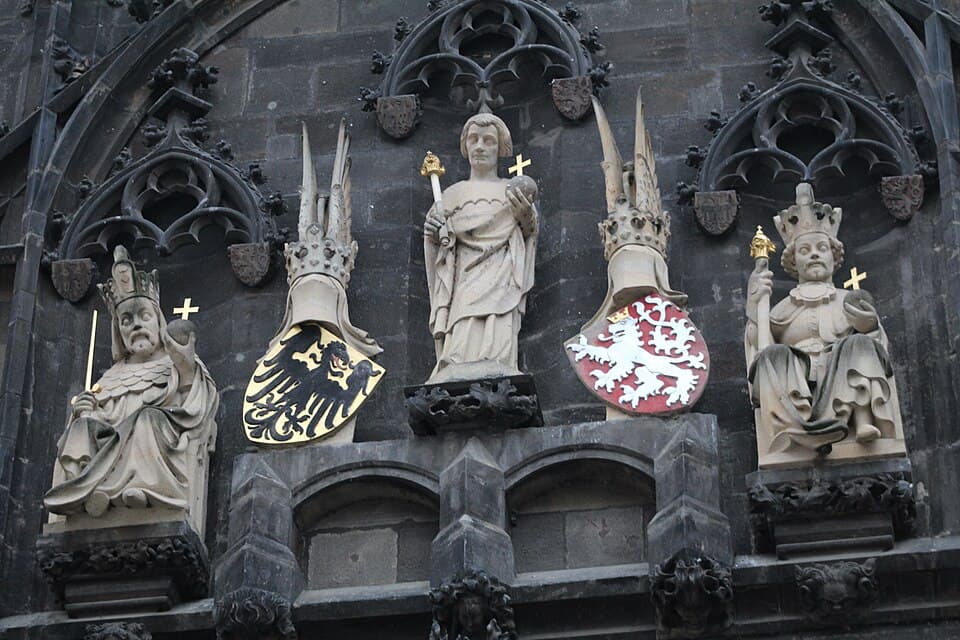
Focuses on the ornate eastern facade of the tower, considered one of the finest Gothic structures in Europe. Includes details of the royal statues.
The Royal Facade
Observe the middle level of the tower’s facade, where three seated figures look down upon all who enter the bridge. In the center sits St. Vitus, the patron saint of both the bridge and the cathedral on the hill. To his left is the King, and to his right is his son, Wenceslaus IV. These aren't just decorative statues; they are a sophisticated piece of 14th-century royal propaganda. By placing themselves alongside a revered saint, the Luxembourg monarchs were asserting their 'divine right' to rule. This arrangement suggested that their authority came directly from God, legitimizing their dynasty’s control over the region. The seated, regal poses reflect the stability they brought to the kingdom during what is considered the 'Golden Age' of Bohemia. This facade acted as a permanent billboard for any subject or foreign dignitary, reminding them that the path to the royal castle began here, under the watchful eyes of the kings themselves. The sculptural quality of these figures, even from this distance, shows the high level of artistry available to the royal court in the 1300s.
Under the Tower: Murals and Martyrs
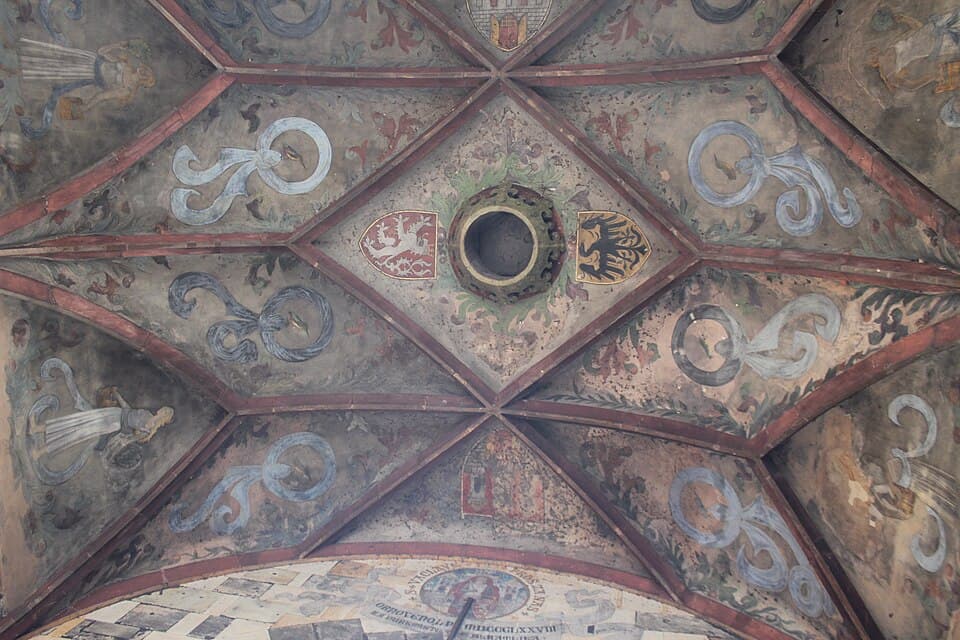
The interior passage of the tower where the 'Palindrome Foundation' story is told. Features the Gothic vaulted ceiling and historical murals.
Tower Vaulted Ceiling
As you pass through the great arch of the Old Town Bridge Tower, take a moment to look up. You are standing beneath a fine example of net vaulting, a complex structural design that was a signature of the Peter Parler workshop. The intersecting ribs create a beautiful geometric web, which is decorated with colorful murals that have survived through centuries of restoration. Among the painted designs, you might notice the recurring symbol of a kingfisher. This small, brightly colored bird was the personal emblem of King Wenceslaus IV. Legend has it that the kingfisher represented his love for his queen, or perhaps his survival from imprisonment, but it became a ubiquitous mark of his reign. Hidden throughout the ceiling and walls, these birds were like a medieval signature, marking the passage as a personal space of the king. The soft, faded colors of the murals offer a glimpse into the vibrant decoration that once covered many of Prague's public buildings. This vaulted passage was designed to create a sense of awe as one transitioned from the narrow streets of the Old Town onto the wide, open expanse of the bridge.
The Holy Crucifix: The Calvary Group
One of the bridge's oldest sculptures. Explains the history of the gilded Hebrew inscription and the penalty of the local merchant.
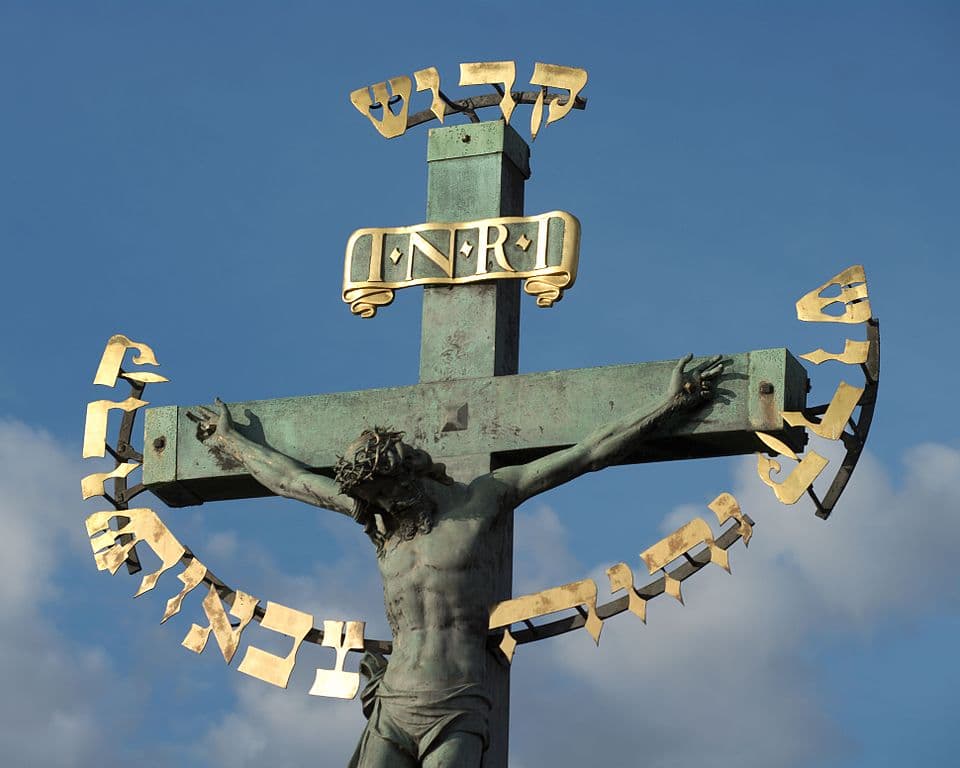
Gilded Hebrew Inscription
Notice the bright, gilded Hebrew letters arched over the crucifix. They read 'Kadosh, Kadosh, Kadosh,' which translates to 'Holy, Holy, Holy.' While it may seem like a gesture of interfaith harmony, the history behind these letters is far more complex. In 1696, a local Jewish merchant was accused of mocking the cross as he passed by. As a punishment, the authorities forced him to pay for these gold-plated letters to be added to the Christian monument. This inscription is a rare and jarring example of religious penalty preserved in a public space. For the 17th-century authorities, it was a way to publicly humble a member of the Jewish community and assert the dominance of the Catholic faith. The letters remain today as a poignant reminder of the religious tensions that once characterized the city. In recent decades, a bronze plaque was added nearby to provide historical context and acknowledge the forced nature of the contribution. This object is a significant stop on the bridge, reminding us that history is often written in layers, where even the most beautiful decorations can hide stories of conflict and institutional power.
The Baroque Gallery: Saint Anne
Introduces the concept of the 'Via Crucis' and the collection of 30 Baroque statues. Features the work of Matěj Václav Jäckel.
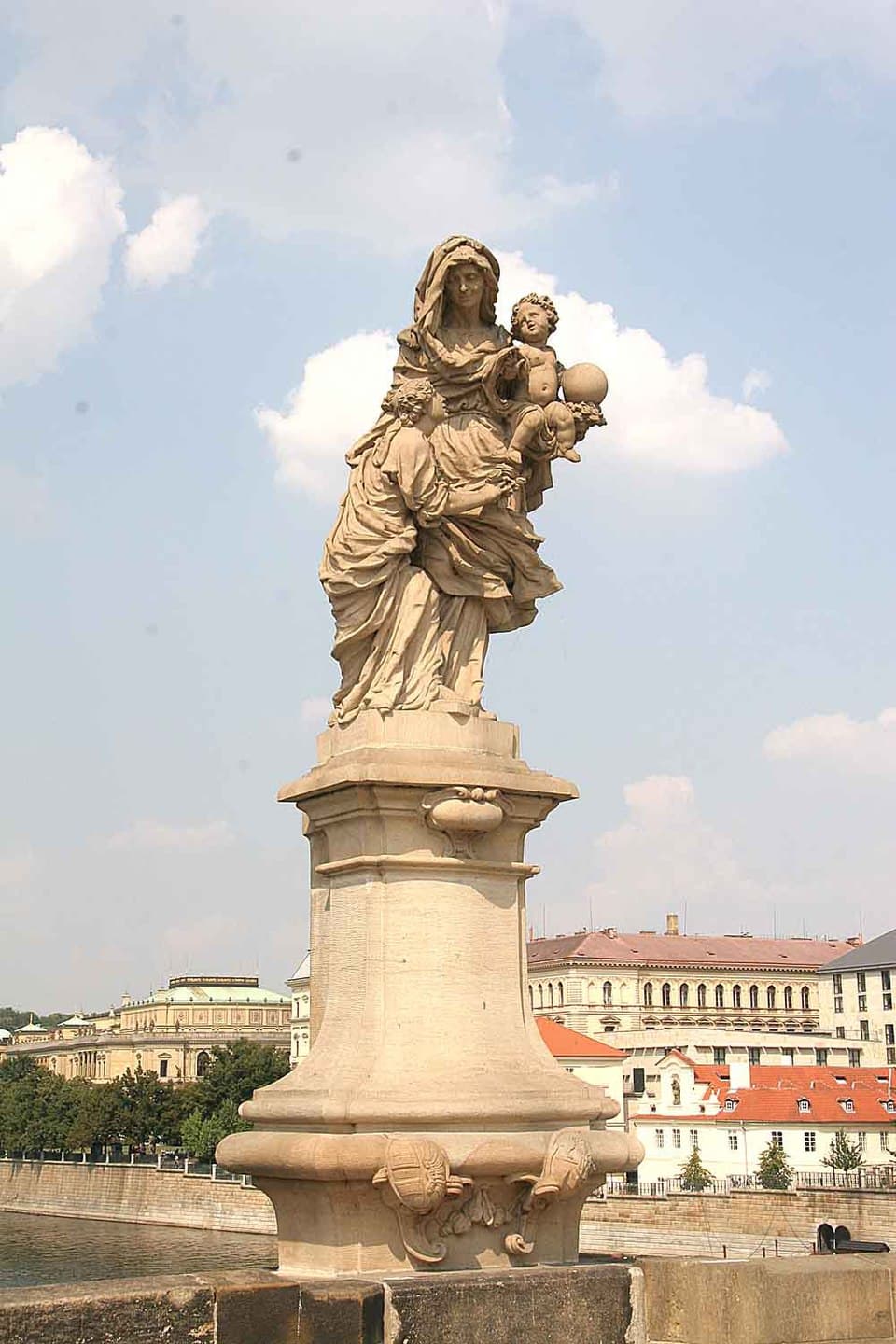
Statue of Saint Anne
This statue group captures the essence of the Baroque style that defines many of the sculptures along this bridge. Notice the dynamic, swirling robes and the expressive, almost theatrical poses of the figures. This statue depicts Saint Anne, the mother of the Virgin Mary, holding the infant Jesus, while the young Mary stands by her side as a child. The composition is designed to be seen from multiple angles, creating a sense of movement as you walk past it. It is important to know that what you are looking at is likely a faithful replica. Because of the harsh Bohemian winters, flooding, and air pollution, many of the original stone statues began to erode significantly over the centuries. To preserve these masterpieces, the originals were moved to the National Museum, specifically to a vaulted underground hall known as the Lapidarium. Modern craftsmen carved these replicas to ensure the bridge maintains its historic appearance while the original artistry is protected indoors. This practice allows us to appreciate the full visual impact of the 'Avenue of Statues' as it was intended during the 18th century, even as the materials themselves are refreshed for a new generation.
Statue of St. John of Nepomuk: The Luck of Prague
The bridge's most famous statue. Tells the story of the saint's martyrdom and the tradition of touching the plaques for luck.
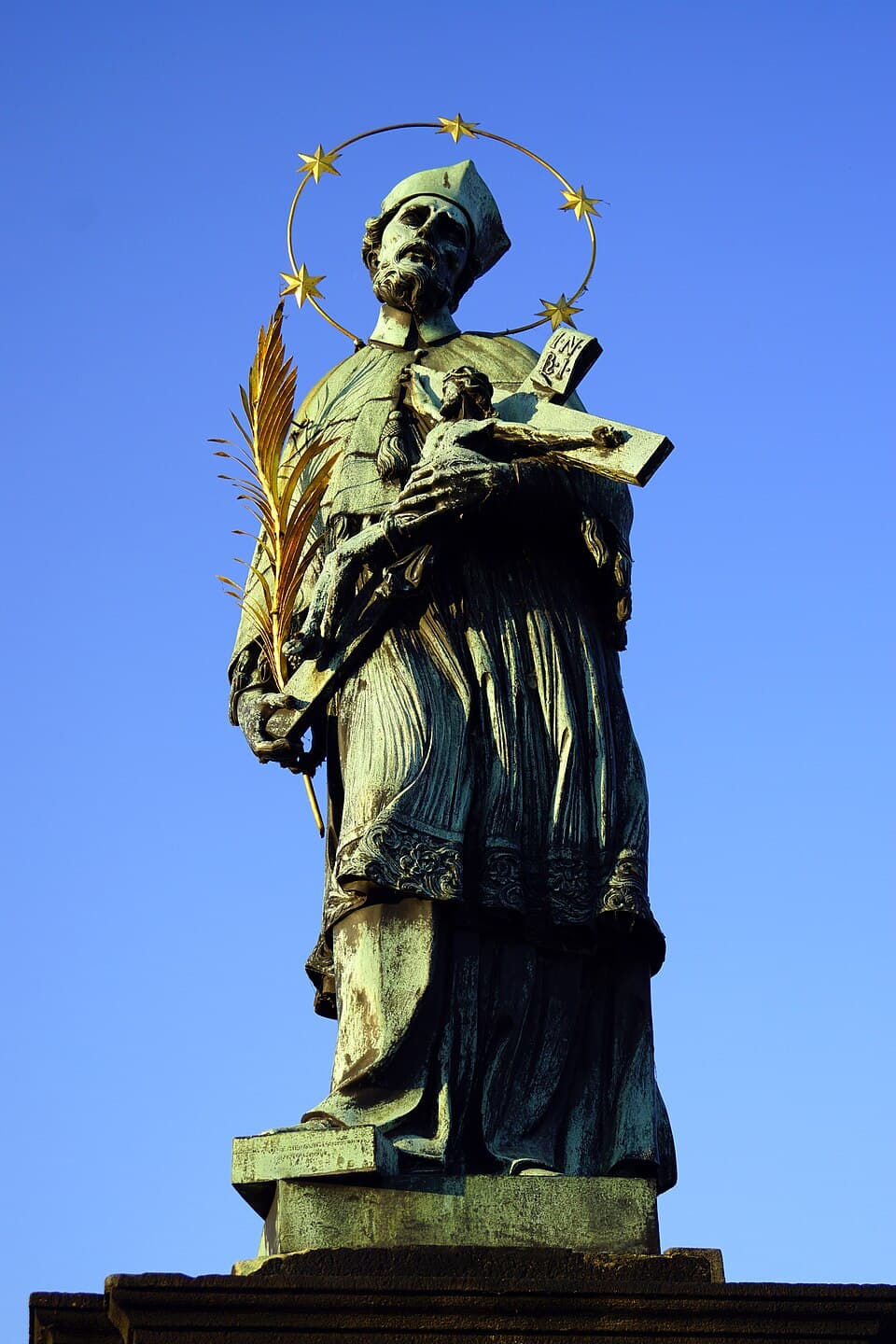
Statue of John of Nepomuk on Charles Bridge
Jan Brokoff · 1683 · bronze, sandstone
You are standing before the most famous and iconic figure on the Charles Bridge: Saint John of Nepomuk. This was the first statue to be placed on the bridge in 1683, sparking the trend that would eventually fill the railings with saints. John was a 14th-century priest who, according to legend, was thrown into the river from this very bridge because he refused to break the seal of confession and reveal the Queen’s secrets to King Wenceslaus IV. Take note of the five gold stars surrounding his head. Iconography holds that when his body was thrown into the Vltava, five brilliant stars appeared over the water to reveal his location. This miracle led to his status as the patron saint of bridges, silence, and protection against floods. He is usually depicted with a finger to his lips or holding a crucifix and a palm branch, symbolizing his martyrdom. Because of his story, he became a symbol of resistance against royal tyranny. His presence here transformed the bridge into a site of pilgrimage, making him a beloved figure for millions of visitors who come to seek his protection and hear the story of his unwavering loyalty.
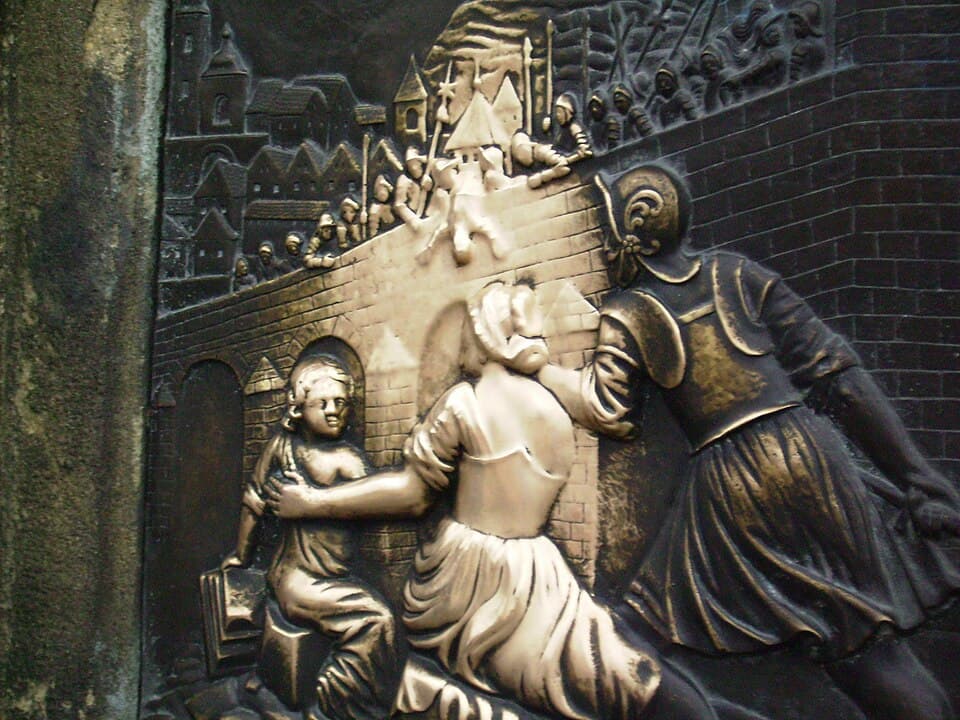
The Bronze Reliefs
Beneath the statue of Saint John of Nepomuk, you will notice two bronze reliefs that are polished to a bright gold in certain spots. This isn't the original color of the metal, but the result of a long-standing tradition. It is said that if you touch the figure of the priest being thrown off the bridge, it will bring you good luck and guarantee that you will one day return to Prague. The relief on the right specifically depicts the martyrdom of 1393. You can see the chaotic scene on the bridge deck as soldiers cast the saint into the dark waters of the Vltava. On the left relief, a dog represents loyalty, another popular spot for visitors to touch. While the stories are legendary, the physical act of touching these reliefs has become a modern ritual of its own, creating a shared connection between the millions of people who have stood in this exact spot over the years. As you look at the scene, notice the medieval bridge depicted in the background, offering a look at how the crossing might have appeared centuries ago, long before the 'Avenue of Statues' was completed.
The Martyrdom Site: The Brass Cross
The specific location on the bridge railing where St. John of Nepomuk was thrown into the river in 1393.
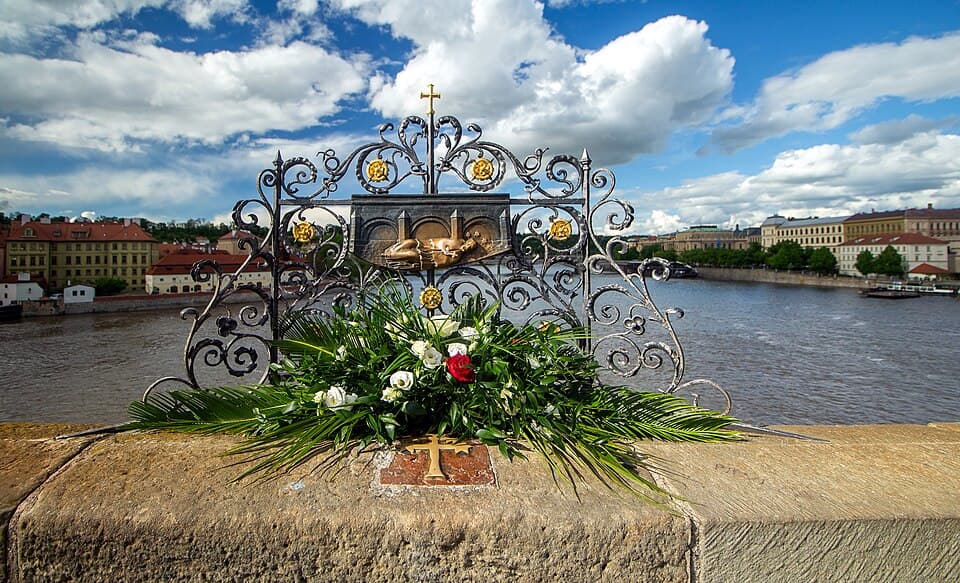
Cross of John of Nepomuk on Charles Bridge
While the grand statue of John of Nepomuk is hard to miss, this small brass cross embedded in the stone railing is equally significant. It is marked by five stars, mirroring the halo of the saint. Tradition dictates that this is the exact location where he was thrown into the Vltava River. There is a specific local ritual associated with this spot. It is believed that if you place your hand on the cross so that each of your five fingers touches one of the five stars, and then make a wish, that wish will be granted. This humble marker provides a more personal, tactile connection to the martyrdom story than the large statue nearby. It reminds us of the bridge's role as a site of both tragedy and legend. Many visitors stop here to pause, look down at the flowing water below, and participate in a tradition that has been passed down through generations of Prague citizens and travelers alike.
Engineering Marvel: Arches and Ice Guards
Examines the bridge's structural integrity, featuring the 16 stone arches and the specialized ice guards that protect the pillars from debris.
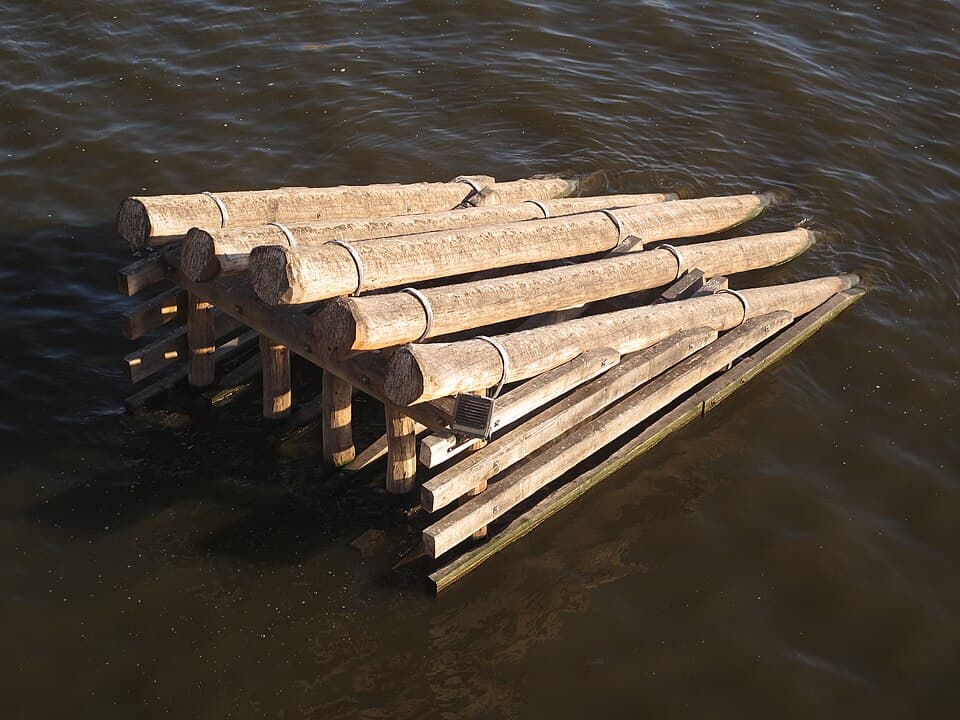
The Wooden Ice Guards
If you look down toward the base of the stone pillars in the water, you will see curious 'V' shaped wooden structures. These are known as 'ice guards' or 'ice breakers,' and they have been a part of the bridge’s defensive system for centuries. Their role is critical: during the spring thaw, massive chunks of ice break loose and float down the Vltava. Without these guards, those heavy ice floes would slam directly into the stone pillars, potentially causing structural failure. The guards are designed to break the ice into smaller pieces or deflect it away from the foundation. They also protect the bridge from heavy river debris, like fallen trees, during summer floods. The history of the bridge is marked by its battles with the river; major floods in 1784 and 1890 caused significant damage, proving that even a stone giant needs protection. These simple wooden frames are regularly maintained and replaced, continuing a medieval tradition of bridge maintenance. They are a reminder that the Vltava, while beautiful, is a powerful natural force that requires constant vigilance to keep the historic crossing safe.
The Knight Bruncvík: Guardian of the Bridge
A unique statue located on a pillar below the bridge deck level, depicting the legendary knight with his golden sword and lion.
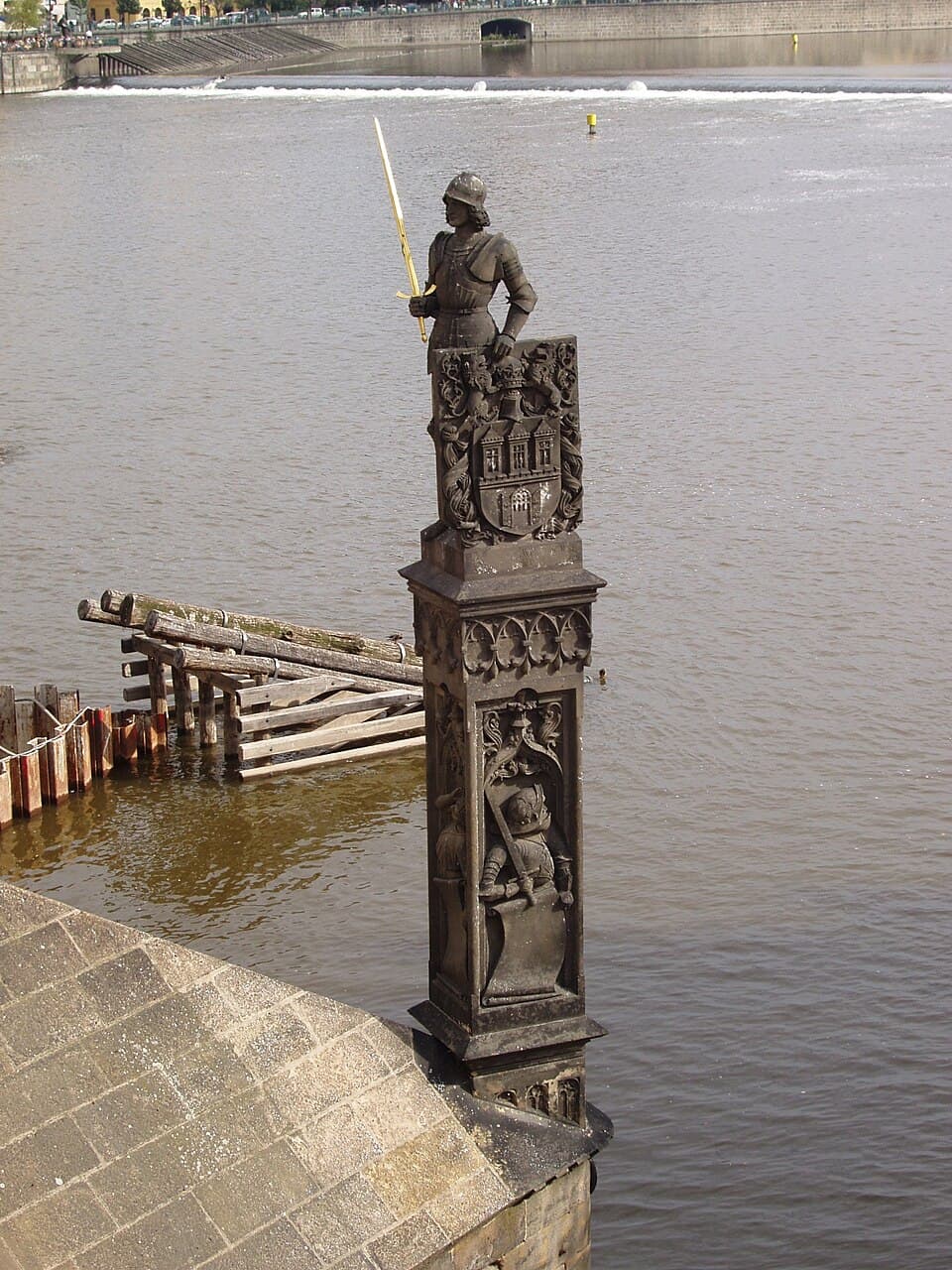
Statue of Bruncvík, Charles Bridge
Ludvík Šimek · 1884 · sandstone
Unlike the other statues that line the main railings, the statue of Bruncvík stands on a separate pillar, positioned below the level of the bridge deck. This figure represents a legendary Bohemian knight who traveled the world and acquired a magical golden sword. According to folklore, this sword had the power to cut off the heads of his enemies on command if he simply shouted the order. Beyond the legend, Bruncvík served a very practical legal purpose. He stands on the border between the Old Town and the river, symbolizing the Old Town's historical right to collect tolls from those crossing the bridge or traveling on the water. He is depicted with his lion companion and his famous sword, looking like a lone sentinel guarding the bridge's flank. During the 19th century, the original statue was damaged by cannon fire, and the one you see now is a late 19th-century replacement. He remains a beloved figure in Prague mythology, representing the spirit of adventure and the enduring protection of the city’s commercial interests. His unique position makes him easy to miss, but he is one of the bridge's most distinct and storied characters.
The Lesser Quarter Bridge Towers
The two connected towers at the western end. Explains the difference between the older Romanesque Judith Tower and the newer Gothic tower.
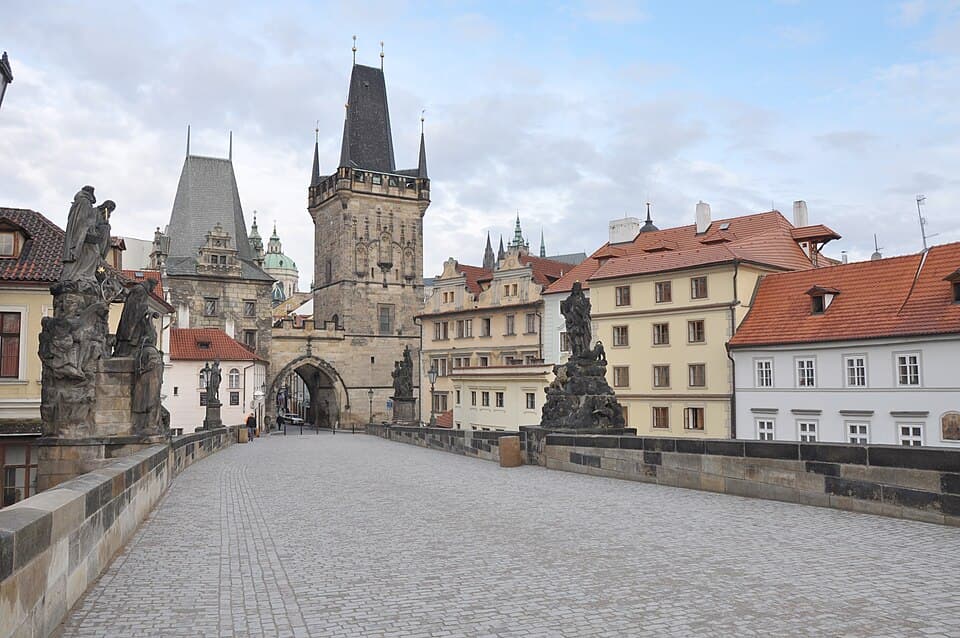
Lesser Quarter Entrance
As you arrive at the western bank of the Vltava, you are entering the Lesser Quarter, or Malá Strana. This end of the bridge holds a significant military history. In 1648, during the final months of the Thirty Years' War, the bridge became a desperate battlefield. Swedish forces had occupied the western bank and were attempting to cross the bridge to take the Old Town. They were held back right here by a determined force of Prague students and citizens. The fighting was brutal, and the bridge itself was heavily damaged by artillery and close-quarters combat. The defense was successful, and the Swedish army never made it across, making this gate a symbol of the city's resilience. When the peace treaty was finally signed, the bridge remained as the scarred but standing witness to the end of one of Europe's longest conflicts. Today, the atmosphere is far more peaceful, filled with the sound of street musicians and the chatter of visitors, but the stones under your feet once ran with the history of a city fighting for its survival.
Want to hear the rest?
Download the Stanza app to unlock all 17 stops and full GPS-guided navigation.
Frequently Asked Questions
How long does the Charles Bridge audio tour take?
The Charles Bridge audio guide includes 17 narrated stops. Most visitors spend 45 minutes to 1.5 hours exploring the complete tour, though you can listen at your own pace and skip or revisit any stop.
Is the Charles Bridge audio guide available in my language?
Stanza supports 15 languages: English, Spanish, French, German, Italian, Portuguese, Russian, Japanese, Chinese, Korean, Arabic, Hindi, Polish, Dutch, Hebrew. Check the guide in the app to confirm the languages currently available for this tour.
Can I use the audio guide offline at Charles Bridge?
Yes! Download the complete Charles Bridge tour — including all audio, maps, and images — before your visit. The Stanza app works completely offline, so you don't need WiFi or mobile data at the venue.
How much does the Charles Bridge audio guide cost?
The Stanza app is free to download. The current listed price for the Charles Bridge audio guide is $4.99; app-store region and currency may affect the final price.
How do I use the Stanza audio guide at Charles Bridge?
Download the free Stanza app, search for "Charles Bridge", and download the tour. When you arrive at the venue, the app uses GPS to detect your location and automatically plays the relevant narration as you move between points of interest — completely hands-free.
What makes the Stanza audio guide different from other Charles Bridge tours?
Stanza offers GPS-triggered narration that plays automatically as you walk through Charles Bridge — no need to manually select stops. The tour is available in 15 languages, works fully offline, and includes 17 expertly narrated stops with images and historical context.
What other audio guides are available near Charles Bridge?
Stanza offers multiple audio guides in Prague, Czechia and nearby areas. After downloading the app, browse the map to discover all available tours near Charles Bridge. Each guide can be downloaded for offline use.