Stanza · Audio guide
Larabanga Mosque Audio Guide
A place to remember. A story to take with you.
The Larabanga Mosque is a mosque built in the Sudanese architectural style in the village of Larabanga. It is the oldest mosque in Ghana and one of the oldest in West Africa.
Download Stanza, then search for “Larabanga Mosque”.
About the tour
One guide. Your kind of visit.
The Larabanga Mosque is a mosque built in the Sudanese architectural style in the village of Larabanga. It is the oldest mosque in Ghana and one of the oldest in West Africa.
Ready when you are.
- 01Get the free Stanza app.
iOS & Android
- 02Find your guide.
“Larabanga Mosque”
- 03Download before you go.
Works offline
Audio guide / 8 narrated stops
Inside the guide
Get to know a few of the stories before you go. Open a stop to read more.
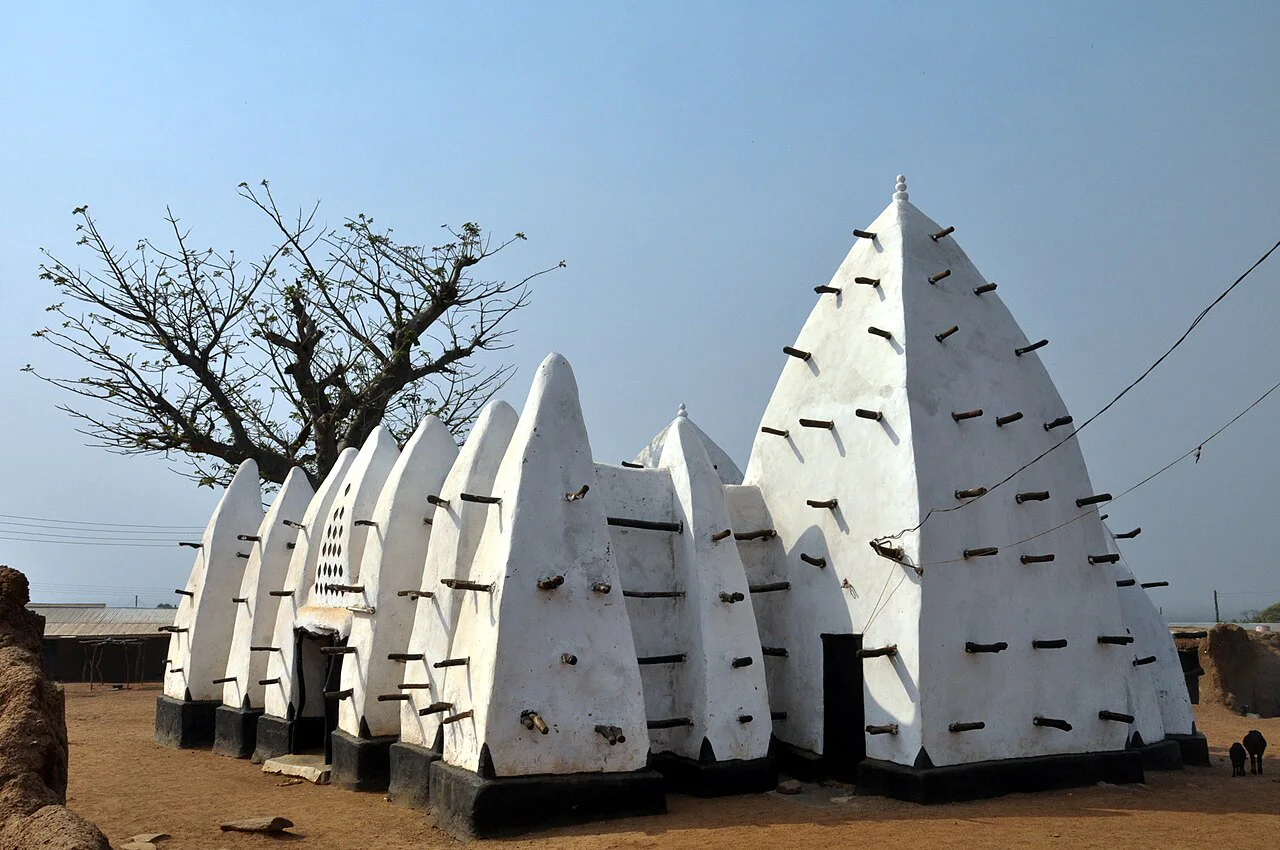
01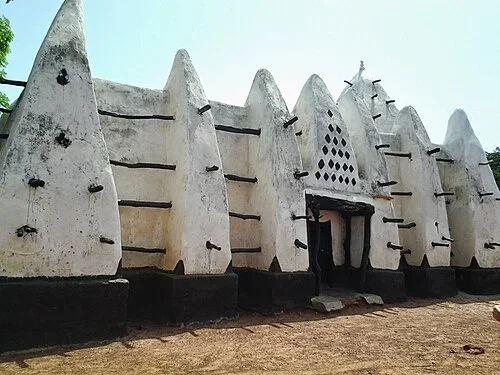 Plaza Arrival and Main Entrance Facade
Larabanga Mosque: Front Facade
Welcome to the Larabanga Mosque, in the Savannah Region of Ghana. This tour follows its towers, walls and legends, stop by stop. The white-washed building ahead is the oldest mosque in the country, and one of the oldest in West Africa. Its story begins, the tradition says, with a trader named Ayuba. In 1421 he was staying near a mystic stone here when he had a dream. The dream told him to build a mosque. When he woke, the foundations were already laid in the earth. He built on them until the house of prayer was complete. That is the legend the people of Larabanga tell, and they have kept it for six centuries. What is certain is the mosque's size. It measures only about eight metres each way, small enough to cross in a few strides. Few buildings anywhere carry so much fame in so small a footprint.
Photo: Dieu-Donné Gameli · CC BY-SA 3.0
02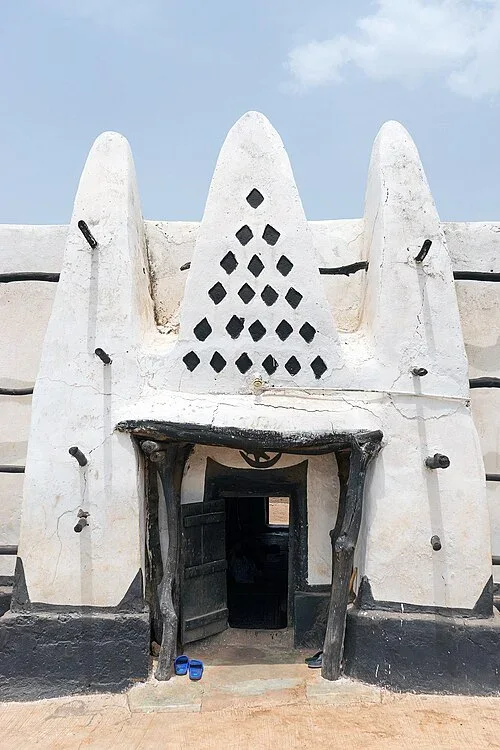 Plaza Arrival and Main Entrance Facade
The Entrance Portal
The doorway sits under a heavy lintel of dark, gnarled timber, with rough wooden posts holding the frame. Everything here is built the same way, from the earth underfoot. Builders wove a skeleton of sticks and packed it with mud, a method called wattle and daub. Then they gave the whole structure a coat of white wash, walls, towers and all. In this part of the world the style is sometimes called flat-footed adobe architecture. Rural mosques in northern Ghana were usually the work of a single marabout, a holy teacher who designed as he built. He worked from memory of grander buildings far away, such as the Great Mosque of Djenne in Mali. Larabanga's mosque echoes that distant model in miniature, translated into local materials and local hands.
Photo: Danieljatuat · CC BY-SA 4.0
03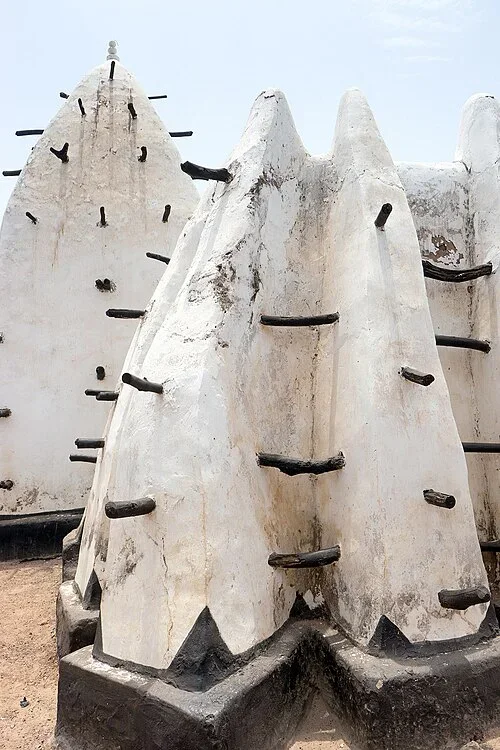 The Mihrab and Minaret Towers
The Two Pyramidal Towers
Two pyramidal towers rise from the white mass of the mosque, and each has its own work. The eastern tower holds the mihrab, the niche that points the faithful toward Mecca, and it forms the mosque's east face. The other stands in the northeast corner and serves as the minaret. From its height the call to prayer is spoken out over the village. There are no bells here, as there are in churches. The summons is a human voice, carried on the air five times a day. The caller reaches the top the old way, by earthen steps built into the tower itself. Those steps, like everything else here, are made of the same packed mud as the walls.
Listen in the appPhoto: Danieljatuat · CC BY-SA 4.0
04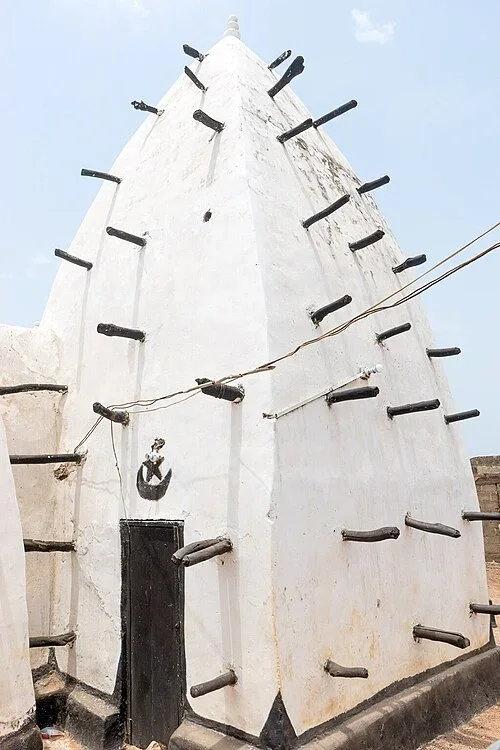 The Mihrab and Minaret Towers
A Tower Up Close: Storm and Rebuilding
The towers standing here are younger than they look. In September 2002 a severe storm tore through Larabanga and destroyed both the mihrab and the minaret. The loss brought the mosque onto the World Monuments Watch that same year, a listing for places in danger. The response grew into a full campaign of rebuilding. Craftsmen reconstructed the fallen towers and redid the portal, working in the traditional earthen manner. So the smooth pyramids seen now are the work of that recovery, shaped by modern hands following old methods. Wind and rain have always forced such renewals here, and each one has slightly altered the exterior designs. The mosque survives by being rebuilt, again and again.
Listen in the appPhoto: Danieljatuat · CC BY-SA 4.0
05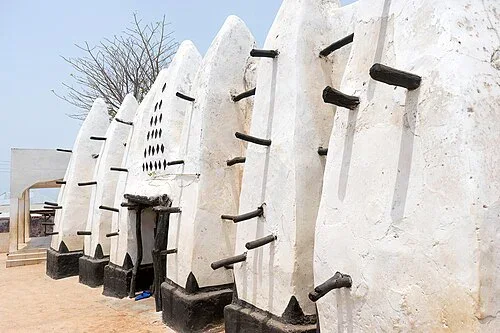 Conical Buttresses and Earthen Conservation
The Twelve Conical Buttresses
Along the outer walls, a row of rounded conical buttresses swells from the base like heavy pillars. There are twelve of them in all, braced by timber beams laid horizontally into the mud. The dark ends of those beams poke out of the white surface at regular heights, a signature of this kind of building. They are not scaffolding left behind. The embedded timber binds the earthen mass together and keeps the buttresses from spreading. The reason for such heavy engineering is honest and practical. Local building materials here were of poorer quality than those of the great mosques this style imitates. So the builders answered weakness with bulk, and the buttresses carry the walls through every rainy season.
Listen in the appPhoto: Danieljatuat · CC BY-SA 4.0
06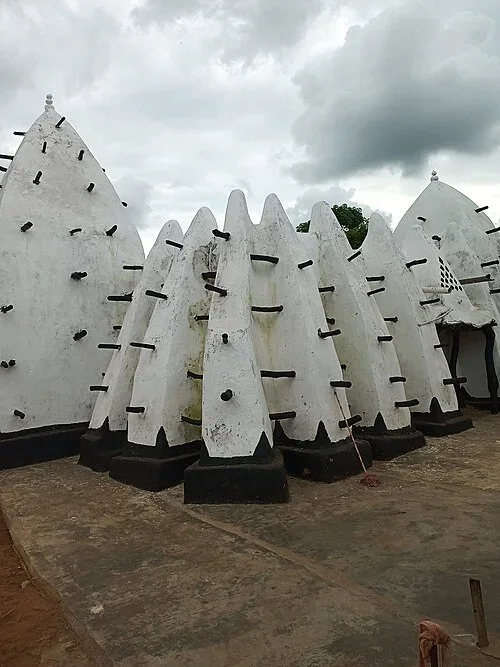 Conical Buttresses and Earthen Conservation
Earthen Conservation: Cement, Collapse and Revival
In the 1970s, someone tried to protect these walls with a coat of sand and cement. It was meant to shield the mosque from wind and rain. Instead it sealed moisture inside the adobe, and the walls began to rot from within. Termites moved into the damp timber supports, and part of the mosque collapsed. The repairs left the structure distorted. The turning point came after the storm damage, when the Ghana Museums and Monuments Board sought advice from CRAterre, a French firm in Grenoble that specializes in earthen buildings. The World Monuments Fund backed the work, with a grant of fifty thousand dollars from American Express. Workers stripped away the cement, replaced the rotten timber and replastered everything in the traditional way. Local artisans and labourers did the work, and the old knowledge of adobe maintenance came back with them. The cycle continues, with the most recent works carried out in 2023.
Listen in the appPhoto: Sir Amugi · CC BY-SA 4.0
07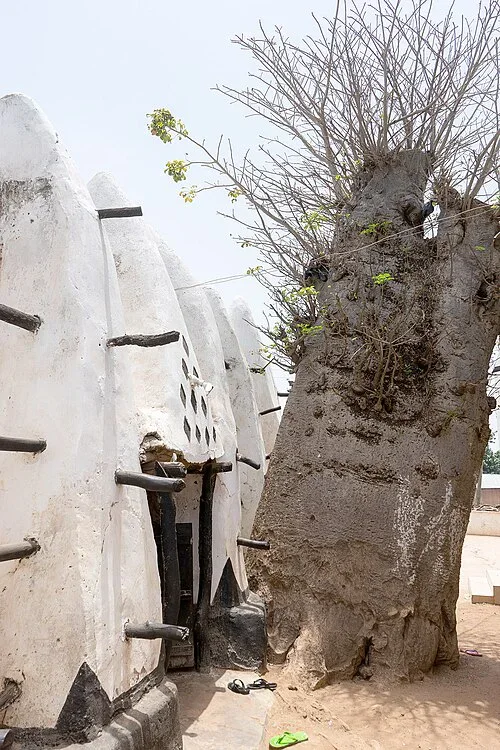 The Sacred Baobab Tree and Founder's Grave
The Sacred Baobab and Ayuba's Grave
Beside the mosque stands a huge baobab, its thick grey trunk rising higher than the white walls. The people of Larabanga say it marks a grave. Ayuba, the mosque's founder, left word that he wished to be buried close to his mosque when he died. He also foretold that a baobab would shoot up over his grave within three days. That tree, he said, was to be preserved for generations. The baobab here is reputed to be the one that grew. The tree serves the living as much as the dead. Townsfolk have long relied on its leaves and stem as remedies for ailments, a pharmacy standing at the mosque's side.
Listen in the appPhoto: Danieljatuat · CC BY-SA 4.0
08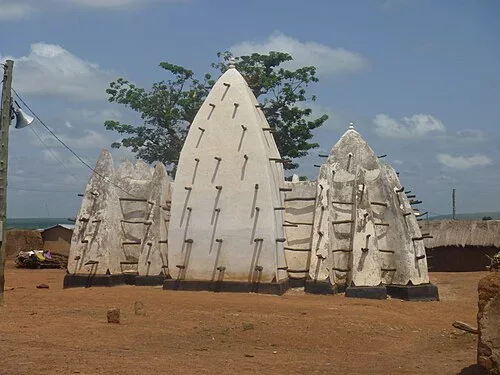 The Sacred Baobab Tree and Founder's Grave
The Mecca of West Africa
Inside the mosque is kept a very old Quran, and the people of Larabanga tell where it came from. In 1650, the story goes, Imam Yidan Barimah Bramah prayed for a holy book. His prayers were answered with a Quran given from heaven, and it has remained at the mosque ever since. Pilgrims come to see the place, which has earned the name Mecca of West Africa. It is counted among eight ancient and highly revered mosques in Ghana. Worship here has never stopped, six centuries of prayer in the Sunni tradition. The mosque owes its long life to a trader's dream, the skill of earthen builders and the devotion of the community that keeps rebuilding it.
Listen in the appPhoto: Monocletophat123 · CC BY-SA 3.0
Larabanga Mosque
Frequently asked questions
How much does the guide cost?
Free app download. Listed guide price: $0.99. Guide price shown in the app. Audio guide only. Venue admission is separate.
Can I listen without internet?
Yes. Download the guide’s audio, images, and maps in the app before your visit. Your downloaded content is then available offline.
Can I listen in my language?
This audio guide is available in 15 languages, including English.
Do I need to follow a schedule?
No. This is a self-guided experience. Choose your stops, pause whenever you like, and return to a story at your own pace.
At your own pace
Explore Larabanga Mosque.
Download Stanza, then search for “Larabanga Mosque”.
Free app download · Guide price shown in the app
Keep exploring
Audio guides — Ghana
Elmina
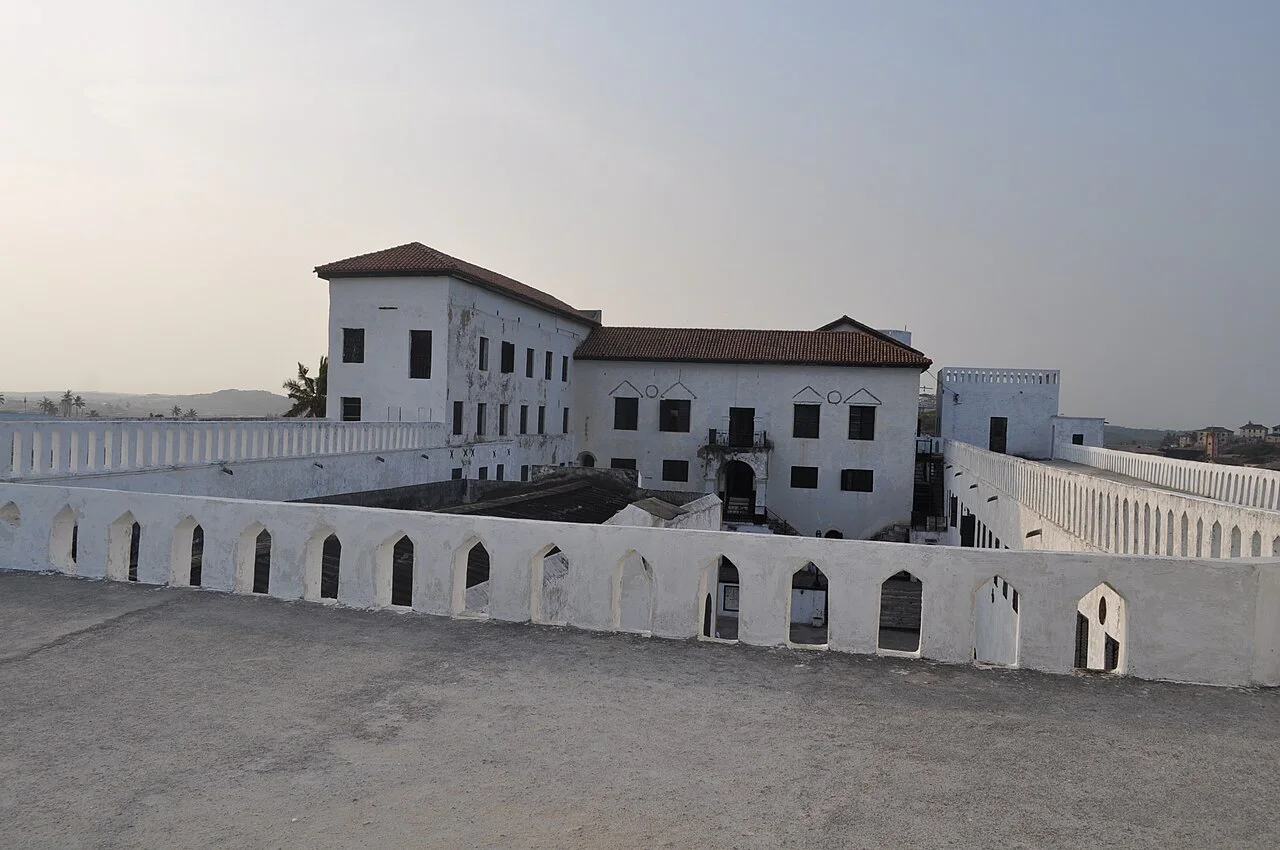
Elmina Castle
Content & sources
Photo: Bolance · CC BY-SA 3.0