Stanza · Audio guide
Badami cave temples Audio Guide
A place to remember. A story to take with you.
The Badami cave temples are a complex of Buddhist, Hindu and Jain cave temples located in Badami, India. These caves are important examples of Indian rock-cut architecture dating back to the 6th century.
Download Stanza, then search for “Badami cave temples”.
About the tour
One guide. Your kind of visit.
The Badami cave temples are a complex of Buddhist, Hindu and Jain cave temples located in Badami, India. These caves are important examples of Indian rock-cut architecture dating back to the 6th century.
Ready when you are.
- 01Get the free Stanza app.
iOS & Android
- 02Find your guide.
“Badami cave temples”
- 03Download before you go.
Works offline
Audio guide / 13 narrated stops
Inside the guide
Get to know a few of the stories before you go. Open a stop to read more.
01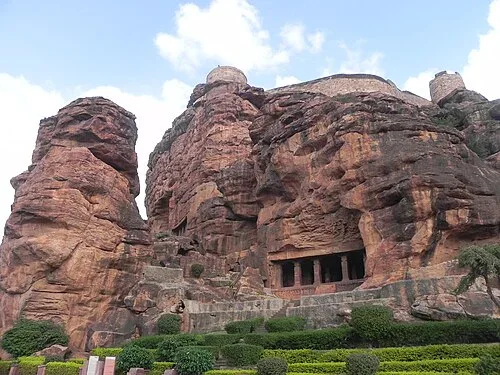 Sandstone Escarpment & Cave 1 Approach
Badami Escarpment and the Cave Temples
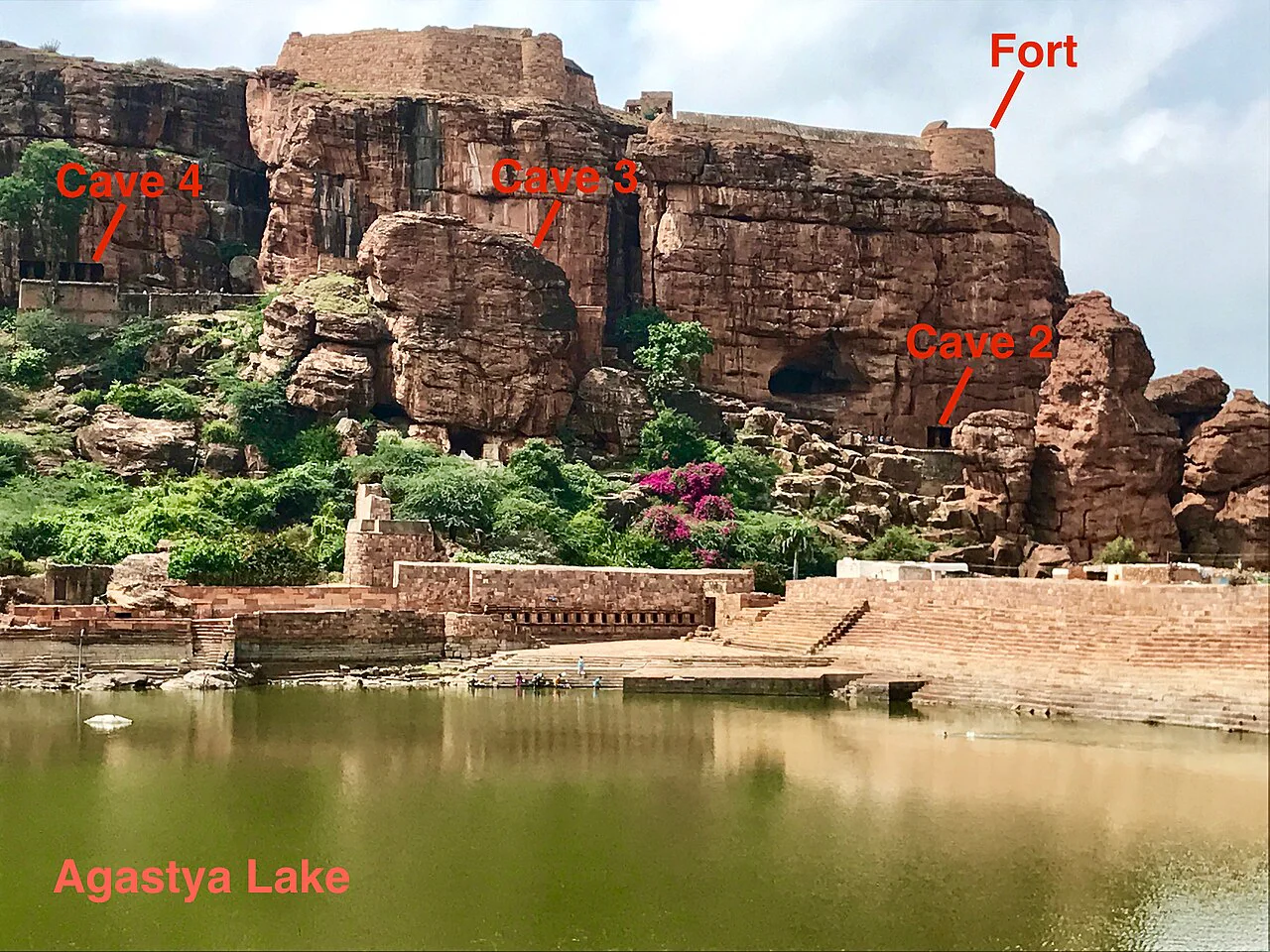
Welcome to the cave temples of Badami. Above the green water of Agastya Lake rises a wall of red sandstone, and set into that cliff face are four temple caves, cut one above the other along a single ridge. This town was once called Vatapi, the capital of the Early Chalukya dynasty, kings who ruled much of Karnataka from the sixth to the eighth century. From the late sixth century onward, they had temples excavated straight into the escarpment as royal shrines. The first cave belongs to Shiva, the second and third to Vishnu, and the fourth to the Jain faith. Together with the nearby towns of Aihole and Pattadakal, this valley is described as a cradle of temple architecture, the place where later Hindu temples in the region found their model. The lake below is man-made, held back by an earthen dam faced with stone steps, and forts guard the cliffs to the north and south.
Photo: Alende devasia · CC BY-SA 3.0
02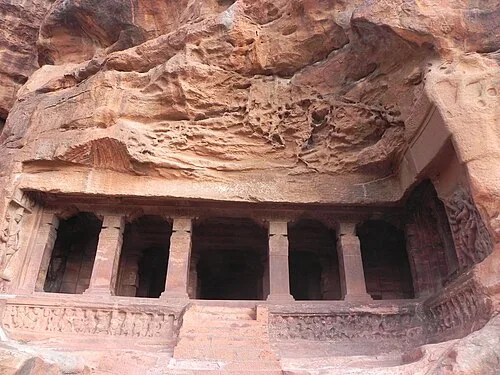 Sandstone Escarpment & Cave 1 Approach
Cave 1 Verandah: Pillars Cut from the Rock
Every temple here began as solid rock. The carvers worked inward from the face of the soft red Badami sandstone, cutting away stone to create the verandah, its pillars and the recessed hall behind them. Nothing was built up in blocks; everything that remains was left behind by removal. That is why the pillars stand in a straight row, each one still joined to the floor and ceiling it was cut from. In rock-cut work there is no mortar and no second chance. Every line of the chisel had to be right the first time it struck. The frieze running along the base, and the carved band above the pillars, were all finished in that single unforgiving pass.
Photo: Alende devasia · CC BY-SA 3.0
03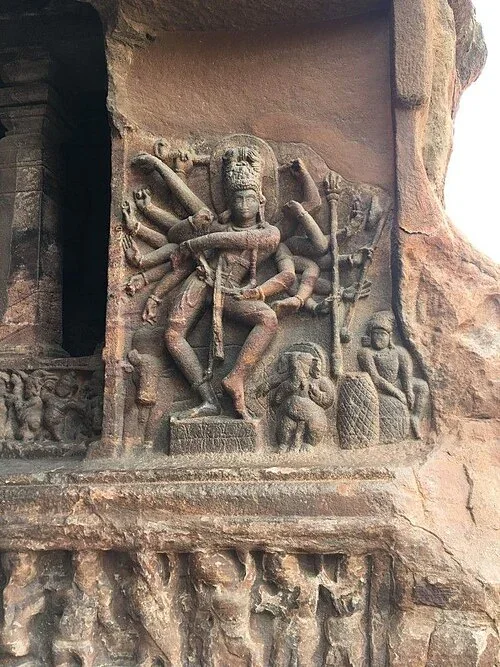 Cave 1: Shaivite Verandah & Divine Dualities
Cave 1 Nataraja: Dancing Shiva with Eighteen Arms
Beside the entrance to Cave 1, the rock face carries one of the most famous images at Badami: Shiva as Nataraja, the lord of dance. The figure stands about one and a half metres tall, and he has eighteen arms, nine on each side. Those arms are not decoration. They are drawn from the natya mudras, the symbolic hand gestures of classical dance, and arranged together they form about eighty-one dance combinations. Some hands hold objects: a drum, a flame torch, a serpent, a trident, an axe. The Swiss art historian Alice Boner read the whole arrangement as a division of time, a symbol of the cosmic wheel set into the dance. Shiva dances the Tandava, and the wall around him carries other scenes of the god's power.
Listen in the appPhoto: SpeakingArch · CC BY-SA 4.0
04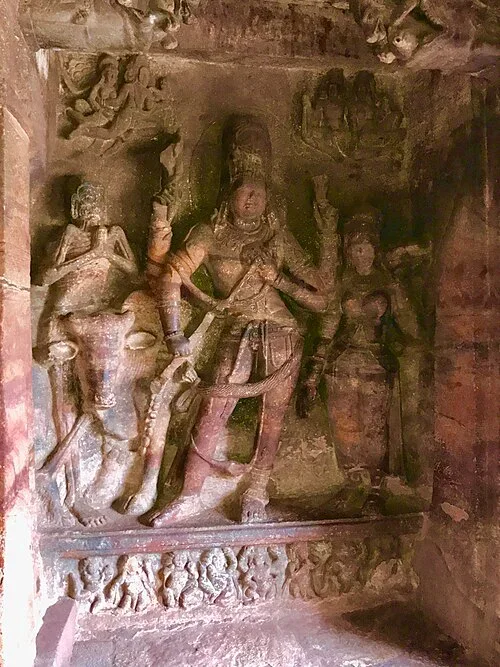 Cave 1: Shaivite Verandah & Divine Dualities
Cave 1 Ardhanarishvara with Nandi and Bhringi
Toward the end of the wall in Cave 1 stands a figure divided down the middle. On one side is Shiva, with the moon on his head and snakes in his hands. On the other is his consort Parvati, with an attendant beside her carrying a tray of jewels. This is Ardhanarishvara, the lord who is half woman. At Shiva's side the carvers placed Nandi the bull, and next to him Bhringi, a devotee shown as a skeletal ascetic, every rib and bone of his frame picked out in stone. Scholars read these fused images as a deliberate message from the Chalukya kings to their subjects: that men and women hold equal standing and owe each other respect. The same idea appears elsewhere at Badami in Harihara, a figure half Shiva and half Vishnu, which may be found in more than one of the caves.
Listen in the appPhoto: Ms Sarah Welch · CC BY-SA 4.0
05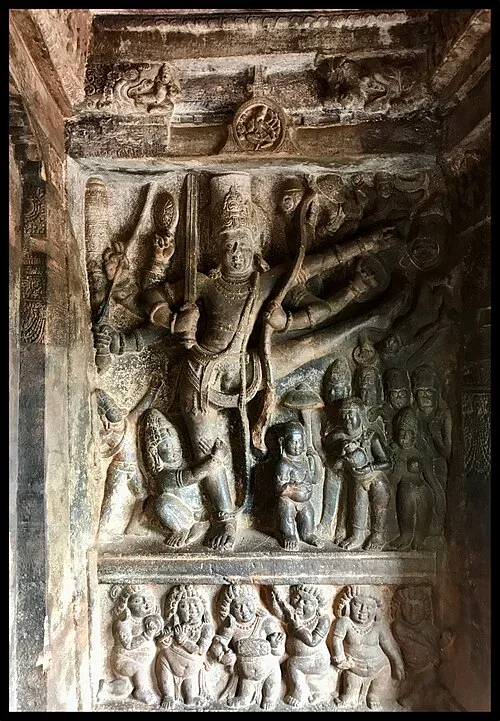 Cave 2: Vaishnavite Terrace & Cosmic Strides
Cave 2 Trivikrama Relief and Vamana Frieze
Sixty-four steps above the first cave, Cave 2 opens facing north, its entrance divided by four square pillars all cut from the living rock. Its largest relief shows Vishnu in his Trivikrama form, caught in the middle of taking one of three steps. Below that raised step runs a frieze showing the story from its beginning, with Vamana, the dwarf avatar of Vishnu, before he transforms. The legend tells how the dwarf god asked a demon king for as much ground as three steps could cover. Then he grew. The small body expanded into a giant who strode across the whole cosmos, and the relief freezes one enormous stride at its height. The carving was made in the late sixth or early seventh century, and its style belongs to the northern Deccan tradition of that age.
Listen in the appPhoto: Ms Sarah Welch · CC0
06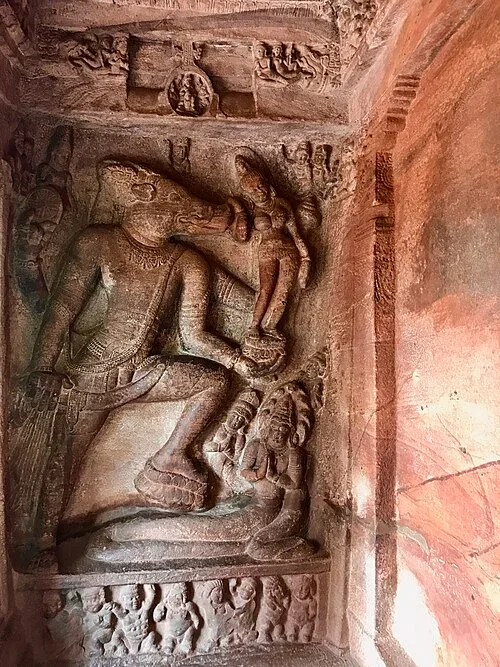 Cave 2: Vaishnavite Terrace & Cosmic Strides
Cave 2 Varaha Lifting Bhudevi
On another wall of Cave 2, Vishnu takes a very different shape. Here he is Varaha, the boar, bending forward with the goddess Earth, Bhudevi, held safely near his head. The legend says the world had sunk into the depths of the cosmic ocean, and the god descended in animal form to lift it out again. The carving shows him mid-rescue, the small figure of the goddess steady against his great boar-headed body. Below the pair, a penitent multi-headed naga, a serpent being, watches the rescue. Like the other major images at Badami, the panel is set within a circle and laid out with careful symmetry. Between this relief and the giant stride of Trivikrama, Cave 2 builds its theme: a god who takes whatever form the world needs to be saved.
Listen in the appPhoto: Ms Sarah Welch · CC BY-SA 4.0
07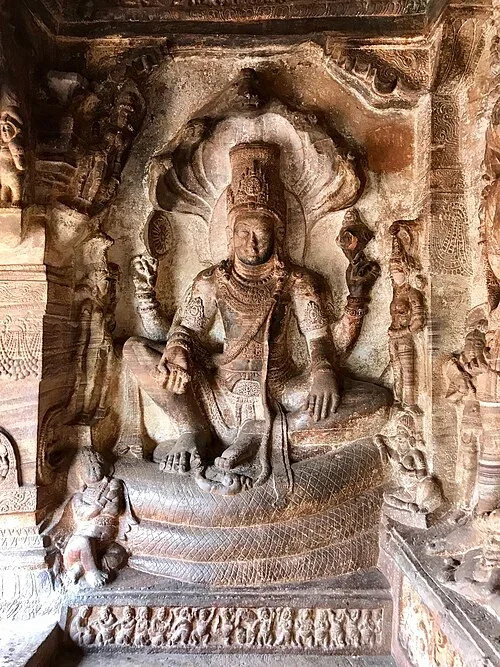 Cave 3: Mangalesha's Royal Vaishnava Sanctuary
Cave 3 Vishnu Seated on the Serpent Shesha
Cave 3 is the largest of the four, and its dedication is to Vishnu. On the eastern side of its verandah sits one of its great images: Vishnu enthroned on Shesha, the cosmic serpent. The serpent's coils form the seat, and its many heads rise above the god and spread into a canopy. In myth, Shesha carries Vishnu through his rest between cosmic ages, the calm at the centre of things. The figure here is seated, crowned and jewelled, holding his emblems in his hands, with attendant figures carved into the niche around him. The cave's sculpture is described as well preserved, and it shows Vishnu in many forms besides this one: the man-lion Narasimha standing, Varaha rescuing the Earth, and Trivikrama mid-stride. The cave as a whole has been called the matured stage of Karnataka's ancient art.
Listen in the appPhoto: Ms Sarah Welch · CC BY-SA 4.0
08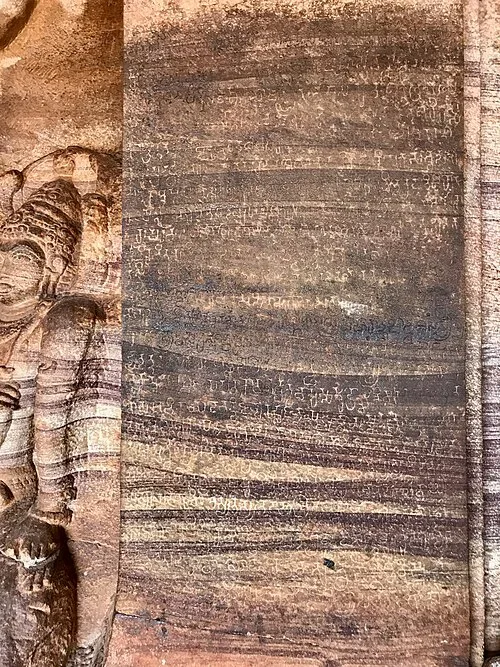 Cave 3: Mangalesha's Royal Vaishnava Sanctuary
Cave 3 Inscription in Old Kannada
Cut into the wall of Cave 3 runs a long panel of engraved lines, the inscription that dates this cave. It is written in the Old Kannada language, and it records the dedication of this shrine by Mangalesha, in the year Saka 500. In the solar calendar that is 578 or 579 CE. The epigraphical evidence suggests the temple was inaugurated on the full moon day, the first of November 578. Before this inscription was understood, no cave here could be dated with certainty; this one line of carving placed the site in the sixth century. It makes Cave 3 the oldest firmly dated Hindu cave temple in India. A king's gift to his god, and accidentally a timestamp for every historian who came after.
Listen in the appPhoto: Ms Sarah Welch · CC BY-SA 4.0
09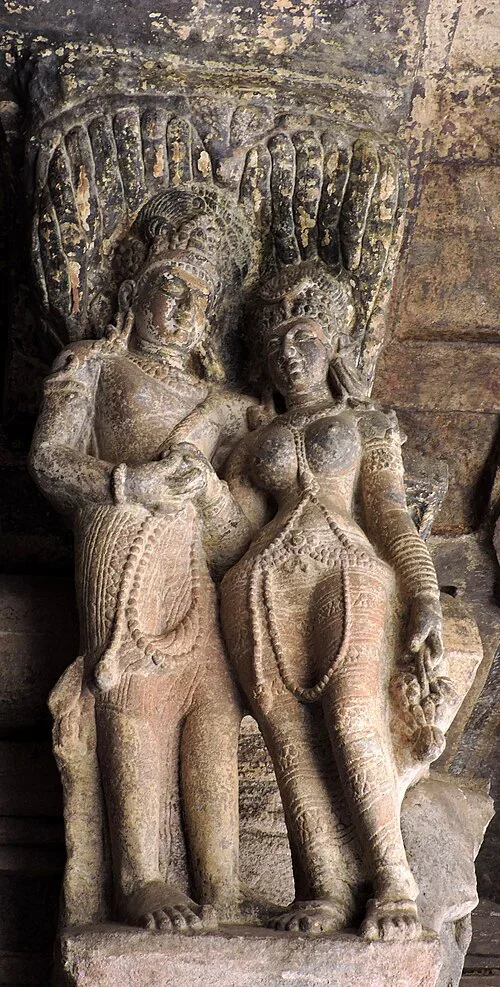 Cave 3: Mangalesha's Royal Vaishnava Sanctuary
Cave 3 Courting Couple: Adornment and Dress
Not every figure in Cave 3 is a god. Along the pillar brackets, the carvers filled the spaces with couples, men and women standing together or in courtship and embrace. The carving records what people of the sixth century wore and how they adorned themselves. The standing pair here wears it all: heavy necklaces falling to the waist, armlets coiled around the arms, and tall elaborate headdresses. Every figure in the cave is given carved ornaments, framed by borders of animals and birds, with the lotus design appearing again and again. These are artistic depictions, not portraits of named people, but they preserve a sophisticated tradition of dress and cosmetics. On the ceiling too, couples appear, in courtship and in the carved scenes called Mithuna.
Listen in the appPhoto: Vu2sga · CC BY-SA 4.0
10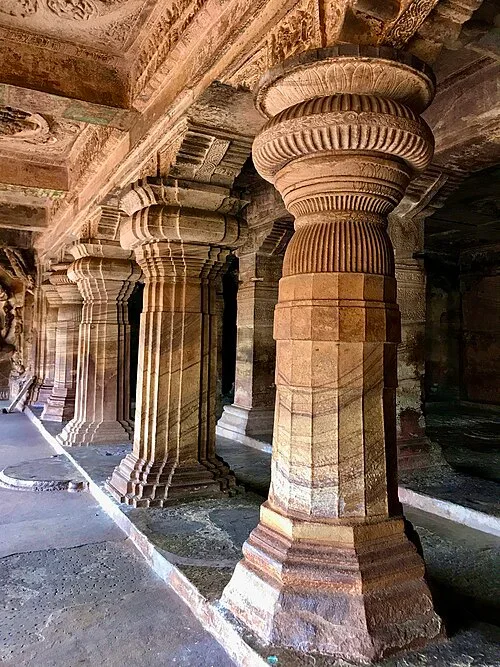 Cave 3: Mangalesha's Royal Vaishnava Sanctuary
Cave 3 Pillared Hall and Ceiling Frescoes
The great hall of Cave 3 is a forest of rock-cut pillars, each one carved from base to bracket out of the same sandstone as the ceiling above it. The brackets carry human figures standing under foliage, and the cornice below is divided into compartments filled with carved dwarfs. What makes this hall remarkable is overhead. The ceiling carries fresco paintings, some now faded and broken, and they are among the earliest known surviving evidence of fresco painting in Indian art. One mural shows the god Brahma seated on his swan. Another shows the wedding of Shiva and Parvati, attended by various deities. Under the Brahma mural, a lotus medallion is set into the floor. The verandah roof is divided into seven panels by cross beams, painted with circular compartments holding Shiva, Vishnu, Indra, Brahma and Kama.
Listen in the appMs Sarah Welch · CC0
- 11
Cave 4 Bahubali in Meditative Standing Pose
The Jain cave and its motionless ascetic, standing in meditation among the vines.
- 12
Cave 4 Parshvanatha and the Later Jain Phase
Parshvanatha under his cobra canopy, and a cave that kept growing for centuries.
- 13
Agastya Lake and the Town from a Cliff Cave
Across the lake, a figure with no face and three possible identities ends the story.
Badami cave temples
Frequently asked questions
How much does the guide cost?
Free app download. Listed guide price: $0.99. Guide price shown in the app. Audio guide only. Venue admission is separate.
Can I listen without internet?
Yes. Download the guide’s audio, images, and maps in the app before your visit. Your downloaded content is then available offline.
Can I listen in my language?
This audio guide is available in 15 languages, including English.
Do I need to follow a schedule?
No. This is a self-guided experience. Choose your stops, pause whenever you like, and return to a story at your own pace.
At your own pace
Explore Badami cave temples.
Download Stanza, then search for “Badami cave temples”.
Free app download · Guide price shown in the app
Keep exploring
Audio guides — India
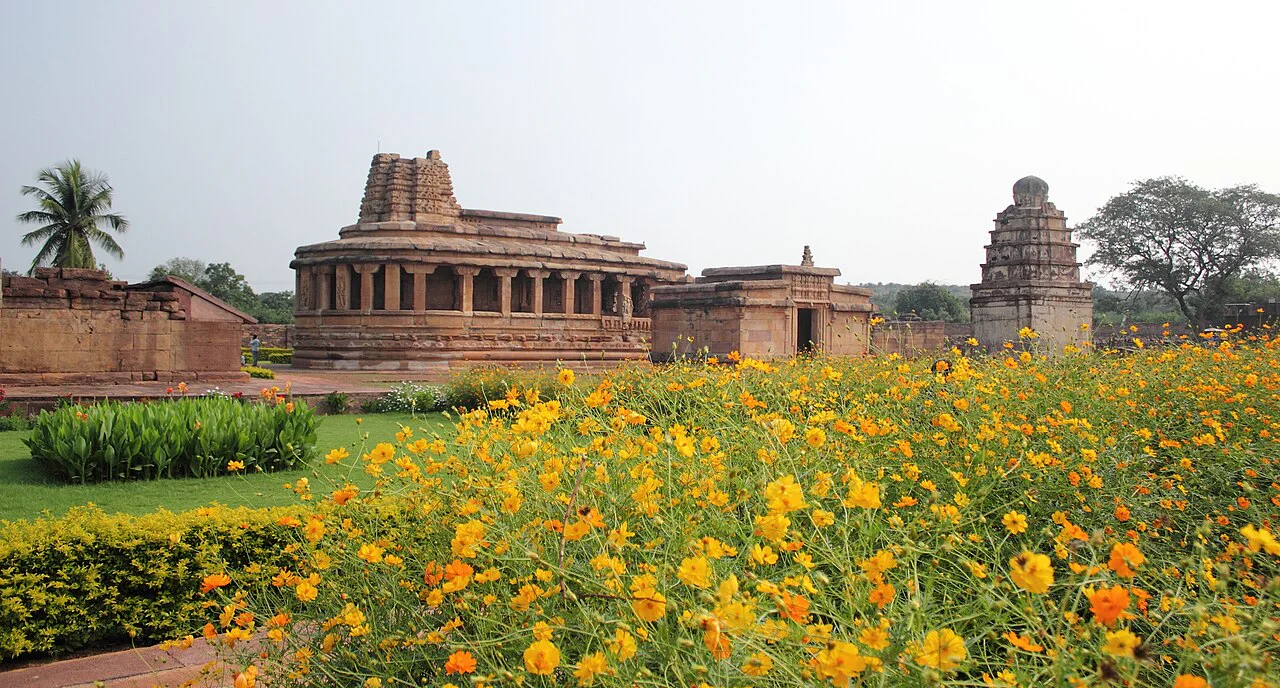
Kalligudda · 24 km
Aihole
Content & sources
Parthasarathi Chakrabarty · CC BY-SA 4.0
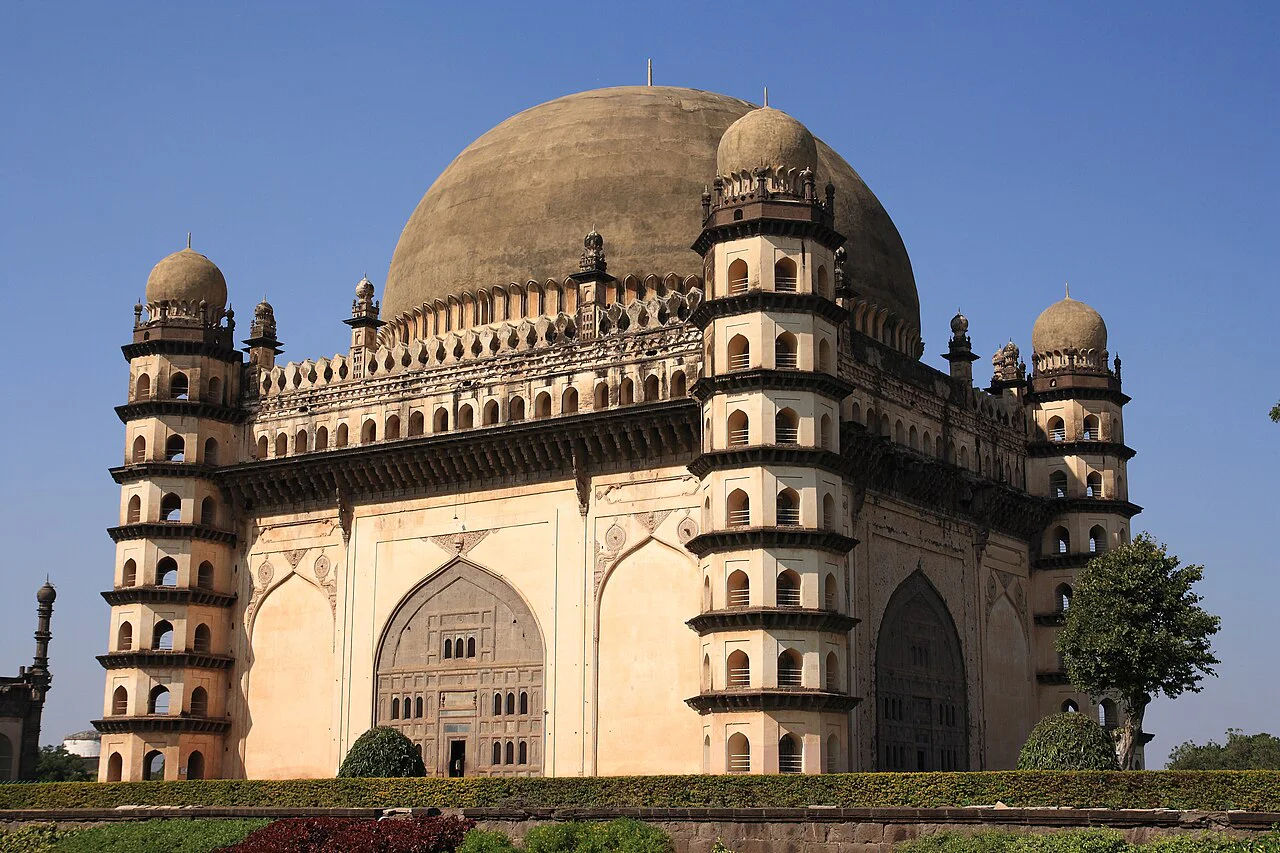
Vijayapura · 102 km
Gol Gumbaz
Content & sources
Photo: Meesanjay · CC BY-SA 3.0
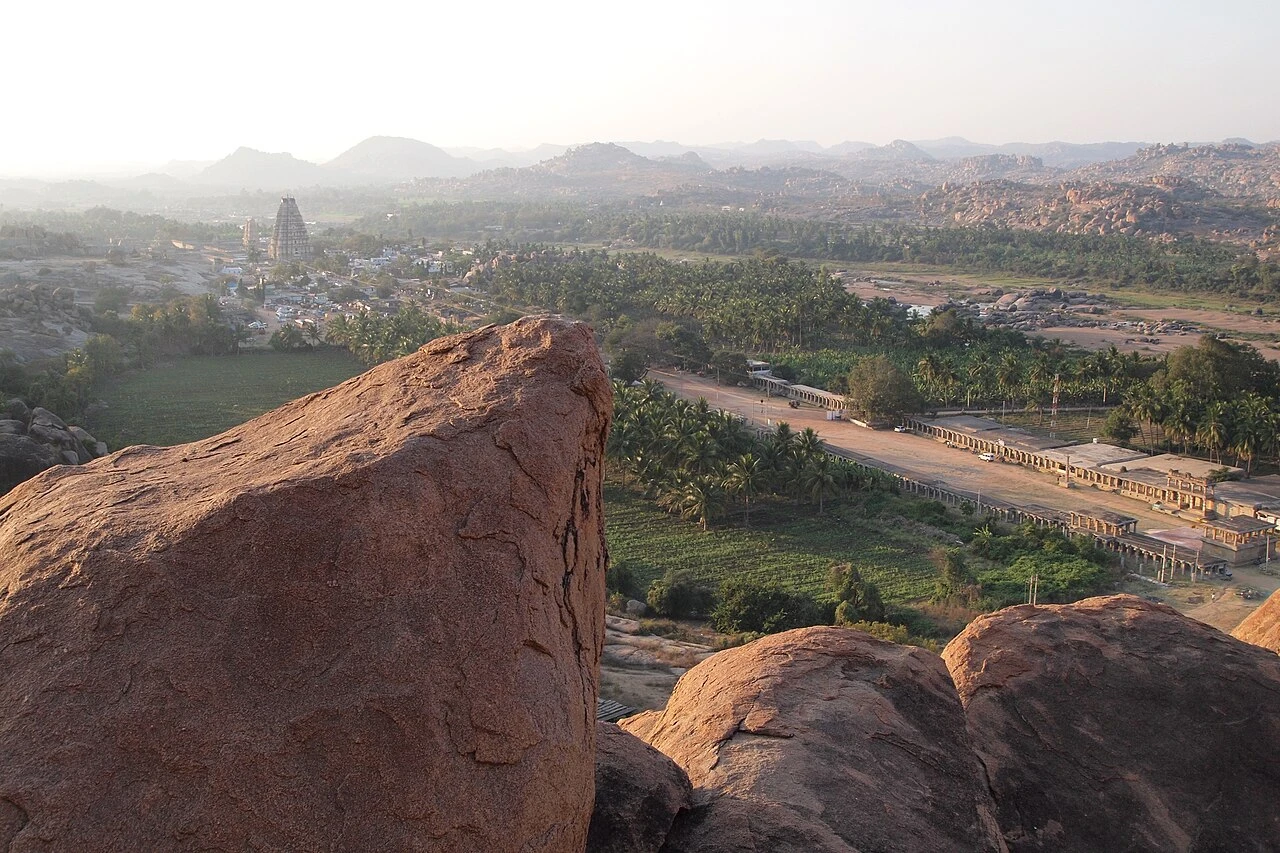
Hampi · 106 km
Hampi
Content & sources
Vyacheslav Argenberg · CC BY 4.0
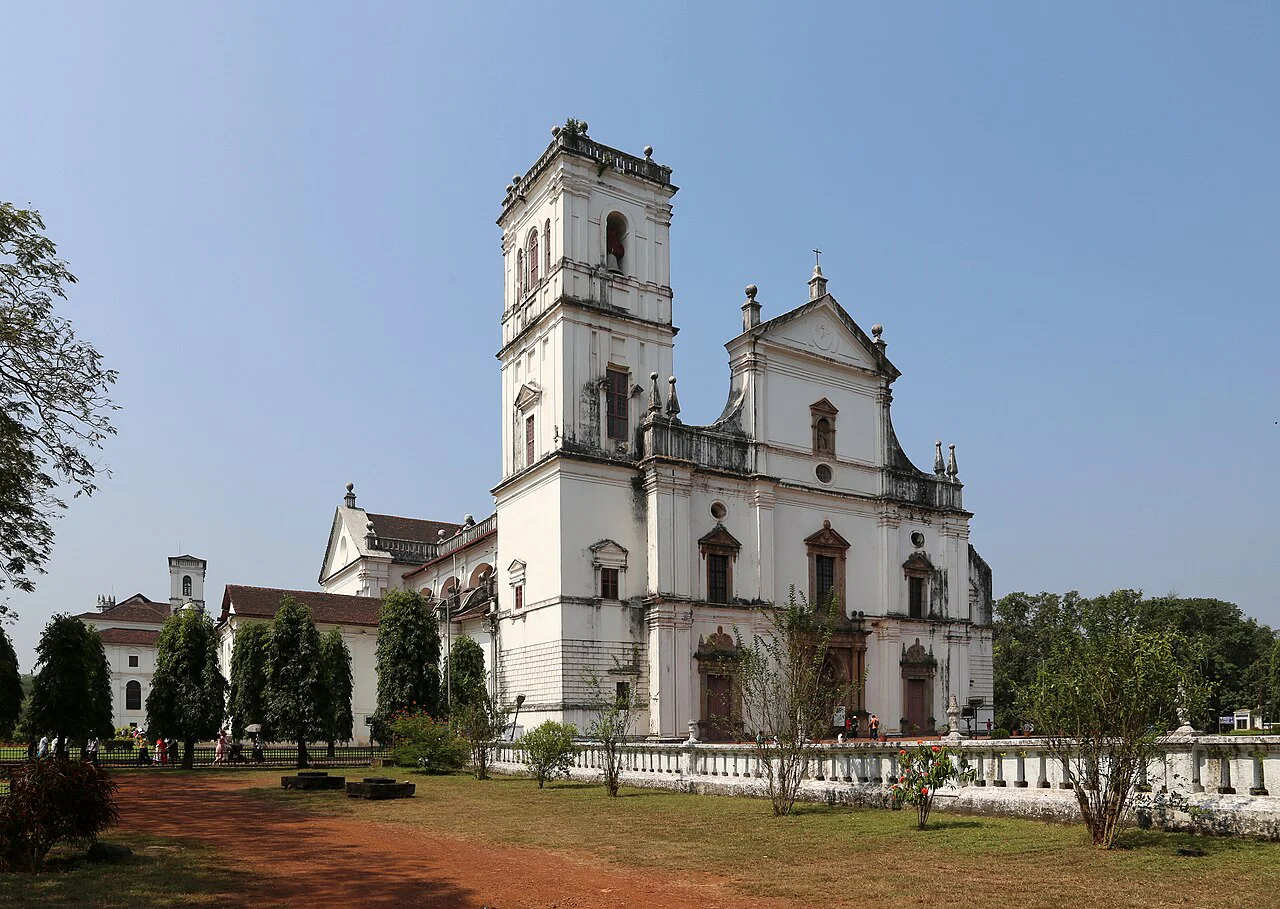
Panaji
Se Cathedral
Content & sources
Photo: Sailko · CC BY 3.0