Stanza · Audio guide
Aihole Audio Guide
A place to remember. A story to take with you.
Aihole is a historic site in Karnataka, India, featuring over 120 stone and cave temples dating from the sixth to the twelfth century. It is a major archaeological site that showcases ancient and medieval-era…
Download Stanza, then search for “Aihole”.
About the tour
One guide. Your kind of visit.
Aihole is a historic site in Karnataka, India, featuring over 120 stone and cave temples dating from the sixth to the twelfth century. It is a major archaeological site that showcases ancient and medieval-era Buddhist, Hindu, and Jain monuments.
Ready when you are.
- 01Get the free Stanza app.
iOS & Android
- 02Find your guide.
“Aihole”
- 03Download before you go.
Works offline
Audio guide / 23 narrated stops
Inside the guide
Get to know a few of the stories before you go. Open a stop to read more.
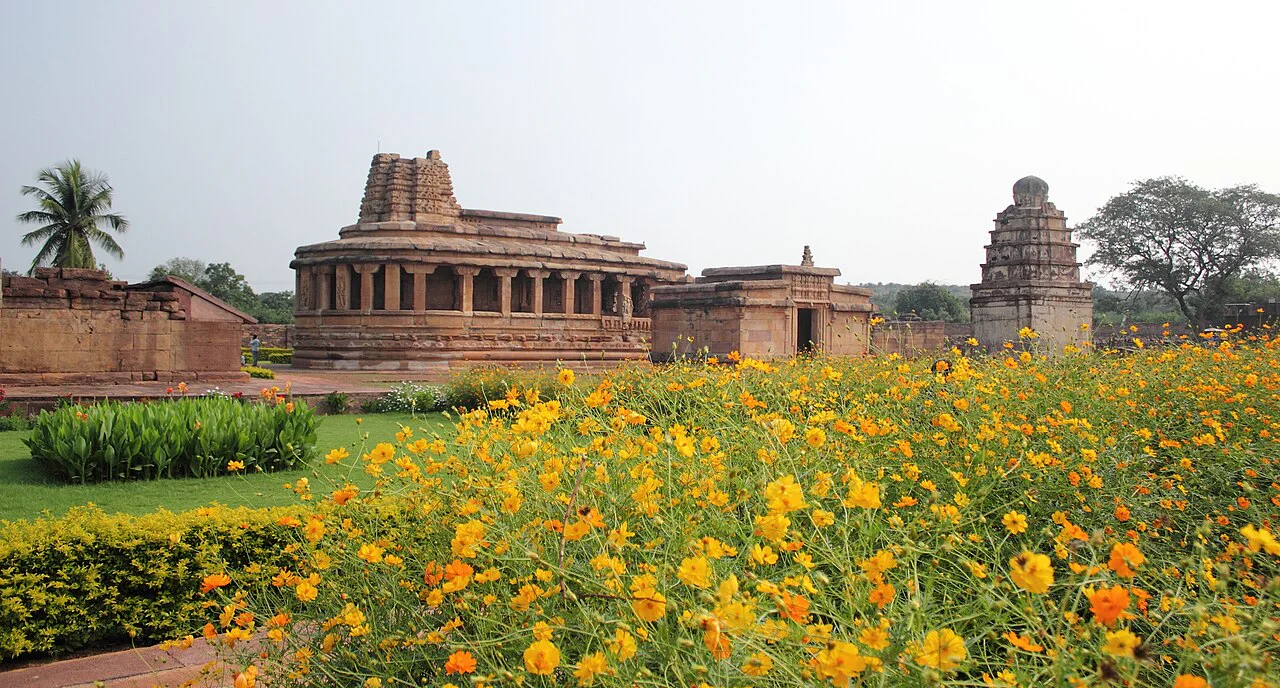
01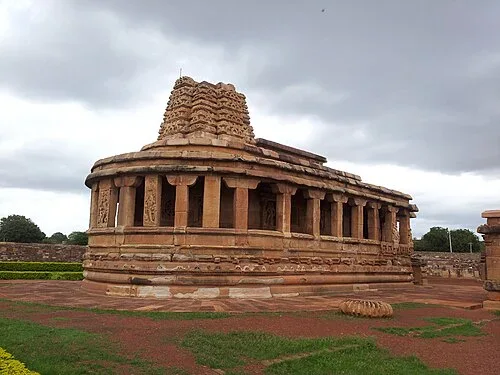 Durga Temple
: The Apsidal Landmark
Few places in India pack so much temple-building into so small a space. Aihole, in the Malaprabha river valley of Karnataka, preserves more than a hundred and twenty Hindu, Jain and Buddhist monuments. They were raised over eight centuries, from the fourth to the twelfth. The Early Chalukya dynasty rose here in the sixth century and set its artisans to work, using this town as a workshop for temple design. Ideas tried out here were refined at Badami and brought to full flower at nearby Pattadakal. The best-known building of them all is the Durga temple, and its plan is the first thing that sets it apart. It is apsidal, rounded at one end like a half-circle, a shape echoing the Buddhist chaitya halls cut at Ajanta in the second or first century BCE. It stands on a high moulded base, and its curvilinear tower is damaged, with the round crown stone that once capped it lying on the ground. Even the name misleads. The temple was never dedicated to the goddess Durga but to the gods Surya and Vishnu. One local explanation links the name to a fort-like enclosure, a durg, that stood near the ruins. Another says a rubble lookout was once piled on its flat roof, and villagers took the name from that. Early scholars guessed a fifth-century date, but later study places the building between the late sixth and early eighth centuries.
Photo: Vaasusreeni · CC BY-SA 3.0
02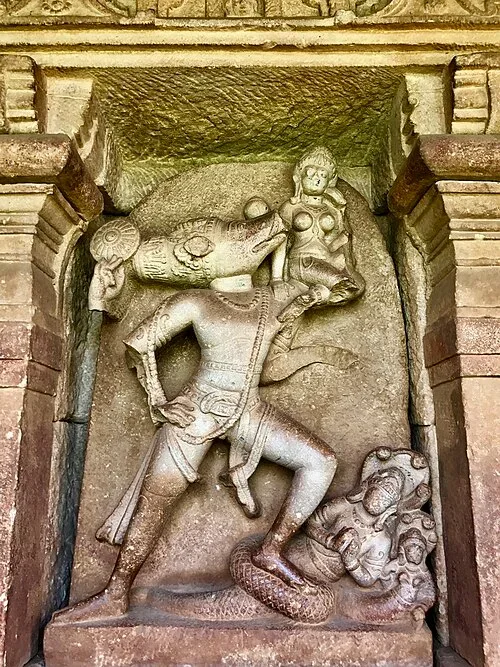 Durga Temple
Varaha Rescuing Bhudevi
A boar, carved nearly as tall as a man, strides along the wall of the walkway here, and on his arm sits a small, serene goddess. This is Varaha, the boar avatar of Vishnu, and the story the panel tells is one of rescue. In the myth, the earth itself had sunk beneath the cosmic waters, and Vishnu took the form of a great boar to dive down and lift it out. The goddess he carries is Bhudevi, the earth personified, brought safely back to the surface. Below his feet the carvers set a serpent, coiled on the ground he strides over. The figure is worked in deep relief, with the boar's tusks, the goddess's jewellery and the serpent's scales all cut sharply into the sandstone. Panels of this quality line the covered passage that runs around the sanctum, so walking around this temple was always more than a ritual circuit. It was a gallery of finely cut figures, some of the best sculpture the Early Chalukya artisans produced.
Photo: Ms Sarah Welch · CC BY-SA 4.0
03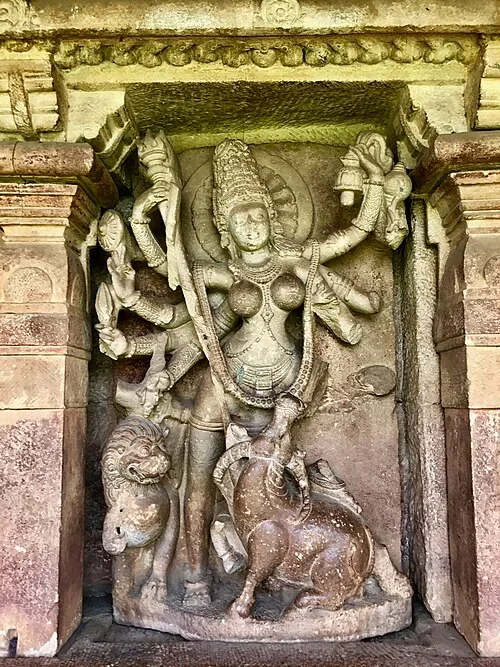 Durga Temple
Mahishasuramardini Slaying the Buffalo Demon
The carving shows a goddess in the middle of a fight she was made to win. She is Durga in her form as Mahishasuramardini, the slayer of the buffalo demon. The myth tells of a demon who took the shape of a buffalo and proved unkillable by any single god, so each of the gods gave the goddess his own weapon. She carries them all, and the panel shows her with arms radiating outward, a weapon in nearly every hand. Her lion waits at her side, while the buffalo demon reels beneath her. The sculptor has caught the moment of overpowering rather than the aftermath, with the goddess calm at the centre of the struggle. It is one of the most celebrated panels on the temple. Worth noticing is how freely the artisans mixed their deities on a single building. This fierce goddess image shares its walls with Shiva, Vishnu and Brahma, in a temple whose own sanctum honoured Surya and Vishnu.
Listen in the appPhoto: Ms Sarah Welch · CC BY-SA 4.0
04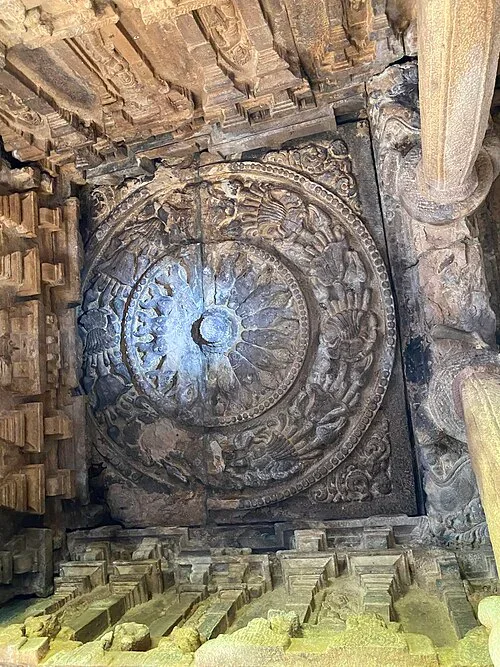 Durga Temple
Carved Ceiling inside the Durga Temple
Overhead, a great circular slab spreads across the ceiling, carved with figures radiating out from a central boss like the petals of an enormous stone flower. Ceilings like this were among the hardest things Chalukya masons had to make. In an older timber building, a roof like this would have been simple planks laid across beams. Here the whole surface is cut from stone, with figures and ornament worked into every ring. Inside, the temple is arranged for both ritual and gathering. A covered, colonnaded passage runs all the way around the sanctum, and from it one passes into the mukha mantapa, the main hall, and then the sabha mantapa. That second hall was a community space, used for functions as much as for worship. These temples belonged to a working village, and their rooms made room for the village's shared life as well as its gods.
Listen in the appPhoto: Vinayaraj · CC BY-SA 4.0
05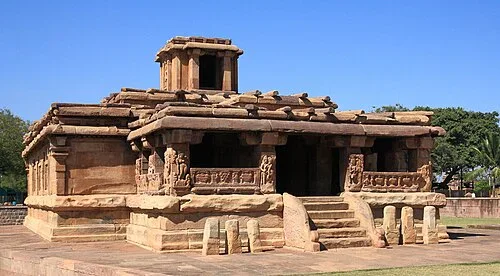 Lad Khan Temple
: A General's Headquarters
A Shiva temple carrying the name of a Muslim commander is one of the odder footnotes at Aihole. The building itself is a plain, solid square hall, without the tower that crowns most shrines, and its age is debated, with scholars placing it anywhere from about 450 to the eighth century. The name is much later. In 1565 the Vijayanagara Empire fell at Talikota, and this region passed to the Adil Shahi sultans of Bijapur. In the unsettled decades that followed, some Muslim commanders used the local temples as residences, and their compounds as garrisons for weapons and supplies. One of them, known as Lad Khan, made this temple his operational hub for a military campaign in the region. He stayed only briefly, about a thousand years after the temple was built. The name, though, never left. Ten centuries of Shiva worship, and the building is still called after its short-term tenant.
Listen in the appPhoto: Meesanjay · CC BY-SA 3.0
06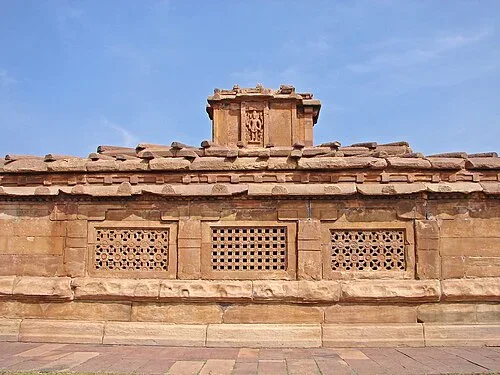 Lad Khan Temple
Stone Imitating Timber: The Lad Khan Roof
The roof is the story here. Look at the slope of it, and at the long strips running across the surface like logs laid side by side. They are stone, cut to imitate timber. The temples that came before these were built of wood and brick, and excavations at Aihole have even unearthed evidence of wooden and brick temples from the fourth century. When artisans began experimenting with stone around the fifth century, they did not invent new shapes from nothing. They translated the forms they knew, laying rows of slabs like rafters and sloping the roof the way a wooden roof would slope. The small lattice windows puncturing this wall do the same job a wooden screen would have done, letting light and air into the hall. This temple is probably the clearest place to see the translation happening, a perishable building tradition being copied into permanent stone.
Listen in the appPhoto: Itsmalay~commonswiki · CC BY-SA 4.0
07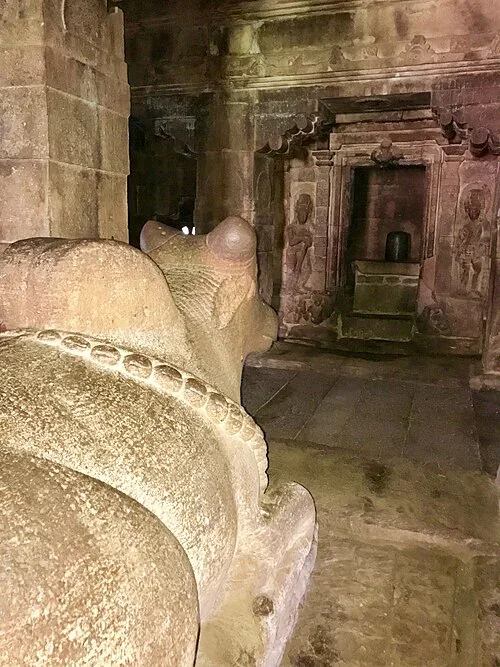 Lad Khan Temple
Inside the Lad Khan Temple: Nandi before the Linga
Inside, a massive bull lies facing the sanctum, carved from a single block and polished smooth by centuries of hands. This is Nandi, the bull of Shiva, and his placement is deliberate. He gazes straight at the Shiva linga in the shrine, so that the god's own mount becomes the god's first worshipper. The temple is arranged as three concentric squares, with the innermost holding the linga, and the two square halls around it giving space for devotees to gather. Twelve intricately carved pillars hold up the middle square. On the sanctum doorway, devotional figures stand carved in their niches, guarding the threshold. Whatever else happened in this building's long life, its heart has stayed what it was: a Shiva sanctuary, with the bull in his place before the linga.
Listen in the appPhoto: Ms Sarah Welch · CC BY-SA 4.0
08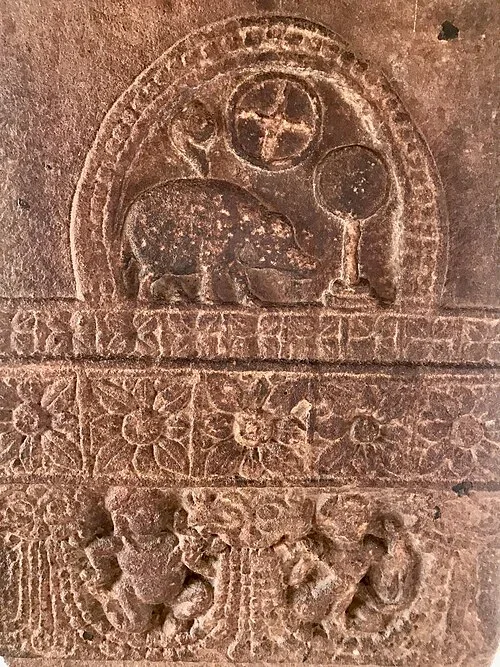 Lad Khan Temple
The Chalukya Royal Emblem
Cut into the stone here is a boar, with a conch, a chakra and a mirror set above it. This is the official emblem of the Chalukya dynasty, the royal house that built these temples. They made Aihole and its neighbours a cultural heartland. Royal houses across India stamped their mark on the monuments they paid for, and the boar was the Chalukyas' chosen sign. Seeing it carved into a temple wall is like finding a signature on the finished work. The dynasty that put its emblem on this stone is the same one whose patronage filled the valley with shrines.
Listen in the appPhoto: Ms Sarah Welch · CC BY-SA 4.0
09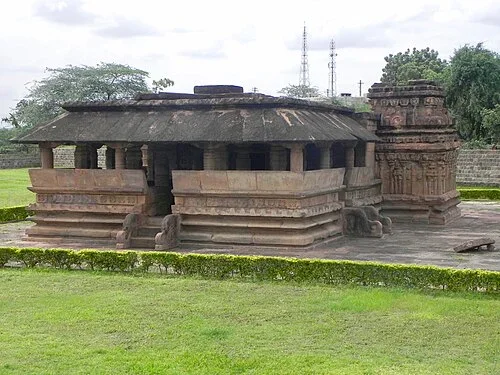 Rachigudi Temple
Rachigudi: A Sloping-Roof Experiment
The roof is what catches the eye first: a broad sweep of stone, sloping gently over the pillared hall, with a carved tower block rising at one end. This sloping stone roof belongs to a style still found in the Hindu temples of southwestern India. The historian George Michell described Aihole as a place of meeting and fragmentation of styles, where designs multiplied into local variants rather than settling into one standard form. The Rachigudi is exactly that kind of variant. It stands in the Triyambakeshvara group, built in the tenth or eleventh centuries, bridging the Rashtrakuta and Later Chalukya periods. Inside, the pillars try out a sequence of shapes, square at the base, octagonal along the shaft, and finished with a moulded pot shape at the top. On the lintel, Gajalakshmi is carved with her elephants, and small perforated windows let light into the hall.
Listen in the appAlende devasia · CC BY-SA 3.0
10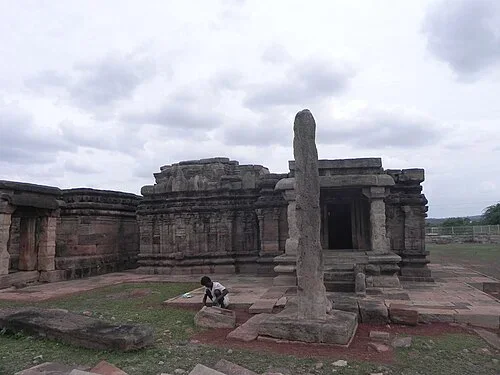 Veniyargudi Temple Complex
Veniyargudi Shrines
South of the village, near the river bank, stands a group of ten shrines known as the Veniyar or Veniyargudi temples. They are mostly in ruins, and until late in the twentieth century a thick forest grew over them. The Archaeological Survey of India cleared the ground and recovered the space. The largest of the shrines is an eleventh-century temple, aligned east to west like most temples here, with its entrance added on the south. Some of the smallest carvings in all of Aihole are here, tiny figures worked into the sanctum door frame. What this spot shows best is how Aihole's monuments live. They are not gathered in a fenced park, but scattered among houses, fields and farmland, part of a working village's ordinary landscape.
Listen in the appPhoto: Alende devasia · CC BY-SA 3.0
- 11
Ambigergudi: The Towerless Square Shrine
A square shrine built with no tower at all, one of the architects' deliberate trials.
- 12
Mallikarjuna Complex and the Merchant Guild
Five shrines around a stepwell, built when a guild of five hundred merchants and artisans helped pay the bills.
- 13
Ravanaphadi: A Cave Cut for Shiva
One of Aihole's oldest rock-cut caves, a sixth-century Shiva sanctuary whose style reaches as far as Ellora and Tamil Nadu.
- 14
Durga on Her Lion in the Cave
Durga on her lion, spear raised against the buffalo demon, cut deep and full of motion straight from the cave wall.
- 15
Shiva Dancing the Nadanta
Shiva caught mid-dance, limbs flung across the panel, one of the most dynamic sculptures the early Chalukya carvers made.
- 16
Shiva Receives the Ganges
The heavenly Ganges falls from the sky, and Shiva catches it in his hair while the sage who prayed for it watches.
- 17
The Two-Storeyed Buddhist Temple
Aihole's only Buddhist monument: a partly rock-cut, two-storeyed temple on Meguti hill, with a headless Buddha lying outside.
- 18
The Aihole Inscription, 634 CE
A poem of 634 CE carved on a temple wall, fixing the date of a king's victories and an era's chronology.
- 19
Meguti Jain Temple on the Hill
The Jain temple crowning Aihole's highest point, built in 634 and framed by the fort walls of a later age.
- 20
The Jain Cave Temple: Three Faiths on One Hill
A plain cave opening that hides rich carvings, and the story of Hindu, Jain and Buddhist monuments sharing one small landscape.
- 21
Parshvanatha with the Snake Canopy
Parshvanatha meditating beneath a canopy of snake hoods, Jain imagery carved with all the skill of the Hindu caves nearby.
- 22
The Second Vestibule Relief
The second vestibule relief, likely Bahubali the standing renouncer, and a side chamber full of worshippers with offerings.
- 23
Galaganatha Temples by the River
Temples in competing styles by the river, and the axe-shaped rock where legend says Parashurama washed his weapon.
Aihole
Frequently asked questions
How much does the guide cost?
Free app download. Listed guide price: $2.99. Guide price shown in the app. Audio guide only. Venue admission is separate.
Can I listen without internet?
Yes. Download the guide’s audio, images, and maps in the app before your visit. Your downloaded content is then available offline.
Can I listen in my language?
This audio guide is available in 15 languages, including English.
Do I need to follow a schedule?
No. This is a self-guided experience. Choose your stops, pause whenever you like, and return to a story at your own pace.
At your own pace
Explore Aihole.
Download Stanza, then search for “Aihole”.
Free app download · Guide price shown in the app
Keep exploring
Audio guides — India
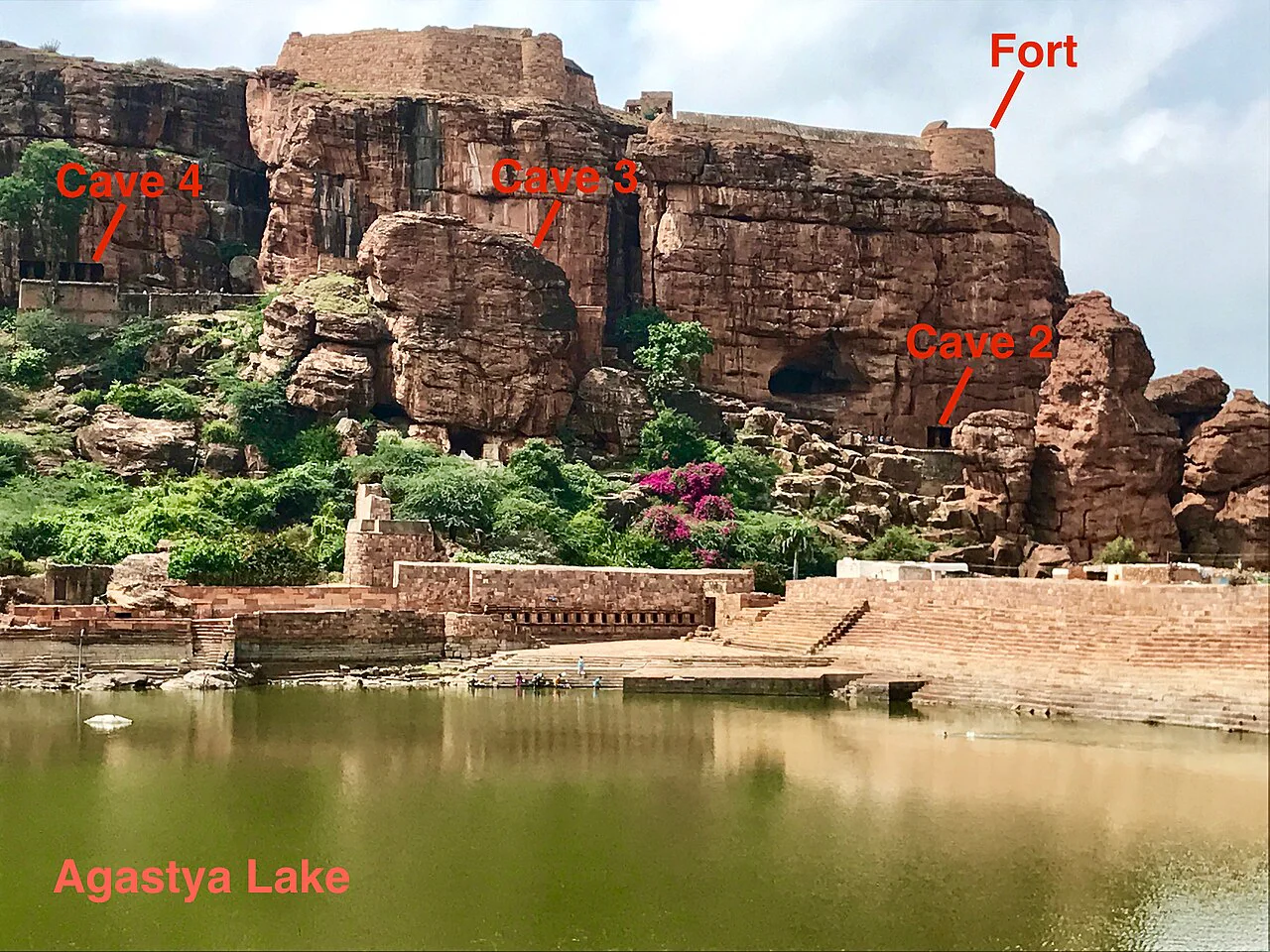
Badami · 24 km
Badami cave temples
Content & sources
Photo: Ms Sarah Welch · CC BY-SA 4.0
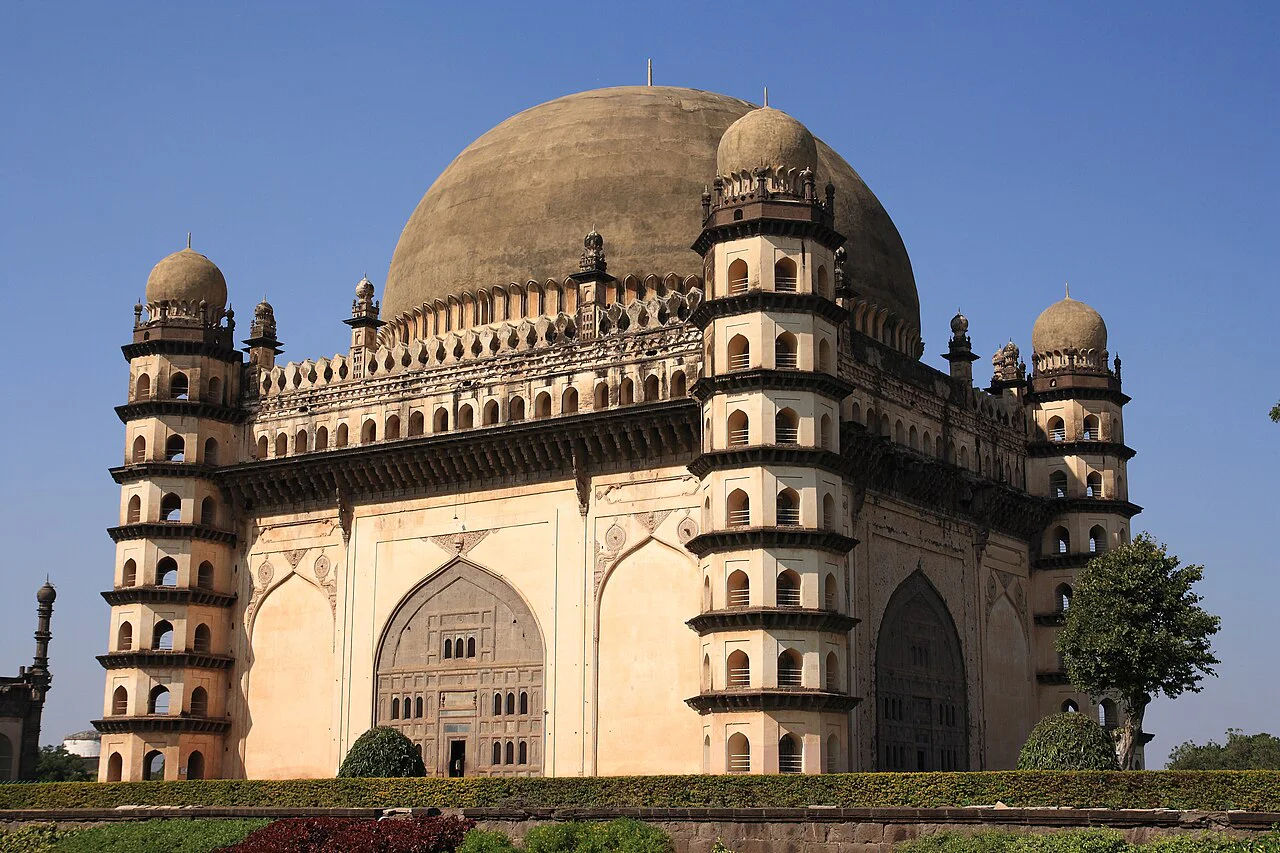
Vijayapura · 92 km
Gol Gumbaz
Content & sources
Photo: Meesanjay · CC BY-SA 3.0
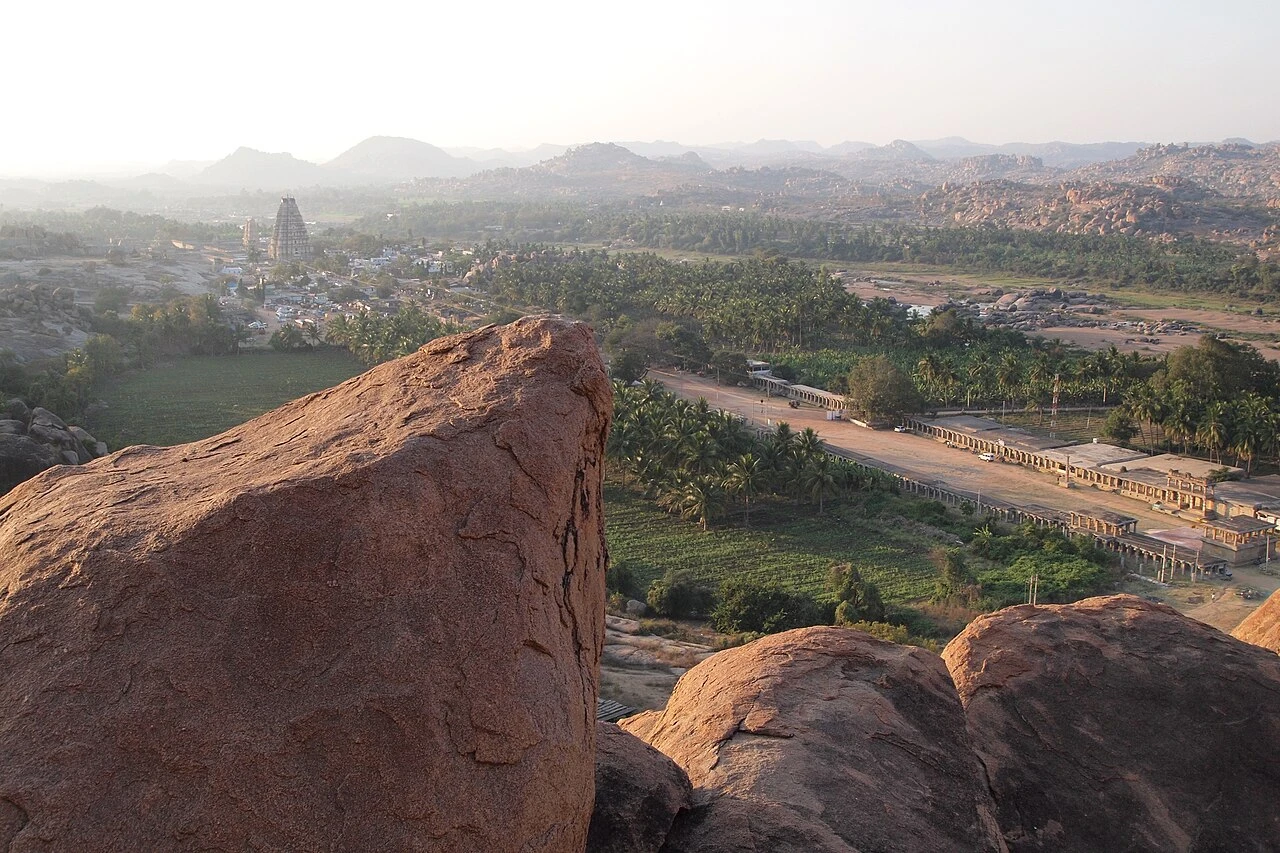
Hampi · 98 km
Hampi
Content & sources
Vyacheslav Argenberg · CC BY 4.0
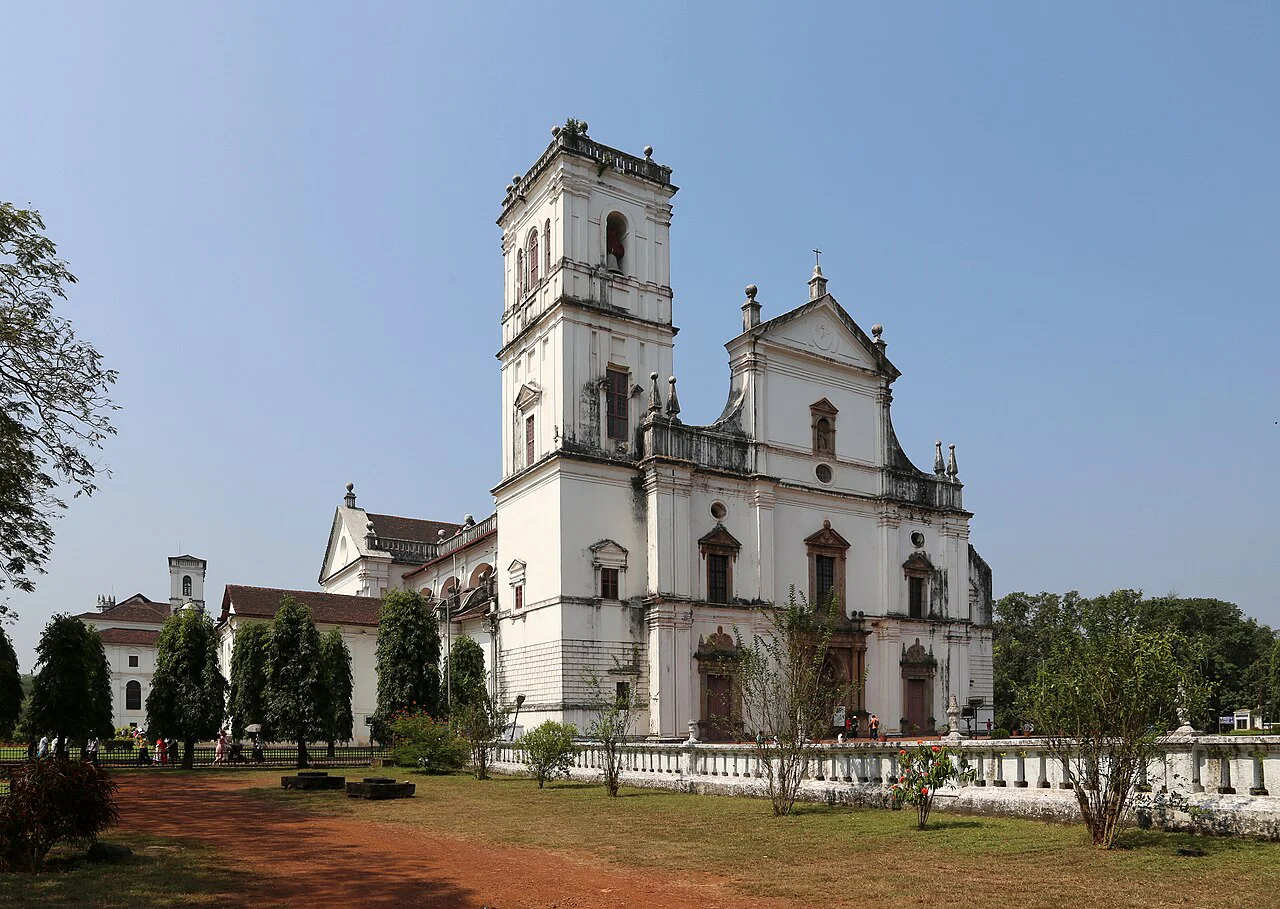
Panaji
Se Cathedral
Content & sources
Photo: Sailko · CC BY 3.0