Stanza · Audio guide
Nageshwar Jyotirlinga Audio Guide
A place to remember. A story to take with you.
Nageshwar Temple is a Hindu temple dedicated to the god Shiva located in Dwarka, Gujarat. It is one of the twelve Jyotirlingas mentioned in the Shiva Purana.
Download Stanza, then search for “Nageshwar Jyotirlinga”.
About the tour
One guide. Your kind of visit.
Nageshwar Temple is a Hindu temple dedicated to the god Shiva located in Dwarka, Gujarat. It is one of the twelve Jyotirlingas mentioned in the Shiva Purana.
Ready when you are.
- 01Get the free Stanza app.
iOS & Android
- 02Find your guide.
“Nageshwar Jyotirlinga”
- 03Download before you go.
Works offline
Audio guide / 5 narrated stops
Inside the guide
Get to know a few of the stories before you go. Open a stop to read more.
01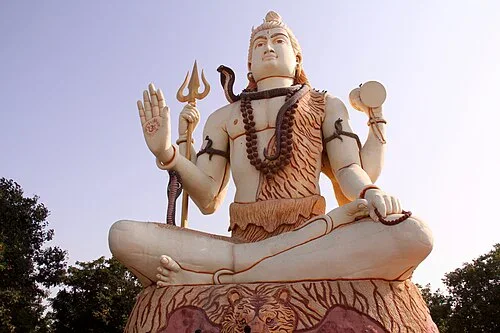 Temple Grounds and the Colossal Shiva Monument
Temple Grounds: Shiva and the Shrine at Dwarka
Welcome to Nageshwar, a Shiva temple on the coast of Gujarat, a little northeast of Dwarka. The figure rising against the sky here is Shiva himself, seated in meditation, vast enough to be seen from far across the peninsula. This is one of the twelve Jyotirlinga shrines, the holiest places of Shiva worship in India, named in the Shiva Purana. Pilgrims travel the sacred circuit of western Gujarat to reach it, and the goal of every visit is darshan, the act of seeing the deity and being seen in return. The shrine's great festival is Maha Shivaratri, the night of Shiva, when devotees gather here once a year. The temple behind the statue holds the lingam at the heart of it all, and the story of why this spot became holy begins with a prisoner in a city under the sea.
Tesh · CC BY-SA 4.0
02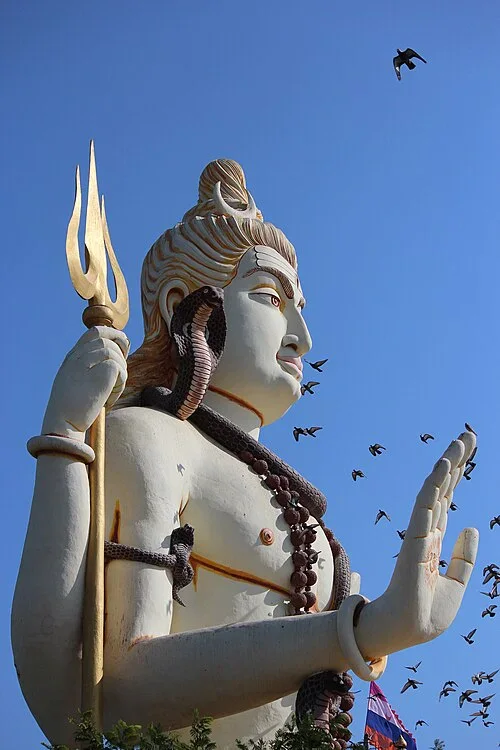 Temple Grounds and the Colossal Shiva Monument
The Lord of Serpents: Supriya and Darukavana
A serpent coils across the statue's body, and that serpent carries the temple's name. Nageshwar means lord of serpents, the conqueror of poison. The Shiva Purana tells how it came to be. A demoness named Daruka had won a boon from Parvati: power over the forest where she worshipped, a forest that followed her wherever she went. To shield the demons from the gods, she sank that whole forest into the sea, where they lived among sea snakes and preyed on hermits, kidnapping travellers and holding them captive. One prisoner was Supriya, a devoted worshipper of Shiva. He set up a lingam in the underwater prison and led the captives in chanting Om Namah Shivaya. The demons tried to kill him for it. Shiva appeared, handed Supriya a divine weapon that saved his life, and destroyed Daruka and the demons, though Parvati spared the survivors. The lingam Supriya raised was called Nagesha, the tenth lingam, and Shiva remained on that spot as the Jyotirlinga Nageshwar, with Parvati beside him as Nageshwari.
Photo: R.Natraj · CC BY 3.0
03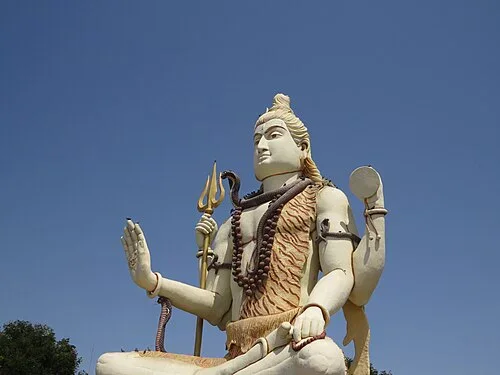 Temple Grounds and the Colossal Shiva Monument
A Pillar of Light: What a Jyotirlinga Means
The statue holds a trident in one hand and a drum in another, with a third hand raised in blessing, beads of rudraksha across its chest. These are the marks of Shiva in his meditative form. What the shrine behind commemorates goes back to a contest between two gods. Brahma the creator and Vishnu the preserver once argued over which of them was supreme. To settle it, Shiva pierced the three worlds as a pillar of light beyond all measuring, the Jyotirlinga. The two set off in opposite directions to find its ends. Brahma, climbing upward, lied and claimed he had found the top. Vishnu, descending, admitted honestly that he could not find the base. Shiva cursed Brahma for the lie, decreeing he would have no place in the ceremonies. A Jyotirlinga shrine marks one of those appearances of the endless pillar, and the lingam in the sanctum stands for that beginningless, endless column. Sixty-four such sites are counted in tradition, and twelve of them are held especially holy. Nageshvara is one of the twelve.
Listen in the appPhoto: Vinayaraj · CC BY-SA 4.0
04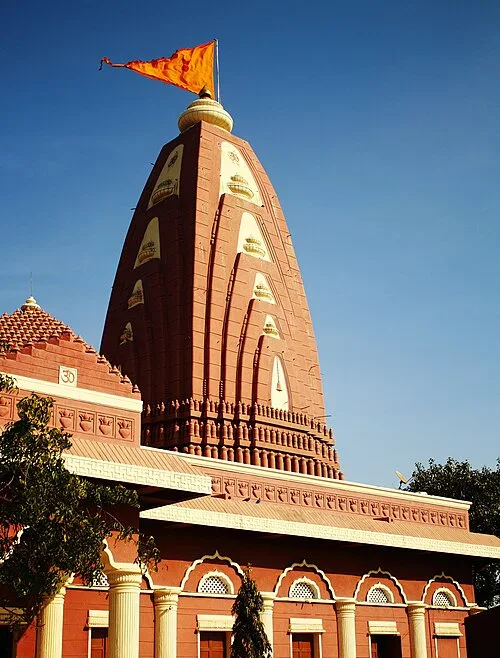 Main Temple Shikhara and Medieval Heritage
The Shikhara: A Temple Rebuilt
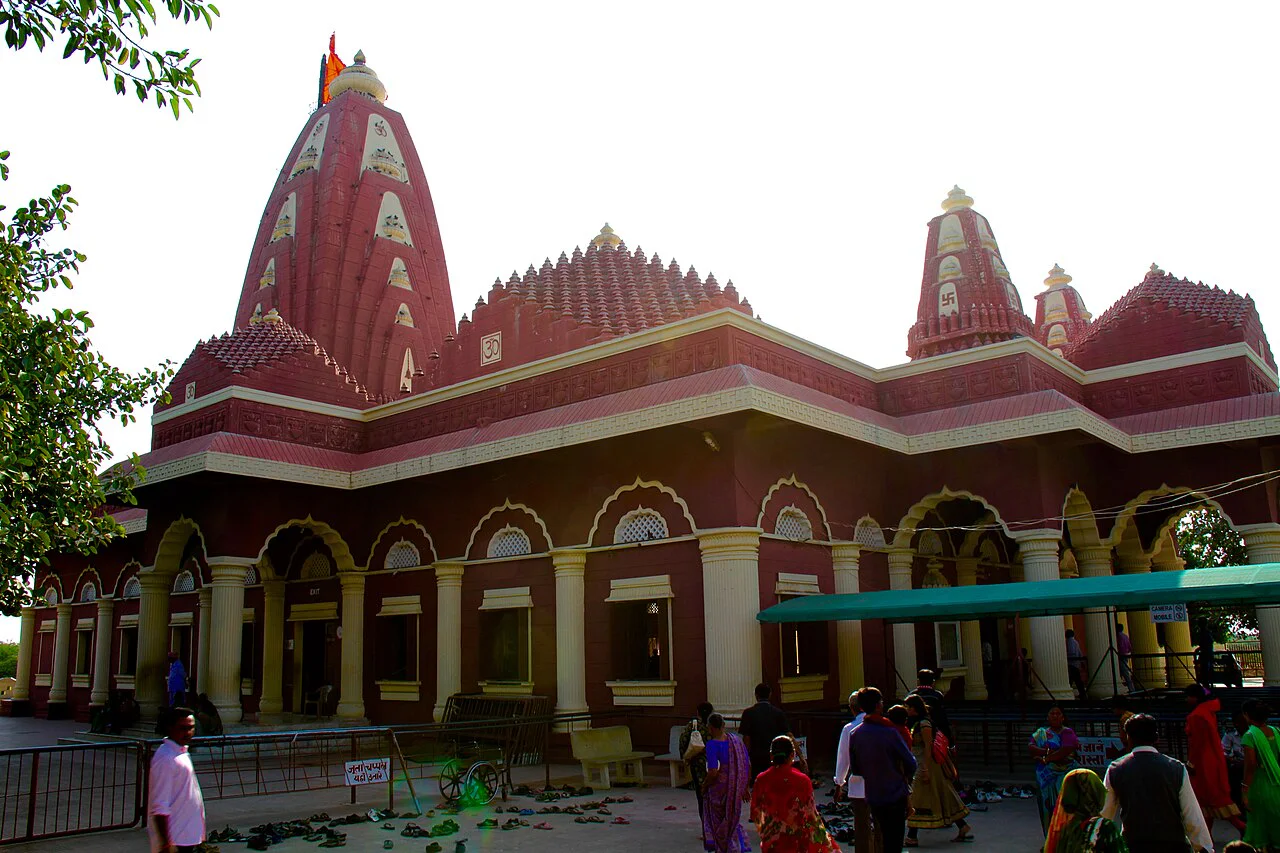
The temple's red shikhara rises in steep curved tiers, with a saffron flag flying from its crown. The building is said to follow the Hemadpanthi masonry style of the Yadava dynasty, the Seuna kings who ruled from the thirteenth century. In that earlier form the shrine rose as a seven-storey stone building. Later centuries brought destruction and rebuilding. What matters for a pilgrim lies below. The garbhagriha, the sanctum that houses the Jyotirlinga itself, sits in an underground chamber, reached by steps leading down. Worshippers descend to stand before the lingam, the object of the darshan that brings them here. A temple whose holy of holies lies beneath the earth, under a spire built to pull the eye upward.
Listen in the appPhoto: Bkjit · CC BY-SA 4.0
05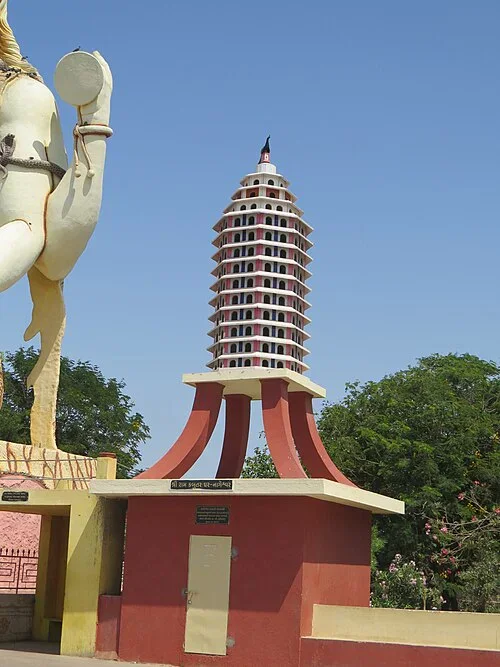 Temple Courtyard and Cultural Traditions
Where Was Darukavana? A Closing Question
In the courtyard stands a slender red-and-white tower, tier by tier, rising from a red base beside the statue's arm. It is one of the landmarks of these grounds. And it is a fitting place to end, because this temple's deepest question is one of geography. The Shiva Purana says Nageshvara Jyotirlinga stands in the Darukavana, and in its Kotirudra Samhita it gives a single clue: that forest lay on the western sea. Beyond that, the texts fall silent. Some read the name Darukavana as a miswriting of Dwarakavana, the forest of Dwarka, which would point here. Others favour Aundha Nagnath in Maharashtra. And at Jageshwar in the Himalayan foothills of Uttarakhand, a forest of deodar trees makes its own case, since daru means deodar wood, and deodars grow only in the western Himalayas, not here on the coast. The debate has never been settled. Three shrines, one name, and pilgrims who keep coming to each of them.
Listen in the appPhoto: Vinayaraj · CC BY-SA 4.0
Nageshwar Jyotirlinga
Frequently asked questions
How much does the guide cost?
Free app download. Listed guide price: $0.99. Guide price shown in the app. Audio guide only. Venue admission is separate.
Can I listen without internet?
Yes. Download the guide’s audio, images, and maps in the app before your visit. Your downloaded content is then available offline.
Can I listen in my language?
This audio guide is available in 15 languages, including English.
Do I need to follow a schedule?
No. This is a self-guided experience. Choose your stops, pause whenever you like, and return to a story at your own pace.
At your own pace
Explore Nageshwar Jyotirlinga.
Download Stanza, then search for “Nageshwar Jyotirlinga”.
Free app download · Guide price shown in the app
Keep exploring
Audio guides — India
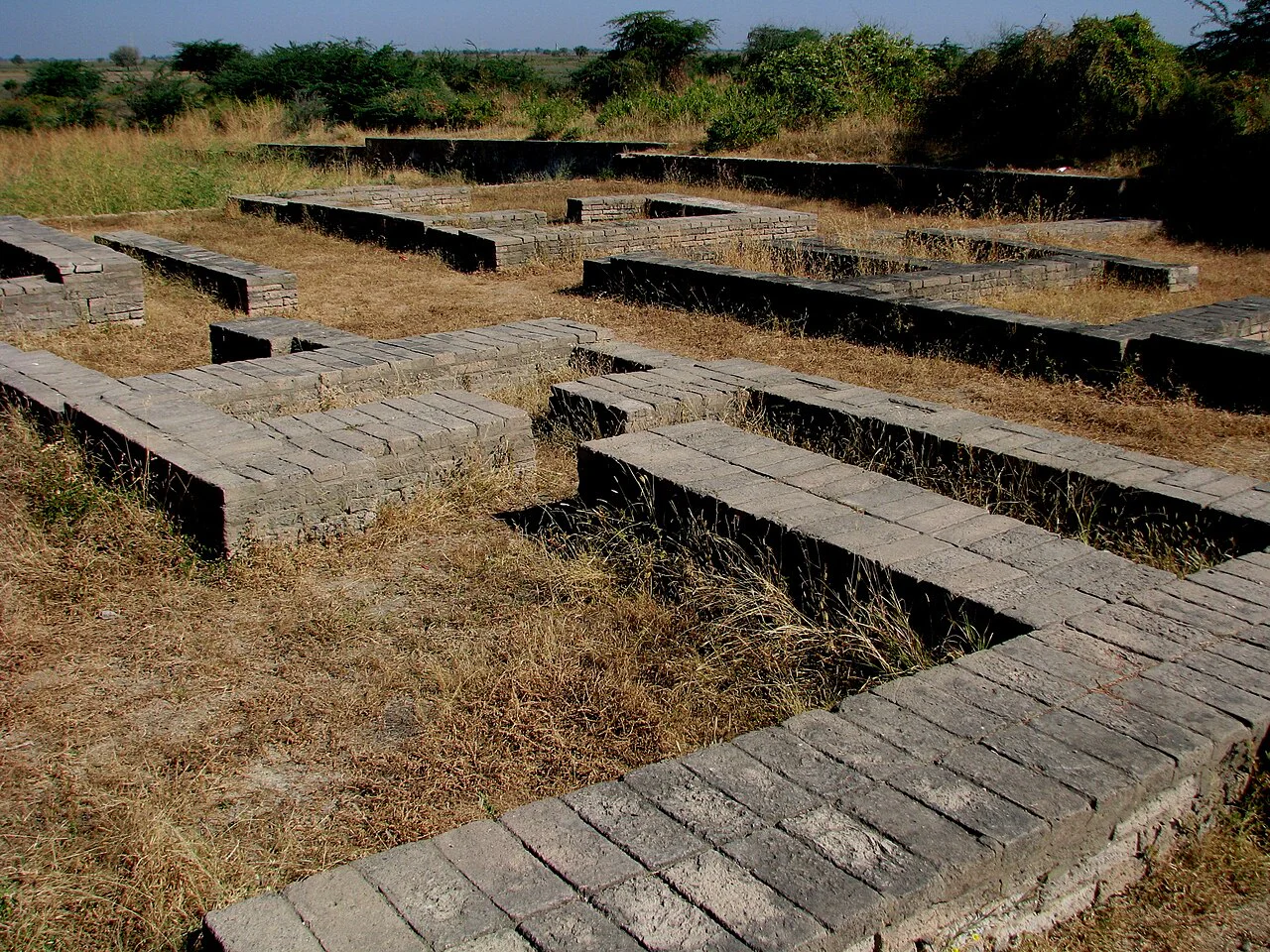
Dholka Taluka
Lothal
Content & sources
Photo: Rashmi.parab · CC BY-SA 3.0
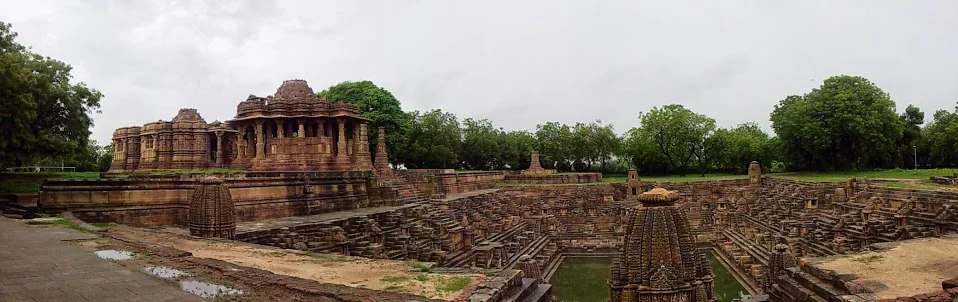
Modhera
Sun Temple, Modhera
Content & sources
Photo: Aakarjinwala · CC BY-SA 3.0
Patan
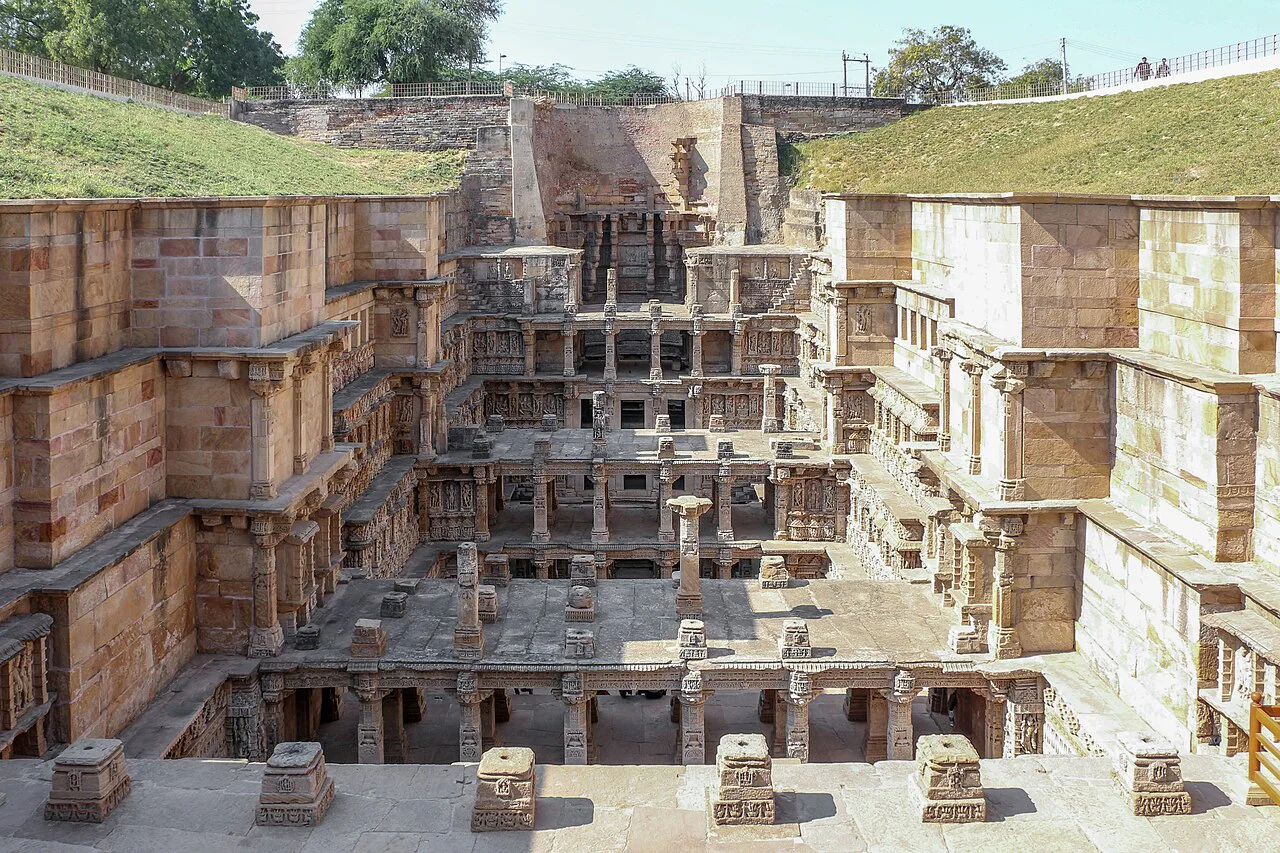
Rani ki Vav
Content & sources
Bernard Gagnon · CC BY-SA 3.0
Manchi Haveli, Pavagadh
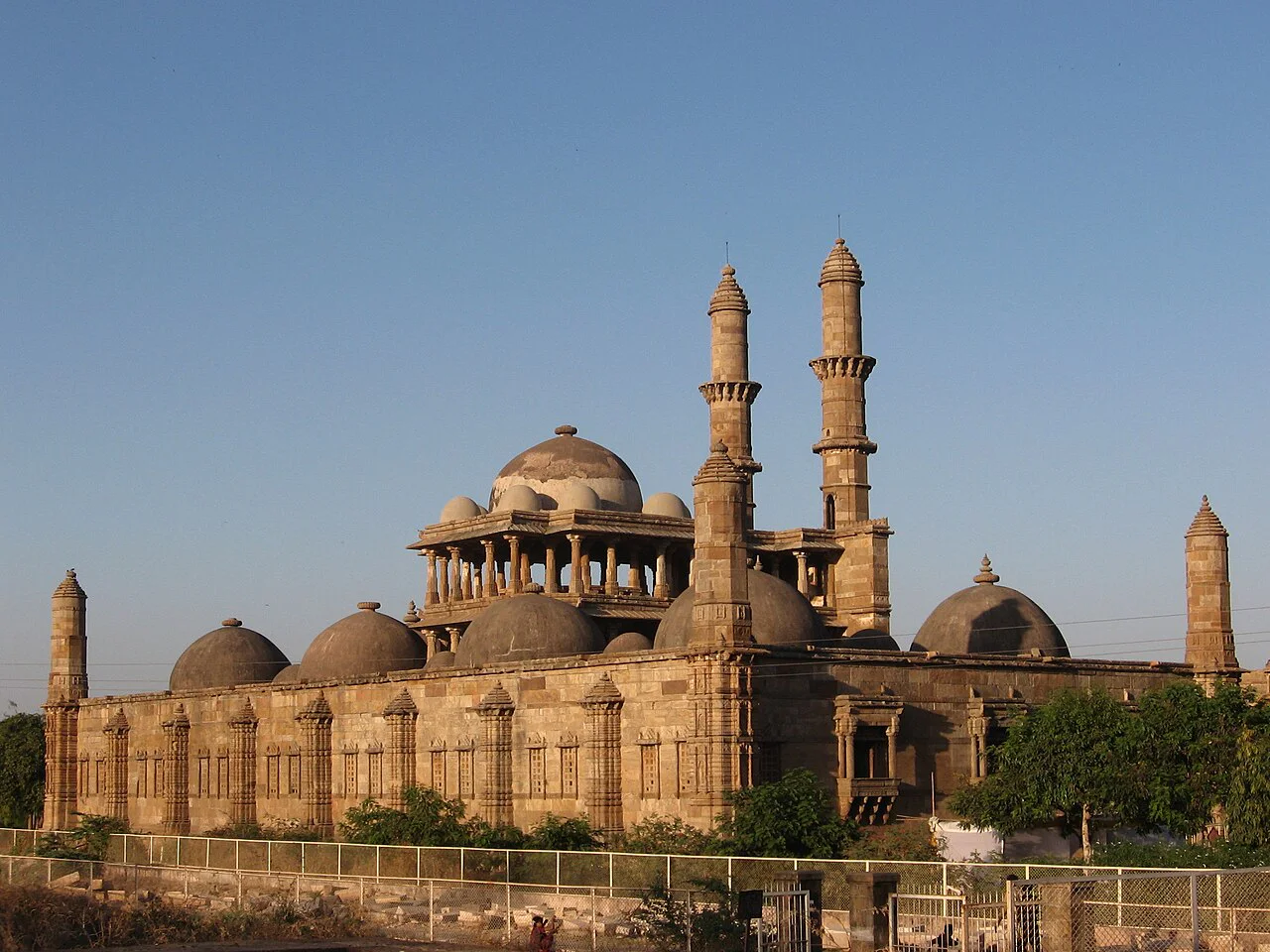
Champaner-Pavagadh Archaeological Park
Content & sources
Photo: Phso2 · CC BY 3.0