Stanza · Audio guide
Rani ki Vav Audio Guide
A place to remember. A story to take with you.
Rani ki Vav is a stepwell situated in the town of Patan in Gujarat, India. It is designed as an underground shrine symbolizing the sanctity of water and contains over 500 principal sculptures.
Download Stanza, then search for “Rani ki Vav”.
About the tour
One guide. Your kind of visit.
Rani ki Vav is a stepwell situated in the town of Patan in Gujarat, India. It is designed as an underground shrine symbolizing the sanctity of water and contains over 500 principal sculptures.
Ready when you are.
- 01Get the free Stanza app.
iOS & Android
- 02Find your guide.
“Rani ki Vav”
- 03Download before you go.
Works offline
Audio guide / 11 narrated stops
Inside the guide
Get to know a few of the stories before you go. Open a stop to read more.
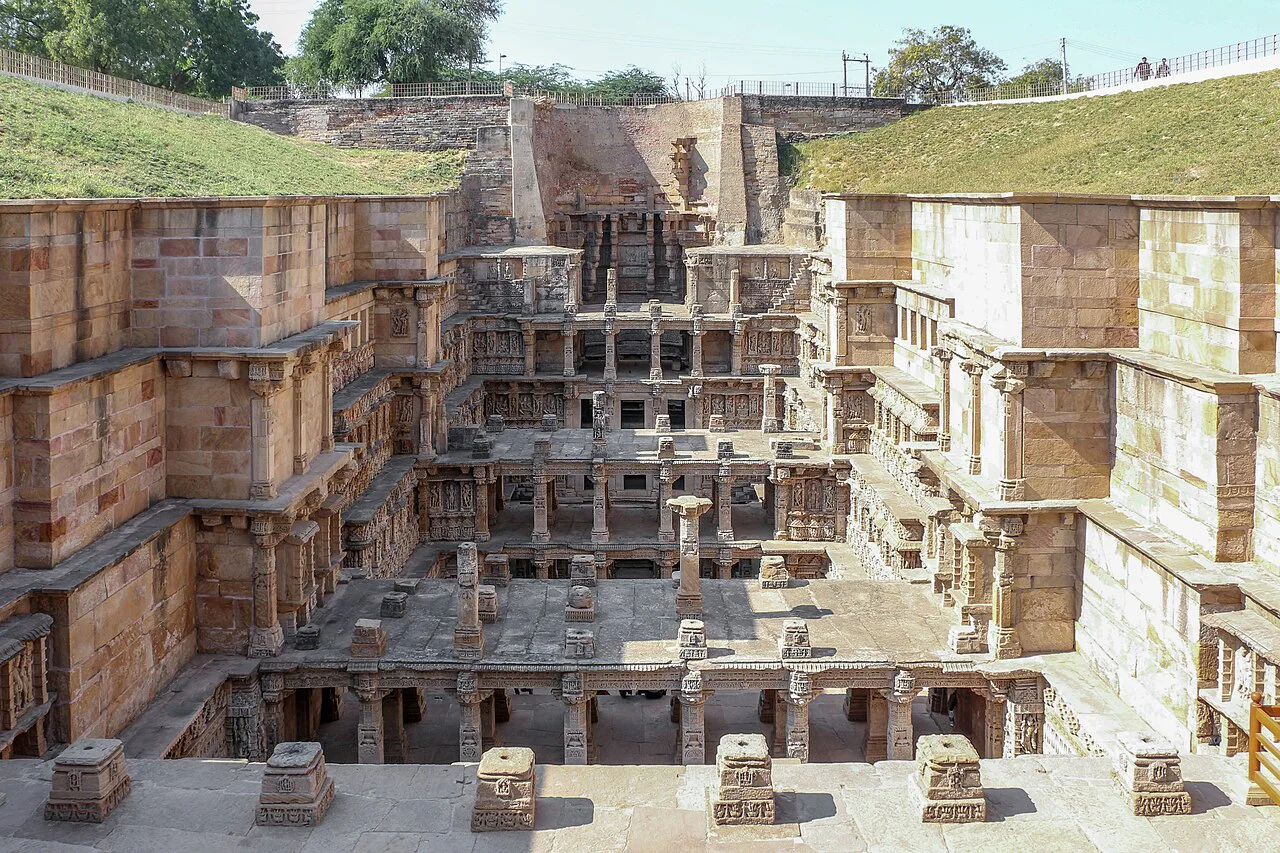
01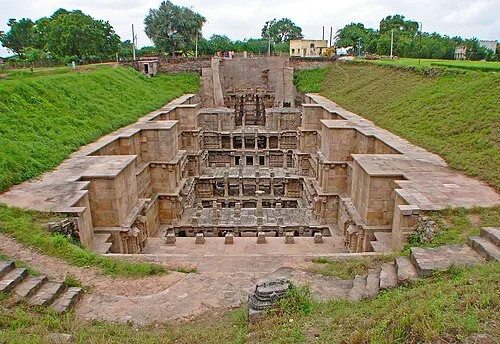 Ground-Level Approach and the Inverted Temple Overlook
The Queen's Stepwell at Patan
Welcome to Rani ki Vav, a name that means simply, the Queen's Stepwell. It lies at Patan in Gujarat, on the banks of the Saraswati River. Around the year 1063, Queen Udayamati commissioned it in memory of her husband, King Bhima the First of the Chaulukya dynasty. A Jain monk named Merutunga, writing in 1304, recorded her deed. His chronicle says the stepwell was built surpassing the glory of the Sahasralinga Tank, the great reservoir of old Patan. The work, he adds, took twenty years to complete. Bhima died before it was finished, and it seems Udayamati carried it through, helped later by King Karna. Whether she began it as a reigning queen or as a widowed dowager is a question scholars still debate.
Photo: Itsmalay~commonswiki · CC BY-SA 4.0
02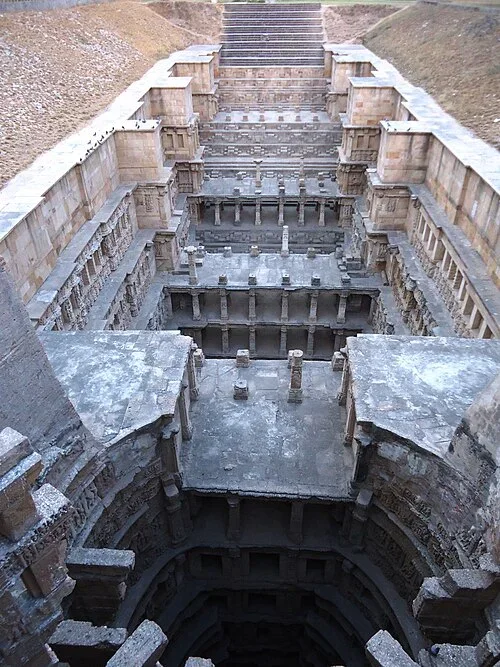 Ground-Level Approach and the Inverted Temple Overlook
Looking Down the Inverted Temple
The plan of Rani ki Vav reads like a temple turned upside down. Its builders conceived it as an underground shrine, honouring the sanctity of water in a dry land. Seven stair levels descend toward the water, reaching about twenty-eight metres down. The stepped corridor runs some sixty-five metres from east to west, the entrance at the east and the well at the far western end. At regular intervals, pillared pavilions rise several storeys within the trench. The fourth level is the deepest, leading into a rectangular tank about twenty-three metres below ground. More than five hundred principal sculptures line the walls. Smaller figures number over a thousand.
Photo: Azaz.sayyad · CC BY-SA 3.0
03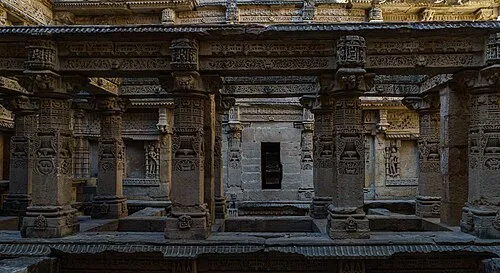 First Pavilions and Subterranean Engineering
Pillars That Hold Back the Earth
All of this carved stone rests on an engineering frame. Rani ki Vav holds two hundred and twelve pillars, joined with columns, walls, brackets and beams into an interlocked post-and-beam system. The frame carries the vertical weight and resists the sideways push of the soil against the deep retaining walls. Horizontal bracing beams, each about two metres thick, span the full width of the trench. The joints interlock so the structure can absorb the shock of earthquakes. The style is Maru-Gurjara, the medieval craft of Gujarat, with capitals carved as vases sprouting foliage. The grid of columns and roofs does quieter work as well. It breaks up direct sunlight, and warm air entering the cavity cools against stone and water. The result is a dense, humid layer of air that lowers the temperature and slows evaporation.
Listen in the appPhoto: Schwiki · CC BY-SA 4.0
04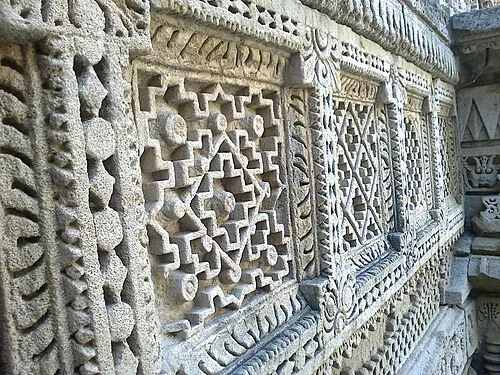 First Pavilions and Subterranean Engineering
Patola Silk in Stone
Geometric lattice patterns cover these walls, and they echo something soft rather than stone. Patan was famed for Patola silk, a woven cloth with bold geometric designs. At the stepwell's northern entrance, the carvers reproduced traditional Patola patterns in stone. Latticework elsewhere imitates local geometric textile designs too. The weavers' motifs may have travelled into stone by way of wood carvings and temple ceilings. Whether they came straight from the looms or through those wooden models, no one can say for certain.
Listen in the appPhoto: Limanibhavik · CC BY-SA 4.0
05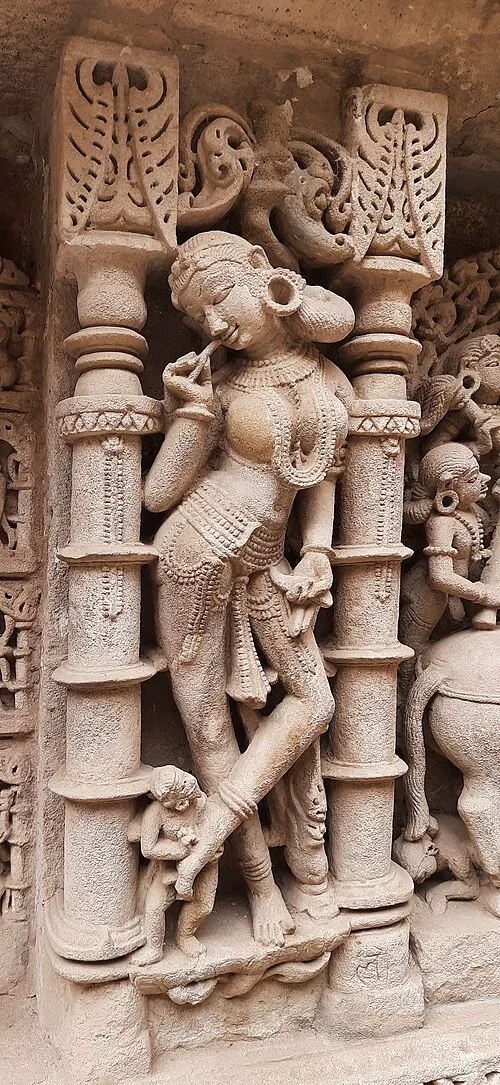 Terraced Wall Galleries: Apsaras and Secular Beauty
The Apsaras of the Gallery Walls
Among the gods on the gallery walls stand the apsaras, celestial women of ideal beauty. One of the most loved raises a hand to her mouth, either applying lip paint or chewing an aromatic twig. At her feet, a small attendant tends to her. The apsaras wear bangles, earrings, necklaces, waist girdles and anklets, their hair carefully combed. They carry the fashions and graces of the eleventh-century court into a monument of the gods. In another panel a young woman steps from her bath, wet-haired, while a swan catches the drops falling from her hair like pearls.
Listen in the appPhoto: JUGAL SATHWARA · CC BY 3.0
06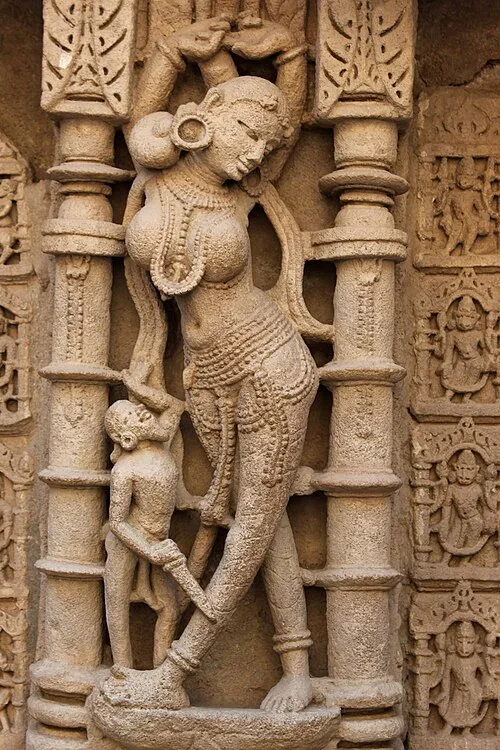 Terraced Wall Galleries: Apsaras and Secular Beauty
A Sundari and Her Attendant
Not every panel aims at ideal beauty; many tell small stories with a wink. Here a poised woman stands while a man tends to her feet. Elsewhere a young woman pulls the beard of a dwarf-like man, and another has a scorpion climbing her right leg, her clothes sliding down. There is tenderness too. One mother points her child's gaze to the moon to hold his attention, and another lifts him high to pick a mango from a tree. The sculptors gave each figure her own expression, from seductive to playful to maternal. What the small attendant at this woman's feet is meant to represent, no one can now say.
Listen in the appNagarjun Kandukuru from Bangalore, India · CC BY 2.0
07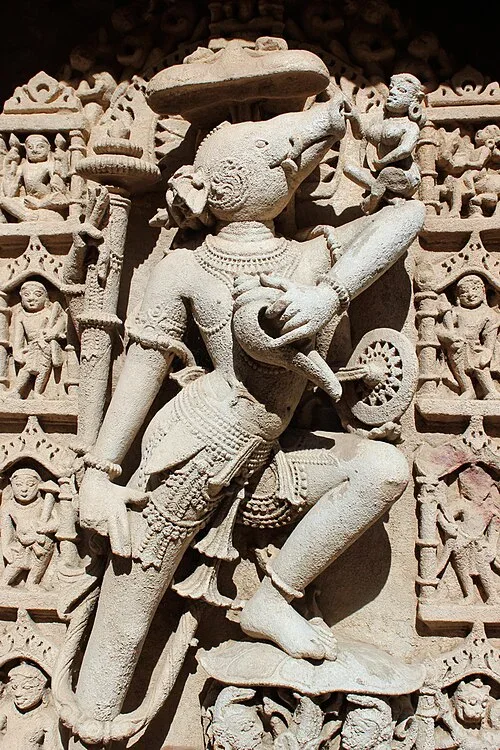 Central Terraced Niches: The Dashavatara Galleries
Varaha, the Boar Who Lifts the Earth
Vishnu rules the sculpture of Rani ki Vav. His figures outnumber those of every other deity, and among them unfolds the Dashavatara, his ten incarnations. The masterwork is Varaha, the boar-headed avatar, carved in deep relief. In the myth, the Earth had sunk beneath the cosmic flood, and Vishnu took a boar's form to dive down and raise her out. Here he rises with the Earth goddess beside him, framed by smaller figures of gods and celestial beings. A rescue from the waters, set into a monument built around water. The avatar series continues down the galleries to its final panel, Kalki.
Listen in the appNagarjun Kandukuru from Bangalore, India · CC BY 2.0
08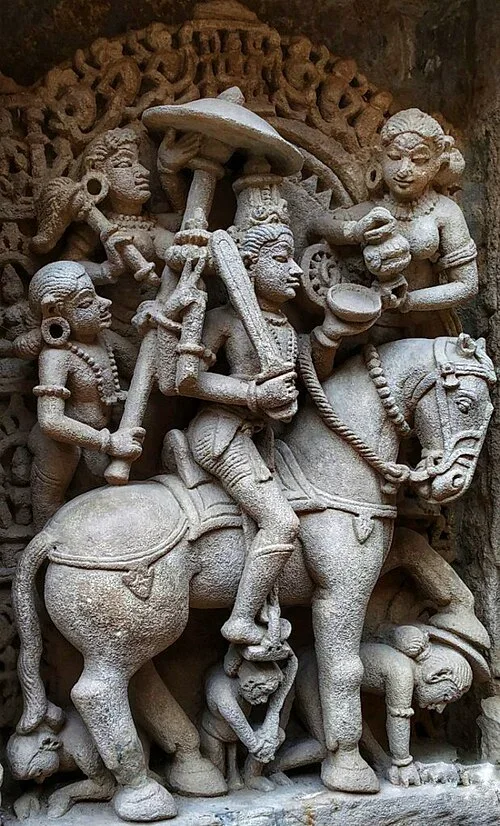 Central Terraced Niches: The Dashavatara Galleries
Kalki, the Avatar Still to Come
Kalki is the tenth and last incarnation of Vishnu, and the only one still awaited. He is destined to appear at the end of time as a warrior on horseback. The carving shows him mounted, set among panels of celestial women along the gallery. The eleventh-century patrons placed even the future within their walls. The gallery thus runs from the mythic past all the way to the end of days.
Listen in the appHARISING RAJPUT · CC BY-SA 4.0
09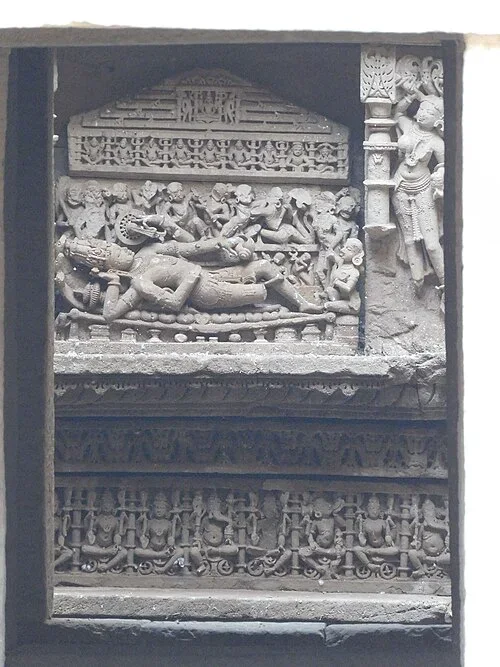 The Deep Sanctum: Sheshashayi Vishnu
Vishnu Reclining on the Cosmic Serpent
At the bottom of the well, in a back chamber, waits the stepwell's great image. Vishnu reclines on Shesha, the thousand-hooded serpent, floating on the celestial ocean. The panel is known by two names, Sheshashayi and Ranganatha, both used for the resting lord. The whole descent through seven levels leads here, to water level. The well's real water below answers the cosmic ocean of the carving. Here the stepwell's two devotions, to Vishnu and to water, come together in a single image.
Listen in the appPhoto: VasuVR · CC BY 4.0
10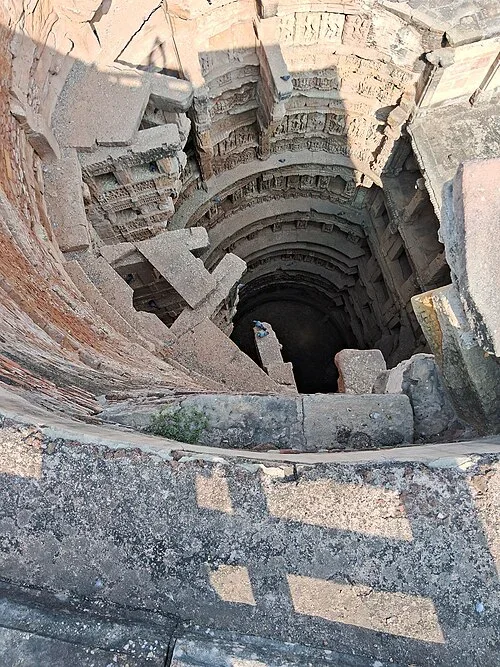 Western Well Shaft and Archaeological Conservation
The Well Shaft: Heart of the Waterworks
The circular shaft at the western end is the working heart of the stepwell. It measures about ten metres across and thirty metres deep, reaching down to the water table. The stairs, the pavilions, the galleries, all of it was built to serve this well. Carved galleries ring the shaft, their brackets stepping outward as they rise. Between the late 1960s and the 1990s, workers cleared the silt that had choked it, straightened the side walls and reset the bulged stonework. The desilting of the late 1980s brought up unexpected finds: a bronze Tirthankara, a fragmentary Sanskrit inscription, and a marble sculpture of Queen Udayamati herself.
Listen in the appPhoto: VasuVR · CC BY 4.0
- 11
Seven Centuries of Silt and a Second Life
How river silt buried the stepwell for centuries, protected its carvings, and how it was found again and honoured today.
Rani ki Vav
Frequently asked questions
How much does the guide cost?
Free app download. Listed guide price: $1.99. Guide price shown in the app. Audio guide only. Venue admission is separate.
Can I listen without internet?
Yes. Download the guide’s audio, images, and maps in the app before your visit. Your downloaded content is then available offline.
Can I listen in my language?
This audio guide is available in 15 languages, including English.
Do I need to follow a schedule?
No. This is a self-guided experience. Choose your stops, pause whenever you like, and return to a story at your own pace.
At your own pace
Explore Rani ki Vav.
Download Stanza, then search for “Rani ki Vav”.
Free app download · Guide price shown in the app
Keep exploring
Audio guides — India
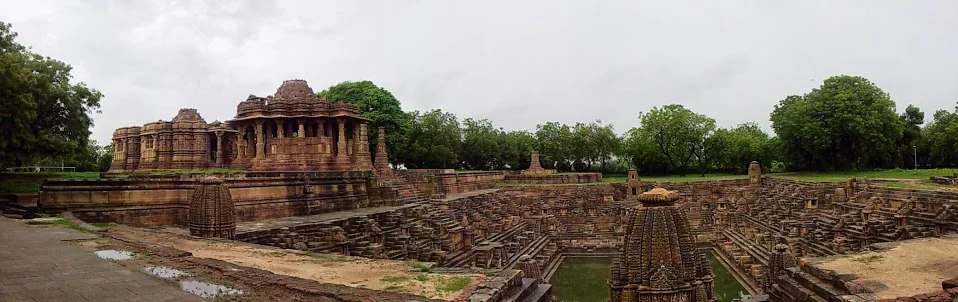
Modhera · 31 km
Sun Temple, Modhera
Content & sources
Photo: Aakarjinwala · CC BY-SA 3.0
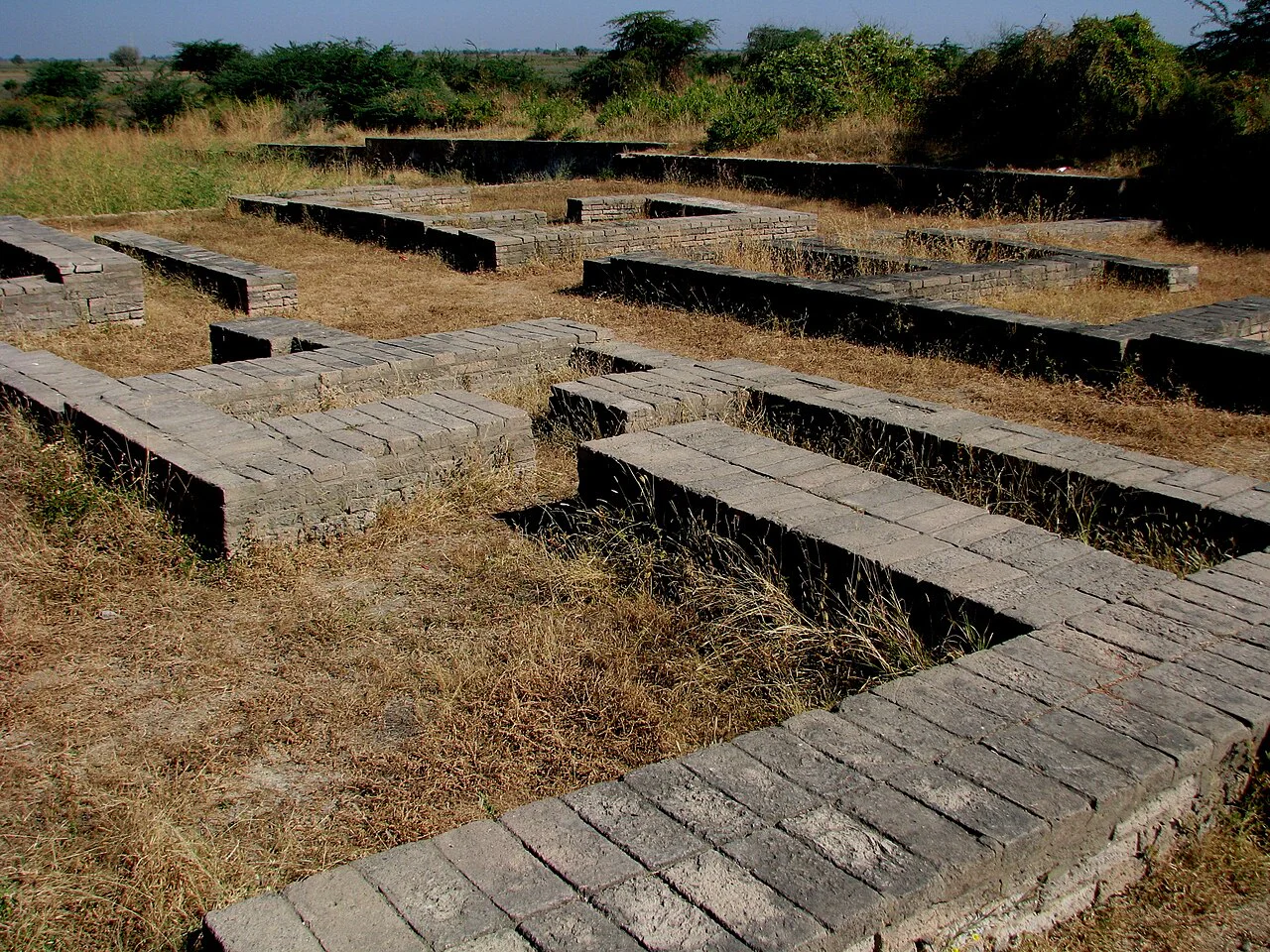
Dholka Taluka · 149 km
Lothal
Content & sources
Photo: Rashmi.parab · CC BY-SA 3.0
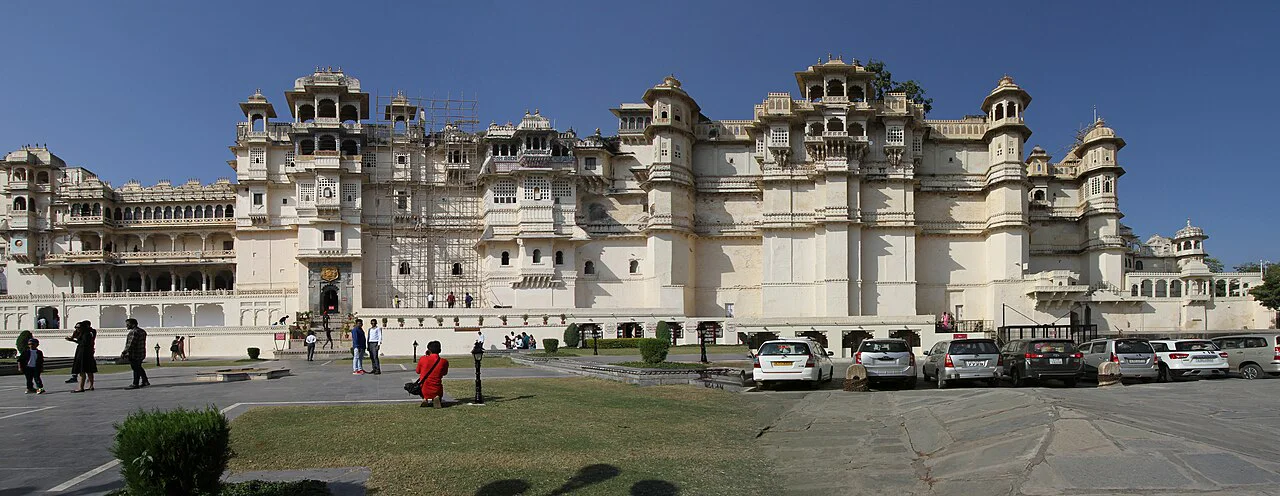
Udaipur
City Palace, Udaipur
Content & sources
Photo: Gerd Eichmann · CC BY-SA 4.0
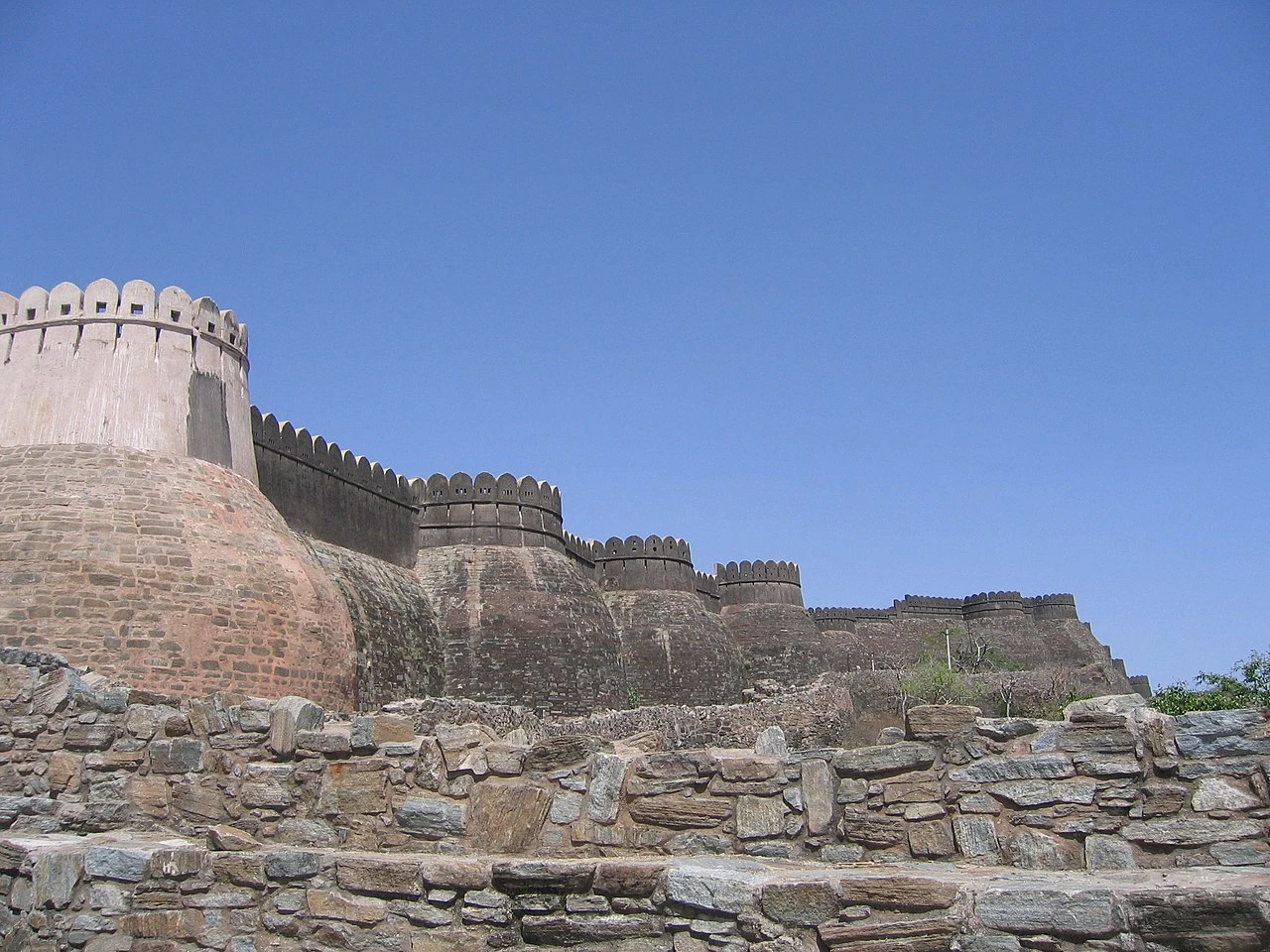
Quila Kumbhalgarh
Kumbhalgarh Fort
Content & sources
Shivam Chaturvedi – Aryarakshak at English Wikipedia · CC BY-SA 3.0
Haji Mashori
Mohenjo-daro
Content & sources
The original uploader was M.Imran at English Wikipedia. · CC SA 1.0
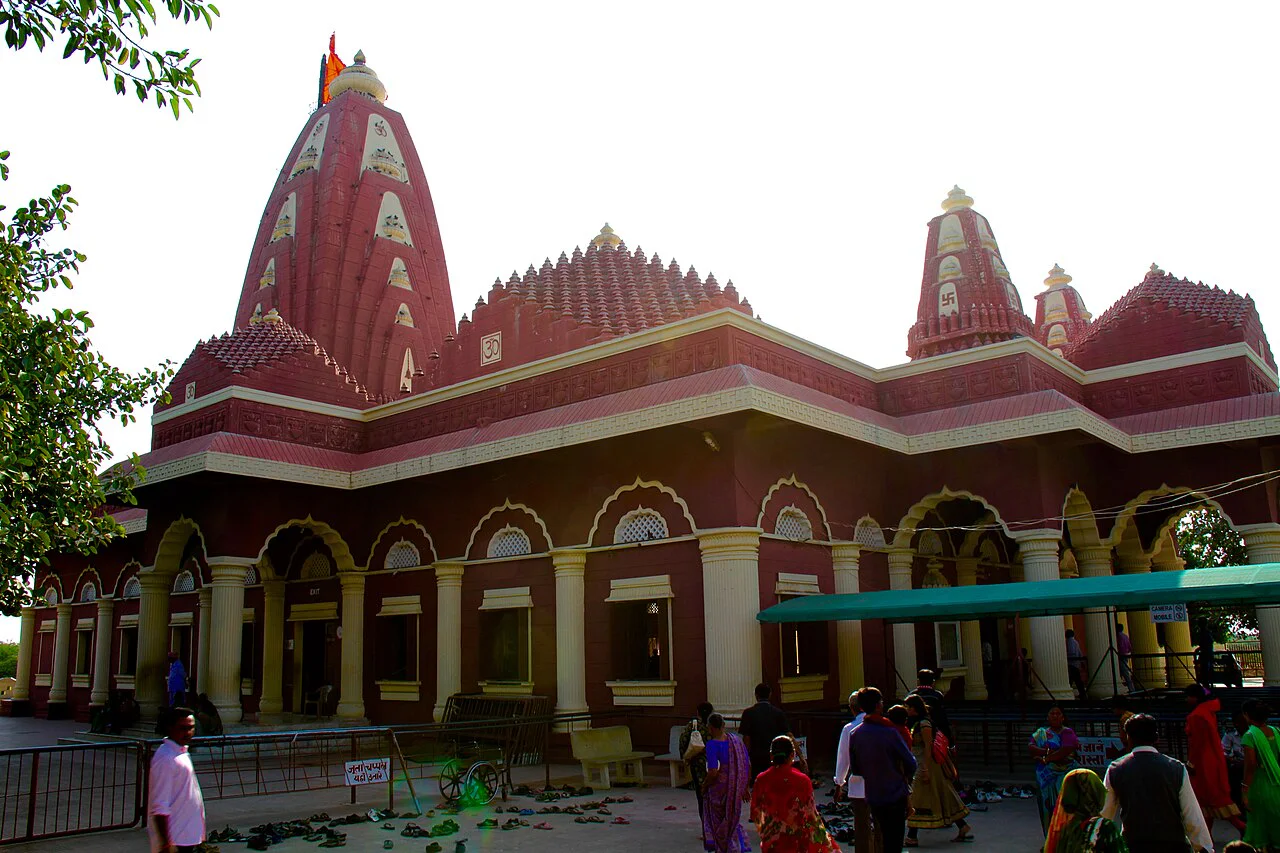
Nageshwar
Nageshwar Jyotirlinga
Content & sources
Tesh · CC BY-SA 4.0