 Stanza / Audio guide
Content & sources
Stanza · Audio guide
Mohenjo-daro Audio Guide
A place to remember. A story to take with you.
Mohenjo-daro is an archaeological site located in the Larkana District of Sindh, Pakistan. Built around 2500 BCE, it was one of the largest settlements of the ancient Indus Valley Civilisation and one of the…
Download Stanza, then search for “Mohenjo-daro”.
About the tour
One guide. Your kind of visit.
Mohenjo-daro is an archaeological site located in the Larkana District of Sindh, Pakistan. Built around 2500 BCE, it was one of the largest settlements of the ancient Indus Valley Civilisation and one of the world's earliest major cities.
Ready when you are.
- 01Get the free Stanza app.
iOS & Android
- 02Find your guide.
“Mohenjo-daro”
- 03Download before you go.
Works offline
Audio guide / 16 narrated stops
Inside the guide
Get to know a few of the stories before you go. Open a stop to read more.
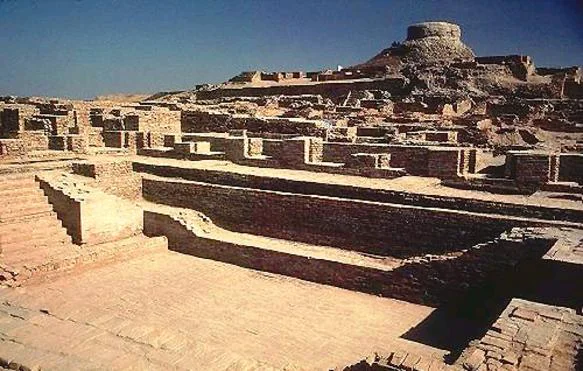
01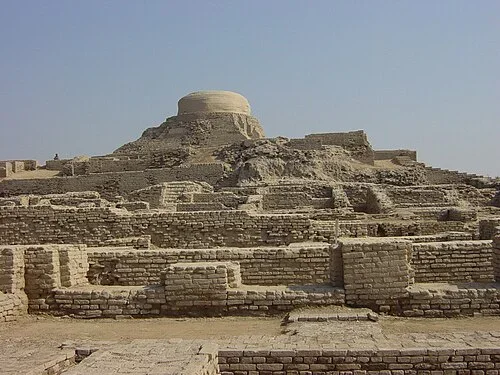 Site Entrance and Orientation Plaza
Arrival: The Mound of the Dead Men
Mohenjo-daro. In Sindhi, the name means the Mound of the Dead Men. Nobody knows what the people who built the place called it themselves. Under the name lies a Bronze Age city, raised about twenty-five hundred years before Christ. It was one of the largest settlements of the Indus Valley Civilisation, a contemporary of ancient Egypt and Mesopotamia. In 1980 the ruins became a UNESCO World Heritage Site, the first in South Asia to be listed. Over the coming stops, this tour follows a city built of brick, run on water, and laid out with an order its age rarely matched. Its builders left no kings' tombs behind, and no writing that anyone has managed to read.
Junhi Han · CC BY-SA 3.0 igo
02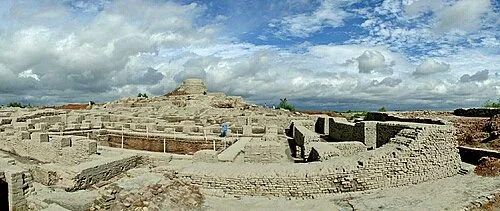 Site Entrance and Orientation Plaza
A City of 250 Hectares
Even half-buried, the size of this place is hard to take in. The site covers about two hundred and fifty hectares. A rough estimate puts the peak population at around forty thousand people. A deep drilling in 2015 showed the site is larger than the part dug out so far. Mohenjo-daro divides into two parts, the so-called Citadel and the Lower City. The Citadel is a mud-brick mound about twelve metres high. On top of it stood public baths and two great assembly halls. A large residential building there was designed to house about five thousand citizens. Below spread the Lower City, with its marketplace, its houses and its streets. The route ahead climbs the Citadel first, then comes down into those streets.
Photo: Nikesh chawla · CC BY-SA 4.0
03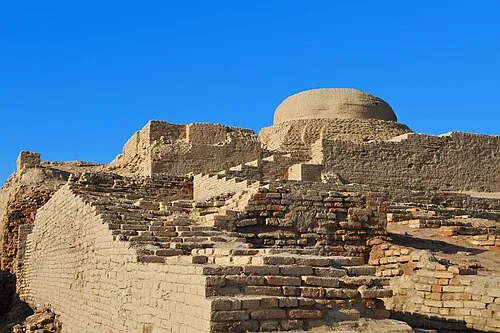 The Buddhist Stupa and Upper Citadel Terrace
Climbing the Citadel Platform
The mound is not a hill. It is made almost entirely by human hands. The Citadel stands on a gigantic raised mass of mud-brick and clay, built up well above the flood plain. In places the mound reaches about twelve metres high. The whole city went up in a relatively short time, and the water supply was among the first things planned. The platform was the city's answer to the river below.
Listen in the appPhoto: Usman.pg · CC BY-SA 3.0
04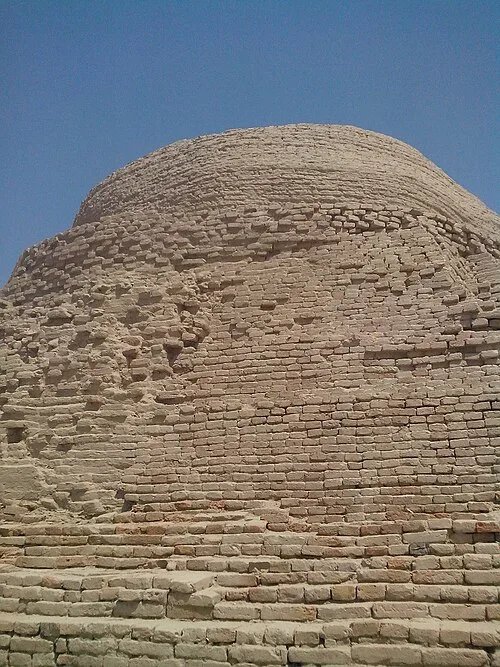 The Buddhist Stupa and Upper Citadel Terrace
The Buddhist Stupa and the Accidental Discovery
The great dome rising over these ruins is younger than everything around it. It is a Buddhist stupa, built sometime between 150 and 500 CE, long after the Bronze Age city lay buried. In 1919 an officer of the Archaeological Survey of India, R. D. Banerji, came to record the shrine. Among the debris he found a flint scraper, a tool far older than any stupa. That little stone convinced him something much older lay beneath. Large-scale digging followed. Kashinath Dikshit led the first big campaigns in 1924, and John Marshall took over the year after. Through the 1930s the excavations continued under Marshall and his colleagues. The stupa that drew the first spades still rises as the tallest landmark of the ruins.
Listen in the appPhoto: سیانف · CC BY-SA 3.0
05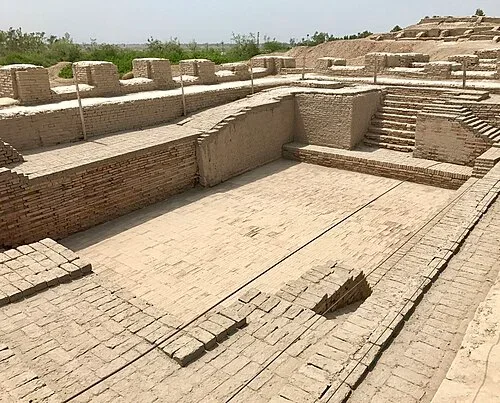 The Great Bath Complex
The Great Bath
At the heart of the Citadel lies a sunken tank of brick, the building known as the Great Bath. From a colonnaded courtyard, steps lead down into the pool. It runs about twelve metres from end to end. It is roughly seven metres across. And it goes down just under two and a half metres. The whole tank was made watertight, so it could be filled and kept full. Scholars think it may have served for religious purification. Water plainly held a central place in this society. Some houses even had rooms set aside for bathing.
Listen in the appNadzir81 · CC BY-SA 4.0
06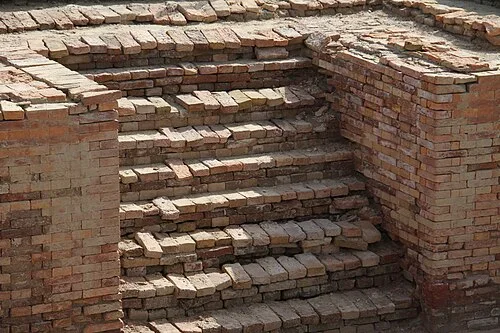 The Great Bath Complex
Steps into the Water
The steps into the pool show how the tank was put together. Every brick here was fired in a kiln, not simply dried in the sun. They were laid so closely fitted that the joints still read as tidy lines. Over the brickwork went a lining of bitumen, a natural tar, which sealed the whole pool. No cement and no iron; just brick set in gypsum mortar and a skin of tar. That was enough to keep a pool this size holding water. The same fired brick, laid with the same care, runs through the buildings of the whole city.
Listen in the appPhoto: Smn121 · CC BY-SA 3.0
07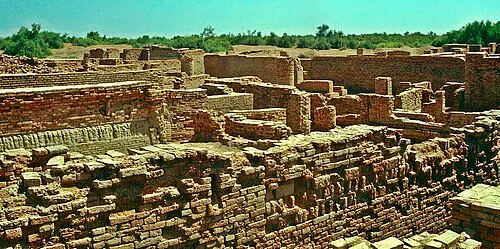 The Great Granary and Assembly Hall
The Great Granary and Its Doubts
In 1950, Mortimer Wheeler gave these brick foundations their famous name. He identified the building as a Great Granary. Its brick podium, he argued, carried a wooden superstructure divided into storage bays. Air-ducts ran through it to keep the grain dry. Carts, in his account, came in from the countryside and unloaded straight into the bays. Then Jonathan Mark Kenoyer went looking for the grain itself, and found no trace of it. He argued the building might be better called a Great Hall, serving some purpose nobody has pinned down. So the largest public building on the Citadel carries a name with a question mark on it. The city plainly had an administrative centre of some kind; how it actually worked remains unclear.
Listen in the appPhoto: Ziegler175 · CC BY-SA 3.0
08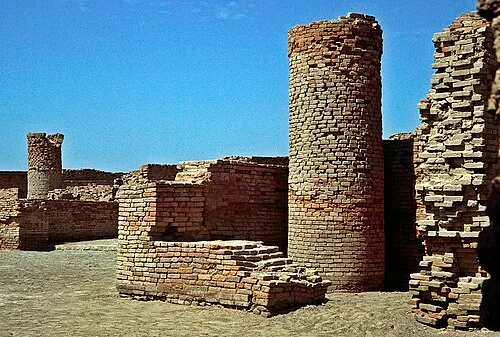 The Great Granary and Assembly Hall
The Pillared Hall
Among these ruins stand the stumps of cylindrical brick columns. A building close by was named the Pillared Hall, thought to be some kind of assembly hall. An early account describes a great square hall, ninety feet on a side. Five passages ran through it. Between them stood rows of brick seats, about a hundred in all. Beside it lies the so-called College Hall, a complex of seventy-eight rooms thought to have housed priests. Yet no evidence proves that priests or monarchs ever ruled Mohenjo-daro. These are buildings for gathering and for living. The government, if there was one, has left no name behind.
Listen in the appPhoto: Ziegler175 · CC BY-SA 3.0
09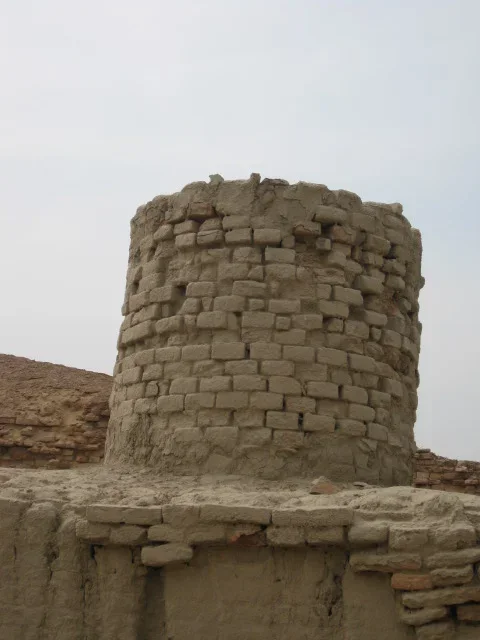 Citadel Deep Well Towers
The Tall Well
Wells here grew upwards instead of wearing out. Archaeologists have counted more than seven hundred brick-lined wells across Mohenjo-daro. That works out at roughly one for every three houses, a density unheard of anywhere else at the time. The circular brick design seems to be an Indus invention too, with no trace of it in Mesopotamia or Egypt, even centuries later. This well shows the city's trick for living with its floods. As flood sediment and rebuilding raised the street levels, the people built their wells up to match, adding course after course of brick. What looks like a tower is a record of every time the ground climbed around it.
Listen in the appPhoto: M.Bastle Ullah · CC BY-SA 3.0
10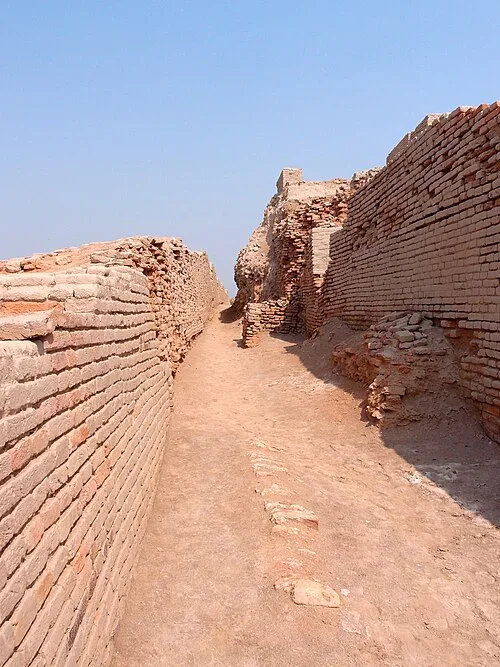 Lower City Streets and Drainage Network
Walking the Grid
The street runs straight, and that is the point. Cities in Mesopotamia grew as they pleased, lane by crooked lane, over centuries. Mohenjo-daro was drawn first and built afterwards. Its rectilinear blocks sit on a grid plan, with straight streets running through them in an orderly pattern. The regularity of the streets and buildings is what scholars read as evidence of urban planning here. Somebody decided the shape of whole blocks before building began, and the builders kept to those lines. The grid outlasted whoever drew it, holding its shape for the life of the city.
Listen in the appSaqib Qayyum · CC BY-SA 3.0
- 11
The Covered Drains
The brick spine of a city-wide sewage system, three thousand years before its time.
- 12
The Lower City: HR Area
Courtyard houses, side-lane doors and private bathrooms in the residential heart of the city.
- 13
The City Falls Silent
Why the streets emptied: floods, exhausted land, and a theory that had to be given up.
- 14
The Dancing Girl
A four-thousand-year-old bronze girl, cast by the lost-wax method and never forgotten since.
- 15
The 'Priest-King' and the Divided Treasures
The bearded figure given a royal title he may never have earned, and the day his treasures were divided in two.
- 16
The Undeciphered Script
More than a thousand carved seals covered in writing that no one on earth can read.
Mohenjo-daro
Frequently asked questions
How much does the guide cost?
Free app download. Listed guide price: $2.99. Guide price shown in the app. Audio guide only. Venue admission is separate.
Can I listen without internet?
Yes. Download the guide’s audio, images, and maps in the app before your visit. Your downloaded content is then available offline.
Can I listen in my language?
This audio guide is available in 15 languages, including English.
Do I need to follow a schedule?
No. This is a self-guided experience. Choose your stops, pause whenever you like, and return to a story at your own pace.
At your own pace
Explore Mohenjo-daro.
Download Stanza, then search for “Mohenjo-daro”.
Free app download · Guide price shown in the app
Keep exploring
Audio guides — Pakistan
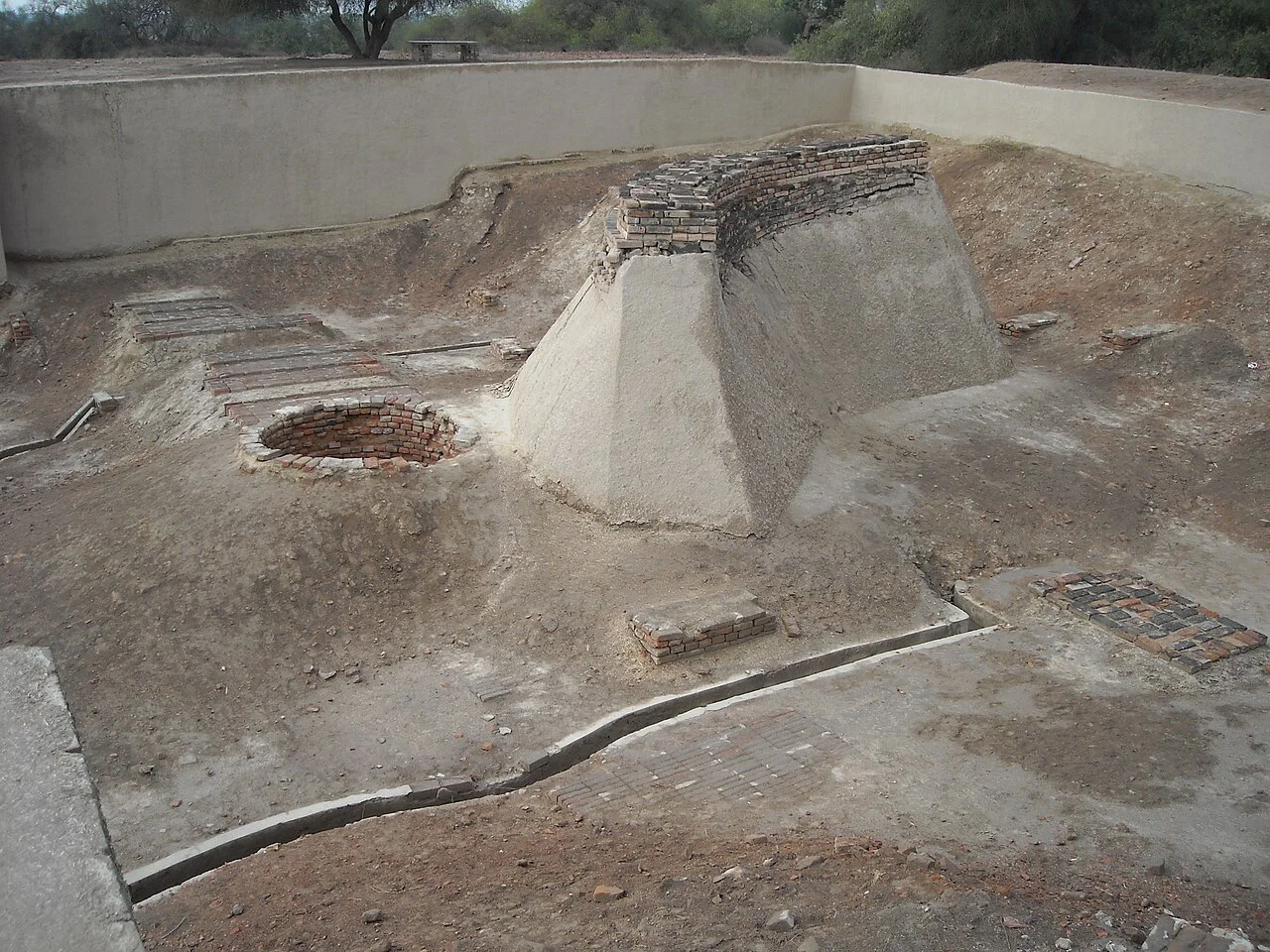
Harappa
Harappa
Content & sources
Photo: Obed Suhail · CC BY-SA 3.0
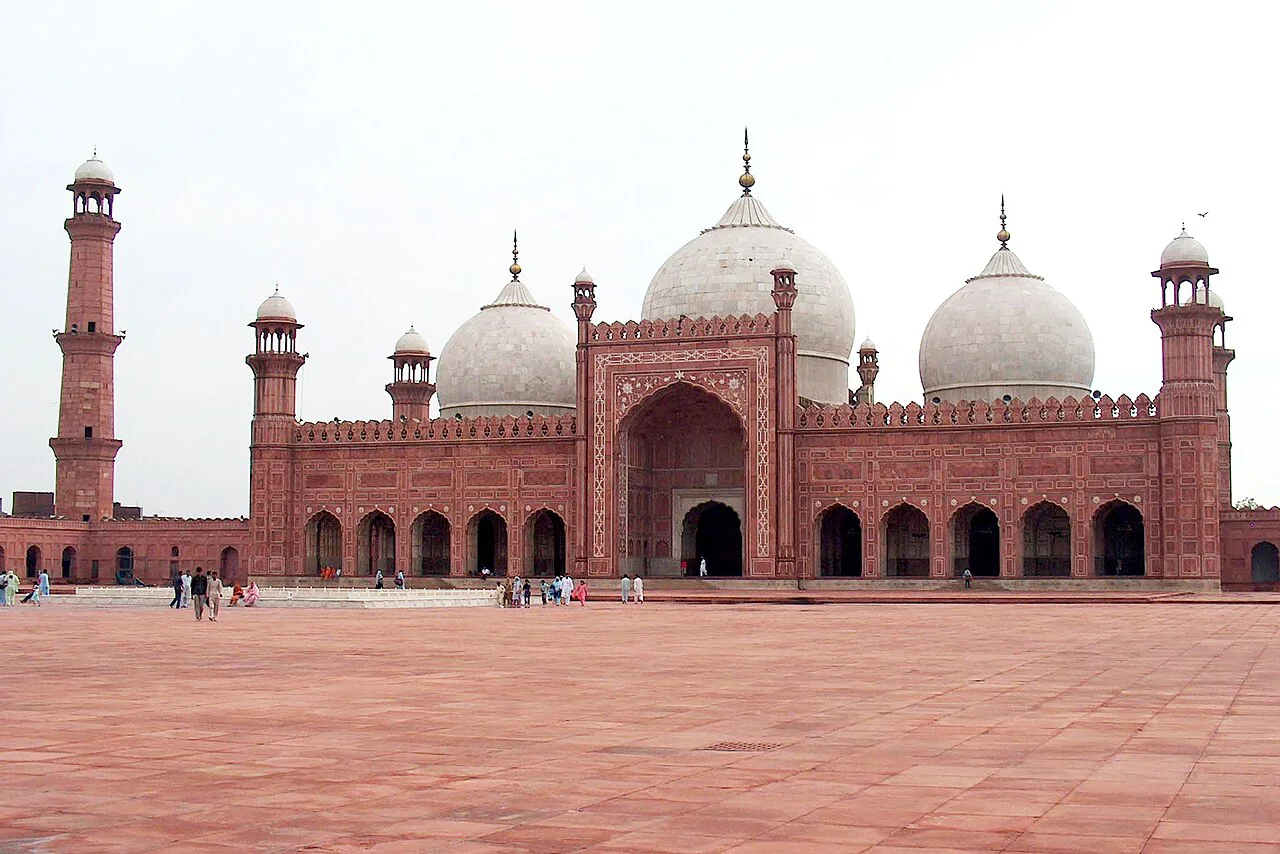
Lahore
Badshahi Mosque
Content & sources
Ali Imran · CC BY-SA 2.5
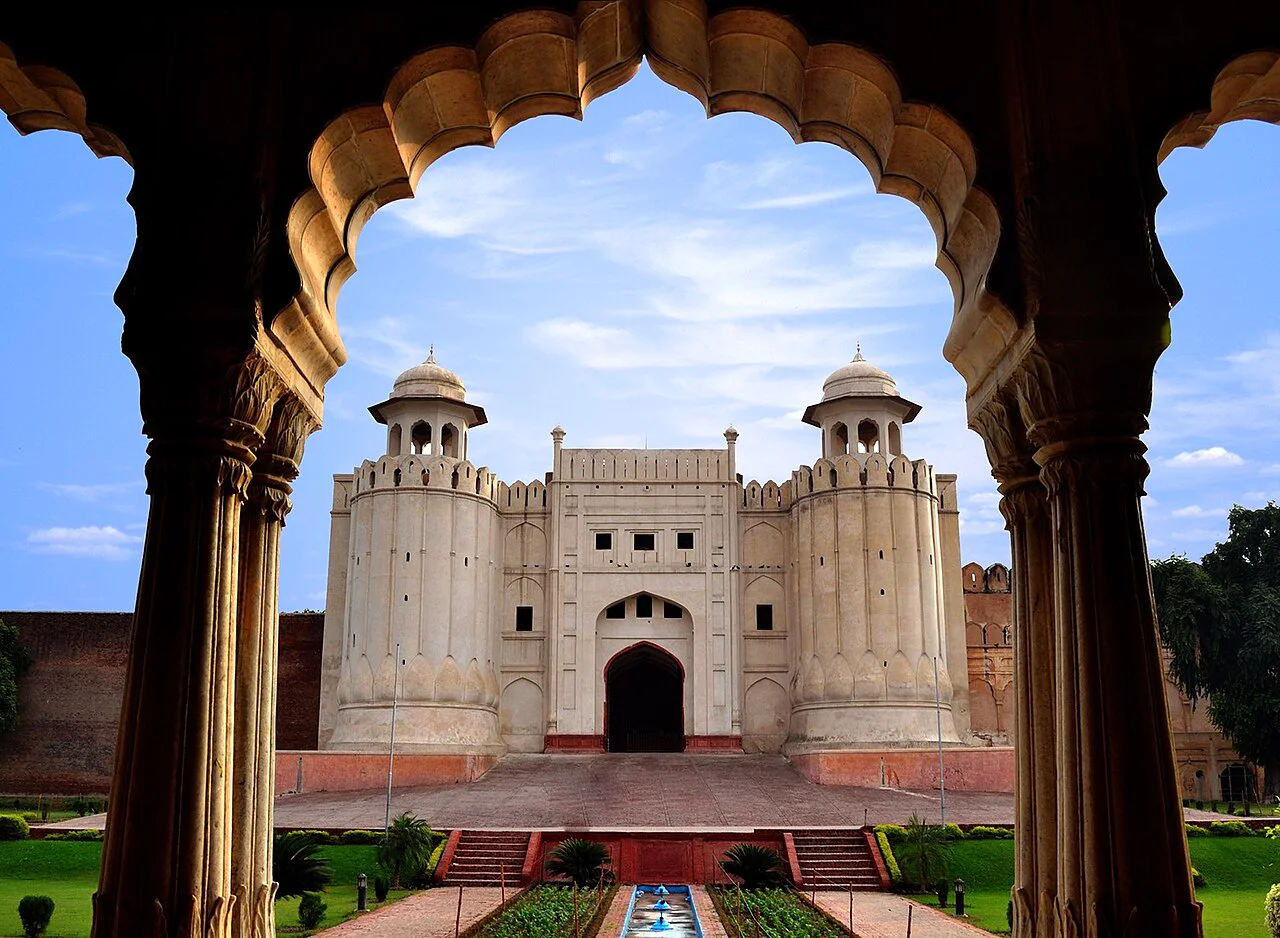
Lahore
Lahore Fort
Content & sources
Rohaan Bhatti · CC BY-SA 3.0
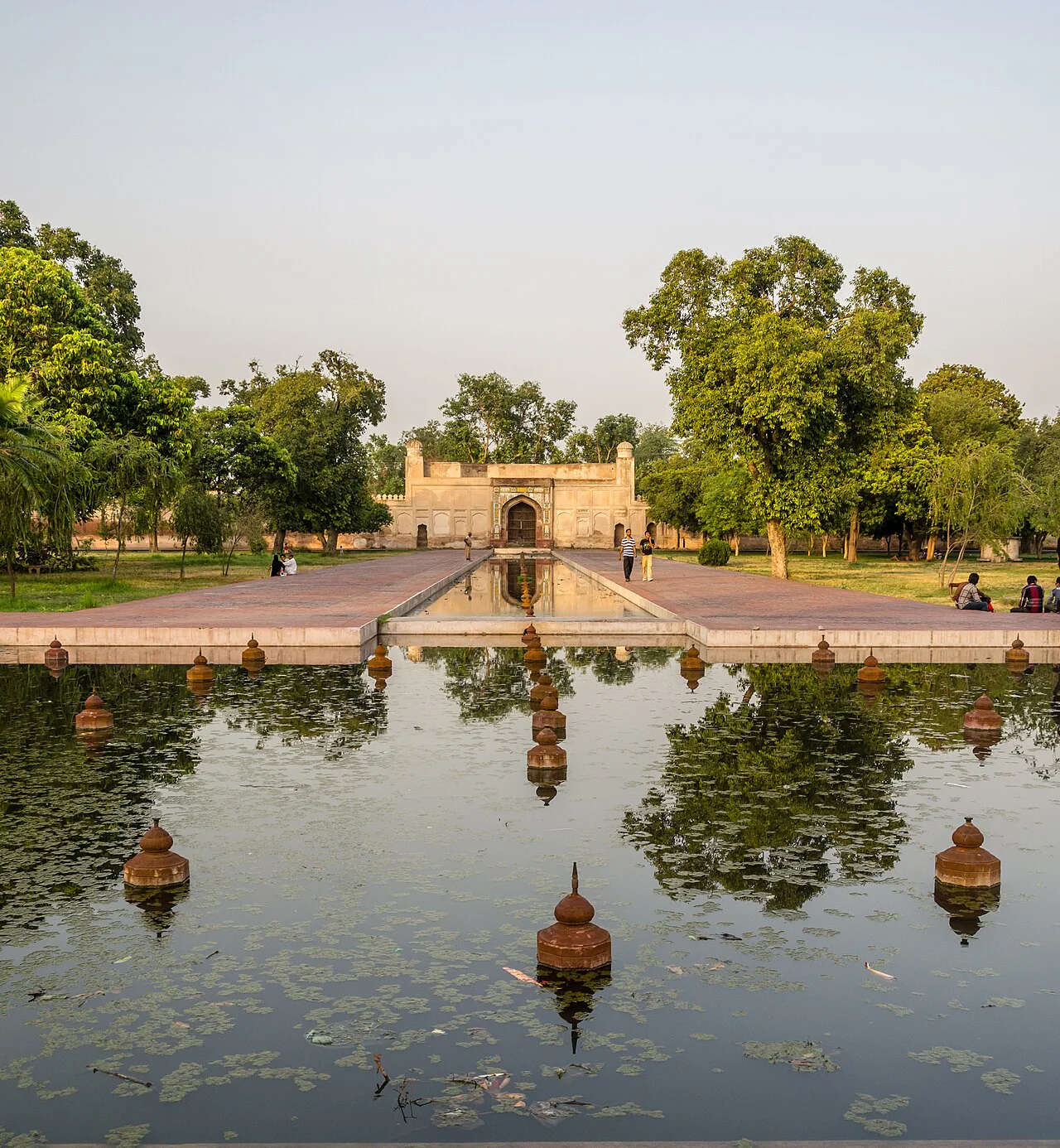
Lahore
Shalamar Gardens, Lahore
Content & sources
Muhammad Ashar · CC BY-SA 3.0