Stanza · Audio guide
Lahore Fort Audio Guide
A place to remember. A story to take with you.
The Lahore Fort is a citadel located in the walled interior of Lahore, Pakistan. It is notable for having been almost entirely rebuilt in the 17th century during the height of the Mughal Empire.
Download Stanza, then search for “Lahore Fort”.
About the tour
One guide. Your kind of visit.
The Lahore Fort is a citadel located in the walled interior of Lahore, Pakistan. It is notable for having been almost entirely rebuilt in the 17th century during the height of the Mughal Empire.
Ready when you are.
- 01Get the free Stanza app.
iOS & Android
- 02Find your guide.
“Lahore Fort”
- 03Download before you go.
Works offline
Audio guide / 18 narrated stops
Inside the guide
Get to know a few of the stories before you go. Open a stop to read more.
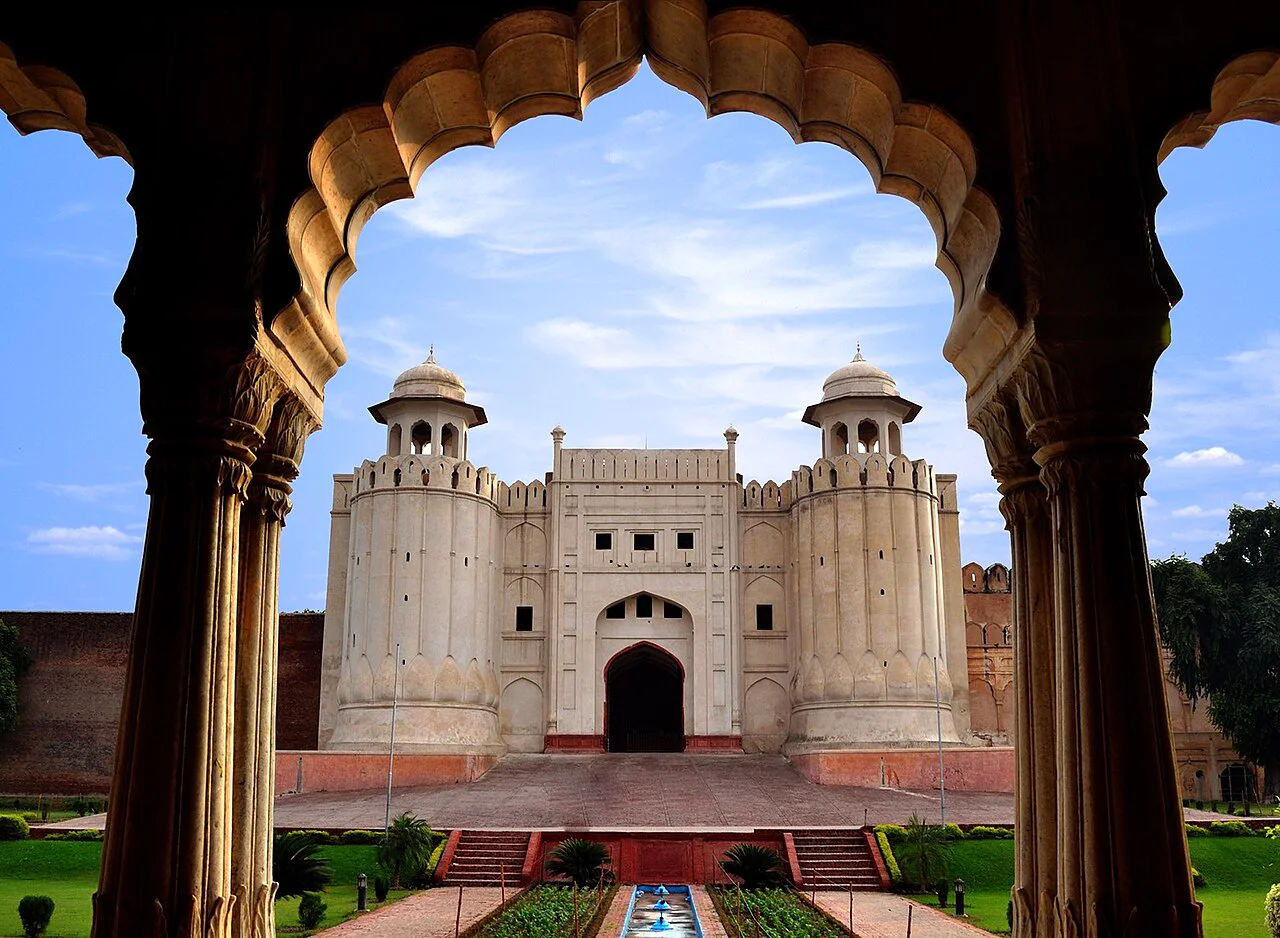
01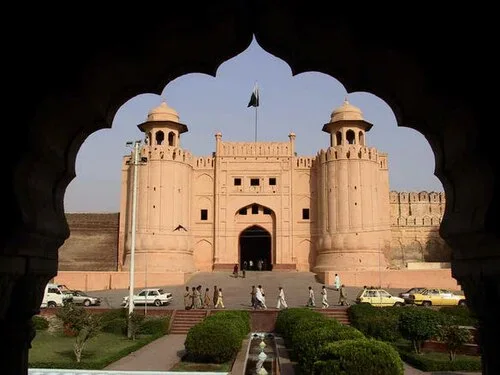 Alamgiri Gate and Hazuri Bagh Forecourt
The Alamgiri Gate
Welcome to the Lahore Fort, the royal citadel at the northern end of the Walled City of Lahore. It covers more than twenty hectares and holds twenty-one notable monuments. Almost everything here was rebuilt in the seventeenth century, when the Mughal Empire stood at its height. The great gate ahead was built by Emperor Aurangzeb in 1674. Its two semi-circular bastions wear a lotus petal design at the base, crowned with domed cupolas. The gate opens towards the Hazuri Bagh garden and faces the Badshahi Mosque across it. This face of the fort is so well known that it once appeared on Pakistani currency. What lies inside began as a military stronghold and an imperial residence at once. Akbar laid the foundations of the present fort, and emperor after emperor added to it.
Photo: Fast track~commonswiki · CC BY-SA 1.0
02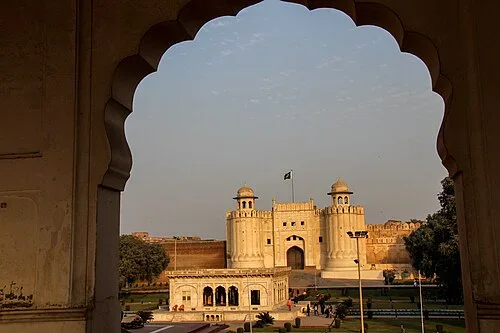 Alamgiri Gate and Hazuri Bagh Forecourt
Hazuri Bagh and the View from the Badshahi Mosque
Between the fort gate and the great mosque lies a garden with a story of its own. The Hazuri Bagh, with its central baradari pavilion, was laid out during Sikh rule. Maharaja Ranjit Singh built it to celebrate his capture of the Koh-i-Noor diamond. The Maharaja later displayed that famous gem inside the fort itself, in the Shah Burj quarter that became his favourite retreat. The setting is a deliberate conversation in stone. Aurangzeb raised the Badshahi Mosque on one side, and his gate answers it from the other, with the garden held between them. From this angle the two monuments line up across the shared forecourt, forming a quadrangle around the Hazuri Bagh.
Photo: S4saifullah · CC BY-SA 4.0
03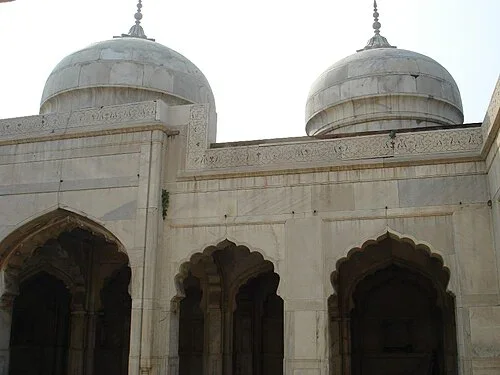 Moti Masjid (The Pearl Mosque)
The Pearl Mosque (Moti Masjid)
A mosque named after a jewel. Moti means pearl in Urdu, and the Mughal emperors made a habit of naming their mosques after gemstones. This one, built between 1630 and 1635 under Shah Jahan, is the earliest of three Pearl Mosques. The other two stand in Agra and Delhi. It sits on the fort's western side, close to the Alamgiri Gate, in the corner of the public audience hall's courtyard. Three domes rise above it. Its facade opens through five arches, where similar mosques of its class usually show three. The white marble places it firmly among Shah Jahan's additions to the fort, alongside the Sheesh Mahal and the Naulakha Pavilion.
Listen in the appPhoto: Ziegler175 · CC BY-SA 3.0
04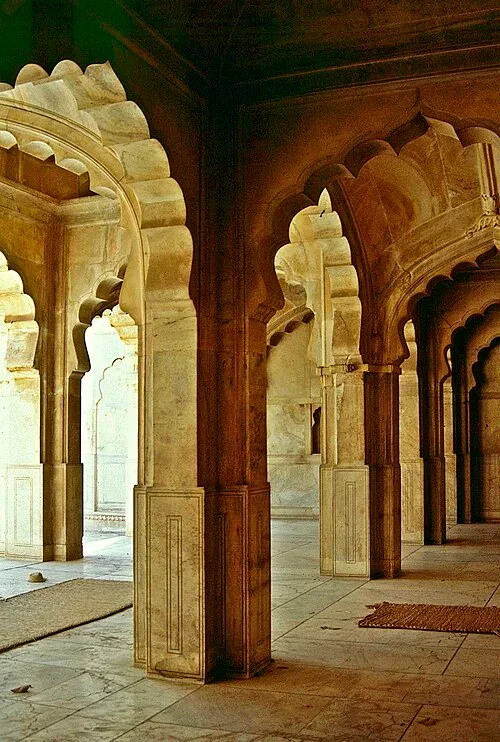 Moti Masjid (The Pearl Mosque)
Inside the Pearl Mosque
Inside, the Pearl Mosque is deliberately plain. Only the ceilings carry decoration, worked in four different orders, two arched and two built on flat beams. The prayer hall's quiet life ended with the Mughals. Under Ranjit Singh the building was turned into a Sikh temple and renamed Moti Mandir. Later it served as the treasury of the Sikh state. When the East India Company took over Punjab in 1849, its officers went through the mosque. They found precious stones wrapped in bits of rags and tucked into velvet purses, scattered about the building among other inventory. The state's wealth had been stored in the quietest room of Shah Jahan's fort.
Listen in the appPhoto: Ziegler175 · CC BY-SA 3.0
05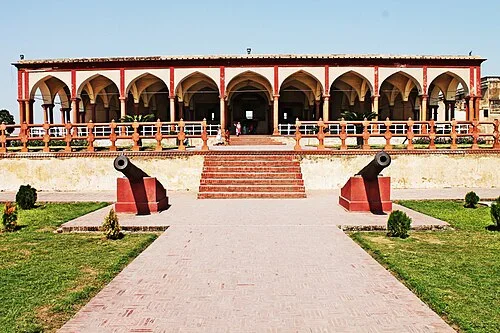 Diwan-i-Aam and Administrative Lawns
The Diwan-i-Aam, Hall of Public Audience
This long colonnaded hall was Shah Jahan's first contribution to the fort, begun in 1628, the year of his coronation. He modelled it on the Chehel Sotoun, the Persian style of forty-pillared audience hall, much like the one at Agra Fort. Here the emperors held audience with commoners, ordinary people bringing their lives before the throne. The hall did not survive the century quietly. In 1841 Sher Singh, son of Maharaja Ranjit Singh, bombarded the fort during his fight against Maharani Chand Kaur, and the hall was destroyed. What stands now is a British reconstruction, built in 1849 after their victory over the Sikhs. The two old cannons on the lawn in front belong to that later, martial chapter of the fort's story.
Listen in the appPhoto: Shabi Abdullah · CC BY-SA 4.0
06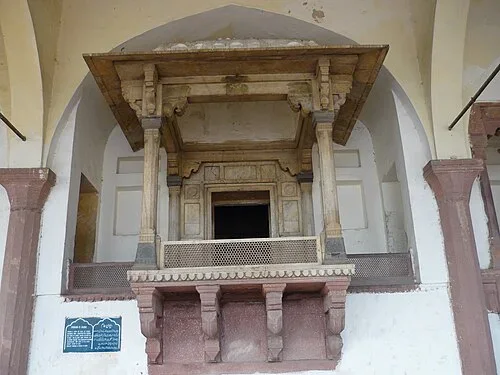 Diwan-i-Aam and Administrative Lawns
The Imperial Jharoka
Set into the wall of the audience hall is a carved marble balcony, its canopy raised high above the floor. This is the jharoka, the stage on which Mughal kingship depended on being seen. From here the emperor presented himself to the crowds gathered in the hall and the courtyard below. The appearance was a daily ritual, and the sight of the ruler was itself the act that bound ruler to subjects. The balcony's carved columns and bracketed base were built to carry exactly that moment, one man above, a crowd of his people beneath.
Listen in the appPhoto: Jugni · CC BY-SA 3.0
07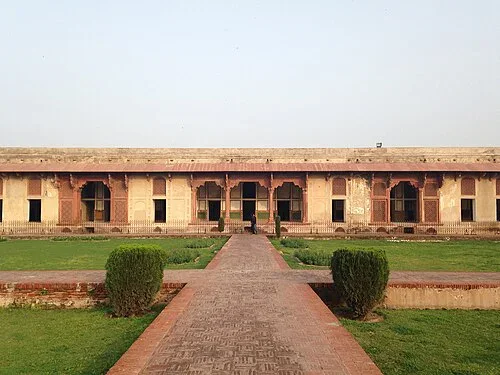 Jahangir's Quadrangle and Akbari Palaces
Jahangir's Quadrangle
This enormous court carries Jahangir's name, though the work on it began under Akbar. Jahangir saw it finished in 1620. Most Mughal quadrangles follow the plan of a Persian paradise garden, with water channels dividing the ground into four. This one breaks that rule. It is formed of concentric rectangles, with a fountain at the centre. The court marks a threshold in the fort. The official, administrative half lies to the south, well connected to the main entrances. Beyond this point the fort turns private, a zone of courtly life and residence, reached through courts like this one. Akbar's hand is still visible here, in details his successors left in place.
Listen in the appPhoto: SamrahShahid · CC BY-SA 4.0
08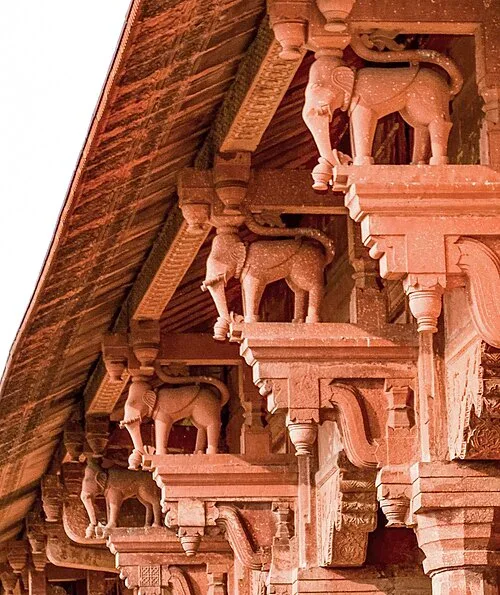 Jahangir's Quadrangle and Akbari Palaces
The Akbari Elephant Brackets
A row of elephants marches along beneath the eaves, each one carved as a bracket holding up the structure. These zoomorphic corbels carry the mark of Hindu influence on Mughal architecture, and they explain how the modern fort began. In 1566 Akbar occupied this site as a post guarding the empire's northwest frontier. Lahore's position mattered greatly, set between Mughal territory and the strongholds of Kabul, Multan and Kashmir. The old mud fort was dismantled and refortified with solid brick masonry, and lofty palaces and gardens rose over time in a style that mixed Islamic and Hindu motifs. Later rulers replaced or modified many of Akbar's structures. These carved elephants are among the details that survived them all.
Listen in the appFaizanahmad · CC BY-SA 4.0
09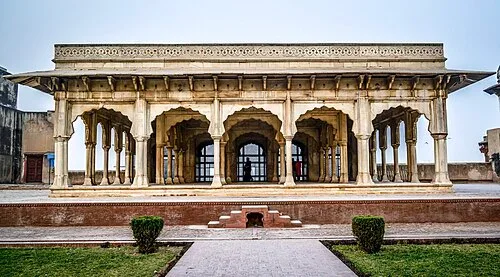 Shah Jahan's Quadrangle and Diwan-i-Khas
The Diwan-i-Khas, Hall of Private Audience
The public audience hall, seen earlier, was for commoners. This delicate open pavilion of white marble was for the work of state. Here the emperor attended to the empire's affairs, and here courtiers and state guests were received. The building itself makes the point. Its arched openings stand open on all sides, so private business was conducted in full view, yet raised and set apart from everyone outside. An audience here was wrapped in ceremony. Before each session came processions that could last as long as an hour, before the emperor finally received whoever had come to see him.
Listen in the appMuhammad Ashar · CC BY-SA 3.0
10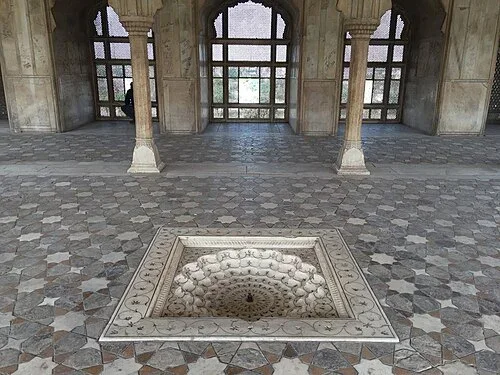 Shah Jahan's Quadrangle and Diwan-i-Khas
Inside the Diwan-i-Khas
White marble everywhere, and every surface worked by hand. The floor of the Diwan-i-Khas is laid in polished geometric patterns, with a carved fountain basin sunk into its centre. Around its openings run screens of finely carved marble lattice, the jali that filters the harsh Punjab sun into a soft, even glow. The latticed windows open towards the battlements, letting breezes move through the hall. This is the intimate texture of Shah Jahan's architecture: calm, cool, and refined to the smallest joint. Where the great audience hall outside was built for crowds, this room was built for stillness.
Listen in the appPhoto: Sohailstyle · CC BY-SA 4.0
- 11
The Sheesh Mahal, Palace of Mirrors
Who built the Palace of Mirrors, and the imperial family behind its marble facade.
- 12
The Mirror Vault of the Sheesh Mahal
The ceiling craft that earned the Sheesh Mahal its name, and the legend of the single candle.
- 13
Ath Dara, the Eight-Doored Pavilion
The eight-doored pavilion where a Sikh maharaja held court inside a Mughal palace.
- 14
A Radha-Krishna Fresco on the Palace Walls
A devotional painting of Krishna and Radha, set into the walls of a Mughal palace.
- 15
The Naulakha Pavilion
The little marble pavilion that cost a fortune, and the mixed traditions in its roofline.
- 16
The Naulakha Ceiling and Kipling's Naulakha
The star-patterned ceiling that followed a Lahore writer all the way to Vermont.
- 17
The Elephant Path and the Summer Palace Below
The stairway built for elephants, and the hidden palace below cooled by river water and roses.
- 18
The Picture Wall
Jahangir's wall of glazed tile and fresco, and what the whole fort says about its builders.
Lahore Fort
Frequently asked questions
How much does the guide cost?
Free app download. Listed guide price: $1.99. Guide price shown in the app. Audio guide only. Venue admission is separate.
Can I listen without internet?
Yes. Download the guide’s audio, images, and maps in the app before your visit. Your downloaded content is then available offline.
Can I listen in my language?
This audio guide is available in 15 languages, including English.
Do I need to follow a schedule?
No. This is a self-guided experience. Choose your stops, pause whenever you like, and return to a story at your own pace.
At your own pace
Explore Lahore Fort.
Download Stanza, then search for “Lahore Fort”.
Free app download · Guide price shown in the app
Keep exploring
Audio guides — Pakistan
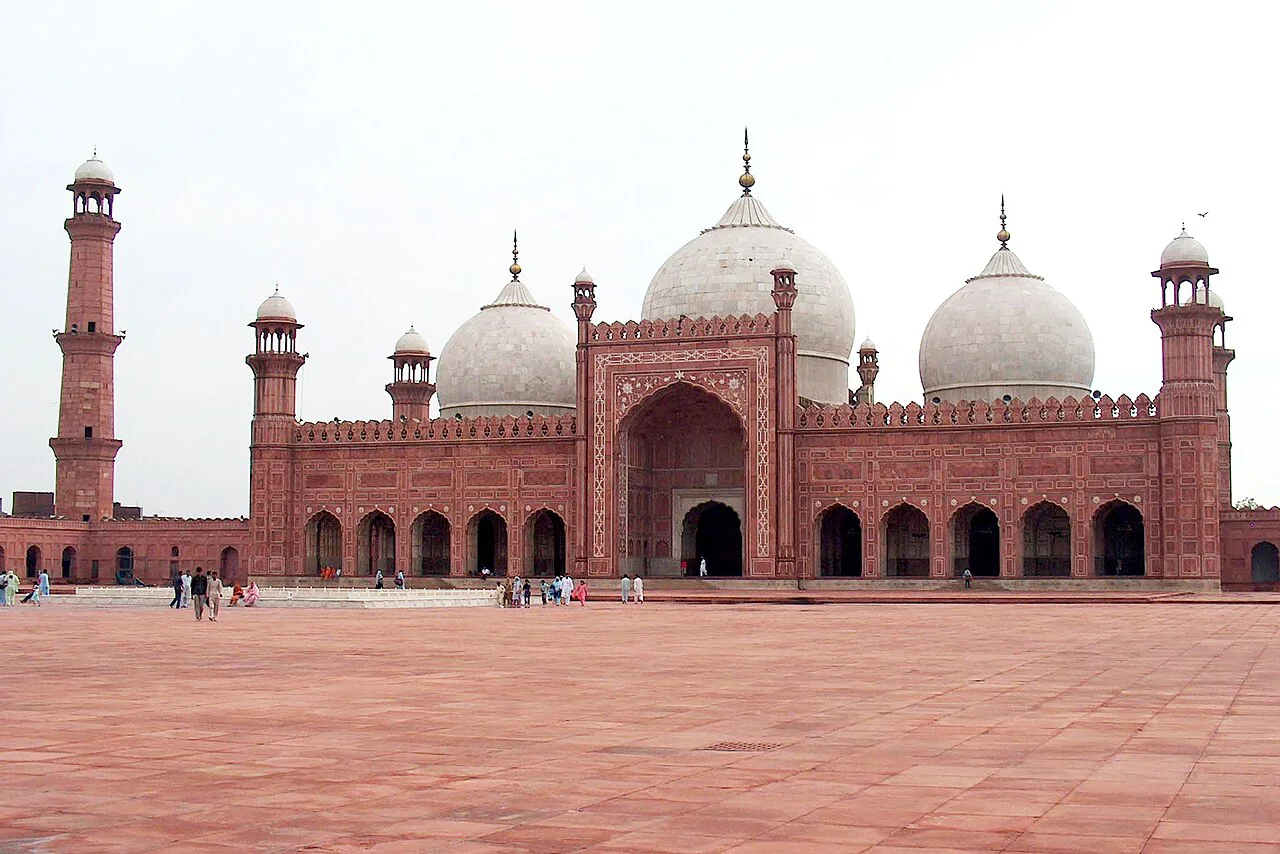
Lahore · 1 km
Badshahi Mosque
Content & sources
Ali Imran · CC BY-SA 2.5
Lahore · 7 km
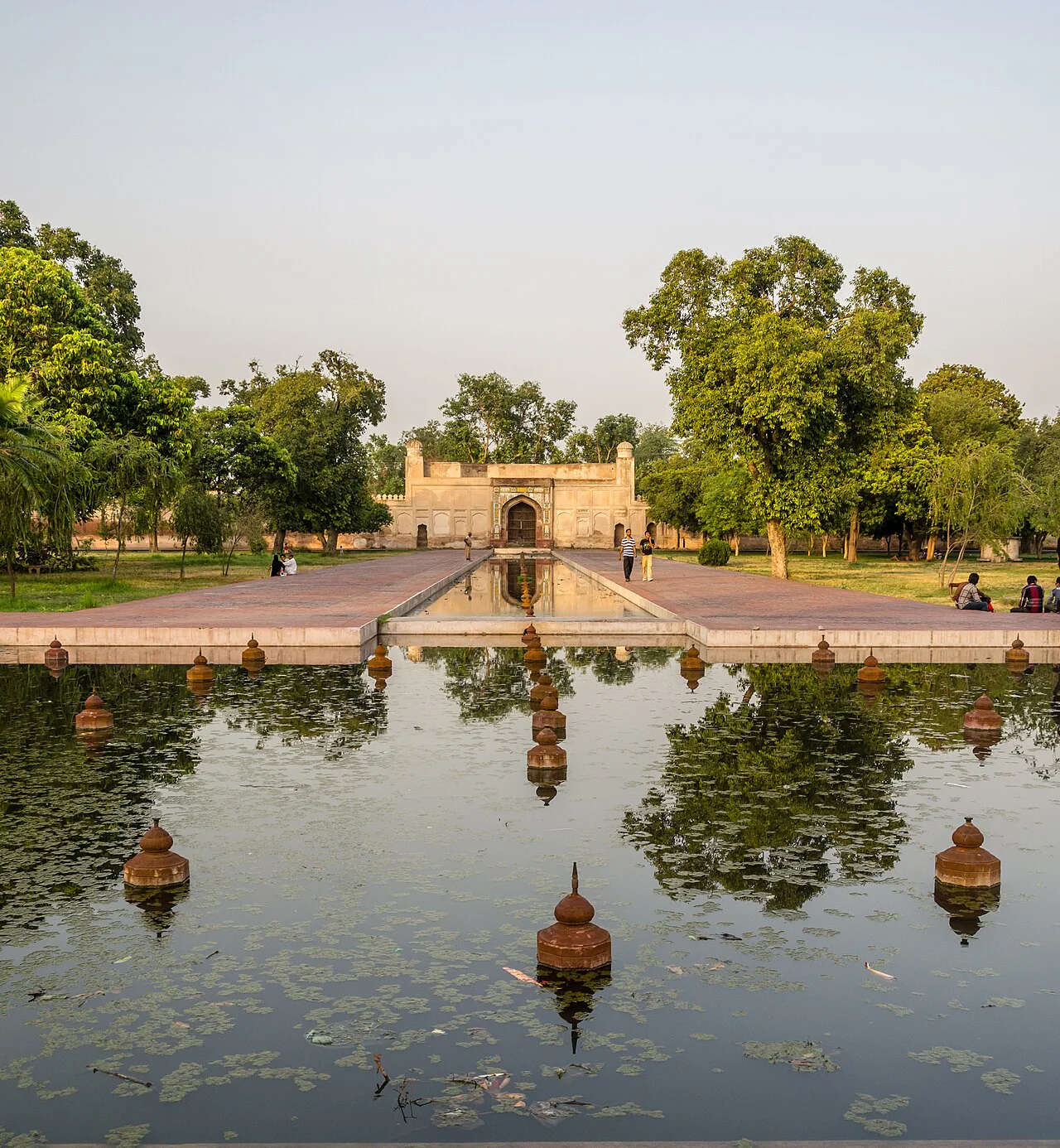
Shalamar Gardens, Lahore
Content & sources
Muhammad Ashar · CC BY-SA 3.0
Amritsar · 54 km
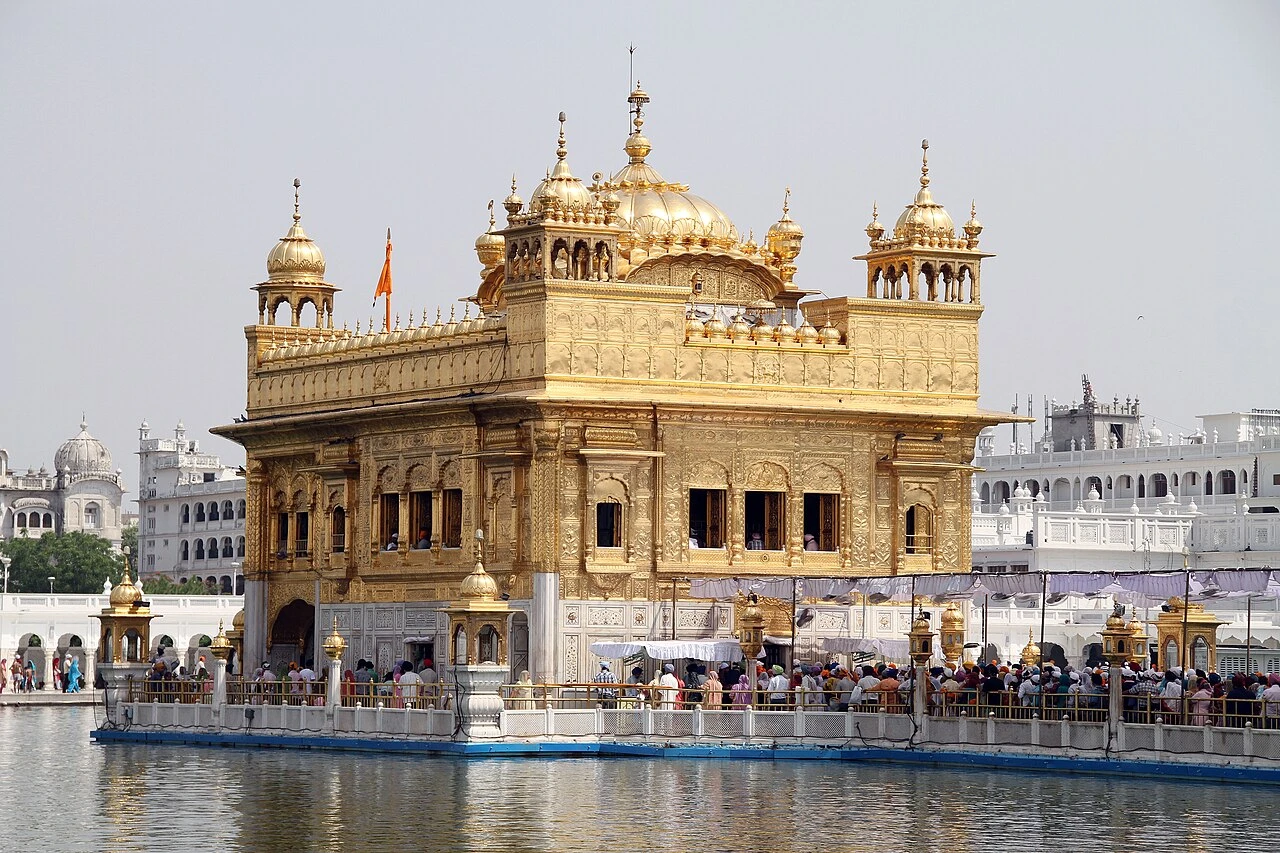
Harmandir Sahib
Dina Tehsil
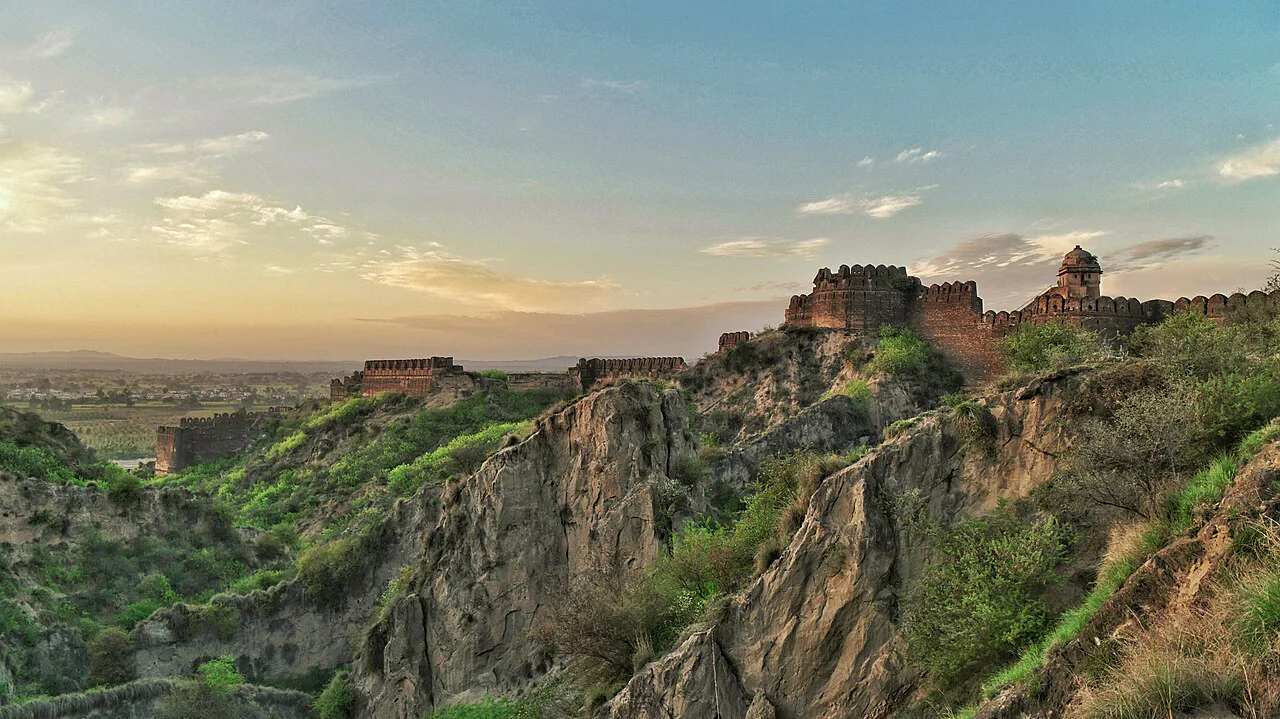
Rohtas Fort
Content & sources
Hussain Khalid · CC BY-SA 4.0